Trump’s Justice Department Bring Charge Against Raul Castro—What’s next?
Monday 25 May 2026, by Dan La Botz
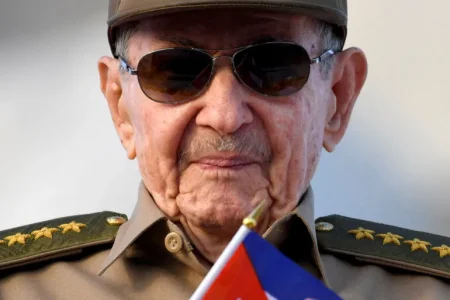
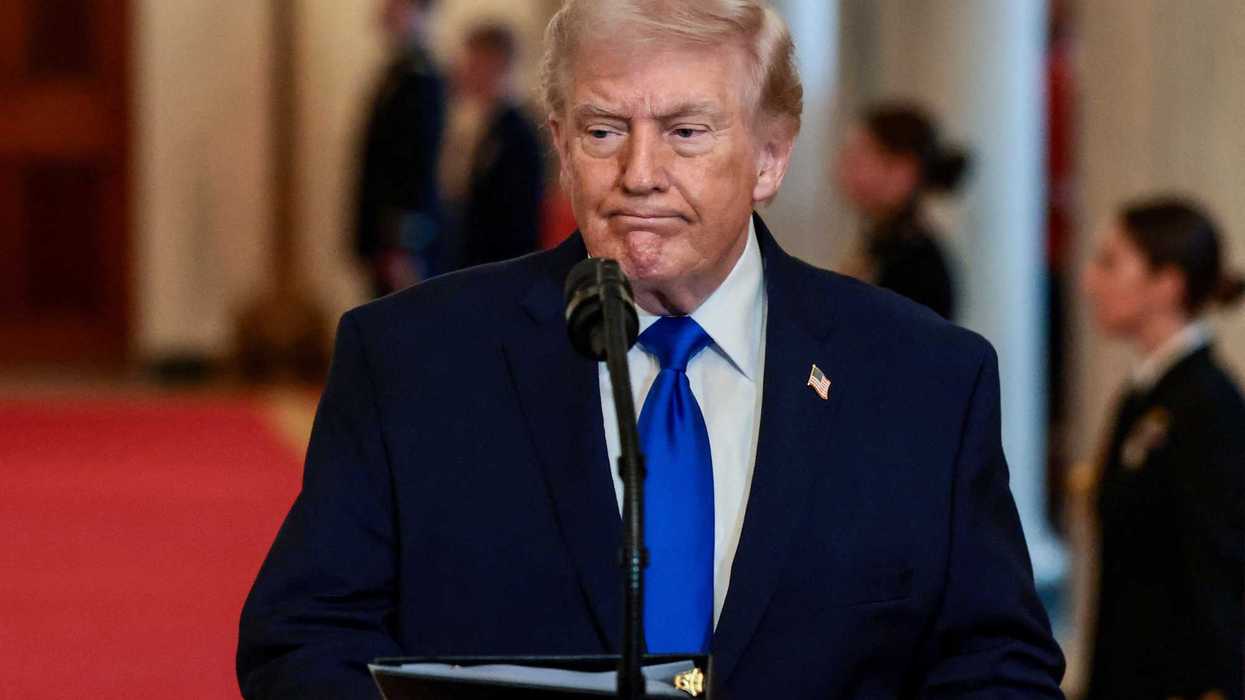
President Donald Trump’s Justice Department on May 20, 2026 charged Raúl Castro with murder. Raúl, the 94-year-old brother of Fidel Castro was one of the revolutionaries who overthrew the government of dictator Fulgencio Batista in 1959 and established a Communist pro-Soviet state by 1961. The charges against him stem from February 1996 when a Cuban exile group called Brothers to the Rescue flew two planes toward Cuba but while still in international airspace were shot down by Cuban fighter planes, killing four people in the planes. Now the Trump government is holding Raúl Castro, who has served as head of the Communist Party and chief of state, responsible for those deaths.
The U.S. has practically from the beginning embargoed Cuba, attempted to assassinate its leader Fidel Castro on numerous occasions, and most recently attempted to debilitate Cuba by cutting off the country’s oil supply, all of which have taken a great toll on the Cuban people. Now it appears that Trump wants to end the rule of the Cuban Communist Party (CCP) and find a replacement for it that will open the country to foreign trade and investment, including from Cuban exiles.
Trump believes his January 3, 2026 operation in which the United States briefly invaded Venezuela and seized President Nicolás Maduro and his wife Cilia Flores, bringing them to New York for trial, was a tremendous success. Trump said at a press conference, “This was one of the most stunning, effective, and powerful displays of American military might and competence in American history.”
Trump may see that operation as a model for something similar in Cuba. Though Secretary of State Marco Rubio, who is of Cuban descent and spent part of his childhood in Miami, Florida, the bastion of Cuban exile conservatism, wants to see the CCP replaced with a liberal state and a capitalist economy and appears to prefer a negotiated settlement to a violent attempt to overthrow the government. The question is: Can he find a figure willing to deal with him and the U.S. government to make that transition, someone like Delcy Rodríguez, who replaced Maduro as president of Venezuela, and yielded to Trump, permitting U.S. companies to begin to take over the petroleum industry?
The danger is that if a resolution is not reached soon, without oil for light and heat in homes and hotels, and without energy to run the water system and the countries machines, the Cuban economy and government could fail leading to chaos, crime, and violence such as we see in Haiti. If the United States and Iran can reach an agreement that ends the war, Trump would then be free to initiate his next imperial adventure, whatever form his intervention in Cuba takes.
Trump and Rubio recently sent CIA director John Ratcliffe to Cuba were he met with the Cuban Minister of the Interior in Havana. He offered the country $100 million in aid, but Cuban President Miguel Diaz-Canel said that his government would prefer the United States to lift its blockade. Raúl Castro was present at the talks, even as the U.S. was preparing his indictment.
There have been only a few small protests against the recent U.S. interference in Cuba. While there are almost three million Cubans in the United States, half in Florida and others in Texas, California, and New Jersey. These immigrants came in waves since 1960s, there are few friends of the Cuban government among them. Many would support a U.S. intervention. The U.S. protests have been organized by small left groups that have supported the Cuban Communist government, and there is little support for them in American society. Recent polls show that only 15 to 25 percent of Americans would support U.S. military intervention. Trump would like a victory after his failure to win the war against Iran.
24 May 2026
Monday 25 May 2026, by Dan La Botz
President Donald Trump’s Justice Department on May 20, 2026 charged Raúl Castro with murder. Raúl, the 94-year-old brother of Fidel Castro was one of the revolutionaries who overthrew the government of dictator Fulgencio Batista in 1959 and established a Communist pro-Soviet state by 1961. The charges against him stem from February 1996 when a Cuban exile group called Brothers to the Rescue flew two planes toward Cuba but while still in international airspace were shot down by Cuban fighter planes, killing four people in the planes. Now the Trump government is holding Raúl Castro, who has served as head of the Communist Party and chief of state, responsible for those deaths.
The U.S. has practically from the beginning embargoed Cuba, attempted to assassinate its leader Fidel Castro on numerous occasions, and most recently attempted to debilitate Cuba by cutting off the country’s oil supply, all of which have taken a great toll on the Cuban people. Now it appears that Trump wants to end the rule of the Cuban Communist Party (CCP) and find a replacement for it that will open the country to foreign trade and investment, including from Cuban exiles.
Trump believes his January 3, 2026 operation in which the United States briefly invaded Venezuela and seized President Nicolás Maduro and his wife Cilia Flores, bringing them to New York for trial, was a tremendous success. Trump said at a press conference, “This was one of the most stunning, effective, and powerful displays of American military might and competence in American history.”
Trump may see that operation as a model for something similar in Cuba. Though Secretary of State Marco Rubio, who is of Cuban descent and spent part of his childhood in Miami, Florida, the bastion of Cuban exile conservatism, wants to see the CCP replaced with a liberal state and a capitalist economy and appears to prefer a negotiated settlement to a violent attempt to overthrow the government. The question is: Can he find a figure willing to deal with him and the U.S. government to make that transition, someone like Delcy Rodríguez, who replaced Maduro as president of Venezuela, and yielded to Trump, permitting U.S. companies to begin to take over the petroleum industry?
The danger is that if a resolution is not reached soon, without oil for light and heat in homes and hotels, and without energy to run the water system and the countries machines, the Cuban economy and government could fail leading to chaos, crime, and violence such as we see in Haiti. If the United States and Iran can reach an agreement that ends the war, Trump would then be free to initiate his next imperial adventure, whatever form his intervention in Cuba takes.
Trump and Rubio recently sent CIA director John Ratcliffe to Cuba were he met with the Cuban Minister of the Interior in Havana. He offered the country $100 million in aid, but Cuban President Miguel Diaz-Canel said that his government would prefer the United States to lift its blockade. Raúl Castro was present at the talks, even as the U.S. was preparing his indictment.
There have been only a few small protests against the recent U.S. interference in Cuba. While there are almost three million Cubans in the United States, half in Florida and others in Texas, California, and New Jersey. These immigrants came in waves since 1960s, there are few friends of the Cuban government among them. Many would support a U.S. intervention. The U.S. protests have been organized by small left groups that have supported the Cuban Communist government, and there is little support for them in American society. Recent polls show that only 15 to 25 percent of Americans would support U.S. military intervention. Trump would like a victory after his failure to win the war against Iran.
24 May 2026
Dan La Botz
The hidden cost of the Cuban crisis
Published in Spanish at La Joven Cuba. Translation by Jackson Remple for LINKS International Journal of Socialist Renewal.
The strategy of strangling Cuba economically has achieved one of its most silent victories — turning US sanctions into business as usual, even to academic, media and political circles that for years have acknowledged the sanctions’ economic and humanitarian impact. While the coercive measures are being tightened and extended to international actors who previously traded with the island, public debate on the crisis seems to focus almost exclusively on the palpable errors and failings of the Cuban government, as if the two phenomena were taking place in separate universes.
Originally conceived as a strategy for regime change — which has failed — the sanctions policy has successfully mutated into a form of collective punishment, where the deterioration of the population’s living conditions also serves as a deterrent. Cuba thus becomes the “bad example” to be paraded before the world, so that its crisis serves as a permanent warning against any political or economic alternative that challenges the power of the United States.
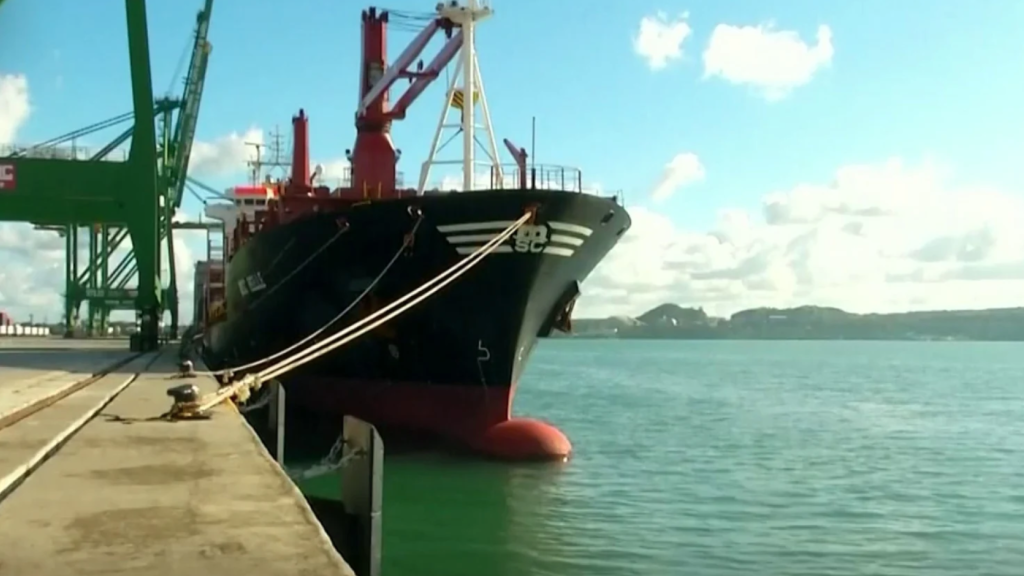
In this regard, the recent decision by the shipping companies Hapag-Lloyd and CMA CGM to suspend taking new bookings linked to Cuba is an alarming sign of the ripple effect that the new US sanctions are having on the Cuban economy and, above all, on the daily lives of millions of people who are already surviving in extremely precarious conditions.
The shippers’ move comes just weeks after Donald Trump signed an Executive Order on May 1 that significantly broadened the scope of sanctions against Cuba. The order also authorized reprisals against foreign companies or entities that maintain economic ties with sectors considered strategic for the Cuban state. Although the shipping companies have presented the suspension as a precautionary measure while they assess the potential legal and financial risks, various media reports cite industry sources who estimate that Hapag-Lloyd and CMA CGM together handle about 60% of container traffic to Cuba. Their suspension of service is likely to have drastic and immediate effects on supply chains. Furthermore, there is a possibility of a domino effect on other companies, which, fearing potential reprisals and fines, may decide to suspend their operations on the island.
Although US authorities often present these measures as tools that are aimed at the Cuban state apparatus, the reality is that in the final analysis they impact the civilian population directly. When two of the world’s largest shipping companies halt shipments to an island nation that is heavily dependent on imports, this immediately affects the supply of food, medicines, fuel, raw materials and other essential goods.
Cuba is currently experiencing one of the severest economic and social crises in its history. Senior UN officials have recently noted that shortages of electricity, fuel and medicines are pushing the healthcare system to its limits and affecting millions of people’s access to essential services. The organisation has pointed out that hospitals and clinics have had to suspend surgeries, vaccination programs and emergency services because they lacked basic resources. Furthermore, it warned that “the most vulnerable people — children, the elderly and pregnant women — will suffer the most” if the current situation continues.
At the same time, inflation has eroded families’ purchasing power, domestic production remains depressed, and shortages or exorbitant prices for basic goods have become a daily reality.
The problem lies not only in the direct sanctions imposed by the US, but also in the so-called “deterrent effect” or overcompliance, whereby foreign companies, banks, insurers and logistics operators, choose to end or limit their ties with Cuba to avoid possible reprisals, fines or future restrictions by the United States. The result is an economic isolation of Cuba that goes far beyond the formal provisions of the unilateral coercive measures.
In this specific case, the precautionary suspension of operations by these shipping companies could lead to higher transportation costs, delays in imports and difficulties in ensuring the stability of supplies. For Cuba, where a large proportion of food depends on imports, this will result in new inflationary pressures, shortages and even greater food insecurity. The most vulnerable families would, once again, be the hardest hit.
Such measures also deal a significant blow to Cuba’s emerging private sector, which relies on imports to sustain small businesses, services and supply chains. Many entrepreneurs use logistics intermediaries and international shipping companies to acquire food, spare parts, technological supplies, raw materials and essential goods, which they then sell or use in their economic activities. Rising transport costs, financial restrictions and the reluctance of foreign suppliers to do business with Cuba further reduce the capacity of this sector, which in recent years has acted as one of the main buffers against domestic shortages.
There is also a psychological and social impact that often goes unnoticed. Uncertainty over the arrival of basic goods raises collective anxiety, encourages hoarding and reinforces the perception of constant instability. In Cuba, large sections of the population spend a large part of their income solely on food. So it is likely that any disruption to supply chains will have an immediate impact on daily life.
Figures in the exile community and Cuban-American members of Congress often justify sanctions as “chemotherapy” needed to eliminate the “cancer.” However, this therapy has been applied for more than 60 years. It has failed to bring about a political transition in Cuba, but it has contributed to the material deterioration of people’s living conditions. They are the ones who are bearing the brunt of the sanctions.
It is legitimate to question the Cuban government’s internal policies, to push for structural reforms and to demand more freedom and economic efficiency. However, we also need to recognise that external coercive measures are having real human consequences on a society that has been battered by years of accumulated crisis.
These days the Cuban landscape is characterised by growing social fragility. Intensifying mechanisms that further hinder the island’s economic integration into international trade will only increase poverty, accelerate emigration and widen existing inequalities. No political strategy can be considered legitimate when its main consequences fall upon the civilian population.
Today we should remember what José Martí said:
The Americas must promote everything that brings peoples closer together and abhor everything that drives them apart. In this, as in all human problems, the future lies in peace’.
Published in Spanish at La Joven Cuba. Translation by Jackson Remple for LINKS International Journal of Socialist Renewal.
The strategy of strangling Cuba economically has achieved one of its most silent victories — turning US sanctions into business as usual, even to academic, media and political circles that for years have acknowledged the sanctions’ economic and humanitarian impact. While the coercive measures are being tightened and extended to international actors who previously traded with the island, public debate on the crisis seems to focus almost exclusively on the palpable errors and failings of the Cuban government, as if the two phenomena were taking place in separate universes.
Originally conceived as a strategy for regime change — which has failed — the sanctions policy has successfully mutated into a form of collective punishment, where the deterioration of the population’s living conditions also serves as a deterrent. Cuba thus becomes the “bad example” to be paraded before the world, so that its crisis serves as a permanent warning against any political or economic alternative that challenges the power of the United States.
In this regard, the recent decision by the shipping companies Hapag-Lloyd and CMA CGM to suspend taking new bookings linked to Cuba is an alarming sign of the ripple effect that the new US sanctions are having on the Cuban economy and, above all, on the daily lives of millions of people who are already surviving in extremely precarious conditions.
The shippers’ move comes just weeks after Donald Trump signed an Executive Order on May 1 that significantly broadened the scope of sanctions against Cuba. The order also authorized reprisals against foreign companies or entities that maintain economic ties with sectors considered strategic for the Cuban state. Although the shipping companies have presented the suspension as a precautionary measure while they assess the potential legal and financial risks, various media reports cite industry sources who estimate that Hapag-Lloyd and CMA CGM together handle about 60% of container traffic to Cuba. Their suspension of service is likely to have drastic and immediate effects on supply chains. Furthermore, there is a possibility of a domino effect on other companies, which, fearing potential reprisals and fines, may decide to suspend their operations on the island.
Although US authorities often present these measures as tools that are aimed at the Cuban state apparatus, the reality is that in the final analysis they impact the civilian population directly. When two of the world’s largest shipping companies halt shipments to an island nation that is heavily dependent on imports, this immediately affects the supply of food, medicines, fuel, raw materials and other essential goods.
Cuba is currently experiencing one of the severest economic and social crises in its history. Senior UN officials have recently noted that shortages of electricity, fuel and medicines are pushing the healthcare system to its limits and affecting millions of people’s access to essential services. The organisation has pointed out that hospitals and clinics have had to suspend surgeries, vaccination programs and emergency services because they lacked basic resources. Furthermore, it warned that “the most vulnerable people — children, the elderly and pregnant women — will suffer the most” if the current situation continues.
At the same time, inflation has eroded families’ purchasing power, domestic production remains depressed, and shortages or exorbitant prices for basic goods have become a daily reality.
The problem lies not only in the direct sanctions imposed by the US, but also in the so-called “deterrent effect” or overcompliance, whereby foreign companies, banks, insurers and logistics operators, choose to end or limit their ties with Cuba to avoid possible reprisals, fines or future restrictions by the United States. The result is an economic isolation of Cuba that goes far beyond the formal provisions of the unilateral coercive measures.
In this specific case, the precautionary suspension of operations by these shipping companies could lead to higher transportation costs, delays in imports and difficulties in ensuring the stability of supplies. For Cuba, where a large proportion of food depends on imports, this will result in new inflationary pressures, shortages and even greater food insecurity. The most vulnerable families would, once again, be the hardest hit.
Such measures also deal a significant blow to Cuba’s emerging private sector, which relies on imports to sustain small businesses, services and supply chains. Many entrepreneurs use logistics intermediaries and international shipping companies to acquire food, spare parts, technological supplies, raw materials and essential goods, which they then sell or use in their economic activities. Rising transport costs, financial restrictions and the reluctance of foreign suppliers to do business with Cuba further reduce the capacity of this sector, which in recent years has acted as one of the main buffers against domestic shortages.
There is also a psychological and social impact that often goes unnoticed. Uncertainty over the arrival of basic goods raises collective anxiety, encourages hoarding and reinforces the perception of constant instability. In Cuba, large sections of the population spend a large part of their income solely on food. So it is likely that any disruption to supply chains will have an immediate impact on daily life.
Figures in the exile community and Cuban-American members of Congress often justify sanctions as “chemotherapy” needed to eliminate the “cancer.” However, this therapy has been applied for more than 60 years. It has failed to bring about a political transition in Cuba, but it has contributed to the material deterioration of people’s living conditions. They are the ones who are bearing the brunt of the sanctions.
It is legitimate to question the Cuban government’s internal policies, to push for structural reforms and to demand more freedom and economic efficiency. However, we also need to recognise that external coercive measures are having real human consequences on a society that has been battered by years of accumulated crisis.
These days the Cuban landscape is characterised by growing social fragility. Intensifying mechanisms that further hinder the island’s economic integration into international trade will only increase poverty, accelerate emigration and widen existing inequalities. No political strategy can be considered legitimate when its main consequences fall upon the civilian population.
Today we should remember what José Martí said:
The Americas must promote everything that brings peoples closer together and abhor everything that drives them apart. In this, as in all human problems, the future lies in peace’.
Asia-Pacific left statements: Reject latest pretext for war, US hands off Cuba
Statements by Socialist Alliance (Australia), Socialist Party of Malaysia and Partido Lakas ng Masa (PLM, Party of the Labouring Masses, The Philippines)
Australia: Labor must reject latest US pretext for military action on Cuba
Socialist Alliance, May 24
The Socialist Alliance (SA) condemns the US Department of Justice's decision to reopen a three-decade old case against former Cuban president Raúl Castro, warning it could serve as a pretext for military action against the Caribbean nation. Against these latest threats, SA reaffirms its solidarity with the Cuban people and calls on the Australian Labor government to break its silence on US President Donald Trump's escalating campaign against Cuba.
Trump's hypocrisy could not be more blatant. Castro is being indicted over the 1996 downing of two planes carrying four members of Brothers to the Rescue — a Miami-based outfit established by Cuban exiles involved in terrorist activities that regularly violated Cuba’s airspace. Meanwhile, the US military continues to regularly blow up boats in the Caribbean and eastern Pacific with complete impunity, so far leading to the extrajudicial murder of nearly 200 people in just the past 10 months.
The timing of the decision is also not coincidental. In January, Trump signed an executive order declaring Cuba posed an “unusual and extraordinary” threat to US security. This resulted in a further tightening of the already extremely restrictive economic blockade on Cuba, triggering an unfolding humanitarian crisis on the island.
The deadly results for ordinary Cubans are evident for all to see. For example, Trump’s tightening of sanctions back in 2017 directly contributed to a 148% rise in Cuba’s infant mortality rate by last year. This figure is now expected to rise even more sharply due to the energy blockade imposed on Cuba, which has had a particularly crippling effect on Cuba’s healthcare infrastructure.
There is no doubt that any military action would only make the situation even worse.
Ever since the 1959 Cuban revolution, Washington has sought to overthrow the Cuban government through various means: terrorist attacks, a military invasion, assasination attempts, economic strangulation, etc. But all it has achieved is imposing a regime of collective punishment against the Cuban people, whose only crime was refusing to submit to US imperialism's will.
The Socialist Alliance calls for an immediate and unconditional lifting of the US blockade on Cuba and opposes any military action against Cuba. We demand Labor speak out against Trump's policy of collective punishment and threats of military action.
These latest attacks on Cuba are just another reason why Labor must break its alliance with US imperialism — starting with tearing up the AUKUS treaty.
Malaysia: Say no to the pretext of war on Cuba!
Socialist Party of Malaysia, May 22
The Socialist Party of Malaysia (PSM) denounces the recent accusation and indictment against Raúl Castro pushed by the US Department of Justice. The indictment appears to be a pretext for the imperialist US to launch a war on Cuba and Cuban people, or to replicate a military operation to abduct leaders of another sovereign state, like what happened to Venezuela just at the beginnin of this year.
The recent indictment against Raúl Castro is based on the downing of two aircraft operated by the CIA-backed opposition group, which intruded into the Cuban airspace in 1996. This is the latest attempt by the imperialist US to construct a fraudulent narrative to advance its unilateral coercive measures against Cuba and the Cuban people.
Since the US government under the administration of Donald Trump began to escalate its threats against Cuba, including an oil embargo, the Cuban people have been struggling for daily survival. The ongoing blockade is a collective punishment against the people of a country who choose to pursue their own path free from the domination of the imperialist US. The US government is also repeatedly demonstrating that it prepares to invade Cuba.
We reaffirm our solidarity with Cuba and the Cuban people. Cuba has been standing as the bastion of international solidarity, social justice, peace and humanity. We shall not allow the imperialist US to destroy Cuba and the Cuban people.
We urge the international community, including the government of Malaysia, to take concrete steps to stand in solidarity with Cuba against the US imperialist aggression. We do not want another war in the Caribbean and elsewhere in the world.
Released by,
Choo Chon Kai
Central Committee Member
Parti Sosialis Malaysia (PSM)
The Philippines: We condemn the indictment of Comandante Raúl Castro! US hands off Cuba! Solidarity with the Cuban Revolution!
Partido Lakas ng Masa, May 21
The US Department of Justice has charged Cuba’s former President, Comandante Raúl Castro, over the 1996 downing of planes belonging to the CIA-backed anti-Cuba terrorist organization, Brothers to the Rescue.
This is a fabricated pretext to significantly escalate US aggression against Cuba.
PLM strongly condemns this latest act of aggression.
Cuba has always had the right to defend itself against decades of U.S. regime change efforts beginning under Fidel Castro, including the failed Bay of Pigs invasion in 1961 — the first and only military defeat of U.S. imperialism in the Western Hemisphere.
We stand in solidarity with the Cuban leadership, the Cuban people, and their socialist revolution.
“It is outrageous that the US government would target people for bringing humanitarian aid... But even more disturbing is the cruel and deeply immoral policy the United States continues to impose on Cuba.”
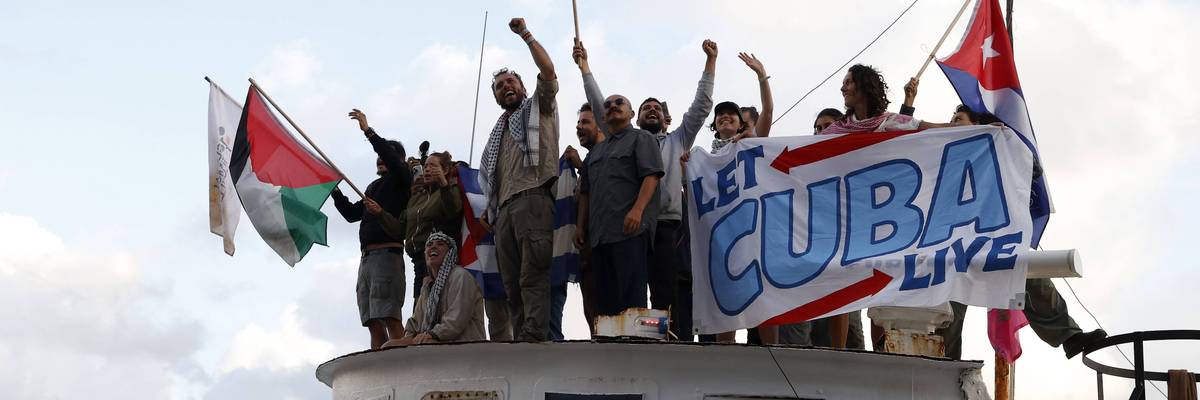
People arrive with the first ship of the humanitarian convoy in solidarity with Cuba, in Havana on March 24, 2026.
(Photo by Angelo Mastrascusa/Anadolu via Getty Images)
Julia Conley
May 25, 2026
COMMON DREAMS
The antiwar group CodePink it has yet to be served with any subpoenas after it was reported over the weekend that the Trump administration has opened an investigation into a recent humanitarian trip it helped organize to Cuba, but vehemently denied wrongdoing and said any government probe, if there is one, would only show that “this administration is beyond grotesque.”
“Taking medical supplies to pediatric hospitals in Cuba is now a crime?” asked co-founder Medea Benjamin on social media on Saturday after Fox News reported that organizers had been served subpoenas. “Saving the lives of babies is a crime?”
Fox reported that Benjamin and left-wing commentator Hasan Piker had been subpoenaed by federal investigators two months after they were among 40 Americans who sailed to Havana on the Nuestra America Convoy, which carried 20 tons of humanitarian aid to the island nation.
The Fox reporting claimed the subpoenas issued to Benjamin and Piker seek to obtain financial, logistical, and communications information related to the trip, which was organized in response to the Trump administration’s decision in late January to threaten to impose tariffs on any country that provided Cuba with oil.
The administration cut off Cuba’s main source of fuel at the beginning of the year when it sent US troops into Venezuela to abduct President Nicolás Maduro and took control of the country’s vast oil supply.
White House officials, including Secretary of State Marco Rubio, the son of Cuban immigrants, have long desired regime change in the communist country, and rights advocates have warned the administration appears to be moving toward just that as it strangles the island’s oil supply—causing frequent blackouts and impacting the healthcare and food systems—and claims the Cuban government poses a threat to the US.
In organizing the Nuestra America Convoy, said Benjamin on Sunday, the advocates were acting “as moral US citizens trying to bring some relief to a population being deliberately starved by the cruel policies of our own government.”
“This policy has contributed to catastrophic shortages of medicine and electricity, massive blackouts, transportation collapse, and a public health crisis that has hurt the most vulnerable, especially children and the elderly,” said Benjamin. “It is a policy that is, literally, killing babies, as we have seen in the recent tragic doubling of the infant mortality rate. This is why we focused our donations on medical supplies for pediatric hospitals.”
The blockade is compounding the suffering caused by the trade embargo the US has imposed for decades, said Benjamin.
The Cuban Assets Control Regulations law prohibits US citizens from conducting unlicensed travel-related transations with Cuba, but the law makes exceptions for humanitarian endeavors and other activities aimed at supporting the Cuban people.
“We traveled to Cuba under the US government-authorized category of providing humanitarian aid to the Cuban people. We brought desperately needed medicines and medical supplies at a time when Cuba is suffering catastrophic shortages caused by the crippling US blockade,” said Benjamin.
Benjamin, Piker, and Drop Site News co-founder Ryan Grim emphasized that the group stayed in Spanish-owned hotels that are “explicitly permitted under” the US law—while right-wing influencer Nick Shirley allegedly stayed in a sanctioned hotel on a recent trip to Cuba.
“It is outrageous that the US government would target people for bringing humanitarian aid to suffering Cuban children,” Benjamin said. “But even more disturbing is the cruel and deeply immoral policy the United States continues to impose on Cuba—a policy designed to strangle the island economically, deprive people of food, fuel, medicine, and basic necessities, and make daily life unbearable.”
Piker said the reports of the investigation indicate that “the American government would rather try to criminalize delivering aid to a country we’ve starved, than punish the Epstein class.”
Benjamin emphasized that the reports of the probe come as the administration intensified its threats against Cuba, having indicted former President Raúl Castro last week on charges related to the shooting down of a plane operated by Cuban-American exiles in the 1990s. Trump and his allies have repeatedly mused about invading the country following his military attacks on Venezuela and Iran.
“President Trump already has his hands full trying to disentangle himself from the disastrous US war with Iran,” said Benjamin. “He should not start another one in Cuba. The American people are tired of endless wars, interventions, sanctions, and suffering imposed in our name.”
“Here we are prepared to fight imperialism,” said Cuban lawmaker Mariela Castro, daughter of Raúl Castro. “Cuba is a small and poor country, but one with experience confronting US imperialism.”
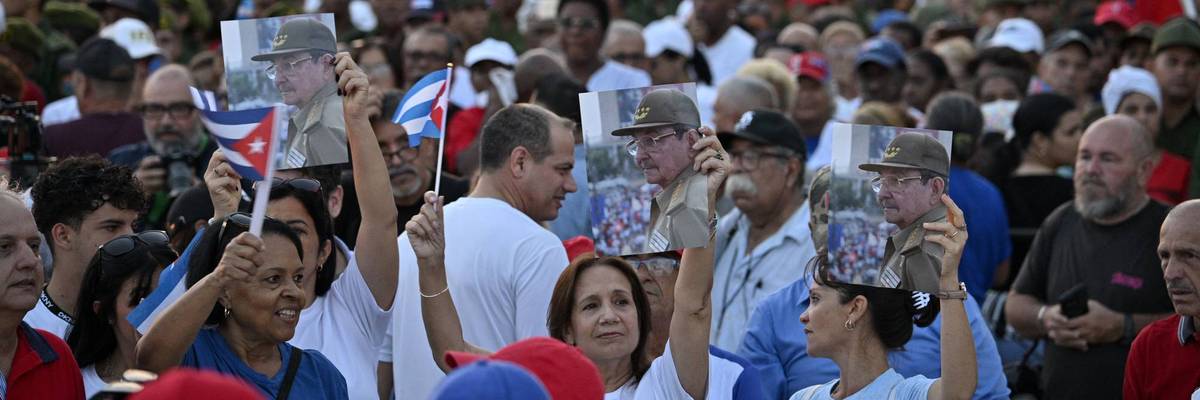
Cubans hold photos of revolutionary hero and former President Raúl Castro outside the US Embassy in Havana on May 22, 2026 amid threats of attack by the United States.
(Photo by Adalberto Roque/AFP via Getty Images)
Brett Wilkins
May 22, 2026
COMMON DREAMS
Tens of thousands of Cubans rallied Friday in Havana to denounce the Trump administration’s indictment of former President Raúl Castro and threats to attack the island nation, whose socialist government has been preparing its citizens to defend their homeland and revolution against US aggression.
“No disrespect is shown to the heroes of the homeland!” Cuban President Miguel Díaz-Canel said as people flooded the streets outside the US Embassy in Havana. “History and traditions are not insulted without a response! That does not happen in Cuba!”
The massive rally followed Wednesday’s US Department of Justice indictment of revolutionary hero Raúl Castro, who served as president for a decade after his older brother, Fidel Castro, stepped down in 2008. The DOJ indicted Castro for his alleged role in the 1996 shoot-down of planes operated by the counterrevolutionary group Brothers to the Rescue after repeated warnings that they had violated Cuban airspace.
Rallying under the slogan “Raúl is Raúl”—originally popularized during the transitional period of rule between the Castros to highlight the younger brother’s reforms—Cubans vowed to defend their revolution in the face of the latest US threats.
“This new aggression has united us more and elevated the honor, dignity, and anti-imperialist spirit of a people already recognized around the world for their brave resistance to any form of subordination to the empire,” Díaz-Canel said.
Cuban legislator Mariela Castro, Raúl’s granddaughter, told rallygoers that “we are prepared for combat.”
“No one is going to kidnap him. I can assure you of that,” she said, alluding to the US invasion and abduction of Venezuelan President Nicolás Maduro on dubious narco-terrorism charges earlier this year. “Neither him nor anyone else.”
“My father is very calm, watching and smiling,” Castro added. “Here, we are prepared to fight imperialism. Cuba is a small and poor country, but one with experience confronting US imperialism. We know that as long as there is an anti-imperialist revolution, there will be a gigantic and ruthless enemy.”
Critics noted the hypocrisy of the Castro indictment, given the ongoing illegal US bombing of boats that the Trump administration claims—without providing evidence—were smuggling drugs in the Caribbean Sea and Pacific Ocean.
“Washington has no moral authority to judge anyone,” Gerardo Hernández, coordinator of the Committees for the Defense of the Revolution, said, referring to the boat-bombing campaign, which has killed nearly 200 people in close to 60 reported attacks. “Cuba is a people of peace and reaffirms its legitimate right to self-defense.”
“Cuba does not constitute a threat to US security,” he continued. “On the contrary, Cuba is a state under attack by the United States.”
Observers have pointed to the decadeslong US-backed campaign of anti-Castro terrorism against the Cuban people, including the 1976 bombing of Cubana Flight 455, a commercial airliner with 73 people aboard, including 11 Guyanese nationals and 24 teenage members of Cuba’s junior Olympic fencing team. Perpetrators of the attack enjoyed safe haven in the United States, mainly in Miami, where the city celebrated a day in honor of one of the bombing’s alleged masterminds.
“The Cuban people reaffirm the unwavering decision to defend their homeland and revolution,” Hernández added. “With the greatest determination, they reaffirm their absolute and firm support for Army General Raúl Castro.”
Mariela Castro said that “my family, like all Cuban families, is waiting for instructions to know where we need to go” in the event of a US attack.
As US Secretary of State Marco Rubio—whose parents immigrated to the United States from Cuba during the US-backed dictatorship that preceded the Castro-led revolution—said Thursday that the chances of a “negotiated and peaceful agreement” with Havana are “not high,” Deputy Cuban Foreign Minister Carlos Fernández de Cossío acknowledged that his country is preparing for war, asserting that “we would be naive not to.”
Cuban officials have been circulating a pamphlet titled a “Family Guide for Protection Against Military Aggression.” The publication warns that the US is preparing “to launch a military assault and destroy our society with the aim of perpetuating capitalism... and annihilating the dream of our Commander-in-Chief, Fidel Castro.”
The pamphlet instructs Cubans to pack survival kits and seek shelter in the event of air-raid alerts. It also contains life-saving first aid instructions.
“Should the enemy attack, our Revolution will defend itself until victory is achieved and the aggressor is expelled,” the pamphlet states.
US President Donald Trump recently tightened the internationally condemned 65-year US economic embargo on Cuba, imposing a fuel blockade that has exacerbated an energy emergency characterized by blackouts and deadly suffering among the most vulnerable Cubans, including sick people and children.
Last month, Trump said that “we may stop by Cuba after we’re finished” with the illegal US-Israeli war of choice against Iran. The president has also stated he believes he’ll “be having the honor of taking Cuba,” language echoing the 19th-century US imperialists who conquered the island along with Puerto Rico, Guam, and the Philippines from Spain in another war waged on dubious pretense.
“Whether I free it, take it—I think I can do anything I want,” Trump said of the island and its 11 million inhabitants.
BreakThrough News interviewed Havana residents earlier this week about the specter of US attack.
“We Cubans have to protect ourselves,” elderly Havana resident Juan Hernández said. “We’re not going to hand any Cuban over to a foreigner, because that would be immoral. It would be treason.”
Hernández accused the US of “provocation” in order to “justify invading the country,” adding “that would only lead to bloodshed on both sides.”
“Besides,” he added, “Cuba isn’t a threat to them at all. What does Cuba have? Do we have atomic bombs? Do we have anything? We have nothing.”
Washington has long deployed economic pressure to challenge Cuba’s fiercely independent social and foreign policies
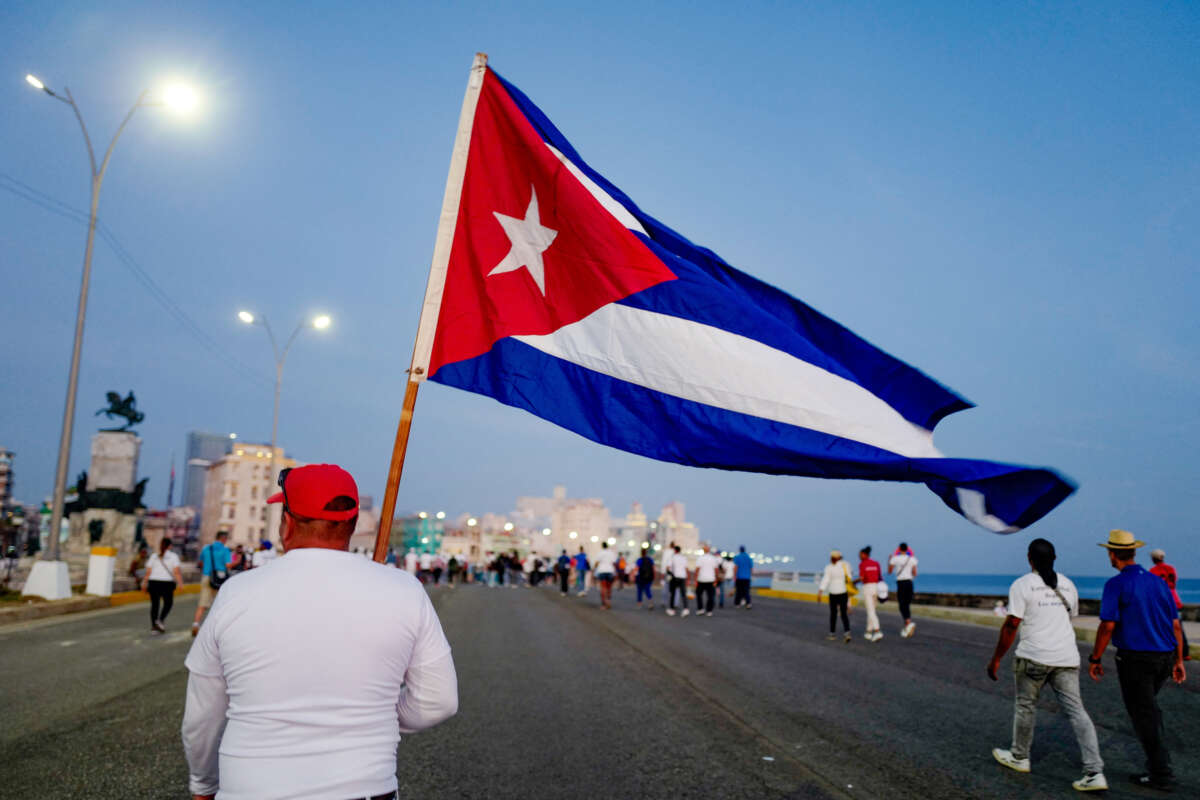
At night, the U.S. Naval Base in Guantánamo, Cuba appears like a tangled string of Christmas lights along the coastline, casting colored silhouettes across the waves that lap ashore. Sailors and Marines pack the local sports bar blaring pop music. Others frequent the bowling alley or play video games under intense strobe lights. Yet in contrast to the brightly illuminated base, nighttime blots out the nearby town of Caimanera, as a result of the energy blockade on Cuba that President Donald Trump tightened this January.
Trump claims that the embargo is necessary to promote a democratic transition in Cuba. Similarly, U.S.-backed opposition leaders in Miami such as Rosa María Payá argue that “the Cuban people [are] grateful” for the sanctions, which will help “make Cuba great again.”
But the truth is far more bitter. Trump’s sanctions are accelerating a social crisis that has immobilized Cuban industry, gutted public services, and forced over 10 percent of the population to leave the island in recent years. Hospitals lack electricity, and grocery store shelves are empty amid rolling blackouts. Ratcheting up pressure, U.S. authorities issued a new raft of sanctions against senior Cuban officials this May, while conducting military reconnaissance flights off the coastline.
Trump’s economic powerplay and preparations for a potential invasion are only the latest moves in an ongoing saga of aggression toward Cuba. Rather than prioritizing democracy, Washington has long deployed economic pressure to challenge the island’s fiercely independent social and foreign policies — above all, its commitment to wealth redistribution, solidarity with liberation struggles, and opposition to U.S. imperial hubris.
Washington’s professed support for democracy in Cuba rings hollow when placed against the historical backdrop. In the 1950s, U.S. officials assisted the island’s dictator Fulgencio Batista, as he attempted to extinguish a popular revolution spearheaded by Fidel Castro. His regime tortured over 700 dissidents to death, dangling mutilated bodies from telegraph poles and tossing them into gutters. While training Batista’s forces, the CIA confided that they were “too enthusiastic” about torture. Nonetheless, Washington organized “to prevent a Castro victory,” fearing that his leftist agenda would undermine its vice-like grip over Cuban politics and commerce.
After taking power in January 1959, revolutionary leaders nationalized strategic industries, outlawed formal racial segregation, and pursued a breathtaking array of anti-poverty reforms. In response, the State Department promoted “economic warfare” by plotting to reduce access to oil and the U.S. sugar market. Officials emphasized that they should “disguise these actions” as peaceful. But their objective was clear: “to bring about hunger, desperation and overthrow of [the Castro] government.”
In 1961, President John F. Kennedy escalated pressure by bankrolling terrorist operations and a failed invasion at the Bay of Pigs. He also armed counterrevolutionaries that targeted the revolution’s literacy campaign, butchering teachers for teaching peasants to read.
To defend Cuba, Castro stationed Soviet missiles on the island. At the brink of nuclear war, Kennedy vehemently opposed a “no-invasion guarantee” in negotiations with Soviet leaders, while refusing to even talk to Cuban officials. Privately, he was blunt: “our objective is to preserve our right to invade” in an emergency. After the Soviets withdrew the missiles, U.S. officials insisted that their “ultimate objective” remained “the overthrow of… Castro,” sponsoring attacks against industrial sites and “tighten[ing] the noose around the Cuban economy.”
Yet their most cynical ploy targeted Cuba’s youth. As relations deteriorated, the U.S. government organized Operation Peter Pan, which sowed chaos and fractured families by convincing Cubans to ship their children to the United States. To spark a mass exodus, the CIA published false propaganda announcing that authorities planned to abolish parental authority. Radio advertisements warned that socialists would seize and “indoctrinate” every minor. “Don’t let your child be taken!” broadcasts warned.
Meanwhile, the State Department colluded with Father Bryan Walsh and the Catholic Welfare Bureau in Miami, which oversaw the transfer of over 14,000 Cuban children to the United States. Many never reunited with their families. Walsh packed Cuban children into orphanages, foster homes, and makeshift facilities. One Peter Pan survivor, Alex López, recalled living for one year in a snake-infested camp in the Everglades. Residents slept in canvas tents and washed in the swamp. But the worst part was the priests. López described the sadistic cruelty of one of the camp rectors and “being raped by that horrible man.” Many others also experienced sexual abuse, violence, and neglect. Walsh himself forced campers to strip before beating them with paddles. In 2006, one survivor claimed that the priest raped him.
Today, Cuban American leaders cite Operation Peter Pan as an example of principled resistance against communist tyranny. In reality, the operation was a cruel microcosm of U.S. policy toward Cuba, revealing both the cynicism of the counterrevolution and rapacity of Washington. Although under siege, the island became the only Latin American country without malnutrition or illiteracy, prompting UNICEF to call it a “paradise for children” in the region in 2010. Yet it was precisely these reforms that infuriated the U.S. and Cuban elite, turning Cuba into an intolerable symbol of dignity and defiance.
The United States has not only targeted Cuba because of its socialist system but also due to the country’s commitment to radical solidarity. Throughout the Cold War, Cuban leaders repeatedly challenged U.S. aggression abroad and efforts to assert Western supremacy in the Global South.
In particular, Cuba offered a model for decolonization, while actively supporting national liberation movements. In 1959, the Cuban-Argentine revolutionary Ernesto “Che” Guevara led a solidarity trip to Gaza. Afterward, Cuba became a leading champion of Palestinian rights, offering substantial economic and military aid to the Palestine Liberation Organization. It also was a major ally to Vietnamese nationalists during the Vietnam War, sending equipment to build the Ho Chi Minh Trail. And Cuba became a safe haven for political refugees as U.S.-backed dictatorships ravaged Latin America through the 1980s.
Most notably, half a million Cubans fought for decolonization in Africa. Their sacrifices helped Mozambique, Guinea-Bissau, Namibia, and other countries gain independence. Recognizing their contribution, the Algerian leader and herald of Pan-Africanism, Ahmed Ben Bella, declared that without the Cuban Revolution, “no place for justice, for dignity [would exist] in this world.”
Above all, Cuban support for Angola proved decisive. In 1975, U.S. officials encouraged apartheid South Africa to topple President Agostinho Neto and the Popular Movement for the Liberation of Angola (MPLA), which had recently wrested independence from Portugal. Secretary of State Henry Kissinger hoped that ousting Neto’s leftist government would enhance U.S. prestige. But as South African armor approached Luanda, Castro initiated Operation Carlota — airlifting thousands of Cuban troops to repel the invasion.
The historian Piero Gleijeses concludes that the operation embodied a genuine commitment to racial justice. It entailed a sort of reverse passage, as the Cuban descendants of African slaves crossed the Atlantic to vanquish white supremacy and the last vestiges of colonialism. Within months, Black Cuban and Angolan troops repelled the offensive. A South African military analyst lamented that “over 300 years of colonialism” was disappearing. “White elitism has suffered an irreversible blow.”
Cuban solidarity stabilized Angola yet infuriated President Ronald Reagan, who aimed to crush the MPLA and reinforce Pretoria. In Saving Apartheid, Augusta Dell’Omo demonstrates that Reagan mobilized to insulate South Africa from international pressure, prompting Bishop Desmond Tutu to call the U.S. president’s policy “immoral, evil and totally un-Christian.” U.S. officials regarded Cuban forces in Angola with exasperation. Referencing Cuba, Secretary of State Alexander Haig asked Reagan for permission to “turn that island into a fucking parking lot.”
In 1987, the United States again conspired with South Africa, as apartheid forces streamed across the border and cornered Angolan units at the town of Cuito Cuanavale. Cuba responded with a massive troop surge. “[W]e placed ourselves in the lion’s jaws,” Castro recalled, claiming that his soldiers maneuvered “like a boxer who with his left hand blocks the blow and with his right – strikes.” Against the odds, Cuban reinforcements secured a smashing victory. The counteroffensive not only preserved Angola’s sovereignty, but forced South Africa to grant Namibia independence and fatally weakened the apartheid regime. Nelson Mandela concluded that Cuba’s victory was “the turning point for the liberation of our continent, and of my people, from the scourge of apartheid.”
In short, the island’s pugnacious opposition to imperialism made it a permanent target of U.S. aggression. Historically, Cuba has spent a greater proportion of its GDP on foreign aid than virtually any other country. And unlike the United States, it is famous for fighting colonialism and directing medical missions, treating millions of poor patients across the world. Demonstrating their anticolonial convictions, 32 Cuban security personnel died defending Venezuelan territory from Trump’s illegal invasion this January. For these reasons, Washington has regarded Cuba as a threat to U.S. imperial leadership and the geographical hierarchies — in Venezuela, Palestine, Africa, and elsewhere — that it aims to preserve.
After the Soviet Union dissolved, Cuba lost an essential lifeline, and its economy slid into a prolonged crisis. Smelling blood, Cuban American conservatives lobbied to tighten the blockade in order to instigate regime change. Miami remained the strategic base of the counterrevolution, as right-wing residents flexed their political connections to block the normalization of relations, strengthen the embargo, and trigger an uprising.
Despite their pro-democracy rhetoric, conservative Cuban American activists had an embarrassing record. For decades, they had used Florida as a launching pad for violent operations against Cuba, while viciously attacking moderate voices — at one point, perpetrating 45 percent of all terrorist bombings in the world. Far-right community leaders such as Jorge Mas Canosa, Luis Posada Carriles, and Orlando Bosch strafed beaches with machine guns, planted explosives, and even bombed a Cuban airplane killing 73 civilians. “All of Castro’s planes are warplanes,” Bosch explained in a chilling deadpan.
Under Mas Canosa’s guidance, the Cuban American National Foundation (CANF) became the main powerbroker shaping policy. Although posing as an independent grassroots actor, the foundation maintained deep ties to the U.S. government. CANF co-founder Raul Masvidal explained that “the National Security Council wanted to start an organization that would help popularize” its campaign of economic pressure and diplomatic isolation against Cuba.
And the foundation was its answer. Over the 1990s and 2000s, CANF laundered federal funds for activists bombing the island and the electoral campaigns of hardline politicians. The godfather of the Cuban American exile community, CANF president Mas Canosa aimed to turn Cuba into an anarcho-capitalist paradise, promoting “a very aggressive privatization campaign” that “has to be radical and… immediate. Privatize everything.” In 1992, he revamped sanctions with the Cuban Democracy Act, which Sen. Robert Torricelli (D-New Jersey), a leading recipient of foundation funds, designed to “wreak havoc on that island.”
Meanwhile, CANF financed Brothers to the Rescue, a self-identified humanitarian group of airplane pilots helping Cuban rafters reach the U.S. shoreline. Yet Fernando Morais’s book The Last Soldiers of the Cold War demonstrates that the Brothers were intensely political. Flying U.S. government aircraft, they frequently penetrated Cuban airspace to jam transmissions at Havana’s international airport, putting thousands of lives in danger. Director José Basulto boasted that pilots dumped a “tremendous amount” of propaganda exhorting citizens to “overthrow” the socialist state. The Brothers even passed reconnaissance information from flights to Cuban Americans planting bombs on beaches.
In 1996, Cuba shot down two of their aircraft, after persistently warning U.S. authorities against future incursions. Exploiting the incident, CANF pressed President Bill Clinton to sign the Helms-Burton Act, which drastically tightened the blockade. Facing an election year, Clinton signed the bill to win Cuban American votes, while privately recognizing that it violated international law. Beside themselves with victory, CANF then ramped up bombing attacks in Havana to undermine the tourist industry. Posada, who directed the strikes, admitted that Mas Canosa “controlled everything,” slipping him cash “[w]henver I needed money.”
Despite relentless harassment, Cubans successfully rebuilt their economy. Between 1999 and 2014, the election of left-leaning “Pink Tide” governments in Latin America allowed Cuba to escape its isolation, while securing new allies and trade partners. In 2015, President Barack Obama opened talks with Havana, taking the first step toward the normalization of relations. The diplomatic thaw eased restrictions on travel and remittances, relaxed controls on investment, and promoted bilateral cooperation in medical research and other areas.
More than anything, it signaled the failure of U.S. aggression. Since the 1990s, the Cuban American right had led a campaign to strangle the island, attempting everything from economic subterfuge to terrorism. Instead, its efforts revealed the revolution’s resilience, as well as the unrestrained extremism of its leading adversaries.
The Price of Dignity
The thaw did not last long. In 2017, the State Department claimed that Cuba launched “acoustic attacks” against its Havana embassy, harassing U.S. diplomats with a weapon that emitted a high-pitched noise powerful enough to inflict brain injuries. FBI investigators and medical specialists found no evidence that Cuba deployed such technology, or that the sci-fi device even existed. The most likely culprit for the sound was crickets chirping.
Yet Trump exploited the scandal to slam Cubans with heavy sanctions, which President Joe Biden later maintained, instigating a humanitarian crisis. In 2018, Cuba’s infant mortality rate was lower than the rate in the United States. Since then, it has increased 148 percent, as hospitals face acute shortages of medicine and equipment. The Center for Economic and Policy Research bluntly concluded this May that the blockade “has killed a lot of babies.”
While tightening sanctions, the State Department has boosted funding for regime change programs. Leaked documents reveal that officials have plotted in recent decades to build a militant opposition movement. They hope to respond “rapidly, discreetly, and opportunistically” to crises, “hastening a peaceful transition to a… market-oriented society.” The department has funneled illegal funding to government critics, sponsored dissident rappers, and attempted to create a social media platform to spark an uprising. To block access to foreign currency, it is even bullying poor countries into expelling Cuban doctors, depriving some communities of healthcare altogether.
A darling of the Cuban American right, Secretary of State Marco Rubio is leading the latest drive to destabilize the island. Rubio grew up amid the rabid politics and violence of counterrevolutionary Miami. In his memoir, he fondly recalls buying baseball tickets with cocaine money from his brother-in-law, who smuggled drugs with a Bay of Pigs veteran. Since January, he has overseen the energy embargo that frequently plunges the island into darkness.
Claiming Rubio as “one of our own,” CANF debuted a “roadmap” for the island this May, promoting the privatization of healthcare and education, dismantling of welfare programs, and end to “restrictions on profit repatriation.” Authors portray the United States as “the salvation of Cuba,” while asking Cubans to accept Cuban American leadership since, they say, “We know how a capitalist system works.” As the humanitarian disaster worsens, CANF continues to champion hardline tactics, including the indictment against Raúl Castro announced by the U.S. on Tuesday for his role in the 1996 defensive operation against Brothers to the Rescue. Appealing to Cuban American extremists, Trump now speculates about “taking Cuba.”
Nevertheless, Cubans continue to challenge oppression worldwide. The Palestinian doctor Murid Abukhater, who recently studied medicine in Cuba, emphasizes that they educate Palestinians for free to “save the lives of our people” from genocide. This solidarity is breathtakingly poignant since the island’s population has itself lived “under a long siege, just like us in Gaza,” Abukhater explained.
Ultimately, the blockade isolates Cuba precisely because its revolutionary idealism mocks U.S. imperial ambitions. The sanctions are the culmination of seven decades of coercion and obscene hypocrisy. An empire that spreads war is strangling a country that exports doctors. Indeed, a rich government that claims vaccines are dangerous is persecuting a poor society that not only invents vaccines, but shares them with the world. And while celebrating genocide and deportations, U.S. leaders throttle a nation for its defiant tradition of solidarity: Its refusal to tolerate the suffering of the exploited. Decades after the Cold War, Cuba remains an obsessive target of a U.S.-backed counterrevolution, as well as the storm-lashed epicenter of the struggle against U.S. imperialism.
This article is licensed under Creative Commons (CC BY-NC-ND 4.0), and you are free to share and republish under the terms of the license.
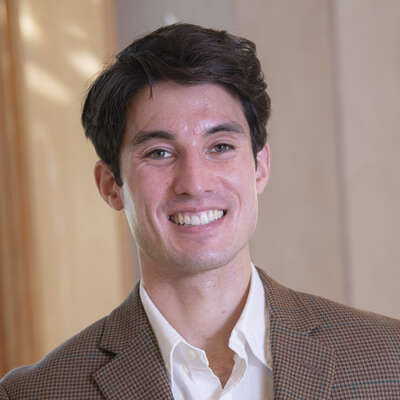
Jonathan Ng
Jonathan Ng is a postdoctoral fellow at the John Sloan Dickey Center for International Understanding at Dartmouth College.