Tuesday, May 26, 2026

'This is a disaster': Trump's stated goals from February thrown in his face on MS NOW

Tom Boggioni
May 26, 2026 
RAW STORY


MS NOW screenshot

The number of goals Donald Trump set out on Feb. 28 when he launched the unprovoked attack on Iran was held up to the light by MS NOW’s David Rohde on Tuesday morning, who made clear the president's war so far has been a failure.

Well beyond the Strait of Hormuz stalemate that has the Trump administration grasping for an answer, Rohde singled out five claims that the president made when he announced the attack, with only one coming to fruition -- and even that appears doubtful after this weekend's events.

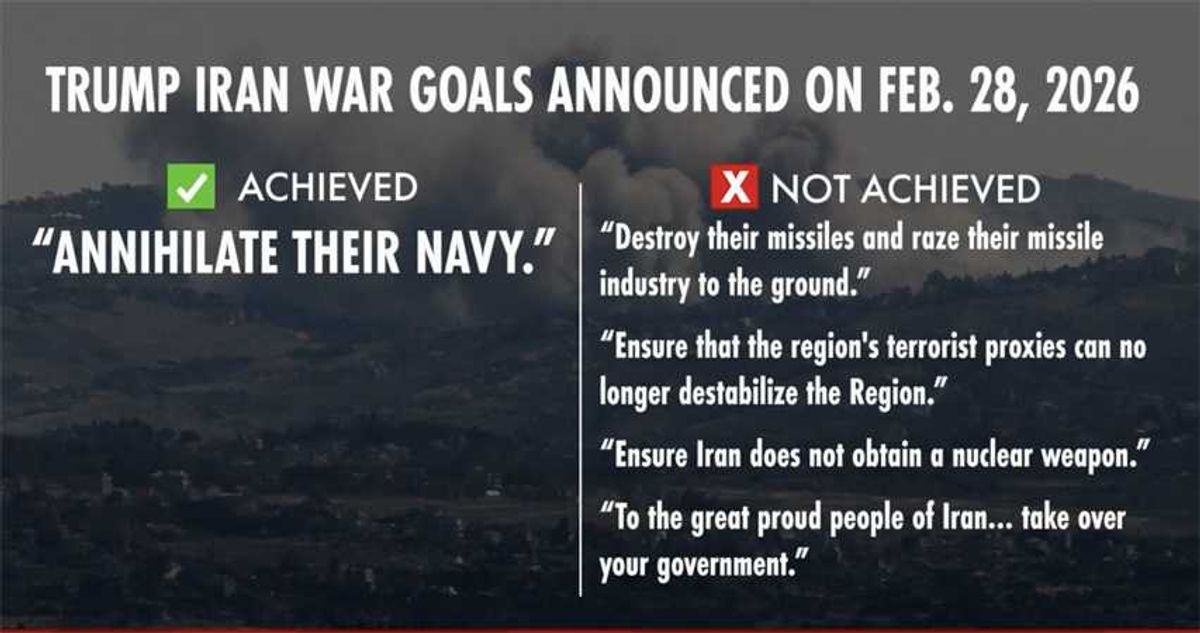
Speaking with “Morning Joe” co-host Jonathan Lemire, Rohde got right to the point as the producers displayed a graphic showing the administration coming up far short of its goals.

“Remind us, please, about the goals that this administration first set out for this conflict and what has actually been achieved,” Lemire prompted his guest.

“Look, I want to give credit to all the service members that are out there in particularly the day after Memorial Day, but this has been a disaster for this administration to have the Secretary of State [Marco Rubio], as we just saw him on his plane, trying to play down, almost trying to placate the Iranians and the American public about how this conflict has gone was extraordinary,” he began.

“I looked up President Trump's speech on February 28th when he announced the war, so achieved: ‘annihilate their navy.‘ Maybe. I mean, I think that's generally true. But this morning, the New York Times has reported that there are hundreds of these speedboats and this — look, I believe the United States Navy, I don't believe the Iranians at all — if they're laying mines with one of these speedboats. That's why it was part of the attack yesterday; that's extraordinary. That shows how emboldened the Iranians are. So that's maybe achieved or partly achieved.”

“And then everything else. 'Destroy their missiles,'” he continued. “The latest assessment is that 70% of Iran's missile capacity remains intact. They have knocked out some of the factories. But again, that is not an achievement. Overall, ensure the region's terrorist proxies no longer destabilize the region — That's not happening at all. That's not even part of these negotiations. And the missiles aren't either.”

“Ensure that Iran does not obtain a nuclear weapon,” he continued. “That's not even part of the current negotiations that will come in this 60-day second round of talks. And then, most tragically, what he said to, as he said to ‘the great people of Iran, take over your government,’ and the regime remains in place.”

“So it's astonishing to me that an American president is in this position,” he concluded. “And they just, you know, this administration … just continues to mismanage this war.”


Trump just went 'all in' while holding 'weak hand' with threat to foreign allies: MS NOW

Tom Boggioni
May 26, 2026 
RAW STORY


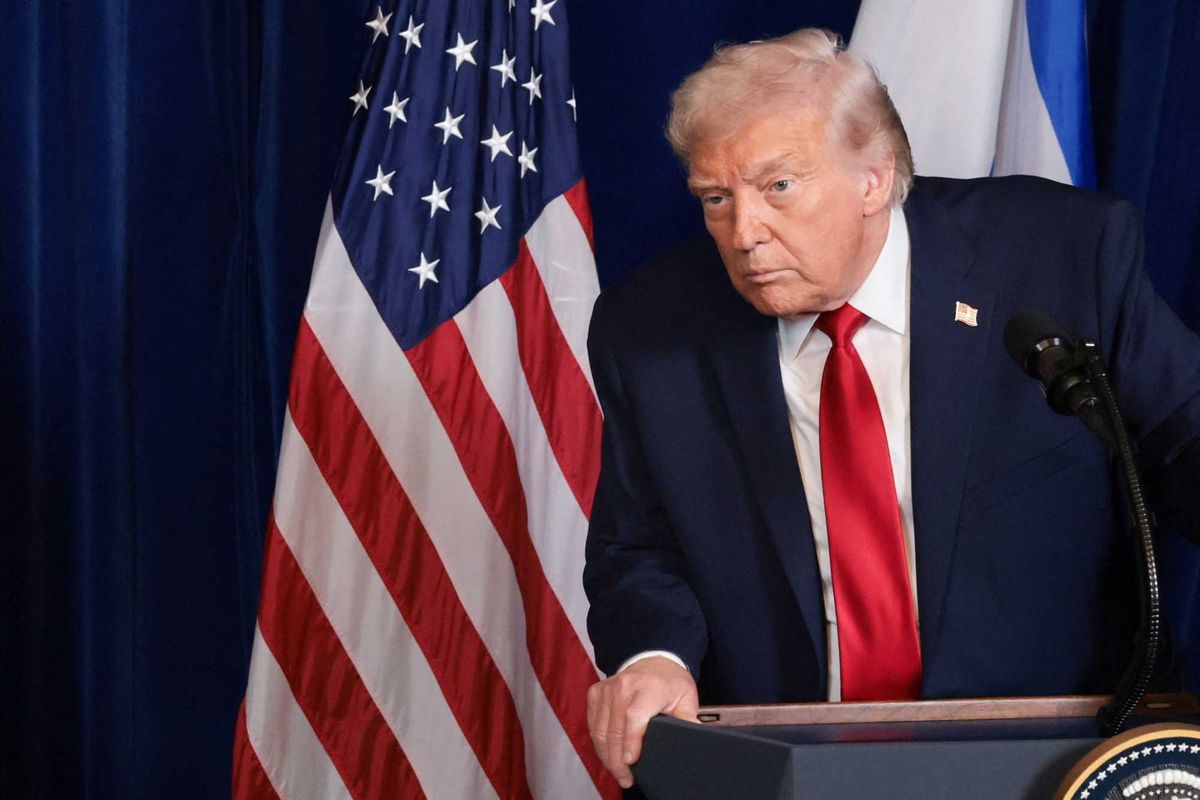
Donald Trump attends a press conference. REUTERS/Jonathan Ernst

Middle Eastern nations that were on the receiving end of a threat from Donald Trump over the holiday weekend called his bluff because he no longer carries the weight he thinks he does.

That was the claim made by MS NOW host Joe Scarborough and Washington Post columnist David Ignatius on Monday morning after the affected nations balked.

Over the weekend, as Trump was boasting that an agreement with Iran was imminent, he then jumped ahead and wrote on Truth Social, “I am mandatorily requesting that all Countries immediately sign the Abraham Accords, and that, if Iran signs its Agreement with me, as President of the United States of America, it would be an Honor to have them also be part of this unparalleled World Coalition.”

As the Washington Post reported, “Analysts, however, expressed doubt that the countries would agree to sign on, especially when tensions are running high amid ongoing conflicts in Iran, Lebanon, and Gaza. Official Iranian policy also calls for the eradication of Israel, and its replacement by a Palestinian state.”

Scarborough jumped into the fray by saying Trump, who has been diminished in the region by the Strait of Hormuz stalemate, doesn’t have the leverage to make such demands.

Stating Trump’s new Iran deal pronouncement is “starting to sound like every other BS peace deal,” Scarborough added, “And I say that I know they're talking, they think they're close, but you have the Iranians saying, no, we're never going to give up our nukes. We're going to continue putting tolls on the strait.”

“And then you have Donald Trump yesterday basically holding a weak hand, actually going all in, saying, okay, Saudi Arabia, okay, Turkey, all right, all these other countries that are never going to join the Abraham Accords, the only way they're going to work is if all of you join the Abraham Accords. And the Saudis have already said, we're not going to do it. We're not going to do it without a Palestinian state. Is there a peace still? Are they really moving forward to one, or is this just more of the same?”

“So, Joe, it is, as your comments suggest, a very confusing and disheartening situation,” Ignatius replied. “It's obvious to me that President Trump badly wants out of this war. He's looking for an exit ramp as hard as he can, he feels that another round of kinetic strikes will be difficult for the U.S. — for the US military it’s unlikely to easily achieve his goals.”

“It will lead, inevitably, to some kind of ground invasion of Iran, which is the last thing that I think he wants. And so he has come up with a peace proposal that is so far short of the war aims that he had when he started,” he added.

Trump officials to send Ebola-exposed Americans to Kenya rather than bring them home: NYT

Bennito L. Kelty
May 26, 2026 
RAW STORY


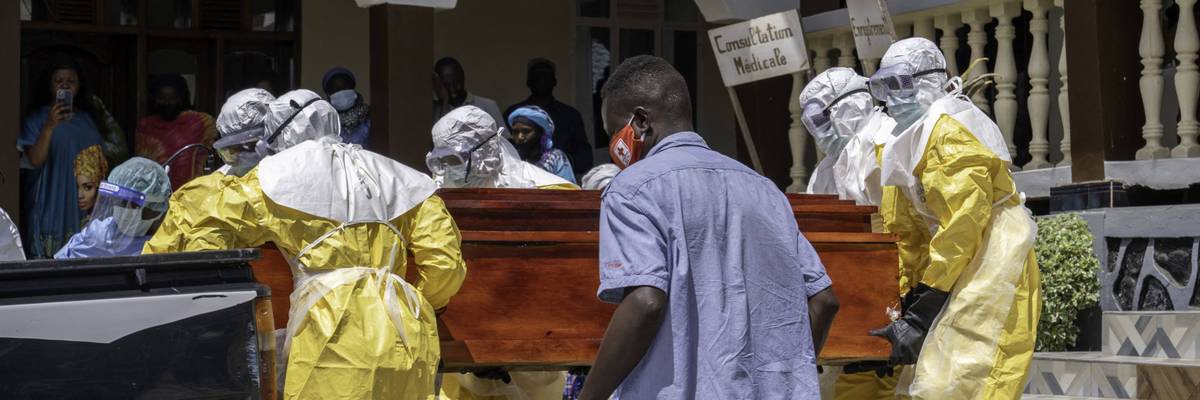
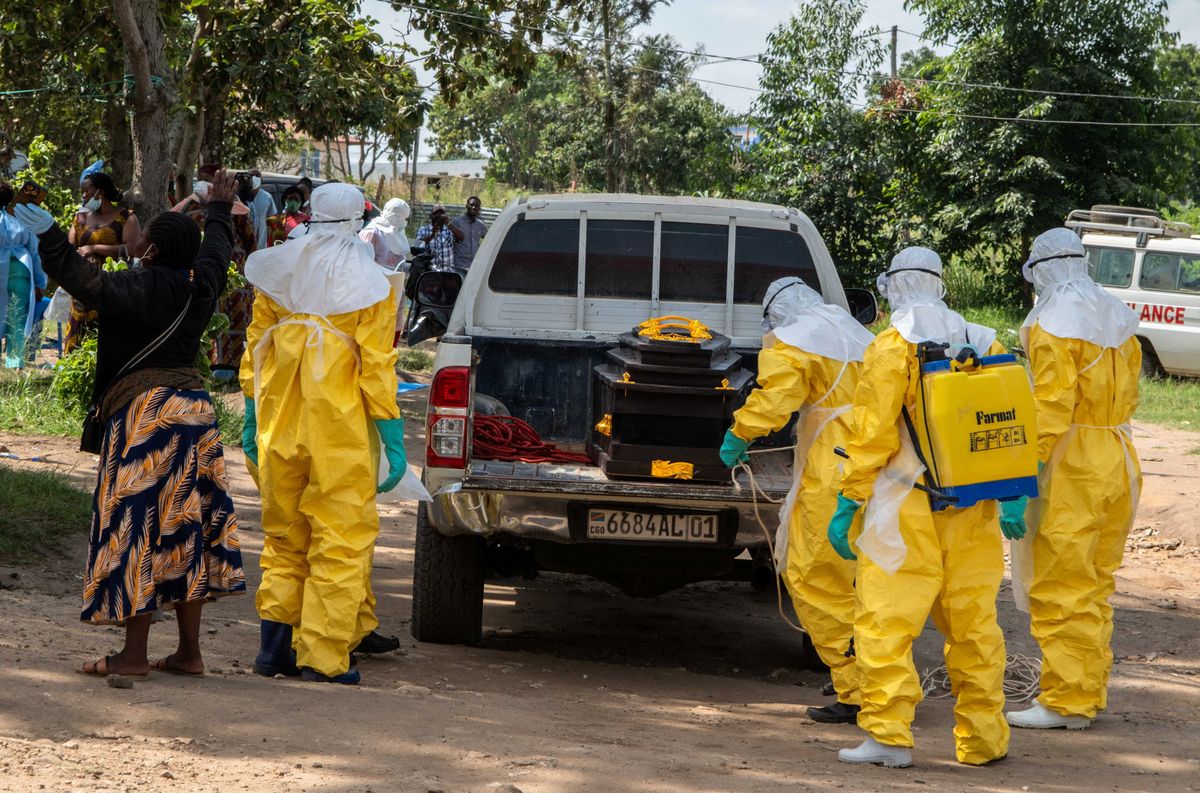
Red Cross workers wearing personal protective equipment (PPE) load on a pickup truck the coffin with the body of Dr Tibenderana Katho Blaise who worked at the Centre Medical Evangelique (CME) in Hoho commune and died of Ebola virus, as aid agencies intensify efforts to contain a new Ebola outbreak caused by the Bundibugyo virus, before his burial in Bunia town, Ituri province, Democratic Republic of Congo, May 26, 2026.
REUTERS/Stringer

The Trump administration wants to send U.S. citizens living abroad who are exposed to the deadly Ebola virus to Kenya rather than bring them home, according to new reporting by the New York Times.

Three people familiar with the Trump administration's plans spoke with the NYT, which noted that previous administrations brought Americans home for observation and treatment.

The outbreak of Ebola is in the Democratic Republic of Congo. The World Health Organization declared it a public health emergency. More than 1,000 cases of Ebola and 200 deaths have been reported during the past 11 days, which makes it the third largest outbreak on record, according to the NYT.

Trump administration insiders told the NYT that the original plan was to send Ebola-exposed Americans to Kenya for monitoring and then to Europe for treatment if they show symptoms.

"But the administration now plans to provide treatment in Kenya as well," insiders told the NYT. Trump officials are already setting up a facility in Kenya where Americans can be quarantined and treated for Ebola, the NYT added.

"Last week, the Trump administration invoked a public health law known as Title 42 to bar immigrants and legal permanent residents who have been in Congo, Uganda, or South Sudan in the previous 21 days from entering the United States," the NYT reported.

"The administration's new plan would also keep U.S. citizens who might have been exposed to Ebola out of the country," two people familiar with the administration's plans told the NYT. "A few dozen Public Health Service officers are now being trained to deploy to Kenya to provide medical care to Americans who are deemed at high risk of developing Ebola."

So far, only a few Americans have been infected, including an American doctor in Germany and six other Americans who were transported to Germany and the Czech Republic for monitoring, according to the NYT.

"Government scientists and physicians who develop symptoms will also be treated in Kenya," the NYT added.
WHO fires back at Rubio over criticism and cites 'lack of understanding' over Ebola crisis

Brett Wilkins,
 Common Dreams
May 25, 2026 


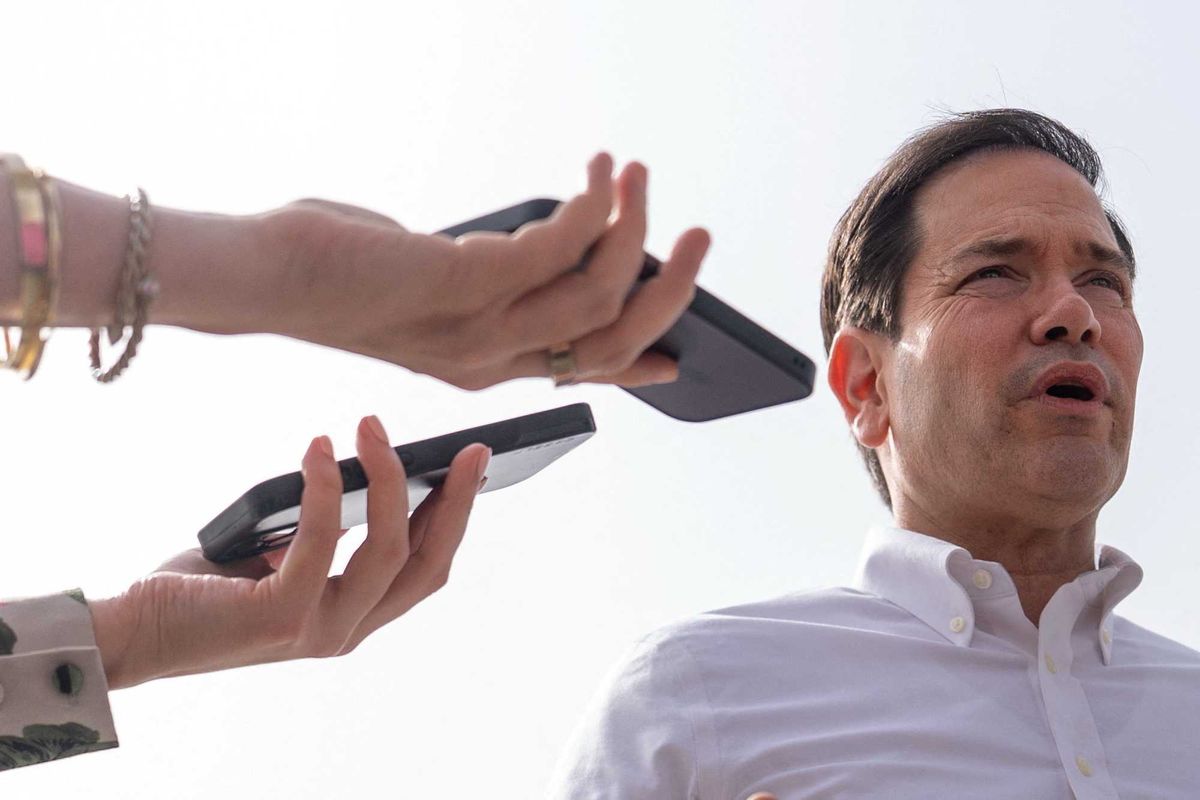
Secretary of State Marco Rubio speaks to the journalists at Indira Gandhi International Airport in New Delhi, India on May 25, 2026. Julia Demaree Nikhinson/Pool via REUTERS


World Health Organization Director-General Tedros ⁠Adhanom Ghebreyesus warned Monday that the swiftly spreading Ebola outbreak in the Democratic Republic of Congo and Uganda “will get worse before it gets better,” as a deadly delay in detecting infections has responders to the epidemic “playing catch-up.”

“The outbreak is spreading rapidly,” Tedros said during a virtual ministerial meeting on the matter. “So far, 101 cases have been confirmed in DRC, with 10 confirmed deaths. But we know the epidemic in DRC is much larger. There are now more than 900 suspected cases and 220 suspected deaths.”

“Countries bordering DRC are at especially high risk and should take immediate action,” he asserted. “In Uganda, there are five confirmed cases and one death.”

Tedros pointed out that “there are several aspects of this outbreak that make it especially challenging.”

“First, the delay in detecting the outbreak means that we are now playing catch-up with a very fast-moving epidemic,” he said. “We are urgently scaling up operations, but at the moment, the epidemic is outpacing us.”

“Second, as you know, the provinces of Ituri and North Kivu are highly insecure, with intensified fighting in recent months, causing more than 100,000 people to be newly displaced,” the WHO chief continued. “There is also significant distrust of outside authorities among the local population. In the past week, there have been two security incidents at health facilities.”

“WHO is fully committed to working under the leadership of the governments of DRC and Uganda, side by side with Africa [Centers for Disease Control and Prevention] and all other partners,” Tedros added. “We will not rest until we bring this outbreak under control.”

Ebola—which typically kills between 25% and 90% of infected people, depending upon the strain of the virus and quality of available medical care—causes widespread and often catastrophic damage to the body’s blood vessels, immune system, and organs.

Critics say US President Donald Trump’s ideologically driven decision to withdraw the US from the WHO, his administration’s dismantling of the US Agency for International Development (USAID), and reduced funding for the US Centers for Disease Control and Prevention’s global public health efforts have adversely affected the response to the current Ebola epidemic, compared with 2014 and 2019 outbreaks.

After US Secretary of State Marco Rubio said last week that the WHO was “a little late” in identifying new Ebola infections, Tedros retorted that “we don’t replace the country’s work, we only support them,” and suggested that Rubio’s comments could be rooted in “a lack of understanding” of the agency and countries’ responsibilities.

While Rubio said that “our number-one objective on Ebola, before anything else... has to be, we can’t have it affect the United States,” public health experts warn that Trump administration actions could make it more likely that the virus will make its way to the country.

There is currently no confirmed CDC director, Food and Drug Administration commissioner, or surgeon general.

Taking aim at Trump’s evisceration of key public health agencies and programs, Congresswoman Rosa DeLauro (D-Conn.) said last week: “Ebola does not wait for bureaucratic reorganizations. It spreads when surveillance systems are weakened, health workers are laid off, clinics lack protective equipment, and communities lose the trusted partners who help detect and contain outbreaks before they become public health emergencies.”

“This is the perfect storm President Trump created,” she continued. “He recklessly dismantled USAID, withheld and slashed other United States assistance to the region, fired critical staff, and created global health chaos. This is not efficiency. It is dangerous neglect.”

“The United States spent years building the relationships, supply chains, laboratories, and community health networks that help stop deadly diseases at their source,” DeLauro added. “The Trump administration tore into that capacity and now wants to pretend the consequences were unforeseeable.”

With Epidemic ‘Outpacing’ Response, WHO Chief Warns Ebola Outbreak Will ‘Get Worse Before It Gets Better’

“The delay in detecting the outbreak means that we are now playing catch-up with a very fast-moving epidemic.”


The coffin of a person believed to have died from Ebola is hoisted by health worker at a hospital in Bunia, in the eastern Democratic Republic of the Congo, on May 25, 2026.
(Photo by Glody Murhabazi/AFP via Getty Images)

Brett Wilkins
May 25, 2026
COMMON DREAMS

World Health Organization Director-General Tedros ⁠Adhanom Ghebreyesus warned Monday that the swiftly spreading Ebola outbreak in the Democratic Republic of Congo and Uganda “will get worse before it gets better,” as a deadly delay in detecting infections has responders to the epidemic “playing catch-up.”

“The outbreak is spreading rapidly,” Tedros said during a virtual ministerial meeting on the matter. “So far, 101 cases have been confirmed in DRC, with 10 confirmed deaths. But we know the epidemic in DRC is much larger. There are now more than 900 suspected cases and 220 suspected deaths.”

“Countries bordering DRC are at especially high risk and should take immediate action,” he asserted. “In Uganda, there are five confirmed cases and one death.”

Tedros pointed out that “there are several aspects of this outbreak that make it especially challenging.”

“First, the delay in detecting the outbreak means that we are now playing catch-up with a very fast-moving epidemic,” he said. “We are urgently scaling up operations, but at the moment, the epidemic is outpacing us.”

“Second, as you know, the provinces of Ituri and North Kivu are highly insecure, with intensified fighting in recent months, causing more than 100,000 people to be newly displaced,” the WHO chief continued. “There is also significant distrust of outside authorities among the local population. In the past week, there have been two security incidents at health facilities.”

“WHO is fully committed to working under the leadership of the governments of DRC and Uganda, side by side with Africa [Centers for Disease Control and Prevention] and all other partners,” Tedros added. “We will not rest until we bring this outbreak under control.”

Ebola—which typically kills between 25% and 90% of infected people, depending upon the strain of the virus and quality of available medical care—causes widespread and often catastrophic damage to the body’s blood vessels, immune system, and organs.

Critics say US President Donald Trump’s ideologically driven decision to withdraw the US from the WHO, his administration’s dismantling of the US Agency for International Development (USAID), and reduced funding for the US Centers for Disease Control and Prevention’s global public health efforts have adversely affected the response to the current Ebola epidemic, compared with 2014 and 2019 outbreaks.

After US Secretary of State Marco Rubio said last week that the WHO was “a little late” in identifying new Ebola infections, Tedros retorted that “we don’t replace the country’s work, we only support them,” and suggested that Rubio’s comments could be rooted in “a lack of understanding” of the agency and countries’ responsibilities.

While Rubio said that “our number-one objective on Ebola, before anything else... has to be, we can’t have it affect the United States,” public health experts warn that Trump administration actions could make it more likely that the virus will make its way to the country.


There is currently no confirmed CDC director, Food and Drug Administration commissioner, or surgeon general.

Taking aim at Trump’s evisceration of key public health agencies and programs, Congresswoman Rosa DeLauro (D-Conn.) said last week: “Ebola does not wait for bureaucratic reorganizations. It spreads when surveillance systems are weakened, health workers are laid off, clinics lack protective equipment, and communities lose the trusted partners who help detect and contain outbreaks before they become public health emergencies.”

“This is the perfect storm President Trump created,” she continued. “He recklessly dismantled USAID, withheld and slashed other United States assistance to the region, fired critical staff, and created global health chaos. This is not efficiency. It is dangerous neglect.”

“The United States spent years building the relationships, supply chains, laboratories, and community health networks that help stop deadly diseases at their source,” DeLauro added. “The Trump administration tore into that capacity and now wants to pretend the consequences were unforeseeable.”


Trump Admin’s Insistence That Ebola Is Other Countries’ Problem Is ‘Opposite’ of Successful 2014 Response

“Unsure how any US citizen would feel comfortable deploying” to help fight the outbreak, said one doctor, “knowing our government would not make sure they are okay if something happened.”


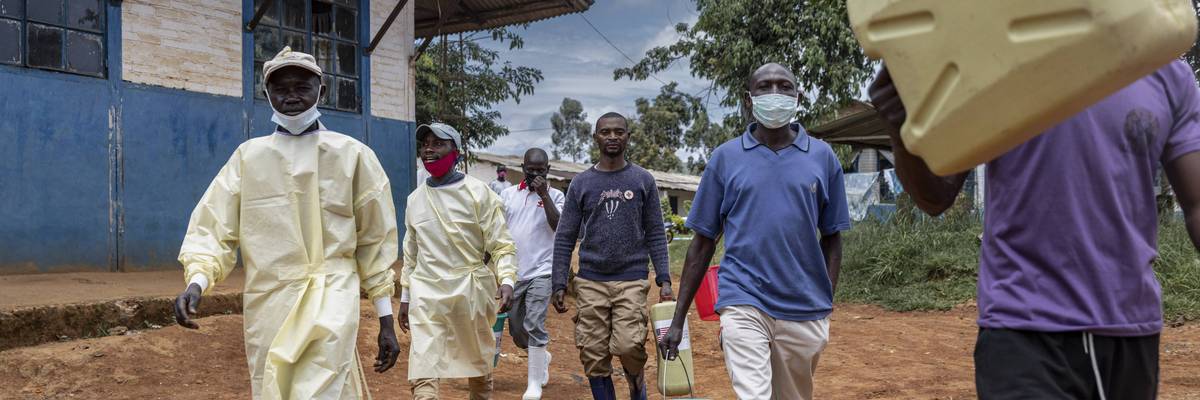
Health workers and local volunteers carry disinfectant containers and sanitation equipment outside the General Referral Hospital during the Ebola outbreak response on May 21, 2026 in Mongbwalu, Democratic Republic of Congo.
Photo by Michel Lunanga/Getty Images


Julia Conley
May 22, 2026
COMMON DREAMS

The United Nations’ emergency relief office on Thursday was mobilizing $60 million to fight the rapidly spreading Ebola outbreak in the Democratic Republic of Congo, with the body’s under-secretary-general for humanitarian affairs saying relief teams are “fully mobilized” and “applying lessons from previous outbreaks,” with a focus on building community trust and communicating with governments.

But with the Trump administration having dismantled the US Agency for International Development (USAID) and slashed funding and staffing for the Center for Disease Control and Prevention’s (CDC) global efforts, the response is largely missing a key feature that helped with containment during the 2014 and 2019 outbreaks—the involvement of the US government and public health teams—and Secretary of State Marco Rubio signaled on Thursday that was unlikely to change.

In comments to the press, Rubio said the Trump administration’s top priority is that Ebola doesn’t reach the US—even if that means imposing travel restrictions against the guidance of the World Health Organization (WHO)—and described an approach that one disaster relief leader said was antithetical to the actions the US took in previous Ebola outbreaks.

“Our number-one objective on Ebola, before anything else, and we think it’s terrible what’s happening there to the people... Our number-one thing has to be, we can’t have it affect the United States,” said Rubio. “We can’t have Ebola cases coming here.”


The secretary of state noted that an Air France flight that had been headed for Detroit was diverted to Montreal on Wednesday after a passenger from Congo was found to have boarded the plane “in error.”

The Department of Homeland Security announced new restrictions this week saying that all travelers who have been in the DRC, Uganda, and South Sudan in the past 21 days—including US citizens and permanent residents—can only enter the US through Washington Dulles International Airport.

When WHO declared the Ebola outbreak a public emergency of international concern last weekend, the agency noted that “no country should close its borders or place any restrictions on travel and trade.”

“Such measures are usually implemented out of fear and have no basis in science,” said WHO in its guidance, which also noted “state parties should be prepared to facilitate the evacuation and repatriation of nationals (e.g. health workers) who have been exposed” to Ebola.

Jeremy Konyndyk, president of Refugees International and a former USAID disaster relief official, said the message sent by Rubio was “insanely counterproductive.”

By sending the message that the US is prioritizing that Ebola stays outside US borders above all, said Konyndyk, the Trump administration is telling “any US health workers that if they get infected trying to contain the outbreak, they won’t be allowed home.”

“In the 2014 outbreak we did the opposite, because we knew that posture would undermine the response and extend the outbreak,” he said.

Dr. Krutika Kuppalli, who specializes in infectious diseases and deployed to West Africa in 2014 to help fight the Ebola outbreak that killed more than 11,000 people, said she did so “with the understanding that if something happened my government would take care of me.”

“Unsure how any US citizen would feel comfortable deploying, knowing our government would not make sure they are okay if something happened,” said Kuppalli.

The Trump administration’s refusal to directly help US healthcare workers impacted by the outbreak has already resulted in two doctors being sent to European countries including Germany and the Czech Republic for treatment.

As he emphasized that Ebola cannot reach US shores, Rubio sent out messages of thanks to German and Czech officials for admitting the two medical workers to their hospitals.

With more than 170 deaths and about 750 infections suspected in the “rapidly” spreading Ebola outbreak and cases reported in Uganda as well as the DRC, public health experts are warning that the crisis is likely to “get worse before it gets better” and that its impact has likely already reached farther than initial numbers show due to a lack of surveillance on the ground.

Former CDC Director Robert Redfield told NewsNation on Thursday that “normally when we have these Ebola outbreaks, and I had three of them when I was CDC director, all of which were in the DRC, normally we recognize them when we have five, 10 cases, you know, at most.”

“This one really wasn’t picked up until there was over 100 cases,” he said.

WHO Director General Tedros Adhanom Ghebreyesus said Friday that the risk assessment for Ebola is “very high at the national level, high at the regional level and low at the global level.”

As Common Dreams reported earlier this week, experts have pointed to President Donald Trump’s cuts to foreign assistance and public health initiatives as reasons the outbreak had already spread as far as it did when the emergency was declared this week.

The State Department announced on Monday it was mobilizing $13 million in assistance to help contain the outbreak; the US spent more than $5 billion to fight to 2014 epidemic that hit several countries in West Africa.

“The United States cannot quickly reverse our abdication of leadership on the global health stage,” wrote Dr. Craig Spencer, an emergency medicine physician who helped treat Ebola patients in 2014 and survived the disease himself. “But we can bolster our response to this crisis. There should be a steadfast commitment to working closely and coordinating with essential partners like the WHO. We need to mobilize funding and experts, speed up the development of new treatments, and increase resources for protective equipment and expanded testing.”

Embattled nonprofit demands case against them be axed after Trump's recent court loss

Matthew Chapman
May 26, 2026 
RAW STORY


The Southern Poverty Law Center has moved for a dismissal of all charges against them by the Trump administration, citing the president's recent comments as proof of vindictive prosecution and the precedent of another recent Trump case that just got thrown out.

The Trump administration argued in their Alabama-based indictment that the longtime hate group watchdog was actually funding hate groups by using paid informants and committing fraud by omitting their use of such informants from their donors, allegations the SPLC has called ridiculous.

In the filing, flagged on X by Adam Klasfeld of All Rise News, the SPLC quotes Trump's recent proclamation that "The Southern Poverty Law Center, one of the greatest scams in American History, has been charged with FRAUD," as proof of a "top-down, retributive campaign in which he directed his Justice Department to go after those individuals and groups he deemed his political enemies."

Furthermore, the SPLC cited the recent vindictive prosecution dismissal of criminal gang charges against Salvadoran immigrant Kilmar Abrego Garcia, whose case has dragged on for over a year after the administration mistakenly deported him to a foreign torture facility in violation of court orders.

The SPLC has long been a target of wrath by Republicans, partly due to its designation of certain organizations close to the GOP, like the anti-LGBTQ Family Research Council, as hate groups or extremist groups.
Observers roast Stephen Miller's 'nonsense' about food stamps: 'Lies so easily'

Bennito L. Kelty
May 26, 2026 
RAW STORY


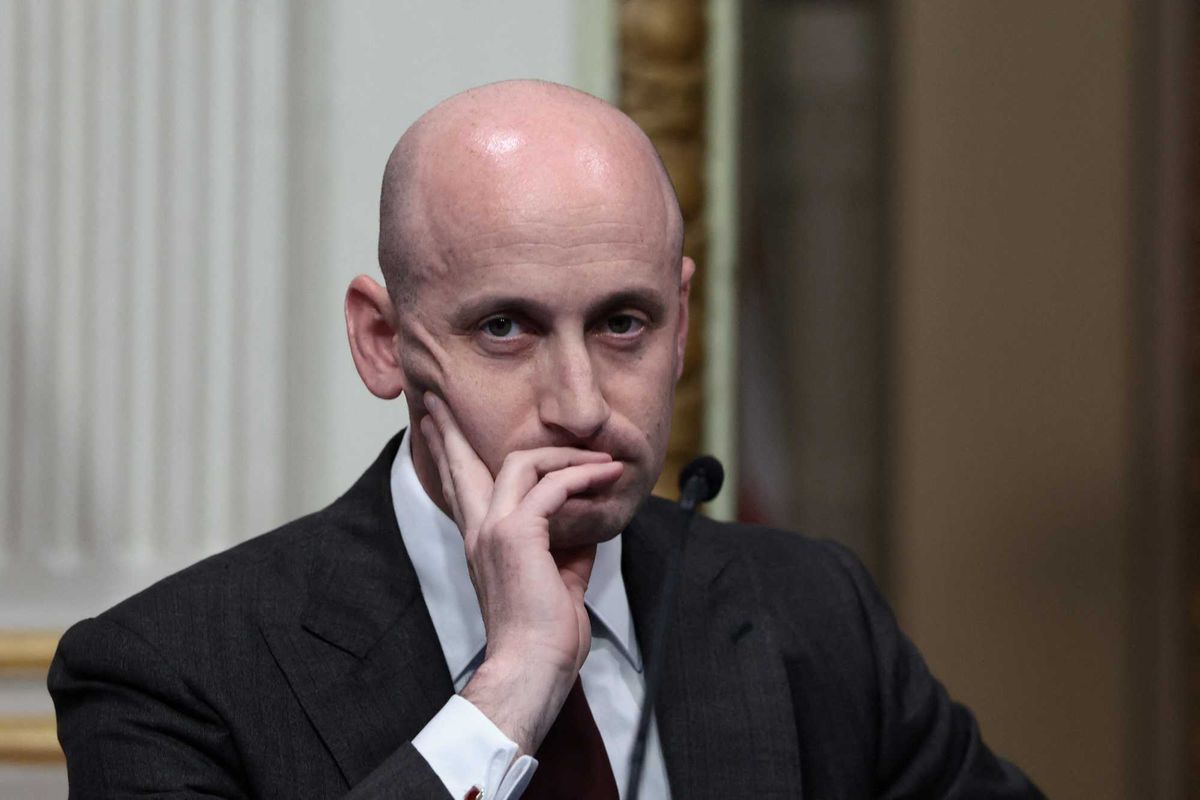
White House Deputy Chief of Staff Stephen Miller looks on during a roundtable on anti-fraud initiatives with Republican state attorneys general in the Indian Treaty Room of the Eisenhower Executive Office Building (EEOB) on the White House campus, in Washington, D.C., U.S., May 26, 2026. REUTERS/Evelyn Hockstein

Online commentators are tearing into White House Deputy Chief of Staff Stephen Miller's latest comments on welfare and food stamps as an obvious lie.

"The way most welfare works in most states and most places is we take your word for it," Miller said on Thursday. "If you file a piece of paper, and you say your kids are hungry, you are going to get food stamps. We don't check."

The reactions called out Miller's explanation of welfare and food stamps. Journalist Jamie Satterfield described it as a "bald faced lie" in a post on X.

"You can't walk into a government agency and walk out with food stamps by simply saying your kids are hungry," Satterfield wrote. "It should be that way, but it's not. And if Miller doesn't know that, he shouldn't be spewing this nonsense."

"Not a single word of this is true," wrote Capitol Hill journalist Julian Andreone.

Writer Jared Ryan Sears summed up Miller's comments as "ridiculous" in his reaction.

"Every government program requires extensive amount of documentation to get anything," Sears wrote. "All this administration does is lie, and somehow millions of Americans continue to believe them."

"He lies so easily, doesn't he?" asked tennis icon turned commentator Martina Navratilova.

Missouri Democratic congressional candidate Fred Wellman also called Miller's comments a "bald-faced lie" in his post.

"These programs don't just hand out money. They hate people that struggle," Wellman wrote. "They hate people who aren't rich."


Trump’s New Green Card Application Policy Is Unlawful, Immoral, and Xenophobic


The policy effectively redesigns the system such that for some nationalities—predominantly those from African, Asian, Caribbean, and Latin American countries—no realistic legal pathway to obtain a green card exists.


Jordan Liz
May 26, 2026
Common Dreams


On May 22, the US Citizenship and Immigration Services issued a policy memo announcing a major shift in immigration policy. As USCIS Spokesperson Zach Kahler explains: “From now on, an alien who is in the US temporarily and wants a Green Card must return to their home country to apply, except in extraordinary circumstances. This policy allows our immigration system to function as the law intended instead of incentivizing loopholes.”


This new policy is unlawful, immoral, and xenophobic. Under the Immigration and Nationality Act (INA) as well as the LIFE Act, Congress created various pathways for immigrants to apply for “adjustment of status.” This allows a temporary legal resident to apply for legal permanent resident (LPR) status without having to leave the US.

Such adjustments are not limited to “extraordinary circumstances.” As the USCIS Policy Manual makes clear:
Aliens who are present in the United States and who are beneficiaries of approved immigrant petitions may generally file an application with USCIS to adjust their status to that of an LPR, or they may depart the United States and apply for an immigrant visa abroad. One reason Congress created the adjustment of status provision was to enable certain aliens physically present in the United States to become LPRs without incurring the expense and inconvenience of traveling abroad to obtain an immigrant visa. Congress has added additional adjustment of status provisions to: Ensure national security and public safety; Advance economic growth and a robust immigrant labor force; Promote family unity; and Accommodate humanitarian resettlement.


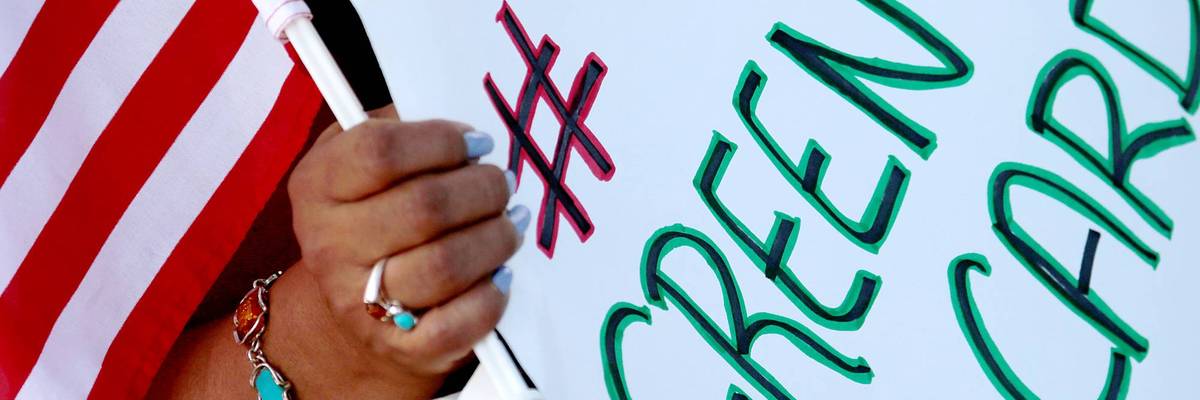
A demonstrator holds a small American flag and sign during a demonstration outside the LA Federal Detention Center on Wednesday, August 26, 2020.
(Photo by Luis Sinco / Los Angeles Times via Getty Images)

If Congress intended “adjustment of status” to be limited to “extraordinary circumstances,” then they would have made that clear. What’s more, if that was their intention, then they would not have consistently added more adjustment provisions. The fact of the matter is that neither the plain language of the relevant statutes nor the history of “adjustment of status” guidelines justify this policy revision. Rather than “returning to the original intent of the law” as USCIS Director Joseph Edlow claims, the agency is twisting the law to satisfy President Donald Trump’s desires.

That USCIS had the audacity to even release such an obviously politically motivated and illegal policy speaks to the broader decline in the integrity of American institutions.

As former USCIS senior adviser Doug Rand noted, “Trump has banned people from over 100 countries from returning to the US, so forcing them to go abroad for consular processing is no pathway at all.” This includes nationals from Iran, Iraq, Syria, Nigeria, Somalia, and Yemen—countries that Trump has bombed in his second term; as well as Cuba, which is still suffering under a US oil blockade and sanctions.

For those from countries not included in one of Trump’s travel bans, the new process will be significantly more expensive, time-consuming, and complicated. Applicants will be forced to leave their loved ones and wait months or years before they can return to the US.

Now, the memo does acknowledge “limited exceptions” to this new requirement. This includes people on “dual intent” visas such as the H-1B (for specialized workers) or O-1 (for those with “extraordinary ability or achievement”), as well as “immigrant categories where only adjustment of status provides a pathway to permanent resident status.” While the memo fails to specify, the latter may include refugees and asylum-seekers.

Two points are worth emphasizing here: First, the policy memo states that “adjustment under most provisions is granted only as ‘a matter of discretion and administrative grace.’” Maintaining lawful status under a H-1B or O-1 visa “is not sufficient, on its own, to warrant a favorable exercise of discretion.” As Kahler further clarified in an email to Newsweek on May 24, “People who present applications that provide an economic benefit or otherwise are in the national interest will likely be able to continue on their current path.” He added, others “may be asked to apply abroad depending on individualized circumstances.”

Ultimately, however, as the memorandum makes clear, USCIS officers are advised to consider “if approval of the alien’s adjustment of status application is in the best interest of the United States.” This means weighing multiple factors, including “the applicant’s moral character.”

Second, even if one of the “limited exceptions” applies to refugees, it may amount to very little given the Trump administration’s concerted efforts to weaken the US Refugee Admissions Program (USRAP).

In October 2025, the Trump administration lowered the cap on the number of refugees the US will admit to 7,500. Between October 2025 and April 2026, the US only admitted 4,499 refugees. All, except three from Afghanistan, were South African.

In November 2025, USCIS issued a memo ordering the review of about 233,000 refugees who entered the US between January 20, 2021 and February 20, 2025. It also halted all processing of green card applications for refugees who entered during that period.

As part of their operations in Minnesota in January 2026, the Department of Homeland Security (DHS) and USCIS launched a sweeping initiative to re-review and potentially terminate the protective status of refugees who had not yet obtained permanent resident status. This led to more than 100 refugees with no criminal records being arrested by Immigration and Customs Enforcement on allegations of fraud, transferred to detention centers in Texas, and threatened with deportation.

The USCIS policy effectively redesigns the system such that for some nationalities—predominantly those from African, Asian, Caribbean, and Latin American countries—no realistic legal pathway to obtain a green card exists. For all others, it becomes a matter of administrative discretion—or more precisely, Trump’s discretion. The true dividing line here is not whether one contributes economically to the US or follows its laws, but rather whether Trump believes a person comes from a “shithole” country or a “nice” country.

This divide has a further implication: Under Trump’s birthright ban, only children born of US citizens and lawful permanent residents automatically acquire citizenship. If the Supreme Court upholds his order, and if this policy revision survives its inevitable lawsuit, then it would dramatically alter who could become a citizen. This has been an underlying goal of Trump’s immigration agenda from the start.

Kahler insists that this policy is necessary to close a dangerous loophole that immigrants exploit to stay in the US indefinitely. He remarks, “When aliens apply from their home country, it reduces the need to find and remove those who decide to slip into the shadows and remain in the US illegally after being denied residency.”

This is bullshit, plain and simple. US Customs and Border Protection calculated that in 2024 the US visa overstay rate was 1.15%. “In other words, 98.85% of the in-scope nonimmigrant visitors departed the United States on-time and in accordance with the terms of their admissions.”

The true goal rather is to force people to leave the US and have consular officers abroad quickly and quietly reject their applications without any consideration for due process or the applicant’s legal rights. As the CATO Institute reports, even prior to this new policy, DHS had already cut green card approvals by roughly half.

Hopefully, the courts or Congress will intervene and put an end to this policy. However, that USCIS had the audacity to even release such an obviously politically motivated and illegal policy speaks to the broader decline in the integrity of American institutions. Even if this attempt fails, the Trump administration will continue to go after immigrants. They will not stop; so, neither can we. We must remain vigilant and continue to keep our communities safe.


Our work is licensed under Creative Commons (CC BY-NC-ND 3.0). Feel free to republish and share widely.


Jordan Liz
Jordan Liz is an Associate Professor of Philosophy at San José State University. He specializes in issues of race, immigration and the politics of belonging.
Full Bio >


‘Absurd and Cruel’: Critics Decry Trump Rule Change for Green Card Applicants


The policy change means “we could have families separated for months or years,” said one expert.


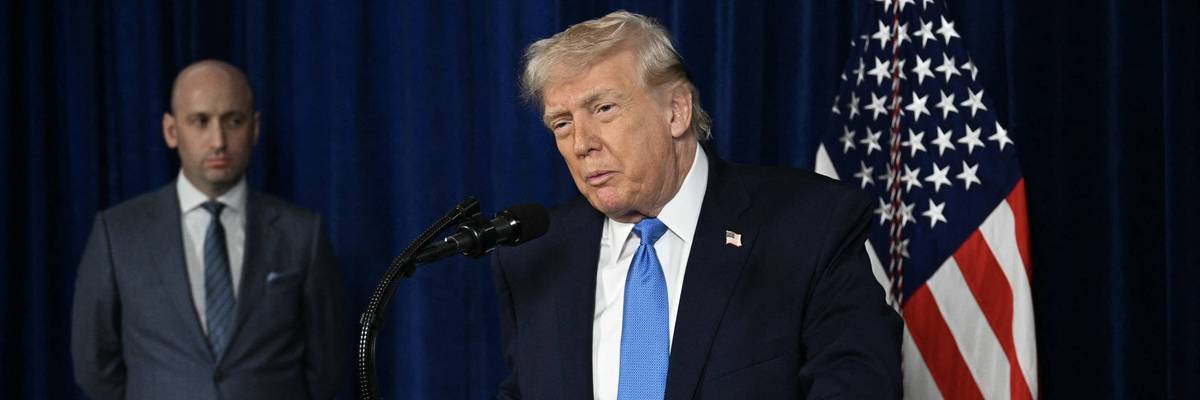
Deputy Chief of Staff Stephen Miller looks on as US President Donald Trump speaks to the press at his Mar-a-Lago residence in Palm Beach, Florida, on January 3, 2026.
(Photo by Jim Watson / AFP via Getty Images)

Brad Reed
May 23, 2026
COMMON DREAMS

Critics are slamming the Trump administration for implementing a new rule that foreigners who apply for green cards must do so from abroad.

US Citizenship and Immigration Services (USCIS) on Friday announced that foreigners currently in the US who want to establish permanent legal residency must first return to their countries of origin to apply for a green card.

This announcement broke with decades of US immigration policy, which made it possible for immigrants in the US to obtain green cards without having to leave the country.

Doug Rand, a former senior advisor at USCIS under President Joe Biden, said in an interview with The Associated Press that “the goal of this policy is very explicit,” which is to block a path to citizenship “for as many people as possible.”

Sarah Pierce, a former USCIS policy analyst, told The New York Times that the rule change could have particularly dire consequences to foreigners who are married to US citizens and will now have to apply for permanent residency from overseas.

“Our consular processing system through which they would have to apply is already overburdened,” Pierce explained. “So that means we could have families separated for months or years.”

Aaron Reichlin-Melnick, senior fellow at the American Immigration Council, similarly noted that the new policy “could force people to leave their jobs, homes, and families for weeks or months, all at their own expense” just to stay in a country where they have already established roots.

Reichlin-Melnick said that the full scope of the policy isn’t yet clear because there are several unknown details about how broadly it will be applied, but added that “in the meantime, hundreds of thousands of immigrants now have to worry about upending their lives to get a legal status that they are entitled to under our laws.”

Drop Site News reporter Ryan Grim argued that the new policy rips the mask off Trump administration claims that they aren’t opposed to all immigration, they simply want to reduce undocumented immigration.

“The talking point that we do want legal immigration, we just want people to get in line and follow the rules, is BS,” Grim commented. “This is an attempt to blow up the line, blow up the rules, and make it insanely difficult to immigrate legally.”

Rep. Chuy García (D-Ill.) echoed Grim’s comments by pointing out that the new policy shows the Trump administration’s disdain for immigration overall.

“This new policy will force thousands of LEGAL immigrants, including spouses of US citizens, to leave their homes, families, and jobs for weeks or even months to get their green card outside the US,” said García. “This is an absurd and cruel policy.”

Rep. Adriano Espaillat (D-NY), chairman of the Congressional Hispanic Caucus, condemned the new policy for targeting “students, scientists, entrepreneurs, spouses of US citizens, and other individuals following legal immigration processes.”

“Aspiring lawful permanent residents are valued members of our communities, workforce, and economy,” Espaillat emphasized. “I will continue fighting to protect the rights of aspiring green card holders and immigrant families.”


Do US War Crimes Doom the World to Endless War and Chaos?

The supposedly unlimited freedom of action attained by disdaining and trampling international law and institutions has proven to be a double-edged sword.


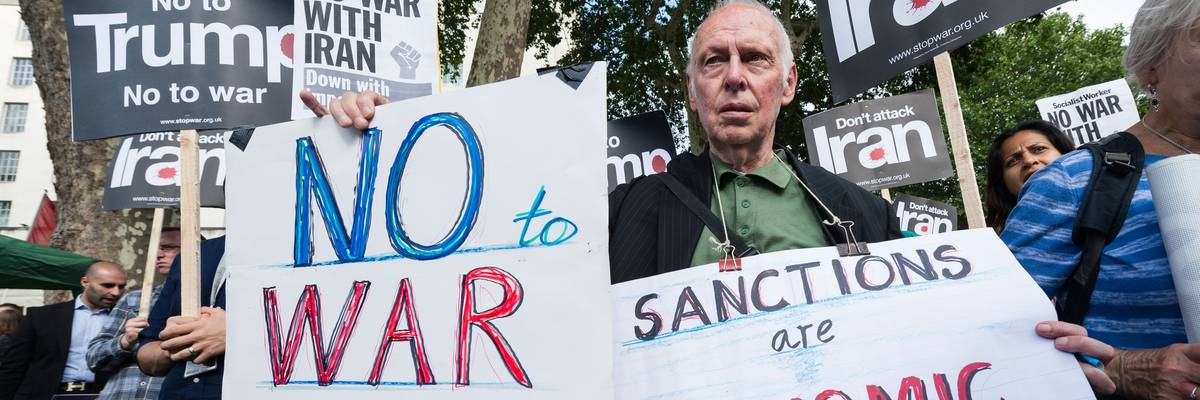
Anti-war demonstrators gather outside Downing Street on 26 June, 2019 in London, England, to call on the government to publicly oppose the escalation of conflict between Donald Trump’s administration and Iran and demand that military action is ruled out.
(Photo: Wiktor Szymanowicz / Barcroft Media via Getty Images)
Common Dreams

On May 24, Iran rejected President Trump’s latest fake peace deal, confirming that he had misrepresented what Iran had agreed to and that the two sides are still very far apart, on nuclear enrichment, on control of the Strait of Hormuz, on peace in Palestine and Lebanon, and on lifting US sanctions, paying war reparations, and Iran’s $100 billion in frozen assets.

Iran’s conditions for a peace agreement are necessarily uncompromising, in response to the US record of using negotiations as cover for sneak attacks, and the charade of one-sided “ceasefires with Israeli characteristics,” in which the US and Israel routinely ignore and violate every ceasefire they agree to, including the present ones in Gaza, Lebanon, and Iran.

Since no agreement with the United States or Israel is worth the paper it’s written on, it’s hard to imagine an agreement that would really protect Iran from future attacks. Without a more radical change in US policy, the United States and Israel will keep attacking Iran, in open violation of the UN Charter, no matter what they all agree to.

The only effective ways Iran has found to protect its land and its people are to build strong military defenses, including the capacity for devastating retaliation, and to retain control of the Strait of Hormuz, regardless of the impact on the world’s oil and gas supply and the global economy. By attacking Iran, the United States and Israel forced it to defend itself and triggered a war that is reshaping the Middle East and possibly the world.

The final sinking of the neocon dream in the troubled waters of the Persian Gulf provides the US and the world with a historic chance to recommit to a more peaceful and democratic international order.

Losing this war is forcing the United States to finally start reevaluating the neoconservative tactics it has blindly substituted for a rational US foreign and military policy since the 1990s: sanction; threaten; bomb; kill; destroy; occupy; escalate; leave countries mired in violence and chaos—in Afghanistan, Iraq, Haiti, Somalia, Libya, Syria, Yemen, Ukraine, Palestine and Lebanon—never admit defeat; never question American exceptionalism or superiority.

The systematic US disdain for the rule of international law that undergirds this policy appears to make peace impossible in today’s world. But the final sinking of the neocon dream in the troubled waters of the Persian Gulf provides the US and the world with a historic chance to recommit to a more peaceful and democratic international order.

Since the end of the Cold War, the United States has effectively exempted itself from the entire system of treaties, international laws and agreements that are supposed to govern international affairs, starting with the UN Charter, which prohibits the threat or use of force between countries, and the Geneva Conventions, which protect civilians, prisoners-of-war and wounded soldiers and sailors from the impacts of war.

These treaties were drawn up and universally adopted in the wake of the Second World War, to “save succeeding generations from the scourge of war,” as the UN Charter says in its preamble. President Roosevelt returned from his Yalta conference with Churchill and Stalin in 1945 to tell a joint session of Congress that they were designing the United Nations as a “permanent structure of peace.”

“It ought to spell the end of the system of unilateral action, the exclusive alliances, the spheres of influence, the balances of power, and all the other expedients that have been tried for centuries—and have always failed,” FDR told Congress. “We propose to substitute for all these, a universal organization in which all peace-loving Nations will finally have a chance to join.”

The UN Charter codified and strengthened the age-old common law prohibition against international aggression, and the renunciation of war as an instrument of national policy in the 1928 Kellogg Briand Pact, which German leaders tried at Nuremberg were sentenced to death for violating.

However, amid overblown Western triumphalism after the end of the Cold War, a new generation of US leaders, like Madeleine Albright and Dick Cheney, came to see the UN Charter and Geneva Conventions as obstacles to their ambitions to further expand US global power by more widespread and unrestricted use of military force.

Believing that the new imbalance in military power freed them from compliance with post-1945 treaties and conventions based on the hard-earned wisdom of past leaders in two world wars, the US and its allies unleashed their armed forces to attack and invade other countries, torture, rape and kill prisoners, and massacre civilians.

US officials assumed that the new military imbalance so greatly favored the United States that neither the UN, international courts, other powerful countries, nor even the entire people of the world could enforce the rules of international law and the laws of armed conflict on the United States if it chose to ignore them.

It is ironic, and deeply frustrating and confusing to US officials, to find out that what they hailed as a position of overwhelming power and impunity has led them to squander America’s day in the sun and waste the chance that its great good fortune provided to improve the quality of life for Americans and their neighbors.

The supposedly unlimited freedom of action attained by disdaining and trampling international law and institutions has proved to be a double-edged sword. There is no such thing as unlimited military power, short of the mass suicide of nuclear war. The idea that America’s virtually unlimited investment in weapons and war would give it the final word in every dispute was a mirage, as even Trump is now finding out.

As Americans reexamine the state of the world and the conflicts by which warmongering US leaders have tried to define it, it is obvious that war and military power do not lead to peace or prosperity, for Americans or anyone else. The more countries the Pentagon and the CIA take aim at, the more people they kill, and the more resources our leaders throw at them, the more other people all over the world rightly come to see the United States as a threat to their own lives and futures.

Governments around the world face difficult choices between meeting the needs and aspirations of their own people or complying with the hegemonic and undemocratic demands of the United States.

After holding itself up as the champion of democracy and freedom for 250 years, the United States is only accelerating its own decline by wasting trillions of dollars, and what little is left of the world’s good will, on this failed, ill-fated bid for global imperial power.

When the United States rose to great power in the first half of the 20th century, its leaders were wise enough to recognize that exercising naked imperial power would not succeed in a world still fighting to free itself from the ravages of European colonialism. So FDR and his colleagues based the UN system on sovereign equality between nations, and created a framework for international relations that the whole world could agree to.

While the United States and Israel commit systematic and barbaric war crimes, presuming themselves immune from accountability, the world is slowly—too slowly—coming to grips with the international cooperation needed to enforce the “permanent structure of peace” that all countries have agreed to live by.

Like all legal and political systems, the success or failure of the UN system rests on whether the most powerful countries will agree to live by the same rules as the others. The veto is a poison pill that corrupts the system, as Albert Camus predicted when it was unveiled in 1945.

“If this report is accurate, … it would effectively put an end to any idea of international democracy,” Camus wrote in Combat, the underground French Resistance newspaper he edited. “The world would be ruled by a directorate of five powers… The Five would thus retain forever the freedom of maneuver that would be forever denied the others.”

However, the UN has developed the “Uniting For Peace” process, which allows the General Assembly to hold Emergency Special Sessions (ESS) on international problems when a veto prevents the Security Council from acting to resolve them. The General Assembly used that process to resolve the Suez Crisis in 1956, and it has been using it, albeit intermittently and inadequately, to address the crisis in Palestine since 1997.

In response to a request from the General Assembly in its Emergency Special Session on Palestine, the International Court of Justice ruled that the Israeli occupation is illegal and must end without delay. And so, the General Assembly passed a resolution demanding that Israel must bring “to an end without delay its unlawful presence in the Occupied Palestinian Territories… and do so no later than” September 2025.

Israel did not comply, so the General Assembly must take further steps, such as an arms embargo and an economic boycott. But it does have the means to do so and just needs to muster the political will.

While the United States and Israel commit systematic and barbaric war crimes, presuming themselves immune from accountability, the world is slowly—too slowly—coming to grips with the international cooperation needed to enforce the “permanent structure of peace” that all countries have agreed to live by, and on which the lives of millions of vulnerable people and the future of humanity depend.

While US leaders are finally realizing that they do not have the power to intimidate and conquer the whole world, the American people are gradually understanding that we have an even greater power, the power to refuse to fight their criminal wars, and to insist on making peace and cooperating with all our neighbors on this small planet that we all share.


Our work is licensed under Creative Commons (CC BY-NC-ND 3.0). Feel free to republish and share widely.


Nicolas J.S. Davies

Nicolas J. S. Davies is an independent journalist and a researcher with CODEPINK. He is the co-author, with Medea Benjamin, of War in Ukraine: Making Sense of a Senseless Conflict, available from OR Books in November 2022, and the author of Blood On Our Hands: the American Invasion and Destruction of Iraq.
Full Bio >


Trump faces a 'humiliating' war defeat that could leave 'irreversible damage': analyst

Robert Davis
May 26, 2026
RAW STORY

Long-time journalist Dan Rather warned President Donald Trump in a new Substack essay on Tuesday that the president faces a "humiliating" loss in Iran, one that would leave "irreversible damage" in its wake.

Trump has claimed on multiple occasions that the U.S. is winning the war in Iran because the country's bombing campaigns took out Iran's top political and military leaders and have decimated Iran's nuclear weapons infrastructure. For instance, Trump claimed on Truth Social on April 9 that he had achieved a "real victory" in Iran because Iran "will never have a nuclear weapon."

However, Rather argued in his essay that Trump's explanation of how the war is going is "insulting your intelligence," referring to his readers.

"Anyone who claims victory in this disaster is insulting your intelligence," Rather wrote. "If — and this is a very big if — the United States can somehow return to the pre-war status quo, it would be a stunning reversal of present realities."

Since the war began, Iran has effectively shut the Strait of Hormuz to international trade. The waterway accounts for about 20% of the global energy trade, and energy prices across the U.S. and Europe have increased significantly over the last 12 weeks of war.

"Significant and near irreversible damage has been done," Rather wrote. "The Middle East is forever changed because of Trump. Our allies now look upon us with suspicion at best, derision at worst. Relationships are strained to the point of breaking throughout the region and Europe. Allied trust is gone, while in Iran the regime remains in control."

World leaders seem to be "grinning" because of the war, Rather argued, and the war has also seemed to embolden Iran's regime to stall as long as possible.

"Iran looks to be very much in control, and therefore, much of the world will see this as an embarrassing if not humiliating defeat for Donald Trump. Russian and Chinese leaders are grinning," he wrote.

"At this juncture, Trump is trapped. He has no good options. Nonetheless, he will try to spin a win," he added.
No Matter Who Wins the Iran War, the Global Economy Is Losing

The most vulnerable populations of the Global South are suffering ever-increasing distress, while most of the world has been experiencing rising inflationary pressures and increasing interest rates on government bonds.


A man refills a small container of gas at a Bangchak Corporation Public Company Limited station in Bangkok, Thailand, on March 26, 2026.
(Photo by Matt Hunt/Anadolu via Getty Images)

Karthik Sankaran
May 26, 2026
Responsible Statecraft

For all the uncertainty about what will happen next on the military and diplomatic front in the Iran war, there is certainty about what has already happened on the economic front. And it is not good.

The world has seen a spike in oil prices that has been moderated so far by large drawdowns in global oil reserves. In addition, the most vulnerable populations of the Global South are suffering ever-increasing distress, while most of the world has been experiencing rising inflationary pressures and increasing interest rates on government bonds. And even if the US stock market appears relatively unperturbed, a version of this unpleasant mix has also hit the United States.

Global oil prices are much higher than they were before the war, with the financial market benchmark price of Brent crude late last week (down to $91 on weekend news of a possible deal), well above the $60 per barrel of early January. That said, crude prices have been relatively stable within a broad range over the last two months despite a dramatic drop in energy shipments out of the Persian Gulf since the war began.

According to the International Energy Agency (IEA), as of May 13, the cumulative shortfall in global oil deliveries from the Gulf was roughly 1 billion barrels. This shortfall has been absorbed by reduced oil demand (a consequence of higher prices); increased production outside the Gulf; and by a drop in global oil inventories of roughly 250 million barrels, as these were released to hold down prices in the absence of new production from the Gulf coming to the market. However IEA head Fatih Birol warned last week that inventories were dropping at an unsustainable pace, particularly with summer driving season approaching in the Northern Hemisphere.

For all that US energy exporters might benefit from higher global oil prices, US consumers do not.

The biggest shock from the higher cost (and outright shortage) of fuel, petrochemicals, and fertilizers is being felt by the poorest in the Global South. A recent story in The New York Times described how the price for transporting corn into refugee camps in Somalia had doubled or even tripled, as had the price of water at diesel-powered public tubewells. Meanwhile, protests this week in Kenya against fuel price hikes have led to four deaths, and political and financial stresses are mounting across the continent.

In India, sharp jumps in the price of Liquid Petroleum Gas have hit urban households hard, particularly those whose breadwinners work in small-scale industrial establishments. Many such enterprises rely on LPG as fuel and have shut down, displacing a workforce composed of recent migrants from the countryside. And because informal migrant workers in the city do not have access to India’s price-controlled public distribution systems, they have been forced to purchase cooking fuel on the black market at exorbitant rates. The combination has sparked fears of a repeat of a mass return to the countryside, as happened in the Covid-19 summer of 2020.

Stories like these abound across the Global South. A report from the World Food Program (WFP) two months ago (when the war was two weeks old) projected that 45 million more people could be thrust into acute hunger if the war persisted. And a panel of global officials had already warned the world at the International Monetary Fund meetings in Washington in mid-April that even an immediate cessation of the war would require at least two months before global shipping approached a semblance of normalcy.

Weakness in the real economy of many developing countries has been compounded by financial pressures in the form of larger trade deficits driven by the jump in oil prices, higher inflation, depreciating currencies, drawdowns in central bank reserves, and the threat of central bank rate hikes to keep inflation in check even if the economy is weakening.

In the face of such pressures, many countries were forced to sell foreign exchange or gold reserves to defend their currencies from further depreciation. According to Bloomberg, losses in the Philippines amounted to 8.1% of all reserves, in India to 5.1%, and in Indonesia to 3.8%. India has also imposed stiff tariffs and other restrictions on gold imports, and Prime Minister Narendra Modi has urged Indians to avoid “unnecessary foreign travel,” in additional efforts to limit further pressure on the Rupee from non-energy imports or tourism. And Malawi is reportedly selling not just gold reserves but also semi-processed gold bars bought from local miners.

Europe is less dependent on Persian Gulf oil, with only 7% of it sourced there, as opposed to Asia, which draws roughly 60% of its oil from the region. Even so, it is not immune to the impact of higher prices, with the European Commission’s economic czar warning that the continent faces a stagflationary shock. As a relatively wealthy continent, the EU (and the UK) can afford to grant fiscal subsidies to affected businesses, thus reducing the pain there. However, such measures also force the need to reduce oil demand on the poorest countries that are unable to afford such backstops.

Latin America has proven more resilient to the shocks from the Iran war, helped by the fact that Argentina, Brazil, Colombia, and Ecuador are all net energy exporters, while Mexico runs a small energy deficit but buys most of its natural gas from the US. Chile is the sole large outlier on the front. Still, the energy trade might cushion most major Latin American currencies from sharp depreciation and financial stress, but as an agricultural exporter, the region is vulnerable to higher fertilizer prices and to inflation that could force central banks to raise interest rates.

In the United States, the administration has downplayed the impact of the war on the American people and emphasized how the dramatic increase in US oil production has led to a substantially lower reliance on imported energy. Treasury Secretary Scott Bessent has said that the administration’s policies of “energy abundance” have helped the country withstand the shocks from the Iran War. And President Donald Trump said in April that “the United States imports almost no oil through the Hormuz Strait and won’t be taking any in the future…We don’t need it.”

In his recent remarks, Bessent observed that the war had also allowed the US to “focus on the opportunity at hand” as global demand for US energy surged. And, indeed the war has led to a dramatic increase in US exports of crude oil and downstream products. A recent piece in The New York Times noted that the US has exported an additional 145 million barrels of oil since the war began, leading to an increase in revenues of roughly $50 billion.

However, the flip side to this is that US consumers have reportedly spent an extra $40 billion on gasoline prices since the war began. For all that US energy exporters might benefit from higher global oil prices, US consumers do not. And research from the New York Fed suggests that lower-income households were hit much harder by higher energy prices, changing travel patterns in order to keep their gasoline budgets from getting out of hand.

American agriculture, meanwhile, has been hit with a double whammy as two major operating costs, fertilizer and diesel, have both seen sharp price increases. A report last month by the Farm Bureau suggested that 70% of all farmers say they are unable to afford all the fertilizer they need. This in turn could translate into lower crop yields and higher food prices—a worry that is even more pronounced among smallholders in the Global South, underlying the global effects of this war.

And while the US stock market has remained relatively buoyant through all this, boosted primarily by Artificial Intelligence and Semiconductor stocks, there are signs of deeper worries in global bond markets, including in the United States. Concerns over inflationary pressures driven by rising energy and food prices have combined with worries over the rising fiscal costs associated with increased defense budgets, fuel subsidies, and massive reconstruction needs to push global bond yields up significantly.

After annual consumer price inflation in the US jumped to 3.8% (far above the Federal Reserve’s 2.0% inflation target), the US Treasury’s 30-year bond hit its highest yield in 30 years last week. And while that might be good news for those who own newly issued bonds and will receive the interest paid on them, it is less favorable for those looking to buy or refinance a home as mortgage rates rise alongside US government bond yields.

Thus, the impact of this war within the US might not be as severe as that in large parts of the Global South, but even within America, there will be many more who lose than gain from the economic consequences of this war.


© 2023 Responsible Statecraft


Karthik Sankaran

Karthik Sankaran is a senior research fellow in geoeconomics in the Global South program at the Quincy Institute. Previously, he served as director for global strategy at the Eurasia Group, where he worked with country and regional teams to chart feedback loops among political and geopolitical risks, macroeconomics, and market responses. He has written for the Financial Times, Barron’s, and FPRI.
Full Bio >