Tuesday, June 02, 2026


Chinese mining giant Zijin wins Canadian approval for $4bn takeover of Africa-focused Allied Gold

Chinese mining giant Zijin wins Canadian approval for $4bn takeover of Africa-focused Allied Gold
/ bne IntelliNewsFacebook
By bne IntelliNews June 2, 2026

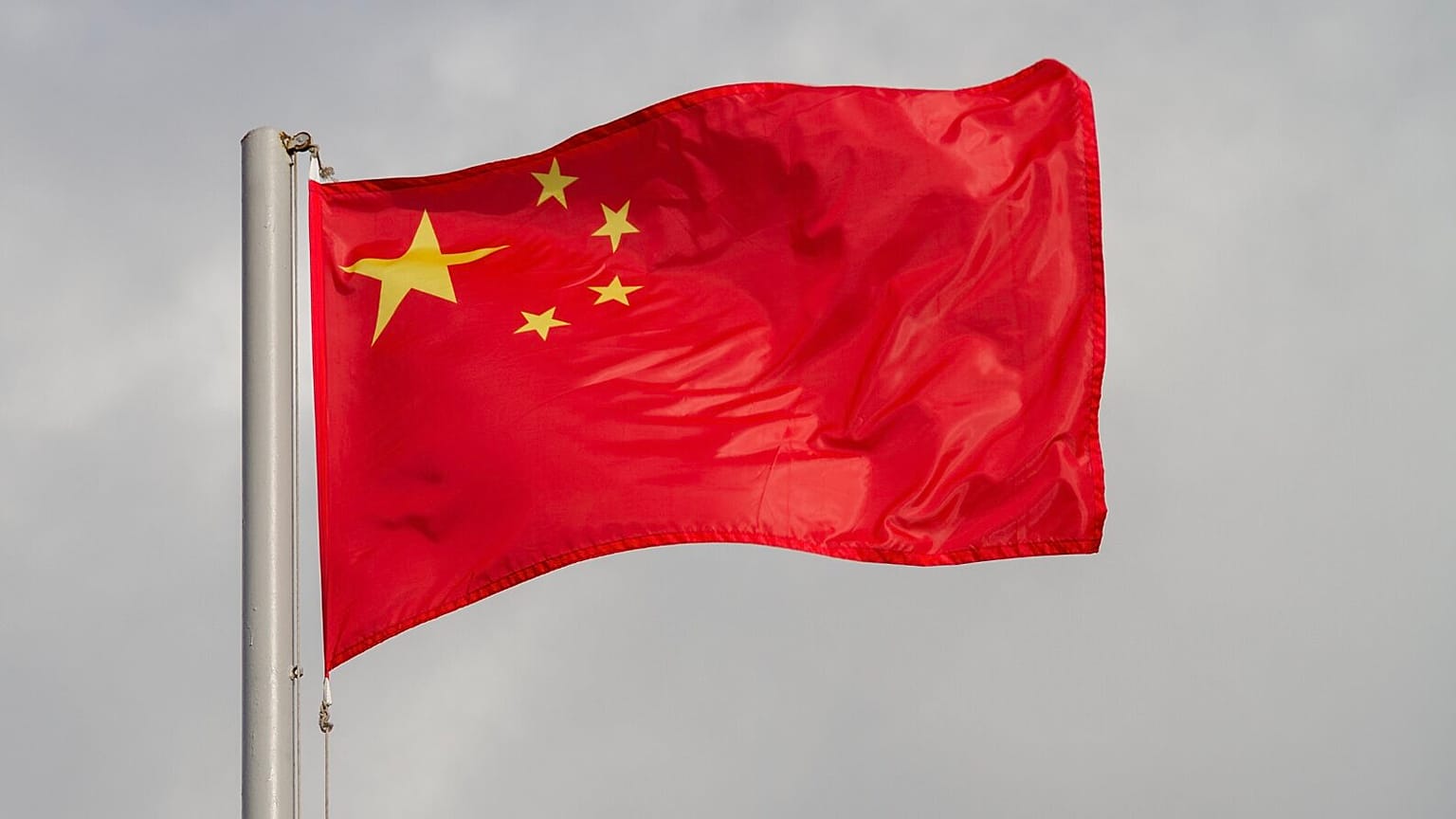
Allied Gold Corporation (TSX/NYSE:AAUC) said it has received approval under Canada’s Investment Canada Act for the proposed acquisition of the company by Chinese peer Zijin Gold International (HKEX:2259), completing the Canadian regulatory review process for the takeover.

The transaction has also received merger clearance from two African blocs: the Regional Competition Authority of the Economic Community of West African States (ECOWAS) and the Competition and Consumer Commission of the Common Market for Eastern and Southern Africa (COMESA).

Allied Gold operates producing gold assets and development projects across Côte d’Ivoire, Mali and Ethiopia, positioning it as one of the larger Africa-focused gold producers listed in Canada.

Zijin Mining Group (SHA:601899; HKEX:2899), the parent company behind Zijin Gold International, is one of China’s largest mining groups with major gold and copper operations across Asia, Africa and Latin America.

The companies said additional regulatory approvals in African host countries have either already been obtained or are in advanced stages, although approvals from Chinese authorities remain outstanding.

To facilitate completion of the deal, Allied and Zijin agreed to extend the transaction’s “outside date” from May 29 to July 29.

Under the terms of the agreement, Zijin Gold International is offering CAD44 per share for Allied Gold, valuing the acquisition at approximately CAD5.5bn ($4bn).

The all-cash proposal represents one of the larger recent acquisitions involving African gold assets and reflects continued Chinese interest in expanding exposure to global precious metals production.

The acquisition would significantly expand Zijin’s African gold portfolio while giving it exposure to producing and development-stage assets across several strategically important mining jurisdictions.

The transaction also highlights continuing consolidation activity across the gold sector as elevated bullion prices near record highs encourage large producers and investors to pursue acquisitions and reserve growth opportunities.

'Vitiforestry': French winemakers plant trees in bid to counter climate change

Winemakers across France are experimenting with the ancient practice of "vitiforestry" – growing trees alongside vines – to tackle the modern issue of climate change, and many are impressed with the results. As the world faces increasingly unpredictable weather, trees can help protect vines from spring frosts and provide shade during heatwaves.

Issued on: 02/06/2026 
By:FRANCE 24

Grapes at a vineyard in the Cognac region where nearby wine growers are introducing trees to their vineyards. © Christophe Archambault, AFP

In the wine-making heart of the northern Rhône hills in southeastern France, one of Pierre-Jean Villa's plots is a curiosity.

Unlike others stretching far around, the vines in this particular spot are interspersed with maples and fruit trees designed to stimulate the grapes – and protect them from the ravages of climate change.

Slowly, French winegrowers are experimenting with "vitiforestry".

It is a new word for an ancient practice: growing vines alongside trees, something Italy and Greece have never stopped doing.


"Here, at the start of the 20th century, there was an orchard and a vegetable garden as well as vines," said Villa, standing on the plot that slopes down towards the Rhône river, with the Alps on the horizon.

"The idea is to recreate a bit of what used to be done before. We've even brought back sheep and bees."
'Decent' grape yield

As "a man of the land", Pierre-Jean says he is now struck by seeing "earlier harvests, heatwaves, drought or rain arriving with a suddenness and violence we didn't see before".

Like his neighbours, he had previously grown vines the traditional way. It was his son Hugo, a graduate of agricultural school in Montpellier, who had the idea of using trees to counter the harmful effects of the climate crisis.

Lying close to the officially designated wine regions of Condrieu and Côte-Rôtie, the land that now holds the trees lay fallow just a decade ago.

On it, the father and son embarked on their "technical and family" project.

Helped by experts from the neighbouring regional park, they selected local species of tree and determined their layout with the right balance of shade and humidity.

As a result, for every 15 rows of prized Syrah grapevines, there are 400 apple, pear, peach, hazelnut and quince trees growing in dense rows.

While it is too early to draw firm conclusions, Pierre-Jean Villa believes the plot "came through rather better" than others during a 20-day heatwave in August 2025, with a "decent" yield.
40C heat

Christian Dupraz, research director at the National Research Institute for Agriculture, Food and Environment (Inrae), agreed.

"When we had 40 degrees Celsius last year, our agroforestry vines coped perfectly."

A technician from France's National Institute of Agricultural Research (INRA), examines vines at the agroforestry centre of Restinclières, near Montpellier in southern France on May 16, 2019. © Pascal Guyot, AFP


In 1997, Dupraz launched his own "iconoclastic" test plot in the Hérault region to bring trees back among crops.

His findings: trees limit damage to vines from spring frosts – the bane of winegrowers – and provide shade as well as helping the plants release water.

Vines were originally creepers growing on trees, Dupraz pointed out. Now with trees present, "temperatures on leaves and berries are reduced. That can save a harvest", he said.

"If we now regularly have more than 40C in summer, it will no longer be possible to grow vines in full sun."
Long-term gains

Trees are being planted to help vines in regions ranging from Bordeaux to Languedoc and even Champagne.


Regional authorities are offering subsidies, and customs authorities defined a legal framework for the activity in 2024.

Today, two to five percent of vineyard areas are involved, to varying degrees, the French Agroforestry Association estimated, calling it a "growing trend in the face of climatic hazards".

Bernard Farges, president of the National Committee of Wine Joint-Professions (CNIV), was more cautious, however.

"The expected gain is long-term. Given the difficulties (in the sector), some people have other priorities."

Yet with a tendency for growers in difficulty to abandon their vineyards, "there is room for trees", said Dupraz, the Inrae expert.

At Pierre-Jean Villa's estate, other growers have come to look at his young vitiforestry plot – including ones from the key southern winemaking region of Bordeaux, faced with a warming climate.

"It's my finest achievement. My whole region is here – the environment, the granite sands, the vine stakes," he said. "The fruits of my childhood."

(FRANCE 24 with AFP)
NAZI WAR ON GYPSIES 

WWII internment of travellers: French survivors fight for recognition

Issued on: 02/06/2026 
05:51 min From the show

Throughout World War II, discriminatory policies saw thousands of Romani, Sinti, Manush,
Yenish and travellers displaced across France, imprisoned in vast internment camps and sent to extermination camps in Eastern Europe. Eighty years ago, the last travellers were freed from French internment camps. Our reporters Antonia Kerrigan and Valentine Erba went to meet with a French survivor of internment.


Forever at war? US, Iran trade blows as Israel pushes deeper into Lebanon


Issued on: 01/06/2026 - 
Play (42:50 min)From the show


What happened to that four-week campaign that the Pentagon promised? Overnight volleys between Iran and the United States are met by many with a shrug, so often has the current ceasefire been violated. Even the deal in the works is mostly to roll over that fragile truce and open more talks, not to permanently settle differences. Ceasefires and their violations seem to be the norm, as Israel and Hezbollah continue to trade blows and US-brokered truces for both Lebanon and Gaza go mostly ignored.


We ask if the taking of the Crusaders-era castle at Beaufort in Lebanon is a PR stunt, or are Israelis digging in at what was an army command centre for nearly two decades during the last occupation of south Lebanon?

Israeli Prime Minister Benjamin Netanyahu espouses a super Sparta state mentality to national security, insisting that Israel – like the Ancient Greek state – embrace a permanent war footing. Do the benefits outweigh the costs for an Israeli leader who's again up for re-election?

And what about for Hezbollah, the Iranian regime and a United States whose leaders promised no more boots on the ground but who under Donald Trump has increasingly made use of or threatened military might around the globe. Does that project strength or weakness? And is it sustainable?

Produced by François Picard, Rebecca Gnignati, Juliette Laffont, Ilayda Habip, Charles Wente.

OUR GUESTS
Rina BASSISTCorrespondent for Al Monitor
Nadim HOURYExecutive Director of the Arab Reform Initiative
Adam WEINSTEINResearcher, Quincy Institute
Michael PREGENTFormer intelligence officer; National security consultant

France bans Israeli offensive weapons from major defence show


France has banned the display of Israeli offensive weapons at the 2026 Eurosatory international defence and security exhibition, organisers said Monday. While the Israeli defence ministry denounced the "disgraceful decision", Eurosatory organisers said Israeli defence systems were authorised to participate, according to a French government decision.


Issued on: 01/06/2026 - 
By: FRANCE 24


File photo of protesters in front of Eurosatory Defense and Security exhibition in Villepinte, near Paris taken on June 21, 2024. © Christophe Ena, AP

Israel's defence ministry said on Monday that France had banned Israeli government officials from a major weapons show in Paris, and had imposed ​restrictions on ‌companies from the country exhibiting there.

The Israeli ministry denounced the move, saying it would "be unable to participate in the exhibition or establish a national pavilion".

"This is a disgraceful decision, one that reeks of political and commercial calculation, ‌and regrettably, it comes as no surprise," the Israeli defence ministry spokesperson said.

"It fits ​a deeply troubling pattern in French conduct in recent years – a pattern that has consistently placed France on the wrong side of ​history."

The organisers of the 2026 Eurosatory international defence and security exhibition said Israeli defence systems were authorised to participate in the major weapons show.

"Only Israeli exhibitors presenting anti-ballistic and anti-air defence systems are authorised," said the president of COGES Events, Charles Beaudouin, responding to an Israeli defence ministry statement that protested the restrictions.

"This is a decision by the French government, by the Defence Council," Beaudouin added.

"There is no room for ambiguity: if an exhibitor is also a rocket manufacturer, they will not be allowed to display them. This ensures that no offensive weapons are present," he said.
Tense French-Israeli relations

France's defence ⁠ministry – which barred Israel from taking part in the 2024 Eurosatory arms exhibition over ‌the war in Gaza – later said Israeli companies would ⁠be limited to showing equipment and materials related to air defence and missile defence, but did not go into ​any detail on the reasons.

It did not address ‌the report that Israeli officials would not be allowed to attend.

Israeli-French relations have deteriorated since late 2023, with Paris criticising ​Israel's conduct in its wars in Gaza ​and Lebanon, and the decision by Israel and the US to launch a war against ​Iran earlier this year.

Israel's right-wing government, led by Prime Minister Benjamin Netanyahu, also protested at President Emmanuel Macron's decision last year to recognise Palestinian statehood.

On Sunday, France requested an emergency meeting of the UN Security Council after the Israeli military seized the crusader-era Beaufort castle in Lebanon, flying its flag over the strategic landmark.

More than 2,600 exhibitors are due to take ⁠part in this year's Eurosatory – one of the world's largest weapons shows – which runs from ⁠June 15 to 19, ​ at the Paris Nord Villepinte exhibition centre north of the capital.

(FRANCE 24 with AFP and Reuters)


Israel's Elbit Systems records $60bn order backlog

Israel's Elbit Systems records $60bn order backlog
Israel's Elbit Systems records $60bn order backlog. / bne IntelliNewsFacebook
By IntelliNews Tel Aviv bureau June 2, 2026

Israel-based Elbit Systems reported a $30bn order backlog in its latest quarterly results release in information seen by IntelliNews on June 2

Despite coming under international pressure during the Iran war, it appears as if international customers are still relying on Israeli arms exports, with Elbit becoming Israel’s largest publicly traded company.

The backlog is distributed across a diversified revenue mix spanning C4I, cyber, ISTAR, electronic warfare, ammunition, unmanned aerial systems and lasers, with approximately 71% attributable to orders outside Israel. About 49% of the backlog is expected to be executed through the remainder of 2026 and into 2027.

Recent contract momentum has been substantial. On May 26, Elbit announced a $1.4bn deal with an unnamed European customer for extensive military modernisation programmes over five years, encompassing uncrewed autonomous solutions, advanced land electronic warfare, precision-guided munitions, electro-optical systems and software-defined radios, Breaking Defense Europe noted.

The scope of the programme points to a central or eastern European customer requiring deeper modernisation than established Western militaries.

That followed a $750mn contract in April, through Israel's Ministry of Defence, to supply Greece's Hellenic Ministry of National Defence with its PULS artillery system, and an August 2025 deal worth $1.63bn, with Israeli media reporting the customer as Serbia.

Domestically, a $130mn contract to supply technological enhancements for 12 CH-53K helicopters for Israel's Ministry of Defence reflects record Israeli defence spending since the Gaza war and the broader military campaign against Iran.

President and CEO Bezhalel Machlis said the company was scaling production capacity and increasing use of robotics and AI in automation. "With demand rising well above historical levels, we continue to focus on order execution," he said in the company’s press release.


AI startup Anthropic files for IPO after reaching $965 billion valuation


Issued on: 02/06/2026 - 
Play (05:51 min)From the show


Anthropic, the firm behind AI assistant Claude, submitted a confidential filing to go public with the US Securities and Exchange Commission on Monday. The firm, valued at close to a trillion dollars, could make its market debut by the end of the year as it sees a surge in interest for its range of AI products. Also in this edition: as France welcomes new data centre investments, we see what's driving that interest and what impact it could have on local communities.


'Choose France' summit puts AI at heart of Macron’s €93 billion investment drive


Foreign companies have pledged a total of €93 billion in investment at France's annual Choose France summit, President Emmanuel Macron announced on Monday, with artificial intelligence and data infrastructure projects accounting for the bulk of commitments.


Issued on: 01/06/2026 - RFI

France's President Emmanuel Macron speaks during a joint statement with SoftBank group Chairman and CEO after a meeting at The Elysee Presidential Palace in Paris on 1 June 1 2026, ahead of the "Choose France" event. Some 200 top executives from around the world are expected at Versailles palace west of Paris for President's annual "Choose France" event. AFP - LUDOVIC MARIN

Around 200 senior executives from around the world were hosted at the famous palace southwest of Paris on Monday, with tens of billions of euros in investment already pledged or expected.

This year’s gathering has a strong focus on artificial intelligence, data centres and the infrastructure needed to power the next wave of digital growth.

The summit has become one of Macron’s flagship economic showcases since it was launched in 2018, a year after he entered the Elysee. Its purpose is to convince international companies that France is open for business – and that it can compete in high-tech industry, clean power and advanced manufacturing.

The 2025 edition set a record, with €20 billion in announced projects. This year’s pledges could prove even larger, thanks especially to major plans from technology and investment groups betting on France’s role in the AI boom.

AI takes centre stage

The biggest announcement has come from the Japanese technology investment giant SoftBank, which said at the weekend that it would spend €75 billion on artificial intelligence infrastructure. Its founder, Masayoshi Son, met with Macron at the Elysee palace on Monday.

The pledge underlines how quickly AI has become an economic priority for governments and companies alike. Training and running large AI models requires huge computing power, secure data capacity and reliable electricity – making data centres and advanced chips central to the new industrial landscape.

SoftBank group Chairman and CEO Japanese Masayoshi Son and France's President Emmanuel Macron make a joint statement as part of a signing ceremony and a meeting at The Elysee Presidential Palace in Paris on 1 June 2026, ahead of the "Choose France" event. AFP - LUDOVIC MARIN

France is keen to make itself a hub for that ecosystem. According to the business daily Les Echos, Canadian asset manager Brookfield is expected to announce a $10 billion of investment in a data centre in the Escaudain area of northern France. The same report said investment firm Ardian and Nordic data platform Verne would put $5 billion into a data centre in the Paris region.

Taiwanese manufacturing group Foxconn is also expected to invest €120 million in the western city of Angers, where it would develop a production line for motherboards dedicated to AI in partnership with Bull, the French supercomputer specialist.

The summit could also bring announcements on rare earths, the critical minerals used in a wide range of advanced technologies, from electric vehicles to wind turbines and defence equipment. That would fit with France’s wider effort to strengthen supply chains in sectors seen as essential to future economic sovereignty.

Since the first “Choose France” summit, more than 230 projects have been announced, representing some €87 billion and several thousand jobs, according to the Elysee. For Macron, that record supports his argument that pro-business reforms, lower corporate taxes and investment in skills and technology have made France more attractive.

Challenges remain

France has attracted the most foreign investment in Europe for seven years in a row, according to consultancy EY. Macron has argued that this success “does not come out of thin air”, pointing to the policy choices made during his presidency.

EY said France attracted 852 foreign investment projects last year out of 5,026 recorded across 47 European countries. That kept it in first place, although the figure also represented a 17 percent fall in a difficult international environment.

So the picture is encouraging, but mixed. France has been especially successful in attracting AI-linked projects, more than any other European country. Yet parts of its traditional industrial base remain under pressure, particularly the car, chemicals and metallurgy sectors.

That is where the upbeat tone of the Versailles summit meets the harder reality of the wider economy. Big announcements can generate headlines and confidence, but they do not automatically reverse years of industrial decline or weak business investment.

Macron has made no secret of his ambition to make France a world leader in artificial intelligence. He has also announced €1.55 billion of public investment to develop quantum technologies and semiconductors, two areas closely linked to the future of computing and industrial competitiveness.

The question now is whether France can turn the momentum from “Choose France” into a broader economic shift.

(With newswires)


New trade secret rules: China says its AI data is none of your business

AI algorithms and data are now considered trade secrets in China and subject to tight restrictions
Copyright Canva

By Anna Desmarais
Published on

Under new Chinese regulations, any algorithm, dataset or program not publicly disclosed now counts as a trade secret.

Algorithms and computer programmes are now considered trade secrets by the Chinese government.

The new regulations, called “Trade Secret Protection,” went into effect on Monday. The rules say that any “information related to technology, such as structure, raw materials, formula, materials, samples, patterns, processes, methods, data, algorithms, computer programmes and codes,” is considered a trade secret.

Technical or business information that “is not publicly known, has commercial value,” and is confidential also falls under the regulation.

Anything that has already been described in the media or in open reports is not considered a trade secret.

The regulation sets out strict measures for remote work and cross-border collaboration, including access controls, data anonymisation to mask personally identifiable information, and detailed logs of who has accessed, copied or modified data.

People or companies can report whether their trade secrets have been divulged, and if an investigation by China’s State Administration for Market Regulation (SAMR) confirms that, a fine of up to 5 million yuan (€630,000) could be issued.

The regulations are China’s latest move to protect AI secrets. Earlier this month, Bloomberg reported that the government is restricting the movement of its AI talent and, in May, Beijing blocked Meta’s acquisition of China-founded Manus, one of the country’s top AI companies.

This week, China also issued sweeping new rules to tighten overseas deals that involve Chinese investors, technology, data and national security.

The new regulations are the first update to China’s trade secrets rules since 1998 and now explicitly mention AI and data as falling under the law.

The Chinese state is conducting what they call a “Enterprise Trade Secret Protection Capacity Enhancement Service,” month in June, as they have every year since 2023.

During the month, they will hold business trainings to “cultivate awareness” and conduct risk assessments with the new regulations.

PUTIN'S WAR ON CIVILIANS
Russian attacks kill several people and wound more than 100 across Ukraine


Russian air strikes hit several major Ukrainian cities early on Tuesday, killing at least 18 people and wounding more than 100, authorities said. Kyiv, Dnipro and Kharkiv were among the hardest hit, with residential buildings damaged and thousands of residents sheltering underground amid ongoing air raid alerts.


Issued on: 02/06/2026 
By: FRANCE 24

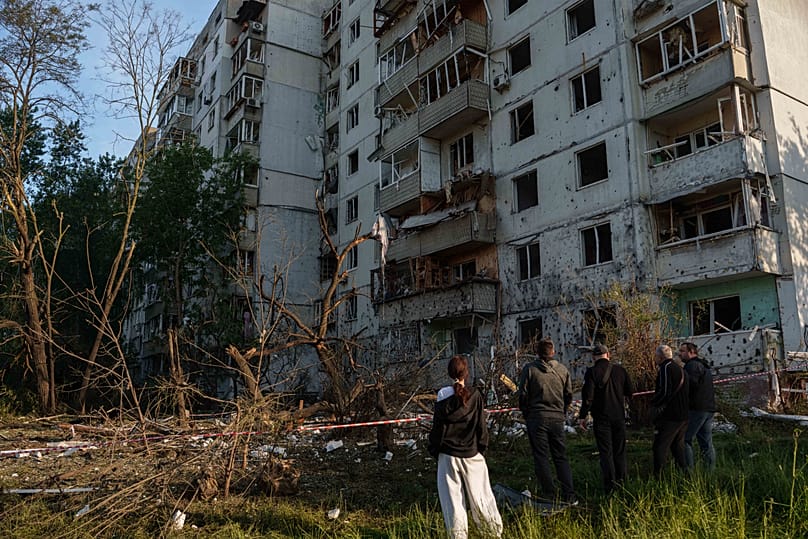
People look at the site of Russian missile strike that hit a residential building in Kyiv on June 2, 2026. © Efrem Lukatsky, AP
01:54


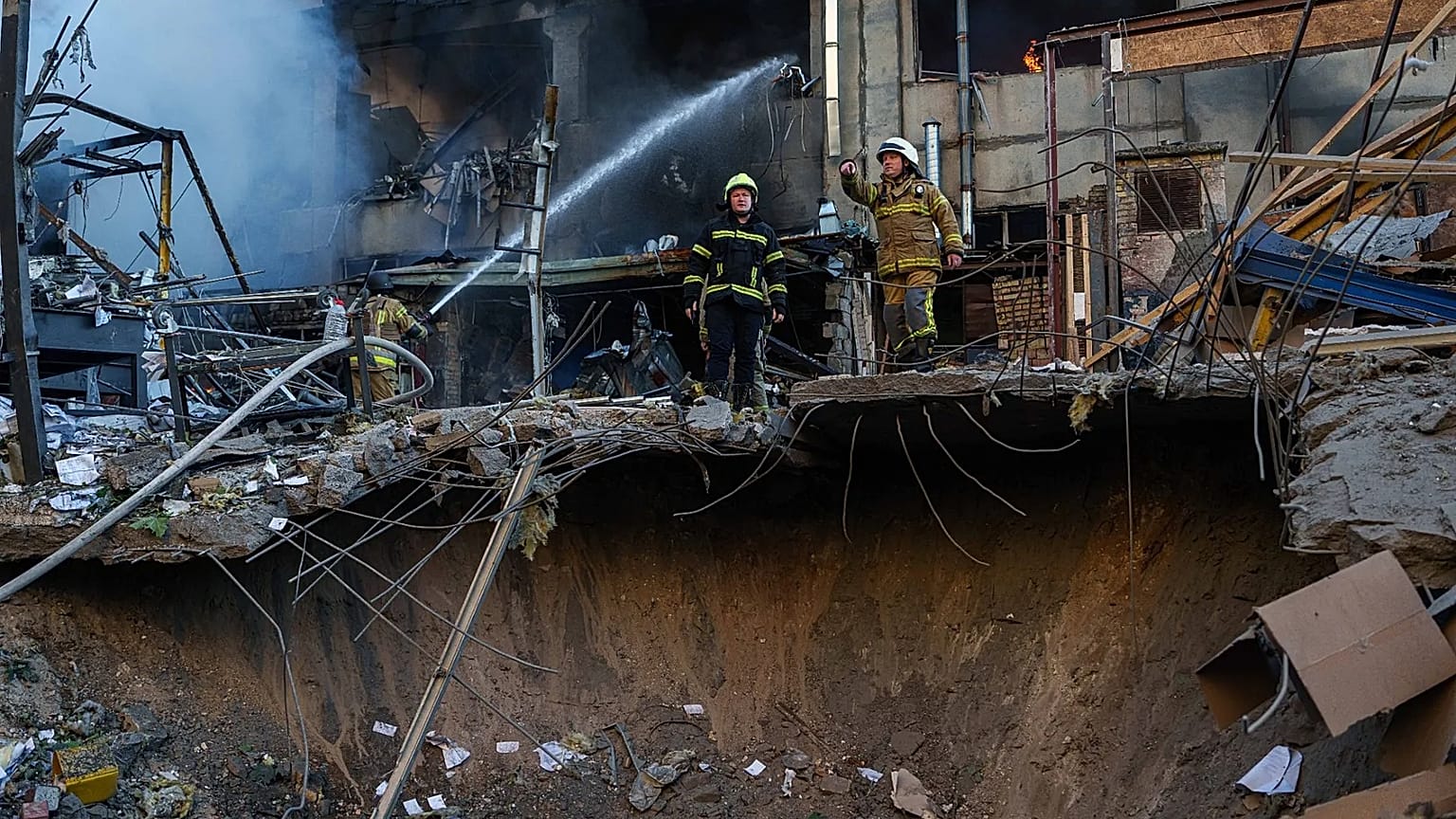
Russian air attacks on major Ukrainian cities including Kyiv, Dnipro and Kharkiv killed at least 18 people and wounded more than 100 early on Tuesday, authorities said, after days of warnings that Moscow was planning a major assault.

Russia has targeted Ukraine's power supply ​and infrastructure while Ukraine ‌has stepped up attacks this year on Russian oil facilities in a war that has now dragged on for more ⁠than four years, sometimes causing casualties. Both Kyiv and Moscow deny targeting civilians.

Twelve people were killed and 36 injured in a Russian missile and drone attack on the southeastern city of ‌Dnipro, regional governor Oleksandr Hanzha said on messaging app Telegram.

All those injured were hospitalised and were reported to be in a moderate condition, he said, posting pictures of heavily damaged residential buildings, burnt-out vehicles and a destroyed children's playground.


One of the dead was a rescue worker who had been killed in a "double-tap" strike targeting first responders, according to emergency services.

At least six people were killed and 66 injured, including children, across the capital of Kyiv, Mayor Vitali Klitschko said.

READ MORETalk to Russia? First, Europe needs to pick an envoy – and know what it wants to say

A suspected missile strike on a 24-storey apartment building triggered a collapse, with people likely trapped under the rubble.

Other buildings, including a nine-storey apartment block, caught fire from suspected missile debris, he said.

“In the Obolon district, cars are burning after being struck by falling missile debris. There are also fires at two locations in open areas, including one near a kindergarten,” Klitschko said.


Russia launches wave of deadly strikes across Ukraine
© France 24
04:41


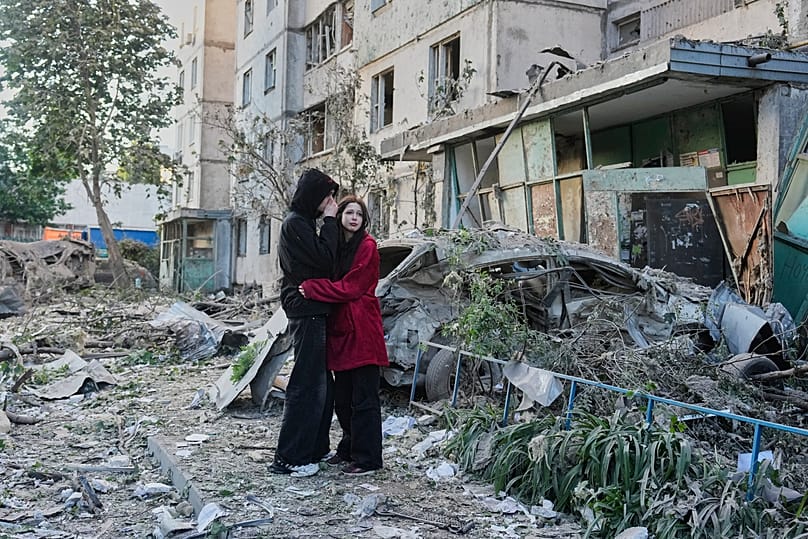
"We couldn't understand what was happening – some kind of apocalypse?" said Olha Mudra, speaking at the site of one strike, accompanied by her six-year-old daughter ⁠Natalia.

"Everything was covered (with debris), everything in smoke, you could see nothing," she added, as she stood in front of a destroyed residential building and damaged cars.

Thousands of Kyiv residents were taking refuge in metro stations and other shelters, witnesses said, after air raid warnings covered much of the country early on Tuesday.

The ⁠overnight ​​attack cut electricity to 140,000 residents ​of ‌Ukraine's ⁠capital, power company DTEK ⁠told Reuters on ​Tuesday.

Utility workers ‌had since restored ‌electricity to ​110,000 residents, DTEK said, adding that ​two ​of its ​engineers had ​been injured.


Residents take shelter inside a metro station during a Russian missile and drone strike in Kyiv on June 2, 2026. © Alina Smutko, Reuters

Warnings of a major attack


Ukraine's air force said Russia launched 656 drones and 73 missiles overnight, mainly targeting Kyiv. In a statement on Telegram, the air force said 40 ​missiles and 602 drones had been downed or neutralised.

An air force spokesman said the attack included eight Zircon hypersonic missiles, likely the largest number of those missiles used by Russia during the war. The Zircon has a range of 1,000 kilometres and travels at nine times the speed of sound, according to Moscow.

Russia's defence ministry said it had carried out ​a "massive strike" on Ukraine's defence industry facilities using high-precision long-range weapons.

Ukrainian President Volodymyr Zelensky on Monday reiterated warnings of a potentially major assault and urged residents to pay special attention to air raid alerts.

“Intelligence warnings regarding Russian strikes remain in effect. A massive strike is possible, they have prepared one,” Zelensky said in his nightly video address.

“Our defenders are ready 24/7 to the fullest extent possible with the supplies currently available.”

Russia last week warned that it intended to launch “systematic strikes” on targets in Kyiv linked to the Ukrainian military as well as decision-making centres, and urged foreigners to leave.

It said the action was in response to a drone strike last month on a student dormitory in Ukraine's Russian-held Luhansk region, which killed 21 people. Ukraine denied targeting civilians, saying that it had carried out a series of strikes on military assets.

In Ukraine's north-eastern Kharkiv region, 10 people, including a child, were injured in drone and missile attacks, Mayor Ihor Terekhov said on Telegram.

Russia's Ilsky oil refinery, in the southern region of Krasnodar, caught fire after a drone attack, local authorities said on Telegram on Tuesday.

Air defence systems were also repelling drone attacks ⁠over Sevastopol, a Russian naval fleet base, in Russia-occupied Crimea, authorities there said.

The war in Ukraine has ground on for more than four years since Russia launched its full-scale invasion in February 2022.

Efforts to end the conflict have made little progress, with the administration of US President Donald Trump focused on conflicts in the Middle East.

(FRANCE 24 with Reuters and AFP)


Ukraine's president says US air defence 'absolutely necessary' after Russian strikes

A rescue worker puts out a fire of a building damaged after a Russian strike on Kyiv, 2 June, 2026
Copyright AP Photo

By Gavin Blackburn
Published on

Russia launched a record 8,150 long-range drones at Ukraine in May, an AFP analysis of Ukrainian air force data showed, up 24% from April.

Ukrainian President Volodymyr Zelenskyy called on Europe on Tuesday to develop its own air defence systems and urged more support from Washington after Russia's latest deadly drone and missile barrage.

"Europe needs its own anti-ballistic defence so that this war can finally be brought to an end. And assistance from the United States in supplying missiles for Patriot systems is absolutely necessary," Zelenskyy wrote in a post on X.

"A large-scale attack and an absolutely clear statement from Russia: if Ukraine is not protected from ballistic and other missile strikes, these attacks will continue."

Zelenskyy’s remarks were echoed by his Foreign Minister Andrii Shyiiba who said that the wave of strikes showed that Russia’s President Vladimir Putin was running out of military options in his full-scale invasion of Ukraine.

"Putin is a war criminal and loser who has no cards except terror. Moscow is losing on the battlefield. No number of missiles can change this," Shyiiba said in a statement on social media.

"Terrorists in Moscow must realise that their brutal attacks won’t bring them anywhere. That the price for their regime will only increase. That the only way out for Putin is to immediately end this war."

Strikes on Ukraine

The remarks from the senior leadership came after a Russian barrage of Ukraine early on Tuesday which killed at least 13 people and injured 100 others.

Authorities in the Ukrainian capital had been sounding the alarm that Russia was preparing another massive barrage, the latest in a string of deadly strikes that have escalated the four-year war and dented already slim hopes for peace.

The Ukrainian air force said Russia had launched 73 missiles and 656 drones, adding it had downed 602 of the drones and 40 of the missiles.

Moscow has bombarded Ukraine almost daily since launching its full-scale invasion in February 2022, a war that is now the bloodiest on European soil since World War II, with hundreds of thousands killed and millions displaced.

Russia said on Tuesday that it had carried out a huge strike, including with hypersonic missiles, targeting Ukraine's military-industrial complex.

It denies that its forces target civilians.

People look at a residential apartment building damaged after a Russian strike on Kyiv, 2 June, 2026 AP Photo

'Protect your lives'

Last month, Kyiv and Moscow agreed a three-day ceasefire mediated by the United States. The truce was marred by allegations of violations on both sides but had raised the prospect of a longer halt in fighting.

An uptick in strikes since has dulled peace prospects, particularly with the White House distracted by the Iran war.

Meanwhile, a Ukrainian drone strike killed one person in Russia's Kursk region, near the Ukrainian border, regional governor Alexander Khinshtein said.

Another drone sparked a fire at an oil refinery in the southwestern city of Krasnodar, its operational headquarters said on Telegram.

People react as they look at the site of a Russian missile strike that hit a residential building in Kyiv, 2 June, 2026 AP Photo

Zelenskyy had said last week that Ukraine had learnt that Russia was preparing a new massive strike and urged people to heed the sirens, go to shelters and "protect your lives."

Russia launched a record 8,150 long-range drones at Ukraine in May, an AFP analysis of Ukrainian air force data showed, up 24% from April.

Kyiv intercepted about 90% of all incoming drones and missiles in May, according to air force data, but struggles to down ballistic missiles.


EU ready to 'step up' in Ukraine-Russia talks but ceasefire must come first, summit draft shows

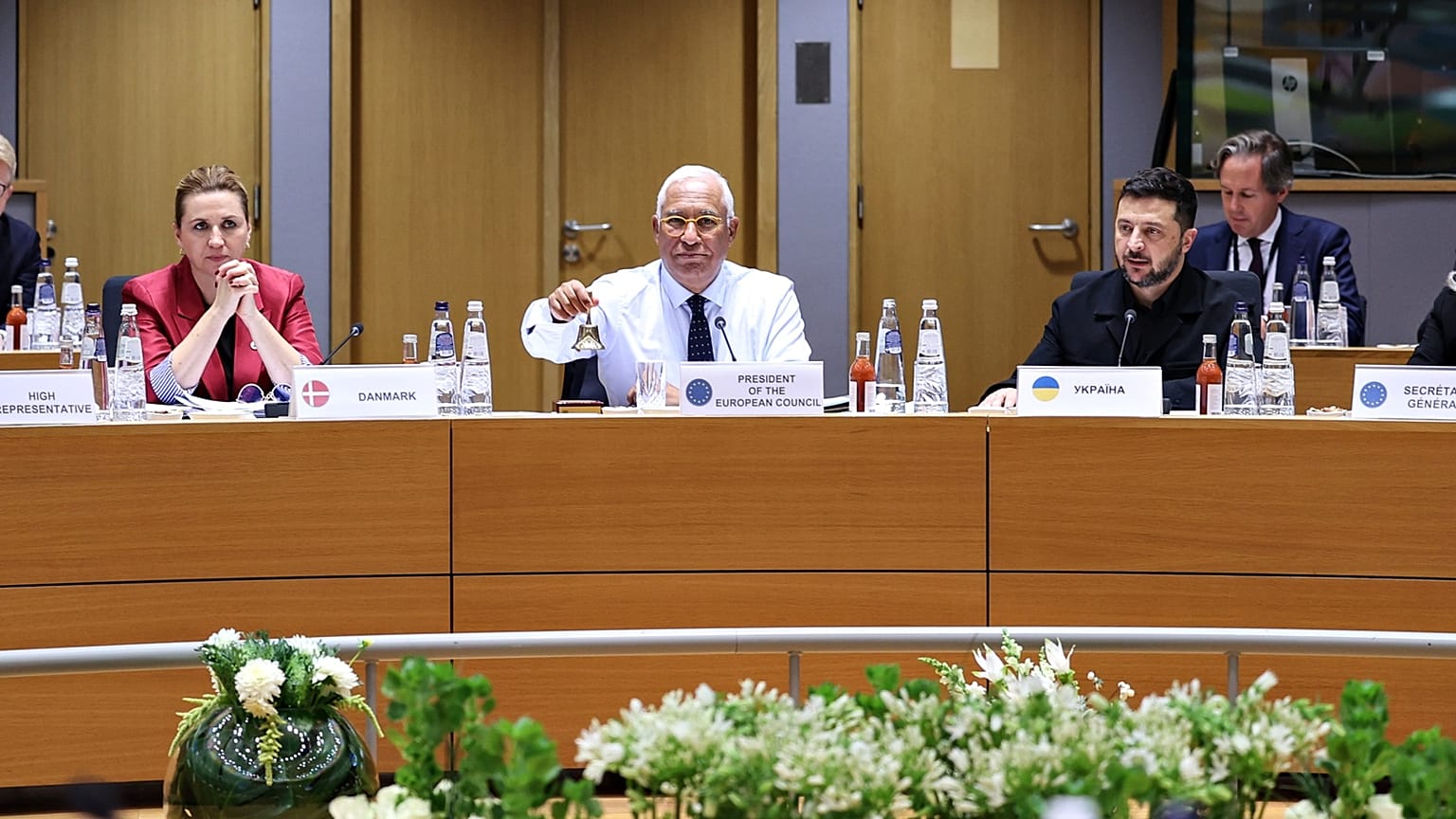
 European Council President António Costa (centre) will chair the summit.
Copyright European Union, 2026.


By Jorge Liboreiro & Maria Tadeo
Published on

EU leaders are set to discuss the possibility of engaging in direct talks when they meet on 18-19 June. But the latest draft of the summit's conclusions suggests a mandate for a special envoy is still far away.

The European Union is ready to "step up" its role in the diplomatic process to end Russia's full-scale invasion of Ukraine, but only when Moscow demonstrates a serious commitment to negotiations and establishes an "unconditional ceasefire", according to draft conclusions prepared ahead of a key leaders' summit on 18-19 June.

It marks the first time the conclusions speak of the bloc taking a hands-on approach to the peace process, which the United States has so far led and is currently stalled.

The provisional wording, subject to changes, falls short of endorsing the appointment of a special envoy, as some member states have demanded. The references could still change further before the summit takes place.

"The European Council supports diplomatic efforts to bring the war to an end and underlines the European Union's readiness to step up its engagement in peace negotiations," the draft, seen by Euronews and dated 1 June, says.

"However, Russia has not shown any genuine willingness regarding a fair and sustainable peace," the paragraph continues.

"The European Council urges Russia to agree to a full, unconditional and immediate ceasefire and engage in meaningful negotiations towards a just and lasting peace."

The document is used as a working basis for talks held by EU27 leaders.

The draft document also forcefully condemns Russia's deadly large-scale attacksagainst Ukraine and open threats against foreign citizens, diplomats and international organisations based in Kyiv, as well as last week's incident that saw a Russian drone with explosives crash in a residential building in Romania.

The series of escalatory developments has shifted the debate on whether the EU should break its diplomatic isolation and launch direct talks with Russia.

The matter gained momentum in early May after Ukrainian President Volodymyr Zelenskyy, frustrated with the White House's attention on the Middle East, called on Europeans to appoint a common representative and revive the negotiations.

Among the names casually floated for the high-risk job were European Council President António Costa, Finnish President Alexander Stubb, former Italian Prime Minister Mario Draghi and former German Chancellor Angela Merkel.

Costa, who will chair the summit, was one of the first leaders to speak publicly in favour of the direct talks, provided the circumstances are right.

Yet, divisions among capitals remain entrenched, as reflected in the wording of the draft conclusions. Germany, Poland, the Nordics and the Baltics believe the Kremlin's maximalist demands would make any outreach pointless.

Last week, High Representative Kaja Kallas said the EU would "never" be a neutral mediator between Ukraine and Russia.

"We can't be neutral, treating them equally, because we have been clearly on Ukraine's side," she said after hosting an informal meeting of foreign affairs ministers in Cyprus.

Instead, she argued, member states should strive to agree on a common set of concessions and conditions that Russia should fulfil at the negotiating table.

"All our efforts have to be complementary to US efforts. And the ministers were also very clear about this," Kallas said. "We are not coming in instead of the United States, but we are actually addressing the issues that haven't been addressed in these talks."

Zelenskyy is expected to speak with the 27 leaders at the June summit, even though it is not yet confirmed whether he will do so in person or remotely.

In a recent interview with CBS, the Ukrainian president name-checked the E3 format (made up of Germany, France and the United Kingdom), the Nordic countries and Turkey as potential mediators.

"Who will represent Europe after all? It's up to Ukraine and Europe to decide," he said. "But no less important is that Russia must be ready for dialogue and European presence."