Friday, June 05, 2026

Li

Bolivia unrest puts world-class lithium assets at risk


Protesters clash with police in La Paz. (Image: Screenshot from APT | YouTube.)

Bolivian President Rodrigo Paz has introduced legislation to expand military powers as nationwide protests entered their 36th day on Friday, adding uncertainty to the country’s vast lithium resources development.

The state of exception bill, presented to Congress on June 3, would establish a legal framework for military intervention alongside police forces during public unrest. The proposal follows the government’s passage of Law 1732 last week, which removed restrictions on military deployments during civic demonstrations that were imposed after the Sacaba and Senkata killings of 2019, where 21 people died and 180 were injured.

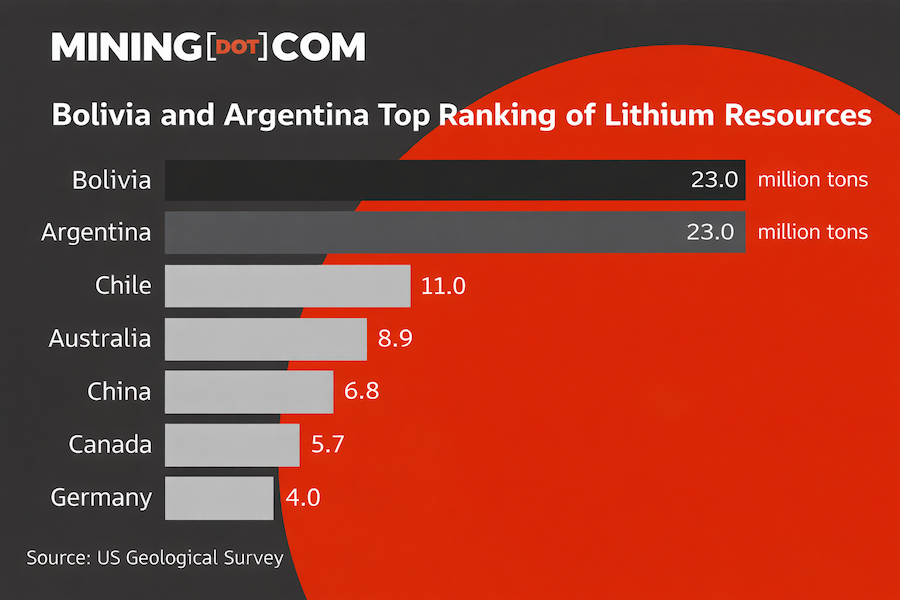
Bolivia hosts some of the world’s largest lithium resources, including the massive Salar de Uyuni deposit. Political instability, regulatory uncertainty and recurring social unrest have repeatedly slowed efforts to develop projects viewed as strategically important to global electric vehicle, energy storage and critical minerals supply chains.

“The measure seeks to guarantee the transportation of food, fuel and medical supplies,” Paz said during the swearing-in ceremony of new Defence Minister Ernesto Justiniano in La Paz.
The legislation comes as peasant organizations, labour unions and social movements demand Paz’s resignation and an end to what they describe as neoliberal economic policies. Protesters have established more than 90 road blockades across eight regions, disrupting transportation networks and deepening the country’s political crisis.

Growing tensions

Government officials say the bill is intended to restore access to essential goods in the cities of La Paz and El Alto. Social organizations, however, warn the measure would provide legal cover for security forces to forcibly dismantle roadblocks and suppress demonstrations.

US Secretary of Defence Pete Hegseth on Thursday characterized the anti-government protests as an attempted coup against President Paz and said Washington would oppose efforts to remove the government.

“The United States is watching. Bolivia must not allow itself to fall prey to the old status quo of narco-terrorist dominance in the region,” Hegseth wrote on social media.

The comments were the latest sign of the Trump administration’s active approach to Latin American security and politics. Since returning to office in 2025, President Donald Trump has described the Western Hemisphere as a strategic priority, while his administration has designated several criminal networks in the region as terrorist organizations.

Protest leaders have rejected the government’s position and pledged to maintain blockades until their demands are met. The Bolivian Workers’ Union and allied social organizations continue to coordinate demonstrations across the country, arguing that privatization policies and economic reforms have failed working-class communities.

Former president Evo Morales condemned the government’s actions, claiming the military appointments and legislative changes reflect US influence over Bolivia’s domestic affairs. Morales alleged Justiniano travelled to Washington shortly before his appointment and argued foreign interests are focused on Bolivia’s mineral wealth rather than the country’s development.

“Today, we confirm that this is a struggle of the people against the empire, of the homeland against domination,” Morales said.

Mineral stakes

Demand for lithium, rare earth elements and other strategic resources has become a central component of industrial, energy and national security policies in the US, China and Europe. Bolivia’s resource base has placed the country at the centre of an intensifying global competition for critical minerals, even as development has lagged behind neighbouring producers Argentina and Chile.

Analysts have long viewed Bolivia as a strategic prize in the race to secure critical mineral supplies. Despite its vast resource potential, investors have remained cautious amid political disputes, shifting regulations and tensions between governments, communities and foreign companies seeking access to lithium projects.

The developing situation highlights the growing overlap between resource nationalism, social unrest and the global scramble for critical minerals.

As lawmakers prepare to debate the state of exception bill, the government argues prolonged road blockades threaten economic stability and the delivery of essential supplies. Protest leaders maintain they will remain in the streets until their demands are addressed, raising the prospect of further confrontation if the legislation is approved.

For mining companies, battery manufacturers and governments seeking secure supplies of critical minerals, the outcome could influence not only Bolivia’s political future but also the pace of development in one of the world’s most important untapped lithium regions.

Column: Lithium bust is over but will battery metal boom again?


Conveyor line for the production of lithium-ion batteries. Stock image.

(The opinions expressed here are those of Andy Home, a ​columnist for Reuters.)

The lithium market has sprung back to life after a three-year slump that left the battery metal languishing at rock-bottom prices for much of 2024 and 2025.

The CME lithium hydroxide contract has jumped by 86% since the start of the ​year and is trading back above $20,000 per metric ton for the first time since late 2023.

Lithium has a history of boom-and-bust pricing ever since it ‌transitioned from being used in industrial lubricants to powering electric vehicles.

This time around, however, the boom may be less spectacular.

Underlying demand growth remains strong but disappointing global EV sales in the first quarter have tempered expectations for this year.

Supply, on the other hand, should rise as higher prices lead to the reactivation of projects that were halted during the bust years.

Much, though, depends on one particular Chinese ​mine.

CME lithium hydroxide and carbonate cash prices

Lithium fever

The catalyst for lithium’s price recovery came in August, when Chinese battery giant Contemporary Amperex Technology (CATL) announced that it had suspended operations at its Jianxiawo mine ​in Jiangxi province after its mining licence expired.

The news triggered a wave of speculative buying on the Guangzhou Futures Exchange.

At the height of ⁠the lithium fever in November, Guangzhou traded 27.0 million futures contracts and another 12.5 million option contracts, each representing one ton of lithium carbonate.

The global lithium market is ​growing fast but is still less than 2 million tons in size.

GFE lithium futures volumes and price

It took several hikes in trading fees and margins and the imposition of position limits before the exchange tamed ​animal spirits.

What’s noticeable, though, is that while trading volumes have dropped sharply so far this year, the price has remained elevated.

That says much about how important a part Jianxiawo plays in China’s lithium supply dynamics.

Swing factor

Jianxiawo has an annual nameplate capacity of 150,000 tons of lithium carbonate equivalent, making it one of the largest single lithium assets globally, according to consultancy Benchmark Mineral Intelligence (BMI).

CATL originally expected its ​licence to be renewed within three months. It is still waiting.

The loss of output has served to accelerate a long-running drawdown in inventory along the Chinese processing chain.

Lower ​stock cover has left lithium pricing more sensitive to any sign of further supply disruption such as Zimbabwe’s unexpected raw materials export ban in February, subsequently replaced with a new quota regime.

The mine’s closure ‌has also ⁠raised questions about other operators clustered around the lithium hub of Yichun amid signs local regulators are taking a hard look at the mining sector.

Jianxiawo is widely expected to return to action in the coming months. China isn’t blessed with huge in-the-ground lithium resources and the mine is too important to domestic supply resilience to close permanently.

But, to quote BMI, “The timing of resumption is the single largest swing factor in the price outlook over the next 24 months.”

Foggy new dawn

BMI thinks lithium is already over-priced and forecasts a “material decline” ​in the second half of the year as ​the shift to higher pricing incentivizes ⁠the restart of capacity that was idled during the price slump.

BNP Paribas agrees, arguing that prices “have derailed from fundamentals” thanks to over-exuberance in both futures pricing and supply-chain order flow.

The bank is forecasting continued supply surplus both this and next year, noting that surging ​battery demand for stationary storage is only partly mitigating slower growth in the larger EV market.

Even bulls such as Citi are ​cautious on timing. The ⁠bank’s upside CME hydroxide target of $32,000 per ton comes with a three-month sell-by date and it expects lower prices next year, again due to the anticipated strong supply response.

The broad consensus seems to be that any lithium boom will be short-lived and a shadow of previous price spikes.

But everything still depends on how long it takes the Bureau of Natural Resources of ⁠Yichun in ​Jiangxi province to grant CATL its new mining licence.

(Editing by Mark Potter)


Zimbabwe says China’s Huayou plans lithium carbonate plant
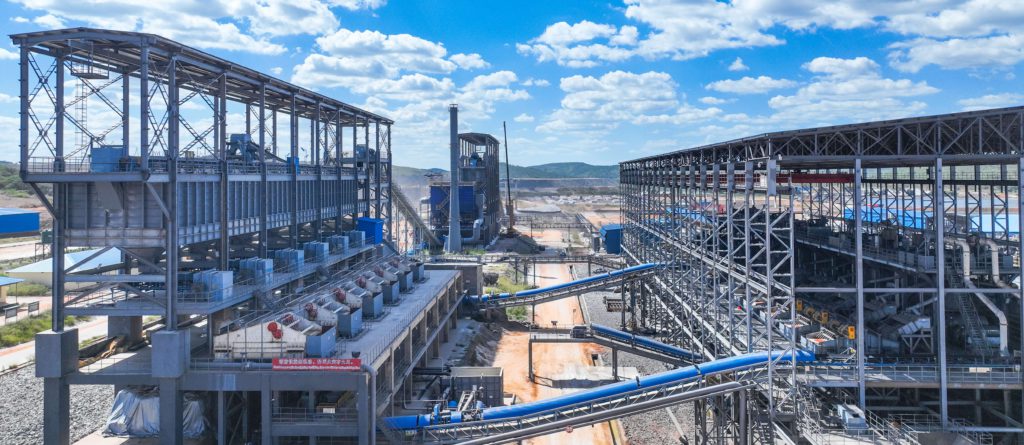

Arcadia lithium mine project in Zimbabwe. Credit: Huayou Cobalt

China’s Zhejiang Huayou Cobalt Ltd. plans to set up a lithium carbonate plant in Zimbabwe, according to the southern African country’s mines minister.

Zimbabwe has become a major supplier of lithium feedstock, following a surge in investment by Chinese companies. However, the government is pushing those investors to build up local processing capacity for the battery metal, so that the nation can derive greater benefits from its mineral wealth.


“They will be producing lithium carbonate, which is more valued,” Mines Minister Polite Kambamura, told reporters in the capital, Harare on Thursday. “So we look forward to firming up of metal prices globally, and also to increase our export revenues.”

Zimbabwe accounted for about 10% of global mined lithium production last year, according to the US Geological Survey. The minister said the country’s mining sector is expected to generate as much as $7 billion in revenues this year, after producing $2 billion in the first half.

“We are looking forward to this being anchored by the export receipts from minerals such as gold,” said Kambamura.


(By Godfrey Marawanyika)


Northern Lights Proceeds with Fleet Expansion with MISC and K Line

LCO2 carbon capture and transport
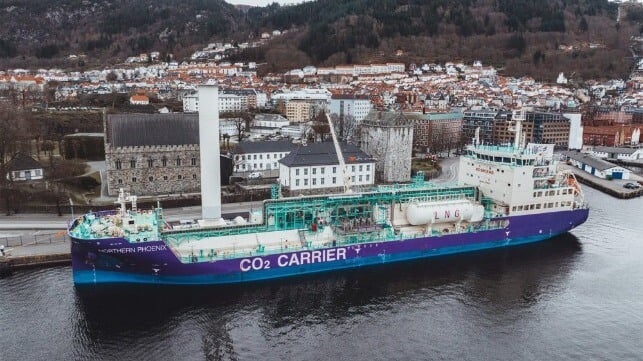
Northern Phoenix, the third of the first four vessels, was christened in April 2026 (Northern Lights)

Published Jun 3, 2026 7:47 PM by The Maritime Executive


The first commercial cross-border carbon transport and storage program, Norway’s Northern Lights, is moving forward with its announced fleet expansion as it completed a second charter agreement with MISC Group and K Line (Kawasaki Kisen Kaisha). This follows the January 2026 announcement that the company would add four more vessels and the recent delivery of its newest ship to Bernhard Schulte Shipmanagement.

Northern Lights was started in 2021 as a joint venture between Equinor, Shell, and TotalEnergies in support of Norway’s Project Longship, a government-led full-scale carbon capture and storage initiative. The company received its first vessel in late 2024 and commenced operations in 2025. It transports liquified CO2 captured from industrial sites to a receiving terminal in western Norway and then pumps it through a pipeline for permanent storage in a reservoir 2,600 meters under the seabed.

The project has already entered into contracts to transport and store CO2 from Norwegian industries, including Heidelberg Materials’ cement factory in Brevik and the Hafslund Celsio’s waste-to-energy plant in Oslo. In addition, the Northern Lights JV has signed commercial agreements with Yara in the Netherlands, Ørsted in Denmark, and Stockholm Exergi in Sweden.

Starting with an initial CO2 capacity for transport and storage of 1.5 million tons, Northern Lights announced last year that it was proceeding with an expansion. It plans to reach a capacity of more than 5 million tons per year from the latter half of 2028.

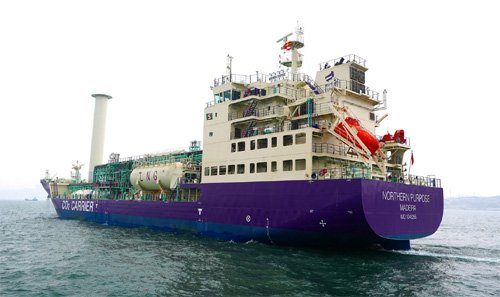
The first two vessels, Northern Pioneer and Northern Pathfinder, were joined in April 2026 with the christening of Northern Phoenix. The third vessel is dedicated to transporting CO2 from Yara and will play a key role in enabling the start of commercial cross-border operations. The first three vessels are managed by K Line, while the fourth ship, Northern Purpose, was delivered in May and is owned and operated by Berhard Schulte. It will be used to transport LCO2 from industrial customers in Northwest Europe to Norway.


The fourth vessel, Northern Purpose, was delivered to Bernhard Schulte in May 2026 (Bernhard Schulte Shipmanagement)


Northern Lights conducted a tender for the addition of the four vessels. Northern Lights, MISC, and K Line reported that they have now completed the second of two additional charter agreements for new vessels. The two ships, which will be built at Dalian Shipbuilding in China, will be owned by the MISC-K Line joint venture. The contract for the first vessel was completed in March, and the second contract in May.

These ships are in addition to two that have also been contracted with Japan’s Mitsui O.S.K. Lines. MOL’s two ships will be built by HD Hyundai Heavy Industries. Northern Lights has said it expects the new vessels to begin delivery in the second half of 2028, and deliveries will continue into 2029.

The first four vessels built in China have a capacity of 7,500 cbm distributed in two cylindrical pressure tanks. They are engineered to handle the LCO2 at low temperature and medium pressure. The ships have LNG dual-fuel propulsion with wind assistance from a rotor. They also employ air lubrication under the hull.

Reflecting the growth in LCO2 transport and storage, Northern Lights has reported that the next four vessels will each nearly double capacity to 12,000 cbm. They will also use LNG dual-fuel propulsion.

Other carbon capture projects are continuing to develop, with other vessels also being built for the new sector. Royal Wagenborg reported at the end of March that its vessel Carbon Destroyer 1 (5,000 cbm) had completed sea trials and was moving to the final phase of commissioning together with the onshore and offshore systems for Denmark’s Project Greensand. Once operational later this year, the Carbon Destroyer 1 will begin regular shuttle operations between Denmark and the Nini field. Unlike the Northern Lights vessels, it is designed for a 36?hour shuttle cycle and will directly support the pumping of the CO2 into the under seabed storage. The ship will be able to transport approximately 600,000 tonnes of CO? per year.


Uncertainty and Diverse Approach Slow Orders for Alternative Fuel Vessels

large LNG-fueled containership
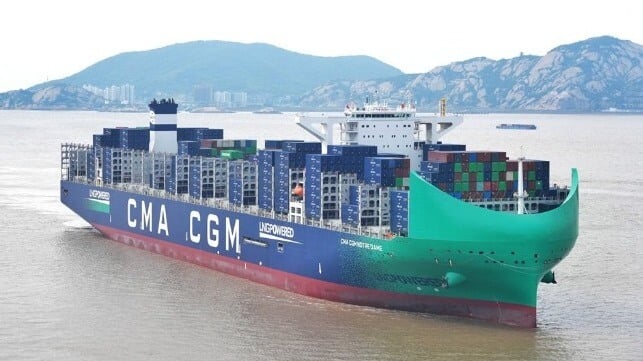
CMA CGM took delivery of the largest LNG-powered containership, CMA CGM Notre (24,212 TEU) Dame, as the first of 10 in a new class (CMA CGM)

Published Jun 4, 2026 6:19 PM by The Maritime Executive


The pace of orders for alternative fuel vessels has slowed in 2026, reports DNV in its latest analysis of the orderbook from the DNV Alternative Fuels Insights platform. It reports that by the end of May 2026, the share of alternative-fueled vessels in total tonnage was “notably lower” than over the same period in 2025. 

“While the pace of alternative-fueled contracting has varied compared to 2025,” says Jason Stefanatos, Global Decarbonization Director at DNV Maritime, “what is also becoming clear is that fuel choice is no longer approached as a single bet. Owners are increasingly treating it as a portfolio decision, managing fuel optionality, timing of investment, and exposure to future regulation as they navigate long-life asset decisions.”

Owners have to weigh the balance between the investment in new technologies and the dangers of creating stranded assets that could become obsolete before their planned economic lives. Weighing on the industry is the continued uncertainty and diversity in the regulatory environment. Last October, the United States and others succeeded in scuttling the International Maritime Organization’s push for the Net Zero Framework, which was further compounded by the failure to show a clear path in the April 2026 meeting. Many have said this creates the possibility of divergent, regional regulatory regimes.

DNV calculates that so far in 2026, there have been a total of 119 orders for alternative-fuel vessels, but the orders are focused on the more established fuels. The majority are for LNG (50 percent), with LPG/ethane carriers running a close second (42 percent). The orders for methanol/ethanol lagged at just four in the first five months, reports DNV, the same as ammonia, and just one order for hydrogen.

This varies from the recent past, when methanol seemed to be gaining ground on LNG. At one point, they were nearly equal for new orders. With LNG showing new momentum, DNV calculates that there are now more than twice as many LNG orders (663) as methanol (313), which, however, remains in second place overall in the orderbook. LPG remains a niche with just 197 orders.

The pace of the orders also varies by sector. Containerships accounted for 42 of the 60 orders for LNG vessels, followed by 12 orders for car carriers. 

“As in previous years, ordering of alternative-fueled vessels has been led by the container segment, but dynamics are shifting,” explains Stefanatos. “While activity remains strong, the focus has moved towards smaller vessels, with fewer very large containerships, which are historically more likely to adopt alternative fuels, being ordered. At the same time, we are seeing increased activity in tanker and bulker segments.”

After packing the orderbook for ultra-large container vessels, and pushing the level to records, the focus shifted among many of the carriers to feeders that can be used to support their hub strategies. DNV highlights that most of the feeders and even mid-size container vessels still use conventional fuel, in part due to supply issues and smaller ports. This is being reflected in the orders.

Some segments, however, are focusing on LNG. For example, The Maritime Executive calculates that among large ocean-going cruise ships, half the orderbook is for LNG dual-fuel vessels (49 percent by number of vessels). By tonnage, it is even more dramatic, with 64 percent of the cruise ship orders incorporating LNG dual-fuel propulsion. Currently, about a third of the cruise ships in service are LNG, while the first methanol-ready cruise ships have also been delivered.

DNV’s data shows that conventional fuel continues to dominate the broader commercial shipping industry, where 95 percent of ships in operation (by tonnage) and 99 percent (by number of ships) operate on conventional fuel. Large ships are leading the take-up for alternative fuels, with 35 percent of the orderbook (by gross tonnage) incorporating alternative fuel capabilities, while overall just 15 percent of the orders are for alternative-fueled vessels.

The trends were continuing in May 2026. DNV reports a total of 36 orders for alternative-fueled vessels. However, 26 were for LPG/ethane carriers, just eight for LNG-fueled vessels, and two ethanol-fueled bulk carriers. Notably, there were no methanol-fueled orders while ammonia and hydrogen continue to wait for further developments in the technology and infrastructure.

While the pace has slowed for the adoption of alternative fuels, DNV believes owners are still advancing fuel and technology decisions against a backdrop of evolving regulatory and market conditions.


BHP Tests Out Tallow-Based Biofuel Blend With GCMD's Assistance

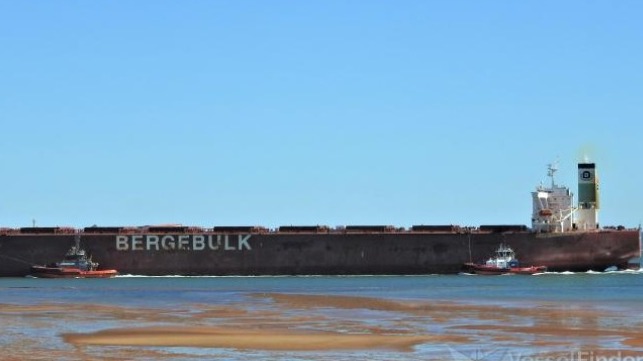
Berge Lyngor (VesselFinder / Graeme Waller)

Published Jun 3, 2026 2:36 PM by The Maritime Executive

In a development that could increase availability of biofuels, Australian mining giant BHP and Singapore's Global Centre for Maritime Decarbonisation (GCMD) said they are piloting the use of an unusual kind of blended bio-based bunker fuel made partially from waste animal fat.

The impact of blending cooking oil and waste animal fat could be significant, considering that until now, biofuels for global shipping have relied heavily on used cooking oil, a feedstock whose availability is approaching its projected limits. For this reason, the production of biofuels from waste animal fats is seen as a promising option to expand the supply.

The BHP-chartered Newcastlemax bulk carrier Berge Lyngor (206,330 dwt), owned and operated by Berge Bulk and used to transport iron ore from Western Australia to China, is being used in the bio-blend pilot project. In early May, the 300-meter bulk carrier — which sails under the UK flag and was built in 2009 — bunkered in Singapore with a B100 bio-blend of 50 percent tallow-derived biodiesel and 50 percent used cooking oil.

The biodiesel was sourced and supplied by HAMR Energy, while the cooking oil was supplied by Mitsui & Co. Energy Trading Singapore. Mitsui also blended the fuel, while Dan-Bunkering coordinated and executed the bunkering operation.

By running on the bio-blend, Berge Lyngor had the potential to reduce greenhouse gas emissions by about 79 percent per voyage compared to sailing on VLSFO, according to the partners.

BHP and GCMD say the pilot project is needed to assess how biofuels from multiple feedstocks can be blended, handled, and used under real-world operating conditions. Challenges include fuel quality, handling, traceability, and onboard vessel performance.

Understanding onboard performance is key, since biofuels derived from different feedstocks have different properties that may impact operations. On the downside, these can include potential corrosion from oxidation and fuel system clogging caused by wax formation.

The outcomes are expected to shed light on the practical steps needed to integrate biofuel blends from different feedstocks into existing supply chains — a development that is expected to provide shipowners and operators with greater flexibility for fuel buying.

"As the world's largest bulk charterer, we want to continue to test and trial alternative fuels that will help increase supply and send industry demand signals for further investment," said Emma Roberts, BHP Vice President, Maritime & Supply Chain Excellence. "At a time when fuel security is vitally important to global trade, building opportunities for future biofuels is critical."

Top image: Berge Lyngor (VesselFinder / Graeme Waller)


FID Go-Ahead for First US Floating LNG Plant and World’s Largest FLNG

FLNG to be built for Louisiana
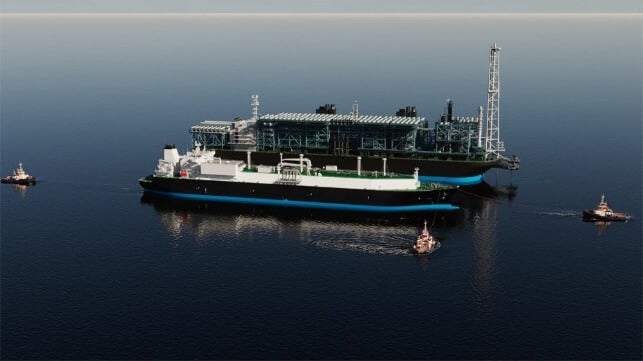
Delfin has given the go-ahead for the first of three planned FLNGs to be the largest yet built and the first in the U.S. (Delfin Midstream)

Published Jun 3, 2026 6:32 PM by The Maritime Executive


Delfin Midstream and its investor group have reached a financial investment decision to proceed with Delfin FLNG 1, which will become the first floating LNG project in the United States and the largest FLNG project globally. To be positioned off the coast of Louisiana, the project is expected to have an initial export capacity of 4.4 million tonnes of LNG per year. It is the first stage of a proposed project that would have a total capacity of 13.2 MTPA based entirely on FLNGs.

The company highlights that the approach of using FLNGs is a widely accepted technology that has been developed over the past 15 years. While they expect today’s decision to be the start of a $5 billion investment, they note the FLNG approach will require significantly less onshore infrastructure, making it faster and less costly.

The investors for the project are being led by Global Infrastructure Partners, part of BlackRock. Mitsui O.S.K. has been an investor since 2023 and looks to contribute its expertise in LNG transport. Vitol, an energy and commodities trader, and Diameter Capital Partners have also agreed to invest in the first phase of the project.

Today’s FID decision marks more than a decade of development work and permitting. Delfin purchased the UTOS pipeline in 2014 and submitted its Deepwater Port license application in 2015. It received its license approval from the Maritime Administration in March 2025, which includes deploying the vessels approximately 40 nautical miles off the coast of Louisiana. 


The massive vessel will be anchored approximately 40 nautical miles off Louisiana (Delfin Midstream)


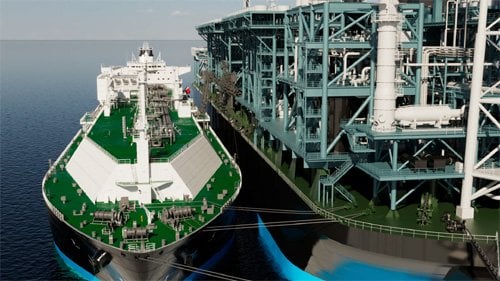
Designs for the FLNG were developed working with Samsung Heavy Industries and others. The company highlights that the Delfin FLNG vessel uses gas turbine-driven technology and air-cooling for both liquefaction, process, and utility cooling. The FLNG design is a liquefier concept that receives “pipeline quality feedgas” and is therefore not producing from a reservoir like other FPSOs. The vessel is also designed to use renewable electric power to reduce emissions from the LNG facility.

Tugs will be used to position LNG carriers alongside the FLNG, which will also have thrusters for heading control. Another important consideration is that the FLNG can be disconnected if a hurricane or other storm threatens the area, and it will be moved to a calm offshore location.

Delfin highlights that Samsung has experience building the Cedar LNG project. It has also contracted with Black & Veatch, along with Siemens Energy, which will develop the gas turbine. They expect the first vessel to be in operation in 2030.

Delfin FLNG 1 has already secured commitments for long-term LNG sales agreements with leading global energy companies, including Vitol, Expand Energy, Centrica, and Gunvor.

The company highlights that while this is a “groundbreaking milestone,” it continues to advance towards securing FIDs for its planned second and third FLNG vessels.


AD Ports Jumps Into Brazilian Ag Market with Largest-Ever M&A Transaction

Brazilian terminal for exports
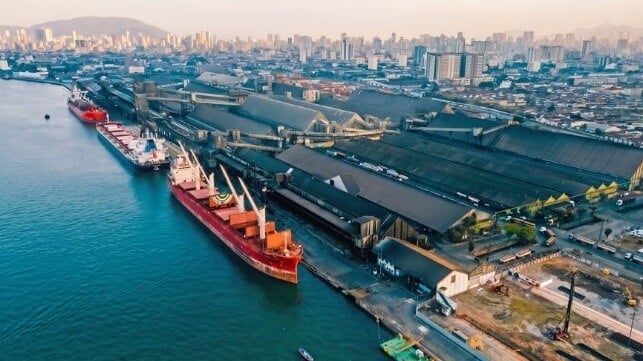
AP Ports says it is the company's largest M&A transaction and its entry into Brazil and the South American ag sector

Published Jun 2, 2026 7:28 PM by The Maritime Executive


AD Ports Group has agreed to acquire a Brazilian sugar and grain export terminal operator, Corredor Logística e Infraestrutura (CLI), which marks its entry into the South American market. It is calling the acquisition its largest-ever M&A transaction and a key element in its strategy to strategically strengthen its growing agrifood business operations.

CLI is reported to be Brazil’s leading independent agri-bulk port terminal operator. The company owns 100 percent of CLI Norte, which operates a terminal at the Port of Itaqui, and 80 percent of CLI Sul, which operates a terminal at the Port of Santos.‎ In 2025, CLI handled a combined 17 million tonnes of agri-bulk cargo and delivered a revenue of $178 million, generating an EBITDA of $98 million.‎

AD Ports is acquiring CLI from its current joint owners, Macquarie Asset Management and IG4 Capital. The companies said the deal, which has an enterprise value of $835 million, completes another successful turnaround. Over the past four years, they report CLI positioned with strong operations and a solid performance while poised for growth.

"The outlook for CLI is highly favorable. We are strategically positioned in the Northern Arch, with the operation of the terminal at the port of Itaqui, in addition to the terminal at the port of Santos. Both have been showing consistent performance and with clear potential to evolve even more," said Gabriel Motta, CEO of CLI. He will remain in the role along with other senior managers after the acquisition closes.

According to AD Ports, the acquisition represents a “transformative step” for the group, positioning it as one of South America’s leading independent agri-bulk terminal operators. It says the acquisition will provide strategic access to new opportunities for its businesses in maritime and shipping, logistics, and elsewhere.

“The purchase of CLI is a game changer for AD Ports Group,” said Captain Mohamed Juma Al Shamisi, Managing Director & Group CEO of AD Ports Group. “‎The transaction extends our group’s international reach for the first time into Latin America and deepens our growing agrifood activities, one of our core verticals.”


AD Ports highlights it is the latest in a series of strategic moves in the ag sector, including an agreement to develop a clean bulk handling and storage facility for agricultural goods at Karachi Port. The group also agreed to invest in the greenfield Sarzha Grain ‎Terminal on the Caspian Sea at Kuryk Port in Kazakhstan, and earlier this year, secured a 30-year concession to operate the Aqaba multipurpose port in ‎Jordan.

Its Noatum Ports’ Spanish operations are already significantly involved in agri-bulk with the Tarragona and Sagunto terminals. AD Ports continues its growth, having already developed a total portfolio of 34 ports and terminals around the world.


Plans for Spanish Cruise Line Delayed by Uncertain Market

Chinese cruise ship Piano Land
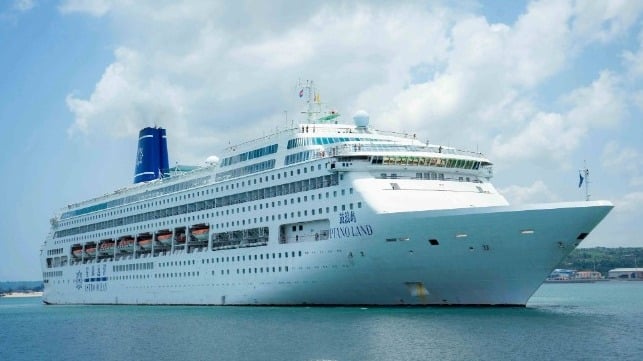
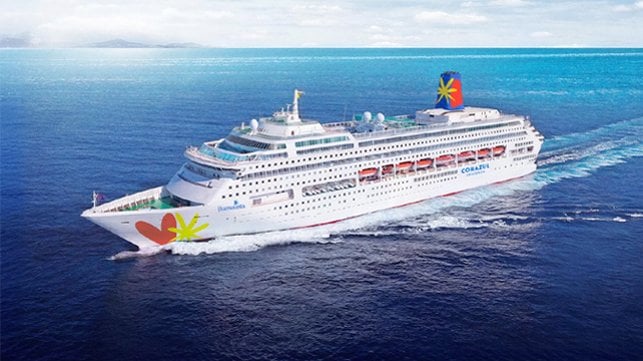
Chinese cruise ship Piano Land was set to launch a new Spanish cruise line but has been laid up in Hong Kong (Sihanoukville Autonomous Port - PAS Cambodia)

Published Jun 3, 2026 5:20 PM by The Maritime Executive


Plans to launch a niche cruise line dedicated to the Spanish-speaking market have been delayed, with the new firm, called Corazul, reporting it has canceled its summer season in the Mediterranean due to launch in July. The new company says that it is continuing to move forward, but it will focus on a launch in the Brazilian market during the 2026-2027 season.

Corazul announced in early 2026 its plans to relaunch a dedicated Spanish cruise operation. The market had been served by another tour operator, Pullmantur, which was, for a time, owned by Royal Caribbean Group, but ceased operations during the 2020 pandemic. Its ships were sold for scrapping. Carnival Corporation had also been a partner in another Spanish brand, Iberocruceros, which operated until 2014.

The concept was to adapt the cruise operation to Spanish preferences, including later dining options and a greater focus on families and large social gatherings. Corazul told The Maritime Executive that its review of the market showed that only 10 percent of the customers of the former operations had stayed with cruising versus other forms of vacations after the two cruise lines ended operations. Its goal was to recapture those customers.

Plans called for launching the operation in early July with a ship they were calling Buneavista, but the company says after an in-depth review of the market situation, it has decided not to go ahead with the cruise program that was to have operated from Barcelona until October. It then planned to do a trans-Atlantic crossing from Portugal to Recife, Brazil, for cruises in 2026-2027 before returning to Spain in March 2027.


Corazul's rendering of the Buneavista (Corazul)


The company reports it was not an easy decision and not something that it considered lightly. It says it will focus on the launch from Brazil, where it reports it has received stronger initial demand. Corazul’s website had been showing 30 percent discounts for cruises from Spain in July and August and 50 percent discounts in September and October.

The details of the company’s first ship were never officially confirmed, but it was using an image of the 1995-built cruise ship Oriana (69,840 gross tons), which sailed for the UK’s P&O Cruises as its first modern cruise ship in the British market. Carnival Corporation sold the ship in 2018 to a Chinese group, which renamed it Piano Land. It started service in 2019 and was given a major refit in 2020 to make the ship reflect Chinese styles, but it was unable to return to operations until July 2024 due to Chinese restrictions on cruising after the pandemic.

Built as one of the first modern cruise ships from Meyer Werft in Germany, the Oriana measured 260 meters (853 feet). It has 939 cabins with a maximum passenger capacity of 2,140. Although it has been operating in China, its registry has been maintained in Bermuda.


The ship’s future is uncertain. It completed its last cruise in Hong Kong on May 31, and the crew reported they were packing up the ship. It has been moved to an anchorage. The ship’s operations earlier this year had been merged under China’s Adora Cruises in an effort to streamline the Chinese industry. Adora still lists the ship, which it calls Gulangyu, although now that it has reached 30 years of age, Chinese regulations bar the cruise ship from sailing from the mainland. The ship had operated for a time under charter, sailing from Malaysia, and was recently cruising from Hong Kong.

Unconfirmed reports from China said the operators, Astro Cruises, have begun advertising for a replacement crew. The ship is reported to be on a brief break, with cruising expected to resume shortly. After rumors that Corazul had not completed financing for the cruise ship, it has not commented on its future ship plans.


New Novatug Training Centre to Boost Tug Safety and Efficiency

Wärtsilä
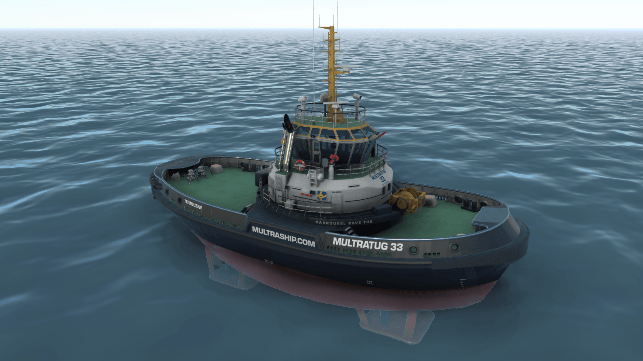
Novatug picture

Published Jun 3, 2026 5:18 PM by The Maritime Executive

[By: Wärtsilä]

Technology group Wärtsilä has delivered an advanced simulation suite for Novatug’s newly opened training centre in Terneuzen, the Netherlands, which has been designed to promote safer tug operations and raise the level of specialised master training. Developed in close collaboration with Novatug, the innovation and R&D division of Multraship Towage & Salvage, the simulation suite includes full mission simulators, mixed reality sets, an instructor operating station, and a debriefing room, alongside custom digital models including a Carrousel Rave Tug (CRT) model for specialised tug master training. The order was booked by Wärtsilä in Q4 2025. 

This new simulation suite enables high fidelity modelling of Novatug’s new CRT, providing enhanced control over assisted ships while they are manoeuvring in port. The CRT overcomes growing challenges related to port-calls of very large- and ultra large cargo vessels by improving their steering and braking capabilities in confined spaces, whilst also reducing fuel consumption and emissions. Therefore, the specially configured Wärtsilä simulators, featuring digital models for mandatory, professional development and competency training, as well as applied research, allow tug masters to attain proficiency in operating the CRT and a range of other modern tugs in a safe and controlled environment. 

“We value Wärtsilä’s vast simulation expertise to model the Carrousel Rave Tug and provide the most realistic training environment possible. This strategic training partnership will elevate the safety and efficiency of tug operations for shipping companies and ports worldwide by raising the level of specialised training”, says Leendert Muller, Managing Director of Multraship Towage & Salvage. 

The Novatug CRT uses a patented Carrousel towing system, where the towing point can rotate around the tug. This design keeps towing forces under control and eliminates the risk of capsizing due to a towload, while also improving braking and steering so that assisted ships can be handled more safely and efficiently in port. The inclusion of the CRT in Wärtsilä’s simulator enables tug masters to rehearse specific CRT manoeuvres realistically and repeatedly, thus giving instructors a consistent way to assess competence before the skills are applied in live operations. 

“Collaboration and partnerships between maritime stakeholders are essential for ensuring an efficient future for the shipping industry”, comments Johan Ekvall, Director, Simulation & Training, Wärtsilä Marine. “New vessel innovations need to be backed by training. By providing a realistic and controlled environment for specialised learning, simulation can help close critical skill gaps and better prepare tug masters for current and future operational demands.” 

With more than 30 years of experience and expertise in digital modelling of vessels and their functionalities, Wärtsilä is supporting Novatug in strengthening crew safety, tow operations and the wider port network.

The products and services herein described in this press release are not endorsed by The Maritime Executive.

France Arrests Russian Captain After Detaining Shadow Fleet Tanker

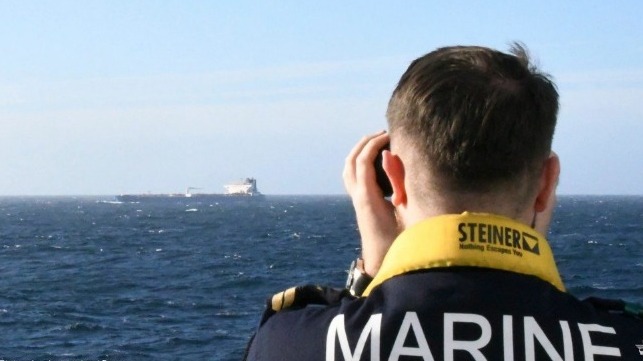
French Navy monitoring tanker
France has stopped four shadow tankers since September 2025 (French military photo)

Published Jun 3, 2026 3:11 PM by The Maritime Executive


French prosecutors confirmed that they have taken the master of the shadow fleet tanker detained on Sunday into custody as the investigation continues. The arrest of the captain of the tanker Tagor was met with immediate protests from Russia’s embassy in Paris.

The tanker Tagor was boarded by the French Navy on May 31 while sailing off the Atlantic coast. The vessel was coming from Murmansk, Russia, and was stopped by the authorities, who said they believed the vessel was operating under a false flag. An initial investigation after boarding the ship confirmed the suspicions, and the tanker was directed to sail to a bay south of Brest, France, in the Brittany region.

The Tagor arrived off France on Tuesday, June 2, and the local prosecutor reported that the master was taken into custody shortly afterward. The master is facing charges that could carry one year in prison and a fine of up to $174,000. In March, a French court found the master of another shadow fleet tanker and imposed those sentences in absentia on the Chinese national.

Prosecutor Stephane Kellenberger said in a statement that they were still working to formally identify the owner of the tanker. He said the owner could face the same penalties.

The French news agency AFP is reporting that the Tagor is likely controlled by a network linked to Iran and the son of a now deceased senior advisor to the Supreme Leader, who was killed at the start of the current war. Last year, the United States sanctioned Mohammad Hossein Shamkhani, reporting that he ran a network of companies involved in the transport of Iranian oil.

The Tagor is under sanctions from the United States, the UK, and the EU. Its registry has been listed by the databases as being false since at least August 2025. It is listed as having claimed Guinea and Madagascar, and now French authorities are saying the master told them the ship was registered in Cameroon.

The Russian Embassy in Paris posted a statement calling the charges “unfounded accusations” and said the arrest reiterated the false charges. It demanded consular access to the captain and that his release take place as soon as possible. Russian officials in Moscow have referred to the seizure as piracy.

Based on images released by the French, the vessel appears to be traveling empty with only ballast. Its AIS signal had said it was heading to Africa but has now been deleted.

France began stopping shadow fleet tankers last year. It has now stopped four vessels. Two vessels stopped in the Mediterranean were detained and later released after paying a fine.  French President Emmanuel Macron has spoken about the financial cost to the shadow fleet operations from just delaying the vessels for a few days.