Friday, June 05, 2026

Pt

China-backed South African platinum project to cut 70% of workforce
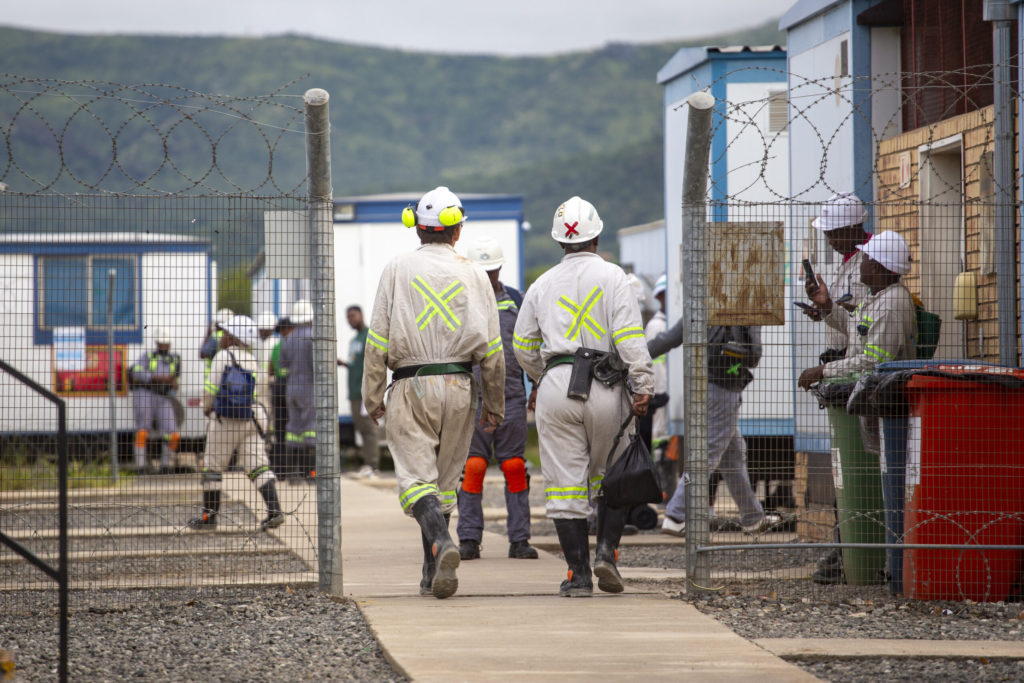

Credit: Wesizwe Platinum

Wesizwe Platinum will lay off nearly 500 workers, or around 70% of the workforce, at its Bakubung mine in South Africa, it said on Thursday, as it shifts from phased development of the delayed project to a single-stage ramp up.

While South Africa accounts for more than 70% of the global supply of the metal used in autocatalysts that reduce vehicle exhaust emissions, new platinum projects like Bakubung are increasingly rare.

Platinum miners are apprehensive about expanding production as the industry faces a long-term threat from electric vehicles, which do not require autocatalyst metals.

Chinese-backed Wesizwe is abandoning its original plan for a phased ramp-up for Bakubung that would have started with 1  million metric tons of annual production.

The project, which has been in development for around 15 years, will now follow a single-stage ramp-up to 3.5 million tons per year, Wesizwe said in a statement.

“This revised strategy will necessitate a reduction in the number of employees required to establish and sustain the production profile contemplated in the updated business plan,” the company said.

“The proposed restructuring is expected to affect approximately 497 employees across various staff levels and disciplines throughout the business,” it added.

Wesizwe, whose anchor shareholder is China-Africa Jinchuan Investment, said maintaining the current headcount of 706 employees would not be sustainable.

The Bakubung platinum project is running behind its production schedule due to a combination of factors including funding delays, Covid-19 disruptions, labour unrest, community protests and a cyberattack.

Wesizwe did not offer a timeframe for when the project might enter production under the new plan.

(By Nelson Banya; Editing by Joe Bavier)


Russian Platinum plans November launch of Arctic mine
The Chernogorskoye platinum group metals deposit in Siberia (Credit: Russian Platinum)

Russian Platinum plans to start production at its Arctic polymetallic project in November, the company’s owner said on Thursday.

Currently only metals giant Nornickel produces platinum group metals in Russia.

Russian Platinum had planned to launch the first stage of the project in 2024, but postponed it due to difficulties accessing equipment amid Western sanctions.

“We expect to obtain our first output in November this year,” Musa Bazhaev said at the St Petersburg Economic Forum.

The company has licences for the Chernogorskoye deposit and the southern part of the Norilsk‑1 deposit, which contain copper‑nickel ores with high platinum group metal content mainly used in emissions‑control catalysts and electronics.

These deposits are located near Nornickel’s core assets and the companies agreed in 2018 to create a PGM alliance, but it collapsed in 2020 due to opposition from Rusal, one of Nornickel’s biggest shareholders. After that, the parties signed five‑year offtake agreements in 2021 for concentrate supplies from the Chernogorsky plant to Nornickel’s Global Palladium Fund.

Nornickel, the world’s largest palladium producer with around a 40% market share, said in a market review late last year that Russian Platinum’s project could add about 0.5 million ounces of palladium and 0.2 million oz of platinum to Russia’s output annually.

Capital expenditure on Russian Platinum’s project has already reached 500 billion roubles ($6.72 billion), Interfax reported, citing Bazhaev.

Bazhaev said a second phase of the project is expected to bring on stream the southern part of Norilsk‑1, with output reaching 15 million tons of ore and 55 tons of PGMs annually.

That would make Russian Platinum a major global supplier, Bazhaev said, but did not give a timeframe for when the second phase would start operations.

He also said Russian Platinum could return to partnership discussions with Nornickel.

($1 = 74.3500 roubles)

(By Anastasia Lyrchikova; Editing by Susan Fenton)

 Ag

Mexican silver miner Sinda files to go public in US


Credit: Sinda

Mexican mining company Sinda on Friday filed to go public in the US, as investor interest has returned to the public markets with the entry of a few big names.

Terms of the offering were not revealed in the filing.

Activity in the US IPO market shot up in 2026, with a multitude of sectors looking to go public and capture the investor enthusiasm for fresh listings.

Mining firms are also joining the surge, ​with CopperTech Metals filing for a New York listing on Tuesday.

Sunshine Silver Mining went public on the New York Stock Exchange on Thursday.

Morgan Stanley, Scotiabank and BMO Capital Markets are the joint book running managers on Sinda’s offering. The company intends to list its shares on the NYSE under the ticker symbol “SIND”.

(By Pritam Biswas)

CU

Column: AI may not be the demand booster copper bulls expect


Stock image.

(The opinions expressed here are those of Andy Home, a columnist for Reuters.)

From the Bronze Age to the AI age, copper is again at the heart of the latest big investment craze.

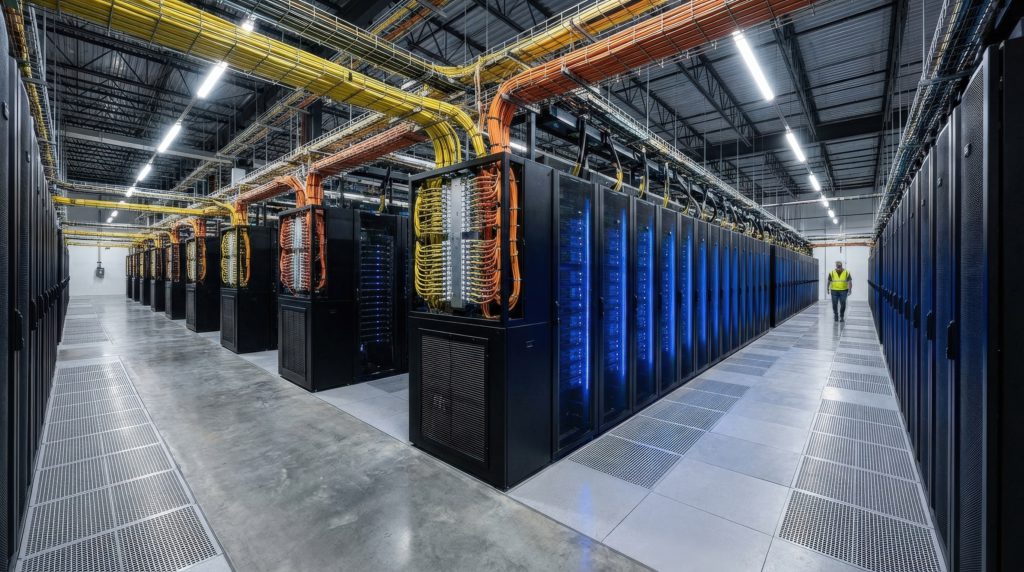
The rationale is simple. Data centers need a lot of wiring, cooling and power, which means they need a lot of copper. AI data centers need even more.

A crypto data center ​requires 21 metric tons of copper per megawatt installed, while an AI training data center in China has a copper intensity of 47 tons, according to S&P Global Market Intelligence.

The ‌escalating global AI arms race will undoubtedly boost demand for copper. But by how much?

S&P Global forecasts usage in data centers and associated infrastructure will rise from 1.1 million tons in 2025 to 2.5 million tons in 2040.

There are, though, a lot of “buts” lurking in that forecast.

Demand could be as high as 2.7 million tons or as low as 1.7 million, depending on the interaction of multiple fast-changing variables.

As the authors of “Copper in the Age of AI” put it, the “wide span underscores both ​the uncertainty and the scale of the challenge ahead.”

The delivery gap

One key variable in assessing likely copper demand is the scale of AI data center expansion.

Many of the new megawatts of announced AI ​computing capacity are “bragawatts”, according to a study released by the Oxford Smith School and financial broker Marex Group.

While media and markets are expecting and pricing a rapid ⁠exponential ramp-up in AI infrastructure, the outcome is likely to be “a roll-out that is delayed, lumpy, and constrained by physical realities.”

The biggest hurdle is grid connectivity. A data center can be built in 18 to 24 months but the ​average US waiting time for a grid connection was four years between 2018 and 2023.

That assumes there is enough power in the first plac

Ireland built so many data centers that by 2021 the sector’s share of ​national energy consumption had risen to over 20%, threatening to overwhelm the country’s energy system.

The Irish grid operator imposed a de facto four-year moratorium on new applications, which has only just been lifted, albeit with strict new conditions.

Throw into the mix long lead times for essential equipment such as transformers and a shortage of specialized labour and there is a growing gap between announced and delivered AI computing capacity, according to the Smith study.

Copper, it warns, is in danger of falling down that gap.

More power, less copper

Quantifying how much copper is used in data centers is also a fast-moving target.

The battle for AI supremacy is one of computing power, and as chips evolve, so must the architecture of rack ​design and wiring.

S&P Global notes there is already a shift underway from copper to fiber optics in the interconnect cabling between processor racks.

This could result in copper intensity in data centers falling by 4 or 5 tons per megawatt installed, ‌not a ⁠trivial change given the overall 30- to 40-ton range deployed in non-crypto data centers.

More fundamentally, though, chip company Nvidia argues that even copper will be challenged to deliver the low latency and high bandwidth of next-generation AI centers.

Using traditional low voltages would necessitate “an unsustainable volume of copper cabling.”


Nvidia is proposing a transition to 800 volts, which means the same wire gauge can carry 157% more power. A simpler set-up also means fewer copper conductors and smaller connectors.

Reducing copper usage is both a cost consideration and, the company argues, a critical pathway to ever-increasing rack power.

Material wars

Ardent copper bulls argue that such is the looming deficit in copper that the metal could itself become a ​bottleneck in the roll-out of AI capacity.

That may be ​more true of some of the other metals ⁠that go into connecting physical and virtual worlds.

Data centers are a sink for all sorts of minerals, 60 to 70 tons of them per megawatt installed, according to the World Economic Forum.

There’s copper, but also aluminum, cobalt, nickel, tin, gold, silver, germanium and gallium and, of course, a smattering of the increasingly ubiquitous rare earth ​metals.

Germanium and gallium are more likely to pose a materials bottleneck than copper. Western supply of both metals is acutely tight after China imposed export restrictions ​in 2023.

Big Tech is competing ⁠for limited supply with both the US Pentagon and the European Union, which is looking to build a strategic metals stockpile. It’s by no means certain it will win.

Pricing complexity

All new industries are liable to the same disconnect between promise and delivery, but power availability, grid connectivity and critical metals supply are structural real-world inhibitors of the AI revolution.

And while no-one’s going to stop using copper in data center design, its intensity of use is beholden to the race ⁠for ever more ​computing power, which in turn requires constant evolutions in AI architecture.

There are multiple moving parts to copper’s new data center demand ​vector. The market, which has seized on AI as the next big thing, may not be pricing that complexity.

(Editing by Marguerita Choy)


Abu Dhabi’s IRH turns down Zambian copper concentrate waiver


Mopani area J open pit. (Image by Mopani Copper Mines).

The Zambian unit of Abu Dhabi’s International Resources Holding doesn’t plan to export copper concentrate, after again being granted the largest quota in a government waiver to ship the semi-processed form of the metal.

Mopani Copper Mines said it hasn’t changed its position since July when the first exemptions were announced. At that time, the company said it had “no plan to export any part” of the allocation and intended to feed that output into its own “processing operations in line with our long-term strategy of strengthening domestic refining capacity.”


Zambia’s government on June 2 suspended a 10% export duty on almost 272,000 tons of copper concentrate that can be shipped via the state-owned Industrial Resources Ltd. during the next three months. IRL has a metals-trading partnership with Mercuria Energy Group.


Mopani’s share is 100,000 tons, while the three biggest mines in Zambia — owned by Barrick Mining Corp. and First Quantum Minerals Ltd. — are entitled to export a similar volume combined. Mopani was also awarded allocations of the same size 11 months ago and in March.

IRH, which is part of a vast conglomerate controlled by United Arab Emirates National Security Adviser Sheikh Tahnoon Bin Zayed Ali Nahyan, acquired 51% of the Zambian copper mining complex, in early 2024.

The export duty is normally in place to encourage miners to process all their concentrate at Zambia’s four operational copper smelters, one of which belongs to Mopani. The exemptions are introduced when that smelting capacity is constrained.

Konkola Copper Mines said on May 29 that its smelter had begun a planned 60-day shutdown to undertake maintenance and repairs.


Mopani’s “priority is to smelt all available concentrate,” the company’s public relations department previously said.

(By William Clowes)

Fe

Top iron ore miners seek Canberra’s help in price fight with China


The Solomon Hub, Western Australia. (Image courtesy of Fortescue Metals Group.).

Major miners and their lobbyists have asked Canberra for help in pushing back against China’s efforts to extract better terms for their iron ore, including raising the prospect of a single selling desk for Australia’s most valuable commodity export, senior government officials said on Friday.

China’s state iron ore buyer, China Mineral Resources Group (CMRG), has been using increasingly hardball tactics against mining giants to win better deals for the country’s steel mills, to tighten its grip on the $132 billion seaborne market.


The push by miners comes after CMRG blacklisted some of BHP’s iron ore for seven months, during protracted contract talks. CMRG has also told some steelmakers not to engage in discussions with Fortescue about a new iron ore product.

Australia is the biggest supplier of iron ore to China, accounting for more than 50% of its imports.

Canberra watches that market closely as China is the country’s biggest trading partner and iron ore the most lucrative commodity export, expected to reap A$114 billion ($81 billion) in the current financial year, according to government estimates.

A Senate panel on Friday asked Department of Foreign Affairs and Trade officials whether they had received a request from BHP, Fortescue, Rio Tinto, Hancock, or the Minerals Council for government intervention or support in relation to CMRG and iron ore pricing.

Steven Yates, an assistant secretary in the department, confirmed they had.

“Yes, I can say that we have engaged with those miners, and during the course of those discussions there have been suggestions on ways that we might be able to carry this issue forward,” Yates said, declining to offer more detail for reasons of commercial confidence.

“We engage very regularly with Australian miners, and I try to support them as best as possible to ensure that they can continue to export their iron ore and receive the best price as possible,” he said.

The Senate panel also asked for a response “to the proposition raised in industry circles that Australia needs some sort of export-side coordination to cover a single state buyer.”

Deputy Secretary George Mina replied that previous plans in the agriculture sector to coordinate on supply had not been well-received by trading partners, but this instance is different as “there is already an established single buyer”.

“So there’s clearly these questions for long-term strategy,” Mina said.

BHP, Rio Tinto, Fortescue and Hancock declined to comment.

One investor told Reuters an executive at a top iron ore miners had mentioned they had flagged the issue to the government but said Canberra has been trying to repair its relationship with China so might not want to take up this fight right now.

BHP reached a deal with CMRG in April, which included agreeing to some yuan-denominated sales.

China is currently in negotiations with Fortescue and will enter annual contract talks with Rio Tinto later this year.

($1 = 1.4037 Australian dollars)

(By Melanie Burton; Editing by Sonali Paul)


Nuclear Fusion startup Helion hits $15.5 billion valuation in latest funding round


Credit: Helion

Nuclear fusion energy company Helion said on Thursday it raised $465 million in its latest funding round, led by Thrive Capital, valuing the Washington-based firm at $15.5 billion after the investment.

The round nearly triples Helion’s valuation from its last Series F funding round in January 2025, when it raised $425 million at a valuation of $5.4 billion.

The financing underscores surging demand for electricity to power massive data centers dedicated to artificial intelligence operations.

It also brings Helion’s total funding to $1.5 billion. The company said proceeds from the latest round will be used to accelerate commercial deployment, expand manufacturing capacity and support delivery of clean electricity to customers.

Helion, backed by OpenAI co-founders Sam Altman and Greg Brockman, is among dozens of public and private companies working to crack fusion’s core challenge: generating more electricity from the reaction than is required to start and contain it.

Investors in the latest Series G funding round included Alta Park Capital, Anti Fund, BoxGroup, Lux Capital, Peak XV Partners and Ford Motor executive chair Bill Ford.

Existing backers including Lightspeed Venture Partners, Mithril Capital, SoftBank Vision Fund 2 and Good Ventures Foundation also took part in the funding.

The funding comes after Helion announced its Polaris test machine used fusion fuel and reached temperatures above 150 million degrees Celsius.

In 2023, the company signed agreements with Microsoft to supply electricity by 2028 and Nucor to develop a 500MW fusion power plant.

Earlier this year, OpenAI’s Sam Altman stepped down from Helion’s board as the companies start to explore working together “at significant scale”.

Helion was founded in 2013 by David Kirtley, John Slough, Chris Pihl, and George Votroubek. Its first power plant, Orion, is under construction in Malaga, Washington.

(By Pranav Mathur; Editing by Diti Pujara)

EnergyX, Wildcat Discovery Technologies to build ‘battery mecca’ in Texas


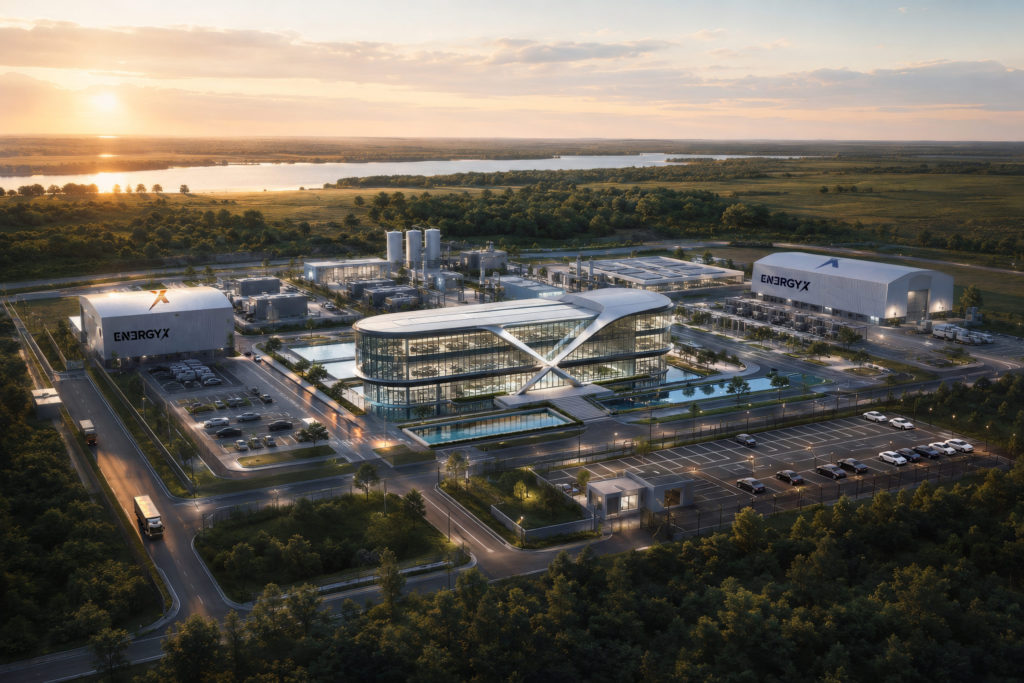
Battery Mecca site rendering. Credit: EnergyX.

Privately held EnergyX and Wildcat Discovery Technologies, a clean energy solutions company wholly owned by Holyvolt Group, have teamed up to advance a lithium-iron-phosphate (LFP) cathode active material manufacturing facility in Hooks, Texas.

The project represents more than $230 million in investment, including substantial private-sector cost share from the project sponsors, the companies said in a joint statement.

If selected for Department of Energy (DOE) funding, the federal support would accelerate the construction, commissioning and scale-up of one of the first meaningful domestic LFP cathode production facilities in the US, they added.

The facility would be located next to EnergyX’s Project Lonestar lithium plant, which opened in March, and near the Red River Army Depot.

EnergyX controls approximately 50,000 acres of lithium mining rights underneath the co-located cathode production facility and Lonestar plant within the Smackover Formation — a lithium-rich brine resource that stretches from Florida to Texas.

Under their joint venture agreement, Wildcat and EnergyX plan to establish domestic manufacturing capacity for LFP cathode material, a critical battery component used in energy storage systems, electric vehicles, military platforms, drones, and other advanced energy applications.

The proposed plant is designed to produce approximately 15,000 metric tonnes per annum (tpa) of LFP cathode active material in Phase 1, with the ability for future expansion.

The project would be located on 330 acres of land already secured by EnergyX at the TexAmericas Center, an industrial location with rail transportation access, available utility infrastructure, competitive energy resources, and proximity to important defense and battery supply-chain assets.

Most LFP cathode materials are currently produced in China, creating supply chain risk for US energy storage, transportation, and defense markets.

The joint venture is expected to create an estimated 150 permanent jobs, and up to 800-12,00 indirect and construction jobs in Northeast Texas, the companies said.

EnergyX is expected to supply most of the lithium carbonate “with commercially favorable terms,” including a discount from market rates, and a price floor and ceiling, limiting exposure to lithium price volatility.

Both Wildcat and EnergyX have already validated demonstration-scale LFP cathode and lithium carbonate production capabilities at their facilities in San Diego and Hooks, respectively, and have sampled material to customers across energy storage, mobility, and defense-related markets.


Wildcat’s LFP product roadmap includes successive generations of higher density LFP materials, while its broader cathode platform includes future cobalt- and nickel-free chemistries, creating expansion possibilities.

“LFP cathode materials are essential to the future of energy storage, defense electrification, and affordable electric mobility, yet the United States remains heavily dependent on foreign supply,” Wildcat CEO Mark Gresser said in a news release.

“This project is designed to help close that gap by combining Wildcat’s cathode materials technology and high-throughput development platform with EnergyX’s domestic lithium supply strategy and Texas project footprint,” Gresser said.

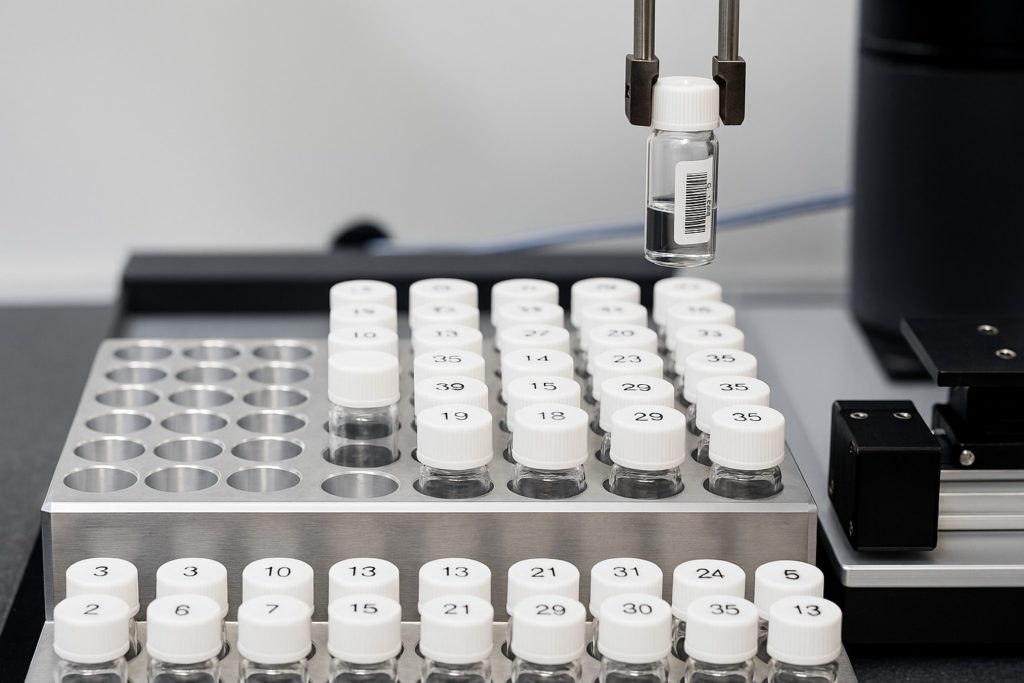
Wildcat’s proprietary high-throughput platform. Image: Wildcat Discovery Technologies

Bigger picture: ‘battery mecca’

EnergyX said its product portfolio includes lithium carbonate for LFP cathodes, lithium hydroxide for NMC cathode chemistries, and lithium metal anodes for high energy density solid state batteries and lithium isotopes for the nuclear material supply chain.

“This cathode plant is a critical step towards EnergyX’s larger vision of the ‘Battery Mecca,’” EnergyX CEO Teague Egan said.

“Cathode production is a natural next step, which will eventually include lithium metal anode production, and high energy density cell manufacturing,” Egan said.

“By pairing domestic cathode manufacturing with our domestic lithium supply, this project can help position Texas and ‘Battery Mecca’ as a leader in the next generation of battery materials and establishes a complete US battery materials supply chain.”

AU

CRIMINAL CAPITALI$M

EXPLAINER: An Indian gold firm allegedly inflated revenue by $159B using its Swiss unit


Stock image.

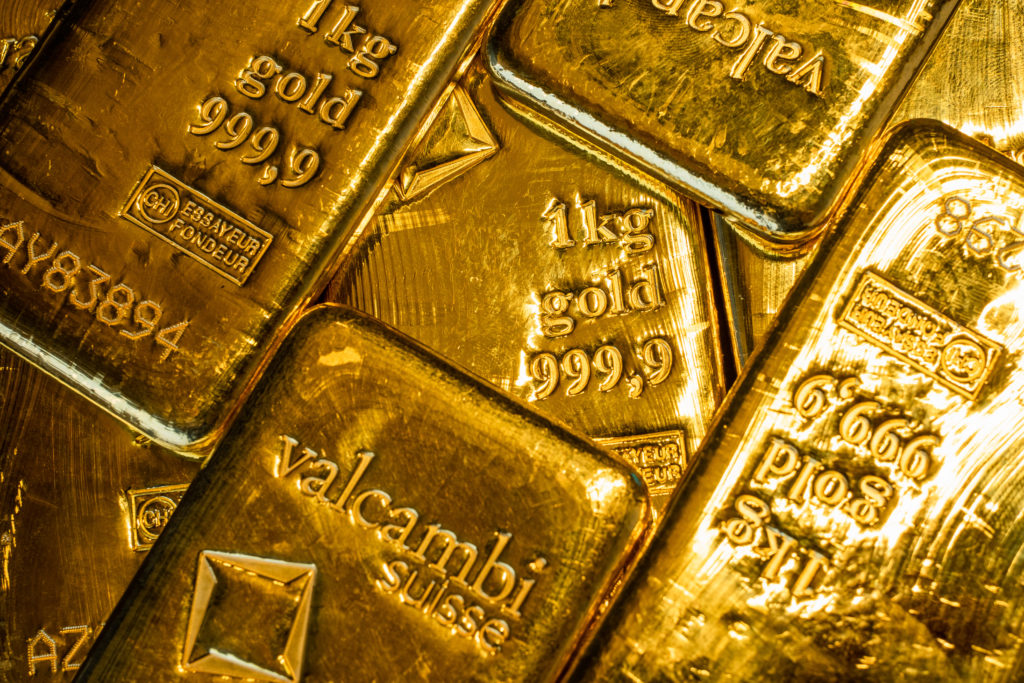
An official Indian investigation into gold company Rajesh Exports has alleged that the firm overstated revenue of its Swiss refining unit Valcambi to the tune of $159 billion – a figure unheard ​of in the country’s accounting probes.

The scale of the alleged misreporting, released publicly by the markets regulator on Wednesday, ‌has raised questions about how investors and analysts missed this, especially because India’s state-run insurance giant LIC owns 11% of the company.

Rajesh Exports has denied wrongdoing. On Friday, in an exchange statement, the company said, “the major point mis-interpreted with regard to the revenues of the company is totally misplaced.” ​LIC did not responded to Reuters queries.

Valcambi declined to comment, adding that it has no information about the issue, ​which concerns its controlling shareholder.

Here are some of the Securities and Exchange Board of India’s (SEBI) preliminary ⁠findings.

Revenue inflation and Valcambi

Valcambi, one of the world’s largest refiners of precious metals, was owned by European Gold Refineries until ​a 2015 all-cash sale to Rajesh Exports.

SEBI said Rajesh Exports allegedly inflated its reported India revenue by 15.15 trillion rupees ($158.93 billion) ​between April 2020 and March 2025. Almost all of the company’s revenue was attributed to Valcambi, the group’s main operating entity, though its standalone accounts showed revenue of $70 million to $100 million, SEBI said.

Rajesh Exports chairman Rajesh Mehta did not comment on the difference between Valcambi’s revenues and the Indian ​unit’s financials on Thursday, but he told Reuters all disclosures were correct.

“There seems to be some miscommunication with SEBI and ​a gap of information. The financials are perfect,” Mehta said, adding that the company “will continue to cooperate.”

Rajesh Exports is listed in Mumbai and its ‌shares ⁠have fallen 10% in the wake of SEBI’s order.

What does Rajesh Exports do?

Rajesh Mehta and his brother started Rajesh Exports in 1989 in Bengaluru.

It has since expanded to 12 countries and calls itself a “global leader in the gold business,” spanning refining to retailing.


The company gained global prominence after its 2015 acquisition of Valcambi for $400 million.

Missing mines in Africa

SEBI has alleged that Rajesh Exports disclosed ​to Indian exchanges that it ​invested 10.35 billion Indian rupees ⁠in gold mines in Africa.

But an examination of the financial statements of its subsidiaries did not find “supporting documentation demonstrating the existence of the alleged investment in gold mines in Africa,” according to ​SEBI’s order.

When asked, Rajesh Exports told SEBI that investments in gold mines existed through foreign ​subsidiaries and the ⁠investment figures were “tallying and correct,” the order showed.

Fictitious trades

SEBI said Rajesh Exports recorded “fictitious revenue” in its dealings with a local broker. More than 114 billion rupees were booked as sales and purchases despite a lack of evidence of genuine transactions or banking links.

SEBI started ⁠its probe ​into the company in 2024 after a complaint cited large, outstanding trade ​receivables.

SEBI appointed a forensic auditor who could verify only a fraction of the company’s reported numbers due to a lack of documentation, the regulator said.

(By Jayshree ​P Upadhyay, Rajendra Jadhav and Polina Devitt; Editing by Aditya Kalra and Thomas Derpinghaus)

Li

Bolivia unrest puts world-class lithium assets at risk


Protesters clash with police in La Paz. (Image: Screenshot from APT | YouTube.)

Bolivian President Rodrigo Paz has introduced legislation to expand military powers as nationwide protests entered their 36th day on Friday, adding uncertainty to the country’s vast lithium resources development.

The state of exception bill, presented to Congress on June 3, would establish a legal framework for military intervention alongside police forces during public unrest. The proposal follows the government’s passage of Law 1732 last week, which removed restrictions on military deployments during civic demonstrations that were imposed after the Sacaba and Senkata killings of 2019, where 21 people died and 180 were injured.

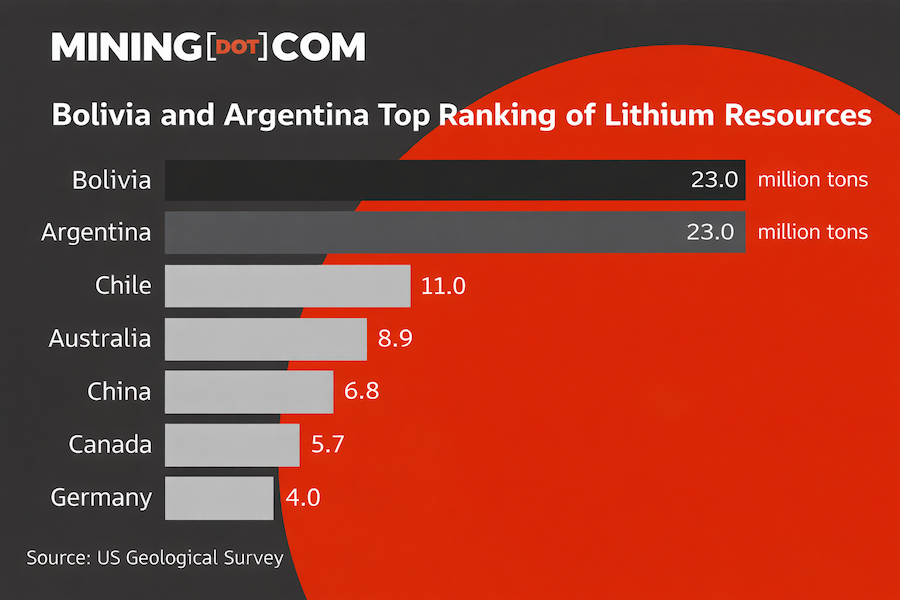
Bolivia hosts some of the world’s largest lithium resources, including the massive Salar de Uyuni deposit. Political instability, regulatory uncertainty and recurring social unrest have repeatedly slowed efforts to develop projects viewed as strategically important to global electric vehicle, energy storage and critical minerals supply chains.

“The measure seeks to guarantee the transportation of food, fuel and medical supplies,” Paz said during the swearing-in ceremony of new Defence Minister Ernesto Justiniano in La Paz.

The legislation comes as peasant organizations, labour unions and social movements demand Paz’s resignation and an end to what they describe as neoliberal economic policies. Protesters have established more than 90 road blockades across eight regions, disrupting transportation networks and deepening the country’s political crisis.

Growing tensions

Government officials say the bill is intended to restore access to essential goods in the cities of La Paz and El Alto. Social organizations, however, warn the measure would provide legal cover for security forces to forcibly dismantle roadblocks and suppress demonstrations.

US Secretary of Defence Pete Hegseth on Thursday characterized the anti-government protests as an attempted coup against President Paz and said Washington would oppose efforts to remove the government.

“The United States is watching. Bolivia must not allow itself to fall prey to the old status quo of narco-terrorist dominance in the region,” Hegseth wrote on social media.

The comments were the latest sign of the Trump administration’s active approach to Latin American security and politics. Since returning to office in 2025, President Donald Trump has described the Western Hemisphere as a strategic priority, while his administration has designated several criminal networks in the region as terrorist organizations.

Protest leaders have rejected the government’s position and pledged to maintain blockades until their demands are met. The Bolivian Workers’ Union and allied social organizations continue to coordinate demonstrations across the country, arguing that privatization policies and economic reforms have failed working-class communities.

Former president Evo Morales condemned the government’s actions, claiming the military appointments and legislative changes reflect US influence over Bolivia’s domestic affairs. Morales alleged Justiniano travelled to Washington shortly before his appointment and argued foreign interests are focused on Bolivia’s mineral wealth rather than the country’s development.

“Today, we confirm that this is a struggle of the people against the empire, of the homeland against domination,” Morales said.

Mineral stakes

Demand for lithium, rare earth elements and other strategic resources has become a central component of industrial, energy and national security policies in the US, China and Europe. Bolivia’s resource base has placed the country at the centre of an intensifying global competition for critical minerals, even as development has lagged behind neighbouring producers Argentina and Chile.

Analysts have long viewed Bolivia as a strategic prize in the race to secure critical mineral supplies. Despite its vast resource potential, investors have remained cautious amid political disputes, shifting regulations and tensions between governments, communities and foreign companies seeking access to lithium projects.

The developing situation highlights the growing overlap between resource nationalism, social unrest and the global scramble for critical minerals.

As lawmakers prepare to debate the state of exception bill, the government argues prolonged road blockades threaten economic stability and the delivery of essential supplies. Protest leaders maintain they will remain in the streets until their demands are addressed, raising the prospect of further confrontation if the legislation is approved.

For mining companies, battery manufacturers and governments seeking secure supplies of critical minerals, the outcome could influence not only Bolivia’s political future but also the pace of development in one of the world’s most important untapped lithium regions.

Column: Lithium bust is over but will battery metal boom again?


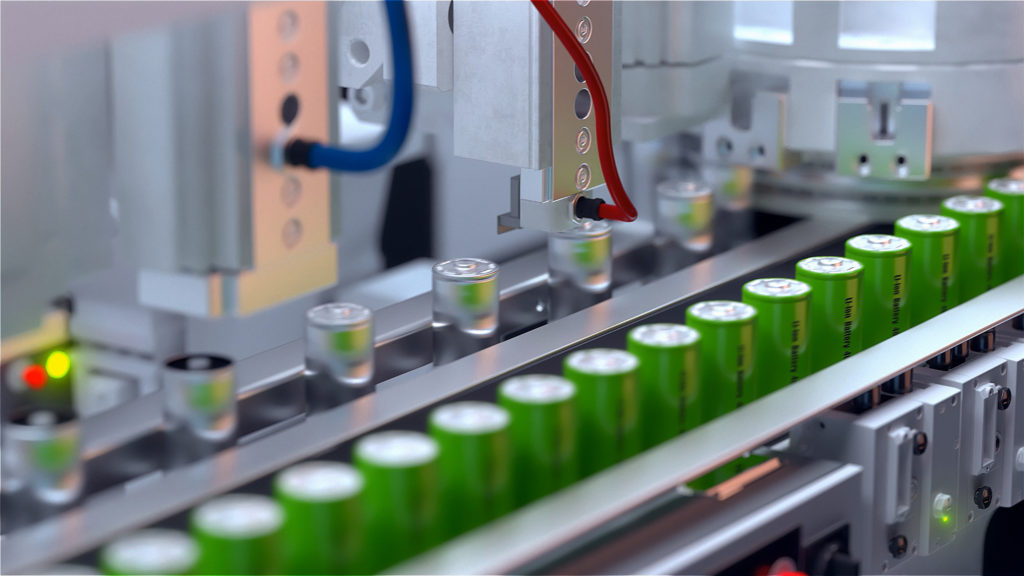
Conveyor line for the production of lithium-ion batteries. Stock image.

(The opinions expressed here are those of Andy Home, a ​columnist for Reuters.)

The lithium market has sprung back to life after a three-year slump that left the battery metal languishing at rock-bottom prices for much of 2024 and 2025.

The CME lithium hydroxide contract has jumped by 86% since the start of the ​year and is trading back above $20,000 per metric ton for the first time since late 2023.

Lithium has a history of boom-and-bust pricing ever since it ‌transitioned from being used in industrial lubricants to powering electric vehicles.

This time around, however, the boom may be less spectacular.

Underlying demand growth remains strong but disappointing global EV sales in the first quarter have tempered expectations for this year.

Supply, on the other hand, should rise as higher prices lead to the reactivation of projects that were halted during the bust years.

Much, though, depends on one particular Chinese ​mine.

CME lithium hydroxide and carbonate cash prices

Lithium fever

The catalyst for lithium’s price recovery came in August, when Chinese battery giant Contemporary Amperex Technology (CATL) announced that it had suspended operations at its Jianxiawo mine ​in Jiangxi province after its mining licence expired.

The news triggered a wave of speculative buying on the Guangzhou Futures Exchange.

At the height of ⁠the lithium fever in November, Guangzhou traded 27.0 million futures contracts and another 12.5 million option contracts, each representing one ton of lithium carbonate.

The global lithium market is ​growing fast but is still less than 2 million tons in size.

GFE lithium futures volumes and price

It took several hikes in trading fees and margins and the imposition of position limits before the exchange tamed ​animal spirits.

What’s noticeable, though, is that while trading volumes have dropped sharply so far this year, the price has remained elevated.

That says much about how important a part Jianxiawo plays in China’s lithium supply dynamics.

Swing factor

Jianxiawo has an annual nameplate capacity of 150,000 tons of lithium carbonate equivalent, making it one of the largest single lithium assets globally, according to consultancy Benchmark Mineral Intelligence (BMI).

CATL originally expected its ​licence to be renewed within three months. It is still waiting.

The loss of output has served to accelerate a long-running drawdown in inventory along the Chinese processing chain.

Lower ​stock cover has left lithium pricing more sensitive to any sign of further supply disruption such as Zimbabwe’s unexpected raw materials export ban in February, subsequently replaced with a new quota regime.

The mine’s closure ‌has also ⁠raised questions about other operators clustered around the lithium hub of Yichun amid signs local regulators are taking a hard look at the mining sector.

Jianxiawo is widely expected to return to action in the coming months. China isn’t blessed with huge in-the-ground lithium resources and the mine is too important to domestic supply resilience to close permanently.

But, to quote BMI, “The timing of resumption is the single largest swing factor in the price outlook over the next 24 months.”

Foggy new dawn

BMI thinks lithium is already over-priced and forecasts a “material decline” ​in the second half of the year as ​the shift to higher pricing incentivizes ⁠the restart of capacity that was idled during the price slump.

BNP Paribas agrees, arguing that prices “have derailed from fundamentals” thanks to over-exuberance in both futures pricing and supply-chain order flow.

The bank is forecasting continued supply surplus both this and next year, noting that surging ​battery demand for stationary storage is only partly mitigating slower growth in the larger EV market.

Even bulls such as Citi are ​cautious on timing. The ⁠bank’s upside CME hydroxide target of $32,000 per ton comes with a three-month sell-by date and it expects lower prices next year, again due to the anticipated strong supply response.

The broad consensus seems to be that any lithium boom will be short-lived and a shadow of previous price spikes.

But everything still depends on how long it takes the Bureau of Natural Resources of ⁠Yichun in ​Jiangxi province to grant CATL its new mining licence.

(Editing by Mark Potter)


Zimbabwe says China’s Huayou plans lithium carbonate plant


Arcadia lithium mine project in Zimbabwe. Credit: Huayou Cobalt

China’s Zhejiang Huayou Cobalt Ltd. plans to set up a lithium carbonate plant in Zimbabwe, according to the southern African country’s mines minister.

Zimbabwe has become a major supplier of lithium feedstock, following a surge in investment by Chinese companies. However, the government is pushing those investors to build up local processing capacity for the battery metal, so that the nation can derive greater benefits from its mineral wealth.


“They will be producing lithium carbonate, which is more valued,” Mines Minister Polite Kambamura, told reporters in the capital, Harare on Thursday. “So we look forward to firming up of metal prices globally, and also to increase our export revenues.”

Zimbabwe accounted for about 10% of global mined lithium production last year, according to the US Geological Survey. The minister said the country’s mining sector is expected to generate as much as $7 billion in revenues this year, after producing $2 billion in the first half.

“We are looking forward to this being anchored by the export receipts from minerals such as gold,” said Kambamura.


(By Godfrey Marawanyika)