Friday, June 05, 2026

 Trump’s ANWR Oil and Gas Auction Was a Bust—But Alaskan Arctic Still Faces Fossil Fuel Threat


“Even though the interest in today’s sale was tepid, the new leasing still poses significant threats to habitat, iconic wildlife, and Indigenous ways of life,” said Earthjustice.
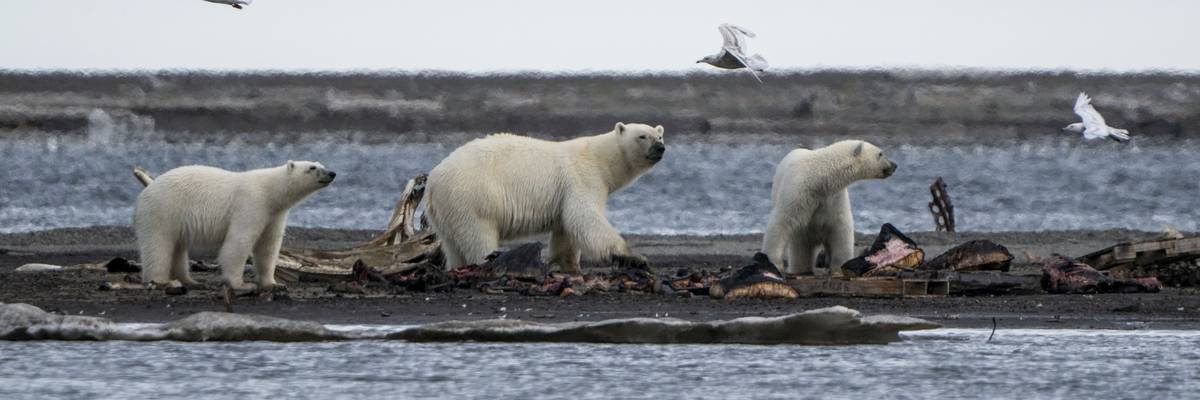


Polar bears feed on whale carcasses in Kaktovik, Alaska on July 1, 2024.
(Photo by Carolyn Van Houten/The Washington Post via Getty Images)

Brett Wilkins
Jun 05, 2026
COMMON DREAMS

In an embarrassment for President Donald Trump and his “drill, baby, drill” energy policy, Friday’s third oil and gas lease sale in Alaska’s Arctic National Wildlife Refuge once again drew no bids from Big Oil—but conservationists stressed that fossil fuel expansion still poses a serious threat to the pristine wilderness and its human and animal inhabitants.

The US Department of the Interior’s Bureau of Land Management (BLM) offered 60 tracts on 689,000 acres in the ANWR in northeastern Alaska’s Coastal Plain for lease sales. Just two companies—the government-owned Alaska Industrial Development and Export Authority and Hex LLC, an Alaska firm—bought five leases that generated a paltry $3.7 million in total receipts.


“Yet again, no major oil and gas companies showed up to bid, because they know that drilling in the Arctic Refuge is a losing proposition,” said Kristen Moreland, executive director of the Gwich’in Steering Committee, which represents the Gwich’in Indigenous people and opposes drilling.

“We will continue to fight the Trump administration’s leasing program, and work with our friends and allies to protect this sacred and irreplaceable landscape from development of any kind,” Moreland added.

The Trump administration had touted fossil fuel lease sales as a way to help pay for tax cuts in the so-called One Big Beautiful Bill Act that mostly benefited corporations and wealthy individuals. The law, which was signed last July by Trump and extends tax cuts the president enacted in 2017, is expected to result in over $5 trillion in lost revenue through 2034, according to an analysis by the Tax Foundation, the world’s leading independent tax policy nonprofit.

Despite the underwhelming result, the BLM described Friday’s ANWR lease sale as “successful,” with agency Director Steve Pearce calling it “another important step toward restoring American Energy Dominance and responsibly developing the vast resources Congress directed us to make available in the Coastal Plain.”

Friday’s lease sale was the third such auction, the first of which was held in 2021 during Trump’s first term and generated just 1% of the administration’s projected revenue. The Biden administration—which canceled the leases issued in the 2021 sale—held another lease auction last year because Trump’s 2017 tax cut law required two ANWR lease sales within seven years. The 2025 auction drew no bidders.

Green groups and other drilling opponents warned that Friday’s flop does not diminish the threat posed by fossil fuel development in ANWR, which is home to the North Slope Iñupiat and the Gwich’in peoples and 270 animal species, including all of the world’s remaining South Beaufort Sea polar bears and the 200,000 porcupine caribou upon which the Gwich’in—who call the area the “sacred place where life begins—rely upon for their survival. The North Slope Iñupiat broadly support drilling and called Friday’s lease sale ”an important milestone.“


“Even though the interest in today’s sale was tepid, the new leasing still poses significant threats to habitat, iconic wildlife, and Indigenous ways of life in one of the nation’s most wild and beautiful landscapes,” Earthjustice—one of the groups leading a lawsuit challenging the lease sales—said in a statement. “All of today’s leases are in important polar bear habitat, for example.”

Athan Manuel, the Sierra Club’s director of lands protection, said that “today’s lease sale was another embarrassment and broken promise. The Trump administration has pushed leasing out the Arctic Refuge as the way to finance huge tax cuts, yet today generated $3.7 million for the federal government.”

“Let’s call that what it is, another scam to trick Americans into giving away our precious natural world,” Manuel continued. “It does nothing to change the reality that drilling in the Arctic National Wildlife Refuge remains a risky, controversial, and fundamentally flawed proposition.”

“For years, the public was promised that sacrificing the refuge would generate significant economic benefits,” Manuel added. “Instead, this leasing program has been plagued by uncertainty while putting one of America’s most important public lands at risk.”

Autumn Hanna, vice president of the advocacy group Taxpayers for Common Sense, said, “From two previous failed lease sales that delivered less than 1% of promised revenue, taxpayers already know that drilling in the Arctic Refuge is a bad deal.”

“Today’s lease sale is yet another reminder that oil and gas development in the refuge is high-risk, low-reward, with zero interest from real industry players,” Hanna added. “Americans will not see relief at the pump and, instead, face greater risks from the drilling in a sensitive region.”


Trump Auction Opens Arctic Refuge Drilling Rights for First Time Ever

The Trump Administration is holding its latest lease sale in Alaska on Friday in a test for investors and environmentalists as the auction comprises tracts in the Coastal Plain of the Arctic National Wildlife Refuge.

The Bureau of Land Management (BLM) is holding the oil and gas lease sale today, after last year the Trump Administration removed legislative protections from the Biden presidency that restricted oil and gas exploration in Alaska, including the Arctic National Wildlife Refuge and federal lands in the state.

The first sale for the Coastal Plain, "a milestone in unleashing Alaska's vast energy potential," as BLM said in April announcing the date of the lease sale, follows a record-breaking lease sale in the National Petroleum Reserve-Alaska in March.

The first lease sale in the National Petroleum Reserve-Alaska in seven years became the most successful auction in the area ever, as oil majors bid on hundreds of tracts, signaling they haven't given up on Alaska's petroleum resources despite development and court challenges.

The lease sale for the National Petroleum Reserve in Alaska in March, one of five mandated in the next decade under the Trump Administration's One Big Beautiful Bill Act (OBBBA), drew a record high of $163.7 million in high bids and resulted in 187 leases in total, awarded to companies including ExxonMobil, ConocoPhillips, and a consortium of Repsol and Shell subsidiaries.

The lease sale set a record for Alaska with the most revenue generated ever, the most tracts receiving bids, and the second most acreage sold in a single sale, the Bureau of Land Management said at the time.

Now the Administration is looking to open the Coastal Plain of the Arctic National Wildlife Refuge to drilling, saying that it has "strong potential for oil and gas development."

The area may contain between 4.25 and 11.8 billion barrels of technically recoverable oil, according to the U.S. Geological Survey, BLM says.

Going forward, the development of any additional resources in Alaska would not be a fast and easy task. The conditions are harsher than in other areas, while environmentalists have vowed to fight both the lease sales and any future oil and gas drilling and development plans.

By Charles Kennedy for Oilprice.com


‘Hands Off the Arctic,’ Say Wilderness Defenders as Trump Holds Alaska Oil and Gas Lease Sale

“Some places are too important to sacrifice,” said one Indigenous leader as the Trump administration invited fossil fuel companies to drill in the Arctic National Wildlife Refuge.


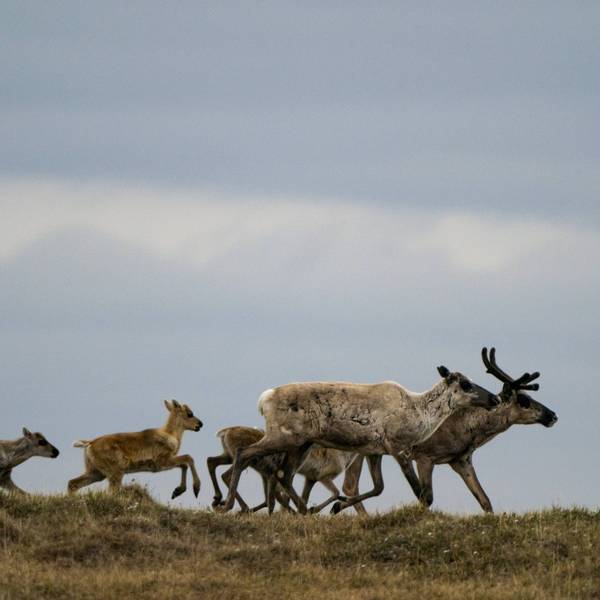
Caribou migrate in the Arctic National Wildlife Refuge in northern Alaska on June 29, 2024.
(Photo by Carolyn Van Houten/The Washington Post via Getty Images)


Brett Wilkins
Jun 05, 2026
COMMON DREAMS

The Trump administration is set Friday to sell oil and gas drilling leases on 689,000 acres in the Arctic National Wildlife Refuge, a pristine and protected area in northeastern Alaska’s coastal plain known for its massive biodiversity and held sacred by its Indigenous inhabitants.

The US Department of the Interior’s (DOI) Bureau of Land Management (BLM) is offering 60 tracts in the ANWR to fossil fuel companies that submitted bids by Wednesday. The lease sale is the first of four in the ANWR mandated under the One Big Beautiful Bill signed by President Donald Trump last year and follows two previous sales this decade, one of which saw little interest during Trump’s first term and another that generated no bids during the tenure of former President Joe Biden.


The sale is part of Trump’s “drill, baby, drill” fossil fuel agenda and follows last October’s reopening by the DOI of 1.56 million acres of the Coastal Plain to oil and gas leasing. The move reversed the Biden administration’s 2023 cancellation of all existing oil and gas leases in the ANWR and ban on drilling across 13 million acres of the adjacent National Petroleum Reserve.

The Trump administration also recently transferred approximately 1.4 million acres of public lands along the Dalton Utility Corridor from the BLM to the state of Alaska, a move one conservationist warned “will only help corporate polluters transform Alaska into an industrial wasteland... for the sake of expanding the portfolios of mining and oil and gas companies.”

The ANWR is home to Indigenous peoples, primarily the North Slope Iñupiat and the Gwich’in. The former are generally supportive of fossil fuel development, arguing that it provides jobs and revenue and boosts self-determination, while the latter broadly opposes drilling.

The Gwich’in call the area “the sacred place where life begins” and rely upon its rich biodiversity—especially its 200,000-strong porcupine caribou herd—for their survival. ANWR boasts some 270 animal species, including musk oxen, Arctic foxes, snow geese and other migratory birds, and all of the world’s remaining South Beaufort Sea polar bears.

While the American Petroleum Institute, the nation’s leading fossil fuel lobby, welcomed Friday’s lease sale, calling Alaska’s oil and gas “key to America’s energy security,” Kristen Moreland, executive director of the Gwich’in Steering Committee, countered that “some places are too important to sacrifice.”

In a Thursday call with reporters, Moreland said that “tomorrow’s lease sale is about much more than economics or development. It is about whether our voices, our culture, and our way of life matters.”

Conservationists also denounced the lease sale, which Earthjustice—part of a coalition challenging the DOI’s policy in federal court—called “another effort to sell out our public lands to boost corporate profits, while Indigenous communities, wildlife, and future generations carry the risk.”

US Sen. Tim Kaine (D-Va.) said Friday on X that “America’s public lands—including the incredible Arctic National Wildlife Refuge—belong to all of us. But now the Trump-Vance administration is auctioning it off to their Big Oil cronies that already have plenty of other areas to drill.”

In a video posted Thursday on social media, US Sen. Martin Heinrich (D-NM) called ANWR “the crown jewel of our American National Wildlife Refuge system.”

“Tomorrow, the Trump administration is gonna try to lease the Arctic National Wildlife Refuge for oil drilling. So I’ve got a message for all the oil majors out there,” the senator said. “I understand you have a job to do. That job never involves drilling in American national parks or national wildlife refuges. Don’t bid.”

Congresswoman Adelita Grijalva (D-Ariz.) also posted a video addressing the lease sale and arguing that Big Oil—part of an industry that spent nearly $450 million during the 2024 election cycle on campaign donations, lobbying, and other efforts to elect Trump and down-ballot Republicans—is “calling the shots.”


The Alaska Wilderness League said on X that “no matter how the administration and oil industry spin today’s lease sale, the outcome doesn’t change: weak demand, shrinking interest, and a story that keeps collapsing under its own promises.”

“The Arctic is not for sale, never has been, never will be,” the group added. “Hands off the Arctic.”
Raw milk outbreak has spread across most of red state — and isn't over yet

Kyle Pfannenstiel,
 Idaho Capital Sun
June 5, 2026 


A cow with branding reading "6E", the name of Neil Yelderman's cattle ranch, in Guy, Texas, U.S., October 28, 2025. REUTERS/Evan Garcia

Idaho health officials are investigating how nearly 60 people got sick after drinking raw milk in the past two weeks.

The Idaho Department of Health and Welfare announced in a news release on Wednesday that most of the people reported being sick after drinking raw milk from two different milking operations in North Idaho and southern Idaho. The infections were reported starting May 19.

The state health agency didn’t disclose the names of the dairies, but said they are collaborating with health officials “to identify and fix any potential sources of contamination.”

In a statement, Department of Health and Welfare spokesperson AJ McWhorter said the agency didn’t name the milking operations “because this is a potential risk for any raw milk producer.”

“The milking operations are working with public health officials to figure out which patches of milk might be affected and to take steps to remedy the situation,” McWhorter said.

Raw milk isn’t pasteurized, a process that involves heating the milk to kill bacteria — like Campylobacter, E. coli, Listeria and Salmonella — that can be present in raw milk.

So far, 45 of the people who got sick tested positive for campylobacteriosis, a bacterial infection. But officials say not everyone who got sick has been tested, and that more illnesses could be found.

The Idaho Department of Health and Welfare says its public health division is working with local health officials across six of Idaho’s seven regional public health districts to investigate the source of the outbreaks, including Central District Health, Southwest District Health, Eastern Idaho Public Health, Southeastern Idaho Public Health, Panhandle District Health, and South Central Public Health. Officials are investigating to find batches that are potentially concerning and test milk samples.
What are the symptoms of infections linked to raw milk?

Symptoms of infections from bacteria that can be in raw milk include vomiting, diarrhea, abdominal pain, fever and dehydration. Complications can be severe, especially in people at higher risk such as young children, pregnant women, the elderly and people with compromised immune systems.

Health officials encourage people who are feeling symptoms after recently drinking raw milk to seek medical care promptly. To report an illness or get more information, officials encourage people to contact their local public health district.

TRUMP SCREW FLY

Red state declares massive disaster as flesh-eating parasite arrives after Trump cuts


Bennito L. Kelty
June 5, 2026 
RAW STORY


FILE PHOTO: A sample of screwworms collected in the morning are displayed at the veterinary clinic as the Mexican government and ranchers struggle to control the spread of this flesh-eating pest, in Tapachula, Chiapas state, Mexico July 4, 2025. REUTERS/Daniel Becerril/File Photo

A red state governor declared a disaster in hundreds of counties as the spread of a flesh-eating parasite poses an "imminent threat," according to local reporting.

Texas Gov. Greg Abbott announced "a state of disaster" for all 254 Texas counties as New World Screwworm threatens the state's wildlife and livestock industry, according to Texas political reporter Brandon Waltens.

For the first time in decades, screwworm was found in U.S. cattle livestock earlier this week. The parasite is mostly a threat to cattle and beef prices, not humans, according to national reporting.

However, Gov. Abbott's declaration warned that the parasite could lead to "widespread and severe property damage" across the state.

Critics have pointed to cuts made under the Trump administration's Department of Government Efficiency, which reduced the USDA's workforce by roughly 15 percent — around 15,000 employees — and terminated a USAID screwworm monitoring project.


Flesh-eating parasite detected in south Texas for the first time since 1966, officials confirm

Flesh-eating fly detected in US cattle, decades after being eradicated.
Copyright AP Photo/Fernando Llano

By Marta Iraola Iribarren
Published on

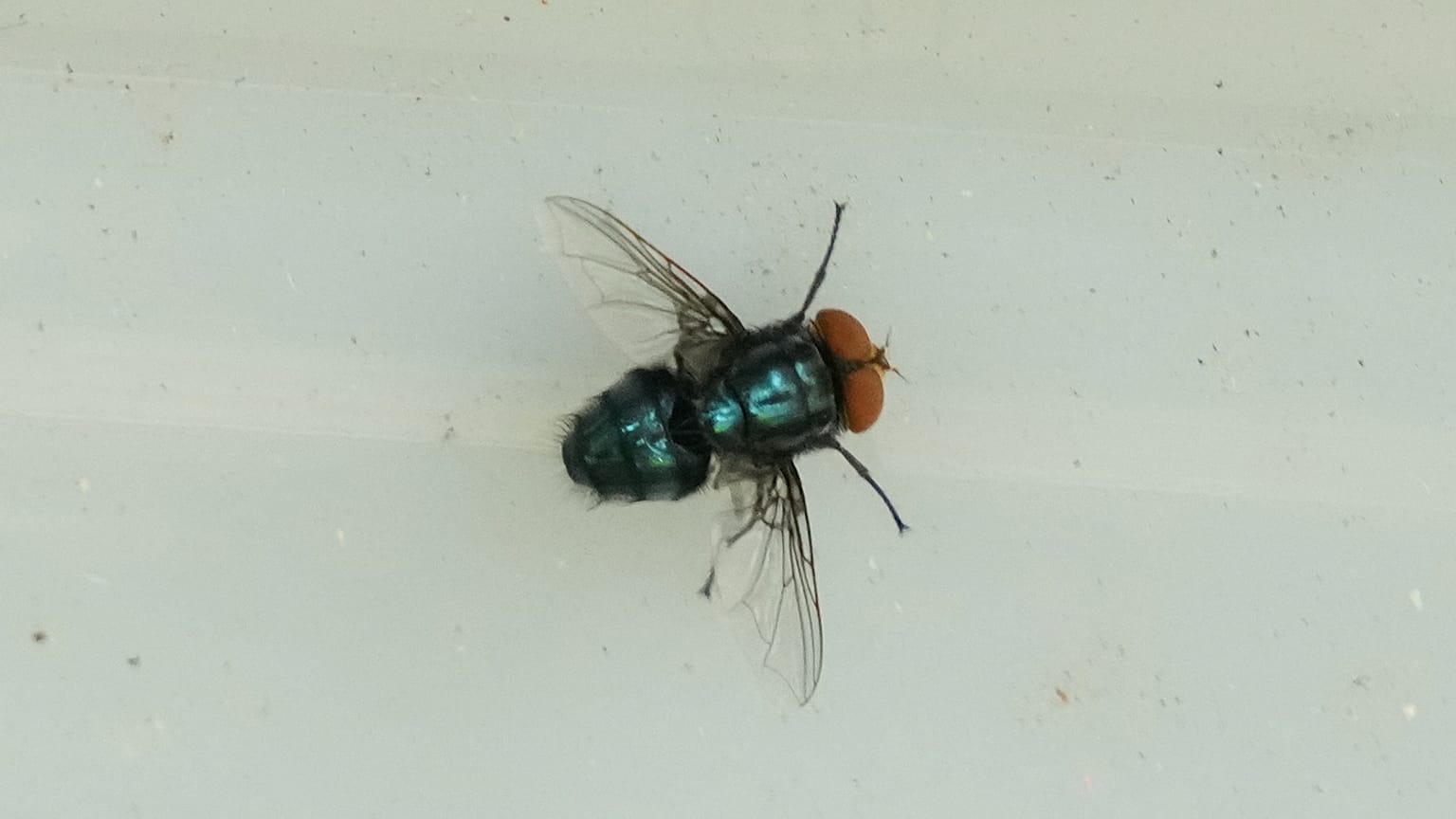
A parasitic fly whose larvae feasts on living flesh has been confirmed in cattle in south Texas, years after it was deemed eradicated in the country.

The New World screwworm (NWS) fly has been detected in south Texas, the US's largest cattle-producing state, the country's Department of Agriculture confirmed on Wednesday.

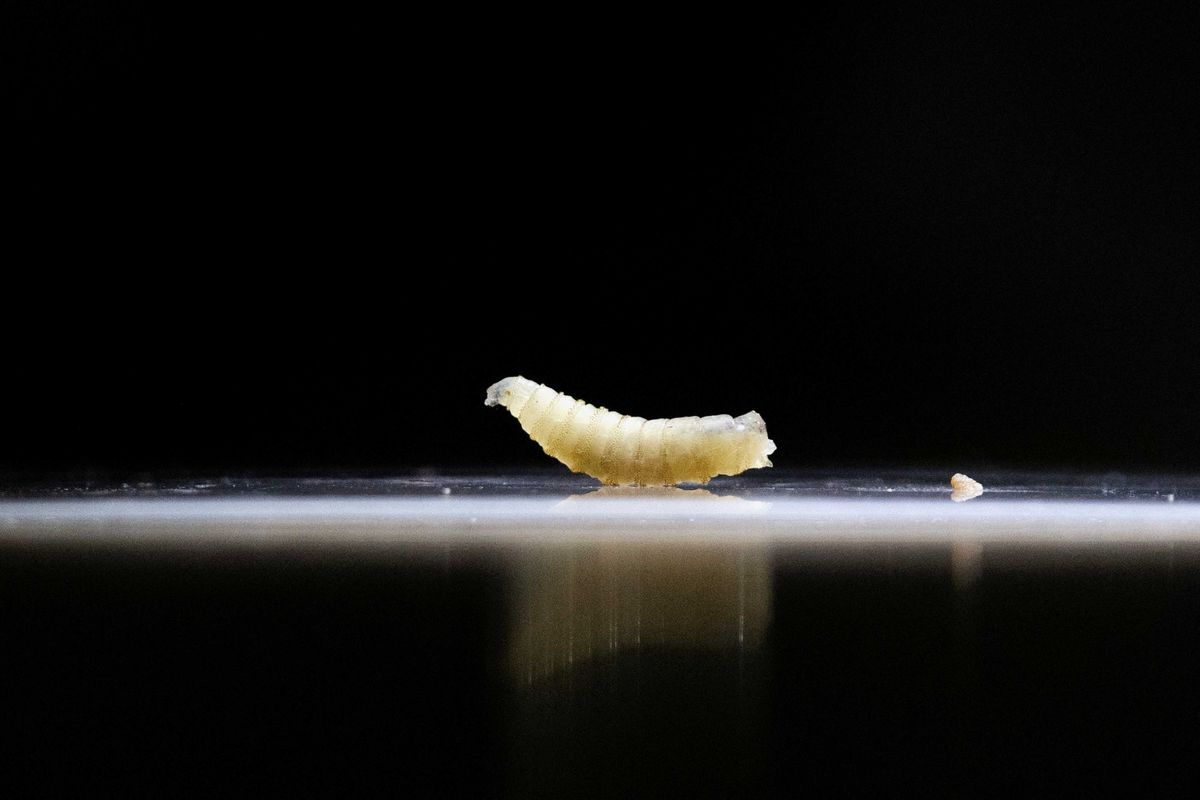
The screwworm is a species of parasitic fly that completes part of its lifecycle by feeding on the tissue and flesh of warm-blooded animals and humans.

The female fly lays eggs in open wounds or mucous membranes, where they then hatch into larvae that eat the flesh around them.

The case was detected in a three-week-old calf in LaPryor, Texas, approximately 80 kilometres from the US border with Mexico, Agriculture Secretary Brooke Rollins confirmed. It is the first case in the region since 1966.

Rollins said there have been no other reported discoveries of the fly in the country, and officials stressed that, while the fly’s larvae pose a threat to livestock, they do not infest food. With proper treatment, even the infested calf should recover.

“There is no reason to believe this incursion will result in [the] establishment of the pest in our country," Rollins said.

Texas State Veterinarian Bud Dinges established a 20-kilometre quarantine zone, prohibiting the movement of any warm-blooded animal — including pets — outside that zone without an inspection.

Have there been other cases of New World Screwworm?

The pest was a recurring problem for the American cattle industry for decades, with Florida and Texas known as hotspots, until the US largely eradicated it in the 1960s and 1970s.

While infestations are uncommon in the US, cases have been reported in travellers returning from affected areas.

In August 2025, US health officials confirmed a case in a Maryland resident who had travelled to El Salvador. The patient recovered, and officials found no evidence of further parasite transmission.

Before that, the last outbreak occurred in the Florida Keys, a tropical archipelago stretching south of Miami between the Atlantic Ocean and the Gulf of Mexico, in September 2016, largely among wild deer. It was contained early the next year without spreading further.

How can the fly be contained?

The screwworm was successfully eradicated from North and Central America for many years, but it is currently endemic in South America and parts of the Caribbean, according to the Food and Agriculture Organization of the United Nations (FAO).

Over the past five years, the parasite has re-established itself across Central America and Mexico, reclaiming much of its original range.

The main eradication tool is the sterile insect technique (SIT), which uses radiation to produce sterile male flies without the use of pesticides.

The FAO notes that SIT must be combined with wound management, close monitoring and robust surveillance to be effective. The US has recently used this method in an attempt to keep the fly out of the country.

Female flies mate only once in their months-long lives, and if they do so with a sterile fly, their eggs would not hatch, and the population would decline over time.

This technique is also being used to stop other disease-carrying insects, such as the Asian tiger and Egyptian mosquitoes, the main carriers of diseases such as Zika, dengue and yellow fever.

Rollins said the United States Department of Agriculture is confident enough in its preparations and believes “there is no threat of mass infestation.”

What are the risks and symptoms for people?

The larvae do not spread from person to person, and they pose a very low overall risk to the public.

According to US health authorities, people can be at risk if they travel to areas where the flies are present and spend extended time outdoors during the day, especially if sleeping.

Those who live, work or spend prolonged periods near livestock or other warm-blooded animals in affected areas are also at a higher risk.

Infection symptoms can include unexplained, painful wounds or sores that do not heal, a foul-smelling odour or bleeding from the site of the infestation, and seeing maggots or feeling movement in open wounds or sores or in the nose, mouth, eyes, ears or genitals.

Is the New World Screwworm established in Europe?

The fly is not established in Europe, and no outbreaks have been reported.

However, warming temperatures are increasingly expanding insect habitats, and sporadic cases linked to international travel cannot be ruled out.


Gambling platforms turn up in wild election conspiracy posts — as paid partners

Matthew Chapman
June 5, 2026 
RAW STORY


Kalshi logo appears in this illustration taken April 22, 2026. REUTERS/Dado Ruvic/Illustration

With California continuing to count the results in major races, Republicans continue to cling to second place in the gubernatorial primary and the mayor of Los Angeles, but the gap is narrowing as disproportionately Democratic late mail ballots continue to be processed, raising the possibility that Republicans could eventually slip to third and be locked out of one or both races.

The development has led to an explosion of conspiracy theories from MAGA activists on social media — but more strangely, reported Semafor's Max Tani, the prominent gambling platforms Kalshi and Polymarket appear to be sponsoring some of those conspiracy theory posts.

For instance, she noted, right-wing influencer account "Gunther Eagleman" posted "They're stealing it, aren't they?" in response to a Kalshi post flagging current third-place progressive Democrat Nithya Raman trading at 60 percent odds to overtake right-wing reality TV star Spencer Pratt in the Los Angeles mayoral race — and it was flagged as a "paid partnership" post with Kalshi.

In another instance, right-wing streamer Kangmin Lee quote-posted Polymarket odds trading for Raman at 71 percent, saying, "Notice how the mail-in ballots that come in last second always end up voting Democrat; Totally a coincidence, nothing to see here." This, too, was flagged on X as a "paid partnership" post.

According to Semafor, Polymarket did not respond to questions about the story; Kalshi's spokesperson said that “we’ve asked these to be taken down, as they violate our affiliate marketing policies.”

Kalshi and Polymarket style themselves as "prediction markets," where users can trade on the probability of real-world events as futures investments. Critics argue that this is essentially just a gambling market that bypasses the rules imposed by states that regulate online betting. The Trump administration sides with the market platforms and advocates for the Commodity Futures Trading Commission to preempt all state gambling laws on these companies.

DISCLAIMER: The author of this article works for a gaming company.
THE GRIFT

Hollywood stars snub Trump's UFC birthday bash

Daniel Hampton
June 5, 2026 
RAW STORY


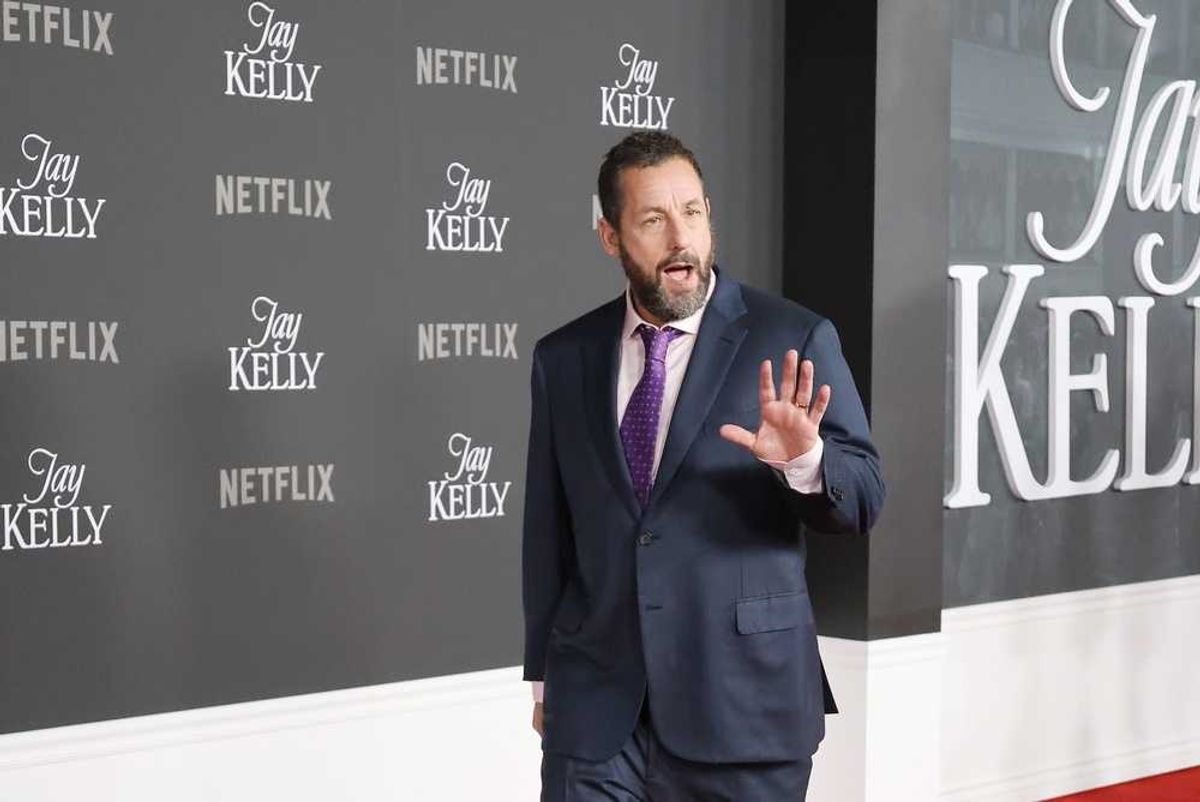
LOS ANGELES - NOVEMBER 11, 2025: Adam Sandler at the Netflix Jay Kelly Premiere at The Egyptian Theatre Hollywood (Photo credit: Joe Seer / Shutterstock)

It's billed as the hottest ticket in Washington — but the celebrities aren't biting, according to a new report.

President Donald Trump's $60 million birthday event, a UFC cage fight on the White House South Lawn set for June 14, has the capital's power players competing for seats, Vanity Fair reports. Donors, lobbyists, and members of Congress have flooded the White House with requests, the outlet reported, with ringside seats reportedly going to those willing to pay more than $1 million in sponsorships.

But Hollywood appears to be going the other way.

UFC boss Dana White told Time magazine he'd invited a roster of A-listers, including Adam Sandler, Dwayne "The Rock" Johnson, Jared Leto, Mario Lopez, and Tom Brady. According to Vanity Fair, few if any, will actually attend, as representatives for The Rock, Sandler, Leto, and Lopez all said they won't be there.

The reluctance fits a pattern around Trump's 250th anniversary plans, the magazine noted.

A National Mall concert series fell apart this week after most of its lineup — including a Milli Vanilli singer and Bret Michaels — pulled out, with several citing Trump's partisanship. Trump responded by proposing to replace it with a MAGA rally.

The event falls on Trump's 80th birthday, with a guest list curated by Trump himself, as the war in Iran continues.

Trump scrapes barrel with D-list rally singers as 'Freedom 250' finally implodes

Adam Nichols
June 5, 2026 
RAW STORY


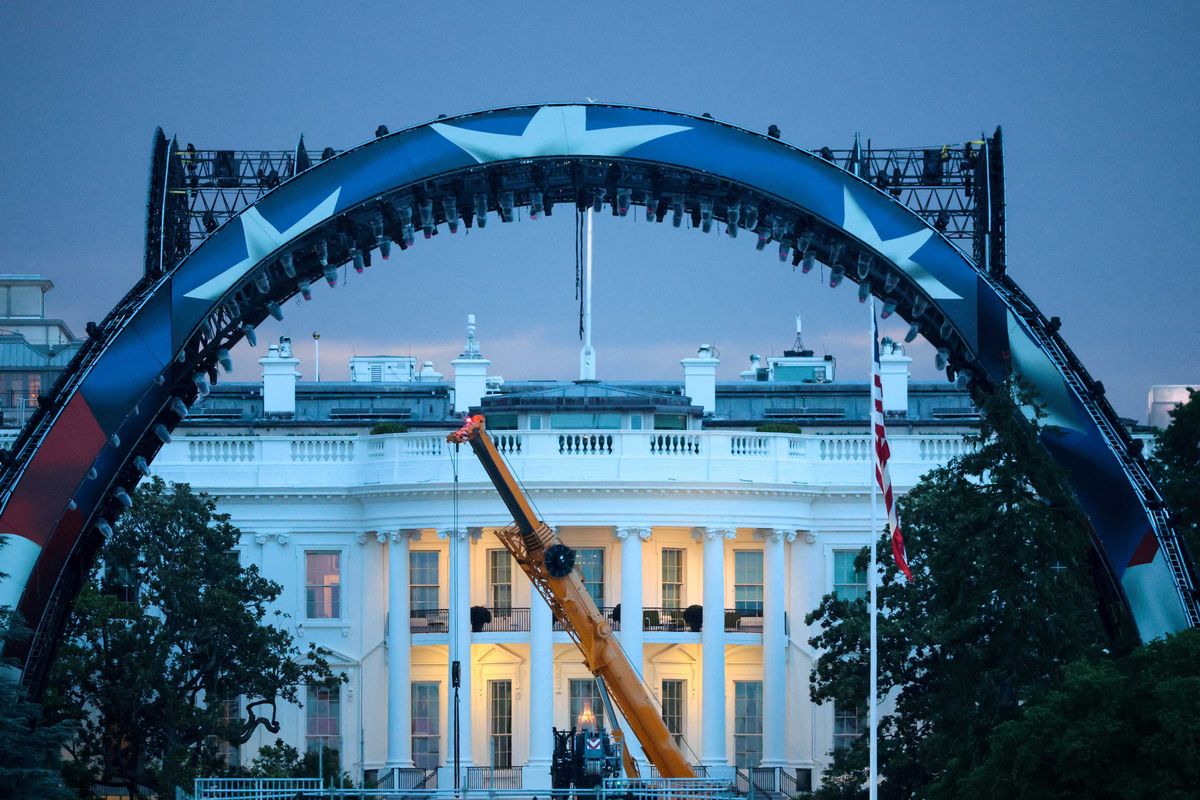
Construction continues on a temporary arena that will host the UFC Freedom 250 fight event in June on the South Lawn of the White House in Washington, D.C., U.S., May 27, 2026. REUTERS/Jonathan Ernst

With his Freedom 250 concert series in shambles after a mass exodus of performers, President Donald Trump has pivoted to what a campaign-style rally — and his newly revealed musical guests are really scraping the barrel.

Trump announced the "Rally to End All Rallies" Thursday night on Truth Social. It is scheduled for June 24 in Washington, D.C. — one day before the now-gutted Great American State Fair was set to open.

AN original concert — dubbed Freedom 250 — turned into a farce as headliners learned the event carried explicit political ties to Trump — a fact many said they weren't told upfront. Milli Vanilli singer Fab Morvan became the latest to walk, joining Martina McBride and Bret Michaels. The event's website now lists zero performers.

The replacement event's lineup reflects how dramatically Trump's musical options have narrowed. Country singer Lee Greenwood, 83, will open the proceedings with his 1984 signature track "God Bless the U.S.A." — the same song he has performed at Trump events since 2016. Three of Greenwood's top five songs on Spotify are variations of the same tune.

Trump also tapped tenor Christopher Macchio, whom he compared to the late Luciano Pavarotti, to perform classical selections. Macchio currently draws 571 monthly listeners on Spotify and 2,000 YouTube subscribers.

Flo Rida, Vanilla Ice, and Freedom Williams of C+C Music Factory have not yet withdrawn from Freedom 250.

‘Pay-to-Play Loyalty Program’: Trump Ballroom Donors Have Been Handed $50 Billion in Federal Contracts

“Corporations wrote big checks to build Trump’s golden ballroom,” said Rep. Jason Crow. “Now they’re receiving billions of dollars in kickbacks—paid for by your tax dollars.”


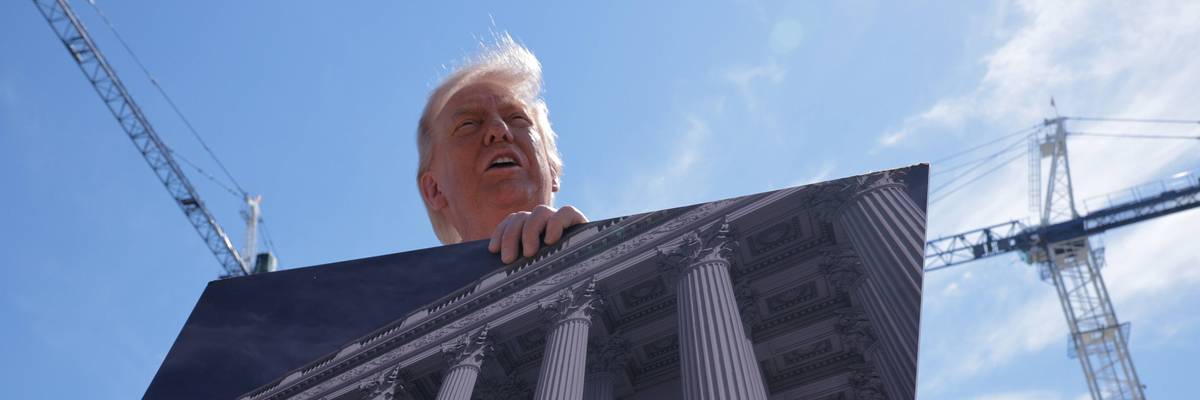
US President Donald Trump holds artists’ renderings as he talks to reporters about his proposed White House ballroom next to the worksite on May 19, 2026 in Washington, DC.
(Photo by Chip Somodevilla/Getty Images)

Stephen Prager
Jun 05, 2026
COMMON DREAMS

Sen. Elizabeth Warren suggested President Donald Trump is running a “pay-to-play loyalty program for wealthy donors” after a report on Thursday revealed that more than half the companies that contributed to his White House ballroom project have been awarded government contracts over the last six months, totaling over $50 billion.

Examining the 27 publicly known corporate donors to the president’s $400 million gold-plated vanity project, the watchdog group Public Citizen found that 14 of them—more than half—had received either new or expanded contracts over the past six months after donating millions to the ballroom and appearing at a lavish White House banquet in October as Trump prepared to demolish the building’s East Wing.


Over two-thirds, 19 of the 27 companies, received government contracts since fiscal year 2021, totaling over $338 billion. At least 16 out of 27 are also either facing federal enforcement actions and/or have had them suspended by the Trump administration.

“These giant corporations aren’t funding the Trump ballroom fiasco out of the goodness of their hearts. They have massive interests before the federal government, and they hope to curry favor with, and receive favorable treatment from, the Trump administration,” said Public Citizen democracy advocate Jon Golinger, an author of the report.


By far the biggest monetary beneficiary has been the military contractor Lockheed Martin, which received a $43.8 billion in new or expanded contract funding over the past six months after it pledged $10 million to fund the dance hall last fall.

Booz Allen Hamilton, a consulting company that serves military and intelligence agencies and pledged at least $5 million to the project, received $4 billion in contracts over the same period.

Meanwhile, Palantir—the data-mining surveillance giant with deep ties to the Trump administration—reaped over $1 billion in contracts after giving its own $5 million donation.

“Millions to fund Trump’s bizarre fever dreams are nothing compared to the billions they’re getting back in contracts and favorable government enforcement decisions,” Golinger said. “The American people are paying the price.”

Other ballroom benefactors that have brought in more than $100 million worth of contracts over the past six months include Microsoft, Amazon, HP, and Caterpillar, while T-Mobile, Google, NextEra Energy, and Comcast have all brought in more than $10 million.

Public Citizen noted that while the White House has publicized some of the ballroom donors and others have been revealed by news organizations, not all of the companies that have contributed to the project are publicly known, since the secret funding agreement obtained by the group through a Freedom of Information Act request allows their identities to remain private.

In a statement to The Washington Post, White House spokesperson Davis Ingle suggested that critics should be grateful that Trump was soliciting donations from the wealthy for this very important undertaking.

“The same critics who are alleging fake conflicts of interest would also complain if American taxpayers were footing the bill for these long-overdue renovations,” he said, ignoring the fact that Trump has previously pressured Republicans in Congress to appropriate hundreds of millions in taxpayer funding to secure the ballroom.

Ingle added that “the donors for the White House ballroom project represent a wide array of great American companies and generous individuals, all of whom are contributing to make the People’s House better for generations to come.”


But several Democratic members of Congress have pointed to it as evidence of Trump selling out the government “to the highest bidder.”

“Corporations wrote big checks to build Trump’s golden ballroom,” said Rep. Jason Crow (D-Col.). “Now they’re receiving billions of dollars in kickbacks—paid for by your tax dollars.”

“Wild coincidence or taxpayer-funded corruption?” said Sen. Chris Van Hollen (D-Md.). “You be the judge.”

Rep. Mike Levin (D-Calif.) said that “the part that should make your blood boil” is the fact that many of the companies identified in the report “were facing federal enforcement actions, antitrust reviews, labor cases, [or] securities charges.”

“Many of those cases have been quietly dropped or scaled back since Trump took office. You write a check, your legal problems disappear,” Levin said. “That’s not a coincidence.”

“You cannot afford to donate to Trump’s ballroom, so he does nothing to improve the quality of your life,” said Sen. Adam Schiff (D-Calif.). “But for those who can, there are billions in government contracts.”

DOJ tells judge Trump can 'bulldoze' Statue of Liberty with no consequences

David Edwards
June 5, 2026 
RAW STORY


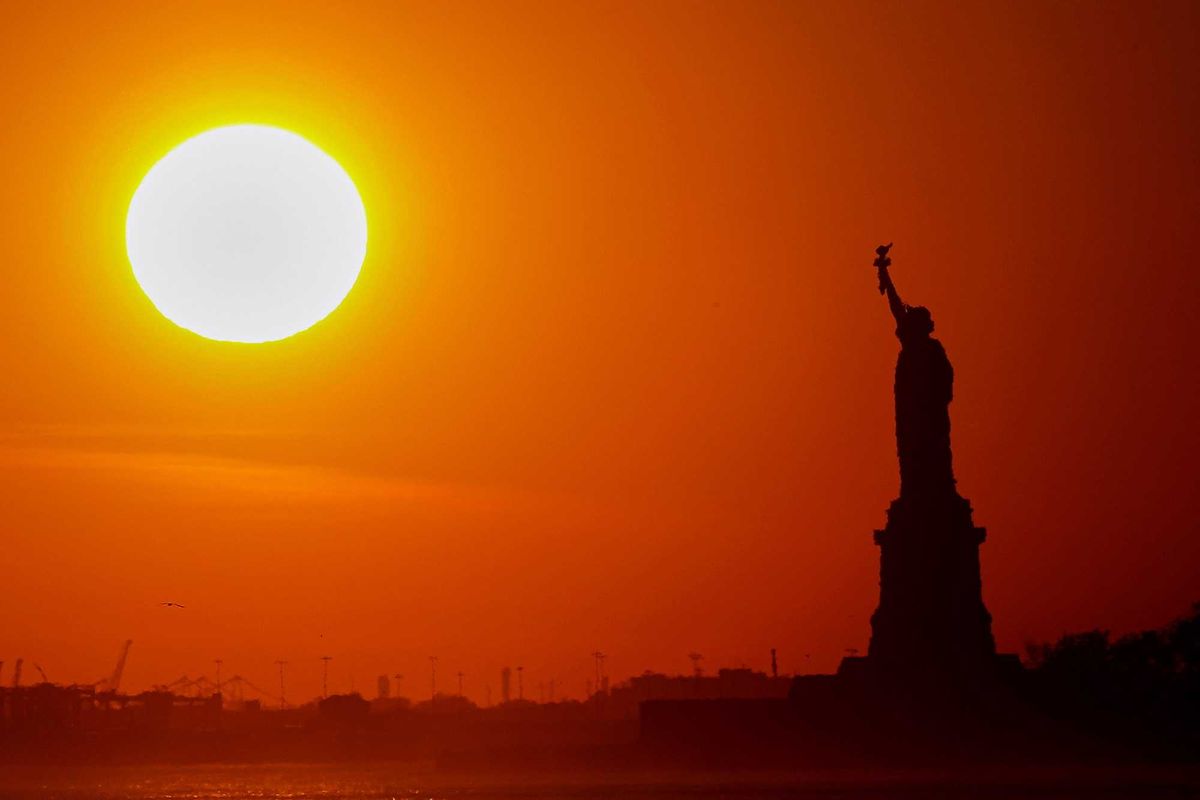
The Statue of Liberty is seen at sunset in New York Harbor from Brooklyn, New York, U.S. November 6, 2020. REUTERS/Brendan McDermid/File Photo

A Justice Department lawyer told a federal appeals court Friday that the Trump administration could demolish the Statue of Liberty before anyone could sue to stop him — and that would simply be the end of it.

The stunning exchange came during oral arguments before the U.S. Court of Appeals for the D.C. Circuit over President Donald Trump's controversial $400 million White House ballroom project, built on the site of the demolished East Wing.

Judge Patricia Millett pressed the government's lawyer directly. "If the govt decides very quickly to bulldoze the Statue of Liberty, the people whose ancestors — that was the first thing they saw coming to this country, but the govt moved too fast — nothing can be done?" she asked, according to Politico's Kyle Cheney, who was in the courtroom.

The DOJ lawyer's response: "I think that's right, yes."

The administration has argued throughout the ballroom litigation that no one has legal standing to challenge the project once demolition is complete. U.S. District Judge Richard Leon ruled in March that "no statute comes close to giving the President" the authority to build the ballroom without congressional approval. The appellate panel — Millett alongside Trump-appointee Neomi Rao and Biden-appointee Brad Garcia — is now weighing whether to reinstate his injunction.

The ballroom fight is far from Trump's only unilateral remaking of American landmarks. Federal judges have also been asked to weigh in on his effort to paint the Lincoln Memorial Reflecting Pool "American flag" blue — the subject of a lawsuit accusing the administration of bypassing required congressional notice. A separate judge blocked Trump's move to rename the Kennedy Center in his honor. And the administration has drawn up plans for a 250-foot triumphal arch at Memorial Circle near Arlington National Cemetery, across the Potomac from the Lincoln Memorial.

Trump has defended the ballroom as a national security necessity, posting AI-generated renderings of a "DronePort" on the roof and warning that Judge Leon would be held responsible for any attack on the president.

The appellate panel has allowed construction to continue during the legal fight. Trump has said the ballroom is scheduled to open around September 2028.
'Whoo!' Data guru warns 'rural revolt' is turning 'field of dreams' into Trump nightmare

Travis Gettys
June 5, 2026 
RAW STORY


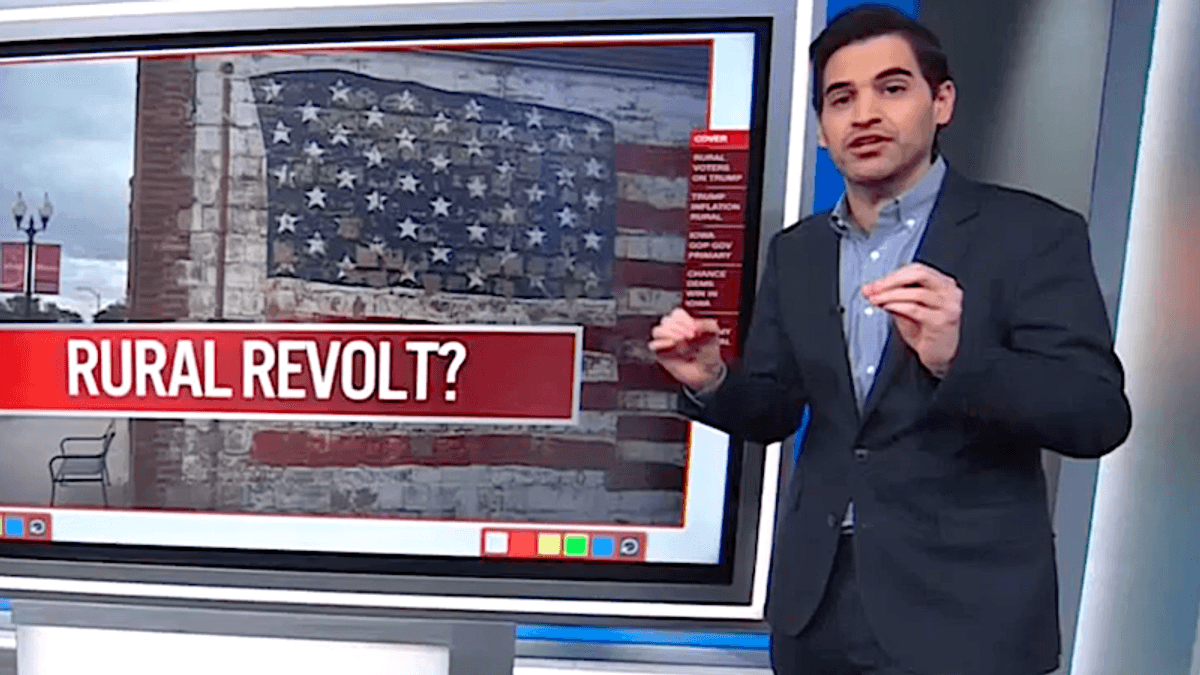
Harry Enten/CNN


President Donald Trump is facing a "rural revolt" as a result of his policies, according to a new data analysis.

The soon-to-be-80-year-old president was re-elected in 2024 on his promise to improve the economy, but voters aren't happy with the job he's done so far, and many of his policies are directly hurting farmers and voters in the rural areas that have backed him in all three elections.

"Iowa has been traditionally a field of dreams for the president of United States," said CNN's Harry Enten. "But it's quickly turning into potentially a field of nightmares. There seems to be a rural revolt going on in this country against Donald Trump. Take a look here: Rural voters and Trump, look, according to Fox News, he was easily winning them back in October of 2024 versus Kamala Harris, 18 points ahead. The exit poll even had it a bigger margin."

"But look at where he is now – whoo!" Enten exclaimed. "Down there underwater, underneath the cornfields. He's now 14 points underwater. That's over a 30-point switcheroo against the president."

The explanation for that reversal is fairly simple, according to Enten.

"Simply put, it's the economy, it's inflation," he said. "Take a look at this: You thought that that switcheroo was big, how about this one? Rural voters on Trump and inflation versus Kamala Harris. He was more trusted by 37 points. Now he is 19 points underwater with rural voters on inflation. That is an over 50-point switcheroo against the president of the United States. Rural voters, like the rest of the country, turning against Trump on the key issue that got him elected to a second term back in 2024."

Anger at the president has flowed down ballot to Republican congressional candidates and gubernatorial races, Enten said.

"You know, Donald Trump went and he has won all of these primaries," he said. "The candidates he endorsed have won all of these primaries, did not happen in Iowa. Well, just talk about Iowa Republicans here. The gubernatorial primary he endorsed Randy Feenstra, congressman from Iowa, and Feenstra actually won the absentee vote in that state by 15 points. Trump endorsed late, but the other candidate, Zach Lahn, look at this, he actually won those who voted on Election Day who knew about Trump's endorsement. In fact, they were considerably more favorable to Lahn than they were in a Feenstra, even after knowing that Trump had, in fact, backed Feenstra."

"It seemed to me that Iowa Republicans said, 'You know what, we hear you, Donald Trump, but you know what? We're dismissing that message,' again, part of a larger picture in my mind of rural voters not tuning in to what Donald Trump is telling him at this point," Enten added.

That shift against Trump is boosting Democratic chances in the midterm elections, Enten said.

"The last Democrat to win a Senate race in Iowa was all the way back in 2008," Enten said. "It was Tom Harkin. But what do we see here in terms of the Democrats' chances in Iowa and the governor's race and the Senate race? They have gone up like a rocket. We're now talking about Rob Sands running for governor with a greater than 50 percent chance, and it turns out that Josh Turek, who the Democratic establishment wanted, his chances have also been considerably rising at this point."

"If all of a sudden you're able to put Iowa on the board, if you're a Democrat hoping to win back control of the United States Senate, that would be a massive piece of the puzzle, and the last time Iowa elected a Democratic governor was all the way back in 2006, and that looks like a more likely possibility than not," Enten added.


Trump got a 'flashing red sign' with new Fox News poll: 'Big, big problem'

Nicole Charky-Chami
June 4, 2026 
RAW STORY


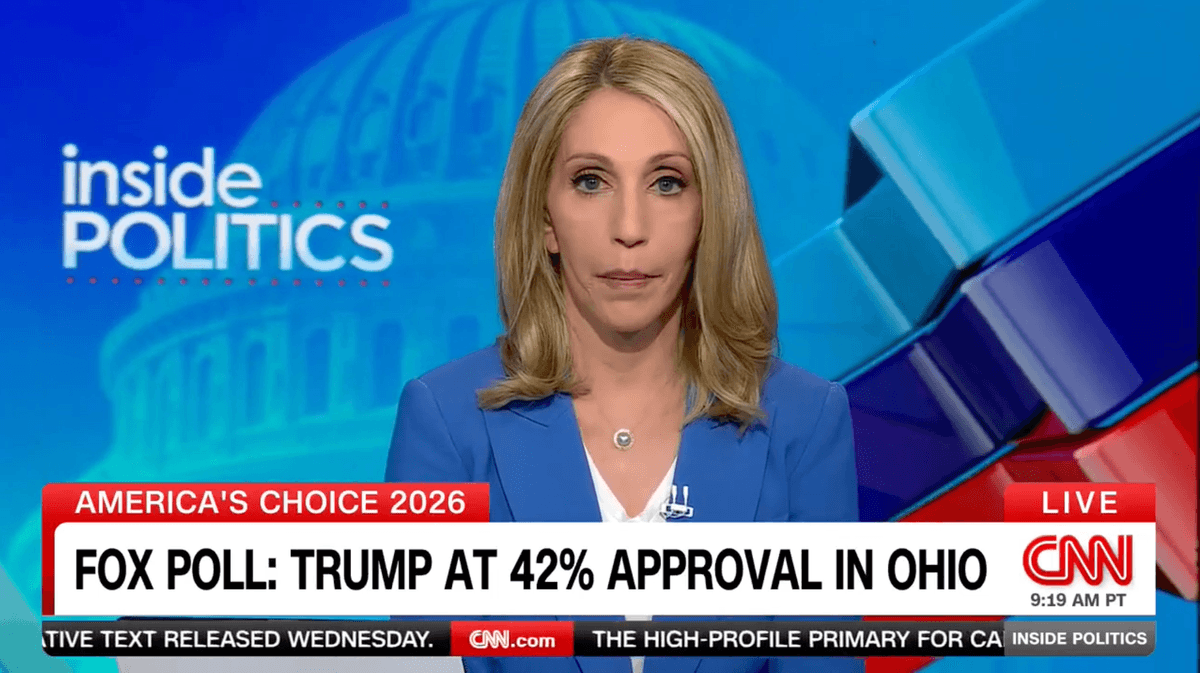
CNN anchor Dana Bash reported on Thursday that President Donald Trump's approval rating in Ohio had slipped as midterms were approaching. (CNN/Screenshot)

A new Fox News poll could signal a serious problem for President Donald Trump, CNN anchor Dana Bash reported on Thursday.

Bash referred to new polling from Fox News showing Ohio's Senate race could put Republicans in a tough position ahead of the midterm elections after Trump's approval rating has appeared to drop.

"That is a big flashing red sign for the president and for the Republicans on the ballot in this very red state of Ohio," Bash said. "This is the president's approval rating in Ohio right now. It is 42 percent, 42 percent approval. And the disapproval is 57 percent."

That's now a 15-point deficit, Bash explained.

"And then in November, the disapproval was 57 and 46 percent. And that is a 6 percent. So this is really a big, big problem potentially for the president," Bash said.

Republican incumbent Senator Jon Husted was reportedly viewed less favorably by voters compared to his Democratic challenger, former Ohio Senator Sherrod Brown, according to the poll.


Trump cuts interview short as rain pounds metal barn roof and he clashes with host

Bennito L. Kelty
June 5, 2026 
RAW STORY


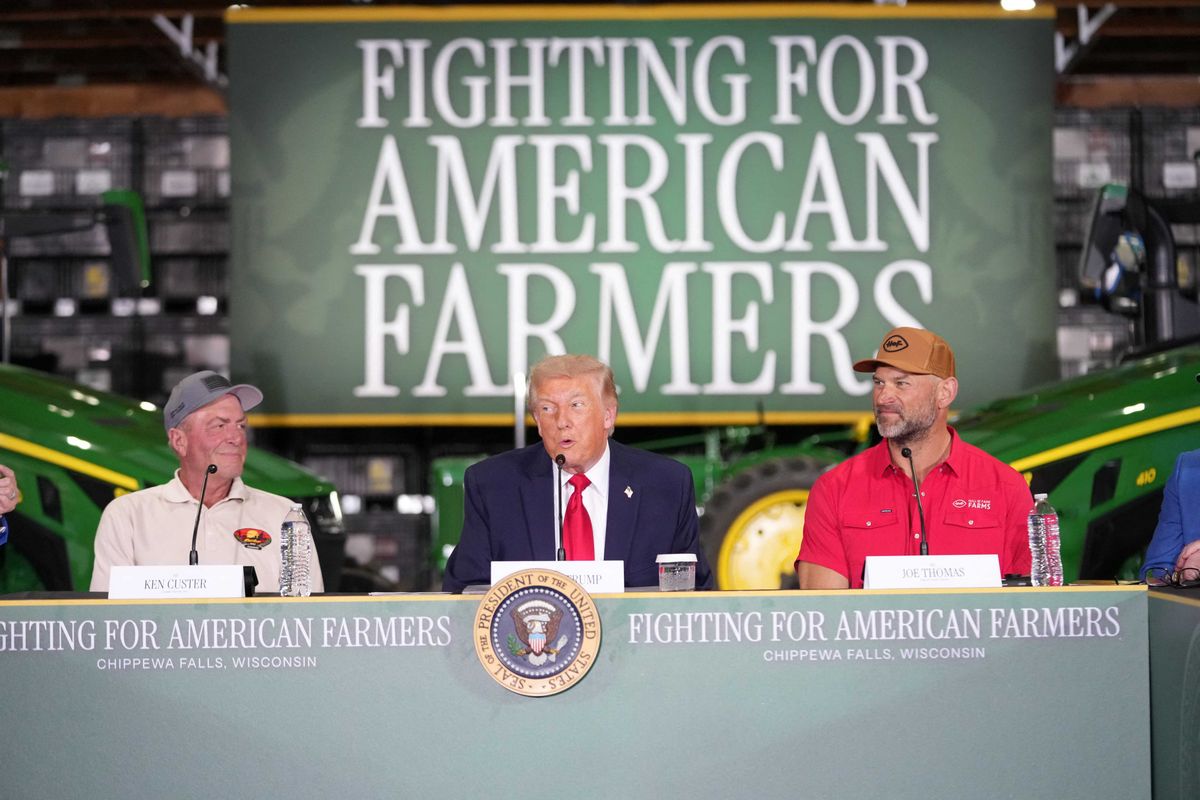
U.S. President Donald Trump speaks during an event at Custer Farms in Chippewa Falls, Wisconsin, U.S., June 5, 2026. REUTERS/Nathan Howard

Trump cut short an interview with NBC News as the sound of rain on a barn's metal roof kept interrupting, journalists shared.

Gabe Gutierrez, a senior White House correspondent for NBC News, revealed that the interview took place inside a Wisconsin barn "at the request of the White House," Gutierrez noted, but "rain repeatedly was hitting the metal roof of the barn."

Kristen Welker and others from the NBC News' Meet the Press team were conducting the interview with Trump, Gutierrez said.

"Trump ended an interview about fifty minutes after it began," following "multiple interruptions" from the rain. He also "disagreed" with questions during a "back and forth about election integrity" before ending the interview.

Trump reportedly showed up to planned events in Wisconsin in a bad mood.


Hardcore Trump backer sweats as farmers threaten to flip his seat blue

Travis Gettys
June 5, 2026 
RAW STORY


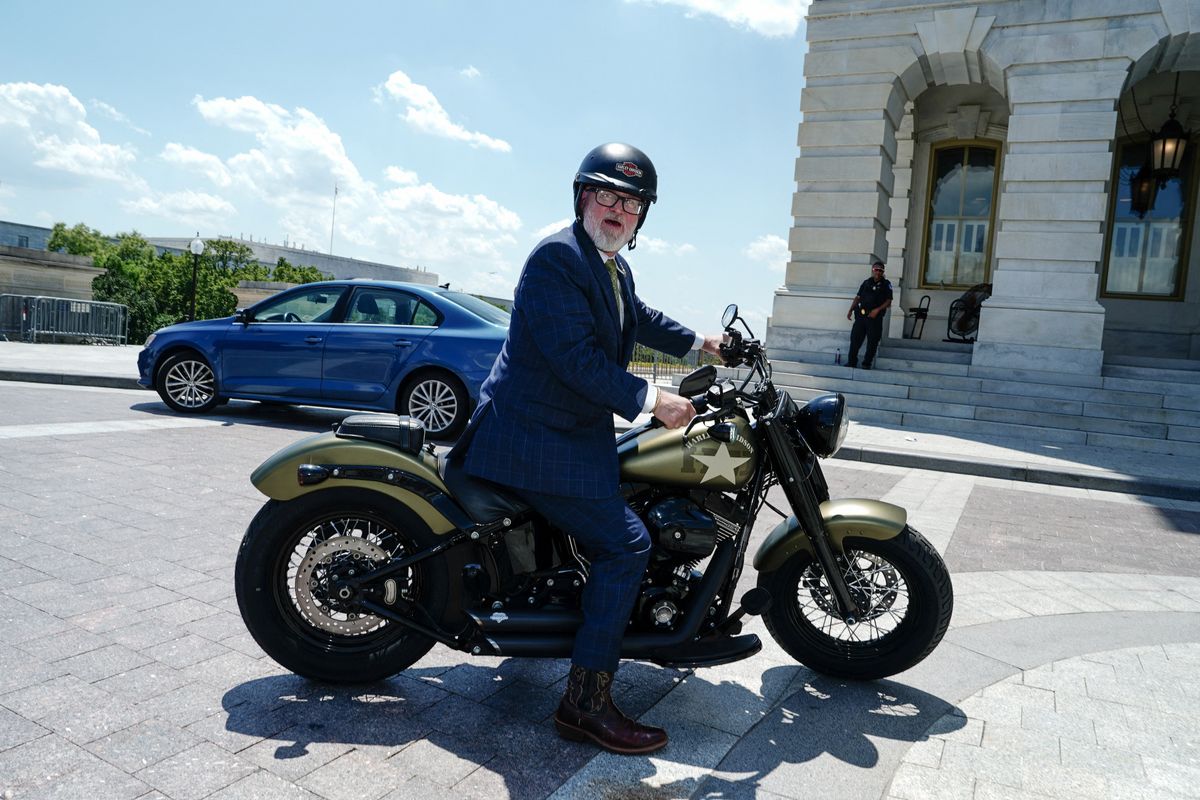
U.S. Representative Derrick Van Orden (R-WI) sits on a motorcycle outside the U.S. Capitol after the U.S. House of Representatives voted to pass U.S. President Donald Trump's sweeping spending and tax bill, on Capitol Hill in Washington, D.C., U.S., July 3, 2025. REUTERS/Ken Cedeno

President Donald Trump is heading to Wisconsin to campaign for Rep. Derrick Van Orden, a third-term incumbent whose rural district is being squeezed by the policies he has spent two years defending.

Van Orden represents Wisconsin's 3rd Congressional District, a stretch of farm country that produces more milk than most states and depends on roughly 17,000 farms to drive its broader economy. Politico reported that the region is directly impacted by Trump's tariff regime, rising fuel and fertilizer costs and trade disruptions caused by the war with Iran.

“I think [farmers] are growing frustrated with Trump’s administration for which Van Orden is a huge cheerleader,” said beef producer Max Hart. "They probably can't bear to vote for a Democrat. But they probably don't support Trump or Van Orden's policies."

The Cook Political Report recently moved the race from lean-Republican to a tossup. Van Orden's likely Democratic opponent, Rebecca Cooke, has outraised him and secured a spot in the Democratic Congressional Campaign Committee's Red to Blue program, which channels money and organizational support to candidates positioned to flip GOP-held seats.

The White House has responded with an unusual level of intervention. Agriculture Secretary Brooke Rollins is making her second appearance alongside Van Orden in less than six weeks, and Robert F. Kennedy Jr. held a press conference inside a machine shed earlier this week. Trump's visit Friday will be framed around his administration's support for farmers, with the White House touting lower input costs, new trade markets and expanded rural opportunity zones.

Whether any of it will be enough is an open question. A Marquette Law School poll conducted in March found that 60 percent of Wisconsin voters believe Trump's tariffs are hurting farmers. In the western part of the state, which includes Van Orden's district, that figure rose to 67 percent.

"If farmers are struggling, it just boils down to everybody else," said Darin Von Ruden, president of the Wisconsin Farmers Union. "The bankers, the vets, the supply stores — all are impacted by what's happening at the farm level."

Van Orden has defended the administration's record and voiced support for the Iran war, arguing that prices will stabilize once the conflict concludes, but Cooke senses that the agricultural community is losing patience.

“When I’m talking to people at a dairy breakfast or at a county fair, I don’t usually lead with ‘I’m Rebecca Cooke and I’m a Democrat,’ because they walk right by me,” she said. “But if I introduce myself and I say, ‘I’m Rebecca Cooke, I grew up on a dairy farm … we need more folks in the middle willing to get things done, avoiding the chaos,’ [then] most people nod their head.”

Trump agriculture secretary shocked by her agency’s own data at live hearing

U.S. Secretary of Agriculture Brooke Rollins testifies before the House Committee on Agriculture on Capitol Hill in Washington, D.C., U.S., June 4, 2026. REUTERS/Evan Vucci
June 04, 2026
ALTERNET

Secretary of Agriculture Brooke Rollins struggled on Thursday during a House Agriculture Committee hearing when asked basic questions about her department's own data.

Rep. Angie Craig, a member of the Democratic–Farmer–Labor Party in Minnesota, probed Rollins about allegations of fraud involving recipients of SNAP benefits, formerly known as food stamps. Rollins tried to parrot conservative talking points, but got a little mixed up with the data coming from her own department.

Craig hammered Rollins on how many farms have failed in the past year

She then moved on to ask whether Rollins knows that "farmers say they can't afford fertilizer as a result of the president's war in Iran?"

Rollins claimed that it differed by geographic region, implying that some farmers have one demand while others have another.


A frustrated Craig asserted, "Oh, my gosh! Seventy percent is the answer."

Then she pivoted to SNAP benefits, with the committee's top Democrat asking whether Rollins knew the fraud rate among SNAP recipients.

Rollins said that the data is based on information that is "missing from the states that we can't verify. That's the whole point of this is with no ability to verify California, Minnesota—"


Craig cut in, "1.6 percent according to USDA."

Rollins claimed that Minnesota is reporting a low fraud rate, which she considers "an absolute joke."

"I'll say it again. The USDA's own data found 1.6 percent," Craig said.


Rollins tried to cut in and claim that Craig's data showed that. In fact, a 2025 fact sheet from the USDA confirms the data.

The release goes so far as to say that fraud "occurs relatively infrequently."

"I don't think you understand the difference between an error rate and a fraud rate. I honestly don't. It is one of the lowest programs — the lowest fraud rate in any program in America, is the SNAP program," Craig explained.

"You can't be serious," Rollins responded.


"Your own data says 1.6 percent," Craig said.

Rollins claimed that the reason it's so low is that states don't allow the federal government to "confirm" the information, presumably with their own investigations. That same 2025 fact sheet from Rollins' own office brags about the department's efforts to reduce "infrequent" fraud.

After a back and forth, Craig cut in, "Look, Madam Secretary, I'm asking you these questions because these issues are personal," Craig said.

Rollins accused her of not asking for legitimate answers.