Monday, June 08, 2026

‘Cooling Poverty’ Affects 2Bln As Heat Risks Swell


Children cooling off with piped water in Khan Village, Lao PDR in 2015. The World Meteorological Organization has warned of hotter than normal temperatures across the globe in the coming months due to the El Niño effect.
Copyright: Asian Development Bank (CC BY-NC-ND 2.0)

June 8, 2026 
By Mohammed El-Said


More than 2 billion people in some of the poorest communities face significant levels of “cooling poverty”, where they are exposed to life-threatening heat without safe or affordable ways to cool themselves, according to new analysis.

Increasingly frequent and intense hot spells are causing spikes in health risks and deaths globally and those most at risk are those with the least resources to adapt, a study published in Nature Sustainability warns.

It comes as parts of India and Pakistan are grappling with temperatures topping 45 degrees Celsius.

The World Meteorological Organization has also warned of hotter than normal temperatures across the globe in the coming months due to the El Niño effect.

“Cooling poverty and what we call systemic cooling poverty refers to conditions in which individuals are prevented from attaining thermal safety, not simply because they lack an air conditioner,” Giacomo Falchetta, a scientist at the Euro-Mediterranean Center on Climate Change and the study’s lead author told SciDev.Net.

Heat risk is compounded when people lack not only cooling devices, but also adequate housing, healthcare and information about heat risks, he explained.

The study analysed data from more than a million households in 28 countries, most of them in low- and middle-income countries. Of nearly three billion people covered, about 1.2 billion live in areas with moderate cooling poverty, around 550 million face severe cooling deprivation, and about 600 million experience high deprivation across multiple dimensions, the study calculated.

Aziza Mohamed, professor of human geography and urban studies at Cairo University in Egypt, says the study shifts the debate on heat from a purely climatic issue to a developmental, social and spatial one.

“The real danger does not come from climate alone,” she told SciDev.Net. “It comes from the interaction between heat, poverty, housing quality, weak health services and the absence of suitable infrastructure.”

South Asia and Sub-Saharan Africa are the two regions most affected, for different reasons. In South Asia, almost 80 per cent of the population in the sample live in regions where the systemic cooling poverty index exceeds 55 out of 100.

In countries such as India, Nepal and Bangladesh widespread heat and humidity exposure combines with large outdoor labour forces and gaps in education, information access and cooling policy, says Falchetta.

Harjeet Singh, climate activist and founding director of the Satat Sampada Climate Foundation, says South Asia is “at the absolute frontlines of the climate crisis”, facing “a lethal combination of geographic vulnerability and systemic economic inequality”.

The danger is not heat alone, but humid heat, which makes the body less able to cool itself through sweating, explains Singh. In a region of high population density and informal labour, retreating into an air-conditioned room is not an option for most.

In Sub-Saharan Africa, the study finds that extreme heat risks are driven by weak protective infrastructure. Falchetta named Ethiopia, the Democratic Republic of Congo (DRC), Rwanda and Malawi as countries with extremely high deprivation in housing quality, water and sanitation, energyaccess, and cooling green and blue spaces.

Even where heat and humidity is less extreme, he warned, “the near-total absence of protective infrastructure means any intensification of heat would be catastrophic”.

The study estimates that about 1.5 billion people live in areas with inadequate infrastructure, and health conditions to deal with heat. More than 90 per cent of people living in Ethiopia, DRC, Rwanda, Malawi and Zambia fit this category.

In contrast, Egypt had relatively low levels of “cooling poverty” (40 out of 100), despite 82 per cent of its population being exposed to hazardous heat and humidity. It performed well across infrastructure, social and policy dimensions.

Risk factors

Poor housing multiplies heat risk, as homes built from rudimentary roof, floor and wall materials can become heat traps rather than refuges, the research highlights.

Singh points out that millions of urban poor people live in settlements with tin or asbestos roofs, which can make indoor temperatures up to five degrees Celsius hotter than outside. Unreliable electricity, unsafe water and poor sanitation also limit cooling, hydration and protection.

Weak healthcare further increases the danger, according to the study. It identified Nepal, Yemen, Pakistan, Bangladesh and Guatemala among the most deprived countries in this regard. Limited healthcare access, explains Falchetta, means treatable heat-related illness can be fatal.

Outdoor workers in agriculture, construction, transport and informal trade are particularly at risk, spending long hours under direct sunlight.

Women, ethnic and religious minorities, elderly people, poorer households and children are disadvantaged because they are more likely to live in poor housing, lack information and healthcare, and have fewer resources to adapt, Falchetta notes.

Education and working standards were the most widespread form of cooling poverty identified in the study. Around 2.2 billion people, about 75 per cent of those studied, live in deprived areas under this lens. India ranks highest, with 95 per cent of its population facing deprivation, followed by the DRC, Nepal, Rwanda and Malawi.

The study and experts agree that air conditioning, which consumes large amounts of energy and strains fragile grids, cannot solve the problem.

“Addressing cooling poverty by distributing air conditioners alone would be neither sufficient nor sustainable,” Falchetta said.

Singh is in no doubt: “We absolutely cannot air-condition our way out of this crisis.”
Cooling strategies

Instead, the study calls for coordinated, low-cost policies across housing, water, health, labour and urban planning.

Falchetta says better housing design can reduce indoor temperatures without energy inputs. Expanding trees, parks and water bodies can provide community-level cooling, while improving water and sanitation works as both a cooling and health intervention.

Coating tin or concrete roofs with solar-reflective white paint can reduce indoor temperatures by two to five degrees Celsius, says Singh, while straw and clay offer affordable insulation. He calls for public cooling shelters with free drinking water for outdoor workers, restoring urban green spaces and water bodies, and expanding efficient BLDC (brushless direct current) fans.


Chandni Singh, associate professor at the Indian Institute for Human Settlements, says policy is crucial. Protection of blue and green infrastructure and climate-sensitive building codes, such as India’s Cool Roofs Policy, can help, she says.

Falchetta believes heat-health action plans could reduce cooling poverty, especially in Sub-Saharan Africa, where they are largely absent.

Cities in India, Pakistan and Bangladesh have introduced heat action plans, but many lack legal force and budgets, says Harjeet Singh. Governments, he argues, should adopt mandatory rest breaks for outdoor workers, climate-resilient building codes for affordable housing, and financial compensation for daily-wage workers when heat advisories force them indoors.

But Chandni Singh warned: “You cannot adapt your way out of extreme heat endlessly. There are limits to extreme heat adaptation.”

This piece was produced by SciDev.Net’s Global desk.
Mohammed El-Said writes for SciDev.Net.
View all posts by Mohammed El-Said →


More than 1.5 million people die and 860 million fall ill from unsafe food, the WHO warns

Unsafe food causes 866 million illnesses and 1.5 million deaths annually.
Copyright Cleared/Canva


By Marta Iraola Iribarren
Published on


The World Health Organization warns that unsafe food harms millions of people worldwide, with children being particularly impacted.

More than 860 million people fall ill and 1.5 million die worldwide every year due to unsafe food, the World Health Organization has warned.

In a new report published ahead of World Food Safety Day on 7 June, the WHO estimates that millions of people across the world suffer severe health consequences as a result of contaminated or poorly handled food.

“Food safety is not an abstract issue — it touches every meal, every family, every day,” said Dr Tedros Adhanom Ghebreyesus, WHO Director-General.

“Unsafe food has always been a major public health concern, but until now we lacked the bigger picture of its staggering human and economic toll.”

“For the first time, countries have their own data to see where the burden is highest. With that knowledge, governments can prioritize the actions needed to protect people’s health.”

The report estimates that in 2021, foodborne disease led to approximately $310 billion (€267bn) lost productivity due to illness.

Many of these illnesses and deaths, the organisation adds, could be prevented through improved water, sanitation and hygiene, food safety practices such as pasteurisation and access to health care for vulnerable populations.

The WHO also cautions that climate change is expected to have a large impact on food safety. Extreme weather events, rising air and water temperatures, and shifting precipitation patterns will heighten the risks posed by existing and emerging foodborne illnesses.

Children are especially vulnerable

The most affected are children younger than five years old, who face three times the risk compared with older children and adults. They account for 29% of the health burden linked to unsafe food and 143,000 deaths in 2021 alone.

“Despite being just 9% of the global population, young children suffer from nearly one third of all cases of foodborne diseases, particularly diarrhoeal diseases, which can be deadly for this vulnerable age group,” the WHO said.

Young children are also more susceptible to chemical exposure through food, which can impair brain development and cause lifelong neurological and developmental harm.

The report also highlights deep inequalities within food systems. Those living in low-resource communities bear the greatest health burden, particularly in low- and middle-income countries.

The African and South-East Asian regions together account for nearly three-quarters of all foodborne illnesses and 60% of deaths globally.

What are the main causes of foodborne illnesses?

Foodborne illnesses are infectious or toxic in nature, caused by bacteria, viruses, parasites, or chemical substances entering the body through contaminated food. In Europe, the most common include the following:

Campylobacteriosis: mainly linked to raw or undercooked poultry, unpasteurised milk, ruminant meat and contaminated water. According to the European Food Safety Authority (EFSA), this bacterium shows clear seasonality, with a peak of cases in the summer months.

Salmonellosis: most frequently associated with eggs and raw meat from pigs, turkeys and chickens. Symptoms include fever, diarrhoea and abdominal cramps. It can be life-threatening if the bacterium enters the bloodstream.

STEC infection: connected to the consumption of raw and undercooked meats, dairy products made from unpasteurised milk, raw leafy greens, and unpasteurised juices.

Listeriosis: a rare infection, often severe with high hospitalisation and mortality rates.

Could tackling climate change and levelling inequality go hand in hand?

The world can raise income, reduce inequality and limit global warming, according to an ambitious roadmap presented this week by economists in France. Making the case for a radical transformation of economies and lifestyles, they call on rich countries to slow growth, phase out fossil fuels and tax the wealthiest to help poorer countries fund development and mitigate the effects of climate change.


Issued on: 06/06/2026 - RFI

The Makoko shantytown in Lagos, Nigeria's commercial capital, where the gap between rich and poor is stark. © AFP - PIUS UTOMI EKPEI

By:RFI
ADVERTISING


Published on Thursday by the World Inequality Lab, the Global Justice Report presents a vision of a fairer world built within the planet's limits.

Based on data from around the world, it makes the case that it is possible to “reconcile planetary habitability with wellbeing for all” – but only by making deep structural changes. These include rapid decarbonisation, sharp reductions in wealth disparities and shifts in consumption patterns, particularly in high-income countries.

Co-directed by French economist Thomas Piketty, the Paris-based research group proposes a long-term scenario in which people around the world earn an average monthly income of around €5,000 by 2100. Currently, that figure ranges from roughly €290 in sub-Saharan Africa to nearly €4,600 in North America.

Under the plan, the share of global wealth held by the poorest half of the world’s population would rise from just 2 percent today to 30 percent, while the proportion held by billionaires would fall dramatically.

At the same time, the researchers argue, global warming could be limited to 1.8 degrees C – well below current trajectories that exceed 4 degrees.


A reforestation assistant measures a newly planted tree in a field damaged during illegal gold mining in Madre de Dios, Peru, on 29 March 2019. @ AP - Rodrigo Abd


They say this requires three major shifts: a rapid phase-out of fossil fuels in favour of renewable energy; rebalancing economic activity away from carbon-intensive sectors such as manufacturing and transport towards services like education and healthcare; and significant changes in diets, including cutting back on meat, to allow for large-scale reforestation.

The report also calls for a reduction in working hours in wealthier regions, alongside efforts to equalise incomes both within and between countries.

According to its authors, this would mean near-zero per capita growth in richer economies, while poorer regions would grow faster to close the gap.

Taxing the rich

To finance the transition, the economists propose the creation of a “global justice fund”, initially funded through steep taxes on the wealthiest individuals – up to 20 percent annually on billionaires’ fortunes and income tax rates of up to 90 percent.

Over time, the fund would evolve into a global sovereign wealth mechanism, redistributing resources to support both social development and climate mitigation.

Spending from the fund would average more than 10 percent of global GDP annually between 2026 and 2060, with a strong focus on the Global South. Allocations would be tied to both social and environmental conditions, with priority given to health, education and energy transitions.

Demonstrators carry banners with pictures of France's biggest billionaires during the traditional May Day march in Paris on 1 May 2021. © REUTERS - GONZALO FUENTES

With geopolitical tensions rising and international cooperation on the decline, the report's proposals may struggle to gain political traction.

The authors acknowledge resistance from wealthy individuals and governments is likely, and suggest that an initial coalition of willing countries could impose tariffs on non-participants.

They point to the dramatic reduction in inequality and working hours in 20th-century Europe as evidence that transformative change is possible.

The publication coincides with WIL's World Inequality Conference in Paris, where researchers and policymakers are set to debate the findings.
Russia And Belarus Preparing For Potential Escalation With Ukraine And NATO – Analysis


June 8, 2026 
By The Jamestown Foundation
By Alexander Taranov

On May 15, following consultations with the leadership of the Ukrainian Armed Forces (AFU) General Staff, the Defense Intelligence of Ukraine (HUR), the Foreign Intelligence Service, and the Security Service of Ukraine (SBU), Ukrainian President Volodymyr Zelenskyy stated that Russia is seeking to draw Belarus more deeply into the war against Ukraine. Zelenskyy also said that Russia is examining operational plans for actions from Belarusian territory against either Ukraine or a North Atlantic Treaty Organization (NATO) member state. Ukraine says it has obtained intelligence regarding ongoing negotiations between Russian and Belarusian leadership on this matter.

According to this intelligence, Russia is assessing operational plans to be launched from the south or north border of Belarus—either against the Chernihiv–Kyiv axis in Ukraine, or against a NATO member state. Zelenskyy cautioned that Ukraine would defend itself should Belarusian President Alyaksandr Lukashenka allow these operations. Zelenskyy has directed Ukraine’s Defense Forces (UDF) to reinforce Ukraine’s border with Belarus and to submit a contingency plan (Telegram/@ V_Zelenskiy_official, May 15). Zelenskyy’s statements came in the wake of a telephone conversation between Lukashenka and Putin, during which the two leaders discussed defense cooperation (Telegram/@pul_1, May 15).

AFU Commander-in-Chief General Oleksandr Syrskyi regards the threat of a Russian offensive from Belarusian territory as credible. According to Syrskyi, the Russian General Staff is actively war-gaming and planning offensive operations from the Belarus–Ukraine border with the objective of stretching the front line to exploit Russia’s numerical superiority in manpower and equipment (Telegram/@milinua, May 22).


According to Ukrainian intelligence, the Russian General Staff is developing five scenarios for expanding the war through northern Ukraine. These plans may encompass both the use of Belarusian territory in proximity to the Russian border and operations conducted directly from Russian soil without Belarusian involvement. According to Ukrainian intelligence assessments, the most credible of these five scenarios—should Russia decide to launch a new offensive operation—is an attempt to establish a buffer zone in Chernihiv oblast extending 10 to 20 kilometers (6 to 12 miles) into Ukrainian territory. The least credible scenario is an advance on Kyiv. Under all potential courses of action, the Russian Armed Forces would not be able to initiate offensive operations before autumn at the earliest. To this end, the Kremlin is planning a new mobilization wave of an additional 100,000 soldiers (RBC-Ukraine, May 22).

On May 21, Zelenskyy visited Slavutych in northern Ukraine, where he met with the heads of the Kyiv and Chernihiv oblasts. He stated that Ukraine is reinforcing its defenses along its northern border with Belarus, including its protective infrastructure and the defense and security forces deployed in that direction. Zelenskyy noted that Ukraine possesses the capability to act pre-emptively against Russian territory from which threats may emanate, and against Belarusian leadership (Telegram/@V_Zelenskiy_official, May 21).


The next day, in Rivne, he said that there is a threat of an attack from Belarus against Volyn, Zhytomyr, and Rivne oblasts in addition to the Kyiv and Chernihiv oblasts (Telegram/@V_Zelenskiy_official, May 22). Ukraine receives some supplies from Western partners through these regions, making a potential attack particularly problematic. Moreover, the Rivne Nuclear Power Plant, which supplies electricity to Kyiv and surrounding areas, is located just 60 kilometers (37 miles) from the border with Belarus. Russian control over this area would open the way for the encirclement of Kyiv and create a potential axis of advance toward Lviv oblast—a key logistic hub via which Ukraine gets almost all military and economic support from the West.

Kyiv has already transmitted the relevant intelligence through diplomatic channels to its NATO partners and has tasked the relevant agencies with developing diplomatic pressure and conveying direct signals to the Belarusian leadership (Telegram/@V_Zelenskiy_official, May 20; X/@andrii_sybiha, May 21). According to Ukrainian intelligence assessments, activity along the Chernihiv–Kyiv axis and the overall threat level from Belarus remain low. Ukrainian leadership is, however, tracking several indicators that may point to Russian preparations for potential offensive action there (RBC-Ukraine, May 22).

The first indicator is that four battalions—approximately 1,900 troops—of the Belarusian Armed Forces (BAF) remain deployed on a continuous rotation basis at the Belarus–Ukraine border. At present, however, there are insufficient Russian forces on Ukraine’s border with Belarus or Russia’s Bryansk oblast to conduct offensive operations (RBC-Ukraine, May 22). The second indicator, which has not yet been openly observed, is an intensification of reconnaissance and sabotage-reconnaissance activity on the part of Belarus and Russia along the axis of a potential strike.


The third indicator is Belarus’ expansion of logistics routes and the construction of training ranges and bases near its border with Ukraine that could be utilized by Russian forces within the framework of their Union State treaty. Ukrainian intelligence indicates that road construction toward Ukrainian territory and the preparation of artillery positions are underway in the Belarusian border zone (Telegram/@V_Zelenskiy_official, April 17). Ukraine has also reported that Russia has deployed ground control stations for long-range drones in Belarus for strikes against Ukraine’s Kyiv oblast (Unian, April 5). Furthermore, Serhii “Flash” Beskrestnov, adviser to the Ukrainian Ministry of Defense on defense technologies, stated that Russian Shahed-type unmanned aerial vehicles (UAVs) are utilizing Belarusian cellular roaming in the border area during strikes against Ukraine (Facebook.com/@Serhii.Flash, April 17).

During recent large-scale strikes against Ukraine, Russia once again used Belarusian airspace for drone transit (Telegram/@kpszsu, May 13). Russia could therefore once again employ air attack assets on a large scale from Belarusian territory—especially given their significant qualitative and quantitative expansion compared to 2022—even without deploying ground forces into Ukraine. Russia and Belarus are close to completing the implementation of two new military infrastructure programs, indicating preparations for more large-scale conflict. These were developed because of operational shortcomings encountered during the first phase of Russia’s full-scale invasion of Ukraine launched from Belarusian territory in 2022:Improvement of military infrastructure facilities designated for joint use in support of the Regional Troops Grouping (RTG) of the Republic of Belarus and the Russian Federation in 2023–2026;
Modernization of rear support facilities designated for joint use in support of RTG of the Republic of Belarus and the Russian Federation in 2023–2027 (Belarus Segodnya, November 14, 2024).

The fourth indicator comprises joint Belarusian–Russian nuclear exercises. Some of these exercises have taken place on Belarusian territory, designed as a demonstration of force as well as preparation for nuclear strikes directed at Ukraine and neighboring NATO member states (see EDM, April 30, June 17, 2024, April 17, 2025; President of Russia, May 21). Under the cover of such exercises, Belarusian and Russian forces may increase their troop presence along Ukraine’s borders. To this end, and for the purpose of rehearsing joint operations, Belarus and Russia may attempt to conduct additional unscheduled exercises similar to Zapad-2025 or Souznaya Reshimost-2022 (Union Resolve-2022), which served as cover for the large-scale concentration of Russian forces ahead of the full-scale invasion of Ukraine in February 2022. Putin has already announced a joint exercise with Belarus designated Schit Soyuza-2027, and the possibility of a snap exercise along the lines of Soyuznaya Reshimost-2022, which the Kremlin used as cover to mass troops, equipment, and logistics in Belarus for the full-scale invasion of Ukraine from February 10–20, 2022, cannot be ruled out (Interfax, May 21). In such a scenario, the primary indicator of preparations would be the planning of a mass railway transfer of Russian forces into Belarus. The redeployment of a 100,000-strong grouping would require approximately three to four weeks and some 15,000 railcars and flatcars—at least twice the volume recorded ahead of the Souznaya Reshimost-2022 exercise (see EDM, September 15, 2025).


In April, former Ukrainian Foreign Minister Dmytro Kuleba said that Belarus is systematically preparing for military escalation, and is examining the possibility of opening a second front against Ukraine or the Baltic states under Russian direction (YouTube/@Dmytro_Kuleba, April 18). He identified five key signs of Belarusian military preparation: continuous combat training conducted under Russian instructors, an emphasis on combat mobilization readiness and large-scale command-and-staff exercises, the reinforcement of air defenses with Russian systems, and the deepening of command coordination between Russian and Belarusian military structures. According to Kuleba, Moscow views potential activation of the Belarusian front as a way to stretch AFU resources, compelling Kyiv to redeploy experienced units from other sectors of the frontline to defend the northern border. Kuleba does not exclude the possibility that Belarusian military activity may be directed at intimidating the Baltic states and Poland, generating additional pressure on the region in the event of further Russian escalation (YouTube/@Dmytro_Kuleba, April 18).

Moscow may be pursuing several additional objectives simultaneously. Preparations in Belarus are an element of Putin’s plan to establish a “buffer zone” around Russia’s border with Ukraine. The Russian president assigned this objective to his military commanders two years ago. Military buildup in Belarus also creates psychological pressure on the Ukrainian population, with the aim of rendering Kyiv more amenable to Moscow’s terms. Finally, should Putin ultimately decide to advance on Kyiv from Belarus, he would attempt to decapitate and seize Ukraine’s military–political leadership. Currently, however, this scenario appears to be the least probable (RBC-Ukraine, May 22).

In a May 21 statement, Lukashenka was quick to assert that he has no intention of attacking neighboring states and even proposed holding talks with Zelenskyy to dispel Ukrainian concerns. He stated that Belarus would be drawn into Russia’s war against Ukraine only if aggression were committed against its territory. In such a scenario, Belarus and Russia would conduct military operations jointly (BelTA, May 21). Given that Belarusian political and military leadership were involved in a strategic disinformation campaign denying even the possibility of an attack being launched from Belarusian territory in the run-up to Russia’s full-scale invasion of Ukraine in 2022, such assurances are met with little trust in Kyiv (RBC-Ukraine, May 21).

If Russian forces use Belarusian territory as a staging ground for an attack on Ukraine, the Armed Forces of Ukraine would then conduct retaliatory strikes against Belarusian territory, thereby “legitimizing” the involvement of the Belarusian Armed Forces in the conflict. Two parallel combat readiness inspections conducted from January to April—one ordered by Lukashenka and the other initiated by the Belarusian Ministry of Defense—indicate that the Belarusian leadership is preparing for the possibility of a major regional escalation. In an article released on April 17, Belarusian Defense Minister Viktar Khrenin stated that the comprehensive inspection of Western Operational Command, responsible for Belarus’ border with Poland and Lithuania, provided a cross-sectional assessment of the overall level of readiness of the BAF to repel aggression, which he claimed persists on the European continent (BelTA, April 17). On April 1, Lukashenka said that Belarus is preparing for a war and underlined the need for the BAF to adapt to highly maneuverable, high-intensity combat operations concepts (President of Belarus, April 1). Such statements indicate anticipation of escalation involving the expansion of Russia’s war against Ukraine. In this context, preparations are underway for the involvement of the BAF in military operations against Ukraine and for potential military actions against NATO’s eastern flank.


During a May 12 briefing from Khrenin regarding the comprehensive combat readiness inspections of the BAF, Lukashenka stated that he intends to continue selectively mobilizing military units to prepare them for war (President of Belarus, May 12). The fact that the Immediate Reaction Forces, a grouping of the most combat-ready formations and permanently ready units of the Belarusian military, are being transitioned to a wartime footing serves as another indicator of Belarus’ preparation for military engagement (Telegram/@Tsaplienko, May 22).

Ukraine accordingly views the possible reopening of a northern front as a credible threat. Should this happen, Kyiv would likely seek to transfer military operations onto Belarusian territory as rapidly as possible. These developments, if they occur, could destabilize the Lukashenka regime and deprive Russia of the ability to continue using Belarusian territory as a staging area for operations against Ukraine and NATO’s eastern flank states.


About the author: Alexander Taranov is an expert on Russian military and nuclear affairs.


Source: This article was published by The Jamestown Foundation

About The Jamestown Foundation

The Jamestown Foundation’s mission is to inform and educate policy makers and the broader community about events and trends in those societies which are strategically or tactically important to the United States and which frequently restrict access to such information. Utilizing indigenous and primary sources, Jamestown’s material is delivered without political bias, filter or agenda. It is often the only source of information which should be, but is not always, available through official or intelligence channels, especially in regard to Eurasia and terrorism.

View all posts by The Jamestown Foundation →

Inside Amazon’s busiest European warehouse, where robots, lasers and humans deliver the future


Euronews
By Roselyne Min
Published on 07/06/2026


Amazon says robots will make work safer and deliveries faster. 


Amazon used its Delivering the Future event on Thursday in the United Kingdom to make a series of major announcements for Europe, promising billions in new investment, thousands of jobs and a new generation of robots that could reshape the lives of consumers, warehouse workers and the wider logistics economy.

More than a hundred journalists and creators gathered at Amazon’s busiestwarehouse in Europe, LCY3, located in Dartford, to see how technology is already being used to speed up the journey from click to doorstep, and what else the American giant is bringing to the continent.

At more than 216,000 square metres, the facility delivers 4 million units per week, according to the company.

The massive facility gives the impression of an industrial amusement park, with 32 kilometres of conveyor belts carrying millions of boxes and totes above your head at warp speed, with warning and safety signs affixed to scaffolds throughout the building.

The LCY3 facility already uses robotics and AI software that Amazon says has helped employees work faster and safer.

On the second floor, above the conveyor belts, is a floor full of Hercules Drives, a mobile robot built by Amazon. On each floor, 1,660 of them move around 21,700 tall, yellow storage towers known as pods, which human workers have stocked with items following directions from AI software.


Beyond a barrier that journalists were not allowed to enter for safety reasons, a swarm of them dashed around quickly and simultaneously, swapping positions with choreographed precision.

The blue robots, which resemble oversized robot vacuum cleaners, can lift up to 567 kg, using sensors, 3D cameras and a navigation software to move around the warehouse floor.

"[The robot] uses an AI to help navigate the building called Deep Fleet… a bit like going into a city and you have 5,000 cars on the road, and there's no traffic lights to manage all of them. Deep Fleet is there to help coordinate these robots," said Martin Newton, Amazon Tours leader, who took Euronews Next on a guided tour.

The robots can also self-report issues for engineers to look at, the tour guide said.

Amazon says the robotics and software help optimise space and speed, as well as reduce walking distances and improve accuracy.

Once an order is packed by a human, the package passes through a gigantic scanner beaming vibrant neon colours. In the grey, overly lit industrial warehouse, the scanner looks like an unexpected floating disco. Amazon says it is one of the smartest pieces of technology in the entire building.

Amazon says the SICK scanner is used to measure the 3D dimensions of each package, read shipping labels and send parcels into the correct lane corresponding to a specific delivery station.

“All of that in milliseconds. The package never stops moving. Thousands an hour, every hour, with near-perfect accuracy,” Amazon told Euronews Next.

From there, packages move through the shipping sorter, which travels 180 km a day inside the facility.


How new robots will help humans ‘side by side’

Amazon's warehouses in Europe, like LCY3, still rely on human hands. Thousands of employees and associates work at the Dartford site each day. They carry out quality control on items, pick orders from inventory towers and pack them at more than 200 stations across each floor.

With the new investments, Amazon says the next generation of its Proteus autonomous robot will be able to handle heavy lifting up to 400 kg, reduce physical strain on workers and help support site safety.

“You tell it what needs to be done. It figures out the priority, the route, the timing,” said Scott Dresser, vice president of Amazon Robotics. “It becomes your assistant for material movement.”

Euronews saw the previous generation of Proteus, which is currently being used in the United States. But the newer version, which Amazon said would be able to understand conversational prompts from employees, was not presented during the demo.

Amazon said the robot is currently being piloted in Amazon’s labs, with deployment in Europe planned for the first half of 2027.

However, labour organisations and experts have previously warned that warehouse automation can increase pressure on human workers to keep up with machine-driven pace.

“We build our machines in service of people,” Tye Brady, chief technologist at Amazon Robotics, told Euronews Next.

“We build the machines to match the rates of people in their natural movements. We build it as a system of people and machines working together,” Brady added.

Brady said more robotics would allow employees to focus more on critical thinking, such as spotting a leaking pallet of Nutella before a robot moves it through the sortation area and ends up “covered in chocolate”.

“When we have great employees and have great machines working together, we can gain the productivity and efficiency gains that we see inside of Amazon while creating a safer environment.”

For more on this story, watch the video in the media player above.
The Integration Of Drones Into Modern Warfare: A Paradigm Shift Demanding A Total Defence Rethink – OpEd


Image: Grok

June 8, 2026 
By Murray Hunter

The battlefields of the 2020s have delivered a stark reality on the future of warfare. Cheap and increasingly autonomous drones are not merely supplementary tools. they are rewriting the rules of engagement, exposing the vulnerabilities of traditional military platforms, and forcing nations worldwide to confront an uncomfortable reality.

What began as experimental technology has evolved into a decisive force multiplier, turning asymmetric conflict into the new normal. From the trenches of Ukraine to the skies over the Middle East, unmanned aerial vehicles (UAVs) and their emerging ground and maritime counterparts are proving that low-cost innovation can humble expensive conventional might.

In Ukraine, Russian forces have encountered a nightmare of persistent, low-cost aerial harassment. Ukrainian drone operators, often using commercially derived or domestically improvised systems, have systematically targeted front-line positions, supply lines, and armoured columns. FPV (first-person view) drones, loitering munitions, and fibre-optic guided variants that resist electronic jamming have turned advances into costly slogs. Russian progress is hindered not just by Ukrainian resolve but by swarms of cheap devices that can loiter, strike with precision, and force troops into constant cover.

The retribution has been equally telling. Ukraine has launched deep strikes into Russian territory, hitting oil depots, airfields, naval assets, and even reaching as far as St. Petersburg. These operations demonstrate the extended reach of modern UAVs: operators remain safely distant while delivering effects hundreds or thousands of kilometres away. Long-range drones built from basic materials like plastic, glue, and carbon fibre are disrupting Russian logistics and war economy in ways that challenge the very concept of rear-area security.


This is no longer speculative futurism. It is daily reality on Europe’s largest battlefield since 1945, where innovation cycles are measured in weeks rather than years. Ukraine has become a global laboratory for drone warfare, sharing combat footage and tactics that are rapidly being absorbed by observers worldwide.

Parallel developments in the Middle East underscore the same trends. Iranian-backed or operated drone capabilities have featured prominently in regional confrontations. Strikes on shipping, attempts against US naval assets in key waterways, and barrages targeting Israeli territory highlight how drones enable power projection without risking high-value manned aircraft or exposing large formations. While outcomes vary and defences have intercepted many, the psychological and strategic impact is undeniable: relatively accessible technology allows actors to challenge superior conventional forces, saturate defences, and impose costs.

These conflicts signal a revolution. Drones have democratised precision strike and battlefield awareness. Traditional platforms like main battle tanks, surface combatants, and even advanced fighter jets increasingly appear as high-value targets in an era of proliferating sensors and cheap effectors. The economics are brutal: a drone costing a few thousand dollars can threaten assets worth tens or hundreds of millions. Attrition favours the side that can produce and deploy at scale,

Unprecedented Eyes Over the Battlefield


One of the most transformative aspects is the ISR (intelligence, surveillance, reconnaissance) revolution. Small UAVs provide real-time, persistent overhead views that were once the exclusive domain of expensive satellites or manned reconnaissance flights. Commanders gain granular visibility into enemy movements, fortifications, and logistics which are often streamed directly to operators or integrated into networked command systems. This transparency compresses decision cycles and exposes massed forces to immediate targeting.

Precision follows naturally. Guided by GPS, inertial systems, or advanced seekers, drones achieve surgical effects with minimal collateral in ideal conditions. Operators, far from the danger zone, can prosecute targets with a level of detachment previously unimaginable. This “remote intimacy” lowers the human cost for the attacking side while raising the psychological toll on defenders facing invisible threats from above.

Reach, Safety, and Swarm Dynamics

Long-endurance UAVs extend operational reach dramatically. Systems now strike deep into adversary territory, complicating force protection and compelling dispersal of assets. Operators enjoy relative safety, a factor that sustains operations over prolonged periods and allows smaller or less experienced forces to project power effectively.

Swarm tactics represent perhaps the most disruptive evolution. Coordinated groups of drones can overwhelm air defence systems designed for fewer, higher-signature threats. Numbers compensate for individual simplicity. When combined with decoys, electronic warfare, and saturation attacks, swarms challenge even sophisticated integrated air defence networks. Current systems struggle with the economics and physics of engaging dozens or hundreds of low-cost intruders simultaneously.

The domain expansion is equally significant. Ground-based unmanned systems are extending into urban and contested terrain, while underwater unmanned vehicles (UUVs) are emerging for maritime denial, mine warfare, and reconnaissance. The multi-domain unmanned future is taking shape.

Human Factors and Technological Acceleration


Training operators for basic UAV operations is comparatively straightforward, enabling rapid force expansion even among non-traditional recruits. This accessibility lowers barriers to entry for state and non-state actors alike.

Artificial intelligence is accelerating the trend toward autonomy. AI-enabled drones can operate with reduced or no human control in contested electromagnetic environments, making independent decisions on navigation, targeting, and evasion. While ethical and command concerns persist, the operational advantages in speed and resilience are compelling.

Defenders are not passive. New electronic countermeasures, directed energy weapons, kinetic interceptors, and AI-driven defence systems are under rapid development. “Drone hunter” technologies, including specialised aircraft, ground systems, and counter-drone swarms, are emerging. Yet the cycle remains asymmetric: offence often innovates faster and cheaper than defence can adapt at scale.

The Imperative of Strategic Rethink


The integration of drones demands a complete reconsideration of defence strategies globally. Nations wedded to legacy platforms including large surface fleets, heavy armoured formations, and concentrated air bases now risk obsolescence. Vulnerability to low-cost, high-volume attacks necessitates dispersal, hardening, deception, and investment in counter-unmanned systems. Budgets must shift toward mass, affordability, and integration rather than exquisite platforms alone.

Australia, for instance, faces similar pressures in its maritime approaches. Lessons from Ukraine and regional dynamics suggest prioritising sovereign missile and drone capabilities over sole reliance on expensive, alliance-dependent assets. A “porcupine” strategy of layered, mobile, attritable systems aligns better with geography and fiscal reality.

This extends to training, doctrine, industrial policy, and international cooperation. Defence industries must scale production of unmanned systems. Alliances should focus on interoperability in unmanned domains. Procurement must embrace rapid iteration over multi-decade programs.

The world stands at a military-technological inflection point comparable to the advent of the tank or the aircraft carrier. Drones, in their various forms, are levelling the playing field in ways that favour adaptability, innovation, and industrial agility over traditional metrics of power. Nations that fail to integrate them comprehensively across air, land, sea, and cognitive domains will find themselves at a severe disadvantage.

The drone age is here. Warfare has become cheaper, faster, more transparent, and more lethal for those unprepared. The only viable response is a holistic defence transformation that places unmanned systems at its core. Hesitation is not an option; the battlefield is already teaching the lesson in real time

About Murray Hunter

Murray Hunter has been involved in Asia-Pacific business for the last 30 years as an entrepreneur, consultant, academic, and researcher. As an entrepreneur he was involved in numerous start-ups, developing a lot of patented technology, where one of his enterprises was listed in 1992 as the 5th fastest going company on the BRW/Price Waterhouse Fast100 list in Australia. Murray is now an associate professor at the University Malaysia Perlis, spending a lot of time consulting to Asian governments on community development and village biotechnology, both at the strategic level and “on the ground”. He is also a visiting professor at a number of universities and regular speaker at conferences and workshops in the region. Murray is the author of a number of books, numerous research and conceptual papers in referred journals, and commentator on the issues of entrepreneurship, development, and politics in a number of magazines and online news sites around the world. Murray takes a trans-disciplinary view of issues and events, trying to relate this to the enrichment and empowerment of people in the region.

View all posts by Murray Hunter →


Ukrainian Drones Transforming Russia’s Enormous Size ‘From An Asset To A Liability’ – OpEd


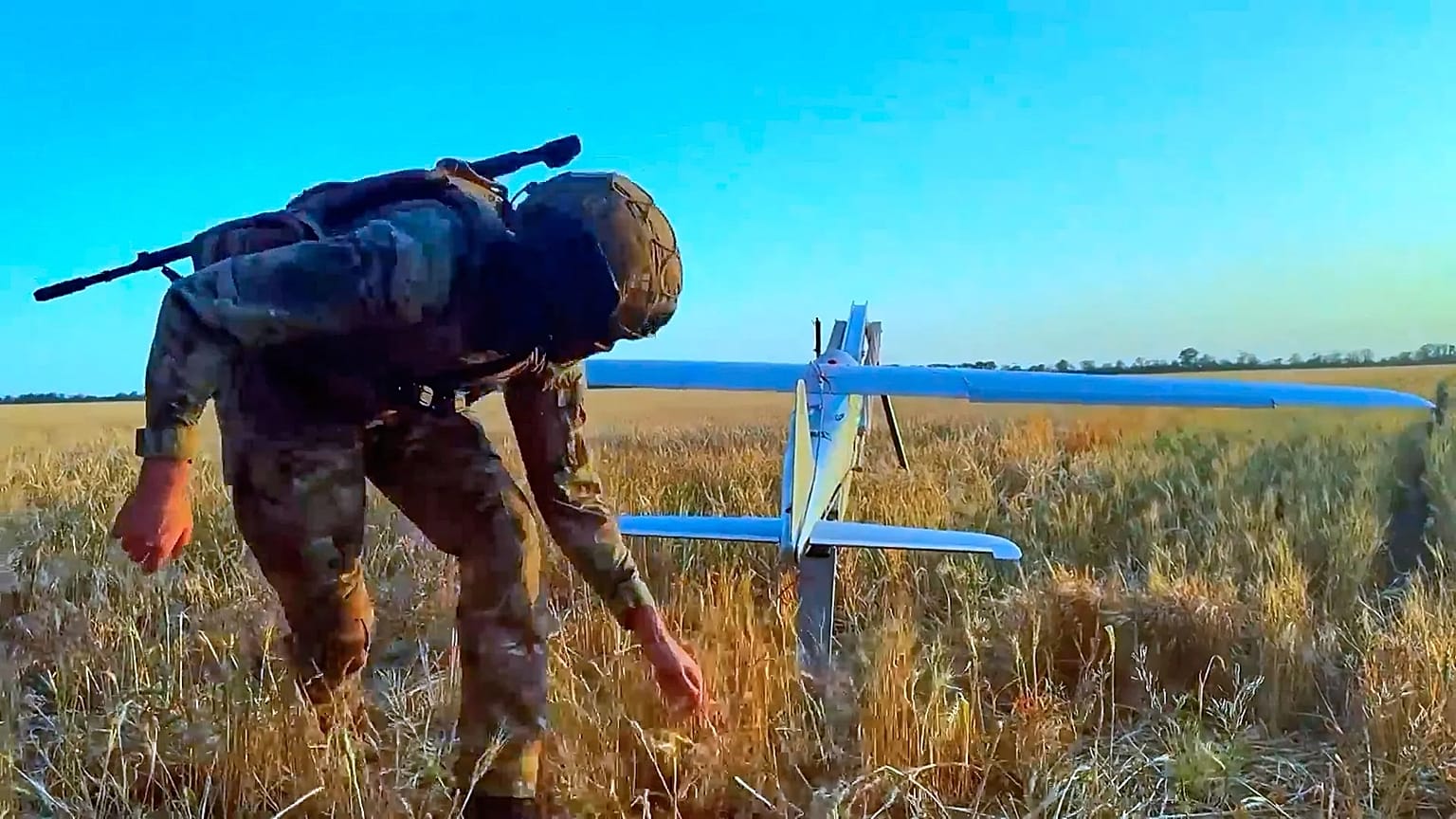
A Ukrainian soldier prepares to launch a drone. Photo Credit: Ukraine Defense Ministry


June 8, 2026 
By Paul Goble


Ukrainian drones have not only embarrassed Putin by spoiling his celebrations this year but also and more importantly called into question the long-standing assumption that Russia’s enormous size is an asset that represents “the ultimate guarantee of the state’s invulnerability,” Sergey Medvedev says.

In fact, the Radio Liberty commentator says, as the drone attacks have highlighted, “Russia’s immense territorial bulk … is transforming from an asset into a liability [because] it is virtually impossible to shield or defend” all of it (svoboda.org/a/drony-protiv-imperii-sergey-medvedev-o-territorialjnom-proklyatii/33771956.html).

Russia’s oil and gas infrastructure, its transportation routes, and its defense industries are all dispersed and all are now at risk, Medvedev says. Exclaves like Kaliningrad are even more so, but “even heavily protected areas like Moscow and St. Petersburg are no longer invulnerable.”

“As a result,” he continues, “we have a country burdened with excessive, unprofitable and indefensible territory which it can’t continue to drag further into the 21st century” and like the dinosaurs in the past, “Russia will not survive to the end of this century with its heavy and clumsy territorial body.”

Putin’s war in Ukraine did not begin this process, but it has “only accelerated this process of decolonization and loss of control over space,” Medvedev says. And thus, “having begun the war by seizing territories, Russia will eventually lose them – and not only those it occupied in 2014 and 2022,” but many it occupied centuries earlier.

About Paul Goble

Paul Goble is a longtime specialist on ethnic and religious questions in Eurasia. Most recently, he was director of research and publications at the Azerbaijan Diplomatic Academy. Earlier, he served as vice dean for the social sciences and humanities at Audentes University in Tallinn and a senior research associate at the EuroCollege of the University of Tartu in Estonia. He has served in various capacities in the U.S. State Department, the Central Intelligence Agency and the International Broadcasting Bureau as well as at the Voice of America and Radio Free Europe/Radio Liberty and at the Carnegie Endowment for International Peace. Mr. Goble maintains the Window on Eurasia blog and can be contacted directly at paul.goble@gmail.com .

View all posts by Paul Goble →


Drone from Russia shot down in eastern Latvia, military spokesperson says

A Russian serviceman launches a drone in an undisclosed location in Ukraine, 27 May, 2026
Copyright AP Photo

By Gavin Blackburn
Published on

Europe has been on high alert for weeks after a string of drone flyovers into NATO airspace, prompting leaders to agree to develop a "drone wall" to better detect and intercept drones violating airspace.

Latvia's military said on Monday that its fighter jets had shot down a drone that entered its airspace earlier in the day.

The National Armed Forces (NBS) said an airspace warning that had been issued had been lifted by 10:30 am local time.

The NBS sent alerts to mobile phones of citizens living in the eastern municipalities of Ludza, Balvi and Alūksne.

A military spokesperson told the Reuters news agency that the drone entered Latvian airspace from Russia.

The latest incident comes just two weeks after the NBS issued a similar alert to resident after detecting "at least one" unmanned vehicle in Latvian airspace.

In a statement posted to X, the NBS initially warned of a "possible threat" to airspace over the eastern regions of Ludza, Krāslava, Rēzekne and Augšdaugava, before confirming it had detected a UAV.

"Seek shelter indoors, close windows and doors - follow the two-wall principle," it told residents.

"If you notice a low-flying, suspicious, or dangerous object, do not approach it and call 112. We will inform you when the threat has ended."

The NBS said it had deployed additional units to Latvia's eastern border to strengthen air capabilities.

Europe has been on high alert for weeks after drone flyovers into NATO airspace reached an unprecedented scale last September, prompting European leaders to agree to develop a "drone wall" along their borders to better detect, track and intercept drones violating Europe's airspace.

In November, NATO military officials said a new US anti-drone system had been deployed to the alliance’s eastern flank.

And following a violation of Polish airspace, NATO Secretary General Mark Rutte announced the formation of the Eastern Sentry programme, which aims to deter further Russian incursions.

Some European officials described the incidents as Moscow testing NATO’s response, which raised questions about how prepared the alliance is against potential threats from Russia.

The Kremlin has dismissed allegations that Russia is behind some of the unidentified drone flights in Europe as "unfounded."


The Baltic states need more drone-detection radars. Europe's defence bottlenecks may slow them down

The phone shows an alert message to residents in Vilnius, Lithuania, to shelter in place during a drone incursion on May 20, 2026
Copyright AP Photo/Mindaugas Kulbis


By Anna Desmarais
Published on


The Baltic States, like the rest of Europe, are grappling with equipment shortages for the key technologies that will make it easier to respond to drone incursions, experts say.

Recent drone incursions along NATO's eastern flank have reinforced the Baltic states' push to strengthen their air defences.

But defence experts say a shortage of equipment and specialised personnel across Europe could slow efforts to close critical gaps in drone detection and response.

"The industrial capacity is the main constraining factor," Tomas Jermalavičius, head of studies at Estonia's International Centre for Defence and Security (ICDS), told Euronews Next.

As countries across Europe invest heavily in air and missile defence, they are competing for the same radar systems, electronic warfare capabilities and counter-drone technologies from a small handful of providers, experts said.

The result is growing procurement backlogs, rising costs and delivery times that can stretch for years, Jermalavičius said.

‘No country can provide 100% coverage at all times’

To act against a drone, a military needs tracking sensors, effectors to shoot down the drone and an “overarching architecture” that lets operators fully understand what is going on in the air, typically by combining images from a camera feed, as well as radar and acoustic sensor data on a set of screens.

“If there is a lack or gap in any of these elements … then the counter is more difficult,” Federico Borsari, a defence analyst at the Centre for European Policy Analysis (CEPA), told Euronews Next.

The first bottleneck for the Baltic countries is still detecting the drones, he said.

Drones are read differently on current European long and medium-range radar detection systems than other targets, such as aircraft or cruise missiles, because they are made of materials that make it harder to spot them, Jermalavičius said.

“They fly low, they fly slow,” Jermalavičius said. “Drones often can be confused with larger birds or a flock of birds.”

Militaries sometimes deploy fighter jets to get an aerial view of the threat to give them more information about whether they should shoot it down, but doing so is extremely expensive, Borsari said.

The priority for the Baltics, according to Jermalavičius, is to invest more in short and very-short range radios to help track the drones more effectively.

“With a shorter range [radar], the picture is more accurate, it allows for easier identification of what we’re dealing with,” he said, noting that sometimes the longer-range radar systems lose track of where drones often fly into airspace.

They could also integrate a new range of short-range radars into the existing system that the Baltic Air Police have, which includes ground-based early-warning and surveillance radars to detect aircraft, drones and missiles in all three countries, he said.

However, Jermalavičius said there is a limit to how many drones can be deployed at once, so “we have to prioritise very brutally where they would be deployed.”

Despite this, short-range missiles are not a perfect solution to stop every single drone incursion, he said. If a government were to invest only in short-range radar, they could risk under-investing in other areas, such as more cost-effective missiles to intercept the drones.

“No country can provide a 100% coverage at all times, in all places, of all potential targets against all types of threats,” Jermalavičius said. “There will be a drone which will always get through no matter what.

Countries like the Baltics and Poland, along the eastern flank of the NATO alliance, know that they need to make these investments but that “it’s not something you can build overnight,” Borsari explained.

The Baltics should also be weighing short-term radar investments with buying new technologies, such as high-energy lasers that are affordable and very effective against drones, Borsari said.

‘Everyone’s competing for the same equipment’

However, there are many barriers to getting these short-term radars in place throughout the Baltic defence line, both experts said.

Jermalavičius said it can take up to 24 months to produce and deliver a single radar system, which means the availability of companies greatly determines when and whether the Baltics and the rest of Europe get short-range radars.

“Europe in general faces massive air defence gaps which are pretty chronic,” Jermalavičius said. “Everybody’s competing for the same equipment … so everybody goes to the same vendors, the same producers … and then it becomes a very tight race.”

There are other types of equipment that drone detection also needs, such as acoustic sensors, electro-optical and infrared sensors, which are lacking throughout Europe, Jermalavičius said.

Another difficulty for building the tech needed for drone detections is a shortage in expertise and staff, Jermalavičius and Borsari both said.

“We are small countries, our labour markets are very competitive, these are very technical professions, so availability of qualified personnel who could be equipped and put into operational duties is another major constraining factor,” Jermalavičius explained.

Effective drone response also includes an interconnected system where a threat in one Baltic country can be detected in another.The Baltics have a “very well integrated” air surveillance system, called Boltnet, that shares threat detection between the countries, Jermalavičius said.

If an Estonian radar in Boltnet detects a threat and tracks it, the information is shared with Latvian and Lithuanian air surveillance operators as well as NATO’s integrated air and missile defence systems to coordinate a response.

However, Jermalavičius highlighted that Boltnet also needs to integrate “other actors” on the ground, such as Baltic Air Policing or the Territorial Defence Forces, to better respond to drone detection.