Wednesday, June 10, 2026

How cyber criminals are taking advantage of the FIFA World Cup
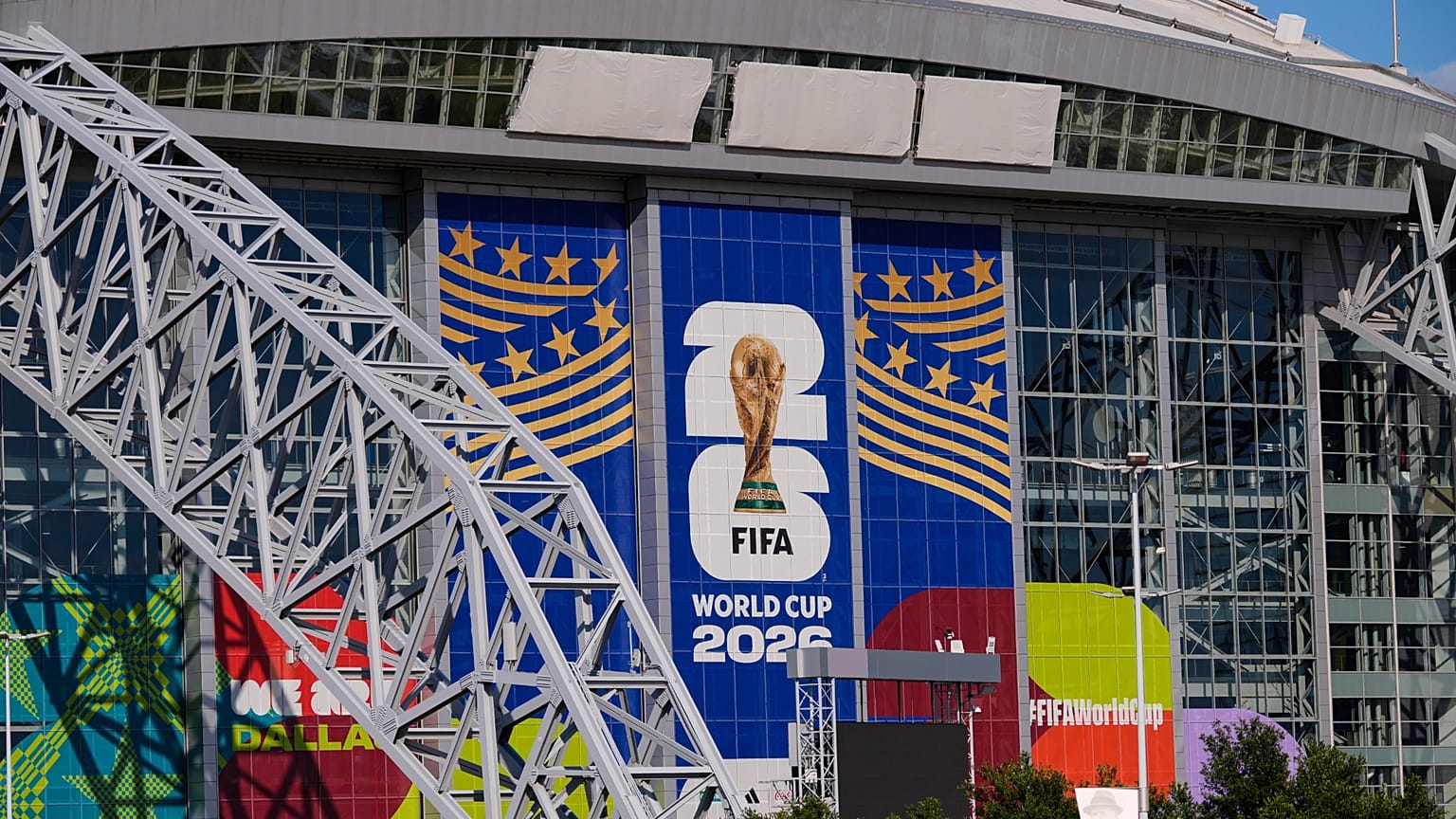
A poster of the upcoming 2026 World Cup at AT&T Stadium in Arlington, Texas
Copyright AP Photo/Tony Gutierrez

By Anna Desmarais
Published on

From fake websites to malicious calendar invitations, here is how cyber attackers have already been taking advantage of the FIFA World Cup hype.

While football fans around the world wait with bated breath for the FIFA World Cup to start, cyber criminals are already hard at work online.

The tournament, heralded by the organisers as the biggest event of its kind ever, will see 104 teams go head-to-head in 16 North American cities across Canada, the United States and Mexico when the games begin later this week.

Cybercriminals have already created thousands of World Cup-related campaigns and, heading into the tournament, the Canadian and American governments have issued warnings for spectators to keep a close eye out for scams.

Here is what campaigns have already taken place online and what to expect as we wait for the kick-off.

Thousands of fake FIFA websites

One of the most popular schemes for cybercriminals is the fake FIFA website or merchandise store, according to cybersecurity firms Fortinet and Check Point.

In a recent report, Fortinet identified over 13,000 World Cup-themed websites registered between January and May. Approximately 8% of these websites were classified as malicious or suspicious based on scam activity and patterns on the website, the analysis found.

Most of the websites they identified were used to attract users who are looking for tournament information and services by using World Cup-related keywords and abusing the FIFA branding, Fortinet said.

The goal of these sites is to “steal sensitive information such as payment card details, personal identification data, and login credentials” by tricking World Cup hopefuls into buying fake tickets, Fortinet said.

Often called “card not present,” fraud, these sites have been in place at other major events, such as the 2022 World Cup and the 2024 Paris Olympics, and look to exploit “urgency and scarcity to pressure rapid purchasing decisions,” according to Check Point.

Fortinet observed some scammers posting fake World Cup travel packages, including tickets, hotel and transportation on messaging app Telegram “while creating a strong sense of urgency,” the report said.

The Telegram posts redirect potential buyers to a fake ticketing website hosting a sham checkout page, where they are prompted to enter their personal information. After putting in their payment information, the victim receives a fake invoice.

Other websites also replicate sports-related gambling sites that face increased demand during large events such as the World Cup, the report said. Cyber criminals often distribute “fake or trojanized betting applications disguised as legitimate software,” to trick users into placing bets on their platforms.

Fake jobs, profiles and streaming services on social media

Cybercriminals are not just restricted to traditional websites; they also created 1,700 fake social media profiles on Facebook and Instagram, the report said.

“The widespread presence of unofficial accounts using FIFA branding increases the risk of brand abuse, misinformation, fraudulent promotions, phishing attempts, and other social engineering activities targeting football fans ahead of the FIFA World Cup 2026,” the report said.

On the LinkedIn job site, scammers have been circulating fake job advertisements to trick users into thinking they were applying for short-term roles in event staffing, hospitality, logistics and media support.

Hackers often impersonate real recruitment agents for their scams, directing prospective job applicants to fake calendar schedules that have a phishing site embedded to steal their personal information.

Social media platforms such as Facebook, X and Telegram have also distributed fake links to streaming platforms that promise to livestream a specific game with a group of fans.​

The links would often appear a few minutes before a match begins, often within closed groups or channels, and users are pressured into quickly registering their information or installing a fake “player” before the stream starts.

However, in many of the social media cases, Fortinet noted that fans have been quick to spot fakes, with many taking to Reddit to ask other fans to confirm whether they have been the victim of a scam.

Euronews Next contacted these platforms to see whether they have increased any content moderation or scam detection ahead of the World Cup, but did not receive an immediate reply.

​How to protect yourself

Consider verifying the domain name of a website or email address related to the World Cup before deciding to click on it, Check Point said in a list of recommendations.

Only book through On Location, FIFA’s hospitality partner, for hospitality packages or directly with the hotel that you want to stay at, the cybersecurity firm said.

If booking online, use a credit card instead of a debit card to buy something tournament-related due to stronger protections against scammers, it suggested.

If a fan sees something suspicious, Check Point suggests slowing down before acting, because buying into urgency can make it easier to fall for a scam.

For fans going to the World Cup, Check Point recommends running phone and app updates before arrival at the stadium so hackers cannot access devices that have security flaws.

Football history: Jules Rimet, the man behind the World Cup plan

Jules Rimet's brainchild has come a long way in 96 years. Fourteen teams accepted an invitation to take part in the inaugural tournament in 1930. In 2026, more than half of the 48 squads competing have battled through two years of qualifying games.


Issued on: 08/06/2026 - RFI

Jules Rimet(centre) hands over the trophy bearing his name to the Uruguay captain Obdulio Varela after his side's 2-1 win in the final match of the 1950 World Cup in Brazil. AFP
By: Paul Myers

Before Rimet's plan, the most prestigious international football team prize was handed out at the Olympic Games which was organised by the International Olympic Committee (IOC).

Rimet, a founding member of the Fédération Internationale de Football Association (Fifa) in 1904, wanted his organisation to be the big noise in football.

And after taking up the Fifa presidency in 1921, the 54-year-old Frenchman proposed his World Cup concept at the 17th Fifa congress in Amsterdam in May 1928.

Compatriot Henri Delaunay, who was a Fifa vice-president as well as a top executive with Rimet at the French Football Federation, backed Rimet's resolution "to organise a competition which would be open to the representative teams of all of the affiliated national associations."

Unsurprisingly, the associations in the Americas were up for the cup but their European counterparts were reluctant to send their squads on a three-week voyage across the Atlantic Ocean for a two-week tournament before a three-week trip back home.

Two months before the start of the event, no European teams had registered. Rimet, who had trained as a lawyer, had to twist a few arms in France to persuade his home country to boost the credibility of the competition. The Belgian-born Fifa vice-president Rodolphe Seeldrayers eventually wooed his football association to participate.
Egypt miss World Cup boat

Egypt would have made it 14 teams but their ship from Egypt to Europe was held up by a storm in the Mediterranean and they missed their connecting boat to Uruguay from Marseille.

The 1930 tournament started on 13 July with two games. France took on Mexico at the Estadio Pocitos in Montevideo and a few kilometres to the north, Belgium played the United States at Estadio Parque Central.

Just over two weeks later Uruguay were the champions after beating Argentina 4-2 in the final at the Estadio Centenario in Montevideo.

Nearly 69,000 fans packed into the arena to see the 1924 and 1928 Olympic champions maintain their international supremacy and vindicate Rimet's decision to create the tournament.

Fittingly, he handed the cup – named Victory – over to the Uruguay skipper José Nasazzi.
World Cup gains traction

Further proof of the World Cup's popularity came in the 1934 event in Italy.

Thirty two of Fifa's 50 then members wanted to take part in the 16-team competition. To reduce the field, Fifa introduced a qualifying competition that included hosts Italy.

They survived the qualifiers and after winning the competition proper, Rimet was on hand to present the trophy the victorious Italy squad.

And he gave the Italians the trophy again in 1938 after they beat Hungary 4-2 in the final in Colombes just outside Paris.

But 15 months after the showdown, the world was engulfed in war.

Fifa, having relocated in 1932 from Paris to Zurich, Rimet was able to continue the organisation's operations in neutral Switzerland as nations battled for global domination.
Post-war development

The World Cup re-emerged in 1950 with a cup renamed the Jules Rimet trophy in 1946 to honour his 25 years as Fifa president. There was also an incentive: the first nation to win the cup three times would keep it in their trophy cabinet for ever.

In 1950, Rimet handed his namesake cup to Uruguay and he was at the heart of the award ceremony in June 1954 as West Germany won the competition for the first time.

Just after the final, Rimet, who was approaching his 81st birthday, stepped down as Fifa boss after 33 years in charge of the organisation he had helped to establish in his early thirties.

He died on 16 October 1956 a few days after his 83rd birthday in Suresnes on the western outskirts of Paris.

When two-time champions Italy faced Brazil in the World Cup final in 1970 at the Estadio Azteca in Mexcio City – the venue for the opening game of the 2026 tournament – they were not only playing for the title but also the right to keep the cup.

Brazil, who had triumphed in 1958 and 1962, claimed the Jules Rimet trophy and eternal bragging rights after thumping Italy 4-1.

Platini sues Infantino in French courts as Fifa feud heats up


Former UEFA  president Michel Platini said on Monday he is suing FIFA president Gianni Infantino, in the latest chapter of a battle that began when scandal derailed Platini's 2015 bid for the FIFA presidency. After unsuccessful attempts in Switzerland, Platini is now turning to the French justice system to make his case.


Issued on: 09/06/2026 - RFI

Former president of the the European Football Association (Uefa), Michel Platini, at the Swiss Federal Criminal Court in Bellinzona, Switzerland, 8 July 2022. AP - Alessandro Crinari

In a statement sent to French news agency AFP four days before the start of the 2026 Fifa World Cup, 70-year-old Platini, who ran the 1998 edition of the tournament in France, said his lawyers had filed two complaints in French courts.

The statement said the French justice system "is tasked with fully uncovering the conspiracy hatched against French soccer player Michel Platini to prevent him from assuming the Fifa presidency that had been promised to him".

When Sepp Blatter left his position as president of the governing body of world football in 2015, Platini, the head of European governing body Uefa, stepped forward as the most likely successor.

But the former France captain and coach was quickly submerged in the widening scandal. Instead his deputy at Uefa, Infantino, grabbed the Fifa presidency, starting a long-running vendetta.

On Monday, Platini named Infantino, 56, as well as former Fifa officials Marco Villiger and Domenico Scala, as targets of his suit. He also asked for former Swiss Attorney Michael Lauber and other officials in that department to be investigated by their French counterparts.

The first of the actions announced by Platini's statement on Monday is a civil suit "to seek compensation for all the damages he has suffered as a result of the tactics used to prevent him from being elected Fifa president in 2015".
Internal manoeuvres

The second is a criminal complaint to force an investigation into a "criminal conspiracy to commit false accusation...influence peddling....and aiding and abetting influence peddling.

"This complaint specifically targets the individuals who worked to eliminate Michel Platini from the race for the Fifa presidency."

Platini has previously filed two separate complaints in Switzerland, but neither came to court.


Swiss prosecutors, for their part, launched a long-running criminal action against Platini for a payment he received from Fifa in 2011, but have three times failed to obtain a conviction.

Swiss authorities have also investigated Infantino for his use of private jets and for three secret meetings with Lauber in 2016 and 2017.

Platini reiterated on Monday that he believed he had been wronged.

"The Parisian investigating judge, along with investigative agencies, police, and gendarmerie, are tasked with uncovering and exposing the internal manoeuvres within Fifa, with the possible complicity of Swiss magistrates, to block the path of the three-time Ballon d'Or winner to the helm of world soccer," said the statement.


Top African referee denied entry into the US and will miss World Cup

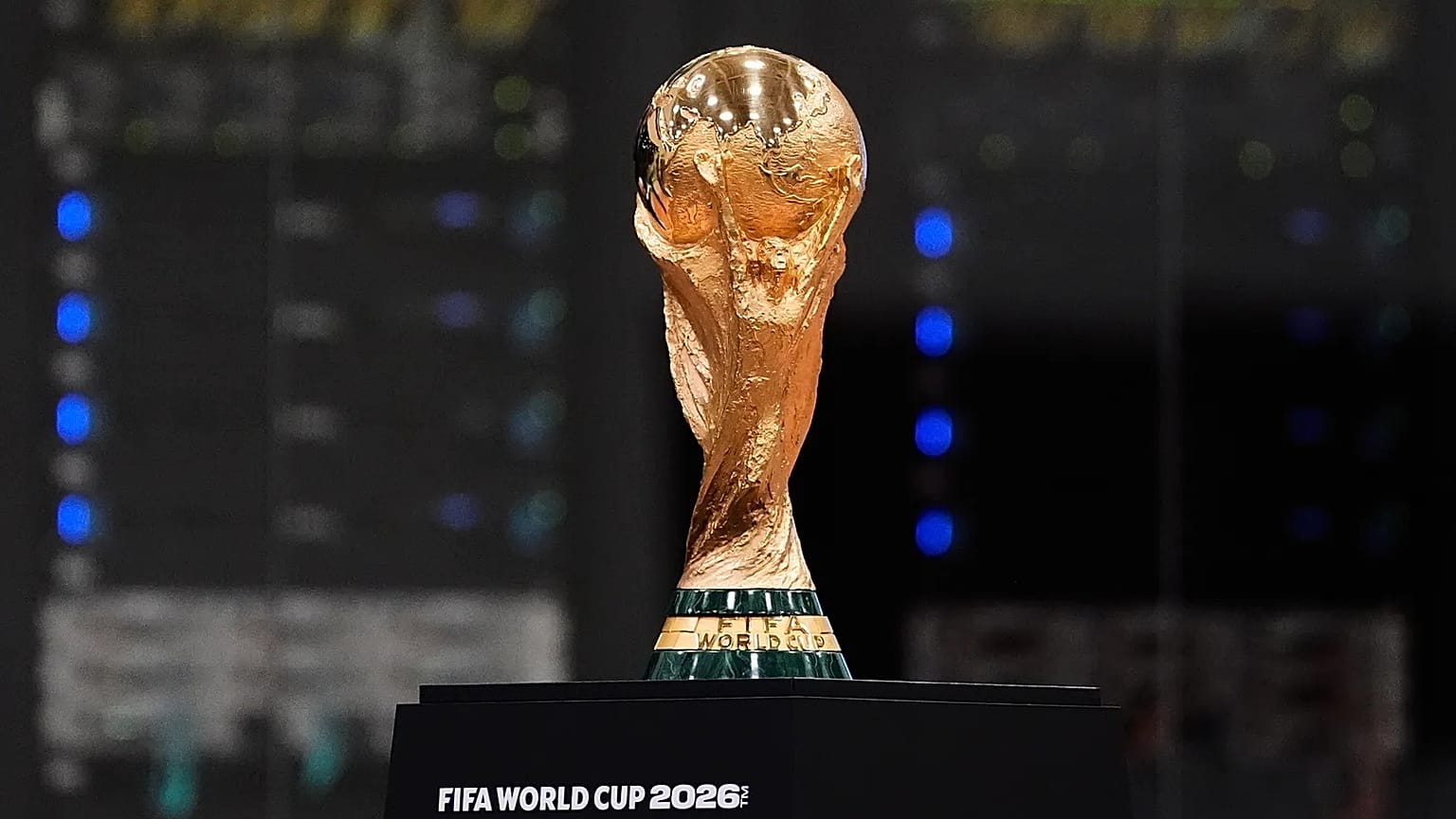
The World Cup trophy is shown during the opening ceremony of the International Broadcast Centre in Dallas, 1 June, 2026
Copyright AP Photo

By Gavin Blackburn
Published on

A FIFA spokesperson confirmed in a statement that Artan, who says he was detained for 11 hours at Miami International Airport, would play no part in the World Cup.

Award-winning Somali referee Omar Artan has been dropped from officiating at the World Cup after being barred from entering the United States, world football's governing body FIFA said on Monday.

A FIFA spokesperson confirmed in a statement that Artan, who was refused entry to the US after arriving at Miami International Airport on Saturday, would play no part in the World Cup.

In an interview with the New York Times, Artan said he had been detained for 11 hours and held in a cell, despite claiming he had a valid visa.

Speaking from Istanbul, Artan said, "I'm just a referee trying to live my biggest dream, to go to the World Cup".

He told the newspaper he was questioned on Somali politics by US border officials and said "I think they have a problem with my country".

Artan would have been the first Somali to referee at a World Cup.

"FIFA can confirm that match official Omar Abdulkadir Artan will be unable to train and officiate at the FIFA World Cup 2026 after he was denied entry into the United States," the spokesperson told the AFP news agency.

FIFA emphasised that it was powerless to influence the decision, which it said was the sole preserve of tournament co-hosts the United States.

"FIFA is not involved in host country immigration processes, including visa adjudications, and has been informed by authorities that Mr Artan's status will not be changed at present," the spokesperson said.

"In line with previous FIFA events, a host government ultimately determines who receives a visa and who is admitted into their country."

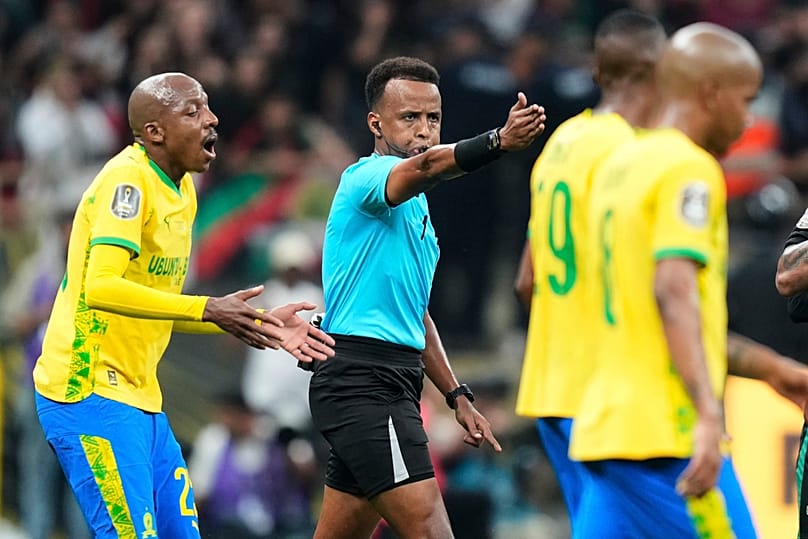
Referee Omar Artan signals a penalty during the CAF Champions League final in Rabat, 24 May, 2026 AP Photo


A spokesperson for United States Customs and Border Protection (CBP) said Artan was denied entry following a routine inspection.

"During processing, the traveller underwent additional inspection, a routine part of CBP's inspection process when officers need to verify information or determine admissibility," the CBP spokesperson said.

"Following inspection, the traveller, a referee for the FIFA World Cup, was determined to be inadmissible due to vetting concerns and was denied entry."

Somalia is one of several countries on a travel ban list introduced by President Donald Trump's administration as part of a broader immigration crackdown.

In a statement to AFP, Artan said he wanted to concentrate on the future.

"Despite the circumstances I am in a positive mood and I am focused on the next challenges in my refereeing career," he sai

"I want to thank the football family for their messages and wish my colleagues all the best success during the World Cup and I look forward to joining them again in future competitions."

Somalia offers referee 'unwavering support'

Somalia defended Artan after his entry ban.

"The Ministry of Youth and Sports reaffirms its unwavering support for Omar Artan and...has full confidence in his integrity, professionalism and continued contribution to the advancement of football both in Somalia and internationally," the country's ministry of sports said in a statement.

Artan was among the 52 referees announced by FIFA for the World Cup finals in Canada, Mexico and the United States.

He has been officiating in the Somali national football league championships since he became a FIFA referee in 2018 and refereed in the most recent edition of the Africa Cup of Nations.

In 2025, he was named by the Confederation of African Football as men's referee of the year.

Somalian President Hassan Sheikh Mohamud praised Artan in April after he made history as the first Somali to be selected to officiate at the World Cup finals.

"I commend the effort, professionalism and integrity shown by referee Omar, as he has become a symbol of inspiration for the new generation of Somalis," said Mohamud.


Somali World Cup referee Omar Artan receives warm welcome home after being denied entry to US


By Nathan Rennolds
Published on

Andrew Giuliani, who is leading the White House task force for the FIFA World Cup, has said Artan was denied entry to the US for a "very good reason," without offering further details.

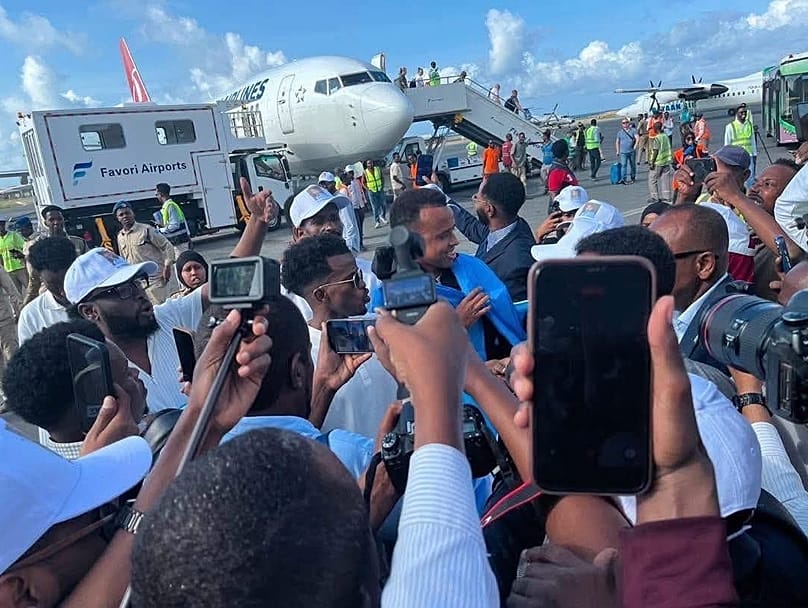
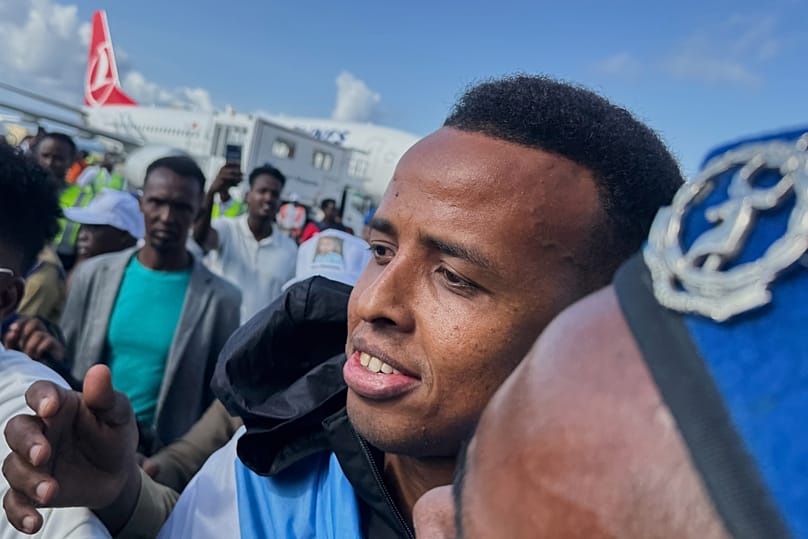
Somali football referee Omar Artan returned home on Wednesday to a swarm of fans and reporters after being denied entry to the United States ahead of the FIFA World Cup.

Crowds gathered at Mogadishu's Aden Adde International Airport waving Somali flags and brandishing posters while photographers scrambled to capture shots of the referee as he stepped onto the runway.

Artan is one of the world's top-rated officials and had been in line to become the first referee from Somalia to take charge of a World Cup fixture before he was refused entry to the US at Miami International Airport last week.

Somalia is among a number of nations subject to a travel ban issued by US President Donald Trump, who has sought to crack down on immigration since his return to the White House.

Speaking to The New York Times, Artan said on Tuesday that he had been questioned by US border officials about his documentation and career for 11 hours before being taken to a holding cell and eventually flown to Istanbul.

“I am very, very disappointed,” he told the paper.

"I’m just simply a referee who’s trying to live his dream, the biggest dream of my life, to come to the World Cup," he continued, adding that he had the "right papers" and the "right visa".

Image shared by the Office of the Somali Prime Minister. Nasra Bashir Ali/X

The United States Customs and Border Protection (CBP) said Artan had been refused entry to the country following a routine inspection.

"During processing, the traveller underwent additional inspection, a routine part of CBP's inspection process when officers need to verify information or determine admissibility," the CBP said. "Following inspection, the traveller, a referee for the FIFA World Cup, was determined to be inadmissible due to vetting concerns and was denied entry."

Andrew Giuliani, who is leading the White House task force for the FIFA World Cup, has said the refusal was for a "very good reason" and that he supported the decision, without offering any additional details on the matter.

Border control has taken centre stage ahead of the 2026 edition of the tournament, with a number of national teams experiencing visa issues and being subjected to additional security measures.

The decision to deny Artan entry has prompted particular criticism from across the football world and beyond.

England and Arsenal legend Ian Wright questioned whether the move was within the "spirit of football" and branded it a "World Cup of chaos".

"I feel for the American fans who are desperate for this," he said in a video posted to social media. "How embarrassing for them this must be".

The head of the World Health Organization, Tedros Adhanom Ghebreyesus, also weighed in on the decision, sending his support to Artan

"This won’t be the end of your story on the world stage," he said.


Infantino defends World Cup ticket prices, says fans 'should chill' about ref denied US entry

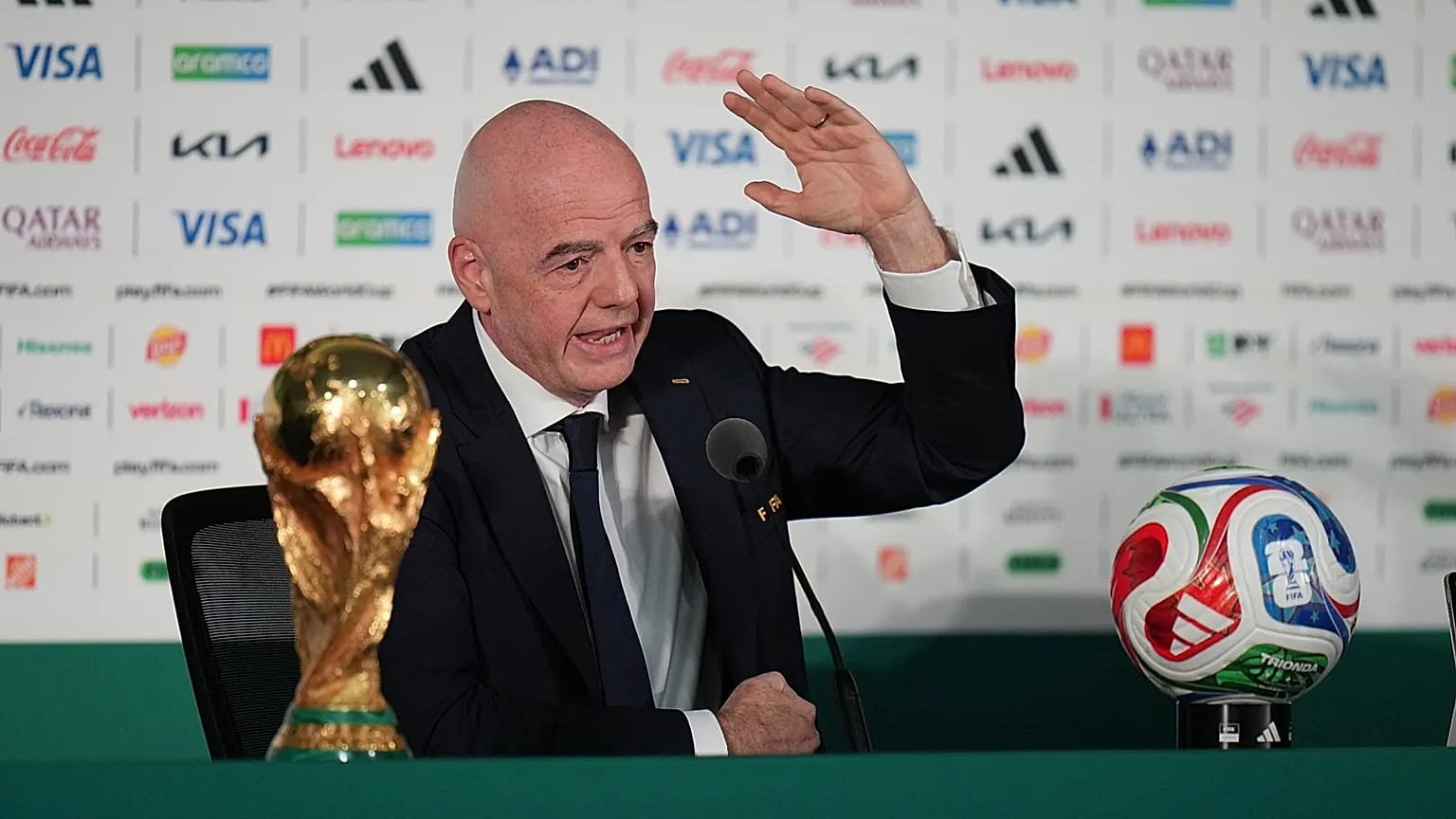
FIFA President Gianni Infantino speaks during a news conference at the stadium in Mexico City, 10 June, 2026
Copyright AP Photo

By Gavin Blackburn
Published on

The 2026 men's World Cup has been expanded to 48 teams and is the biggest and most ambitious in the event's history, with matches taking place in Mexico, Canada and the United States.

FIFA President Gianni Infantino defended World Cup ticket prices on Wednesday, saying “if we are doing something wrong, everyone in North America is doing something wrong.”

FIFA priced tickets starting at $140 (€121) for the 48-nation, 104-game tournament that starts on Thursday and priced regular seats up to $8,680 (€7,518) for the 19 July final in New Jersey.

It raised prices for the final to $10,990 (€9,518) and then $32,970 (€28,556).

After criticism from fans, FIFA offered a small amount of $60 (€51) tickets to national federations for their regular supporters. Infantino said on Wednesday 130,000 tickets were offered at that price, out of 6-7 million total.

Infantino said the average ticket price was under $500 (€433) for the tournament and was comparable to other US sports during their playoffs, a claim that while true for resale prices does not appear to be accurate for list prices.

He said he was unconcerned about investigations by attorneys general in California, New Jersey, New York and Texas.

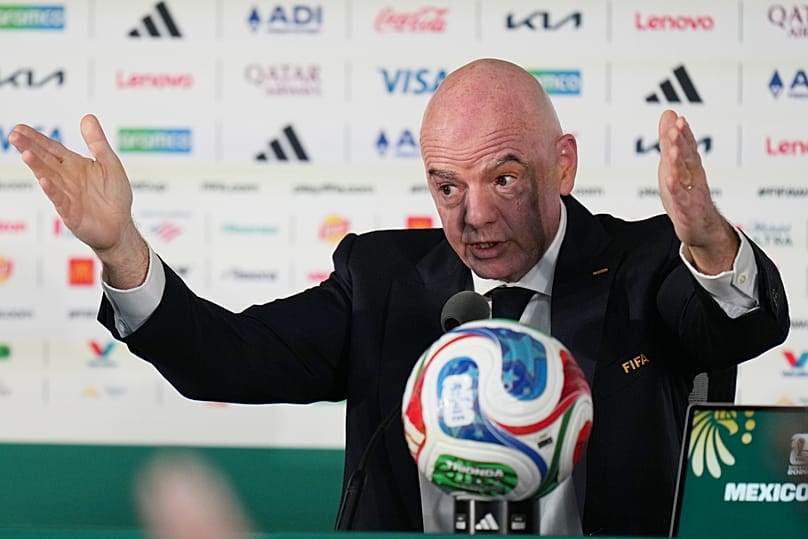
FIFA President Gianni Infantino speaks during a news conference at the stadium in Mexico City, 10 June, 2026
FIFA President Gianni Infantino speaks during a news conference at the stadium in Mexico City, 10 June, 2026 AP Photo

“We are very relaxed about it because before starting to sell 6.5 million or 7 million tickets we check what we do with the best lawyers,” he said. “We welcome every investigation.”

The NBA Finals have had wildly varied get-in prices, ranging from a minimum of about $500 for the first two games in San Antonio to about $10,000 (€8,661) for Game 3 in New York. Game 4 in New York was much less, dropping to about $4,000 (€3,464) on Wednesday

The Stanley Cup Final this year between teams in Las Vegas and Raleigh, North Carolina, has included a get-in price of at least $600 (€519) for each of the first four games of the best-of-seven series.

FIFA powerless to get US entry for Somali referee

Infantino said it was “unfortunate” that Somali referee Omar Artan was denied entry to the US and said people “should chill.”

He said FIFA cannot dictate to governments who to let into their countries, though it is working “behind the scenes.”

“We always try to make the situation as positive as possible and to find solutions," he said. "Sometimes we manage, other times not.”

“We don’t live on the moon, we live on planet Earth,” he said.

Referee Omar Artan is welcomed by supporters upon his arrival in Mogadishu, 10 June, 2026
Referee Omar Artan is welcomed by supporters upon his arrival in Mogadishu, 10 June, 2026 AP Photo

Artan insisted he had the correct visa for the US but he was turned back at Miami International Airport and then put on a flight back to Turkey.

A US State Department official said the referee was "associated with suspected members of terrorist organisations", therefore "making the traveller ineligible for admission to the United States."

Thousands of people turned out to welcome Artan back to the Somali capital Mogadishu on Wednesday.

"I will be at the next World Cup and will continue to make Somalia proud...Despite what has happened to me, I am not discouraged," he told journalists.

Artan, who was named the 2025 men's referee of the year by the Confederation of African Football, would have been the first Somali to officiate at a World Cup.

Meanwhile, concerns were rising that the curtain-raiser in Mexico City could be disrupted by social unrest.

Protesters blocked an avenue leading to the Estadio Azteca on Tuesday although lines of police prevented the demonstrators from reaching the stadium.

Thousands took part in the demonstration following a week of action that Mexican President Claudia Sheinbaum has called a "provocation."

Sheinbaum has said that the opening match was "guaranteed," though the left-leaning leader again ruled out using police to repress the demonstrations.

US President Donald Trump, who has forged a close friendship with Infantino, announced plans to attend the World Cup, although he did not say which games.

"I spoke to Gianni this morning...he said there's never been anything close," to the success of the coming tournament, Trump said.

Messi sparkles on return

On the pitch, Argentina's superstar Lionel Messi scored moments after coming off the bench on Tuesday to dispel any injury doubts and help the holders win their final warm-up game.

The 38-year-old Messi had not featured for Argentina in the build-up to their title defence after injuring a hamstring playing for Inter Miami in late May.

He was introduced as a substitute with 20 minutes left to huge acclaim from a capacity 88,000 crowd against Iceland in Auburn, Alabama, and his clever through ball played in Lautaro Martinez, who was fouled in the box.

Messi, who drove Argentina to their third World Cup crown in Qatar four years ago and is set to feature in his sixth World Cup, lashed in the penalty to help the reigning champions ease to a 3-0 win.

Argentina's first match is on 16 June against Algeria in Kansas City.

Along with Spain, France and England, Argentina are among the favourites to win the title.


Striking teachers bring Mexico City to a standstill ahead of World Cup

Thousands of demonstrators blocked a major avenue leading to Mexico City's Azteca Stadium on Tuesday, days before the 2026 World Cup opens at the venue, as teacher-led protests disrupted the capital. The demonstration, organised by a dissident faction of the CNTE teachers' union, followed a week of unrest that President Claudia Sheinbaum described as a "provocation".


Issued on: 10/06/2026 - 
By: FRANCE 24

Teachers and students march to the Ciudad de Mexico Stadium in Mexico City on June 9, 2026 © Gerardo Magallon, AFP


Thousands of demonstrators blocked an avenue leading to Mexico City's Azteca Stadium on Tuesday, just days before the 2026 World Cup kicks off at the venue.

As football fans flood into tournament co-hosts the United States, Canada and Mexico, the Central American country is grappling with chaotic teacher protests in its capital.

Tuesday's protest, led by a breakaway group of the CNTE teachers union, follows a week of demonstrations that President Claudia Sheinbaum has called a "provocation".

"As if to say, 'Look at how bad the situation is in Mexico,'" she told a press conference

The Azteca stadium will host the World Cup's first game – pitting Mexico against South Africa – on Thursday, with a vast global TV audience set to tune in for the opening ceremony and the match.

Authorities have deployed thousands of officers and set up concrete barriers surrounding the venue to block protests.

"We intend to reach the stadium," demonstrator Angel Villalobos told AFP on Tuesday. "The government has given some responses, but they don't help, they don't satisfy."

Sheinbaum said earlier that the opening match was "guaranteed", though the left-leaning leader again ruled out using police to repress the demonstrations.

READ MOREUS to complete Trump's long-promised Mexico border wall by late 2027

Her government has favored dialogue with the protesting teachers, but to no avail.

"We're going to continue our struggle," said Austreberto Flores, another protester looking to block Azteca Stadium.

The CNTE teachers union has been on strike since last week to demand a salary raise and the reversal of a pension law -- which the government considers unfeasible.

The teachers have also set up camp near the World Cup fan zone in Mexico City's Zocalo square.

On June 1, police dispersed protesters in the area with rubber bullets and teargas.

"They want to make it seem like there is mass social turmoil in Mexico, and that's not true," Sheinbaum has said of the protests.

The teachers have called for demonstrations on Thursday that will also include families of so-called "disappeared" people, who are alleged to have been killed or kidnapped by Mexican authorities or criminal gangs.

The 2026 edition of the world's biggest football extravaganza is the most logistically complex ever staged.

Mexico is still rushing to complete renovations at subway stations and at its main airport ahead of the tournament.

(FRANCE 24 with AFP)
Oxfam warns Europe’s corporate giants are fuelling inequality

Europe’s biggest companies are paying more than two-thirds of their profits to shareholders on average, diverting money that could otherwise support investment, climate action and workers’ wages, according to Oxfam.


Issued on: 09/06/2026 - RFI


Protestors hold banners reading "We no longer want social and fiscal inequality” at a demonstration in Bayonne, southern France, 2 October 2025. AFP - GAIZKA IROZ
By:RFI
ADVERTISING


Oxfam France on Tuesday warned that a trend towards larger shareholder payouts was fuelling inequality and called for new limits on executive pay and dividend payments.

The charity argues that major firms have the resources to help strengthen Europe’s long-term economic future.

“While public finances run dry, companies have more than enough resources to invest in our future and Europe’s economic competitiveness, but they prefer to reward shareholders,” said Alexandre Poidatz, Oxfam's spokesperson on multinational regulation.

Oxfam said this pattern was visible across Europe’s biggest corporate players. Its report found that the 100 largest companies in Europe by turnover paid out an average of 70 percent of their profits to shareholders between 2022 and 2024.

Some companies, including Spain’s Telefónica, British oil giant BP and the Zurich Insurance Group, paid shareholders more than they made in profits over the period, it said.


'Inequality is a choice'

Oxfam said the figures showed that Europe’s biggest firms were prioritising short-term shareholder returns over wider social and environmental goals.

According to the report, nearly half of the companies surveyed paid out 32 times more to shareholders than they invested in green transition measures.

The charity said such spending choices mattered at a time when governments across Europe were facing strained public finances, businesses were under pressure to adapt to climate targets and many workers were struggling with the cost of living.

“When regulatory measures are in place, things work out, and when they aren’t, everything goes haywire,” said Cécile Duflot, executive director of Oxfam France.

Oxfam argued that the current model was not "inevitable", but rather the result of choices made by corporate leaders and policymakers.

“Inequality is not inevitable: it is a choice. Europe’s largest companies must stop choosing a model that benefits only a minority and start acting in the interests of the many,” it said.


Calls for fairer rules

Poidatz said a fairer distribution of company profits would create a more “virtuous” long-term model and, in his view, one that would also prove “much more competitive in the medium term”.

He added that rules designed to curb excessive payouts should not be seen as holding companies back.

“Regulation is not a barrier to competitiveness. On the contrary, it is the framework for a desirable future. Ambitious nations cannot wait for Brussels to set things right."

Oxfam is urging European lawmakers and business leaders to cap CEO pay at a maximum of 20 times the median employee salary.

It also wants companies to limit dividend payments until they can guarantee “decent” wages and put in place an “ambitious climate strategy”.

The NGO is also calling for quotas to increase women’s representation in senior management roles.

Oxfam said its recommendations would help ensure that Europe’s largest companies contribute more effectively to a fairer and greener economy, while still supporting competitiveness over the longer term.
RINGER

French star Wembanyama leads Spurs fightback against Knicks

Listed height7 ft 4 in (2.24 m)

French basketball star Victor Wembanyama scored 32 points as the San Antonio Spurs beat the New York Knicks 115-111 to relaunch their bid for the 2026 NBA crown.

TRUMP CURSED THE KNICKS


Issued on: 09/06/2026 - RFI

Victor Wembanyama scored 32 points as his San Antonio Spurs team beat the New York Knicks 115-111 to win Game 3 in the NBA Finals series.
 Getty Images via AFP - NATHANIEL S. BUTLER


By:
Paul Myers


After an error cost his side the second game in the best-of-seven series, 22-year-old Wembanyama atoned with a match-winning performance to help his team reduce the Knicks' overall lead to 2-1.

"We showed better poise at times," said Spurs boss Mitch Johnson after Game 3 at Madison Square Garden in New York which was attended by the US president Donald Trump.


"I thought we finished the game still with some things that need improvement, but stronger than we did the last two games. We were in attack mode," Johnson added.

The Knicks, who host Game 4 on Wednesday night at Madison Square Garden, are searching for their first NBA Finals title since 1973 while the Spurs last won the honour in 2014 after sweeping past the Miami Heat 4-1.


'Tried to relax'


Wembanyama, who was voted the most valuable player (MVP) during his team's surge through the Western Conference finals to the title showdown series, told reporters: "I really tried to relax. It's hard to put your head out of the water. I need some time off, let my brain cool down, recover. Recover as much for the body as for the mind."

Stephon Castle added 23 points to Wembanyama's haul.

Castle scored 18 in the first half and five points late in the fourth quarter.

"I feel like we still haven't really done anything," Castle said.

"Obviously we're still down 2-1 and we're looking forward to the next game.

"Obviously it feels good to win, especially on the road after dropping two bad ones at home.

"But I think our confidence has been the same throughout this series regardless of what happens."

Jalen Brunson, who claimed the MVP accolade during the Knicks run to the Eastern Conference title, scored 32 points.

Change of tactics


"I tell the guys, it's a seven-game series for a reason," said Knicks coach Mike Brown said.

"The Spurs are a great team. They are well-coached. They have an iconic player in Wembanyama. It's not going to be easy."

French basketball star Wembanyama scoops NBA prize as best defender of 2026

It was New York's first loss since a 109-108 setback against the Atlanta Hawks in Game 3 of an Eastern Conference first-round series on 23 April.

"Didn't do what got us 13 straight wins in a row – that's how you lose a game," said Knicks pivot Karl-AnthonyTowns.

"We didn't do what we've been doing for 13 [games]. We decided to do something different, and it ain't going to work."

EU says Ebola outbreak makes ceasefire in DRC more necessary than ever

The European Union’s crisis management commissioner has called for a ceasefire between the Democratic Republic of Congo and Rwanda, saying the need for peace has become even more urgent with the spread of the Ebola outbreak.


Issued on: 08/06/2026 -  RFI

Congolese health workers stand at the Bunia Evangelical Medical Center during a visit by European Commissioner for Equality, and Preparedness and Crisis Management Hadja Lahbib, to assess the response to the Ebola outbreak, 7 June 2026. © Gradel Muyisa Mumbere/Reuters

By:RFI
ADVERTISING


"A ceasefire was already a political necessity. Now t has become a health emergency," Hadja Lahbib, EU commissioner for crisis management, told journalists on a visit Sunday to DRC’s eastern Ituri province, the epicentre of the current Ebola outbreak.

The World Health Organization has declared the outbreak an international health emergency, and the virus continues to spread across central Africa, with nearly 500 confirmed cases.

Efforts to contain the spread have been complicated by the ongoing conflict between the Congolese government and the Rwanda-backed M23 rebel group. Violence has displaced large numbers of people, forcing them to leave their homes, and disrupting access to healthcare.

Lahbib said a recent humanitarian airlift delivered almost 100 tonnes of emergency supplies, including medicines, tents and protective equipment. Five additional flights are scheduled to arrive in the coming weeks to Bunia airport, a key logistics hub.

Speaking during a visit to a new treatment centre near Nyakunde, Lahbib said her presence was intended to demonstrate solidarity with the affected communities, "not only through the supplies we send or the emergency funding we provide, but also by being present. This has an impact. It builds confidence".

EU commissioner for crisis management Hadia Lahbib (R) with WHO representatives at the Bunia airport, 7 June 2026. © Paulina Zidi/RFI

Lahbib said that being there shows that she trusts the scientific evidence that shows that the virus is only transmissible under certain conditions.

"If we follow preventive measures, we can protect ourselves," she said.

The two-storey treatment has a capacity to treat 50 patients. It is currently treating are 27 or 28, according to the centre’s logistics director Mikael Di Marco.

It takes two to three days to confirm a case of Ebola, he said "but we are trying to accellerate things, notably by decentralising our laboratories".

A further 18 beds will be added to the facility, along with a day care for the children of patients undergoing treatment.

Lahbib also announced an additional €5 million in support, on top of the €15 million already disbursed for humanitarian assistance, to help deploy diagnostic centres in affected areas.