Wednesday, June 10, 2026


‘Coal power has lost its status’: Solar power outstrips coal in US despite Trump's attacks
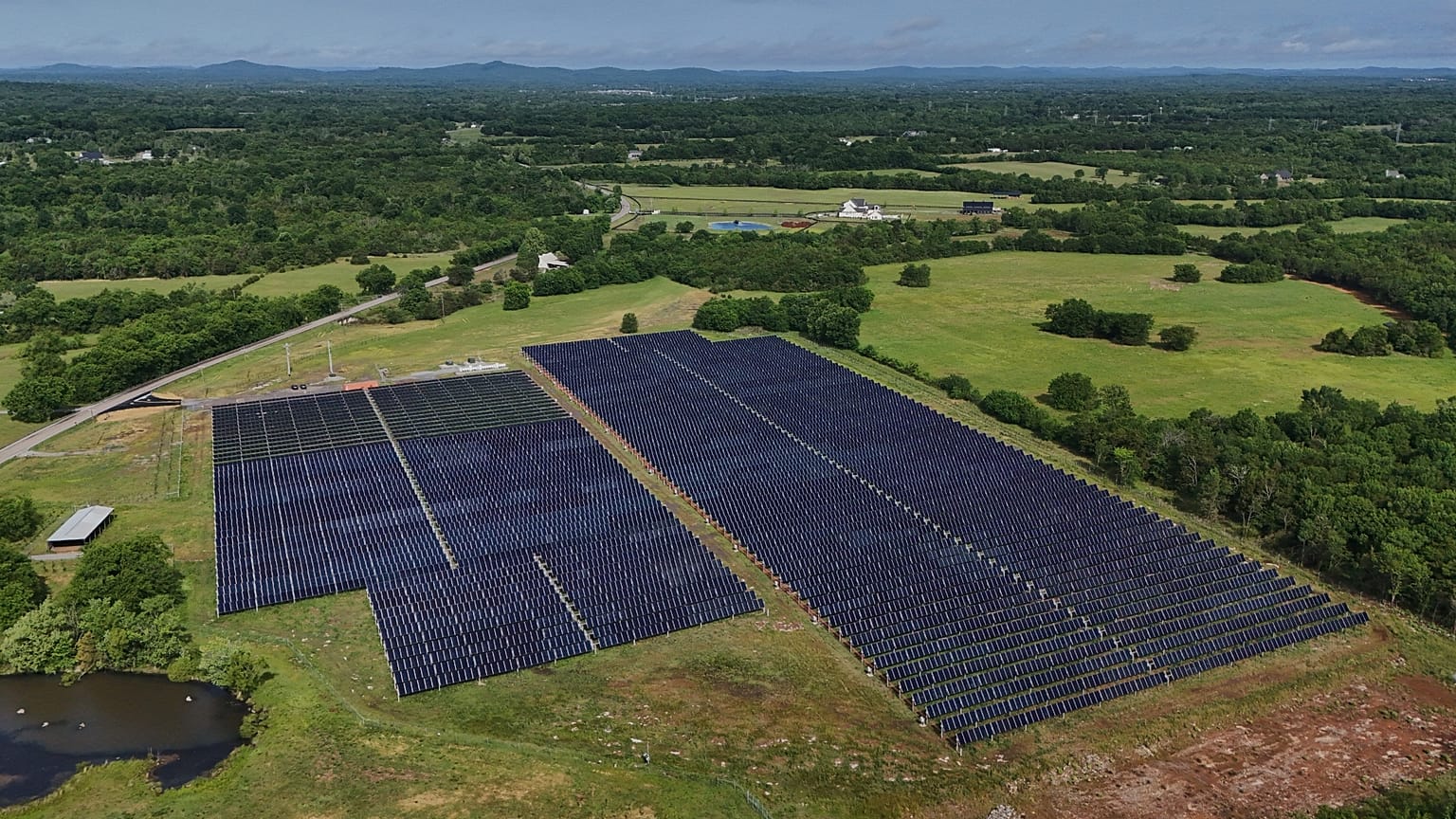
Solar panels operate on a farm with cattle Tuesday, April 28, 2026, in Christiana, Tenn.
Copyright AP Photo/Joshua A. Bickel

By Angela Symons with AP
Published on

States won by Trump in the 2024 election accounted for 74 per cent of all solar capacity installed in the first quarter of 2026.

Even as President Donald Trump boosts coal over clean energy, solar power is hitting new milestones in the US and remains the leading source of new power.

Data released on 10 June by global energy think tank Ember, along with a report by the Solar Energy Industries Association (SEIA) and analytics firm Wood Mackenzie, show the continued growth of solar and decline of coal in the US despite federal policy. In May, for the first time, solar supplied more of the nation’s electricity than coal, or 12.8 per cent, Ember said. Coal supplied 12.2 per cent, its fourth-lowest monthly share ever.

“For years solar power has risen in the US electricity mix," says Nicolas Fulghum, senior energy and data analyst at Ember. "At the same time, coal power has lost its status, first as the largest source in the US mix, and then gradually over the years has fallen even further.”

Solar also became the third-largest source of electricity in the US in May, behind natural gas and nuclear, Fulghum says. Coal generation hit an all-time monthly low in April and rebounded only modestly in May, allowing increasing solar generation to overtake coal, he adds.

US electricity demand is increasing

Electricity is produced by converting sources of energy – fossil fuels, renewable resources and nuclear – into electrical power. Burning coal, oil and natural gas for electricity emits carbon dioxide, trapping heat in the atmosphere and warming the planet. By contrast, solar, wind, geothermal, hydropower and nuclear are carbon-free.

After about two decades of essentially flat electricity consumption in the US, electricity demand is increasing to power artificial intelligence, grow domestic manufacturing and electrify transportation and heating. Fulghum says he expects to see more months where solar exceeds coal generation, before overtaking it on an annual basis in a few years.

These milestones signify that solar “has staying power” at a time where there's less support for renewable energy at the federal level, he adds.

Wind and solar combined have overtaken coal in the past, and wind power alone has outpaced coal during spring months when wind speeds pick up. Ember gets its hourly and monthly data from the US Energy Information Administration.

Globally, electricity generation from renewables is growing rapidly. Renewables will become the largest global energy source, used for almost 45 per cent of electricity generation by 2030, according to the International Energy Agency.

Trump helps the struggling US coal industry while curtailing solar and wind

Last week, Trump announced a plan to boost the struggling US coal industry by spending nearly $700 million (€606m) to support coal-fired power plants and coal exports. Trump said at a White House event that “coal’s a great business”, and that "in terms of power, there’s really nothing like it”.

Martin Pochtaruk, CEO and founder of Canadian-based solar panel manufacturer Heliene, says Trump can say that coal is coming back, but investors will invest their money in whatever brings the best return. And for power generation that is solar, making it the fastest-growing fuel, he adds.

A White House spokeswoman defended the administration's overall energy policies, saying they were geared toward strengthening the country's security.

“The President has reversed the Left’s devastating policies, saved the American coal industry, prevented the retirement of more than 17 gigawatts of power, and saved lives during heightened demand periods," Taylor Rogers said in a statement.
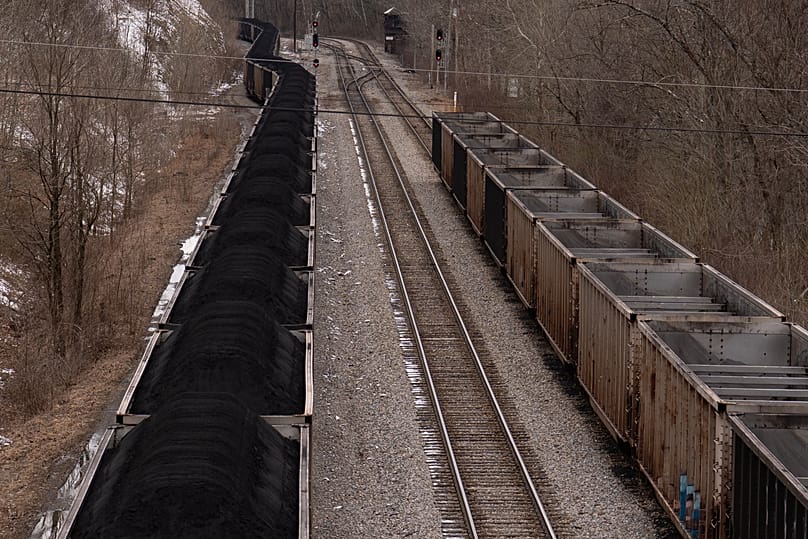
A train with coal pauses on the tracks in Grafton, W.Va., March 18, 2026. AP Photo/Carolyn Kaster, File

Solar remains the leading source of new power

While Trump is trying to reverse the coal industry's decline, solar has been the top source for new power for five years, SEIA says. SEIA and Wood Mackenzie say solar and battery storage were practically the only energy resources being built in the first quarter, making up 91 per cent of all new generating capacity.

The Trump administration has cancelled solar and wind projects, implemented policies that slowed clean energy permitting and development and terminated $7 billion (€6.06bn) in funding intended for affordable solar energy projects across the US.

“As power demand skyrockets, political and regulatory attacks are slowing down the exact resources we rely on,” Darren Van’t Hof, interim president and CEO of SEIA, says. “Impeding the only sector that is actively building new power is a reckless gamble that will only drive electricity bills higher.”

Several groups sued the Environmental Protection Agency over cancelling the Solar for All program. A district court dismissed the case last week citing lack of jurisdiction. The plaintiffs have another filing pending in the Court of Federal Claims.

In a ruling on Saturday (6 June), a federal judge struck down guidance from the Internal Revenue Service restricting tax credits for wind and solar projects.

Trump has blamed renewable energy sources such as wind and solar power for skyrocketing energy costs. But energy analysts say recent price hikes are based on growing demand, ageing infrastructure and increasingly extreme weather events that are exacerbated by climate change. Most recently, the war in Iran that Trump launched has also led to a spike in energy cost

Top states for solar voted for Trump

States won by Trump in the 2024 election accounted for 74 per cent of all solar capacity installed in the first quarter of 2026, with Texas, Florida, Ohio, Indiana, Michigan, Arizona and Mississippi ranking among the top 10 states for new solar additions, SEIA says. The US now exceeds a total of six million installations nationwide across all solar sectors, which includes large-scale solar arrays, commercial, community solar and residential or rooftop solar.

Johanna Neumann, at the Environment America Research and Policy Center, says it's “good news for our health and our planet that solar continues to grow”, and also, not surprising.

“Today we can harness solar more affordably than any other energy source. It’s scalable. And it’s also our most abundant renewable energy source,” says Neumann, senior director of the centre's campaign for 100 per cent renewable energy. “So I think it’s hard to keep the lid on a good idea, especially if the economics are tilting in your favour as well, which they are in the case of solar.”

Environment America's renewable energy dashboard shows that 32 US states generated at least 10 per cent of their retail electricity sales from solar, wind and geothermal energy last year, compared to 18 states in 2016. Clean energy in the South is booming, particularly in Florida, Arkansas and Mississippi, Neumann says.

“I think there is a misconception in the United States that clean energy is something for the coasts and liberal cities,” she says. “The true story of renewable energy is a 50-state story.”




World will cross 1.5°C warming limit by 2030 if emissions continue at current rate - report

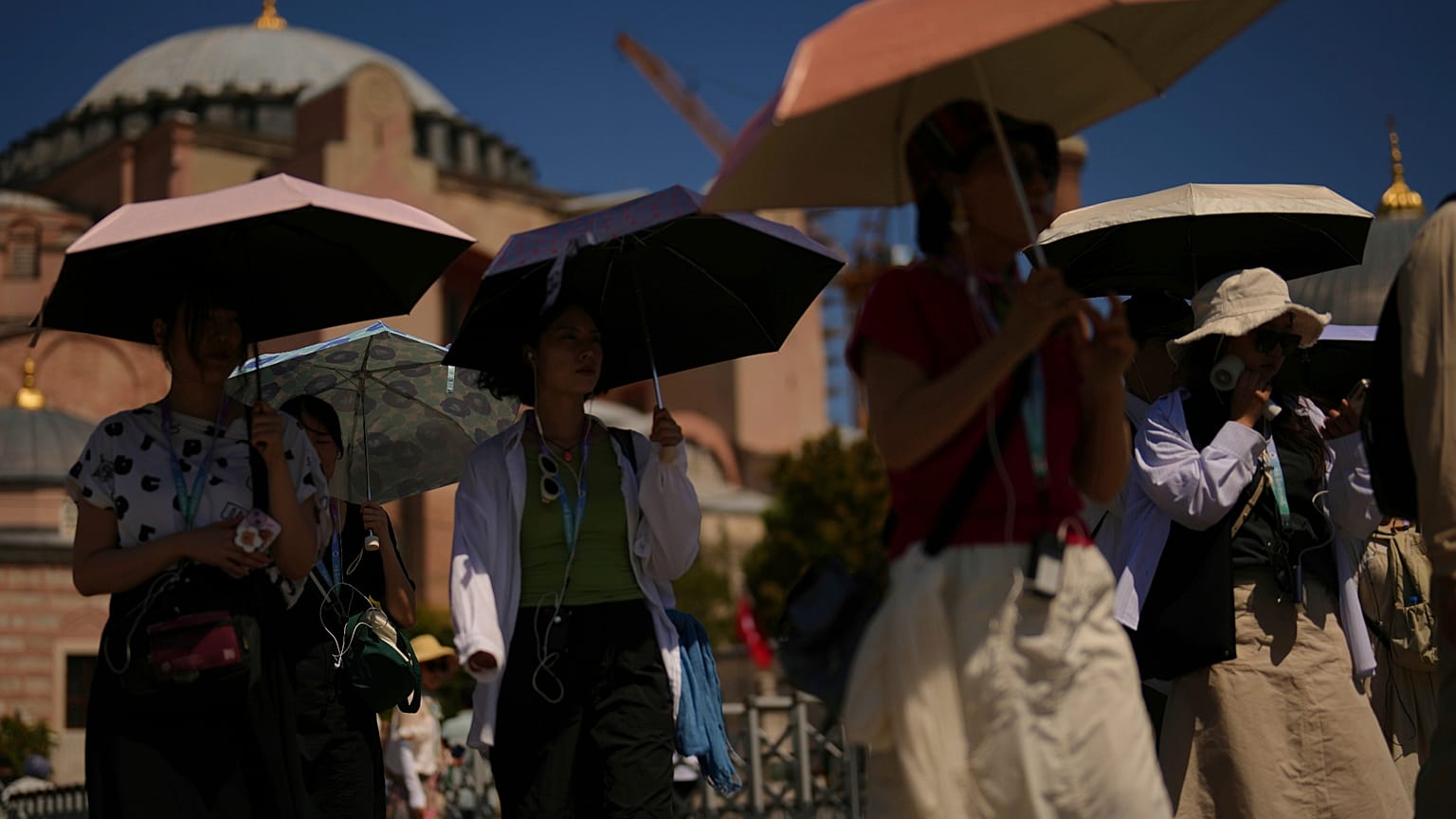
FILE - Tourists use umbrellas to shelter against the sun outside Hagia Sophia mosque during a hot summer day in Istanbul, Aug. 12, 2025.
Copyright AP Photo/Francisco Seco, File

By Angela Symons
Published on

The rate of human-induced warming remains at an all-time high, according to the latest Indicators of Global Climate Change report.

The world is edging dangerously close to the Paris Agreement’s 1.5°C warming threshold, with human-induced warming reaching 1.37°C in 2025, a major new report warns.

If emissions continue at current levels, the 1.5°C limit will be crossed around 2030, according to the analysis by more than 70 scientists from 56 institutions across 17 countries.

The fourth edition of the Indicators of Global Climate Change (IGCC), published today (11 June) in the journal Earth System Science Data, tracks the key measurements that tell us how fast the climate is changing and why. It paints a clear picture: the Earth is warming at an accelerating rate, driven almost entirely by human activity.

“Our study shows greenhouse gas emissions are at an all-time high, mainly from the burning of fossil fuels,” says Dr. William Lamb, Senior Researcher at the Potsdam Institute for Climate Impact Research (PIK), Germany.

“The good news is that solutions are already available. By investing in renewables and electrification, governments can cut emissions while building cleaner, more reliable and more secure energy systems.”

World’s carbon budget will be exhausted in three years

The carbon budget – the total amount of CO2 that can still be emitted while keeping warming less than 1.5°C above pre-industrial levels – now stands at just 130 billion tonnes from the start of 2026. At current emissions levels, that will be exhausted in around three years.

The 1.5-degree limit is the cornerstone of the 2015 Paris Agreement, an international treaty designed to prevent the most catastrophic impacts of the climate crisis.

Global greenhouse gas emissions hit a record 56.8 billion tonnes of CO2 equivalent in 2024, driven mainly by the burning of fossil fuels. Concentrations of the three major greenhouse gases – carbon dioxide, methane and nitrous oxide – have all risen since 2019, with CO2 now at 425.6 parts per million.

The report also found that the Earth’s energy imbalance – the gap between the heat entering the planet and the heat escaping it – has more than doubled in recent decades and is now at a record high. This means the planet is storing heat faster than at any point in modern measurements.

“The Earth’s energy imbalance is growing fast, driving changes in every component of the climate system, including ocean and continental warming, permafrost thawing, ice loss, and sea level rise,” says Dr Karina Von Schuckmann from French research institute Mercator Ocean International.

Sea are rising and getting warmer

Global sea levels reached a new record in 2025 – 23cm of rise since 1901 – and the rate is accelerating. The oceans are absorbing much of the excess heat, with average sea surface temperatures hitting their second highest level on record last year.

A newly added indicator in this year’s report captures the scale of marine heatwaves: the number of days affected has more than tripled globally between 1991 and 2025. In 2025 alone, the world experienced 65 marine heatwave days, damaging ecosystems, threatening fish stocks and disrupting the ocean-atmosphere systems that regulate the Earth’s climate.

On land, the picture is just as bleak. Average maximum land temperatures over the last decade were nearly half a degree higher than the decade before – a shift that is pushing extreme heat to new levels around the globe.

“Nearly all of the warming over the last decade is driven by human activities,” says Dr Samantha Burgess of the Copernicus Climate Change Service. “The impacts on livelihoods and ecosystems are already being felt worldwide, and will accelerate as temperatures continue to increase.”

The scientists behind the report are also sounding the alarm about a less visible risk: the global datasets used to track these changes are themselves under threat. Funding cuts – including the Trump administration’s decision to scrap the US State Department’s global air quality monitoring programme last year – are creating dangerous gaps in the evidence base that climate science and policy depend on.

“Without this, future assessments will be much more difficult at a time when urgent climate action is needed,” warns Dr Chris Smith of the International Institute for Applied Systems Analysis.

World’s largest, deepest, oldest whale graveyard discovered in Indian Ocean


Chinese scientists have discovered a massive whale graveyard of around 500 skeletons, some dating back to more than 5 million years, at the bottom of the Indian Ocean west of Australia, according to research published in the journal Nature on Wednesday. The whale fall provides shelter and sustenance to a vibrant ecosystem of marine species, many believed to be new to science.


Issued on: 10/06/2026
By: FRANCE 24

Scientists said discovering a necropolis of this scale was completely unexpected. © AFP via Handout, Global TREnD, IDSSE


The world's largest whale graveyard has been discovered at the bottom of the Indian Ocean by Chinese scientists, who found that the vast expanse of both new and ancient carcasses supports huge communities of deep-sea life.

It is also the deepest and oldest known whale graveyard on Earth, according to research published in the journal Nature on Wednesday, with some fossils dating back 5.3 million years.

From inside a small submersible, the Chinese researchers saw an array of strange animals – many believed to be new to science – living off the whale carcasses.

A new, though extinct, species of whale was also identified among the nearly 500 skeletons found up to 7,000 metres deep along a 1,200 kilometre corridor of bones in the Indian Ocean west of Australia.

Lead study author Xiaotong Peng of the Chinese Academy of Sciences told AFP that the researchers were "astonished" when the scale of their discovery became clear.


A huge array of animals including sea anemones, sponges and sea stars were found living off of the whale carcasses. © AFP via Handout, Global TREnD, IDSSE

It was known that when whales die and drop to the seafloor, their sunken bodies – called "whale falls" – provide a source of food to bottom-dwelling creatures.

"But discovering a necropolis of this scale was completely unexpected: the size of distribution, the depth and the age range were far beyond anything we had imagined," Xiaotong Peng said.

The researchers had several theories for why so many whales died in this particular corridor, including that it is a popular foraging area and has a V-shaped trench that funnels carcasses to the ocean's floor.
'Truly incredible experience'

For the discovery, the Fendouzhe submersible carried out 32 dives in 2023 – though what it found was only revealed in Nature on Wednesday.

The sub took up to three people on the dives, collecting the fossil samples using robotic arms.

Study co-author Peng Zhou said witnessing the whale graveyard "was a truly incredible experience".

Fossil samples being collected by the robotic arm of the submersible. © AFP via Handout, Global TREnD, IDSSE

"The vibrant ecosystems we saw offered a completely different perspective on this otherwise dark and cold ocean floor."

Among the animals they discovered living off the carcasses were jellyfish, worms, snails, crustaceans, brittle stars and molluscs called bivalves.

Extrapolating from the number of bones they found, most of which were from beaked whales, the scientists estimated there could be more than 10 million carcasses across the area called the Diamantina Zone.

The soft tissue and lipids inside that many carcasses "translates to roughly 6.7 million tonnes of sequestered carbon", Xiaotong Peng said.

This provides an immense source of sustenance for animals, similar to how hydrothermal vents create their own ecosystems on the ocean floor.

Some of the animals seen by the scientists also live in hydrothermal vents and cold seeps, suggesting whale carcasses could help connect these deep-sea communities to each other.

While this is by far the largest whale graveyard yet found, fossils found during trawling suggest there could be others off South Africa, the Iberian peninsula and the Crozet islands, according to the study.

'More blockbusters to come'?

University of Hawaii oceanographer Craig Smith, who discovered the first whale fall in 1987 but was not involved in the new research, told AFP it was "extremely exciting".


The scientists catalogued nearly 500 skeletons up to 7,000 metres deep along a 1,200 kilometre corridor of bones. © AFP via Handout, Global TREnD, IDSSE

"The vast number of fossil whale falls documented, including a new species of beaked whale, is truly amazing and is of major importance to understanding whale evolution and whale distributions over geologic time," he said.

Whale fall researcher Amy Baco-Taylor at Florida State University told AFP the "remarkable discovery" would "likely provide many new insights".

"It does seem very strange" that so many whales died in this area, Baco-Taylor admitted, adding that "we don't know enough about whale consciousness".

US palaeontologist Stephen Godfrey compared the "truly unique discovery" to past major underwater finds, such as when scientists first identified hydrothermal vents teeming with life on the ocean floor in 1977.

He called for future submersible voyages to find more whale graveyards across the world.

This discovery "reminded me of a trailer for the first in a series of epic movies", Godfrey commented in a linked Nature paper.

"I hope that there will be many more of these blockbusters to come."

(FRANCE 24 with AFP)


S.Korea hits Coupang with record fine over e-commerce data leak


Seoul (AFP) – South Korea hit e-commerce giant Coupang with a record $408 million fine Thursday over a leak that allegedly exposed more than 30 million customers' data and has provoked the ire of US lawmakers.


Issued on: 11/06/2026 - RFI

Coupang's fine is by far the largest ever penalty for a data leak in South Korea
 © ANTHONY WALLACE / AFP

Coupang, the country's largest online retail platform, signalled in a statement that it would challenge the fine in court.

The government's move caps a months-long probe into Coupang, which is incorporated in the United States.

Allegations of a massive data leak first surfaced in November and have become an unexpected source of friction between Seoul and Washington.

Seoul's Personal Information Protection Commission said it would "impose a total of 624.68 billion won in fines... on Coupang for violating safety obligations and collecting personal data without legal grounds".

It is by far the largest ever penalty for a data leak in South Korea -- far exceeding the previous record of a $88 million fine imposed last year on mobile carrier SK Telecom.

"Inadequate basic safeguards, including poor management of authentication signing keys and lax access controls" caused the personal data of around 37.5 million users to be exposed, the commission said in a statement.

Coupang has maintained that only 3,000 customer records were involved.

Commission chair Song Kyung-hee told a press briefing Thursday that the retail giant should have notified affected individuals within 72 hours.

But Coupang "delayed breach notifications", she said. "As a result, those individuals were unaware of the breach and deprived of the opportunity to take steps to prevent secondary harm."

Coupang on Thursday apologised for causing concern to customers and the public, vowing to strengthen its data protection framework.

"However, we regret that proactive measures taken to prevent secondary damage and explanations based on clear facts regarding last year's data breach were not sufficiently reflected" in the commission's decision, it said.

"After receiving the commission's official ruling, we expect the facts to be clearly established through legal procedures," Coupang added.
US dispute

The commission also said Coupang had "unlawfully collected the online activity records of about 11.17 million users on third-party websites and apps, and stored them in a database in a state that allowed individual identification".

In April, South Korean lawmakers sent a joint letter raising concerns over "undue pressure" from US politicians regarding Seoul's investigation into the e-commerce giant.

The letter, co-signed by nearly 100 MPs, followed accusations by US Republicans that the probe into the US-listed company constituted "discriminatory regulatory actions" against American businesses.

The dispute has also reportedly affected high-level security talks between the two allies, according to local media.

Washington is said to have warned it would halt such talks unless the legal protections of Coupang chairman Kim Bom -- an American citizen also known as Kim Bom-suk -- were guaranteed.

The Coupang fine will "again draw backlash from the US" for its size, said Kim Dae-jong, professor of business at Sejong University in Seoul.

"Given it's far more than the previous high imposed on SK Telecom, Washington is expected to protest the move, with the view that it is an over-the-top measure," he said.

"Coupang is certain to challenge the move by taking it to court," Kim added.

© 2026 AFP


In ageing South Korea, AI dolls care for the elderly


Yongin (South Korea) (AFP) – In her tiny apartment in South Korea, where she lives alone, 78-year-old Bang Chun-ja spends her days with a childlike AI-powered doll she says she prefers to people.


Issued on: 11/06/2026 - RFI

Bang Chun-ja, a South Korean elderly woman living alone, holds Hyodol, an AI-powered healthcare doll designed for elderly people, during an interview with AFP at her home in Yongin © Jung Yeon-je / AFP
ADVERTISING

The doll greets Bang when she returns home, sings to her when she feels bored, reminds her not to skip meals or medication -- helping her maintain a routine -- and tells her it loves her.

Bang has limited contact with her grown-up daughter, and fell into severe depression after major back surgery, spending hours alone staring at the ceiling in pain.

After a difficult divorce and years of hard work as a hairdresser and single mother, Bang told AFP that "at this age, there is nothing harder than being hurt by people".

But "when I'm with Hyodol, I never get hurt", she said, holding the cuddly doll with pigtails and a pink gingham dress, provided by her local municipality.

The doll "only makes me laugh", she added.

79-year-old Kim Young-bun, a South Korean elderly woman living alone, says the AI-powered healthcare doll is a source of comfort © Jung Yeon-je / AFP

Bang is one of many South Koreans battling loneliness in a country where birth rates are among the world's lowest and almost half the population is 50 or older.

In 2024, South Korea recorded more than 3,920 "lonely deaths", people dying alone and remaining undiscovered for extended periods -- the highest since records began in 2017.

Around 42 percent of households in the Asian tech powerhouse are single-person, with social isolation affecting the country's vulnerable elderly in particular.
'By my side'

Authorities are providing AI care devices -- some designed to detect signs of lonely deaths -- to seniors living alone, including in districts of Seoul and in Yongin, south of the capital.

Hyodol's head Kim Ji-hee says Hyodol's character was designed to be dependent on its user, as many older Koreans have spent their lives enduring gruelling work to provide for their families © Jung Yeon-je / AFP

They also include a smiling robot made by the company Wonderful Platform, and similar cute dolls from the firm Mr. Mind.

In the United States, a lamp-like AI device called ElliQ offers similar companionship and safety-monitoring services.

Hyodol, the startup behind the dolls of the same name, says around 14,500 are in use in South Korea, whether owned by individuals, rented out by governments or used in nursing homes.

Bang, in Yongin, said her daughter lives far away and has health issues of her own, so "having Hyodol by my side is a huge help".

Developing the doll involved years of field research, said company head Kim Ji-hee.

Hyodol can converse using ChatGPT, but is also programmed with scripts based on Kim's real-life interviews.

People she met included a widow estranged from her adult children over financial woes, who stored piles of their belongings at their mother's home.


Hyodol, the startup behind the dolls of the same name, says around 14,500 are in use in South Korea, whether owned by individuals, rented out by governments or used in nursing homes © Jung Yeon-je / AFP

"She lived alone with four fridges and three washing machines," Kim, 49, told AFP.

The interviews revealed the "pain of having no one to tell when something upsetting happens, and no one to share with when something joyful happens", Kim said.
Warmest welcome

Hyodol has strict data security protocols, with voice recordings only used internally to train the doll's chatbot, Kim said.

Users give prior consent for certain health-related recordings, such as those related to sleep, mood, meals and pain levels, to be shared with their welfare workers.

Because many interviewees spoke fondly of parental or mentor figures, Hyodol was created as a grandchild-like companion designed to "love its users unconditionally," Kim said.

Made with soft, cushiony materials, the doll also makes spontaneous requests, asking users to pat its head, hold its hand or share snacks with it, although it cannot eat. © Jung Yeon-je / AFP

One of the earliest scripts she wrote was a greeting for users returning home, which she wanted to feel like the "warmest welcome in the whole wide world."

"Grandma, where have you been? I waited for you all day," it says. "Next time you go out, please take me with you!"

Made with soft, cushiony materials, the doll also makes spontaneous requests, asking users to pat its head, hold its hand or share snacks with it, although it cannot eat.
'Sense of emptiness'

Hyodol's character was designed to be dependent on its user, as many older Koreans have spent their lives enduring gruelling work to provide for their families, Kim said.

"When they begin to feel they are no longer needed, they experience a profound sense of emptiness."

Oh Sun-hwa, a nurse who recommended the doll to Bang, said she had seen it significantly ease depression among seniors living alone.

But she also worried the technology could further reduce human contact, with family members potentially visiting less if they felt AI devices were caring for their parents.

In her apartment, another user, 79-year-old Kim Young-bun, said the doll was a source of comfort.

Authorities are providing AI care devices -- some designed to detect signs of lonely deaths -- to seniors living alone, including in districts of Seoul and in Yongin, south of the capital © Jung Yeon-je / AFP

"I had no one to talk to all day -- to the point my mouth almost felt stale from not speaking. But then this little one came along and chatters with me all the time."

"I'm so grateful to be with you again today," the doll told Kim in a chirpy cartoon-like voice.

"So am I," Kim replied, doting on the doll.

"Thanks for being with me. I love you," the device said.

© 2026 AFP
AI robot cleaners leave the lab for China's living rooms

Beijing (AFP) – Beijing cleaner Lin Meiqiong found her work a little easier the day she was paired with an unlikely new colleague -- a tall, wheeled robot with AI-powered tidying skills.


Issued on: 11/06/2026 - RFI

The service is a baby step towards a future in which robots increasingly take over manual labour from humans © WANG Zhao / AFP

The 56-year-old and her white-and-silver partner, fitted with cameras and two mechanical claws, are part of a new human-robot cleaning service offered by Chinese household help platform 58.com.

It's a baby step towards a future espoused by tech evangelists in which robots increasingly take over manual labour from humans -- though at the moment, such services are largely a data-gathering exercise for companies and a novelty for curious customers.

The robot took several minutes to fold a pair of trousers © WANG Zhao / AFP

"It's definitely different," Lin told AFP in between cleaning the kitchen and wiping down windows.

"I used to have to do everything myself," she said. "It's reduced the workload a bit."

The cleaning service, a collaboration between 58.com and Chinese robotics company X Square, costs 149 yuan ($22) for three hours and is available in Beijing and tech hub Shenzhen.

Helped into the apartment by an X Square engineer, the AI-operated Quanta X1 Pro robot uses its cameras to identify areas it could spruce up.

As Lin scrubbed the floor on her knees, it picked up rubbish and folded clothes strewn across a sofa.

Helped into the apartment by an engineer, the robot uses its cameras to identify areas it could spruce up © WANG Zhao / AFP

Grasping a pair of dark grey trousers, it raised its upper body to stretch the fabric taut, before laying it flat and arranging it into neat halves.

The process took several minutes and resembled a child learning to fold clothes for the first time.

Future iterations of the robot will respond to voice commands and even be able to chat, said the engineer, Hu Bowen.
'Better than a lab'

Around 200 households have booked the service since it was rolled out in March.

Tan Pei, who works in advertising and booked the robot to clean her Beijing flat, said she had chosen the service because she was interested to "see what it could do".

China's robots still have limited performance in real-life settings © WANG Zhao / AFP

"Even though it's not that perfect, there are still parts of it that surprised me," such as folding a pair of trousers "quite well", she said.

China's robots have wowed audiences with fluid dancing and set-piece martial arts displays onstage, but their application and performance in real-life settings remains limited.

For companies like X Square, the logic of launching an imperfect service lies in data collection for so-called embodied artificial intelligence.

Unlike large language models trained on vast quantities of internet content, robots lack comparable real-world datasets.

Robot cleaners still can't match human dexterity, with experts saying their widespread deployment is still a long way off © Hector RETAMAL / AFP

"We don't have a robot internet yet," Christoforos Mavrogiannis from the University of Michigan told AFP.

"It is much more informative to put the robot out there and study what happens than staying forever in the lab."

X Square engineer Hu said he sends his robots to work in a "completely unfamiliar environment".

"That is very challenging, but this unfamiliar data is also very helpful for the robot's growth."

As investment into embodied AI booms, similar trials in China include robots directing traffic in cities like Hangzhou or working on factory floors.

Around 200 households have booked the human-robot cleaning service since it was rolled out in March © WANG Zhao / AFP

On the domestic help front, firm GigaAI also plans to deploy 100 humanoid robots into households in central Wuhan this autumn for free home-service trials.

Investors have poured more than 57.7 billion yuan ($8.5 billion) into China's embodied AI industry so far this year, already soaring past the total for last year as a whole, according to business database ITjuzi.
'Very elementary stage'

But a myriad of hurdles stand in the way of widespread deployment.

As the Quanta X1 Pro's clothes folding demonstrated, robots still can't match human dexterity.

"Even though many companies are working on building better hands and building autonomy for hands, we don't have that yet," the University of Michigan's Mavrogiannis said.

Privacy will become a big issue with AI-powered robots, as they have access to huge amounts of personal data © Hector RETAMAL / AFP

There are multiple regulatory issues even once the physical capability is there.

Privacy will become a big issue, as robots would have access to huge amounts of personal data.

"We don't know where that data is going, where it's located... who is looking at that information," said Valeria Alessandra Macalupu Chira from Queensland University of Technology.

The safety of clients and their homes is another unresolved issue.

"I think we are still at a very elementary stage," said Yang Jianfei from Singapore's Nanyang Technological University.

Investors have poured more than 57.7 billion yuan ($8.5 billion) into China's embodied AI industry so far this year © WANG Zhao / AFP

Robots currently require supervision by humans who can activate emergency stop functions, he noted, and there are not yet recognised industry-wide safety standards.

Experts agree broad adoption seems a long way off.

Asked whether she thought robots would revolutionise her industry, cleaner Lin did not seem too concerned.

"Compared with people, it's obviously still not quite there," she said. "After all, it's a robot."

© 2026 AFP
Kenyan protester killed at demonstration against US Ebola facility

Kenyan police shot dead a protester on Tuesday as hundreds demonstrated against a government-backed quarantine centre for Americans exposed to Ebola, with anger mounting over Nairobi's determination to press ahead with the facility.


Issued on: 10/06/2026 - RFI

Demonstrators gather in a protest against a US-backed Ebola quarantine facility, intended to host Americans exposed to Ebola, in Nanyuki town, Laikipia County, Kenya, on 9 June, 2026. REUTERS - Monicah Mwangi

Patrick Wahome has helped organise protests in the central town of Nanyuki against the facility, and, like multiple eyewitnesses at the scene, told news agencies that the man died from a gunshot wound to the head.

The NGO Vocal Africa also posted on X about the killing.

Early on Tuesday, police began firing tear gas to disperse hundreds of protesters. Some waved Kenyan flags and one carried a white cross emblazoned with the phrase "Reject Ebola" in red.

More than 10 protesters were also detained by police, Reuters reporters said. At least two of them saw a body lying motionless with a large wound to the head in the back of a police van, though they said they had not witnessed the shooting themselves.

A police spokesperson said he had no information about the incident.

"Hooded police officers fired live bullets and arbitrarily arrested 19 protesters," the non-profit Kenya Human Rights Commission said in a statement posted on its social media accounts late on Tuesday.

Officers had also attacked protesters and journalists, the statement added.

The proposed 50-bed unit at Laikipia Air Base, near Nanyuki, has angered many Kenyans.

Protester Priscilla Imani told Reuters the area's association with the quarantine facility was also deterring tourists who come to climb Mount Kenya or see rhinos. "Laikipia is not a dumping site," she said.

A country with no cases

With no recorded cases of Ebola, many Kenyans are struggling to understand why their government is allowing the United States to build an Ebola facility in their country to treat US citizens.

Some protesters directed their anger at President William Ruto, who last week said his administration was doing "the right thing" by establishing the centre.

Others accuse the US of offloading the risk of caring for those exposed to the Ebola outbreak in eastern Democratic Republic of Congo and Uganda, where there have been more than 500 confirmed cases and 100 confirmed deaths.

Two people were killed during similar protests in Nanyuki last week.

Police officers detain a protester taking part in a protest against a US-backed Ebola quarantine plan to establish a 50-bed facility at a Kenyan air force base intended to host Americans exposed to Ebola, in Nanyuki town, Laikipia County, Kenya,on 9 June, 2026. REUTERS - Monicah Mwangi

A High Court judge has twice issued orders barring Kenya's government from taking steps to build or begin operations at the site.

Joshua Malidzo, a lawyer challenging the quarantine plan, said the court's deadline expired on Monday without the government complying.

US military planes have continued to ferry in staff and equipment after the court issued its orders, according to US and diplomatic sources and flight-tracking data, with several aircraft expected to land this week.

Satellite imagery seen by Reuters also shows a build-up of white tents since late May on a roughly 11-acre plot on the air base.

Requests for comment to a government spokesperson have gone unanswered.

A US-led facility for US citizens

The United States has said it is aware of the court challenge and is "working with the Kenyan government to resolve any objections".

Several US citizens have been exposed to Ebola in eastern Congo and Uganda. Six, including one who tested positive, were moved to a medical facility in Germany last month, while another was taken to the Czech Republic.

US President Donald Trump's administration has said it will not allow any Ebola cases to enter the US.

The Nanyuki facility is designated for Americans who have been exposed to the virus but remain asymptomatic. Kenyan officials have said the facility would also serve Kenyans and foreign nationals, but US officials have not confirmed this.

(with newswires)
Pakistan renews air strikes on Afghanistan, killing dozens


Pakistan on Wednesday launched deadly air strikes on Afghanistan after a period of relative calm following months of fighting at the beginning of the year. Pakistan's government said 26 "militants" were killed while Afghan authorities said at least 12 people, including children, died in provinces near the border.


Issued on: 10/06/2026 - 
By: FRANCE 24

An armed Taliban security personnel walks through a marketplace in Asadabad, Kunar province, Afghanistan, on June 10, 2026. © Wakil Kohsar, AFP

Pakistan has renewed deadly air strikes on neighbouring Afghanistan, officials in both countries said Wednesday, in the worst violence in weeks following a period of relative calm.

Pakistan's government said on Wednesday that 26 "militants" linked to the Tehreek-e-Taliban Pakistan (TTP) group were killed in the attacks.

"In the aftermath of recent terrorist incidents in Pakistan .... precise and calibrated Strikes were carried out along Pakistan Afghanistan border areas on hideouts and safe havens," Pakistan's information minister Attaullah Tarar posted on X.

He did not comment on any civilian casualties after Afghan authorities, who have denied Afghanistan is used for militancy, said at least 12 people, including children, were left dead in the strikes.

An AFP journalist saw a house completely destroyed in the southeastern province of Khost, where residents were digging graves to bury those killed in the overnight attack.

Afghanistan's government spokesman, Zabihullah Mujahid, said "11 children, one woman, and one elderly man were killed" in strikes on Khost, Kunar and Paktika provinces.

Islamabad said the strikes came in response to "recent terrorist incidents in Pakistan" and killed 26 militants linked to the Tehreek-e-Taliban Pakistan (TTP) group.

"Precise and calibrated Strikes were carried out along Pakistan Afghanistan border areas on hideouts and safe havens," information minister Attaullah Tarar wrote on X, without commenting on civilian casualties.

The attack in Khost's Spera district killed nine people and wounded 10 others, including children, a provincial official told AFP on condition of anonymity.

In neighbouring Paktika, two residents said a separate attack killed three civilians in Barmal district.

The strike hit a home, and those killed were children, one of the residents said.

The strikes are the deadliest in weeks and follow a period of relative calm at the border after conflict between the two countries erupted in late February.


An escalation saw fierce fighting along the frontier and unprecedented Pakistani air strikes on Afghan cities – including the capital Kabul and southern Kandahar, where the supreme leader is based.

At least 372 Afghan civilians were killed and 397 others wounded in that conflict in the first three months of this year, a United Nations report published last month said.

Relations between Pakistan and Afghanistan have been fraught since the Taliban took power for a second time in 2021.

Security issues have proved a sticking point, especially Pakistan's demand that Afghanistan curb the TTP militant group.

Islamabad accuses the Taliban government of sheltering militants behind a surge in attacks, particularly the TTP, which has waged a violent campaign against Pakistan for years.

Afghan officials deny the charge and counter that Pakistan harbours hostile groups and does not respect its sovereignty.

The border between the neighbours has remained largely closed since a flare-up in violence in October, freezing bilateral trade.

(FRANCE 24 with AFP)


Has Russia given up on Kinburn Spit, its westernmost foothold in Ukraine?

ANALYSIS


At the start of the war in Ukraine, the Russian capture of Kinburn Spit – a narrow piece of land that holds the key to several Ukrainian ports – was hailed as one of Moscow’s most significant victories on the southern front. From there, Russia could launch attacks on the Ukrainian mainland, and use it as a springboard should it make an attempt to take Odesa. Now, Russian forces appear to have pulled back from the once so-strategic spit. What is going on?


Issued on: 10/06/2026 - 
FRANCE24
By: Sébastian SEIBT

Kinburn Spit was seen as one of the most strategic important locations in Ukraine at the beginning of the war in 2022. © Darkngs/Creative commons

On June 8, two days before Russia would have celebrated its four-year anniversary of the capture of the Kinburn Spit – Moscow’s westernmost military position in Ukraine – a member of the Crimea-based Ukrainian partisan group Atesh had astonishing news to report: Russian troops seemed to have abandoned the disputed land strip between the Dnipro-Bug estuary and the Black Sea, located on the tip of the Kinburn Peninsula, northwest of Crimea.

The main reason, the agent reported, was that their supplies had been “completely disrupted” by Ukrainian drone strikes. Vital deliveries of ammunition, fuel and food had come to a total standstill, said the agent, who was cited by the Institute for the Study of War (ISW) and Ukrainian media outlets, and most members of Russia’s 337th VDV Regiment had been redeployed elsewhere.

A relic of Russia’s initial plans for Odesa


Russia has not confirmed the reported loss of the 10-kilometre-long sandbar, which at its base measures around 4 kilometres in width, and at its peak, some 100 metres.

Yet in 2022, after Russia launched its full-scale invasion of Ukraine, the Kinburn Spit became a strategic priority for Kyiv because it lies at the mouth of the Dnipro River – between the Dnipro-Bug estuary and the Black Sea, south of Kherson – and controls access to the key port of Mykolaiv and nearby Ochakiv, while allowing artillery and missile attacks on Ukraine’s southern coast.


Although the spit is tiny, it has offered Russia plenty of military vantage points. © Wikimedia Commons

Since then, Ukraine has made repeated attempts to take it back. Kyiv deems Kinburn Spit as so important that it last year asked the United States to include it in any future peace plan Washington may present to Russia’s President Vladimir Putin.

In the early days of the war, the spit was indeed of crucial importance.

“In the beginning of 2022, the Russians wanted to go all the way to Odesa,” Tor Bukkvoll, an expert on the Russian military and the war in Ukraine at the Norwegian Defence and Research Establishment, explained. The plan, he said, was to use the spit as a springboard to go deeper into southern Ukraine.

Will Kingston-Cox, a Russia specialist at the International Team for the Study of Security (ITSS) Verona, said that by taking the strip, Russia has been able to control the Dnipro-Bug estuary and the access to Kherson.

Could it affect Black Sea shipping?

As the war has worn on, however, experts say the Kinburn Spit’s strategic importance has steadily decreased.

First off, because Russia seems to have dropped its plans to take Odesa, Bukkvoll said. Secondly, because the situation around the city of Kherson – which was recaptured by Ukraine at the end of 2022 – as well as along the Dnipro River, seems to have largely stagnated. Instead, the focal point of the war has moved to Donbas and the Zaporizhzhia regions.

Still, if the report is confirmed, it would be a significant win for Ukraine. Kingston-Cox described it as “a step towards restoring safer navigation” in the Black Sea.

But, noted Frank Ledwidge, a senior lecturer in war studies at the University of Portsmouth, “the Kinburn Spit has no importance at all as long as the Russians occupy the left bank of the Dnipro, which they do”.

But a Russian withdrawal would still remove a major obstacle for Ukrainian exporters wishing to use the ports in Mykolaiv.

And, Kingston-Cox said, “Russia would also lose its ability to use the spit as a forward position for observation, which it has been doing, and for its artillery and for drones, and for electronic warfare, and the harassment of shipping routes.”

But the most important result would be the symbolic value – perhaps even more so than the military one, Bukkvoll said.

At the end of 2022 and at the beginning of 2023, Ukrainian forces pushed the Russians out of the outskirts of Mykolaiv. But Moscow still managed to hold on to Kinburn Spit.

“If Ukraine can confirm control, it would be able to say that Mykolaiv Oblast has been fully liberated,” Kingston-Cox said. That, he said, would have “serious political value” for Ukraine. Not the least since President Volodymyr Zelensky would be able to use it as an argument to convince its backers that Kyiv is holding the military initiative.

Supply lines and drones

Ledwidge also said it would be a way for Ukraine to shift the world’s focus from the battlefields that are not going so well, and “show you what it wants you to see”.

In Donbas, or the Kharkiv region, the situation for Ukraine still remains difficult. Further south, however, Kyiv has in the past few days claimed a series of successful drone attacks against important infrastructure in Crimea, including a bridge that links the peninsula (which Russia illegally annexed in 2014) with southern Ukraine, a railway, and several oil facilities.

But beyond the symbolic value – and the impact it would have on Ukrainian propaganda – a Russian withdrawal from Kinburn Spit would also underscore Kyiv’s increased capabilities to conduct medium-range strikes and have the enemy retreat by itself by cutting vital supply lines “without a direct assault”, Bukkvoll said.

It also shows how vulnerable the supply lines that were established at the beginning of the war have become in a conflict that is now dominated by drones. So far, the Ukrainian drones have had the upper hand in disrupting supply lines to troops in exposed areas.

Bukkvoll argued that Russia may have decided that it now costs more to defend its supply lines to the Kinburn Spit than to just let it go.

If the Russian withdrawal is confirmed, it remains to be seen what the future will hold for Kinburn Spit. Will Ukrainian forces occupy it – and potentially become targets for Russian drones themselves – or will it become a no-man’s-land? What is certain is that if Kyiv moves in, it will first have to clear it from mines and set up solid air defence systems.

This article was adapted from the original in French.


Russia's conscripts recount pressure to fight in Ukraine

Warsaw (AFP) – After Russian police started using facial-recognition cameras to identify men wanted by military authorities, a young bank worker spent weeks avoiding the Moscow metro.


Issued on: 11/06/2026 - RFI

Russia's has hardened its once-avoidable conscription system amid the war 
© Alexander NEMENOV / AFP

But on snowy Friday evening in late 2024, heavy traffic pushed him underground to visit his mother. At the next station, two officers entered the carriage and detained him for draft evasion.

Within three days, he was sent to a military unit near Moscow for year-long mandatory service.

Like other Russian conscripts who described their experiences to AFP, he spoke on condition of anonymity for security reasons.

The cases show how, amid the war with Ukraine, Russia has hardened its once-avoidable conscription system and the pressure draftees -- officially not sent to war -- come under to sign contracts to fight in Ukraine once inside the military machine.

"Before 2022, there were many ways to avoid the draft without doing anything illegal," said Artyom Klyga, a lawyer with the Movement of Conscientious Objectors.

"Now very few legal ways remain."

'Record numbers'

It used to be relatively easy to secure a medical exemption, perform alternative civilian service, or avoid the draft by staying in education.

Since invading Ukraine, Russia has made conscription year-round, raised the upper age limit from 27 to 30, tightened medical exemptions and introduced an online summons system.

Timofey Vaskin of Shkola Prizyvnika, or the School of Conscripts, said the demand to find ways out of service had "risen sharply".
In Moscow, facial-recognition cameras and a unified recruitment system have made men easier to find and faster to process © Alexander NEMENOV / AFP

In Moscow, facial-recognition cameras and a unified recruitment system have made men easier to find and faster to process.

Once conscripted, the pressure to sign a fully-fledged army contract often starts within days.

"They are without means of communication, without access to parents, right groups or journalists," Klyga said.

One common tactic is to present a military contract as a normal job, Vaskin said.

Conscripts are told they can work "from nine to six", earn far more and avoid routine duties.

Others are promised roles as drivers or clerks, or that the contract will last "just one year".

In fact, army contracts are effectively open-ended.

"It is a major success of the Russian authorities that they have convinced many people that conscripts simply serve for a year," Klyga said.

"As a result, conscripts are now ending up in the war in record numbers."
'People like you'

Last year, 422,000 Russians signed voluntary contracts to fight in Ukraine, according to ex-president Dmitry Medvedev -- six per cent down on 2024.

At the same time, some 295,000 people were called up for military service.
Last year, 422,000 Russians signed voluntary contracts to fight in Ukraine

If conscripts sign a contract to fight, they can end up on the front "within a month," Klyga said.

After being caught on the metro, the former bank worker was held for three days in a detention centre without a shower or change of clothes.

No one forced him to sign-up, he said, but the idea was constantly present.

"You're a good fit, we need people like you," he was told.

"You could get a decent role, earn money and not do the usual duties," he recalled his superiors saying.

Some in his unit agreed immediately. For a while, he considered it.

A DJ from Moscow who tried to avoid service told AFP he could not obtain a driving licence or international passport without proper military papers.

He gave in and was assigned to an army medical unit for a year -- where he met contract soldiers trying to find a way out.

"None of them want to serve," he said. "They all want out."

He recalled some commanders telling him: "Don't sign anything. Don't ruin your life."

- 'Break a person' -

In one case, Vaskin reported a prohibited phone was planted on a conscript, who was told to choose between detention or signing a combat contract.

Klyga's organisation has documented complaints from conscripts being kept awake all night in heavy chemical protection suits, forced to dig holes and then refill them, and others who said their signatures were forged on enlistment documents.

If conscripts sign a contract to fight, they can end up on the front within a month, rights advocates say © STRINGER / AFP

"Under constant pressure they break a person," he said.

One conscript told AFP that a man in his unit swallowed a needle in an attempt to get discharged.

"He was covered in blood when they brought him in," he said.

He survived and was eventually discharged.

Those that end up fighting -- through pressure or coercion -- often do not tell their relatives.

"They simply leave, and the family only finds out later," Klyga said.

In some cases, parents only discover what happened after their son has been killed at the front.

© 2026 AFP