Thursday, June 11, 2026

A woman in charge of the UN? Candidates feel it’s about time

AFP
June 9, 2026
Rebeca Grynspan, Maria Fernanda Espinosa and Michelle Bachelet took part in a debate in Geneva as they run to become the next UN chief – Copyright AFP Yuri CORTEZ

It is high time a woman took charge of the United Nations, argued three of the candidates in the running to take over as secretary-general, at a debate on Tuesday.

Michelle Bachelet of Chile, Rebeca Grynspan of Costa Rica and Maria Fernanda Espinosa of Ecuador are all standing to succeed Antonio Guterres, who is stepping down at the end of the year after two five-year terms.

The trio touted their diplomatic credentials during a debate organised by independent organisations in Geneva, the city home to the UN’s European headquarters.

“I think, of course, a woman — it’s about time, isn’t it? After 80 years” of the UN’s existence, said Espinosa, a former foreign minister.

But the next secretary-general should be “the best woman, not any woman”, the 61-year-old added; a “leader with a lot of energy”.

Many countries are advocating for a woman to head the UN for the first time, and Latin America is claiming the position based on a tradition of geographical rotation — which is not always strictly followed.

“Women can bring more humanism,” said the Chilean ex-president Bachelet, who is also a former UN rights chief.

She likewise said the next chief should be a woman, “but not any woman”, saying she was someone unafraid of “risking that what I try doesn’t work”.

“I’m not afraid of speaking up when it’s needed,” she added.

Meanwhile Grynspan, 70, the head of the UN trade and development agency UNCTAD, said she was running “because I think I am the best person for the job”.

The former vice president of Costa Rica is calling for a selection process free from any preferential treatment for women.

The debate was held at the Maison de la Paix, which houses several organisations and is a stone’s throw from the UN Palais des Nations.

Also invited were the two other declared candidates: Argentina’s Rafael Grossi, the head of the International Atomic Energy Agency; and the former president of Senegal, Macky Sall, with the latter sending a short video message.


– UN ‘irreplaceable’ –


The UN General Assembly of member states can only elect the secretary-general after a recommendation from the UN Security Council, where the five permanent members — Britain, China, France, Russia and the United States — wield veto power.

The Security Council deliberations are expected to begin in late July, before a General Assembly vote in the following months.

On Tuesday the three candidates in Geneva set out how they would reform the UN, which is facing a lack of funding, multiple conflicts and dwindling faith in multilateralism.

“The UN is not the only game in town,” said Espinosa.

“But the UN is irreplaceable because it’s the only universal platform that brings all countries together to face and respond to the challenges of the world of today,” she said, highlighting her experience as a former president of the General Assembly.

Grynspan said: “The UN is unique, but it’s not alone,” explaining that it had a “culture problem” and needed to find ways to forge partnerships with outside forces.

Bachelet, 74, insisted that she would be “an independent secretary-general, always on the ground”.

Republican lawmakers in the United States have already urged Washington to block Bachelet due to her support for abortion rights.

“If somebody vetoes me because I believe in democracy, because I believe in multilateralism, because I believe in women’s rights, and because I believe in human rights, I mean, I would be honoured,” she told reporters afterwards.
THE CAPITALI$T STATE

Record lobby cash shapes EU pro-business agenda, campaigners say

AFP
June 10, 2026

Digital giants including Amazon, Apple and Meta spent 73 million euros on lobbying last year – Copyright AFP/File Charly TRIBALLEAU

The corporate titans of the tech, energy and chemicals industries are spending more than ever to influence EU decision-makers, determined to see more business-friendly policies — and it’s paying off, campaigners said Thursday.

Lobbying is big business in Brussels, with more than 17,000 organisations working to sway policy in the city that hosts the European Union’s executive and parliament — from professional lobbyists and corporate staff to consultants and NGOs.

Two campaign groups, Corporate Europe Observatory and LobbyControl, said on Thursday businesses are set to spend this year a minimum of 381.7 million euros ($440.5 million) into lobbying EU institutions, up 7.8 percent compared to 2025.

The figures come as the EU under Ursula von der Leyen is pushing a more business-friendly agenda, with a “simplification” effort it says aims to cut red tape and help firms catch up with US and Chinese rivals.

Critics say the term is a fig-leaf for an industry-backed push to walk back years of EU progress on climate, sustainability and tech rules.

“Today’s figures are just the tip of the iceberg,” Vicky Cann of Corporate Europe Observatory said, adding: “This takes place in the midst of the biggest deregulation wave ever seen in the EU.”

The impact of this lobbying is far-reaching, the report said, “from the cost of living, to worsening climate disasters, from rollback of chemicals regulations and our digital rights”.

The biggest sector throwing money to influence EU policy-makers? Big Tech.

Digital giants including Amazon, Apple and Meta spent 73 million euros on EU-focused lobbying annually, ahead of the 66.7 million euros spent by the finance sector.

Big Tech has ramped up its efforts to oppose the enforcement of European digital rules, according to the report, in alignment with the administration of US President Donald Trump.


– Going too far? –


The campaigners found the energy industry poured some 52 million euros while the chemicals and agri-business sectors spent 46.5 million euros.

The total spending for lobbying is calculated by looking at annual expenditure of one million euros or more by 173 companies and industry associations among the 17,501 currently declared in the EU lobby transparency register.

Campaigners say the true figure — if all corporate and campaign spending in Brussels were taken into account — is much higher.

The report says the rise has been matched by an “unprecedented rate” of industry-friendly policies since right-wing parties won a majority in the European Parliament and von der Leyen’s second mandate began in 2024.

The company that spent the most on lobbying was Facebook and Instagram owner Meta, with expenditure of more than 10 million euros, the report found.

Lobbying is part of the legislative process and can help shape a law.

But campaigners argue lobbying goes further than it should.

Examples they gave include pressure by the tech sector, which the report said led the EU to propose legal changes that risk “severely” weakening AI and data privacy rules.

Investigate Europe, a journalism cooperative, in April reported the EU copy-pasted from proposals by tech industry lobbyists in adopting rules allowing data centres to keep their environmental impact secret.

Brussels denied the claim.


– Greater transparency calls –


The campaigners say there isn’t an equal playing field, with some companies and groups getting more access than others.

The EU Ombudsman, Teresa Anjinho, echoed such criticism last year.

She slammed the European Commission for working too closely with industry to rush through the scaling back of sustainability rules for firms.

Under current rules, European commissioners and their staff, senior officials and EU lawmakers pushing through legislation through parliament must publish information about their meetings with lobbyists.

The rules have been strengthened many times after scandals including “Qatargate”, in which a number of EU lawmakers were accused in 2022 of being paid to promote the interests of Qatar and Morocco.

But the campaigners behind Thursday’s report believe more is needed to ensure full transparency, calling in particular for a legally-binding lobby register that would punish companies and groups posting inaccurate data.


Chinese EV giant BYD quietly shelves plan for billion-dollar plant in Turkey

Chinese EV giant BYD quietly shelves plan for billion-dollar plant in Turkey
The deal was announced with much fanfare. / Tccb.gov.trFacebook
By Akin Nazli in Belgrade June 10, 2026

BYD (Build Your Dreams/Shenzhen/002594) has quietly abandoned work on its much touted project to build a $1bn factory in Turkey, Stella Li, an executive vice president at the Chinese electric vehicle (EV) giant, confirmed on June 10.

The company, however, remains focused on a 4Q26 production launch for a major BYD manufacturing hub in Szeged, southern Hungary, which will serve as its definitive gateway into the EU, Li told Reuters during an interview held at BYD’s UK headquarters in London.

“Hungary is the number one priority right now. The ​second priority will be to focus on finding a second facility in Europe,” she was quoted as saying.

Sudden freeze

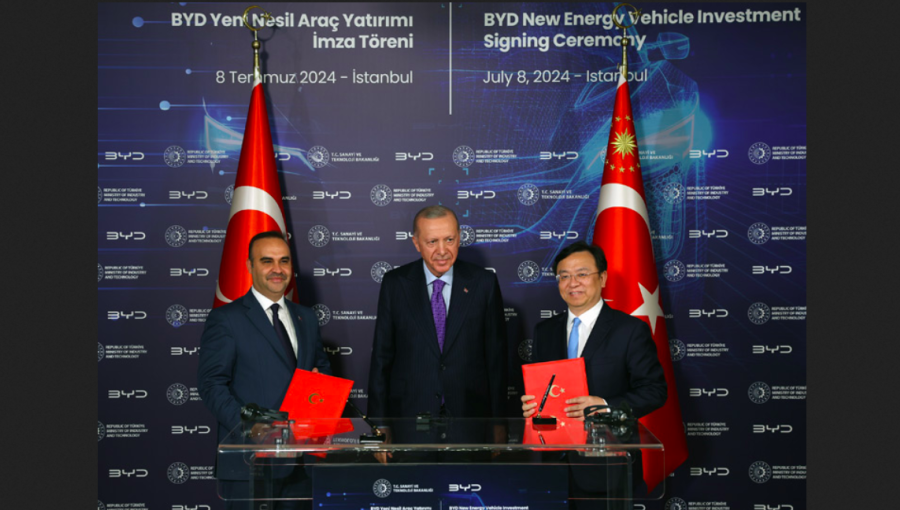
The sudden freeze put on the Turkish project comes less than two years after the hyping of it at a triumphant signing ceremony. In July 2024, Turkey’s president, Recep Tayyip Erdogan, and BYD CEO Wang Chuanfu inked a landmark agreement at Dolmabahce Palace in Istanbul.

Photo: Li (right) applauds during the signing ceremony.

The deal was announced as a commiment to invest a billion dollars in building an electric and plug-in hybrid vehicle facility in the western industrial city of Manisa, with an annual capacity of 150,000 units.

Erdogan reiterated several times over that BYD’s investment was a landmark deal.

Sweetening the deal

To secure the investment, Ankara offered immediate and intensive sweeteners. Chief among them was the immediate suspension of a newly introduced 40% import tariff applied to Chinese EVs for the Shenzhen-based electric vehicle maker, which overtook Tesla to become the number one in its field.

With the investment deal signed, BYD went on to import vehicles into Turkey using giant car-transporter ships.

In January this year, BYD was recorded as the market leader in EV sales in Turkey, selling 3,866 vehicles. It was followed  by fellow Chinese automaker Chery Automobile (Shenzen/9973) with 2,257 and Turkey’s "native and national" car project Togg with 2,029.

However, BYD’s sales sharply fell in the following months as the company encountered problems in getting its vehicles into Turkey. In January-May, it was still the second largest EV seller in the country, selling 6,690 vehicles (equivalent to a 10% share in overall EV sales of 65,805), while Togg took top spot, selling 16,745 units.

In 2025, Togg sold 39,020 units in Turkey, ahead of Tesla Inc (Nasdaq/TSLA) (sales of 31,509 units) and BYD (19,679). Overall, EV sales in Turkey totalled 189,868 units last year.

In 2024, BYD sold 8,331 vehicles in the country.

Not a single shovel

The regulatory exemption provided to BYD was designed to allow the carmaker to build up market share locally while its factory was under construction. Yet, main opposition Republic People’s Party (CHP) lawmaker Sevda Erdan Kilic revealed in February that not a single shovel had hit the ground in Manisa.

Li in her interview confirmed that BYD has not started building ​the plant, which has been placed on hold. She added that the company does not have a ​timeline for starting production in Turkey.

Looking for idled factories in Europe

Li also confirmed that the company currently has no definitive realisation schedule for the Turkish facility. Instead, it is prioritising its Hungarian assets while exploring the acquisition of existing and idled automotive factories elsewhere in Europe to absorb the impact of Brussels’ anti-subsidy tariffs.

Delays in Hungary too

The company is planning to invest around €4bn in the Szeged facility, supposed to have an annual production capacity of 0.3mn vehicles at its peak.

Last September, Li said that the Hungary plant would be launched by the end of 2025. On June 10, she said that the company was still installing equipment at the plant.

BYD and rival Chery have, meanwhile, been launching new plants in China. Chery has delayed its Barcelona investment, conducted by local unit Ebro, several times.

Illicit gold networks fuelling conflict, organised crime across Africa and global south, GI-TOC warns

Illicit gold networks fuelling conflict, organised crime across Africa and global south, GI-TOC warns
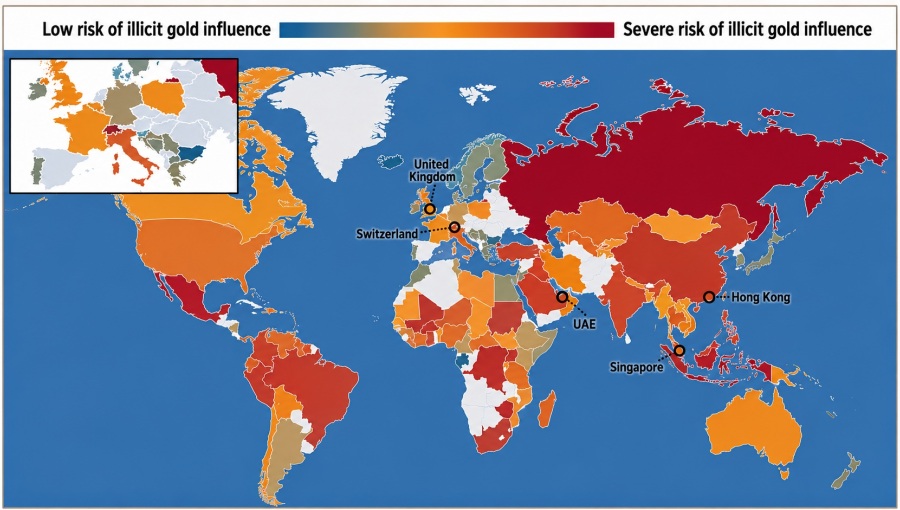
The GI-TOC’s global risk assessment of illicit gold influence / GI-TOCFacebook
By Brian Kenety June 11, 2026

Gold is increasingly being weaponised by states, criminal networks and sanctioned regimes as a strategic financial tool, while regulatory systems are failing to keep pace with rapidly evolving illicit supply chains, according to a new report from the Global Initiative Against Transnational Organized Crime (GI-TOC).

The report, Commodity, Currency, Crime: How Illicit Gold Markets are Outpacing Global Responses, argues that illicit gold has become one of the world's most consequential criminal markets, acting as a financial backbone for organised crime, sanctions evasion, conflict financing and corruption. The authors contend that criminal actors increasingly control entire gold supply chains, from extraction and processing to logistics and trade, making illicit flows harder to detect and disrupt.

Released in Geneva on June 9, the 72-page report comes amid record central bank gold purchases and a sharp rally in bullion prices. According to data cited by GI-TOC, gold prices have risen nearly 587% over the past two decades, reaching record highs as investors and governments seek protection from geopolitical uncertainty and currency volatility.

Africa accounts for a significant share of global gold production, with major producers including Ghana, South Africa, Mali, Sudan, Burkina Faso, Tanzania and the DRC. The report argues that the continent's combination of extensive mineral resources, weak governance in some jurisdictions and expanding informal mining sectors has made it particularly vulnerable to illicit gold flows.

The organisation warns that gold is increasingly being used as an instrument of "geocriminality" — the deployment of illicit financial networks by states to achieve geopolitical objectives. Russia, Iran, Venezuela and Sudan are identified as examples of countries that have used gold to circumvent sanctions, access hard currency and sustain governments that might otherwise face financial isolation.

“However, in practice, it can be difficult to differentiate between policy, selective enforcement of regulations and laws, and geocriminality. For example, although Chinese private sector entities have been implicated in the expansion of illicit gold mining in Ghana, Beijing has repeatedly denied involvement or support for illicit operations. In June 2025, the Chinese ambassador to Ghana asserted that it was a ‘significant injustice’ to blame Beijing for the spread of illegal gold mining,” the report says.

Ghana, Africa's leading gold producer in recent years, has struggled with illegal small-scale mining, known locally as galamsey. The issue has become a major political and environmental concern because of its impact on rivers, forests and agricultural land, while authorities have repeatedly linked parts of the sector to foreign-backed illicit mining operations.

GI-TOC said Russia has systematically expanded its use of gold following its invasion of Ukraine, including through military-linked networks operating across Africa. The report notes that Russian-linked entities, including Wagner Group and Russian military-linked structures including Africa Corps, have secured access to gold resources in countries such as Sudan, Mali and the Central African Republic.

Criminal networks industrialise illicit mining

The study argues that conventional approaches to tackling illicit gold remain too narrowly focused on artisanal and small-scale mining. Instead, the report identifies systemic vulnerabilities throughout the entire gold ecosystem, including industrial-scale illegal mining operations, opaque refining networks, under-regulated commodity markets, recycled gold channels and emerging cryptocurrency-linked gold transactions.

“Illicit gold operations also drive demand for other illicit markets. In South Africa, for example, the same syndicates that control illegal mining operations are linked to human trafficking, with miners recruited under false pretences or coerced into working in lethal conditions, as the 2024 Stilfontein mine standoff revealed,” the report states.

“The syndicates are also connected to arms trafficking and Lesotho organized crime groups with political links. A secondary informal economy has emerged around the mines, with syndicates supplying food, liquor, drugs and sex workers to underground operations, compounding the human exploitation. Consequently, illegal gold mining in South Africa anchors an entire criminal ecosystem.”

The organisation also highlighted the growing industrialisation of illegal mining operations across Africa, Latin America and Asia. Foreign financing, weak governance and regulatory capture have transformed many illicit mining activities into large-scale enterprises that bear little resemblance to traditional artisanal mining. Criminal groups are increasingly controlling processing facilities, logistics networks and other strategic bottlenecks across supply chains.

A major concern identified by the report is the lack of transparency across global bullion markets. GI-TOC described international bullion centres such as the United Kingdom, Switzerland, the United Arab Emirates (UAE), China and the United States as significant blind spots because they handle large volumes of global gold trade while maintaining limited transparency over bullion activities and gold provenance.

The report further argues that central banks are among the least scrutinised participants in the gold market despite record levels of purchasing. Domestic buying programmes in some producing countries risk absorbing illegally mined gold, while gold swaps and reserve accumulation programmes can introduce additional provenance concerns.

GI-TOC warned that illicit gold should not be viewed as a niche commodity crime but rather as an accelerant economy that amplifies broader criminal activity. The proceeds from illicit gold mining and trading are linked to environmental destruction, deforestation, mercury pollution, wildlife trafficking, illicit cattle ranching, arms purchases, conflict financing and human rights abuses.

“Links between gold and conflict have been well documented and are the focus of a multitude of regulatory instruments. While gold can be an important source of revenue for armed groups, a focus on conflict financing and restrictive application of terms such as ‘conflict mineral’ often produces a narrow view centred on non-state armed group revenues,” the report says.

“This obscures understanding of the broader political economy of gold and the state and other actors embedded within it, while overlooking the root causes of conflict and the more nuanced roles gold plays in conflict. For example, efforts to cut off conflict financing can have the effect of building the legitimacy of non-state armed groups among local populations. Securing livelihoods and other forms of service delivery has long been a tactic of organized crime groups to undermine state legitimacy while building their own.

“Such is the case in West Africa, where ASGM is a major economic driver and a critical source of livelihoods. Jama’at Nasr al-Islam wal Muslimin (JNIM), the most powerful violent extremist organization in the Sahel, primarily profits from gold through taxation of mining sites and transport routes, and has engaged in gold-for-weapons barter exchanges. By defending miners’ access to sites against state crackdowns, JNIM also builds legitimacy with local populations. Heavy-handed state security responses, including the targeting of mine sites, have compounded the security challenge.”

GI-TOC is calling for a fundamental overhaul of the international response, including mandatory supply-chain due diligence, stronger anti-money laundering oversight, enhanced scrutiny of international bullion centres, improved customs and trade data collection, and legally binding global standards governing gold supply chains. Existing voluntary frameworks, it argued, have proven insufficient to address increasingly sophisticated criminal activity.

"The gold market can become more resilient to crime, but only if the actors with the greatest systemic influence accept that their economic interests are better served by a more transparent, rules-based market than by the opacity that currently prevails," GI-TOC senior expert Sophia Pickles said.

Africa emerges as a frontline of illicit gold flows

Zimbabwe is emerging as an increasingly important node in Africa’s illicit gold economy, where organised crime, arms trafficking, insurgent financing and cross-border smuggling are becoming deeply interconnected, according to GI-TOC.

The report argues that illicit gold has evolved into a strategic source of financing for organised crime, armed groups and corrupt political networks. It warns that gold is no longer merely a commodity but increasingly functions as "a weapon of war and geopolitics", financing conflict, sanctions evasion and transnational criminal activity across multiple continents.

The study places several other African countries among the world's highest-risk jurisdictions for illicit gold influence, including Sudan, Mali, Burkina Faso, Ghana, South Africa and the DRC. According to GI-TOC's new risk framework, these countries combine substantial gold production with elevated levels of organised criminal activity linked to natural resources.

The report finds that criminal convergence around gold is accelerating across Africa. Gold trafficking increasingly intersects with arms smuggling, human trafficking, drug trafficking, financial crime and corruption, involving not only criminal syndicates but also politically connected actors and private-sector facilitators.

"Criminal convergence is increasingly a central feature of organized crime operations in gold-rich regions," the report states.

For southern Africa, the findings are particularly relevant to Zimbabwe. The report identifies the country as part of a regional network of illicit gold flows that stretches from South Africa through Zimbabwe and onward to international trading hubs. Zimbabwe is identified by the report's risk-assessment framework as a jurisdiction facing elevated exposure to illicit gold-market influence despite comparatively modest officially recorded gold trade volumes, reflecting concerns that significant illicit flows may be escaping official statistics.

The report argues that African conflicts are increasingly shaped by competition over gold resources. In the Sahel, militant organisations such as Jama’at Nasr al-Islam wal Muslimin (JNIM) and Islamic State Sahel Province have expanded their influence over mining regions, taxing production, controlling transport corridors and using gold revenues to finance military operations.

"Gold plays a critical role in armed groups' efforts to build legitimacy, exemplified in West Africa," the report notes, adding that foreign actors are increasingly influencing African conflicts through financing arrangements and gold sourcing networks.

The report also links African gold markets to broader geopolitical competition, arguing that states are increasingly using illicit commercial networks to pursue strategic objectives. Russia's activities in Sudan, Mali and the Central African Republic receive particular attention. The report notes that Russian-linked entities have secured privileged access to gold resources in exchange for security support and military assistance.

Sudan is cited as one of the clearest examples of gold's strategic role in modern conflicts. According to the report, both the Sudanese Armed Forces and the Rapid Support Forces have benefited from external backing linked to gold revenues, while international actors have sought access to Sudanese gold through refining, trading and investment arrangements.

Dubai and regional hubs under scrutiny

The study also identifies Rwanda, Uganda, Kenya, Cameroon and Egypt as important transit or laundering hubs where gold originating in conflict zones can enter formal international supply chains with limited scrutiny. Rwanda receives particular attention because official export volumes have significantly exceeded estimated domestic production in recent years, raising questions about the origin of some exports.

Dubai remains the dominant destination for much of Africa's artisanal and small-scale gold output. The report notes that the UAE continues to receive substantial volumes of African gold, including material linked to conflict zones and illicit supply chains. Despite regulatory reforms introduced in 2023, GI-TOC argues that implementation gaps remain significant.

Global oversight struggles to keep pace

One of the report's central conclusions is that current international responses remain inadequate because they focus too narrowly on artisanal mining and conflict minerals. Instead, the organisation argues that illicit gold now permeates the entire ecosystem, from extraction and processing to international bullion trading, financial markets and even central-bank purchasing programmes.

"The systemic vulnerabilities that enable its circulation span physical and financial supply chains," the authors write.

The report warns that foreign financing is driving the industrialisation of illicit mining operations across Africa, allowing criminal groups to control processing plants, logistics networks and export channels.

"Criminal mining operations are increasingly industrialized and growing in scale," GI-TOC states, adding that foreign investment is a key driver of this trend across Africa, Latin America and Asia.

The GI-TOC identifies four distinct clusters of risk:

High-production, high-criminality producer countries. Russia, China, Ghana, Indonesia, Peru, Mexico, Sudan, Mali, Burkina Faso, Colombia, Brazil, South Africa, Venezuela and the DRC produce substantial volumes of gold under conditions of significant criminal influence. Several other countries are closely clustered in this group, reflecting the visibility and reach of non-renewable criminal influence in gold-producing states.

High-import, high-criminality hubs. The UAE, Switzerland, China, Hong Kong SAR, Turkey and India sit at the top centre of the chart, where large refining and trading volumes meet high resource crime exposure.

High-impact destination markets with moderate criminal influence. The UK, the US and Singapore sit further to the right of the chart, lower on the criminal influence axis but with import volumes large enough that any illicit gold entering these markets has outsized downstream consequences. Countries on the fringe can also play a key role as transit or laundering hubs. For example, Armenia was reported to be key to Russian sanctions evasion, importing billions of dollars’ worth of Russian gold in 2023 and 2024.

High-criminality jurisdictions with low recorded flows. The scoring also accounts for countries where highly organised crime scores coincide with low recorded gold production and import volumes. The absence of recorded volumes is not evidence of low risk but its opposite: criminality is extensive enough for substantial illicit flows to escape official statistics; for example, known gold producers and transit hubs Myanmar, South Sudan, Rwanda, Chad and Cameroon.

GI-TOC concludes that Africa sits at the centre of a rapidly evolving global gold economy in which criminal organisations, insurgent groups, foreign governments and international traders increasingly intersect. Without stronger transparency requirements, more rigorous due diligence and tighter oversight of global bullion centres, the organisation warns that illicit gold markets will continue to outpace enforcement efforts and undermine efforts to improve transparency across global commodity supply chains.

EU warns Albania's accession process at risk over controversial Kushner-linked resort

EU warns Albania's accession process at risk over controversial Kushner-linked resort
European Commission spokesperson Guillaume Mercier says Brussels has raised concerns with Albania’s environment minister. / European UnionFacebook
By bne IntelliNews June 10, 2026

The European Commission is closely monitoring developments around a planned luxury tourism project at Albania’s Vjosa-Narta lagoon, warning that candidate countries must fully align with EU environmental law as part of their accession process.

There is growing political and public scrutiny of the proposed development, which has sparked protests in Albania and criticism from environmental organisations over its potential impact on one of the Mediterranean’s most important wetland ecosystems.

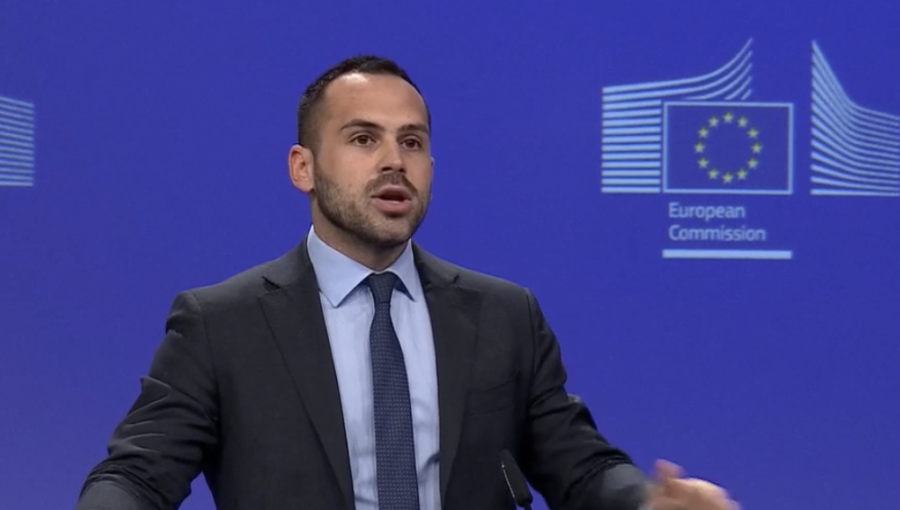
Speaking to reporters on June 9, Commission spokesperson Guillaume Mercier said Brussels had already raised concerns directly with Albania’s environment minister over potential legal and environmental shortcomings linked to the project.

“We have already expressed our concerns with the minister of the environment about the potential shortcomings of this project,” Mercier said.

Mercier said the Commission understood that Albanian authorities had taken initial steps in response.

“So the minister committed that the construction work have been suspended and that a comprehensive environmental impact assessment will be carried out for the project, in consultation with civil society,” he said.

The site, located near the Vjosa-Narta lagoon in southern Albania, is considered environmentally sensitive, with conservation groups warning it supports dozens of endangered species and hundreds of migratory bird populations.

The Commission said concerns over such developments were not new and had already been flagged in its enlargement reports, particularly in relation to Albania’s legislation on strategic investments and protected areas.

“We have already spoken to the minister,” Mercier said, adding that “the concerns are not new.”

Under EU accession rules, Albania must align with Chapter 27 of the acquis, covering environment and climate change, including the Birds and Habitats Directives and rules governing protected sites.

“As part of the closing benchmark for Chapter 27 on Environment and Climate Change, Albania is expected to align fully with EU legislation in this area, including the Birds and Habitats Directives, and also the 2015 legislation on strategic investment,” Mercier said.

He added that Albania must also demonstrate the ability to manage protected Natura 2000-style sites and ensure conservation measures are effectively enforced.

“Albania should refrain from actions that could undermine the fulfillment of the closing benchmark,” Mercier said. 

Pressed by reporters on whether the project could jeopardise Albania’s EU path, Mercier declined to speculate on a formal assessment of compliance, but reiterated the Commission’s position that environmental obligations are binding throughout the accession process.

“We expect the Albanian authorities to act without delay,” he said again when asked about political controversy surrounding the project.

Asked whether Brussels would escalate engagement to higher political levels, Mercier said discussions with Albanian counterparts were ongoing.

“We have been in touch, as I said already with our counterparts and we will continue to do so,” he said.

The controversy has also highlighted tensions between economic development ambitions and environmental safeguards in candidate countries. Albanian Prime Minister Edi Rama has previously defended the project, arguing it would transform the country into a leading tourism destination and deliver environmental improvements, while insisting no final construction approvals had yet been issued.

The Commission, however, reiterated that compliance with environmental law is a core requirement for EU membership and that reforms must be fully implemented before accession chapters can be closed.

UN Rights Chief Calls For ‘Massive Rethink’ Of US Immigration Policies Ahead Of 2026 World Cup

June 11, 2026
By UN News

The UN’s top human rights official has called for a ‘massive rethink’ of US immigration and security policies ahead of the World Cup, warning that racial profiling, surveillance and aggressive enforcement are already affecting teams, officials and supporters.

Volker Türk, the UN High Commissioner for Human Rights, told journalists on Wednesday that if such issues were not addressed, they risked casting a shadow over the tournament, which opens on Thursday across the United States, Canada and Mexico.

“Mega sporting events are me
ant to be events where the world comes together in unity and in peace,” he said.


Tournament must be ‘dignified and safe’

“The tradition [in ancient Greece] was that this should also lead to all kinds of truces. It’s clear that the World Cup needs to provide a dignified and safe environment for the teams that compete, but also for the supporters, for the whole society and frankly for the world.”

Among reported incidents related to US entry, Iran’s national team moved its training camp from Arizona to Mexico, with some Iranian officials denied visas.

A FIFA-accredited Somali referee was refused entry and turned back amid reported “vetting concerns”, and images have circulated showing a Senegalese player being frisked by security personnel on a US airport tarmac.

Fans have also been affected. Supporters from countries including Morocco and Scotland have reported having travel documents denied or revoked shortly before departure, despite making costly travel arrangements.

Wider concerns


Mr Türk warned that these examples highlight broader concerns about the application of immigration enforcement measures. He called for policies that respect human rights and dignity, particularly during a global event intended to bring people together.

The High Commissioner stressed that major sporting events should provide a safe and inclusive environment for players, fans and officials alike. He described the World Cup as an opportunity to promote unity, noting that the global nature of the competition places a responsibility on host countries to uphold international standards.
End the dehumanisation

The concerns come amid wider scrutiny of human rights issues linked to major sporting events and the responsibilities of host nations.

“I also hope that the dehumanisation of the other, the dehumanisation of migrants, the dehumanisation of refugees and asylum seekers is put to an end,” Mr. Türk continued.

“Nobody benefits from divisive and polarising narratives.”


About UN News
News provided by UN News Centre
View all posts by UN News →
SPACE/COSMOS

NASA head defends Artemis 3 crew of all men

AFP
June 10, 2026 

(L/R) NASA astronaut commander Randy Bresnik, ESA (European Space Agency) astronaut pilot Luca Parmitano, NASA astronaut mission specialist Frank Rubio, and NASA astronaut mission specialist Andre Douglas, the Artemis 3 crew – Copyright AFP SAUL LOEB

NASA’s administrator Jared Isaacman on Wednesday defended the makeup of the space agency’s latest Artemis crew, an all-male group.

The nominations have earned criticism that NASA may have acted in accordance with President Donald Trump’s direction to eliminate diversity and inclusion efforts.

Isaacman insisted in a lengthy social media post that the “crew selection does not involve any political appointees.”

“The Astronaut Office assigns the crew that gives the mission the best chance of meeting its objectives, taking into account many factors, including the background and expertise of the astronauts, such as test pilot experience, development work on specific programs, and availability.”

The third phase of Artemis will involve testing the Orion spacecraft and conducting rendezvous and docking tests with lunar landers. It will not include a Moon voyage.

NASA had previously committed to put both a woman and a person of color on the lunar surface.

Last year, however, NASA removed language regarding that commitment and diversity more broadly from some of its web pages, as Trump directed federal agencies to eliminate Diversity, Equity and Inclusion (DEI) programs and references.

That doesn’t necessarily mean NASA’s pledge has been scrapped, but it’s no longer explicit.

Isaacman said “those raising this concern may not be aware of the pipeline of crews,” including those “undergoing lunar-specific training that would be a better fit for a future surface mission.”

“We have an extraordinary astronaut corps, and every mission and every crew is part of a larger campaign to get America back to the Moon and to build the future we all dreamed about as children.”

The third Artemis crew includes NASA astronauts Randy Bresnik, who will serve as commander, and mission specialists Andre Douglas and Frank Rubio.

Italian astronaut Luca Parmitano will represent the European Space Agency as the voyage’s pilot, becoming the first European to join one of the program’s missions.

The crew of the Artemis 2 journey conducted this past spring was named prior to Trump’s return to the White House.

It included the first Black man, Victor Glover, and the first woman, Christina Koch, to fly around the Moon.

Jeremy Hansen became the first Canadian to carry out such a mission, while Reid Wiseman was the commander.

From Dusk Till Dawn


By

Astronomers have revealed distinct differences in atmospheric conditions between the morning and evening transition zones of the ultra-hot gas planet WASP-121 b, which separate day from night, commonly called terminators. This achievement was only possible due to the unmatched sensitivity of the James Webb Space Telescope (JWST). Led by Cyril Gapp, a PhD student at the Max Planck Institute for Astronomy (MPIA) in Heidelberg, Germany, a team of researchers detected this phenomenon, which had previously been predicted by theoretical computations.

Confirmation of variations between dusk and dawn

The discovery corresponds to an asymmetry in the absorption of infrared light received from the host star, which is partially filtered through the planet’s atmosphere during its transit. The researchers interpret this as the result of non-uniform temperatures and chemical compositions in the exoplanet’s atmosphere.

“With its unprecedented observational quality, JWST gives us the most detailed glimpses into distant planets to date: By measuring how star light absorption changes as WASP-121 b rotates, we probe its atmosphere longitude by longitude,” said Cyril Gapp, MPIA.

The data indicate that the evening terminator absorbs more light than the morning side, consistent with the commonly accepted picture of powerful winds that transport intense heat from the day to the night side. Hot winds follow the planet’s rotation eastward, which heats the evening zone. With rising temperatures, this region is bound to expand, increasing the planet’s cross-section and allowing it to absorb stellar radiation more efficiently.

Besides a general slight reduction in brightness towards the end of the transit, the data obtained by JWST’s NIRSpec (Near-infrared spectrograph) instrument also reveal an increase in the carbon monoxide (CO) signal. However, this appears to be a temperature effect, not related to an increase in carbon monoxide molecules.

In contrast, the amount of water (H2O) in the atmosphere appears to drop, which the astronomers interpret as a real decrease in water molecules. The temperatures in the upper atmosphere are high enough to break water molecules into their constituents. This result again corroborates the existence of hot winds heating the evening terminator region.

Two extreme sides of an ultra-hot planet

To detect these minute variations, the astronomers exploited a peculiar behaviour of hot gas planets. The proximity to their host stars slowly synchronizes their spin and orbital motion via tidal forces, such that eventually one rotation takes as long as one revolution. Finally, these planets exhibit two distinct hemispheres: a hot side constantly facing the star and an opposite, darker and cooler side.

“WASP-121b is particularly extreme, with average temperatures on the dayside hemisphere being around 2770 Kelvin, while those on the nightside are closer to about 1000 Kelvin,” co-author Tom Evans-Soma from the University of Newcastle, Australia, explains. He previously determined the planet’s temperature range and is also affiliated with MPIA. These values translate to almost 2500 degrees Celsius, or about 4525 degrees Fahrenheit, on the dayside, and approximately 725 degrees Celsius, or 1340 degrees Fahrenheit, at night.

When astronomers observe such a planet transiting in front of a star, the planet rotates slightly between the points of ingress and egress, revealing different fractions of its atmosphere. While the planet mostly presents its night side, our point of view permits glimpses beyond the dusk and dawn towards the bright dayside, depending on the transit’s progress. The zone leading the planet’s orbit corresponds to the morning side, and the one trailing is the evening side.

Apart from recording the measured brightness variation over time, spectrographs break light into smaller components, which physicists call a spectrum, much as a prism produces a rainbow-like distribution of colours. Since atmospheric gases absorb light at distinct colours or wavelengths, a detailed analysis reveals their chemical composition.

Elapsed time converts to longitude

Hence, the variation along the direction of rotation translates into a time-dependent change of the filtered signal. In the case of WASP-121 b, the rotation angle during a full transit amounts to about 30 degrees, which is sufficient to probe the morning (dawn) and evening (dusk) terminators with high precision in longitude.

Astronomers usually average the measurements over the entire transit to achieve a clearer signal. However, to determine how the signal changes during the planet’s trajectory across the star, Gapp and his colleagues allowed for a temporal variation while the planet rotates. By applying statistical methods, they found that their procedure provides a significantly better fit to the data, indicating that they indeed detected a significant variation.

Notable gaps in atmospheric models

To verify the measured temperatures that would cause local expansion, the astronomers ran models simulating heat distribution in the upper layers of a gas planet, depending on the planet’s properties and the constellation of the planet and its host star. While these atmospheric models confirmed the asymmetric effect caused by spatial temperature variations, the data revealed a larger signal amplitude than the models predicted.

The astronomers suspected that cooling mechanisms at the morning terminator might be at work that the models didn’t account for. Previous studies have indicated that clouds may be present, albeit composed not of water droplets but of minerals such as silicates. Clouds can efficiently shield infrared light emitted from hot gaseous layers below, mimicking lower temperatures. Infamously, simulating the physics of clouds, condensation, and evaporation in a dynamic environment is hard. Therefore, physical models commonly applied to exoplanet atmospheres, such as the one used in this study, do not account for clouds, which can yield unrealistic results.

After tweaking the simulation to approximate the effect clouds have on infrared radiation from deeper layers, the results were more consistent with observations. However, only more sophisticated models will be able to confidently confirm the presence of clouds.

A blueprint for future studies

Model updates will also improve future investigations using this method. The astronomers have already identified additional suitable targets within the required temperature range and rotation speed to successfully probe the terminator regions. This will help them establish a sample of ultrahot gas planets, revealing their longitudinal structure, and potentially discover similarities and differences among these extreme worlds.