Thursday, June 11, 2026

MONOPOLY CAPITALI$M

Storied UK Shipbuilder Cammell Laird Sold in Consolidation of Sector
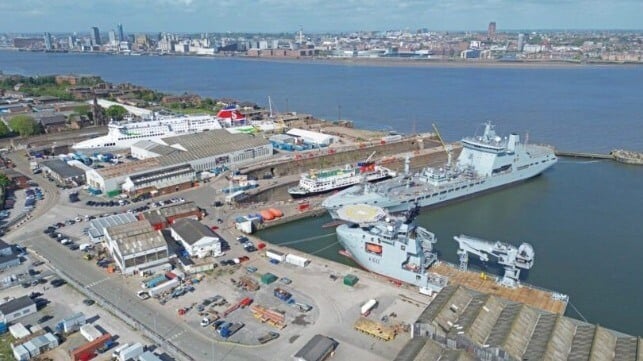
UK shipbuilder Cammell Laird
Storied Cammell Laird shipbuilder is part of the consolidation under the Balaena identity (Cammell Laird)

Published Jun 10, 2026 7:26 PM by The Maritime Executive


The famed UK shipbuilder Cammell Laird has been sold as part of an ongoing consolidation of the sector as firms posture for the anticipated increase in UK defense shipbuilding. The yard, which dates back to 1828, was sold as part of the APCL Group to a relative newcomer to the sector, Balaena.

A maritime engineering and shipbuilding group based in Cornwall, Balaena was launched in 2019 and made its first major acquisition, a shipyard in Gibraltar, in 2022. The Financial Times reports it is paying approximately £150 million (US$200 million) for the group, which consists of Cammell Laird located in Birkenhead as well as A&P Type in Tyneside and the two yards in Falmouth, A&P Falmouth and Falmouth Docks and Engineering Company. The four yards had previously been consolidated into the APCL Group in 2023, which is a subsidiary of the Peel Group.

Balaena highlights that the consolidated company will own 12 dry docks and have more than 2,000 employees with a reach across the UK and to the Mediterranean. It said in announcing the acquisition that the new enterprise “provides the basis for increased support to UK defense interests,” as well as forming the UK’s most comprehensive commercial ship repair and refit networks. It said that, in addition to the Royal Navy and Royal Fleet Auxiliary, it will be serving the offshore energy, cargo, cruise, and ferry sectors.

Balaena has already built a strong business with the Royal Navy, with reports that nearly a quarter of the capacity at the yard in Gibraltar is committed to the UK’s Ministry of Defence. The group also owns a smaller shipyard in Cornwall.

The company highlights that it plans to invest in modernizing APCL’s facilities, expanding capacity for ship repair, offshore fabrication, and low-emission propulsion systems. A new national skills and apprenticeship program will also be launched in partnership with local colleges and maritime training bodies to develop Britain’s next generation of maritime professionals.

Cammell Laird is one of the most historic names in UK shipbuilding, having built passenger liners, the famed aircraft carrier Ark Royal commissioned in 1955, and recently the RRS Sir David Attenborough research vessel. It has also recently built blocks for programs, including the Royal Navy’s aircraft carriers, submarines, and is involved with the Type 26 frigates. A&P Tyne has also been building for the Type 26 program. Both yards have also provided repair services to the Ministry of Defence.

The company is seen as positioning itself ahead of the government’s announcements for its future fleet as part of the long-delayed Defence Investment Plan. Competition is expected among the remaining established yards as well as the new entrants, including Balaena and Navantia.

Balaena follows others that have also moved to consolidate and reposition ahead of the UK’s anticipated investment in shipbuilding. Spain’s Navantia Group had partnered with the famed Harland & Wolff Shipyard and won the contract for the UK’s Fleet Solid Support (FSS) shipbuilding program. When Harland & Wolff collapsed, Navantia stepped in to acquire the group at the start of 2025 and established a UK shipbuilder with the four yards of H&W. It is moving forward with the FSS program while also being positioned to benefit from the anticipated future contracts.


Ahead of Ban, EU is Importing More Russian LNG Than Last Year

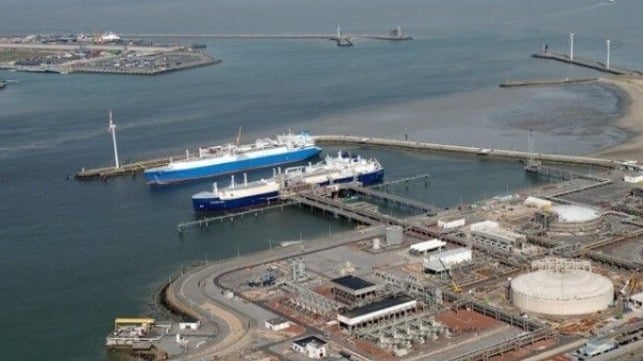
A Yamal LNG-linked Arc7 icebreaking LNG carrier alongside at the Zeebrugge receiving terminal in Belgium (file image)
A Yamal LNG-linked Arc7 icebreaking LNG carrier alongside at the Zeebrugge receiving terminal in Belgium (press handout / file image courtesy Fluxys)

Published Jun 10, 2026 8:54 PM by The Maritime Executive

Officially, Europe may be working to eliminate imports of Russian liquefied natural gas, but that is not the short-term trend direction. With Qatari volumes shut off by the Strait of Hormuz blockade, EU utilities are buying even more LNG from their Russian supplier, Novatek, according to a new analysis by the NGO Urgewald. 

European ports brought in about 18 percent more gas from Novatek's Yamal LNG plant in the first five months of the year than they did in the same period in 2025. Yamal LNG, located on the Gulf of Ob, is heavily dependent on the EU as a customer for much of the year. It has eastbound marketing options when the Northern Sea Route's ice is thin, but it must ship cargoes west in the coldest months. Europe is the easiest and most natural buyer (geographically) for these shipments, and until 2027, its utilities can still lawfully import Russian LNG. 

That dependence was evident in May, when 23 out of 25 shipped LNG cargoes from Yamal went to EU seaports - about 92 percent of the facility's monthly shipments. New contracts can no longer be signed, but long-term contracts signed before March 18 remain valid until January 2027, and are being used in bulk. "The short-term contract ban has had no visible effect so far, because a timing gap in the rules weakens its impact," Urgewald's Sebastian Rotters said. 

Cargoes from Arctic LNG 2, the neighboring project next to Yamal LNG, have generally gone to China because of sanctions on the plant itself. Arctic LNG 2 is blacklisted by the U.S., and Russia has assembled a small shadow fleet of under-regulated LNG carriers to move its liquefied gas to market in East Asia. Novatek, the developer of both liquefaction plants, is said to be in talks to buy six special-purpose icebreaking LNG carriers and four ice-class LNG carriers from Mitsui OSK and Hanwha Ocean, which would give it more options for sending gas on eastbound routes. 


Atlantic Crossing Attempt in Four-Foot Boat Ends in Rescue off Newfoundland

The Big C team prepares to deploy the boat for the crossing, June 4 (Andrew Bedwell / Facebook)

Published Jun 10, 2026 11:09 PM by The Maritime Executive

The prospect of chasing a world record holds a certain fascination for adventurers, and often leads them in unusual directions. The record for a shortest-boat ocean crossing is one case, as it has a striking effect on the design of the craft. The pursuit of an ever-shorter hull forces difficult naval architecture choices as it reaches its logical limit - the dimensions of the human occupant - and there are obvious implications for safety. The last two serious attempts at a shortest-vessel Atlantic crossing both ended early, both under the same skipper; the latest happened just last week and appears to be the last, for now. 

Longtime sailor Andrew Bedwell, 52, has been working to break the record for shortest boat to cross the Atlantic since 2022. His first attempt in the homemade fiberglass vessel Big C ended near the pier because the boat was dropped during deployment, causing significant damage.

The revised Big C V2 in testing (Andrew Bedwell / Big C Atlantic Challenge)

His latest attempt began on June 4, when he set out from Newfoundland aboard the Big C V2, a much-revised aluminum sailing vessel measuring 3.9 feet from bow to stern (smaller than a dining room table). For reasons of a "fluke accident" that could have endangered his life, Bedwell called for Canadian Coast Guard assistance on June 6, just three days after he started out. The cutter CCGS Sacred Bay diverted to the scene and rescued him at about 1415 hours, returning him safely to shore. The boat could not be recovered in the rescue, and was abandoned adrift at sea. Bedwell told the Lancashire Post that he would not be attempting the crossing again, and would "move on."

"I have spent the last four years of my life working towards this challenge. I'm conscious of how much time I have given to it, how much money my family has invested in it, how much time and money my sponsors have invested in it," he wrote in a social media post. "I would truly love to break this record, but there comes a time when you have to ask yourself at what cost. Not just to myself but to everybody else who's involved."

The logic of the length competition means that steadily-shrinking design requirements have pushed contenders out of conventional small craft (like the 1965 record-holder Tinkerbelle, a modified but commercially-built 13.5-foot dinghy) and into custom, purpose-built pods. At this level of extremity, the minimum-length criterion imposes challenges on the rest of the vessel. To maintain enough internal volume for the occupant and their supplies, there is little room for a taper to the bow or stern, leaving a rectilinear tub with a maximum speed in the low single digits. Aboard Big C V2, the 3.9-foot LOA provided too little room to carry a life raft; the vessel was itself the escape pod. 

The current minimum-length record was set in 1993 by Hugo Vihlen's Fathers Day, a homemade plywood-and-fiberglass box measuring 5 feet 4 inches from bow to stern - too short for Vihlen to straighten his legs while sleeping. The record has stood for more than 30 years, and appears likely to hold until a new contender appears. 

Shareholder challenge to Thomson Reuters over ICE contracts wins only slim support


Published:

A shareholder resolution calling on content and technology company Thomson Reuters to review the human rights implications of its work with U.S. immigration authorities won only about three per cent support at the firm’s annual meeting on Wednesday.

The vote on the resolution, proposed by a British Columbia government workers union, centered on products and services sold to law enforcement by the Toronto-based company that some investors and employees say may help power the Trump administration’s crackdown on undocumented immigrants.

Thomson Reuters had opposed the proposal, and at the meeting its chairman, David Thomson, said “over 95 per cent” had voted against the shareholder measure, while “over three per cent” supported it.

“We welcome the outcome of today’s vote, which reflects shareholders’ confidence in the board’s recommendation to vote against the proposal,” a Thomson Reuters spokesperson said.

An example of government work cited by supporters of the failed resolution was a US$22.8 million contract set to have ended in May with the Department of Homeland Security that in part provided the Immigration and Customs Enforcement (ICE) agency with license plate reader data.


According to federal spending records, that and other contracts were awarded to Thomson Reuters Special Services (TRSS), a unit of Thomson Reuters based in McLean, Virginia. The unit says its products help prevent financial crimes, identify foreign influence and help law enforcement and national security officials analyze data.

The company’s Reuters news organization is independent, operating separately from the other parts of Thomson Reuters’ business.

One corporate governance expert said the vote showed that Thomson Reuters’ biggest investors either felt the measure was unnecessary, or had no appetite for confrontation with the Trump administration over its immigration policies.

“With this vote you have investors not interested in signaling anything” about the company’s work with immigration authorities, said Douglas Chia, president of independent corporate governance firm Soundboard Governance.

One major investor, Norway’s sovereign wealth fund, said it voted against the measure because it could not support a proposal “where the company does not appear to have significant gaps in their management or reporting of the relevant sustainability risk.”

---

Reporting by Ross Kerber; Editing by Daniel Wallis


Trump has a new, surprising take on the higher cost of living: 'I love the inflation'


Published:

U.S. President Donald Trump says he ‘loves’ current inflation numbers because after the war with Iran ends, the country will see it ‘come down like a rock.’

WASHINGTON — U.S. President Donald Trump on Wednesday showed how he had learned to stop worrying about inflation and simply, in his own words, “love” it.

Asked about the new report that the consumer price index in May had jumped 4.2 per cent over the last year, the president took a surprisingly optimistic tack with the challenging news. Trump didn’t dismiss the affordability issue as a “hoax” that was started by Democrats, as he has done previously. Nor did he claim that he was bringing down the cost of living.

Instead, after the government said that inflation spiked to the highest level since April 2023, Trump praised the numbers.

“You know what I really love?” Trump said. ”I love the inflation.”

It was an unexpected take given that voters ahead of the November midterm elections have ranked the economy as a top concern — and have given Trump low marks on that issue. Within minutes of his on-camera comment, Democrats quickly rushed to promote it on social media.

Trump had pledged in his 2024 campaign to quickly vanquish inflation, but his argument now is that higher prices are solely a function of rising energy costs because of the Iran war. On Wednesday, he claimed that relief is already on its way because of a secret military operation to ferry what he said was 100 million barrels of oil through the Strait of Hormuz, the primary shipping channel for 20 per cent of the world’s global oil supply that has been effectively closed by the war since late February.

“Trump really said, ‘I love the inflation.’ On camera. For all of America to hear,” Senate Democratic Leader Chuck Schumer quickly posted on X. “His contempt for you knows no bounds.”

House Democratic Leader Hakeem Jeffries said on X that with Trump’s stated love of inflation, “We finally found something that Donald Trump loves as much as he loves himself.”

Rep. Emilia Sykes, D-Ohio, quickly pressed Energy Secretary Chris Wright at a hearing about whether he, too, loved inflation.

“Do you love inflation?” Sykes asked.

“I love ending Iran’s ability to have a nuclear weapon,” Wright answered. He only conceded after being pressed: “No, I would prefer lower inflation.”

When asked about Trump’s specific comments, Wright said, “He’s an entertaining, hyperbolic guy who’s done tremendous leadership.”

Trump claimed the secretive shipments were why oil prices had fallen below US$90 a barrel, after surpassing US$110 at the start of April.

“I’m just announcing today for the first time, but we’ve been taking out millions of barrels of oil, millions of barrels every night,” Trump said.

On social media, the president said the mission began last month and had “resulted in more than 100 MILLION Barrels of Oil making its way through the Strait, and into the Open Market. More than 200 Commercial Ships have safely traveled through the Strait.” There was no immediate data available to back up that total, and it was not immediately clear what role the U.S. military had played.

To put that figure into context, a daily average of 20 million barrels of oil had gone through the strait before the war, which would mean that Trump’s mission had resulted in the equivalent of five days’ worth of normal oil shipments.

Responding to the new inflation report, the White House pointed out that some expenses had dropped in May relative to the previous month: the price of new vehicles, prescription drugs and auto insurance, for example. But when the overall inflation number is paired with the change in hourly wages, there is a bleak sign that people’s spending power relative to their earnings has declined.

“President Trump has consistently maintained that oil and gas prices — and thus overall inflation — will plummet once the Iran situation is resolved, and the administration will continue pushing our affordability agenda to enable Americans to keep more of their hard-earned money,” White House spokesman Kush Desai said in an email.

But the financial markets were cautious about Trump’s claims that he was lowering prices by getting oil tankers through the strait — claims that came as the United States also launched airstrikes against Iran, and as Tehran fired back at countries in the region.

U.S. crude oil futures climbed more than 2.8 per cent in Wednesday afternoon trading to just above US$90 a barrel.

---

Josh Boak, The Associated Press


Heiltsuk First Nation Settles Suit Over ATB Spill, Pursues Further Reforms

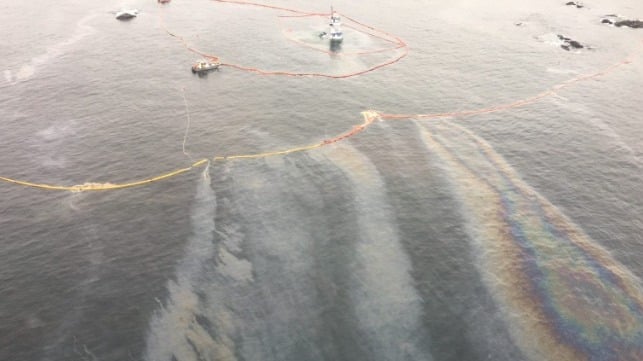
Slicks on the water at the casualty site, 2016 (Heiltsuk First Nation / CCG)

Published Jun 10, 2026 6:04 PM by The Maritime Executive

10 years after an ATB went aground and spilled diesel fuel into the waters of the Inside Passage, British Columbia's Heiltsuk First Nation has reached a settlement agreement with Kirby Corporation to bring the matter to a partial close. The tribe continues its advocacy efforts at the national level and at the IMO. 

In the early hours of October 13, 2016, the ATB tug Nathan E. Stewart / tank barge DBL 55 were under way southbound in the Inside Passage, near B.C.'s Athlone Island. The second mate fell asleep on watch and missed his turn, and the ATB went aground on Edge Reef, just offshore. The crew initially declined an offer of a tow to refloat the vessel and get on their way; the hull was subsequently breached and the tug partially sank, leaving it hanging from the ATB pins. About 26,000 gallons of diesel fuel and lube oil were released into the marine environment, polluting waters and shorelines that the local Heiltsuk First Nation uses for subsistence living. The wreck was refloated and removed 33 days later, but local residents say that the effects of the spill were long-lasting. 

In 2018, the Heiltsuk filed a lawsuit against operator Kirby Corporation, the Canadian government and the B.C. provincial government in the B.C. Supreme Court. The suit accused Kirby of recklessness for having a single crewmember on watch during a night transit, and claimed damages for pollution of the first nation's clam beds.

Kirby agreed to settle the matter for $12 million, the Heiltsuk First Nation's council announced last week. The payment will be released after a court order is completed later this year. In addition, Kirby will send senior executives to attend a healing ceremony in Bella Bella, B.C., and will agree not to transit through the Heiltsuk's waters without seeking consent first. 

The first nation's suit against the Canadian federal government remains active, and the Heiltsuk have called for settlement talks to close that case. It is also pursuing a separate claim through the Ship-source Oil Pollution Fund, Canada's compensation fund for spills. 

The first nation has been active in pursuing policy goals that align with its interest in preserving food-producing ecosystems around Bella Bella, and beyond. In April, Heiltsuk leaders flew to London to meet with IMO Secretary General Arsenio Dominguez and advocate for stricter antipollution rules. Their hope: to ensure that cultural losses are incorporated into all ship spill liability regimes globally, establishing compensation standards for indigenous groups in the event of spill damage to their way of life. 

Canada risks losing critical minerals infrastructure race, PwC warns


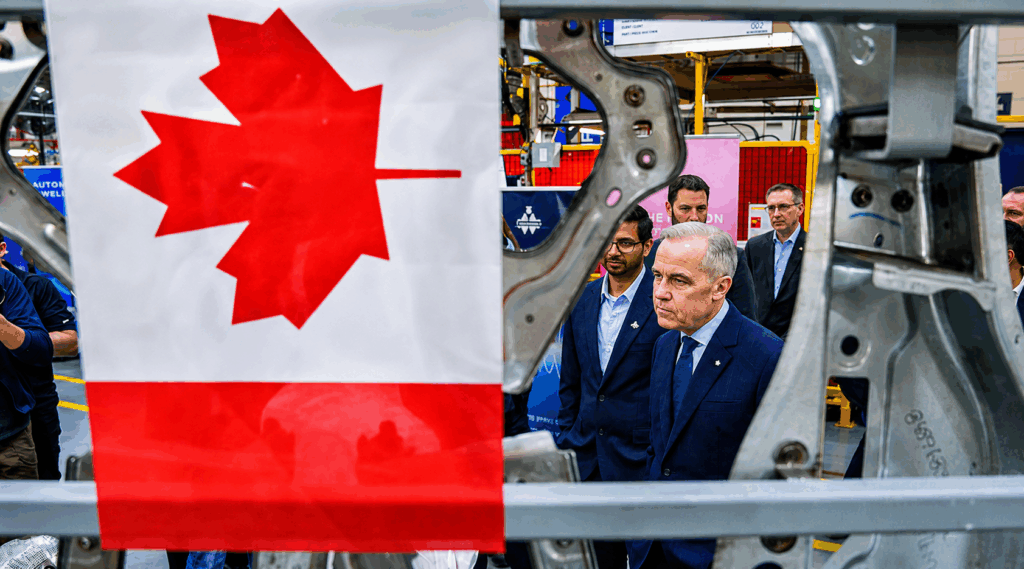
(Image: Prime Minister Mark Carney at auto parts manufacturing facility. Prime Minister Office | Lars Hagberg.)

Canada risks losing its competitive edge in critical minerals, energy and other strategic sectors unless it accelerates infrastructure investment and project approvals, according to a new PwC Canada report.

Canada is projected to invest $4.7 trillion in infrastructure by 2050, but the country is spending a smaller share of its economy on infrastructure than many high-performing peers and risks falling behind in sectors poised for rapid global growth. Canada currently invests 6.6% of GDP in infrastructure versus 7.4% among leading countries, a gap PwC estimates would require an additional $34 billion annually by 2050 to close.


“Canada can exceed this forecast. It can also fall short of it,” PwC said in the report. “The difference comes down to the moves we make next.”

The report identifies resources as Canada’s largest infrastructure opportunity, with cumulative spending projected to reach $1.6 trillion by 2050. Annual investment in resource infrastructure is forecast to rise to $63 billion from $53 billion today as demand for critical minerals and energy grows and countries seek reliable alternatives to concentrated global suppliers.

PwC said the biggest opportunities increasingly depend on integrated infrastructure rather than standalone projects. Ontario’s Ring of Fire, one of Canada’s largest undeveloped mineral districts, will require roads, power transmission, digital connectivity and community infrastructure to be developed together before large-scale mining can proceed.

Approval process is main barrier

The report argues that Canada’s lengthy regulatory approval processes remain one of the largest barriers to capturing this growth. Projects often face years of reviews and overlapping regulatory requirements, increasing costs and uncertainty compared with competing jurisdictions.

While resources will dominate spending, the report warns Canada is underinvesting in several sectors compared with global peers. Nuclear power investment is projected to grow just 11% in Canada through 2050, compared with 45% globally. The United States is also expected to outpace Canada in areas including airports, data centres and other strategic infrastructure categories.

PwC echoes what the industry has been saying for years: faster approvals, stronger partnerships with First Nations, greater private-sector participation and new financing models will be needed if Canada hopes to capitalize on shifting global supply chains and growing demand for critical minerals. The firm argues that infrastructure projects serving multiple purposes and users, such as transportation, energy and communications networks, will play a central role in unlocking future economic growth.

The findings come as governments and businesses race to secure supplies of critical minerals needed for electrification, defence and advanced manufacturing while strengthening domestic supply chains amid rising geopolitical competition.