Saturday, June 13, 2026

NATO Can No Longer Treat The Arctic As A Peripheral Concern – Analysis

June 13, 2026 
Arab News
By Luke Coffey

The next NATO Summit is now only weeks away. With no end in sight to Russia’s war with Ukraine and instability continuing in the Middle East between the US and Iran, the leaders of the alliance have a full in-tray. Even so, NATO recently turned its attention to another region, one that it often overlooks: the Arctic.

NATO last week activated its Forward Land Forces battlegroup in the Arctic nation of Finland. The Forward Land Forces are battlegroups of a few thousand soldiers that were created to bolster the alliance’s military presence along its eastern flank after Russia’s annexation of Crimea. Originally, NATO’s forward presence was centered on Estonia, Latvia, Lithuania and Poland. Since Russia’s full-scale invasion of Ukraine in 2022, the concept has expanded along the entirety of the alliance’s eastern flank.

After Finland joined NATO in 2023, there was discussion about Helsinki hosting such a battlegroup of its own. This came to fruition only this year. Neighboring Sweden, also a new NATO member and fellow Arctic country, will command the unit. The battlegroup will focus predominantly on warfare in Arctic conditions. Including Finland in the concept marks a major change in NATO’s force posture, not only in the Baltic region but in the Arctic as well.


On the same day that the battlegroup in Finland was activated, NATO announced that an Italian scientific research ship would be sent to the Arctic as part of Task Force X-Arctic. This new task force will operate for 18 months above the Arctic Circle to improve NATO’s situational awareness while testing new technologies. A particular focus will be unmanned systems and how they operate in the Arctic’s harsh environmental conditions.

The fact that the Italian navy will lead this mission is notable. In recent years, there has been an informal divide inside the alliance over where the main threats are coming from. Southern European member states tend to look toward North Africa and the Mediterranean as their primary sources of security concern. Eastern and Northern European members tend to look toward Russia and, increasingly, the Arctic. Having Italy lead this task force shows that a broader consensus is emerging inside NATO about the importance of the High North.

Finally, the US announced the creation of Nordic Bridge, a US-led initiative designed to improve coordination among its combat commands, including US Northern Command, which is primarily responsible for the defense of North America, and US European Command, which oversees US military operations across Europe. The goal is to improve American coordination and response in the Arctic.

For years, the administrative division of the Arctic between NORTHCOM and EUCOM has made it harder for Washington to develop a common and coherent approach to the region. With Nordic Bridge, this should no longer be the case.

The Arctic, rich in energy and critical mineral resources, is growing in strategic importance. NATO’s recent focus on the region reflects a new trend for the alliance. Until recently, it did not formally focus on the Arctic because of internal divisions among member states. Some allies wanted NATO to be more involved there. Others believed the Arctic was primarily a matter of national concern for the countries in the region, not an issue for an intergovernmental security alliance.

These views are changing for three reasons.

First, there is growing concern over Russia’s actions in the Arctic. In recent years, Moscow has reopened, refurbished or built new military bases across the region. A large share of Russia’s naval nuclear strike capability is assigned to the Northern Fleet, headquartered in the Arctic. Russia has also invested heavily in military units specially trained and equipped to fight in Arctic conditions.

Of course, Russia is the world’s largest Arctic country, so it is natural that it would be active there. But when NATO considers Russia’s behavior elsewhere, especially in Ukraine, it has every reason to be concerned about Moscow’s intentions in the Arctic.

Second, Finland and Sweden’s entry into the alliance all but forces NATO to focus more seriously on the Arctic. For decades after NATO’s founding in 1949, both countries remained militarily nonaligned. Russia’s full-scale invasion of Ukraine in 2022 changed attitudes in Helsinki and Stockholm almost overnight. Finland joined NATO in 2023 and Sweden followed in 2024.

Their accession means that seven of the world’s eight Arctic countries are now members of the same security alliance. Only Russia remains outside NATO. This reality inevitably places the Arctic on NATO’s agenda.


Finally, President Donald Trump has helped spur the Arctic debate inside NATO with his remarks about Greenland. His desire to acquire Greenland has been divisive inside the alliance. But he has also raised legitimate concerns about growing outside influence in the Arctic, particularly around Greenland and the wider North Atlantic.

This has motivated European countries to invest more in Arctic security. It is no coincidence that NATO’s recent Arctic initiatives have come on the heels of renewed American attention on Greenland.

An increased NATO role in the Arctic can help bring stability to the region. The Arctic remains a zone of low tension and it is in everyone’s interest that it stays that way. However, low tension does not mean no competition. Respecting the sovereignty of countries in the region, while maintaining the ability to defend and enforce that sovereignty, is what will ultimately keep the Arctic secure.

For decades, NATO treated the Arctic as a peripheral concern. That is no longer possible. With seven Arctic countries now inside the alliance, Russia becoming more assertive in the region and the strategic value of the High North increasing, NATO has both a responsibility and a role to play. The alliance’s recent moves in Finland, through Task Force X-Arctic, and with Nordic Bridge show that it is beginning to take that role seriously.


Luke Coffey is a senior fellow at the Hudson Institute. X: @LukeDCoffey

About Arab News
Arab News is Saudi Arabia's first English-language newspaper. It was founded in 1975 by Hisham and Mohammed Ali Hafiz. Today, it is one of 29 publications produced by Saudi Research & Publishing Company (SRPC), a subsidiary of Saudi Research & Marketing Group (SRMG).
View all posts by Arab News →
Inside Rubicon: The Structure Of Russia’s Elite Drone Center – Analysis

June 13, 2026 
 Foreign Policy Research Institute
By Rob Lee and Dmytro Putiata

(FPRI) — One of the Russian military’s most important developments in 2024-2025 was the establishment of the Rubicon Center for Advanced Unmanned Technologies under the Ministry of Defense’s Directorate for Advanced Inter-Service Research and Special Projects. As with many Russian innovations in the war, Rubicon’s genesis was a response to Ukrainian innovation. In part, it was a reaction to Ukraine’s Drone Line initiative and innovative Ukrainian drone units. Rubicon was officially established on August 2, 2024, by the order of Minister of Defense Andrei Belousov a few months after his appointment. This decision was a logical step in improving the procurement and development of unmanned systems in the Russian military. While organizations like the “Judgement Day” project played an important role, their experience and innovations were not shared uniformly across the Russian military and their funding relied on support from volunteers. The Rubicon Center was established to centralize research and development, analysis, procurement, and combat deployment of unmanned systems, including unmanned aerial systems (UAS), ground vehicles (UGV), and surface vessels (USV).

Rubicon has a broad remit. It plays an active role in developing the doctrine for the employment of unmanned systems: developing and spreading new tactics, techniques, and procedures (TTPs) across the military, training unmanned systems forces’ units, and improving and modernizing unmanned systems and other technologies. Since its formation, Rubicon has been a high priority for Minister Belousov. It is well funded and able to operate differently than conventional forces with a distinct culture. Its members are paid similarly to specialists from the Special Operations Forces (SSO), a significantly higher compensation than that of conventional forces. At the start of operations, it could also afford to be much more selective about the personnel it recruited, and was authorized to take unmanned systems teams from conventional forces.

In addition to its headquarters, Rubicon consists of combat formations. These units, mostly detachments, played a notable role in priority directions along the front line in 2025. Rubicon detachments were a qualitative improvement over conventional drone units, with substantial quantities of drones available and a much greater capacity for innovation. They also pursued more specific missions, typically targeting UAS teams and logistics targets at greater distances behind the front line. These detachments were tasked with experimenting with new equipment and tactics, which could be shared across the military. As a group of forces-level assets, they played an important role in reducing the time required between locating and striking targets, thus broadly improving the kill chain. In several respects, Rubicon combat detachments would ameliorate systematic issues or problems conventional forces could not fix. This included training UAS and counter-UAS (CUAS) crews from conventional units in the occupied areas on the latest TTPs and lessons learned. To some extent, Rubicon has compensated for the conventional forces’ generally slow adaptation cycle through its own innovations. Unlike other units, Rubicon detachments receive equipment directly from manufacturers and provide direct feedback, which leads to a more rapid drone innovation cycle.

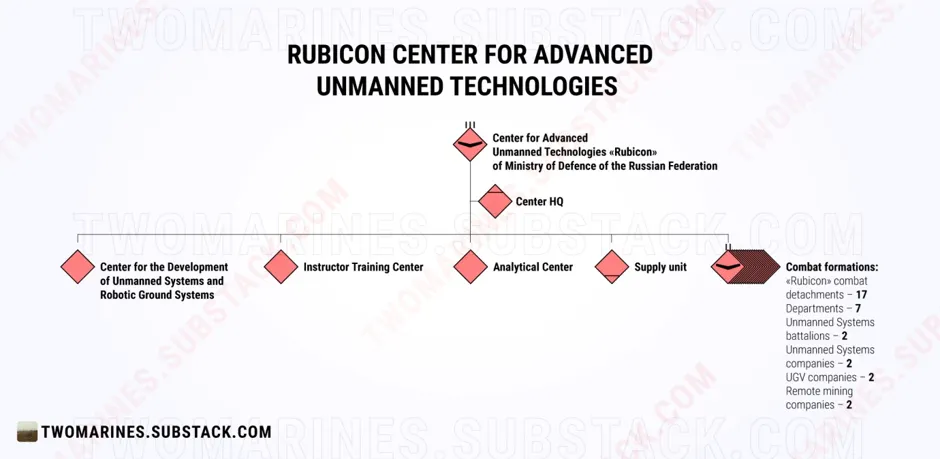
Rubicon Center’s Approximate Structure in 2025

Rubicon includes a total of seven departments or centers, but it is important to emphasize that its structure is constantly evolving. Russia is actively scaling the number and size of its unmanned systems formations, which will likely continue. The main components of its structure include a headquarters, drone development center, instructor training center, analytical center, supply/sustainment unit, and combat formations.


Rubicon has a command group led by the center commander as well as seven deputy commanders responsible for religious support/unit ministry team (chaplain), physical readiness, legal affairs, research and development, combat training (G7), combat operations (G3), and political affairs/FSB counterintelligence officer. Next is the headquarters/staff led by the chief of staff. It consists of an operations section (G3), signal section (G6), intelligence section (G2), command post, personnel/manning section (G1), state secrets protection office/classified control office, UAS service section (cell), electronic warfare section, and communications control post (signal control node).

There is a sustainment and support section that consists of a technical directorate with a deputy commander for armaments, chief of technical inspection point (maintenance control point), and automotive service officer (motor pool). A logistics/sustainment directorate (G4) is led by the deputy commander for logistics with an organizational planning section and materiel and technical support department. The section also consists of a financial management office, human resources department, and specialized services, which typically include a RKhBZ (CBRN) defense officer and an air defense officer. In total, the command group, headquarters/staff, and sustainment section included approximately 100 personnel.

The next section is the operational test and combat employment units, which consist of a heavy FPV UAS test detachment, UAS test and evaluation detachments, an unmanned surface vessel (USV) test detachment, a special unmanned ground vehicle (UGV) test detachment, and an air defense systems test detachment. The Center also has its sustainment/supply units, including a warehouse section, medical aid station (role 1), transportation company/motor transport section, maintenance and repair unit, and security/force protection platoon.

The research and development block consists of six departments: innovation and advanced technology development, capability integration and fielding, analytical, medical technology development, training, and communications, and command and control systems. The innovation and advanced technology development department has a variety of functional groups: multi-rotor UAS, fixed-wing UAS, unmanned ground systems, unmanned surface systems, computer vision, artificial intelligence, software development, electronic warfare systems development, signals intelligence and electronic protection systems, UGV control systems development, field testing and validation, reverse engineering, and a defense industry cooperation cell.


The capability integration and fielding department includes the following groups: FPV systems, medium-range heavy UAS, EW and SIGINT systems integration, unmanned surface vessel integration, UGV systems integration, and technical sustainment. The analytical department includes the UGV employment analysis group, internal systems technical support group, software engineering group, and open-source and media analysis (OSINT) group. The medical technology development unit consists of an operator performance and human factors lab and an interactive training systems lab. The training department includes a command element, six training platoons with 18 personnel each, and a training support platoon. Lastly, the communications, command, and control systems department includes an experimental communications systems test group, fielded communications systems integration group, and technical maintenance group.
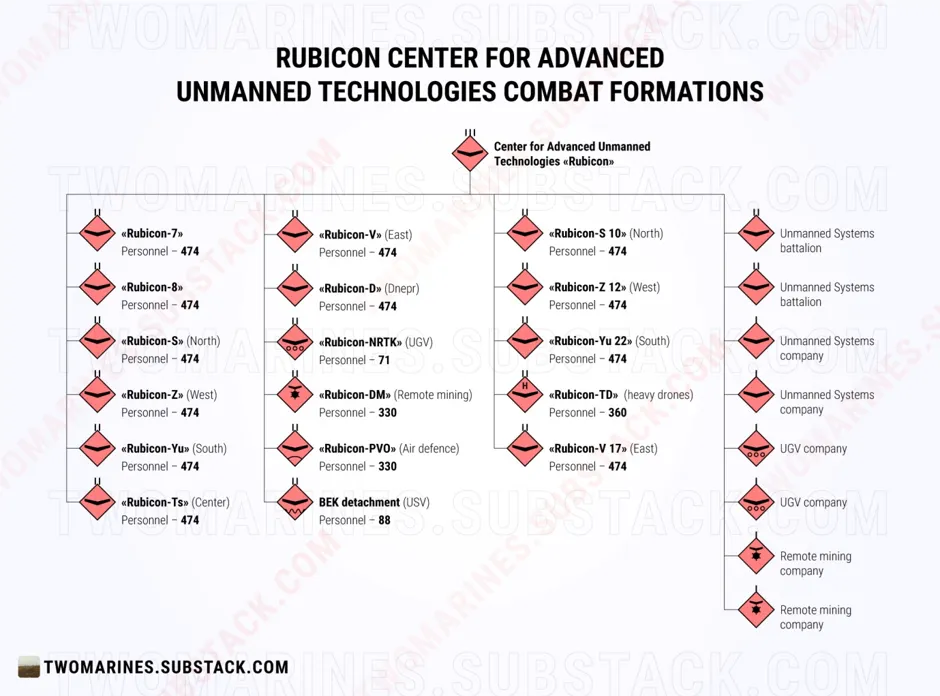
Table of Organization for Rubicon Combat Formations


In April 2025, there were eight Rubicon detachments. Six of these detachments were formed subordinate to each of Russia’s six groups of forces. These were the Rubicon-S (North), Rubicon-Z (West), Rubicon-Yu (South), Rubicon-Ts (Center), Rubicon-V (East), and Rubicon-D (Dnepr) detachments. The table of organization for the six detachments was 149 personnel, but their actual numbers ranged between 120-141 personnel, or 85% strength on average in April 2025. Russia also formed the Rubicon-Reserve and Rubicon-DM (Distance Mining) detachments, which were subordinate to the Joint Group of Forces led by General Gerasimov, which commands the war. Since then, Rubicon has scaled considerably with a total of 17 detachments, two unmanned systems battalions (roughly half the size of a detachment), and six companies.

Elements from Rubicon-S, Rubicon-Yu, and Rubicon-D were employed in Kursk oblast and played a key role in Russia’s retaking the salient held by Ukrainian forces around Sudzha. They were redeployed primarily to the Donetsk region in April, and had an immediate effect on the fighting in that direction. The Kursk operation was an immediate demonstration of Rubicon’s effectiveness. Retaking Kursk was a key political goal for Russia, and the new method of reinforcing areas of the front with elite strike UAS units focused on disrupting logistics demonstrated results.

As with Ukraine’s Unmanned Systems Forces’ units, including the regiments and brigades in the Drone Line initiative, Rubicon detachments and teams are sent to reinforce priority directions. Given their capabilities and resources, the deployment of Rubicon detachments is a strong indication of Russia’s priority directions for offensive operations. During much of the summer and fall of 2025, there were several Rubicon detachments operating in support of the Center Group of Forces (GOF), whose area of responsibility includes Pokrovsk, Myrnohrad, and Dobropilla. In addition to the Rubicon-Ts detachment, which should be operating under the GOF, elements from Rubicon-D (Dnepr), Rubicon-7, Rubicon-8, Rubicon-DM (Distance Mining), and Rubicon-PVO (Air Defense) were all supporting Center GOF during this time. Russia also redeployed its naval infantry brigades and regiment to this direction at the end of the summer, which conducted several company-size mechanized assaults as well as dismounted infiltration. The redeployment occurred after the deep infiltration in mid-August. This was Russia’s main axis of advance during the second half of 2025, with the objective of advancing to Barinkove in Kharkiv oblast where they planned to meet units from the Western Group of Forces advancing from the Lyman direction. If successful, this would have encircled the cities of Slovyansk, Kramatorsk, Druzhkivka, and Kostyantynivka.


On the other side, they faced many of Ukraine’s most capable UAS units, including elements from Magyar’s Brigade, Lasar’s Group, the Rarog Regiment, and other units. Russia did manage to advance and occupy most of Pokrovsk and Myrnohrad during this time, but failed to exploit the deep infiltration that occurred east of Dobropillia in August. The deployment of several assault regiments, special operations forces, UAS units, and the redeployment of the 1st Azov Corps headquarters managed to stabilize and then improve the situation, despite the deployment of so many Rubicon teams. According to brigades in the Kostyantynivka direction, some Russian advances were attributable to Rubicon’s actions. Once they could not resupply their infantry or UAS positions in some areas, they could not sustain their positions and counter Russian infiltration. Rubicon has thus far managed to complicate the situation for Ukrainian brigades holding the front line, but, so far, this not been sufficient to enable a breakthrough.
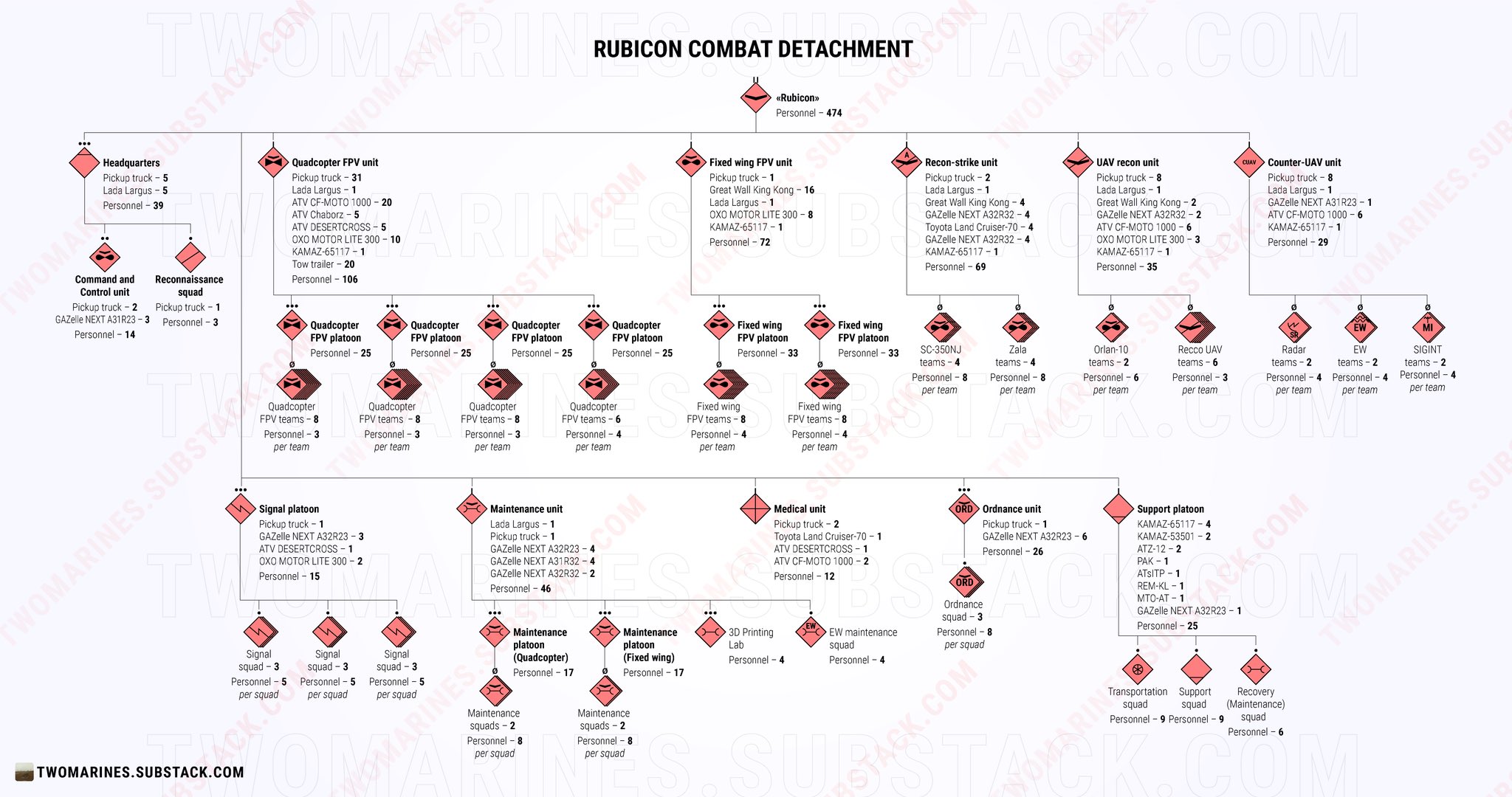
Table of Organization and Equipment for Rubicon Detachments


Rubicon not only scaled the number of combat formations, but also the size of its detachments. With the increased size and diverse capabilities, detachments can now operate more autonomously and can perform a greater variety of missions. The standard Rubicon detachment increased in table of organization strength from 149 personnel in early 2025 to 474. Out of this total, there are 52 officers, 46 warrant officers, 78 sergeants, and 298 soldiers. The command section has 39 personnel, including the commander, deputy detachment commander, deputy detachment commander for operations (S3), deputy detachment commander for logistics (S4), head of communications service (S6), and deputy detachment commander for armaments/chief of materiel. The command also includes the staff of 22 personnel with the chief of staff, deputy chief of staff, two assistant chiefs of staff, an instructor, reconnaissance/intelligence section with three personnel, and battle command group with 14 personnel.

The detachment’s combat component has 245 personnel. The quadcopter FPV group has 106 personnel and is led by the group commander and deputy group commander for operations. It is composed of four FPV platoons, each led by an officer. Three of these platoons have eight teams with three personnel each and the 4th platoon has six crews with four personnel per team. Each team is led by a sergeant. There is also a fixed-wing FPV group of 72 personnel. This group has two platoons with eight teams each. Each team has four personnel. The reconnaissance-strike group has 69 personnel with four S-350NJ Supercam and four Zala ISR UAS teams. Each of these teams has seven personnel with pilots for both ISR and loitering munition UAS (typically, a Lancet variant). Each of these teams is led by an officer with two warrant officers. The aerial reconnaissance group has 35 personnel with two Orlan-10 UAS teams and six additional ISR UAS teams. The Orlan-10 teams are led by officers and have five personnel, whereas the regular ISR teams have three personnel and are led by sergeants. The detachment has a counter-UAS group of 29 personnel with two radar teams, two electronic warfare teams, and two radio-electronic reconnaissance teams. There is also a communications platoon with 15 personnel, an ordnance group, maintenance group, support platoon, and a medical evacuation group.

Recent Developments

In addition to the broader expansion of the Unmanned Systems Forces branch in 2026, the Russian military continues to scale the size of Rubicon as well as the 50th “Varyag” Unmanned Systems Brigade. Most of this expansion is occurring in its combat formations. At the end of March 2025, Rubicon’s total strength was approximately 1,450 personnel with an authorized strength of 2,500. As of this spring, Rubicon had approximately 5,000 personnel with an authorized strength of 9,000. This includes approximately 175 personnel in the headquarters, 270 personnel across seven departments (including research and development), and 700 involved in training and support functions. The remainder of personnel are in combat units.

While Rubicon remains a critical component of the Russian military’s unmanned systems’ capabilities, its future role is unclear. Interestingly, it appears the 50th “Varyag” Unmanned Systems Brigade may become the critical unit for Unmanned Systems Forces. Both Rubicon and the 50th Brigade are now tasked with countering Ukraine’s increasingly successful middle strike campaign, a key priority for the Russian military. The 50th Brigade will deploy battalions to help defend the airspace in Russian regions neighboring Ukraine, with Rubicon focused on defending occupied areas.

The previous commander of Rubicon was Colonel Sergei Viktorovich Budnikov, who previously served with the 61st Naval Infantry Brigade and 9th Guards Artillery Brigade. However, he was replaced as the commander of Rubicon by Sergei Aleksandrovich Zbukarev and is now the commander of the 50th Brigade. Approximately 600 personnel from Rubicon transferred to the brigade with him. The change in leadership and movement of personnel suggests that Rubicon may eventually lose its central role in the development of unmanned systems. There have been multiple attempts to significantly alter Rubicon, including removing or reducing its research and development center.

The emphasis on rapidly scaling Rubicon’s combat detachments appears to be creating challenges. The center was authorized to poach UAS teams from conventional regiments and brigades. Therefore, the further scaling of its combat formations is, at least partially, coming from conventional forces. This will likely lead to weakening the organic intelligence, surveillance, and reconnaissance (ISR) and UAS fire support capabilities for ground units. Notably, the same thing occurred when Ukraine scaled its Drone Line regiments and brigades, which took many of the best pilots and teams from the maneuver brigades, leaving them, at least temporarily, weaker. To increase its size, Rubicon has lowered its standards. As with special operations forces, attempts to increase size too rapidly will result in a drop in quality. While Rubicon’s growth is contributing to more target strikes each month, it is also tasked with greater responsibilities to address the Russian military’s growing challenges in the war. But these challenges need to be addressed in a more systematic fashion by conventional forces.

Rubicon is also competing for talent with the 50th Unmanned Systems Brigade, which is attempting to increase its size from 1,300 personnel to 7,000. The Unmanned Systems Forces had approximately 87,000 personnel at the end of 2025, with plans to reach 165,000 by the end of 2026. Russia is currently failing to meet its monthly recruitment quotas. The plan includes recruiting 68,000 contract soldiers and transferring 10,000 servicemen from elsewhere in the military this year, but, if recruitment of civilians is insufficient, more service members will likely be transferred. Russia is also scaling the size of its unmanned systems units at all levels, including elevating newly-formed unmanned systems regiments subordinate to military districts and fleets into brigades. The scarcity of talent, and struggle to recruit Russia’s most capable and technologically savvy young men and women, will remain a key constraint.


The above analysis was originally published on Two Marines, a newsletter on Russia’s war in Ukraine, defense technology, and modern warfare, on June 5, 2026.

About the authors:Rob Lee is a Senior Fellow in the Foreign Policy Research Institute’s Eurasia Program and a former Marine infantry officer
Dmytro Putiata is a drone warfare expert who served in several units in the Ukrainian Armed Forces. He served in the 36th Marine Brigade and Ummanned Systems Forces’ 20th Separate Unmanned Systems Brigade “K-2”.

Source: This article was published by FPRI

About Published by the Foreign Policy Research Institute
Founded in 1955, FPRI is a 501(c)(3) non-profit organization devoted to bringing the insights of scholarship to bear on the development of policies that advance U.S. national interests and seeks to add perspective to events by fitting them into the larger historical and cultural context of international politics.
View all posts by Published by the Foreign Policy Research Institute →
Why the Baku-Supsa pipeline is back at the center of the energy game
The South Caucasus is once again becoming a key transit route as a pipeline linking Azerbaijan and Georgia comes at a time when Europe is looking for more reliable access to non-Russian energy resources, Central Asian producers are searching for additional export corridors / bne IntelliNews


By Seymur Mammadov for News.Az in Baku June 13, 2026


The transfer of operational functions of the Western Route Export Pipeline, better known as the Baku-Supsa pipeline, to the state authorities of Azerbaijan and Georgia may at first glance look like a purely technical development. In reality, it is much more than that. The return of this strategic energy route to its owners comes at a time when Europe is looking for more reliable access to non-Russian energy resources, Central Asian producers are searching for additional export corridors, and the South Caucasus is once again becoming a key transit space between East and West.

On June 8, BP Azerbaijan confirmed that operational functions of the Baku-Supsa pipeline had been transferred to the relevant state structures of Azerbaijan and Georgia. Under previously agreed arrangements, Baku and Tbilisi have regained control over all facilities along the route, except those located within the Sangachal terminal.

This should not be interpreted as a sudden withdrawal by BP or as a sale of assets. Earlier, on June 2, on the sidelines of Baku Energy Week, BP’s Regional President for Azerbaijan, Georgia and Türkiye Giovanni Cristofoli made it clear that the company was fulfilling its contractual obligations. According to him, operational control over the pipeline was being returned to its owners in line with previously agreed legal commitments.

That clarification is important because the Baku-Supsa pipeline has always been more than just infrastructure. Since its launch in 1999, it has symbolized Azerbaijan’s ability to export Caspian oil to global markets without relying on routes through Russia. It also strengthened Georgia’s role as a transit country and helped shape the modern energy map of the South Caucasus.

The latest developments show that both Azerbaijan and Georgia understand the value of bringing this route back into active use. In May, during Georgian Prime Minister Irakli Kobakhidze’s visit to Baku, the two countries signed a new agreement aimed at restoring the operation of the Baku-Supsa oil pipeline. The document provides for an operational contract covering the Georgian section of the pipeline and is expected to support the resumption of oil transit from Central Asia to Europe through Georgian territory.

For Georgia, this is not merely an energy issue. It is also about budget revenues, transit relevance and geopolitical positioning. Georgian Economy Minister Mariam Kvrivishvili has described the Baku-Supsa pipeline as strategically important not only for Georgia and the wider region, but also for Europe and international partners. Her message is clear: by restoring this route, Georgia strengthens its position as a reliable partner for neighboring states and Europe.

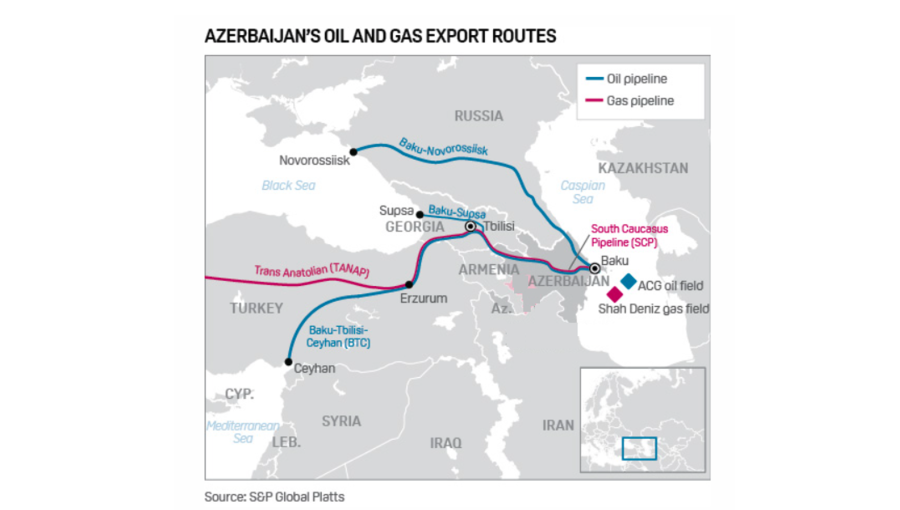
For Azerbaijan, the logic is just as clear. Baku has spent decades building an energy export architecture that gives producers and consumers alternatives. The Baku-Tbilisi-Ceyhan pipeline remains the main strategic route for Azerbaijani oil, but BTC alone cannot answer every logistical and commercial challenge. The Baku-Supsa route offers additional flexibility, especially at a time when Central Asian oil is increasingly looking westward.

The pipeline itself has serious capacity. Built as part of the contract for the development of the Azeri-Chirag-Gunashli fields, Baku-Supsa is 837 kilometers long and has an annual capacity of 7.5 million tons of oil. It starts at the Sangachal terminal near Baku and runs across Azerbaijan and Georgia to the Supsa terminal on Georgia’s Black Sea coast. According to SOCAR, from the start of commercial operations to April 1, 2026, a total of 738 million barrels of oil had been transported through the pipeline.

However, in recent years, Baku-Supsa has not been operating at full capacity. Since the spring of 2022, oil transportation through the route was halted, and exports were redirected to the Baku-Tbilisi-Ceyhan pipeline. BP representatives previously noted that the resumption of operations would depend on shippers’ requests for tanker loading at Supsa.

This is where Kazakhstan enters the picture. In July 2025, Kazakhstan’s Minister of Energy Yerlan Akkenzhenov signaled interest in Baku-Supsa as a possible export corridor. Speaking to Trend on the sidelines of the 17th summit of the Economic Cooperation Organization in Khankendi, he said Astana remained in constant contact with SOCAR and was considering all possible transport corridors, including Baku-Supsa.

That statement was not accidental. Kazakhstan has long needed additional export routes to reduce dependence on traditional corridors. Transit of Kazakh oil through Azerbaijan began in March 2024, when SOCAR announced the start of shipments through the Baku-Tbilisi-Ceyhan pipeline. The first batch of Kazakh oil from the Tengiz field was delivered to the Sangachal terminal from the port of Aktau.

But there are limits to how much Kazakh oil can be moved through BTC. The pipeline is already heavily loaded, and there are quality differences between Azerbaijani and Kazakh crude. These factors naturally make Baku-Supsa more attractive as an additional route.
This is why the return of Baku-Supsa to active consideration should be viewed within a broader energy context. Europe’s interest in Central Asian hydrocarbons has grown sharply since the start of Russia’s full-scale war against Ukraine.

The search for alternative energy routes is no longer a theoretical policy debate; it is a practical necessity. In this environment, every corridor that can move Caspian or Central Asian energy resources westward without passing through Russian territory becomes strategically valuable.

There is also a security dimension. The Baku-Supsa pipeline runs near, and in some areas close to, Georgia’s occupied Tskhinvali region. This has always created risks. During the August 2008 war, Georgian media reported alleged attempts by Russia to strike energy infrastructure, including the Baku-Tbilisi-Ceyhan pipeline. At that time, oil operations through the ports of Batumi and Kulevi were temporarily disrupted due to security concerns.

The risk did not disappear after 2008. In July 2015, Georgia’s Foreign Ministry accused Russian forces of illegally moving so-called border banners along the occupation line, resulting in a section of the Baku-Supsa pipeline falling inside occupied territory. In July 2017, another section of the Baku-Tbilisi-Supsa route near the village of Karapila in Georgia’s Kaspi district came under the control of Ossetian separatists.

These developments were not just local border incidents. They demonstrated how energy infrastructure can become an instrument of pressure. Some experts have argued that the seizure of sections of the pipeline was linked not only to Georgia, but also to attempts to pressure Azerbaijan into increasing oil transportation through the Baku-Novorossiysk route.

That context matters. In May 2013, Russia terminated the agreement with Azerbaijan on the transit of Azerbaijani oil through Russian territory, which had been in force since 1996. From 2014, Azerbaijani oil began to be transported via Russia under a commercial contract, while volumes through Baku-Novorossiysk gradually declined. Against this background, any pressure on alternative westward routes served Moscow’s broader interest in preserving leverage over regional energy flows.

The numbers from that period are revealing. In January-May 2015, according to data cited by Neftegaz.ru, 11.024 million tons of oil were exported through Baku-Tbilisi-Ceyhan, 1.833 million tons through Baku-Supsa, and only 594,710 tons through Baku-Novorossiysk. The imbalance clearly showed which routes had become more important for Azerbaijan and its partners.

Today, the geopolitical environment is even more sensitive. Russia’s war against Ukraine has made energy diversification a central issue for Europe. The South Caucasus has become not just a regional transit hub, but part of a much larger strategic architecture linking the Caspian basin, Central Asia, the Black Sea and European markets.

In this sense, Baku-Supsa’s return is not simply about restoring an old pipeline. It is about reopening a corridor that may soon become more necessary than ever. For Azerbaijan, it strengthens the country’s role as an energy and transit hub. For Georgia, it reinforces its importance as a bridge between the Caspian and the Black Sea. For Kazakhstan and other Central Asian producers, it may offer another route to diversify exports. For Europe, it provides one more non-Russian channel at a time when such routes are increasingly valuable.

The key question now is not whether BP is leaving the project. It is not. BP remains a strategic partner, while the return of operational control reflects long-standing contractual obligations. The real question is whether Azerbaijan, Georgia and their partners can turn Baku-Supsa from an underused route into an active part of the region’s new energy map.

If they succeed, the pipeline’s renewed role could go far beyond oil transportation. It could become another pillar of the Middle Corridor, another instrument of regional resilience, and another sign that the South Caucasus is no longer a peripheral space, but a strategic energy bridge between Central Asia and Europe.

That is why the return of Baku-Supsa to its owners should not be underestimated. In today’s geopolitical environment, infrastructure is power. And Baku-Supsa is once again becoming part of that power.

Seymur Mammadov is a special commentator for News.Az and the director of the international expert club EurAsiaAz. The article reflects the author’s personal opinion and does not necessarily represent the views of News.Az.

News.Az is a bne IntelliNews media partner. This article first appeared here.
ANALYSIS

LGBTQ rights in Hungary: 'We are very hopeful that changes will be made'

The election of the Hungary's new centre-right prime minister, Peter Magyar, in April marked a particularly stinging defeat for Viktor Orban, whose government was widely regarded as one of the most anti-LGBTQ in the EU. Rights advocates expect legal changes but wonder about the timeline Magyar will adopt as the new prime minister remains cautious on divisive issues.


Issued on: 12/06/2026 - 
FRANCE24
By: Simon FEISTHAUER FOURNET

People hold signs during the Pride march in Budapest on June 28, 2025. © Rudolf Karancsi, AP


When Peter Magyar came to power in April’s general election, ending former prime minister Viktor Orban’s 16-year rule in a historic landslide, many Hungarians felt a wave of relief. But for the country's LGBTQ community, the reaction was more measured.

“People are moderately optimistic, but we will have to wait to see changes at the legislative level,” said David Vig, director of Amnesty International Hungary.

Magyar's Tisza Party won 138 of 199 parliamentary seats, securing a supermajority with the highest voter turnout in Hungary's recent history. That margin gives Magyar the constitutional power to overturn anti-LGBTQ legislation passed under Orban. Whether he will use it remains an open question.

READ MORENew Hungarian PM Magyar's hunt for Orban allies has already begun


“There is definitely optimism,” said Eszter Polgari, the legal programme director at Hatter Society, Hungary's leading LGBTQ rights organisation. “We are very hopeful that changes will be made. But we are more hesitant to say anything concrete when it comes to the timing.”

A legacy of anti-LGBTQ policies

Orban's government built over more than a decade an important web of anti-LGBTQ legislation.

In 2020, at the height of the Covid-19 pandemic, a bill stripped trans and intersex people of their right to legal gender recognition, making it impossible to update their official documents.

“Since the end of May 2020, trans people have had to live with their official documents that don't reflect their social reality so there is a really striking dissonance with the papers they need to present for everything,” Polgari said. “Going to the bank, picking up a parcel from the post office, or just verifying their identity is going to be very different from how they appear to the person meeting them.”

According to Vig, this was part of a broader pattern in which anti-LGBTQ legislation was an active, state-funded political tool.

That same year, a constitutional amendment defined “family” exclusively around marriage between a man and a woman, effectively limiting same-sex adoption.

In 2021, parliament passed a law known as the “Propaganda lawbanning the “promotion” of homosexuality or gender diversity to anyone under 18, across schools, media and advertising. Bookstores were required to wrap books with LGBTQ themes in plastic foil and ban their sale near schools or churches, a restriction to which Vig said compliance is nearly impossible in small towns where all three often share the same town square.

The legislative pressure culminated in early 2025, when parliament criminalised Pride marches, imposing sentences of up to one year in prison for organisers and authorising police to use facial recognition technology against attendees.


Despite the ban, up to 200,000 people attended Budapest Pride last June in one of the largest anti-government demonstrations Hungary had seen in years.

In 2026, Hungary ranked 38th out of 49 European countries on ILGA-Europe's Rainbow Map, which scores nations on legal protections for LGBTQ people, with just 23 percent. Comparatively, France ranked at 60 percent.
Landmark EU ruling

In April, the European Court of Justice issued a landmark ruling finding that Hungary's 2021 anti-LGBTQ law violated EU law on multiple grounds, including, for the first time in any case brought against a member state, a breach of Article 2 of the Treaty on European Union.

The court found that the law stigmatised and marginalised LGBTQ people by treating them as inherently harmful to children, based solely on their sexual orientation or gender identity. It also found violations of the EU Charter of Fundamental Rights, including the prohibition on discrimination, the right to private and family life, and freedom of expression.


“That is a very, very strong judgment,” said Polgari. “But we still have everything in force. Nothing has been repealed since the new government came to power.”

For Belinda Dear, a senior advocacy officer at ILGA-Europe, an international LGBTQ advocacy group, Orban’s legacy leaves a lot to be undone.

“We are hoping that at the very least the anti-LGBTQ+ propaganda law and the ban on LGBTQ+ assemblies will be repealed on the basis of the judgment of the Court of Justice of the EU, but then the next priority would be removing the ban on legal gender recognition,” she said.

On May 12, justice minister nominee Marta Gorog told a parliamentary committee that the government would need to carry out a "lawful correction" of the legislation, adding that Hungarian law must reflect international and European legal standards, but the Hungarian government has yet to announce a timeline.
Magyar's strategic tiptoeing

Magyar's campaign deliberately avoided touching heavily on LGBTQ issues. Judit Takacs, a research professor at ELTE Centre for Social Sciences in Budapest, argued this silence could have been a political strategy rather than Magyar's actual views.

“He refused to let Orban set the terrain,” she said. “From a practical point of view, he has consistently been following a strategy of not getting drawn into ideological, identity-politics-related issues, in order to win the support of both liberal and conservative voters.”

Magyar did offer signals throughout the campaign. He called the Pride ban a distraction from the suffering of Hungarians and recently argued in Parliament that children are better off being adopted by same-sex couples rather than being in the state care system. In one campaign appearance, when confronted by a father whose gay son had fled Hungary, he explicitly named “state-funded hatred” as a problem he intended to end.

On election night, speaking to his supporters in Budapest, Magyar said he wanted Hungary to be a country “where no one is stigmatised for thinking differently than the majority, or loving differently than the majority”.


Cover image: © FRANCE 24
08:59


Charges were dropped last week against Budapest Mayor Gergely Karacsony, who had been criminally prosecuted for allowing the 2025 Pride march to proceed despite the ban and this year's Budapest Pride is scheduled for June 27.

The legal framework, however, remains unchanged. Polgari noted that the government had yet to communicate any timeline for repealing the propaganda law, which she described as “quite strange”.

“We have the Court of Justice judgment very unequivocally stating that this needs to go, yet we haven't heard anything from the government about how they would like to do it and when,” she said.

Takacs said the government could implement “cautious incremental improvement rather than dramatic reform", adding that while the 2021 law may eventually be revisited, Magyar is likely to move slowly and avoid making LGBTQ rights a flagship issue.

"It is surely a relief that the hostile state rhetoric is over," she said, "as well as the weaponisation of LGBTQ+ issues."

On the Hungarian government’s position, Dear agreed that there was considerable uncertainty ahead.

"Although Magyar is obviously a vast improvement on Viktor Orban, it doesn't necessarily mean that he is not conservative enough to be slow to repeal or even choose not to repeal some of these laws,” she said.

With Reuters

Killing of gay man to be investigated as homophobic crime following protests

Police investigating the murder of a young gay man in the eastern French city of Metz have said the case will now be treated as a homophobic crime, after protestations from rights groups and politicians.


Issued on: 11/06/2026 - RFI

French MPs observe a minute of silence at The National Assembly on 9 June, in memory of 11-year-old Lyhanna and 19-year-old Noahm. AFP - SIMON WOHLFAHRT


Nearly two weeks after 19-year-old Noahm was killed, the Metz prosecutor’s office announced on Thursday that the investigation had been expanded to take into account a possible homophobic motive.

Noahm was violently assaulted early in the morning of 30 May in Metz and later died from his injuries.

Prosecutors had previously said the evidence did not support the theory that Noahm was attacked because he was gay.

Toxic climate blamed for rise in LGBTQI+ attacks in France

Two men, aged 20 and 27, were initially charged with "aggravated murder due to the suspect being in a state of obvious intoxication” – an offence carrying a potential life sentence.

However, in a statement, the Metz public prosecutor David Touvet said he had issued an additional charge of “intentional homicide committed because of the victim’s sexual orientation or gender identity, by a person acting under obvious intoxication”.

He added that the additional charge gives the investigating judge the legal framework to ensure the inquiry covers all circumstances around the murder.
'Political exploitation'

There had been growing calls to recognise the attack as homophobic, including from hard-left leader and presidential candidate Jean-Luc Mélenchon.

The French National Assembly held a minute’s silence on Wednesday, linking the death to that of 11-year-old Lyhanna, which has sparked protests over how the police and justice system treat cases of child abuse.

France signs charter with dating apps to fight homophobic ambushes

On the day of Noahm’s death, the Metz LGBTI+ centre Couleurs Gaies organised a gathering.

The victim’s parents have criticised what they call the “political exploitation” of their son’s death.

Speaking through their lawyer, they said they do not want their son to be “used by any political party” and instead are calling for a broader social awareness of youth violence.


RFI denounces violation of press freedom after French reporter barred by Israel

RFI has condemned Israel's decision to refuse entry to journalist Alice Froussard, describing the move as "an obstacle to press freedom". Froussard, who reports on the Israeli-Palestinian conflict for French media, including RFI, was turned away on arrival at Tel Aviv airport and sent back without explanation.


Issued on: 11/06/2026 - RFI

RFI has condemned Israel's decision to deny entry to one of its regular correspondents. © RFI/Sébastien Bonijol

The decision was announced on Thursday by Amichai Chikli, Israel's Minister for Diaspora Affairs and Combating Antisemitism.

Froussard was refused entry to Israel when she arrived at Tel Aviv airport on Wednesday, despite having the required travel authorisation and a formal application for a press visa to work in the occupied West Bank, RFI said in a statement.

"RFI's management fully supports Alice Froussard and protests against this expulsion, which constitutes an obstacle to press freedom and comes at a time when journalists face growing difficulties covering events in the region," the statement read.

Israeli authorities did not provide RFI with an explanation, the broadcaster said, although Israeli media reported the government deemed comments she had made were hostile to Israel.

French authorities also expressed regret over the decision and reiterated their support for press freedom.

"We regret this decision, which nevertheless falls within the sovereignty of the Israeli authorities," foreign ministry spokesman Pascal Confavreux said during a press conference on Thursday.

He said diplomatic efforts had begun "as soon as French authorities became aware of the situation" and that the ministry had "mobilised fully, both in Paris and in Tel Aviv", to assist Froussard.


'Extremely serious'

France's Society of Journalists and the Association of RFI Correspondents criticised what they described as a serious attack on press freedom.

The journalists' organisations said Froussard had spent six years reporting on the lives of Palestinians. "All her reports have only reflected facts, testimony and accounts reported with the greatest precision."

The press freedom body Reporters Without Borders (RSF) described the decision as "an extremely serious measure that restricts freedom".

The organisation noted that Israel continues to refuse international journalists independent access to the Gaza Strip.


"The expulsion of Alice Froussard from Israel is unjustifiable," said Jonathan Dagher, head of RSF's Middle East desk.

"This experienced correspondent, who has covered the West Bank for years, is one of the journalists who has the courage to go to the occupied Palestinian territories to work alongside Palestinian colleagues despite the growing security risks they face."

Dagher said the decision showed how far Israeli authorities were prepared to go to limit information reaching the international public from Palestine.

"While they have imposed a media blockade on Gaza for nearly three years, they are now further restricting information from the West Bank."
Whistleblowing is on the rise in France, but expert says support remains lacking

Whistleblowing in France is on the rise, according to the independent authority in charge of protecting those who speak out in the public interest. The Défenseur des Droits has seen an increase in cases, reflecting a growing awareness of the process of speaking out and the protection available for those who do.


Issued on: 13/06/2026 - RFI

American whistleblower Frances Haugen, who reported on the negative impact of Facebook's business models on users, 21 November 2021. © Virginia Mayo/AP


By:  Sarah Elzas


The Défenseur des Droits ("Defender of Rights") received more than 900 whistleblower-related complaints in 2025, compared to 519 in 2024.

In its annual report, it attributes this rise in part to greater public awareness of the legal framework introduced in 2022 and strengthened in the years since.

“The protection system and its players are better known, by union members, lawyers and jurisdictions,” explains Cleo Bour, legal manager for the Maison des lanceurs d’alerte, which provides legal and psychological support to whistleblowers – and has also seen a rise in requests for help.

Listen to an interview with Cleo Bour in the Spotlight on France podcast:


A whistleblower is anyone who reports wrongdoing or illegal activity that harms the public interest. While whistleblowing is now protected in the law, Bour notes that France has not always seen such reporting in a positive light.

“Since the collaboration of some people and authorities during World War II, France has had difficulty with reporting in general, and whistleblowers have been seen as denouncers, rather than people who risk their lives and careers for the public interest,” Bour says.


'A collective duty'

This shift in perception is thanks in part to legislation that protects whistleblowers from retaliation, and to work done by the Defender of Rights to recognise the value of speaking out.

"Whistleblowing is a civic act in the service of the public interest, and protecting it is a collective duty essential to strengthening the rule of law and public trust in institutions,” the body's report says.

Whistleblowers can come from anywhere, despite the prominence of high-profile national security cases such as those of Julian Assange or Edward Snowden. Bour gives the example of a nurse who reports abuse in a hospital.

In 2025 the Defender of Rights saw an increase in environmental whistleblowers, “including an organic farmer who reported water pollution caused by the use of plant-protection products on neighbouring farms”.
Whistleblower status challenged

Despite stronger legal protections, however, whistleblowers do take risks. Not all face prison time but they can face retaliation – as was the case with a public service employee from the city of Le Havre.

She raised concerns about a conflict of interest in the awarding of a contract to operate a digital hub to an organisation presided over by the city’s deputy mayor.

The contract was awarded without a competitive bidding process by the city, whose mayor Edouard Philippe is a former prime minister and a frontrunner in next year’s presidential race.

Prosecutors opened an investigation after the employee filed a complaint in September 2023. Philippe has since been named in connection with allegations of favouritism, embezzling of public funds and illegal conflict of interest.

'Whistleblower' files complaint against French presidential hopeful

The employee reported that she faced retaliation after raising the alert. Her contract was not renewed after 2023, and she alleged that she faced harassment after making the allegations.

In January 2025 the Defender of Rights recognised her status as a whistleblower, which allowed to her to challenge the retaliation.

However, Philippe is challenging her whistleblower status, and the city has filed a complaint with the court – the first time a public authority has contested the Defender of Rights’ recognition of a whistleblower.

“It is being challenged in court by the municipality, not Edouard Philippe directly,” Bour notes, adding that the situation is significant. "This is of the utmost gravity, because it is a municipality that is attacking an independent authority responsible for protecting whistleblowers, attacking the very mission of protecting whistleblowers.”
Protections on paper

France has relatively broad whistleblower legislation, covering multiple sectors and situations. But in practice, protection comes after the fact, in order to challenge any retaliation.

“It only allows you to prevail in court, to get a remedy, but it does not prevent retaliation from occurring,” says Bour.

There is also a lack of psychological and financial support for whistleblowers, who frequently find themselves without work and navigating a long, complex legal process alone.

Bour says while her organisation and the Defender of Rights provide some support – "but it’s still a very lonely experience”.

She argues that whistleblowers need more support, and better recognition.

“Whistleblowers are really essential for democracy, as they can see what is happening from the inside, and can inform the general public or help to get things in control,” she said.

“I think as a society, we should value and encourage more whistleblowers, which is unfortunately not the case today.”

Listen to an interview with Cleo Bour in the Spotlight on France podcast, episode 146, here.
INTERVIEW

Combating foreign digital interference: ‘France is among the top three in Europe’


French Prime Minister Sébastien Lecornu hosted political representatives from across party lines on Thursday to discuss the issue of electoral interference ahead of the country’s 2027 presidential election. French authorities are sounding the alarm over the rapid advances in artificial intelligence which they fear could make attempts to digitally manipulate the voting process from abroad – and consequently the electoral outcome – easier than ever before.


Issued on: 12/06/2026 - 
FRANCE24
By: Grégoire SAUVAGE

This illustration photograph shows letters reading "fake news" seen through a magnifying glass, against a laptop screen displaying other illustration images of various alleged fake news. © AFP, Sebastien Bozon

FRANCE 24 spoke to Benoît Grünemwald to discuss what’s at stake and the strategies the French government could deploy to effectively combat foreign meddling.

With a year to go before the presidential election, French authorities and cyber experts are forewarning of potential threats to electoral integrity. To assess the current threat level and the necessary responses, Prime Minister Sébastien Lecornu convened a meeting with political leaders on June 11 to discuss the issue of foreign interference. Lecornu spoke of “serious threats” to the 2027 election, warning that “the entire political class” could be at risk.

Since the ‘Macron Leaks’, a cyberattack blamed on Russia that involved the dumping online of a trove of documents to undermine Emmanuel Macron’s 2017 presidential campaign, the French government has significantly bolstered its fight against disinformation.


However, advances in generative artificial intelligence, unresolved geopolitical crises and an increasingly disillusioned and politically fragmented voting public are fuelling fears of a flood of disinformation ahead of the 2027 election.

Recent municipal elections may have served as “a dress rehearsal”, said France’s secretary-general for defence and national security (SGDSN), Nicolas Roche, after authorities identified several attempts to destabilise the electoral process.

Cover image: © France 24
03:39


According to Benoît Grünemwald, a cybersecurity expert at digital security company ESET, combating digital interference requires a multi-pronged approach: through media literacy, preventative measures initiated by political parties and the work of VIGINUM, (the service for Vigilance and Protection against Foreign Digital Interference), a specialist unit reporting to the SGDSN tasked with tracking and tracing electoral interference and disinformation campaigns.

Since 2021, VIGINUM has acted as a national bulwark, detecting and countering risks from foreign influence activities, effectively placing France “among the top three [for such services] in Europe”, said Grünemwald in an interview with FRANCE 24.
FRANCE 24: Will advances in AI be a game-changer in terms of disinformation during the upcoming presidential election in France?

Benoît Grünemwald: AI enables disinformation to grow in both quantity and quality. It is clear that large language models (LLMs) [the engines that power generative AI] have changed the game, particularly because you no longer need to be a French speaker to produce high-quality content and credible information.

With AI, it’s possible to create any kind of content imaginable: video, text, audio – and, of course, combine all of these to make it as convincing as possible. It’s just like ‘phishing’ in the case of online scams. Before, you’d just receive a simple email. Now, you’ll also receive text messages, voice calls and even doctored video calls. This is what we call social engineering, where the attack targets not systems but people’s minds.

That doesn’t mean to say that anyone could do it. There are still a number of prerequisites and necessary structures in place, but the barrier to entry is lower. Furthermore, AI makes it possible to generate scale. The reach of these campaigns is therefore much greater. The industrialisation of disinformation is now much easier than it used to be.
F24: Since 2021, the VIGINUM unit, which now comprises around 60 analysts, has been responsible for monitoring such digital interference from abroad. Overall, would you say that France is sufficiently equipped to deal with these risks?

When we look at the European level, whether it be through ANSSI [the French National Cybersecurity Agency] or VIGINUM, France is certainly among the top three in Europe, alongside Sweden and Estonia. These agencies have recruited some excellent talent, demonstrate good governance and have mobilised significant resources in the digital security arena.

However, this remains a team effort. Just because VIGINUM reports on operations carried out by foreign powers does not mean that French citizens are protected from them, especially given how quickly certain content can go viral on social media. Users must also be able to assess the quality and accuracy of the information they have access to.

Political parties also have a role to play in ensuring they have control over their information systems to prevent another ‘Macron Leaks’ or a scandal like the one involving Hillary Clinton’s emails [in 2015]. However, one might wonder whether the limited prominence given to digital issues in political parties’ manifestos might not reflect a lack of attention and interest in the subject.
F24: What do we know about the impact of these foreign interference campaigns?

It remains limited. Even though there are not many studies on the subject, one example is the Paris Olympics. Despite a significant volume of cyberattacks involving both disinformation and attempts at disruption, the impact was minimal thanks to an ecosystem bringing together public and private sector actors, led mostly by ANSSI.

Manipulating the public and public opinion, however, is a long-term endeavour that can be subject to fluctuations. These disinformation campaigns therefore warrant continued monitoring and analysis.

This article has been adapted from the original in French by Nicole Trian.

Rise in adulterated cannabis in France, as edible CBD ban shakes industry

Cannabis use in France is once again under scrutiny, with a drugs monitor reporting a sharp rise in adulterated products on the illegal market, and risky new products entering the legal CBD market. To address the issue of mislabelled products, France has banned edible CBD products, raising concerns in the cannabis industry.


Issued on: 12/06/2026 -RFI

A hemp cultivator sells her products at the market in Crest, south eastern France, 9 February 2021. © Philippe Desmazes/AFP

By: Sarah Elzas

France's illicit drug market is becoming increasingly unpredictable, with users unknowingly ingesting substances that are not what they thought, according to a report released by the French Monitoring Centre for Drugs and Drug Addiction (OFDT).

The report is based on data collected through the National Identification System for Drugs and Substances (SINTES), which collects samples from drug users, to track the composition of drugs, particularly when they provoke “unusual and undesirable effects”.

Adulterated products

Sampling in 2025 showed a sharp increase in adulterated drugs overall, from cocaine to heroin – a third of samples were impacted, a significant increase from previous years.

The report highlighted adulterated cannabis products in particular, in a market that it described as “more and more varied, with compositions that expose users to risks that are difficult to anticipate before they are consumed”.

France has one of Europe’s highest rates of cannabis consumption, and while the production and sale of CBD products is legal, recreational marijuana use is illegal and subject to some of the continent’s toughest sanctions.

While most recreational marijuana users continue to use cannabis resin and flowers, the market is shifting quickly, with other products gaining in popularity – including edibles such as gummies, sweets and baked goods, and vape liquids.

Among the cannabis products that SINTES analysed, several were contaminated with other compounds, ranging from glass microbeads that increase the product’s weight, to varying and unexpected levels of THC, the psychoactive component of the plant.

The report notes that an increasing variation in THC potency makes a given product’s strength and effects more difficult to anticipate, and it documented a rise in unexpected effects and adverse reactions consistent with THC intoxication, including hallucinations, anxiety, psychotic episodes, vomiting and loss of consciousness.

In some instances where consumers believed they were buying CBD products, testing revealed significant THC content. Legal CBD products must contain no more than 0.3 percent THC.

A 'political' ban


France effectively banned their sale in May, to address the issues of poorly labelled or incorrectly dosed ingestible CBD products. Authorities cited safety concerns, and the fact that edible cannabis products had not been approved by the European Union food agency.

Than ban applies to products that fall under the EU’s definition of food, which does not include hemp flowers, resins and vape liquids, as well as cosmetic products.

The cannabis industry has called the ban a political decision, not grounded in science.

The Union of CBD professionals said the ban "makes absolutely no sense", because it targets a single consumption method – consumers can continue smoking and ingesting CBD flowers, but they cannot eat a gummy made from the same plant.

Industry bodies say that CBD edibles and dietary supplements make up about 40 percent of France’s hemp industry sales, and the ban would impact the country's 2,000 hemp producers and 1,500 specialised shops, along with the 20,000 pharmacies that carry CBD products.


EU's plastic garbage exports to Turkey reach all-time high

EU's plastic garbage exports to Turkey reach all-time high
A projection shone on a plastics manufacturing facility by Greenpeace activists. The group says it wants action not words in ending the plastic garbage environmental shame. / GreenpeaceFacebook
By bne IntelliNews June 11, 2026

European Union plastic waste exports to Turkey reached an all-time annual high of 503,000 tonnes in 2025, expanding by 19% year on year.

The scale of the growing problem is brought home by an assessment from Greenpeace Turkiye, "The Truth Behind the Rhetoric: The Invisible Face of Turkey's Zero Waste Policy", as cited by a bianet report.

Turkey still has the unfortunate distinction of being the top destination for European plastic waste exports by a wide margin. The consequent environmental headache – and the profits enjoyed by Turkish companies involved in processing shipments of plastic waste, frequently found dumped in unofficial waste sites around Turkey – has grown hugely since China eight years ago introduced a ban on importing such consignments.

The volume of plastic waste coming into Turkey from the 27 EU member states has in fact leapt by a massive 435-fold since 2004, according to the Greenpeace policy brief. 

The UK, which exited the EU in 2020, is also often accused of treating Turkey as a dumping ground for enormous volumes of its plastic waste, as it was by a Greenpeace analysis in late 2024, reported by IntelliNews.

“Zero waste” is a potentially highly embarrassing main agenda item for Turkey in relation to its co-hosting of the 31st United Nations Climate Change Conference of the Parties (COP31) with Australia, with the main event due to take place in the Turkish Mediterranean city of Antalya in November.

Berk Butan, the social and economic systems campaign lead for Greenpeace Turkiye, was reported as saying that hosting COP31 presents a "historic opportunity" for Turkey to move “zero waste” from rhetoric to actual policy transformation.

"Turkey became the largest destination for the EU's plastic garbage in 2025, the country's seas and coasts are being contaminated with microplastics, and EIA [environmental impact assessment] processes for new petrochemical complexes are being completed," Butan was quoted as saying, adding: "This gap between the rhetoric and the reality on the ground appears before us as a policy choice, a structural framing problem. We have a significant opportunity for policy change before us.

"Turkey, which will host COP31 in November 2026, aims to stand out by adding the zero waste theme to the action agenda of the summit. This is a historic moment where Turkey can show leadership and, by going beyond the narrative, initiate the changes that will make a real zero waste goal possible.

"Because a real zero waste goal is not possible by throwing plastic into a recycling bin or taking someone else's plastic waste, but by succeeding in not producing it at the source. The way to reach this goal begins with preventing waste imports, and in production decisions, investment choices, and the stance at the international negotiation table."