Saturday, June 13, 2026

‘This Fight Isn’t Over’: Opponents Turn to State AGs After DOJ Approves Paramount-Warner Merger

“Now that the federal government has abandoned antitrust enforcement in favor of cronyism and runaway consolidation, state attorneys general must step in to block this deal,” said one critic.


Democratic California Attorney General Rob Bonta speaks on May 6, 2023 in Los Angeles.
(Photo by Mark Von Holden/Variety via Getty Images)

Brett Wilkins
Jun 12, 2026
COMMON DREAMS

The US Department of Justice on Friday approved Paramount Skydance Corporation’s megamerger with Warner Bros. Discovery, prompting opponents of the $110 billion deal to place their hopes of blocking it in the hands of Democratic state attorneys general.

The DOJ’s Antitrust Division approved the merger without requiring divestitures or behavioral remedies—a significant win for billionaire Paramount CEO David Ellison. Analysts and critics had suggested the DOJ might require sales of some of the corporation’s numerous cable networks, streaming services, film and television studios, sports programming rights, or media outlets.

The DOJ also reportedly declined to impose conduct restrictions on bundling, distribution, licensing commitments, and other areas.

“If we had an uncorrupted Department of Justice, Paramount would not even have tried to merge with Warner Bros. Discovery, in plain violation of the law,” Robert Weissman, co-president of the consumer advocacy group Public Citizen, said in response to the news of the DOJ approval. “If it had, a Department of Justice that was doing its job would have rushed to court to block the merger the moment it was announced.”

“Now, however, a compromised DOJ has rubber-stamped a merger that consolidates power for the Ellisons, one of [President Donald]Trump’s preferred oligarch families,” Weissman added. “This merger will jack up prices for consumers, cost workers their jobs and, most importantly, limit the range of viewpoints permitted to air on the major media or appear in movies and creative outlets. Put simply, this is an anti-free speech merger.”


Craig Aaron, co-CEO of the advocacy group Free Press, said in a statement: “Despite all the talk about conducting a thorough investigation, the fix was in at the Trump Justice Department from the start. Paramount Skydance has fêted, flattered, and promised sweeping changes to news coverage to win the administration’s approval, despite evidence that giving one corporation this much media power—all the movie studios, cable channels, and newsrooms—will undermine competition, destroy jobs, slant the news, and endanger our democracy.”

“We’ve already seen how far Paramount and the Ellison family are willing to go to diminish a once-proud network and news organization like CBS, and they promise to do worse if they get their hands on Warner Bros., HBO, CNN, and all the rest,” he added. “The Ellisons aren’t hiding their intentions, and no weak concessions will make this deal any better.”

Congressman Jamie Raskin of Maryland, the top Democrat on the House Judiciary Committee, warned earlier this week that approval of the merger would result in “the same kind of unprecedented pro-MAGA editorial control we have seen at CBS News and ‘60 Minutes.’”

Raskin also contended that the merger could mean that “American consumers, who already pay an average $69 a month for streaming on top of $100 a month for cable and $78 for internet,” will pay “even more for sports, news, and entertainment.”

As Politico’s Yasmin Khorram reported Friday:
The [DOJ] decision... paves the way for Paramount to combine with the entertainment and media company behind a vast film and television studio, CNN, and the HBO Max streaming service, which would be combined with Paramount+ to create a new offering boasting about 200 million subscribers. The deal, which would upend the Hollywood ecosystem by combining two historic rival studios, is opposed by many in the entertainment industry who fear it could lead to mass layoffs, among other concerns.

The DOJ’s reported approval of the merger does not necessarily mean the deal is done. Several states are weighing antitrust challenges, most notably California, where the office of Democratic Attorney General Rob Bonta is conducting what he called a “vigorous” review of the proposed merger to determine how it would impact competition in entertainment, streaming, advertising, and labor markets. Reuters reported earlier this month that California, New York, and other states are preparing a lawsuit aimed at blocking the merger.

“The good news is, this is not the last word on the matter,” Weissman said. “Competition authorities in the states and other countries can still follow the law and stand up for the public interest against this media consolidation. Now that the federal government has abandoned antitrust enforcement in favor of cronyism and runaway consolidation, state attorneys general must step in to block this deal.”

Aaron said that states “have strong case for blocking this merger, and many brave journalists, filmmakers, and workers in the entertainment industry have spoken out against the dangers of this deal despite threats to their livelihoods.”

“They are warning us what will happen if this deal goes through, and we must listen,” he added. “The attorney generals have the evidence they need to stop this deal; now the public needs them to take action.”

Last year’s merger between Paramount Global, Skydance Media, and National Amusements was itself opposed by critics who sounded similar alarms over corruption, antitrust issues, labor concerns, and attacks on editorial independence.

CBS, a Paramount Global company, announced the cancellation of “The Late Show with Stephen Colbert” during the merger review period. While Paramount claimed the cancellation was a financial decision, critics said its timing suggested at least indirect political pressure, given Colbert’s vocal criticism of Trump and the need for merger approval from the Federal Communications Commission. FCC Chair Brendan Carr was appointed by Trump and has been dogged by allegations that he’s more loyal to the president’s agenda than to his agency’s stated mission.

One of the biggest recurring flashpoints involves claims of corporate pressure and censorship at CBS’ venerable “60 Minutes” weekly current affairs program. Numerous former “60 Minutes” journalists and others have accused Bari Weiss—the right-wing podcaster who became CBS News editor-in-chief after the merger—of political censorship.

Earlier this month, a coalition of press freedom groups warned that recent firings of “60 Minutes” journalists were a “grotesque effort taken straight from an authoritarian handbook” that posed a much wider threat to democracy, and highlighted that an approved Paramount Skydance-Warner Bros. Discovery merger would hand control of CNN, a Warner Bros. company, to the same billionaire family that now owns CBS.

The coalition argued that the merger “would open the door to improper political meddling in journalists’ editorial decisions” and “alter CNN’s editorial direction (not to mention meddle with HBO’s documentaries) to be more friendly to the [Trump] administration, threatening press freedom.”
Trump hit with stinging order for twisting national park exhibits into 'half-truths'

Matthew Chapman
June 12, 2026 
RAW STORY


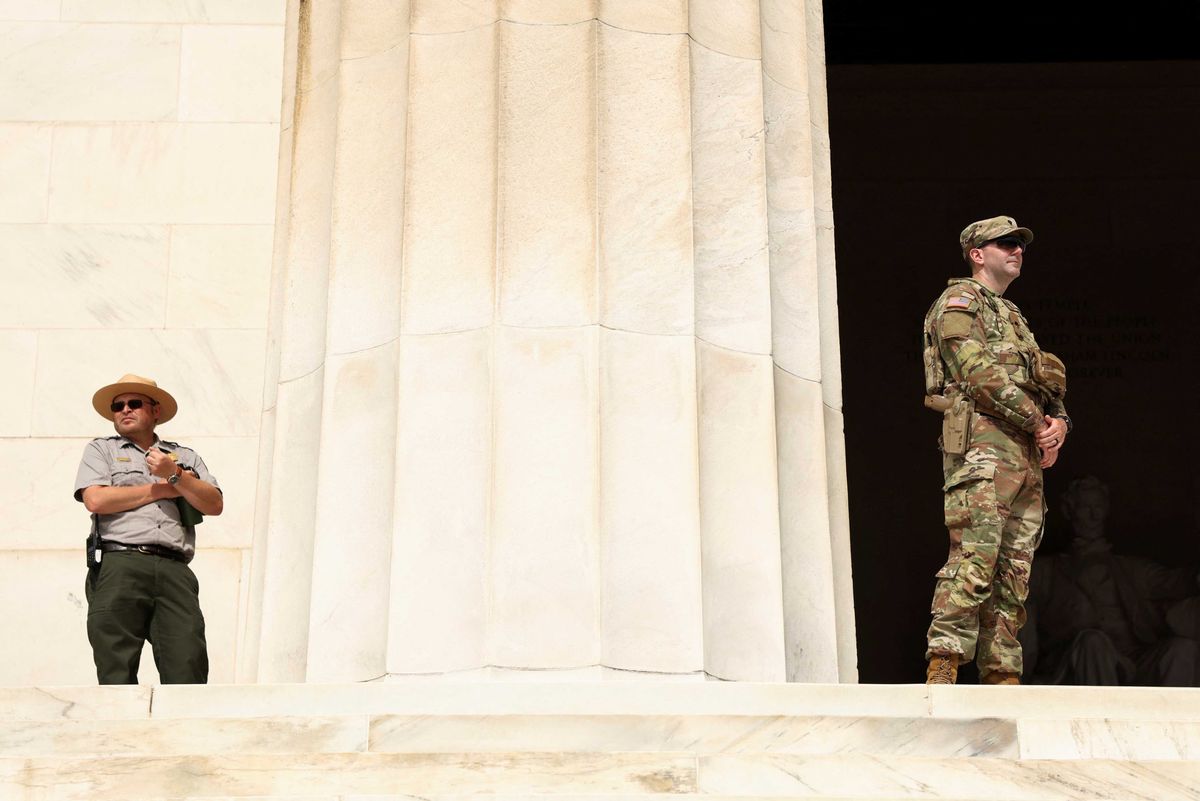
National Guardsman and a National Park Ranger stand at the Lincoln Memorial, ahead of America 250, in Washington, D.C., U.S., June 9, 2026. REUTERS/Kevin Lamarque

A federal judge in Massachusetts scorched President Donald Trump's Interior Department on Friday for orders to remove all exhibits pertaining to race, sexuality, and climate from national parks — and issued an order to reverse all of it.

U.S. District Judge Angel Kelley, an appointee of former President Joe Biden, went into painstaking detail about the significance of the exhibits being torn down under the so-called "Restoring Truth and Sanity to American History" order by Interior Secretary Doug Burgum.

"The National Park system ... serves as a cornerstone of public learning, providing rich and informative signs, exhibits, and interpretive waysides on topics ranging from civil rights to environmentalism," wrote Kelley, citing "the echoes of abolition in John Brown’s Fort in Harpers Ferry ... the genesis of the modern LGBTQ+ civil rights movement at the Stonewall National Monument ... [and] the retreating ice of Glacier National Park."

The park system, she continued, is sometimes called “America’s largest classroom,” and to that end, "the Government’s stewardship of these park sites ... carries a responsibility to present history in full rather than in favored fragments."

Unfortunately, she continued, "Under the guise of promoting American dignity, this Administration seeks to share a limited history by ordering the removal of all signs, displays, and interpretive exhibits at National Parks that do not align with its preferred narrative, thereby telling half-truths."

Similar policies have led to the Trump administration's removal of slavery exhibits from the original Presidents House in Philadelphia, which was also ordered illegal by a court.

All of these removals, Kelley wrote in her opinion, add up to "government-sanctioned erasure and rejection of their histories. It strips the sites of the context that gives them meaning. It degrades the public’s trust in the government, as the Executive Order ignores congressional directives and carelessly razes decades of efforts in the pursuit of its unilateral agenda. These harms are, in all senses of the word, irreparable."
WATCH: Workers finally tear Donald Trump's name off Kennedy Center

David Edwards
June 12, 2026 1:00PM ET
RAW STORY


Workers prepare scaffolding ahead of removing the lettering referencing U.S. President Donald Trump from the facade of the John F. Kennedy Center for the Performing Arts, after a federal judge ordered that President Trump's name be removed from the building in Washington, D.C., U.S., June 12, 2026. REUTERS/Ken Cedeno

Workers began tearing Donald Trump's name off the Kennedy Center Friday, carrying out a federal court order his own lawyers had scrambled overnight to block.

A federal judge ruled last month that the renaming was flatly illegal. U.S. District Judge Christopher Cooper said Trump's hand-picked board never had the authority to put the president's name on the John F. Kennedy Center for the Performing Arts — because Congress created it and only Congress gets to rename it. The lawsuit was filed by Rep. Joyce Beatty, an Ohio Democrat who sits on the center's board as an ex officio member.

"Congress gave the Kennedy Center its name, and only Congress can change it," Cooper wrote in his ruling, giving the administration 14 days to strip Trump's name from the building.

Trump's board had voted in December 2025 to rename the iconic performing arts venue, and workers bolted his name to the facade overnight — without a congressional vote and without public input.

Friday was the deadline to take it back down. Trump's lawyers tried to run out the clock, arguing the removal would be "incredibly confusing for the public" and a waste of money if the name eventually goes back up. The Department of Justice filed a notice of appeal Thursday night.

Trump's name had already been scrubbed from the center's website and social media pages earlier this week.

After the original court ruling, Trump took to social media to vent. "Unless I am free to do what I do better than anyone else, bring this Institution back, physically, financially, and artistically, I have no interest in continuing what could only be a hopeless journey into 'NEVER NEVER LAND,'" he wrote.


'60 Minutes' rocked by another exit as 34-year veteran left 'exasperated' by Bari Weiss

Bennito L. Kelty
June 12, 2026 
RAW STORY


Bari Weiss (Photo via Michael Blake for Reuters)

A veteran "60 Minutes" producer is bolting after clashing with CBS News boss Bari Weiss over a "white genocide" story, per a new report.

Michael Gavshon worked alongside correspondent Anderson Cooper on a story that debunked Trump's claim of "white genocide" in South Africa, which left him exasperated, according to an exclusive by The New York Post. Gavshon announced that he'll leave the show at the end of June, per a memo obtained by the Post.

"The old chestnut, I have stood on the shoulders of giants, couldn't be more true," Gavshon wrote in the memo. He noted that he spent 34 years at "60 Minutes" and 41 years at CBS News.

The story drew heavy scrutiny from Weiss, who is also blamed for firing correspondents Sharyn Alfonsi and Cecilia Vega, executive producer Tanya Simon, executive editor Draggan Mihailovich, veteran producer Guy Campanile, and digital operations chief Matthew Polevoy, the Post reported.

Veteran correspondent Scott Pelley was also fired by "60 Minutes" executive producer Nick Bilton after confronting him and saying that Weiss is "murdering" the show.
'Chilling' detail buried in Trump's lethal strike post flagged by legal expert

Bennito L. Kelty
June 12, 2026 
RAW STORY


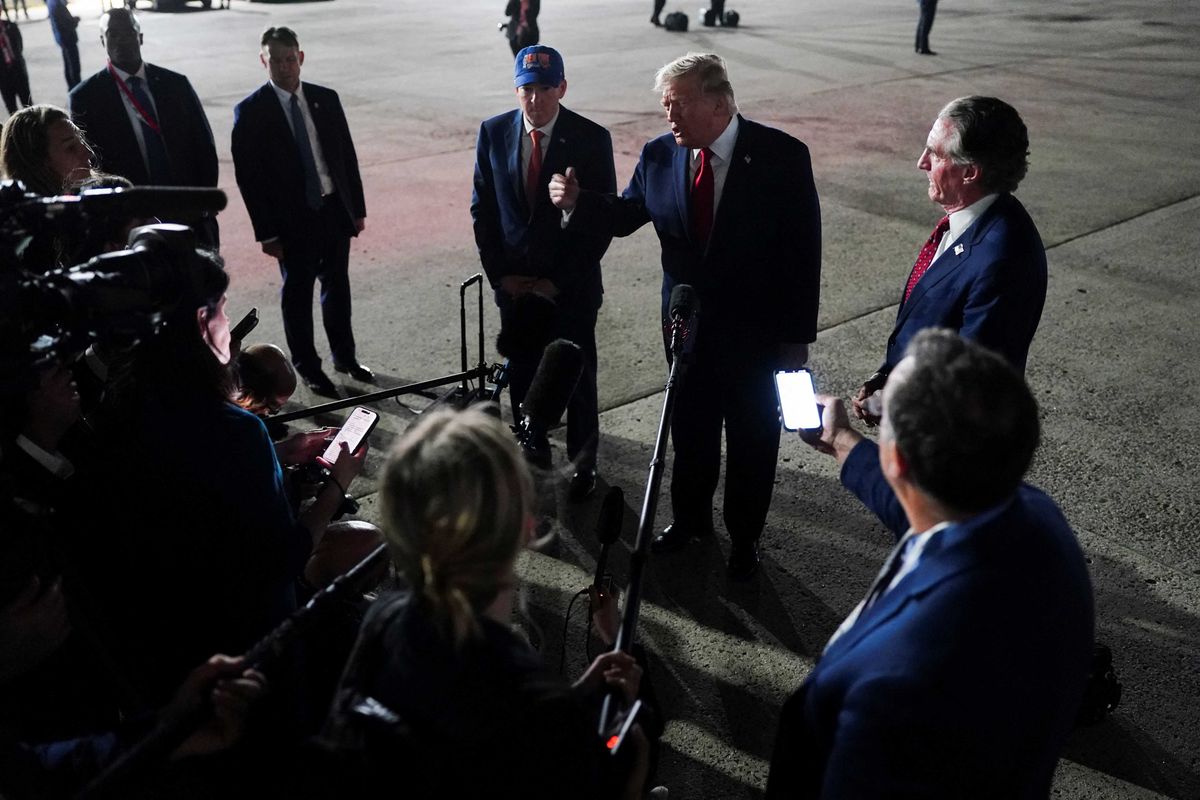
U.S. President Donald Trump speaks to the members of the media, as Environmental Protection Agency (EPA) Administrator Lee Zeldin and Interior Secretary Doug Burgum stand next to him, after attending Game 3 of the NBA Finals, at John F. Kennedy International Airport in New York, U.S., June 8, 2026. REUTERS/Nathan Howard

Trump's announcement of killing the leader of a Venezuelan gang carries a "chilling" detail, according to a legal expert.

According to Trump, the U.S. military launched a "swift and lethal" strike against the leader of Tren de Aragua, a Venezuelan gang that was a hot topic during the 2024 presidential election. Ryan Goodman, a chaired professor at NYU and editor-in-chief of Just Security, called out the details in Trump's Truth Social post announcing the strike.

Goodman was alarmed in particular by a line of Trump's post calling the gang a "foreign army."

"If they're this 'army,' what's the limiting principle for stopping that use of state lethal force?" Goodman asked. "More significant and chilling is how far you have to read down this Trump post to learn the individual was not extrajudicially killed inside the U.S."

Additionally, he said the Justice Department's position on the Alien Enemies Act seemed to "fall completely apart," when the president said the strike was coordinated "closely with our friends in Venezuela, with whom we are working very well."

Trump invoked the 1798 Alien Enemies Act against Tren de Aragua in March 2025, claiming the gang acts as an arm of the Nicolás Maduro government. The designation, his administration claimed, allowed him to deport Venezuelan migrants without ordinary due process. A declassified U.S. intelligence assessment contradicted Trump's claim that Tren de Aragua operates under Maduro's control.

"DOJ position - and statute - requires TdA to be acting on behalf of Venezuelan government," Goodman noted.


‘More Lawless, Performative Killing’: Trump Says US Strike Executes Alleged Leader of Venezuelan Gang

“Outside of armed conflict, premeditated killing is referred to as murder,” said one expert.


A screenshot shows the US military targeting a compound inside Venezuela in June 2026.
(Photo: US Southern Command)

Jake Johnson
Jun 13, 2026
COMMON DREAMS

US President Donald Trump and Pentagon Secretary Pete Hegseth announced in social media posts late Friday that American forces, in coordination with Venezuelan authorities, killed the alleged leader of the Tren de Aragua gang in a strike on a compound inside Venezuelan territory.

“At my direction, the United States Southern Command delivered a swift and lethal kinetic strike to successfully execute Niño Guerrero, the infamous leader of Tren de Aragua,” the president wrote on his Truth Social platform, posting what appears to be footage of the strike. Hegseth later specified that the attack took place inside Venezuela earlier this week and that Héctor Rusthenford Guerrero Flores—known as Niño Guerrero—was “confirmed killed.”

The strike that purportedly killed Guerrero, whom the US Justice Department charged last year with multiple crimes including “facilitating acts of terrorism,” came in the context of the Trump administration’s broader, deadly military campaign in South America and off its coast. Dozens of US bombings of boats in the Caribbean and eastern Pacific Ocean since last September have killed more than 200 people—including possible victims of human trafficking—with the stated goal of stemming the flow of drugs to the US (an objective that experts say has not been achieved).

Leading human rights organizations have characterized the boat bombings as “murder.”

Brian Finucane, senior adviser to the US Program at the International Crisis Group, called the strike that allegedly killed Guerrero Flores “more lawless, performative killing by the Trump administration.”

“Outside of armed conflict, premeditated killing is referred to as murder,” Finucane wrote on social media. “There is no indication this strike occurred in an armed conflict. Including because, as best we can tell, TdA doesn’t constitute an ‘organized armed group.’”

The government of Venezuela, whose president was kidnapped by US forces earlier this year, issued a statement confirming its involvement in the strike this week.

“During the operation, clashes occurred with members of criminal groups, resulting in the death of Héctor Rusthenford Guerrero Flores, alias ‘Niño Guerrero,’ the leader of one of these criminal organizations,” the statement reads.

It was not immediately clear if others were killed in the military attack.

“We extend our gratitude to the Venezuelan security forces for their support to the successful joint operation against a Tren de Aragua compound that resulted in the death of the narco-terrorist organization’s leader,” said Gen. Francis Donovan, the head of the US Southern Command.

The Associated Press noted that “Trump and administration officials have consistently blamed Tren de Aragua for being at the root of the violence and illicit drug dealing that plague some US cities.”

“The president spent months repeating the claim—contradicted by a declassified U.S. intelligence assessment—that Tren de Aragua had operated under Venezuelan President Nicolás Maduro’s control,” the AP added.

GOP group kicked off campus over antisemitism fails to prove free speech violation: NYT

Bennito L. Kelty
June 12, 2026 
RAW STORY


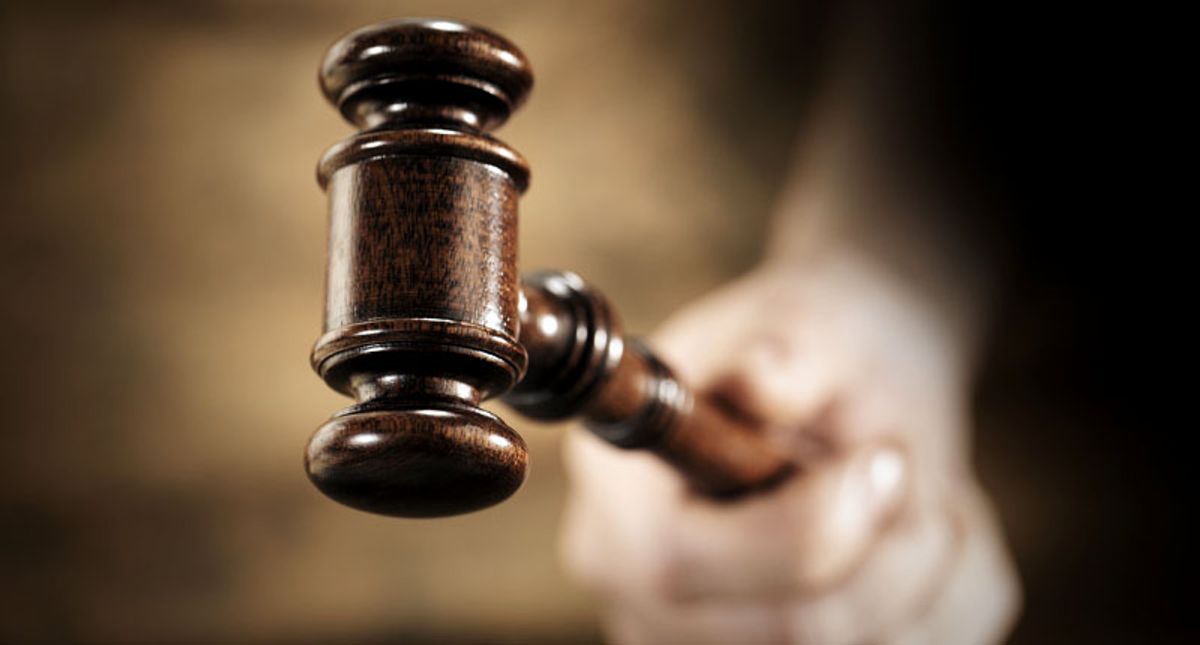
A judge's gavel (Shutterstock)

A GOP group failed to prove a university violated its First Amendment rights by banning it for alleged antisemitism, the New York Times reported

The University of Florida College Republicans were banned by the school from its Gainesville campus in March after a photo circulated showing two people giving a Nazi salute, the Times reported.

Members denied involvement with the photo, but the group was already accused of antisemitic and racist behavior, according to the Times. The University of Florida argued that it booted the group because a statewide campus Republican organization withdrew its charter, and the Gainesville branch no longer had any official affiliation, the Times reported.

Federal judge Mark Walker, from the U.S. District Court in Tallahassee, tossed a lawsuit brought by the group after finding that they didn't have enough evidence to show the University of Florida violated its free speech rights, according to the Times.

Walker also determined that the university had cause because the Republican Party of Florida or its campus affiliates never gave the group permission to use the term "Republican," per the Times, which couldn't immediately reach the lawyer for the college Republican organization for comment. The University of Florida declined to comment for the Times.
AI SWEATSHOP
'Gulag': Revolt ignites against Mark Zuckerberg inside Meta's massive AI unit

Daniel Hampton
June 12, 2026 
RAW STORY


FILE PHOTO: Meta CEO Mark Zuckerberg tries on Orion AR glasses at the Meta Connect annual event at the company's headquarters in Menlo Park, California, U.S., September 25, 2024. REUTERS/Manuel Orbegozo/File Photo

Mark Zuckerberg's $14 billion AI gamble hit a wall, and his own employees are losing it on internal calls.

One Meta worker interrupted a livestreamed presentation to thousands of colleagues this week, blasting the company over an open mic and demanding the call's leaders pass along a personal message to a Meta AI executive: "Tell him that he's a piece of s---," according to a recording reviewed by Wired.

A presenter buried their face in their hands, witnesses said. Other employees commented on the "spicy" opening before the meeting was muted.

The outburst was just one symptom of what the outelt described as record-low morale across Meta following CEO Mark Zuckerberg's AI restructuring — which included roughly 8,000 layoffs and the forced reassignment of about 6,500 engineers and product managers to a new unit called Applied AI.

"It's literally the gulag," a current employee told Wired. Another said the menial work is "soul-crushing." Engineers say they have no choice but to join or leave the company entirely, and some have begun referring to themselves as "draftees."

The discontent comes weeks after more than 1,600 Meta employees signed a petition demanding the company halt its program monitoring U.S. workers' clicks and keystrokes to generate AI training data. The new Applied AI unit is part of Zuckerberg's sprawling, multibillion-dollar push to compete with rival AI firms.

The Beautiful Game Meets the Border Guard


 June 12, 2026

Somali World Cup soccer referee, Omar Artan, who was banned from entry into the US. Photo: Omar Artan’s Facebook page.

I know Pete Hegseth put his foot in his mouth and took his eye off the ball on a beach in Normandy the other day when, during a D-Day anniversary gathering, he declared: “Sadly, today, different European beaches are stormed by different dangerous ideologies.”

Critics described the speech as grotesque and inappropriate for such a solemn and commemorative occasion. Yet if Hegseth was trying to project an image of a vigilant and uncompromising America, events surrounding the World Cup have suggested that message is being heard rather more widely than intended.

A winger receives the ball on the touchline and, with three defenders converging, pirouettes through.

You know something is amiss when a World Cup referee is denied entry to the United States while Canada and Mexico appear to present no such obstacles.

That is what happened when Somali match official Omar Artan was refused entry because of “vetting concerns”. I do not know the details of the case, but after arriving at Miami International Airport on a diplomatic passport, Artan was stopped by US Customs and Border Protection. Nor was this any ordinary referee. Artan—widely regarded as Africa’s leading official—was the recipient of the 2025 CAF Men’s Referee of the Year award. He was an esteemed professional effectively shown the red card by one of the tournament’s host nations and held for eleven hours. Perhaps it was naive of him to think there would be no problems given that around eighty per cent of Somali visa applications are refused.

It did not end there.

Aymen Hussein, the Iraqi international nicknamed Abu Tubar, was reportedly subjected to more than six hours of questioning upon arrival in the United States. He was eventually allowed entry, but Iraq’s team photographer was not. This is not how to win friends and influence people. Every footballing nation follows its team to the World Cup. Support staff are part of that travelling football family too.

Elsewhere, Uzbekistan’s players faced much longer visa processing times than the Dutch players they happened to be playing in a pre-tournament friendly. Such unequal treatment breeds not only frustration but resentment. The online backlash was immediate.

A playmaker threads a pass through a forest of legs.

For a tournament that prides itself on bringing the world together, these incidents send precisely the opposite message. Football’s greatest competition is supposed to transcend borders, politics and prejudice. Instead, too many teams have found themselves confronting bureaucracy, suspicion and barriers before they have even stepped onto the pitch.

Even if this is intended to signal that America’s borders are secure and uncompromising, it is not a good look for any host nation. Nor is it in keeping with the spirit of the World Cup.

Nor were those isolated incidents.

Swiss striker Breel Embolo found his visa placed under review and was unable to join his teammates until several days after the rest of the squad had assembled. Perhaps less surprisingly, given renewed tensions between Washington and Tehran, the Iranian national team spent days navigating visa procedures through the US consulate in Turkey. Entry permissions were reportedly limited to match-day requirements, while a significant number of delegation members were denied visas altogether.

South Africa’s national team also arrived later than planned after visa complications affected members of its travelling party. The episode inevitably raised awkward questions. At a time when Washington was publicly welcoming selected groups of South African migrants and refugees, critics wondered whether footballers from parts of the Global South were being afforded the same urgency and consideration.

A full-back races shoulder to shoulder with an attacker and then, at precisely the right moment, hooks the ball away.

The stories kept coming.

Members of the Uzbekistan squad reportedly faced unusually intrusive security procedures, including searches involving bomb-sniffing dogs. Images and video footage of this circulated internationally, attracting considerable attention and criticism.

Supporters from Europe have not been entirely immune either. Some Scottish fans who qualified for visa-free travel under the ESTA programme saw their authorisations revoked shortly before departure. Others, having already purchased match tickets and accommodation, found themselves unable to travel after visa applications were delayed or rejected, leaving them substantially out of pocket.

The Senegalese delegation experienced repeated secondary inspections and extensive searches at ports of entry, disrupting preparations. Staff members complained of humiliating treatment and some openly alleged racial bias in the way they had been handled.

Behind the headlines were dozens of less-publicised cases. Coaches, medical staff, analysts, interpreters and team officials encountered visa delays that prevented them from travelling with their squads. Family members of players found themselves unable to attend the tournament because applications remained unresolved or were rejected outright.

A striker rounds the goalkeeper with a touch so measured.

Taken individually, each case could be dismissed as an administrative complication or security precaution. Collectively, however, they painted a different picture: a tournament in which access appeared unevenly distributed and in which nationality often seemed to determine how smoothly one crossed the border.

Whether that perception is entirely fair became almost beside the point. Perception matters in international sport. The World Cup is supposed to be football’s greatest celebration of openness and global participation. Instead, stories of delayed visas, lengthy interrogations, missed flights and disrupted preparations threaten to become an unwelcome subplot to the tournament itself.

For FIFA, the question is an uncomfortable one: what is the point of awarding the world’s biggest sporting event to a host nation if some of the world’s players, officials, staff and supporters struggle simply to get through the front door?

A winning goal arrives after twenty passes.

Peter Bach lives in London.


World Cup watchers loudly boo US during National Anthem

CANADIANS, EH

Bennito L. Kelty
June 12, 2026 
RAW STORY


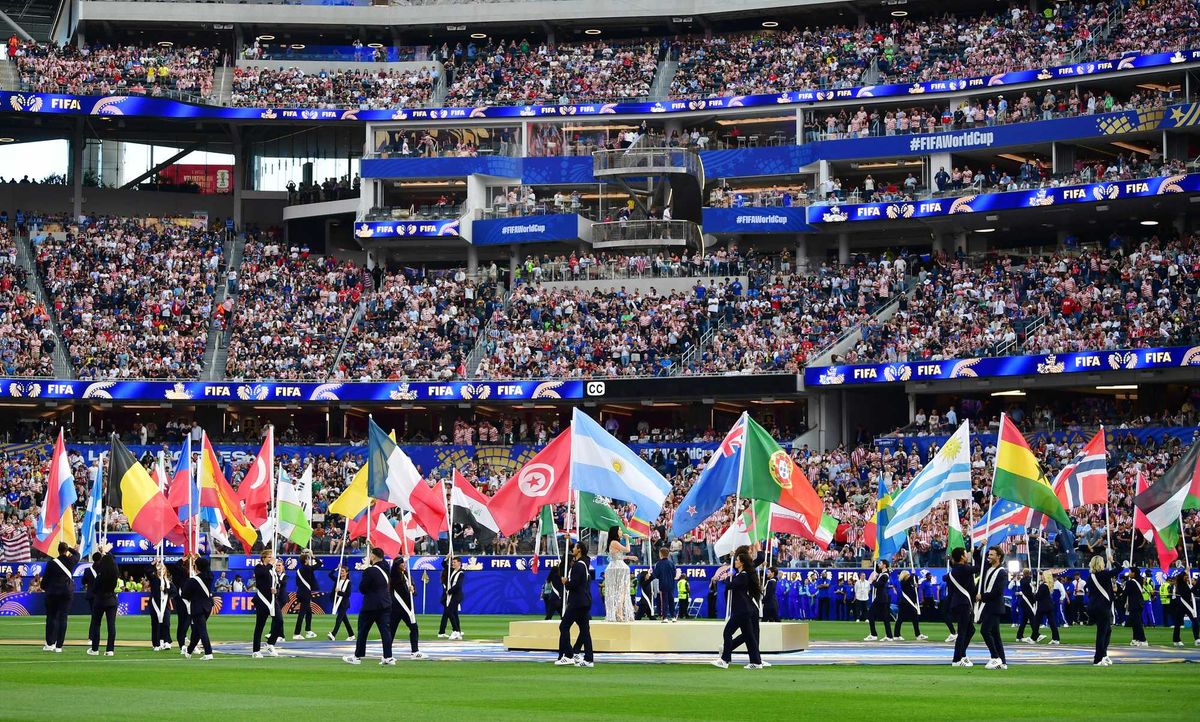
Soccer Football - FIFA World Cup 2026 - Group D - United States v Paraguay - Los Angeles Stadium, Inglewood, California, U.S. - June 12, 2026 Volunteers parade the flags of participating nations during the opening ceremony before the match IMAGN IMAGES via Reuters/Gary Vasquez

World Cup audiences showed their anger with the United States by booing renditions of the Star-Spangled Banner.

Canadian spectators at a watch party jeered nonstop during the U.S. National Anthem at the opening of the U.S. versus Paraguay match in Los Angeles, according to a social media video.

Those boos followed heckling and hissing as the U.S. flag came out during the opening ceremony of the Canada versus Bosnia match in Toronto earlier in the day, per more video.


Trump was notably booed during his appearance at Madison Square Garden when the Knicks played the Spurs during Game 3 of the NBA Finals.


Different Characteristics Of Innovation In China And The United States – Analysis

June 13, 2026 
 Anbound
By Yang Xite

Recently, the story of a group of young Chinese footballers has sent shockwaves through the Chinese football community. Dong Lu, a former journalist, took a group of teens to Europe to compete in youth tournaments. Across Italy, they went head-to-head with the youth academies of established European clubs like Everton and Fiorentina. In contrast to the usual narrative surrounding China’s national team, these boys were not defeated. Instead, they won match after match, charging through the brackets to ultimately capture the tournament “championship” of amateur competitions. Even more fascinatingly, the team’s young talent, Li Haoyan, caught the eye of European scouts and officially signed with Barcelona’s La Masia U15 academy, making him the first Chinese teen in history to formally enter its ranks. La Masia is the cradle of global football icons like Lionel Messi, Xavi Hernández, and Andrés Iniesta. For a Chinese child to gain admission is proof in itself that, by the metrics of the European youth training system, he has what it takes, and that Dong Lu’s success is sound.

The reason this story is so captivating is not only because it is a rare piece of heartening news for Chinese football. Instead, it also exposes the deepest, most systemic flaws of the sport in China. For a long time, Chinese football has spent immense capital, built countless training bases, drafted endless blueprints, and convened innumerable meetings to produce concepts and ideas. Yet, the project that has finally offered a glimmer of genuine hope is one completely outside the official institutions, spearheaded by an outsider journalist.

As a former journalist, Dong Lu is far from being a conventional professional coach. In fact, establishment insiders have repeatedly targeted him, fixating on his lack of a formal coaching license. The irony, however, is that he led these teens into European grassroots youth tournaments, where the organizers do not really look at official certificates. Instead, they focus on how the youths actually play, whether the tournament is well-run, and whether everyone respects the rules. Under those exact conditions, this group of Chinese kids played hard and brought home trophies. Critics who obsess over bureaucratic licensing have attempted to disrupt live broadcasts through reporting to the authorities, yet this only creates the impression that procedural technicalities are being weaponized to target grassroots vitality. Such behavior is unseemly and does not encourage the pluralistic experimentations that the Chinese football world so desperately needs.


This reflects a broader pattern in China where those who do not really perform are from the orthodox establishment, while those who actually get things done find themselves micro-managed as targets of regulatory scrutiny. The former more often than not turn regulations, laws, and compliance into exclusionary tools, transforming credentials and certifications into barriers to entry for their exclusive circles. Under this kind of order, collective decay is deemed compliant, while individual achievement must be penalized. Such a system does not foster national progress. Rather, it entrenches vested interests through grassroots fragmentation, protecting the privileges of the few by dismantling the potential of the whole.

The true significance of Dong Lu’s case lies not in whether it is flawless, but in how it bypassed the highly inefficient traditional pathways of Chinese football. By leveraging grassroots organization, market-driven communication, and overseas competition, it has forged a uniquely Chinese path of innovation. It shares a similar logic with the Jiangsu Football City League, which enjoyed explosive popularity before leveling off. Neither was a carefully engineered project born in an institutional boardroom, as both sprouted organically from grassroots demand and public sentiment. The only difference is that while the Jiangsu Football City League’s momentum remained largely at the level of viral internet sensation, Dong Lu’s team could carry far greater weight if they can successfully crystallize a sustainable mechanism for player development.


This is true for football and for sports in general, but it is also the case for the economic sphere. More often than not, the most vibrant forces in China do not emerge from meticulously structured top-down planning, but rather from the fringes of the system, the cracks in the market, and grassroots experimentation. This is the defining characteristic of “Chinese-style innovation”. By contrast, “American-style innovation” relies on technological integration. It thrives on a peerless reservoir of technology and talent. Elon Musk can achieve monumental feats simply by drawing upon these ready resources. Meanwhile, China’s elite institutions like Tsinghua and Peking University rely on importing professors back from the U.S., possessing little foundational technology of their own. These professors struggle to write original papers, occasionally resorting to academic fraud just to get by. Therefore, completely unlike its American counterpart, Chinese-style innovation has always depended on breaking through from the periphery, overtaking on corners, and deeply mining latent potential. This means there is an entirely different path dependency, where success is driven not by scale or rigid order, but by the agility and boldness of “Chinese Elon Musks”.

The Chinese system undoubtedly has its strengths. It excels at mobilizing immense resources for major national undertakings, demonstrating powerful organizational and mobilization capabilities across infrastructure, industrial supply chains, social coordination, and national strategy. When the strategy is sound and the direction is right, it can project formidable strategic influence on the global stage and elevate China’s standing. However, the approach of mobilizing the whole nation for major projects cannot be universally applied, nor should it be used to lock down specific domains under official pretexts. The central government has never suggested that anyone can deploy state-level mobilization at a whim, let alone invoke national efforts without delivering meaningful results. Too often, the process of mobilization merely fragments into bureaucratic powers over approvals, resource allocation, certification, and interpretation. When it comes to major projects, at time there will be challenges and shifting external conditions. Over time, genuine Chinese-style innovation diminishes in the face of these institutional walls. While there are breakthroughs in American-style innovation, the Chinese counterpart frequently reverts to national mobilization, yet whether the next major breakthrough will actually materialize remains entirely uncertain.


Such is the major difference between the American and the Chinese-style innovation. Historically, Chinese-style innovation manifests primarily as institutional innovation, which is a practical outcome driven by a culture and spirit of breaking through barriers.

China is full of highly capable minds. Though individuals may not match the singular profile of an Elon Musk, their collective efforts create a massive force where quantity breeds scale, and scale builds systemic momentum capable of achieving extraordinary things. The bottleneck in the current economic climate is not a lack of innovative ideas among Chinese people, but rather that many ideas are deterred by institutional boundaries before they can ever be validated. It is not that Chinese entrepreneurs lack ingenuity, but that they must expend immense energy navigating policy, securing approvals, managing relationships, and ensuring they do not step out of line. Consequently, whenever Chinese-style innovation manages to break free from these institutional constraints, the market invariably finds a way, proving that the grassroots possess no shortage of talent and businesses possess no shortage of creativity.

ANBOUND’s founder, Kung Chan, suggests that the core of Chinese-style innovation often lies not in playing by the book but in allowing a certain number of people to think outside the box. The very essence of reform is to break away from established scripts. If everyone follows the standard playbook, strategic direction becomes meaningless, as routine compliance would suffice to avoid major errors.

Of course, breaking away from conventional scripts does not mean abandoning rules entirely. The real question is whether rules are designed to unleash productivity or to constrain it, which gets to the heart of the tension between deregulation and control. For the Chinese young footballers competing in Europe, matters involving safety, minor protection, contractual rights, and financial transparency naturally fall under the necessity of being controlled. However, if their achievements and the broader exploration of grassroots youth training are dismissed simply because Dong Lu lacks a conventional coaching certificate, that points to a failure of deregulation, indeed a deeply narrow-minded approach.

The same applies to the economic domain. The pressures currently facing the Chinese economy cannot be resolved simply by having more meetings or issuing more official documents. Local government budgets are strained, the real estate market is undergoing adjustments, platform debt pressures are mounting, consumer recovery remains sluggish, and corporate profit margins are being squeezed, all while the external trade environment is fraught with uncertainty. Under these circumstances, the force capable of truly revitalizing the Chinese economy remains the corporate sector, particularly private enterprises. China’s ability to maintain resilient export strength despite a high exchange rate, intense external competition, and geopolitical pressures is not the result of administrative directives. It is driven by countless private enterprises fighting tooth and nail for every single order in the global marketplace. They slash costs, optimize manufacturing processes, chase down clients, pivot to alternative markets, pioneer cross-border e-commerce, and restructure supply chains. While these efforts may not seem grand or high-tech on paper, they constitute the genuine lifeblood of economic vitality.


If this vitality is forced into a rigid institutional mold that demands everyone to operate under the same template, the same bureaucratic processes, and the same official rhetoric, then the economy will gradually lose its resilience due to excessive control and a lack of freedom. This balance between control and deregulation is precisely what Mr. Kung Chan addressed in his previous conceptualization of “Structural Socialism”. It is not a simplistic debate over whether more government involvement or more market participation is inherently better. Rather, it focuses on the developmental structure of the entire economic entity. It addresses which areas require concentrated state power and which require open competition. This is about which sectors demand a state-backed safety net and which should be left to market trial-and-error, and which stages require unified rules versus those that allow local governments and enterprises to explore on their own. When this type of structure is properly established, productivity can be unleashed on a massive scale. Conversely, if this structure is flawed, even the most abundant resources will simply be wasted within the bureaucracy.

All in all, the defining element of Chinese-style innovation is its willingness to deviate from conventions. Naturally, those who rely entirely on usual rules to maintain their positions will find this unsettling. When an outsider wins by ignoring the script, it exposes the fact that the established playbook is far from inviolable. When those outside the circle succeed, the monopoly of those within it begins to fracture. This holds true for football, for sports, and for the broader trajectory of economic development.


Final analysis conclusion:


The key to innovation in China is not only technical breakthroughs, but also whether the developmental structure can truly open up. By building an adaptive socio-economic architecture, China can resolve the tension between control and deregulation, clarify its institutional boundaries, and allow its true productive forces to fully flourish.


Yang Xite is a Research Fellow at ANBOUND, an independent think tank.

About Anbound
Anbound Consulting (Anbound) is an independent Think Tank with the headquarter based in Beijing. Established in 1993, Anbound specializes in public policy research, and enjoys a professional reputation in the areas of strategic forecasting, policy solutions and risk analysis. Anbound's research findings are widely recognized and create a deep interest within public media, academics and experts who are also providing consulting service to the State Council of China.
View all posts by Anbound →