Tuesday, May 26, 2026

Opinion

What is an encyclical? Inside Pope Leo's urgent warning about AI and the 'culture of power'

(RNS) — Encyclicals have become a way the Catholic Church presents its moral vision to the whole world, especially in the face of evolving developments and challenges that arise from economics and technology.


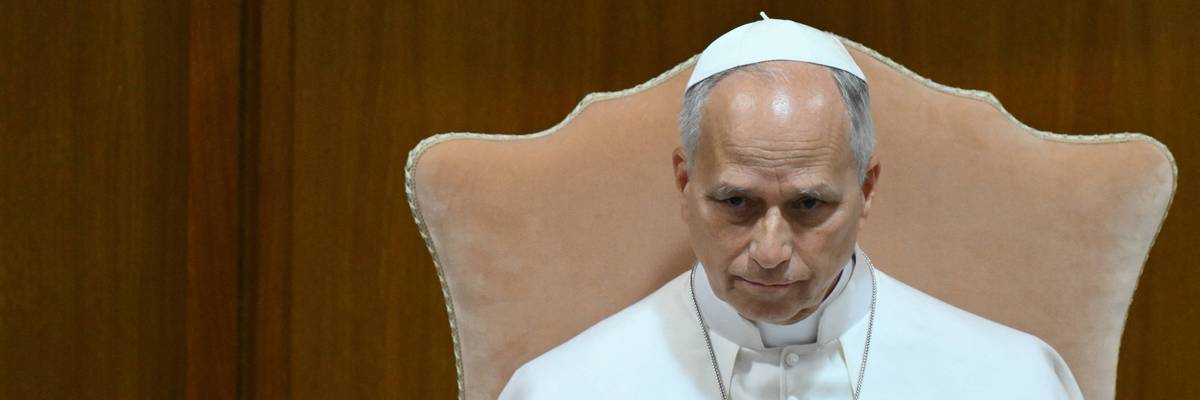
Pope Leo XIV talks to Anthropic co-founder Christopher Olah, right, and theologian Anna Rowlands, left, during the presentation of his first encyclical, “Magnifica Humanitas: On Safeguarding the Human Person in the Time of Artificial Intelligence,” at the Vatican, Monday, May 25, 2026. (AP Photo/Alessandra Tarantino)

Steven P. Millies
May 25, 2026
RNS


(RNS) — Like the encyclicals of his predecessors across the last 135 years, Pope Leo XIV’s “Magnifica Humanitas: On Safeguarding the Human Person in the Time of Artificial Intelligence” addresses the Roman Catholic Church to a present crisis facing all of humanity. Leo reminds us that the church “walks alongside humanity” and so the church cannot be “a stranger to the forces shaping society.” For these reasons, “Magnifica Humanitas” comes not just as a message for Catholics but, just as popes before him have offered their encyclicals, as a reflection for “all men and women of goodwill.”

For Catholics, an encyclical letter is an official teaching document. An encyclical defines doctrine, the things that Catholics believe. Popes have been writing them for centuries. Initially, encyclicals were letters directed only to bishops and they were intended to bind the whole Catholic Church together under a coherent, shared teaching. Often, the teaching related to internal theological matters such as the duties of bishops or the interpretation of Scripture. With Pope Leo XIII in 1891, the church began to address important social questions with encyclicals.

Encyclicals have become a way the Catholic Church presents its moral vision to the whole world, less with hope to convert anyone to Catholicism than as a ministry to the human family. In this way, “Magnifica Humanitas” joins a long and distinguished line of social encyclicals proclaiming, in Leo XIV’s words, that “social justice is a concrete way of following Jesus and remaining faithful to the Gospel.” The Catholic Church wants to pursue that vision of justice for and with all people.

Thinking about justice in 2026, Pope Leo has written a document that names “artificial intelligence” as the center of a crisis. Really, “Magnifica Humanitas” says much more than that. Pope Leo touches on the treatment of migrants and he addresses the evolving and metastasizing reality of war in our time. He also condemns abortion and euthanasia.

But the heart of the document is not any of those things, and even AI is here in the text only at the service of Pope Leo’s larger concern — the “equal dignity of all human beings.” The situation of humanity is always the subject of a social encyclical, especially in the face of evolving developments and challenges that arise from economics and technology. Leo writes that we must remember constantly that these things exist to be “at the service of the human person”; they must not “become a form of control” or exploitation. The church teaches that the common good of all people is the purpose of social life, “building a world in which everyone can flourish.” Like his predecessors before him, Leo focuses his attention on what frustrates human flourishing.

We begin to understand what holds “Magnifica Humanitas” and all of Catholic social teaching together where Pope Leo refers to the “Promethean dreams” of those who profit from technology today in our world. Prometheus was the figure in Greek myth who stole fire from the gods of Olympus. Fire was the possession of the gods; it gives heat and light and it is useful for forging tools. In Aeschylus’s tragedy, Prometheus confesses he stole fire so mortals would “learn much craft and skill.” In this way, mortal women and men could become like the gods. This is what “Promethean” usually refers to, the hope to escape from the limitations of our human lives and become like gods. Mary Shelley’s “Frankenstein” was subtitled “The Modern Prometheus” as her character Victor Frankenstein gives life as God gives life. And coincidentally, in the month before “Magnifica Humanitas” was published, journalist Karen Hao published her book, “Empire of AI: Inside the Reckless Race for Total Domination,” where she describes the Silicon Valley search for “artificial general intelligence,” a “superintelligence [that] could replicate, and then surpass, human intelligence.” The Promethean quest goes on.

What comes into focus as we read “Magnifica Humanitas” is that our contemporary problems may not be as old as Aeschylus, but they are not new either. First industrialization, then the nuclear age, then the explosion of “the financial intermediation sector” and the rise of “finance for its own sake” — these all pre-dated artificial intelligence. They all have worked to reduce a human being to an exploitable factor in production for profit or to make us into helpless hostages to the geopolitics of an arms race. Economic and technological developments have raged across the last two centuries more quickly than we have been able to find what Leo calls “an overall vision” for how those developments serve the common good of humanity. We have faced a “danger of humanity becoming a victim of its own achievements” throughout the modern period. The church has been responding with documents like “Magnifica Humanitas,” but now with AI the pace of those developments is accelerating. The alarming and gathering danger is real.

The sense of danger in “Magnifica Humanitas” is palpable, especially in its recurring theme of the inadequacy of governments in the face of these threats. Leo writes that “the main drivers of [technological] development are private … parties that are endowed with resources and the capacity to intervene that surpass those of many Governments.” I might be more tempted to say “most governments” because, as Leo observes, “AI tends to amplify the power of those who already possess economic resources, expertise and access to data.” Technological and economic developments have made the rich richer, the powerful more powerful. Throughout history, in the best of cases, governments have been those institutions that could speak for the voiceless and challenge the power of great wealth. Pointing to the political theorist Hannah Arendt, Leo laments how technology has threatened “the distinction between true and false” that makes politics possible. Our institutions are not up to the challenge we face as the world contemplates its first trillionaire.

Pope Francis condemned what he called “the technocratic paradigm that seeks to reduce everything to an object to be dominated.” Pope Leo agrees. What dehumanizes us ultimately results from a misguided relationship to technology and economics — a “tendency to let the logic of efficiency, control and profit alone shape personal, social and economic life.” Technology and economics themselves are not bad things so long as we remember that they are at the service of all people, not the few. Leo is clear that we ought “neither to demonize nor idolize” the tools of technology or economics, but see them for what they must be — instruments of the common good for all.

In a 1995 encyclical, Pope John Paul II famously opposed a “culture of life” to a “culture of death.” With “Magnifica Humanitas,” Pope Leo issues a stern warning that the world is becoming overwhelmed by a “culture of power,” characterized by the technocratic paradigm as well as our increasing tendency to embrace polarization and violence. The needs not just of the most vulnerable people but of all people are being sacrificed for the good of a very few and even governments are not up to the task of defending us.

For these reasons, the moral voice of the Catholic Church and other faith communities never has mattered more. Now in the second year of his papacy, Leo’s voice is clear and consistent. The crisis now is impossible to ignore. And with “Magnifica Humanitas,” the world has a valuable instrument to reflect on and call us all to action.

(Steven P. Millies is the author of “Joseph Bernardin: Seeking Common Ground” and “A Consistent Ethic of Life: Navigating Catholic Engagement With U.S. Politics.” The views expressed in this commentary do not necessarily reflect those of Religion News Service.)
In his first encyclical, Pope Leo XIV says AI must serve humanity, not the powerful few

VATICAN CITY (RNS) — In ‘Magnifica Humanitas,’ Leo's 83-page manifesto on AI, the pope tackles the social, economic and political challenges associated with artificial intelligence.


Pope Leo XIV talks to journalists as he leaves his residence in Castel Gandolfo, on the outskirts of Rome, May 5, 2026. (AP Photo/Gregorio Borgia)

Claire Giangravè
May 25, 2026
RNS


VATICAN CITY (RNS) — Pope Leo XIV took direct aim at the power of Big Tech in his first encyclical on Monday (May 25), warning that artificial intelligence risks widening inequality, weakening democracy and undermining what it means to be human.

The 83-page papal teaching document, titled “Magnifica Humanitas” (Magnificent Humanity), frames AI as the new industrial revolution and makes an appeal to “disarm AI” by removing it from military and economic interests, subjecting AI companies to stricter state and international regulations and inviting the broad participation of individuals and communities in shaping the future of this rapidly developing technology.

“Disarming AI means freeing it from the mentality of ‘armed’ competition, which today is not limited simply to the military context, but is also an economic and cognitive phenomenon,” Leo wrote. “Disarming does not mean renouncing technology, but preventing it from dominating humanity,” he added.

“For this reason, merely regulating it is insufficient; it must be disarmed, welcoming and accessible,” the document read.

Leo also took on Big Tech in the document, highlighting the dangers of having a few wealthy individuals influence the future and livelihood of humanity, widening the gap “between those who can participate in the digital revolution and those who remain on the margins.”

“AI tends to amplify the power of those who already possess economic resources, expertise and access to data,” he wrote. “Small but highly influential groups can shape information and consumption patterns, influence democratic processes and steer economic dynamics to their own advantage, undermining social justice and solidarity among peoples.”

Pope Leo presented the encyclical on Monday at the Vatican’s Synod Hall, where he referenced the 1891 encyclical ‘Rerum Novarum’ (On New Things), written by his namesake Pope Leo III to address the challenges posed by the industrial revolution of the 19th century.

“I feel entrusted to oversee another great transformation through the eyes of faith, with the clarity of reason, and with openness to the divine mystery, with the cry of the poor and earth resound in my heart,” Leo said, adding that the encyclical was the result of deep listening to scientists and engineers, political leaders and public officials, parents and teachers deeply concerned for the future of future generations.

“Disarming is not enough, we must build,” he added, calling for broad participation in the programming, regulation and benefits of AI.


Chris Olah during a podcast appearance in 2024. (Video screen grab)

The pope presented the document alongside high-ranking Vatican prelates, Catholic theologians and Chris Olah, the co-founder of Anthropic, the American AI company behind Claude that has been pushing to brand itself as safety-oriented and ethical.

Speaking at the event, Olah said that AI development “operates inside a set of incentives and constraints that can sometimes conflict with doing the right thing,” citing commercial concerns, geopolitical pressure and pride and ambition.

For that reason, he said, “we need more of the world – religious communities, civil society, scholars, governments – to do what His Holiness has done here: to take this seriously, to look closely, and to push events in a better direction.”

At the heart of the encyclical is the insistence that human beings take precedence over artificial intelligence. The dignity of the human person “does not depend on a person’s abilities, wealth or position in life, nor on the right or wrong choices made,” but simply by virtue of existing, the encyclical argues.

In a time of AI chatbots, Leo wrote that the risk is not just that someone interacting with an AI agent might believe they are talking to a person, but that they might lose the desire to seek other people at all. And handing over decision-making to machines may “encourage excessive reliance and the search for ready-made answers, and weaken personal creativity and judgment.”

In the document, the pope recognizes the positive impact AI innovation can bring to human society and to the care of the environment, while also warning of its dangers. “Technology is never neutral,” Leo wrote, adding that it’s an expression of the interests and stakeholders behind it.


“When such power is concentrated in the hands of a few, it tends to become opaque and evade public oversight, increasing the risk of distorted forms of development that give rise to new dependencies, exclusions, manipulations and inequalities,” Leo wrote.


Pope Leo XIV arrives at the swearing-in ceremony for 28 new Pontifical Swiss Guards in the Paul VI Hall at the Vatican, May 6, 2026. (AP Photo/Andrew Medichini)

Leo argued that applying moral and ethical principles to AI models cannot happen once it has wreaked havoc on society — such values must be applied in its construction. “For AI to respect human dignity and truly serve the common good, responsibility must be clearly defined at every stage: from those who design and develop these systems to those who use them and rely on them for concrete decisions,” he wrote.

Pushing back against executives who resist restrictions on AI development, Leo explained that “calling for prudence, rigorous evaluation and even, at times, a slower pace in adopting AI does not mean opposing progress; instead, it is an exercise of responsible care for the human family.”

In a nod to AI models that have adopted ethical constitutions — such as Anthropic — the pope said such frameworks must still be discussed and subjected to criteria of shared social justice. “A more moral AI is not enough if that morality is determined by a few,” he wrote.

The document also takes on popular Silicon Valley philosophies, transhumanism and posthumanism, which the pope defined as a series of assumptions “that interpret progress as surpassing the human condition.”


These philosophies view limitations — including illness, disability, old age and vulnerability — as something to overcome, Leo wrote, but “we must remember that humanity flourishes not despite limitations, but often through them,” adding that a life without limitations would ultimately mean not being human.

Víctor Manuel Fernández, who heads the Vatican’s doctrinal department, said at the presentation of the document that unlike these philosophies, claiming “that humanity has reached its expiration date and must simply be replaced,” Catholic teaching believes that “every human being has infinite dignity.”

In contrasting the dangers of AI, Leo pointed to truth as “an essential element of democracy” and urged for people to receive education on AI, especially the young. While AI promises to alleviate the burdens of work, Leo warned that “it frequently forces workers to adapt to the speed and demands of machines, rather than machines being designed to support those who work.”

In this fourth industrial revolution, the priority must be “the protection of employment opportunities and the irreplaceable role of the individual,” Leo wrote.

As global economic disparity grows, the pope warned “technological progress will inevitably produce structural inequalities.” Leo called for tax systems that ease the burden on the most vulnerable and demand more from those with greater resources, while the benefits of innovations should be transparent and shared with the entire community.

The pope warned against “new forms of slavery,” highlighting the trail of human and environmental exploitation behind AI — from the models training on copyrighted material to the extraction of rare minerals used in AI hardware. Leo also reflected on the history of the church’s behavior toward slavery, which was not fully denounced until the 19th century by Leo XIII, highlighting the slow evolution of Catholic doctrine over time.


“For this, in the name of the Church, I sincerely ask for pardon,” Leo wrote.


People greet Pope Leo XIV upon his arrival in Yaounde, Cameroon, April 15, 2026, on the third day of an 11-day apostolic journey to Africa. (AP Photo/Andrew Medichini)

NEW: Bring more puzzles and play to your week with RNS Games

There is a “new face” of colonialism, Leo argued, which doesn’t only dominate bodies, but also appropriates data: health flows, epidemiological profiles, genetic maps and demographic data. “These have become the new rare earths of power,” Leo said, adding that AI technology in the hands of few, profit-oriented individuals or groups represents a new form of colonial dominion.

“Here lies one of the most urgent moral challenges of our time: to ensure that shared knowledge becomes a true common good rather than an instrument of dominance. This requires restoring to individuals not only the data that describes them, but also the ability to decide how it is used, by whom and for whose benefit,” he wrote.

A lengthy portion of the document reflects on the topic of war, which the pope has denounced repeatedly in his first year as pontiff. The military use of AI “must be subject to the most rigorous ethical constraints,” he wrote, adding that responsibility for military and especially lethal action should remain with human beings, not machines.

He called for traceability within the decision-making processes of warfare, for human oversight, and for the creation of international laws to address the increased use of automated weapons and their consequences.


The document is based on the contributions of past pontiffs, starting with Pope Leo XIII, and draws on Catholic social teaching, the church’s tradition of applying moral principles to social, economic and political life, with human dignity and the common good at its center.

Solidarity and caring for one’s “neighbor” are key aspects of Leo’s reflection, with particular concern for the next generations.

Social justice “is not merely about the fairer distribution of resources or the correction of current injustices, but also assumes a restorative dimension,” Leo wrote. Applying the same principle to the digital realm, the pope warned against “new forms of exclusion and deprivation of freedoms,” such as invasive surveillance, communities denied access to basic technologies and groups harmed by opaque algorithms that perpetuate discrimination.

In this context, he also addressed migration as a “litmus test for social justice today.”

In the introduction, Leo draws from the Bible to juxtapose the city of Babel, with its pursuit of power and self-sufficiency, and Nehemiah’s rebuilding of Jerusalem, oriented on prayer and the participation of families and communities. This reflects the teachings of the pope’s religious order, founded on the principles of St. Augustine, that contrast love for the earthly city, structured around concepts of power and dominance, with the longing for the heavenly city of God.

“As throughout history, these two loves continue to contend for dominance in our hearts today. The age of AI is no exception: the construction of Babel or the rebuilding of Jerusalem begins within each one of us,” he wrote.

The document has already received strong endorsement from Catholics and tech experts.

“This is a landmark opportunity for the world to look at a new technology and really think about what it is for,” said Brian Patrick Green, director of technology ethics at Santa Clara University’s Markkula Center for Applied Ethics.

“What is the purpose of this technology? What is it supposed to do in the world? How can it help people? What do we need to do in order to make sure that this technology does the best that it can do for the most people in the world?”

This story will be updated.
In First Encyclical, Pope Leo Warns Against Unrestrained AI in Hands of Mega-Rich Few

“The pursuit of greater profits cannot justify choices that systematically sacrifice jobs, because the human person is an end, not a means.”


Pope Leo XIV attends the presentation of his first encyclical, “Magnifica Humanitas,” at The Vatican on May 25, 2026.
(Photo by Alberto Pizzoli/AFP via Getty Images)


Jake Johnson
May 25, 2026
COMMON DREAMS

Pope Leo XIV on Monday released a 42,000-word encyclical calling for government regulation of artificial intelligence and implored world leaders to ensure the burgeoning technology is used for the benefit of all humankind—not concentrated in the hands of a powerful, profit-seeking few.

Leo warned in the first major theological document of his papacy that unrestrained AI and its potentially far-reaching impacts—including mass job loss, environmental degradation, and increasingly catastrophic warfare—heightens the “risk of dehumanization,” subjugating much of humanity in the name of “greater efficiency” and technological advancement.

“As with every major technological shift, AI tends to amplify the power of those who already possess economic resources, expertise, and access to data,” Leo wrote in the document, titled Magnifica Humanitas. “In light of the common good and the universal destination of goods, this raises serious concerns, since small but highly influential groups can shape information and consumption patterns, influence democratic processes, and steer economic dynamics to their own advantage, undermining social justice and solidarity among peoples.”

Leo warned that eliminating jobs en masse by replacing human beings with robots—an aim of some of the most powerful companies in the world, including the e-commerce behemoth Amazon—without adequate protections and compensation for impacted workers would be morally obscene and calamitous to social order.

“A society that guarantees employment to only a small fraction of the population, despite having a high level of technical development, risks exposing many to forced inactivity, a lack of responsibility, and the absence of daily tasks and stimuli, resulting in human and cultural impoverishment,” the pope wrote. “This creates a paradox of material progress and anthropological regression that undermines the foundations of a just and stable social peace.”


Leo cautioned against the growing use of AI in military conflict, a warning delivered alongside the CEO of the artificial intelligence firm Anthropic, which was embroiled in a tense and public dispute with the Trump administration earlier this year over the use of the company’s technology for military purposes and mass surveillance. The pontiff has also clashed with the Trump administration, which has attacked Leo for publicly criticizing the US-Israeli war on Iran.

“No algorithm can make war morally acceptable,” reads the pope’s encyclical. “AI does not remove the intrinsic inhumanity of conflict; indeed it can only bring about conflict more quickly and render it more impersonal, lowering the threshold for resorting to violence, transforming defense into threat prediction and thus reducing victims to data. In this way, it will accustom us to the idea that violence is inevitable and needs only to be optimized.”

Leo, whose warnings about the implications of rapid advancements in AI technology echoed concerns expressed by progressive lawmakers in the US and around the world, made clear that he doesn’t view new technology, including AI, as inherently “antagonistic to humanity,” noting that “technological development has significantly improved the living conditions of humanity.”

“At the same time, each phase of progress has also revealed the ambiguity of tools that can cause harm when not oriented toward the good,” Leo wrote. “It is necessary to establish adequate regulatory tools capable of upholding justice and curbing the distorting effects of technological power.”

“Crucial questions impose themselves on our conscience,” he added, “and can no longer be avoided: Where are we going? Toward what goal do we wish to orient ourselves? What direction should we choose as a people and as a human community?”
Source: Open Democracy

SANTA MARTA, COLOMBIA — As the US and Israeli war against Iran puts oil at the centre of global concerns, a new intergovernmental coalition is seeking to accelerate the energy transition outside the UN’s climate change convention (COP) system, which has been trying – and failing – to phase out fossil fuels for three decades.

The coalition’s 57 members, who account for almost half of global GDP, met last month in the Colombian coastal city of Santa Marta for the First Conference on the Just Transition Away from Fossil Fuels, co-hosted by the governments of Colombia and the Netherlands.

Colombian President Gustavo Petro said the initiative was established after COP30 ended in November with no concrete resolution on phasing out the use of fossil fuels, which account for 75% of global greenhouse emissions. Since then, it has only been made more urgent by the oil crisis created by the Iran war.

“The ongoing disruptions due to the hostilities in the Strait of Hormuz have underlined that reducing fossil fuel dependencies is critical. It is essential to keep our planet livable, to safeguard energy security, and to build economic resilience to volatile fossil fuel markets,” states the conference’s final communiqué.

Rather than duplicating COPs’ efforts to establish new greenhouse gas reduction targets, the coalition agreed “to advance and accelerate the implementation of agreed goals” by applying pressure and strengthening international alliances within the multilateral negotiations adopted by consensus, the text says.

The conference was significant for its discussions on what “the consequences of decarbonisation” mean for oil exporters, said Susana Muhamad, Colombia’s ambassador for the initiative to create a Fossil Fuel Non-Proliferation Treaty. It was the first time such conversations have been had at “a diplomatic forum on climate issues”.

“The fact that a country like Nigeria [which depends on crude oil exports] is here at a high level is very important, because they are not necessarily saying we are going to stick with oil until the end, whatever the cost,” she told openDemocracy. “They are recognising the vulnerability of being economically dependent on those exports.”

This need for economic freedom from oil was recognised by President Petro. “Can capitalism adapt to an energy system that is not fossil-based?” he asked an auditorium of delegates from participant countries, including Brazil, Mexico, Nigeria, the United Kingdom, France and the European Union as a bloc, as well as small island states in the Caribbean and the South Pacific.

Noticeably absent were representatives of the United States and China – the world’s two biggest carbon emitters – as well as Russia and India, all of whom were deliberately not invited to avoid the kind of deadlocks and obstructionism that led to the blocking of efforts to create a roadmap to phase out fossil fuels at COP30.

“When you make a plan, you first call your closest friends, and then you send the invitation to the rest,” Juan Carlos Monterrey Gómez, Panama’s Ministry of the Environment’s special representative for climate change, told openDemocracy.

Monterrey Gómez said the initial focus was instead on strengthening a group of countries committed to phasing out fossil fuels. “With this first group, we can have an honest conversation, without administrative roadblocks. This conversation has never taken place before, and that is historic.”

Other attendees had mixed feelings about the invite list.

While Claudio Angelo, an international policy coordinator at the Climate Observatory, a network of Brazilian environmental organisations, agreed that inviting Donald Trump’s climate-denying US administration would have been “unnecessary”, he told openDemocracy: “China should be here, as it supplies renewable energy technology to the whole world.”

‘Oil is nobody’s friend’

As well as the official delegates, the conference was attended by representatives of social movements, academia, multilateral institutions, parliaments, trade unions, Indigenous and Afro-descendant peoples, women and diverse communities, the private sector, farmers, NGOs, children and young people.

In the days leading up to the event, Santa Marta hosted scientific and civil society debates, where activists and Indigenous peoples urged governments to accelerate the energy transition.

Their calls came as a new report by 350.org, a global grassroots movement to accelerate the transition away from fossil fuels, found that consumers pay three times for fossil fuels: through public subsidies, on their bills, and through the natural disasters that are a direct consequence of the climate crisis.

“Oil is nobody’s friend,” said Angelo, noting that the international community has viewed the energy transition more favourably as solar and wind technologies have become more accessible over the past decade. Installed capacity of renewable energy was 50% higher last year than in 2023 and almost all new energy demand is being met by renewable sources, according to the final communiqué of the meeting.

For Colombian environment minister Irene Vélez Torres and Stientje van Veldhoven, the Dutch minister for climate and green growth, the event marked the beginning of a new era of global environmental democracy.

“This new method of dialogue between civil society, parliamentarians and governments represents a new multilateral collective force that is not bound by consensus and is led by women,” Torres said at the conference’s close. Veldhoven agreed, saying the meeting was the first step towards a proactive coalition of governments that do not negotiate, as happens at the UN, but rather collaborate with one another.

At the conference, civil society and governments agreed on steps to address the inequalities in the energy transition, which is taking place primarily in the Global North, rather than in countries where it is most needed but that lack the financing for green energy. These included drafting national road maps for the phase-out of fossil fuels, in addition to the global road map that will be discussed at COP31 this year.

“This is a contribution towards resolving common and interdependent problems through dialogue, discussion and cooperation, rather than through military means,” said Muhamad, who was Colombia’s Environment Minister until early 2025.

Harjeet Singh, the founder and director of the India-based Satat Sampada Climate Foundation that advocates for global climate justice, said the war in Iran has opened people’s eyes to the vulnerability inherent in dependence on fossil fuels.

“In a recent statement, India’s road and transport minister said that the era of diesel and petrol vehicles is over. It’s all about clean fuels, biofuels and electric vehicles,” Singh told openDemocracy.

But this realisation is meaningless without “international cooperation in green finance”, he said, noting that India self-funds 80% of its climate initiatives despite being a part of the Global South – and needs trillions more dollars for its transition away from fossil fuels.

Democracy, climate denialism and the future

Carlos Nobre, a researcher at the University of São Paulo and a member of the scientific panel for a Global Energy Transition, highlighted the risk that citizens might elect leaders who deny climate change. This is a particularly pressing worry in Amazonian countries such as Brazil, Colombia and Peru, where far-right parties that deny the climate crisis or are committed to expanding fossil fuels stand a chance of winning presidential elections taking place this year.

“It is not just that the far right seeks to maintain dependence on fossil fuels, but that they also intend to push ahead with deforestation and the removal of protections for indigenous peoples. We must not head towards ecocide, that is, ecological suicide,” said Nobre in an interview with openDemocracy.

Colombia remains the world’s deadliest country for environmental activists – an issue that must be addressed at the election on 31 May and can serve as a gateway to discussing wider environmental policies, says Liberal Party congressman Juan Carlos Losada, a member of Colombia’s Parliamentarians for a Fossil-Fuel-Free Future network.

Losada believes the candidate of the ruling left-wing Historic Pact coalition, Iván Cepeda, “will clearly prioritise the defence of human rights at a local level, and other issues will fall under that umbrella”. Polls currently suggest Cepeda will lead the election’s first round, although most analysts believe he is unlikely to reach the 50% threshold needed to win outright.

The other presidential candidates say “that if they come to power, they’ll go all out to extract every last bit of what exists,” Losada said, referring to the right’s proposals to intensify coal mining and introduce fracking.

“The debate on energy security has changed, and fossil fuels are seen as part of the insecurity issue,” said Brazilian Ana Toni, the executive director of COP30, noting: “It’ll be interesting to see how different actors act from now on.”

Speaking to openDemocracy at a press conference, Toni acknowledged the contradictions facing even climate-conscious governments, such as Brazil’s. “I don’t know if this conference is going to change the mind of Petrobras and its exploration plans,” she said, referring to Brazil’s state-owned oil company, which last year obtained permission for new exploration 500 kilometres from the mouth of the Amazon, days before world leaders met to debate the climate crisis at COP30.

“But it is changing the mind of many people in many countries,” she argued, noting that a move away from fossil fuels is becoming more popular as wars, supply shocks and extreme weather events expose the risk of oil and gas dependence. “When we talk about the transition, we do it not just because of climate change but also because of energy and economic security, and peace.”

These risks will be on full display at next year’s conference, where delegates will visit one of the countries most threatened by rising sea levels: Tuvalu, a South Pacific island nation that is co-hosting the second conference with Ireland.

“We, the small Pacific Islands, have no choice but to be ambitious,” said Brianna Fruean, a climate activist from Samoa, at a rally during the Colombian conference. “The next summit in Tuvalu will put faces to our countries and bring world leaders to the frontline of the climate crisis.”


This article was originally published by Open Democracy; please consider supporting the original publication, and read the original version at the link above.
Source: New Politics

While the eyes of the world are fixed on the Strait of Hormuz, China, Russia’s war against Ukraine, and sometimes on the US created crisis in Cuba, Colombia is in the middle of a very close, tense and consequential election. The results will have repercussions throughout Latin America.

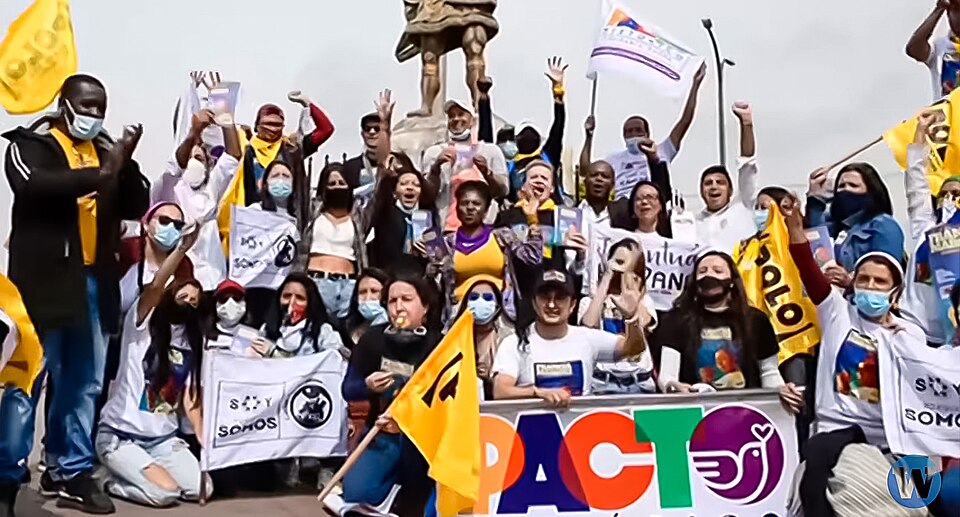
The Pacto Historico (Historic Pact), the rising left wing party here, is poised to win a historic second presidential election. By doing so, it can stop the tide of losses by the left in important elections from Chile to Ecuador.

Legislative elections on March 8 made the Pacto the biggest party in Colombia in every respect. The first round of the presidential elections is scheduled for May 31, but every poll indicates that a second round between the top two first round vote getters will take place on June 21st.

The front runner is the Pacto’s Ivan Cepeda, but two right wing candidates, Senator Paloma Valencia of the Centro Democratico, and an attorney named Abelardo de la Espriella,  are engaged in a bitter fight for second place.

The Centro Democratico is the extreme right wing party of former President Alvaro Uribe.

Uribe has maintained tight control of Colombia’s right wing through his personal control of the Centro Democratico. A politician who had been on the USA’s list of drug dealers and who had been close to Pablo Escobar during his career in Medellin and Antioquia where he and his family are major landowners, Uribe was President of Colombia from 2002 to 2010. He was responsible for rolling back workers’ rights and for building up Colombian paramilitary organizations. He was also a close ally of US President Clinton and his Plan Colomba.

A Multi-Party Presidential Race

The president is elected in a two round system. Although the race began with several dozen candidates, there are now only twelve. Some of the others were eliminated in the primaries of parties, the primaries of coalitions of parties, or failure to gather enough signatures to appear on the ballot. Still other candidates left the race to support one or another candidate.

More importantly, the race has resolved itself into two parts: the left versus the right, and the right versus the right.

Most of the left has united in and around the Pacto Historico and its candidate Ivan Cepeda.

From Petro to Cepeda

Four years ago, Colombia elected its first ever leftist president, Gustavo Petro. Since then, Petro has struggled to implement his reform agenda despite the fact that the left did not have a legislative majority.

Using a combination of mass demonstrations, presidential decrees, and a spellbinding array of deals with centrist parties and politicians, and even occasionally with members of right wing parties, Petro managed to accomplish significant land reform, a major increase in the minimum monthly salary, a historic extension of pension coverage, significant improvements in public education and university access, and a general rollback of the take aways of workers’ rights that were imposed during the presidency of Alvaro Uribe.

Nevertheless, Petro failed to implement most of his ambitious environmental agenda and fought a bitter and inconclusive battle over health reform with the private health care industry.

Petro is limited to one term in office by the Colombian constitution, so the Pacto Historico nominated Senator Ivan Cepeda as its presidential candidate in this year’s election. Cepeda’s nomination has put to rest most of the slanders that Petro was interested in becoming a president for life in the mold of Maduro in Venezuela or Ortega in Nicaragua.

Senator Cepeda has literally been in the struggle against paramilitarism, oppression and imperialism for all of his life. His father, Manuel Cepeda was a leader of the Unión Patriótica and the Colombian Communist Party who was assassinated in 1994 while campaigning for a seat in the Colombian congress. He was one of more than 6,000 UP leaders, militants and supporters assassinated by the right wing government of the time and its paramilitary arm.

Ivan Cepeda is known as the most fearless defender of human rights and the scourge of ex-President Uribe here in Colombia. As a member of the Chamber of Representatives and the Senate, he has led the struggle to uncover the links of Uribe and other members of the Colombian elite to the paramilitaries, dig up the links between the paramilitaries and the military, and investigate the thousands of murders, false positives, people tortured, and the tens of thousands displaced.

When Uribe tried to use the court system against Cepeda, Cepeda turned the tables resulting in Uribe’s conviction for some of his many crimes (The conviction was reversed on appeal, but may still be reinstated.).

Cepeda has also been a central figure in most of the Colombian government’s peace negotiations with various armed groups for more than a decade.

His political style is a sharp contrast to that of Petro who is a brash, longwinded, and aggressive speaker. Cepeda is careful, thoughtful, and measured but is also a forceful speaker.

The Right is Divided

Colombia’s right wing is sharply divided by personal animosity, jealousy, hatred, and ambition. The divisions are so deep that there have been threats of violence by officials in the campaign of Abeleardo de la Espriella against prominent supports of Paloma Valencia. The assassination of Miguel Uribe (no family relation to Alvaro Uribe), an early leader in the race for the nomination of the Centro Democratico, remains unsolved.

Abelardo de la Espriella, an attorney who has represented major drug dealers as well as the Venezuelan PSUV (Partido Socialista Unido de Venezuela) is Colombia’s wannabe version of El Salvador’s dictatorial ruler Nayib Bukele. De la Espriella is a close friend of Alvaro Uribe’s and seems to have unlimited campaign funds from unknown sources. His emulation of Bukele includes trying to dress like Bukele and wearing exactly the same style of facial hair as his idol.

At the start of the campaign, it was not clear whether de la Espriella or Valencia had Uribe’s support, but he finally came down on the side of Valencia.

Both of these candidates rely on amplifying the fears of the middle class of crime and violence. The persistence of the illicit drug trade and armed drug gangs, including remnants of the FARC and the ELN, plays into their hands. Occasionally, they have made plays to win over sectors of working class voters, as in Valencia’s recent proposal for the government to pay for the insurance of motorcyclists (A proposal she would finance by abolishing the Ministry of Equality.)

Divided Government

Cepeda has vowed to continue fighting for the program of the Pacto that Petro began to implement, but even if he wins, Cepeda will face a continuation of the divided Chamber of Representatives and Senate that has hampered Petro.

In the legislative elections held on March 8, the Pacto won 36 seats in the 183 seat Chamber, and 25 in the 103 seat Senate. These results are a significant improvement over the Pacto’s 2022 results in which they won 32 seats in the Chamber and 20 seats in the Senate. The Pacto’s percentage of the vote increased from 15.5% in 2022 to 23.8% this year,

Once upon a time, Colombia had a Tweedledee, Tweedledum two party system with a strong president much like the system in the United States, but it was abolished by the 1991 Constitution which introduced a complicated system based on proportional representation and other democratic measures.

The result was destruction of the traditional two party system and the rise of a complex multiparty system.

There are currently 28 parties represented in either the Senate or Chamber or both. Seven of those parties did not obtain the required vote percentages to win seats, but gained seats because they represent indigenous people or ethnic minorities. Six ballot qualified parties failed to gain any representatives.

Besides the Pacto Historico, the largest and most important parties are the Centro Democratico, the Liberal Party, the Conservative Party, Cambio Radical, the Partido de la U, and the Green Alliance.

The Centro Democratico is the machine controlled by aging right wing strongman, ex-president Alvaro Uribe. The Liberal and Conservative Parties are the still powerful surviving machines of the old Tweedledee and Tweedledum parties (with the help of the Catholic Church in the case of the Conservatives). Cambio Radical and the Partido de la U are based on the machines of powerful political dynasties that were once part of the Liberal Party.

In this system, there is still a strong president and no prime minister, but the two houses of the legislative branch can overrule presidential initiatives, and a plethora of unelected government bodies including the several supreme courts and various independent prosecutorial, administrative and oversight agencies all have the power to block laws passed by the legislative branch and presidential initiatives and policies in many ways and at many levels.

In any case, passing legislation depends on cobbling together coalitions of parties, individuals and factions.

Polling and Trolling

According to the polls, Valencia and de la Espriella are running neck and neck for second place in the first round of voting. Depending on which poll you look at, Cepeda has around 40% of the votes, and Valencia and de la Espriella each has about 20% of the votes.

The traditional polls, notoriously imprecise and skewed to the right, show Cepeda winning the first round, and running neck and neck with either Valancia or de la Espriella in the second round. La Silla Vacía (The Empty Seat), an online and media investigative news source,  ranks the performance of the main polling companies here on a scale of 1 to 10, with 10 being a perfect score, and 1 being catastrophically bad. The top poll, GAD3, has a score of 6.2, and the bottom poll, Guaramo, has a score of 5.1.

Nevertheless, the difference between polling and trolling here is sometimes difficult to discern. Polymarket, the online betting platform is now being used as a stand-in for election polls by the right wing media in Colombia. It now shows de la Espriella leading Ivan Cepeda in the betting race by 43% to 41%.

In other words, flipping a coin is almost as good a predictor as are Colombian polls.

The Pacto, the working class, and the left

The social base of the Pacto Historico is the urban working class, especially the organized labor movement. Together the membership of the three union federations, the CUT, CGT and CTC, amounts to only about 850,000 workers out of a working age population of about 35,000,000. Nevertheless, the unions have a huge following beyond their membership because the unions negotiate with the government every year to determine the next year’s annual minimum salary.

In brief, Cepeda and the Pacto’s campaign could be summarized as defend and extend the gains made during Petro’s presidency. However, Cepeda is proposing to do this by creating a National Accord to bring together all sectors of Colombian society, from big businesses to the poorest farmers, around the progressive reform program of the Pacto.

Officially, most of the unions support the Pacto, but this year the Central Unitaria de Trabajadores (CUT) and the Unión Sindical Obrera de la Industria Petróleo (USO) are officially supporting Roy Barreras in the first round of voting. Barreras has become the vehicle for the CUT and USO to make public their differences with Petro and Cepeda on energy policy, and especially their displeasure with the current ban on fracking and drilling for oil and natural gas.

Almost all of the organized left in Colombia including the various communist and socialist organizations, the feminists, the indigenous movements, Afro-Colombianos, the LGBTQ+ movement and the environmentalist movement are either inside of the Pacto Historico or are supporting the candidacy of Cepeda. While the anarchist movement is anti-electoralist, most if its sympathizers are also likely to vote for Cepeda.

The key question mark on the left had been the Alianza Verde which has significant support among voters and has a large block of votes in the Senate and the Chamber. It portrays itself as center-left.

While it had not nominated its own candidate for president, it also had not endorsed any other candidate. Two of its most important leaders, Claudia Lopez (former Mayor of Bogotá) and her wife, Angelica Lozano (former Senator) recently split from the Greens to mount an independent presidential campaign with Lopez as the candidate. She is languishing in fourth or fifth place in the polls with less than 5% of the voters supporting her.

At the end of April, the Green Alliance ended the suspense when its leaders voted 34 to 3 (with one abstention) to support the Pacto Historico’s candidate in the first round of the presidential election.

Throughout the race there have also been three minor candidates who had been in Petro’s government: Roy Barreras, Luis Gilberto Murillo, and Mauricio Lizcano

Murillo, who is one of the most prominent leaders of the Afro-Colombian community and had been Governor of Choco and Petro’s Minister of Foreign Affairs, has withdrawn his candidacy and thrown his support to Cepeda.

Barreras, a medical doctor, has been a key but controversial supporter of Gustavo Petro. He began his political career in the Liberal Party, moved to Cambio Radical, was elected Senator as a candidate of the Partido de la U, and then switched to Petro and the Pacto in 2022. He has been an outspoken supporter of Paz Total, Petro’s attempt to negotiate peace with all armed groups in Colombia including criminal gangs.

Lizcano, was an important figure in the Partido de la U but became Petro’s Minister of Information and Communications Technology.

According to the polls, both of these candidates have less than 1% of the voters behind them.

Project Jupiter, Hondurasgate and Fake News

Most of the media in Colombia is controlled by five very wealthy family groups: Organización Ardila Lülle, Grupo Santo Domingo, Grupo Gilinski, Organización Luis Carlos Sarmiento Angulo and Grupo Prisa. The same groups control the country’s most important industries, banks, commerce, and health care and are enormously influential in all of the main political parties except the Pacto, which they all work overtime to defeat.

In this election, Project Jupiter has emerged as the Uribista hothouse for disinformation and fake news directed against Cepeda and the Pacto. The project is led by Uribe’s former Foreign Minister, Jaime Bermudez. Bermudez is currently president of the Colombian branch of the multinational bank, Lazard.

The template for the Jupiter campaign appears to be the “Hondurasgate” operation which used an international network composed of the United States, Israeli and Argentine governments to produce and disseminate slanderous fake news against the left in Honduras.

Most recently, a fake audio linking Cepeda to an armed FARC dissident faction has been released. The audio has been featured in all of the right wing national media and  reposted in the social media of Alvaro Uribe, Paloma Valencia, Abelardo de la Espriella, Claudia Lopez and many other right and center political leaders.

Soon after becoming the headline story of the right, the national police tracked the audio to its origins in a prison in Ibagué rather than to anyone related to the FARC dissidents.

Constituent Assembly

Parallel to the election campaign, Petro and part of the Pacto Historico are campaigning for the convocation of a constituent assembly to radically amend the Constitution of 1991. Ivan Cepeda has distanced himself from the campaign but not repudiated it.

A major constitutional change is the greatest fear of the right and the center which use the many checks on democracy embedded in the current constitution to thwart progressive reforms. El Tiempo, the country’s most important newspaper, even featured a front page headline screaming, “Today, a constituent assembly would be a political civil war.”

This issue was alsoat the heart of the split in the Green Alliance when Lopez, Lozano and their supporters left.

Petro used the threat of convocation of an assembly plus mass demonstrations to help pass his labor law reform last year. Now, some commentators speculate that the campaign for a constitutional change is his Plan B in case Cepeda is not elected.

The campaign needs more than 2 million signatures to put a referendum on the ballot. The organizing committee is shooting for 5,000,000 signatures to guarantee that the Registrar places the measure on the ballot. So far, it has collected more than 900,000.

On the left, the timing of the campaign is an issue of concern especially due to the failure of the Chilean left’s efforts to radically change that country’s constitution.

The International Situation

Colombia is surrounded on three sides by countries that are controlled by, or very close to, the Trump administration: Venezuela, Panama, and Ecuador.  Despite withdrawing most of the military forces it used to kidnap Nicolas Maduro, the President of Venezuela, the United States continues to attack boats alleged to be carrying drugs in the Caribbean and Pacific, a continuous threat against Colombian’s fishing and tourist industries and a warning to the Colombian government.

Ecuador’s government, now controlled by Trump ally President Daniel Noboa, is engaged in a US instigated trade war against Colombia. Noboa imposed tariffs of up to 100% on Colombian goods. Colombia reciprocated and then cut off its electricity exports to Ecuador. Noboa’s family banana company has been implicated in cocaine exports but he portrays his trade war as a crusade against Colombian cocaine exports.

Meanwhile, Cuba is facing an existential crisis created deliberately by the Trump administration of the USA. It is preparing its defense in case of a US invasion, most likely on hold due to the failure of the United States to anticipate Iran’s resistance to its attacks on that country.

Seemingly, the pendulum in South America has swung to the right in recent elections in Chile, Bolivia, Peru, Ecuador, Argentina, and Uruguay. A victory by the Pacto Historico here in Colombia could end that appearance and bolster the left throughout the region.

Prognoses

With Cepeda likely to win the first round of voting by a wide margin, a great deal of attention is now focused on who will come in second, Valencia or de la Espriella. According to the pundits and the polls, Valencia will be a stronger challenger in the second round of voting.

No matter who wins the second round, the next four years are likely to witness a significant increase in class conflict, social strife, and the political crisis here. A US invasion of Cuba would upset the entire region.

Global warming is also an unpredictable factor. Later this year, the weather phenomenon of El Niño is supposed to begin again. It will bring with it drought conditions and possible electric energy shortages in this hydroelectric dependent country.

A Cepeda victory will strengthen the hand of the working class, the social movements, and the oppressed whereas a victory of the right will place all of the repressive apparatus of the state firmly in the hands of the forces of reaction.


This article was originally published by New Politics; please consider supporting the original publication, and read the original version at the link above.