Wednesday, May 27, 2026


Colombia election outcome could reshape copper investment

AI edited image of candidates: De La Espriella, left (Image: Defensores de la Patria.); Valencia, middle (Image: Colombia’s Senate.); and Cepeda, right (Image: Wikipedia.)

Colombia’s presidential election this weekend could determine whether one of Latin America’s most underexplored copper frontiers attracts billions in mining investment or sinks deeper into regulatory uncertainty and security turmoil.

The May 31 vote has become a referendum on President Gustavo Petro’s leftist agenda after four years of environmental reforms, tax increases and worsening security conditions that rattled investors across Colombia’s mining and energy sectors.

Senator Iván Cepeda, the candidate aligned with Petro’s Historic Pact coalition, is campaigning to continue the government’s “Total Peace” strategy and energy transition policies, while conservative rivals Paloma Valencia and Abelardo de la Espriella promise deregulation, tougher security measures and stronger support for private investment.

Investors also fear Cepeda, the son of a slain communist leader, could deepen state intervention in the economy, loosen fiscal discipline and weaken the independence of Colombia’s inflation-targeting central bank system.

Cepeda has attempted to reassure markets by presenting himself as less confrontational than Petro and more open to negotiation with the hydrocarbons sector. Allies say he supports a slower energy transition that avoids forcing Colombia to depend on imported fuel, though investors remain uneasy about his support for greater state involvement in the economy and criticism of the central bank’s monetary tightening policies.
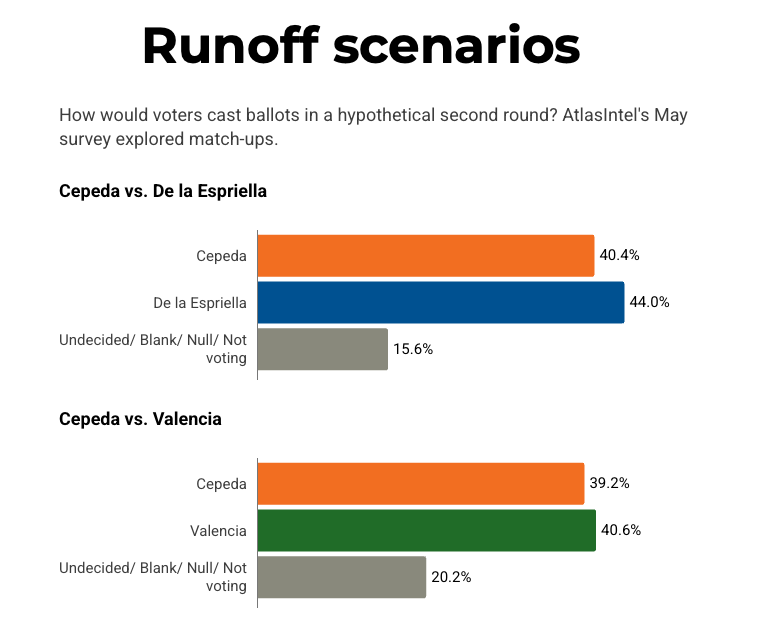
Recent polling suggests Cepeda holds a narrow lead ahead of Sunday’s vote, though few observers expect any candidate to win outright and avoid a June runoff. Valencia and de la Espriella have framed the election as a battle to restore investor confidence, revive Colombia’s pro-business tradition and reverse what they describe as institutional and economic decline under Petro’s administration.

Copper push

Mining executives and analysts say the outcome could shape the future of Colombia’s copper ambitions at a time when countries worldwide are racing to secure critical minerals needed for electrification and renewable energy infrastructure. 

Colombia has launched tenders for 14 strategic copper regions and updated its list of priority minerals, but investors remain wary after reforms expanded environmental restrictions, increased taxes and created uncertainty over permitting and concession rules.

“From an investor standpoint, the key is not only who wins, but whether the next president can build a governing coalition that delivers regulatory stability,” Juan Ignacio Guzman, head of mineral consulting firm GEM, said. “Copper is a multi-decade investment that is extremely sensitive to timeline uncertainty.”

The broader industry has struggled under mounting pressure. Mining contracted more than 6% last year as higher taxes, declining exploration and insecurity in mineral-rich regions weighed on activity. Coal exports dropped 20% in 2025, gold exports fell 18% and investor confidence weakened after the government proposed a new mining law that would create a state-owned mining company, EcoMinerales, and restrict large-scale mining in environmentally sensitive areas.

Some investment decisions in mining and energy remain frozen until after the election, according to business leaders, while S&P Global Ratings last month downgraded Colombia to BB- the country’s lowest-ever credit rating, after Petro suspended fiscal rules limiting government debt growth.

Analysts say investors are increasingly focused on whether a new government would restore regulatory predictability and fiscal discipline.

“From the market perspective, the two main concerns associated with Cepeda are lack of commitment with fiscal consolidation and central bank independence,” Alejandro Arreaza, an economist at Barclays, said in a note.

Petro’s appointees to Colombia’s central bank have increasingly questioned the country’s 3% inflation target and opposed aggressive rate increases, raising fears among bondholders and investors about political pressure on monetary policy.

Gold + violence

The stakes extend far beyond politics. Colombia holds significant deposits of coal, gold, nickel and prospective copper resources along the Andean metallogenic belt, yet the country remains a marginal copper producer compared with Chile and Peru. AngloGold Ashanti’s (JSE: ANG)(NYSE: AU)(ASX: AGG) Quebradona project, Cordoba Minerals’ (TSX-V: CDB) Alacrán development and Libero Copper’s (TSX-V: CGNT) Mocoa project form part of a growing pipeline that could eventually transform Colombia into a meaningful supplier of critical minerals.

Companies including Glencore (LON: GLEN), Rio Tinto (ASX, LON: RIO) and AngloGold Ashanti have long viewed Colombia as a high-potential jurisdiction, though projects often face years of delays tied to permitting disputes, environmental opposition and regional insecurity.

Security has also emerged as a defining issue in both the election and the mining sector. Violence linked to illegal gold extraction and organized crime has spread across rural Colombia, particularly in regions where dissident guerrilla factions and narcotics traffickers control mining supply chains. Analysts say Petro’s “Total Peace” negotiations have failed to contain armed groups, allowing illegal mining networks to expand.
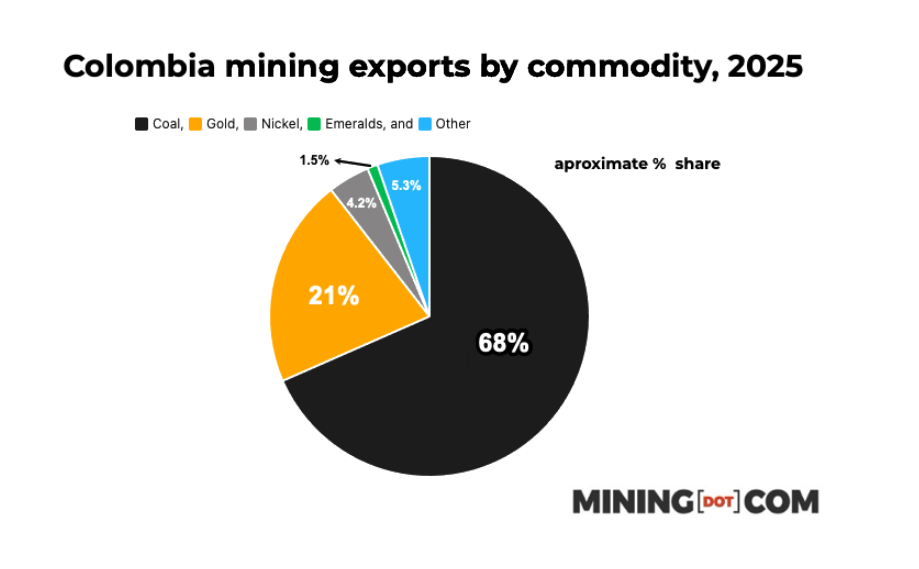
“The failure of President Gustavo Petro’s ‘Total Peace’ policy means that violence will continue to be a concern for the mining sector under any future administration,” Robert Munks, head of Americas at Verisk Maplecroft, said. “Illegal mining now accounts for roughly three-quarters of Colombia’s gold exports.”

Illegal mining has become one of the country’s most lucrative criminal businesses as soaring bullion prices fuel what analysts describe as a “narco-mining” economy.

Across parts of the Amazon basin and Colombia’s Pacific regions, armed groups use illegal gold operations to finance weapons purchases, territorial expansion and recruitment, according to analysts and security researchers. Former FARC dissidents and criminal organizations have increasingly shifted into mining as a stable source of cash flow, particularly in remote regions where state control remains weak.

The illicit trade is also reshaping Colombia’s relationship with global markets. The country exported about $4.1 billion in gold in 2024, with roughly $1.5 billion shipped to the US, according to UN trade data. Researchers warn that illegal production is becoming deeply embedded in international supply chains as criminal groups blend illicit gold with legal exports.

Investor gamble

For mining investors, the election may ultimately hinge less on ideology than predictability. The financial community and mining executives say billions in potential spending on copper, gold and energy projects remain sidelined until Colombia’s political direction becomes clearer.

Companies are closely watching whether the next government streamlines permitting, eases licensing bottlenecks and restores confidence in fiscal stability after years of policy volatility under Petro’s administration.

If the next administration can stabilize regulations, strengthen security and create clearer permitting timelines, analysts say Colombia could emerge as a strategic supplier of copper and other critical minerals as global demand accelerates. Failure to do so risks leaving one of the region’s richest untapped mining jurisdictions trapped in political and regulatory paralysis.

Copper’s giant tariff trade is back and squeezing global market


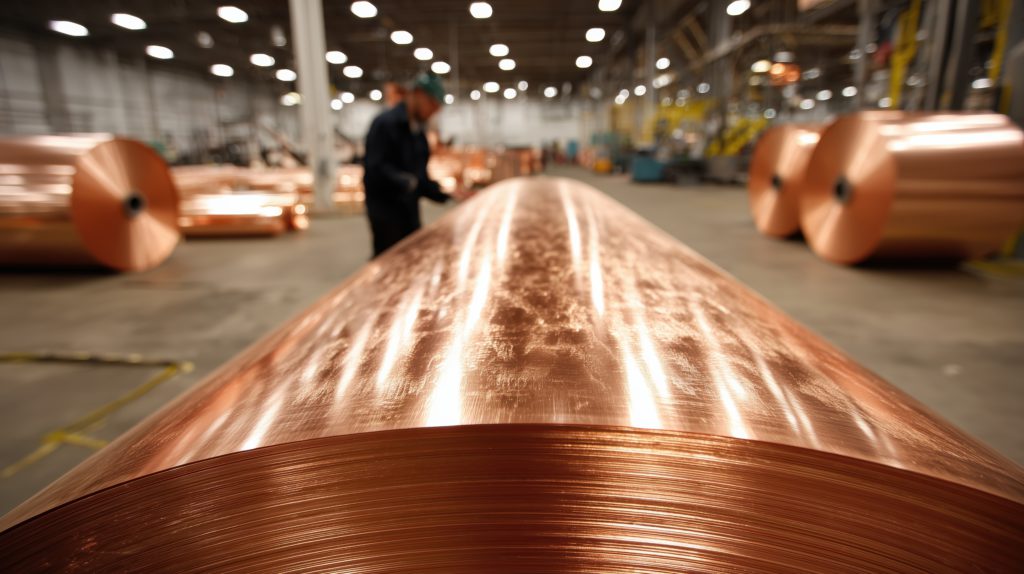
Stock image.

Copper traders are once again scouring the world for metal to send to the US, as renewed speculation about import tariffs revives a trade that’s upended the $300 billion-a-year market.

The on-off threat of import tariffs from President Donald Trump has dominated the copper market over the past year, often driving prices on New York’s Comex above global benchmarks and creating a massive opportunity for traders to profit by shipping metal to the US.

In recent months, US copper imports had slowed after softer Comex prices made shipments unprofitable. But a pick-up in the spread between Comex and the London Metal Exchange in the past few weeks means that traders are now shipping every spare ton to the US, according to several executives, who predicted that imports could bounce back to historically elevated rates of 150,000 to 200,000 tons a month.

“There’s a bit of déjà vu. We’re in the same situation as last year, where all tons are being directed to the US,” said Henry Van, head of industrial metals analysis at Trafigura Group. “It’s very conceivable that we go back to imports of 200,000 tons a month in the near future.”

Front-month Comex contracts have risen to more than $500 a ton above cash prices on the LME for the first time since last autumn.

The outperformance is being driven by renewed investor enthusiasm for copper as well as speculation that the Trump administration will impose import tariffs on refined metal as part of its effort to protect US industry. The commerce secretary has a June 30 deadline to deliver an update on the US copper market that could pave the way for duties starting January 2027.

Trafigura last week moved to withdraw hundreds of millions of dollars of copper from LME warehouses, which was at least in part an attempt to capture premium prices on Comex, according to people familiar with the matter. The orders to withdraw were the largest the LME has seen since 2013.

The renewed rush to ship to the US is adding to a bullish cocktail of factors that traders say could drive prices to fresh highs, after copper climbed to a record above $14,500 a ton in late-January.

While the copper tariff trade is reviving, getting metal into the US is becoming harder. Shipping South American copper to major US ports is taking much longer than usual as disruptions tied to the Iran war ripple through global freight markets and intensify congestion at the Panama Canal.

The mere threat of future duties is enough to sustain inflows, said Gerardo Tarricone, managing director of London-based Arion Investment Management Ltd. “We are going to see momentum heading into the US, which is going to make the copper story even more interesting.”

Copper is already trading at historically elevated levels. It reached as high as $13,746 a ton in London on Wednesday, up about 43% in the past year. Enthusiasm about artificial intelligence has helped lift investor positioning on Comex to the most bullish since December 2020. And buyers in China, which had stepped back from the market when prices rallied earlier this year, have returned since the Chinese New Year holiday.

Should Trump decide to impose tariffs on refined copper, the impact could be to squeeze supplies on the LME, traders said. That would be reinforced if the US follows through on the Commerce Department’s recommendation last year that a tariff of 15% should be imposed from January 2027. That could potentially open a window in the second half of the year when there would be a huge incentive for traders to ship copper to the US.

The copper market outside of the US is in deficit, with inventories already starting to be drawn down in China, said Nicholas Snowdon, chief metals economist at Mercuria Energy Group.

“The focal point of that deficit should move to the LME. It’s a matter of time,” he said. “If you get a decision for tariffs from the start of next year, the drawdown of LME stocks would be very strong in the third and fourth quarter.”

(By James Attwood, Yvonne Yue Li, Jack Ryan, Annie Lee and Jack Farchy)

Hidden tunnels, fake doors: China probes mining tragedy that killed 82

Stock image.

Unmarked tunnels, missing trackers and fake doors have been uncovered during an initial probe into the deadliest mining tragedy in China in over 15 years, with the government vowing to leave no stone unturned, state media reported on Tuesday.

At least 82 people were killed by a gas explosion late on Friday at the Liushenyu mine in the coal-rich province of Shanxi in northern China. Two remained unaccounted for with a further 128 hospitalized, state media said.

The blast is the deadliest mining accident in China since 2009, ​when a gas explosion at the Xinxing mine in Heilongjiang province ⁠killed 108 people.

While the cause of Friday’s incident remains under investigation, the official Xinhua news agency on Tuesday said concealed mining tunnels, falsified drawings, and outsourced and unregistered miners, who had not been provided with required life-saving location trackers, were contributing factors to the deadly incident.

‘Yin-yang drawings’

The mine, controlled by Shanxi Tongzhou Coal Coking Group, maintained two separate sets of plans and surveillance systems, Xinhua said. One set matched the actual operations while the other was used to deal with official inspections, with some mining areas hidden from regulatory oversight.

Reuters was not able to contact officials from the company, as according to state media they have been detained.

Coal mined from the concealed and unregulated tunnels is not included in the official production figures and went untaxed.

The two sets of plans are known colloquially as “yin-yang drawings”: one kept in the open for inspectors to scrutinize and the other kept in the dark.

Similar profit-driven practices are not uncommon in coal mines across China despite crackdowns, the national mine safety administration has said.

The Liushenyu mine “used wire mesh and woven plastic sacks sprayed with mortar, to make fake doors that looked very much like the rock wall of the mine tunnel,” Xinhua said.

Workers would be tipped off by someone outside whenever inspectors came, and they would shut the fake doors, smear coal ash to blend them in with the rest of the underground passage.

Missing trackers, alarms

In order to evade detection, the mine operator hired subcontracted labour to work in the concealed tunnels without providing them with required identification-location trackers or logging them in the official entry record.

Authorities would have been able to monitor where the miners were underground had they been equipped with trackers, including in emergency situations.

When the blast occurred on Friday, the official log showed only 124 workers had gone underground, according to footage shown on state broadcaster CCTV on Monday. In fact a total of 247 workers were working in the mine, suggesting that 123 had been untracked in tunnels outside official purview.

The lack of accurate maps and miners’ location information has severely hampered rescue operations, state media said.

The Liushenyu mine – classified as a “high-gas mine” with elevated blast risk – also deliberately avoided installing gas-monitoring equipment to further evade authorities’ supervision, the state radio broadcaster said in a separate report on Tuesday.

The issues were not unknown to authorities before Friday’s tragedy. In 2025, the mine operator was “fined after regulators discovered concealed working faces, but the penalty failed to serve as an effective deterrent, and the company continued illegal production,” Xinhua said.

Some mines across China have halted or reduced production following the incident for safety inspections.

(By Xiuhao Chen and Ryan Woo; Editing by Sharon Singleton)

China coking coal prices extend gains after Shanxi mine disaster

Stock image.

Chinese coking coal futures pushed higher for a second session as investors watched for a broader government crackdown on the sector after a deadly accident at a mine in Shanxi province.

Prices in Dalian surged as much as 5.1% in early trading before paring most of the gains, after hitting the daily limit on Monday. Authorities in Shanxi have halted operations at 109 mines, which account for 122 million tons of annual capacity, according to to consultancy Mysteel. A fatal blast occurred at the privately owned Liushenyu mine on Friday night.

Most mines are subject to three-to-seven-day halts after severe incidents, and the market is watching to see if that scope will be expanded, as China nears the start of its annual mining safety campaign on June 1. If a sweeping crackdown by Beijing doesn’t eventuate, coal production will likely rapidly rebound after initial inspections, weighing on prices.

“Given the coal supply guarantee requirements ahead of summer, the central government has not further tightened work safety supervision,” said Yu Dian, a principle researcher at Citic Futures Co., based in Shanghai.

The blast, which killed at least 82 people, abruptly tightened China’s coking coal market, directly impacting about 4% of the country’s output. Some miners received higher offers for supply after the disaster, Mysteel said.

Coking coal futures were 0.5% higher at 1,273 yuan a ton as of 11:01 a.m. in Singapore. Iron ore on the Singapore Exchange fell 1.4% to $105.20. Dalian iron ore and Shanghai steel prices also retreated.

(By Katharine Gemmell)

 Strong Chile earthquake shakes mining hub, but damage is minimal

Collapsed building after the 2010, 8.8-magnitude earthquake. Credit: US Geological Survey

A strong earthquake struck Chile’s important mining region of Antofagasta on Monday afternoon, disrupting operations at some mines but ultimately sparing lives and critical infrastructure, authorities said.

The magnitude 6.9 earthquake hit the heart of the world’s biggest copper-producing country, though major miners reported limited damage. The US Geological Survey recorded the earthquake’s depth at 109 kilometers (68 miles).

Chilean state ‌copper miner Codelco halted some activities due to lack of visibility in pits or interruption of electricity supplies in specific areas, a spokesperson said.

Miners BHP and Antofagasta both said their operations were not affected by the earthquake.

Ricardo Munizaga, the regional director for Chile’s disaster agency, SENAPRED, told local news channel 24 Horas that while the earthquake triggered landslides in some production areas, there had been no reports of injuries or other major emergencies.

Residents lost power and saw some cuts to water supply in the city of Calama, home to many miners, Munizaga said, but key infrastructure was otherwise not affected.

Mining companies activated their emergency protocols and temporarily halted some operations to inspect facilities, he added.

A substantial part of Chile’s output comes from the Antofagasta region.

(By Fabian Cambero, Rishabh Jaiswal and Brendan O’Boyle; Editing by Cynthia Osterman and Jacqueline Wong)

Codelco says operations normal after earthquake


Chilean state copper miner Codelco said on Tuesday its operations were running normally after it suspended some activities the previous afternoon following an earthquake near the northern city of Calama.

Codelco had halted some activities due to lack of visibility in open pits or interruption of electricity supplies in specific areas.

A magnitude 6.9 earthquake struck the mining region of Antofagasta on Monday afternoon, 31 kilometres east of Calama, and was felt widely in the area.

A substantial part of Chile’s copper output comes from the Antofagasta region.

Major miners in the world’s largest copper-producing country reported limited damage.

(By Fabian Cambero; Editing by Gabriel Araujo)


Codelco union threatens protests as misreporting fallout spreads


(Image courtesy of Codelco.)

One of Codelco’s biggest unions vowed to fight any attempt to claw back bonuses as fallout from the overstatement of copper output at the Chilean state miner continues to spread.

The Sindicato Chuquicamata union, which represents about 1,300 workers, is willing to stage protests “if anyone dares” to demand the return of bonuses tied to last year’s production targets, union President Hernán Guerrero said in an interview Monday.

“We met production targets,” Guerrero said. “We are not going to return a cent.”

The union leader spoke after Codelco detected that output was overstated by about 2% last year, intensifying scrutiny of a scandal that undermines the company’s claims of a mining recovery. The overstatement led to an extra $14 million in bonus payments to more than 6,000 workers, executives and professionals.

The controversy comes as economist Bernardo Fontaine, a longtime critic of Codelco’s governance and efficiency, replaces Máximo Pacheco as chairman. On Monday, Pacheco resigned from the board of the SQM-Codelco lithium venture Novandino amid pressure from the new government of President Jose Antonio Kast.

“A new stage begins that must be marked by excellence in management, worker safety, transparency, and the proper use of public resources,” Economy and Mining Minister Daniel Mas said in a post on X Monday, responding to Pacheco’s Novandino resignation.

While Codelco said the issue won’t require changes to financial statements, it plans to revise production figures. A 2% reduction would leave output at the lowest level since 1997. Union leader Guerrero said he hasn’t received any formal notification seeking bonus repayment and is requesting a meeting with Fontaine.

The controversy adds to pressure on the heavily indebted state miner after years of operational setbacks and project delays that repeatedly forced it to lower forecasts, supporting global prices.

Board member Tamara Agnic, who heads Codelco’s audit, compensation and ethics committee, described the episode as “very serious” from a corporate governance standpoint in comments Monday to T13 Radio. But she defended the board’s oversight role, saying directors repeatedly questioned management and were given explanations that appeared reasonable at the time

“Codelco today gives guarantees of being a solid company in governance terms,” Agnic said.

(By James Attwood)


Fortescue begins construction on 690MW solar farm in Pilbara


Cloudbreak solar farm. Credit: Fortescue

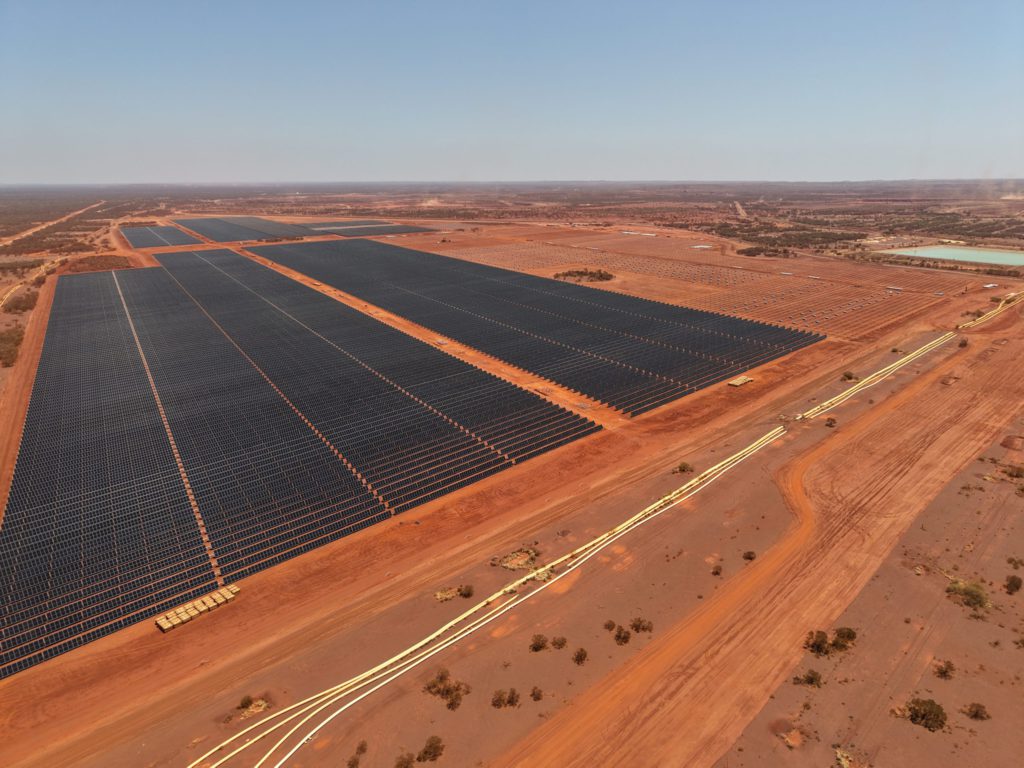
Fortescue (ASX: FMG) has begun construction on the 690MW Turner River solar farm in the Pilbara region, as well as the 650MWh battery energy storage system (BESS) at its flagship Cloudbreak mine.

These projects form part of Fortescue’s rapidly expanding integrated renewable energy ecosystem to power its Pilbara operations, the Australian iron ore miner said in a press release on Monday.

According to Fortescue, the Turner River solar farm represents the final solar installation required to deliver the company’s Real Zero decarbonization plan. Once complete and combined with the Solomon Airport (440MW), Cloudbreak (190MW) and North Star Junction (100MW) solar farms, Fortescue will have delivered all solar generation required to achieve Real Zero across its terrestrial iron ore operations.

Together, the projects will generate more than 1.4GW of renewable energy capacity – enough to power around half a million Australian homes, the company said. Construction of the Turner River solar farm is expected to be complete in 2028, with over 1 million solar panels to be installed during the build.

Meanwhile, the Cloudbreak BESS is targeted for completion in the 2027 fiscal year, delivering 74MW of power for a period of approximately eight hours. The system is expected to comprise 124 battery units integrated directly into the Cloudbreak solar farm.

Fortescue also completed commissioning of two battery energy storage systems at Eliwana and North Star Junction, strengthening the delivery of firm renewable power across its Pilbara operations.

Fleet electrification

At the same time, Fortescue is rapidly electrifying its mobile mining fleet, with 16 electric excavators and an electric drill already operating across its iron ore operations. Around half of the company’s excavator fleet will be electric by the end of 2026, it said.

Fortescue’s first battery electric haul truck is also expected to be operational before the end of the year. Its first in-house developed 6MW fast charger has commenced commissioning and will support the rollout of battery electric haul trucks across the Pilbara, the company said, adding that the charger will be capable of fully charging a haul truck in approximately 30 minutes.

Facility testing of XCMG’s prototype battery electric wheel loader, dozer, grader and water cart is also in the final stages, with the equipment preparing to make the journey from China to the Pilbara for site testing, it added.

Decarbonization efforts

“While others are still debating whether decarbonization is possible, Fortescue is getting on with building what’s needed to do it,” Fortescue’s metals and operations CEO Dino Otranto said in a news release.

“The technology is here. The economics are improving every year. And anyone watching global fuel markets can see exactly why electrification and renewable power matter more than ever.”

Construction also continues on the 133MW Nullagine wind farm, which will further diversify Fortescue’s renewable energy mix, the company noted.

Fortescue has already constructed more than 480 kilometres of high-voltage transmission infrastructure across the Pilbara. Once complete, the network is expected to extend beyond 620 kilometres, physically connecting Fortescue’s renewable energy assets to its mines, rail and port operations.

“Our solar farms, transmission lines, wind generation and batteries are being built right now across the Pilbara. We are moving first because the economics, the technology and the national interest are all pointing in the same direction,” Otranto said.


Fortescue at loggerheads with peers over diesel, decarbonization

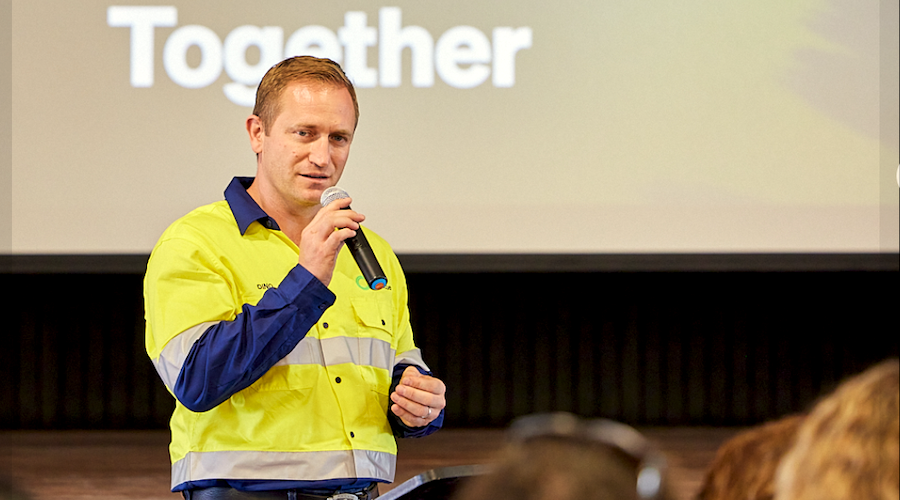
Fortescue Metals CEO Dino Otranto. (Image courtesy of Fortescue | Facebook.)

Simmering tensions between Fortescue (ASX: FMG) and larger peer BHP (ASX: BHP) came to a head on Wednesday when executives from both companies appeared at a mining industry event in Perth.

On Monday, the ABC’s Four Corners program aired an investigation into BHP’s decarbonization efforts, claiming the company had deferred billions of dollars worth of green projects. BHP blamed the delays on insufficient technology, a position Fortescue disputed during the program.

BHP WA Iron Ore asset president Tim Day told the AFR Mining Summit on Wednesday that battery-electric haul trucks were “not quite ready yet”.

During a fireside chat with Fortescue Metals CEO Dino Otranto at the event, the interviewer pointed to advertising commissioned by BHP citing research that its emissions fell 36% over five years while Fortescue’s rose 24%.

Otranto conceded the figures were accurate but attributed the increase to Fortescue’s energy-intensive Iron Bridge magnetite operation, adding that emissions across its hematite business had declined.

“Our total portfolio will go down over the next couple of years as we bring on these trucks that don’t exist,” Otranto said in a pointed jab at BHP.

Otranto also took aim at criticism surrounding Fortescue’s ambitious 2030 target to achieve real zero emissions.

“In the mining industry, we have been hammered for deployment of capital,” he said. “We’ve been named as wasting capital, so generally we become ultra conservative (…) So, there’s no way that somebody is going to risk what we’re doing at Fortescue.

“Now, we have a very different risk appetite. And over the years, it’s proven to be the best value return for the shareholder.”

Otranto defends diesel stance

In April, Fortescue launched a national advertising campaign calling for reform of the Australian government’s diesel tax “handout”.

Australian miners are major beneficiaries of the Fuel Tax Credit Act 2006, which refunds diesel excise to off-road fuel users.

Otranto defended the campaign, saying it cost only “a couple hundred thousand dollars”.

“The size of the campaign, in terms of relative media campaigns and support for media outlets, it’s kind of a drop in the ocean,” he said.

“To be honest, running a few TV ads — it’s been blown up as this major propaganda campaign.

“What are we actually advocating for? I know that I’m bucking the trend, and I’m standing out from the crowd, but we firmly believe that the current disincentives to align with both state and federal government to go green is absolutely not good enough.”

Fortescue remains isolated in its position, with miners including BHP and industry lobby groups campaigning against changes to the legislation.

Otranto took particular issue with Chamber of Minerals and Energy of Western Australia CEO Aaron Morey describing any change to the diesel rebate as “really bad tax policy”.

He said the comments left him “a bit hot under the collar” and prompted him to write a letter to the CME, of which Fortescue is a member.

“The peak industrial body here in WA, I don’t think adequately consulted, irrespective of the outcome of a position,” Otranto said.

“There was no consultation on that. Period. And I thought it was, to be honest, the weirdest thing I’ve ever seen in my life.”

Federal Resources Minister Madeleine King also weighed in, telling ABC Radio the government was not considering changes to the diesel rebate.

“What I find concerning is how we have companies wanting to use government policy to create an advantage over their competitors,” she said.

“Now, I think competition is a really good thing in any market and the same goes for iron ore, but to see campaigns waged throughout the media is, I think, a bit off when companies should perhaps look in their own backyard and monitor their own behaviour.”


Leaked documents show world’s biggest miner quietly shelved billions in climate projects


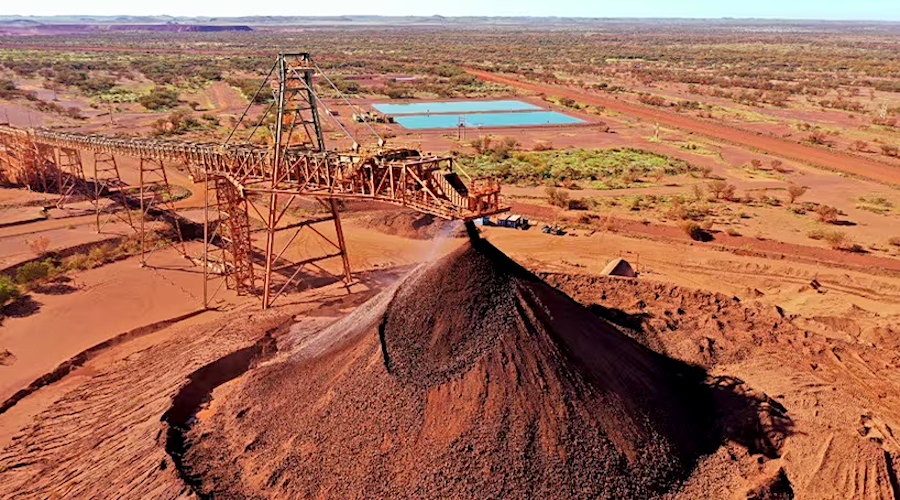
Ore at Jimblebar open-cut pit iron mine in the Pilbara region of Western Australia. (Image courtesy of BHP.)

BHP (ASX: BHP) is said to have delayed billions of dollars in Pilbara decarbonization projects despite internally warning that slow emissions cuts could damage its reputation and undermine its “licence to operate,” leaked company documents show.

Hundreds of internal records obtained by the Australian Broadcasting Corporation (ABC) and The Guardian Australia indicate the world’s largest miner paused renewable energy and electrification plans in Western Australia even as executives publicly promoted BHP as a climate leader. 

The documents centre on the company’s Pilbara iron ore business, which generated $14.4 billion in pre-tax profit last fiscal year and accounts for more than one-third of BHP’s Australian emissions.

“Urgent decarbonization, in line with BHP’s public commitments, effectively underpins [the company’s] licence to operate, sustain and grow,” a 2023 document signed by BHP Australia president Geraldine Slattery said. The same memo warned that “slow emissions reduction progress” in the Pilbara carried “reputational impacts.”

The leaks reveal BHP halted a board-approved $400-million solar-and-battery project at its Jimblebar iron ore mine shortly after approval in 2023, citing “cash prioritization requirements.” A larger $1.3-billion renewable energy proposal — including solar, wind and battery infrastructure intended to support electric haul trucks and trains — was later shelved in its existing form, with funding documents showing no major spending planned before 2031.

At the same time, BHP purchased 62 new diesel trucks for Jimblebar after prices fell sharply, locking in fossil fuel use at the operation until at least the late 2030s and potentially 2041, the docuemnts show.

The company has said it remains committed to net zero emissions by 2050, but critics say delaying electrification in the Pilbara weakens the credibility of that target and complicates Australia’s broader emissions goals. 

Rival miner Fortescue (ASX: FMG) continues pursuing aggressive electrification and renewable energy plans in the region, despite industry scepticism about timelines and technology readiness.


U.S. Navy Picks Seven Contenders for Medium USV Program

Saildrone's Spectre is among the known contenders, but the Navy has not yet released the names of the seven selected designs (Saildrone illustration)

Published May 26, 2026 10:09 PM by The Maritime Executive


The U.S. Navy has picked out seven different designs for its Medium Unmanned Surface Vessel competition, moving ahead with the most promising candidates in the field. Industry partners - including many newcomers to the defense ecosystem - submitted more than two dozen designs, Navy officials told USNI and Breaking Defense. 

The "marketplace" design for the MUSV program was initiated during the tenure of former Navy Secretary John Phelan, and it replaced a previous procurement program called MASC (Modular Attack Surface Craft). The service's hope is that the competitors will absorb the R&D cost of fielding, testing and proving out prototypes, saving funds for the taxpayer while encouraging more competition. Only viable, operating vessels that can complete at-sea demonstrations will move on to the next phase. 

A Navy spokesman told Breaking Defense that competitors must be able to conduct a successful demonstration by October for consideration - restricting the competition to firms that already have a fully realized design, and likely a hull in construction or complete. The number of potential entrants that would fit that requirement is limited. Known competing companies and consortia in this space include Saronic; Hanwha/HavocAI; Hanwha/Magnet Defense; Blue Water Autonomy/Conrad Shipyard; Sea Machines; Anduril/HD Hyundai; and Saildrone/Fincantieri/Lockheed Martin. 

The Navy has the funding to put into procurement for the winners of the "marketplace" contest. The One Big Beautiful Bill Act allocated $2.1 billion for medium USVs and $188 million for unmanned vessel R&D, on top of the Navy's FY2026 defense bill appropriations. The FY2027 proposed budget has room to be far more generous - it would provide $1.5 trillion for the military as a whole, if approved - and it calls for "unprecedented investments" in unmanned systems in general. 


Battle of Bulkers Continues as Diana Increases Offer for Genco

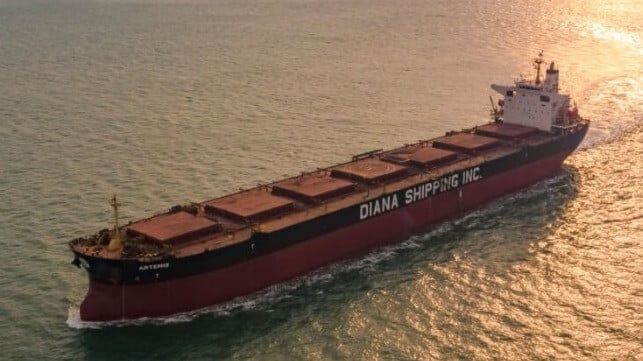
Diana Shipping dry bulk carrier
Diana Shipping increased its offer price as it presses to complete a merger with Genco (Diana file photo)

Published May 27, 2026 6:02 PM by The Maritime Executive


The battle between two leading dry bulk operators heated up as Diana Shipping looked to further increase the pressure on Genco Shipping & Trading to come to terms for a merger. The two companies have been accusing each other of misrepresentations as the battle has stretched on, as Diana seeks to acquire Genco.

Both companies agree it is a good time in the sector and cite the opportunities that are ahead. Many have cited the strength of combining two similar-sized fleets to create a large player in the sector, but the two companies appear to remain far apart from reaching terms for a merger.

“Our previous offers have each been met with silence, and we are hopeful that the Genco board will finally sit down with us to engage in a constructive dialogue,” said Semiramis Paliou, Diana's Chief Executive Officer.

It went public with its interest in merging the companies in November 2025, but was rejected by Genco’s board, which consistently said Diana is undervaluing the fleet. At the beginning, it questioned the company’s ability to complete a cash offer of this magnitude and asserted that Genco had the stronger balance sheet.

Diana today (May 27) raised its offer to $24.80 per share as part of its ongoing tender offer for the outstanding shares of Genco. Diana purchased about 18 percent of Genco’s shares in private market transactions before launching its takeover proposals. It had first offered $20.60 per share and later raised it to $23.50, citing agreed financing and a deal to sell some of Genco’s ships to Star Bulk concurrently with the closing of the merger.

Diana asserts that it is now offering a 39 percent premium to the share price prior to the announcement of the offer in November 2025. It further states it is a 48 percent premium to the 30-day average for the share price before the announcement of the merger proposal.

One of the points of contention has been the valuation of the fleet. Diana now asserts it is offering approximately one times net asset value (NAV). It contends the sector traditionally trades at approximately a 20 percent discount to NAV while asserting Genco was trading at a 30 percent discount.

Increasing the cash offer is the latest in a series of steps Diana has underway in a push to close the deal. It has already launched a tender offer for the shares and has put forward opposition nominees for six new individuals to reconstitute the Genco board of directors. It has now extended the increased value tender offer until June 26.

Genco responded with a standard statement saying its board and financial advisors would review the newly received offer. It has consistently told shareholders to reject the offers and cites what it sees as misrepresentations from Diana.

Shareholders will have their say in the battle, with the annual meeting scheduled for June 18. 


Port of Long Beach Offers $1M Prize for First Methanol Bunkering

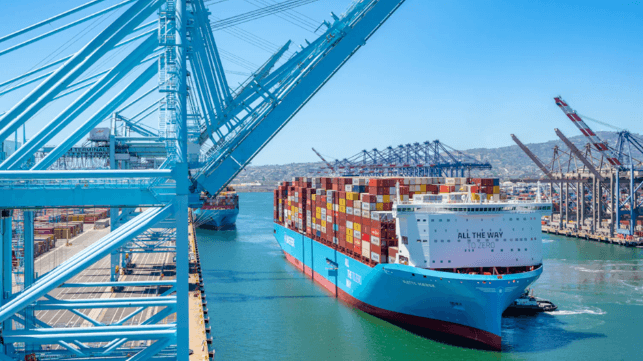
Alette Maersk at APM Pier 400, Port of Los Angeles, 2024 (APM press handout)

Published May 27, 2026 7:18 PM by The Maritime Executive


The Port of Long Beach wants to have methanol bunkering available to support the next generation of dual-fuel ships, and it has selected a novel way of going about it. The port's commission has signed off on an incentive award - a prize - that will be awarded to the first ship to carry out a full-scale methanol bunkering evolution at Long Beach. 

The port's "Clean Fuel Bunkering Challenge Incentive Award" is a $1 million prize, payable to a vessel operator rather than a fuel supplier. Details on eligibility will be forthcoming, the port said. 

There are about 400 dual-fuel methanol ships in operation today, but most still run on bunker fuel, since practical supplies of green methanol are scarce. Gray methanol - derived from natural gas - has a higher carbon footprint than HFO due to the energy-intensive process of manufacturing it, and is not viewed as a long-term climate-friendly solution; carbon capture during the production process can reduce this concern, resulting in low-emissions blue methanol. 

"We know the shipping industry is considering moving toward adopting methanol marine fuel for some great reasons – they want to reduce greenhouse gas emissions and improve air quality. Today, we’re giving them 1 million more reasons to embrace clean fuels," said Port of Long Beach CEO Dr. Noel Hacegaba. "We’re also seeing how rising fuel costs are strengthening the case for energy diversification and greater energy independence."

Beyond climate benefits, methanol is advantageous for its clean-burning emissions profile. It releases 95 percent less particulate matter, 99 percent less sulfur oxides and 60 percent fewer nitrogen oxides - a major improvement for those who live in smog-affected areas near the port. (This has been studied at Long Beach before: a Maersk-led project examined methanol as a fuel for cargo-handling equipment back at least as far as 1992.)

"Frontline communities in Los Angeles and Long Beach suffer from some of the worst pollution in the nation," said Cristhian Tapia-Delgado, Climate Campaigner for Southern California, Pacific Environment. "We applaud the Port of Long Beach for approving $1 million to move ocean shipping lines to clean bunkering, but we urge the Port to do everything possible to ensure the cleanest, safest and most sustainable alternative fuels are the ones that achieve long-term success at the Port."

In 2024, the dual fuel methanol boxship Alette Maersk called at neighboring Port of Los Angeles; she made the Pacific crossing on a combination of green methanol and biofuels, but it is understood that she did not take on green fuels during her visit to San Pedro Bay.