Saturday, June 13, 2026


OBITUARY

British art 'giant' David Hockney dies aged 88

British artist David Hockney, one of the most influential and defining figures in contemporary art, whose paintings captured the world in brilliant colour, has died aged 88, his publicist announced Friday.


Issued on: 12/06/2026 - RFI

British artist David Hockney in front of his painting 'Fred and Marcia Weisman' at the Pompidou Centre in Paris, in June 2017 © Martin BUREAU / AFP/File


One of the leading artists involved in the Pop art movement in the 1960s, Hockney established himself as a globally renowned painter and master draughtsman and kept painting, experimenting and exhibiting right up until his death.

Lauding him as "one of the most important figures in contemporary art in both the 20th and 21st centuries", his publicist Erica Bolton said he died "peacefully at home" in London on Thursday, a month before his 89th birthday.

"His seven-decade career and prolific oeuvre was characterised by his multi-media approach in image making, an intellectual inquiry into the nature of depiction and perspective, and a sustained commitment to celebrating and portraying the world around him," her statement added.

Acclaimed around the world, Britain bestowed the Order of the Companions of Honour on Hockney in 1997, while earlier this year he became one of the few non-French citizens to be awarded France's highest civilian honour, the legion d'honneur.


Tributes began to emerge within minutes of the announcement.

"His huge achievement was to make serious painting look effortless," art historian Richard Morris said on X.

"He carried forward one of the most sustained investigations into vision, space and representation by any post-war artist. British art has lost a giant."

The famous Pompidou Centre in Paris -- with which he collaborated for two landmark exhibitions -- said he was "unquestionably one of the major figures of contemporary art". It added that the works he leaves behind remain "dazzling, alive and eternal".


Portrait of an Artist (Pool with two figures)”, by David Hockney. AFP - STEPHANE DE SAKUTIN

David Hockney's lockdown paintings of Normandy captivate Parisians
Innovator

Born in 1937 in west Yorkshire, northern England, Hockney trained at the Bradford School of Art in the region and then at London's Royal College, from which he graduated with a Gold Medal distinction.

A conscientious objector who did his military service as a hospital orderly, Hockney went against the conventions of post-war Britain, realising at an early age that he was gay and that he wanted to be an artist.

He would soon emerge as one of the seminal talents in the new generation of British artists, capturing everything from carefree 1960s California -- where he moved in 1964 -- to the bucolic landscapes of his native Yorkshire.

In 2018, his iconic swimming pool picture, "Portrait of an Artist (Pool with Two Figures)" sold for $90.3 million in New York, setting a new auction record for a living artist. He was unseated by Jeff Koons' "Rabbit" a year later.
David Hockney in Normandy, 1 April, 2021. © David Hockney byJean-Pierre Gonçalves de Lima

Known for experimenting in a range of media and techniques – including printmaking, photography and stage design, alongside painting and drawing – he embraced modern technology as it emerged.

He had used iPads since they first came out in 2010 and worked with developers to create custom-made apps, according to a National Portrait Gallery profile.

He also kept showcasing new work.

London's Serpentine Gallery is currently holding his first exhibition there, which was conceived in close collaboration with Hockney and features new paintings by him.

Future exhibitions at Tate, London and the Munch Museum in Oslo were in development.

His agent noted he is survived by his long-time partner and companion Jean-Pierre Goncalves de Lima, two brothers and "numerous nieces, nephews, great-nieces and great-nephews".

Andy Warhol, Henry Geldzahler, David Hockney and Jeff Goodman in 1963. Dennis Hopper

Hockney always retained his Yorkshire burr and was also a committed lifelong and defiant smoker, praising the pleasure it brought him, his publicist's statement noted.

"He smoked up to the end," it said.


‘I worked every day’: How David Hockney fell in love with France during the Covid lockdown


British artist David Hockney, who died at the age of 88 on Thursday, fell in love with the French countryside in the last few years of his life. He settled in Normandy in 2019, where he lived during the Covid-19 lockdown and was able to rededicate himself to nature over a year of solitude.


Issued on: 13/06/2026 - 
By: FRANCE 24

Late British painter David Hockney poses at the Orangerie museum in Paris, on October 7, 2021, in front of his painting "A year in Normandy". © Thomas Coex, AFP


British artist David Hockney, who has died at the age of 88, spoke to AFP in 2021 about spending the months of the Covid-19 pandemic lockdown in France.

They were, he said, a welcome opportunity to devote himself to observing nature.

"I really enjoy looking," he said.

"If you look at the world, it's very beautiful. But you've got to have a clear head and there's lots of things that stop you looking."


Hockney met journalists at the Musée de L'Orangerie in Paris, which was displaying the fruits of that period in an exhibition, "A Year in Normandy".


It featured a 91-metre-long frieze made from some of the 220 pictures he created during the strange year of solitude in 2020.

It is a clear nod to the 19th-century masters of landscape, particularly Claude Monet, occupying some of the neighbouring rooms in the museum.

"When the lockdown came I didn't mind at all," said Hockney, resplendent in his trademark round-rimmed glasses and a checked suit.

"We were in an isolated place and I worked every day because there were no visitors. Visitors put me off, get in the way."

All of the drawings were made on an iPad, which had become his preferred way to make art – much more than the photographs that used to be so central to his work.

He talked of how he loved drawing on the iPad, freeing him up from the paraphernalia of regular painting.

"It's a new technique," he said. " don't think there's many people doing it."
'Nature is the source'

The dazzling colours of the Normandy countryside were a perfect fit for Hockney, who made his name with sun-soaked scenes from California in the 1960s.

Though known for his jet-set lifestyle, sartorial elegance and large retinue of friends, he was always an industrious worker.

Farewell to David Hockney and Marilyn Monroe at 100
Cover image: arts24 © FRANCE 24
12:36


And he was delighted to have time to devote himself to nature, which he said had become his principal muse.

"The first day we came to Normandy, we watched a marvellous sunset over the Seine estuary. We had the clarity of Van Gogh."

He dismissed the idea that landscapes were no longer an interesting subject for art.

"Nature is the source of everything," he said.

"When I went to Yorkshire 16 years ago, people said 'You can't paint landscape today'. I said 'That's just because of the paintings – the landscape itself can't be boring'.

"The depictions of it have become boring, that's all. You've got to make them a bit different – and that's what I've tried to do."

(FRANCE 24 with AFP)

Friday, June 12, 2026

INVESTIGATION

Resumption of $20bn Cabo Delgado gas project reignites both hope and resentment


The resumption of one of the world's biggest gas projects by French energy giant TotalEnergies, after a five-year suspension following a deadly jihadist attack, has raised hopes of jobs and prosperity in northern Mozambique. But this second instalment of Mozambique Exposed – an investigation coordinated by Forbidden Stories, to which RFI contributed – questions whether the country's vast gas wealth will benefit local communities.


Issued on: 12/06/2026 - RFI

The restarting of the world's largest gas field in northern Mozambique has brought both hope and concern. © Baptiste Condominas/RFI

It is barely 7am in the departure lounge at Pemba airport in northern Mozambique, on a day in early May. Around a dozen passengers sit quietly, some trying to recover from a short night's sleep.

Most are aid workers waiting for a United Nations-chartered flight to Mueda, Mocímboa da Praia or Palma, several hundred kilometres north of Pemba.

Suddenly, four heavily built men stand up. A pilot hands them unusual flat, brightly coloured life jackets. The group walks across the tarmac towards a helicopter.

"They're going to Afungi," one aid worker remarks. "A direct landing at the Total base."

A closed-off enclave

Afungi is a peninsula near the town of Palma in Mozambique's far north, in the Cabo Delgado province close to the border with Tanzania, whereTotalEnergies and its partners have established the Mozambique LNG (liquid natural gas) project.

The $20 billion project involves developing an offshore gas field in the Rovuma Basin and building facilities onshore to liquefy methane for export.

The reserves, estimated at 5,000 billion cubic metres, are among the largest ever discovered.

For this vast undertaking, TotalEnergies is being joined by several international partners, including three Indian oil companies, Japan's Mitsui and the Mozambican state, which holds a 15 percent stake.

The Afungi site covers 7,000 hectares behind perimeter fencing. At its centre is a paved airstrip surrounded by accommodation blocks and a maze of warehouses.

"Foreign companies isolate their workers. It does nothing for local development," says Abudo Gafuro, an activist with the human rights group Kundeleya.

Since 2017, Cabo Delgado has been gripped by an Islamist insurgency. Militants from the group Ansar al-Sunna (locally known as al-Shabaab), claim to be seeking to implement Sharia law and a new social order that would deliver a fairer distribution of wealth in the province.

According to the conflict-monitoring organisation Acled, more than 6,500 people have been killed, and a UN agency estimates at least 1 million people have been displaced.

TotalEnergies decided to suspend the Mozambique LNG project in 2020 due to security concerns. In April 2021 it officially announced the suspension after a series of deadly coordinated jihadist attacks. Work resumed only in January this year.

A map shows the position of Afungi in northern Mozambique. © Studio FMM

Mozambique relaunches TotalEnergies gas project after five-year pause
Compensation and frustration

Sitting beneath an acacia tree, José Cheila* looks exhausted. A few days earlier, he attended a community meeting on land issues.

"The Total representative didn't even turn up," says the Palma-based civil society co-ordinator.

For nearly a decade, compensation claims linked to the expropriation of hundreds of farmers and fishermen have remained unresolved.

In Mozambique, land belongs to the state – although collective, individual and customary land use rights are recognised. In 2012, the government granted a land use and benefit right, known as a DUAT, to the Texas-based company Anadarko, which discovered the Rovuma gas field.

TotalEnergies inherited the agreement when it took over the project in 2019. The deal provided for relocation housing, individual and collective financial compensation and material assistance, including motorcycles.

While Cheila deems the compensation package fair, many people are yet to receive what was promised.

"About 184 million meticais [roughly €2.5m] in compensation was planned in 2014, but some families are still waiting because the project was suspended," says Eduardo Caponde of the Cabo Delgado Community Development Forum.

The resumption of Mozambique LNG has boosted expectations.

"Discussions have restarted. But new questions have emerged," Caponde points out. "Is an amount agreed in 2014 still appropriate today, when the cost of living in Palma has changed so much?"

Contacted by the Forbidden Stories consortium, TotalEnergies said all 643 families affected by the project had been relocated to the village of Quitunda, a claim reporters confirmed during one of their visits.

"By the end of 2025, the land compensation activities foreseen in the resettlement plan had been completed," the company stated in an emailed response, adding that "livelihood restoration programmes" had also been implemented.
Mozambican President Filipe Nyusi, left, shakes hands with TotalEnergies CEO Patrick Pouyanne at a meeting in Maputo, Mozambique on 3 February, 2023. Mozambican Presidency via AP


Fortress economy

Another source of frustration is the project's isolation from the surrounding economy.

In September 2025, TotalEnergies signed a memorandum of understanding with Mozambique's Northern Integrated Development Agency (ADIN).

The €8.5m programme is intended to fund job creation and income-generating projects in the districts of Palma and Mocímboa da Praia, but many residents remain unconvinced.

"Communities expected gas workers to use local restaurants and hotels and travel by motorcycle taxi," says Aly Caetano, Cabo Delgado co-ordinator for the Centre for Democracy and Human Rights (CDD).

"Some entrepreneurs took on debt because they believed this development was coming. But they never see the people from Total."

The highly securitised nature of the project has added to local resentment, particularly as nearby communities continue to face attacks from insurgents.
Human rights concerns

On 24 March, 2021, Palma suffered the deadliest attack in its history when hundreds of militants looted property, killed residents and controlled the town for nearly two weeks. The death toll is estimated at around 1,500 people.

Residents say several hundred civilians managed to reach the Afungi peninsula. At the time, the gas project had already been suspended and only limited personnel remained on site. Nonetheless, evacuation boats were organised to transport people to Pemba.

Those who stayed behind say they later endured harsh reprisals by Mozambique's armed forces, known as the FADM, after government troops retook the town.

"Our own soldiers were killing us. Our brothers," says Cheila.

Two legal complaints have been filed against TotalEnergies in connection with the Palma attack.

The first was lodged in 2023 before a court in Nanterre, near Paris, by three survivors and four relatives of victims from the United Kingdom and South Africa. They accuse the company of involuntary manslaughter and failing to assist people in danger, alleging negligence in the management of security arrangements for staff and subcontractors.

A second complaint was filed in 2025 with France's National Anti-Terrorism Prosecutor's Office by the Germany-based European Centre for Constitutional and Human Rights (ECCHR).

The German human rights organisation is examining the relationship between TotalEnergies and the Mozambican armed forces tasked with protecting, among other sites, the Mozambique LNG project.
Rwandan soldiers guard the TotalEnergies LNG Project in Afungi in the Cabo Delgado province, Mozambique, on 29 September, 2022. AFP - CAMILLE LAFFONT


Security agreement

In 2020, the Mozambique LNG project signed a memorandum of understanding with the Mozambican government regarding security.

The agreement provided for the deployment of a Joint Task Force of around 600 Mozambican soldiers in and around Afungi. Around 10 percent are elite troops known as fusileiros, trained by the United States.

Under the agreement, the project has to cover accommodation and food costs for the soldiers, who also receive a bonus linked to rank. Any involvement in abuses or human rights violations results in the automatic loss of that payment.

According to a 2023 internal audit commissioned by TotalEnergies and led in part by former French diplomat and humanitarian worker Jean-Christophe Ruffin, the arrangement was intended to reduce incentives for misconduct among troops, whose poor living conditions are widely recognised.

However, the report also raised concerns.

"The existence of a direct financial relationship with members of the Joint Task Force creates a direct link between Mozambique LNG and these troops," the report states. "It is doubtful that this conditional bonus can deter potential abuses. In the event of human rights violations, this relationship directly engages the responsibility of the consortium."

In 2021, payments to the Joint Task Force were suspended after local communities alleged human rights abuses. The allegations related to "abuse against two fishermen", according to TotalEnergies, and were not connected to the violence committed during the recapture of Palma.

Mozambican authorities have not opened an investigation into the events in Palma.


How Cabo Delgado's riches became fuel for the Islamist insurgency in Mozambique

For almost a decade, an Islamist group has terrorised Mozambique's northern province of Cabo Delgado. Despite vast reserves of rubies, timber and natural gas, the region remains the country's poorest. This first instalment of Mozambique Exposed – an investigation coordinated by Forbidden Stories to which RFI contributed – examines how exploitation of the region's wealth, corruption and alleged abuses by security forces helped fuel the insurgency.


Issued on: 11/06/2026 - RFI

Despite vast reserves of rubies, timber and natural gas, Cabo Delgado remains Mozambique's poorest province. © Baptiste Condominas/RFI

Rainy season had already begun in 2017 when thousands of artisanal miners working around Namanhumbir, near Montepuez in the northern Cabo Delgado province of Mozambique, saw security forces approaching.

Many were arrested for what the authorities called illegal mining. Most of the miners, known locally as garimpeiros, came from outside the region.

Some returned to their home districts or crossed into neighbouring southern Tanzania. Others joined a little-known armed group that was gaining strength in northern Mozambique – known locally as Al-Shabab and linked to the Islamic State group (although with no connection to the Somali militant group of the same name).

"From then on, it was war," one miner recalled in a 2021 report by the International Crisis Group, a conflict prevention organisation.

Grievances linked to natural resources became a powerful recruiting tool for the armed group.

Control of natural resources by foreign companies is one of the main themes in Al-Shabab's messaging, according to Joao Feijo, a researcher with the Observatório do Meio Rural, a Mozambican rural affairs research institute.

Ruby boom

Among Cabo Delgado's most valuable assets are rubies. Deposits discovered in 2009 helped make the province the source of around 80 percent of the world's ruby reserves.

One of the industry's main operators is Montepuez Ruby Mining (MRM), which received a 25-year concession in 2012, covering 10,000 square kilometres.

MRM is a subsidiary of British mining company Gemfields Limited, owner of luxury brand Fabergé. Twenty-five percent of the company is owned by General Raimundo Pachinuapa, a senior member of Frelimo, Mozambique's ruling party since it gained independence from Portugal in 1975.

In 2019, Gemfields agreed to pay €6.7 million in compensation to miners who dropped legal action accusing the company of human rights violations.

The case was brought in London by law firm Leigh Day on behalf of 273 garimpeiros. It said physical and sexual violence, degrading treatment and killings were carried out by MRM security personnel and Mozambican security forces.

Gemfields acknowledged violence had occurred around Montepuez, but did not accept responsibility.

Abuses linked to mining operations have not stopped, said Aly Caetano, Cabo Delgado coordinator for the Centre for Democracy and Human Rights, a Mozambican civil society organisation.

"Torture, illegal detention and killings continue," he said. "Meanwhile, the Montepuez-Pemba road remains the worst in the region. This feeling of being robbed feeds the terrorists' narrative."

Timber trail

Campaigners in Cabo Delgado also accuse authorities of profiting from the exploitation of the region's natural assets.

Far to the north lies Niassa Reserve, a protected area that has also become a centre for trafficking in ivory and valuable timber species.

In August 2020, Mozambican authorities seized 82 containers bound for China at the port of Pemba.

Inside were logs that investigators said had been cut illegally.

Four months later, the containers somehow escaped customs controls. The Environmental Investigation Agency (EIA), an international environmental watchdog, said 66 were later recovered while on their way to China.

Mozambique's timber industry is heavily dominated by Chinese operators, and is closely linked to the business interests of senior Frelimo figures.

One of them is José Pacheco, a former governor of Cabo Delgado and former agriculture minister.

An EIA investigation into Chinese forestry companies reported financial ties between Pacheco and a businessman identified as Liu. The two men met several times, including during a Frelimo congress in the port city of Pemba.

The World Resources Institute, a United States-based research organisation, said Mozambican timber worth more than $400 million reached Chinese markets in 2016.

Mozambican customs authorities declared only $100 million in exports that year.

Capitalising on inequality

More than 3,000 kilometres from the capital Maputo, Cabo Delgado remains Mozambique's poorest province.

The United Nations Development Programme reported that average income remains below one dollar per person per day. Illiteracy affects 61 percent of residents, and 45 percent of children suffer from chronic malnutrition.

Anger had been building for years in rural communities.

One of the Al-Shabab movement's leaders, Maulana Ali Cassimo, was a former agriculture ministry official who travelled through the countryside on a motorbike denouncing forced evictions, police brutality and what he described as Maputo's control of Cabo Delgado's wealth.
Mozambican soldiers patrol past a burned-out truck bearing the words "Shabaab Chinja", a reference to the Islamist armed group, in Mocímboa da Praia on 22 September 2021. © AFP


Promises of a fairer system formed part of the group's appeal, said Vasco King of Kundeleya, a human rights organisation based in Pemba.

"Al-Shabab wants to establish an Islamic caliphate," he said. "They believe a fairer order should be put in place. They capitalise on a social situation marked by unemployment and underdevelopment."

Those tensions erupted into open violence in October 2017. Several police stations in the coastal town of Mocimboa da Praia were attacked and around 15 people were killed.

"It was a shock," resident Omar Sufo said. "We knew people were training in the bush, but nobody imagined there would be an attack."

Gas in the crosshairs

Mozambique's Al-Shabab pledged allegiance to the Islamic State group in 2019.

In a July 2020 edition, the group's propaganda newspaper Al Naba carried the headline: "Crusaders, beware of your investments in Mozambique."

Driving foreign economic players out of Cabo Delgado became a stated objective of the group.

Among those in its sights was the consortium developing a huge offshore gas field near the coastal town of Palma, in Cabo Delgado. The project contains reserves estimated at 5,000 billion cubic metres and involves French energy company TotalEnergies and its partners.

After years of its suspension, TotalEnergies announced this year that work on the project would resume.

The number of Al-Shabab fighters remains difficult to establish. The US National Counterterrorism Center estimated there were around 300 militants in 2025 – while the International Crisis Group put the figure at 3,000 in 2020.

The conflict has displaced at least 1 million people, a United Nations agency said.

This article has been adapted from the original version in French by Gaëlle Laleix, reporting from Cabo Delgado.

It is the first instalment of Mozambique Exposed, an investigation coordinated by Forbidden Stories, a global non-profit network of investigative journalists. The project is based on nearly 100 interviews and five months of reporting by 30 journalists from 10 media organisations, including RFI and Les Observateurs de France 24 (France), Evident Media (United States), Expresso (Portugal), M28 Investigates (Rwanda), Paper Trail Media (Germany), SourceMaterial (United Kingdom), ZDF (Germany) and Zitamar News (Mozambique).


Ship from Colombia laden with food and other goods docks in Cuba to help ease crises

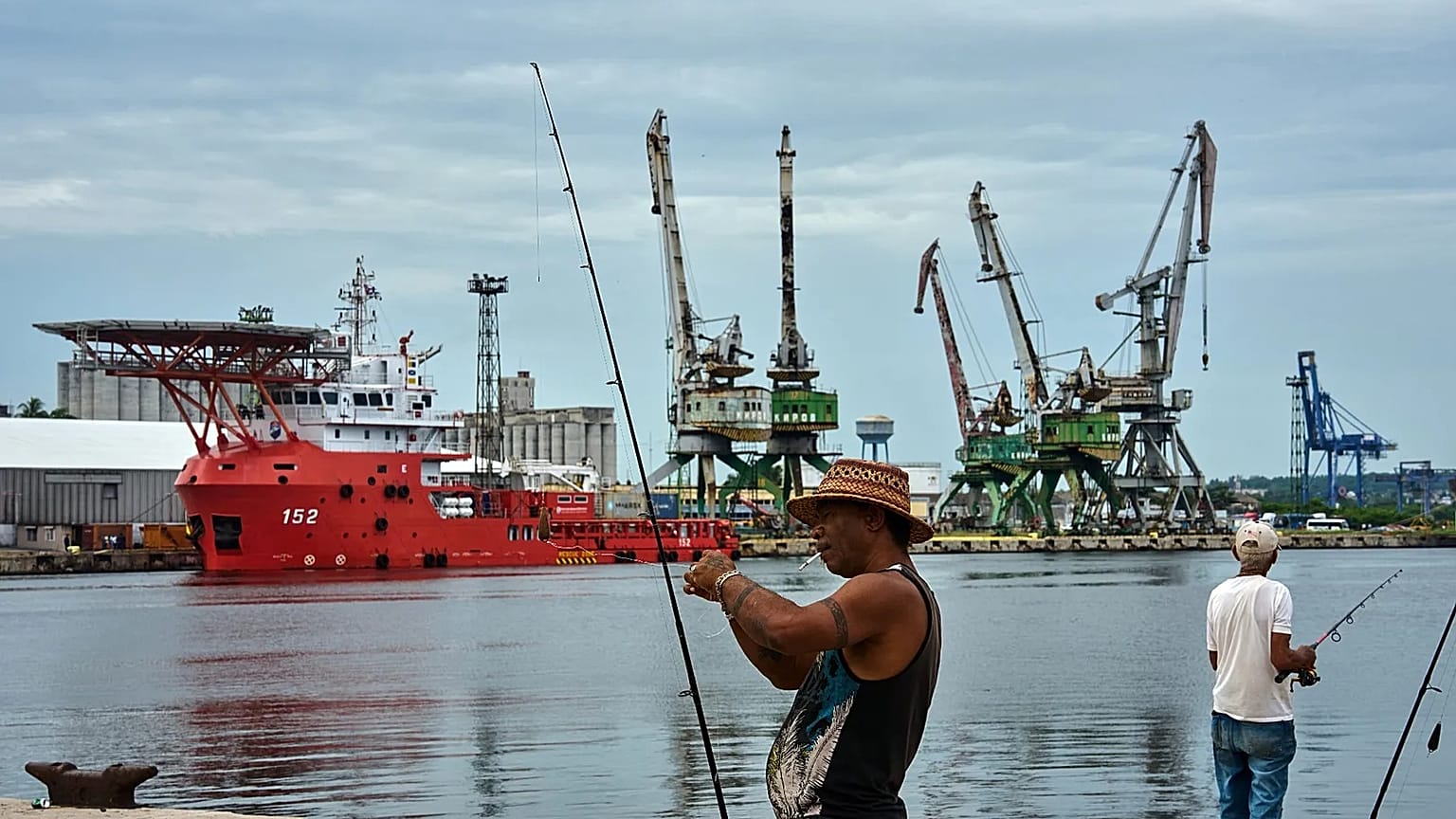
A fisherman prepares his fishing rod in front of the Colombian Navy ship ARC Caribe docked at a pier in Havana, 12 June, 2026
Copyright AP Photo

By Gavin Blackburn
Published on

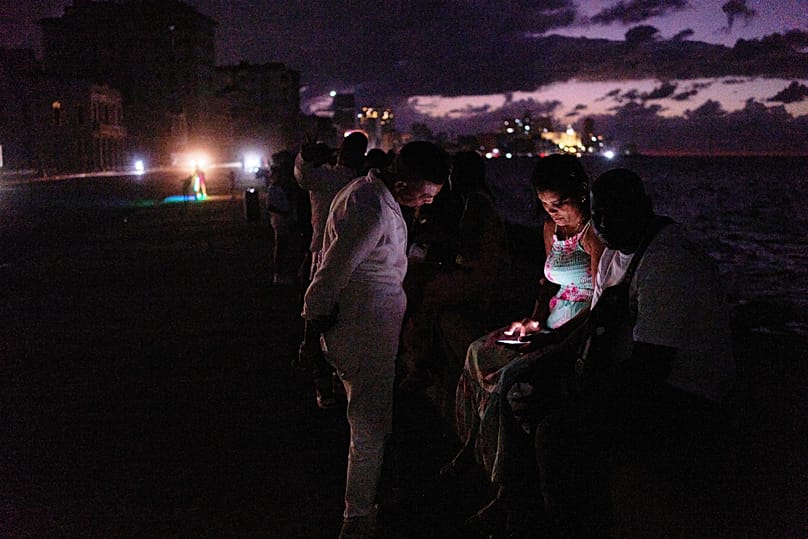
Regular power outages have intensified since US President Donald Trump threatened tariffs in late January on any country that sells or provides oil to Cuba.

A ship carrying nearly 100 tonnes of food and essential goods arrived in Cuba from Colombia on Friday as part of the humanitarian aid that several countries have sent to the island as a US energy embargo persists.

The ship, which departed Cartagena in early June, crossed the Havana Bay channel early in the morning flying the Colombian flag and escorted by a small Cuban auxiliary vessel.

The Colombian Presidential Agency for International Cooperation said that, on orders of President Gustavo Petro, the shipment included non-perishable food, medicine, hospital supplies, electrical materials, solar panels and other items.

The ship also carried seven tonnes of goods collected by solidarity groups.

Last weekend, another ship carrying 1,700 tonnes of essential goods from Mexico and Belize arrived in Havana.

People spend the night in the dark on the Malecon during a blackout in Havana, 21 March, 2026 AP Photo

Sanctions on Cuba

Washington announced sanctions against Cuba’s state-owned oil and gas company on Thursday in a move expected to increase tensions between the two countries.

That announcement came almost a week after the US government sanctioned Cuban President Miguel Díaz-Canel and other officials, as well as several institutions.

Cuba is already struggling under a decades-old embargo and a lack of petroleum as the US keeps pushing for a change in its economic and political model.

Power outages, already common given the economic and energetic crisis gripping the island for the past five years, have only intensified since Trump threatened tariffs in late January on any country that sells or provides oil to Cuba.

Cuba's government said on Wednesday that the US oil blockade that has crippled the island is preventing the United Nations from distributing 170 containers of humanitarian aid.

Cuba's Foreign Minister Bruno Rodriguez said that 170 containers of UN aid worth $6.3 million (€5.4 million) "is not reaching beneficiaries due to the fuel shortage."

Writing on X, he stressed that the blockade was "not only hampering the performance of the Cuban economy" but also affecting the work of international organisations.

Both countries have acknowledged that they have held talks, but the scope of them is unknown.

Meanwhile, Trump has been threatening military action in Cuba ever since the US military invaded Venezuela and arrested former President Nicolás Maduro.

Last Thursday, Trump said Cuba has "sort of collapsed" and said "we're going to handle that as soon as we've finished" military operations in Iran.


The ‘Start of Summer’ Festival at the crossroads of Cuba’s political project


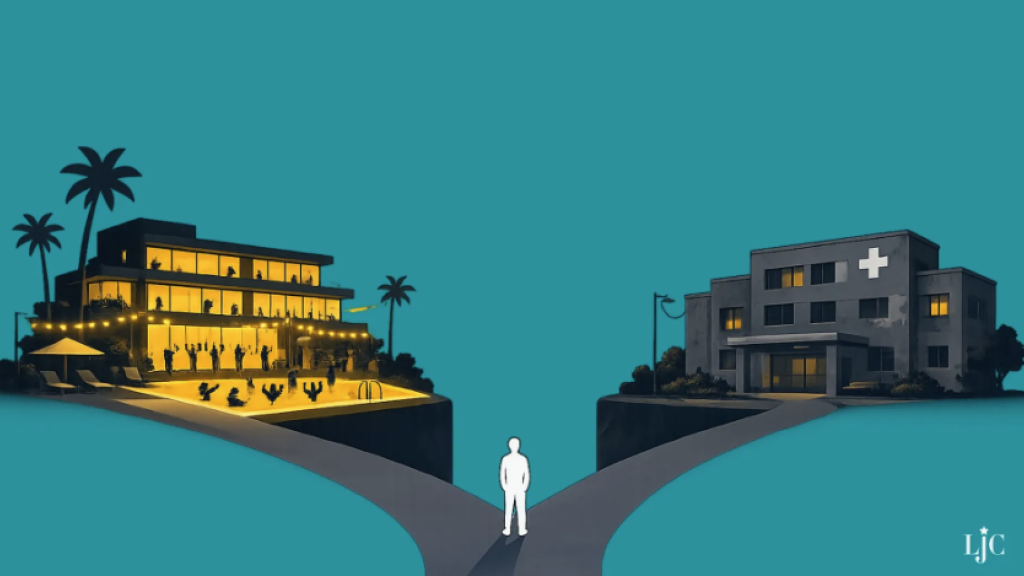
Graphic La Joven Cuba Start of Summer festival crossroads

First published in Spanish at La Joven Cuba. Translation by LINKS International Journal of Socialist Renewal.

For many Cuban families, the start of summer this year is anything but a celebration. Most households lack an Ecoflow system to make the power outages less unbearable. For them, the arrival of these months can only mean heat, mosquitoes and sleepless nights, because they cannot keep a fan running to provide some relief from the increasingly hot tropical nights.

If you are responsible for maintaining or managing a low-income household, the days are no less gruelling. Instead of tanning, the June sun burns the skin of those who wait for hours for a municipal electric tricycle to take them to work, or those who walk for miles looking for the small business that sells the cheapest chicken.

As this school year draws to a close, children from working-class families, even those with good grades, will not be able to go on trips any further than wherever their feet can take them. There will be no beaches, no swimming pools, no trips to the countryside. Many of those who have worked themselves to the bone all year long to support their families will also be unable to enjoy accessible leisure activities. Cinemas, theatres, and state-run entertainment venues remain closed almost everywhere because of the energy crisis. The country is surviving US President Donald Trump and US Secretary of State Marco Rubio’s attacks, but, according to President Miguel Díaz-Canel, “with the heroic resistance of the Cuban people, we are defending our sovereignty and are committed to perfecting the enormous work of social justice that socialist construction has built in Cuba.”

However, this “heroic resistance” is taking many different forms this summer. Some people cannot sleep because of the heat from an energy blackout, while others are dancing to the beat of reggaeton in a hotel pool. For them, the Start of Summer has a completely different meaning.

The “Start of Summer” festival took place between May 29–31 at the Resonance Musique Hotel in Varadero, although some of the festivities also extended to the Meliá Internacional hotel. According to reports in non-state media, it was organized by the Fiesta Havana and Rey Puma projects, with the media platform La Familia Cubana as its main promoter. There is no reliable information on what it cost to attend these events. Some advertisements on social media indicated a price of about US$170 a night for two people. These same sources also indicate that a table in the VIP area cost between $600 and $1000.

The event brought together such figures from the Cuban urban music scene as Yomil, Charly & Johayron, Ja Rulay, Wildey, Zurdo MC, El Micha, Hallel Génesis, Helabusador, and Rey Tony, among others. The La Familia Cubana influencer team documented every moment from the inside: backstage, interviews, concert clips… where everyone was having a fantastic time, everything was vibrant, abundant, and flowing…

Among the more “illustrious” attendees was the controversial influencer and business owner Sandro Castro, Fidel Castro's grandson, who shared images on his social media of lunches at the Xanadu Restaurant in Varadero, jet ski rides, beach parties, and a video showing the now-mythical, but increasingly less credible, beach sign that reads, “What is collected here is for the people.” Sandro Castro also took the opportunity to comment that the dolphins that protected Elián González on the high seas were now bringing people from Miami to Cuba to attend the Start of Summer festival. He also launched his new energy drink, Vampirash.

Anyone viewing the images without context might think that the event was taking place in Cancun or Punta Cana, and not in a “socialist” country where blackouts typically exceed 20 hours a day, water is scarce, medicines are nowhere to be found in pharmacies, and whose government has been asking for international aid for months to meet the basic needs of its population amid the US-imposed oil embargo.

Of course, the controversy was immediate. Anyone who does not know what Cuba is like might think that those who were outraged and attacked the opulence displayed amid the “resistance” were Communist militants, brandishing that maxim from the manuals on socialist transition, “to each according to their work.” But no. Granma, the Communist Party of Cuba’s official organ, remained silent on the matter. Those who expressed outrage were, generally, opposition journalists and influencers, the vast majority of whom are avowed defenders of the most neoliberal variant of capitalism, a model that accepts inequality not as a distortion, but as a fundamental mechanism of its operation.

A curious paradox, it seems that communist morality has switched sides. Today, it is the apologists for capital who are scandalised by its harshest consequences.

It is worth noting that it was not always like this. In the “socialist” Cuba of my childhood (the late 1990s and early 2000s), despite the lingering effects of the so-called Special Period1, many working families still had access to state-provided vacation options. Popular campsites — modest but affordable facilities located in beaches and natural areas throughout the country — allowed families to spend a few days away from home at reasonable prices. In addition, trade unions managed vacation villas that were allocated to “outstanding workers”. Transportation to beach areas was also increased during the summer, and inexpensive food stalls were set up so that workers and their children could enjoy the season without money being the sole deciding factor.

Of course, it was not perfect equality, it never was. The best popular campsites were almost always “reserved” for people with connections, there was favouritism in the allocation of villas, and you travelled like sardines in a can on the buses to the beach. Nevertheless, it was a system that compensated, through social transfers, for salaries that were not enough to afford a hotel stay. A system that recognised that summer, rest, the right for your children to see the sea, could not be privileges that only those who could afford them could enjoy.

Today that floor is gone. In 2010, Raúl Castro announced the elimination of so-called “unnecessary free services” as part of the process of updating the economic model. At the time many of us thought it was a reasonable step, since some of the subsidies distorted the economy and rewarded waste. But the decision was not followed by a cross-the-board rise in state workers’ income, and a social safety net was not created for those who could not afford to pay to replace these free services. On the contrary, driven by the state, the economy became increasingly dollarised while wages were frozen. Inflation did the rest.

In Cuba today, the public sector continues to have a dominant presence in such sensitive areas as health, education, science and other productive sectors. It employs the majority of workers. But those workers have been left in limbo, without fair wages or complementary benefits. A doctor, a teacher, a scientist, let alone a worker in a state-owned enterprise, cannot afford to take a vacation without help from family members abroad or supplemental income in foreign currency.

Judging by the videos, the Start of Summer festival in Varadero was not filled with foreign tourists. The vast majority of those present were Cubans, part of the same society in which thousands of families now struggle to survive the crisis. This inevitably raises the question: who can afford to attend such an event?

Here it is important to avoid falling into typical black-and-white thinking such as “all of them are the sons and daughters of the politicians and party leaders.”

At those VIP tables, there were Cubans from very diverse backgrounds. There were those who had been absent from the island for years, returning with the foreign currency they had saved in the “capitalist” system. There were the owners of private businesses who had genuinely prospered — and it is worth making the distinction, not just any business, but one profitable enough to allow them to spend hundreds of dollars on leisure. There were the “influencers” who are paid to promote those businesses. There were also those who knew how to capitalise on assets they acquired through social redistribution mechanisms, assets that for decades had no market value, such as a mansion in Vedado that can suddenly be sold or rented. And, we must not ignore it, there were also those who had accumulated wealth through the misappropriation of resources and corruption.

The truth is that, regardless of the reasons why each person has money — some legitimate and others not — today many Cubans are able to show that they can spend hundreds of dollars in hotels while others struggle to survive. I remember that when I was a child — this was before the expansion of the private sector in 2016 and the authorisation of private businesses in 2021 — there was still a certain fear of showing that one was living “beyond one’s means.” The system was designed to prevent accumulation, and if you did accumulate wealth, the suspicion that you were doing something outside of the ordinary soon surfaced. Even those who lived off remittances from abroad showed a certain discretion regarding what most people lacked.

Today the scenario is radically different. Inequality and class privilege are no longer something hidden, but rather something that is displayed with pride. When you see the sons and daughters of the country’s leaders on social media living the high life, who can feel ashamed of living above the means of “working people”? Paradoxically, inequality only becomes a topic of conversation when an event such as the Start of Summer festival confronts us with these contradictions, but generally speaking, the debate tends to take on a moralising tone and remain at that level. It rarely manages to go a step further and analyse the causes and consequences of this problem.

Sociologist Mayra Espina Prieto, who has been researching poverty and inequality in Cuba for decades, explained it clearly in an interview with La Joven Cuba. What is happening is not simply a reconcentration of wealth, but the result of a process that she calls social restratification. Until the 1980s, the revolutionary project achieved a real process of de-stratification — the social pyramid flattened, the distance between the base and the top decreased — but that advance was never complete, and from the 1990s onwards it began to be reversed. “With the aggravating factor,” she notes, “that those who advance to the new positions offering better opportunities are almost always groups that historically were already better off.”

Warning that these figures should be taken with caution — as they are estimated from mirror data, since Cuba does not publish figures on income poverty — Espina estimates that between 40-45% of the Cuban population are unable to cover their basic needs with their income, while a small group (no more than 11-13% of the population) can be ranked with incomes far above the average, with a real ability to live comfortably from day to day and, in some cases, display the advantages this income provides. Between these two extremes, there is an increasingly unstable intermediate fringe that can fall steeply with any blow: an illness, the loss of remittances, the death of a family member abroad, or whatever.

This re-stratification has effects that corrode the social fabric, since the confidence that effort leads to a dignified life disappears. It normalises that a few have access to what the majority lack and the sense of a common project is weakened.

In a society that for decades built its legitimacy on the promise of equality, that erosion has a political weight that transcends indignation when a show of opulence such as the Start of Summer appears. It means that more and more people stop believing the system they live in has something to offer them. This has a clear effect on the way Cuban families organise their daily lives amid the current situation in which inflation, the paralysis of public transport, blackouts and the gradual disappearance of social transfers have pushed each household to subsist on its own: an Ecoflow, so as not to depend on the electricity grid; a tricycle, so as not to depend on the bus; a parallel income, so as not to depend on the state salary; purchases in the private sector, because the supply in Cuban pesos is practically non-existent. These are individual solutions to collective problems.

In this trap lies perhaps the most silent effect of the current crisis — which in this sense is far from the one that occurred in the ’90s. Solutions are no longer sought in the collective project, but become a personal responsibility.

Meanwhile, in official discourse, there continues to be talk of resistance, social justice, popular sovereignty, socialism, when at the same time daily life is organised around the logic of everyone for themselves, fending for oneself and making the most of things. When a system forces people to exist in this way, it becomes increasingly difficult to convince them that they are still part of a collective project. And, one might ask, why should we?

To the worker who today “resists” the summer with 20 hours of blackout and one meal a day, how do you explain the fact that in that same country there are those who can celebrate surrounded by luxury? How do you convince him that he has to keep fighting to save socialism?

That is why it would be naïve to be scandalised that many Cubans no longer feel any attachment to the word socialism. From what concrete experience could they feel this attachment? From a state salary that just covers a carton of eggs and a bag of milk? From an endless blackout while the neighbour lights up with the solar panel sent to him by the family from “imperialism”? From seeing how rest, leisure, mobility, access to well-being, gradually become signifiers of class? What they want, then, is for the capitalism that de facto exists to be administered and managed better, so that they too can access the capital needed for a dignified life.

However, our political menu does not abound with alternatives either. The official left continues to cling to a rhetoric that no longer manages to name the real experience of the majority, invoking an egalitarian horizon while administering a society that is increasingly unequal, more fragmented and more dependent on private solutions to problems that were previously assumed to be collective. On the other hand, a large part of the opposition — mostly located on the right — justifiably denounces the official discourse’s hypocrisy, but usually does so from an idealised vision of capitalism, one where “everyone can make it” if they try hard enough. The problem is that they rarely stop to think about what happens to those who, despite their efforts, are unable to secure a minimum of dignity for themselves via the market, as is the case in underdeveloped capitalist countries.

What they propose, in most cases, is not a capitalism with redistribution mechanisms, strong public services, subsidies for vulnerable people, the elderly or poor families, or a model where private enterprise coexists with public institutions to guarantee a minimum floor for all. What they propose is, rather, that the state withdraw and that “Saint Market” regulates social life. In a society conceived by “classical liberalism,” it no longer matters too much that some can celebrate in Varadero while others do not have enough to eat, because in the end the one who celebrates would be seen as someone who earned it, and the one who does not succeed as someone who did not know how or want to succeed.

***

To those who are genuinely indignant over the Start of Summer, I say that it is nothing more than a symptom of the problem. Those hotels illuminated amid widespread darkness are a postcard that reflects the Cuban model’s main contradiction. One that has made socialism and social justice its banner, but that today can do nothing but mismanage a defective capitalism.

That is why there is no use in expressing one’s shock on networks or calling for a ban on the next edition. Covering up this spectacle would hardly serve to hide the marks of a society that has long been reorganising itself around privilege, inequality and individual capacity over the collective project. The most serious thing is that this reorganisation occurs without naming itself and without offering the mediations that, in other capitalist contexts, progressive governments have implemented to cushion the fall of those below or help them reach the middle.

The Cuban crisis, as it stands today, is unlikely to last much longer. Whatever its outcome, rebuilding the country, with this system or with the one that comes, will have to be a collective task of which people feel a part of. However, no reconstruction will be possible without facing up to the causes that brought us to this point, amid external asphyxiation and internal errors that have ended up emptying most of the promises, which for decades sustained the national project’s legitimacy, of their content.

Facing these contradictions implies putting an end to administering their symptoms, hiding them behind slogans or selling miraculous solutions. It means starting to honestly discuss what country really exists, what majorities are being left out, but, above all, what material, social and political conditions should be rebuilt to guarantee them a dignified life, and how to do it. Everything else — the passing scandal, the selective outrage and the easy promises — remains just another way of going around in circles.

Rubén Padrón Garriga has a degree in Social Communication from the Faculty of Communication of the University of Havana and has collaborated with various media outlets. He is a social communicator by training and journalist by hobby.

  • 1

    Translator's note: The Special Period refers to the economic crisis that hit Cuba in the 1990s after the collapse of the Soviet Union. It fall led Cuba to lose more than 80% of its imports and exports.


Euroviews. Elon Musk's SpaceX IPO: the capitalist space revolution begins

Elon Musk, founder, CEO and chief engineer/designer of SpaceX, during a press conference following a test flight of SpaceX's Falcon 9 rocket at Cape Canaveral
Copyright (c) AP

By Dr. Dr. Rainer Zitelmann, historian and sociologist
Published on
The opinions expressed in this article are those of the author and do not represent in any way the editorial position of Euronews.

World’s biggest IPO: Elon Musk wants to raise $75bn for SpaceX, making him Earth’s first trillionaire, as Rainer Zitelmann explains in an opinion piece for Euronews how it came about and what happens next.

When I began researching, writing, and publishing on the subject of space capitalism several years ago, many people laughed. They asked why I had chosen such a niche topic and suggested that it sounded more like science fiction than reality.

Well, space capitalism is now a reality. Within a few hours, we will witness what is expected to be the largest IPO in history: Elon Musk’s company SpaceX aims to raise $75 billion. As a result, Musk is set to become the first trillionaire in history. Astute observers, including American politician and space enthusiast Ted Cruz, predicted more than a decade ago that the world’s first trillionaire would emerge from the space industry.

Let me begin with a disclosure. No question has been asked of me more often in recent days than whether I plan to buy SpaceX shares myself. The answer is no. First, because I write about the company and do not want to create any appearance of bias or conflict of interest. Second, because I am fundamentally a passive investor who allocates virtually all of his stock-market investments to globally diversified ETFs.

The most remarkable company of the past 50 years

At the same time, I believe that SpaceX is the greatest company founded in the past fifty years, and that Elon Musk is a visionary entrepreneur whose significance can be compared only to figures such as Thomas Edison or Henry Ford.

In the space industry, SpaceX occupies a unique position. According to the IPO-prospectus, since 2023 the company has transported more than 80 percent of all mass sent into orbit worldwide each year, while maintaining a Falcon 9 mission success rate exceeding 99 percent. One could make an additional comparison: if SpaceX were a country, it would have ranked first by a wide margin in successful rocket launches in 2024, 2025, and so far in 2026, ahead of China. Of the approximately 15,000 active satellites currently in orbit, around 10,000 are Starlink satellites.

In 2025, SpaceX conducted twenty times as many launches as Europe’s entire state-organized space program. More than a decade ago, the company developed the world’s first truly reusable orbital rocket, something no government space agency has yet achieved. Compared with the Space Shuttle, Musk’s company has reduced launch costs by roughly 95 percent.

From 1957 until today, all governments combined have launched 15,062 satellites into space. Elon Musk, by contrast, has placed 14,844 satellites into orbit within just a few years.

Musk’s visions

Yet this is only the beginning. Musk is pursuing ambitious projects, including the construction of data centers in space. Such orbital data centers could operate almost continuously on solar power while addressing some of the energy and land-use constraints faced by terrestrial facilities.

His truly grand objective, however, is the colonization of Mars. By settling humanity’s neighboring planet, Musk hopes to transform humanity into a multi-planetary species. His stated goal is to establish a population of one million people on Mars. Achieving this would require approximately 1,000 Starships carrying 100 settlers each during every launch window, which occurs roughly every 26 months.

Regarding the company’s long-term outlook, the prospectus states that SpaceX believes its current space activities could catalyze transformative breakthroughs, reshape terrestrial industries, and ultimately create entirely new trillion-dollar markets on the Moon, Mars, and beyond.

This is where many critics become skeptical. They fear that profits generated by businesses such as Starlink could be consumed by Mars-related projects that generate little or no financial return. The prospectus remains vague on this point. For example, it suggests that establishing a permanent presence on the Moon could enable annual growth in AI computing capacity on a terawatt scale, support deeper space exploration and industrialization, and serve as a stepping stone toward a civilization on Mars.

Musk’s goal: turning humanity into an interplanetary species

Musk also reiterates a theme he has emphasized for years: that humanity’s dependence on a single planet represents a major vulnerability and exposes civilization to existential risks. According to the IPO-prospectus, one of the company’s motivations is to ensure that humanity does not ultimately suffer the same fate as the dinosaurs.

The prospectus further describes SpaceX’s mission as developing the technologies necessary to make life multi-planetary, deepen humanity’s understanding of the universe, and extend conscious life beyond Earth.

Given these ambitions, and considering that SpaceX is currently reporting losses partly because of its approximately $15 billion investment in Starship while also indicating that it does not intend to pay dividends in the foreseeable future, critics such as University of Florida finance professor Jay Ritter argue that even if Starlink were eventually to generate tens of billions of dollars in annual profits, those funds might be spent on transporting people to Mars rather than being distributed to shareholders.

IPO prospectus: opportunities described too vaguely

Only in the later sections of the prospectus are potential future business areas mentioned, including space tourism, orbital manufacturing, passenger and cargo transportation to the Moon and Mars, and energy production beyond Earth. Asteroid mining is also mentioned, but only briefly.

What is absent, however, are the enormous opportunities associated with real estate. The 1967 Outer Space Treaty clearly prohibits nations from claiming ownership of celestial bodies or land on those bodies. Whether this prohibition also applies to private companies remains a matter of legal debate. Some space-law scholars argue that the treaty bans national sovereignty beyond Earth but does not necessarily prohibit private ownership. Their interpretation is based on the legal doctrine expressio unius est exclusio alterius: the explicit inclusion of one category implies the exclusion of others.

Legal uncertainties: who owns asteroids?

Admittedly, there is legal uncertainty here. But where there is uncertainty, there is also opportunity. Should SpaceX eventually acquire ownership rights to asteroids or land on the Moon or Mars, it could become the greatest real-estate story in history, potentially even creating space-based REITs that could be listed on stock exchanges. These opportunities may ultimately represent the company’s most significant long-term commercial prospects.

Because the primary purpose of an IPO-prospectus is to minimize legal liability through extensive discussion of risks rather than to highlight speculative opportunities, these possibilities receive little attention. I suspect the company’s legal advisers recommended avoiding anything that might appear overly science-fiction-like to investors.

Ironically, this restraint may produce the opposite effect. Because the potentially enormous commercial opportunities in areas such as space tourism and asteroid mining are merely mentioned rather than fully explained, and because real-estate opportunities are not discussed at all, readers unfamiliar with the subject may conclude that SpaceX intends to spend vast sums pursuing idealistic science-fiction dreams.

That interpretation is misguided. If there is one thing that can be said with confidence about Elon Musk, it is this: wherever there is an opportunity to create value and generate profits, he will pursue it.

Dr Dr Rainer Zitelmann is a historian and sociologist and the author of 31 books, which have been published in 35 languages. His book “New Space Capitalism” has just been released.


The Hidden Supply Chain 

Behind Every SpaceX Launch

  • Rothschild & Co Redburn raised its price target on Linde to $560 and reiterated Buy, citing the company's dominant position supplying liquid oxygen, helium, and cryogenic services for SpaceX launches.

  • Starship burns roughly 10 times the oxygen of a Falcon 9, which analysts say could push Linde's revenue per launch from under $4 million in 2025 to nearly $6 million by 2028.

  • SpaceX plans 140-160 launches in 2026, nearly all Falcon 9, but a shift toward Starship dominance and launch cadences potentially exceeding 1,000 per year by 2028 represents a major new demand lever for Linde's space business.

Ahead of the SpaceX IPO, Rothschild & Co Redburn analyst Tony Jones published a note on space propellant economics and identified an industrial-gases giant that is well positioned to dominate the market for rocket propellants and mission-critical launch gases as SpaceX's Starship launch cadence gains momentum and the broader space economy is set to double by 2035.

Jones and his team reiterated their "Buy" rating on Linde and raised their 12-month price target to $560 from $550, telling clients on Wednesday that the company has built a deep moat in the industrial gases business after powering America's rocket launches for the past six decades.

The team at the equity research arm of Rothschild & Co Redburn sees SpaceX's Starship as a "further demand accelerator," with higher launch cadence and heavier propellant loads creating a new growth lever for Linde's mission-critical gases business.

Jones estimates Linde generated just under $4 million of revenue per average space launch in 2025. By 2028, that number could approach $6 million as Starship launches are set to increase dramatically, driving demand for liquid oxygen, nitrogen, helium, cryogenic services, rare gases, and capacity fees.

Main points from the note:

  1. White Space. Linde has fuelled NASA for c60 years and now has capex set to ramp alongside SpaceX's Starbase. We delve into the economics and like what we see. Space sales are c2% group but could scale rapidly, as Starlink's ecosystem forms.
  2. Starship: a further demand accelerator. The transition to Starship as a dominant vehicle could transform the opportunity, burning c10x the oxygen of a Falcon 9 launch. Linde's revenue per launch could near $6m by 2028, from under $4m in 2025. This comes on top of potentially exponential launch cadence.
  3. Project and EPS optionality. Linde's space capex falls outside its gas backlog, lacking take-or-pay status. However, contracts seem likely and we see the backlog revised up as a clear valuation catalyst. EPS growth could accelerate. Linde is a rock-solid business with top-quartile management. We increase our 12-month PT to $560 per share (from $550) and reiterate our Buy recommendation.

Linde's earnings growth could accelerate if several growth levers hit at the same time...

Starship dominates propellant gas usage among space vehicle types this year.

"SpaceX has indicated that the 140 to 160 launches planned for 2026 will be almost all Falcon 9 flights. Starship launches will likely be test flights only, with the major milestone to successfully reach optimal range," Jones noted.

Linde revenue per average space launch – 2025

Linde revenue per average space launch – 2028

Musk has previously stated: "Starship should be doing >1000 Earth orbit flights per year by 2028. That is still low compared to what's needed to build a self-sustaining city on Mars and secure the future of consciousness."

By Zerohedge