Eurovision, Double Standards, and Bangaranga!
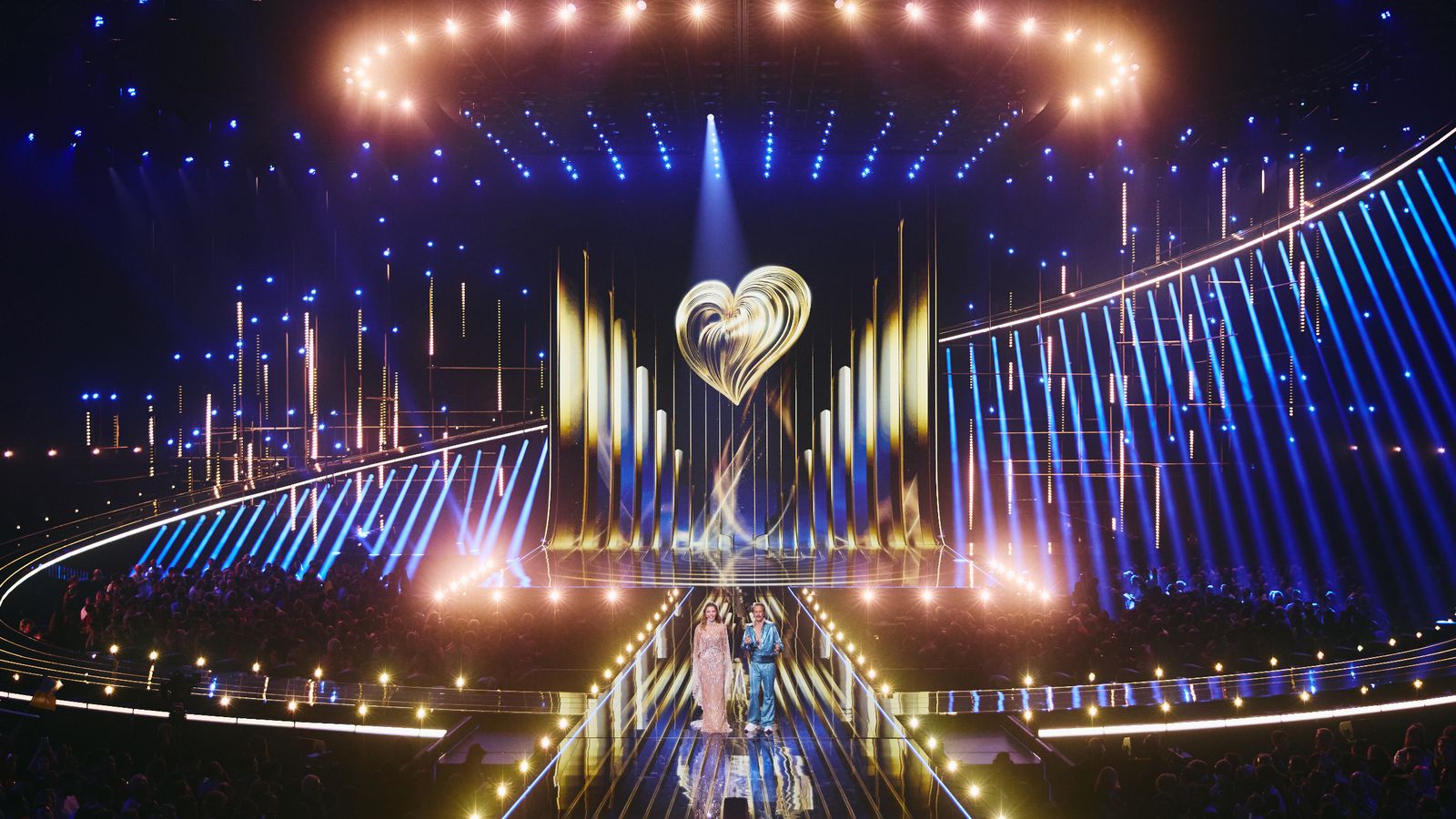
Bulgaria won the 70th Eurovision Song Contest with a song called “Bangaranga”. Israel finished second, and the contest in Vienna unfolded under the familiar banners of music, unity, spectacle, and carefully managed joy. The precise meaning of “bangaranga” became one of the running jokes of the night. Asked about it, the singer Dara reportedly described it as “a special energy that everyone has got in themselves, a feeling that everything is possible”. That wonderfully encapsulates Eurovision in that it could be nonsense, philosophy, marketing, or all three. But it also has a strange seriousness. In dark times, the idea that “everything is possible” cuts both ways. It can mean the return of war, occupation, authoritarianism and impunity. It can also mean solidarity, resistance, and the stubborn refusal to let law and culture become decorative language for a world that no longer believes in them.
This year’s Eurovision was not merely a contest between songs. It was also a contest between legal and moral values. Five countries, Ireland, Spain, the Netherlands, Slovenia and Iceland, boycotted the competition over Israel’s inclusion, citing concerns linked to Gaza and the wider conduct of Israel in the Occupied Palestinian Territory and the region. The controversy did not descend upon Eurovision from outside. It exposed what was already there. Eurovision is not political only when protestors arrive. It is political because it stages a fantasy of belonging. The real question is not whether politics should enter the contest, but which politics are treated as unbearable, and which are absorbed into the lighting design.
The comparison with Russia is unavoidable, even if it must be handled with care. In 2022, after Russia’s full-scale invasion of Ukraine, the European Broadcasting Union excluded Russia from that year’s contest, explaining that the inclusion of a Russian entry during the “unprecedented crisis in Ukraine” would bring the competition into disrepute Russia’s aggression was, and remains, a profound breach of the post-1945 prohibition on the use of force. Article 2(4) of the UN Charter prohibits the threat or use of force against the territorial integrity or political independence of any state. Russia’s actions also shredded the assurances given to Ukraine in the 1994 Budapest Memorandum, under which Ukraine gave up nuclear weapons inherited after the dissolution of the Soviet Union in return for security assurances from Russia, the United States and the United Kingdom
But once Eurovision has accepted the principle that participation can bring the contest into disrepute, it cannot easily retreat into the language of pure musical neutrality. The question becomes, disrepute according to what standard? Russia’s exclusion was justified by reference to the values of the EBU and the crisis in Ukraine. Israel’s inclusion, by contrast, has been defended through procedural compliance, broadcaster eligibility, voting safeguards and the formal separation between governments and broadcasters. Yet the controversy was not simply that Israel did well in the public vote. It was that Eurovision’s public-voting system appeared to become a terrain of state-backed public diplomacy. Official Israeli foreign ministry social media encouraged viewers to vote for Israel’s 2025 entry and reminded them they could vote up to 20 times. Furthermore, this was the tip of a wider Israeli government campaign that treated Eurovision as a soft-power tool, involving diplomatic contacts, marketing expenditure, and efforts to salvage Israel’s international reputation at a time of growing isolation over Gaza. The EBU then rewrote the rules to discourage “disproportionate promotion campaigns”, especially where supported by governments or governmental agencies, and later confirmed that all eligible members could participate in 2026 if they accepted the new safeguards. Israel and its Public Broadcasting Corporation KAN deny breaching the rules, and there is an important distinction between enthusiastic mobilisation, diaspora support, public diplomacy and improper interference. But that distinction is precisely the point. Eurovision’s voting system became another stage on which state legitimacy, image management, diaspora mobilisation and cultural soft power were being fought out.
That may be administratively coherent but it is not morally satisfying. The law and politics surrounding Israel and Palestine are not marginal concerns. The Geneva Academy’s War Watch report on international humanitarian law describes a global environment in which serious violations of the laws of war are widespread and impunity is intensifying, including in conflicts that have placed civilians, hospitals, homes and essential infrastructure under devastating pressure Amnesty International’s 2026 global report similarly situates Gaza, the Occupied Palestinian Territory, Lebanon and the wider Middle East within a broader crisis of human rights, armed conflict and weakening respect for international law
Nor is this merely the language of campaign groups. The International Court of Justice has already found, in its 2024 advisory opinion, that Israel’s continued presence in the Occupied Palestinian Territory is unlawful and that states are under obligations not to recognise the resulting situation as lawful or render aid or assistance in maintaining it. In South Africa v Israel, the Court indicated provisional measures under the Genocide Convention, requiring Israel to take measures to prevent acts within the scope of the Convention, prevent and punish incitement, enable humanitarian assistance, preserve evidence, and report on compliance. These are not final findings of genocide. But they are not background noise either. They are part of the ‘legal weather’ in which cultural institutions now operate at a time of uncertainty about geo-political ‘climate change’.
Eurovision is not the European Union. The EBU is not the European Commission. The contest has always included countries outside the EU, and its boundaries are as cultural and broadcasting-based as they are geographic. But it would be disingenuous to pretend that Eurovision does not perform Europe to itself. It is one of the continent’s most visible rituals of post-war modernity, namely kitsch, camp, multilingual, commercially packaged, occasionally sublime, and often ridiculous. Its genius is that it converts the high language of peace and unity into choreography, pyrotechnics and public voting. For one night, the treaty imagination of order, freedom, security puts on joy and sequins. That imagination has roots. The Treaty of Rome created the European Economic Community around a common market and the free movement of goods, people, services and capital The Maastricht Treaty deepened the movement toward union. Article 2 of the Treaty on European Union now speaks in a different register, naming respect for human dignity, freedom, democracy, equality, the rule of law and human rights as foundational values. Article 3 adds that the Union’s aim is to promote peace, its values and the well-being of its peoples
Of course, Europe has never lived up to these values consistently. The Mediterranean has become a graveyard for those escaping persecution and poverty. Fortress Europe has made the language of human dignity sound, at times, like a border management slogan. Arms, trade, energy and security interests routinely complicate the moral vocabulary. The point is not that Europe is innocent. It is that Europe has made particular promises about law, memory and human dignity, and Eurovision draws its soft power from the emotional residue of those promises.
There is a darker counterpoint here. If Europe’s post-war imagination was, at least in aspiration, constitutional, integrative and rule-bound, Israel’s founding settlement remained territorially and constitutionally unresolved. The 1917 Balfour Declaration promised support for a “national home for the Jewish people” in Palestine while also stating that nothing should prejudice the civil and religious rights of existing non-Jewish communities. The Mandate for Palestine carried those tensions into an imperial legal framework. Israel’s Declaration of Independence invoked the UN partition resolution and promised equality of social and political rights, but it did not define the borders of the new state. Nor was the promised constitution ever completed. Israel instead developed a system of Basic Laws after the first Knesset proved unable to agree on a formal constitutional text. That unresolved space matters. In Israel: What Went Wrong?, Omer Bartov argues that Zionism’s emancipatory promise has been transformed into a state ideology of ethno-nationalism, exclusion and violent domination of Palestinians, leaving Israel facing accusations of war crimes and genocide. One need not reduce Israel’s whole history to that trajectory to see the danger. Where borders, equality and constitutional restraint remain unsettled, politics can become a contest over how much territory the national imagination is entitled to claim, and how much violence can be justified in making that claim real.
This is where imagination, culture, and praxis matter. Law does not move only through courts, treaties and sanctions. It also moves through symbols, refusals and habits of recognition, and behaviour at different social, political and economic levels. The so-called Brussels effect is often discussed in relation to regulations, markets and trade standards, the EU’s ability to export rules because access to its internal market matters. But there is also a softer, stranger effect, namely the projection of European cultural legitimacy. Eurovision, football, film festivals, museums and universities help decide who is normalised, who is celebrated, who is rendered controversial, and who is placed outside the family photograph in international relations.
Boycotts live in that space between law and culture. They are rarely pure and they are often inconsistent. They can be performative, selective, and morally self-flattering. But they can also be one of the ways ordinary people, artists, institutions and states refuse to let illegality and immorality become routine and normalised. The long struggle against apartheid South Africa is the obvious historical reference point, not because every case is identical, but because it shows how cultural and sporting exclusion can form part of a wider ecology of pressure. The Apartheid Convention declared apartheid a crime against humanity. The ICJ’s Namibia advisory opinion developed the logic of non-recognition in relation to South Africa’s unlawful presence in Namibia. UN debates over cultural, academic and sporting boycotts helped turn South African apartheid from a domestic policy defended by a state into a global legitimacy crisis.
None of this means that boycotts mechanically produce justice. South Africa’s transition was shaped by internal resistance, international pressure, economic change, geopolitical shifts, labour movements, legal campaigns, cultural isolation and political negotiation. But the cultural boycott mattered because it denied apartheid the comfort of normality and recognition. It told athletes, musicians, universities and states that neutrality toward racial domination was itself a position.
That is the uncomfortable question now. If international law imposes obligations of non-recognition and non-assistance in relation to unlawful situations, and if cultural institutions trade in recognition, prestige and normality, can those institutions plausibly say they have no role at all? Not every cultural event must become a sanctions committee. But neither can every cultural event hide behind the microphone stand. When Europe excludes Russia from Eurovision but includes Israel, the problem is not only inconsistency. It is the impression that some violations disrupt the moral order, while others are treated as regrettable complications within it that can be accommodated, forgiven, and/or forgotten.
The same question should not stop at Israel. If the principle is consistency, it must also travel to friends and powerful hosts. The 2026 FIFA World Cup will be held across the United States, Canada and Mexico. FIFA’s human rights policy commits it to respecting internationally recognised human rights, and the World Cup 2026 human rights framework presents the tournament as a platform for diversity, inclusion and positive impact. Yet the American Civil Liberties Union and more than 120 civil society organisations have issued a travel advisory warning of risks for visitors to the United States, including arbitrary denial of entry, detention or deportation, expanded restrictions on travel, invasive screening, surveillance, suppression of protest, and mistreatment in immigration detention. UN experts have also condemned recent US action against Venezuela as a breach of Article 2(4) of the UN Charter and a possible act of aggression
Again, the point is not that every legal situation is identical. Russia’s invasion of Ukraine, Israel’s occupation and conduct in Gaza and Lebanon, and US action against Venezuela each raise distinct legal questions. The point is that international law loses authority when it is heard only as the music of condemnation for adversaries. If cultural institutions are going to invoke values, disrepute, inclusion, equality and human dignity, then they must accept that audiences will ask whether those words have content, or whether they merely decorate the interval act.
Which brings us back to Bangaranga. Perhaps for many that new little word does more work than expected. Eurovision’s defenders will say that the contest offers escapism, and there is truth in that. People need joy. They need spectacle. They need songs about love, heartbreak, nonsense, desire and occasionally wolves dancing to synthesizers. But escapism is not the opposite of politics. Sometimes it is what allows people to keep breathing in a political world that would otherwise suffocate them. The problem comes when escapism becomes legitimacy laundering, such as sports or music washing. Music can create solidarity, but it can also soften the edges of brutality. Cultural inclusion can open doors, but it can also confer normality on states and institutions whose conduct is under grave legal scrutiny. The decision to boycott is therefore not an attack on music. It is a claim about what music is being asked to carry.Europe’s post-war dream was never only bureaucratic. It was cultural, legal and emotional. It imagined that after occupation, fascism, genocide and total war, another kind of order could be built, imperfect, compromised, often hypocritical, but still oriented toward peace, dignity and the rule of law. That dream is under enormous strain. Perhaps it always was. But the answer to hypocrisy is not to abandon standards. It is to apply them more honestly. Bangaranga, then, should not be read as naïve optimism. “Everything is possible” is not always good news. War is possible. Apartheid is possible. Genocide is possible. Aggression is possible. Double standards are possible. So are boycotts, refusals, pressure, solidarity, memory and change. Eurovision united through music while part of Europe stayed away. That absence was also a performance. It said that unity without law is choreography. It said that culture is not innocent when it helps decide who belongs. And it said that even in the glitter, perhaps especially in the glitter, people are still listening for the difference between a slogan and a value.

No comments:
Post a Comment