Friday, April 12, 2024


RBC faces questions on climate, Indigenous rights at annual general meeting

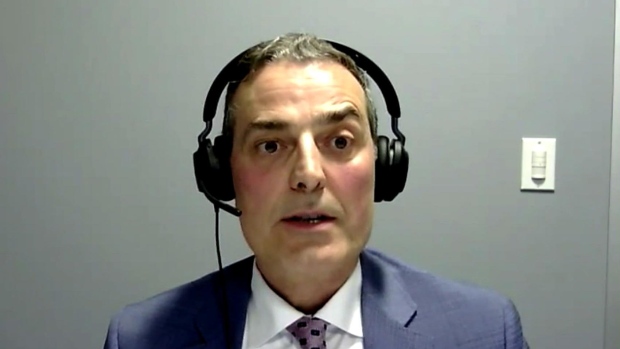
Royal Bank of Canada faced a steady stream of questions about the bank's climate and Indigenous rights track record at its annual general meeting Thursday. 

"We're bringing a voice of nature," said Tara Houska of the Couchiching First Nation, as she pushed the bank to use its position to accelerate the energy transition.

"Are you actually committed towards moving away from fossil fuels, moving away (from) something we know is killing us, towards a different way?" she asked.

In response, chief executive Dave McKay said the bank does need to keep evolving, while also defending past decisions and pointing to several major policy rollouts.

“I couldn't agree more that we need to continue to evolve our energy strategy. We can continue to, need to, evolve towards a net-zero future," said McKay.

“We know there's an urgency to that as well, we see the climate around us, we see the climate volatility."

In recent months, the bank has released an early outline of how it plans to work with clients to reduce their emissions — or potentially cut ties with clients who don't respond — along with a commitment to triple renewable energy funding and other measures aimed at speeding up the transition.

The bank has also agreed to disclose in its next climate report how its fossil fuel funding compares with its clean energy funding after pressure from shareholders.

New York City Comptroller Brad Lander had led a shareholder resolution pushing the bank to release the funding ratio, something the bank had rejected until an about-face last week, thereby avoiding a vote on it at the AGM. 

Critics in the room though said the bank is still not doing enough as it continues to lend billions of dollars to oil and gas companies and to projects that damage the environment.

Many questions were focused on having RBC ensure there is proper Indigenous consent for projects that it funds, an issue that has been contentious for pipeline projects like Coastal GasLink and Trans Mountain.

McKay said the bank has a detailed risk assessment method that follows the guidelines of the Equator principles, a global baseline for the finance industry.

"We feel confident that this framework allows us to decide which projects do deserve our support, and which don't," he said. 

Grand Chief Stewart Phillip, president of the Union of B.C. Indian Chiefs, said he appreciates the banks' efforts, but that they don't go far enough to line up with the U.N. Declaration on the Rights of Indigenous Peoples.

"As long as RBC continues to fund controversial projects that don't enjoy free prior and informed consent, we're going to have troubles, cost overruns, TMX, Coastal GasLink, billions and billions of dollars, litigation, fees and chaos and disruption."

McKay said the bank also factors in the economic participation of communities as part of its assessment, and that Coastal GasLink has seen significant buy-in from First Nations, but that the bank will also continue to evolve its framework over time.

This report by The Canadian Press was first published April 11, 2024.


Shock exit of CFO Ahn comes at crucial time for Canada's largest bank


The sudden exit of Royal Bank of Canada’s chief financial officer comes at a “critical juncture” for the lender as it tries to absorb the biggest acquisition in its history, a leading Wall Street analyst says. 

Canada’s largest bank fired CFO Nadine Ahn on Friday, saying she’d violated its code of conduct by having an undisclosed “close personal relationship” with a colleague who was given preferential treatment, including promotion and pay increases. 

The news landed barely a week after Royal Bank closed its $13.5 billion purchase of HSBC Holdings Plc’s Canadian assets, including its portfolio of commercial loans, mortgages and more than 100 branches. On top of the “ambitious integration” of those two entities, Royal Bank has been trying to rein in costs and improve risk controls at its Los Angeles-based City National subsidiary, Jefferies Financial analyst John Aiken said. 

“Given the importance of the CFO role in managing operational efficiency, we believe that there will be an even greater investor focus on the HSBC integration and improvements in City National’s operations,” Aiken said in a note to clients published Sunday.

“We maintain that the following several months are a critical juncture for the bank and the loss of a key senior executive team member at this time is a material loss, regardless of the pedigree of her successor.”

Royal Bank said it sacked Ahn and the other employee, whom it didn’t name, after an internal review and an investigation by outside legal counsel.

Other market watchers said the departure may dent Royal Bank’s reputation but is unlikely to drag the lender down in a major way. The shares closed up 0.6 per cent on Monday at $139.95 in Toronto, better than the 0.3 per cent gain for the S&P/TSX Composite Commercial Banks index.

“It sounds like a messy departure and certainly not something that investors would be happy about — abruptly losing your CFO is never a good thing,” said Mike Rizvanovic, an analyst with Keefe Bruyette & Woods, noting that he was surprised by the level of detail the bank shared in its press release about the reasons for Ahn’s departure.

There shouldn’t be any major disruption in the bank’s day-to-day operations, but employee morale could be damaged, he said, adding that Ahn was respected as a woman in finance in a very senior role. She was named CFO in 2021. 

“I do think it’s a bit of a hit to Royal’s reputation in terms of the management team,” said Rizvanovic, who has an outperform rating on the bank’s shares. “But it’s not like my view on Royal has changed significantly.” 

The CFO’s departure is a surprising and “completely unnecessary blemish” for Royal Bank, said Dan Rohinton, a portfolio manager at iA Global Asset Management Inc. But the bank still has a strong business with a diversified earnings stream, he said. “In the grand scheme of banking, this barely registers.”

Katherine Gibson is filling in as CFO on an interim basis, and there are numerous internal candidates who could succeed Ahn, Rohinton said.

While CFOs are sometimes considered to be candidates to become chief executive officer, Rohinton said he “didn’t have a strong view” on whether Ahn was in the race to replace current CEO Dave McKay.

BMO drops anti-coal policy amid Wall Street rebuke of ESG

Bloomberg News | April 8, 2024 |


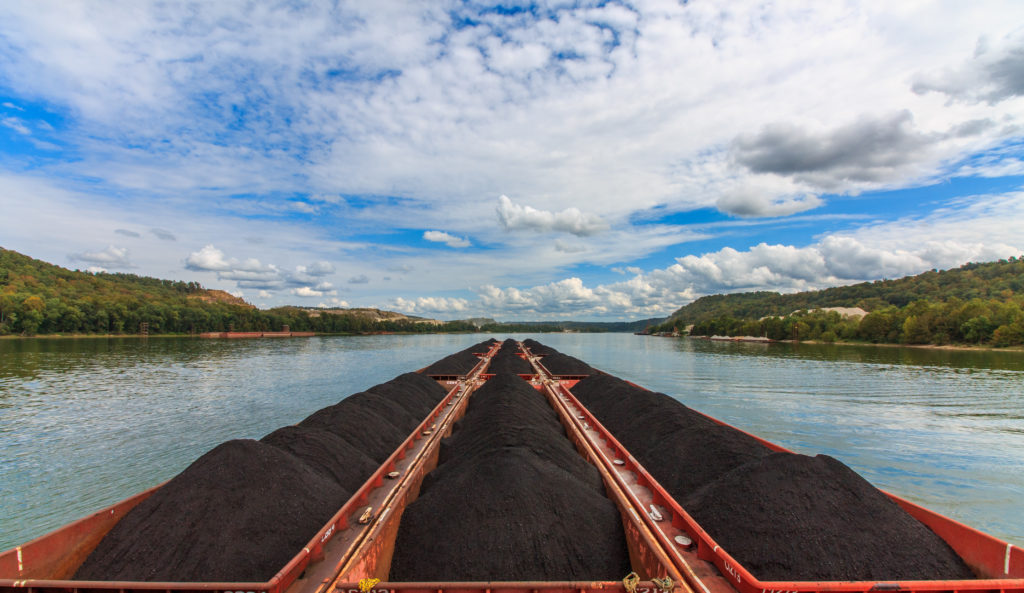
BMO Bank quietly dropped its policy restricting lending to the coal industry in late 2023, helping it avoid being labeled an energy “boycotter” in West Virginia.


The change came to light Monday after West Virginia Treasurer Riley Moore took a victory lap in an announcement of the financial firms it was adding to its boycott list, which doesn’t include BMO. In late February, the bank received a warning that it could be put on a state list of companies that Moore’s office considers to boycott the fossil fuels industry. BMO is the US subsidiary of Toronto-based Bank of Montreal.

In response to that February notice, Timothy Cox, US general counsel for BMO, said in a March 25 letter to the state treasurer’s office that it removed a statement detailing its restrictions on lending to the coal industry as a result of policy changes in November 2023. Cox’s letter was obtained by Bloomberg News via a public records request.

“As a result of policy changes made in November 2023, we removed a Coal Statement from BMO’s websites as it did not fully reflect our current policies,” Cox’s letter to Moore’s office said. “After receipt of your letter, we realized that a cached version of the statement remained on our websites and took it down. We have no plans to republish the Coal Statement.”

Banks and investment firms have been less vocal about their climate efforts after Republicans have spent more than two years attacking the environmental, social and governance strategy that the finance industry embraced. UBS Group AG chief executive officer Sergio Ermotti last month said policymakers shouldn’t rely on banks as a de facto “climate police.”

BMO’s fundamental approach to the coal industry hasn’t changed despite taking down the public-facing statement, according to a person familiar with the matter who asked not to be identified. Its approach to coal is still based on individual risk-based assessments of companies and taking down the statement doesn’t signal an intention to boost exposure, the person said.

Bank of Montreal in 2021 announced a coal lending policy that said the firm will not provide financing as a lender where the proceeds are known to be primarily used to develop a new greenfield coal-fired power plant, thermal coal mine or significant expansion of such plants or mines, according to its 2022 sustainability report. It also said it wouldn’t lend to new clients that operate significant thermal coal mining or coal power generation assets.

The statement on coal lending used to be included on a website that details the bank’s policies on human rights, political contributions and anti-money laundering measures.

On Monday, West Virginia’s Moore said that BMO worked with his office and “removed an offending policy” on its website. That helped BMO avoid being placed on West Virginia’s list that now comprises nine different financial services firms.

“BMO Bank removed an offending policy published on their website after receiving our letter and subsequently demonstrated other existing policies had been revoked,” Moore said in the statement.

Jared Hunt, a spokesperson for the West Virginia treasurer’s office, said that company representatives met with their office to commit that the company’s previous statement on coal lending was no longer part of their lending policies.

BMO spokesperson Scott Doll said in an emailed statement that the bank’s policies “represent a comprehensive, risk-based approach that underscores our commitment to sound and prudent business practices while complying with the laws and regulations of the markets we serve.”

(By Amanda Albright)


Canada to allow 30-year amortization for first-time buyers' mortgages on new homes

The Canadian government will allow 30-year amortization periods on insured mortgages for first-time homebuyers purchasing newly built homes.

Finance Minister Chrystia Freeland made the announcement in Toronto today, saying it would take effect Aug. 1. 

The Canadian Home Builders' Association has advocated for longer amortization periods, saying five more years would help with affordability and spur more construction.

Freeland also said the government will nearly double — to $60,000 — the amount first-time homebuyers can withdraw from RRSPs to buy a home.

That's up from $35,000, to take effect April 16, the day the federal budget is set to be released.

People who make such withdrawals between Jan. 1, 2022, and Dec. 31, 2025, are also getting more time to begin repayment — up to five years in total rather than two. 

This report by The Canadian Press was first published April 11, 2024. 


Entry to housing market feels out of reach for 76% of non-owners: CIBC poll

Three in four Canadians who don't own a property say buying a home feels out of reach, a new poll shows. 

A CIBC survey, published Thursday, shows 76 per cent of Canadians who haven't yet entered the housing market feel homeownership is a far-off dream, but more than half of them are holding on to their goal of one day owning a home. 

At least 70 per cent of non-homeowners said they were priced out of the market while 63 per cent said it is hard to save for a down payment, the survey shows.

The survey comes on the same day the federal government announced longer amortization periods for certain first-time homebuyers.

The federal government will allow 30-year amortization periods on insured mortgages for first-time homebuyers who purchase new builds, Finance Minister Chrystia Freeland announced Thursday.

Freeland also said the government will nearly double the amount first-time homebuyers can withdraw from RRSPs to buy a home to $60,000. That's up from $35,000, to take effect April 16, the day the federal budget is set to be released.

As well as prospective homebuyers feeling priced out of the market, the CIBC poll also shows many homeowners have been cutting back on expenses amid high interest rates. 

Half of homeowners with a variable-rate mortgage say they've been cutting back on everyday expenses, while 21 per cent have put a lump sum amount toward their mortgage.

At least 45 per cent of homeowners with fixed-rate mortgages anticipate they'll cut back on daily expenses as their loans come up for renewal in the next two years.

The poll also found that 55 per cent of non-owners said they'll only be able to afford a new home with an inheritance or gift from their family.

One in every four non-homeowners also said they're considering buying a home with friends to afford homeownership.

The poll was conducted for CIBC in February by Maru Public Opinion. It was conducted in two waves among a random sample of Maru Voice Canada panelists.

This report by The Canadian Press was first published April 11, 2024.


Canada needs to build 1.3M additional homes by 2030 to close housing gap, says PBO

The parliamentary budget officer says Canada would need to build 1.3 million additional homes by 2030 to eliminate the country's housing gap.

The newly released report looks at how many more homes would need to be built restore Canada's vacancy rate to the historical average. 

The report by Yves Giroux's office also accounts for the number of additional households that would form if sufficient housing were available. 

Based on those benchmarks, the PBO estimates that Canada would need to build 181,000 more homes a year than it currently does. 

The report does not take into account recent federal efforts to bolster housing supply or Ottawa's newly imposed cap on temporary residents.

The Canadian Mortgage and Housing Corp. says Canada needs to build 3.5 million more homes by 2030 to restore affordability to 2003-04 levels.

Giroux says his estimate is much lower than that of the CMHC because he looked solely at closing the gap between demand and supply. 

The Liberal government has made a string of housing announcements ahead of the federal budget, largely aimed at increasing housing supply. 

The proposed measures include billions of dollars in low-cost loans to spur more rental construction, as well as infrastructure funding for provinces and municipalities. 

The government is trying to win back favour with young voters who are increasingly pessimistic about their homeownership prospects and are facing skyrocketing rental costs. 

This report by The Canadian Press was first published April 11, 2024.


Survey finds majority of Canadians think federal Liberals are overspending


Most Canadians think the federal government is overspending, according to a new survey conducted by the Angus Reid Institute, whose president says it signals a big shift in public sentiment from when the Liberals were first elected.

The survey, conducted last month among a random sample of Canadian adults, asked for perspectives on the federal government's spending and deficit ahead of its 2024 budget, set to be released next week.

It found that 59 per cent of Canadians believe the federal Liberals are spending too much, while 18 per cent said they think spending is within an acceptable range. Just eight per cent of respondents said they believe the federal government is underspending.

“The Liberals, politically, have always been a pretty ‘spend-y’ gang,” Angus Reid president Shachi Kurl told BNN Bloomberg in a Thursday television interview.

(That’s) going all the way back to the 2015 election, where (Prime Minister) Justin Trudeau really broke through and had his moment after years of austerity and fiscal restraint under the (former Prime Minister Stephen) Harper years, saying: ‘Guess what, I'm going to run a deficit.’”

Kurl said that went against the “political orthodoxy” at the time, but the promise of increased spending on things like social programs struck a chord with many Canadians and helped propel the Liberals to a majority government.

Eight years later, Kurl said many Canadians have shifted their views.

“What you're seeing now is some concern, some fatigue, and Canadians wondering how all of this is going to get paid for,” she said.

“Does it mean new taxes for me? Does it mean less tax relief for me, or will it mean taxes at a corporate or a higher level, and what does that mean for my job and my work? (There’s) lots of concern there.”

Budget announcements 'not pleasing a lot of people'

Kurl said Trudeau’s Liberals have put a renewed focus on communicating their spending plans to Canadians, with the aim of taking back control of the fiscal narrative before budget day.

In recent weeks, Trudeau and his senior ministers have made numerous pre-budget announcements related to housing, childcare and artificial intelligence.

Prior to these announcements, Kurl said Pierre Poilievre and the federal Conservatives had dominated the news cycle around government spending by criticising many of Trudeau’s economic policies, most notably the carbon tax.

Kurl said the Liberals’ recent announcements have bought them time, and demonstrate that they “understand the assignment” in terms of political strategy.

“If the assignment was to do a better job communicating, that's what they're trying to do,” she said.

“It's going to please some people, (but) it's not pleasing a lot of people, and I think it's leaving some folks skeptical as to whether they'll even follow through on some of these promises.”

Methodology

The data featured in this article is drawn from a survey conducted by the Angus Reid Institute from March 20 to 22, 2024, within a random, representative sample of 1,602 Canadian adults. The institute notes that for comparison purposes only, a sample of that size carries a margin of error of plus or minus two percentage points, 19 times out of 20. Totals may not add up to 100, due to rounding.

With files from CTV News


Most young adults think retiring by 65 is outdated: survey

 60 per cent of Canadians in the workforce do not have access to a workplace pension. 

Canadians are shifting their perspective on retirement, according to a new survey. 

Wealthsimple released survey findings on Thursday, which showed 74 per cent of Canadians between the ages of 24 and 44 say retiring at 65 to pursue a life of leisure has become an outdated concept. In a news release, the financial services company said the results reflect shifting attitudes toward retirement among Millennial and Gen Z Canadians that allow for personal and professional passions during adulthood. 

“This new outlook on retirement is motivated by more than a challenging economic climate,” Wealthsimple Chief Executive Officer Mike Katchen said in the release. 

“It’s a new perspective on the future driven by younger generations. They are looking for flexibility, personalization and control over their future, rather than feeling controlled by conventional wisdom.”

The survey also found that only seven per cent of those between the ages of 18 and 24 are planning for a traditional retirement. 

Other findings included that factors which supported previous generations into retirement, like home ownership or employer-sponsored pensions, are not as widely available. According to Wealthsimple, around 60 per cent of Canadians in the workforce do not have access to a workplace pension. 

Additionally, 41 per cent of respondents between the ages of 25 and 44 indicated they want to work toward retirement before the age of 55 to pivot towards things like a small business, consulting, not-for-profit work or other passion projects. 

Methodology: 

The survey was conducted by Leger and commissioned by Wealthsimple. Results were derived from an online survey of 1,501 Canadians between Feb. 5 and Feb. 13. 


Shift to 'buy Indigenous' could add $1B to First Nations' economy: report

A new report suggests First Nations in Canada could add as much as $1 billion to their collective economy if they focused on buying supplies from Indigenous companies.

The report, released Thursday from eSupply Canada, found 396 First Nations in Canada spent $504 million on materials and supplies in 2023, but “the bulk” of spending went to non-Indigenous businesses, causing “economic leakage.”

Economic leakage rates vary by community, but the report suggests it ranges from 25 per cent in West Nipissing, Ont. to more than 77 per cent among First Nations in Saskatchewan.

"When I served as an elected member of council at my First Nation, I saw millions of dollars leave the community to big box retailers," Steven Vanloffeld, founder and CEO of eSupply Canada, said in a news release on Thursday.

"The 'Buy Indigenous' strategy aims to recapture that loss of capital by empowering First Nations to source their (materials and supplies) from fellow community members, enabling their territory to generate and maintain income within the community."

Of the $504 million spent on materials and supplies annually, the report suggests a shift to “Buy Indigenous” would add between $750 million and $1 billion to the First Nations economy due to a “multiplier effect.”

“When the additional First Nation revenue is re-spent on other goods and services produced by First Nations, total income increases by the initial amount plus the re-spent amount,” the report states.

“By diverting spending away from external suppliers to First Nations suppliers, First Nations can increase own-source revenue, strengthen their economies, and build internal capacity.”

The report notes that doing so is easier said than done, however, as many First Nations face the “absence of business infrastructure, limited property rights, and systemic barriers to wealth accumulation” that force communities to look outside for goods.

“Effectively recapturing lost revenue involves examining the areas and quantifying the amount of leakage, identifying specific goods and services contributing to the outflow, and implementing local business strategies to provide those services within the First Nation,” the report states.

Methodology

eSupply Canada analyzed total revenue, total expenditure, and total spending on M&S by communities across nine regions for which there are adequate data. The data were extracted from the publicly available First Nations Profiles on the Indigenous Services Canada website. Dollar values are adjusted to 2023$ using the Consumer Price Index. Our sample of 396 First Nations, or just under 63 per cent of all First Nations, is the largest sample available. Every First Nation for which information of M&S expenditure is available has been included in the sample.


Bell Canada CEO Mirko Bibic defends job cuts in Commons committee testimony

Bell CEO Mirko Bibic

As members of Parliament accuse Bell Canada of corporate greed, the head of the company is defending its decision to cut thousands of jobs, citing a shift in Canadians' viewing habits away from traditional TV.

Liberals, Conservatives and New Democrats grilled CEO Mirko Bibic during often combative exchanges at a meeting of the House of Commons heritage committee on Thursday afternoon.

Parliamentarians had ordered him to appear and answer for the cuts, which affect nine per cent of BCE Inc.'s workforce. 

In February, the company announced it was cutting some 4,800 jobs, ending multiple television newscasts and selling off 45 of its 103 radio stations. 

"The idea you saw fit to take substantial bonuses and equity packages at a time your workers, employees and journalists could have had their jobs saved is a bit disappointing," Liberal MP Taleeb Noormohamed told Bibic.

"I think it's important to think about Canadians, particularly those who subsidized your company for so long."

Conservative heritage critic Rachael Thomas said it's "really rich" for a company worth $40 billion that received government subsidies to lay off its workers. 

She accused Bibic of evading her questions, saying it made the CEO look "shady."

"You have not been able to answer a single one of my questions directly today," Thomas said. 

Thomas wasn't alone. 

Several MPs flung colourfully worded accusations at Bibic, including NDP Leader Jagmeet Singh, who appeared briefly to scold the CEO for "choosing greed" over giving consumers "a break" on cellphone fees. 

Bibic defended his company, blaming factors like productivity, inflation and delays in the implementation of the federal Online Streaming Act — a new law meant to level the playing field between traditional broadcasters and streaming companies, under which Bell is benefiting from significant regulatory relief.

He told MPs that the media ecosystem in Canada "is in crisis."

"The industry is in flux due to technological disruption, changing viewer habits, shifting advertiser demand and vigorous competition from foreign web giants who are not subject to the same costly regulations as Canadian broadcasters," Bibic said. 

This report by The Canadian Press was first published April 11, 2024.

BNN Bloomberg is part of Bell Media, which is owned by BCE

AI could add 1 million tons to copper demand by 2030, says Trafigura

By Pratima Desai
April 8, 2024

Employees work at a copper smelter in Yantai, Shandong province, China April 26, 2023. REUTERS/Siyi Liu/

LAUSANNE, Switzerland, April 8 (Reuters) - Copper demand linked to artificial intelligence and data centres could add up to one million metric tons by 2030 and exacerbate supply deficits towards the end of the decade, commodity trader Trafigura said.
The energy transition, which includes electric vehicles and renewable energy technologies, is expected to fuel a surge in copper consumption over the coming years as the world moves towards eliminating carbon emissions.

"If you look at the demand that is coming from data centers and related to that from AI, that growth has suddenly exploded," said Saad Rahim, chief economist at Switzerland-based Trafigura, at the Financial Times Global Commodities Summit in Lausanne.
The one million tons is "on top of what we have as four to five million ton deficit gap by 2030 anyway", Rahim said. "That's not something that anyone has actually factored into a lot of these supply and demand balances."

Rahim did not say what global copper demand would be in 2030.
Global copper demand is expected at around 26 million tons this year, while a Reuters survey, opens new tab published in January showed expectations are for the copper market deficit rising to above 100,000 tons in 2025 from shortages of 35,000 tons this year.

China is the world's largest producer and consumer of copper. It also dominates global supplies of many other industrial metals needed for the energy transition: a source of worry for western leaders with net zero targets to meet.

"My fear is that escalation of geopolitical tensions is going to slow down the green transition," said Beata Javorcik, chief economist at the European Bank for Reconstruction and Development.

"China controls a large share of production of critical raw materials while the West and its allies control a relatively small share in some of those critical raw materials."
Javorcik mentioned rare earths and graphite needed for electric vehicle batteries as materials whose production is dominated by China.

Reporting by Pratima Desai; editing by Devika Syamnath

Fortescue partners with OCP Group for green energy development in Morocco

Reuters | April 8, 2024 | 
Credit: OCP Group

Australia’s Fortescue said on Monday it would form a joint venture with OCP Group to supply green hydrogen, ammonia and fertilizers to Morocco, Europe and international markets, as the iron ore miner looks to transform itself into a green energy superpower with a global footprint.


Fortescue’s equal partnership with the Moroccan fertilizer producer includes the potential development of manufacturing facilities and a research and development hub in Marrakesh.

“The partners’ objective is to supply green hydrogen and ammonia for use both as sources of green energy and in the manufacture of carbon-neutral and customized fertilizers,” Fortescue said.

The partners have also proposed collaboration of corporate venture capital funds to drive investment in key technology advancements related to green energy production in Morocco.

The joint venture is subject to closing conditions and regulatory approvals, Fortescue said.

Fortescue has significantly stepped up its investment in renewable projects in recent years to cash in on the global transition towards green energy and decarbonization, but at the same time struggled to keep its senior management.

The world’s fourth-largest iron ore miner in 2023 approved an estimated total investment of about $750 million over the next three years for two green energy projects and one green steel project.

(By Ayushman Ojha; Editing by Shilpi Majumdar)

Ascot Commences Ore Processing at the Premier Gold Project B.C.


April 08, 2024 07:00 ET| Source: Ascot Resources Ltd.


VANCOUVER, British Columbia, April 08, 2024 (GLOBE NEWSWIRE) -- Ascot Resources Ltd. (TSX: AOT; OTCQX: AOTVF) (“Ascot” or the “Company”) is pleased to announce the commencement of ore processing at the Premier Gold Project (“PGP” or the “Project”), located on Nisga’a Nation Treaty Lands in the prolific Golden Triangle of northwestern British Columbia. Rock was introduced into the grinding circuit of the mill on March 31, 2024, and the first ore was introduced into the mill on April 5, 2024.

Derek White, President and CEO, commented, "The start of ore processing is a momentous achievement for the whole team at Ascot and an exciting milestone for the Company. Most project construction activities are substantially completed, and commissioning activities are ongoing throughout the processing plant with the aim of pouring first gold this month.”

As is customary for processing plant start-ups, waste rock was initially introduced into the grinding circuit in order to pad the semi-autogenous grinding (“SAG”) and Ball mill liners with barren material. Once that commissioning step was completed, the grinding system was re-torqued and gold-bearing ore was introduced into the mill on April 5, 2024. Commissioning activities are currently focused on the remaining components of the processing plant – namely the gravity concentration and intensive leaching circuit, the carbon regeneration circuit, the elution circuit, cyanide destruction, and the gold room.

The tailings storage facility (“TSF”), new water treatment plant (“WTP”), tailings thickener and pipeline systems are ready for operations.

The Company anticipates the pouring of first gold at the Project on schedule during the month of April 2024.

Qualified Person

John Kiernan, P.Eng., Chief Operating Officer of the Company is the Company’s Qualified Person (QP) as defined by National Instrument 43-101 and has reviewed and approved the technical contents of this news release.

On behalf of the Board of Directors of Ascot Resources Ltd.
“Derek C. White”
President & CEO

For further information contact:

David Stewart, P.Eng.
VP, Corporate Development & Shareholder Communications
dstewart@ascotgold.com
778-725-1060 ext. 1024

About Ascot Resources Ltd.

Ascot is a Canadian exploration and development company focused on re-starting the past producing Premier Gold Mine, located on Nisga’a Nation Treaty Lands, in British Columbia’s prolific Golden Triangle. Ascot shares trade on the TSX under the ticker AOT and on the OTCQX under the ticker AOTVF. Concurrent with progressing the development of Premier, the Company continues to explore its properties for additional high-grade gold mineralization. Ascot is committed to the safe and responsible development and operation of the Premier Gold Mine in collaboration with Nisga’a Nation.

For more information about the Company, please refer to the Company’s profile on SEDAR+ at www.sedarplus.ca or visit the Company’s web site at www.ascotgold.com.

The TSX has not reviewed and does not accept responsibility for the adequacy or accuracy of this release.