Cecilia Vega, one of several journalists ousted from the show, said many of her colleagues “have had to fight to maintain editorial independence” under CBS News’ new Trump-aligned corporate owners.
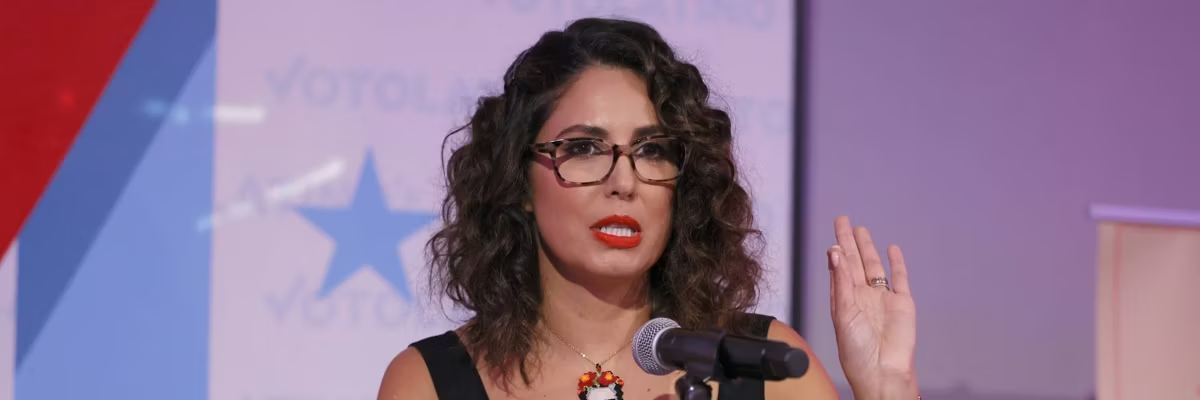
Cecilia Vega, then a correspondent for “60 Minutes” on CBS News, speaks onstage during Voto Latino’s “Our Voices” Celebration at Decatur House on April 28, 2023 in Washington, DC.
Photo by Jemal Countess/Getty Images for Voto Latino
Stephen Prager
May 29, 2026
COMMON DREAMS
A group of veteran “60 Minutes” journalists was fired on Thursday as CBS News’ recently installed right-wing editor-in-chief, Bari Weiss, moves to reshape the network in her image. Some of the ousted employees are describing their mass firing as a clear act of political “censorship.”
News had already broken earlier this week that correspondent Sharyn Alfonsi was on the way out after more than ten years on the flagship news program, after she’d publicly criticized Weiss’ decision to delay her story on the Trump administration’s deportation of immigrants to a notorious Salvadoran torture prison, the Terrorism Confinement Center (CECOT), late last year.
But Alfonsi’s departure was rumored to be part of a larger shakeup by Weiss, who has been accused of molding the network into a mouthpiece for the Trump administration following the government-approved acquisition of CBS’s parent company, Paramount, by billionaire David Ellison, owner of Skydance.
On Thursday, the hammer finally fell. In addition to the formal firing of Alfonsi, The Washington Post reported that Weiss had also fired Tanya Simon, who’d worked on the show for a quarter-century and had recently taken on the role of executive producer. Correspondent Cecilia Vega—who had also covered CECOT for the network before Weiss’ arrival—was canned as well, even though her contract was not set to expire until March 2027. So was executive editor Draggan Mihailovich.
In a memo to staff on Thursday, Weiss and CBS News President Tom Cibrowski said the firings were the result of them “building a show that thrives in the 21st century.”
“That requires a new approach,” they said, outlining their goals of “expanding ‘60 Minutes’ beyond a one-hour television broadcast, deepening its role across CBS News, and holding everything we produce to the ambition, fairness, and fearlessness that have defined ‘60 Minutes’ at its best.”
To fill the role of executive producer, Weiss brought in a network outsider, Nick Bilton, a former technology columnist at The New York Times and producer of documentaries for HBO and Netflix. Weiss called him “one of the most entrepreneurial journalists of our time and the perfect leader for one of the most entrepreneurial news brands of all time.”
Though Weiss reportedly viewed Simon as a “bad leader” who “couldn’t control the staff,” according to one source who spoke anonymously with The New York Post, Simon announced her departure with warm words for those who’d continue working on “60 Minutes.”
“While leadership has decided it is time for a new chapter—I want to be unequivocally clear about one thing: It has been an immense privilege to lead this broadcast, and I could not be prouder of what we have built, fought for, and delivered together over the last year,” Simon said in a statement published Thursday. “'60 Minutes’ has always been more than just a broadcast: It is an institution built on independence, grit, and rigorous search for the truth.”
But Vega gave a more candid explanation for her and her colleagues’ firings.
“In recent months, my producing teams and I have experienced efforts to insert political bias into our stories,” she said in a statement Thursday. “Reporting teams have held back on submitting story pitches about important news topics out of fear of the internal repercussions.”
“Let’s call this what it is: censorship, both imposed and self-driven,” she continued. “It is dangerous for the show and dangerous for democracy.”
Vega’s criticisms mirror those made earlier this week by Alfonsi, who said her firing was “a deliberate choice to penalize a journalist for refusing to sanitize factually accurate reporting.”
In December, Weiss abruptly pulled Alfonsi’s story featuring the testimony of some of the men who were tortured in the CECOT prison shortly before it was set to air, citing a lack of commentary in the segment from Trump administration officials, who had repeatedly ignored the journalists’ requests for an interview. At the time, Alfonsi said Weiss had effectively given the government a “kill switch” on critical reporting. The segment eventually went to air the next month with some editing.
Following her ouster on Thursday, Vega described her own efforts to oppose what she viewed as politically-motivated meddling by network higher-ups.
“I held the line and refused to incorporate suggestions that offend the conscience,” she said. “I know from many conversations with colleagues that many producing teams and correspondents working on the show today have had to fight to maintain editorial independence with regularity.”
“I am far from the only ‘60 Minutes’ correspondent who has asked herself, ‘What is my personal red line? How much can I push back before I pay the price?’” Vega added.
She said she was proud of her work at ‘60 Minutes’ and cited her reporting on CECOT for the program, which won a DuPont Columbia journalism award, as one of her finest achievements.
Weiss’ overhaul of ‘60 Minutes’ comes as Ellison eyes the merger of Paramount with another major media conglomerate, Warner Bros. Discovery, which owns CNN.
President Donald Trump has said it’s “imperative” that any acquisition of Warner Bros. includes CNN and has publicly denounced a rival bid for the company by Netflix.
Earlier this week, Reuters reported that antitrust regulators at the Department of Justice appeared ready to approve a $110 billion takeover by Paramount following meetings with Ellison and other company executives.
A group of journalists—including tech reporter Kara Swisher, former CNN White House correspondent Jim Acosta, and NBC News legal analyst Katie Phang—warned at an event hosted earlier this week by a coalition of press freedom groups that, especially in the wake of Alfonsi’s firing, the government-approved consolidation of media posed a dangerous threat to the future of journalistic freedom.
“I think what’s happening right now is pretty dangerous,” Acosta said. “To essentially announce the departure of Sharyn Alfonsi from 60 Minutes is a very in-your-face move by some people who don’t care very much about the First Amendment.”
“Folks need to use a little bit of their imagination here to recognize what may be coming down the pike,” he said, warning that the Trump administration was building a “strange oligarchical empire… attempting to do state media.”
Veteran 60 Minutes Journalist Says ‘Wall Has Come Down Between Editorial Independence and Corporate Interests’
“Journalists willing to challenge authority are being pushed aside in favor of those who will not,” said Sharyn Alfonsi, who spoke out last year against Bari Weiss’ censorship of a segment on the Trump administration’s use of a Salvadoran torture prison.
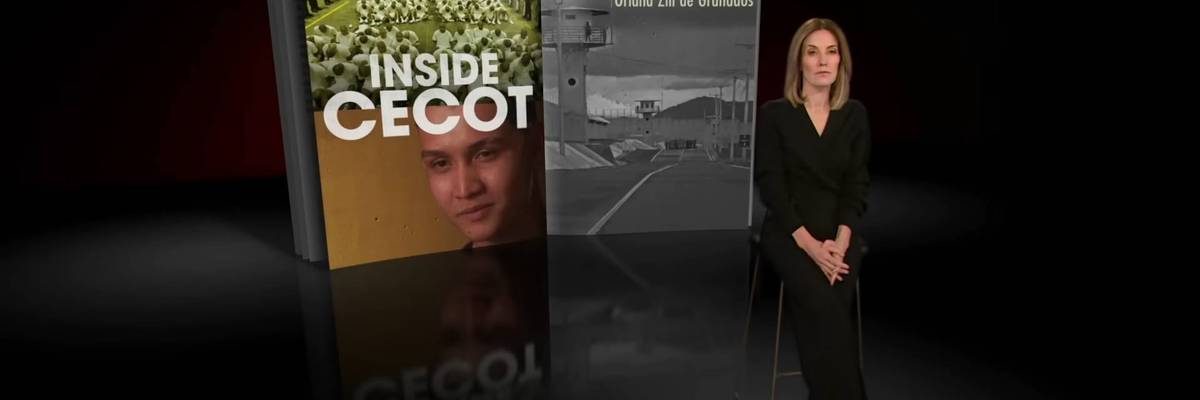
Journalist Sharyn Alfonsi hosts a segment for “60 Minutes” on CBS titled “Inside CECOT,” which aired on January 18, 2026.
(Screenshot from “60 Minutes” on YouTube)
Stephen Prager
May 27, 2026
COMMON DREAMS
A veteran “60 Minutes” journalist says CBS News’ new right-wing corporate ownership is pushing her out of the network for “refusing to sanitize accurate reporting” that offends the Trump administration.
The contract at the network for Sharyn Alfonsi—a correspondent who has contributed to CBS’s flagship news show since 2015—expired on Saturday, according to the New York Times, six months after the network’s editor-in-chief, Bari Weiss, abruptly pulled a segment Alfonsi had reported about the Trump administration’s use of the notorious Salvadoran torture prison CECOT to detain immigrants deported without due process.
At the time, Alfonsi said Weiss—the former head of the right-wing Free Press who’d been installed just months earlier by CBS’s new owner, the Trump-aligned billionaire David Ellison—had spiked her segment for “political” reasons, identifying it as an act of “corporate censorship.”
On Wednesday, she confirmed in a statement that her more than 20 years working on the show would be “drawing to a close.” She said her efforts to communicate with the network about renewing her contract following the dispute “were met with absolute silence from network executives.”
“The message could not be clearer,” she said. “My time at ‘60 Minutes’ is apparently over.”
“In the coming days, network leadership may attempt to hide behind corporate euphemisms like ‘modernization’ and ‘restructuring’ to explain away my departure,” she said. “Don’t be misled. This was not a routine corporate transition; it was a deliberate choice to penalize a journalist for refusing to sanitize factually accurate reporting, and it sends a chilling message to the entire newsroom.”
The “60 Minutes” piece included interviews with some of the more than 200 Venezuelan and Salvadoran men sent to the prison camp by the Trump administration last year, the vast majority of whom had no criminal records, according to CBS.
n those interviews, the men described being subjected to degrading torture on a daily basis, being deprived of basic food, water, and medical care, and being completely cut off from their families and legal representatives.
Weiss claimed she halted the story because it did not include interviews with White House, State Department, and Department of Homeland Security officials behind the policy, which the journalists had repeatedly requested without response. Alfonsi said that by letting their silence act as a veto, Weiss was effectively giving the government a “kill-switch” for inconvenient reporting.
Following widespread criticism both within the network and from the public, the CECOT segment aired in full a month later, though it included more caveats emphasizing the administration’s allegations that the detainees had gang affiliations and downplayed the lack of violent convictions.
The apparent ouster of Alfonsi this week comes as Weiss is reportedly pushing for a “shakeup” of “60 Minutes” similar to those she’s made to “CBS Evening News” and other programming.
Critics have noted the markedly more hawkish tone the network has taken under Weiss in favor of President Donald Trump’s regime change wars in Venezuela and Iran, while giving Israeli leaders like Prime Minister Benjamin Netanyahu ample uninterrupted airtime to justify the bombardments of Gaza and Lebanon with little note of the resulting humanitarian catastrophes.
According to reporting in Puck earlier this month, some sources at CBS believe that Alfonsi’s departure could spawn a wave of resignations from the network.
“Fearless, independent reporting has always been the defining standard at 60 Minutes,” Alfonsi said on Wednesday. “Today, CBS management is abandoning that mission, choosing access journalism over accountability and protecting power rather than scrutinizing it.”
“The wall between editorial independence and corporate interest at CBS is being methodically torn down,” she added. “Journalists willing to challenge authority are being pushed aside in favor of those who will not.”
“Journalists willing to challenge authority are being pushed aside in favor of those who will not,” said Sharyn Alfonsi, who spoke out last year against Bari Weiss’ censorship of a segment on the Trump administration’s use of a Salvadoran torture prison.
Journalist Sharyn Alfonsi hosts a segment for “60 Minutes” on CBS titled “Inside CECOT,” which aired on January 18, 2026.
(Screenshot from “60 Minutes” on YouTube)
Stephen Prager
May 27, 2026
COMMON DREAMS
A veteran “60 Minutes” journalist says CBS News’ new right-wing corporate ownership is pushing her out of the network for “refusing to sanitize accurate reporting” that offends the Trump administration.
The contract at the network for Sharyn Alfonsi—a correspondent who has contributed to CBS’s flagship news show since 2015—expired on Saturday, according to the New York Times, six months after the network’s editor-in-chief, Bari Weiss, abruptly pulled a segment Alfonsi had reported about the Trump administration’s use of the notorious Salvadoran torture prison CECOT to detain immigrants deported without due process.
At the time, Alfonsi said Weiss—the former head of the right-wing Free Press who’d been installed just months earlier by CBS’s new owner, the Trump-aligned billionaire David Ellison—had spiked her segment for “political” reasons, identifying it as an act of “corporate censorship.”
On Wednesday, she confirmed in a statement that her more than 20 years working on the show would be “drawing to a close.” She said her efforts to communicate with the network about renewing her contract following the dispute “were met with absolute silence from network executives.”
“The message could not be clearer,” she said. “My time at ‘60 Minutes’ is apparently over.”
“In the coming days, network leadership may attempt to hide behind corporate euphemisms like ‘modernization’ and ‘restructuring’ to explain away my departure,” she said. “Don’t be misled. This was not a routine corporate transition; it was a deliberate choice to penalize a journalist for refusing to sanitize factually accurate reporting, and it sends a chilling message to the entire newsroom.”
The “60 Minutes” piece included interviews with some of the more than 200 Venezuelan and Salvadoran men sent to the prison camp by the Trump administration last year, the vast majority of whom had no criminal records, according to CBS.
n those interviews, the men described being subjected to degrading torture on a daily basis, being deprived of basic food, water, and medical care, and being completely cut off from their families and legal representatives.
Weiss claimed she halted the story because it did not include interviews with White House, State Department, and Department of Homeland Security officials behind the policy, which the journalists had repeatedly requested without response. Alfonsi said that by letting their silence act as a veto, Weiss was effectively giving the government a “kill-switch” for inconvenient reporting.
Following widespread criticism both within the network and from the public, the CECOT segment aired in full a month later, though it included more caveats emphasizing the administration’s allegations that the detainees had gang affiliations and downplayed the lack of violent convictions.
The apparent ouster of Alfonsi this week comes as Weiss is reportedly pushing for a “shakeup” of “60 Minutes” similar to those she’s made to “CBS Evening News” and other programming.
Critics have noted the markedly more hawkish tone the network has taken under Weiss in favor of President Donald Trump’s regime change wars in Venezuela and Iran, while giving Israeli leaders like Prime Minister Benjamin Netanyahu ample uninterrupted airtime to justify the bombardments of Gaza and Lebanon with little note of the resulting humanitarian catastrophes.
According to reporting in Puck earlier this month, some sources at CBS believe that Alfonsi’s departure could spawn a wave of resignations from the network.
“Fearless, independent reporting has always been the defining standard at 60 Minutes,” Alfonsi said on Wednesday. “Today, CBS management is abandoning that mission, choosing access journalism over accountability and protecting power rather than scrutinizing it.”
“The wall between editorial independence and corporate interest at CBS is being methodically torn down,” she added. “Journalists willing to challenge authority are being pushed aside in favor of those who will not.”

No comments:
Post a Comment