Sunday, December 01, 2024

Lithium Argentina picks Switzerland as another China-backed junior flees Canada


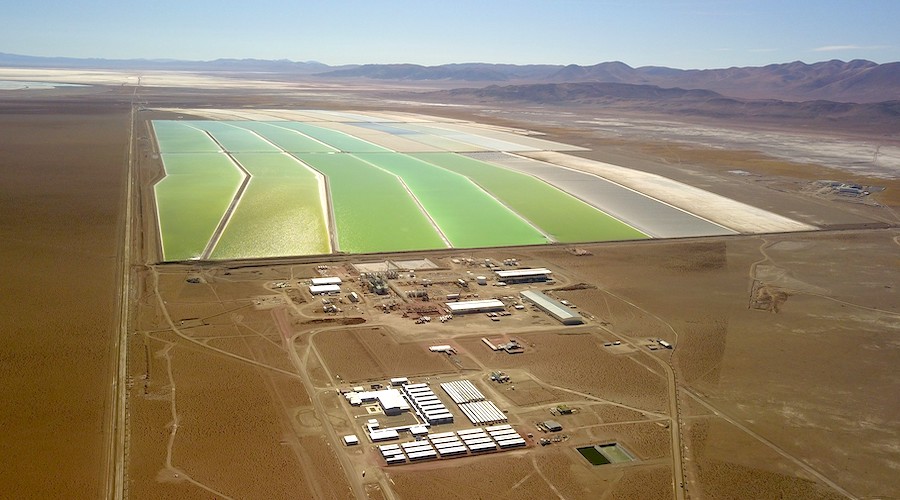
The Caucharí-Olaroz project, in Argentina’s Jujuy province.
 (Image courtesy of Lithium Americas.)

Lithium Argentina (TSX: LAAC) is seeking to redomicile to Switzerland and change its name to Lithium Argentina AG following a corporate review and a new agreement with investor Ganfeng Lithium, the company said Friday.


The company decided Switzerland was the best jurisdiction on strategic, commercial and legal grounds, would provide expanded financing flexibility, and support its long-term growth plans. It also aims to move the Lithium Argentina group of companies’ operational headquarters to Buenos Aires.

Ganfeng Lithium, its joint venture partner in the Caucharí-Olaroz project, has entered into a three-year standstill agreement with the Canadian company, it said Friday. Ganfeng has agreed that it won’t acquire or facilitate the acquisition of a controlling interest in the company. Ganfeng holds a 46.7% stake in the project that started production last year, and Lithium Argentina holds 44.8%.

The move to the low-tax Canton of Zug is still subject to shareholder, stock exchange and court approval but could happen early next year.
Exodus to Switzerland?

The company’s plans come just over one week after another Canadian developer, Solaris Resources (TSX: SLS; NYSE: SLSR), said its own move to Zug from Canada is advancing.

The Toronto-based Solaris is leaving Canada after the federal government earlier this year began a national security review of China’s Zijin Mining’s plan to invest C$130 million in its Warintza project in Ecuador. Solaris cancelled the deal, and decided to avoid such reviews by redomiciling. It at first said it would move to Quito, Ecuador’s capital.

Two years ago, Ottawa forced Chinese investors to divest from several lithium juniors with assets outside of Canada based on national security concerns. And in June, the government diverted a sale of $3 million worth of stockpiled rare earths mined in the Northwest Territories from a Chinese company to the Saskatchewan Research Council.

Lithium Argentina said it would continue to trade on North American markets and be subject to public company reporting requirements under Canadian and US securities laws.

A special meeting of shareholders to vote on the move is planned for Jan. 17. Company shares gained 1.6% to C$4.79 apiece on Friday in Toronto, valuing the company at C$775.6 million. Its shares traded in a 52-week range of C$2.82 and C$8.82.


Stella Maris Opens in Southampton UK

Stella Maris

Published Nov 30, 2024 5:23 PM by The Maritime Executive


A home away from home best describes the new Stella Maris Southampton Seafarers’ Club which was officially opened on 26th November.

The launch kicked off with a Blessing by Bishop Philip Egan of Portsmouth Roman Catholic Diocese. Later in the day, a ribbon cutting ceremony was held with representatives from the various funders of the project: the Seamen’s Friendly Society of St Paul, the Merchant Navy Welfare Board, The Seafarers’ Charity, and Mission to Seafarers (as well as Stella Maris itself).

Set up by global maritime charity Stella Maris, with support from funders and other maritime welfare charities, the Seafarers’ Club offers crew from ships visiting the port of Southampton a safe haven and respite from their busy routines.

The facilities in the Seafarers’ Club include: free Wi-Fi, free hot beverages, a television, and board games, giving seafarers the chance to catch-up with family and to unwind.

Crew can also spend their time ashore visiting nearby shops, food outlets, supermarkets and bureaux de change, all within a few minutes’ walk of the Seafarers’ Club.

St. Joseph's Church, located next door to the Club, offers those in need of spiritual nourishment a space for quiet prayer and reflection.

Tim Hill, Stella Maris CEO and National Director said, “The opening of this Seafarers’ Club is an extension of our mission to provide care, community, and comfort to those who work at sea.”

“We thank everyone who has made the new Seafarers’ Club possible, including funders, parishes, volunteers, our sister welfare charities, and the wider community, for their generosity and commitment to serving seafarers.  This is a collaborative venture with other charities, and we’re strengthened by their co-operation in making the Club a success.

“It’s our aspiration that the Seafarers’ Club will become a beacon of hope and a source of strength for seafarers,” he added.  

The products and services herein described in this press release are not endorsed by The Maritime Executive


Glamox's Smart Lighting Contracts for Hi-Tech North Sea Oil & Gas Platforms

Glamox

Published Nov 30, 2024 12:34 PM by The Maritime Executive


[By: Glamox]

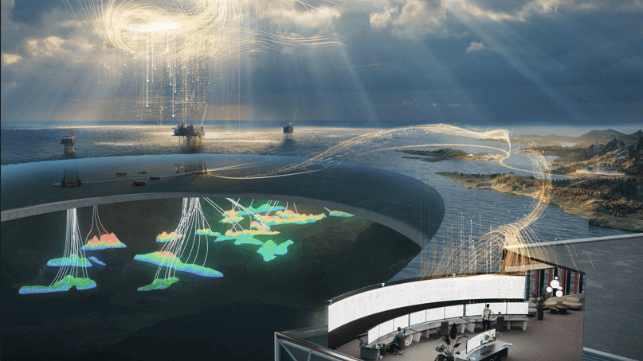
Glamox, one of the world’s leading lighting companies, today announced contracts to provide around 5,000 energy-efficient marine LED lights for new oil and gas platforms being built for the Yggdrasil and Valhall PWP-Fenris developments in the North Sea. The contracts include around 4,000 connected lights for remotely operated production platforms in the Yggdrasil area, which Glamox believes to be the world’s first offshore platforms to use smart, remotely controlled interior and exterior explosion-proof lighting.

Yggdrasil is the biggest ongoing development on the Norwegian Continental Shelf, located between Alvheim and Oseberg in the North Sea. It comprises the Hugin, Fulla, and Munin licence groups, and its oil and gas resources are estimated at around 650 million barrels of oil equivalent. Aker BP is the operator with Equinor and Orlen Upstream Norway as licence partners. Production is due to start in 2027.

Glamox received a contract from Aker Solutions, a partner in the Fixed Facilities Alliance, to provide a lighting package for the interior and exterior of the area centre Hugin A processing platform, which includes living quarters. Hugin A is planned to be periodically unmanned after some years of production. Most of the interior and exterior luminaires, including floodlights, are connected so that they can be switched on and off and dimmed locally or remotely using a light management system. Connected Glamox luminaires and floodlights will also be provided for Hugin B, a normally unmanned wellhead platform. Under a separate contract with Aibel, Glamox will provide the same smart lighting for the Munin unmanned production platform in the northern part of the Yggdrasil area.

The future is connected
“Lighting is crucial 


Video: Crew Airlifted from Burning Cargo Ship Drifting in the Baltic

burning cargo ship
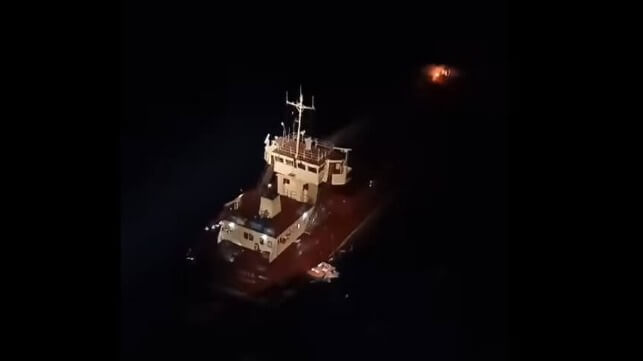
Swedish rescue forces found the vessel on fire in the Baltic (Sjöfartsverket)

Published Nov 29, 2024 10:29 AM by The Maritime Executive


Danish and Swedish authorities coordinated to rescue the crew of a feeder cargo ship burning off the coast of Sweden late on Thursday night, November 28. The Swedish Maritime Administration is reporting that all the crew were hoisted without injury and taken to Kristianstad by one of its helicopters.

The Danish JRCC (Joint Rescue Coordination Center) detected the problem aboard the cargo ship Sofia (1,827 dwt) at 2120 local time and alerted the Swedish Armed Forces as the vessel was in the Swedish zone. It was approximately 30 nautical miles east of Bornholm, a Danish island in the Baltic. It was determined to be traveling empty from Poland where it had departed on November 27 and was due to arrive in Ellenholm, Sweden to load cargo on November 29.

The crew issued a mayday reporting that there was a fire aboard and seeking assistance. The Swedish Armed Forces coordinated with the Swedish Maritime Administration which dispatched a helicopter. The Swedish Coast Guard assisted in providing information on the number of people aboard the vessel.


The Swedish helicopter was the first to arrive and reported a fire at the bow of the vessel. Media reports are saying there had also been an explosion aboard, but the Swedish Maritime Authority is reporting the cause of the fire as undetermined. 

The Danes also dispatched a helicopter to standby. The Danish frigate Absalon was returning to base after an exercise reports Danish TV2 and also diverted to the scene.


The Swedish helicopter hoisted the five crewmembers from the cargo ship and transported them to shore. The Swedish Maritime Authority highlights a swift rescue with the crew safely aboard its helicopter by 2300, one hour 40 minutes after the first alert. At the time of the rescue, the winds were blowing at up to 33 knots and the video shows the vessel rolling heavily in the Baltic.

The Sofia is one of two cargo ships operated by the Swedish company Fiducia Shipping. The company reports it acquired the vessel, which was built in Germany in 1986, in 2019. It is registered in Sweden and is used to transport loads of barley, wheat, oat, rapeseed and rapeseed flour, and fuel pellets. The ship is 236 feet (72 meters) in length. The shipowner is reported to have hired tugs which are on the way to salvage the drifting ship. The Polish maritime agency reports the ship is in no immediate danger drifting at about 1.2 knots. 

The Swedish Maritime Authority is highlighting the close cooperation between the different organizations to conduct the safe rescue of the crew.


Houthis Threaten Shipping, But Blackmail Earns Them Little

A Houthi attack drone midflight over the Red Sea (Marine Nationale)

Published Nov 29, 2024 3:15 PM by The Maritime Executive


Speculation continues regarding reports that the Houthis are successfully blackmailing ship owners to pay fees for guaranteeing safe passage through the Red Sea.

Quoting the annual and normally authoratitive UN Panel of Experts on Yemen letter to the Security Council - but in draft before it was published - analysts speculated that ‘the Houthis’ earnings from these illegal safe-transit fees to be about $180 million per month’, amounting to more than $2 billion a year in income. But when the report was finally published, its authors noted they had ‘not been able to independently verify this information’.

The UN Panel’s primary source appears to have been an anonymous Yemeni website for which there are no contact details, but which tends to back official Yemeni government positions and is hostile to both the Houthis and the Emirati-backed Southern Transition Council. The website quotes ‘western diplomats’ as the source for its story, but provides no further identification or corroborative information with which to establish its credibility.

Analysis carried out by Deutsche Welle’s Cathrin Schaer, multiplying the number of non-Chinese and Russian ships risking transit of the Red Sea against the potential extra fuel costs of taking the Cape route instead, concludes that even if some ships might make payments to secure safe passage, the potential revenues would be a very small fraction of the $180 million per month claimed. It is possible for shipping companies to communicate with the Houthis via their so-called ‘Humanitarian Operations Coordination Center’, set up in February 2024 to coordinate attacks on shipping. But any shipping company thinking of paying such fees using the halawa informal banking system risks being detected and then being subject to heavy US Treasury and EU penalties for breaching sanctions. 

Emails sent by the Houthi’s ‘Humanitarian Operations Coordination Center’,  using the email address operations@hocc.gov.ye, threaten shipping companies and order them to cut Israeli links - but do not offer the option of avoiding attack by paying fees. The Houthis have also attempted to use the London-based UN International Maritime Organization to disseminate threats to shipowners.

Nonetheless, the Houthis are specialists at this style of fund-raising. The Houthis routinely charge telecommunications, LPG distribution, haulage and other companies "protection money" as a levy on commercial activity in areas they control, as a means of raising revenue for arms purchases.  The Houthis also send out mass text messages demanding money for “air force” and “coastal defence forces” purposes, and expect a range of private and public institutions such as schools to meet funding targets.

The UN Panel’s report collates information from many official and open sources on the Houthi’s anti-shipping operations. Between November 15, 2023 and July 31, 2024, 134 Houthi attacks on shipping were recorded. The report also lists US Central Command battle damage assessment figures, indicating the US and UK strikes on the Houthis since counter-attacks began have destroyed 15 ballistic missiles, 172 anti-ship missiles, 382 one-way attack drones and 66 unmanned surface attack boats, as well as 7 anti-shipping command posts and 10 ammunition storage areas. 66 anti-ship missiles, 35 one-way attack drones and 5 unmanned surface attack boats have been brought down by the US Navy during attacks on shipping.


High Tide: Workboat Stocks Are Doing Just Fine

Workboat
iStock

Published Nov 29, 2024 3:42 PM by Jack O'Connell


(Article originally published in Sept/Oct 2024 edition.)


It's time for our annual review of workboat stocks and companies that make their living off Big Oil. While not as gangbusters as a year ago, these companies are enjoying steady profits and benefiting from a rosy outlook.

The ups and downs of oil prices are nothing new. A year ago oil was trading in the mid-to-high $80s and nearly touched $100/barrel. Now it's around $70. It can go to $60 and below, most experts say, and still produce plenty of profits for producers and investors alike. A low price, moreover, is like a floor on future expectations. Can't go much lower, and lots of upside.

Workboat Stocks

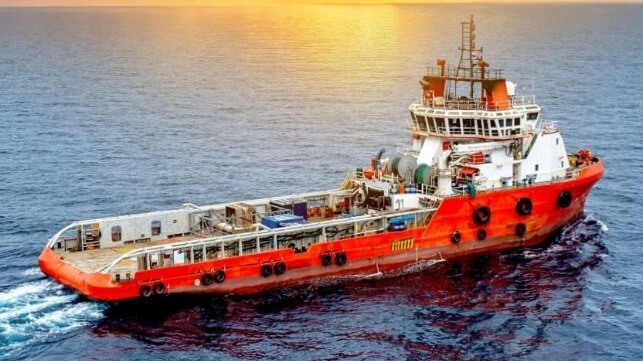
Any discussion of the international workboat market begins with Tidewater (TDW), the industry leader and one of the few companies that are publicly traded. Since emerging from bankruptcy in 2017, it's been on a buying spree – first Gulfmark Offshore in 2018, then Swire Pacific in 2022 and, most recently, Solstad Offshore last year.

The acquisitions gave TDW leading positions in most major markets including the U.S. Gulf, North Sea, West Africa, Middle East and Southeast Asia. The company's fleet of more than 200 vessels spans the globe, prompting someone to quip that "The sun never sets on Tidewater." And these are not just any vessels. TDW has meticulously "high-graded" its fleet by focusing on quality assets, large vessels routinely in high demand and value-accretive acquisitions.

The "value-accretive" acquisitions have slowed recently as the company takes a breather from its buying spree and focuses on digesting the proceeds. Meanwhile, it's generating lots of cash, paying down debt and buying back shares, all of which strengthens the balance sheet, benefits shareholders and provides a solid base for continued gains. Gross margins at TDW are approaching an impressive 50 percent, and both utilization and day rates remain high.

Commenting on its most recent results, for the quarter ended June 30, President & CEO Quintin Kneen had this to say: "Revenue in the second quarter came in at $339.2 million with a gross margin of 47.7 percent. On a global basis, revenue, gross margin and day rates were all up from the previous quarter; both absolute gross margin dollars and day rate marked a new record for Tidewater and we generated the highest gross margin percentage in fifteen years."

The stock is up a mere eight percent this year at around $75, but the future looks bright.

"We remain optimistic about the outlook for 2025," notes Kneen, "as the observable supply and demand factors driving the offshore vessel industry remain highly constructive, which should allow us to maintain the pace of day rate increases that we have achieved over the past year, combined with a substantial increase in available vessel days as the heaviest drydock schedule in 2024 rolls into the lightest drydock schedule in 2025, naturally lifting vessel utilization."

That's what I call hitting on all cylinders. Roll Tide!

Coastal & Inland Waterways

One of the biggest winners this year among companies that transport oil and its byproducts is Houston-based Kirby Corporation (KEX), a longtime favorite of this writer. Its stock is up an impressive 57 percent year to date, and its two major business segments – Marine Transportation and Distribution & Services – are thriving.

Kirby is the largest U.S. operator of both inland tank barges and coastal tug-barge units (ATBs). These vessels are vital to the nation's economic health and transport petrochemicals, refined products and black oil along the inland waterways (mainly the Mississippi and its tributaries) and all three U.S. coasts, including Alaska. Having just returned from a cruise down the lower Mississippi (more about that in a future edition), we saw many a Kirby barge tow making its way up or down river.

Like the offshore sector, which has Tidewater, the inland tug-and-barge market is highly fragmented with only one major public company – Kirby. Almost all the rest are privately held, so there are limited opportunities for investors. But you can do a lot with TDW and KEX.

"Overall, solid execution and favorable market conditions led to a strong first half of the year for us," stated Kirby's President & CEO, David Grzebinski, in a second-quarter earnings release, "and we have a favorable outlook for the remainder of the year. We see growth coming in at the higher end of our previously guided range, our balance sheet is strong and we expect to generate significant free cash flow this year. We see favorable markets continuing and expect our businesses will produce strong financial results as we move through the remainder of this year and into next year."

Sounds a lot like TDW's outlook. And like TDW, KEX also has an aggressive stock buyback program and plenty of cash to continue reinvesting in its own shares, further benefiting shareholders.

Dividend Play

Neither TDW nor KEX pays a dividend, but International Seaways (INSW) does. And it's a whopper.

A spinoff from OSG (Overseas Shipholding Group) back in 2016, New York-based INSW is a major player in the international tanker market, transporting both crude oil and petroleum products. It currently owns and operates a fleet of 82 vessels including 13 VLCCs, 13 Suezmaxes, five Aframaxes/LR2s, 13 LR1s (including six newbuildings) and 38 MR tankers.

Like the entire tanker sector, INSW is thriving. Rates are up, ton-miles are growing, and demand is strong. The supply chain disruptions caused by the war in Ukraine and the Red Sea crisis have greatly benefited the industry, as has a limited supply of newbuilds.

While INSW's stock is up barely eight percent this year, its dividend payouts currently yield 12 percent, and it's committed to keeping them high. So that's a total return of 20 percent, which is real money in anyone's book.

"We maintained strong momentum in the second quarter," said Lois Zabrocky, INSW's President & CEO, "drawing on Seaway's substantial cash flows to continue to execute the Company's balanced capital allocation strategy for the benefit of shareholders. We continued to renew our MR fleet, one of the strongest earning classes, with the acquisition of six modern vessels and sales of older tonnage. At the same time, we increased our liquidity to position the Company for future growth while returning a 12 percent yield to shareholders."

Looking ahead, she added, "We believe markets will continue to show strength based on sustained attractive supply and demand fundamentals, highlighted by positive oil demand trends, higher ton-mile demand, and limited shipyard capacity for new orders, which will inhibit any significant volume of tanker deliveries for the foreseeable future. We expect to take further advantage of these dynamics moving forward, as we focus on building our track record of opportunistic investment in the fleet and compelling shareholder returns."

Like TDW and KEX, INSW also has an ongoing share buyback program.

So there you have it. It's been a good year for workboat stocks and for those companies involved in the production and transportation of crude oil and its many byproducts. And it should get better, even if oil prices remain low.

So let the good times roll!

Jack O'Connell is Senior Editor of this magazine, former maritime executive, and private investor who may own shares in some of the companies mentioned in his columns. The views expressed are his and his alone and are not in any way to be construed as investment advice.

The opinions expressed herein are the author's and not necessarily those of The Maritime Executive.


Investors Acquire Hurtigruten to Recapitalize Cruise and Coastal Businesses

Hurtigruten cruise
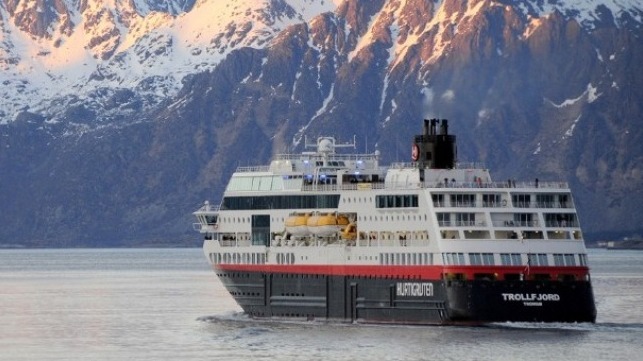
Hurtigruten and HX expedition cruises will separate and be recapitalized by current investors (Hurtigruten file photo)

Published Nov 29, 2024 1:36 PM by The Maritime Executive


Hurtigruten Group which is one of the longest-surviving Norwegian shipping companies reports it has reached an agreement with existing shareholders to take ownership of its businesses and recapitalize the shipping and expedition cruise operations. The company which was founded in 1893 has transported passengers, cargo, vehicles, and tourists on the Norwegian coast and more recently expanded into expedition cruising to destinations including Antarctica. 

The company has struggled to rebound from the pandemic, a series of missteps, and increased competition. Norway split the coastal business and awarded a competing contract to Havila which launched four newbuild cruise ships for the service. According to reports from Bloomberg, the traditional coastal business saw a decline in revenues while Hurtigruten’s expedition business has been operating at a loss. Bloomberg estimates investors provided nearly $400 million in shareholder debt to the group since 2021.

The group had been pursuing a business plan since 2021 that called for the eventual separation of the coastal and expedition businesses into two standalone companies. It reports the current transaction, expected to be completed in January 2025, will complete the process of separating the two businesses.

TDR Capital, a London-based private equity firm has been an investor in the business since December 2014. Among the existing shareholders, Arini Capital Management, AlbaCore Capital, and Barings will lead the new ownership of Hurtigruten. Arini and Cyrus Capital Partners will be the lead shareholders of the expedition cruise company. 

Under the terms of the new agreement, Hurtigruten will receive over €500 million ($528 million) in new capital to support the businesses and growth in the operations. The monies will be split approximately with €110 ($116 million) in new long-term funding to Hurtigruten for the coastal operations. The expedition company, now known as HX, will receive approximately €140 million (US$148 million).

The transaction will also significantly reduce outstanding debt by over €1 billion. Hurtigruten reports it will result in a remaining debt outstanding of approximately €400 million. Maturities will also be extended to at least 2030.

“The change in ownership has no practical implications for Hurtigruten’s customer offering, business partners, or daily operations,” the company emphasized in announcing the agreements. Hurtigruten, they noted will continue as a standalone company headquartered in Oslo and will own and operate 10 ships under the Norwegian flag. HX, headquartered in London, operates five expedition cruise ships to over 250 destinations.

Hurtigruten said that it is seeing strong demand for its product. They reported that 2025 bookings are 24 percent higher year-to-date compared to last year for 2024. The company said it is poised for further acceleration of its growth in 2026.

The company has invested in upgrades to its fleet including the operation of four hybrid vessels in the coastal service and the elimination of heavy fuel oil. The group has also been working on an innovative design incorporating sails and solar to become possibly the world’s first net-zero cruise ship.
 

NGO Calls for Slow Steaming Saying Emissions Per Container Is Same as 2018

containership emissions
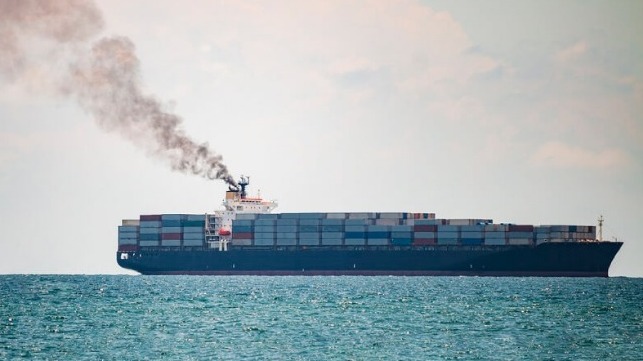
T&E contends per container emissions have not improved while increasing its call for slow steaming (iStock)

Published Nov 29, 2024 2:40 PM by The Maritime Executive


The influential NGO T&E (European Federation for Transport and Environment) released new data reporting no real-world improvement in containership efficiency despite investments into new technology. It is increasing its call for ships to sail at slower speeds and use newer technologies such as wind-assisted propulsion.

The group seeks to disprove the contention of policymakers and the IMO that higher prices for fuel from emission pricing and fuel standards will lead to efficiency improvements and emissions reductions. T&E commissioned the well-known independent research firm CE Delft to study the relationship between fuel prices and technical and operations efficiency. They concluded that there is no clear relationship between higher fuel prices and better operational efficiency.

Analyzing the EU’s MRV data (monitoring, reporting & verification), they concluded despite price increases over the past six years in fuel, on a per container basis Europe’s container ships are producing the same level of emissions as they did six years ago in 2018. They acknowledge that the EU’s latest shipping data showed a small decline in emissions in 2023 compared to 2022, but they attribute that to a likely fall in trade.

“There just aren’t enough incentives for ships to sail more efficiently,” said Jacob Armstrong, shipping manager at T&E. “Shipping companies are reacting to higher fuel prices by buying slightly more efficient vessels. But the data shows that on the whole, transporting containers around isn’t getting more efficient.”

In its analysis of the data and emissions, T&E contends that slow steaming is the most effective measure to reduce emissions. They are calling for the European Commission to propose an energy efficiency measure, which for example, limits ship speeds and promotes technologies like wind-assisted propulsion. They recommend transforming the current CII (Carbon Intensity Index) into “a true energy efficiency measure and align its targets with the IMO’s emissions reduction objectives.”

Armstrong asserts, “The biggest improvements in efficiency come from sailing slower. If governments put in place measures that promote real improvements in efficiency, they can slash emissions overnight.”

T&E supports its call for slow steaming publishing models on its website. They said that a container ship sailing between Rotterdam and Shanghai at 75 percent of its speed would cut carbon emissions by 47 percent. They recognize that it would reduce container capacity, but concluded that if one ship was added for every four to make up for the lower capacity, as long as all the ships were sailing at three-quarters speed, it would still reduce CO2 emissions by 34 percent.

The call comes as the IMO continues to address the perceived shortcomings in the CII after it went into force. Reforms were a key point of discussion at the IMO’s Marine Environment Protection Committee this year and are expected to be included in the 2025 vote on the IMO’s next steps toward net-zero shipping policy.


New Zealand Survey Ship's Crew Ran Aground Because They Left Autopilot On

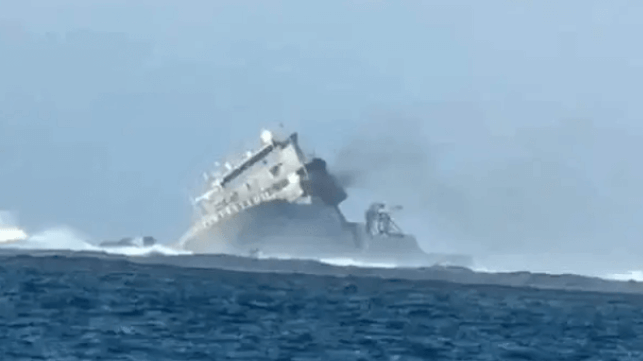
Manawanui on the rocks
Courtesy U.S. Embassy in Samoa

Published Nov 29, 2024 2:53 PM by The Maritime Executive


The New Zealand Defence Force has released its initial findings on the grounding of navy ship HMNZS Manawanui on a reef off Samoa last month, and it put the blame squarely on mistakes made by the crew.

A Court of Inquiry established that the grounding of the ship was primarily caused by the bridge team's failure to turn off the autopilot, followed by futile attempts at manual control while manual controls were disengaged. 

Manawanui grounded on a reef on the southern side of Samoa on October 5 while conducting survey operations. The ship subsequently caught fire and sank, but all 75 people on board managed to evacuate safely.

In the preliminary findings of the inquiry, NZDF gave a detailed account of a series of mistakes that began on the evening, when Manawanui was conducting survey operations on the southern side of Apia. Winds were strong at up to 25 knots, and there was a moderate swell.

The inquiry established that at about 1815 hours, the crew attempted a routine turn to starboard, initially to a course of 340 degrees. This would keep them within the survey area. The crew then attempted to turn to starboard towards an easterly course, but the ship did not respond as intended.

Shortly after, the ship left the approved survey area. In an effort to stop the ship, the crew conducted further actions that they believed should have resulted in reverse thrust. Manawanui did not slow or stop, and instead started to accelerate towards the reef, grounding for the first time at or about 1817 at a speed of more than 10 knots. The ship then continued to travel for around 400 yards further before becoming stranded, grounding multiple times along the way.

The crew was only able to regain full control of the ship’s propulsion system 10 minutes later when they managed to disengage the autopilot. The inability to turn the ship to an easterly direction from the 340 degree course and stop the ship is attributed to the ship being in autopilot mode.

The events that followed saw the crew unsuccessfully attempt to maneuver the ship off the reef. Half an hour after the initial grounding, the decision was made to abandon ship. Manawanui’s generators were left running, which contributed to the successful abandonment process and likely prevented serious injuries or death, but caused the ship to suffer a series of catastrophic fires the next morning. The fires led to her capsizing and sinking.

“The direct cause of the grounding has been determined as a series of human errors which meant the ship’s autopilot was not disengaged when it should have been,” said Chief of Navy Rear Admiral Garin Golding. “The crew did not realize Manawanui remained in autopilot and, as a consequence, mistakenly believed its failure to respond to direction changes was the result of a thruster control failure."

Golding added that having mistakenly assessed a thruster control failure, standard procedures should have prompted the crew to check that the ship was under manual control rather than in autopilot. That check did not occur, so the ship remained in autopilot, maintained a course towards land, and then went hard aground. 

The NZDF expects to complete a wider inquiry by the first quarter of next year, which could lead to a separate disciplinary process for the crew.


Antwerp Receives Europe’s First Electric RSD Tug in Sustainability Drive

electric tug arriving Antwerp
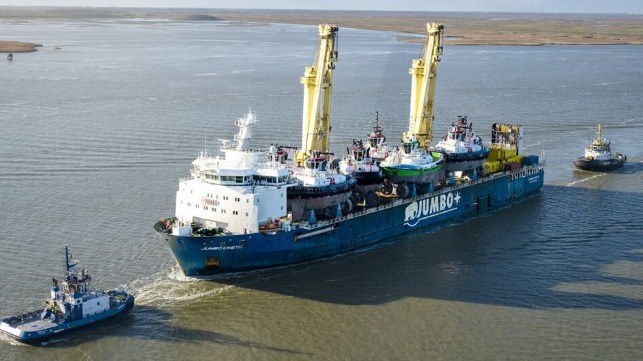
Heavy lift vessel brought the tugs including Europe's first fully-electric tug to Antwerp (Port of Antwerp-Bruges)

Published Nov 29, 2024 4:50 PM by The Maritime Executive


The Port of Antwerp-Bruges celebrated the arrival of six new energy-efficient tugs including Europe’s first fully-electric RSD tugboat. The vessels built by Damen in Vietnam are the next step in the port’s ambitious sustainability plan.

Damen began construction of the tugs in 2023 at its Damen Song Cam Shipyard in Vietnam. They were launched between April and August 2024 and underwent extensive commissioning, port tests, and sea trials before being prepared for delivery. The six tugs, five diesel RSD (Reversed Stern Drive), and one fully electric RSD tug were loaded in October on the heavy-lift Jumbo Kinetic for the voyage to Belgium. The vessel made port stops in Singapore and Las Palmas and arrived at North Sea Port’s Vlissingen harbor on November 28. It was escorted by tugs from the Port of Antwerp-Bruges along the Western Scheldt river into the Port of Antwerp.

The electric tugboat Volta 1 has a bollard pull of 70 tons and all the tugs are RSD type, designed with a dual-bow principle, giving them excellent maneuverability and versatility. The RSD-E Tug 2513 operates with large batteries which Damen reports will perform a minimum of two towage operations on a single charge. Damen also installed a 1.5 MW charger and electric infrastructure at the port to support the operations. It reports that the tug can be fully recharged in two hours.

While the five other tugs are RSD 2513 models using standard diesel power, Damen notes that are fitted with its NOX Reduction Systems. It notes that this ensures they are IMO Tier III compliant.

The vessels will be prepared for full deployment in the port, including technical start-up, crew training, and testing of the Volta 1 in collaboration with new charging infrastructure installed at the Nautical Operational Cluster (NOC). Damen highlights that it is providing the training that started before the vessels arrived in Antwerp. It includes an extensive training package with simulator-based, technical, and onboard training.

The six new tugboats are part of the comprehensive greening program being implemented by the Port Authority. The port has already introduced Hydrotug, the first hydrogen-powered tugboat in the world, and Methatug, the first methanol-powered tugboat. It is also continuing to develop replacement plans and seeking to deploy new technologies to reduce the emissions from its in-service fleet.

The world’s first fully electric tug was ordered by New Zealand and arrived in the Port of Auckland in 2022 for testing. Since then, electric tugs have increased including in Canada and this year Crowley received the first fully electric tug in the United States. 


MSC Completes Investment in Hamburg Container Terminal Operator HHLA

Hamburg Germany
MSC completed its investment in Hamburg's terminal operator HHLA (file photo)

Published Nov 29, 2024 5:41 PM by The Maritime Executive


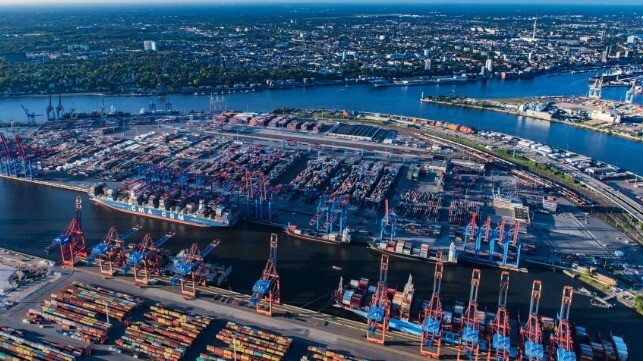
Fourteen months after proposing its investment in the Port of Hamburg’s Hamburger Hafen und Logistik Aktiengesellschaft (HHLA) and despite political and labor opposition, MSC Mediterranean Shipping Company completed the transaction yesterday, November 28. The new joint venture was completed with the City of Hamburg holding just over 50 percent and control while MSC’s subsidiary now holds a 49 percent interest and has an agreement with the City on the operation of the port.

“Together with MSC, we want to lead HHLA into the future and develop it further,” said Hamburg’s Senator Dr Melanie Leonhard, Minister of Economy and Innovation. “Germany's largest seaport will benefit significantly from the investments in infrastructure and improvements in automation and digitalization at HHLA's terminals.”

MSC acquired shares in the financial markets reporting in December 2023 that it owned approximately 22 percent of HHLA. It agreed to pay a further €233 million ($258 million) to acquire shares reaching the 49 percent level with the City continuing to have ownership control through preferred shares and an overall 51 percent stake. MSC also obtained a 40-year contract for the joint management of HHLA.

The investment comes as Hamburg has faced increased competition from other European ports and has been impacted both by the war in Ukraine and the disruptions to container operations from the Red Sea disruption. HHLA has been seeking to build its inland operations to strengthen its position but also faces challenges in addressing the introduction of new technologies and the increasing regulations for decarbonization. 

“We want to play our part in pushing the gateway to the world further open – for the benefit of HHLA, the workforce, the people of Hamburg, and everyone else connected to this historic port,” said Søren Toft, CEO of MSC Mediterranean Shipping Company. “We will deliver on our side of the agreement. Together with the City, we will invest in growth, technology, and infrastructure to strengthen HHLA’s competitiveness. We will bring cargo to Hamburg, and we will fully protect the rights of the workforce.”

Germany’s powerful labor unions opposed the acquisition citing the potential for job losses and the loss of control of the historic port. The City of Hamburg and the MSC Group offered far-reaching commitments to HHLA’s employees that they said would safeguard workers’ rights and keep the HHLA terminals attractive for all market participants.

The City of Hamburg and the MSC Group agreed to provide €450 million in equity to support the necessary investments in HHLA. In addition, MSC committed to significantly increasing cargo throughput at HHLA’s terminals to a minimum volume of 1 million TEU per year from 2031. In addition, MSC Group has also announced that it will build its new German headquarters in Hamburg’s HafenCity with plans to employ approximately 700 people. Construction is scheduled to begin in 2026.

The City of Hamburg and MSC emphasize that they are committed to driving forward the strategic development of HHLA and the Port of Hamburg. In the next step, the City of Hamburg, HHLA, and MSC will jointly finalize the medium-term business and investment plans for HHLA in order to promote its long-term competitiveness.