Friday, March 06, 2026


British Marine Insurer Beazley Purchased by Zurich for $11 Billion

Beazley
File image courtesy Beazley

Published Mar 3, 2026 9:13 PM by The Maritime Executive


British insurer Beazley has been purchased by Swiss insurance conglomerate Zurich for $10.8 billion, a small boost over an earlier offer. The agreement will take Beazley private, and it will create a combined specialty insurance company with $15 billion in global premiums.

Beazley is an 80-year-old company with a broad portfolio in tech, aviation, manufacturing, real estate, finance, energy and other industries. It is a participant in the Lloyd's market in marine insurance, specifically cargo and marine hull, and it manages seven syndicates. It also has active operations in the United States, Europe and China through subsidiaries. 

The offer gives Beazley shareholders a generous 60 percent premium over the firm's share price in mid-January, and it is 35 percent higher than the stock's all-time high. The combined specialty-insurance business would be headquartered in London to leverage Beazley's presence in the Lloyd's market. Beazley's board has recommended the proposal to shareholders, 

Going forward, Zurich expects to save about $150 million a year in synergies and to produce a double-digit return on investment in the medium term. Pending shareholder approval and regulatory review, the deal should close in the second half of 2026. 

"This is not just short-term financial engineering. It is about creating a world-class platform that allows us to retain, develop and attract the best underwriting talent," CEO Mario Greco told investors in an online briefing. "Together, we will be very strong in cyber, energy, financial lines, and marine."


Norwegian Takes Delivery on New Cruise Ship in Long-Term Growth Plan

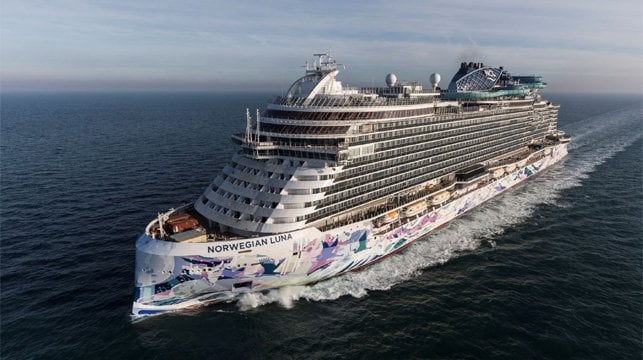
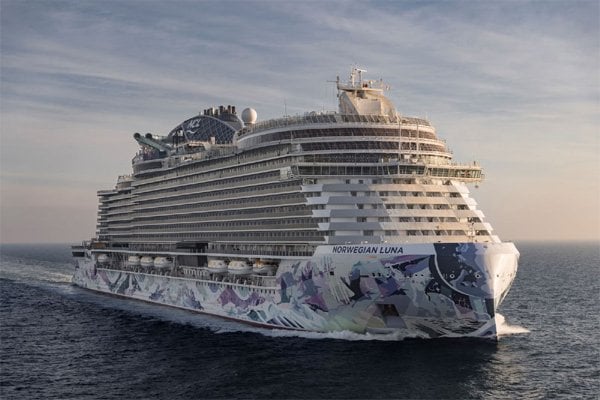
Norwegian Luna  cruise ship
Norwegian Luna is the second ship of a mid-class group that will see two larger ships to follow (Fincantieri)

Published Mar 5, 2026 7:42 PM by The Maritime Executive


Fincantieri and Norwegian Cruise Line celebrated the delivery of the Norwegian Luna, the second ship in the company’s Prima Plus class and the midpoint of a six-ship order, which will later be followed by five even larger cruise ships. The new ship, a sister to the Norwegian Aqua introduced in 2025, seeks to expand on the brand’s renewed emphasis on choice and flexibility while expanding its appeal to families.

At 156,300 gross tons, the Norwegian Luna is, however, more in the middle range of size for the broad contemporary segment of cruising, which is now surpassing the 200,000 gross ton milestone. The Norwegian Luna is 10 percent larger than the first two ships of the class, Norwegian Prima (2022) and Norwegian Viva (2023), and increases passenger capacity to 3,571. It includes many of the signature elements of Norwegian Cruise Line, including 17 dining options as well as 18 bars and restaurants. The company highlights that these sisters' new additions include the Aqua Slidecoaster, which is a hybrid between a waterslide and a rollercoaster, as well as its Glow Court with an LED floor. New to the ship is an expanded outdoor amusement-park-style area called Luna Midway, which features carnival-inspired games. It also introduces a tribute stage show to music legend Sir Elton John.

As is typical in the industry, Norwegian decided to upsize the second two ships of the class to increase capacity and efficiency. The sister ships Norwegian Aqua and Norwegian Luna each have 1,800 passenger cabins and accommodations for 3,571 passengers, versus 3,195 on the first two ships.

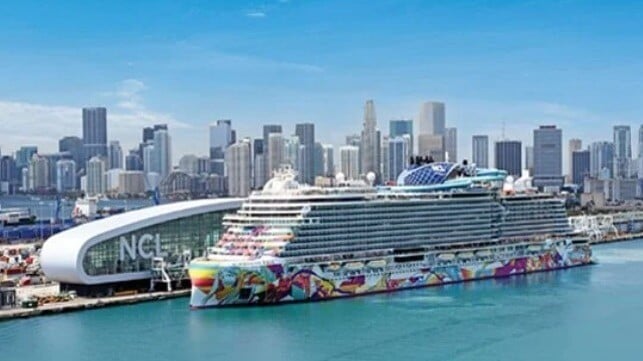
Fincanteir points out that over 3,000 people have been working to complete the fitting out of the ship and prepare her for her maiden voyage. She goes into service next week with a trans-Atlantic crossing and then takes up position in Miami with cruises to the Caribbean and Bahamas.


Norwegian Luna will be sailing year-round in the Caribbean (Fincantieri)


“As our newest ship, Norwegian Luna is a powerful reflection of NCL’s ‘It’s Different Out Here’ brand ethos,” said Marc Kazlauskas, president of Norwegian Cruise Line. “She delivers freedom, flexibility, and thoughtfully curated experiences, allowing guests to enjoy their vacation exactly how they want, with ease.”

Norwegian is widely recognized for breaking down the traditional styles of cruising to become more like resorts at sea with the launch of its concept called Freestyle Cruising in the early 2000s. It increased the dining options and entertainment, taking away assigned times for meals and the regimented daily programs. The company is looking to reemphasize these elements after a series of recent missteps, which have hurt its financial performance and made it the target of an activist investor.

The new ship comes early in a year that will see several very large new cruise ships as well as expansion in the luxury segments, including the launch of both Four Seasons and Orient Express. Royal Caribbean will put into service the third ship in its largest cruise ships in the world, called Icon, and MSC Cruises will receive its third ultra-large ship of the World Class. TUI will also get its second 161,000 gross ton cruise ship from Fincantieri, and in China, the country’s second domestically-built cruise ship, the 142,000 gross ton Adora Flora City, will be floated this month for a 2027 entry into service. More than a dozen new cruise ships are scheduled to enter service in 2026 as part of an order book that has more than 75 ships delivering through 2037.

The Norwegian Luna, however, is a stepping stone for the brand. Next year, the line will introduce the third design of the same class of ship, which will again be 10 percent larger. Called Norwegian Aura, it will be 172,000 gross tons with a capacity for 3,840 passengers, and will introduce more new passenger amusement options. Behind the scenes, it will also be methanol-ready.

Norwegian has a total of seven cruise ships on order, including five 227,000 gross ton cruise ships, all to be built at Fincantieri. The parent company, Norwegian Cruise Line Holdings, has orders for a total of 16 cruise ships, including ultra-luxury for Regent Seven Seas Cruises and premium ships for Oceania Cruises


Norwegian Cruise Admits Misstep as it Issues Disappointing Outlook

Norwegian Cruise Line
Nrwegian's newest ship, Norwegian Aqua, in Miami heading up the increased Caribbean presence (NCL)

Published Mar 2, 2026 7:58 PM by The Maritime Executive


Norwegian Cruise Line Holdings reported its fourth quarter and year-end financial results, and while it met or exceeded expectations, it disappointed with its outlook for 2026. Admitting “missteps” and “misalignment,” the cruise corporation provided an outlook for 2026 well below analyst projections, and as activist shareholder Elliott Investment Management is beginning to meet with fellow investors ahead of the company’s annual meeting.

The announcement of results faced further headwinds due to world events and the uncertain outlook for the oil market. Concerns are being raised as oil prices are expected to rise significantly, and the larger unknown of how the war against Iran will impact consumers and the desire to travel, especially internationally. While analysts were expecting declines in cruise ship share prices, Norwegian Cruise Line Holdings’ share price was down 10 percent compared to the industry’s 3.5 to 8 percent decline today.

The newly named CEO of Norwegian Cruise Line Holdings, John Chidsey, told investors, “My initial assessment is that our strategy is sound, but execution and cross-functional alignment have fallen short.” He pointed to a mistiming of the repositioning of ships into the Caribbean and other elements of the strategy, as well as underinvestment in technology, revenue management, and customer-facing systems.  He pointed to too much bureaucracy, a lack of cohesion in execution, and a lack of developed coordinated plans.

The company met its revised outlook for the fourth quarter, and with lower costs, came in toward the higher end of its range for the year. Revenues, however, were slightly light, but the real disappointment was a forecast as much as seven percent below analysts' projections for adjusted earnings (EBITDA) for 2026.

The company said it is entering 2026 against a “pressured backdrop as it is slightly below the optional booking range.” Demand, however, it said, is strong in its luxury brands, with the largest challenges at its contemporary brand, Norwegian Cruise Line.

It pointed to a “softness in Alaska” for bookings as overall industry capacity continues to grow in that market and a material increase in Norwegian’s Caribbean capacity that was too soon before the completion of the enhancements at its private island. They also pointed to a less-than-expected performance for Europe. While NCLH does not have operations in the Middle East and has a smaller overall presence in Europe, the softness comes even before the start of the war, which could deter Americans from vacationing in the Mediterranean in particular or, at the very least, slow bookings until there is more certainty around the war in Iran.

Chief Financial Officer Mark Kempa said the problems were fixable but that they would take some time. He said they still believed the Caribbean is the right place, and they would be cutting costs from their shoreside operations.

“Norwegian's disappointing outlook for 2026 falls meaningfully short of the company's potential,” said Elliott in a statement issued after the earnings announcement. “Commentary on today's earnings call reinforced a troubling pattern of execution lapses and strategic missteps across the business that have been years in the making.”

Elliott continues its call, saying there is an urgent need for a board refreshment at NCLH. It is calling for an “independent, experienced, and fully engaged board required to return the company to industry-leading performance.”

The activist investor group announced in February that it now owns more than 10 percent of NCLH’s shares. According to reports, it has begun meetings with other investors to outline its plans for the company. It is widely expected to launch a proxy battle at the upcoming annual meeting for a replacement board. Well-known industry executive Adam Goldstein, who spent many years at Royal Caribbean Group, recently released an op-ed saying he supported Elliott. He is believed to be a likely candidate for the board.

Well-known investment commentator and TV personality Jim Cramer suggested last week to his viewers that maybe NCLH should be sold. He said Disney which is enjoying a strong performance in its cruise operations, should buy NCLH to provide a quicker route to expansion. Disney is in the midst of launching its largest cruise ship, Disney Adventure, which is arriving this week at its home port in Singapore, and currently has multiple cruise ships on order, but they will take years to build.


Viking Stacks Orders to 2034 with More Expedition and Ocean Ships

Viking cruise ship at Fincantieri
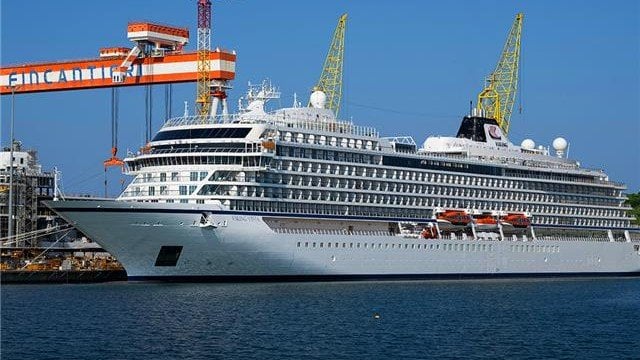
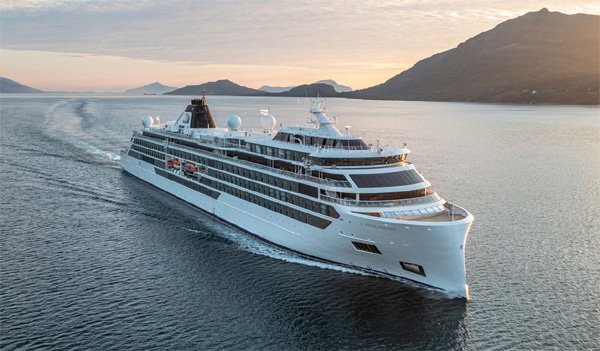
Viking Vestra which entered service in 2025 as the company's next ocean cruise ship (Fincantieri)

Published Mar 3, 2026 7:02 PM by The Maritime Executive


Reporting a strong financial performance in 2025 and a positive outlook as the brand continues to grow its fleet, Viking announced it has ordered two additional expedition cruise ships and optioned yet two more ocean cruise ships. The brand surpassed 100 ships in 2025 and now has a total of 57 orders extending to 2034 for its ocean, river, and expedition segments. 

Fincantieri termed today’s order a “very important” agreement for the shipbuilder and said it is valued at over €2 billion. The order consists of two additional expedition cruise ships, sister ships to the first two, built by Fincantieri's Vard subsidiary and delivered in 2021 and 2022. However, the next two ships will be built at Fincantieri’s Palermo, Italy, shipyard in 2030 and 2031. 

The expedition cruise ships will be Polar Class 6, designed to navigate in polar seas as well as remote areas such as the St. Lawrence River. They report the ships will have superior maneuverability and stability on rough seas, as well as using U-tank stabilizers to reduce roll when the ship is stationary. The design features a straight bow and extended hulls. The ships have 189 passenger staterooms with accommodations for 378 people.

In addition, Viking also optioned two more ocean cruise ships using the same base design for the 11 cruise ships currently in operation. The ships are approximately 54,300 gross tons with accommodations for 998 passengers. The new options have an exercise date of July 30, 2028, for delivery in 2034. They are in addition to 10 committed orders for cruise ships and an additional four options before today.

Pierroberto Folgiero, CEO and Managing Director of Fincantieri,  highlights that it extends a relationship that dates back to 2012 and the first of Viking’s ocean cruise ships. He notes that it will now encompass a total of 26 ships. 


The two new expedition cruise ships will be sisters to Viking Polaris which entered service in 2022 (Fincantieri)


Fincantieri currently has three ocean cruise ships under construction for Viking at its Ancona shipyard. Two of the ships, Viking Mira and the Viking Libra, are scheduled for delivery in 2026. The Viking Libra is being billed as the first “hydrogen-powered” cruise ship. It uses a new system with hydrogen cylinders that will give it a greater power capacity than the first demonstration systems on other ships, including an earlier Viking cruise ship.

Viking has a unique business model, focusing its cruise operations on the upper premium deluxe market and using a consistent ship design. It points to efficiency with elements such as a single main galley for all food service. The ships are all outside cabins with balconies. The company highlights it operates with a guest-to-crew ratio of two versus its competitors' average ratio of 1.4, while it still maintains a high standard aboard its ships. 

The company first developed the model in its river cruise business, which was launched 29 years ago. As of the beginning of the year, it had 81 river cruise ships in service. It plans to take delivery of 10 more this year, followed by eight in 2027, and five in 2028. It also has options for eight additional river cruise ships. 

The orders came as Viking reported another strong quarter and year of financial results in 2025. The company’s revenues and earnings (EBITDA) were ahead of analysts’ consensus. It reported total revenues of approximately $6.5 billion for the year, up nearly 22 percent, strong gross margin growth, and earnings of nearly $1.9 billion (EBITDA).

“We finished 2025 with great momentum, and we are entering 2026 in a very solid position with 86 percent of our Capacity PCDs for our Core Products already sold,” said Leah Talactac, President and CFO of Viking. “We are seeing a strong booking environment characterized by robust demand across our products, from both repeat guests and new-to-brand customers.”

As of mid-February, Viking reports it had sold 86 percent of its 2026 capacity, with strong advance bookings of nearly $6 billion. The company said it had a positive outlook despite the current global issues, but it also reported that it had suspended cruises on the Nile in Egypt due to the current turmoil.


AI, Analytics, and Automation: The New Currents in Maritime Operations

iStock
iStock

Published Mar 5, 2026 3:47 PM by Yurii Biryukov


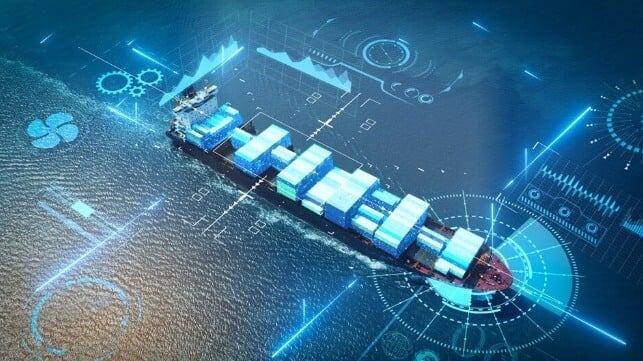
For decades, maritime operations have been defined by tradition, by paper logs, phone calls, and manual entries that somehow coordinated one of the most complex systems in the world. That era is ending. Today, software is doing what steel and fuel once did for the industry, powering global trade at scale.

Having worked closely on large-scale maritime HR and compliance systems, I’ve seen how digitalization is no longer about convenience. The shift from manual, disconnected workflows to integrated, data-driven operations is redefining how fleets manage people, payroll, and safety in real time.

The human core of maritime tech

The global maritime digitization market, valued at around $176 billion in 2023, is projected to reach $361 billion by 2030, growing at an annual rate of over 10 percent. That acceleration is not driven by hype; it’s being pulled forward by real-world pressures — regulatory demands, labor shortages, and the industry’s shift toward data-driven decision-making.

At the heart of this digital transformation are the multinational crews who make global trade possible. Managing them has always been one of the industry’s most complex tasks. Each vessel is, in effect, a moving jurisdiction, operating across borders, tax regimes, and labor laws.

New software systems are finally keeping pace with that complexity. Automated payroll and compliance engines now handle multi-currency, multi-jurisdiction operations with precision, cutting human error and compliance risks. For shipowners, these tools don’t just simplify accounting; they build trust and transparency across the fleet.

The key innovation today lies in translating complex maritime labor conventions into dynamic compliance logic, where rules are enforced automatically through data validation, not post-facto audits. This is turning maritime HR into a domain where software intelligence complements human decision-making.

From paper to predictive: A compliance revolution

Crew compliance and welfare have become critical focus areas for both regulators and operators. Maritime labor conventions require meticulous tracking of working hours, rest periods, certifications, and safety training. For years, this was handled manually, often with paper-based systems vulnerable to error.

Today, modern platforms, such as DNV ShipManager Crewing, COMPAS (OneOcean), Mintra OCS HR, and other crew-management systems support increasingly automated crew-compliance workflows.  If a certificate is about to expire or rest-hour thresholds are at risk, many systems can provide real-time alerts to both ship and shore teams. 

This proactive visibility can help to reduce violations and improve both safety and morale, turning compliance from a reactive burden into a more predictive system of accountability.

Modern crew-management systems now operate on event-driven architectures. Every change, from a certificate update to a rest-hour log, triggers validation workflows and alerting mechanisms both onboard and on shore. These systems can help identify potential compliance risks hours or days in advance, allowing fleet managers to take corrective action long before a violation reaches audit level.

The connectivity challenge

Digital transformation at sea is uniquely difficult because ships often operate without reliable internet. Platform architecture can’t assume constant cloud access. Connectivity at sea remains one of maritime IT’s hardest engineering problems. Ships often operate with limited satellite bandwidth, so critical HR, payroll, and safety systems must continue functioning even when offline.

To handle this, modern maritime platforms use a hybrid design: an onboard database that records transactions locally, a replication service that queues updates, and a synchronization layer that exchanges data once satellite connectivity resumes. This architecture guarantees operational continuity while maintaining data integrity across ship and shore.

With the rise of low-Earth-orbit networks such as Starlink for Maritime, replication cycles that once took days are now reduced to minutes, unlocking real-time dashboards, analytics, and even AI-driven decision support at sea.

Addressing the global labor shortage

The maritime industry is facing one of its toughest labor environments in decades. Reports from BIMCO and ICS project a shortfall of nearly 90,000 officers by 2026. Software can’t fill the pipeline alone, but it can help operators respond smarter.

Recruitment and training modules within crew management platforms now track skills, certifications, and career paths globally. This makes it easier to deploy qualified personnel and forecast shortages, creating a more agile, data-informed approach to workforce planning.

AI at sea: From automation to insight

Artificial intelligence is no longer a futuristic concept in maritime operations. It is becoming part of everyday workflows. AI-powered rostering analyzes fatigue and performance data to optimize scheduling. ML models flag anomalies in payroll or rest-hour records that may indicate compliance issues. 

AI is moving from pilots into real operational deployment, signaling that intelligent systems are no longer a ‘future promise’ in maritime operations, but a present?day capability.

At the Port of Corpus?Christi, Texas, the OPTICS digital?twin platform combines live vessel-tracking, geospatial models, and law?enforcement dispatch data into a single, interactive 3D interface. 

Using machine learning to fill gaps in ship movement data, OPTICS allows port authorities to monitor real-time vessel positions, simulate emergency scenarios, and coordinate resources more efficiently. The system has already improved situational awareness, reduced response times, and streamlined operations at one of the U.S.’s largest crude-export terminals.

Overcoming integration debt

For most shipping companies, the biggest obstacle isn’t the lack of new technology. It is the weight of old systems. “Integration debt,” or the accumulation of siloed tools that don’t communicate, slows progress. 

Many maritime organizations are shifting to API-first ecosystems, allowing HR, payroll, logistics, and compliance systems to communicate through secure REST interfaces. This approach enables gradual modernization: companies can retain stable legacy modules while introducing new digital layers without disrupting existing workflows.

The solution isn’t a complete overhaul but a gradual migration to API-first ecosystems, where data can move seamlessly between payroll, compliance, logistics, and HR systems.

Clean data is the true engine of maritime digitization. Without consistent, high-quality information, even the best analytics platforms can’t deliver value. Successful transformation requires not just technology but also investment in data governance, user training, and cultural change.

The decade ahead

Over the next five years, we’ll see a shift toward hybrid architectures that blend onboard intelligence with cloud-based analytics. Compliance, payroll, and crew management will become modular, configurable, and increasingly AI-assisted. 

Maritime companies will start to integrate specialized digital tools, from health monitoring to predictive maintenance, through marketplace-style ecosystems rather than monolithic platforms.

In the next decade, the most successful maritime organizations will treat data as their core infrastructure. We’ll see ships equipped with onboard analytics engines that interact seamlessly with cloud platforms, predicting crew fatigue, optimizing rotations, and automating compliance in near real time.

The competitive advantage will no longer depend solely on vessel tonnage or fuel metrics, but on how intelligently an operator can manage and interpret its human and operational data.

Yurii Biryukov is a senior software and delivery executive specializing in the maritime and enterprise technology sectors. With over 13 years of experience leading international development teams, he has overseen global implementations of enterprise systems and next-generation crew management applications. His work focuses on helping shipping and cruise companies streamline compliance, payroll, and workforce operations through innovative, resilient digital solutions.

The opinions expressed herein are the author's and not necessarily those of The Maritime Executive.

 

Algoma Central Buys Mainstay Maritime’s Canadian Great Lakes Shipping

Canadian-flagged Great Lakes bulker
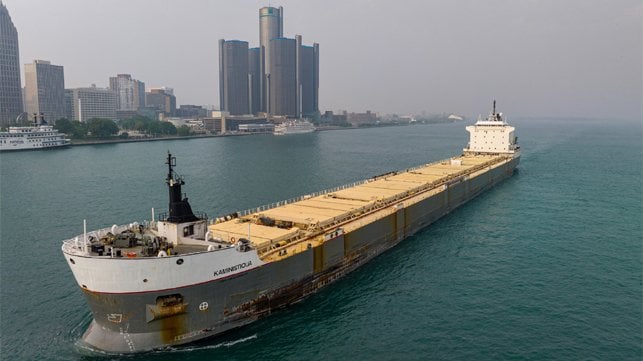
Agoma acquires six Canadian-flagged Lakers including the Kaministiqua (Mainstay Maritime)

Published Feb 27, 2026 7:53 PM by The Maritime Executive


Canada’s Algoma Central, already one of the largest dry and liquid bulk carriers for the Great Lakes-St. Lawrence region, has agreed to buy three Canadian operating companies and six Canadian-flagged Lakers from Mainstay Maritime (formerly Rand Logistics). The transaction will permit each company to expand its Great Lakes operations under its respective flags.

Mainstay Maritime is the newly launched brand name for the former Rand Logistics, and after the acquisition by Oaktree Capital completed in 2023, and the spinout with Duration Capital Partners in 2024, it looks to expand its operations on the Great Lakes. The company traces its origins to 1907 and the incorporation of American Steamship Company, which is today a subsidiary, as well as its acquisitions of Grand River Navigation, Conneaut Creek Ship Repair, and recently Andrie, a liquid bulk transportation company on the Great Lakes.

Under the terms of the agreement, Algoma acquires the three Canadian operating companies, including Lower Lakes Towing, which was launched in 1994. It also acquires six Canadian-flagged Lakers (KaministiquaManitoulinRobert S. PiersonSaginawMichipicoten, and Valo), ranging in capacity between approximately 19,600 and 33,824 tons.

“For Mainstay, this transaction represents a natural step in Mainstay’s evolution for the long-term benefit of all our constituencies – allowing us to sharpen our focus on the U.S. Jones Act market, increase our reinvestment in our U.S.-flagged fleet, and position the company to meet the growing needs of our customers,” said Greg Binion, CEO of Mainstay Maritime. 

Mainstay reports it operates a fleet of 26 vessels. It includes one conventional bulk carrier, 19 self-unloading bulk carriers, and seven bulk specialty and liquid vessels. Going forward, it will be focused exclusively on U.S.-owned, built, and crewed vessels operating under the Jones Act.

“Algoma is pleased to grow our Canadian dry-bulk fleet with the addition of Lower Lakes’ vessels and experienced team,” said Gregg Ruhl, President & CEO at Algoma.

In September 2025, Algoma highlighted that it had taken delivery of the 100th vessel across its fleet that operates throughout the Great Lakes-St. Lawrence region and internationally. At the time, it noted that a decade ago, the company operated just under 40 vessels, serving primarily the Great Lakes–St. Lawrence Seaway, while today Algoma’s dry and liquid bulk fleets have grown by more than 60 vessels, in Canada and globally. It noted that it had seven vessels under construction with deliveries expected between 2025 and 2027.

No financial terms were announced for the transaction. The companies said they expect it to close in the first quarter of 2026.

Scottish Government Plans Four Ship Contract Lifeline for Ferguson Marine

Ferguson Marine Glasgow Scotland
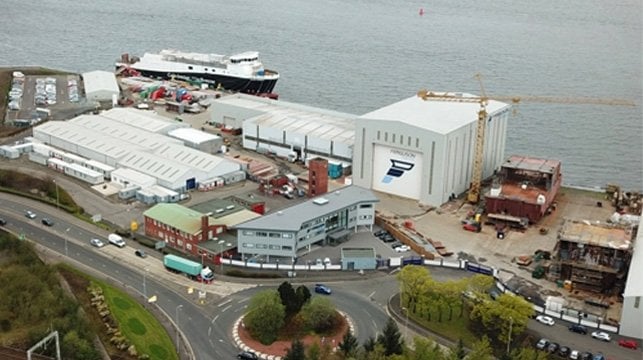
Ferguson Marine has been building ships is Glasgow for over 100 years (file photo)

Published Mar 4, 2026 7:31 PM by The Maritime Executive


The Scottish government is moving forward with a plan to award the financially troubled Scottish shipbuilder Ferguson Marine four new contracts as a lifeline to keep the yard afloat. The yard fell into administration and was taken over by the government in 2019 in an effort to keep shipbuilding in Glasgow. Awarding the yard new contracts is seen as a step toward transitioning the yard back to private ownership.

“This is a watershed moment,” said Deputy First Minister Kate Forbes during a presentation on the plan to parliament on March 3. “Fulfillment of the proposed program, subject to due diligence processes to assess viability, would secure a pipeline of work and allow the shipyard to move ahead with its modernization plans while pitching for additional orders on the open market.”

The plan calls for direct awards to the yard without competitive bidding for four construction contracts. It would build ships to replace the research vessel Scotia and the fisheries protection vessel Minna, which were built in Glasgow in 1998 and 2003. In addition, as part of the Small Vessel Replacement Program launched by the government, Fugerson would get contracts for two additional ferries.

In announcing the plan, the government said the contracts would be subject to due diligence to assess viability. The four awards would take up most of the yard’s capacity for the next five years and enable the new management team time to pursue additional commercial work.

The government has already made commitments to the yard, and this program would unlock the remainder of a £14.2 million (nearly $19 million) commitment by the Scottish Government to upgrade the yard’s infrastructure over the next two years. Currently, the government is making interim investments focused on essential repairs, health and safety improvements, and equipment upgrades, which it said were necessary to stabilize the operations and to finally complete the long-delayed ferry, Glen Rosa.

Ferguson won a contract from the government in 2015 to build two LNG-fueled ferries, which were considered to be state-of-the-art. Delivery was expected by 2018 at a total cost of £97 million. The project, however, went from one problem to the next as costs mounted and problems persisted with the vessels. The first ferry, Glen Sannox, has been in service for about one year, with reports of additional problems. Delivery of the second, Glen Rosa,  is now anticipated for the fourth quarter of 2026. Reports are that the project will come in at five times its original budget.

Speaking to Parliament in February, the leaders said they recognized the skepticism based on the long delays and cost pressures at the yard. They, however, also strongly believe in keeping the shipbuilding industry going in Glasgow. The yard dates back to 1903 and has built ferries, naval auxiliaries, and specialist ships.

A new management team is leading the yard, which the government asserts has stronger commercial disciplines. They report that it has improved accountability and assurance reporting. They also said oversight has been strengthened.

The management has to present a new business plan to the government, which would be reviewed. If the plan is accepted, the government would seek to move the contract awards forward under the Subsidy Control Act.

Royal Caribbean Group Proposes Ship Repair Yard for Panama's Pacific Coast

dry dock
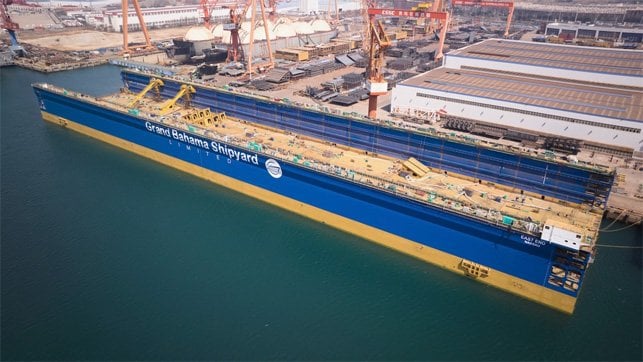
Royal Caribbean is proposing a repair yard with a dry dock on Panama's Pacific coast similar to the capabilities it invested in for the Bahamas (Grand Bahama Shipyard)

Published Mar 5, 2026 8:31 PM by The Maritime Executive


Officials from Panama are responding positively to the concept of creating a shipyard on the Pacific coast of the country. Royal Caribbean Group met with the president of Panama, Jose Raul Mulino, and other government executives to outline its proposal, which would see a yard with capabilities to handle large ships in operation by 2031.

Royal Caribbean is proposing that the shipyard be established in the Punta Pierdra sector, near the city of Puerto Armuelles, which is located in the northwest near the border with Costa Rica. They proposed a 130,000-ton floating dry dock with a length of 400 meters (over 1,300 feet), which would be able to accommodate the company’s largest cruise ships.

During the presentation, the company explained that the rationale would be to create a repair facility to service ships on the Pacific coast. It noted that currently, large ships have to go to Asia for their maintenance and dry dockings. By placing the yard in Panama, the company could service its ships sailing on the Pacific coast and would also have the option of bringing ships through the Panama Canal to the yard. They noted that the yard would also be available to other large ships, such as container vessels, which also do not have suitable repair facilities in the area.

Panama has a smaller shipyard in Balboa near the Pacific terminus of the Panama Canal. The country has been working to revitalize that yard, but it only has dry dock capabilities for smaller ships.

According to the Panama Maritime Authority, President Mulino affirmed that he will support the effort to make the Pacific shipyard a reality while noting that investments could start this year. He highlighted that the project would contribute to elevating Panama’s strategic importance as a maritime hub. Mulino also said it would create jobs, helping to rescue an area that has been abandoned for years. 

Royal Caribbean estimated the operation could create 500 to 800 jobs in the coming years.

In the 1990s, Royal Caribbean and Carnival Corporation joined together to invest with Freeport in the Bahamas to create a shipyard that could handle cruise ships close to their homeport in South Florida. The companies remain the primary investors in Grand Bahamas Shipyard, which is currently completing a large expansion. In February, the yard undertook the first dry dock project with the first of two new large dry docks built in China. The first dry dock, East End, is 357 meters long and is capable of lifting 93,500 tons. The second dry dock, expected to arrive in 2026, called Lucayan, is due to arrive at Freeport in 2026.

Having a capable shipyard on the Pacific coast could help the company pursue expansion and the use of larger ships in the region. Currently, they are more limited with the capabilities on the Pacific coast, where, for example, Carnival Cruise Line had to partially dismantle the funnel of one of its cruise ships to reach a dry dock for urgent repairs.

Report: MSC and BlackRock Push to Complete Hutchison Deal for Port Ops

Port of Rotterdam
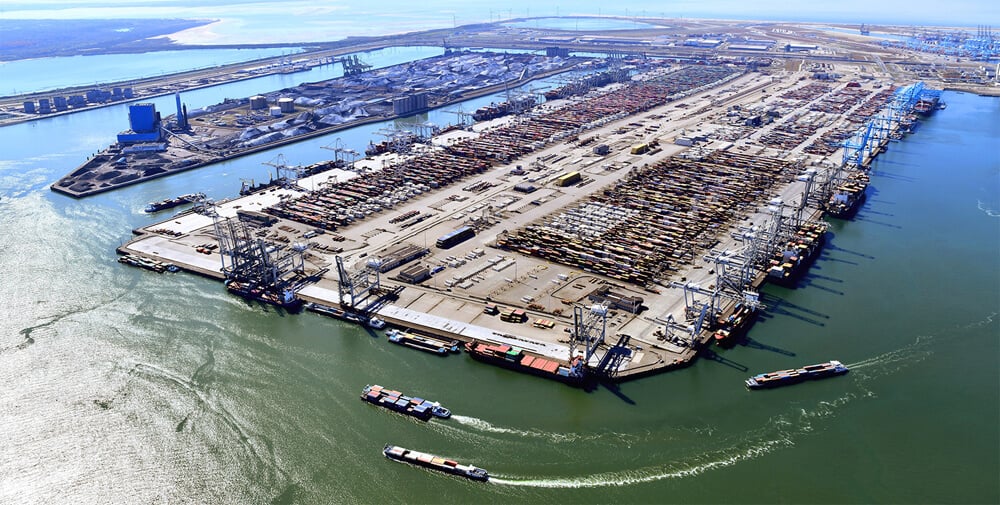
CK Hutchison had agreed to sell its global terminal operations but the deal became caught in global politics (Hutchison file photo)

Published Mar 3, 2026 7:35 PM by The Maritime Executive


Nearly a year after the deal was first announced for a consortium of MSC Mediterranean Shipping Company and U.S. investment group BlackRock to acquire the global port operations of Hong Kong-based CK Hutchison, the Financial Times reports negotiations are back underway. The newspaper writes that the companies believe that now that Panama has been removed, terms can be reached for the larger global portfolio.

The companies had agreed in 2025 on two deals, with BlackRock leading the purchase of the Panama Ports Company, which operated the terminals at each terminus of the Panama Canal, and MSC’s Terminal Investment Limited (TiL) as a minority investor. It later emerged that MSC would be the lead investor for the other 41 global port operations in 23 countries, ranging from Europe to Southeast Asia and the Middle East. The deal was expected to place a valuation of $23 billion on the portfolio, while CK Hutchison would have retained the port operations in China.

The transaction became caught in a political battle between the United States and China as Donald Trump asserted that China was running the Panama Canal. The Chinese and Hong Kong governments objected to the deal largely due to the political issues, and China reportedly insisted that COSCO had to become a partner. Later reports said that China wanted COSCO to control the new company.

The Financial Times cites two unnamed sources that it says reported the negotiations are back underway after Panama annulled the concession for the operations in Balboa and Cristobal. CK Hutchison is starting what is likely to be an extended legal battle with Panama, including an arbitration for financial damages.

MSC is reportedly anxious to acquire the remaining 43 terminals worldwide to add to TiL’s operations. The Financial Times suggested that the upcoming state visit by Donald Trump to China and meeting with Chinese leader Xi Jinping was “likely to offer tailwinds for the agreement.”

It had previously been reported that MSC and BlackRock were proposing to break up the CK Hutchison portfolio into smaller segments. COSCO’s participation would vary based on China’s relationship with the various countries and the government’s views of strategic importance. It would also permit COSCO to have a smaller share in jurisdictions hostile to China, reports the FT.

TiL is reported as of 2025 to already have operations in more than 30 countries and over 70 terminals. It has an annual handling capacity of approximately 70 million TEU. The acquisition of the CK Hutchison portfolio would position TiL as the largest terminal operator, surpassing PSA, which reported it handled 105 million TEU in 2025.


Spanish Authorities Chase Tug That Attempted to Sneak Away from Detention

tugboat
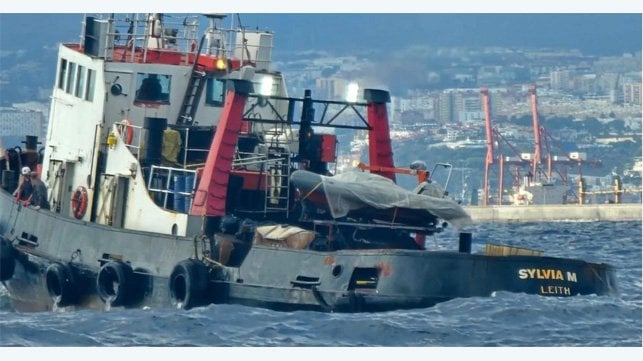
Tug that attempted to depart while under detention is now facing hefty fines (Ministry of Transport)

Published Mar 5, 2026 4:34 PM by The Maritime Executive


The captain of the port of Las Palmas and the Maritime Authority in the Canary Islands reported that they had to chase down a tugboat, which was towing an offshore supply boat, when the tug decided to depart despite being under a detention order since December. The tug named Sylvia M ended up breaking down once again and having to be towed back to port, and is now facing the potential of a hefty fine.

The Maritime Authority reports the tug and its tow were detected on Monday, March 2, at 1915 local time outbound leaving through the mouth of the harbor. They did not have a pilot aboard, and the vessel had not yet completed an inspection to lift the prior detention order. Further, it was attempting to go to sea in what the officials termed a severe storm.

The port’s control center contacted the tug and ordered it to return to port, but the order was ignored. They said the tug refused to cooperate. At that point, the patrol boat Rio Ara and a tug were sent to chase after the departing tug and tow.

The Sylvia M had caused a previous incident on December 3 when it requested assistance while it was about three miles offshore. The 149 gross ton tug registeredi n Tanzania was towing the offshore service vessel K-Marine IV. The tug reported that one of its engines was not working and that its other engine was at half capacity. Further, it said it did not have enough fuel.

A rescue boat was able to secure a new towline to the K-Marine IV and ordered the tug to cut its towline. The Sylvia M was escorted to a berth in Las Palmas. A port state inspection identified issues, including that its towing winch was inoperative. A detention order was imposed. Recently, the Spanish authorities said the flag representative had informed them that repairs were completed and the vessel was properly certified. However, it had not yet been inspected, and the detention remained in place.

After sneaking away on March 2, the tug soon began experiencing propulsion and steering problems. The authorities reported the rescue tug they dispatched was able to bring the ship back to port at around 0330 on March 3.

A sanction case has now been opened against the wayward tugboat. The Maritime Authority reports they are facing potential fines of up to €180,000 (US$209,000). The tug, of course, is also under a detention order, again.


Glamox to Light US Navy’s Latest Towing, Salvage, and Rescue Ship

Glamox
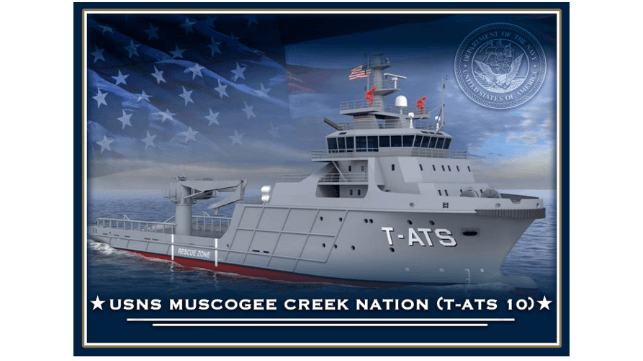
Astist’s impression of a Navajo-class T-ATS vessel. Photo Credit: Austal USA

Published Mar 5, 2026 9:58 PM by The Maritime Executive


[By: Glamox]

Glamox has secured a contract from Austal USA to supply exterior and interior LED marine lighting for the future USNS James D Fairbanks (T-ATS 13), the latest Navajo-Class (T-ATS) Towing, Salvage, and Rescue ship being constructed for the US Navy (USN). This new contract brings the total to three T-ATS ships that Glamox is lighting for Austal USA. Previously, Glamox was awarded contracts to light five T-ATS vessels from Bollinger Houma Shipyards.

For the future USNS James D Fairbanks, Glamox will supply 914 lights. They include navigation lightsfloodlightsexplosion-proof lightingdeck lighting, and lights for the interior of the vessel – from roomscorridors and stairwells to crew quarters. The lighting will be delivered in Spring 2026 and fitted by Austal USA at its shipyard in Mobile, Alabama.

“We are proud to be supplying lighting for this workhorse of the seas, which will enter service in 2028. This latest order, along with orders from navies worldwide, highlights Glamox’s marine defence lighting capabilities, which range from lights for inshore rescue boats to large aircraft carriers,” said John O’Driscoll, General Manager of Glamox in North America.

T-ATS vessels will provide ocean-going towing, salvage and rescue capabilities to support fleet operations. They have a multi-mission common-hull platform capable of towing USN ships and will combine the capabilities of the retiring Rescue and Salvage Ship (T-ARS 50) and the Fleet Ocean Tug (T-ATF 166) vessels. The T-ATS series will be able to support current missions, including towing, salvage, rescue, oil spill response, humanitarian assistance, and wide-area search and surveillance.

The T-ATS vessels may also enable future rapid capability initiatives, such as supporting modular payloads with hotel services and appropriate interfaces. Their large, unobstructed 6,000 square feet (557 square metres) of deck space allows for the embarkation of a variety of stand-alone and interchangeable systems.

In addition to the T-ATS series, Glamox worked with Austal USA to supply lights for the auxiliary floating dry dock medium (AFDM) and navigation lights for the USN’s Landing Craft Utility (LCU) 1700-class vessels.

The products and services herein described in this press release are not endorsed by The Maritime Executive.