Sunday, March 29, 2026

ECOCIDE
Toxic Fallout From Gulf War ‘Could Last Decades’


Airstrikes against fuel depots in Tehran, Iran. Photo Credit: PMOI

March 30, 2026 
By Mohammed El-Said


Environmental experts are warning that the ongoing war in the Gulf region is likely to leave a legacy of severe and long-lasting environmental damage, extending far beyond the immediate conflict zone.

The impacts, they say, could spread across the Eastern Mediterranean, affecting air, land, and marine ecosystems, and ultimately human and animal health.

Since the United States and Israel launched attacks on Iran on 28 February, sustained bombing on both sides has led scientists to repeatedly caution about risks of pollution to air, water, and foodsystems.

Fires in oil facilities and the destruction of industrial infrastructure are already releasing pollutantsthat may persist in the environment for years, if not decades, they warn.

“It is often less about the materials from the bombs themselves […] and more about what they are striking,” Richard Marcantonio, assistant professor of environment, peace and global affairs at the University of Notre Dame, in the US, told SciDev.Net.


“For example, if a building is destroyed that is lined with asbestos or an oil refinery and the fires continue extensively, it is these sorts of materials that tend to be the most impactful to human health risks.”
Toxic fallout

US-Israeli airstrikes on energy infrastructure near Tehran in early March ignited massive fires, sending thick plumes of black smoke over the Iranian capital. Reports indicated that oil storage depots and fuel transport networks in Tehran and Alborz province were among the targets.

As the crisis escalated, attacks spread to major oil and gas facilities, including the South Pars gas field and the Asaluyeh refinery. Iran’s retaliatory strikes across the Gulf, in Qatar, the United Arab Emirates, Saudi Arabia, and Kuwait, included a number of energy infrastructure targets.

A wide range of pollutants can be released during such conflicts, particularly as a result of bombing and the subsequent redistribution of materials, says Marcantonio.

Oil facility fires release toxic gases such as nitrogen oxides, sulfur oxides, carbon monoxide and hazardous organic compounds, explains Alaaeddin Alsbaiee, director of research and development at BASF Chemicals.

“Explosions and oil fires release large quantities of fine particles with diameters of less than PM 2.5, in addition to toxic carbon smoke, which are particles capable of reaching deep into the lungs and blood,” he told SciDev.Net.

These pollutants can spread over wide distances in the atmosphere by wind, raising pollution levels in areas near bombing sites and increasing the risk of respiratory diseases, especially among children and the elderly, Alsbaiee says.

The World Health Organization has already warned of risks posed by pollution from burning fuel depots in Tehran. Reports of so-called “black rain” following the strikes point to the presence of hazardous compounds in the atmosphere, including hydrocarbons, sulphur oxides and nitrogen compounds.
Soil, water contamination

According to experts, pollutants from explosions and fires can transfer to the soil, surface water, and groundwater.

Soil and groundwater contamination is among the most serious long-term consequences of war, says Marcantonio.

Pollutants resulting from bombing or fires can seep into the soil and groundwater layers and may remain in the environment for long periods if they are not treated by effective environmental cleanup processes, such as filtration or burning.

“Those pollutants can persist in the environment for generations or more,” Marcantonio warns.

Alsbaiee explains that oil facilities are among the most dangerous sources of environmental pollution during wars, because they combine air pollution resulting from fires with water and soil pollution resulting from oil leaks.

He adds: “Oil spillage into soil or water can also lower oxygen levels in the water, leading to the death of fish and aquatic organisms, as well as weakening soil fertility and affecting microorganisms necessary to maintain its biological balance.”

Threat to desalination

In the Gulf region, environmental risks are compounded by heavy reliance on seawater desalination for drinking water.

Experts warn that attacks on oil tankers at sea could be especially damaging. Large spills can spread on currents and winds, potentially reaching desalination plant intakes within hours or days. This scenario could disrupt water production or degrade water quality, raising the prospect of a dual crisis affecting both water and energy systems in the region.

Oil pollution can also damage desalination infrastructure directly. Hydrocarbon compounds may clog filtration membranes, reducing efficiency, increasing maintenance needs, and driving up energy consumption, says Mohamed Dawoud, a water expert at the Abu Dhabi Environment Agency, in the United Arab Emirates. In severe cases, plants may be forced to shut down temporarily to prevent contamination, he says.

A previous study indicates that oil spills resulting from maritime accidents or wars in the Gulf region can reach the intakes of desalination plants within hours or days, depending on the direction of the winds and sea currents.
Lasting consequences

Moreover, the environmental effects of war do not end when the fighting stops, researchers stress. While air quality may gradually improve once fires are extinguished, contaminants in soil and water can linger for decades.

Experiences from other conflict zones illustrate the scale of the challenge. In Gaza, for example, clearing millions of tonnes of debris is expected to take decades, with cleanup efforts themselves generating additional emissions and pollutants.

The pace of environmental recovery depends on several factors, including the type and extent of contamination and the characteristics of the affected ecosystems, says Alsbaiee. While some may be mitigated within months or years through remediation techniques, heavy oil pollution or groundwater contamination often requires long-term, complex interventions.

Panagiotis Kosmopoulos, a senior researcher at the National Observatory of Athens in Greece, agrees that the long-term impacts on air, soil, water and ecosystem health “may persist for years or even decades after the conflict ends”.

Given these risks, monitoring or air and water quality using satellites and ground-based monitoring stations is important, he says.

“Real-time environmental monitoring can help authorities and international organisations better understand the scale of pollution and take measures to reduce risks to public health and critical water infrastructure,” he tells SciDev.Net.

This article was produced by the SciDev.Net Middle East and North Africa regional office and adapted for the Global edition.


Mohammed El-Said writes for SciDev.Net.


Satellite imagery confirms extensive damage at Qatar’s Ras Laffan LNG plant

Satellite imagery confirms extensive damage at Qatar’s Ras Laffan LNG plant
Satellite imagery confirms extensive damage at Qatar’s Ras Laffan LNG plant / bne IntelliNewsFacebook
By Ben Aris in Berlin March 29, 2026

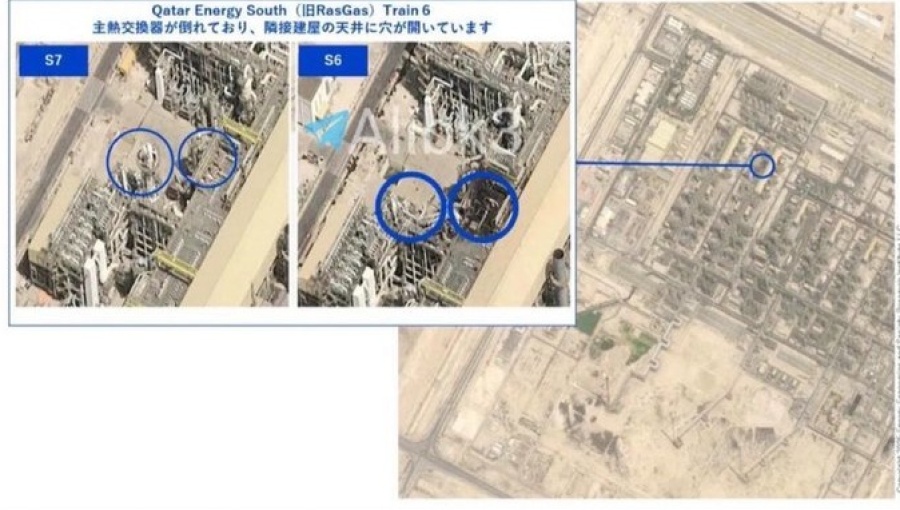
Satellite imagery indicates significant damage at Qatar’s Ras Laffan LNG plant that was hit by Iranian missiles on March 18, including the apparent collapse of primary heat exchangers at Train 6 and structural damage to adjacent facilities, according to open-source analysis.

The extent of. The damage has raised concerns the time table for effecting repairs might be increased from the preliminary estimate of one year to closer to fire years if critical equipment has been destroyed. That would have the short-term effect of pushing up gas prices and long-term effect of leaving the US as the predominant supplier of LNG to the international market.

The extent of the damage has prompted expectations of a fresh force majeure declaration, with QatarEnergy’s chief executive now saying that repairs could take between three and five years, contingent on an immediate halt to hostilities. The disruption could result in an estimated $20bn in lost revenue annually.

The attack took two of the facility's 14 trains offline but it has been unclear just how much damage was done. The key component in an LNG plant is the brazed aluminium heat exchanger known as a BAHX (brazed aluminium plate-fin heat exchanger) that cools gas to close to absolute zero. One of the most complicated pieces of machinery in the world, only five firms worldwide can make them and already have a backlog of orders. If Ras Laffan has to order new ones from makers, delivery could take up to five years.

Train 6 forms part of Qatar’s liquefied natural gas infrastructure at Ras Laffan, the world’s largest LNG export facility. The reported damage is estimated to have removed approximately 17% of the country’s LNG export capacity from the market.

Major importers, including Italy, Belgium, South Korea and China, are expected to be affected by any sustained outage. The scale of the disruption has raised concerns among market participants about tightening global gas supplies, particularly as demand remains elevated in both Europe and Asia.

One market participant described the situation as “as close as you get to an Armageddon scenario for global gas markets”. Another comment circulating online attributed to Russian President Vladimir Putin, saying “it’s a shame Europe no longer has Nord Stream”.

Iranian strikes on Gulf aluminium plants raise supply concerns

Iranian strikes on Gulf aluminium plants raise supply concerns
Two key aluminium producers in the UAE and Bahrain were hit by Iranian missile strikes doing significant damage. / bne IntelliNewsFacebook
By Ben Aris in Berlin March 29, 2026

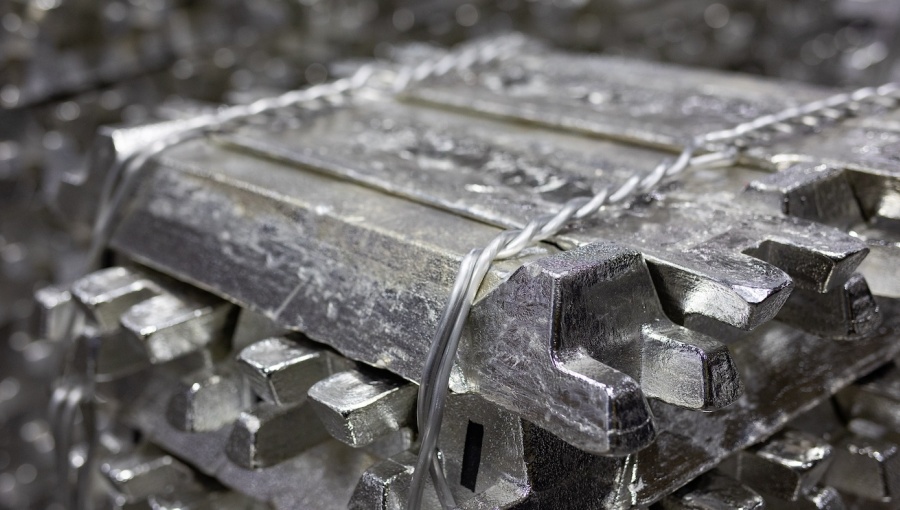
Two major aluminium production facilities in the Middle East were hit by Iranian strikes on March 28, raising concerns over global supply as disruption in the region intensifies.

Emirates Global Aluminium (EGA), one of the world’s largest producers, sustained “significant damage”, while Aluminium Bahrain (Alba) said it is “assessing the extent of the damage” following a separate strike on its operations.

The Iranian Revolutionary Guard Corps (IRGC) claimed the sites targeted were linked to the United States military, in a statement carried by Iran’s state broadcaster IRIB. The strikes were retaliation for a US-Israeli attack on Iranian industrial infrastructure launched from military bases hosting US forces in the Gulf states, the IRGC said.

EGA said on March 28 its Al Taweelah site sustained significant damage during Iranian missile and drone attacks at Khalifa Economic Zone Abu Dhabi, with assessments ongoing. The company said a number of employees were injured, but added that none of the injuries were life-threatening.

The biggest non-energy industrial company in the UAE, the Al Taweelah smelter produced 1.6mn tonnes of cast metal in 2025. The company added it had "substantial metal stock on the water when the conflict began, and stock on the ground in some overseas locations." EGA operates two smelters, one each in the emirates of Dubai and Abu Dhabi.

Alba said in a statement that two employees were injured in the attack on its facility.  

The Middle East accounts for approximately 9% of global aluminium supply, making it a critical source for international markets. Analysts warn that disruption to production and exports could tighten supply chains already under pressure from logistical constraints in the Gulf.

Emirates Global Aluminium, jointly owned by Abu Dhabi’s sovereign wealth fund Mubadala and the Investment Corporation of Dubai, is a major supplier to international markets, including the US. The UAE is the second-largest aluminium exporter to the US after Canada.

The company is also involved in plans to develop what has been described as the first new aluminium smelter in the US in decades, a project in Oklahoma backed by state-level incentives and aimed at strengthening domestic supply.

Damage to facilities in both the UAE and Bahrain could therefore have implications beyond the region, particularly for US manufacturers reliant on imported aluminium.

There has been no independent verification of the extent of the damage, and neither company has provided detailed operational updates.

“Emirates Global Aluminium sustained ‘significant damage’,” according to the report, while Alba said it is “assessing the extent of the damage”.

Iran Claims Aluminum Plant Attacks In Bahrain, UAE


Iran launches a missile. Photo Credit: Tasnim News Agency


March 30, 2026 
By Arab News


Iran’s Revolutionary Guards said Sunday they launched missile and drone strikes on aluminum plants in Bahrain and the UAE over the weekend, targeting what they described as industries linked to the US military.

The Guards also threatened to target US universities in the Middle East, while saying US-Israeli strikes had destroyed two Iranian universities. They demanded a US condemnation of the bombing of universities by noon (0830 GMT) Monday.

Since the Middle East war erupted at the end of February, Bahrain and other Gulf countries have regularly been targeted by Iranian missile and drone strikes in retaliation for the US-Israeli campaign, now in its second month.

In a statement carried by Iranian state broadcaster IRIB, the Guards said they hit an aluminum facility in the UAE and Aluminium Bahrain’s main plant, calling both sites “industries affiliated with and connected to the US military and aerospace sectors in the region.”

The IRGC said the strikes were retaliation for a US-Israeli attack on Iranian industrial infrastructure launched from bases in Gulf states.

Aluminium Bahrain, one of the world’s largest aluminum producers, said two employees were wounded in an Iranian strike targeting its facility on Saturday.

The company, also known as Alba, said the workers suffered minor injuries.

Alba added that it was assessing the impact on operations and would provide updates when available. It gave no details on damage to the site.

Emirates Global Aluminium confirmed on Saturday that the company’s Al-Taweelah site sustained significant damage during the Iranian missile and drone attacks at Khalifa Economic Zone Abu Dhabi.

A number of EGA employees were injured. None of the injuries were life threatening.

Abdulnasser Bin Kalban, chief executive of EGA, said: “The safety and security of our people is our top priority at EGA at all times. We are deeply saddened and are assessing the damage to our facilities.”

EGA’s Al-Taweelah smelter produced 1.6 million tonnes of cast metal in 2025. EGA had substantial metal stock on the water when the conflict began, and stock on the ground in some overseas locations.

Gulf states intercept Iranian missile and drone attacks

Defense forces in the UAE and Kuwait said early Sunday they were actively responding to new waves of hostile missile and drone attacks launched from Iran, as the conflict triggered by a joint US-Israeli assault on Tehran entered its second month with no sign of abating.

The defense ministries of both states posted on X to reassure citizens that the explosions they were hearing were the result of air defense systems intercepting incoming fire.

“Everyone is requested to adhere to the security and safety instructions issued by the competent authorities,” Kuwait’s Army General Staff said in a separate statement, as four Iranian drones were intercepted and destroyed.

Air defenses engaged 16 ballistic missiles and 42 drones on Sunday, the UAE defense ministry said.

In Saudi Arabia, the defense ministry reported Sunday morning the interception and destruction of 10 drones during the past hours.

Bahrain’s Defense Force reported it has engaged a total of 385 drones and 174 missiles since February 28.
Indonesia: Massive Blaze Engulfs Plastic Factory

A shot of massive fire engulfed at a plastic factory in the West Java, Indonesia. Photo credit/ social media/ Al Bawaba

March 30, 2026 
Al Bawaba News
By Mansour Al-Maswari

(Albawaba) — A large fire broke out at a plastic factory in Wanaherang, Gunung Putri, Bogor Regency, West Java, on Sunday evening, sending thick black smoke into the sky as flames rapidly consumed the facility.

The factory, which processes plastic materials, was reported by local residents around dusk, prompting a swift response from emergency services.

Firefighters deployed multiple units to contain the blaze, which continued into the night. No casualties have been officially reported so far, and authorities are still investigating the cause. Industrial fires in plastic factories are often linked to flammable materials, electrical faults, or storage issues.

Indonesia’s manufacturing sector has faced recurring safety challenges, including dense factory clusters and inconsistent enforcement of fire regulations. Similar incidents occurred recently, such as a February 2026 fire at a plastic facility in Bandung and earlier blazes in East Java.


Myanmar: Examining The Discord Between The Arakan Army’s Words And Actions – Analysis


File photo of Arakan Army soldiers in Myanmar. Photo Credit: Arakan Army


March 29, 2026 
IPCS
By Fiona Raval

Recent reports document accusations against the Arakan Army (AA) of detaining, extorting, and abusing refugees returning to Maungdaw from Bangladesh. As Myanmar’s civil war continues unabated, instances of brutality and human rights violations against civilians have increasedexponentially, with the AA emerging as a particularly notorious entity.

As per the most recent estimates, the AA, an anti-junta ethnic armed organisation, controls around 90 per cent territory in Myanmar’s Rakhine state. It came into being in 2009 for Arakan self-determination through the ‘way of the Rakhita’ (Rakhine way of life) and is known for its commitment to a people-first approach, with an emphasis on inclusive governance.

The discord between the AA’s purpose and practice raises the question of whether the AA has sidelined its raison d’etre by perpetrating the same violence that necessitated its creation.
AA on Paper

The AA was established with the intention of liberating the people of Arakan from Burmese ‘colonialism’ and building a just, free, developed, and sovereign future for them. The AA proposes a confederate status within the larger state of Myanmar. It is part of a long-standing anti-state resistance in the Rakhine region, stemming from concerns about poverty, lack of development benefits, state repression, and political under-representation.


The AA has consistently presented itself in ‘oneness’ with the people and maintained that the protection of people is its prime consideration. It has been able to amass popular support by invoking cultural notions like ‘way of the Rakhita’ and involving all communities. It is through this support that people have not only signed up as recruits for the AA but also granted it legitimacy and success.

The AA, through its political wing, the United League of the Arakan (ULA), has been able to establish administrative systems, an independent police force, a tax regime, and a judicial set-up within Rakhine. In its foray as a parallel government, the AA has set up multiple committees and commissions, both to ensure better political representation from minority communities and to focus on targeted issues, like Humanitarian and Development Coordination Office (HDCO) for human rights matters.

In order to further its goal of administrative inclusion and in an effort to address the communally charged nature of the region, the AA eased many restrictions for the Rohingya Muslims. They were allowed to move from one town to another as long as they had a permit and were given some freedom to seek occupation. The Rohingya have been allowed to form a ‘Muslim Affairs Association’, granting them some autonomy in managing minor, intra-community affairs. The AA Commander-in-Chief also articulated that all ethnic people living in Arakan are “citizens” of Arakan, and gunned for their dignity and protection without any discrimination. Post such leadership proclamations, some Rohingya individuals claim a dial-down in racism and reduced discrimination while accessing public facilities like healthcare centres.

AA in Practice

Despite its professed policies based on the inherent right of the Arakan people’s dignity and right to life, the AA has been carrying out major human rights violations in the region to maintain and expand control.

The AA has been committing civilians into forced labour. A Fortify Rights report indicates that civilians, usually ethnic minorities like Rohingya Muslims, Hindus, and Chakmas, among others, have been either arbitrarily detained to be used as forced labour or been forced into hard labour at gunpoint. Such labour is both military and non-military in nature and includes repairing roads, making and repairing trenches and barracks, transporting ammunition and rations, tending to cattle, farming, etc. Survivors have recounted that they were made to work in inhumane conditions, without access to food or water, for prolonged hours. They were reportedly subject to hefty fines, beatings, and physical torture as punishment for poor work or resisting work.

The AA introduced military conscription to bolster its forces in March 2025 and even banned travel of all conscription-aged individuals outside AA-controlled areas. In early February 2026, the AA forcibly conscripted 20 youth into military service while introducing a minimum quota of 25 recruits per village, including women. There are also reports of civilians being sent to the frontlines without any training to serve as human shields.

The AA has been detaining individuals on grounds (founded or unfounded) of having pro-junta allegiances. Not just the individuals in question but their families, including children and the elderly, have also been held in prolonged detention. Detained individuals have been subjected to vicious physical and mental torture. Another report highlights brutal killings and mutilations of individuals taken away for detention. The AA abducted and detained journalist Mu Dra in September 2025 for alleged investigative overreach but with no proof to support the grounds on which she has been detained. Mu Dra is yet to be released.

Despite its ‘progressive’ policy for the Rohingya, the community is the worst persecuted by the AA. The AA doesn’t acknowledge the Rohingya as native to the Arakan and refers to them as Muslim inhabitants of Rakhine. They continue to face livelihood restrictions by losing land for agriculture and areas for fishing. While they are allowed inter-village movement, the required permits are often denied and are hard to access. There is a disproportionately high number of Rohingya among victims of arrests, detention, and killings. The AA has also been accused of contributing to the ‘second genocide’ of Rohingya people by using scorched earth tactics like burning villages, forcing displacement, and orchestrating mass-killings.


Most infamously, the AA has been accused of the brutal killings of over 150 individuals, mostly Rohingya, by drone strikes while they were attempting to flee through the Naf River in August 2024. While the AA has denied responsibility, in the subsequent months, they did close off access to the same route on the grounds that militant groups were using it for escape. The Rohingya also get caught in the brutal crosshairs of the increasingly violent rivalry between the AA and some Rohingya representative organisations like the Arakan Rohingya Salvation Army and the Rohingya Solidarity Organisation.

The AA has also reportedly ‘nationalised’ properties belonging to individuals who were accused of supporting the junta or having anti-AA loyalties. Among other things, the AA has been involved in drug trafficking and opium production in order to obtain arms and fund recruitment drives.
Conclusion

The AA has routinely and vociferously denied all allegations of excessive use of power against civilians. However ground-reports and survivors’ testimonies point to the opposite. While the AA has been a formidable military force since its inception and an important contestor of political power, their antagonisations were traditionally targeted only at the power centre in Naypyidaw. The crux of their policy is to strengthen popular support and represent the people. Their contradictory on-ground practices therefore appear particularly hypocritical. These violations dilute the AA’s core distinguishing factor by eroding public trust. Public legitimacy is foundational to the organisation’s success—disregarding this is poor strategy.


About the author: Fiona Raval is Researcher with IPCS’ Southeast Asia Research Programme (SEARP).


Source: This article was published by IPCS

IPCS (Institute for Peace and Conflict Studies) conducts independent research on conventional and non-conventional security issues in the region and shares its findings with policy makers and the public. It provides a forum for discussion with the strategic community on strategic issues and strives to explore alternatives. Moreover, it works towards building capacity among young scholars for greater refinement of their analyses of South Asian security.
Human Rights Film Festival Mirrors Uncertain Future For International Geneva – Analysis

Since 2003, Geneva’s International Film Festival and Forum on Human Rights (FIFDH) has put the spotlight on abuses and crises around the world. This year, the festival also reflects a crisis at home for International Geneva.


March 29, 2026
SwissInfo
By Sarah Toms

Taking the stage to cheers and applause after the screening of Disunited Nations, Francesca Albanese, UN Special Rapporteur on the situation of human rights in the Palestinian territories, spoke of her anger and frustration over the failings of the global community to prevent widespread death and destruction in Gaza.

At the sold-out event, the discussion offered behind-the-scenes insights about the film that follows Albanese for two years as she documented violations of international law in the Gaza war under intense political pressure.

“International law is not dead but it’s not [a matter of being] dead or alive,” she told the audience alongside Disunited Nations director Christophe Cotteret at one of the most anticipated sessions of this year’s International FIFDH in Geneva.

“It’s an instrument. There’s no point being romantic and saying international law is going to stand up with its sword, slay the evil in the world, and save us all. No, the fact is we aren’t capable of exercising the power that we have, even in democracy,” she said.

brings together filmmakers, international organisations, human rights activists, journalists, academics, philanthropists and audiences from all walks of life.

From March 6 to 15, people packed into screenings of 54 films from 40 countries, plus the forums and community events that embody the FIFDH concept of “a film, a subject, a debate” as a collective way to defend human rights, raise awareness and inspire commitment to universal values.

“The films bring us to issues through their stories. Then we have this format of the forum, the panel discussion that follows the screening to make sense of the geopolitical challenges for multilateralism,” Laura Longobardi, FIFDH’s editorial co-director, told Swissinfo.

For audiences, it was a chance to share in the lives, struggles and hopes of people dealing with the perilous state of human rights and international law all over the world – from the scars of colonialism and the plight of the displaced to violence fuelled by natural resources and the dangers of technology for democracy and mental health. 


Geneva under fire

This year, with conflicts raging on many fronts, geopolitics in flux, and the United Nations suffering from severe cuts, the 24th edition of FIFDH also echoed the uncertainties hanging over International Geneva.

“It stood out quite clearly that there was something to talk about what will happen to International Geneva as much as the concerns about what will happen on the ground as this system is being defunded and attacked,” says Longobardi.

The implications are acute for Geneva as a hub for humanitarian aid, development aid and diplomacy with more than 40 international organisations and nearly 500 NGOs.

Due to huge funding cuts by the United States, delayed payment of dues by China, Russia and other member states, and less foreign aid spending by many governments, the UN and its agencies have seen their budgets slashed by 15% in 2026. The effects of restructuring and staff layoffs are already being felt.

“At a time when multilateralism is undergoing a profound crisis and international institutions are seeing their resources and legitimacy challenged, the festival serves as a reminder of why International Geneva remains essential,” Thierry Apothéloz, President of Geneva’s cantonal government, said in an official message on the FIFDH website. “It also questions what Geneva must become in order to continue to uphold, with credibility and courage, the values ​​upon which it was founded,” he added.


Accordion Geneva

After the screening of Solidarity by David Bernet, a panel of speakers continued the conversation at a forum on the future of International Geneva, envisioning how multilateralism must evolve and what Switzerland could contribute to a new model of global governance.

One of the possibilities set out by Yves Daccord, chairman of Principles for Peace, a Swiss foundation focused on peacemaking, was an “accordion scenario” where International Geneva would contract before refocusing and recovering.

“The status quo is not an option,” Daccord told the audience, adding that Geneva should have a major role to play in “the new global social contract”.

“What are the things that we need to fight for basic principles? How do we defend international law? That is possible – that Geneva will suddenly find itself again as an interesting and important hub,” he said.

Heba Aly, director of the Article 109 Coalition, a group of civil society organisations seeking to update the UN Charter, said the world needs a more inclusive, effective and equitable system of governance, without throwing away concepts of the UN that still have value.

“If we do this right – and I do think Geneva can be the home of a new multilateral system in the same way it has been at the heart of multilateralism 1.0 – it should help seed multilateralism 2.0,” she told the audience.

“Let’s try to reform it and renew it for a new generation but maintain what I think all of us in Geneva believe in, which is a multilateralism that is truly universal.”


United values

In an interview with Swissinfo at a café in Geneva, Cotteret, director of Disunited Nations, said the unresolved conflicts in Gaza and elsewhere highlight why we need to renew respect for international law and put pressure on governments to support the value of the UN.

“That’s the question people ask most basically: There’s the United Nations, it’s absolutely useless because it can do nothing. I disagree with that. The United Nations can do a lot. It’s not a problem of the United Nations. It’s the problem of the nations’ short-sightedness,” he said. “We have to think differently with the new world we have to live in.”

With so many uncertainties ahead for multilateralism and International Geneva, the FIFDH organisers remain committed to investing in filmmaking that supports human rights and international law, including the festival’s professional Impact Days to focus ideas and foster new collaborations.

“In the last seven years we’ve been developing an industry programme on impact production with filmmakers coming from around the world for two days and really reflecting and working together on how films can become tools for social change,” Longobardi, the festival’s co-director, told Swissinfo.

“We will keep on looking for films and voices that can express not only the world around us but also the world that we would like to build together, so that we are going in a direction which is more hopeful.”

SwissInfo

swissinfo is an enterprise of the Swiss Broadcasting Corporation (SBC). Its role is to inform Swiss living abroad about events in their homeland and to raise awareness of Switzerland in other countries. swissinfo achieves this through its nine-language internet news and information platform.


Russians’ trust in Putin falls to lowest level since Ukraine invasion

Russians’ trust in Putin falls to lowest level since Ukraine invasion
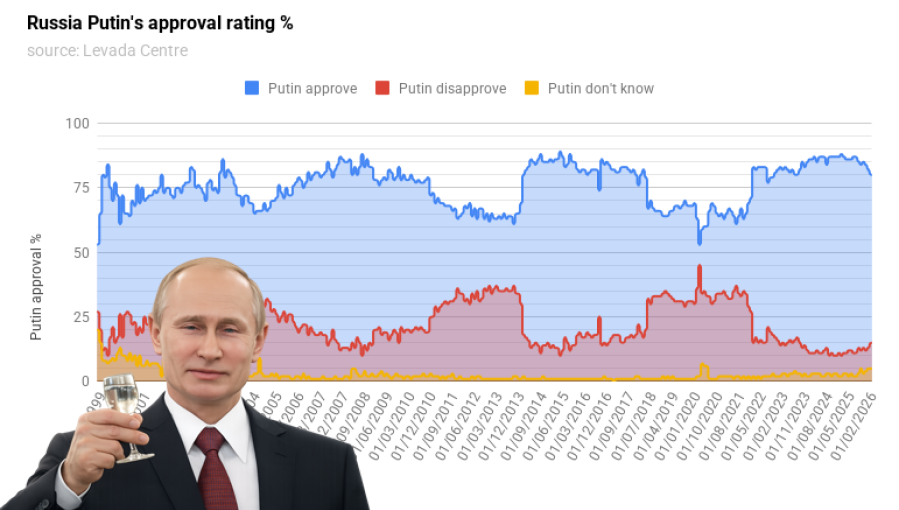
Disapproval of Putin and the Russian government has been rising slowly since the start of this year. However, an anticipated oil revenue windfall from the Iran war is likely to improve Putin's ratings as the year wears on. / bne IntelliNewsFacebook
By bne IntelliNews March 29, 2026

Trust in Russian President Vladimir Putin has fallen to its lowest level since before the full-scale invasion of Ukraine, as economic pressures and prolonged war fatigue weigh on public sentiment, according to new VTsIOM survey reported by Bloomberg on March 27.

Putin’s popularity has also dipped in the last  Levada Centre poll to 82%, down from a Ukraine war high of 85%-88% where it hovered for most of 2025.

The polls highlight the swings in the progress in the war. 2025 was a good year for the Armed Forces of Russia (AFR), which made considerable progress on the battlefield and retook the captured territory in the Kursk region. However, a slowdown in Russia’s advances, and a limited reversal in the last month, was matched by increasing budget pressures that mean the effects of the war are finally starting to feed through and affect the general population, leading to a weaking of sentiment since the start of this year.

The share of respondents in the VTsIOM poll saying they trust Putin declined to 75%, down from 76.7%, based on figures from state-run pollster VTsIOM. Approval of his job performance slipped to 70.1%, a fall of 1.9 points from the previous week. Both indicators mark their weakest levels since February 20, 2022, just days before Russia launched its invasion.

Negative sentiment has also edged higher. Around 20.1% of respondents said they explicitly distrust Putin, while 18.3% disapprove of his performance — the highest levels recorded since the conflict began.

The findings, based on surveys conducted between March 19 and 22, signal a gradual shift in public attitudes as the war enters its fifth year and economic conditions tighten. A separate poll by the independent Levada Center, published on March 3, found that 67% of respondents favour moving towards peace negotiations.

“Public fatigue is the reason for the ratings stagnation,” said Andrei Kolesnikov, a Moscow-based political analyst. “At the practical level, everyone is simply surviving,” he said, adding that widespread internet outages have added to the discontent.

The Kremlin has sought to contain a widening budget deficit driven by sustained military spending, including raising value-added tax at the start of the year. The move has compounded pressure on households and businesses already facing high borrowing costs introduced to curb inflation, contributing to a slowdown in economic activity.

Efforts to reach a diplomatic settlement have made little progress. US-brokered talks aimed at ending the conflict have stalled, while fighting along much of the front line has settled into a pattern dominated by drone warfare, limiting the ability of conventional forces to secure territorial gains.

While President Vladimir Putin’s approval rating has remained comparatively resilient, the broader set of indicators points to a parallel, if more gradual, softening in public sentiment toward state institutions and the country’s overall direction.

Across government, the prime minister, the State Duma and regional governors, approval levels generally held steady or peaked in the first half of 2025 before trending downward into early 2026, accompanied by rising disapproval and, in some cases, growing uncertainty, as the Russian advances on the Ukrainian battlefield slowed down and reserved to some extent in March.

At the same time, growing budget deficit pressure has led to cuts that have also pressed sentiment. However, the Kremlin might be in for some luck thanks to the Iran war.

The Ministry of Finance (MinFin) is abandoning plans for a sharp downgrade to its 2026 growth forecast and 10% of cuts to spending this year, due to an expectation of boosted oil revenue thanks to energy market instability.

As military spending remains sacrosanct, most of the spending cuts have come from the social sphere and military spending has already overtaken social spending for the first time since the war started four years ago. This year MinFin was intending to cut social spending further but those cuts are likely to be suspended. Russian President Vladimir Putin has been careful to shelter the population from the effects of the war but now will probably have the opportunity to direct a little more spending to the social sphere and improve the government’s ratings as a result.

The economy shrank by an estimated 2.6% in the first quarter, according to preliminary estimates, but now is expected to put in at least 1.3% of growth in 2026, according to MinFin estimates. That marks a sharp reversal in sentiment from just a month ago, when the government was weighing a downgrade to about 0.7% to 1% in its growth forecast.

An increase in Russia’s average Urals price to $75–$80 per barrel or higher this year from the baseline assumption of $59 in the budget, would bring an additional RUB3–4 trillion ($37-$49 billion) in oil and gas revenue – almost enough to completely cover the projected budget deficit for this year -- helping reduce the forecast deficit to 1% of GDP, less than the 3-4% of GDP economist were expecting only three weeks ago.

Russia is going in the “right” direction

According to Levada, the share of respondents saying Russia is moving in the “right direction” remained dominant over the last year, but showed a gradual downward trend. It rose from 71% on January 1, 2025 to a peak of 74% in March, before fluctuating around the high 60s during the summer months. Over the same period, those saying the country was on the “wrong direction” held relatively steady at around 16–18%, while the proportion of undecided respondents remained elevated in the low-to-mid teens.

From the autumn onwards, sentiment became more negative. The share viewing the country as moving in the right direction declined from 70% in September to 61% by March 1, 2026, while those saying it was on the wrong path rose to 26%. The proportion of respondents unsure remained broadly stable at around 13–15%, indicating that the shift was driven primarily by a movement from positive to negative assessments rather than increasing uncertainty.

Government approval remains strong

Government approval remained relatively strong through the first half of the period, rising from 71% on January 1, 2025 to a peak of 76% on May 1 before fluctuating in the mid-70s over the summer months. Disapproval tracked in the low 20s during this phase, indicating a stable margin of net support, while the share of respondents unsure remained consistently low at around 4–5%.

From the autumn onwards, however, the data shows a gradual erosion in support. Approval fell from 74% on September 1 to 64% by March 1, 2026, while disapproval increased from 21% to 29% over the same period. The proportion of undecided respondents also edged higher, reaching 8% at the end of the series, suggesting a modest but broad-based softening in public confidence.

PM Mishustin gradual decline in support

Approval ratings for Prime Minister Mikhail Mishustin remained consistently high through the first half of the period, holding in the mid-to-high 70s and peaking at 77% in March and May 2025. Disapproval stayed comparatively low, generally between 15% and 18%, while the share of respondents offering no answer hovered in the high single digits, indicating a stable and broadly favourable perception.

From late 2025 onwards, however, the figures show a gradual decline in support. Approval fell from 75% in September to 66% by March 2026, while disapproval rose to 21%. Notably, the proportion of respondents giving no answer increased into the low teens during this period, suggesting a growing degree of uncertainty or disengagement alongside the softening in overall approval.

Duma approval falling

Approval of the State Duma remained comparatively lower than that of the executive but broadly stable through the first half of the period, rising from 61% on January 1, 2025 to a peak of 66% in May before settling in the low 60s over the summer. Disapproval stayed close to 29–31% during this phase, while the share of undecided respondents remained limited, generally between 5% and 7%.

From the autumn onwards, the data indicates a steady deterioration in sentiment. Approval declined from 62% in September to 53% by March 1, 2026, while disapproval rose to 37%. The proportion of respondents unsure also increased to around 9–10%, pointing to a gradual weakening of confidence in the legislature alongside a rise in more critical views.

Regional governors still more popular than government

Approval of regional governors remained relatively steady in the low-to-mid 70s for much of 2025, beginning at 71% on January 1 and peaking at 75% in June. Disapproval was consistently contained in the low 20s during this period, while the proportion of respondents unsure fluctuated modestly, generally remaining below 6% aside from a brief rise in April.

In the later months, the data shows a gradual softening in support. Approval declined from 73% in September to 66% by March 1, 2026, while disapproval edged up to 25%. The share of respondents who did not express a view also increased to 9%, indicating a slight rise in uncertainty alongside the broader downward trend in approval.

White House is an 'asylum' — and Trump is 'deranged': DC insider


March 29, 2026
ALTERNET


President Donald Trump is “crashing out” in the polls, as well as in his willingness to accept their verdict, according to a former Republican strategist who advised President George W. Bush.

“Donald Trump's approval rating is crashing out,” Steve Schmidt posted on the social media platform X on Sunday morning. The post included a video in which Schmidt analyzed news reports showing Trump’s popularity plummeting in the polls.

“Everybody sees all of this,” Schmidt said. “Clearly, support for Donald Trump is hitting as low as 30% in some polls, and in this one at 36% approval, 62% of the country not approving. And yet Trump thinks he's more popular than ever.”

Schmidt then included a quote from Trump saying that he has 100 percent approval rating, a number based on self-identified “MAGA Republican” who by definition are already Trump supporters.

"I think I'm more popular than I ever have been,” Trump said. “Look, when he heard 100%, he said, 'I've never seen a poll like this. This is the craziest poll I've ever seen.' It was 100% of the people. And the reason is they like that I'm protecting our country from lunatics with a nuclear weapon."

Despite advising Republicans like Bush and the late Sen. John McCain (R-Ariz.), Schmidt frequently denounces Trump, such as when he described the president’s unprovoked invasion of Iran as “madness” earlier in March.

“My friends, it is all madness,” Schmidt said at the time. “The White House is an asylum. The president is deranged. He is a predator and criminal, and he is immoral, abusive and dishonest. He is a liar and charter member of the Epstein class.”

Also earlier in March, Schmidt described Trump as “despised” before the world because of a number of crises arising from his policies including rising gas prices, humanitarian atrocities at home and the Iran war. He further predicted that gas prices “are going to go much higher. The first dead Americans have started to come home, but the story of American casualties is just beginning as the 82nd Airborne and US Marine expeditionary units prepare for an assault on Iranian territory.”

Schmidt concluded at the time, “Prices are rising, airports have gone off the rails, gas is sky high, and America is losing a war to Iran because it was planned by fools. Everywhere there is disaster, and it has not gone unnoticed by the American people.”

On another occasion discussing the Iran war, Schmidt speculated that Trump no longer felt obligated to strive for peace because he knows he will never win the Nobel Peace Prize.

“He wanted the Peace Prize, and when he couldn’t get it, Trump lost his mind,” Schmidt said, then quoting a letter Trump wrote the Norwegian Prime Minister at the time complaining that he had been denied the prize.

“Considering your Country decided not to give me the Nobel Peace Prize for having stopped 8 Wars PLUS, I no longer feel an obligation to think purely of Peace, although it will always be predominant, but can now think about what is good and proper for the United States of America,” Trump told Norwegian Prime Minister Jonas Gahr Støre. “I’m no longer interested in it [the Peace Prize]."

When speaking to this journalist for Salon Magazine shortly before the 2020 presidential election, psychiatrist Dr. Bandy X. Lee had an observation about Trump’s inability to accept rejection — whether of his impending loss or of declining approval ratings — because of narcissistic tendencies.

“Those with pathological narcissism are abusive and dangerous because of their catastrophic neediness,” Lee told Salon at the time. “Think of a drowning person gasping for air: a survival instinct just may push you down in order to save one’s own life. In the manner that the body needs oxygen, the soul needs love, and self-love is what a toxic narcissist is desperately lacking. This is why he must overcompensate, creating for himself a self-image where he is the best at everything, never wrong, better than all the experts, and a ‘stable genius.'”
THE GHOST OF CARL SCHMIDT
Trump just launched a breathtaking attack on the Constitution: legal experts


March 29, 2026 
ALTERNET

President Donald Trump’s proposed law to “crack down on rogue judges” and his rhetoric toward judges who rule against him — such as calling them “criminals” and “a disgrace to our nation” — is a “breathtaking” danger to the Constitution, according to an expert.

“Demanding that the legislative branch enact laws that punish the judiciary is a breathtaking breach of the president’s oath to support and defend the Constitution, which creates our three separate — and coequal — branches of government,” lawyer and former US attorney Barbara McQuade wrote in a recent editorial for Bloomberg. “Trump’s recent attacks came after the Supreme Court struck down his tariffs, which he has used to wield economic power against foreign governments, last month. By a 6-3 majority, the Court held that the International Emergency Economic Powers Act did not authorize the president to impose tariffs, a power otherwise reserved for Congress. Among the justices joining the majority were two of Trump’s own appointees, Neil Gorsuch and Amy Coney Barrett.”

Trump, who said Gorsuch and Barrett “sicken” him because they dissented, is doing something “different” with his attempts to cower judges, McQuade wrote.

“His proposed legislation would target the judges themselves for punishment,” McQuade said. “It seems likely that Trump knows he will not get his wish. Even a Congress that has been largely submissive during his second administration would surely not go so far as to retaliate against judges based on their case decisions, a move that would wreak havoc on the separation of powers. But the president’s public statements nonetheless risk the independence of the judiciary, an essential pillar of democracy. By attacking judges and justices who rule against him, Trump is sending a message to the others: Rule my way or else you’ll be next.”

McQuade is not alone in criticizing Trump’s attacks on the judiciary. Earlier this month The New York Times reported that judges themselves are “quietly” saying that it is concerning how much “risk” is involved in speaking out against the president.


"Judges are turning up the volume" in their rulings against Trump, eschewing the judiciary’s traditional “restrained” tone in favor of "an emotive, populist approach" which permits them to give "full vent to the intensity of their concerns about cases flooding their dockets since President Trump returned to office."

The Times added, "One compared her district’s ballooning caseload to a demigod’s battle against a mythological monster. Another sought to buttress his argument against National Guard deployments to U.S. cities with a YouTube link to a 1970 protest song. A third compared the Trump administration’s rewriting of American history to the Ministry of Truth in George Orwell’s novel '1984.'"

Trump’s intimidation of the judiciary extends to the jurists he has appointed in his second term, many of whom have been required to avoid telling the truth about Trump losing the 2020 presidential election while under oath.

Senate Judiciary member Richard Blumenthal (D-CT) typically ended each hearing for a judgeship with the question, “Who won the popular vote in 2020?”

He always received variations on the same reply, namely that “President Biden was certified and served four years as president.” By using the word “certified,” they curry favor with the president who nominated them by refusing to flat-out say that Trump lost.

“There is a special peril when federal judges, who serve for life if confirmed, agree to demean themselves in this fashion,” legal analyst Jeffrey Toobin said at the time.


Trump’s White House ballroom is turning into a disaster: report

"This jack—— in the f—— White House is destroying a permanent structure that can't come back," 


Official White House Photo by Joyce N. Boghosian


March 29, 2026
 ALTERNET

President Donald Trump’s White House ballroom was controversial from the moment it was announced, given that the president ignored the legal process for making historic building renovations and just destroyed the historic East Wing without permission. Yet a new report from The New York Times revealed that the ballroom is also being built ineptly.

“The hurried reviews, with construction cranes already swiveling above the White House grounds, are an abrupt departure from how new monuments, museums and even modest renovations have been designed and refined in the capital for decades,” wrote Emily Badger, Junho Lee and Larry Buchanan of The Times. In addition to ignoring the proper legal process, the reporters noted that there are many seemingly serious structural problems emerging in the building because its construction has been so rushed.

“In the sprint to complete it before the end of his term, the addition appears to have compressed the normal design evolution for any project,” the Times wrote. “As recently as October, the president was still increasing the ballroom’s capacity, the kind of decision needed at the concept stage. And the White House has said it plans to begin building in the spring, a timeline that would mean construction documents would have to be prepared even as the design was still under review.”


The Times added, “Before a judge demanded in December that the project seek review by these two commissions, the administration appeared poised to skip them entirely.”

“The timeline never made any sense to me,” Thomas Gallas, a former member of the planning commission, told The Times. He added that buildings on this scale usually take engineers 18 months to two years from original conception to the completion of construction documents.

When Trump first announced that he was destroying the East Wing to build a ballroom, the White House received over 9,000 pages of public comments — and “there were barely any supportive missives.” The comments included observations like "complete DISASTER,” "NO GAUDY FAKE GOLD STUFF ALL OVER THE PLACE,” “no one wants to be in an adjunct building in a large crowd with lengthened security protocols,” an “eyesore,” an “abomination” and “appalling.” One D.C. preservationist, Alison Hoagland, argued that “constructing a ballroom is possible, but it should be deferential to the White House, not overwhelming." Even a Republican congressman, Rep. Michael Turner of Ohio, spoke out in protest.

"The stark images of the East Wing demolished in mere days were deeply disturbing to Americans who cherish preservation of our nation's history," Turner wrote. Similarly a former Republican congressman, Rep. Joe Walsh of Illinois, referred to Trump as a “jackass” for doing this.

"This jack—— in the f—— White House is destroying a permanent structure that can't come back," Walsh said. "He can't do this on his own! There's a rigorous, rigorous process to mess with the restructuring, structural changes of the White House, and he just blows right through all of that!"

When asked about Trump’s changes to the White House, a spokesperson defended the president in unctuous terms.

"Thanks to the Builder-in-Chief, the White House will be properly glorified and remain in excellent condition for generations to come," White House spokesperson Davis Ingle told PEOPLE in a statement.