Sunday, April 19, 2026

Attacked & Kidnapped at Sea, Ecuador Fishermen Allege US Role


Peoples Dispatch 


Several fishermen told the newspaper Primicias that they had been attacked, kidnapped, and taken to El Salvador by US ships. The families of several missing fishermen fear that this may have been the fate of their loved ones.


Some of the Ecuadorian fishermen that were aboard the 'Don Maca' boat that was attacked at sea last month.

An Ecuadorian fisherman made a shocking allegation in a recent report published by the newspaper Primicias. Erick Fabricio Coello Saltos claimed that he and 19 other fishermen were attacked on the high seas by drones and then kidnapped by a US vessel.

According to his testimony, they were hooded, held in a sort of container, and transported for over a week to El Salvador. There, the Ecuadorian fishermen were handed over to local authorities who, after medical evaluations, kept them in a reception center until their deportation to Manta (costing their families nearly USD 400).

Upon his return to Ecuador, 27-year-old Coello reported that he lost nearly 90% of his vision, and that his eardrums suffered significant damage from the powerful explosion that rocked the “Don Maca”. His left eardrum is perforated, and his right one is permanently ruined. In addition, the fisherman says he suffers from nightmares and has filed a series of petitions to obtain funds to treat his physical and psychological ailments.

“What we went through was very hard; I’m left with that trauma. Sometimes I get scared at night; it comes back to my mind. I’m giving up this life as a fisherman for good. I would never go fishing again … I was the person most affected on the boat, because it all happened while I was hanging my clothes up in the cabin and couldn’t get down,” Coello told the newspaper Primicias.

According to him, he needs 7,000 USD for eye surgery and another 4,500 USD for a procedure on his eardrums, in addition to the nearly 60 USD a day he spends on doctor’s visits. Several raffles and bingo games have been organized in Manta to raise funds; however, Coello has requested assistance from the authorities and has yet to receive a response.

Chronicle of an attack

Coello states that the attack took place on the high seas. The fishermen set out from the Port of Manta, located in the province of Manabí, on March 17, aboard the “Don Maca” along with six trawlers, which are used by fishermen on the high seas to catch fish and then load the catch onto the mother ship.

One night, after several days at sea, they spotted a vessel unfamiliar to the fishermen’s daily operations approaching the “Don Maca” that, according to Coello, resembled a tuna boat. Shortly after, they observed a drone approaching their vessel and then flying away. Coello says that he recorded a video of the drone and sent it to his father.

Two days later, the attack occurred: “Suddenly there was an explosion, and then another; I was covered in blood.” After that, the Ecuadorian fisherman, the father of a 4-year-old autistic boy, recounts that some fishermen took a small boat and approached the strange vessel. There, they were asked how many of them there were, how many were injured, and to bring all the fishermen to their boat. The fishermen obeyed.

There, the fishermen claim they were hooded, handcuffed, and locked up until they arrived in El Salvador. According to Coello, the alleged captors told Salvadoran authorities that their encounter was accidental, but he says that’s a lie: “The gringos told them they’d found us in the water, lying there, adrift, shipwrecked. But that’s not how it happened.”

Other vessels attacked and missing

The “Don Maca” incident does not appear to be the only case of attacks on Ecuadorian vessels on the high seas. Several days ago, the missing crew members of the vessel “Negra Francisca Duarte II” were located in El Salvador and reported something very similar to what the fishermen of the “Don Maca” had described happened to them: drones flying overhead, explosions on deck, the crew being detained, and their transfer to El Salvador.

“We were returning from fishing; we weren’t armed. Suddenly, we saw a drone approach and explode in the wheelhouse. Then I looked toward the back; the fire was already spreading … In two boats, we approached a US vessel, and they handcuffed us and treated us like prisoners. We were afraid they were going to kill us,” Hernán Flores, captain of the “Negra Francisca Duarte II”, told Primicias.

These recent accounts have led the families of the missing fishermen who set out to work aboard the “Fiorella” to fear that they have met the same fate. The eight fishermen from Jaramijó and Manta have been missing since January 20, 2026.

“Two crew members returned (in a small boat) because they were fishing on their own, but before the (mother) ship disappeared, they saw a drone circling them, yet they continued fishing; after that, they spotted smoke to the north,” stated Juan Alvia Cevallos, the lawyer for the families of the missing.  

The mother of one of the missing fishermen, María Cueva, said: “The two survivors say they saw the drone and a patrol boat. We are certain that they (the United States) took them, just as they have done with the other boats. I want my son to come home.”

The Ecuadorian government’s “strange” response

For its part, the Ecuadorian government, led by right-wing Daniel Noboa, a staunch ally of the Trump administration, has decided to maintain a prudent silence. When Ecuador’s foreign minister, Gabriela Sommerfeld, was asked about possible US attacks on Ecuadorian fishermen, the head of Ecuadorian diplomacy dodged the question: “I couldn’t tell you for certain what activities the fishermen were engaged in, or the situations they find themselves in … The relevant authorities, particularly those responsible for security, will be able to say what kind of activities they were carrying out.”

The fishermen and their families have categorically rejected the accusation that the Ecuadorians that were attacked and captured on the high seas were drug traffickers: “They are just fishermen, not drug traffickers, thieves, or murderers – that’s no reason for them to have been taken,” states María Mero, a relative of the fishermen from the “Fiorella.”

Attorney Jorge Chiriboga agrees: “They have had to endure violence on the high seas despite having nothing to do with illegal activities; they are unarmed, were returning from a fishing trip, and were attacked by a foreign nation.”

In addition, Chiriboga told Primicias that he will file a legal complaint and bring the matter before the National Assembly to investigate the facts, and he demanded that Ecuadorian authorities ensure respect for Ecuadorians attacked by other countries: “This is an act of terror against Ecuadorian fishermen in the exclusive economic zone of the Ecuadorian state; therefore, it is Ecuador, the State, and the Government that must safeguard the interests of Ecuadorian citizens.”

For now, the fear of an attack has led many fishermen to decide to not go out to sea and thus to forgo one of the few sources of income available to residents of Ecuador’s coastal areas. Added to this are the constant threats from extortionists and pirate ships that prey on fishermen, which have created an atmosphere of terror, uncertainty, and the risk of losing income vital to their survival.

“This will also hurt the city’s economy and make it harder to hire people to go out to sea, because their families are afraid they won’t come back,” Chiriboga said.  

Quito and Washington: an unquestionable military alliance

The Noboa administration is part of the Shield of the Americas, a hemispheric military alliance between several right-wing governments in Latin America and Washington, under which US forces would lead counterterrorism activities throughout the Americas.

Thus, Quito and Washington announced the start of coordinated military operations on Ecuadorian territory. In one such operation, both US and Ecuadorian forces released videos showing the bombing of a building allegedly used by drug traffickers, although several human rights groups, local residents, and The New York Times have claimed it was a dairy farm. Following the bombing, residents of the area reported being beaten and electrocuted by Ecuadorian forces.

Courtesy: Peoples Dispatch


US Mining Plan Will Sacrifice Mexico’s Environment for Weapons and Tech

A new mining agreement provides no benefits for Mexico and fails to address health and environmental impacts.
PublishedApril 18, 2026

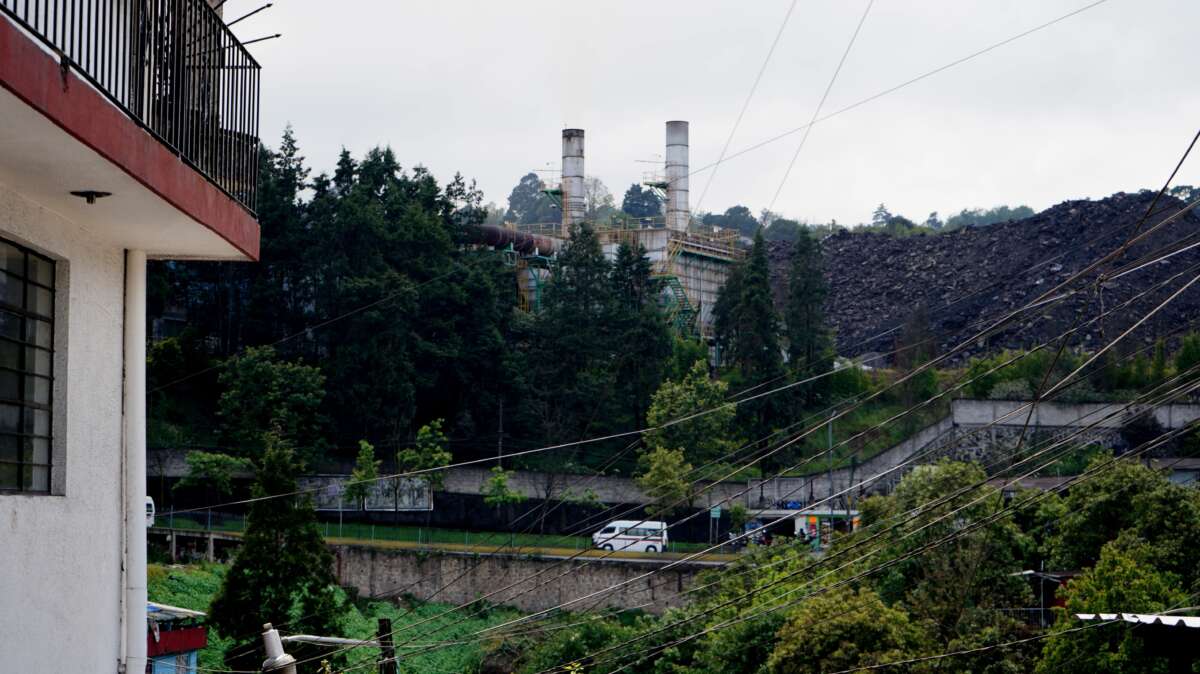
The Autlán plant in Teziutlan, in the Sierra Norte, Puebla.Tamara Pearson


The U.S. and Mexico have established a mining agreement which has Indigenous and other residents of the Sierra Norte mountains, as well as activists around Mexico, worried.

Announced on February 4, the U.S.-Mexico Action Plan on Critical Minerals aims to guarantee the U.S.’s supply of minerals for its arms industry, technology like data centers and smartphones, and the so-called energy transition. It sets out price floors, identification of mining projects, geological mapping coordination, and mineral location identification for the U.S., but provides no benefits for Mexico and fails to address health and environmental impacts.

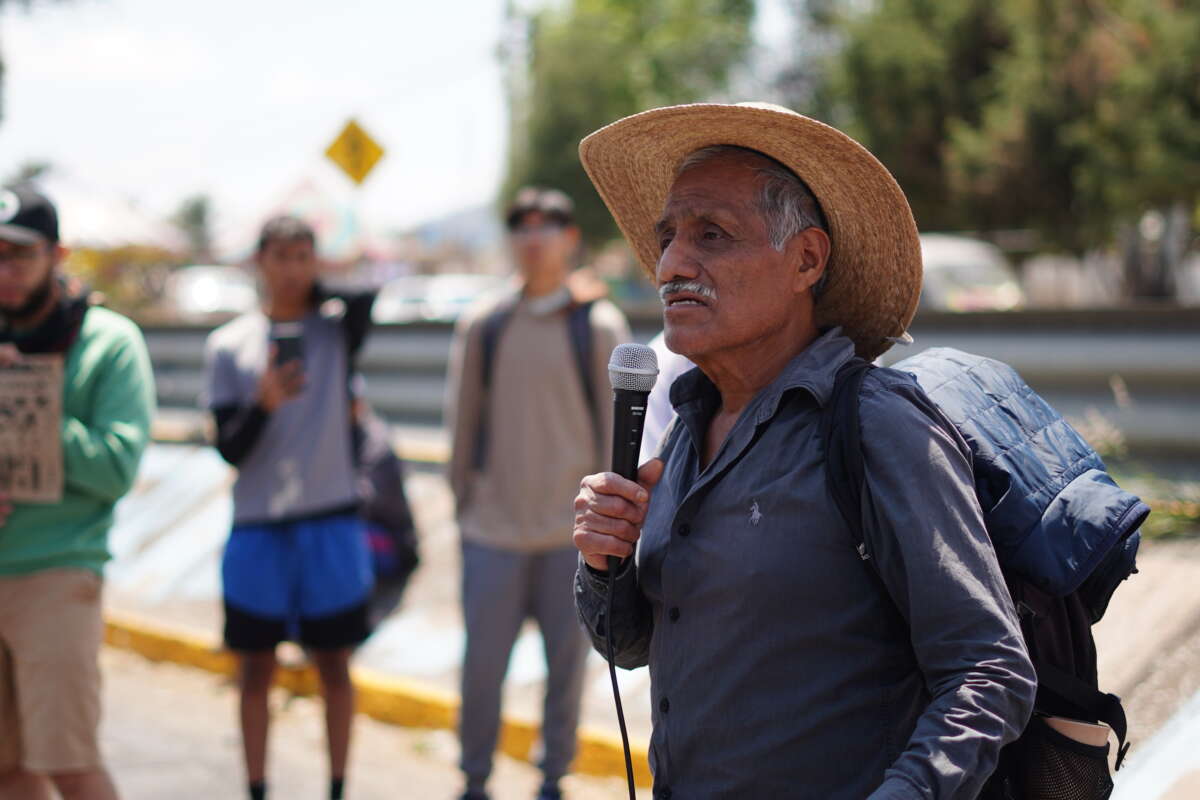
“They want us to show these gringo companies where the minerals are and then go and hand over everything, all without a fuss,” said Miguel Sánchez Olvera, a Totonac man from the Sierra Norte region who has been at the forefront of struggles that have expelled mines from the area. “That’s concerning, because where does it leave us, as Mexicans? Basically, they are going to keep stealing from us.”

Miguel Sánchez Olvera, a Totonac man and environment activist from the Sierra Norte, Puebla, speaking at a protest on March 22, 2026.Tamara Pearson

The beautiful Sierra Norte — teeming with rivers and sprawling forests, and where a majority of people speak Indigenous languages — has massive amounts of minerals that the U.S. has identified as “critical,” such as manganese, gold, silver, and copper.

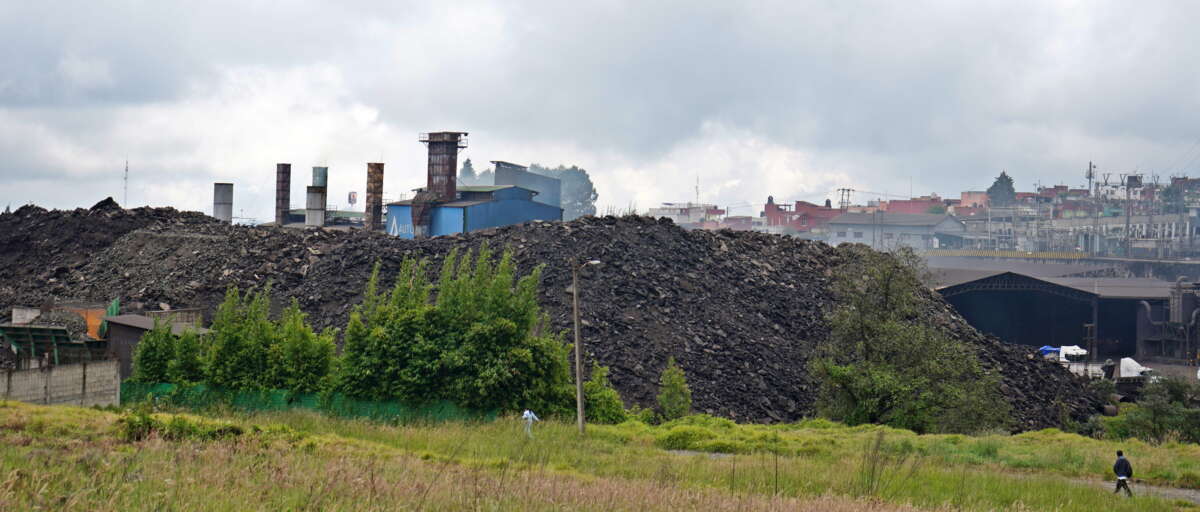
According to NATO, manganese is one of 12 minerals critical for the weapons industry; it is used in submarines, fighter aircraft, tanks, and torpedoes. For Mexico, however, manganese is a source of distress before it is even processed. In the lush Sierra Norte cordillera, stark black mountains of manganese ore and slag piles are set off by smoking chimneys from a plant run by Autlán, a major Mexican mining company. Homes nearby are drenched in black stains. Residents describe mornings of black clouds along the ground and black dust covering their windows.


Sand Mining Is a Booming Industry — This Mexican Community Is Paying the Price
Fifty-six residents of an Indigenous Oaxaca community face 200 trumped-up charges for resisting mining in their rivers. By Tamara Pearson , Truthout July 9, 2025


Autlán operates four electric furnaces in its Teziutlán plant to smelt manganese ore, producing ferroalloys. Manganese is also on the U.S.’s critical minerals list and aside from weapons, it is vital to batteries and other steel applications.
Homes in Teziutlan, right near the Autlán plant, are drenched in black soot from the plant.Tamara Pearson

Mexico as a whole is the top silver-producing country, and among the top producers of copper, lead, and zinc — all on the U.S.’s list. Silver is vital for new weapon systems, hypersonic missiles, bombs, fighter jets, satellites, torpedoes, radar systems, AI data centers, electric vehicles, 5G infrastructure, and smartphones. Demand for copper for munitions is skyrocketing as the U.S. restocks its arsenal, and it is essential for armor and electronics. Copper supply problems can cause significant weapon production delays, and supply chain vulnerabilities for weapons manufacturers.

The U.S. is home to 6 of the top 10 global arms companies and 13 of the top 15 global tech companies. The White House’s 2027 budget includes over 18 billion U.S dollars for the Department of Defense to stockpile minerals that are critical to the military industry. That figure is up from the current 2 billion U.S. dollars.

A few days before the U.S.-Mexico plan was signed, the White House had also announced Project Vault, which will establish a public-private partnership to stockpile critical minerals for U.S. businesses. These moves “imply hyper-extractivism — or basically, renewed extractivism,” César Enrique Pineda, a researcher and professor of geopolitical and capitalist intersections with the environment at the José María Luis Mora Research Institute, told Truthout.

An Open-Pit Mine for the U.S.


Autlán is the largest manganese producer in Central and North America. Like other mining companies in Mexico, it exports much of what it produces, including to the U.S. In late March, the environmental protection agency Profepa temporarily shut down one of its furnaces in the Teziutlan plant after finding that it was operating without an emissions filter. Locals told Truthout they had complained about the resulting harsh black clouds for more than six months, but Autlán did nothing.

The Autlán plant in the Sierra Norte is located right in the center of the town of Teziutlan.Tamara Pearson

Autlán continues to accumulate massive mountains of slag rock, a byproduct of metal smelting, in open air. Exposed slag can release small particulates that can lead to respiratory or skin problems. Too much manganese in the body can affect the nervous system, and another potential component, hexavalent chromium, can cause cancer. Leachates — toxic liquid runoffs — spill onto nearby land and eventually into the water system.

Before the fourth furnace was shut down, Gisela Macias Dionisio, a local water activist with Servicios Ambientales Amelatzin Hualactoc, told Truthout, “the dust was like snow. You couldn’t even sweep it up. They tell us babies are being born with gestational cancer.”

“Nobody speaks up, nobody says anything out of fear. A doctor told me that 50 percent of his patients have cancer,” said another woman who lives just behind the mine but who requested anonymity out of fear. “My house is covered in black dust, even the dishes have black dust on them, the trees are covered in it too. Our fruit used to be nice and big and now it’s small and rots quickly. The sound (from the plant) never stops.”

Pollution Doesn’t Squash Mining Companies’ Excitement

Nevertheless, the Mexican government is already promoting the critical minerals action plan as an investment opportunity, and companies here are using the plan to demand relaxation of regulations. The mining industry chamber, Camimex, said it sees the U.S.’s focus on securing strategic minerals as a moment to push for mining interests after the reforming of the 2023 mining law, which was a result of years of movement struggle.

The law was “a historic achievement,” said Beatriz Olivera Villa, an industrial engineer and a founder of Cambiémosla Ya — a coalition of communities and organizations campaigning around the mining law. The reformed law made environmental assessments and informed consent from affected communities obligatory, “and now they aren’t handing out concessions, at least not like they used to,” she said.

Now, with the critical minerals action plan, “we’re worried, because the economy secretary [of Mexico] has been speaking with the mining companies … and they are talking about modernizing the mining law to recover the privileges they lost,” Olivera said. “With the demand for critical minerals … it seems like they would increase extraction at any cost.”

“Trump’s administration doesn’t just represent extractive capital, but also an authoritarian approach that disregards any kind of regulation. Therefore, we should expect significant pressure to ensure, at any cost and regardless of our laws, that the mining industry’s needs are met with this plan,” Pineda said.


Nobody Benefits From Weapons Except Weapons Companies


But while the mining industry is being heard, the mines bring no economic benefits to the country or to nearby communities.

“I very much doubt that Mexico would benefit economically from this plan because it has never been that way with mining projects. Extraction only contributes 0.9 percent to the GDP, for example,” said Olivera. “Mining represents just 0.66 percent of formal employment, and in terms of taxes, they contribute very little.” There are 22,247 active mining concessions in Mexico, with a total surface area of 10.2 million hectares, or 5.2 percent of Mexico’s territory

.
The Autlán plant is located right in the center of the town of Teziutlan and within the lush Sierra Norte mountains.Tamara Pearson

“Towns like Guadalupe y Calvo in Chihuahua (state) are among the top producers of gold and silver, but it is one of the poorest towns in Mexico,” Olivera said. In Fresnillo, another top global silver producer, 40 percent of the population lives in poverty, and in Eduardo Neri, a key gold producer, 65 percent do. Across Mexico, mining regions have very high poverty rates, “and a lack of access to services like water or electricity,” she added.


“There is a militarization of these resources. The U.S. is considering securing minerals for war as part of its national security strategy.”

Meanwhile, arms producers are breaking revenue records, with 679 billion U.S. dollars in 2024. Increased production requires more minerals. “There is a militarization of these resources. The U.S. is considering securing minerals for war as part of its national security strategy,” said Olivera.

And as minerals flow from Global South countries like Mexico to the Global North for manufacturing and sales, so do the profits. Mining took off “in an intense way” after the signing of the North American Free Trade Agreement in 1994, which served U.S. and Canadian markets, Olivera says, calling it a “legalized plundering.” In 2024, Mexico exported 42.3 billion U.S. dollars in minerals, making it the 24th-largest exporter. Its main destinations were the U.S. ($17.7 billion), China ($6.31 billion), and Spain ($4.58 billion). Mexico exports 70 to 80 percent of its copper production.


Mining’s Legacy of Environmental Disaster


The U.S.-Mexico action plan “benefits investors, but it doesn’t benefit us at all,” said Urbano Córdova Guerraas, a local resident and also a member of Servicios Ambientales Amelatzin Hualactoc as we chatted in a small eatery near the Autlán plant. To extract copious amounts of manganese, Autlán has destroyed whole mountain tops in nearby Hidalgo state, buying off local politicians in order to do so. In Zoquitlán, Autlán chopped down 77 hectares of forest for a hydroelectric plant.

Communities in the Sierra Norte have successfully resisted various hydroelectric, fracking, and mining projects in their region. In 2022, they managed to cancel mining concessions in Ixtacamaxtitlán, Cuetzalan, Tlatlauquitepec, and Yaonáhuac, including for the Canadian gold-mining company, Almaden Minerals. Sánchez, a member of the land movement Makxtum Kalaw Chuchutsipi (Everyone United as a People), along with various movements in the region, including Masuel Indigenous communities, shut down three of Autlán’s gold, silver, and copper concessions last year.

“Our territory isn’t a resource. It’s our body, our memory, our spirituality,” the Maseual Altepetajpianij Council wrote to the court at the end of their 11-year battle. The council, made up of 35 Indigenous and small-farmer communities in the Sierra Norte, defends the region against mines.

“(Autlán) had just finished the exploration stage and was about to start exploiting, but with the strength of women and men here, they left the Sierra very pissed off because they had bought 1,000 hectares of land,” said Sánchez.

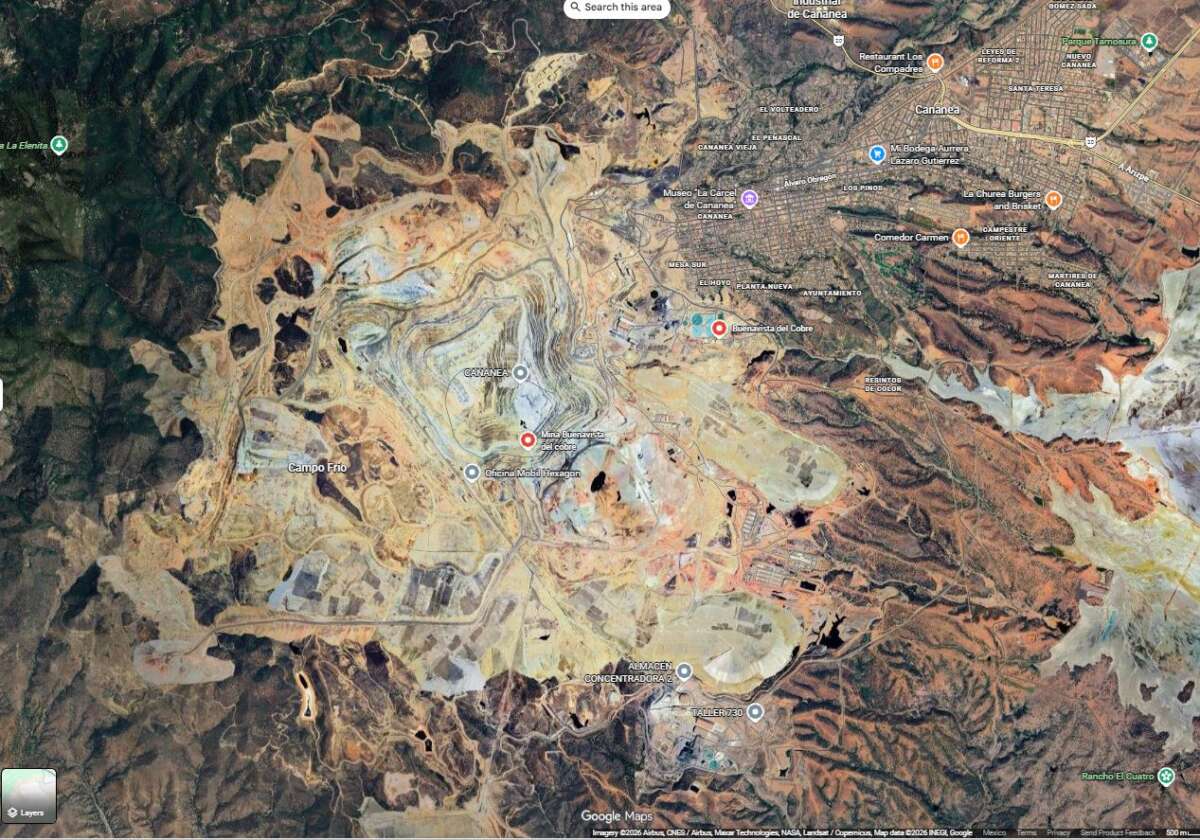
Meanwhile, in the north of the country, the U.S. consul general in Mexico, Michelle Ward, visited the country’s Buenavista copper mine on March 25, stressing that it is one of the top copper mines globally. She said that with the joint action plan, the U.S. government wants to strengthen its presence in the region. Ward omitted that the mine was the site of Mexico’s worst environmental disaster, when in 2014, a leaching pool collapsed, spilling 40,000 cubic meters of copper sulfate into the Sonora River, eventually reaching wells that supplied the city of Hermosillo

.
A Google Maps screenshot shows an aerial view of the Buenavista copper mine in Sonora, taken on March 27, 2026. At 93,706 hectares in size, it is almost as big as New York City, and has carved out a large chunk of the Sierra Madre Occidental mountain range.Google Maps / Tamara Pearson


Over a decade later, according to Olivera, members of the Sonora River Basin Committee say “their demands haven’t been met and the damage hasn’t been repaired, the skin problems are ongoing due to high levels of arsenic. They’re still finding arsenic in their urine and blood.” Even before the spill, authorities had found copper, arsenic, aluminum, cadmium, iron, manganese, and lead in the water supply.

Pineda lists off more negative impacts from mines in Mexico, including displacement of communities, water scarcity, contamination of tributaries and aquifers, heavy metal contamination, health harm, and toxic dust. “These are not things you can negotiate with the mining companies. You can’t negotiate if water is contaminated or not … so communities typically demand the closure of mines,” he said.

To mine just one ounce of gold, 40 kilograms of explosives and 200,000 liters of water are used, and 650 kilograms of carbon dioxide are emitted.


Imposing Destruction


In order to operate without disruption, mining companies in Mexico are often involved in the disappearance of activists and with organized crime. The top minerals that attract organized crime groups are the same critical minerals that Mexico plans to supply to the U.S.

In 2022, Indigenous activists Ricardo Lagunes and Antonio Díaz, who had opposed a Ternium mine, were forcibly disappeared; they are still missing. The year before, anti-mining activist Higinio Trinidad De la Cruz and another activist were kidnapped by organized crime members and told to stop their activism, then released. Trinidad De la Cruz was killed the following year.

Autlán too has reportedly used violence, intimidation, death threats, buying people off, sowing community division, and attacking activists — including burning a bus that activists were in after a protest against one of Autlán’s hydroelectric plants — in order to get its way. In 2018, Sergio Rivera Hernández disappeared after opposing Autlán’s Coyolapa-Atzalan hydroelectric project.

There is a similar logic of control in the U.S. plans to funnel Mexico’s critical minerals its way. “With this plan, the U.S. government is taking advantage of Mexico’s deep economic dependency on it in order to impose a new instrument of subordination,” wrote the Mexican Network of those Affected by Mining in a statement.

“Mexico isn’t in a position to negotiate on equal terms,” said Pineda. “This plan doesn’t just mean communities losing control over their ecosystems, but that the whole country loses control over its ecosystems.”

Of course, Mexico isn’t alone. The U.S. has made an alarming deal with the Democratic Republic of the Congo, exchanging “security” support for access to its minerals, while threatening to cut off Zambia’s aid if it doesn’t increase the U.S.’s mineral access. A trade deal with Indonesia in March also paves the way for the U.S.’s access to minerals, with few environmental safeguards.

“The environmental impact stays in the (Global) South, and the raw materials head to the North … at a scale that is unsustainable,” said Pineda.

Over the years, thousands of organized communities have declared themselves “mining-free territory” to legally prohibit mining in their territory.

Stopping mines after the fact is much harder, but many communities are willing to wage the legal and organizational battle. Even after victory, the struggle continues.

“We want to clean our rivers, so that the Sierra Norte de Puebla can be a paradise again,” said Sánchez.


This article is licensed under Creative Commons (CC BY-NC-ND 4.0), and you are free to share and republish under the terms of the license.


Tamara Pearson is an Australian-Mexican journalist, editor, activist and literary fiction author. Her latest novel is, The Eyes of the Earth, and she writes the Global South newsletter, Excluded Headlines.

Europe is doing something Trump’s angry rhetoric didn’t account for: report


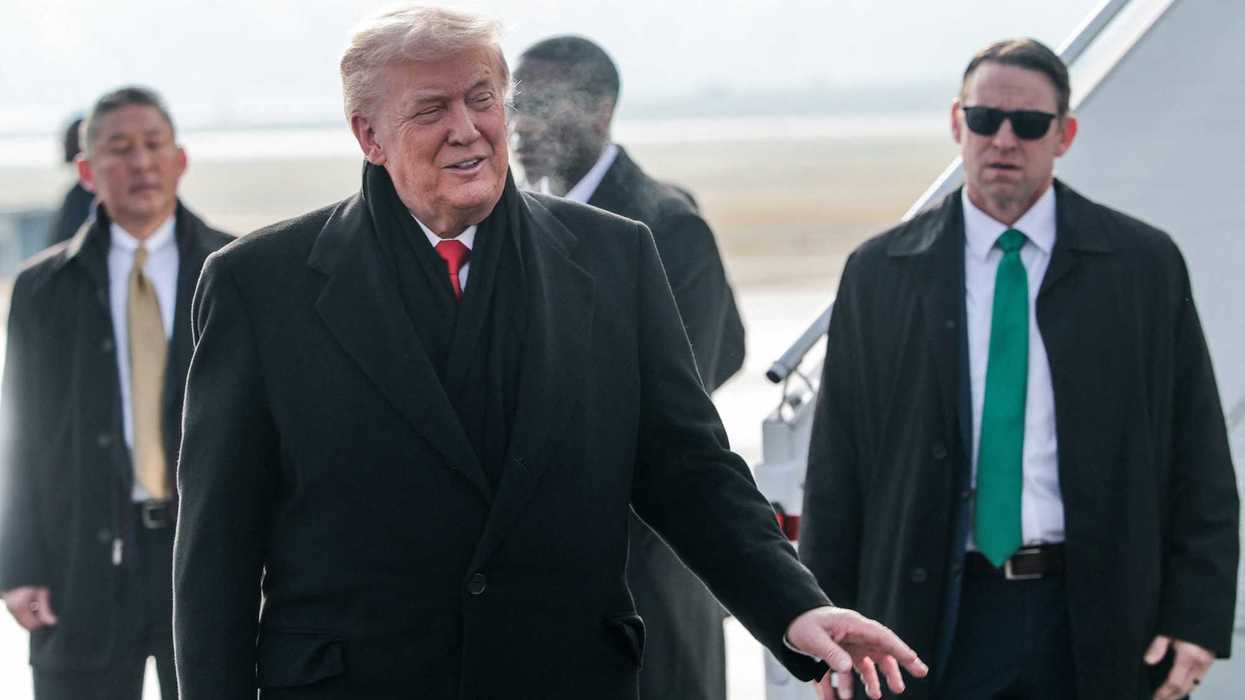
U.S. President Donald Trump at Zurich International Airport in Switzerland, January 21, 2026. REUTERS/Jonathan Ernst
April 19, 2026  
ALTERNET

President Donald Trump’s belligerent rhetoric toward America’s allies may please his domestic political base, but it is harming America’s international standing — perhaps permanently.

“Trump, for so many people, epitomizes the ugly American — somebody who is bumptious and vulgar and ignorant about foreign cultures,” former Time Magazine editor Rick Stengel said in a recent podcast appearance on The Bulwark with former Daily Beast editor-in-chief John Avlon. “So I think people sort of have come to the end of their patience with America.”


Avlon replied to Stengel by noting that polls found presidents like Bill Clinton and Barack Obama, who engaged in positive diplomatic relationships with other countries, were far more popular than the bellicose Trump. Indeed, Stengel noted that America’s foreign standing has “plummeted” during Trump’s two terms.

“It always seemed absurd to me when Trumpists would say that we need to be respected on the world stage, when you could see in the data that America was not respected — was held in worse regard when Trump was president, even than Chinese president-for-life Xi,” Avlon told Stengel. “So I wonder now with Iran, though — we seem to have crossed a Rubicon, because it was a war of choice, because our allies are not with us. And tell me about the downstream effect of that as you see it.”

Stengel added that, even though Joe Biden tried to reverse the damage to America’s reputation caused by Trump’s first term, America’s allies were not convinced that Biden would remain in power long enough to keep those policies in place. Trump’s reelection in 2024 confirmed their fears.


“This seesaw in presidential politics is something that people don't really understand,” Stengel told Avlon. “And then this Iran thing — by the way, what was probably most popular about Trump on the world stage was his sort of isolationism: that this isn't about America invading foreign countries and this world of endless wars, that America would retrench globally in terms of militaries but increase their presence globally in terms of trade and globalization. In some ways, it's the exact opposite. The alliances are also part of this idea of soft power, because — and I hate that phrase we used to use — we're not the world's policemen. We weren't the world's policemen, but we were the kind of foundation of the global world order, that people could trust America to abide by the rule of law, to be a pretty fairly honest broker. Not to say we wouldn't do bad things, but that is completely out the window.”

He concluded, “And the kind of ‘America First’ which has now actually caused it to get into a war is something that makes us much more isolated and much less popular, to an extraordinary extent.”

In February the New York Times reported that Trump’s imperialist rhetoric toward Denmark about acquiring Greenland and his conquest of Venezuela had convinced America’s European allies to decouple their most valuable financial and digital assets from American corporations. His tariffs have similarly prompted talk among Europeans of a permanent “divorce” from the US, with a senior European official telling Politico that “there is a shift in U.S. policy and in many ways it is permanent. Waiting it out is not a solution. What needs to be done is an orderly and coordinated movement to a new reality.”
Trump's latest scam stuns even his critics


April 19, 2026  
ALTERNET

President Donald Trump claimed he would “drain the swamp” upon being elected, but a new report on a lavish party to be held at his Mar-a-Lago estate contradicts the promises of reform embedded in that claim: The top 297 investors in his meme coin $Trump will attend an April 25th “conference” at the swanky mansion.

“According to the invitation, the top 29 holders of $TRUMP will have a ‘VIP Reception with YOUR FAVORITE PRESIDENT, and other Superstar guests!’” reported The Daily Beast's Mary Papenfuss on Sunday. “Join the ‘most exclusive crypto and business finance conference in the world,’ the announcement gushes.”

Papenfuss added, “The last time the president mixed his crypto business with politics was at another highly controversial crypto fête a year ago at his Virginia golf club, where the top 220 $TRUMP investors gathered. Massachusetts Democratic Senator Elizabeth Warren bashed the event as an ‘orgy of corruption.’ Guests spent an average of $1.37 million (in real dollars) purchasing $TRUMP, the Daily Beast reported at the time.”

Notably the earlier dinner, which netted an average investment of $1.37 million per guest, had among its guests the crypto billionaire Justin Sun who has been accused of SEC market manipulation — allegations that were quietly dropped by the Trump administration shortly before he attended. Furthering accusations that Trump is providing favors to those who pay him or his administration, he launched one billion $TRUMP coins three days before his inauguration, collecting a transaction fee on every trade as well as on the coins he directly sells.

“It is essential that Congress fully understand the extent to which President Trump and his family are profiting off of his cryptocurrency ventures," Democratic Sen. Elizabeth Warren of Massachusetts, Richard Blumenthal of Connecticut and Adam Schiff of California.

Indeed, Trump’s generosity to the crypto community has even been at the expense of other crime victims. Earlier this month, The Trace released a report which revealed that the Crime Victims Fund, which was created by the 1984 Crime Victims Act to fund "state and local programs including domestic violence shelters, rape crisis centers and child abuse treatment programs,” has been effectively defunded by Trump. This is because the program is funded primarily by “criminal fines and penalties from convictions in federal cases, typically white-collar prosecutions." Yet his pardons have removed $113 million that would have gone to the fund, with most of the lost money occurring due to a single crypto pardon.

"Most of that figure is from a single case," The Trace report explained. "Last year, Trump pardoned HDR Global Trading Limited, the owner and operator of the crypto exchange BitMEX, which had been ordered to pay $100m in fines for flouting anti-money laundering laws. Trump issued the pardon, the first for a corporation, just hours before the payment was due. Because the pardon calls for the 'remission of any and all fines, penalties, forfeitures, and restitution ordered by the Court,' that $100m will never make it to the Crime Victims Fund."

Steve Derene, a co-founder of the National Association of VOCA Assistance Administrators who helped craft the original 1984 bill, told The Trace that “what really drives the fund are these very large, very few cases, which are all corporate cases. Just a couple settlements can really mean the difference in keeping this fund afloat.”
This Tax Season Proved ‘No Tax on Tips’ Was Never for Workers

Cutting taxes on some tips for some workers is not a solution. Raising wages—and ending the subminimum wage—is.


A jar reading, “We appreciate Tips, Thank you,” is displayed at Mighty Quinns BBQ restaurant, Queens, New York.
(Photo by: Lindsey Nicholson/UCG/Universal Images Group via Getty Images)
Common Dreams

During the election, Donald Trump boasted about lowering taxes for working Americans with his “no tax on tips” plan. This tax season, millions of Americans found out it was a scam.

You have to earn money for tax cuts to affect you. A tax deduction only helps if you owe taxes—and most tipped workers earn so little that they barely do. Two-thirds of tipped workers will not even earn enough to benefit. Zero minus zero is still zero. The vast majority of these tax cuts go to the wealthiest taxpayers.


For the workers this policy was supposed to help, the results are already clear.

Take Sherie Cummings, who has poured drinks on the Las Vegas Strip for 20 years. Sherie and her husband, also a bartender, earned $60,000 in tips last year. They expected the full deduction the president promised. They got $25,000 of it. The cap.

Thirteen million tipped workers do not need a tax deduction. They need a raise.

For private jet buyers, the same law delivered something different. Full write-offs on aircraft worth $5 to $10 million. And that write-off is permanent. The tips deduction expires in 2028. The Tax Policy Center projects that 60% of the savings from this law will flow to the top fifth of households—those earning more than $217,000 a year. The wealthiest will save millions. Sherie Cummings is putting her refund into savings because she is afraid of what comes next.

For working people, the real problem was never the tax code. It is wages. The federal subminimum wage for tipped workers has been $2.13 an hour since 1991. It was locked there permanently in 1996 by the National Restaurant Association—what we call “the other NRA.” They spent $2.9 million on federal lobbying in 2020 alone to make sure it stayed there. Which is why tipped workers earn a median income of $15,198 a year. Thirty-seven percent of the national median. Which is why they rely on food stamps at nearly double the rate of other workers. And because workers depend on tips from customers to survive, they put up with what no one should have to. Seventy-one percent of women in the industry report sexual harassment. In subminimum wage states, the rate is double what it is in states that require a full minimum wage with tips on top.

Seven states already require a full minimum wage with tips on top: California, Oregon, Washington, Nevada, Minnesota, Montana, Alaska. It is called One Fair Wage. The restaurant lobby warns that tips would disappear, that restaurants would close, that jobs would vanish. These are scare tactics. The seven states prove them wrong. Tips are the same or higher. Restaurant employment grows faster. Small business growth rates match or beat subminimum wage states.

And restaurant workers have organized and fought for years and won One Fair Wage in Washington, DC, Chicago, and Michigan. The restaurant lobby has fought to block and roll back these wins—in Michigan, they are still trying. But workers keep going. And even where implementation is partial, the numbers are in. DC set an all-time restaurant employment record. Tips grew. Chicago saw more than 850 new restaurant licenses and the fastest pay growth in the country.

Cutting taxes on some tips for some workers is not a solution. Raising wages—and ending the subminimum wage—is. That is why more than 100 labor, community, and civil rights organizations have come together as the Living Wage For All coalition. The fight: Raise the minimum wage to meet the cost of living and end all subminimum wages. In every state. For every worker. Campaigns are active in eight states. Workers have already won. And they will keep winning.

Thirteen million tipped workers do not need a tax deduction. They need a raise. Every shift. Every paycheck. Every year.


Our work is licensed under Creative Commons (CC BY-NC-ND 3.0). Feel free to republish and share widely.


Rayan Semery-Palumbo
Rayan Semery-Palumbo is the director of narrative strategy at One Fair Wage, where he supports the Living Wage For All coalition and campaigns. He is a fellow at the Economic Security Project and earned a PhD in Public Policy from the University of Oxford, where he was a Rhodes Scholar.
Full Bio >
AI Job Cuts, Plastic Pollution, and Experimental Nuclear: Why I Oppose Dow

We are building a new and sustainable economy on our terms. This is what Dow wants to take away from us; I refuse.


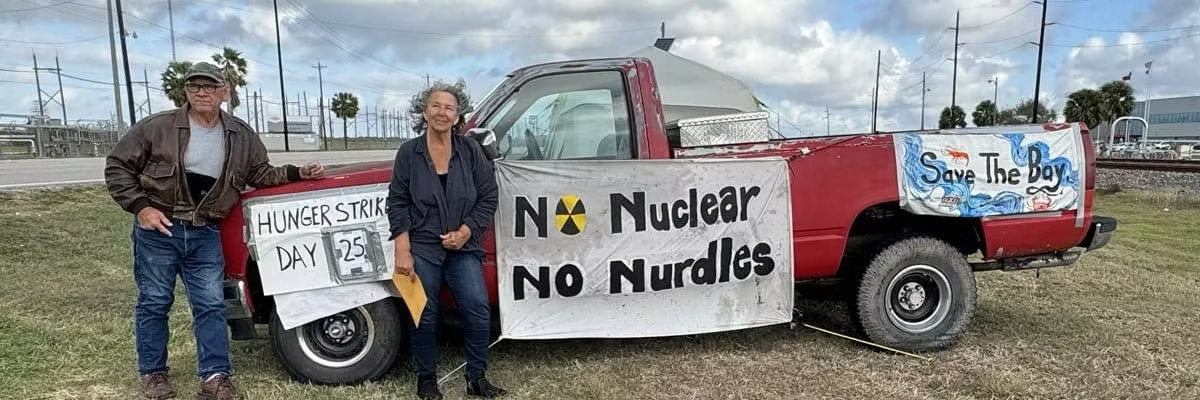
Diane Wilson poses on day 25 of a hunger strike against Dow Chemical.

(Photo via Texas Campaign for the Environment)

Diane Wilson
Apr 19, 2026
Common Dreams

I’m a 77-year-old shrimper from the Texas Gulf Coast, and the AI revolution has reached my town. Early this year, Dow Chemical announced global cuts to 4,500 jobs as it moves toward artificial intelligence. News of the layoffs tore through our rural community of Seadrift–where some of the thousand people work at the local Dow facility–with the devastation of a hurricane. Replacing workers with robots might be Dow’s latest blow, but this toxic industry has wronged my hometown of Seadrift for 70 years.

I recently completed a 30-day hunger strike on the public property (ditch) outside of Dow Chemical, during which time the sheriff actually arrested me while I was attempting to deliver my letter of demands to a company representative here in my hometown.

For decades, Dow has illegally dumped plastic and chemical waste into the local bays and waterways, which have sustained this fishing community for more than 170 years. Now, the company wants government approval for a new permit that would legalize plastic pollution at the Seadrift plant, and allow the construction of experimental nuclear reactors to power it.

As a native Seadrifter, I say: No.

Industry promised us prosperity, but we lost our economy and our heritage.

Dow is planning massive job cuts right now, despite collecting $177 million in bank finance since 2019—which is more funding than any other petrochemical company currently expanding in the US, according to a new report, “Toxic Finance.”

What lasting good have these toxic pollution factories ever done for this community?

My family made a living on the water for four generations, and I’ve been a shrimper all my life. I remember when Union Carbide (now Dow) and Formosa Plastics came to our communities with glossy pamphlets and slick presentations. Our elected officials made a devil’s bargain, and “a little pollution” turned into billions of plastic pellets and tons of chemicals in our water.

When the local bays got sick, the communities started dying with it. First, as in Formosa Plastic’s case, industry bought out the ranchers; then an elementary school; and finally, through a class action suit, bought out citizens and now own their homes. Local businesses have been boarded up throughout the county. As a young woman, I worked at Froggy’s fish house; now, it’s a concrete slab. Four more were bulldozed. A hundred boats used to launch from our docks at the start of shrimp season; today, we’re lucky if we have five. Industry promised us prosperity, but we lost our economy and our heritage. As the old saying goes, our downtown died by a thousand cuts.

I always knew it was a raw deal, but at least some of us got steady jobs… at least for a little while. Now, Dow can’t even deliver on that meager promise. Instead, Dow joins the likes of Amazon, UPS, and dozens of other multinational corporations looking to replace American workers with artificial intelligence.

Nobody from Dow has even responded to me after 30 days of fasting and living in a tent outside of their facility, despite acknowledging receipt of my demand letter to Dow’s CEO. To be clear, I will not rest until this company:Commits to zero discharge of plastic pellets, powder, and flakes from its Seadrift facility and incorporates that commitment into its operating permit; and
Cancels all plans to build nuclear reactors at the site and withdraws its construction permit application from the US Nuclear Regulatory Commission.

On a bright note, the Texas Commission on Environmental Quality (TCEQ) has confirmed that a public meeting about Dow’s proposed changes to the water discharge permit will be held at some unspecified time in the future… and so, the fight continues!

Believe me, dear folks, people still have power. I sued Formosa Plastics and won the largest citizen lawsuit settlement under the Clean Water Act in US history—$50 million plus additional fines because the company can’t stop polluting the bay—all of which has gone into a public trust designed to restore the fishing communities, the bays, and the local environment.

Our trust funded a cooperative of 250 fisherfolk working together to revitalize our seafood industry, which now has its own office, a processing plant, and a 60-acre oyster farm that will grow to become the largest in the Gulf. We are building a new and sustainable economy on our terms.

This is what Dow wants to take away from us. I refuse.

Will you join me in fighting back against corporate greed?


Our work is licensed under Creative Commons (CC BY-NC-ND 3.0). Feel free to republish and share widely.


Diane Wilson
Diane Wilson is a fourth-generation shrimper and environmental activist from Seadrift, Texas. She is the executive director of San Antonio Bay Estuarine Waterkeeper and a proud funder of the Matagorda Bay Fishing Cooperative. She recently concluded her 15th hunger strike to protect the bay upon which her community depends.
Full Bio >
Louisiana Advances One of the Country’s ‘Cruelest’ Anti-Homeless Bills

One homeless advocacy group said the bill, which would require homeless people to perform unpaid labor to pay for involuntary treatment, “evokes debtor’s prisons, convict leasing, and the ugliest day of Jim Crow.”


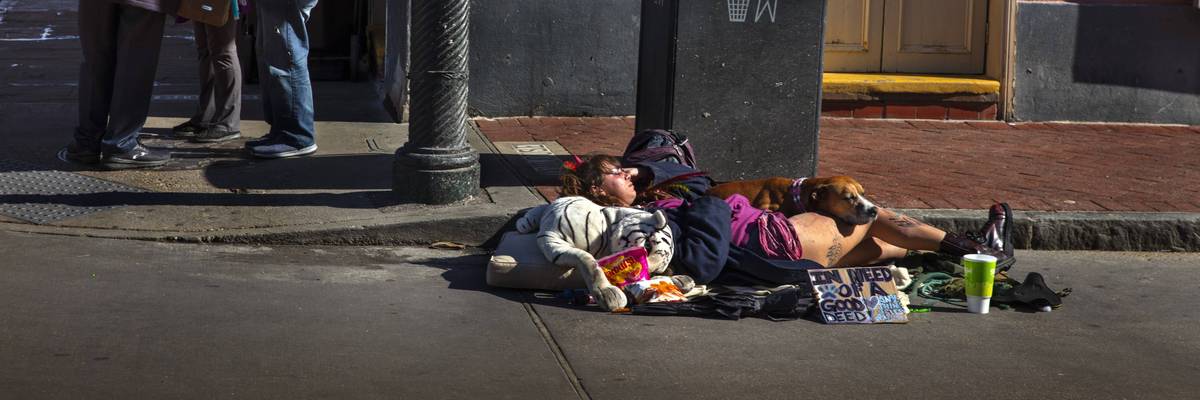
A homeless woman sleeping with a dog on the street on February 26, 2020, in New Orleans, Louisiana.
(photo by Barry Lewis/InPictures via Getty Images)


Stephen Prager
Apr 18, 2026
COMMON DREAMS

The Louisiana House of Representatives voted this week to pass what the National Homelessness Law Center says is “one of the cruelest anti-homeless bills in the country.”

Like many other anti-homeless bills being advanced around the country following a 2024 Supreme Court decision allowing states and cities to criminalize homelessness, House Bill 211, which passed by a vote of 70-28, makes unauthorized sleeping in public spaces a crime.

It is punishable by a fine of up to $500, imprisonment for up to six months, or both. Repeat offenders could face one to two years in prison with hard labor and a $1,000 fine.

The bill, which will now advance to the GOP-controlled state Senate, has been nicknamed the “Streets to Success Act” because, according to its sponsor, state Rep. Debbie Villio (R-79), the goal is not to jail homeless people but to “connect them to service providers.”


Those who are convicted of sleeping outdoors could be given the option to avoid jail time by instead entering into a mandatory treatment program for at least 12 months. The bill authorizes local governments to set up semi-permanent camps in remote areas, where defendants would be required to stay and receive treatment.

The bill requires homeless defendants to pay “all or part of the cost of the treatment program to which he is assigned,” a steep cost for many, as the average cost for residential drug and alcohol rehab treatment in Louisiana is more than $4,400 per week, according to the addiction referral service directory Addicted.org.

According to the bill, those who cannot afford this steep cost would be required to perform unpaid labor for the state or a local community center in lieu of payment.

Bill Quigley, director of the Gillis Long Poverty Law Center at Loyola University New Orleans, called the bill’s entire premise “a farce.”

“If people had the resources to pay for housing and physical and/or mental health services, they would not be on the street,” he told Common Dreams.

He described it as a “cruel theater of the absurd” based on “the lie that people choose to be homeless.” The law, he said, “assumes our communities have plenty of affordable apartments and lots of mental and physical health services available.”

In reality, he said, these services are chronically underfunded, and the city would need to build about 55,000 more affordable rental units to provide enough housing for its rent-burdened population.

Though it is not uncommon for homeless people to struggle with mental health or substance use issues, increases in the cost of housing have been shown to have a direct relationship with increasing homelessness.

Homelessness in New Orleans dropped considerably in the years following the Covid-19 pandemic, when Congress provided permanent housing subsidies for those in need. But after those funds have dried up, homelessness in the city shot up higher than before the pandemic, a study by the homelessness nonprofit UNITY of Greater New Orleans found in 2024.

New Orleans City Councilmember Lesli Harris (D), who has opposed the bill, pointed to the success of the city’s Home for Good program, which took a “Housing First” approach to homelessness, providing rental subsidies and allowing people to move straight from encampments into housing without requirements that they obtain treatment.

According to a May 2025 report, the program had moved 1,133 people off the streets and into supportive housing and allowed eight homeless encampments to close.

“Through our Home for Good program, we house an individual for roughly $21,844 per year. By comparison, jailing that same person costs an average of $51,000—and failing to act at all can cost up to $55,000 in emergency room visits and crisis rehousing,” Harris said. “HB 211 would steer Louisiana toward the most expensive option while producing no lasting housing, no services, and no real path forward for the people involved.”

Harris has also decried the bill’s creation of what she called “internment camps” for treatment. The bill’s text requires these facilities to be far away from downtown and other high-value neighborhoods, which she said separates those trying to rebuild their lives from work, public transit, and other critical services, and further isolates them from society.

Since the Supreme Court’s 2024 decision in Grants Pass v. Johnson, which allowed cities to enforce public-camping bans against unhoused people even when shelter is unavailable, around two dozen states and hundreds of municipalities have passed various measures criminalizing poverty.

The homeless advocacy group Housing Not Handcuffs points out that many of the bills were written by the Cicero Institute, a far-right think tank with heavy backing from billionaire tech investors that now has deep influence over the housing policy of President Donald Trump, who has taken a hacksaw to funding for public housing programs under the Department of Housing and Urban Development.

Housing Not Handcuffs said Louisiana’s bill, which would almost certainly be signed by Republican Gov. Jeff Landry if passed by the state Senate, “is an extreme take on the already extreme copy-paste legislation” peddled by Cicero.

“This bill forces homeless people charged with a crime to make the false choice between jail or at least one year of forced treatment,” the group said. “Louisiana has a long history—and present—of chain gangs, prison labor, and entrenched white supremacy. This bill clearly evokes debtor’s prisons, convict leasing, and the ugliest day of Jim Crow.”
Israel Continues ‘Gaza Tactics’ in Lebanon, Leveling Villages and Homes in Violation of Ceasefire

UN experts have said Israel’s “destruction of urban and village housing that displaced persons would have returned to, is consistent with the pattern of domicide that was initiated during the genocide in Gaza.”


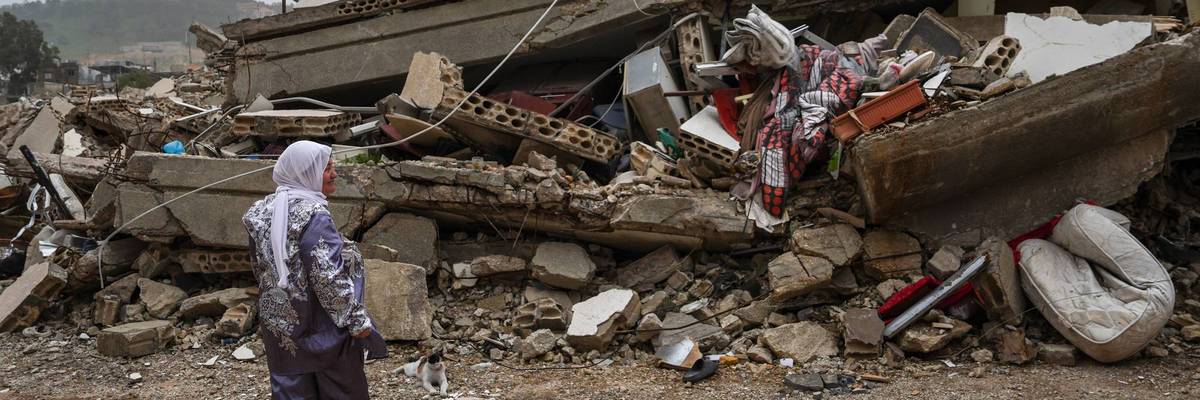
A woman surveys the damage to her home that was destroyed by an Israeli air-strike that killed seven of her neighbors in Nabatieh on the second day of a cease-fire between Israel and Lebanon, on April 18, 2026, in Nabatieh, Lebanon.

(Photo by Ryan Murphy/Getty Images)

Stephen Prager
Apr 18, 2026
COMMON DREAMS

Despite a ceasefire announced Friday, after US President Donald Trump said Israel was “PROHIBITED” from continuing to strike Lebanon, Israel continued to level villages and homes across southern Lebanon from Friday into Saturday in what has been described as a continuation of its “Gaza tactics.”

Just as it did in Gaza, Israeli Army Radio announced Friday night that Israel had established a “yellow line” in southern Lebanon about 10 kilometers north of the Israeli border, effectively allowing Israel to occupy about 10% of Lebanese territory and maintain control of 55 towns and villages.


Israel Defense Minister Deploys ‘Gaza Model’ in Lebanon, Ordering Destruction of Villages


Despite Ceasefire With Iran, Israel Pummels Lebanon With ‘Apocalyptic’ Strikes

According to a report by Lebanon’s National Council for Scientific Research, Israeli forces have been destroying more than 1,000 homes per day since March 2, sometimes wiping out entire villages across southern Lebanon.

The campaign escalated later in the month after Israeli Defense Minister Israel Katz ordered the military to “accelerate the destruction of Lebanese homes” near the Israeli border based on the “model in Gaza,” where Israel has destroyed around 90% of all infrastructure and left most of the population sheltering in tents.


Israel has described this as an effort to destroy Hezbollah infrastructure. But the razing of entire villages has often appeared indiscriminate, and numerous attacks have targeted or damaged schools, hospitals, and other nonmilitary infrastructure. More than 40,000 homes have reportedly been destroyed or damaged.

Demolitions and land-clearing operations have continued after Friday’s ceasefire, according to reporters on the ground in Lebanon for Al Jazeera. Israeli artillery also reportedly shelled areas around Beit Lif, al-Qantara, and Toul.

On Friday, Israel warned tens of thousands of displaced Lebanese civilians in southern Lebanon not to return to their homes despite the ceasefire, although some have begun to make the trek anyway. Many have found their former homes reduced to rubble.

“There’s destruction, and it’s unlivable,” said one resident who was displaced from his home in Nabatieh. “We’re taking our things and leaving again.”


Israel said Saturday that it had also carried out new airstrikes in southern Lebanon against people who approached the newly established yellow line. The Israeli military claimed that individuals crossed from north of the line toward Israeli troops, prompting “precise strikes” by air and ground forces against them.

An Israeli military statement described those approaching as “terrorists” who violated the ceasefire and said it carried out the strikes in “self-defense against threats.” However, it did not specify what threat those approaching the line posed.

Previous attacks that Israel has said were directed at Hezbollah fighters have devastated civilian areas in southern Lebanon, as well as Beirut and its surrounding suburbs.

According to Lebanon’s Health Ministry, which does not distinguish between military and civilian casualties, more than 2,167 people have been killed since Israel renewed its attacks in Lebanon on March 2.

In Gaza, despite a ceasefire, nearly 100 Palestinians have been killed near the yellow line since it was established in October 2025. Those killed have included at least 36 women, children, and elderly people, according to TRT World.


On Wednesday, a group of United Nations experts denounced what they called Israel’s “illegal aggression and indiscriminate bombing campaign” aimed at occupying land in violation of the UN Charter.

“The issuance of blanket evacuation orders, combined with the destruction of urban and village housing that displaced persons would have returned to, is consistent with the pattern of domicide that was initiated during the genocide in Gaza,” they warned.

On Saturday, a group of peacekeepers with the United Nations Interim Force in Lebanon also came under attack, resulting in the death of a French soldier. Lebanon’s Foreign Ministry condemned the attack and pledged to identify the “perpetrators.”

UN peacekeepers and French officials have said the attack was most likely carried out by Hezbollah, but Hezbollah has denied responsibility.

Israel’s continued attacks on Lebanon also threaten to derail not only its ceasefire with Lebanon but also the US ceasefire with Iran.

After the announcement of a ceasefire between Israel and Lebanon on Friday, Iran briefly reopened the Strait of Hormuz to unrestricted travel. But on Saturday, following reports of Israel’s violations of the ceasefire, it was once again closed.

While Iranian officials said the proximate reason for the closure was the continuation of US President Donald Trump’s blockade of the strait, they have also indicated that they want Israel to stop attacking Lebanon as part of the ceasefire.
An Unholy War and the Blasphemy of Donald J. Trump

This must be a moment of entering the public square with the truths of the gospel, with love, the truth of the prophets, and the courage to say we are not afraid of this administration or any, and we won’t be silent any more.


Rev. Dr. William J. Barber II holds an AI-generated picture of President Donald Trump depicted as a version of Jesus Christ during a press conference on April 14, 2026 at the Yale Public Theology & Public Policy Conference in New Haven, Connecticut.
(Photo: Corey Fletcher / YALE Public Theology & Public Policy Conference)
Common Dreams

Editor’s note: The following remarks were delivered during an emergency press conference in New Haven, Connecticut on Tuesday, April 14, 2026 in response to recent comments and actions by President Donald J. Trump.

“You shall have no other gods before me.” —Exodus 20:3

“All who make idols are nothing, and the things they treasure are worthless.” —Isaiah 44:9

“Therefore, since we are God’s offspring, we should not think that the divine being is like gold or silver or stone—an image made by human design and skill.” —Acts 17:29

“God is spirit, and his worshipers must worship him in Spirit and in truth.” —John 4:24

There are times that compel people of faith to speak, servants of Jesus to speak, proclaimers of the gospel to speak and engage in truth-telling and forms public exorcism rooted in deep radical love with the hope of repentance and a commitment to faithful witness—without fear of what any man or woman administration can do to us.

Two weeks ago the Moral Monday movement held Moral Monday gatherings in Washington, DC, 16 states, and Canada to denounce this war and the President’s declaration that if another country didn’t do what he said, he would “reign” down Hell on them and wipe out their entire civilization.

Why has he been talking about “reigning” down hell? Why does he write “reign,” not “rain”? What authority is he claiming to serve?

Why was he so threatened by Easter that he had to try to make it about him?

Why is the Pope teaching what Jesus and the church have always taught getting under his skin? The religious nationalist movement for so long has been saying he is an imperfect instrument being “used by God.” But he’s not satisfied with that. He wants to be God.

The AI image of him as Jesus is so bad that some of his own people have called it blasphemy. So now he’s trying to walk it back and say he thought it was a portrayal of him as a doctor.

This is exposing the madness that we’ve seen in policy. He wants to be some kind of God like messianic figure—to decide who lives and who dies; who gets citizenship and who doesn’t; which parts of the Constitution still matter and whose rights have to be respected.

Just 10 days ago, on the anniversary of the assassination of Dr. King, Trump told Russell Vought, the director of the federal Office of Management and Budget, “Don’t send any money for day care, because the United States can’t take care of day care. That has to be up to a state. We can’t take care of day care. We’re a big country. We have 50 states. We have all these other people. We’re fighting wars.”

And then during Holy Week, he went to the Supreme Court to seemingly intimidate them to support undoing birthright citizenship for babies.

Not only is war unholy, but when any human or president acts in word and deed as though they can determine who lives and who dies—who has citizenship and who can “reign” down hell and wipe out an entire civilization—assuming God-like authority, represents a war on divinity.

We live in a nation that has declared some things are inalienable, endowed by our Creator. And for people of faith, even if the nation didn’t say it, we believe and know that some things are only God’s authority, and to violate them is sin because the gospel of Jesus says so.

This AI pic represents idolatry—a false image offered for us to bow down to, and it is blasphemy and heresy and an affront to Jesus Christ. To do it represents a kind of demonic madness, no matter who would do it—Democrat or Republican. To equate Jesus with a person, a flag, bombs and war planes—and to say that’s what heals us and saves us: this is sin and attempts to exalt a person above God. It is a dangerous war on divinity that is a turn from the God of the gospels, the truths of the gospel.

This is why Pope Leo said: “I have no fear, neither of the Trump administration nor of speaking out loudly about the message of the gospel.”

And he said this even after the reports of the Trump administration calling the ambassador of the Vatican to the Pentagon earlier this year.

I’m not Catholic, but as a bishop in the Lord’s church, in this moment, Pope Leo is my pope.

As much as Pope Francis was, as I had the opportunity to respond to his encyclical on the environment and address the Pontifical Academy for Social Sciences as addressed the moral issue of poverty and people’s movements around the world.

But we must be careful in this moment to act as though this is the first moral and spiritual violation by Trump and religious nationalism. His embrace of a Messianic-type role has been pushed by the delusion of Franklin Graham and others.

When he allows people in his administration to say empathy is the cause of the decline of Western civilization.

These are deep, sinful contradictions of the gospel which says a nation will be judged by how it treats the least of these.

His constant demeaning of other nations and cultures and his constant claim that no one ever did anything as great and wonderful as him before him—the constant self-congratulation and adoration—is idolatry that, when unchecked, has led to where we are now.

Some of the church must repent of far too much silence in the public square confronting these thing public sins and idolatries and other policies with the truths of the gospel and our response to this image and his ridiculous attacks on the Pope cannot be one off.

This must be a moment of entering the public square with the truths of the gospel, with love, the truth of the prophets, and the courage to say we are not afraid of this administration or any, and we won’t be silent any more. We must lift a clear call that this nation and any nation in its words, deeds, and policies must work to have good news for the poor, healing of the broken hearted, deliverance to the captive, recovery of sight to the blind, and a declaration of acceptance to all who have been marginalized if we even hope to be pleasing to God.

“The tendency to claim God as an ally for our partisan value and ends is the source of all religious fanaticism,” Reinhold Niebuhr wrote. This is why when we as people of faith enter into the public space, we do so not with partisan facts and focus, but with the truths of the gospel.

This is why we have been here in New Haven. More than 400 public theologians are returning to their communities later today with a renewed sense that we have a responsibility to help the nation make this choice and build a movement that can take back our government and insist that it serve all the people.

Our work is licensed under Creative Commons (CC BY-NC-ND 3.0). Feel free to republish and share widely.


Rev. Dr. William J. Barber II
Rev. Dr. William J. Barber II, is a Professor in the Practice of Public Theology and Public Policy and Founding Director of the Center for Public Theology and Public Policy at Yale Divinity School. He serves as President and Senior Lecturer of Repairers of the Breach, Co-Chair of the Poor People’s Campaign: A National Call For Moral Revival, Bishop with The Fellowship of Affirming Ministries, and has been Pastor of Greenleaf Christian Church (Disciples of Christ), Goldsboro, NC, for the past 29 years.
Full Bio >

Trump admin dealing 'incalculable damage' to GOP with religious statements: analyst

Ewan Gleadow
April 19, 2026 
RAW STORY


Pete Hegseth (Reuters)

Religious statements made by members of Donald Trump's administration are harming the Republican Party, a political analyst has warned.

Defense Secretary Pete Hegseth delivered a Pentagon prayer service featuring a fabricated Bible verse directly from Quentin Tarantino's 1994 film Pulp Fiction. Hegseth introduced the prayer as CSAR 2517, which is actually Ezekiel 25:17—the fictional passage recited by Samuel L. Jackson's character Jules Winnfield.

The prayer included Hegseth's modifications, replacing movie dialogue with military references. The incident sparked widespread ridicule from legal experts and lawmakers, with critics questioning Hegseth's fitness to lead the military while weaponizing Christianity to justify warfare.

Vice President JD Vance also sparked controversy by publicly lecturing Pope Leo XIV on theology during a Turning Point conference. Vance stated the pope must be "careful" when discussing theological matters and ensure statements are "anchored in the truth." Pope Leo XIV directly rebuked Vance, declaring, "JD Vance is wrong: Jesus doesn't ask us to rank our love for others."

The confrontation highlighted tensions between Vance's Christian nationalist ideology and papal teachings emphasizing universal compassion over national interest prioritization.

David Wippman and Glenn C. Altschuler, writing in The Hill, suggest these moments from Hegseth and Vance highlight a dangerous precedent set by Trump's team.

They wrote, "The Trump administration’s threats to attack Iran’s energy infrastructure and destroy its civilization in the name of Jesus have prompted sharp rebukes from religious leaders, including Pope Leo, who quoted the Prophet Isaiah as saying God 'does not listen' to leaders with 'hands full of blood.'

"Trump’s profanity and endorsements of a Christian crusade are doing incalculable damage. In a nation in which only 62 percent of citizens identify as Christians, the president’s justification for his war of choice is eroding trust, intensifying political polarization, and contributing to an environment in which almost half of Americans think members of the other party are 'downright evil.'

"As Trump divides Americans while claiming God anointed him to lead the country, his rhetoric and his actions make clear that America and its leaders are no longer what they once were — the linchpin of an international order resting on shared values, laws and respect for national sovereignty."