Friday, June 12, 2026

THE LION VS THE ANTI CHRIST

Pope Leo says Christians ‘cannot promote war,’ blesses Sagrada Família’s Jesus tower

BARCELONA, Spain (RNS) — Surrounded by the nature-inspired architecture of Antoni Gaudí, often referred to as ‘God’s architect,’ the pope gave a homily that made a forceful appeal in defense of human life and against war.
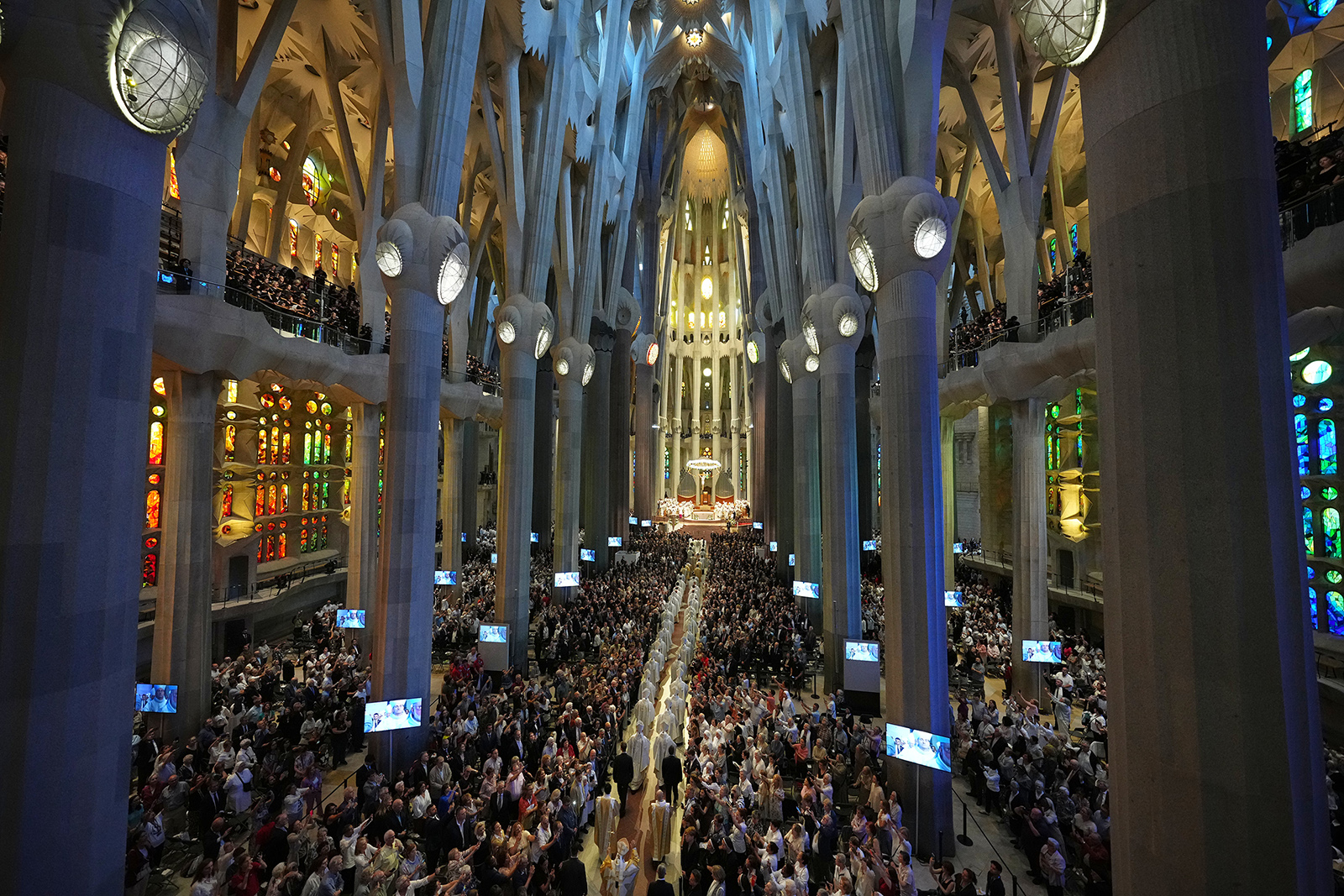

Pope Leo XIV, bottom, walks in procession to celebrate a Mass in the Basilica of the Sagrada Família in Barcelona, Spain, Wednesday, June 10, 2026. (AP Photo/Alessandra Tarantino)

Claire Giangravè
June 10, 2026
RNS

BARCELONA, Spain (RNS) — Visiting one of the most recognizable landmarks in the world, the Basilica of the Sagrada Família, Pope Leo XIV celebrated Mass and blessed its recently constructed central tower of Jesus Christ, which made it the tallest church in the world.

During his Wednesday (June 10) homily before over 4,000 people, including 200 cardinals and bishops, and surrounded by the nature-inspired architecture of Antoni Gaudí, often referred to as “God’s architect,” the pope made a forceful appeal against war and in defense of human life.

“We cannot believe in Jesus and promote war. We cannot believe in Jesus and kill the innocent. We cannot believe in Jesus and abandon those who suffer, those who weep, those who flee from misery,” he said.

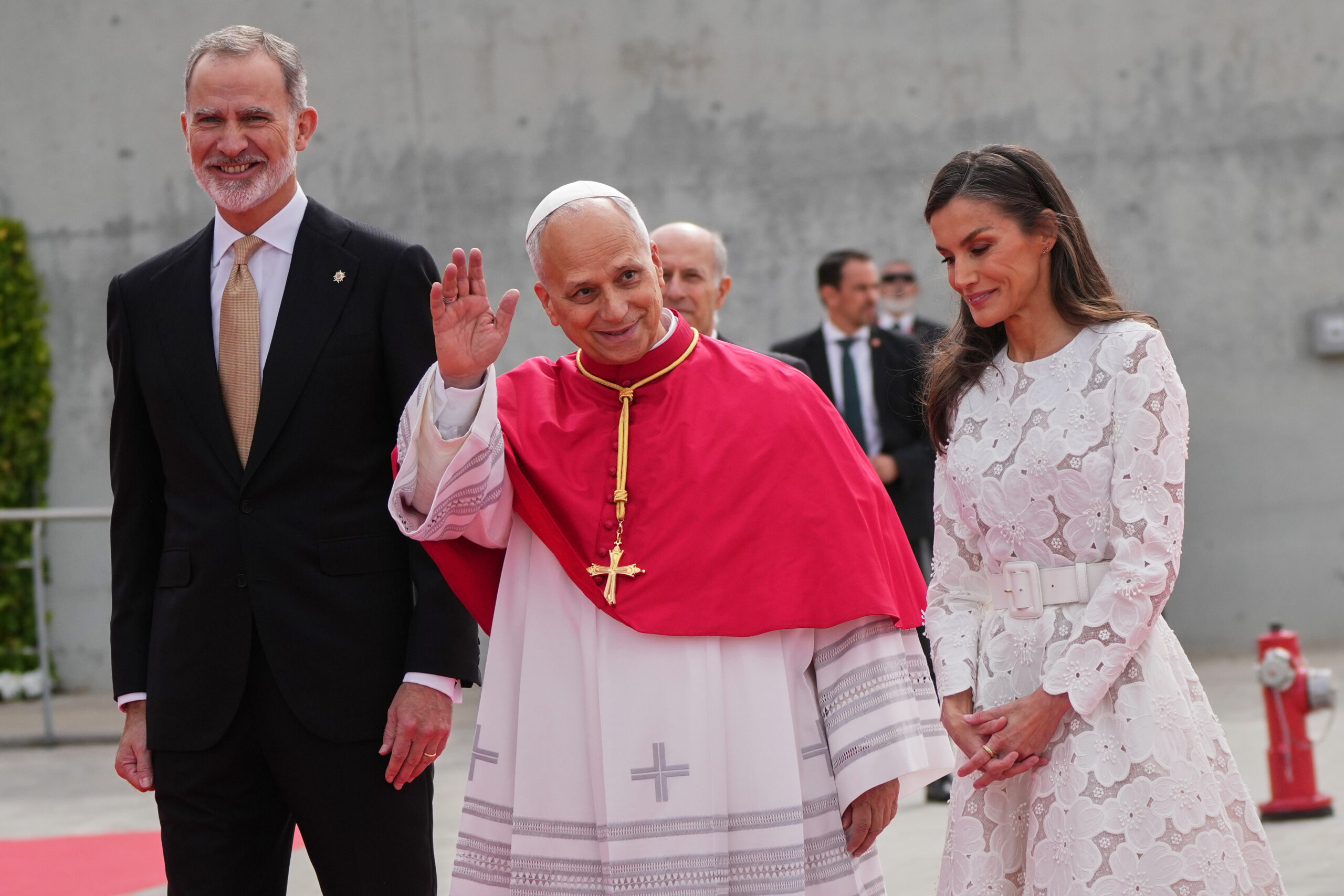
The liturgy was accompanied by a 600-voice choir and witnessed by church and state authorities in Spain, including the Catholic monarchs King Felipe VI and Queen Letizia.

The pope praised the Barcelona church, which has been under construction for over 140 years, as “a work in progress today, reminding us that the Christian life is always a journey because it is a project that God is carrying out.”

The imposing structure was built as a response to the industrial revolution of the 19th century through the support of the Association of the Devotees of St. Joseph, who sought to counter the secularization that accompanied the industrial era.
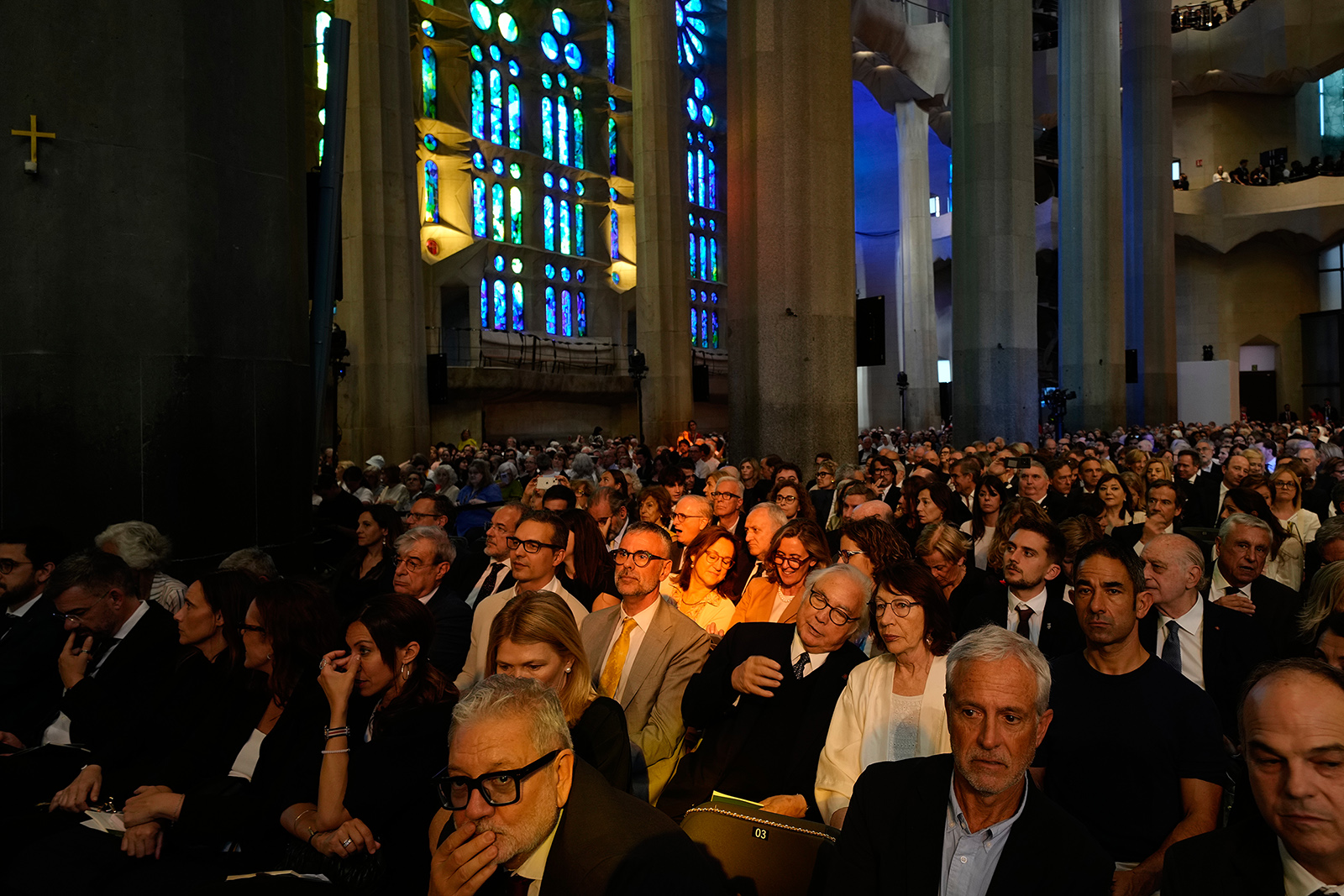
People wait for Pope Leo XIV’s arrival to celebrate Mass at the Basilica of the Sagrada Família in Barcelona, Spain, Wednesday, June 10, 2026. (AP Photo/Bernat Armangue)

Leo took his name from his predecessor Leo XIII, best known for his encyclical “Rerum Novarum” (“On New Things”), which offered answers to the challenges posed by the industrial revolution. In Leo XIV’s recent encyclical, the first of his papacy, he said we are witnessing a new industrial revolution and stressed the importance of putting human beings at the center of society, culture and education.

Gaudí saw the basilica as a project in which “an entire people” would come together and contribute, said the architect and scholar Chiara Curti, who has written three books on the Catalan architect, including her latest, “The Sagrada Família: The Cathedral of Light.”

Curti said the faces of the people in the façade of the nativity of the basilica were meant to look like the people working and living around its construction.

“ … The cathedral has this characteristic where each person places their own stone,” she said. “… It is as if (Gaudí) were saying that the history of salvation is made up of the people of today.”

The design of the basilica, covered in artwork and symbolism telling the story of Christ, was described by the pope as “an eloquent catechesis made of stones, colors and light.” He added that in modern society, “it becomes even more evident how art and beauty are privileged channels of evangelization.”
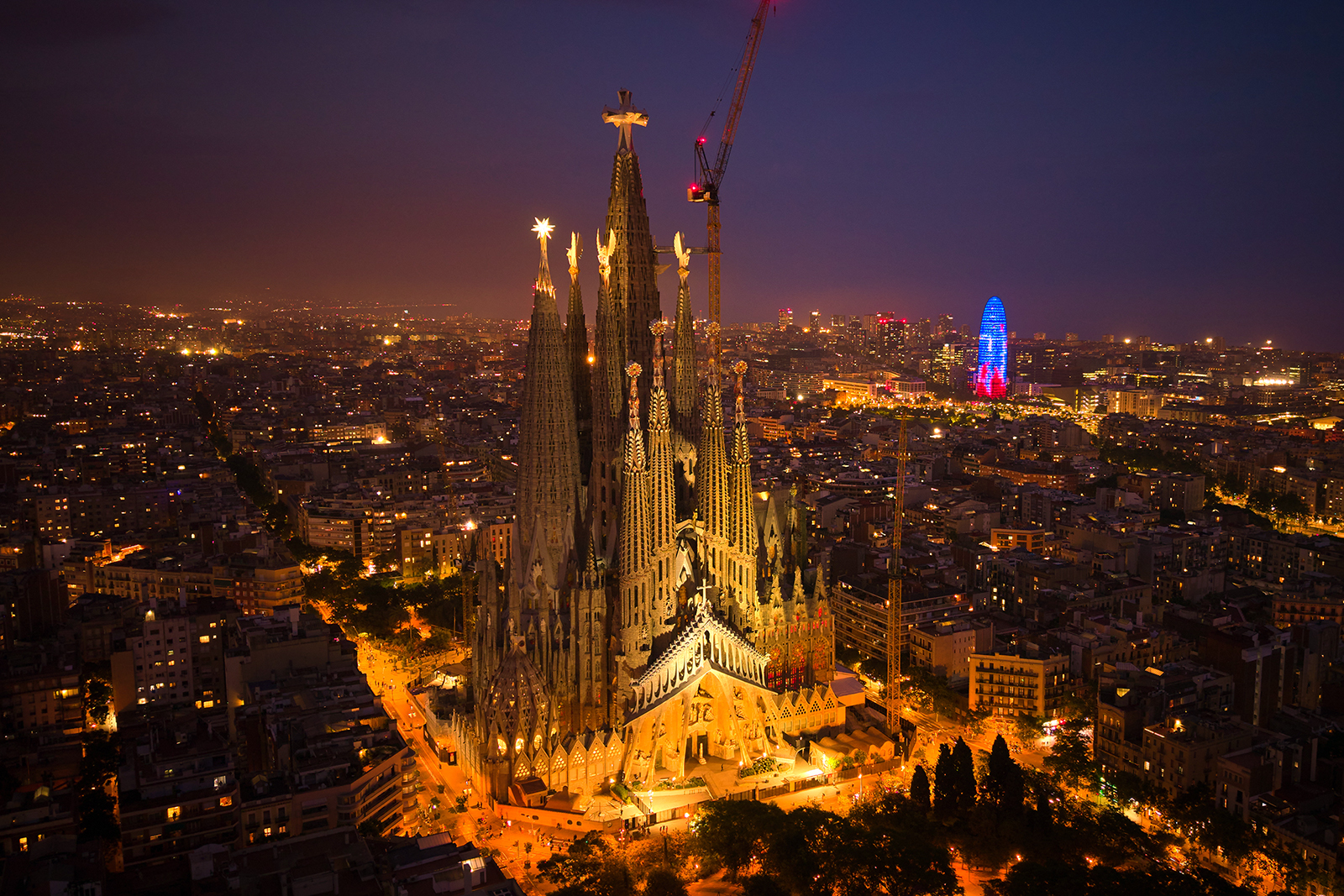
A view of the Basilica of the Sagrada Família in Barcelona, Spain, May 30, 2026, ahead of Pope Leo XIV’s visit to the city in June. (AP Photo/Emilio Morenatti)

Gaudí, who started working on the basilica in 1883, died before he could see it to completion, in 1926, after being hit by a tram car. Leo’s visit coincided with the centenary of his death, as some speculated on the possibility that the pope might soon approve his canonization. Before the Mass, Leo visited Gaudí’s tomb, located beneath the church.

“As an architect inspired by faith, the venerable Antoni Gaudí designed this place with the desire to narrate the mysteries of the Lord’s life,” he said in his homily. “In this way, he has proposed to us a spiritual pilgrimage, leading to an encounter with Christ, who for our sake was born, died and rose again.”

Pope Francis declared Gaudí venerable, a first step toward sainthood, in 2025, but the cause cannot move forward until a miracle is recognized, according to church rules. But a pope could potentially waive this prerequisite.

“The church always arrives a little late to saints,” Curti said, adding that Gaudí’s reputation for holiness was already recognized during his lifetime. “He already accompanies people toward the possibility of turning their lives into a work of art.”

Leo also blessed the monumental tower of Jesus Christ, which stands about 566 feet tall. In 2012, Pope Benedict XVI consecrated the church, praising it as “a visible sign of the invisible God, for whose glory its towers rise,” Leo recalled.

The pope said the cross was the “radiant sign” of Christ’s love. “When Christ is lifted up, the grandeur of his humanity shines forth, and our works glorify God. These are the works of faith, and art stands out among them,” he added.

The blessing was followed by music, fireworks and a light show before the 9,000 people including those outside the basilica. According to local estimates, 120,000 people followed the event on the screens placed in the nearby streets. 


ciberconflitos.wordpresshttps://ciberconflitos.wordpress.com  › wp-content  › uploads  › 2014  › 12  › hardt_negri_multitude_-war-and-democracy-in-the-age-of-empire.pdf

MULTITUDE WAR AND DEMOCRACY IN THE AGE OF EMPIRE MICHAEL HARDT...

Michael Hardt and Anronio Negri.


Signs of the Times

Pope Leo reveals his political theology in Spain

(RNS) — ‘The world is undergoing a profound spiritual and cultural crisis, which manifests in multiple forms of violence, polarization and mutual distrust,’ Leo said in Spain.


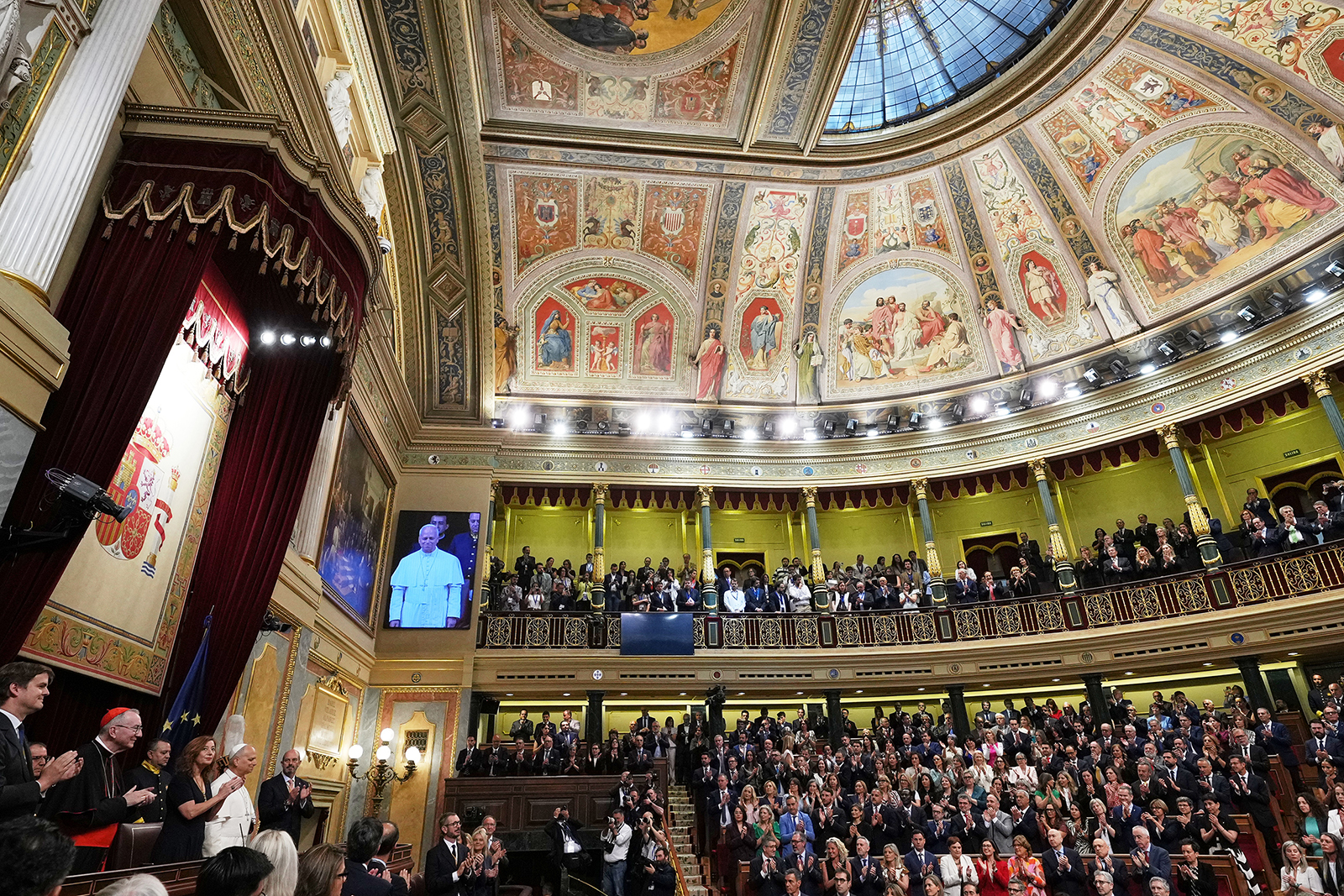
Pope Leo XIV is flanked by Francina Armengol, president of the Congress of Deputies of Spain, left, and Pedro Rollan Ojeda, president of the Senate of Spain, as he meets with members of the Spanish Parliament at the Congress of Deputies, in Madrid, Monday, June 8, 2026. (AP Photo/Alessandra Tarantino)

Thomas Reese
June 9, 2026 
RNS

(RNS) — During his addresses to political and diplomatic leaders in Spain, Pope Leo XIV laid out the political theology he believes should guide not only the church but also politicians and diplomats.

He presented his vision in two speeches: one on Saturday (June 6), in the presence of King Felipe VI, to civic and diplomatic leaders; the other on Monday, to the Spanish Parliament.

The church wishes to be in service to humans, Leo explained. It “walks alongside humanity, shares its hopes and its wounds, listens to the questions of every age and allows herself to be challenged by everything concerning the lives of contemporary men and women.”


To those who fear church interference in politics, the pope affirmed, “It is a service not marked by imposition.”

He repeated what he said in his recent encyclical, “Magnifica Humanitas“: “When the church addresses anything concerning public life, she does so while respecting the proper mission of institutions and the legitimate responsibility of those who have received the mandate to legislate.”

The church, he said, recognizes “the autonomy of earthly realities” and “the distinction between the ecclesial community and the political community.”

For the United States, this means he affirms the separation of church and state and rejects Christian nationalism.

Rather, what the church offers is “a reflection born of the desire to serve the common good and to recall what makes human coexistence truly human.”

To Spain’s Congress of Deputies, Leo affirmed the role of legislatures, where “differences are heard, sorted out and, when possible, transformed into shared decisions.” In words that could have been addressed to the U.S. Congress, he said, “Every legislative task ultimately confronts a decisive question: What conception of the human person inspires laws, and what kind of society do those laws build?”

Human beings are “more than just a cog in the social, economic or political order,” he added. They are “open to truth, endowed with freedom, and driven by a thirst for eternity that no temporal reality can quench.”

Leo recalled that Spanish philosophers and theologians “introduced into historical discernment the question of the irreducible value of every human being and the moral limits of power.” But he admitted that “society and the church herself did not always live up to these insights found in their own Christian tradition.”

Pope Leo XIV is welcomed by Spain’s King Felipe VI and Queen Letizia upon his arrival at Adolfo Suarez Madrid-Barajas International Airport in Madrid, Saturday, June 6, 2026, marking the start of his seven-day apostolic journey to mainland Spain and the Canary Islands. (AP Photo/Alessandra Tarantino)

In this tradition, “authority always entails responsibility” and “every human being must be recognized as a subject of rights and duties.” That aspiration, he said, “continues to resonate today: that dignity, justice and the common good should be the measure of social relations, both at the national and international levels.”

“Our discernment,” he asserted, “must focus on the place of the human person in our decision-making and on how the dignity of work, solidarity, social policy and the common good are today being addressed in new ways.”

Laws, Leo believes, should be “a safeguard for all and a guarantee against the imposition of particular interests and agendas.”

“Can a community that casts into the shadows the unborn child, the elderly, the sick, those who suffer in silence or those who depend entirely on the care of others be called fully just?” he asked, reflecting his use of a consistent ethic of life in dealing with a wide range of issues.

The defense of human life is neither a partisan issue nor a confessional interest, but a goal of civilization, he added. 

Leo also spoke of “the tragic drama of migration,” which has divided Spain and the United States. He is clearly concerned for migrants, who “are forced, by often dramatic circumstances, to leave their communities.” He said they should be offered “safe and legal pathways, a respectful welcome and real opportunities for integration.”

At the same time, to address the causes of migration, he said we need “to promote the right to remain in one’s own land, working to ensure that no one has to leave their home due to a lack of peace, security or decent living conditions, including economic inequalities and the effects of the climate crisis.”

The pope believes that “the world is undergoing a profound spiritual and cultural crisis, which manifests in multiple forms of violence, polarization and mutual distrust.” And sadly, he complained, “the temptation to gain popularity by fanning the flames of polarization seems to have grown rather than diminished.”

What is needed, he said, is “public discourse that respects those who think differently, institutions dedicated to fostering dialogue, a historical memory that seeks truth and reconciliation, and a social life capable of sustaining civic friendship and mutual respect amid disagreement.”

He also expressed concern about the rearmament of Europe and other parts of the world. “True security,” he asserted, “stems from justice, patient dialogue, respect for international law and a policy capable of placing the lives of peoples above the interests that profit from war.”

He called on the international community “to rediscover the indispensable value of dialogue as a patient path toward just and lasting agreements, founded on respect for treaties, on the transparency of diplomatic action and on the sincere will to prioritize peace over the use of force.”


Leo acknowledged that the message of peace within nations and among nations “unfortunately strikes some as naïve and others as confrontational,” but he believes, it is “welcomed by those who do not shut themselves off in preconceived ideologies, but are rather open to the truth.”

The Spanish government has been at odds with the Trump administration’s foreign policy, including its war in Iran. It is therefore significant that the pope thanked Spain for “its faithful adherence to international law and multilateralism.”

The pope’s message is that the Christian tradition has much to offer the world of national and international politics. He affirmed “that law must serve the good, that justice sets limits on force, that power requires legitimacy, that the poor belong fully to the community, that the foreigner must be welcomed in accordance with his dignity and that human life can never be treated as a commodity.”

In Spain, Pope Leo showed how he plans to call world leaders to focus on justice and peace as an essential part of their vocations. We need to support that call with prayer and action.

Pope Leo XIV makes heartfelt appeal for migrants: ‘Human dignity has no passport’

LAS PALMAS, Spain (RNS) — At a Canary Islands port marked by migrant suffering, Pope Leo XIV told survivors of trafficking that their dignity cannot be taken from them and warned Europe that every boat arriving on its shores poses a question about what remains of its humanity.


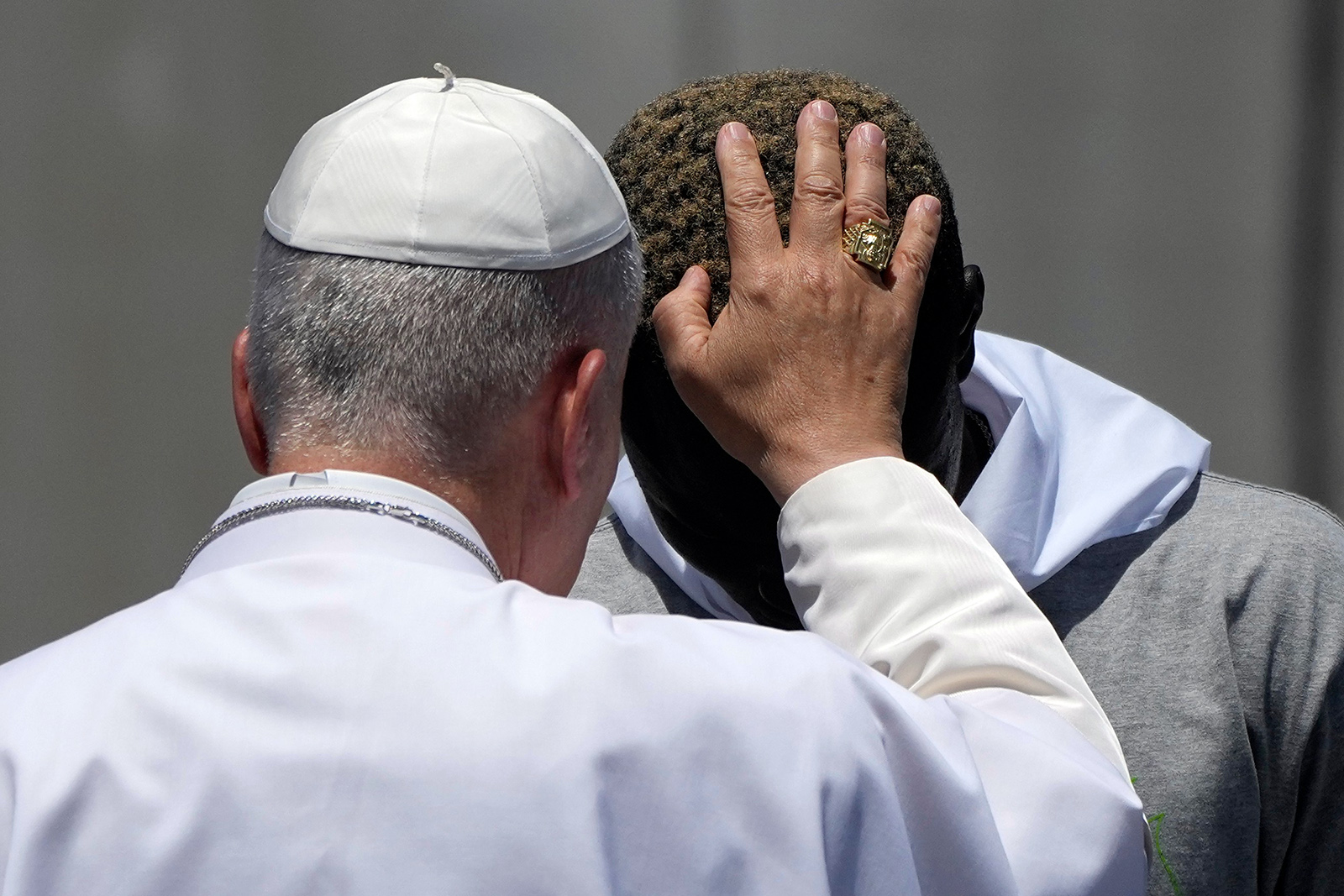
Pope Leo XIV blesses a migrant during a meeting with organizations working with migrants in Arguineguín at the Canary Islands, Spain, Thursday, June 11, 2026. (AP Photo/Alessandra Tarantino)

Claire Giangravè
June 11, 2026 
RNS

LAS PALMAS, Spain (RNS) — Pope Leo XIV delivered a heartfelt speech addressing migrants on Thursday (June 11), reminding them of their worth and dignity even as they suffer at the hands of traffickers and mafias. He also spoke directly to the church and states — especially in Europe — underlining their duty to promote and protect migrants.

Leo said those who exploit migrants are “monsters” — as are people who are indifferent to their suffering. He called for a “conversion,” allowing people to see migrants beyond mere statistics.

“Only then can we understand that that little girl could be our daughter, and that those faces could be part of our family. Then, our conscience is left with no excuses,” he said. “Human dignity has no passport and does not lose its value when crossing a border.”

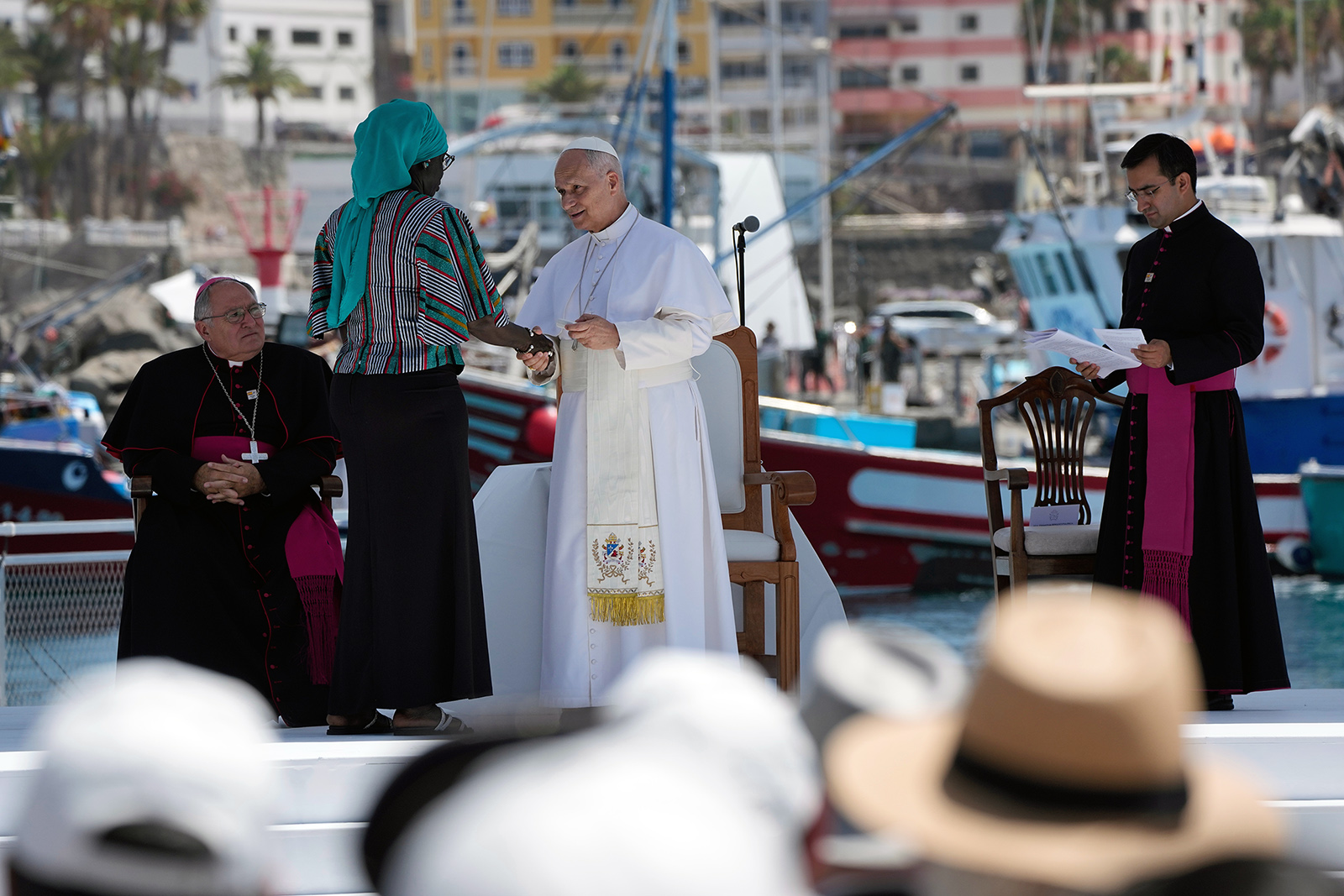
He made his remarks at the port of Arguineguín, in Las Palmas in Gran Canary Island, where he listened to the stories of migrants and people who help them. Leo is visiting the Canary Islands for the last leg of his weeklong visit to Spain.

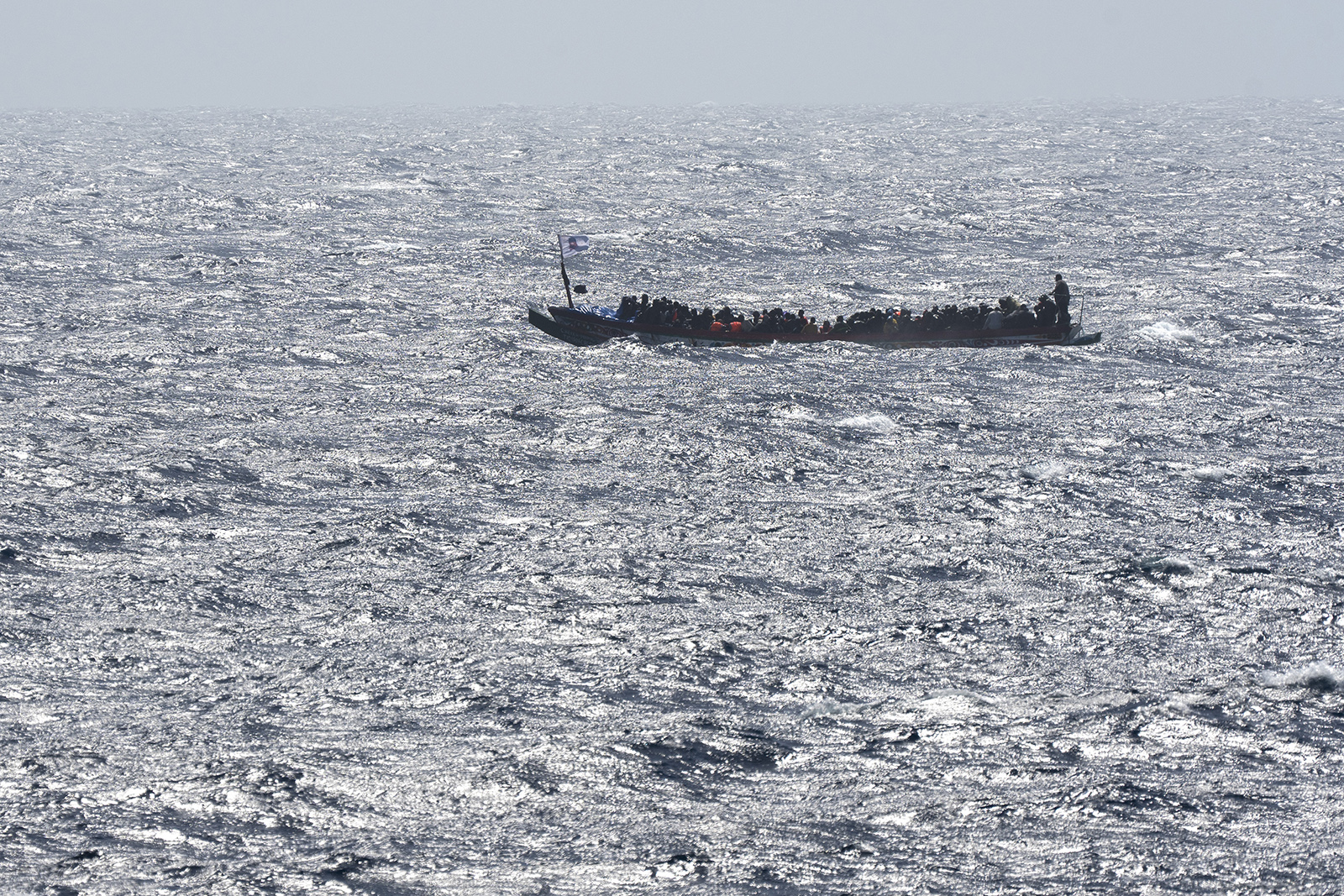
While the Canaries, eight islands roughly 60 miles from the African coast, may be considered a vacation spot for wealthy Europeans, the reality on the ground tells a deadlier tale, where tens of thousands of migrants arrive each year stranded on its rocky shores and thousands more die in its surrounding waters.

Arguineguín became known as the port of shame in 2020, when more than 3,000 migrants crammed into a space meant for 500. Photos of exhausted migrants, who had traveled the deadly Atlantic route from West Africa, sleeping on concrete exposed an inability to manage the crisis.


A volunteer meets Pope Leo XIV during a meeting with organizations working with migrants in Arguineguín at the Canary Islands, Spain, Thursday, June 11, 2026. (AP Photo/Alessandra Tarantino)

Today, Arguineguín wants to rebrand itself as a “port of hope” as volunteers and Catholic charities work to help the migrants and refugees, who arrive in the islands aboard makeshift boats called “cayucos” and “pateras.”

Tito Villarmea, captain of the salvage boat Guardamar Urania, has reportedly saved more than 20,000 people as he patrols the ocean near the islands. Addressing the pope at the pier, he recalled saving a woman who cried desperately over the body of her teenage daughter, who had died on the journey.


“I wish we didn’t have to save anyone again,” he said. “Let’s work as a society to reduce this tragedy and build a more just world.”

In 2024, the Canaries received a record 46,843 migrants. Arrivals have declined in recent years after Spain and the European Union struck deals with Mauritania, Senegal and Morocco to intercept departures and increase patrols. The crossing has also grown proportionally deadlier, with a greater number of those attempting the journey perishing; last year, nearly 3,090 people died trying to reach Spain, through the Canary Islands or the Balearic route, and 1,300 have already died in the first six months of 2026, according to the Spanish nongovernmental organization Caminando Fronteras.

Just over 3,000 migrants have arrived to the islands this year, most from Senegal, Mali, Mauritania, Gambia and other regions of sub-Saharian Africa. Other immigrants arrive via air from Latin America, especially Venezuela and Cuba.

In his address, Leo called migrant deaths and exploitation a tragedy and said they “must serve as an appeal to the conscience of the nations of origin,” which have an obligation to provide the conditions for human flourishing. He also urged transit nations to protect the vulnerable from criminal networks and said the international community should promote cooperation.

The pope made an “appeal to the conscience of Europe, which cannot claim to uphold human dignity while growing accustomed to the Mediterranean and the Atlantic becoming unmarked graves.”

The EU Pact on Migration and Asylum, a new legal framework for how European countries manage immigration, takes effect Friday. Human-rights organizations warn that the pact, a set of 10 pieces of legislation adopted in 2024, opens the door for large deportation efforts to migrant camps in Africa. “We are worried because European politics is restrictive, it’s not aimed at building bridges but at building walls,” said the Rev. Fernando Redondo, who oversees the migration office of the Spanish bishops’ conference.


Critics have likened the policy to U.S. President Donald Trump’s recent limitation on green card applications, which must now be filed from outside the U.S.

Ahead of the implementation of the EU Pact on Migration and Asylum, Spain granted one year of legal status to immigrants lacking authorization, benefiting potentially 500,000 migrants living in the country. In January, when the initiative was announced, Spanish Minister of Migration Elma Saiz told journalists the government is ”dignifying and recognizing people who are already in our country.”


Migrants crowd a wooden boat as they sail to the port in La Restinga on the Canary island of El Hierro, Spain, Sunday, Aug. 18, 2024. The migrants sailed for seven days from the coast of Senegal. (AP Photo/Maria Ximena)

At the event, Leo addressed immigrants directly. “I want to bow before your dignity,” he said. “You are not just numbers or files. You are people who have left behind families and homes. You have dreams that no one has the right to despise.”

He told migrants they “have a right to be protected” and to not fall for the “siren songs” of those who want to exploit them. “They are industries of death,” he said.

The pope heard the testimony of Blessing, a victim of sexual trafficking, which was read by another woman to protect her identity. Born in Nigeria, Blessing sought to leave the abject conditions of her life. She said the mafia performed a “juju” ritual on her, commonly used in West Africa to bind and “curse” people into submission. After, they told her she had a 25,000 euro debt.

“So, my captivity began,” the testimony said, recounting years of abuse, violence and rape. She told of her journey to the Canaries, when one of her captors got her pregnant, later taking her child away and forced her into prostitution. She thanked the Catholic charities for freeing her from the cycle of violence she endured and for reuniting her with her son.

Catholic charities assist over 220,000 migrants in the Canaries, including more than 2,000 minors, according to the secretary-general of the local Caritas charity network. The local church also signed an agreement in 2023 of “Atlantic hospitality” to work together with African countries to help migrants.

Leo said that even though some put a price on the body of migrants, trap them in their past or treat them like objects, God sees their intrinsic humanity.

“Your life does not belong to those who harmed you; your body does not belong to those who took advantage of you; your days do not belong to those who wanted to chain you to fear,” he said. “Your life belongs to God, who has given you a dignity that cannot be taken from you. We want to walk with you until that truth feels stronger than the pain.”

Between 2024 and 2025, Spanish police uncovered a network responsible for trafficking minors in the Canary Islands, to bring them to France. And in 2021, more than 150 boat drivers were arrested in Gran Canary for smuggling, even though they are often migrants themselves and victims of human trafficking rings.

“Even today, monsters lurk in these seas: mafias that profit from despair, traffickers who enslave women and children, and those whose indifference allows the poor to be swallowed up by exploitation or forgetfulness,” Leo said. Repeatedly, the pope stated that the church and believers “cannot remain silent” before the suffering of immigrants and refugees.

“Every boat that arrives brings a question along with the migrants: What kind of world have we built, if so many brothers and sisters must risk death to seek life?” he said.

The pope questioned how people today will be judged by history for becoming accustomed to migrant suffering and death, an echo of his recent encyclical, “Magnifica Humanitas” (Magnificent Humanity), where he stated that the treatment of migrants is a “litmus test” for democracies.

“Today, here by the sea, every individual that arrives asks us what remains of our humanity. Sooner or later, it will be known whether we protected life or whether we yielded to indifference,” he said.

Leo concluded the ceremony by throwing a wreath into the water to honor migrant deaths, followed by a moment of silent reflection.