De Beers finds Gen Z driving diamond demand rebound
American consumers are showing renewed interest in natural diamonds, offering a potential boost to Africa’s diamond-producing nations after several difficult years for the industry.

Generation Z members — those born between 1997 and 2012 — are leading the resurgence, accounting for 23% of US natural diamond demand by value despite representing only 18% of the population, according to De Beers’ latest US Diamond Acquisition Study.
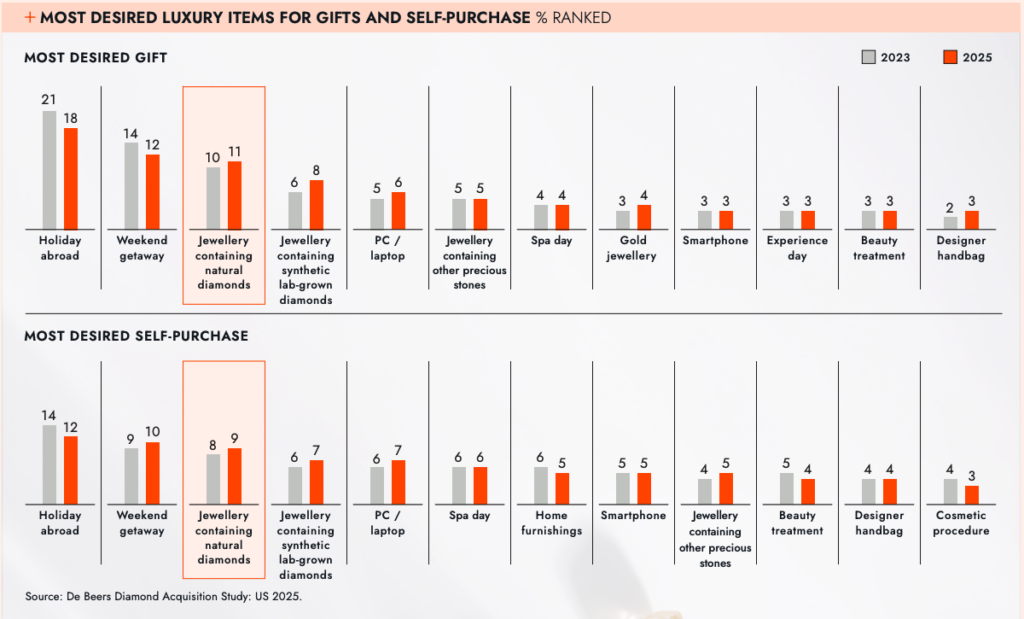
New findings from the survey of 18,500 women in the United States, the world’s largest diamond jewellery market, found Gen Z buyers are spending an average of $4,080 per purchase, far above the $2,250 spent by Baby Boomers. The study also found 11% of respondents ranked natural diamond jewellery as their most desired luxury gift, ahead of lab-grown diamonds at 8%, coloured gemstones at 5% and plain gold jewellery at 4%.
“Natural diamonds continue to hold a unique place in consumers’ minds as meaningful and aspirational purchases,” the report found, as younger buyers increasingly seek jewellery tied to personal milestones and achievements.
The trend carries important implications for African producers. Botswana, Angola, Namibia, South Africa and Lesotho supply a significant share of the world’s natural diamonds and stand to benefit directly from stronger demand in the US market.
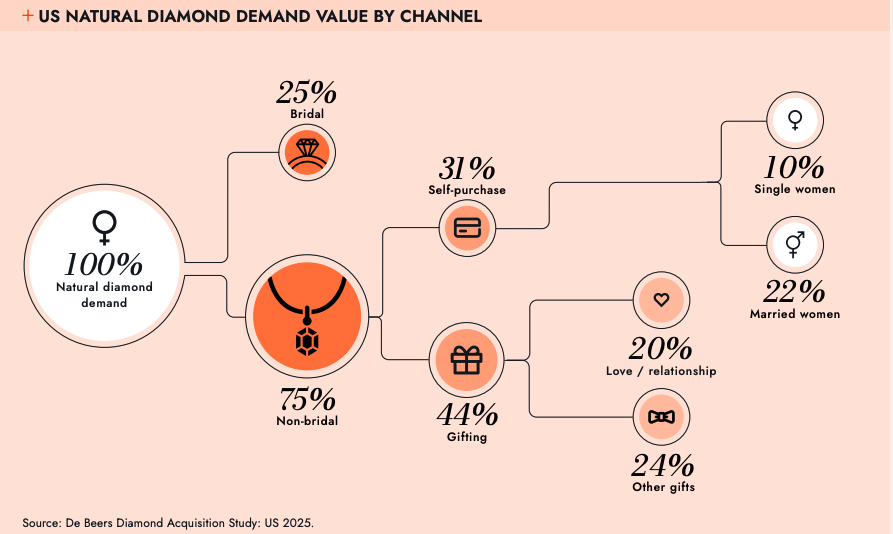
The study found younger consumers are expanding diamond purchases beyond traditional engagements and weddings. While bridal jewellery still accounts for 45% of Gen Z demand, buyers are increasingly purchasing diamonds to mark promotions, career achievements, birthdays and other personal milestones, or simply as self-rewards.
That shift helped lift average natural diamond jewellery prices by 25% to $4,063 from $3,242 in 2023, while average stone sizes increased to 1.86 carats from 1.65 carats.
“Consumers are spending more per piece than ever before, but how and why consumers buy diamonds is evolving,” Diana Mitkov, lead researcher within Diamond Demand Insights & Analytics at De Beers Group, said. “Traditional life milestones such as getting engaged are no longer the only value driver for the industry; consumers are increasingly marking a wide range of occasions with natural diamonds and are looking for distinct pieces that feel personal to them.”
Africa benefits
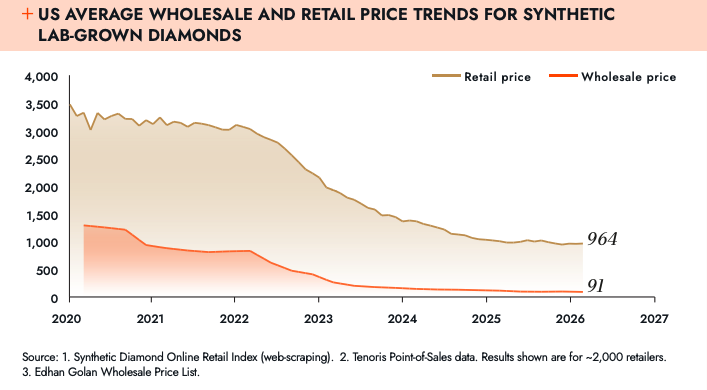
The findings arrive at a critical time for southern African producers. Botswana, whose economy remains heavily reliant on diamond exports, has faced slowing growth amid a prolonged downturn in global diamond demand. Other producing nations have also felt pressure as lab-grown diamonds gained market share and weakened prices for mined stones.
However, De Beers said natural diamonds continue to dominate the market’s value segment. Data from 950 independent US jewellers showed natural diamonds accounted for 85% of diamond jewellery sales value in 2025, compared with 15% for lab-grown stones.
The results suggest stabilizing demand in key consumer markets could provide relief for producing nations already facing constrained supply growth. Global natural diamond production is expected to decline over time as few major new mines enter operation and existing deposits mature.
For African economies that depend heavily on diamond exports, royalties and mining employment, sustained US demand could provide a valuable tailwind after several years of uncertainty.
Winning youth
The industry is also adapting its marketing strategy to appeal to younger consumers. De Beers and Signet launched the “Worth the Wait” campaign in October 2024, targeting so-called Zillennials with messaging centred on milestones, individuality and the enduring value of natural diamonds.
Meanwhile, producers and industry groups are investing heavily in broader promotional efforts. In June last year, a coalition of diamond-producing countries and De Beers signed the Luanda Accord, committing 1% of rough diamond revenues to a marketing fund managed by the Natural Diamond Council. The council has since launched new educational campaigns and retail training programs aimed at strengthening the case for natural diamonds.
The effort reflects a broader challenge facing the industry. Younger consumers increasingly demand proof that products are ethically sourced and environmentally responsible. Danish jeweller Pandora switched entirely to lab-grown diamonds in 2021, citing sustainability concerns alongside lower prices.
The growing interest from Gen Z suggests natural diamonds retain significant appeal, but future growth may depend less on tradition and rarity than on demonstrating transparency, responsible sourcing and tangible benefits for producing communities.

No comments:
Post a Comment