Friday, June 12, 2026

Opinion

I was a pagan in the military before we were recognized. We're going back.

(RNS) — Why the Department of Defense's recent decision to eliminate more than 180 religious affiliation codes has me deeply concerned.
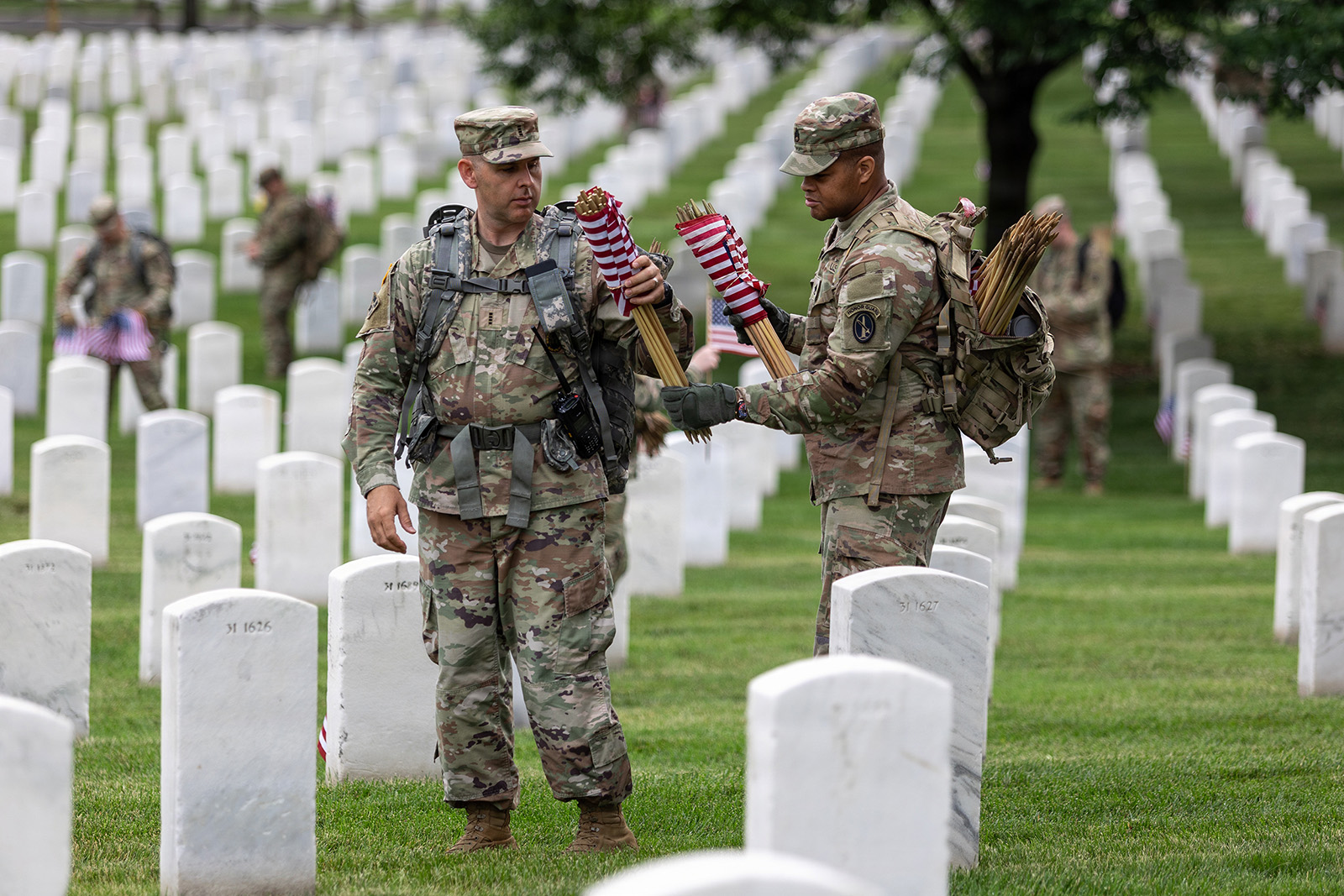

Soldiers assigned to The United States Army Old Guard Fife and Drum Corps place American flags at headstones in Arlington National Cemetery during “Flags In” in Arlington, Va., May 21, 2026. (U.S. Army photo by Staff Sgt. Christina Alegre/DVIDS/Public Domain)


Cara Schulz
June 8, 2026 
RNS

(RNS) — I was an Air Force journalist during the first Gulf War. I remember what military life looked like before the military acknowledged that pagan service members existed and had legitimate religious needs.

Back then, the consequences showed up in very practical ways: A pagan recruit in basic training had no services to attend, deployed service members had little hope of finding spiritual support and families of the fallen fought for years simply to have their religious symbols placed on their loved one’s headstones.  

This is why the Department of Defense’s recent decision to eliminate more than 180 religious affiliation codes has me deeply concerned. People who haven’t served may not understand what the big deal is about removing the religious codes and just lumping them all in as “other.”  

Codes are everything in the military. Your job specialty has a code. Your medical status has a code. Equipment has codes. Training has codes. The military is perhaps the most structured bureaucracy in America. If it doesn’t have a code, it doesn’t exist. 

The Pentagon states these religious codes help chaplains understand the religious makeup of their units. If pagans, druids, heathens and dozens of other minority faith groups are now grouped together as “other,” how does that help chaplains understand who they are serving? 

We’re not talking about a handful of service members. Estimates suggest roughly 15,000 pagans, heathens and druids serve in the military today, according to data from the Air Force and Marines, a population similar in size to Jewish, Muslim or Buddhist service members. Under the new policy, those service members are now grouped into a generic “other” category and are effectively invisible.

I remember what it looked like when the military couldn’t see us.  


When I went through Air Force basic training in 1989, pagan wasn’t a recognized option. There were no services or spaces for pagans to meet or worship. There was no spiritual counseling available because there was no code. No code means no counting. No counting means no planning. No planning means no resources.

Basic training is one of the most stressful experiences many young people ever go through. The days are long, the pressure is constant, you’re away from family and friends, every aspect of your life is controlled by someone else and you cannot leave.

On Sundays, recruits were allowed to attend religious services. They came back refreshed after spending time with clergy and people who shared their beliefs and values. Pagans, as well as other minority religions, didn’t have that option. 
 
After the code for pagan was added in 2017, the military could identify them as a distinct community. Pagan lay leaders were appointed to help organize services and activities. Groups could request space in base chapels and other facilities. Commanders and chaplains had a way to see that a pagan population existed and plan accordingly. Volunteer pagan clergy were allowed on base to conduct services and provide fellowship and spiritual support for trainees. That’s what a code accomplishes in the military. 

Having recognition didn’t just affect chaplain support. It had ripple effects throughout the military.  

Take the outdoor worship circle at the Air Force Academy. It exists because the academy recognized pagan cadets as a distinct religious community with distinct religious needs. That recognition gave pagan cadets a dedicated worship space, the ability to host retreats and a seat on the Cadet Interfaith Council. None of that was accidental — it was the downstream consequence of being counted.  
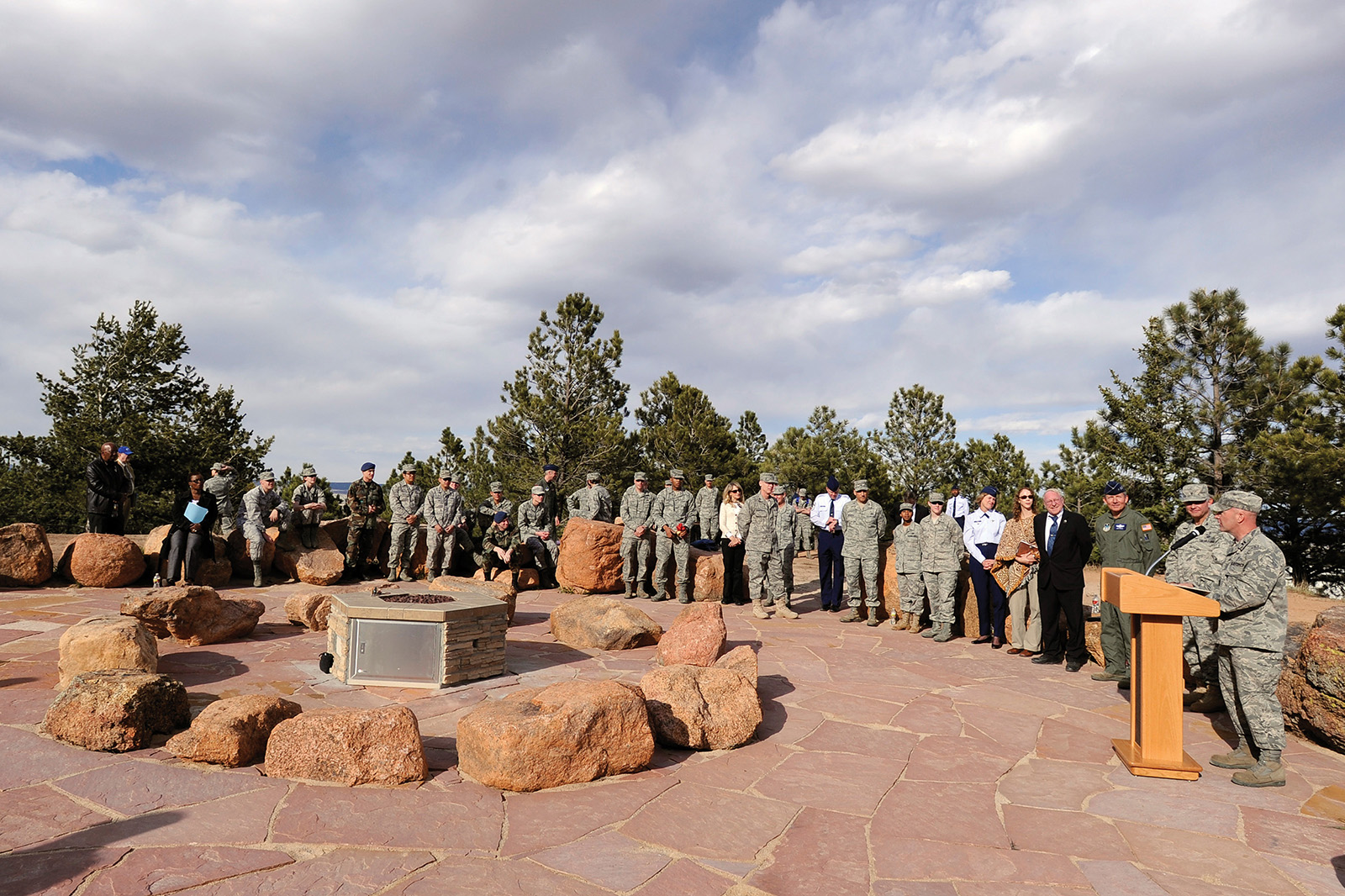
Cadet Chapel Falcon Circle, located on the hilltop between the Academy Visitors Center and the Cadet Chapel, is dedicated May 6, 2011, at the U.S. Air Force Academy near Colorado Springs, Colorado. (Photo by Mike Kaplan/U.S. Air Force/Creative Commons)

While no one is suggesting the circle will be bulldozed, what happens going forward? Will pagans still be able to apply for use of the space? Will they, and other minority faiths that have lost their code, lose their seat on the council? How do military leaders determine demand for minority-faith facilities if the communities using them are no longer separately tracked?

The impact of recognition wasn’t limited to basic training, deployment or military life. It also mattered after a service member’s death. 

After my service ended, as a religion reporter for The Wild Hunt, a publication covering paganism, I covered the decades-long effort to secure pagan symbols on military headstones. This was known as the Pentacle Quest. 
 
In 2007, the Department of Veterans Affairs finally approved the pentacle as a symbol for military headstones. This decision stemmed from decades of activism combined with a lawsuit just to grant fallen pagan service members the same dignity and recognition afforded to everyone else. 

Currently, if a family requests a pentacle for a fallen service member, the Department of Veterans Affairs checks the soldier’s official military personnel file for their religious code. If the religious code matches the family request, the headstone is approved automatically. 
 
Under the new policy, a pagan military member’s official record will list them as having “no religion” or “other.” When their family requests a pagan headstone, if the VA’s records check fails to find the matching code, the families will have to prove the veteran’s “sincerely held belief” through some other way not yet defined because the military itself stopped generating the primary proof of that faith. 
 
The Pentacle Quest wasn’t about getting a code in a database. It was about everything that flowed from that label. The military spent decades learning how to identify and support minority-faith service members.

What happens, in a system built on codes, when your code disappears?

(Cara Schulz is a former U.S. Air Force military broadcaster and reporter for The Wild Hunt who lives in Burnsville, Minnesota. She currently is an author and serves on Burnsville City Council. The opinions expressed in this commentary do not necessarily reflect those of Religion News Service.)


Defense Department rejiggers list of recognized religions after backlash, narrows it to 30

(RNS) — The fast-evolving list was met with blowback from critics who suggested its changes were an attempt to impose Christian nationalism on the military.
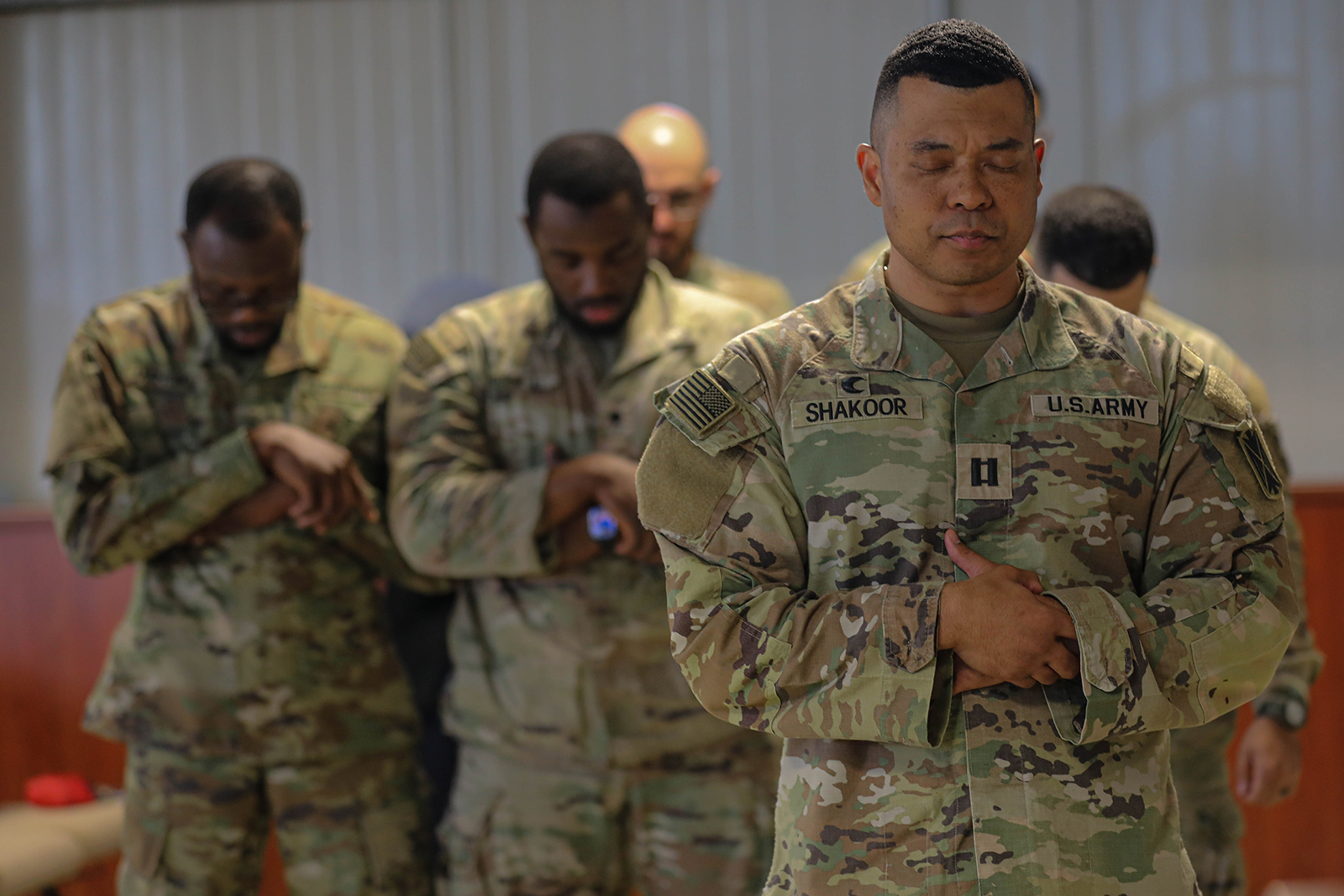

U.S. Soldiers from various units conduct a Juma’a on the Ramadan holiday in the chapel on Mihail Kogalniceanu Air Base, Romania, April 14, 2023. (U.S. Army photo by Spc. Alexander Chatoff/DVIDS/Public Domain)


Yonat Shimron and Adelle M. Banks
June 8, 2026
RNS

(RNS) — After eliminating about 180 faith groups from its list of recognized religions, the Department of Defense moved quickly to revise the list once again on Monday (June 8) in response to criticism from various religious groups.

The most updated list dropped the word “Christian” from 19 categories after pressure from two Utah senators and others who objected to a missing “Christian” label beside the name of the Church of Jesus Christ of Latter-day Saints. The Defense Department also dropped the category “Christian-Other.”

The Pentagon list included redundant and unnecessary labeling, and the mistake has been fixed,” the DOW Rapid Response X account tweeted, which also listed the updated religious affiliation codes.

The Defense Department under Secretary Pete Hegseth last month pared down the list of recognized religious labels in the military from 211 to a mere 31 — the vast majority of which are various Christian denominations.

On Monday, the list included 30 faiths.

Rep. Jamie Raskin, D-Md., the co-chair of the Congressional Freethought Caucus, called the revised list “completely un-American and unconstitutional,” pointing to the First Amendment, which prevents the government from establishing a national religion and allows individuals to freely practice their faith.

“Religious faith in America is not meant to be managed by the government,” Raskin said in a phone call with RNS. “It’s meant to be respected and honored by the government, but not managed, much less reduced and shrunk down.”

The narrowed list ignited as much outrage from atheists, humanists, pagans, Wiccans and druids, Unitarian Universalists, deists and a host of other new age religions excluded. Members of these minority faiths told RNS their exclusion from the new list was an affront to their sincerely held beliefs by a defense secretary who seems eager to impose his own beliefs on the military.

“When someone tries to erase, cover up, or hide the diversity present in the military, they lose out on part of what makes the military amazing,” wrote Irene Glasse, a retired Marine and a Wiccan in a Facebook post. “We are a complicated mix of people from different backgrounds, regions, cultures, perspectives, classes, races, genders, and religions. It’s a big part of what makes us so effective. Diversity is a feature, not a bug.”

Stoking the fire during a Wiccans’ Monday ritual, a pair of Wiccan soldiers are among the dozen local Wiccans who are a part of the local fellowship, June 13, 2006, in Baqubah, Iraq. (Photo by Spc. Lee Elder, 133rd Mobile Public Affairs Detachment/DVIDS/Public Domain)

The change, announced May 20 via a memo from Undersecretary of Defense Anthony J. Tata, was not publicly shared until military.com reported on it June 4. The memo said the changes should take effect within 60 days.

Sean Parnell, chief Pentagon spokesman, posted on X that the move does not reflect any official designation but rather seeks to assist chaplains providing spiritual care.

“This decrease in religious affiliation codes is not designed to make any claims on the legitimacy of any faith or religious belief, nor is it intended to provide a list of ‘officially approved’ religions,” his post reads. “The Department of War places a high value on the First Amendment and the free exercise of religion. Chaplains play an instrumental role in providing spiritual care and facilitating the Warfighters’ ability to freely exercise their religion of choice, or no religion at all.”

Members of the Church of Jesus Christ of Latter-day Saints immediately questioned why their faith was listed separately from the ones labeled as Christian.

“If only we, as Latter-day Saints, belonged to a church that had ‘Jesus Christ’ in its name and His image in its logo … Oh wait,” reads a post from Republican Sen. Mike Lee of Utah, accompanied by an image of Jesus on the church’s logo. In a video “imploring” Hegseth to change the listing, he called the change “repugnant.” He also posted that he had discussed the matter with President Donald Trump.

Later, he thanked the Defense Department for its update, saying he was “grateful to @SecWar Hegseth for correcting the error.”

Of the 30 faiths in the new recognized list, 20 are Christian denominations. The remainder include Buddhists, Jews, Baha’is, Muslims, Sikhs and people in broad categories of “no religion” or “other religions.” Among the Christian denominations, there is no distinction between various Presbyterian, Lutheran or Baptist denominations, which differ significantly on theological issues.

“There are definitely denominations here, Christian denominations, that are not listed,” said Gen. Steve Schaick, who served as Air Force chief of chaplains from 2018 to 2021, when asked by RNS about the newest list. He noted the speed with which the document has been “evolving” was highly unusual.

Members of Wiccan and other earth-based religions said the cuts to recognized faiths would make it far more difficult, if not impossible, for active-duty military personnel to request a day off for a religious holiday, have access to their faith’s sacred books or get permission to gather for a religious service or study. It would also make it far more difficult for military personnel to select a chaplain to provide active military personnel with pastoral care, they argued. 

“A disgrace” “a deliberate rebuke” and “an insult” were among the reactions on social media and in emails from members of minority faiths who had served in the military.

In a March video, Hegseth spoke of a narrower religious affiliation list, saying it was part of the reform of the chaplain corps, which he said had been “infected by political correctness and secular humanism.”

“Faith and virtue were traded for self-help and self-care,” Hegseth said, adding that “a war fighter needs more than a coping mechanism. They need truth, big T truth. They need conviction, they need a shepherd.”

To some people of minority faiths, Hegseth’s words raised fears the military might try to convert service members to a particular brand of evangelical faith, similar to Hegseth’s own evangelical Reformed tradition.

“Pete Hegseth has no idea what a chaplain does,” said Fish Stark, executive director of the American Humanist Association. “He seems to think that they’re meant to enforce his conservative Christian views, but really a chaplain’s job is to support members of the military, or wherever they serve in spiritual care, in the context of their own religious beliefs.”

Others went further, saying the cuts to as many as 180 faith traditions was an attempt to impose Christian nationalism on the military.

“This is part and parcel of that ideology,” said Nick Fish, president of American Atheists. “There are only certain people that count as authentically American. They want everybody to fit neatly in this box, and they want those boxes to be essentially evangelical Christians, and others.”

The ranks of atheists have climbed in the military, comprising up to 2% of service members, far higher than Jews and Muslims, who make up about 0.4% each, according to a military demographic study from 2019. That study found about 70% of active-duty personnel consider themselves Christian.

On Monday, American Atheists filed a Freedom of Information Act request to the Department of Defense seeking official records on how this decision was made.

When the Department of Defense expanded its list in 2017, it more than doubled the number of religions it recognized. There were previously just over 100.

The Department of Defense did not respond to requests from RNS for additional comment

Schaick said the new list may be a way to assist military recruits who may have found filling out an entrance form with a large array of religious choices “exceedingly difficult for a generation that cannot distinguish the term Protestant from Lutheran.”

But he added that the new approach could prevent the tracking of numbers of subgroups and affect the diversity of the chaplains corps.

Others said it was unbecoming of the government to tell service members what faiths it recognizes.

“My entire time in uniform, I wore dogtags with the word ‘Wiccan’ below my name, number, and blood type,” said Jonathan White, a retired captain from the U.S. Public Health Service Commissioned Corps.

The elimination of so many faith traditions from the list, he said, “feels like an explicit dis-invitation to so many people who have served in the military and uniformed services. It’s not an accidental omission, but a deliberate rebuke.”

(Heather Greene contributed to this report.)

PAGF 13


Trump’s meeting with Orthodox Christian patriarch sows confusion

(RNS) — The Greek Orthodox leader expects to meet with Russian President Vladimir Putin later this month.

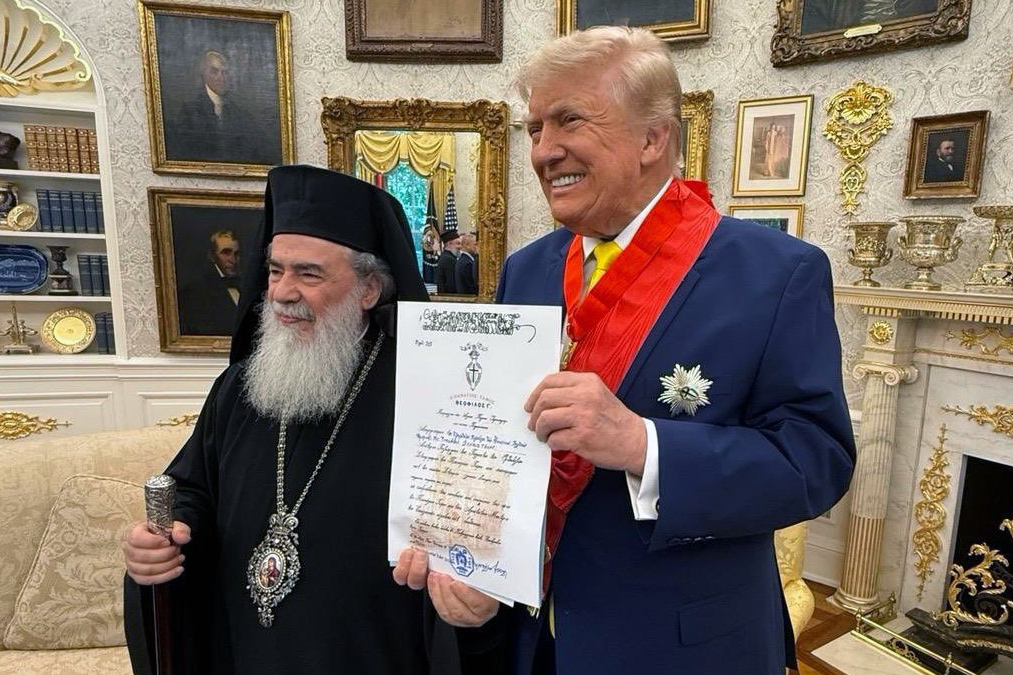
Patriarch Theophilos III of Jerusalem, left, meets with President Donald Trump at the White House in Washington, June 4, 2026. (Photo courtesy Jerusalem Patriarchate)

David I. Klein
June 10, 2026 
RNS

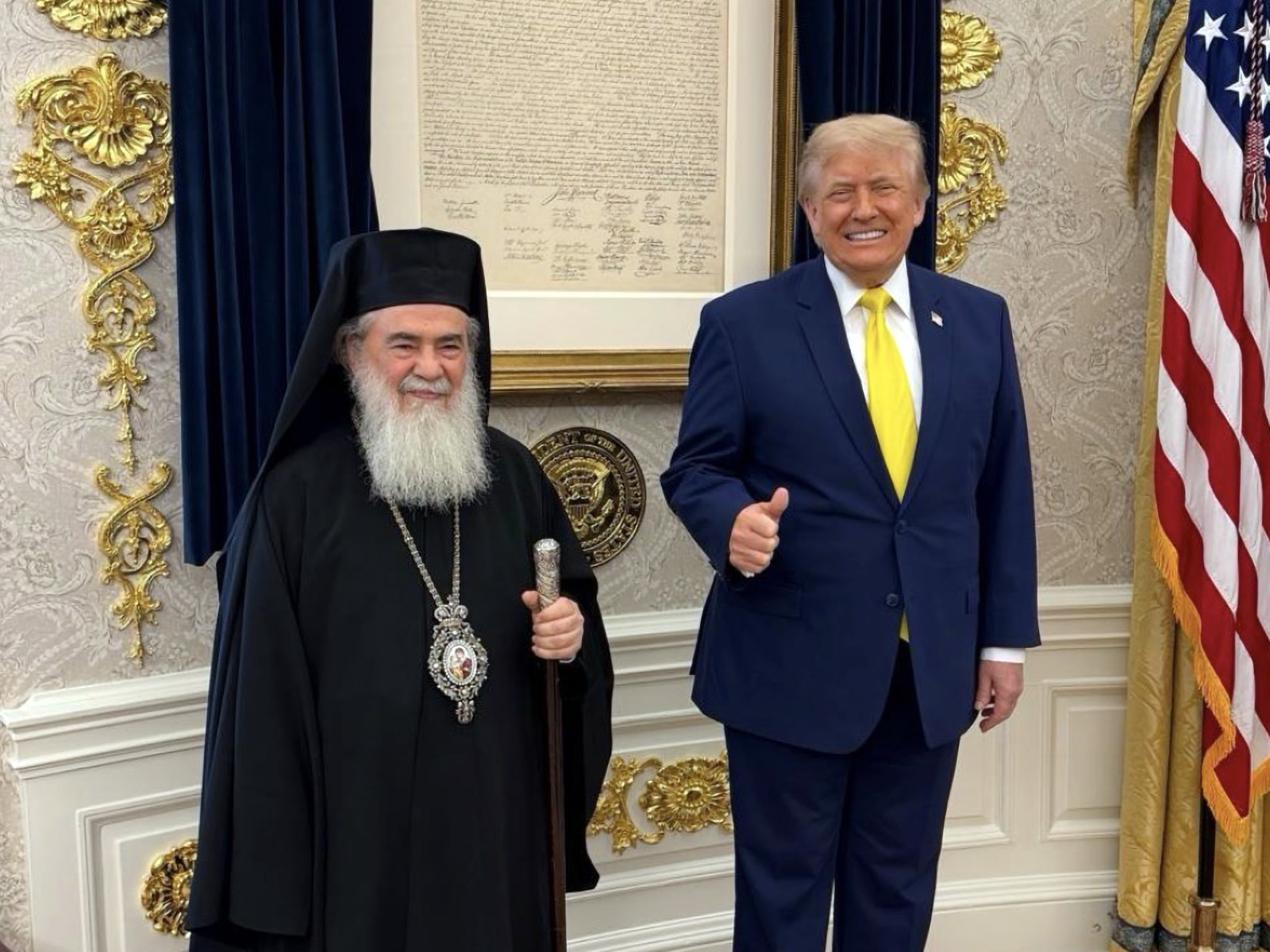
(RNS) — The Greek Orthodox patriarch of Jerusalem, Theophilos III, met with President Donald Trump last week in the White House and awarded him one of the highest honors in the church, the Grand Cross of the Order of the Holy Sepulchre.

In return, Theophilos came out of the meeting with an honor of his own, the suggestion of becoming a peacemaker in the Russia-Ukraine conflict, apparently backed by Trump, Israeli media reported.

The news left many observers scratching their heads. In the constellation of Orthodox Church leaders, Theophilos is seen as solidly in Russia’s camp. The patriarch is set to meet with Russian President Vladimir Putin in Moscow later this month.

The Ukraine-Russia war is the largest conflict affecting the world’s Orthodox Christians today, with majorities of both Russia and Ukraine’s population identifying with Orthodox churches.

The conflict has divided the wider Orthodox world too, after the Ecumenical Patriarchate of Constantinople granted autocephaly to a Ukrainian Orthodox Church independent of the Moscow Patriarchate, prompting Moscow to break communion with Constantinople and forcing many of the Eastern Orthodox churches to pick sides. The result has been the largest schism in the church since the break with Rome in 1054.

Though the Jerusalem Patriarchate does not acknowledge the legitimacy of the independent Ukrainian church, Theophilos is one of the leaders who — in some respects — straddles the divide. As a native Greek, he maintains ties with those in Constantinople’s orbit, but the long history of Russian pilgrimage to the Holy Land and number of Russian Orthodox Christians in Israel have kept him close to Moscow, explained Samuel Noble, a scholar of Orthodox Christianity at Belgium’s University of Liège.


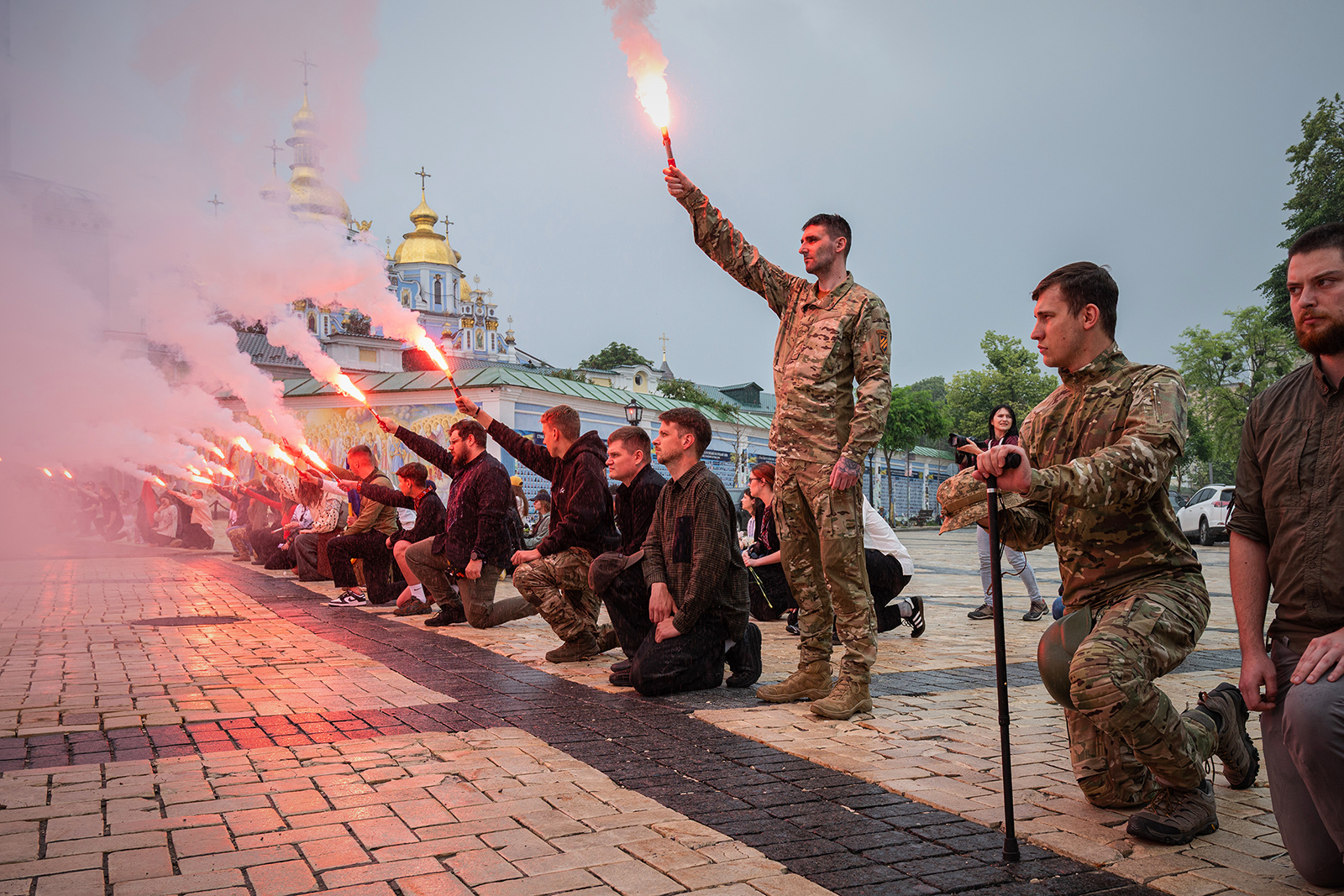
People light flares during the funeral ceremony of fallen Ukrainian servicemen in Kyiv, Ukraine, Monday, June 8, 2026. (AP Photo/Danylo Antoniuk)

“Having goodwill with both the Hellenic world and with Russia is an interesting diplomatic thing,” Noble told RNS, “but I don’t think that it all translates into diplomatic cachet with the Ukrainian state.”

Cyril Hovorun, a Ukrainian Orthodox theologian and scholar, told RNS he viewed the news as an attempt to replace the White House’s previous efforts to tap the Vatican as such a mediator. “The patriarch of Jerusalem is known for being quite closely attached to Putin,” he noted.

“I think it fits the policy of Donald Trump’s administration to distance itself from Ukraine as a mediator and to bestow this mission of mediation upon someone else,” Hovorun said. “Once upon a time, the Holy See, the Vatican, was considered as such a mediator. … Now that the relations between the White House and the Apostolic Palace — the Holy See — have deteriorated significantly and dramatically, I think this idea to ask someone else, some other religious figure, to do mediation emerged in the White House.”

Ukrainian officials quickly shut down the idea of Theophilos as a mediator, noting his opposition to the Ukrainian church’s independence.

“Patriarch Theophilos’ participation in negotiations with Ukraine is unrealistic,” a high-ranking diplomat of the Ukrainian Embassy in Israel told Ukrainian media. “Ukraine will never do such a thing.”


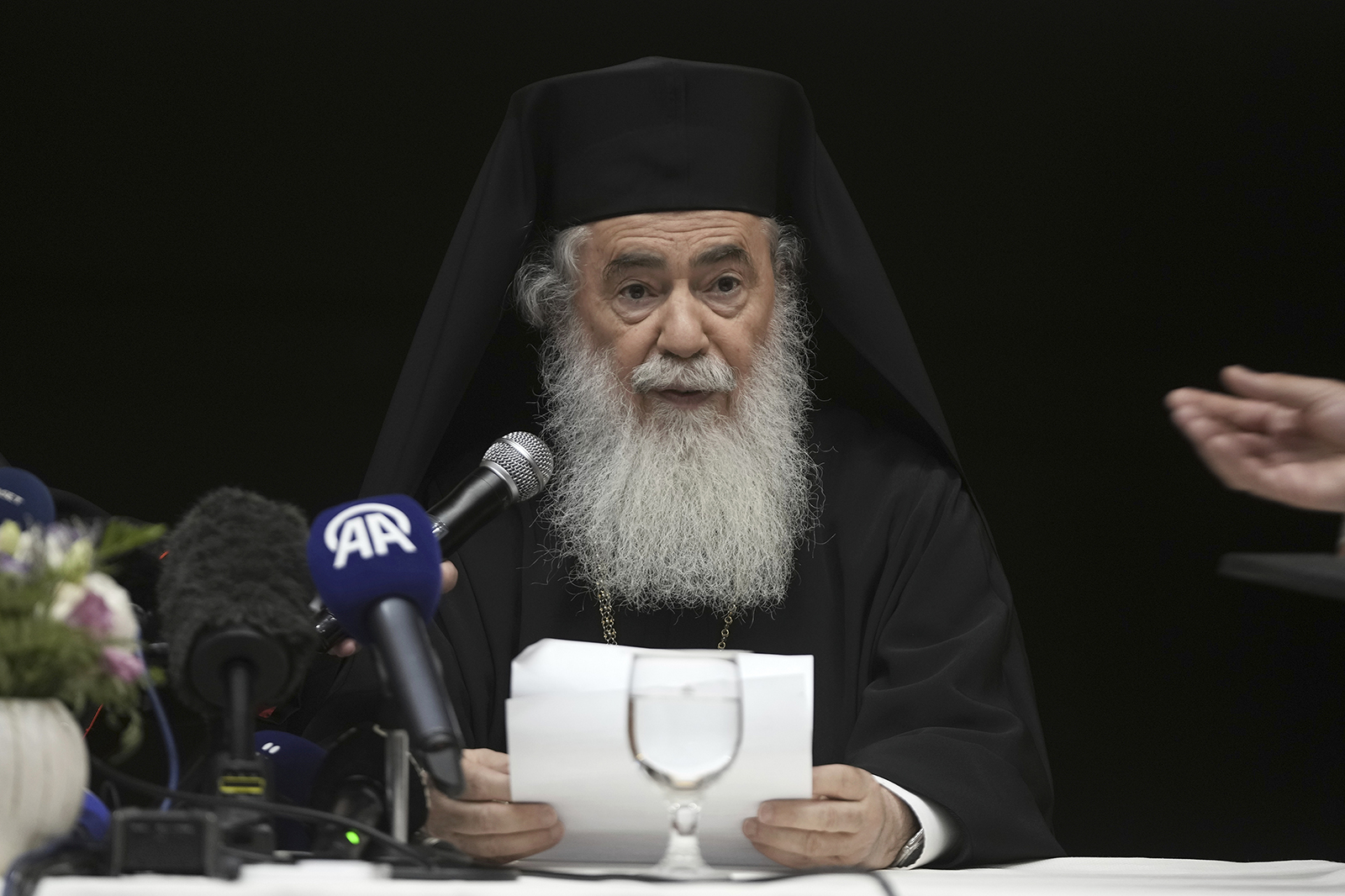
Greek Orthodox Patriarch Theophilos III speaks during a joint press conference with Latin Patriarch Cardinal Pierbattista Pizzaballa, not pictured, after their visit to the Gaza Strip in Jerusalem, July 22, 2025. (AP Photo/Mahmoud Illean)

The embassy also said Theophilos had not responded to any of the embassy’s initiatives previously but participated in Russian diplomatic events.

The ancient Jerusalem patriarchate, one of nine independent churches governing Eastern Orthodoxy, has long seen its role as protecting Christian communities and sites in the Holy Land. The meeting came at a time when the Christian population of the Holy Land, including many Orthodox Christians, are facing heightened tensions against their communities and while the Trump administration has shown signs of willingness with Israel to topple the fragile status quo governing sacred sites in the region.

“The Patriarch presented the President with a range of concerns and challenges confronting the churches of the Holy Land. Foremost among these were sustaining the authentic Christian presence, safeguarding holy sites, promoting human dignity, and reinforcing the Church’s mission of pastoral care, mercy, and peace building,” the patriarchate said in a statement.

After his meeting with Trump, Theophilos met with the Greek prime minister with the same agenda to protect Christians and the church’s holy sites.

Over the past several years, Jerusalem and the wider region have seen a rash of harassment, violence and legal pressures against Christian communities in the Holy Land. According to a recent report by the Jerusalem-based Rossing Center for Education and Dialogue, 2025 saw more than 150 attacks on Christians in Israel, up from 111 in 2024 and 89 in 2023. Only about 1.9% of Israel’s population is Christian, and 80% of Israeli Christians are Arab.


Patriarch Theophilos III of Jerusalem, left, meets with President Donald Trump at the White House in Washington, June 4, 2026. (Photo courtesy of Jerusalem Patriarchate)

Jonathan Kuttab, a Palestinian Christian and human rights lawyer, noted that despite the influence of Christian Zionism, anti-Christian sentiment — as something separate from anti-Palestinian or anti-Arab sentiment — is a growing problem in several sectors of Israeli society.

“There’s a very strong, almost gut level anti-Christian sentiment that is never acknowledged, but in some places and in some cases — like these days — it’s coming up to the surface,” Kuttab said, citing examples of ultra-Orthodox Jews spitting at nuns and priests and religiously motivated attacks against Christian villages, cemeteries and churches in the region.

“There is a very clear sentiment there, which is almost never addressed or expressed openly, unless, you know, you’re somebody crazy, like (Bezalel) Smotrich or (Itamar) Ben-Gvir who say it up front,” he said, referring to Israel’s finance and national security ministers, who both helm far right parties in the Knesset and have a history of defending sectarian attacks.

RELATED: Israeli attacks on Christians and Christianity demand answers

In April, an Israeli soldier smashed a statue of Jesus with a sledgehammer in southern Lebanon while another soldier photographed the act, resulting in their removal from combat service and prompting the Jewish state to appoint a special envoy to the Christian world. In May, a man chased, pushed down and kicked a French Catholic nun in Jerusalem.


An undated photo of an Israeli soldier smashing a statue of Jesus Christ with a sledgehammer in southern Lebanon. (Image via social media)

“We have witnessed incidents of harassment, acts of disrespect toward clergy and religious symbols, and growing concerns surrounding the preservation of Christian life and heritage in the city,” said Levon Kalaydjian, a Jerusalem Armenian Christian activist. “These are not abstract concerns; they affect the daily sense of dignity, belonging and safety of communities that have been rooted in Jerusalem for centuries.”

Rabbi Eugene Korn, the former academic director of the Center for Jewish-Christian Understanding and Cooperation, said the mentality has been growing in certain sectors, such as the ultra-Orthodox and religious Zionist communities.

“Problems that have gotten a lot of attention — and rightfully so — in Jerusalem, are kind of localized to Jerusalem, because you have these radicals and many of them are represented in the government and the government doesn’t take action against them,” Korn said.

Jerusalem’s many church bodies have faced legal pressures as well. The Jerusalem municipality froze the Greek Orthodox Church’s accounts last summer in a tax dispute that critics allege was an attempt to force the church to sell its prized land holdings. The Armenian Patriarchate of Jerusalem has similarly been embroiled in a long court battle to defend a portion of the Armenian quarter of Jerusalem’s Old City from being taken over by developers. The two patriarchates, and particularly the Greek Orthodox Church, are among the largest landholders in Israel, controlling large swaths of land far beyond historic churches and religious institutions. But the Jerusalem Patriarchate has also recently sold off properties — to the chagrin of its local Palestinian flock.

While the church’s flock is overwhelmingly Arabic-speaking Palestinian and Jordanian Christians, its leadership has for centuries been — almost invariably — transplants from Greece or Greek-speaking communities.

“The Greek Orthodox Church in Jerusalem has never reflected the sentiment of the Palestinian, the people in the pew,” Kuttab said.


What the tattoos of World Cup players say about their love, life and religious beliefs

(The Conversation) — As millions watch the 2026 FIFA World Cup, players’ tattoos will be on display – offering a glimpse into the inner lives of soccer’s biggest stars.


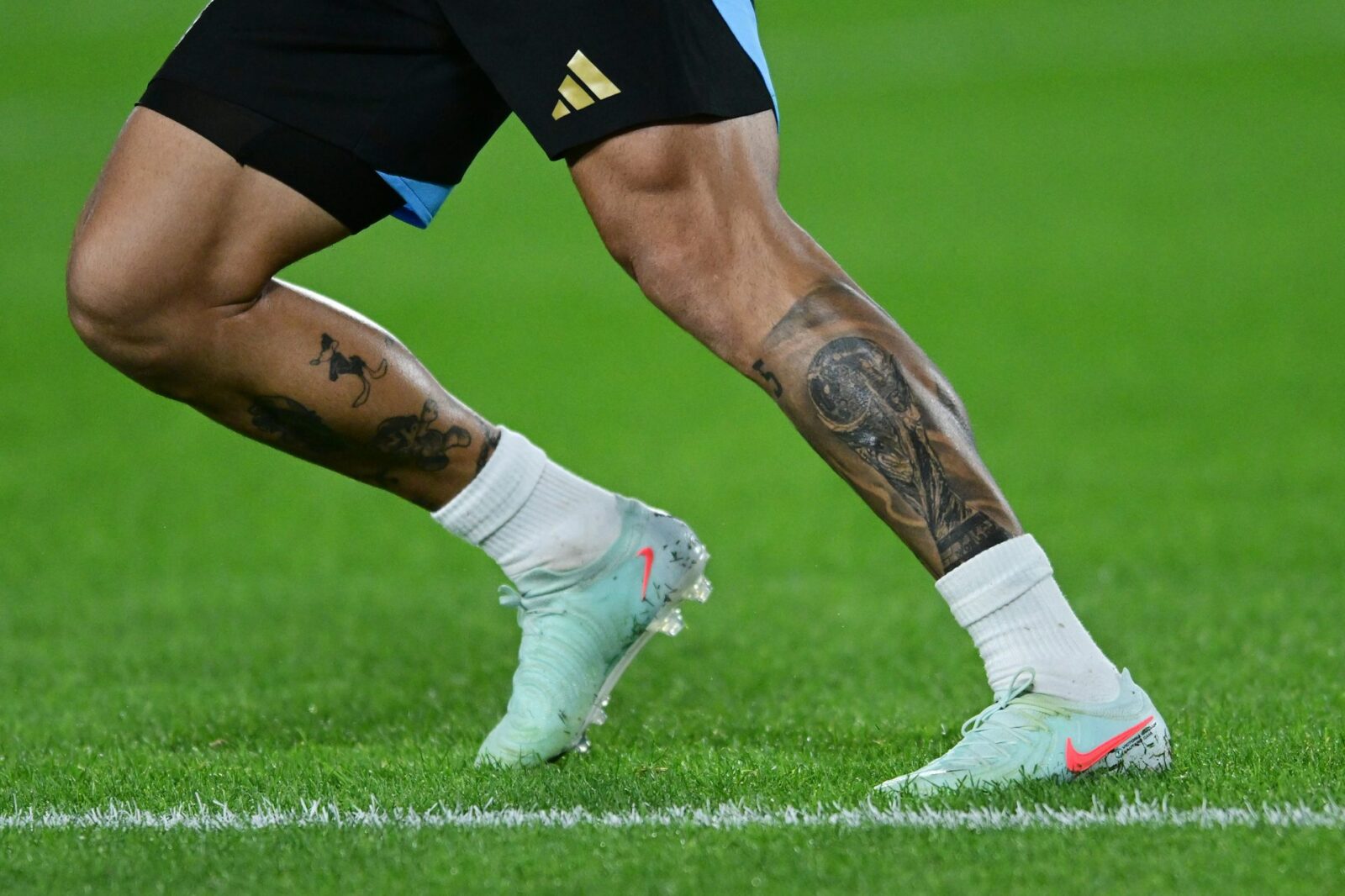
The leg tattoos on midfielder Leandro Paredes of Argentina. (Marcelo Endelli/Getty Images)


Gustavo Morello
June 10, 2026

(The Conversation) — As the 2026 FIFA World Cup starts on June 11, 2026, traditional news and social media channels will be full of pictures of the players. Many of them will be showing their tattoos.

Body art has become increasingly part of international soccer, although its prevalence can vary across geographical regions. A study of athletes participating in the 2018 World Cup found that Latin American players were the most heavily tattooed, followed by those from Oceania and Europe. African and Asian players are the least tattooed.

I have been studying tattoos and their spiritual and religious roles since 2018. Tattoos are an investment of time and money; they tend to symbolize something important in the person’s life. For professional athletes, however, they take on another level of meaning.

These athletes operate in controlled environments in which what they do and say with their bodies is highly regulated. A player cannot freely ski, ride, work out or take vacations without considering contractual obligations to companies and other investors. Most of the professionals playing in the World Cup have also signed sponsorship agreements that regulate what they can display on their social media.

Against this backdrop, tattoos remain one of the few spaces of personal freedom. As my colleagues and I found in our research, those who get them are choosing to reveal what is important and sacred to them.

Breaking the code

Sociologists Sam Belkin and Dale Sheptak argue that tattoos are often a way for athletes to express their humanity in environments where they may be subjects of unreal expectations or treated as an asset. Belkin and Sheptak write that visible tattoos are a type of “nonverbal communication” that enables players to be honest about their personal feelings and what matters to them.

My colleagues and I analyzed the tattoos of the Argentine men’s national team that won the last World Cup in Qatar in 2022. We looked at about 200 pictures and found that 20 of the 26 players on the roster had a total of 226 tattoos.


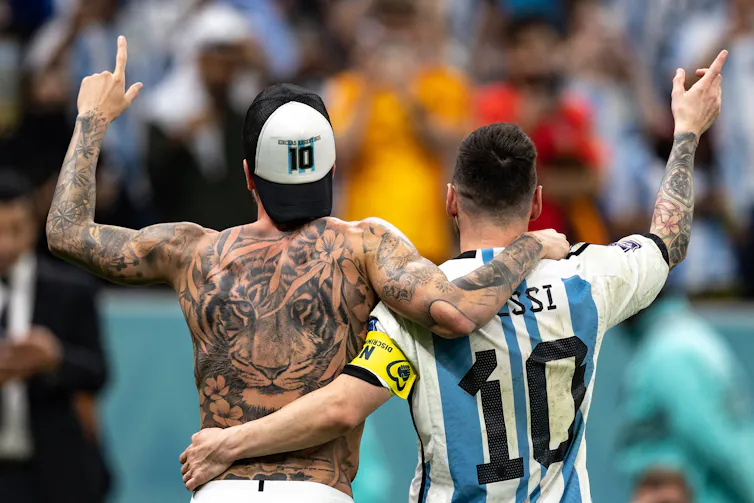
Argentina’s Rodrigo De Paul, left, and Lionel Messi at Lusail Stadium in Lusail City, Qatar, on Dec. 9, 2022, with their tattoos visible.
Simon Bruty/Anychance/Getty Images

We analyzed the team’s demographics and the tattoo designs and placement on the players’ bodies. We also analyzed interviews where some of them had talked about their lives and, in some cases, the stories behind their tattoos. By placing these tattoos in the broader context of their professional paths and religious and popular culture, we were able to better understand what the body art meant to them.

A majority of players expressed their religious beliefs through their tattoos: 75% of them – 15 out of 20 – featured body art of religious figures connected to Catholicism, like the Virgin Mary, Jesus and saints; some also had tattoos of doves associated with the holy spirit, and churches.

We also saw religious diversity. There were tattoos of the Buddha, folk saints and spiritual objects. One player had a tattoo of a dream catcher – a handcrafted willow hoop with a woven net that resembles a spider’s web, typically hung above a bed to offer protection; another had the word “energía” – energy – inked on his body.

Seventy-five percent of the players had tattoos depicting what they achieved in their careers. Some of the symbols they used were trophies, jerseys and numbers. Usually the numbers they got corresponded to the jersey numbers they wear.

Eighty percent – 16 players – had tattoos that portrayed what they loved. These tattoos include designs of numbers – usually dates of their children’s births – names of beloved ones or their partner’s eyes or lips.

Some tattoos expressed their extended family, including parents, grandparents, people who helped raise them, and even pets.

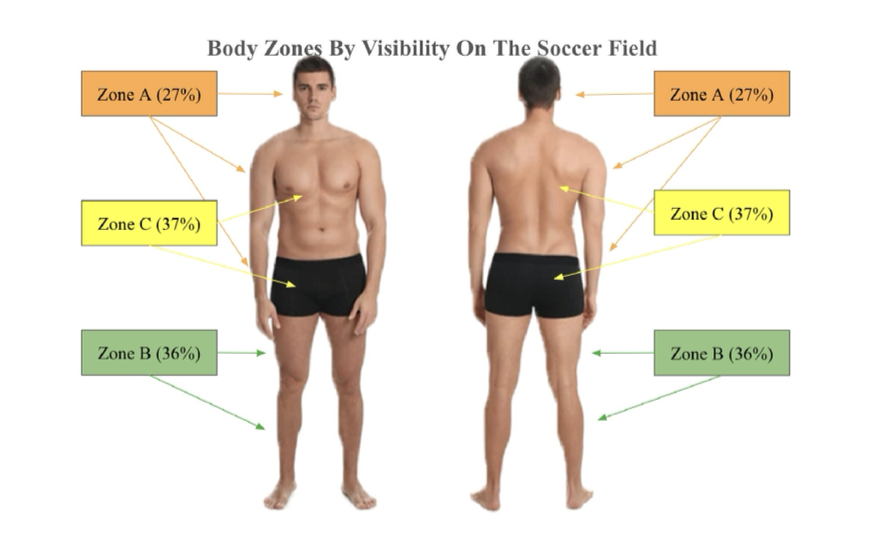
Placement was also important. About 60% of the tattoos were on the arms and head, locations that were easily visible when they are performing on the field.

But the design of the tattoo also decided its placement: Religious symbols were usually placed on the entire shoulder or biceps, or on the upper or lower leg. Tattoos related to professional careers were usually located on the player’s dominant leg. Animal tattoos were usually placed on backs, and not visible during games.

Not all tattoos are the same

Many scholars who study soccer have examined its relationships with politics and explored how the sport has been a venue for politics. Diego Maradona, for example, got the Argentine Marxist revolutionary and guerrilla leader Che Guevara tattoo on his right arm and Cuban revolutionary Fidel Castro on his calf, expressing his revolutionary political view. Our research team did not find political tattoos among current players.

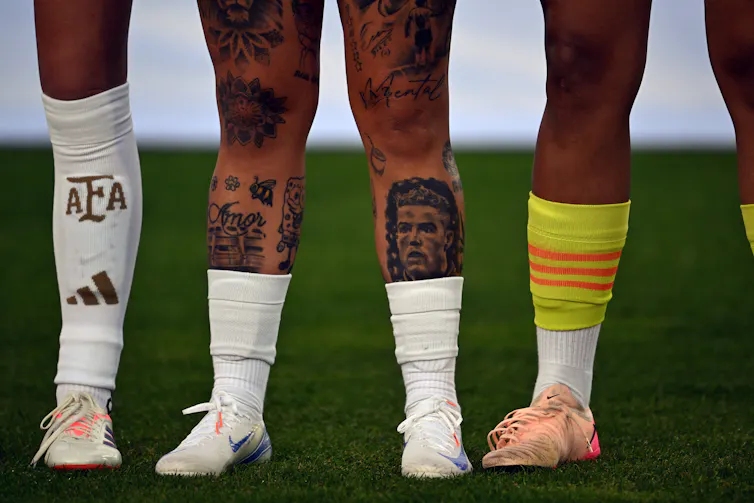
Gender is also important when looking at tattoos. Female players are often subjected to greater scrutiny than their male counterparts. When Argentina’s national women’s team captain Yamila Rodriguez revealed tattoos of Cristiano Ronaldo, she faced intense criticism from fans and media for having the Portuguese superstar and not Argentinean Lionel Messi depicted in tattoo. Rodriguez’s experience highlights that women’s bodies are subjected to personal judgment in a way that men’s are not.


A tattoo of Portuguese player Cristiano Ronaldo on the leg of Argentina women’s team captain Yamila Rodriguez ahead of a match against Uruguay in Montevideo, Uruguay, on Oct. 28, 2025.
Eitan Abramovich/ AFP via Getty Images

This World Cup, with its unprecedented global outreach, offers a unique opportunity to observe the values, beliefs and relationships that players choose to display on their bodies. In some ways, tattoos can be seen as a small window into the players’ souls.

(Gustavo Morello, Professor of Sociology, Boston College. The views expressed in this commentary do not necessarily reflect those of Religion News Service.)


The Conversation religion coverage receives support through the AP’s collaboration with The Conversation US, with funding from Lilly Endowment Inc. The Conversation is solely responsible for this content.
Cincinnati, where Vance converted, gives a glimpse of Catholicism’s history in America’s heartland

(The Conversation) — For more than a century, anti-Catholicism was a powerful force in the region’s culture and politics. But religious pluralism ultimately triumphed in the ‘Queen City.’


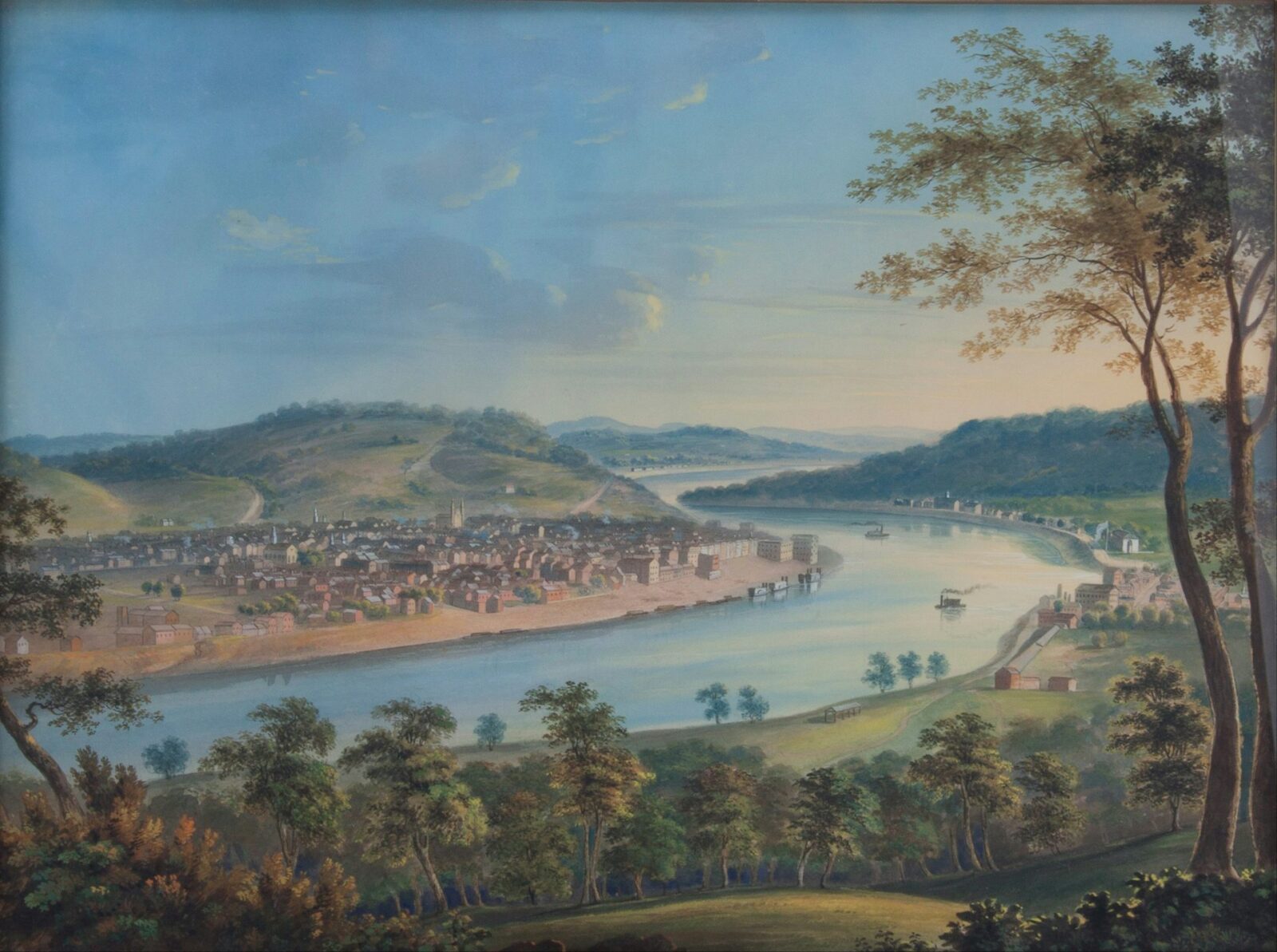
John Caspar Wild painted 'View of Cincinnati From Covington' in 1835, as the city was booming. (Cincinnati Museum Center at Union Terminal/Google Art Project via Wikimedia Commons)

Matthew Smith
June 10, 2026 

(The Conversation) — Ten years after “Hillbilly Elegy” catapulted its author into public view, JD Vance is publishing a new memoir, “Communion: Finding My Way Back to Faith.” The vice president explains the book as a sort of self-help guide for the spiritually lost: “… by sharing my journey I might be helpful to others – Catholic, Protestant, or otherwise – who are seeking reconciliation with God.”

Scheduled for publication in June 2026, “Communion” promises “an intimate account” of its author’s religious journey. But the Catholicism to which Vance converted in Cincinnati in 2019 is quite unlike the evangelism he encountered in his childhood, famously described in “Hillbilly Elegy.”

As a historian of religion in Appalachia and the Midwest, I find America’s religious mosaic endlessly fascinating. Vance’s journey from Protestantism, to atheism, to Catholicism, not to mention his marriage to a Hindu woman, reflects the diversity of the United States.

My own experiences teaching in Vance’s hometown of Middletown, Ohio, suggest that America’s Midwestern communities, tarnished by “Rust Belt” stereotypes, are as dynamic and as changing as everywhere else – including in matters of faith.

Nearby Cincinnati, where Vance was confirmed at a Dominican priory, is a case in point and a window into Catholicism’s history in the American heartland. For more than a century, anti-Catholicism was a powerful force in culture and politics – yet, time and again, religious pluralism triumphed.


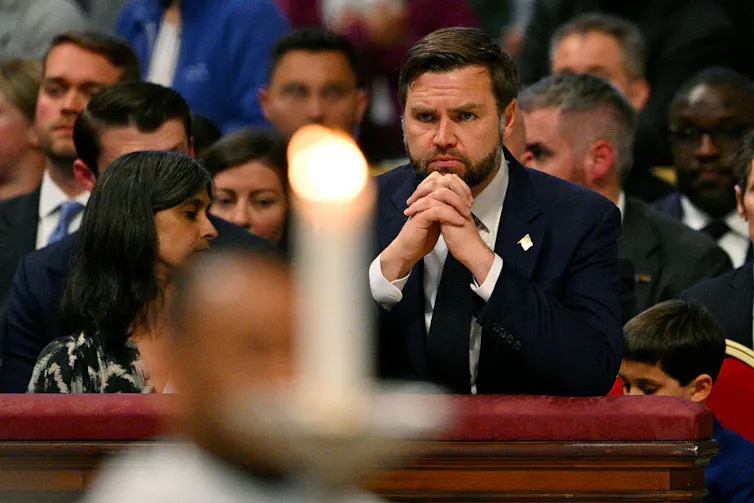
U.S. Vice President JD Vance and his wife, Usha Vance, attend services at St. Peter’s Basilica in the Vatican on Good Friday, April 18, 2025.
Andreas Solaro/AFP via Getty Images


Scots-Irish settlers

“To understand me, you must understand that I am a Scots-Irish hillbilly at heart,” Vance declared in his first memoir.

The Scots-Irish played an outsized role in history. Initially, these Protestants were from Scotland, but they moved to Ireland in the 17th century. “Planted” by the British Crown as a form of colonization, these immigrants riled the Catholic majority whose lands they occupied.

Later, many crossed the Atlantic and settled the Colonial American backcountry. Their distinctive influence shaped the “hillbilly” culture of Appalachia.

The faith of these settlers kindled a fervent Protestant piety, found in the Great Revival of the Ohio Valley frontier. In this early 19th-century rebirth of backcountry religion, traveling ministers preached a fiery gospel of grace, stirring large crowds with their open-air sermons.
Queen City

Boundaries between urban and rural America were always porous. By 1830 a quarter of Ohio’s 1 million inhabitants clustered in the state’s southwestern corner. Cincinnati was the heart of this region: the “Queen City” of the United States’ expanding Western frontier.

It had become a hub of Catholic immigrants from Germany and Ireland – and a center for anti-Catholic preaching and anti-immigrant politics. In 1835, leading Protestant evangelist Lyman Beecher infamously denounced immigrants “rushing in like the waters of the flood” and argued the Vatican and Catholic schools posed dangers for America.


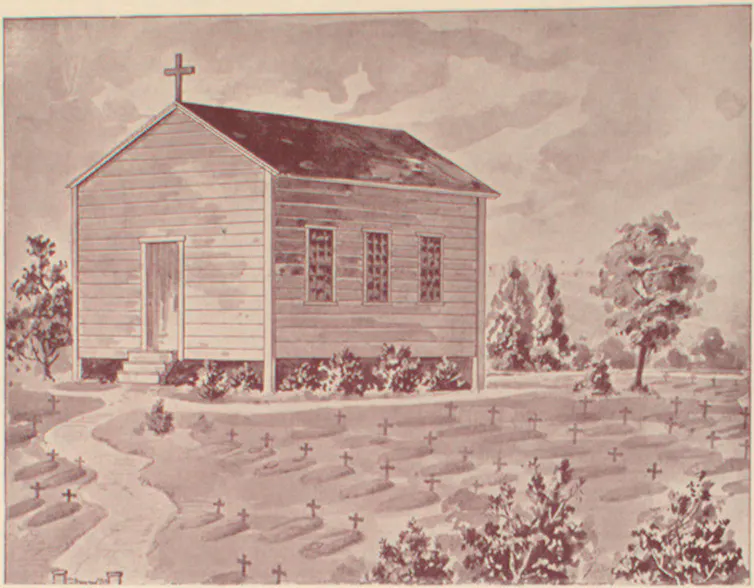
The first Catholic parish in Cincinnati originally met in a small building just outside city lines.
Cincinnati Public Library via Wikimedia Commons

Amid such prejudice, Protestant Irish Americans embraced the term Scots-Irish to distinguish their more established population from recent Catholic arrivals. Many of these Catholic newcomers, fleeing famine and persecution, were disparaged as poor, illiterate and superstitious.

Yet despite alarmism and periodic violence, including ethnic riots in 1855, Cincinnati’s sectarian relations were surprisingly pragmatic, shaped by a sense of shared civic endeavor. Protestants welcomed the city’s first Catholic church, for example, and often sent their children to the Catholic parochial schools. Many converted to Catholicism, including wealthy philanthropists.

In 1837, Cincinnati’s Catholic Bishop, John Baptist Purcell debated Protestant preacher Alexander Campbell on the merits of Catholic religion for several days before a crowded audience. Both debaters claimed victory, and proceeds from the published debates were evenly split between Catholic and Protestant charities in Cincinnati.
Changing country

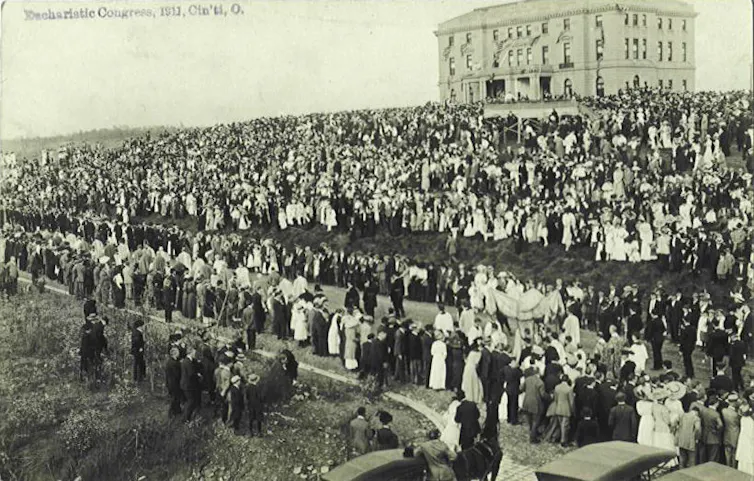
By the mid-19th century, the city’s Catholics, while still a minority, were larger than any single Protestant denomination and central to the cultural landscape.


People observe the National Eucharistic Congress, a gathering for Catholics, in Cincinnati in 1911.
Wikimedia Commons

At the time, Catholics represented only 5% of the U.S. population. That percentage would triple by the turn of the century, due to immigration from southern and eastern Europe.

Anti-Catholic backlash continued into the 20th century, along with other forms of religious prejudice. For example, the U.S. Immigration Act of 1924 restricted immigration from parts of Europe heavily populated by Jews and Catholics. Animosity once focused on immigrants from Germany and Ireland shifted to those from Italy and Russia.

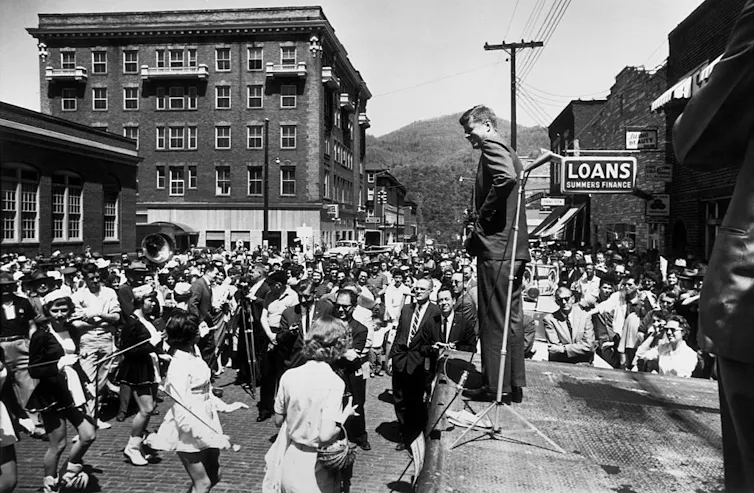
Bias against Catholics remained a robust force in Appalachian politics, too. Leading up to the 1960 Democratic primary, John F. Kennedy campaigned tirelessly in West Virginia, considered a tough arena for a Harvard-educated Catholic but critical to his electoral strategy. His success in the Mountain State defied the myth that a Catholic candidate could never win the White House.


John F. Kennedy campaigns in West Virginia on May 10, 1960.
Corbis/Corbis Historial via Getty Images


Turn toward ‘Communion’

Southern Ohio, where Vance grew up and converted to Catholicism, is deeply Midwestern. But its heritage has been influenced by the wave of workers who left Appalachia in the mid-20th century looking for jobs, including Vance’s family.

As Vance wrote in a 2020 essay for Lamp magazine, which addresses Catholic issues, his early ideas of Catholicism were negative ones – assuming, for example, that the church “rejected the legitimacy of Scripture.”

As a young man, he drifted away from faith altogether. During his days at Yale Law School, however, Vance discovered a curiosity that drew him toward Catholicism, inspired by thinkers from Silicon Valley mogul Peter Thiel and French philosopher René Girard to the fourth-century theologian St. Augustine.

Vance wrote in his essay, “I often wonder what my grandmother” – a woman with Christian beliefs, but skepticism of institutional religion – “would have thought about her grandson becoming a Catholic.”

Today, 1 in 5 U.S. adults is Catholic, and another 9% consider themselves “cultural Catholics.” America’s prejudice toward their tradition has eroded. Six out of nine Supreme Court justices are Catholic, along with 28% of Congress.

In fact, Vance’s new faith highlights a growing alliance between culturally conservative elements of American Catholicism and America’s religious right, dominated by conservative Protestants since its emergence in the 1970s.

Lately, this alignment has come under strain, in part reflecting American-born Pope Leo XIV’s wariness toward U.S. policies, such as the war in Iran. Nowhere have such spats been more ironic than in Vance’s rebuke of the pope. After Leo remarked that Jesus’ followers are “never on the side of those who once wielded the sword and today drop bombs,” the vice president warned, “If you’re going to opine on matters of theology, you’ve got to be careful.”

It will be interesting to see how such tensions play out in years to come.

(Matthew Smith, Visiting Assistant Professor of History, Miami University. The views expressed in this commentary do not necessarily reflect those of Religion News Service.)


The Conversation religion coverage receives support through the AP’s collaboration with The Conversation US, with funding from Lilly Endowment Inc. The Conversation is solely responsible for this content.
THE LION VS THE ANTI CHRIST

Pope Leo says Christians ‘cannot promote war,’ blesses Sagrada Família’s Jesus tower

BARCELONA, Spain (RNS) — Surrounded by the nature-inspired architecture of Antoni Gaudí, often referred to as ‘God’s architect,’ the pope gave a homily that made a forceful appeal in defense of human life and against war.


Pope Leo XIV, bottom, walks in procession to celebrate a Mass in the Basilica of the Sagrada Família in Barcelona, Spain, Wednesday, June 10, 2026. (AP Photo/Alessandra Tarantino)

Claire Giangravè
June 10, 2026
RNS

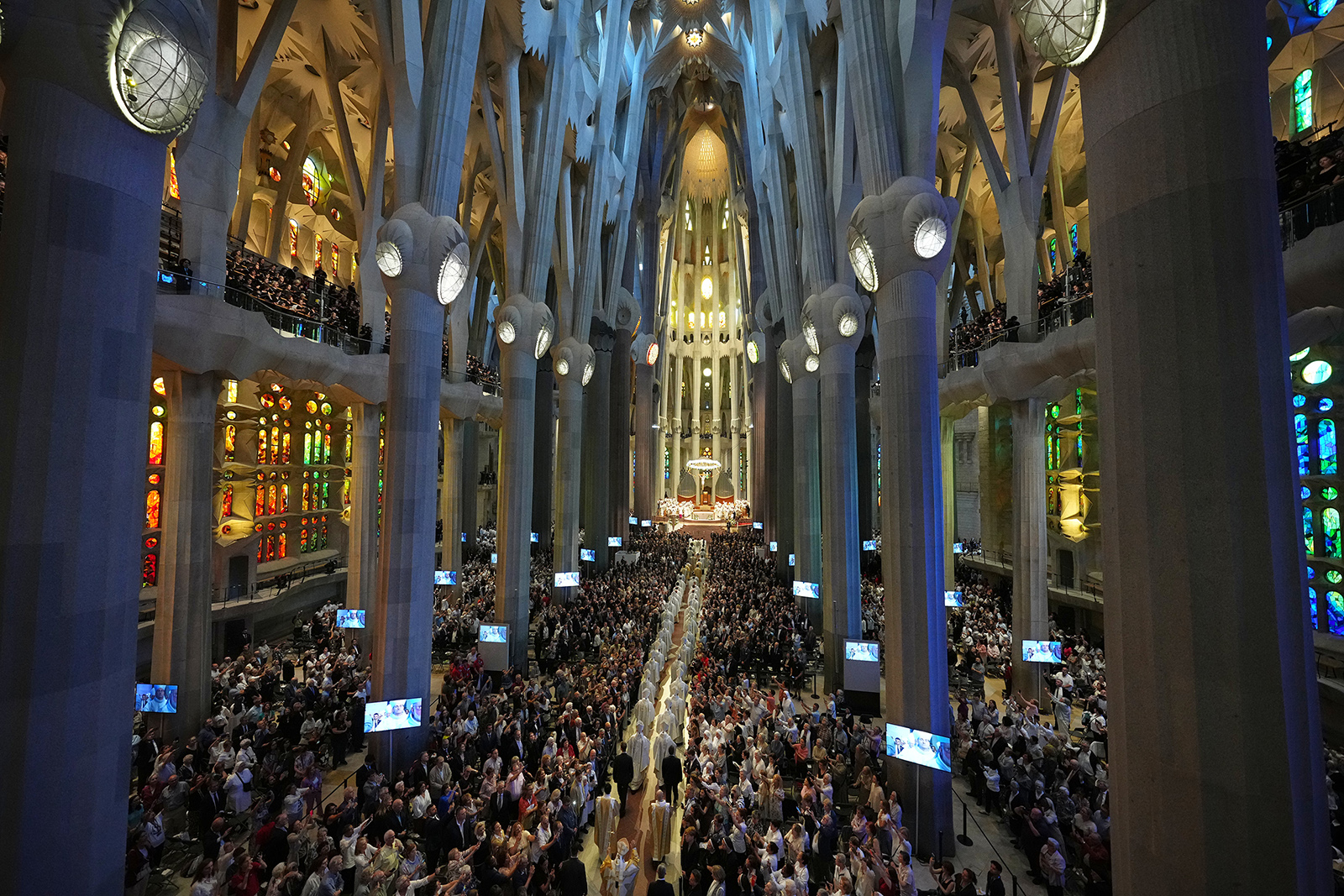
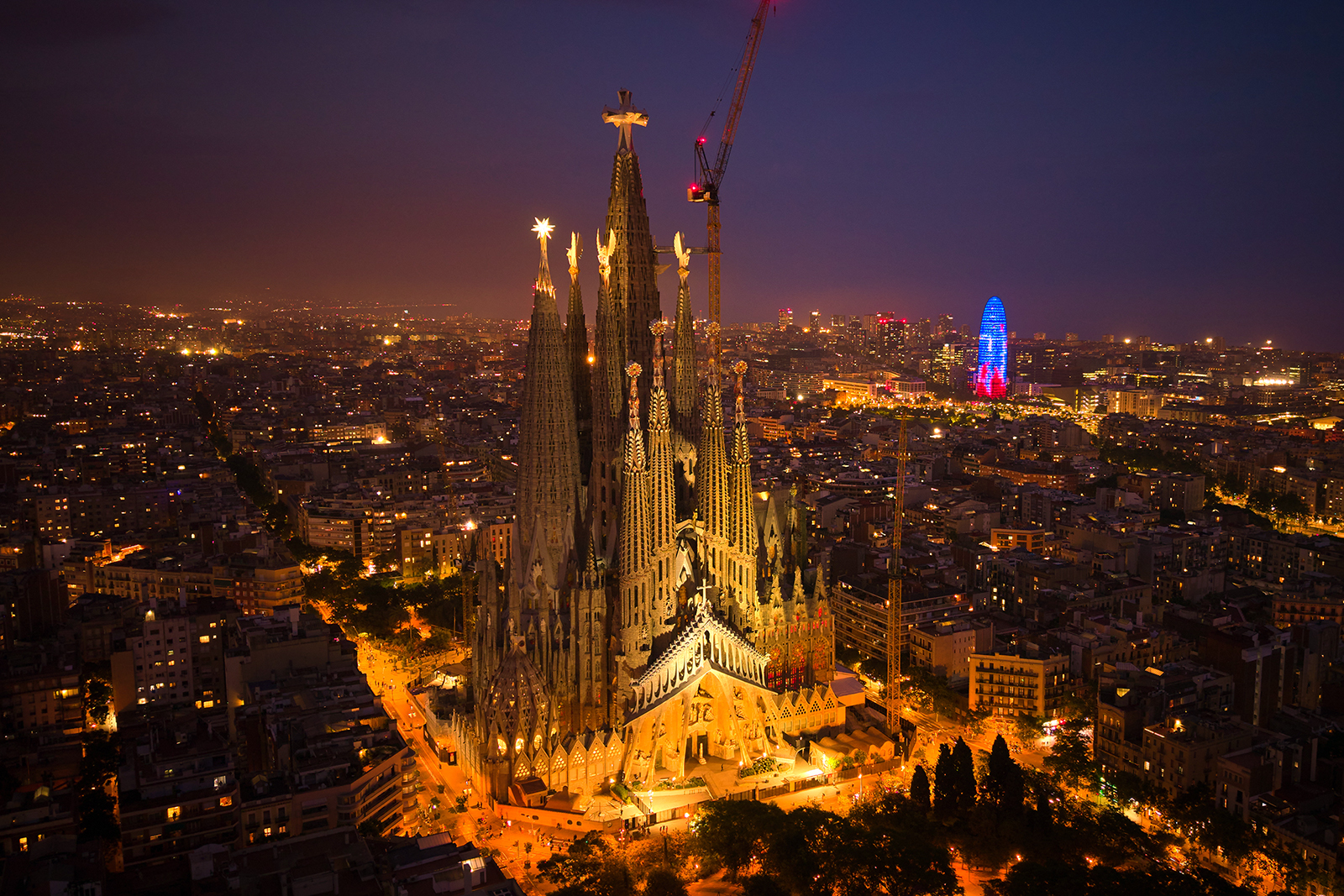
BARCELONA, Spain (RNS) — Visiting one of the most recognizable landmarks in the world, the Basilica of the Sagrada Família, Pope Leo XIV celebrated Mass and blessed its recently constructed central tower of Jesus Christ, which made it the tallest church in the world.

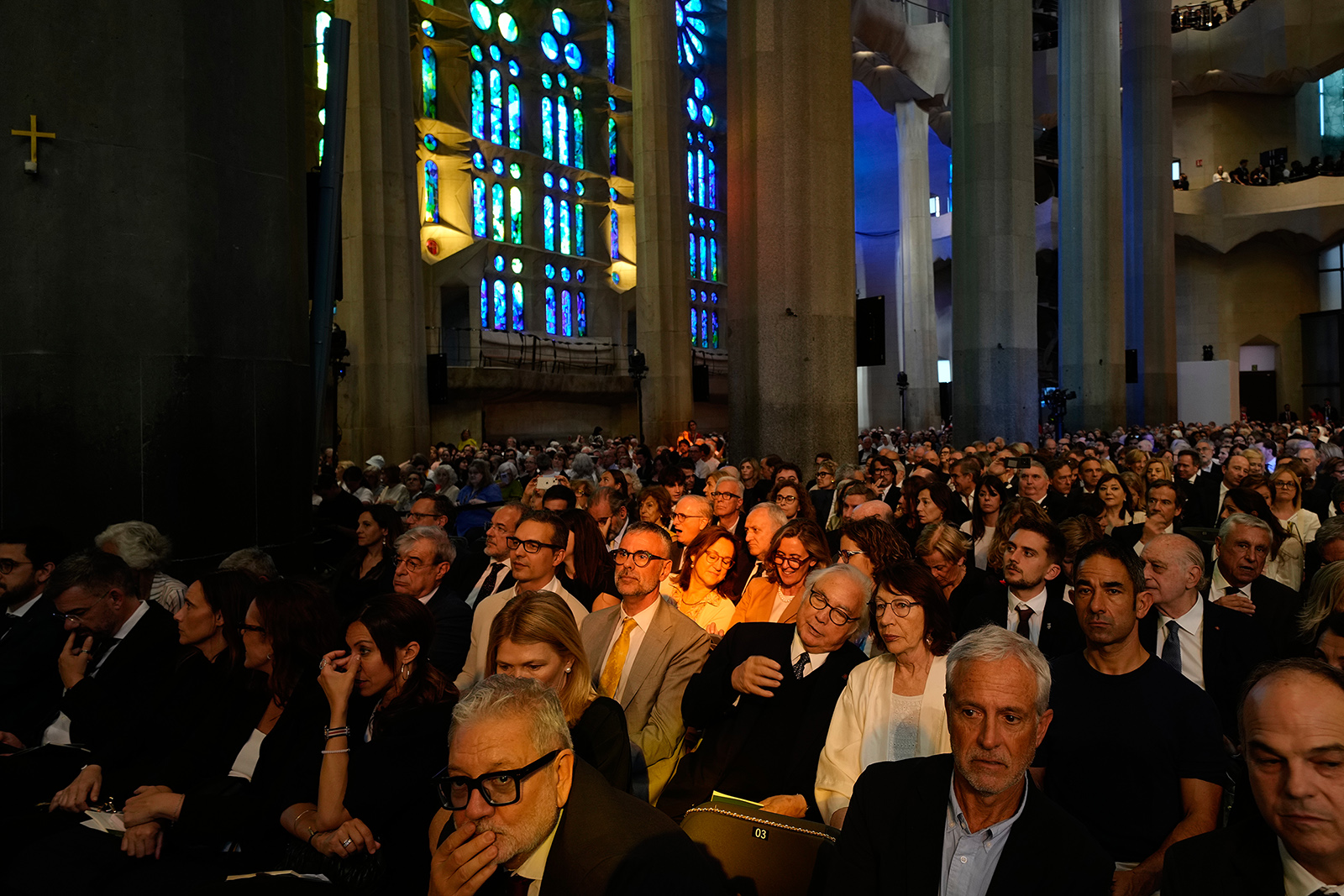
During his Wednesday (June 10) homily before over 4,000 people, including 200 cardinals and bishops, and surrounded by the nature-inspired architecture of Antoni Gaudí, often referred to as “God’s architect,” the pope made a forceful appeal against war and in defense of human life.

“We cannot believe in Jesus and promote war. We cannot believe in Jesus and kill the innocent. We cannot believe in Jesus and abandon those who suffer, those who weep, those who flee from misery,” he said.

The liturgy was accompanied by a 600-voice choir and witnessed by church and state authorities in Spain, including the Catholic monarchs King Felipe VI and Queen Letizia.

The pope praised the Barcelona church, which has been under construction for over 140 years, as “a work in progress today, reminding us that the Christian life is always a journey because it is a project that God is carrying out.”

The imposing structure was built as a response to the industrial revolution of the 19th century through the support of the Association of the Devotees of St. Joseph, who sought to counter the secularization that accompanied the industrial era.

People wait for Pope Leo XIV’s arrival to celebrate Mass at the Basilica of the Sagrada Família in Barcelona, Spain, Wednesday, June 10, 2026. (AP Photo/Bernat Armangue)

Leo took his name from his predecessor Leo XIII, best known for his encyclical “Rerum Novarum” (“On New Things”), which offered answers to the challenges posed by the industrial revolution. In Leo XIV’s recent encyclical, the first of his papacy, he said we are witnessing a new industrial revolution and stressed the importance of putting human beings at the center of society, culture and education.

Gaudí saw the basilica as a project in which “an entire people” would come together and contribute, said the architect and scholar Chiara Curti, who has written three books on the Catalan architect, including her latest, “The Sagrada Família: The Cathedral of Light.”

Curti said the faces of the people in the façade of the nativity of the basilica were meant to look like the people working and living around its construction.

“ … The cathedral has this characteristic where each person places their own stone,” she said. “… It is as if (Gaudí) were saying that the history of salvation is made up of the people of today.”

The design of the basilica, covered in artwork and symbolism telling the story of Christ, was described by the pope as “an eloquent catechesis made of stones, colors and light.” He added that in modern society, “it becomes even more evident how art and beauty are privileged channels of evangelization.”

A view of the Basilica of the Sagrada Família in Barcelona, Spain, May 30, 2026, ahead of Pope Leo XIV’s visit to the city in June. (AP Photo/Emilio Morenatti)

Gaudí, who started working on the basilica in 1883, died before he could see it to completion, in 1926, after being hit by a tram car. Leo’s visit coincided with the centenary of his death, as some speculated on the possibility that the pope might soon approve his canonization. Before the Mass, Leo visited Gaudí’s tomb, located beneath the church.

“As an architect inspired by faith, the venerable Antoni Gaudí designed this place with the desire to narrate the mysteries of the Lord’s life,” he said in his homily. “In this way, he has proposed to us a spiritual pilgrimage, leading to an encounter with Christ, who for our sake was born, died and rose again.”

Pope Francis declared Gaudí venerable, a first step toward sainthood, in 2025, but the cause cannot move forward until a miracle is recognized, according to church rules. But a pope could potentially waive this prerequisite.

“The church always arrives a little late to saints,” Curti said, adding that Gaudí’s reputation for holiness was already recognized during his lifetime. “He already accompanies people toward the possibility of turning their lives into a work of art.”

Leo also blessed the monumental tower of Jesus Christ, which stands about 566 feet tall. In 2012, Pope Benedict XVI consecrated the church, praising it as “a visible sign of the invisible God, for whose glory its towers rise,” Leo recalled.

The pope said the cross was the “radiant sign” of Christ’s love. “When Christ is lifted up, the grandeur of his humanity shines forth, and our works glorify God. These are the works of faith, and art stands out among them,” he added.

The blessing was followed by music, fireworks and a light show before the 9,000 people including those outside the basilica. According to local estimates, 120,000 people followed the event on the screens placed in the nearby streets. 


ciberconflitos.wordpresshttps://ciberconflitos.wordpress.com  › wp-content  › uploads  › 2014  › 12  › hardt_negri_multitude_-war-and-democracy-in-the-age-of-empire.pdf

MULTITUDE WAR AND DEMOCRACY IN THE AGE OF EMPIRE MICHAEL HARDT...

Michael Hardt and Anronio Negri.