Hungarian minister shared EU confidential information with Russia for years, report claims
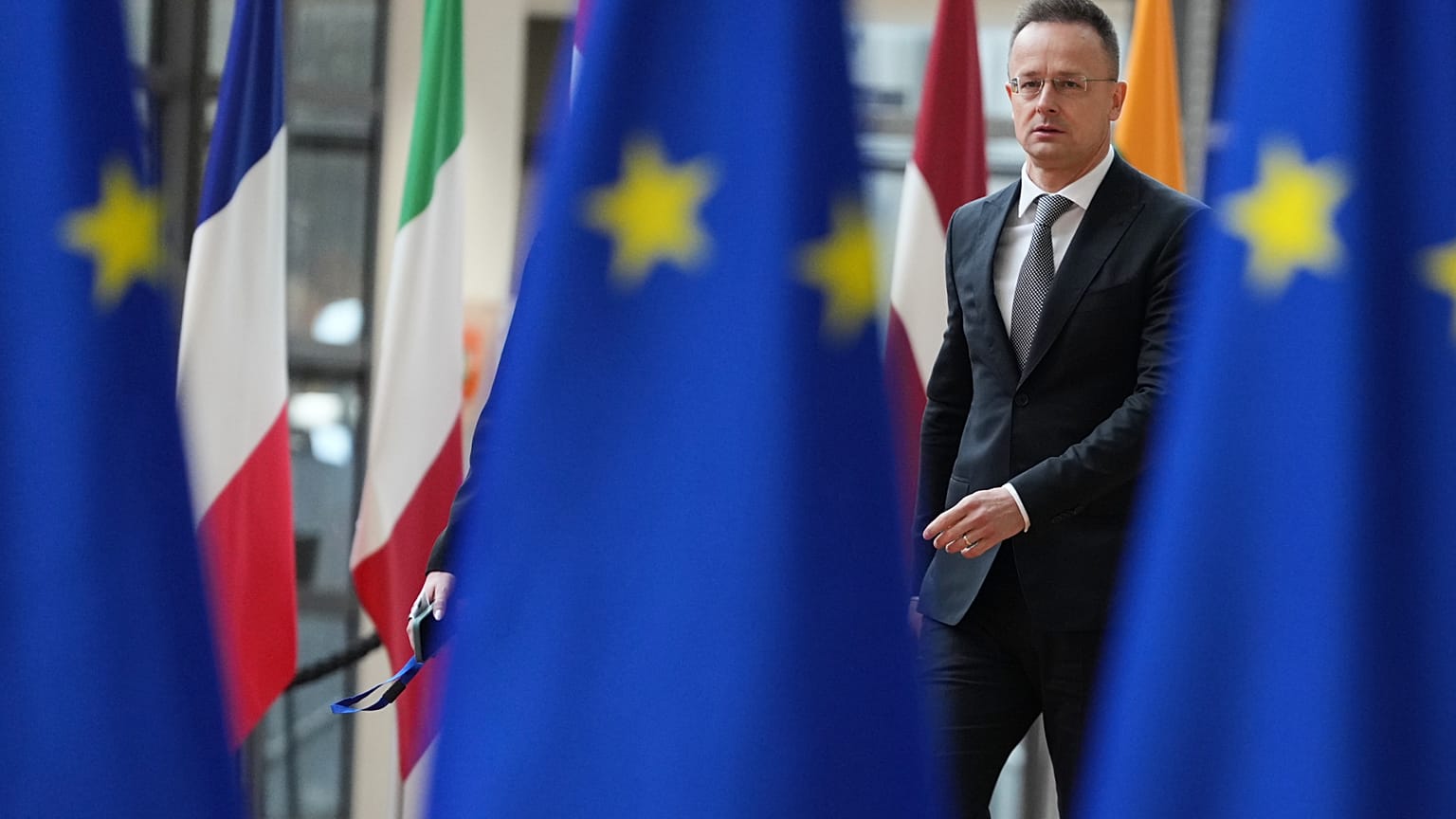
A report by the Washington Post suggests Hungary’s foreign minister Péter Szijjártó shared confidential reports of EU Council meetings with his Russian counterpart Lavrov. Budapest denies it.
Hungary's foreign minister Péter Szijjártó has for years informed Moscow of confidential information discussed at European Union meetings, according to an investigation by the Washington Post citing a European officinal.
Szijjártó would call his Russian counterpart Sergei Lavrov during breaks at EU meetings to brief the Russian foreign minister on what's been discussed among EU leaders, the report said, suggesting possible courses of action for Russian authorities.
According to the newspaper's unnamed security source, "every single EU meeting for years has basically had Moscow behind the table".
Poland's Prime Minister Donald Tusk commented on the reports on Sunday.
"The news that Orbán's people inform Moscow about EU Council meetings in every detail shouldn't come as a surprise to anyone," Tusk wrote. "We've had our suspicions about that for a long time".
"That's one reason why I take the floor only when strictly necessary and say just as much as necessary," he concluded in a post on X.
Hungary's foreign minister also reacted on X, dismissing the Washington Post's reports as false and suggesting they were intended to boost Péter Magyar's opposition Tisza party ahead of parliamentary elections.
"Fake news as always. You are telling lies in order to support Tisza Party to have a pro-war puppet government in Hungary," Szijjártó wrote.
Poland's deputy prime minister and foreign minister Radosław Sikorski also weighed in, writing "This would explain a lot, Peter," in reference to the Hungarian minister.
On Saturday, the Washington Post also reported that Russia's Foreign Intelligence Service worked to stage an assassination attempt against Orbán, an operation called "gamechanger," in a bid to boost his chances at winning the upcoming parliamentary elections.
According to the latest data from opinion polls, the opposition Tisza party of Péter Magyar is leading with 48% of the vote ahead of Viktor Orbán's Fidesz party at 39%. Hungary is set to go to the polls to elect a new parliament on 12 April.


March 23, 2026
EurActiv
By Maria Simon Arboleas
(EurActiv) — Polish Prime Minister Donald Tusk on Sunday backed a media report claiming Budapest had been regularly briefing Moscow from EU summits, injecting new fire into the last three weeks of campaigning ahead Hungary’s general election.
On Saturday, the Washington Post dropped a bombshell report alleging that Russia’s foreign intelligence service had proposed staging an assassination attempt against Orbán to boost his flagging support – an operation dubbed “the Gamechanger”.
The report also said Hungarian Foreign Affairs Minister Péter Szijjártó had been routinely calling his Russian counterpart Sergei Lavrov to brief him on developments during EU Council meetings.
Tusk – who was president of the European Council from 2014 to 2019 – said it “shouldn’t come as a surprise to anyone” that Hungarian ministers leak “every detail” of EU meetings to the Kremlin.
‘Suspicions’
“We’ve had our suspicions about that for a long time,” the Polish conservative said in a social media post. “That’s one reason why I take the floor only when strictly necessary and say just as much as necessary.”
A spokesperson for European Council President António Costa declined to comment on the matter when approached by Euractiv.
Szijjártó dismissed the accusations as part of a smear campaign to influence Hungary’s election, calling them “crazy conspiracy theories” and “Ukrainian propaganda” in a social media post of his own.
He suggested Hungarian opposition leader Péter Magyar’s Tisza Party and Kyiv were behind the story, and also accused Ukrainian President Volodymyr Zelenskyy of threatening Orbán’s life amid the standoff over blocked EU aid and Russian oil.
A watershed election
The April 12 election – whose bitterly fought campaign has been characterised by back-and-forth allegations of foreign meddling, corruption, warmongering, and now treachery – marks a critical crossroads for Hungary, and potentially a big shift in Budapest’s strained ties with Brussels.
After returning to power in 2010, nationalist Prime Minister Viktor Orbán and his Fidesz party face their first serious challenge in the person of Péter Magyar, who has been ahead in the polls since shortly after surging to prominence in the 2024 EU elections.
Magyar seized on the Washington Post report while on the campaign trail in provincial Hungary on Saturday, affecting no particular surprise over possible Russian assistance to a government he deemed “capable of anything”.
“But that the Hungarian foreign minister, Sergei Lavrov’s good friend, reported to the Russians almost minute-by-minute from every union summit, is simply treachery,” he said in Nyúl, a village in the north-west. “This man hasn’t just betrayed his own homeland, but Europe, too.”
Trump weighs in
The same day, right-wing populist leaders from across Europe and the world were gathering in Budapest for a Conservative Political Action Conference (CPAC) where US President Donald Trump pledged unwavering support to Orbán in a video message.
“I hope he wins big. Despite all the attacks, he keeps on winning,” Trump said while pledging his “complete and total endorsement” of Orbán in the election.
The event brought together figures such as Argentina’s President Javier Milei, Czech Prime Minister Andrej Babiš and the Netherlands’ Geert Wilders, all rallying behind a Hungarian premier who has become something of a mascot to them.
EurActiv
EurActiv publishes free, independent policy news and facilitates open policy debates in 12 languages.

No comments:
Post a Comment