Monday, June 29, 2026


World’s largest EV battery repurposing megafactory opens in British Columbia


Image: Moment Energy.

Moment Energy on Monday opened Megafactory 1, the largest EV battery repurposing facility in the world, bringing domestic battery energy storage manufacturing capacity online with a ceremony attended by investors, industry and government leaders. 

The now operational facility transforms retired EV batteries into cost-effective, rapidly deployable energy storage systems that support critical infrastructure, including data centres, factories and microgrids, the company said.  

The facility comes online as demand for electricity continues to surge, driven by AI, data centres, the energy transition and grid modernization.  

Meanwhile, millions of EV batteries already on North American roads are expected to be retired over the coming years, and Moment Energy said it addresses both challenges by turning retired batteries into scalable energy storage systems that offer an immediate solution to energy shortages. 

The facility is expected to produce 1 GWh of battery energy storage systems by 2030, creating more than 100 direct jobs and supporting more than 1,000 indirect jobs across British Columbia. 

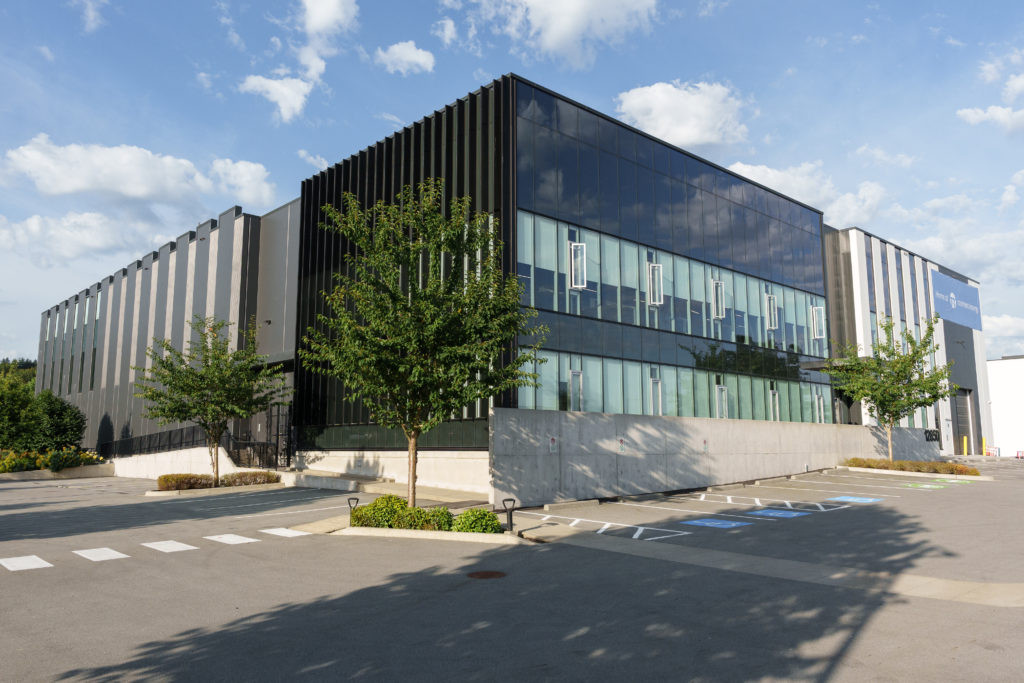
Moment’s megafactory in Surrey, British Columbia. Image: Moment Energy.

“We announced this project six weeks ago. Today it’s operational,” Moment Energy CEO Edward Chiang said in a news release. “Demand for energy storage is accelerating, and so is the supply of retired EV batteries.”  

“We show that the right technology can enable North America to re-onshore domestic manufacturing in weeks, not decades, creating thousands of jobs and economic prosperity.” 

Since its founding in Vancouver in 2020, Moment Energy has attracted both private and government support across British Columbia’s innovation ecosystem, helping the company scale from a university-born startup into a global leader in second-life battery energy storage, it said.

“This is exactly the kind of homegrown innovation we want to see in British Columbia,” Gregor Robertson, Minister responsible for Pacific Economic Development Canada (PacifiCan) said.  

“With PacifiCan’s $4.9 million investment, Moment Energy is expanding clean manufacturing, creating good local jobs, and finding smart solutions to global challenges.” 


Op-Ed: Lithium’s next demand wave extends beyond EV batteries


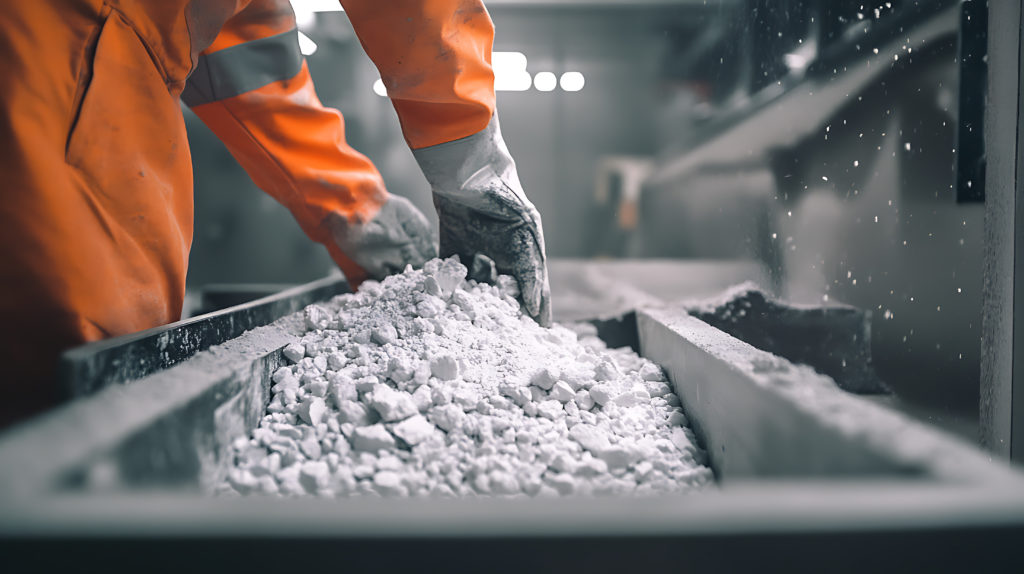
Stock image.

Electric vehicles (EVs) will remain the dominant source of lithium demand for at least the next 15 years, but a growing range of technologies from artificial intelligence to advanced nuclear systems could create a meaningful second wave of consumption by mid-century.

A study by GEM Mining Consulting found emerging lithium applications would contribute about 105,000 tonnes of lithium carbonate equivalent (LCE) annually by 2035, rising to 303,000 tonnes in 2040 and 720,000 tonnes by 2050 under its base-case scenario. Those volumes represent about 2.8%, 6.1% and 10.3%, respectively, of projected demand from current applications such as electric vehicles, consumer electronics and grid-scale energy storage. In a transformative upside case where multiple lithium-intensive technologies scale simultaneously, additional demand could reach 2.81 million tonnes of LCE annually by 2050.

The report shows that emerging applications are unlikely to replace EVs as the primary source of lithium demand before 2040. They can, however, become material by 2050 if several technology gates are passed.

In the article, we argue that investors and industry participants should focus less on headline demand figures and more on how lithium is consumed. It distinguishes between gross lithium use, additive demand and net primary demand, noting that large inventories embedded in batteries, nuclear systems or industrial materials do not necessarily translate into new annual requirements for mined and refined lithium. Recycling, recovery and closed-loop reuse could significantly reduce the amount of fresh supply required.

AI data-centre demand

The largest expected sources of new demand by 2050 are AI data-centre resilience storage systems, humanoid and service robotics, aviation and defence batteries, lithium-7 molten-salt nuclear reactors, ceramic carbon-capture sorbents and industrial robotics.

Fusion energy remains strategically important because it could create demand for lithium isotopes, particularly lithium-6, but the broader opportunity spans electrochemical, nuclear, thermal-management, photonic and specialty chemical applications.

Lithium’s appeal across those sectors stems from its unique physical and chemical properties. The metal’s light weight and electrochemical characteristics make it central to advanced batteries and solid electrolytes, while lithium isotopes play specialised roles in nuclear technologies. Lithium compounds are also used in high-temperature carbon-capture systems, industrial cooling applications, photonic materials and hydrogen-rich shielding technologies.

The study cautions that substitution remains the biggest risk to long-term demand growth outside batteries. Sodium-ion batteries, flow batteries, iron-air systems, hydrogen storage and alternative aviation fuels could reduce lithium consumption in some applications. Alternative cooling chemicals, photonic materials and reactor designs could also limit adoption. The risk is greatest where lithium acts primarily as an energy-storage medium and lowest where the lithium atom or isotope is essential to the technology itself.

For lithium producers, the findings suggest strategic flexibility may become increasingly valuable. While battery-grade carbonate and hydroxide are expected to remain the industry’s core products, specialty materials such as lithium metal, lithium fluoride, lithium bromide, lithium chloride, lithium silicates, lithium hydrides and isotope products could emerge as higher-value markets. Governments and manufacturers may also need to treat lithium refining, isotope production and recycling capabilities as strategic assets rather than niche industries.

The lithium industry may be entering a more diversified phase of growth. While EVs are likely to remain the dominant demand driver for decades, a broad portfolio of emerging technologies could create new markets that reshape supply chains and expand the strategic importance of the metal well beyond transportation.

* Juan Ignacio Guzmán is the CEO of GEM Mining Consulting


Jindalee Lithium explores environmental stewardship measures for McDermitt project

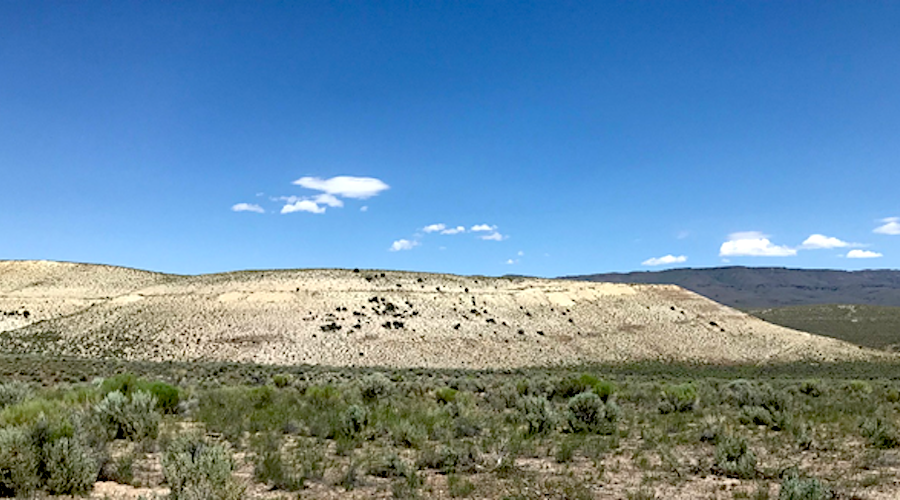
Outcropping mineralized sediments towards the centre of the giant McDermitt lithium deposit. (Image courtesy of Jindalee Resources.)

Australia’s Jindalee Lithium (ASX: JLL) has partnered with nonprofit organization RESOLVE on an environmental stewardship initiative in areas surrounding its flagship lithium project in the US.

On Monday, the company announced that the parties have entered a memorandum of understanding (MOU) that explores the creation of a voluntary stewardship area in the broader Oregon-Nevada Caldera region, where its McDermitt lithium project is located.

Under the MOU, Jindalee’s US subsidiary HiTech Minerals and RESOLVE are expected to engage with stakeholders and rightsholders in the region to identify potential land areas that may warrant investment, protection, restoration or other stewardship measures.

HiTech may fund part of these stewardship measures, agreed through the process subject to meeting McDermitt lithium project development milestones.

The creation of a stewardship area is intended to support improved environmental outcomes for high-value habitat areas, alongside HiTech’s advancement of responsible domestic lithium development in the McDermitt Caldera, Jindalee said.

“HiTech recognizes the ecological, cultural and community values of the broader Oregon-Nevada McDermitt Caldera region, and the importance of advancing McDermitt in a way that is responsible, transparent and constructive,” Jindalee CEO Ian Rodger said in a news release.

“This MOU with RESOLVE provides a practical framework to explore how domestic lithium development and long-term environmental stewardship objectives can be progressed together.”

Rodger also noted that the process is at an early stage, and any future stewardship area will need to be shaped through engagement with tribal nations and stakeholders, technical assessment, and the ongoing permitting pathway.

The move comes as Jindalee prepares to spin out its US lithium assets into a new Nasdaq-listed company called US Elemental. The centerpiece of that company will be the McDermitt project, located on the same geological formation that hosts Lithium Americas’ (TSX, NYSE: LAC) Thacker Pass project being backed by the US government and General Motors.


Nigeria’s Major Lithium Reserve Discovery Near Abuja Explained

BYMUFLIH HIDAYATON JUNE 26, 2026

The Geological Lottery Africa Has Been Sitting On

For decades, the dominant narrative around African resource wealth has centred on a familiar paradox: a continent holding an extraordinary share of the world's critical minerals, yet capturing a disproportionately small fraction of the economic value those minerals generate. Nowhere is this tension more visible than in Nigeria, where a Nigeria lithium reserve discovery is forcing an economy historically anchored to crude oil revenues to confront the scale of what lies beneath its non-petroleum geology.

The global energy transition has fundamentally reordered the strategic value of specific minerals. The critical minerals demand for lithium, nickel, platinum group metals (PGMs), and rare earth elements has moved these resources from industrial footnotes to the centrepiece of geopolitical supply chain strategy across the United States, European Union, and China. Against this backdrop, two significant mineral discoveries announced at the African Natural Resources and Energy Investment Summit 2026 in Abuja have placed Nigeria at the centre of a conversation it has long been absent from

Two Discoveries, One Strategic Signal

The Kaduna Polymetallic Province: Breadth Over Single-Commodity Exposure

The first announcement involved the identification of a world-class polymetallic mineral province in Kaduna State, verified by the Nigerian Geological Survey Agency (NGSA). The deposit was identified by Steron Mining and Company Limited in collaboration with the NGSA, which subsequently confirmed the geological findings.

What makes polymetallic provinces commercially distinct is their multi-revenue architecture. Rather than depending on a single commodity price cycle, operators can generate simultaneous cash flows across several mineral streams. The Kaduna deposit contains high-grade concentrations of:

  • Platinum group metals (PGMs)
  • Gold
  • Nickel
  • Copper
  • Lithium
  • Rare earth elements (REEs)

Nigeria's Minister of Solid Minerals Development, Dr. Dele Alake, characterised the Kaduna find as a landmark breakthrough with the potential to elevate Nigeria's standing in the global market for strategic minerals used in clean energy technologies and advanced manufacturing. The high-grade nature of the deposits was specifically highlighted as a differentiating quality factor.

Investor Insight: Polymetallic deposits provide a natural hedge against single-commodity price downturns. If lithium prices soften, for instance, gold or PGM revenues can support project economics. This structural diversity makes the Kaduna province considerably more resilient than a pure-play lithium discovery.

The Abuja Lithium Reserve: 3.3 Million Metric Tonnes Confirmed

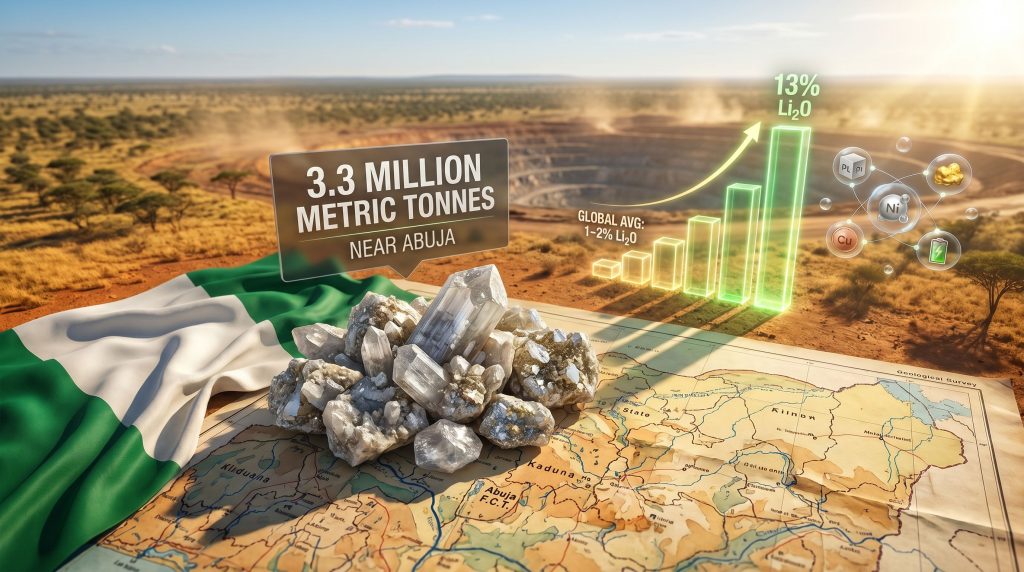
Separately, Steron Mining and Company Limited disclosed an estimated 3.3 million metric tonnes of lithium reserves at its mining site near Abuja. This constitutes one of the most significant standalone Nigeria lithium reserve discovery announcements in the country's recorded mining history and was unveiled at the same 2026 summit.

The dual-announcement format is itself strategically significant. By revealing a polymetallic province in Kaduna alongside a discrete lithium reserve near the capital, Nigeria's mining sector is signalling breadth of geological opportunity rather than a concentrated single-site story. This matters to institutional investors who assess country-level mineral prospectivity rather than individual project economics alone.

How Nigerian Lithium Grades Stack Up Against Global Benchmarks

Understanding Li₂O Concentration as a Commercial Threshold

One of the least understood aspects of lithium investment outside specialist circles is the critical role of ore grade in determining project viability. Understanding how lithium mining works reveals that lithium oxide concentration, expressed as a percentage of Li₂O, is the primary commercial benchmark for hard-rock spodumene deposits.

The following thresholds are widely used across the industry:

Li₂O Grade Range Commercial Classification Below 1.0% Sub-economic; generally not viable
1.0% to 2.0% Minimum viable threshold for most projects
2.0% to 4.0% Good commercial grade
4.0% to 6.0% High quality; strong project economics
Above 10.0% Exceptionally rare; premium-tier deposit


Against these benchmarks, Nigerian lithium geology stands out sharply. ASX-listed Chariot Resources Limited, which secured six mining licences across Nasarawa, Kogi, Kwara, Ekiti, and Cross River states, independently verified spodumene extraction grades ranging from 2.66% to 5.96% Li₂O across its licensed sites. Certain Nigerian deposits have recorded concentrations approaching 13% Li₂O — a figure that would place them among the highest-grade hard-rock lithium sources identified anywhere on earth.

Technical Note: High-grade deposits do more than improve headline economics. They reduce the volume of ore that must be processed to yield a tonne of lithium carbonate equivalent (LCE), directly lowering energy consumption, processing costs, and environmental footprint per unit of output. For frontier jurisdictions where energy infrastructure is constrained, this grade advantage is operationally meaningful.

Nigeria's Lithium Landscape: A Comparative Overview


Site or ProgrammeLocationReserve / GradeVerified BySteron Mining
 Lithium Reserve Near Abuja ~3.3 million metric tonnes NGSA
Kaduna Polymetallic Province Kaduna State PGMs, gold, nickel, copper, Li, REEs NGSA + Steron Mining
Chariot Resources Licensed Sites Nasarawa, Kogi, Kwara, Ekiti, Cross River 2.66% to 5.96% Li₂O spodumene Independent verification
National Lithium Belt Estimate 10+ states $34B to $700B estimated value NGSA mapping


Nigeria's lithium-bearing geology spans at least ten states, tracing a belt mapped by the NGSA that extends from the northwest toward the southeast, approaching the Cameroon border. Total estimated reserve value across this belt ranges from $34 billion to $700 billion depending on methodology, commodity pricing assumptions, and deposit scope — a variance that itself illustrates how early-stage much of this geology remains. Furthermore, recent research published in geochemical literature reinforces the geological significance of Nigeria's lithium-bearing pegmatite formations across these states.

Who Is Deploying Capital Into Nigeria's Lithium Sector

Chinese Investment Leads the Committed Capital Wave

Jiuling Lithium Mining Company and Canmax Technologies have collectively committed investments exceeding $1.3 billion to establish lithium processing infrastructure in Nasarawa and Kaduna states. This level of financial commitment from Chinese industrial capital is not incidental. It mirrors a well-established strategic playbook: secure upstream supply access while simultaneously building downstream processing capacity inside the producing country.

What is less commonly discussed is the value-capture implication of this model. When foreign processors build in-country facilities, host nations gain jobs and tax revenues — but the highest-margin stages of the lithium value chain, including battery precursor chemicals and cathode active materials, typically remain in the investor's home jurisdiction. Moreover, Chinese companies are actively grabbing stakes in Nigeria's lithium and EV future, making Nigeria's ambition to capture more than raw export value all the more dependent on deliberate policy architecture around domestic processing mandates.

Australian Junior Mining Enters the Picture

The involvement of ASX-listed Chariot Resources Limited carries a different signal than Chinese industrial investment. Australian junior mining companies operate on exploration risk capital, meaning their entry is driven by geological conviction rather than downstream supply security. Their independently verified grades of 2.66% to 5.96% Li₂O across multiple licensed states represent a technically credible exploration outcome that adds weight to the broader thesis about Nigerian lithium prospectivity.

Saudi Capital Being Actively Courted

Nigeria has separately pitched $600 million in lithium and gold projects to Saudi investors, reflecting a deliberate strategy to build an investor base diversified beyond Chinese capital. This matters geopolitically: dependence on a single foreign investor class in a critical mineral sector creates leverage vulnerabilities that sovereign resource strategies should seek to mitigate.

The Structural Barriers That Could Limit Nigeria's Potential

Infrastructure: The Invisible Cost Multiplier

High ore grades and large reserve tonnages are necessary but not sufficient conditions for a successful mining operation. Nigeria's mining sector faces a set of infrastructure constraints that add cost at every stage of the value chain:

  • Transport corridors: The absence of dedicated rail links between mineral-bearing states and export ports adds significant cost-per-tonne relative to more developed mining jurisdictions.
  • Power reliability: Mineral processing is energy-intensive. Grid instability in Nigeria raises operating costs and complicates the business case for in-country processing ambitions.
  • Port capacity: Export scalability depends on adequate port infrastructure to handle bulk mineral shipments competitively.

These are not insurmountable problems, but they require capital investment that typically must precede, or run in parallel with, mining development rather than following it.

Artisanal Mining: A Hidden Depletion and Governance Risk

Unregulated artisanal and small-scale mining (ASM) activity across Nigeria's lithium-bearing states creates a compound problem that is often underappreciated by outside investors:

  1. Resource depletion: Surface and near-surface high-grade material — often the most economically significant portion of a deposit — can be extracted ahead of formal development, reducing the resource base available for bankable feasibility studies.
  2. Environmental liability: ASM activity can create ground disturbance and contamination that complicates future environmental permitting for formal operators.
  3. Revenue leakage: Minerals extracted through informal channels bypass royalty and tax collection systems, reducing the fiscal benefit to the state and undermining the revenue diversification argument.

Formalising ASM activity is a stated government priority under the Ministry of Solid Minerals Development's reform programme. However, the operational complexity of transitioning thousands of informal operators into a regulated framework should not be underestimated.

Regulatory Maturity and the Timeline to Bankable Feasibility

Risk Callout: In frontier mining jurisdictions, the gap between a verified resource discovery and a definitive feasibility study — the document required before project financing can be secured — routinely spans five to ten years. Regulatory clarity, transparent royalty frameworks, and enforceable environmental compliance mechanisms are not optional features of an attractive investment environment; they are prerequisites.

Nigeria's mining regulatory infrastructure has historically been less developed than its petroleum sector equivalent. The Nigerian Minerals and Mining Act and its associated regulations provide a framework, but investor confidence requires consistent application of that framework over time, not just its existence on paper.

Nigeria Within Africa's Broader Critical Minerals Competition

How Africa's Major Critical Mineral Producers Compare


CountryPrimary Critical MineralNotable Development Status

Nigeria Lithium, PGMs, REEs, Nickel, Gold 3.3Mt lithium reserve near Abuja; Kaduna polymetallic province verified
Zimbabwe Lithium Africa's largest lithium producer; mineral-for-infrastructure arrangements with China
DRC Cobalt, Copper Approximately 70% of global cobalt supply; persistent governance challenges
Zambia Copper $372M UK investment commitment in copper assets
Kenya Rare Earth Elements Preliminary US agreement on $62.4B estimated untapped REE deposits
Namibia Uranium, Lithium Growing junior miner interest; emerging exploration profile

Nigeria's Competitive Differentiators Within This Landscape

Several factors distinguish Nigeria's positioning relative to peer African mineral producers:

  • Commodity diversity: The combination of lithium, PGMs, gold, nickel, copper, and REEs across multiple provinces creates a broader investment proposition than single-commodity producers.
  • Economic scale: As Africa's largest economy by GDP, Nigeria brings capital market depth, existing trade infrastructure, and domestic industrial demand that smaller mineral-rich nations cannot replicate.
  • Coastal access: Unlike several landlocked competitors in the critical minerals space, Nigeria's port access provides a latent logistical advantage provided internal connectivity is improved.
  • Geological belt continuity: The NGSA-mapped lithium belt traversing more than ten states suggests a systemic geological endowment rather than isolated deposits — a distinction that matters for long-term sector scale.

From Oil Dependency to Mineral Diversification: The Economic Reframing

Why the Solid Minerals Sector Carries Structural Importance Beyond Revenue

Nigeria's petroleum revenues have historically accounted for the dominant share of government foreign exchange earnings, creating a structural vulnerability to oil price cycles that has periodically destabilised public finances. The solid minerals sector's contribution to GDP has remained marginal despite the geological evidence of significant endowment — a gap the current administration is explicitly seeking to close.

A successfully developed critical minerals sector would deliver economic benefits across several dimensions:

  • A countercyclical revenue stream decoupled from crude oil price movements
  • Foreign direct investment inflows spanning exploration, processing, logistics, and services
  • Technical workforce development in geology, mining engineering, and environmental management
  • Downstream industrial development potential in battery component manufacturing over the long term

The Value-Addition Question: Who Captures the Margin?

The most strategically important question facing Nigeria's minerals sector is not whether lithium can be extracted, but at what point in the value chain Nigerian entities capture economic benefit. The progression from raw ore to refined lithium carbonate to battery-grade lithium hydroxide to cathode active material represents a series of value-addition steps, each carrying progressively higher margins.

Nigeria's stated objective of building in-country processing capacity aligns with this logic. However, investment structures that place processing infrastructure under foreign ownership — even when physically located in Nigeria — can still result in the majority of value-added margin flowing offshore. Structuring investment agreements to ensure progressive local content requirements and domestic value retention will be as important as attracting the initial capital. Consequently, trends in African mining finance suggest that host nations are increasingly seeking equity participation rather than royalty-only arrangements to better retain in-country value.

Frequently Asked Questions: Nigeria Lithium Reserve Discovery

How large is Nigeria's newly confirmed lithium reserve near Abuja?

Steron Mining and Company Limited has identified an estimated 3.3 million metric tonnes of lithium reserves at its mining site near Abuja, disclosed at the African Natural Resources and Energy Investment Summit 2026.

What minerals were confirmed in the Kaduna polymetallic province?

The Kaduna deposit contains verified high-grade concentrations of platinum group metals, gold, nickel, copper, lithium, and rare earth elements, confirmed by the Nigerian Geological Survey Agency in collaboration with Steron Mining.

How does Nigerian lithium grade compare to global averages?

Nigerian deposits are notably high-grade relative to global norms. Verified spodumene grades from licensed sites range between 2.66% and 5.96% Li₂O, while certain deposits have recorded concentrations approaching 13% Li₂O against a global commercial average of 1% to 2%.

What is the estimated total value of Nigeria's lithium reserves nationally?

Estimates vary significantly based on methodology and commodity pricing. Nigeria's total lithium reserve value across more than ten lithium-bearing states has been cited at figures ranging from $34 billion to $700 billion.

Which companies are currently active in Nigeria's lithium sector?

Key operators include Steron Mining and Company Limited (Abuja reserve and Kaduna polymetallic province), Chariot Resources Limited (ASX-listed, six licensed sites), Jiuling Lithium Mining Company, and Canmax Technologies, the latter two having committed a combined total exceeding $1.3 billion in processing infrastructure.

What are the primary risks facing Nigeria's lithium development timeline?

The main constraints include inadequate transport and energy infrastructure, widespread artisanal mining activity creating resource depletion and permitting complications, regulatory framework maturity relative to more established mining jurisdictions, and the extended timeline typically required to convert exploration discoveries into producing mines.

Key Takeaways

  • Nigeria has confirmed two major mineral discoveries: a polymetallic province in Kaduna State and a 3.3 million metric tonne lithium reserve near Abuja, both verified by the NGSA
  • Nigerian lithium is commercially differentiated by exceptionally high ore grades, with verified deposits reaching up to 13% Li₂O against a global commercial average of 1% to 2%
  • Total national lithium reserve value estimates span $34 billion to $700 billion across more than ten states
  • Chinese companies alone have committed over $1.3 billion in processing infrastructure, with Saudi and Australian capital also entering the sector
  • Structural barriers including infrastructure deficits, artisanal mining activity, and regulatory development gaps must be systematically addressed to convert geological potential into sustained export revenue
  • The value-addition question — determining how much of the lithium value chain margin is retained within Nigeria rather than captured offshore — will ultimately define whether this Nigeria lithium reserve discovery reshapes the country's economic structure or simply replicates the extractive model that characterised its oil era

This article contains forward-looking assessments based on publicly available geological data, investment announcements, and industry benchmarks. Reserve estimates, valuation ranges, and development timelines are subject to material change as exploration and feasibility work progresses. Nothing in this article constitutes financial or investment advice.

 

Congo eyes coops, credit scheme to fund mine workers’ equity stakes


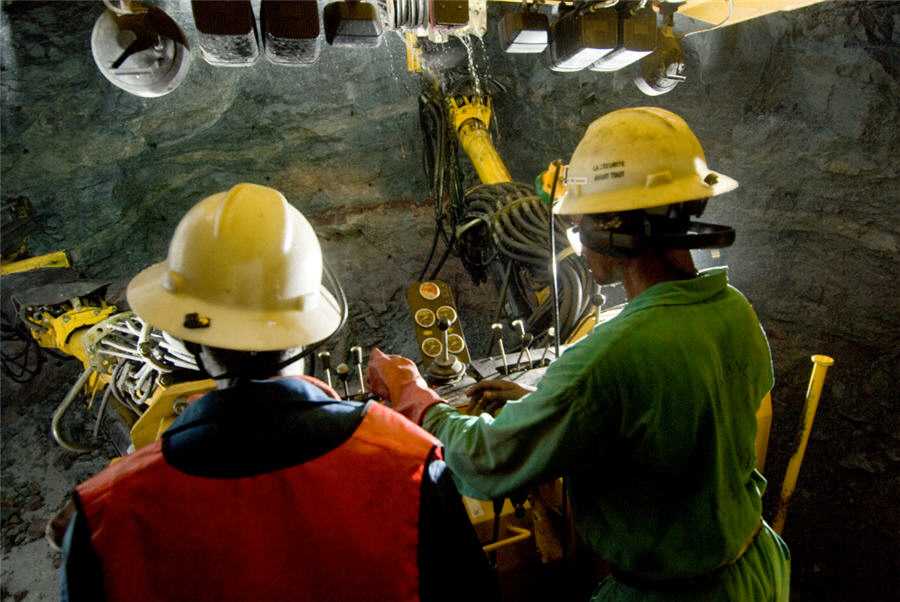
Image courtesy of Katanga Mining Ltd

The Democratic Republic of Congo is considering a plan to help mining employees acquire mandatory stakes in the companies they work for through worker cooperatives and company-financed credit, a draft decree seen by Reuters on Tuesday showed.

Authorities in the world’s top cobalt and second-largest copper producer are preparing rules to enforce a law requiring miners to reserve 10% of their equity for Congolese nationals, including 5% for their employees.

Congo introduced the rule in 2018, but no company has yet complied. In January, the government asked miners – the majority of them multinationals including Glencore, Ivanhoe and China’s CMOC – to show proof of compliance by the end of July or risk sanctions.

As commodities prices surge, African countries are increasingly seeking a larger share of their mineral wealth.

Worker cooperatives and interest-free credit

Under the decree drafted by Congo’s mines ministry, companies would be required to sell shares to their employees on interest-free credit.

The workers’ stakes would be held through cooperatives, while a separate 5% of equity would be reserved for other Congolese nationals, who could hold shares either directly through Congolese-owned companies or via public social security institutions.

A mining executive told Reuters on Monday that a draft of the decree was shared with workers for input.

Under the credit-backed system, workers would reimburse their loans through the withholding of up to 80% of their annual dividends until the debt is fully repaid, according to the draft decree seen by Reuters.

Companies will, meanwhile, not be allowed to dilute the 10% equity for Congolese nationals irrespective of capital increases, the decree added.

Congo’s mines ministry and Chamber of Mines did not immediately respond to requests for comment.

Labour groups say the success of the law’s 5% worker equity requirement would depend on how the financing arrangements are ultimately structured.

Speaking after discussions with the mines ministry, Juresse Lokosha, head of the Union for Social Peace, said access to shares will not be automatic for all workers but would instead depend on their ability to mobilize financing, whether privately or through a company-backed credit scheme.

Authorities are, therefore, encouraging pooled structures to lower entry barriers, he added.

(By Ange Adihe Kasongo, Maxwell Akalaare Adombila and Ashitha Shivaprasad; Editing by Joe Bavier)


Mining billionaire calls on China to push green ship fuel deal


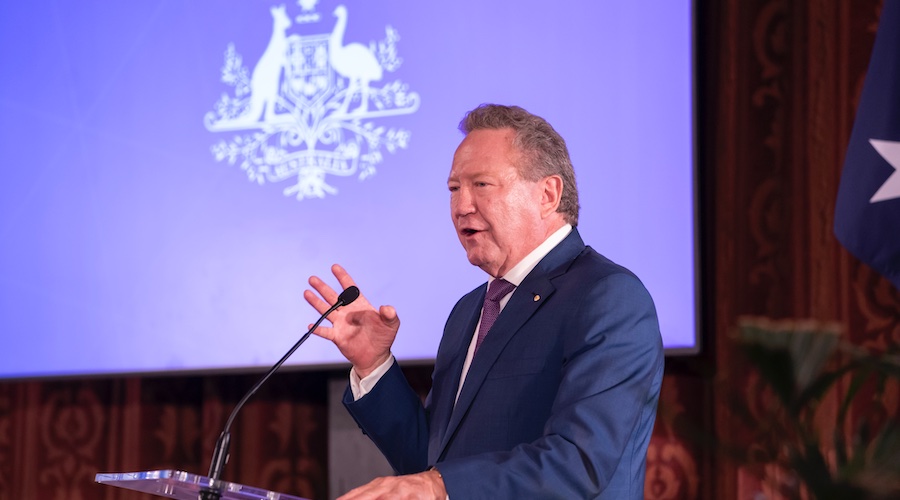
Andrew Forrest, Fortescue Metals’ chairman. (Image by Fortescue, Twitter/X.)

China should be pushing to decarbonize global shipping fuel after plans to charge emissions fees stalled last year because of US opposition, according to Australian billionaire miner Andrew Forrest.

The International Maritime Organization in October postponed by a year a decision on the landmark charge after attacks on the proposal from US President Donald Trump. China had supported a draft proposal in April 2025, but didn’t push back against the delay.

Penalties against shipping emissions would stand to benefit green hydrogen, a technology touted by both China and Forrest, who made his fortune as the founder of iron ore miner Fortescue Ltd. The billionaire in recent years has focused on pivoting to green technologies, although progress has been uneven.

“I need China to really lean forward on the International Maritime Organization proposal to trend itself to go green,” Forrest said Tuesday during a panel discussion at a World Economic Forum event in Dalian, China. “There’s huge vested political interest in the United States because they don’t want to see the world’s shipping industry go green.”

The US is the world’s largest oil and gas producer, while China is investing heavily in green hydrogen, which is made from water and carbon-free electricity. That hydrogen can then be blended into ammonia or methanol to produce an emissions-free shipping fuel.

BloombergNEF projects China will have 5 million tons of green ammonia production by 2030, far above the next biggest producer India at a projected 1.6 million metric tons. China is the cheapest producer, but the fuel remains two to three times more expensive than the ammonia generated by natural gas.

Securing demand for all that fuel has been more difficult. In 2025, for example, hydrogen output only rose by 11,000 tons in China despite the country adding 44,000 tons of production capacity, indicating that many projects are operating at only a fraction of their full utilization, according to BloombergNEF.

(By Lili Pike)


BHP and Rio Tinto test electric trucks to clean up iron ore


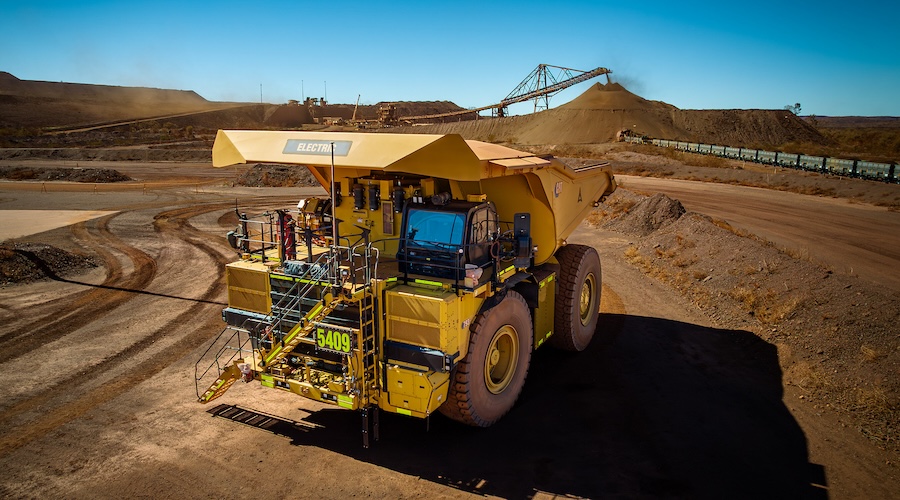
One of two Cat 793 XE Early Learner battery-electric haul trucks being tested. (Image courtesy of Caterpillar.)

BHP (ASX: BHP), Rio Tinto (ASX: RIO) and Caterpillar (NYSE: CAT) have launched an industry-first trial of battery-electric haul trucks in Western Australia’s Pilbara, a key step in efforts to reduce emissions from some of the world’s largest mining operations.

The companies unveiled two Cat 793 XE Early Learner battery-electric haul trucks at BHP’s Jimblebar iron ore mine, where the vehicles have undergone three months of initial testing following safety validation at Caterpillar’s Tucson Proving Ground in Arizona, US.

Jimblebar is home to two of seven Caterpillar battery-electric haul trucks currently being tested globally. The trial will assess the trucks’ technical performance, charging requirements and commercial viability in one of mining’s most demanding operating environments.

“These trucks exemplify what can be achieved when leaders in our industry collaborate to find a solution to a complex problem,” Western Australia Mines and Petroleum Minister David Michael said.

“We can’t underestimate what a feat it is to have such innovative, cutting-edge technologies rolled out in the Pilbara.”

Charging challenge

The project will evaluate both static and dynamic charging systems, including technology designed to charge the trucks while they are moving. More than 100 operating hours and 200 test laps have already generated data on safety, maintenance and performance.

The trial reflects growing pressure on major miners to decarbonize heavy equipment fleets, one of the industry’s largest sources of operational emissions.

Success in the Pilbara could help accelerate adoption of battery-electric mining equipment across the global resources sector while supporting net-zero ambitions at major producers.


US gives Cameco-backed Westinghouse $17.5B nuclear boost


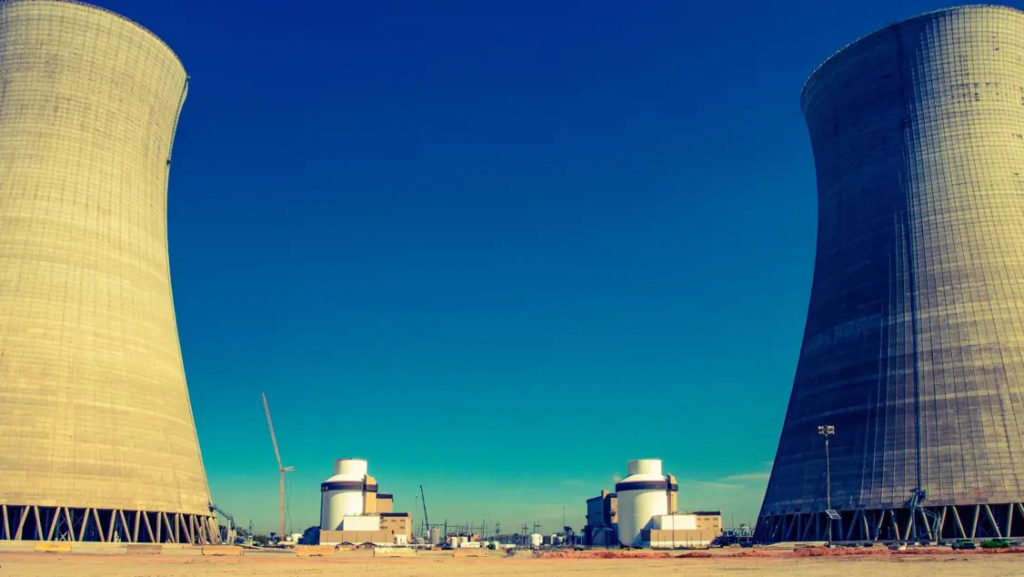
AP1000 Pressurized Water Reactor. Credit: Westinghouse

The US Department of Energy (DOE) is planning to provide $17.5 billion in loans to support the nationwide buildout of 10 large-scale commercial nuclear reactors, with the goal of fast-tracking their deployment by up to three years.

The funding — issued by the Office of Energy Dominance Financing (EDF) — is designated to help five eligible projects in their procurement of long-lead-time items needed to build these large nuclear power plants, the DOE said in a statement on Tuesday.

Termed as the American Nuclear Supply Chain Loans, the initiative marks another key step in President Trump’s executive order last year to reinvigorate the US nuclear industrial base.

“Just over one year ago, President Trump directed the Energy Department and its agency partners to unleash the next American nuclear renaissance,” US Energy Secretary Chris Wright said. “To accomplish that mission, these conditional loans will play an important role in reviving the supply chain needed for America to once again build large-scale commercial reactors.”

Procurement for 10 reactors

According to the DOE, the $17.5 billion funding would be allocated towards five energy projects, each supporting two nuclear reactors at its site, for a total of 10 reactors.

Westinghouse, which operates the country’s only licensed large-scale advanced commercial reactors (AP1000), will partner with the selected companies to procure long-lead items at a fixed price and will have joint ownership in each project.

For each project, both Westinghouse and its partner are required to fully commit their project equity of $500 million each (or $1 billion total per project) upfront prior to accessing DOE loan funds. Purchasing for each project will be staggered based on the timing of equity commitments and other relevant factors.

Westinghouse has signed letters of intent with seven potential partners, each with identified project sites, the Department said.

1.1GW power

According to the Department, each of the AP1000 reactors will generate 1.1 gigawatts of power, with the combined power output from all 10 reactors providing enough electricity to power nearly 10 million American households.

The loan facilities’ bulk equipment purchase order structure creates a strong commitment to restarting the nation’s nuclear industry by providing the necessary financing for rebuilding the American nuclear supply chain, the DOE said.

In doing so, the loan facilities drive down costs for individual nuclear components, create significant supply chain efficiencies, and shorten timelines for nuclear deployment by up to three years, it added.

Commitment to AP1000

The loan commitment comes eight months after Westinghouse — co-owned by Brookfield Renewable Partners and Canadian uranium producer Cameco — signed an $80 billion deal with the Department of Commerce to build eight AP1000 power plants.

Currently, there are six AP1000 reactors setting operational performance and availability records worldwide with 14 additional reactors under construction and five more under contract, according to the company.

“We are pleased to see the US government make this additional commitment to expanding nuclear power capacity using the proven AP1000 reactor technology,” Cameco CEO Tim Gitzel said in a press release. “When combined with the May 23, 2025, executive orders and other US government initiatives, we believe the right incentives are being created to advance the rapid deployment of AP1000 reactors in the US.”

“The expansion of nuclear power in the United States is expected to create significant opportunities for Westinghouse and Cameco, accelerating growth in Westinghouse’s energy systems segment during the procurement and subsequent construction phase,” he added.

Shares of Cameco traded 2% higher on the news amid broader weakness in equities. Year to date, the stock is up by more than 10%. The Saskatchewan-based company has a market capitalization of $47.7 billion.