Tuesday, June 07, 2022

US Inflation News: The Number That Crushes Family Budgets Of Low-Income Americans The Most


By Panos Mourdoukoutas Ph.D.
06/05/22 

No matter how it is measured, inflation is at historically high levels. But the number that matters the most for low-income family budgets is grocery inflation, which runs at 13.2%.

After receding for several years, inflation, the precipitous rising of the price of goods and services, is back, and it's hurting the lives of U.S. consumers and businesses in several ways.

First, it's devastating family budgets of middle and low-income Americans and undermining the value of money set aside in conservative savings accounts that do not grow in value in line with rising prices.

Second, it pushes interest rates and the dollar higher, undermining America's export growth and the profitability of the nation's large businesses that draw a big chunk of their earnings from overseas markets.

Third, it threatens to push the nation's economy into another recession or another stagflation.

Fourth, it spoils the nation's mood, as evidenced in survey after survey. For instance, 18% of recent Gallup survey respondents named the old villain the top problem the U.S. faces, the highest since the mid-1980s.

But how high is inflation?

How does it affect the economy, especially the middle and low-income Americans who live under tight family budgets?

It depends on how it's measured.

First, there's the Consumer Price Index (CPI), a measure of inflation at the retail level, a proxy for the rise of the cost of living for consumers. It ran at an annual rate of 8.3% in April, near a 41-year high.

Then there's the Producer Price Index (PPI), a measure of inflation at the wholesale level, a proxy for the broad impact of inflation across the economy, including the competitiveness of the nation's businesses in global markets. It ran at 8.8% in April, also close to a 41-year high.

And there's Personal Consumption Inflation (PCE), another measure of the cost of living. It ran at an annual rate of 6.3% in April, very close to the 6.6% March record.

Grocery inflation (GI), compiled by Numerator's Inflation Insights Hub, provides weekly tracking of prices and consumer sentiment to find out how inflation impacts all shoppers. It was running at an annual rate of 13.2% in May -- well above the other three inflation numbers, with health and beauty prices running at an annual rate of 10.1% and household inflation rising at 15.8%.

That's terrible news for middle and low-income Americans who spend a more significant part of their family budgets on groceries proportionally.

"With inflation on the rise, consumers continue to pay more for their everyday goods. This is especially true for grocery products. And with grocery prices rising fastest in channels like Online, Dollar, and Mass, middle-income shoppers are disproportionately more impacted, as they typically spend more of their grocery dollars in these channels than the average consumer," Shawn Paustian, of Numerator Analytics at Numerator, told International Business Times.


CRIMINAL CAPITALI$M
South Africa confirms arrest of Gupta brothers in UAE

South Africa on Monday said the United Arab Emirates had arrested Rajesh Gupta and Atul Gupta, brothers who face charges of political corruption under former South African president Jacob Zuma.
© Rodger Bosch, AFP

The two countries ratified an extradition treaty in April 2021, but it was not immediately clear whether the arrests would lead to the brothers' return to South Africa.

"Discussions between various law enforcement agencies in the UAE and South Africa on the way forward are ongoing," South Africa's ministry of justice and correctional services said in a brief statement, adding that it will continue to cooperate with the UAE.

The brothers are accused of using connections with Zuma, who was in office from 2009 to 2018, to win contracts, misappropriate state assets, influence cabinet appointments and siphon state funds. Zuma and the Guptas deny any wrongdoing.

The Indian-born brothers left South Africa after Zuma resigned in 2018. An inquiry was established in 2018 to examine allegations of graft during Zuma's years in power.

The UAE’s ratification of the extradition treaty with South Africa was a move that South African President Cyril Ramaphosa's government hoped would lead to the return of the Guptas to face charges.

South Africa's largest opposition party welcomed the arrests.

"We hope that this is indeed the beginning of arrests and prosecution of those who have – locally and abroad – looted our country for years and are directly responsible for the hardships that millions of South Africans face today," the Democratic Alliance said in a statement.


'Racketeering'

The Guptas came to South Africa in 1993 to build a sprawling business empire in mining, computer technology and media.

They had been granted South African citizenship but fled the country shortly after a judicial commission probing corruption started in 2018.

After four years of investigations, Chief Justice Raymond Zondo compiled a report, revealing how the wealthy brothers became enmeshed in the highest levels of government and the ruling African National Congress (ANC).

In a series of reports published this year, the investigators said procurement contracts at the proprietor of all rail, ports and pipelines amounted to "planned offences of racketeering activity conducted by a racketeering enterprise" linked to the Guptas.

The investigators also concluded that Zuma "would do anything that the Guptas wanted him to do for them".

The corruption scandals engulfing Zuma led to his downfall. He was jailed last year for 15 months for refusing to testify before the investigators. He was released on parole, having served just two months of the term.

In July last year, Interpol said the Gupta brothers were being sought for fraud and money laundering in connection with a 25-million rand (€1.5 million) contract paid to a Gupta-linked company, Nulane Investment, to conduct an agricultural feasibility study.

Paul Holden, an investigator who runs an NGO alongside a former ANC MP, estimated that the cost of the Guptas' alleged illicit activities in South Africa could be as much as 50 billion rand (€3 billion).

(FRANCE 24 with AFP and REUTERS)


FEMICIDE IS NOT HONORABLE
Death of three sisters spotlights India dowry violence

Aishwarya KUMAR
Mon, June 6, 2022


Before the three sisters and their children were found dead in a well, they left a message blaming the family they had married into.

Kalu, Kamlesh and Mamta Meena were victims of a dispute over dowries, the often hefty sums Indian parents pay to marry off their daughters.

The sisters had wed brothers from the same household and lived under the same roof, but suffered constant violence from their husbands and in-laws, according to the trio's grieving relatives.

They were abused constantly, they say, including when their father failed to meet demands for more money.

All three were found dead last month near their marital home, a village on the outskirts of Jaipur, along with Kalu's four-year-old son and infant child. Both Kamlesh and Mamta were pregnant.


"We don't wish to die but death is better than their abuse," read a message on WhatsApp left by one of the sisters after their disappearance, a cousin said.

"Our in-laws are the reason behind our deaths. We are dying together because it's better than dying every day."

Authorities are investigating and currently treating the deaths as suicides, a senior police officer in Jaipur told AFP.

The sisters' distraught father, Sardar Meena, said life had been a living hell for his daughters, whose husbands banned them from pursuing their education and constantly harassed them for more payments.


"We had already given them so many things, you can see them in their home," he told AFP, counting off the beds, television sets and refrigerator he provided to the family.

"I am the father of six girls, there is a limit to how much I can give," added Sardar, who earns a meagre income as a farmer.

"I had educated them and just doing that was difficult."

Police have arrested the three husbands, their mother and a sister-in-law on charges of dowry harassment and spousal abuse.

AFP's attempts to contact the men's family were unsuccessful.
- 'Dignity of the family' -

India outlawed the practice of paying dowries more than 60 years ago, and harassment or extortion over the payments is a criminal offence.

But the custom persists, particularly in rural areas, undergirded by social conventions that treat women as an economic burden and demand compensation for accepting them as brides.

Local news outlets regularly report on marital property disputes that end in murder.


Last year, a man in the southern state of Kerala was jailed for life after using venomous snakes to murder his wife and take sole control of their property, which included a new car and 500,000 rupees ($6,500) provided by her family as dowry.

Courts have also been punitive in their treatment of dowry harassment, last month jailing a man in Kerala for 10 years after his payment demands were blamed for driving his wife to suicide.

A pervasive taboo around divorce -- only one in 100 Indian marriages end in dissolution -- has kept married women from contemplating escape from abusive situations.

For the Meena sisters, leaving was never seen as an option, even though their relatives were aware of the violence.

"Once they were married, we thought they should remain in their marital homes, to maintain the dignity of the family," Sardar said.

"If we had gotten them remarried in another home, and if that situation turned out to be worse, then what will we do? We'll lose face."
- 'End of the road' -

India's National Crime Records Bureau recorded nearly 7,000 dowry-related killings in 2020 -- around 19 women every day.

The same agency reported that more than 1,700 women killed themselves that year over "dowry-related issues".


Both figures are dependent on reports to police, and experts say the actual number of cases is much higher, as with other data on family violence.

"In an hour, some 30 to 40 women are victims of domestic violence... and these are just documented (cases), so it must be much more than that," Kavita Srivastava, an activist with India's People's Union for Civil Liberties, told AFP.

Srivastava said the dowry dispute involving the Meena sisters was just one part of their tormentors' efforts to control their lives and restrict their independence.

The fundamental cause, she added, was a widespread social acceptance of domestic violence in India that leaves women feeling trapped in oppressive and violent relationships.

"If even one woman has to kill herself because her marital life seems like the end of the road," she said, "I feel the Indian state has failed for those women."

ash-lth/gle/je/oho/smw/cwl

Monday, June 06, 2022

British journalist, Brazilian indigenous expert missing in the Amazon rainforest

A British journalist and a Brazilian indigenous expert have gone missing in a remote region of the Amazon rainforest after receiving threats, authorities and indigenous-rights groups said Monday, raising fears for their safety.
© AFP - JOAO LAET

Veteran foreign correspondent Dom Phillips, 57, went missing while researching a book in the Brazilian Amazon's Javari Valley with respected indigenous expert Bruno Pereira, said The Guardian newspaper, where Phillips has been a longtime contributor.

The pair had traveled by boat to Jaburu lake, in the northern state of Amazonas near Brazil's border with Peru, and were expected to return to the city of Atalaia do Norte by around 9:00 am Sunday, two rights groups said in a statement.

The men had "received threats in the field" last week, said the groups, the Union of Indigenous Organizations of the Javari Valley (UNIVAJA) and the Observatory for the Human Rights of Isolated and Recently Contacted Indigenous Peoples (OPI).

They did not give further details, but Pereira, an expert at Brazil's indigenous affairs agency FUNAI with deep knowledge of the region, has regularly received threats from loggers and miners trying to invade isolated indigenous groups' land.

FUNAI told AFP it was collaborating with local authorities on the search effort. It added that Pereira was on leave from the agency "to pursue personal interests."

Phillips and Pereira had traveled to the region around a FUNAI monitoring base, and reached Jaburu lake Friday evening, UNIVAJA and OPI said.

They started the return trip early Sunday, stopping in the community of Sao Rafael, where Pereira had scheduled a meeting with a local leader to discuss indigenous patrols to fight the "intense invasions" that have been taking place on their lands, the groups said.

When the community leader did not arrive, the men decided to continue to Atalaia do Norte, about a two-hour trip, they said.

They were last sighted shortly after near the community of Sao Gabriel, just downstream from Sao Rafael.

The pair were traveling in a new boat with 70 liters of gasoline -- "sufficient for the trip" -- and were using satellite communications equipment, the groups said.

The federal prosecutors' office said it had dispatched police to investigate and activated a search operation, to be led by the Brazilian navy.

Two initial searches by indigenous locals "with extremely good knowledge of the region" have found no trace of the men, said UNIVAJA and OPI.

According to the newspaper O Globo, two fishermen were arrested by the police on Monday night, including a person with whom the two men had an appointment. The paper did not specify if it was the local leader in Sao Rafael who never showed.

'Time of the essence'

The missing men's families voiced alarm, along with high-profile organizations and figures including Brazilian ex-president Luiz Inacio Lula da Silva.

"We implore the Brazilian authorities to send the national guard, federal police and all the powers at their disposal to find our cherished Dom," Phillips's sister's partner, Paul Sherwood, wrote on Twitter.

"He loves Brazil and has committed his career to coverage of the Amazon rainforest. We understand that time is of the essence."

The Committee to Protect Journalists and Brazil's Foreign Press Correspondents' Association (ACIE) also voiced their concern and urged the authorities to act "immediately."

"I hope they are fine, safe and will be found quickly," tweeted Lula, the front-runner for Brazil's October presidential elections against far-right incumbent Jair Bolsonaro -- who has faced accusations of fueling invasions of indigenous lands in the Amazon with his pro-mining and -agribusiness policies.

The Guardian said in a statement it was "very concerned" about Phillips, whose work has also appeared in The New York Times, The Washington Post and other leading media.

"We condemn all attacks and violence against journalists and media workers. We are hopeful that Dom and those he was traveling with are safe and will be found soon," it said.

Phillips, who is married and based in the northeastern city of Salvador, had previously accompanied Pereira in 2018 to the Javari Valley for a story in The Guardian.

The 85,000-square-kilometer (33,000-square-mile) reservation is home to around 6,300 indigenous people from 26 groups, including a large number with virtually no contact with the outside world.

FUNAI's base there, set up to protect indigenous inhabitants, has come under attack several times in recent years. In 2019, a FUNAI officer there was shot dead.

(AFP)
Hong Kong pro-democracy figures set for largest national security trial

Mon, June 6, 2022


Hong Kong's largest national security case was sent to trial on Tuesday, after lingering 15 months in pre-trial procedures during which most of the 47 defendants were denied bail.

Under the security law, which Beijing imposed in 2020 following huge, sometimes violent democracy protests, the pro-democracy figures are charged with "conspiracy to subversion" for organising an unofficial primary election.

Subversion is one of the four major crimes under the security law and can carry a punishment of up to life in prison.

The defendants, aged between 24 and 66, include democratically elected lawmakers and district councillors, as well as unionists, academics and others, whose political stances range from modest reformists to radical localists.

The case was first brought to court in March 2020, when most of the 47 were denied bail after a four-day marathon hearing before a judge handpicked by the government to try national security cases.

Most of the pre-trial hearings over the past 15 months, though held in an open court, have been subject to reporting restrictions -- with the court repeatedly refusing applications from defendants and journalists for them to be lifted.

Family members and legal representatives have told AFP that the opaqueness has made the defendants "frustrated and depleted", and allowed the prosecution to "move the goalposts".

After a three-and-half-day hearing that began Wednesday and Thursday last week and finished Tuesday, all but one of the 47 defendants were committed to a senior court by Principal Magistrate Peter Law, one of the national security judges.

Last Wednesday, Law announced that seventeen defendants had been committed for trial.


They included veteran activists "Long Hair" Leung Kwok-hung, barrister Lawrence Lau, and journalist-turned-activist Gwyneth Ho.

Twenty-nine others -- including legal scholar Benny Tai, who was also one of the leaders of the "Occupy Central" movement in 2014 -- were committed on Monday and Tuesday.

Defendants who submit a non-guilty plea are committed for trial, and those who plead guilty committed for sentencing, according to the Magistrates Ordinance.

The one outstanding defendant will join the cohort later after further proceedings before the magistrate.

Hong Kong faces scrutiny over whether its legal system can maintain its independence as China cracks down on dissent with the security law.

More than 180 people have been arrested over the past two years since the security law came into force -- the bulk of them activists, unionists and journalists -- and 115 have been prosecuted.

Three men have been convicted and sentenced to jail for 43 months to nine years. One of them sought to appeal his 69-month sentence on Tuesday, with the court reserving judgement until early September.

The 47 defendants form the largest group in one single case under the law.

Authorities say the security law has successfully returned stability to the financial hub, which was upended for seven straight months by large and sometimes violent protests in 2019.

But critics say it has eviscerated civil liberties and the political plurality the city used to enjoy.

su/reb/lb
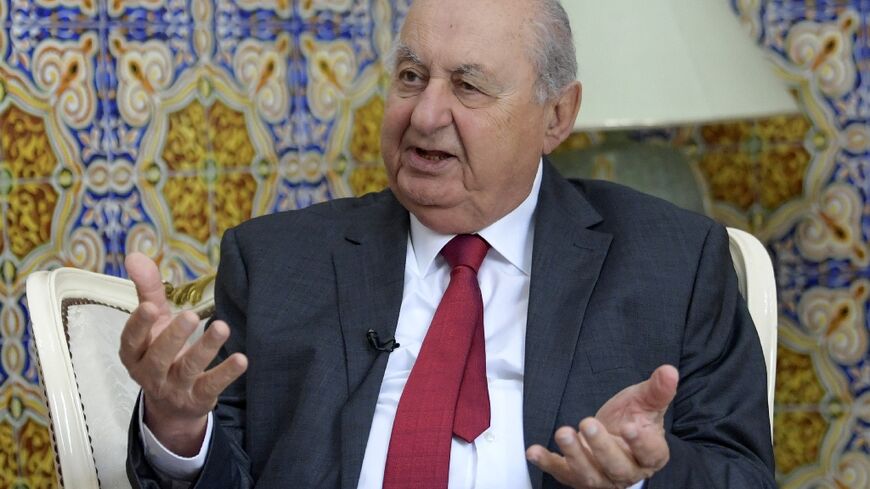
Tunisia expert drafting new constitution says no reference to Islam

Sadeq Belaid, the legal expert appointed last month to head a committee to draft a new constitution, said the new document would contain no reference to Islam - FETHI BELAID

by Ezzedine Said and Aymen Jamli
June 6, 2022 — Tunis (AFP)

The legal expert charged with rewriting Tunisia's constitution said Monday he would present President Kais Saied with a draft stripped of any reference to Islam, in order to confront Islamist parties.

The first article of a constitution adopted three years after the North African country's 2011 revolution says it is "a free, independent and sovereign state, Islam is its religion and Arabic is its language".

But Sadeq Belaid, the legal expert appointed last month to head the committee drafting the new constitution, told AFP that "80 percent of Tunisians are against extremism and against the use of religion for political ends".

"That's exactly what we want to do, simply by erasing Article 1 in its current form," he said in an interview.

Belaid, 83, confirmed there would be no reference to Islam in the draft, which will be presented to Saied ahead of a planned July 25 referendum.

- 'Parties with dirty hands' -

The document is at the heart of Saied's unilaterally announced roadmap for rebuilding Tunisia's political system, after he sacked the government last July and later dissolved parliament, in moves described by rivals as a coup.

Belaid's comments are likely to spark heated debate in the Muslim-majority country, which has a strong tradition of secularism, but where Islamist-inspired parties such as Saied's arch-rival Ennahdha have played a major role since the 2011 revolution.

Belaid said he wanted to take those parties on.

"If you use religion to engage in political extremism, we will not allow that," he said. "We have political parties with dirty hands. Whether you like it or not, French or European democrats, we won't accept these dirty people in our democracy."

He accused Ennahdha and others of being "backed by foreign powers, states or mini-states with lots of money to spend, and who use it to interfere in this country's business. That's treason."

Belaid, a constitutional law professor who once taught Saied, now heads the president's "National Consultative Commission for a New Republic".

As well as redrafting the constitution, the commission is charged with leading a "national dialogue" which began Saturday and excludes political parties.

The powerful UGTT trade union confederation was invited but it questioned the dialogue's legitimacy, saying its outcomes have already been determined, and refused to take part.


- Empowering the president -

Belaid on Monday urged the UGTT to change course.

"The door is still open: whether you come or not, the train will leave on time," he said.

Many Tunisians have welcomed Saied's moves against political parties and a mixed presidential-parliamentary system seen as corrupt and inept, but others have warned that he risks scrubbing out the country's democratic gains over the last decade.

The president, himself a former constitutional law professor, has long called for a system with a powerful presidency.

Asked about the system he would propose, Belaid said that "the president of the republic could have greater powers -- or more useful ones".

The 2014 constitution, a hard-won compromise between leading party Ennahdha and its secular rivals, created a system where both the president and parliament had executive powers.

Under that arrangement, the president "only had powers to block, and that's very bad", Belaid said. "The president is the commander in chief. So he shouldn't just have the power to put on the brakes but also the power to lead -- moderately."

But the new system should be structured so the president cannot be "driven or attracted by the temptations of dictatorship, tyranny or abuse of power", he added.

Belaid is to present the new draft by June 15 to Saied, who is then to sign off on a final text ahead of a popular vote.
Sudan anti-coup protester killed as civilian bloc reject talks

Mon, June 6, 2022


Sudanese security forces killed a protester Monday during anti-coup rallies, medics reported, as the main civilian bloc rejected UN-facilitated talks with the military aiming to resolve the protracted crisis.

The latest killing brings to 100 the death toll during the crackdown on protests against the October military coup led by army chief Abdel Fattah al-Burhan, the pro-democracy Central Committee of Sudan Doctors said.

The protester was reported to have been hit in the chest "by coup forces in Omdurman" the capital's twin city, the committee said.

The protests, the latest in months of unrest, comes as the United Nations, African Union and regional IGAD bloc push for Sudanese-led talks to solve the impasse since the military power grab in October that ousted the civilian Forces for Freedom and Change (FFC).

The FFC said it received an invitation from the UN-AU-IGAD trio for a technical meeting with the military on Wednesday, but "conveyed its apologies" and said they would not attend.

The October coup derailed a fragile transition to civilian rule that had been established following the 2019 ouster of president Omar al-Bashir.

The meeting "does not address the nature of the crisis" and any political process should work on "ending the coup and establishing a democratic civilian authority", the FFC said in a statement.

"This cannot be done by inundating the political process with parties representing the coup camp or linked to the former regime," it added.

UN spokesperson Stephane Dujarric urged factions to take part in the talks "in good faith" and to "continue to work towards establishing a conducive environment for a constructive dialogue."

Burhan also called on political blocs to "engage in the talks".


- Tear gas -


Anti-coup protests broke out in several parts of Khartoum on Monday, with crowds demanding civilian rule.

They were met by a heavy deployment of security forces, firing a barrage of tear gas canisters, witnesses said.

Since the coup, Sudan has been rocked by near-weekly protests and a violent crackdown that has killed 100 people, according to pro-democracy medics.

Last week, Burhan lifted a state of emergency in force since the coup to set the stage for "meaningful dialogue that achieves stability for the transitional period."

Military officials have agreed to launch "direct talks" between Sudanese factions.

Authorities have in recent weeks also released multiple civilian leaders and pro-democracy activists arrested since the coup.

However, the FFC on Monday said that other activists still remain in prison and the iron-fisted suppression of protests continues.

On Saturday, the UN human rights expert Adama Dieng, on his second visit to Sudan since the coup, denounced the killing of protesters and "the excessive use of force" by security forces.

On Sunday, US Assistant Secretary of State for African Affairs Molly Phee arrived in Sudan to "support the Sudanese-led process to resolve the crisis."

Sudan, one of the world's poorest countries, was already reeling from a plunging economy due to decades of international isolation and mismanagement under Bashir.

But the turmoil has intensified since the coup amid international aid cuts.

In separate unrest in eastern Sudan, crowds blocked main roads leading to Port Sudan, the country's main Red Sea trade hub, to protest a 2020 peace deal.

Protesters from Sudan's eastern Beja people say the fragile peace deal does not represent them.

ab/bha/mz/pjm

UK PM Johnson wins Conservative Party confidence vote by 211 to 148

Issued on: 06/06/2022 
Text by: NEWS WIRES

British Prime Minister Boris Johnson on Monday survived a vote of no confidence from his own Conservative MPs, after a string of scandals that have left the party’s standing in tatters.

Just over two years after he won a landslide general election victory, the Brexit figurehead again proved his ability to escape political hot water to maintain his grip on power.

But the “Partygate” controversy over lockdown-breaking events at Downing Street, which saw him become the first serving UK prime minister to have broken the law, has still severely weakened his position.

While 211 Tory MPs backed him, 148 did not.

Johnson, 57, needed the backing of 180 MPs to survive the vote—a majority of one out of the 359 sitting Conservatives in parliament.

Defeat would have meant an end to his time as party leader and prime minister until a replacement was found in an internal leadership contest.

In previous Tory ballots, predecessors Margaret Thatcher and Theresa May both ultimately resigned despite narrowly winning their own votes, deciding that their premierships were terminally damaged.

Rebuild trust

Johnson has steadfastly refused to resign over “Partygate”.

He earlier defended his record on delivering Brexit, fighting the Covid pandemic and Britain’s hawkish support for Ukraine against Russia.

“This is not the moment for a leisurely and entirely unforced domestic political drama and months and months of vacillation from the UK,” he told Tory MPs, according to a senior party source.

“We have been through bumpy times before and I can rebuild trust,” the prime minister told his parliamentary rank and file, according to the source, adding: “The best is yet to come.”

Supporters could be heard cheering and thumping their tables in approval.

The source said Johnson had indicated tax cuts could be in the offing as Britain contends with its worst inflation crisis in generations.

But the scale of Tory disunity was exposed in a blistering resignation letter from Johnson’s “anti-corruption champion” John Penrose and another letter of protest from long-time ally Jesse Norman.

The prime minister’s rebuttals over “Partygate” were “grotesque”, Norman wrote, warning that the Tories risked losing the next general election, which is due by 2024.

>> No-confidence vote likely ‘beginning of the end’ for UK’s Johnson

Ex-cabinet member Jeremy Hunt, who lost to Johnson in the last leadership contest in 2019 and is expected to run again if Johnson is deposed, confirmed he would vote against him.

“Conservative MPs know in our hearts we are not giving the British people the leadership they deserve,” Hunt tweeted.


Jubilee booing

After a dismal showing in May local elections, the party is expected to lose two by-elections this month, one of them in a previously rock-solid Conservative seat.


That is focusing the minds of Tory lawmakers, who fear their own seats could be at risk if Johnson leads them into the next election, which is due by 2024 at the latest.

In a snap poll by Opinium Monday of 2,032 people, 59 percent of respondents said the Tories should ditch him as leader.

Among Conservative members, 42 percent want MPs to fire Johnson, according to another poll by YouGov.


Johnson was booed Friday by sections of an ardently patriotic crowd gathered outside St Paul’s Cathedral, ahead of a religious service for Queen Elizabeth II’s Platinum Jubilee.

For wavering Tories, the barracking at a televised national occasion reportedly marked a turning point. Some said they had held back on public criticism of Johnson until after the jubilee.

But cabinet ally Jacob Rees-Mogg dismissed the booing as “muted noise” and insisted that Johnson could survive with the slenderest of majorities.

“He has shown himself to be a good, strong leader who gets the big decisions right, and he has a mandate from the British people,” Rees-Mogg told reporters.

Graham Brady, who heads the backbench committee of Conservatives which oversees party challenges, had earlier confirmed that the threshold of 54 Tory lawmakers seeking a confidence vote—or 15 percent of its MPs—had been met.

Squabbling

Brady told reporters that he had informed Johnson early on Sunday—as four days of jubilee celebrations ended—and that the prime minister had not objected to a rapid ballot.

In a message of thanks for the celebrations of her record-breaking 70-year reign, the queen had expressed hope that “this renewed sense of togetherness will be felt for many years to come”.

Conservative MPs had other ideas, as they openly squabbled on Twitter in often-scathing terms following Brady’s announcement.

Dozens have broken ranks and criticised Johnson after an internal probe into “Partygate” said he had presided over a culture of Covid lockdown-breaking parties in Downing Street.

Some ran late into the night, and one featured a drunken fight among staff, at a time when the government’s pandemic rules forbade ordinary Britons from bidding farewell in person to dying loved ones.

(AFP)

New Zealand Rugby makes public apology to top woman player

Mon, June 6, 2022, 


New Zealand Rugby publicly apologised on Tuesday to Te Kura Ngata-Aerengamate, whose criticism of the environment in the women's national team led to a scathing review and overhaul of its coaching staff.

The experienced hooker had accused management of overseeing a culture that failed to support player wellbeing on their unsuccessful tour of Europe last year, during which she said she suffered a mental breakdown.

The 30-year-old's social media post in December highlighting her treatment -- including accusations that coach Glenn Moore made disparaging remarks to her -- sparked an independent review.

The review backed up Ngata-Aerengamate's claims and found staff made culturally insensitive comments to the country's top players and indulged in favouritism and body-shaming.

Moore stood down in April, within a week of the review's release, and was replaced by former All Blacks coach Wayne Smith, six months out from the World Cup being staged in New Zealand.

NZR had previously accepted the review's findings and apologised privately to Ngata-Aerengamate.

But in a statement on Tuesday it said that it was important to say sorry again, publicly, coinciding with the resolution of mediation between the player, NZR and Moore.

"NZR now wishes to repeat that apology... and reiterates its commitment to ensuring Te Kura receives the appropriate mental wellbeing and training support required to help her continued recovery."

Ngata-Aerengamate accepted the apology via a social media post, saying the fallout from the tour had been "emotional" but the Black Ferns and women's rugby would benefit from the action taken.

"NZR thank you for engaging and acting; together we got there," she said.

"I'm on the mend, enjoying my footy again with a free spirit."

dgi/pst

Rugby-New Zealand apologises to player for wellbeing 'failings'


(Reuters) -New Zealand Rugby has issued a public apology to Te Kura Ngata-Aerengamate more than six months after the national women's hooker complained of suffering a mental breakdown following alleged criticism from her former coach Glenn Moore.

© Reuters/ANDREW BOYERS Women's International - England v New Zealand

A social media post by Te Kura in December triggered an independent cultural review which found New Zealand Rugby (NZR) had failed to sufficiently support the women's high-performance programme.

NZR said on Tuesday it had concluded a "mediated restorative process" with Te Kura.

"NZR has formally apologised directly to Te Kura and her whanau (family) for the experiences that led to a decline in hauora (wellbeing) for her.

"NZR has taken responsibility for the systemic failings that led to this decline."

Long-serving Black Ferns coach Moore was originally part of the mediation process but resigned while it was ongoing, saying he did not agree with "misleading allegations" made against him by Te Kura.

Wayne Smith and Graham Henry, who guided the All Blacks to a men's World Cup triumph on home soil in 2011, have since joined the Blacks Ferns coaching team.

Te Kura thanked NZR on social media for "engaging and acting".

"Together we got there," she wrote. "I'm on the mend, enjoying my footy again with a free spirit ... Free to be me - stand up, speak up, know your worth."

NZR said it was committed to ensuring Te Kura received the appropriate "mental wellbeing and training support" to help her with her recovery.

"NZR further reiterates its acceptance of the Review's recommendations ... and to ensuring that the Black Ferns will strive to deliver a performance culture and environment that is safe and rewarding for all."

The Black Ferns began their preparations for hosting the Women's World Cup with a 23-10 win over Australia in the Pacific Four tournament at Tauranga Domain on Monday.

(Reporting by Ian Ransom in Melbourne; Editing by Kenneth Maxwell)
CRIMINAL CAPITALI$M
Fallen Football Chiefs Blatter And Platini Face Fraud Trial

By Coralie FEBVRE
06/06/22 

Sepp Blatter and Michel Platini, once the chiefs of world and European football, face trial on Wednesday over a suspected fraudulent payment that shook the sport and torpedoed their time at the top.

Former FIFA president Blatter, 86, and Platini, 66, start a two-week trial at Switzerland's Federal Criminal Court in the southern city of Bellinzona, following a mammoth investigation that began in 2015 and lasted six years.

The pair are being tried over a two million Swiss franc ($2.08 million) payment in 2011 to Platini, who was then in charge of European football's governing body UEFA.

They are accused of having, to the detriment of FIFA, illegally obtained the payment, plus social security contributions of 229,126 francs, in favour of Platini.

The former French football great "submitted to FIFA in 2011 an allegedly fictitious invoice for a (alleged) debt still existing for his activity as an adviser for FIFA in the years 1998 to 2002," according to the court.

The defendants are both accused of fraud and forgery of a document. Blatter is accused of misappropriation and criminal mismanagement, while Platini is accused of participating in those offences.

The indictment was filed by the Office of the Attorney General of Switzerland (OAG).

Former FIFA president Sepp Blatter (L) and ex-UEFA chief Michel Platini (R) will go on trial Wednesday in Switzerland Photo: AFP / STF

The trial will conclude on June 22, with the three judges delivering their verdict on July 8.

The defendants could face up to five years' imprisonment or a fine.

Both FIFA and UEFA are headquartered in Switzerland, in Zurich and Nyon respectively.

Platini and retired Swiss football administrator Blatter were banned from the sport at the very moment when Platini seemed ideally-placed to succeed Blatter at the helm of world football's governing body.

The two allies became rivals as Platini grew impatient to take over, while Blatter's tenure was brought to a swift end by a separate 2015 FIFA corruption scandal investigated by the US Federal Bureau of Investigation.

Chronology of the saga involving Sepp Blatter and Michel Platini, ex-presidents of FIFA and UEFA respectively, who will appear before Swiss prosecutors on charges of fraud from June 8-22 
Photo: AFP / Kenan AUGEARD

In the Bellinzona trial, the defence and the prosecution agree on one point: Platini was employed as an adviser to Blatter between 1998 and 2002. They signed a contract in 1999 for an annual remuneration of 300,000 francs.

"The compensation agreed in accordance with this contract was invoiced by Platini on each occasion and paid in full by FIFA," said the OAG.

However, more than eight years after the end of his advisory role, the former France captain "demanded a payment in the amount of two million francs", the OAG alleged.

"With Blatter's involvement, FIFA made a payment to Platini in said amount at the beginning of 2011. The evidence gathered by the OAG has corroborated that this payment to Platini was made without a legal basis. This payment damaged FIFA's assets and unlawfully enriched Platini," the federal prosecution alleges.

The men insist that they had, from the outset, orally agreed to an annual salary of one million francs.

"It is outstanding salary, owed by FIFA, under oral contract and paid under conditions of the most perfect legality. Nothing else! I acted, as in all my life and career, with the utmost honesty," Platini said in a statement sent to AFP.

As a civil party, FIFA wants to be reimbursed the money paid in 2011 so that it is "returned to the one and only purpose for which it was intended: football", its lawyer Catherine Hohl-Chirazi told AFP.

Joseph "Sepp" Blatter joined FIFA in 1975, became its general secretary in 1981 and the president of world football's governing body in 1998.

He was forced to stand down in 2015 and was banned by FIFA for eight years, later reduced to six, over ethics breaches for authorising the payment to Platini, allegedly made in his own interests rather than FIFA's.

Platini is regarded among world football's greatest-ever players. He won the Ballon d'Or, considered the most prestigious individual award, three times -- in 1983, 1984 and 1985.

Only Lionel Messi (seven) and Cristiano Ronaldo (five) have won more Ballons d'Or than Platini.

Platini was UEFA's president from January 2007 to December 2015.

Platini appealed against his initial eight-year suspension at the Court of Arbitration for Sport, which reduced it to four years.