Tuesday, April 28, 2026

O’Toole says China not a replacement for U.S., disagrees with PM Carney on EV deal


Updated: 


Erin O'Toole, former Conservative Party of Canada leader, is seen in Ottawa,

Former Conservative leader Erin O’Toole is cautioning the prime minister that despite the need to diversify trade, China is not a substitute for the United States.

O’Toole has been tapped to join Prime Minister Mark Carney’s 24-member Canada-U.S. Advisory Committee, unveiled this week as a formal review of the countries’ trilateral trade deal with Mexico fast approaches.

More than a year into a protracted trade war with the United States, meanwhile, Carney is once again emphasizing a shift in the relationship with Canada’s closest neighbour, describing Canada’s ties to the U.S. as a “weakness” in a social media video last Sunday.

Through several international trips in the last year, Carney has also moved to deepen ties with other allies, specifically in Europe. And, despite previously fraught relationships, Carney has moved to reset relations with both China and India with the goal of boosting trade.

On a trip to China in January, Carney inked a deal with Chinese President Xi Jinping to allow up to 49,000 Chinese electric vehicles (EVs) into the Canadian market in exchange for a reduction in tariffs on agricultural products. Chinese EVs previously faced 100 per cent tariffs in Canada, in a move by then-prime minister Justin Trudeau in 2024 that was meant to align with the United States.

“I have been publicly critical of that part of the prime minister’s trip,” O’Toole told CTV Question Period host Vassy Kapelos in an interview airing Sunday, when asked about Carney’s decision to allow some Chinese EVs into Canada. “I thought it was good that (Carney) went to China. It’s critical for our agricultural exports and Western Canada, and they needed to see that.”

“But the substitute for a great American partner is not China,” he also said, adding Canada should be aligned with the U.S. when it comes to China as part of a unified North American front.

“We have to be very cautious with China,” he said.

In a speech back in February, Conservative Leader Pierre Poilievre also said China is “no substitute” for the United States.

O’Toole prepared to push back in advisory council discussions

As the July 1 deadline to launch a review of the Canada-U.S. Mexico Agreement (CUSMA) approaches, American officials this week took aim at Canada.

U.S. Trade Representative Jamieson Greer said there is a gap between the Canada and U.S. administrations’ trade philosophies, and threatened enforcement action on the ongoing booze ban in several provinces.

And U.S. Commerce Secretary Howard Lutnick said Canada treats the U.S. unfairly “at every margin they possibly can.”

In his new capacity on the advisory committee, O’Toole said he’s prepared to push back in the discussions, and that he believes it’s “part of the reason” he was asked to join the group.

He said he’s committed to bringing a conservative voice to the council so it can be a true “best effort Team Canada,” and he’s been assured it “is a substantive, serious exercise.”

“I think I’m going to be disagreeing with some of their policies, and I think that’s what they want,” he said, adding a “diversity of voices and viewpoints” will strengthen Canada’s negotiating team.

Support for Poilievre as Conservative leader

Kapelos also asked O’Toole about Poilievre and recent questions surrounding his leadership.

Despite languishing in the polls on the preferred prime minister question and losing four MPs to the Liberals since last November, Poilievre has insisted he’s staying on at the helm of the party.

Asked if he has O’Toole’s support, the former leader didn’t hesitate: “Yes.”

“He’s got remarkable support within the party, and has set the policy agenda,” O’Toole said.

“I think the stability of a majority (government) will actually, I think, be helpful for Pierre to build up (and) repair,” he added. “The role of the Opposition is to hold the government to account. I want them to hold them to account.”

You can watch former Conservative Leader Erin O’Toole’s full interview on CTV Question Period Sunday at 11 a.m. ET.

Spencer Van Dyk

Spencer Van Dyk

Opens in new window

Writer & Producer, Ottawa News Bureau, CTV News

‘A lot of rhetoric being thrown around’ as CUSMA review looms: professor


Published: 


Prime Minister Mark Carney’s Advisory Committee on Canada-U.S. Economic Relations was set to meet for the first time on Monday as contentious trade negotiations between the two countries are expected to resume in the coming months.

Drew Fagan, professor at the Munk School of Global Affairs & Public Policy at the University of Toronto, says similar advisory councils were created prior to the signing of previous trade deals, including the current Canada-United States-Mexico Agreement (CUSMA).

“This is typical,” he told BNN Bloomberg in an interview Monday morning.

“Canadian negotiating stances are complicated (given that) it’s a regional economy, the power of the provinces and our federal structure.”

Monday’s meeting comes ahead of a July 1 deadline to review CUSMA, which was signed in 2018 by Canada, Mexico and the United States during U.S. President Donald Trump’s first term in office.

Canada’s chief trade negotiator Janice Charette said during a Canadian Chamber of Commerce summit in Ottawa last week that the deadline “is kind of a checkpoint — it’s not a cliff,” suggesting negotiations may still be ongoing at that time.

“There’s sort of a deadline of July 1, the language in the original agreement isn’t very clear on the review,” said Fagan.

“It’s unlikely that there will be an agreement by then, given the timing; we’re already at the end of April, and the complicated structure of negotiations among the three countries… right now the U.S. and Mexico are talking more than the U.S. and Canada are talking.”

Official high-level trade negotiations between Ottawa and Washington have been stalled since the fall, however representatives and officials from both sides have made numerous comments in recent months regarding future talks.

Last week, U.S. Commerce Secretary Howard Lutnick criticized Canada’s approach to trade negotiations in response to a report quoting a former Canadian official who said that time was on Canada’s side, given the pressures on the U.S. economy.

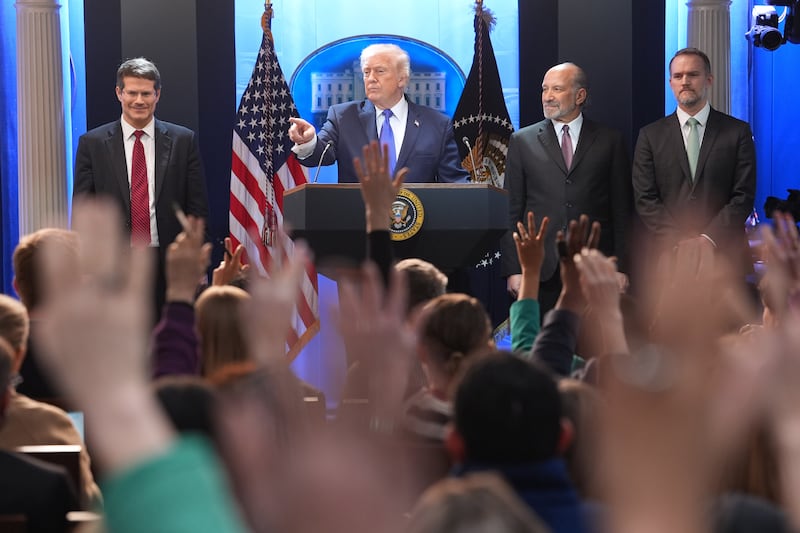
U.S. President Donald Trump speaks during a press briefing at the White House, Friday, Feb. 20, 2026, in Washington. From left are Solicitor General John Sauer, Trump, Commerce Secretary Howard Lutnick and Trade Representative Jamieson Greer. (AP Photo/Evan Vucci)

“That is, like, the worst strategy I’ve ever heard,” Lutnick said at a conference hosted by the media outlet Semafor.

“They suck, they — look, we are a $30-trillion economy, right?”

Despite those types of comments from the Trump administration, Fagan said both sides are likely to come together some time between now and the summer to iron out the details of a future agreement.

“There’s a lot of rhetoric being thrown around, particularly from the White House… so the Canadian side is trying to hold back a little bit, but reports are that the engagement is now increasing,” he said.

“I would expect later in the summer, there’ll have to be some sort of statement by July 1, but later in the summer, into the early fall, we’ll have a better sense of what an agreement, assuming there is one – and I think there likely will be – is going to look like.”

With files from The Canadian Press

Jordan Fleguel

Jordan Fleguel

Opens in new window

Journalist, CTVNews.ca

Feds formalize enhanced oil recovery tax credit flip-flop in spring economic update


Published: 

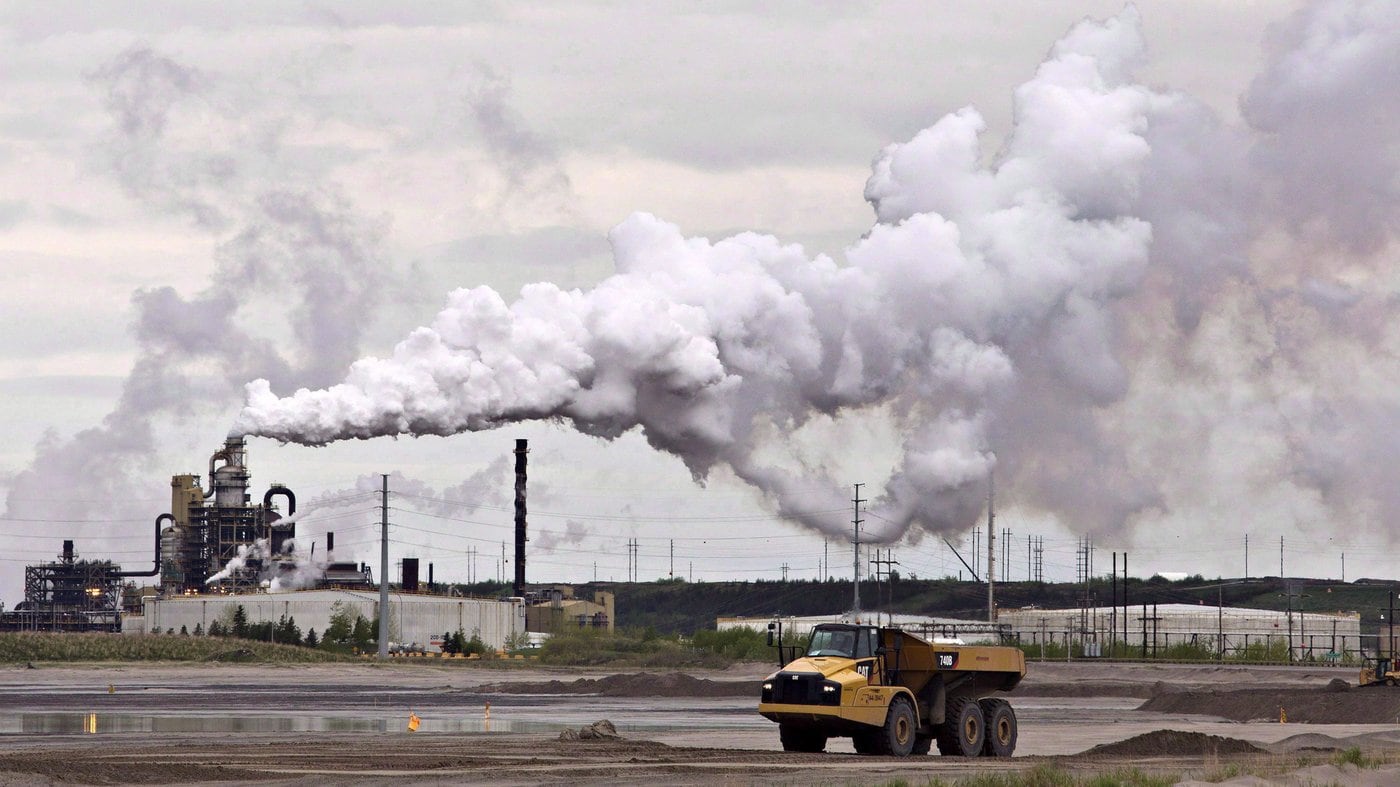
A dump truck works near the Syncrude oilsands extraction facility near the city of Fort McMurray, Alberta on Sunday June 1, 2014. THE CANADIAN PRESS/Jason Franson

OTTAWA — The spring economic update the federal government released on Tuesday seeks to formalize a pivot in climate policy that first appeared in last year’s energy agreement with Alberta.

In the 2025 budget, the Liberals promised to not make enhanced oil recovery eligible for a tax credit for the development of carbon capture and storage systems.

But 10 days after that budget passed the House of Commons, Ottawa extended that tax credit to enhanced oil recovery projects in its energy memorandum of understanding with Alberta.

The flip-flop cost Prime Minister Mark Carney a cabinet minister, as Steven Guilbeault resigned the day Alberta MOU was announced.

The spring economic update lays out the criteria for accessing the tax credit in Alberta and other provinces where there are “sufficient regulations to ensure CO2 is permanently stored,” such as B.C. and Saskatchewan.

Ottawa projects the measure, which takes effect immediately, will generate $395 million in federal revenue over the next three years.

Enhanced oil recovery is a carbon capture and storage technology — or CCUS — that captures carbon dioxide from industrial emitters and injects it underground at oilfields.

That increases pressure and pushes more oil out of the rock, while the carbon dioxide is trapped underground.

Environmentalists see the extension of the tax credits to enhanced oil recovery as a direct subsidy of oil production, while the industry says tax credits are not subsidies.

Mark Scholz, president of the Canadian Association of Energy Contractors, told reporters late last year that including EOR in carbon capture credits was a “game-changer” and would put Canada in a much better competitive position for investment compared to the U.S.

“We think that this measure will help to store more carbon,” federal Finance Minister François-Philippe Champagne told reporters at a news conference Tuesday.

“We need to do more in order to make sure that we would be able to store more carbon. But at the same time, if you look at the state of the world today, you realize that Canada is increasingly that stable, predictable partner of choice when it comes to energy security.”

In the spring economic update, the government said the credit rate for carbon capture and storage through EOR would be half of the rate for storing carbon geologically or in concrete.

Equipment being used for both conventional carbon capture and for EOR is also eligible for tax breaks “on a weighed-average basis” depending on how much carbon is being captured through each method.

Storage equipment in an EOR capture project, however, would not be pro-rated.

The issue of making EOR eligible for tax credits has been a political hot potato for Prime Minister Mark Carney. Guilbeault resigned from cabinet in November over it. He was the heritage minister when he resigned, but spent four years as environment minister and was the architect of much of the Liberal climate plan.

Guilbeault, a prominent climate activist, had received assurances from Carney’s office that the tax credits for EOR would not be in the budget or added to it afterwards, sources told The Canadian Press at the time. Guilbeault had also been dispatched to win the support of Green Party Leader Elizabeth May for Carney’s first budget.

May had heard rumours that the government was going to reverse that decision, and it was one of the things keeping her from supporting the budget — until Guilbeault gave her his word that would not happen.

May voted for the budget — a key vote the Liberals needed at that time, when they still had only a minority government.

May said the reversal amounted to a “significant betrayal” which had her questioning the worth of Carney’s word.

Carney no longer needs to pacify any opposition MPs as he now governs with a majority, with five MPs crossing the floor to the Liberals since November.

Tuesday’s economic update also included $3 billion over five years for Global Affairs Canada, and another $168 million to Environment and Climate Change Canada to deliver “climate-related supports to vulnerable countries.”

It also pledged money to the Canadian Climate Institute to host a “sustainable finance conference in the coming year,” to discuss investment opportunities in Canada.

The report by The Canadian Press was first published April 28, 2026.

Nick Murray, The Canadian Press