One of the central problems of modern social and political thought concerns the relationship between personal morality and social transformation. Most people understand morality primarily as an individual matter: telling the truth, treating others kindly, avoiding violence, acting honestly and cultivating personal virtue. Yet history repeatedly demonstrates that societies can remain deeply unjust even when most of its citizens consider themselves decent people. The existence of poverty, war, exploitation, racism, colonialism and ecological destruction suggests that moral behavior at the personal level does not automatically translate into genuine moral outcomes at the societal level.
This tension became a major concern of twentieth-century Critical Theory, particularly with the writings of Max Horkheimer, Theodor Adorno, Herbert Marcuse and later Jürgen Habermas. The Frankfurt School sought to understand why modern societies continued to reproduce domination and injustice despite unprecedented advances in education, science and moral awareness. Habermas attempted to rescue the emancipatory aspirations of Critical Theory by developing a theory of communication and democratic participation capable of connecting everyday moral reasoning with institutional reform.
Yet one may ask whether a practical historical example already existed of such a bridge between private morality and collective transformation. Indeed, the case of Mahatma Gandhi appears particularly significant. Gandhi’s political achievement was not simply that he possessed admirable personal virtues but that he transformed personal ethical commitments into instruments of mass political action.
He converted what might be called “micro-morality” into “macro-morality” – turning individual disciplines such as truthfulness, nonviolence, self-restraint and sacrifice into collective mechanisms capable of confronting imperial power. This interpretation suggests that Gandhi may provide a practical answer to a problem that remained largely theoretical within Critical Theory.
The Frankfurt School’s Problem
The original Frankfurt School emerged from a profound disappointment with both liberal capitalism and orthodox Marxism. Classical Marxists had predicted that increasing economic contradictions would eventually generate revolutionary consciousness among workers. Instead, many workers became integrated into the existing social system and adopted its values even though those values were anti-working class.
They bought into consumer culture, and consumer culture expanded. Mass media flourished providing them with ready-made excuses to any social problem they might discern, and largely hiding social problems from their view. Bureaucratic institutions became increasingly sophisticated, developing mechanisms to manage grievances, defuse conflict and channel discontent into administrative procedures rather than political confrontation.
For thinkers such as Horkheimer and Adorno, modern domination was no longer maintained primarily through direct coercion. Rather, domination became embedded within social structures themselves. The institutions of everyday life…education, media, entertainment, bureaucracy and consumer markets…shaped consciousness in ways that reproduced existing power relations.
The implication was deeply troubling. If domination operates through social structures, then individual virtue becomes largely ineffective. One can be personally honest while participating in exploitative economic systems. One can be compassionate while benefiting from unjust institutions. One can sincerely oppose violence while inadvertently and helplessly supporting political administrations that generate wars and suffering elsewhere.
This realization produced a persistent pessimism within Critical Theory. The Frankfurt School excelled at diagnosing social pathologies but struggled to identify realistic mechanisms for transformation. The individual appeared powerless before vast systems of administration, technology and capital.
Indeed, one of the central insights of Critical Theory is that morality itself can become privatized. Moral concern becomes confined to personal behavior while larger structures remain untouched. Individuals may feel morally satisfied because they behave decently in private life even as the broader social order continues producing injustice. The result is a separation between ethical self-understanding and political effectiveness. The question therefore emerges: how can personal morality acquire historical force?
Habermas and the Search for a Bridge
Habermas inherited this problem but rejected the pessimism of his predecessors and he sought resources for emancipation within ordinary communication itself.
His most influential distinction is between the “lifeworld” and the “system.” The lifeworld consists of everyday communication, shared meanings, cultural traditions, moral norms and interpersonal relationships. It is the sphere in which individuals coordinate action through mutual understanding. The system, by contrast, refers to institutional structures organized through money, administrative power and bureaucratic procedures.
Habermas argued that modern societies increasingly experience the “colonization of the lifeworld.” Economic and bureaucratic imperatives intrude into domains previously governed by communication and shared values. Relationships become instrumentalized, citizens become consumers, democratic participation declines as technocratic administration expands.
Unlike Adorno and Horkheimer, however, Habermas believed resistance remained possible. Human beings possess capacities for rational communication. Through public discussion, democratic participation, social movements and civil society organizations, citizens can challenge distorted forms of power and reshape institutions. Communicative action therefore becomes the medium through which moral concerns may enter political structures.
All of this is incredibly theoretical, however. How exactly do personal moral convictions become collective political forces? Habermas identifies communication as the mechanism, but he provides relatively few concrete historical examples demonstrating how private virtue becomes organized social power. His account remains primarily procedural. Citizens deliberate, public spheres emerge, consensus develops, institutions respond.
What motivates individuals to move beyond private morality and enter collective struggle? How are moral commitments transformed into organized action capable of confronting entrenched systems? This is precisely where Gandhi becomes relevant.
Gandhi’s Transformation of Morality
Many religious traditions emphasize personal virtue. Individuals are encouraged to be truthful, compassionate, forgiving, humble, and nonviolent, they are encouraged to transform into higher-order moral beings on an interpersonal level (forgiving harm, showing love to enemies, forswearing greed, controlling their anger etc.). Such teachings primarily regulate interpersonal behavior. They improve character and relationships. Yet they often remain confined to the private sphere.
Gandhi recognized the limitation of this approach. Colonialism could not be overcome through private kindness alone. Personal honesty would not end imperial rule. Individual compassion would not dismantle oppressive institutions. Rather than, however, abandoning moral principles, Gandhi magnified them, escalated them and applied them upward to the social sphere.
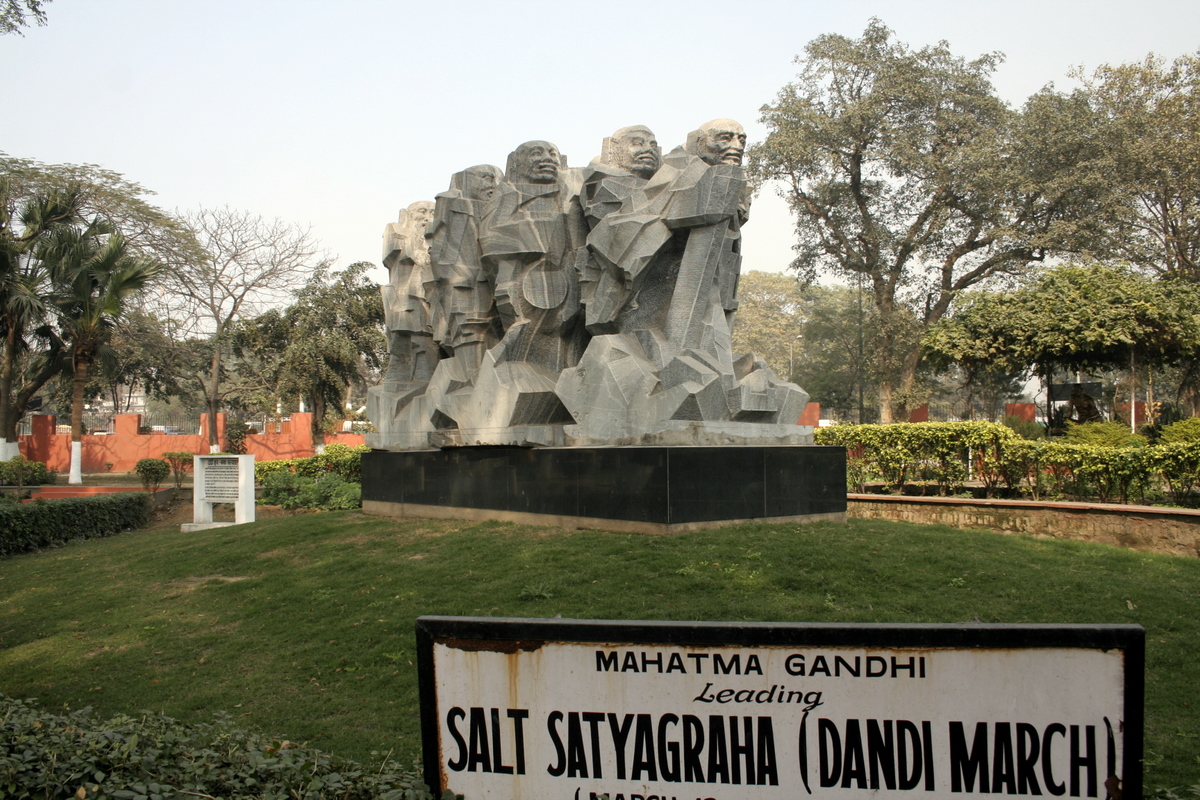
Truth became satyagraha, a collective campaign organized around public truth-telling and resistance. Nonviolence became a mass political strategy rather than merely an individual virtue. Self-sacrifice became a method of mobilization. Personal discipline became a mechanism for sustaining collective action. What had previously functioned as private ethics became public instruments.
The crucial point is that Gandhi did not separate means from ends. Instead, he attempted to convert humane moral principles into political technologies.
Nonviolence, for example, was not passive – it functioned as organized pressure. By coordinating mass refusal, civil disobedience, boycotts, marches, strikes and symbolic acts of resistance, Gandhi transformed personal restraint into political leverage. Nonviolent discipline enabled large populations to challenge imperial authority while maintaining moral legitimacy.
This move from micro-morality to macro-morality is historically significant because it demonstrates a practical mechanism through which ethical commitments can acquire structural impact.
Gandhi as a Solution to the Frankfurt School
Viewed from a Frankfurt School perspective, Gandhi’s importance lies not simply in achieving Indian independence but in solving a theoretical problem. Critical theorists recognized that individual morality is insufficient to challenge systemic domination. Gandhi agreed.
Critical theorists understood that structures shape outcomes regardless of personal intentions. Gandhi agreed.
Critical theorists sought forms of collective resistance capable of confronting modern power and Gandhi supplied one. His contribution was to demonstrate that morality need not remain trapped at the level of personal conduct. Ethical commitments can become organizing principles for social movements. Dr. Martin Luther King Jr. also attempted to bridge non-violent Christian values with an effective methodology of social change.
In this respect Gandhi may represent a practical answer to the Frankfurt School’s pessimism. Adorno often emphasized the difficulty of meaningful resistance within advanced systems of domination. Gandhi showed that disciplined collective action could disrupt apparently invincible structures. Marcuse searched for transformative social agents capable of resisting one-dimensional consumer society. Gandhi constructed such agents through ethical training and collective mobilization. Horkheimer worried about the fragmentation of reason and morality under modern conditions. Gandhi integrated ethical conviction with political strategy.
Where the Frankfurt School frequently diagnosed paralysis, Gandhi demonstrated activation.
This does not mean Gandhi resolved every problem. His movements contained limitations, contradictions and historical blind spots. Nor did he fully address deeper economic structures in the way many Marxists desired. Nevertheless, he demonstrated something that critical theorists often struggled to imagine: the translation of ethical consciousness into organized social force.
Gandhi and Habermas
The relationship between Gandhi and Habermas is perhaps even more intriguing.
Habermas argues that communicative action allows citizens to challenge domination through public reasoning. Gandhi’s movements can be interpreted as practical examples of communicative action on a massive scale.
Satyagraha was not merely coercive resistance. It was fundamentally communicative.
Participants publicly articulated grievances. They exposed contradictions within imperial rule.
They appealed to shared moral standards. They sought legitimacy through transparency rather than secrecy. They transformed political conflict into public moral dialogue.
In Habermasian language, Gandhi expanded the lifeworld into the political sphere. He enabled ordinary citizens to transform shared moral understandings into collective public action.
Yet Gandhi arguably goes beyond Habermas. Habermas often assumes that communication generates political transformation through deliberation and institutional responsiveness. Gandhi recognized that communication alone may be insufficient when confronting entrenched power.
Consequently, Gandhi supplemented communication with disciplined disruption.
Boycotts, strikes, marches and civil disobedience were communicative acts, but they also imposed material costs upon existing systems. They linked persuasion to pressure.
In this sense Gandhi may provide the missing mechanism within Habermas’s theory. He demonstrates how moral communication becomes politically effective without abandoning ethical principles. The bridge between lifeworld and system is not merely discussion. It is organized collective action rooted in moral commitments.
Conclusion
The Frankfurt School identified one of the central dilemmas of modernity: good individuals often fail to change unjust societies and live within them as hapless victims. Habermas attempted to overcome this dilemma by locating emancipatory potential within communication, public discourse and democratic participation. Yet critical theory frequently struggled to explain how personal moral convictions become effective historical forces.
Gandhi’s move from micro-morality to macro-morality offers a compelling answer.
Rather than treating morality as a private affair, Gandhi transformed ethical disciplines into collective political practices. Truth became public resistance, nonviolence became strategic mobilization, personal sacrifice became social power, individual virtue became organizational capacity.
From this perspective, Gandhi does more than complement critical theory. He supplies a practical demonstration of what critical theory sought but rarely achieved: a bridge between private conscience and structural transformation.
The significance of Gandhi, therefore, is not merely historical. It is theoretical. He shows that morality need not remain confined to interpersonal relations, nor must political action abandon ethical principles. The two can be fused. Personal virtue can become collective power.
If the Frankfurt School diagnosed the gap between morality and social change, and if Habermas described the communicative conditions under which the gap might be crossed, Gandhi may have shown what crossing it actually looks like. Gandhi accomplished in practice what later critical theorists sought to explain in theory.

No comments:
Post a Comment