Sunday, June 07, 2026

Source: Originally published by Z. Feel free to share widely.

Is it enough for a politician to say the right thing? Or is genuine credibility also measured by what one does in front of others in daily life?

On 27 May 2026, the left-wing newspaper Dagbladet Information published a short opinion piece by me under the title: “Pelle Dragsted is not taking responsibility when cycling without a helmet.” Pelle Dragsted is the lead political spokesperson of Enhedslisten, the Red-Green Alliance, one of Denmark’s most prominent left-wing parties. The piece was a critique of his failure to observe the most basic road safety rules: he had become accustomed to cycling without a helmet, despite his party placing public health and community safety as a core pillar of its political program.

To understand the issue, it needs to be seen within its Danish context. The bicycle is a fundamental part of daily life in Denmark. Official data and specialist studies indicate that nine out of every ten Danes own a bicycle, and Copenhagen is considered one of the world’s most cycling-dependent cities. Nevertheless, Denmark does not legally require the wearing of a helmet, and has limited itself to strongly recommending it without legal obligation, whereas countries such as Australia, New Zealand, Argentina, Cyprus, and Namibia have chosen to make wearing one mandatory with fines for non-compliance.

As for myself, since arriving in Denmark I have relied on the bicycle as my primary means of transport, for environmental, health, and practical reasons. I have personally been involved in accidents in which the helmet was an important factor in limiting the consequences of injury, which makes this subject feel closer to personal lived experience than to abstract criticism.

For readers outside Denmark, particularly in the Middle East and countries of the Global South where issues of war, repression, poverty, and corruption dominate the landscape, this subject may seem like a marginal detail. Yet what appears marginal sometimes reveals deeper political and principled questions. This article is not fundamentally about a bicycle helmet; it is about public criticism and open dialogue within the left, the role of journalism and social media in the age of the digital revolution, consistency between values and practice among political leaders, and their capacity to engage with criticism, acknowledge mistakes, and correct them.

The article draws on personal experience in practicing self-criticism within the Danish left, and how a simple everyday detail can open a broader public debate on these very issues. Contexts and circumstances certainly differ between societies, yet consulting the experiences of others and drawing lessons from them remains an important means of developing a culture of accountability and self-criticism anywhere. Accountability does not begin with major issues alone; it is also shaped through small details that accumulate over time.

The Contradiction at the Heart of the Matter: Why Is Self-Criticism a Left-Wing Necessity?

In Denmark, a politician’s credibility is measured not only by what one says, but also by what one embodies in daily life. When it comes to left-wing leadership, this standard takes on particular importance, because consistency between values and practice forms an essential part of left-wing discourse itself. It is from this point that what appears to be a simple matter, such as wearing a bicycle helmet, has grown into a broader debate about public responsibility and political role-modelling.

The Red-Green Alliance does not limit itself to speaking and campaigning for social justice, workers’ rights, and opposing racism. It is also considered one of Denmark’s most prominent parties on issues of environmental and climate protection. Its political program includes insistence on workplace safety, public health protection, community prevention, and the role of the state in enhancing citizen safety and developing the health sector. It also links social policies with environmental policies within a left-wing vision that regards this as an essential part of social justice.

It is also worth noting that the party’s leadership embodies these environmental values in their daily conduct in a striking manner. We have seen how the party’s delegation, comprising Pelle Dragsted and his colleagues, attends meetings on forming the new government on their bicycles, in a scene reflecting a genuine commitment to values of sustainability, the environment, and health, while expensive cars belonging to right-wing party leaders line up at the entrances.

In this specific context, the matter does not concern a passing image or an isolated snapshot. Pelle Dragsted has been observed on numerous occasions arriving on his bicycle without a helmet, captured repeatedly by press photographers’ cameras. What we are looking at is not a fleeting slip or an exceptional oversight; it is a repeated, visible daily behavioral pattern that reveals a documented contradiction between what the party advocates and what its leader embodies in the public space.

There is another dimension that deserves reflection. The Danish welfare state covers the costs of treatment, rehabilitation, and even disability pension in the event of any accident. This means that the individual choice not to wear a helmet does not remain within the personal sphere; it extends to affect the collective system funded by all taxpayers. From this specific standpoint, the debate around the helmet becomes a debate about the collective responsibility the left champions.

I wrote this piece as a left-wing writer who voted for the Red-Green Alliance in the last parliamentary elections because it is the ideologically closest list, despite my disagreements with the party over a range of issues including rearmament, NATO, the war in Ukraine, internal organizational policies, and other matters. The party accommodates different left-wing perspectives according to local, regional, and global circumstances. The aim was not to cause harm to Dragsted or to the party; the aim was precisely the opposite. Honest and constructive criticism is one form of genuine responsibility towards a left-wing project, even where one disagrees on this point or that. Mistakes are not resolved through neglect; they are resolved through diagnosis, acknowledgement, and correction. That is what I sought to do.

From the Major Outlets to the Digital Space

Within days of the article’s publication, the debate spread to a number of Denmark’s most prominent newspapers and media platforms. Journalist Anders Redder quoted from the piece in his parliamentary newsletter in Jyllands-Posten, pausing on the idea of the politician as a public role model. Journalist and writer Leny Malacinski addressed the subject in her weekly newsletter “Ærligt talt” (Honestly Speaking) in Weekendavisen with an analytical reading of the debate. On Altinget, the specialist political reference platform for parliamentary and governmental circles, journalist Jeppe Højberg Sørensen highlighted the article as one of the week’s most prominent political discussion topics, drawing on sections of it. What stood out was the way the debate moved from a left-wing outlet to platforms of varying orientations, suggesting it had touched on a societal concern that transcended party affiliation.

On Weekendavisen’s official Facebook page, the post became a space for broad community dialogue involving more than a thousand people. Doctors and specialists in public health and road safety took part, affirming the scientific evidence supporting regular helmet use and the genuine influence of public figures’ behavior on shaping a culture of safety.

Specialist studies indicate that helmets significantly reduce the risk of serious head injuries, and Danish road safety statistics show that thousands of cyclists sustain head and neck injuries each year, with consequences that affect not only individuals but also families and the health system as a whole.

Criticism Must Not Be Deferred Out of Fear of Exploitation

It did not escape my attention that some of those who engaged with the article used its critique to attack the Red-Green Alliance and the Danish left more broadly. This is an expected and understandable aspect of public political debate, since no critical space is free of voices that use arguments to serve political agendas different from those of the original author, whether from the right or from other quarters. Yet this does not constitute grounds for deferring or retreating from criticism.

A left that stops reviewing itself out of fear that its opponents will exploit that review falls into a trap far more dangerous than the mistake it avoids acknowledging. Self-criticism is not a gift to opponents; it is a fundamental condition for preserving credibility and the capacity for renewal and influence. Diagnosing mistakes and acknowledging them is not weakness; it is one form of the political maturity that distinguishes a left confident in its values and policies.

If self-criticism has always been a political imperative, the digital revolution has made it an existential one from which there is no escape. Information now spreads instantly, reaching publics before any party has the opportunity to contain or direct the debate. Thousands participate in any discussion at unprecedented speed, and opinions multiply across different platforms within hours. This reality makes consistency between values and daily conduct an unavoidable requirement for any public figure seeking to maintain credibility.

Dragsted Engages with the Critique: The Message Got Through

What was unexpected was a response that was both swift and eloquent at once. Dragsted posted a personal photo on his Instagram account wearing a bicycle helmet on his way to the government formation meetings at Marienborg, accompanied by a light-hearted Danish phrase: “Så går turen mod Marienborg. Selvfølgelig med cykelhjelm 😉❤️ — meaning “Off we go to Marienborg. With a helmet, of course.” He also participated in the ongoing debate on Weekendavisen’s Facebook page as any ordinary participant, without looking down on the audience or ignoring the discussion, sharing a personal photo accompanied by a brief and clever English phrase: “By popular demand ❤️.

The response was neither defensive nor apologetic; it came with lightness and confidence, which is to his credit. It reveals a modest politician capable of listening and engaging with public criticism with an open spirit rather than retreating or ignoring it. The capacity to accept criticism in this manner is itself a necessary quality for left-wing leadership. The message was received, and the public debate influenced the behaviour of a prominent political figure. This is precisely what constructive left-wing criticism is supposed to achieve.Email

Rezgar Akrawi is a leftist researcher specializing in issues of technology and the left, working in the field of systems development and e-governance.


Source: Originally published by Z. Feel free to share widely.

One of the central problems of modern social and political thought concerns the relationship between personal morality and social transformation. Most people understand morality primarily as an individual matter: telling the truth, treating others kindly, avoiding violence, acting honestly and cultivating personal virtue. Yet history repeatedly demonstrates that societies can remain deeply unjust even when most of its citizens consider themselves decent people. The existence of poverty, war, exploitation, racism, colonialism and ecological destruction suggests that moral behavior at the personal level does not automatically translate into genuine moral outcomes at the societal level.

This tension became a major concern of twentieth-century Critical Theory, particularly with the writings of Max Horkheimer, Theodor Adorno, Herbert Marcuse and later Jürgen Habermas. The Frankfurt School sought to understand why modern societies continued to reproduce domination and injustice despite unprecedented advances in education, science and moral awareness. Habermas attempted to rescue the emancipatory aspirations of Critical Theory by developing a theory of communication and democratic participation capable of connecting everyday moral reasoning with institutional reform. 

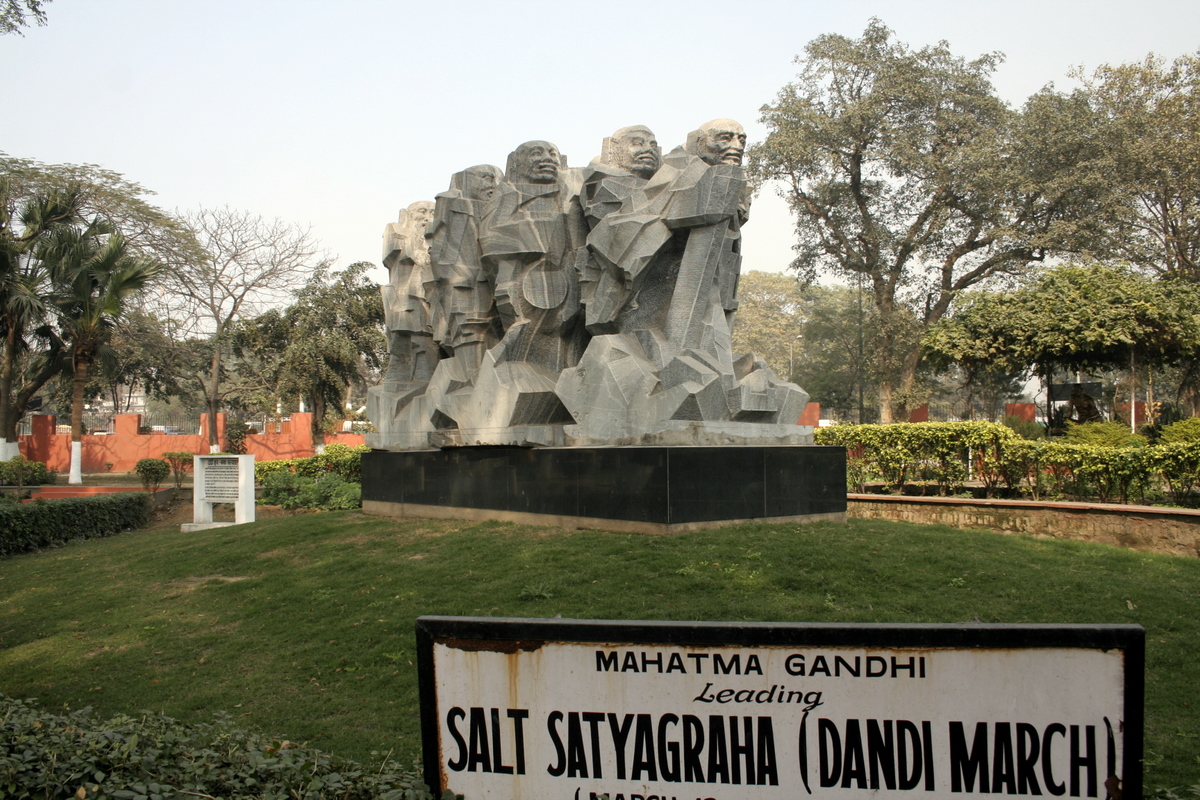
Yet one may ask whether a practical historical example already existed of such a bridge between private morality and collective transformation. Indeed, the case of Mahatma Gandhi appears particularly significant. Gandhi’s political achievement was not simply that he possessed admirable personal virtues but that he transformed personal ethical commitments into instruments of mass political action. 

He converted what might be called “micro-morality” into “macro-morality” – turning individual disciplines such as truthfulness, nonviolence, self-restraint and sacrifice into collective mechanisms capable of confronting imperial power. This interpretation suggests that Gandhi may provide a practical answer to a problem that remained largely theoretical within Critical Theory. 

The Frankfurt School’s Problem

The original Frankfurt School emerged from a profound disappointment with both liberal capitalism and orthodox Marxism. Classical Marxists had predicted that increasing economic contradictions would eventually generate revolutionary consciousness among workers. Instead, many workers became integrated into the existing social system and adopted its values even though those values were anti-working class. 

They bought into consumer culture, and consumer culture expanded. Mass media flourished providing them with ready-made excuses to any social problem they might discern, and largely hiding social problems from their view. Bureaucratic institutions became increasingly sophisticated, developing mechanisms to manage grievances, defuse conflict and channel discontent into administrative procedures rather than political confrontation.

For thinkers such as Horkheimer and Adorno, modern domination was no longer maintained primarily through direct coercion. Rather, domination became embedded within social structures themselves. The institutions of everyday life…education, media, entertainment, bureaucracy and consumer markets…shaped consciousness in ways that reproduced existing power relations.

The implication was deeply troubling. If domination operates through social structures, then individual virtue becomes largely ineffective. One can be personally honest while participating in exploitative economic systems. One can be compassionate while benefiting from unjust institutions. One can sincerely oppose violence while inadvertently and helplessly supporting political administrations that generate wars and suffering elsewhere.

This realization produced a persistent pessimism within Critical Theory. The Frankfurt School excelled at diagnosing social pathologies but struggled to identify realistic mechanisms for transformation. The individual appeared powerless before vast systems of administration, technology and capital.

Indeed, one of the central insights of Critical Theory is that morality itself can become privatized. Moral concern becomes confined to personal behavior while larger structures remain untouched. Individuals may feel morally satisfied because they behave decently in private life even as the broader social order continues producing injustice. The result is a separation between ethical self-understanding and political effectiveness. The question therefore emerges: how can personal morality acquire historical force?

Habermas and the Search for a Bridge

Habermas inherited this problem but rejected the pessimism of his predecessors and he sought resources for emancipation within ordinary communication itself.

His most influential distinction is between the “lifeworld” and the “system.” The lifeworld consists of everyday communication, shared meanings, cultural traditions, moral norms and interpersonal relationships. It is the sphere in which individuals coordinate action through mutual understanding. The system, by contrast, refers to institutional structures organized through money, administrative power and bureaucratic procedures.

Habermas argued that modern societies increasingly experience the “colonization of the lifeworld.” Economic and bureaucratic imperatives intrude into domains previously governed by communication and shared values. Relationships become instrumentalized, citizens become consumers, democratic participation declines as technocratic administration expands. 

Unlike Adorno and Horkheimer, however, Habermas believed resistance remained possible. Human beings possess capacities for rational communication. Through public discussion, democratic participation, social movements and civil society organizations, citizens can challenge distorted forms of power and reshape institutions. Communicative action therefore becomes the medium through which moral concerns may enter political structures. 

All of this is incredibly theoretical, however. How exactly do personal moral convictions become collective political forces? Habermas identifies communication as the mechanism, but he provides relatively few concrete historical examples demonstrating how private virtue becomes organized social power. His account remains primarily procedural. Citizens deliberate, public spheres emerge, consensus develops, institutions respond.

What motivates individuals to move beyond private morality and enter collective struggle? How are moral commitments transformed into organized action capable of confronting entrenched systems? This is precisely where Gandhi becomes relevant.

Gandhi’s Transformation of Morality

Many religious traditions emphasize personal virtue. Individuals are encouraged to be truthful, compassionate, forgiving, humble, and nonviolent, they are encouraged to transform into higher-order moral beings on an interpersonal level (forgiving harm, showing love to enemies, forswearing greed, controlling their anger etc.). Such teachings primarily regulate interpersonal behavior. They improve character and relationships. Yet they often remain confined to the private sphere.

Gandhi recognized the limitation of this approach. Colonialism could not be overcome through private kindness alone. Personal honesty would not end imperial rule. Individual compassion would not dismantle oppressive institutions. Rather than, however, abandoning moral principles, Gandhi magnified them, escalated them and applied them upward to the social sphere.

Truth became satyagraha, a collective campaign organized around public truth-telling and resistance. Nonviolence became a mass political strategy rather than merely an individual virtue. Self-sacrifice became a method of mobilization. Personal discipline became a mechanism for sustaining collective action. What had previously functioned as private ethics became public instruments.

The crucial point is that Gandhi did not separate means from ends. Instead, he attempted to convert humane moral principles into political technologies.

Nonviolence, for example, was not passive – it functioned as organized pressure. By coordinating mass refusal, civil disobedience, boycotts, marches, strikes and symbolic acts of resistance, Gandhi transformed personal restraint into political leverage. Nonviolent discipline enabled large populations to challenge imperial authority while maintaining moral legitimacy. 

This move from micro-morality to macro-morality is historically significant because it demonstrates a practical mechanism through which ethical commitments can acquire structural impact.

Gandhi as a Solution to the Frankfurt School

Viewed from a Frankfurt School perspective, Gandhi’s importance lies not simply in achieving Indian independence but in solving a theoretical problem. Critical theorists recognized that individual morality is insufficient to challenge systemic domination. Gandhi agreed.

Critical theorists understood that structures shape outcomes regardless of personal intentions. Gandhi agreed.

Critical theorists sought forms of collective resistance capable of confronting modern power and Gandhi supplied one. His contribution was to demonstrate that morality need not remain trapped at the level of personal conduct. Ethical commitments can become organizing principles for social movements. Dr. Martin Luther King Jr. also attempted to bridge non-violent Christian values with an effective methodology of social change. 

In this respect Gandhi may represent a practical answer to the Frankfurt School’s pessimism. Adorno often emphasized the difficulty of meaningful resistance within advanced systems of domination. Gandhi showed that disciplined collective action could disrupt apparently invincible structures. Marcuse searched for transformative social agents capable of resisting one-dimensional consumer society. Gandhi constructed such agents through ethical training and collective mobilization. Horkheimer worried about the fragmentation of reason and morality under modern conditions. Gandhi integrated ethical conviction with political strategy.

Where the Frankfurt School frequently diagnosed paralysis, Gandhi demonstrated activation.

This does not mean Gandhi resolved every problem. His movements contained limitations, contradictions and historical blind spots. Nor did he fully address deeper economic structures in the way many Marxists desired. Nevertheless, he demonstrated something that critical theorists often struggled to imagine: the translation of ethical consciousness into organized social force.

Gandhi and Habermas

The relationship between Gandhi and Habermas is perhaps even more intriguing.

Habermas argues that communicative action allows citizens to challenge domination through public reasoning. Gandhi’s movements can be interpreted as practical examples of communicative action on a massive scale.

Satyagraha was not merely coercive resistance. It was fundamentally communicative.

Participants publicly articulated grievances. They exposed contradictions within imperial rule.

They appealed to shared moral standards. They sought legitimacy through transparency rather than secrecy. They transformed political conflict into public moral dialogue.

In Habermasian language, Gandhi expanded the lifeworld into the political sphere. He enabled ordinary citizens to transform shared moral understandings into collective public action.

Yet Gandhi arguably goes beyond Habermas. Habermas often assumes that communication generates political transformation through deliberation and institutional responsiveness. Gandhi recognized that communication alone may be insufficient when confronting entrenched power.

Consequently, Gandhi supplemented communication with disciplined disruption.

Boycotts, strikes, marches and civil disobedience were communicative acts, but they also imposed material costs upon existing systems. They linked persuasion to pressure.

In this sense Gandhi may provide the missing mechanism within Habermas’s theory. He demonstrates how moral communication becomes politically effective without abandoning ethical principles. The bridge between lifeworld and system is not merely discussion. It is organized collective action rooted in moral commitments.

Conclusion

The Frankfurt School identified one of the central dilemmas of modernity: good individuals often fail to change unjust societies and live within them as hapless victims. Habermas attempted to overcome this dilemma by locating emancipatory potential within communication, public discourse and democratic participation. Yet critical theory frequently struggled to explain how personal moral convictions become effective historical forces.

Gandhi’s move from micro-morality to macro-morality offers a compelling answer.

Rather than treating morality as a private affair, Gandhi transformed ethical disciplines into collective political practices. Truth became public resistance, nonviolence became strategic mobilization, personal sacrifice became social power, individual virtue became organizational capacity.

From this perspective, Gandhi does more than complement critical theory. He supplies a practical demonstration of what critical theory sought but rarely achieved: a bridge between private conscience and structural transformation.

The significance of Gandhi, therefore, is not merely historical. It is theoretical. He shows that morality need not remain confined to interpersonal relations, nor must political action abandon ethical principles. The two can be fused. Personal virtue can become collective power.

If the Frankfurt School diagnosed the gap between morality and social change, and if Habermas described the communicative conditions under which the gap might be crossed, Gandhi may have shown what crossing it actually looks like. Gandhi accomplished in practice what later critical theorists sought to explain in theory.Email

Daniel Gauss is a teacher who studied at Wisconsin and Columbia. He has been published in non-fiction and fiction magazines including 3 Quarks Daily, The Good Men Project, E - The Environmental Magazine, & Daily Philosophy.

War, Economic Crisis, and Discontent in Putin’s Russia


 June 5, 2026

As this article was being prepared for publication, the Russian state designated those associated with the website Posle as a “foreign agent.” Russia’s “foreign agent” law is highly repressive, and places the editors at significant risk of criminal prosecution and other threats to their basic civil rights. Russia’s law is a model of what Human Rights Watch has identified as a critical tool in the authoritarian playbook. “The primary target of these laws are civil society and media organizations” whose activities are “aimed at influencing public policy…[and] organizing public debates, events, rallies and demonstrations.” Thus, among other purported sins, the Putin regime has based its decision on Posle’s alleged “promotion” of “LGBT relationships”. This is part of a broader attack on democratic rights internationally. It has its own parallels in the U.S., as the authoritarian creep has been escalated by Trump. Tempest stands in unconditional solidarity with Posle and its editors. We see in Posle fellow “agents”, not of any state, but of a democratic project of international solidarity which is the antidote to a future of unbridled capitalist barbarism. 

Ashley Smith:The U.S. and Israel have expanded their joint genocidal war on Gaza into Lebanon and Iran. They expected a quick victory, but it has turned into yet another disastrous forever war. The Iranian regime has launched asymmetrical warfare; it has struck the region’s oil infrastructure, shut down the Strait of Hormuz, and thereby disrupted the flow not only of oil but also petrochemicals, fertilizers, and helium, which is essential for the manufacture of microchips. While stagflation threatens every corner of the world economy, it appears that Russia has benefited from the war: President Trump has lowered sanctions on Russia oil and increased fossil fuel prices have poured profits into Putin’s coffers. Is this an accurate assessment? What impact is this having on the Russian economy?

Posle: Indeed, in the short term, Russia has benefited from the surge in oil prices and the lifting of sanctions. For example, Russian budget revenues from oil exports in April doubled compared to March. However, these additional revenues are not enough to halt the catastrophic rise in the budget deficit (for instance, the deficit currently stands at 2.5%, exceeding the government’s planned threshold of 1.6% for this year).  This has a  negative, knock-on impact on other government spending and the strength of the rouble.This adds further pressure on the creaky financial system.

Furthermore, almost all of the windfall profits were channeled to oil companies to modernise infrastructure (which has been severely damaged by effective attacks from Ukrainian missiles). It is worth noting that Ukraine’s attacks targeting oil refineries and oil loading terminals have seriously undermined Russia’s ability to export raw materials. In recent months, ports on the Baltic Sea, for instance, have reduced oil shipments by a third.

At the same time, a sustained increase in oil prices will inevitably lead to a decline in global oil consumption, which could seriously damage the Russian economy that is already in recession. Therefore, the ongoing war in Iran and the blockade of the Strait of Hormuz are not in Russia’s economic interests, although they undoubtedly offer it political advantages.

AS: Trump’s war on Iran has further disrupted the so-called rules based order, already discredited by the U.S. and Israel’s genocidal war on Gaza and Russia’s imperialist war on Ukraine. Trump launched the attack on Tehran without consulting or even alerting Washington’s NATO allies. Now that alliance is fraying with Trump increasingly threatening to pull U.S. troops out and abandoning support for Ukraine. As a result, Europe, especially Germany, is rapidly re-arming. Given this reality, what do you believe is the current perspective of the Putin regime regarding the inter-imperial rivalry within Europe, and that between NATO and Russia, and Ukraine’s struggle for self-determination?

Posle: In fact, declining support for Ukraine in the U.S. and America’s further distancing from European security issues due to the war in Iran represent Putin’s main political gain to date. In this sense, it is clear how the interests of Russia and its population (suffering from a falling standard of living and intensifying missile attacks) diverge sharply from those of Putin and his regime, which is prepared to prolong the conflict in order to achieve its geopolitical ambitions. These objectives include crushing Ukrainian resistance (at the cost of tens of thousands of Russian soldiers’ lives) and destabilising Europe in order to expand his influence across the post-Soviet space and in Eastern Europe.

Currently, the situation around Armenia is escalating, where President Pashinyan is seeking to gradually withdraw the country from the CSTO (a pro-Russian military bloc) and strengthen cooperation with the EU. Tensions are also rising with the Baltic states, which are becoming increasingly targeted by Russian military sabotage. All these developments are of great significance to Putin, as they raise questions about the reality of NATO’s support for its members and allies.

If aggression against Iran escalates, the U.S. will continue to rapidly reduce its presence in Europe, and NATO risks turning into a “paper tiger,” whose members’ mutual commitments are worthless. It is clear that these challenges not only lead to the remilitarisation of Germany, but also call into question the entire ideological model of the German state, built upon the trauma of Nazi militarism and the colossal sacrifices of the Second World War. All these values are threatened today, as demonstrated by the growing support for the far-right party Alternative für Deutschland (AfD), which has effectively become the country’s most popular party.

In these circumstances, the German Left must certainly fight against the danger of fascism and militarisation, but not by ignoring the Russian threat facing Eastern European countries. On the contrary, only consistent support for Ukraine can curb the ambitions of Putin’s regime and, consequently, the need for Germany’s remilitarisation, which ultimately plays into the hands of the far right.

AS: In another development that impacts Russia, voters kicked out Victor Orbán after 16 years of his increasingly authoritarian rule in Hungary. He was an ally of Putin who had blocked the EU’s $106 billion loan package to Ukraine. What is the significance of Orbán’s defeat for the Putin regime?

Posle:This is certainly a serious setback for the Kremlin, as Orbán served as its chief agent within the EU. Today, the only country remaining in this role is Slovakia, which is led by the right-wing populist Robert Fico. He, like Orbán, holds anti-Ukrainian views and is focused on securing supplies of cheap Russian gas. This model of Russian influence clearly demonstrates how the Kremlin has turned energy supplies into a powerful political weapon that it will continue to wield against other European countries.

Orbán’s defeat resulted from the fatigue of Hungarians (and particularly the youth) with his corrupt and authoritarian rule; however, it does not, in our view, signal the beginning of the end for far-right populists on a pan-European scale. On the contrary, this trend continues to gain momentum, and the Kremlin is placing its main bets on it – including in countries such as Germany and France.

AS: The war in Iran will also impact Russia and China, both of whom have supported Tehran in various ways. With oil supplies disrupted by the closure of the Strait of Hormuz, will China turn more to Russia for its oil and natural gas supplies? What will this do to their so-called “friendship without limits”? What will their policies be toward Iran? How will this scenario impact Russia and China’s rivalry with the U.S. and Europe?

Posle:The loss of Iran as a reliable oil provider (as was previously the case with Venezuela) has indeed made China more dependent on Russian supplies. Furthermore, the failure of “Operation Epic Fury” in Iran has highlighted the vulnerability of U.S. military power. Nevertheless, a distinctive feature of Putin’s position remains his efforts to develop a bilateral dialogue with Trump, despite his “friendship” with China. It is telling that Russian diplomacy, whilst repeatedly condemning the “war started by the U.S. and Israel,” has emphasised “Russia’s commitment to providing goodwill services to the parties.”

Putin and other Kremlin officials have consistently stressed that, despite its alliance with Iran, Russia is distancing itself from the conflict and prefers to play the role of mediator. Just recently, Putin repeated his proposal to transfer enriched uranium from Iran to Russia. It appears that following the fall of the Assad regime in Syria, Russia is not ready to become seriously involved in conflicts in the Middle East and is seeking to focus on Ukraine and European affairs.

AS: What is the impact of these inter-imperial and macro-economic dynamics on Russia’s ability to continue its invasion of Ukraine?

Posle: Almost five years of war in Ukraine have severely undermined Russia’s economic and human resources, but this has not yet affected Putin’s desire to “achieve the objectives of the special military operation” at any cost. Recently, Kremlin spokesperson Peskov stated that the withdrawal of the Ukrainian army from the Donetsk region is not a matter for possible negotiations with Kyiv, but a precondition for them.

In other words, once Ukraine voluntarily cedes part of its territory, further demands are likely to be made. It is clear that the Kremlin is not interested in a ceasefire and is planning a major offensive in the Donbas this summer and fall. The aim of this offensive is not only military but also political – it is necessary to convince Trump that Russia continues to dominate on the battlefield, and therefore the U.S. must increase pressure on Kyiv, forcing it to accept the Kremlin’s terms.

Putin’s plan clearly highlights a conflict between his personal ambitions and the interests of the Russian people. The Russian army’s losses on the front line have reached their highest level this year – for example, in the second half of April alone, around 4,500 soldiers were killed (in total, at least 350,000 Russians have died over the five years of the war). The number of civilian casualties is also rising due to Ukrainian missile strikes on military and energy infrastructure (though this is completely incomparable to the casualties of Russian strikes on Ukrainian cities).

Ordinary Russians are paying this price for Putin’s desire to tell Trump about his army’s advance of a few dozen square kilometres. The gap between the perception of the war in the Kremlin and among ordinary people keeps growing rapidly.

AS: Now, let’s turn to the domestic impact of all this in Russia. Ukraine has persisted in resisting Russia’s invasion and is militarily striking increasingly deep into Russia. As a result, Russian casualties have mounted at what appear to be an escalated rate during the recent spring offensive. Meanwhile, due to sanctions, and the dynamics of the war economy generally, economic conditions have worsened. There are signs of increasing dissent, expressed in a deflected way by quisling politicians and influencers. What is the domestic political situation in Russia? What should we make of the various expressions of discontent by public figures? Is this a sign of mass discontent developing among workers and the oppressed within Russia? How stable is the Putin regime?

Posle:Indeed, the first half of 2026 was marked by rising inflation and a fall in living standards. It is fair to say that the effect of the “military Keynesianism” associated with the sharp rise in public spending at the beginning of the war has now run its course. Even according to government forecasts, inflation this year will stand at 5.2 percent, whilst wages will rise by 2 percent. At the same time, the Kremlin intends to offset the growing budget deficit, as mentioned before, by increasing taxes on small businesses, as well as by cutting welfare programmes and infrastructure projects.

Against this backdrop, earlier this year, the Russian authorities took entirely unprecedented measures to restrict access to the internet in the country. Specifically, they attempted to block Telegram (used by 105 million Russians – that is, the majority of the population) and VPNs (used by around 40% of Russians to bypass blocks on Instagram, YouTube and other platforms). Furthermore, in Moscow and other major Russian cities, wireless internet was frequently cut off entirely, causing immense damage to the economy and resulting in a dramatic increase in cash withdrawals from banks.

Behind all these measures, which have provoked widespread discontent, stands the Federal Security Service with its “sovereign internet” project, entirely controlled by the authorities. The official reason for all these restrictions, according to the authorities, is to prevent attacks by Ukrainian drones, a claim that seems highly implausible given that the increase in internet restrictions has coincided with an intensification of Ukrainian strikes. A mood prevails in the country that those in power are preoccupied solely with their own war and constant prohibitions, and are not interested in how ordinary people live.

These sentiments were further fuelled, in particular, by government attempts to cover up an outbreak of foot-and-mouth disease among cattle in Siberia and other regions. This move was prompted by the fact that Russia remains a significant international meat exporter. As a result, the Russian authorities seized and slaughtered tens of thousands of cattle and pigs belonging to farmers without any explanation or compensation for the damage. In several cases, this has already led to direct clashes between the police and rural communities. Nevertheless, to date, countries such as China and the U.S. have effectively acknowledged the existence of this dangerous epidemic in Russia, which will inevitably lead to a ban of Russian meat exports.

All these factors are clearly leading to a loss of trust in the authorities and increasing discontent. However, by now, any possibility of legally expressing any dissent has been completely eradicated in Russia. For example, young activists who tried to organize a protest against the shutdown of Telegram, as well as dozens of farmers attempting to protect their cattle from slaughter, have been arrested and subjected to heavy police pressure.

Increased repression and government attempts to restrict the flow of information are an answer to the growing discontent. Whereas previously the regime largely enjoyed legitimacy among the population as a guardian of the stability of everyday life, it now relies more and more on fear of the police and secret services. In this sense, Putin may be moving towards the Iranian model, where a regime that does not enjoy the support of the majority retains power through violence.

As for the mood among the political and business elite, they are, of course, dissatisfied with the endless continuation of the war, the economic downturn, internet restrictions, and the growing power of the security services. However, contrary to the rumours being spread by a range of Western media outlets, there is not a conspiracy brewing against Putin.

This is the case for a few reasons. First, the fear of repression among the elite makes them divided and suspicious. It is worth recalling that over the past year, the number of arrests of government officials has risen sharply: dozens of employees of the Ministry of Defence (including several former deputies to Minister Sergei Shoigu) have been arrested, as well as representatives of other departments. In 2024, Transport Minister Roman Starovoit committed suicide due to the threat of arrest, whilst Deputy Minister of Natural Resources Denis Butsaev fled to the US. Several prominent businessmen suspected of political disloyalty have lost their property and their freedom (for example, this happened to Vadim Moshkovich, the owner of one of the country’s largest agricultural companies).

Second, the agenda and prospects of such a conspiracy are unclear in the current circumstances, as this elite has no common clear vision of an alternative foreign policy direction or conditions for ending the war. It also does not possess any legitimacy in the eyes of the population.

Finally, Putin’s disappearance could trigger large-scale conflicts within the Russian elite over control of property. Having destroyed all the country’s political institutions over the 25 years of his rule, Putin himself has become the sole factor maintaining a relative balance of interests within the ruling class. And that is why the elite fears his departure more than the continuation of his destructive military adventures.

This piece first appeared in Tempest.

Ashley Smith is a socialist writer and activist in Burlington, Vermont. He has written for various publications including Harper’s, Truthout, Jacobin, and New Politics.