Saturday, June 20, 2026

European robotics start-ups go up against Chinese heavyweights

Paris (France) (AFP) – Humanoid robots able to perform tasks from grape harvesting to welcoming visitors were front and centre at France's Vivatech trade fair this week, with European firms looking to fill niches beyond what dominant Chinese giants can offer.


Issued on: 19/06/2026 - RFI

Mirokai from France's Enchanted Tools already welcomes people at hospitals and airports © JULIEN DE ROSA / AFP/File

French company Enchanted Tools was showing off its Mirokai, a "social" robot with long orange ears and wide blue eyes.

Able to communicate in over 50 languages, prototypes of the Paris-based firm's machine are already out in the wild welcoming people to hospitals and airports, marketing chief Richard Malterre said on a Vivatech stage.

The start-up hopes its first mass-produced models will arrive by the end of this year.

"At least 60 percent of the robot is manufactured in Europe, and we're fighting to keep it that way," Malterre told AFP.

But some of the AI robotics know-how is "not necessarily available" in Europe, he said, such as the graphics processors from American chip giant Nvidia that power Mirokai's brain as well as the broader generative AI boom.
'Dark factories'

When it comes to sheer robotics production capacity, China is unrivalled thanks to companies including Unitree and Agibot.

PAL Robotics' Francesco Ferro shows off machines that can harvest grapes 
© JULIEN DE ROSA / AFP/File

Their androids' tightly choreographed displays wowed visitors to Vivatech, the latest fair to show them off in recent months.

Around 87 percent of the 13,000 humanoid robots deployed worldwide in 2025 rolled off a Chinese production line, according to the UK-based consultancy Omdia.

"China is definitely on the forefront" as its companies increasingly show off "dark factories" where robots work largely without human supervision, said Joern Buss, a robotics expert at the consultancy Arthur D. Little.

Nevertheless, Europe is "catching up" behind Japan and Korea, he added, boasting "some good robotics players" including longstanding firms.

New players on the European scene include Germany's Neura, which builds humanoid industrial and household robots as well as a platform for training them to carry out human tasks.

The company recently announced it had raised $1.4 billion.

"We get requests for everything, even dentists, everyone is calling us and asking if they can have a robot as a supporter, because they can't find people," chief executive David Reger told AFP.

China's Unitree is one of the giants of the sector
 © JULIEN DE ROSA / AFP/File

Like other advanced economies around the world, Europe faces an ageing population that could squeeze the labour supply in both manufacturing and services.

Reger called robots like Neura's the continent's "last chance", saying "Europe does require this economic pillar to sustain" itself.

He cited familiar challenges for European tech firms including tight regulation and a tougher search for financing than competitors in the United States.

But Reger has no plans to uproot Neura's business, which is collaborating with German car component suppliers Bosch and Schaeffler on factory automation.

He vaunts Neura's order book of over $1 billion.
Data protection

"If all robot production goes to Japan or China, that could be a big problem when it comes to sovereignty," said Francesco Ferro, chief executive of Spain's PAL Robotics.

His company was at Vivatech showing off its latest models bolted together in Barcelona.


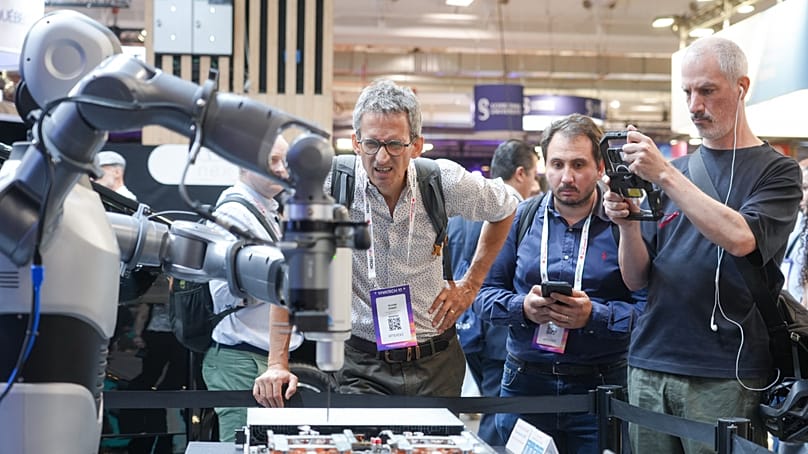
Robots have been a star visual attraction at recent tech trade shows 
© JULIEN DE ROSA / AFP/File

One is a black biped that has been dubbed Kangaroo, while the Tiago machine is fitted with jointed arms that have been put to use in logistics as well as picking grape harvests.

Robotics developers use vast quantities of data to train their machines' movements, and they collect still more information as they carry out their tasks.

The continent should aim to create "a totally European supply chain, without thinking only about price", as that could lead prospective clients to buy Chinese robots, Ferro said.

That would risk seeing valuable or sensitive data "falling into the wrong hands", he warned.

French-American start-up Genesis AI plans to re-shore production of its Eno multifunctional robot next year after making it in China.

Prospective customers include "the big industrial base in France, Italy and Germany," co-founder Theophile Gervet told AFP.

Enchanted Tools' Malterre also believes the demand exists, and "I'm confident in our ability and creativity to endure".

"We need to be ready for a fight, not throw in the towel."

© 2026 AFP


French startup unveils non-humanoid robot as AI race moves to physical machines


French robotics startup Genesis AI on Tuesday unveiled "Eno", its first general-purpose robot, marking a step toward bringing advanced AI from online chatbots into physical machines. Backed by former Google CEO Eric Schmidt, the company says the wheeled robot is designed to extend human capabilities rather than mimic human form, with commercial deployments planned from late 2026.


Issued on: 16/06/2026 
By: FRANCE 24

French startup Genesis AI launched "Eno", a non-humanoid AI robot that has human-like hands and folds into its base. © via Genesis AI

Genesis AI, the French robotics startup backed by former Google CEO Eric Schmidt, unveiled ​its first general-purpose robot on Tuesday, as AI capabilities expand beyond chatbots and into physical machines.

The robot, called "Eno", breaks from the humanoid design usually favoured by leading manufacturers, ​featuring a ‌wheeled base rather than legs, a foldable tower and hands ⁠that the company says match the form of a human hand.

Driven by advances in AI, the global robotics ‌market is expanding rapidly, sparking debate over its impact on employment, though ⁠technical challenges, mostly about processing power and battery life, remain.

A Reuters/Ipsos poll this month showed 53 percent of Americans were concerned that AI would put ​them or someone in their household out of work.

Founded in ‌early 2025, Genesis AI has raised $105 million (€90.6 million), one of France's largest and matching the record seed round of Mistral AI – Europe's leading AI company. Genesis AI's valuation was ‌not immediately available. Eno runs on Genesis's own AI model and is not built to look like humans, but ​to extend human capabilities, according to the company.

Genesis AI plans to begin production and targeted customer deployments by the end of 2026, starting with logistics and manufacturing customers, ​followed by hotels, hospitals and consumers.

In a statement, Schmidt said the robot's breakthrough ​will not replace human expertise, but rather "amplify it" to ​unlock what he called "one of the largest economic opportunities of the AI era".

Genesis AI has built dozens of units so ​far and plans to scale up production in the second half of 2026, Vivian Sun, Vice President of Commercial and Strategy at Genesis AI, told Reuters. Sun said the wheeled base was chosen because most industrial customers operate on flat floors, adding that legs ⁠would only make sense for use cases like climbing stairs.

"We are mimicking humans in capabilities, not ⁠in form. Humans can ​go up and down, and so does the robot, but through this foldable design."

(FRANCE 24 with Reuters)


Salesforce France CEO: Both leaders and employees need to adapt to AI

Copyright Euronews
By Roselyne Min
Published on 18/06/2026 

Speaking at Vivatech in Paris, Emilie Sidiqian, Salesforce France’s CEO, told Euronews Next how companies should embrace AI and why leaders must drive its adoption from the top.

Once best known for its software that helps businesses track customers, sales leads and service requests, Salesforce says it is now moving deeper into artificial intelligence (AI).

The US company has been promoting what it calls the “agentic enterprise,” a model where AI agents work alongside human employees across business functions.

In 2024, Salesforce launched Agentforce, its AI-agent platform, and this month announced a $3.6 billion (€3.14bn) deal to acquire Fin, a customer-service AI company whose agent can answer customer questions and resolve support cases.

“We moved from a standard Customer Relationship Management (CRM) to data, data to AI, AI to the agentic enterprise,” Emilie Sidiqian, Salesforce France CEO, told Euronews Next at the tech conference Vivatech in Paris, France.

“Our positioning is to reinvent the way all enterprises need to embrace the AI revolution,” Sidiqian added.

Salesforce says Agentforce can deliver “real conversational AI” across service, sales and marketing workflows, citing 66% autonomous case resolution, 15% more marketing pipeline and 1.8 times higher lead conversion.

Its AI agents are already being used by clients, the CEO says, such as SharkNinja, a US home appliance company that uses them for 24/7 customer support across 30 countries.


She also says Swiss staffing company Adecco has used AI-powered candidate conversations to reach 1.2 million conversations and help accelerate 50,000 job placements.

The Salesforce executive said enterprise AI is “for everyone,” from small companies to mid-sized businesses and global corporations.

“This is not a tool,” Sidiqian said. “This is a small wave of a new kind of innovation. The pace is massive. You can see that it impacts all types of jobs, all types of activities.”
RelatedFrance and Germany call for European AI sovereignty at VivaTech
Job transformation in the AI era

Sidiqian underlined the goal is not to replace humans, but to build a form of “hybrid” work where people remain “at the centre” while agents take on more routine or repetitive tasks.

She believes the shift should be treated as a leadership question, with CEOs and executive teams deciding how AI reshapes jobs across the company.

“AI is AI, it is a technology. When you really reinvent your business model, it is the leaders who need to understand how they will transform every single job in the company,” she said.

“This is a leadership question and it should be carried by the CEO and by every single executive committee,” she added.

Sidiqian said she uses AI tools every day, including a Salesforce-owned Slack, where Slackbot acts as a “concierge” to summarise overnight activity across teams from the US to Japan and flag what needs approval.

She said the aim is to avoid moving between several different tools and instead use AI as a “cockpit” to organise work with the right permissions and data. She also encourages her teams to use AI, arguing that adoption has to be led from the top.

“When you have like the right leadership, when you had the right adoption, when you carry this revolution at the heart of your business model, there is a huge opportunity to have growth for your company”.


From Foxconn to Nvidia: Why France is so attractive for Europe’s AI infrastructure

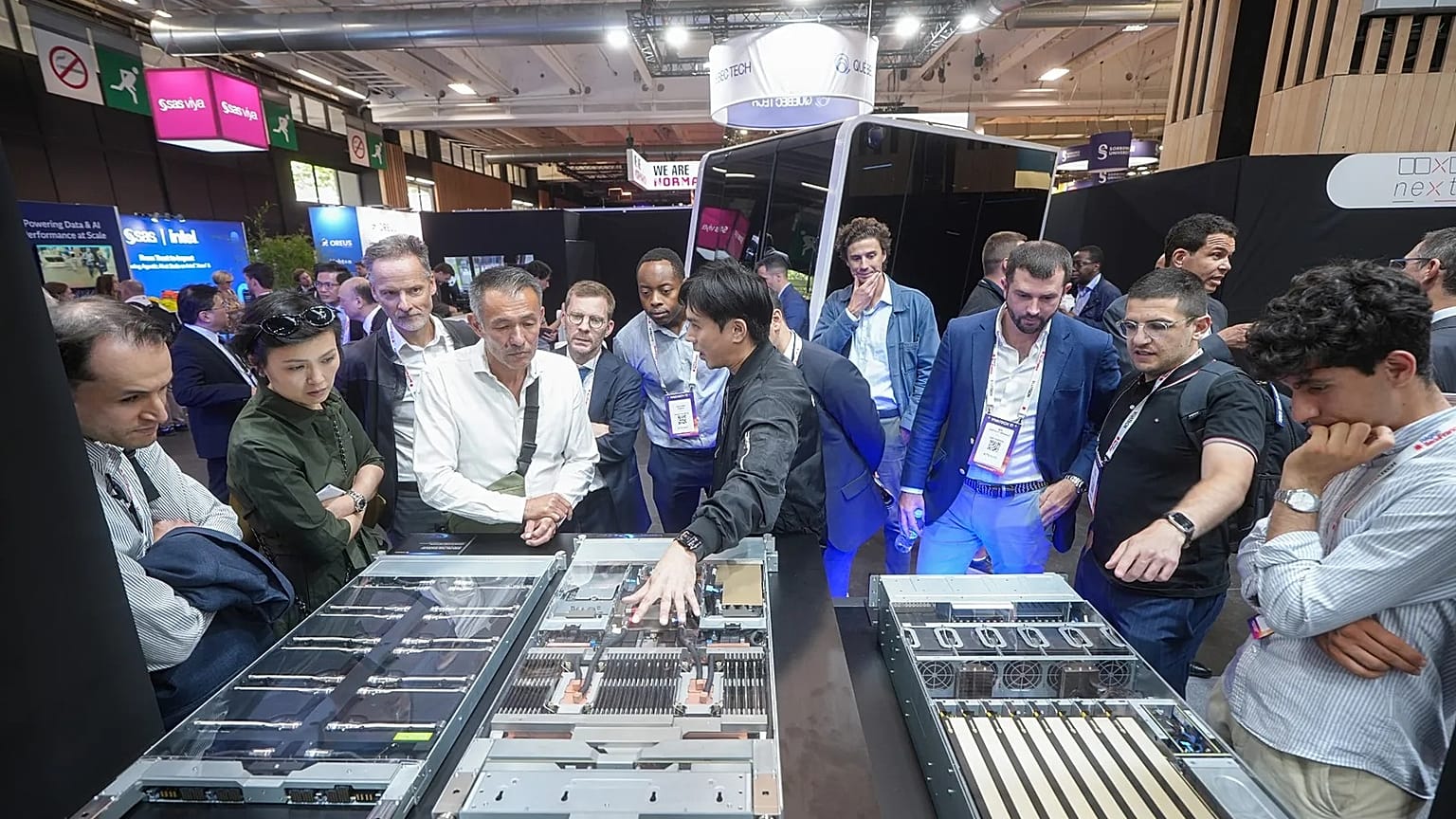
Presentation of the various Foxconn and Nvidia innovations.
Copyright Courtesy of Foxconn at VivaTech 2026, all rights reserved.

By Pascale Davies
Published on


Foxconn, Nvidia and Mistral AI announce major AI infrastructure deals at Europe's VivaTech conference, with France's cheap nuclear energy and homegrown talent drawing global investment.

The race to build Europe's artificial intelligence future sets up a home in Paris this week, as the city's flagship tech conference VivaTech becomes a magnet for global technology giants who see France as a key to building AI on the continent.

The event has grown from a 45,000-person gathering into Europe's largest startup and tech conference, drawing over 200,000 attendees from 170 countries. This year, it carries more geopolitical weight than ever, with AI sovereignty and infrastructure dominating the agenda.

Taiwanese manufacturing giant Foxconn and French computing firm Bull announced a partnership on Thursday to build powerful AI computers in Europe to power the continent's fast-growing network of AI factories, the large-scale computing centres that form the backbone of artificial intelligence infrastructure.

“France is one of the biggest countries in Europe with quite a lot of talent… We also know that France is very good at high-tech and especially in the space industry,” Foxconn’s vice president and spokesperson James Wu told Euronews Next.

“France has very great ambitions in sovereign AI projects and we believe we can create a very important role to help France achieve that goal,” he added.

Components and modules will be manufactured and tested at Foxconn's facilities in the Czech Republic before final assembly and validation at Bull's factory in Angers, France. The servers are targeted at cloud providers and the growing market of AI factories across Europe.

The announcement was made at VivaTech in Paris, marking Foxconn's first appearance at the show.

Alongside the Nvidia-powered AI server news, the company displayed two electric vehicles, one of which had a massage chair, and a wheeled humanoid robot capable of performing precision assembly tasks.

The Foxconn-Bull deal is part of a wider surge of AI infrastructure investment in Europe anchored by Nvidia.

At last year's VivaTech, Nvidia CEO Jensen Huang committed to building more than 20 AI factories across Europe and named Mistral AI as the continent's sovereign-compute champion.

This year, Nvidia and Mistral AI announced the creation of Mistral Compute, a sovereign AI infrastructure and GPU cloud platform project designed specifically for Europe.

Foxconn presentation at VivaTech 2026. Photograph courtesy of Foxconn, all rights reserved.

Why France is attractive to AI giants

Under French President Emmanuel Macron, the country has positioned itself as startup nation and a serious contender in AI.

France is at a unique advantage over other European countries in that its energy source is abundant, as it relies on nuclear, which was attractive to Foxconn.

“Today we talk about AI computing capacity as a power, but utility actually is fundamental for computing power. So I think France has a very good advantage in the power structures… especially with a lot coming from nuclear, which is very stable as a supply,” Wu said.

“I believe for those advanced countries to generate new energy to fulfil the demand for the AI era, France definitely has a very, very good advantage here,” he said, adding that France was also at an advantage as it has a “determination to develop the AI industry”.

Wu said that it was not just the AI server rack that powers AI factories that the company is bringing to France, but also the potential to boost the country’s entire AI ecosystem from electric vehicles to smartphones and PC’s, all of which require AI-embedded technology.

Foxconn will provide the AI factory infrastructure while the US giant Nvidia provides the latest AI chips.

Nvidia CEO Jensen Huang this month described AI as a five-layer cake that includes energy, chips, infrastructure, data centre servers and the AI models and applications.

“Nvidia is trying to help everyone across that cake, all the layers, work together and progress together,” Nat Ives, Nvidia’s director of enterprise for Benelux, France & Nordics, told Euronews Next.

He said that “comes home to roost in France in particular,” as France has the French multinational electric utility company EDF, which is owned by the government of France, nuclear power and renewable power.

“When I look at the work that goes into deciding where data centres should be and when people are contracting with data centres, the sustainability and the carbon impact or lack of is a really massive part of the process,” Ives said.

Foxconn presentation at VivaTech 2026. Courtesy of Foxconn at VivaTech 2026, all rights reserved.


The planning is increasingly shaped by Nvidia's own environmental commitments. The company powered all of its global offices and data centres with renewable electricity.

Its latest Blackwell chip architecture also delivers up to 25 times lower energy consumption for AI tasks compared to the previous generation.

France is at another advantage with its AI champions, including Mistral AI, AMI, H Company, as well as software providers and builders, and has a strong history of talent that rises through the universities, he added.

“Those model builders in Europe have a massive role to play and I'm pleased to say that I've known Mistral guys since they were like three guys in a coffee shop and even before they were Mistral, and we've worked with them all the way through,” Ives said.

These open-source and open-science companies that allow access to AI for organisations or developers that lack the means to pay for other closed-source companies, such as OpenAI, help promote a more equal playing field.

“So we've worked with and collaborated with and helped and invested in those things since the very beginning because we believe that open source and open science, which most of them are doing, is super important to generate that choice,” he added.


France powers ahead in AI development, with more funding, public service tools

French Prime Minister Sébastien Lecornu announced on Tuesday a further investment of €655 million to accelerate the development of artificial intelligence as well as an AI programme for public service employees. France is keen to build strategic autonomy in the face of competition from China and the United States.


Issued on: 16/06/2026 - RFI

Keen to "build genuine strategic autonomy", the French government is accelerating its efforts in artificial intelligence. Prime Minister Sébastien Lecornu announced on Tuesday 655 million euros of additional investments and the beginning of a generalisation of its use by state services, 16 June 2026. REUTERS - DADO RUVIC

The French prime minister said France's responsibility must be to "protect its sovereignty" and "strengthen public services" in the race to develop digital technology.

"We cannot accept new strategic dependencies in the digital realm," he explained, expressing his desire to "build genuine autonomy" so as not to "depend on the goodwill of certain partners, capable (...) of cutting off access" to AI.

Speaking in a video message on Tuesday, Lecornu announced an additional €655 million of new public investment to develop the country's own artificial intelligence.

The announcement came just ahead of Paris's VivaTech trade fair which opens on Wednesday.

The France 2030 public investment program for innovation will "support infrastructure, computing power, research, businesses, and industrial sectors," he said.

AI, robots, and digital sovereignty in the face of American and Chinese tech giants will be the focus of the 10th edition of the trade show, which runs until Saturday.

'Choose France' summit puts AI at heart of Macron’s €93 billion investment drive

Lecornu stressed that France must not rely on tools developed by foreign powers because "state data is our wealth and must remain protected."

Lecornu also announced that the French domestic intelligence agency (DGSI) had decided to sever ties with the American data analytics giant Palantir, whose co-founder Peter Thiel is close to US President Donald Trump.

The decision to end the contract with Palantir follows Washington's move last week to cut off access to AI firm Anthropic's powerful Fable model to non-American users over security concerns.

France should "not depend on the good will of certain partners, who are capable of turning off the access tap" for artificial intelligence, Lecornu said.

The Fable incident prompted calls for greater independence from the United States in AI development from candidates across the political spectrum for next year's French presidential election.

The French government is also looking to improve government services with AI which "will now be taken into account in budget decisions" for 2027, Lecornu said.
Public service boost

The government will also begin rolling out a chatbot using AI to one million civil servants (out of a total of 2.6 million), following a trial with 10,000 of them, according to the Ministry of Public Action and Accounts.

The installation of this tool, called the Assistant and powered by models from the French AI startup Mistral, is expected to cost around €700,000. Negotiations with unions are scheduled to begin at the end of the week.

This tool could help streamline the management of certain legal procedures or assist research professors with their grant applications.

The government hopes, in particular, to reduce the use of "clandestine" AI tools that can pose security risks.

French start-up Quobly raises €115m to build cheaper quantum computers

These announcements come in the context of a reorganisation of the government's digital services, following a major cyberattack targeting the National Agency for Secure Documents (ANTS), which affected the data of nearly 12 million users.

In mid-May, the government announced the upcoming creation of a new State Digital and Artificial Intelligence Authority, alongside the National Cybersecurity Agency of France (ANSSI).

The Ministries of Justice and the Interior will also have access, "starting this year," to the "most advanced" technologies of the GenIAl portal, already used by the armed forces, in order to "process sensitive data" and "speed up visa processing."

In the area of ​​healthcare, the Ameli website of the national health insurance system will feature an AI-powered "public health assistant" to better guide patients.

(with newswires)


Europe's ultra-rich: Which countries are adding the most $30m+ millionaires?

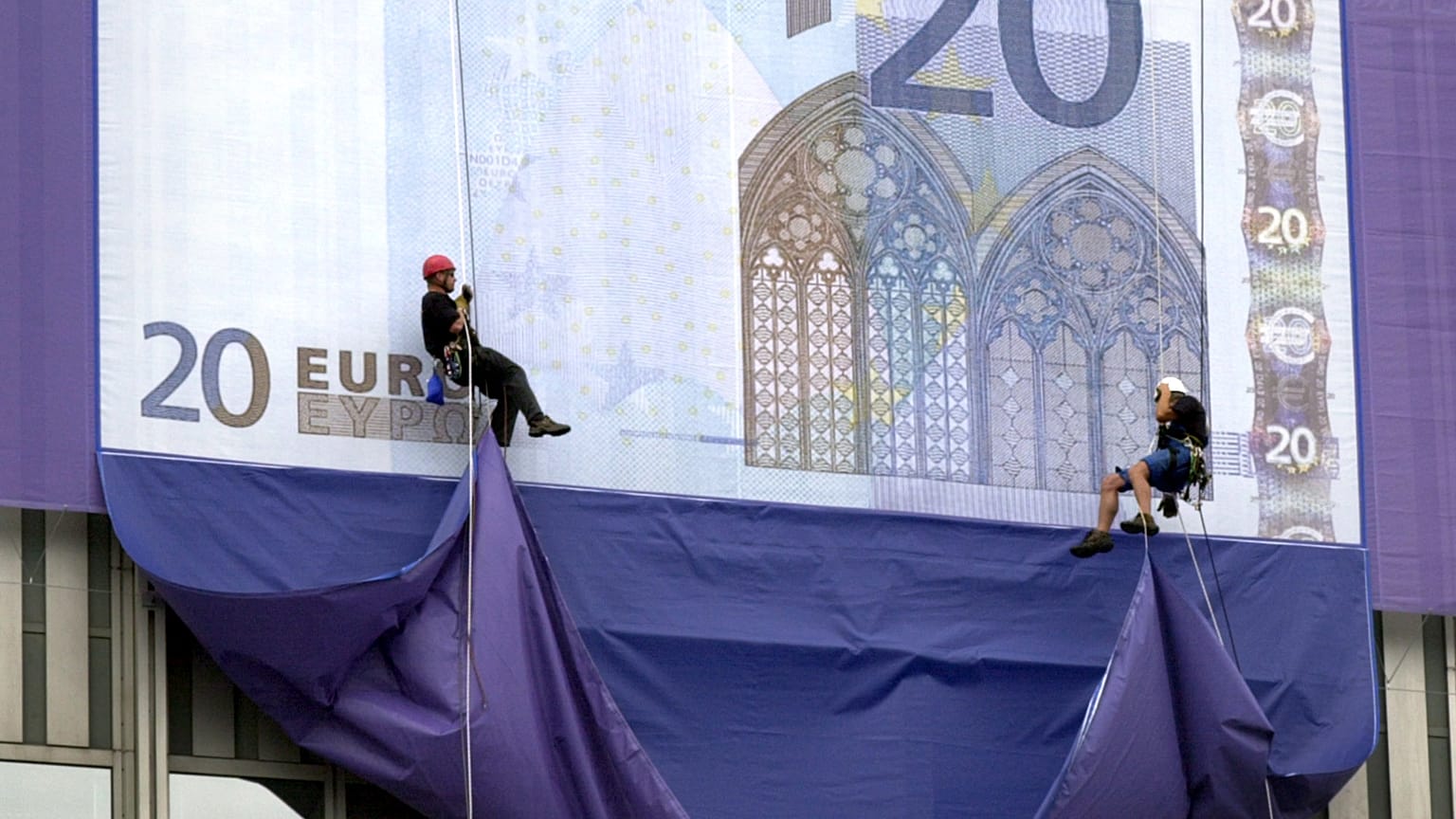
Mountaineers abseil from the European Central Bank highrise building to unveil huge replicas of the new euro banknotes, following the official presentation of the new currency
Copyright AXEL SEIDEMANN/AP2001


By Servet Yanatma
Published on

Europe's ultra-rich population has surged by a quarter over the past five years. On average, more than 20 people join the continent's $30m+ wealth club every day, while 89 people worldwide cross the $30 million wealth threshold daily.

Wealth inequality across and within Europe remains stark, as shown by several indicators. According to the European Central Bank's latest report, published in 2023, the median net wealth of households in the euro area stood at €123,500. However, this ranged from just €2,000 for the bottom 20% of the population to €1.01 million for the top 20%.

At the same time, the ranks of the ultra-rich are growing rapidly across the continent. The number of people with at least $30 million (€25.7m) in wealth rose by 26% over the past five years. Knight Frank's Wealth Report 2026 classifies them as ultra-high-net-worth individuals (UHNWIs).

Their number increased from 146,525 in 2021 to 183,953 in 2026.

Over the five-year period, 37,428 people joined this exclusive group. That translates into an average increase of 7,486 members a year, or roughly 20.5 new entrants every day across Europe.

In Germany, five people join the ultra-rich every day

Germany has the highest daily increase in the number of people joining the $30m+ wealth club in Europe.

The number of UHNWIs in the country rose from 28,942 in 2021 to 38,215 in 2026, an increase of 9,273 over five years.

In other words, every day, five people in Germany cross the $30 million wealth threshold on average. Of course, they do not accumulate that wealth in a single day; rather, their assets gradually grow until they pass the benchmark.

Germany, Europe's largest economy, ranks third globally by GDP, after the US and China, according to the IMF.

In Switzerland, the number of ultra-rich individuals has increased by the equivalent of 2.7 people a day. Over the past five years, their number has grown by 4,968, bringing the total to 17,692.

France adds two new members every day

Between 2021 and 2026, France added an average of 2.1 new members to its $30m+ wealth club each day. The country's UHNWI population increased by 3,781 to reach 21,518.

Other major European economies follow closely behind. The daily increase stands at 1.6 in both the UK and Italy, followed by Spain at 1.5. In Turkey, the figure is 1.1.

Of these seven countries, five are among Europe's largest economies. Switzerland and Turkey are the only other countries in the region where the number of people with at least $30 million in wealth rises by at least one person a day on average.

The daily increase is 0.9 in Poland, 0.5 in both Czechia and Austria, 0.4 in Denmark and Portugal, and 0.3 in the Netherlands, Ireland and Sweden.

Every 90 minutes, a person joins the ultra-rich in the US

The US is home to by far the largest number of people with at least $30 million in wealth, with 251,352 UHNWIs in 2026. China ranks second with 121,677.

In the US, an average of 36.7 people join the $30m+ wealth club every day — roughly one new member every 90 minutes.

China adds around 12.5 new members a day. Germany ranks third globally, while India (4.2) and Australia (2.2) are the only other non-European countries in the global top 10.

Worldwide, the number of UHNWIs increased by 162,191 between 2021 and 2026, equivalent to 89 new members every day. This brought the global total to 713,626.

“We are witnessing one of the most significant shifts in global wealth distribution in modern history," Liam Bailey, global head of research at Knight Frank, said. "The US remains the dominant engine, but we are also seeing rising strength from India and a cohort of fast-maturing economies that are now shaping the global landscape."

As of 2026, Germany is home to the largest number of ultra-high-net-worth individuals (UHNWIs) in Europe, at 38,215, followed by the UK (27,876) and France (21,518).

The average wealth per adult also varied widely across Europe, according to the UBS Global Wealth Report 2025 and additional data shared with Euronews. In 2024, it ranged from €29,923 in Turkey to €634,584 in Switzerland across 31 European countries.

FOR PROFIT MEDICINE VS PUBLIC HEALTHCARE 

US launches trade probe into Germany over medicine prices

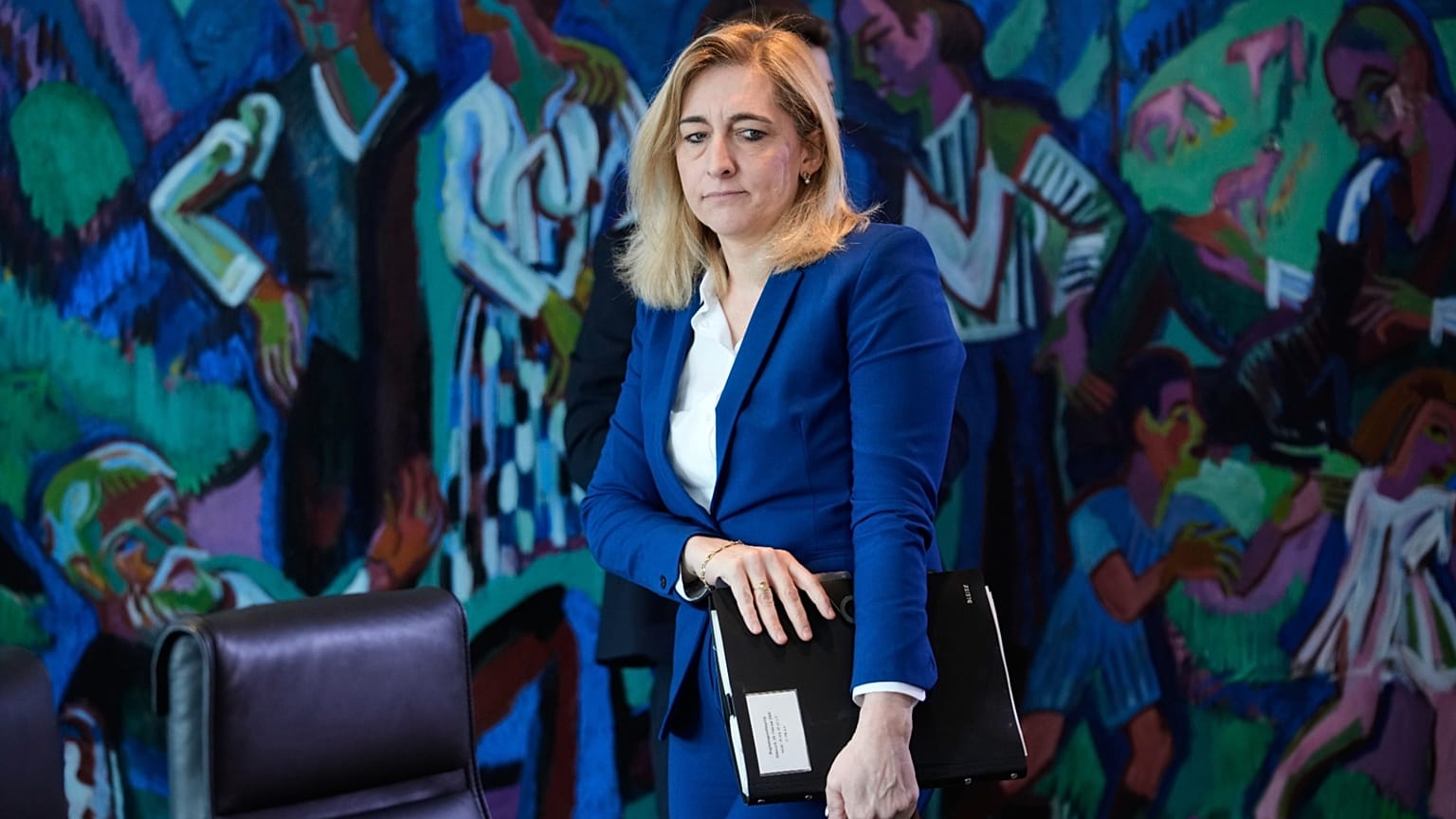
Health Minister Nina Warken on 25 February 2026 during a cabinet meeting at the Chancellery in Berlin
Copyright AP Photo/Ebrahim Noroozi

By Johanna Urbancik
Published on

Washington accuses Berlin of keeping the prices it pays for new medicines too low, while the US market pays significantly more for the same products. If the investigation finds Germany's policies are unfair, the United States could impose punitive tariffs.

The United States has launched a trade investigation into Germany's drug pricing policies.

Washington says it wants to examine whether innovative medicines are undervalued in Germany, leaving US patients to shoulder a disproportionate share of pharmaceutical research and development costs.

The announcement was made on Thursday in a statement by US Trade Representative Jamieson Greer, who said the investigation would determine whether Germany's "persistent underpayment for innovative pharmaceutical products by Germany is unreasonable or discriminatory and burdens or restricts US commerce."

The investigation follows months of discussions between Washington and Berlin aimed at resolving the dispute.

The Trump administration argues that Germany's pricing system, which includes negotiated discounts and mandatory rebates, suppresses the prices paid for new medicines. US officials say this leaves American patients bearing a larger share of the costs of developing new drugs.

"I am particularly concerned by reports that Germany is fast-tracking legislation that would further reduce spending on innovative medicines," Greer said.

The move follows a directive issued by President Donald Trump on 12 May 2025, instructing the US Trade Representative to take action against foreign policies that force American patients to pay a disproportionate share of global pharmaceutical research and development costs.

"President Trump has made clear that American patients should not be shouldering a disproportionate share of global pharmaceutical research and development," Greer said.

If the investigation concludes that Germany's policies are unfair, the US could impose tariffs or other trade restrictions under Section 301 of the Trade Act.

The US has requested consultations with Germany, while a public hearing is scheduled for September.

Germany's health reform draws US criticism

For years, the United States has argued that European healthcare systems benefit from lower drug prices, while American consumers bear a larger share of the cost of pharmaceutical innovation.

Washington is particularly critical of the German government's planned healthcare reform.

The reform is intended to help plug a multibillion-euro funding gap in Germany's public health insurance system and includes, among other things, additional savings contributions from the pharmaceutical industry.

At the heart of the initial plans was a dynamic manufacturer rebate linked to trends in drug prices and the revenues of health insurers.

Under the government's latest proposals, the industry is still expected to make a financial contribution to stabilising the health insurance funds. However, instead of a variable mechanism, discussions are now focusing on a fixed surcharge on the existing manufacturer discount.

At the same time, Federal Health Minister Nina Warken (CDU) has proposed exempting companies from additional rebates if they conduct clinical trials in Germany. The aim is to strengthen Germany as a research hub and ensure that patients continue to have rapid access to new therapies.

A vote in the Bundestag on the controversial health reform, originally scheduled for next week, has been postponed. According to parliamentary groups from the CDU/CSU and SPD, a key package of healthcare reforms proposed by Warken is now due to be adopted on 10 July, the last sitting day before the summer recess.

WITH FRIENDS LIKE THESE...

Hegseth announces review of US forces in Europe as he lambasts NATO allies in Brussels meeting

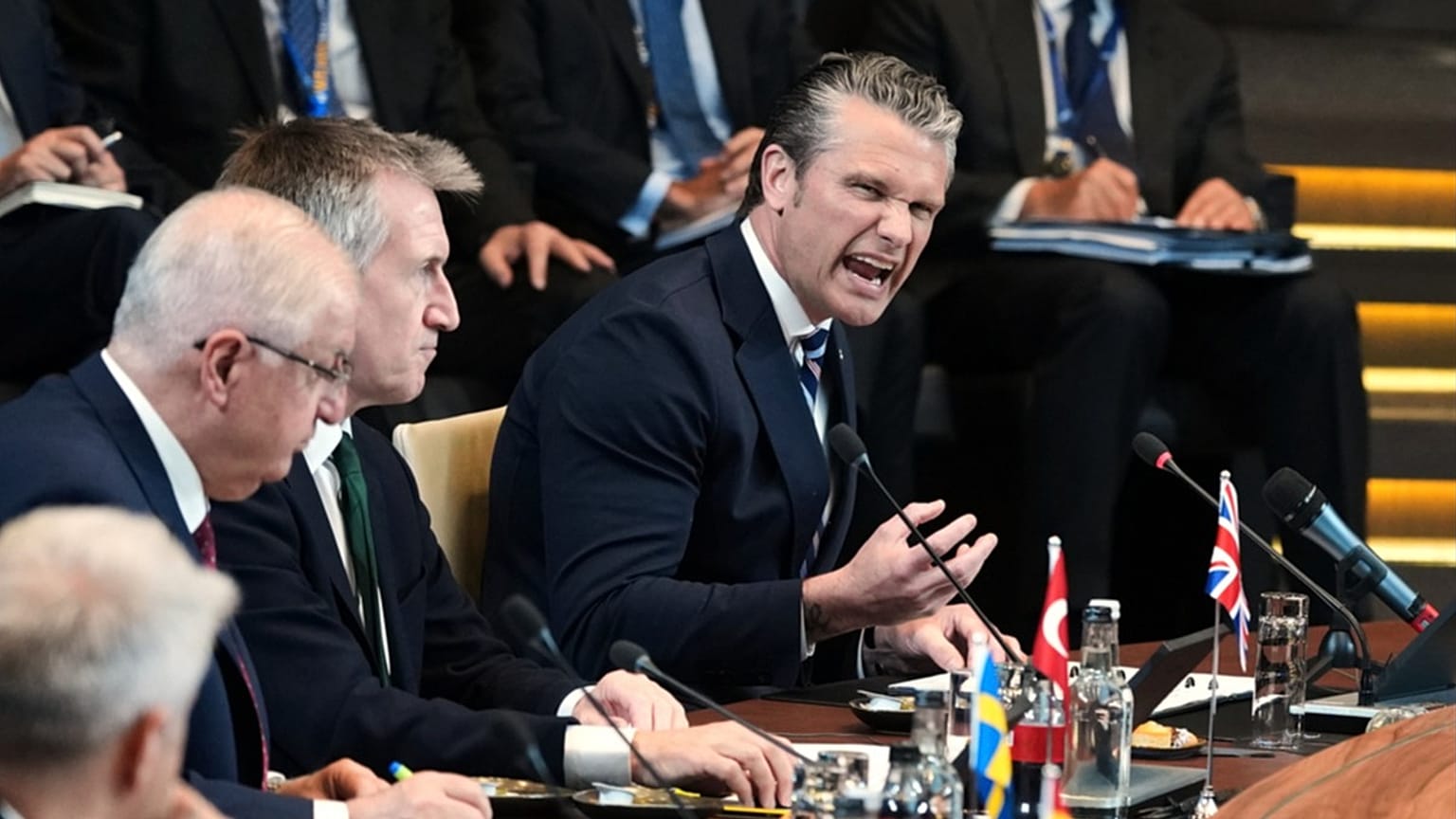
US Defense Secretary Pete Hegseth speaks during a NATO meeting of defence ministers format at NATO headquarters in Brussels, Thursday, June 18, 2026
Copyright AP Photo/Virginia Mayo

By Malek Fouda
Published on

Hegseth slammed Europe for prioritising what he called liberal ideals over practical defence needs as he lambasted the alliance’s defence chiefs in a rare appearance at the NATO HQ in Brussels.

US Defence Secretary Pete Hegseth lashed out at NATO allies on Thursday as he announced a six-month Pentagon review of his country’s forces in Europe whose outcome will depend on how fast the Europeans take responsibility for their own security.

The review was yet another surprise for European allies and Canada as they learn to deal with an increasingly unpredictable ally.

US officials and senior military officers had promised to coordinate closely with the Europeans as Washington draws down its troop presence around the continent, moves that first started in Germany, Spain and Italy after President Donald Trump clashed with their leaders.

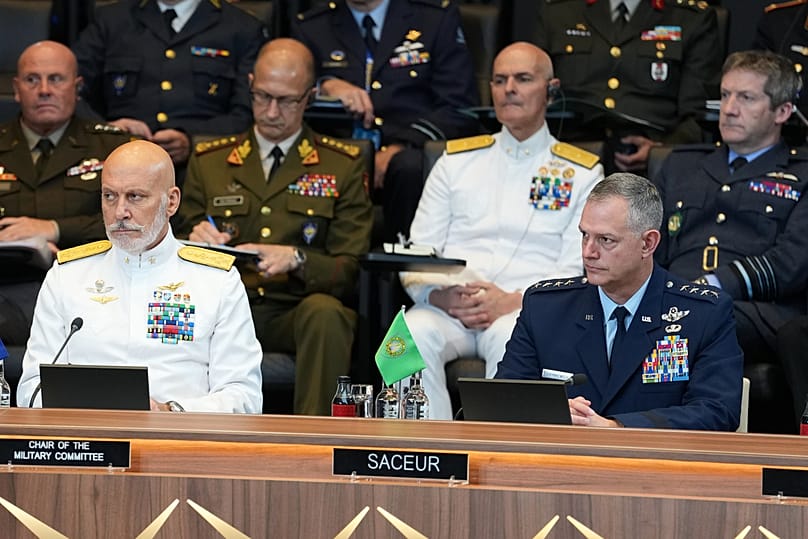
NATO military commanders listen as US Defence Secretary slams NATO allies over lack of defence priority at NATO HQ in Brussels, Thursday, 18 June, 2026
NATO military commanders listen as US Defence Secretary slams NATO allies over lack of defence priority at NATO HQ in Brussels, Thursday, 18 June, 2026 Virginia Mayo/Copyright 2026 The AP. All rights reserved.

In recent months, Trump and the Pentagon have sent conflicting signals about whether the US is reducing or increasing its military footprint in Europe, as well as threatening to annex Greenland, a semiautonomous island that is part of ally Denmark.

Just weeks ago, the Trump administration said that it would no longer provide as much military support should any NATO member come under attack.

“This will be a real review. It will be designed to ensure that NATO is moving fast and irreversibly toward Europe leading, stepping up to take primary responsibility for the defence of Europe,” Hegseth told his NATO counterparts as they met in Brussels.

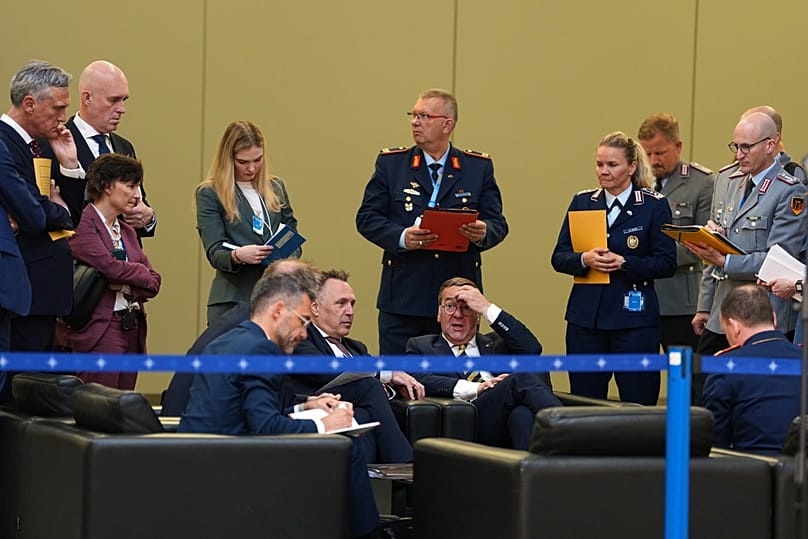
German defence chief Boris Pistorius speaks with Norwegian counterpart prior to a NATO defence ministers meeting at NATO headquarters in Brussels, Thursday, June 18, 2026
German defence chief Boris Pistorius speaks with Norwegian counterpart prior to a NATO defence ministers meeting at NATO headquarters in Brussels, Thursday, June 18, 2026 Virginia Mayo/Copyright 2026 The AP. All rights reserved.

“It’s a review that some countries will fail and others will pass with flying colours,” added the US defence chief.

German Chancellor Friedrich Merz later said the allies have long been aware of Washington’s plans to pull troops from Europe at some point and that they must take care of their own security.

“We know that we must do more and we are doing it,” Merz said.

In a fiery speech at NATO headquarters in Brussels, Hegseth lambasted European allies for failing to provide US forces access to bases in Europe to launch attacks on Iran, calling it “shameful.”

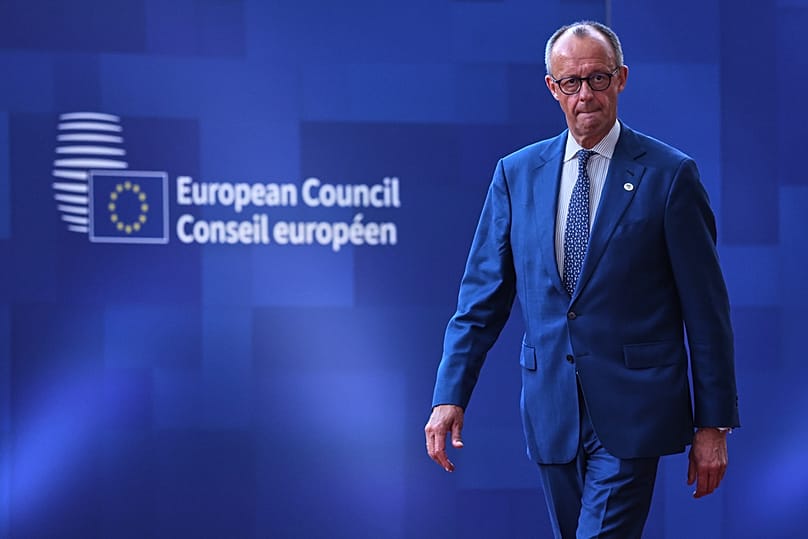
Germany's Chancellor Friedrich Merz arrives for the EU summit in Brussels, Thursday, June 18, 2026
Germany's Chancellor Friedrich Merz arrives for the EU summit in Brussels, Thursday, June 18, 2026 Omar Havana/Copyright 2026 The AP. All rights reserved.

“These allies, they put America’s sons and daughters, our sons and daughters, at risk by denying them the predictable access, basing and overflight that never should have been in question at all,” he said, adding that the review would also assess whether the US has full access and overflight “when we need it.”

While defence ministers and military officers sat in silence, Hegseth railed against migration and gender equality policies in Europe, in remarks reminiscent to those of Vice President JD Vance in February last year that angered many Europeans.

“Instead of tanks and fighters and air defences, the focus has been on gender equity and climate change and defence austerity. Europe’s borders flew wide open, welfare states expanded, defence budgets cratered, along with Europe’s belief in itself and its civilisation,” stressed Hegseth.

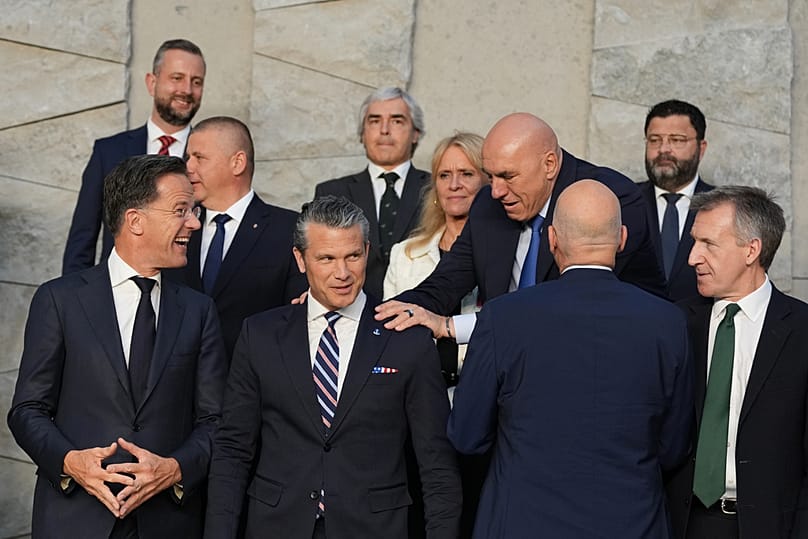
Italy's Defense Minister Guido Crosetto greets Pete Hegseth during a group photo of NATO defence ministers at NATO headquarters in Brussels, Thursday, June 18, 2026
Italy's Defense Minister Guido Crosetto greets Pete Hegseth during a group photo of NATO defence ministers at NATO headquarters in Brussels, Thursday, June 18, 2026 Virginia Mayo/Copyright 2026 The AP. All rights reserved.

It was a rare visit to NATO by Hegseth, his first this year after skipping a meeting in February.

The Pentagon chief did not stay long, leaving well before the gathering was over and hours before Ukraine's President Volodymyr Zelenskyy was due to press allies for more weapons for his country.

Speaking to reporters at Brussels airport before flying home, Hegseth said, “It was great to hear country after country say, ‘We’re going to meet our target. We’re going to meet our target.’ There are still a few outliers, and we will be clear with them as we do this review.”

The fiery remarks may however create a climate of uncertainty among NATO allies who are due to meet in Turkey early next month in a scheduled leaders’ summit.