
The statistics surrounding global plastic consumption have become a background hum of modern existence—alarming, yet so consistent they risk becoming white noise. Annually, the world churns through between 500 and 600 billion plastic bottles, generating approximately 25 million tons of waste. Every single day, 1.3 billion bottles are sold; roughly 91% of them never see a recycling plant. Instead, they comprise 12% of all marine litter, destined to persist in our ecosystems for over 400 years.
None of this is “news.” Nor is it a mystery who is responsible. A concentrated group of global giants—Coca-Cola, PepsiCo, Danone, and Nestlé—alongside a burgeoning sector of European supermarket chains like Lidl and Aldi with their private-label waters, are the primary architects of this plastic tide. But the real crisis is not production alone but the accumulation that has already happened. This reveals a structural mismatch: political solutions operate on legislative timelines, while plastic degradation follows chemical ones. The two are not aligned. This creates a time lag—measured in decades—in which unmanaged waste is irreversibly converted into microplastic. Even if we stopped plastic production tomorrow altogether, the existing stock would continue to fragment into microplastics for centuries.
Returning to Sender: The Policy Gap
To “stop the bleeding,” the most effective approach would be a simple pivot, currently politically distant: legislation requiring every bottle to be embossed with the producer’s logo, coupled with a universal legal right for consumers to toss that waste back over the producer’s fence. “Return to sender” would be the ultimate catalyst for a transition to glass or reusable systems. Only under such conditions would the biggest polluters be forced to confront the physical reality of their output.
But political distance does not pause physical processes. Until such radical accountability becomes law, we are already left with a massive, tangible problem: the billions of bottles already suffocating our rivers, beaches, and roadsides. These are the anthropogenic mines of the 21st century—valuable materials trapped in the environment, waiting to be extracted.
A Tale of Two Systems
Western Europe offers a study in contrasts. Germany, Austria, and Finland have pioneered deposit systems that largely function as intended. Yet, as a consumer, choice is an illusion; shelves remain dominated by plastic. In nations currently trailing behind, like Italy, the struggle to meet new EU collection quotas is visible along every highway.
The crisis intensifies elsewhere. In Jordan, the volume of plastic waste lining village side streets and desert highways is staggering. Despite hefty fines for littering, the Kingdom’s fragile ecosystems are losing the battle. The Dead Sea—a unique natural wonder—is a heartbreaking example. Tourists seeking “wild” beaches away from the concrete spa resorts often trek down the cliffs to experience the water’s famous buoyancy. Unprepared for the oily, stinging salinity of the water, they use bottled fresh water to rinse their skin and eyes, then leave the empty plastic behind. This is not primarily a behavioral problem. It is a systems problem that expresses itself through predictable human behavior. It is a lack of infrastructure capable of capturing waste at the point of use. In such environments, only immediate collection prevents littering.
The Market for the “Mined”
The irony is that all these bottles represent a solvable problem because a market for PET already exists. Recycled fibers are woven into clothing; international manufacturers are incorporating recycled plastic into powder coatings; and “bottle-to-bottle” initiatives are slowly scaling. While many of these programs currently carry a faint scent of greenwashing, they prove one vital point: there is a demand for the material.
The bottleneck isn’t whether we can recycle plastic, but whether we can retrieve it before it degrades. This is where we must move past the era of finger-pointing. We must also recognize that these discarded bottles represent a resource that we can leverage.
The Collaborative Cleanup: A New Protocol
NGOs and volunteer organizations have spent decades rightly criticizing the industry. However, critique without extraction has a measurable environmental cost: every year of delay converts recoverable plastic into microplastic. We need a coordinated extraction framework where the producers (the Coca-Colas of the world), the beneficiaries (the recyclers), and governments work in tandem with the third sector. Cooperation does not mean alignment of interests. It means division of labor under constraint. Not a partnership of equals, but a functional alignment under pressure.
Using the Dead Sea as a pilot model, the synergy could look like this:
The Producers: Sponsoring local volunteer groups, providing logistics, and supplying collection containers. These actions are often tax-deductible and serve as high-impact CSR.
The Government: Designating free public beaches and installing permanent infrastructure like showers and bins, sponsored by the beverage giants.
The NGOs: Acting as the “eyes on the ground.” NGOs are uniquely positioned to identify these anthropogenic mines and organize the human power needed to extract them.
Damage Control Economy
Many corporations across industries would welcome the chance to send their employees on “collection days” as part of their corporate culture, provided the organization is handled by experts—the NGOs.
We can keep asking the valid question: “Why should we clean up after those beverage corporations?” It is a fair point of frustration. Also the accusation of greenwashing is valid where cooperation replaces regulation. It is misplaced where cooperation addresses waste that regulation cannot retroactively remove. But the alternative is to let that plastic break down into irreversible microplastics.
By reaching out a hand to the industry, NGOs aren’t absolving them of guilt; they are inviting them to be part of the only solution that works in real-time. We can continue to assign blame or we can reduce damage. The environment does not register intent; it registers outcomes. Plastic already in the environment is no longer a political issue. It is a physical one—and so are the microplastics already circulating in our own bodies.
Saskia Karges, PhD is a Corporate Strategist for Fortune 500 companies and a Solarpunk author. She specializes in bridging the gap between industrial operations and radical visions for a resilient future. Her work focuses on dismantling systemic failures and identifying anthropogenic mines within global waste streams. Her latest novel, AMATEA – Memoirs of the Last City (2026), explores the boundary between sustainable utopia and eco-fascist dystopia.
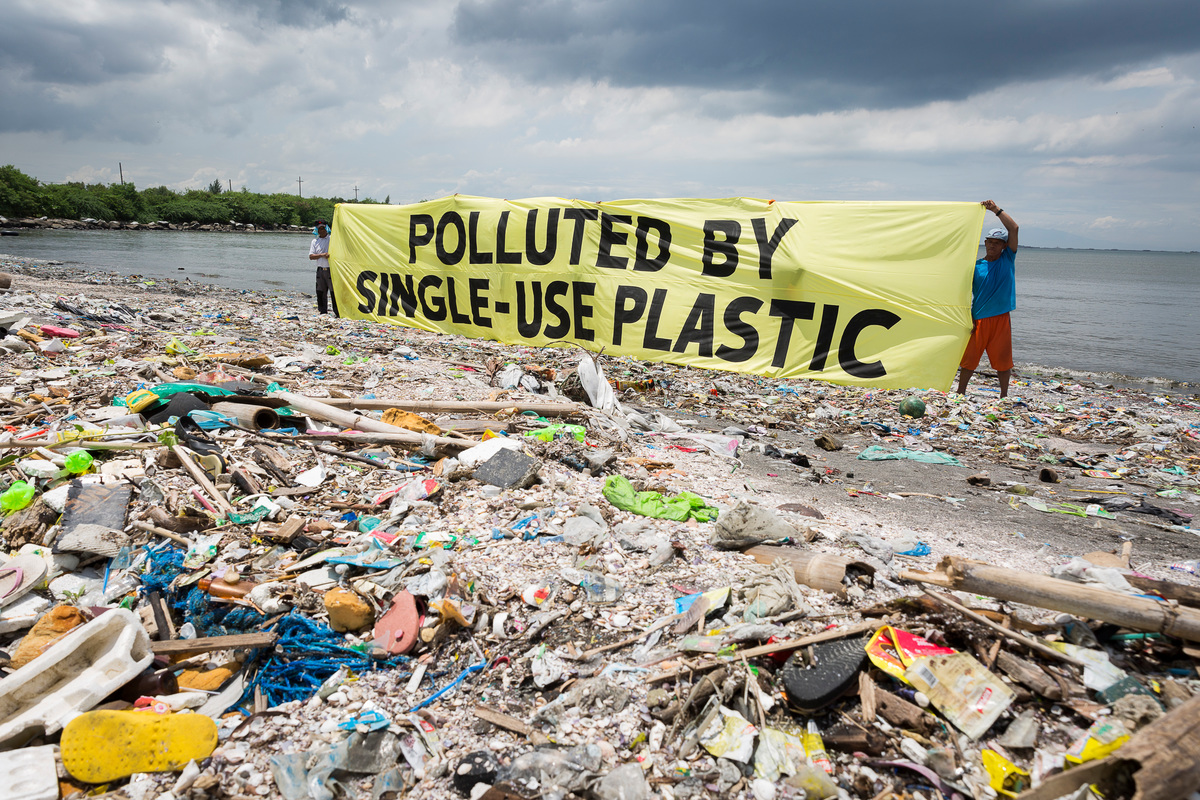
The statistics surrounding global plastic consumption have become a background hum of modern existence—alarming, yet so consistent they risk becoming white noise. Annually, the world churns through between 500 and 600 billion plastic bottles, generating approximately 25 million tons of waste. Every single day, 1.3 billion bottles are sold; roughly 91% of them never see a recycling plant. Instead, they comprise 12% of all marine litter, destined to persist in our ecosystems for over 400 years.
None of this is “news.” Nor is it a mystery who is responsible. A concentrated group of global giants—Coca-Cola, PepsiCo, Danone, and Nestlé—alongside a burgeoning sector of European supermarket chains like Lidl and Aldi with their private-label waters, are the primary architects of this plastic tide. But the real crisis is not production alone but the accumulation that has already happened. This reveals a structural mismatch: political solutions operate on legislative timelines, while plastic degradation follows chemical ones. The two are not aligned. This creates a time lag—measured in decades—in which unmanaged waste is irreversibly converted into microplastic. Even if we stopped plastic production tomorrow altogether, the existing stock would continue to fragment into microplastics for centuries.
Returning to Sender: The Policy Gap
To “stop the bleeding,” the most effective approach would be a simple pivot, currently politically distant: legislation requiring every bottle to be embossed with the producer’s logo, coupled with a universal legal right for consumers to toss that waste back over the producer’s fence. “Return to sender” would be the ultimate catalyst for a transition to glass or reusable systems. Only under such conditions would the biggest polluters be forced to confront the physical reality of their output.
But political distance does not pause physical processes. Until such radical accountability becomes law, we are already left with a massive, tangible problem: the billions of bottles already suffocating our rivers, beaches, and roadsides. These are the anthropogenic mines of the 21st century—valuable materials trapped in the environment, waiting to be extracted.
A Tale of Two Systems
Western Europe offers a study in contrasts. Germany, Austria, and Finland have pioneered deposit systems that largely function as intended. Yet, as a consumer, choice is an illusion; shelves remain dominated by plastic. In nations currently trailing behind, like Italy, the struggle to meet new EU collection quotas is visible along every highway.
The crisis intensifies elsewhere. In Jordan, the volume of plastic waste lining village side streets and desert highways is staggering. Despite hefty fines for littering, the Kingdom’s fragile ecosystems are losing the battle. The Dead Sea—a unique natural wonder—is a heartbreaking example. Tourists seeking “wild” beaches away from the concrete spa resorts often trek down the cliffs to experience the water’s famous buoyancy. Unprepared for the oily, stinging salinity of the water, they use bottled fresh water to rinse their skin and eyes, then leave the empty plastic behind. This is not primarily a behavioral problem. It is a systems problem that expresses itself through predictable human behavior. It is a lack of infrastructure capable of capturing waste at the point of use. In such environments, only immediate collection prevents littering.
The Market for the “Mined”
The irony is that all these bottles represent a solvable problem because a market for PET already exists. Recycled fibers are woven into clothing; international manufacturers are incorporating recycled plastic into powder coatings; and “bottle-to-bottle” initiatives are slowly scaling. While many of these programs currently carry a faint scent of greenwashing, they prove one vital point: there is a demand for the material.
The bottleneck isn’t whether we can recycle plastic, but whether we can retrieve it before it degrades. This is where we must move past the era of finger-pointing. We must also recognize that these discarded bottles represent a resource that we can leverage.
The Collaborative Cleanup: A New Protocol
NGOs and volunteer organizations have spent decades rightly criticizing the industry. However, critique without extraction has a measurable environmental cost: every year of delay converts recoverable plastic into microplastic. We need a coordinated extraction framework where the producers (the Coca-Colas of the world), the beneficiaries (the recyclers), and governments work in tandem with the third sector. Cooperation does not mean alignment of interests. It means division of labor under constraint. Not a partnership of equals, but a functional alignment under pressure.
Using the Dead Sea as a pilot model, the synergy could look like this:
The Producers: Sponsoring local volunteer groups, providing logistics, and supplying collection containers. These actions are often tax-deductible and serve as high-impact CSR.
The Government: Designating free public beaches and installing permanent infrastructure like showers and bins, sponsored by the beverage giants.
The NGOs: Acting as the “eyes on the ground.” NGOs are uniquely positioned to identify these anthropogenic mines and organize the human power needed to extract them.
Damage Control Economy
Many corporations across industries would welcome the chance to send their employees on “collection days” as part of their corporate culture, provided the organization is handled by experts—the NGOs.
We can keep asking the valid question: “Why should we clean up after those beverage corporations?” It is a fair point of frustration. Also the accusation of greenwashing is valid where cooperation replaces regulation. It is misplaced where cooperation addresses waste that regulation cannot retroactively remove. But the alternative is to let that plastic break down into irreversible microplastics.
By reaching out a hand to the industry, NGOs aren’t absolving them of guilt; they are inviting them to be part of the only solution that works in real-time. We can continue to assign blame or we can reduce damage. The environment does not register intent; it registers outcomes. Plastic already in the environment is no longer a political issue. It is a physical one—and so are the microplastics already circulating in our own bodies.
Saskia Karges, PhD is a Corporate Strategist for Fortune 500 companies and a Solarpunk author. She specializes in bridging the gap between industrial operations and radical visions for a resilient future. Her work focuses on dismantling systemic failures and identifying anthropogenic mines within global waste streams. Her latest novel, AMATEA – Memoirs of the Last City (2026), explores the boundary between sustainable utopia and eco-fascist dystopia.

No comments:
Post a Comment