'He folded': Trump ridiculed for sudden reversal as report blows hole in Iran claim
Alexander Willis
March 23, 2026
RAW STORY
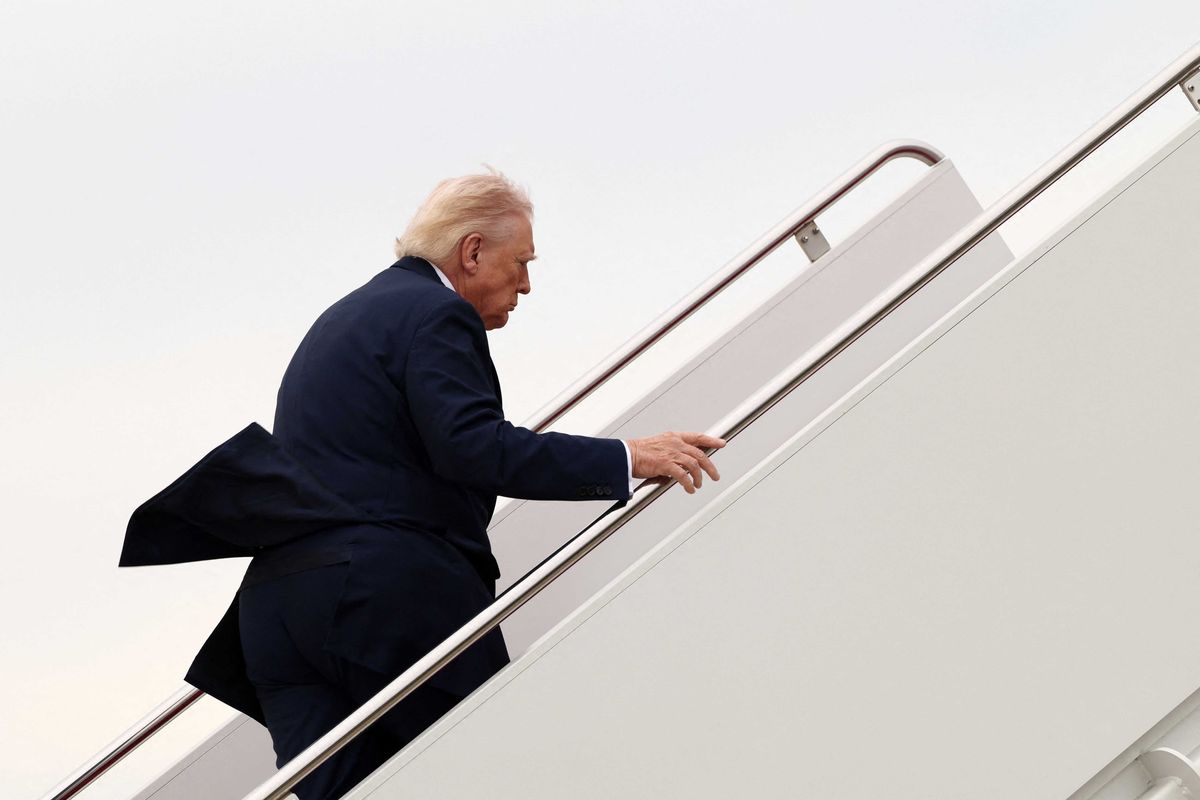
U.S. President Donald Trump boards Air Force One as he departs from Joint Base Andrews in Maryland, U.S., March 20, 2026. REUTERS/Kevin Lamarque
While President Donald Trump cited “productive conversations” with Iranian officials as reason for his sudden reversal Monday in his administration’s war against Iran, new reporting appeared to directly contradict those claims, prompting critics to argue the announcement was an attempt to “save face” after effectively folding under pressure from Tehran.
“Iran called his bluff on the Strait and he folded,” noted journalist and professor Adam Cochran in a social media post on X Monday.
On Saturday, Trump warned Iran that unless U.S. vessels were allowed to traverse the Strait of Hormuz – a crucial shipping channel through which 20% of the world’s oil trade flows – he would authorize strikes on Iranian power plants, a threat that one international security expert warned could spark “global economic disaster of historic scale.”
Trump issued Iran a deadline of Monday evening to comply with his demand, but on Monday morning he extended the deadline by five days after claiming to have had “very good” conversations with Iranian leadership.
Shortly after Trump’s announcement, however, Iran’s foreign ministry said that no such talks had taken place between Tehran and the Trump administration, and “described Trump’s remarks as part of an effort to influence energy markets and gain time,” the Indian news outlet WION reported. Past reporting also suggests that Iran has been effectively ignoring the Trump administration's pleas to restart negotiations.
The revelation led several prominent Trump critics to theorize, much like Iran’s foreign ministry, that Trump’s sudden reversal was merely a ploy to buy time and “save face.”
“Iranian media already claiming that there have been no talks with Trump,” Cochran wrote in another social media post on X to their more than 285,000 followers. “As I suggested – it looks like they called his bluff on the ultimatum, and he is trying to save face before markets open. He’ll postpone only to re-escalate later this week with the risk of these strikes landing next weekend.”
Author and journalist Ali Abunimah came to a similar conclusion as Cochran, arguing that Trump’s reversal was further evidence that the president had succumbed to pressure and was attempting to reframe the retreat as a diplomatic breakthrough.“Either Trump is backing down or he’s lying. Probably both,” Abunimah wrote Monday in a social media post
on X to their more than 270,000 followers.
Denying Claim of Talks, Iran Says Trump ‘Backed Down’ After Threat of Power Plant Retaliation
Iran’s foreign ministry accused the US president of cynically trying to “reduce energy prices and gain time to implement his military plans.”
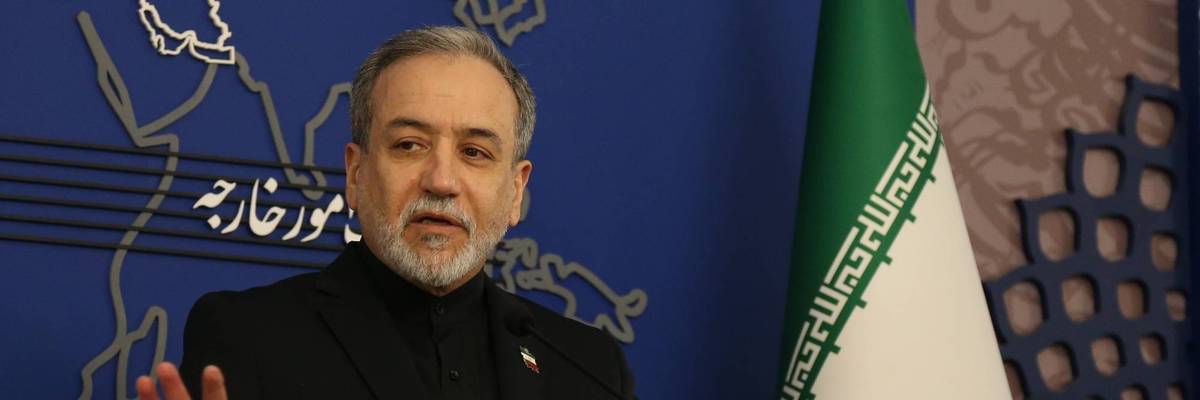
Iranian Foreign Minister Abbas Araghchi speaks at a weekly news conference in Tehran, Iran on March 16, 2026.
(Photo by Shadati/Xinhua via Getty Images)
Jake Johnson
Mar 23, 2026
COMMON DREAMS
Iran’s foreign ministry on Monday denied US President Donald Trump’s claim that the two sides were engaged in “productive” talks over a possible end to the conflict started by the US and Israel late last month.
According to Iranian news agencies, Iran’s foreign ministry said Iranian forces’ pledge to retaliate in kind against any US strikes on Iran’s power plants forced the president to acquiesce. In a Truth Social post early Monday, Trump said he instructed the Pentagon to “postpone any and all military strikes against Iranian power plants and energy infrastructure for a five-day period.”
Over the weekend, Trump vowed to “obliterate” Iranian power plants if the Strait of Hormuz was not fully reopened by Monday night. Iran said in response that it would hit power plants serving US military installations in Gulf nations.
“Trump, fearing Iran’s response, backed down from his 48-hour ultimatum,” Islamic Republic of Iran Broadcasting reported Monday following the US president’s Truth Social post.
In a statement reported by Iran’s semi-official Mehr news agency, the nation’s foreign ministry said that Trump’s Monday statement was “within the framework of efforts to reduce energy prices and gain time to implement his military plans.”
“There are initiatives by regional countries to deescalate tensions, and our response to all of them is clear: We are not the party that started this war, and all these requests should be referred to Washington,” the statement added. Iranian officials maintained that there have been no direct or indirect talks with the Trump administration over an end to the war.
Since the US and Israel started bombing late last month, Tehran has publicly rejected diplomatic talks with the US, saying Trump’s decision to wage war on Iran sabotaged previous nuclear negotiations that had been progressing.
“We don’t ask for ceasefire, but this war must end, in a way that our enemies never again think about repeating such attacks,” Iranian Foreign Minister Abbas Araghchi said last week.
Trump’s announcement that he would hold off on striking Iranian power plants for at least five days was seen by some in the US as a cynical attempt to calm shaky global markets, not an indication of movement toward a diplomatic resolution.
“Trump isn’t announcing a pause on strikes. He’s saying he’s postponing a possible war crime—strikes on Iran’s civilian energy infrastructure,” said US Sen. Chris Murphy (D-Conn.). “Also, this isn’t a message to Iran. It’s a panicky message to the markets: ‘No war escalation until markets close on Friday.’”
Jamal Abdi, president of the National Iranian American Council, said in a statement Monday that “we hope the president isn’t negotiating with himself for social media and TV cameras to calm the markets while there is really no end to this war in sight.”
“It should shock Americans that, before this apparent pullback, our commander-in-chief is threatening war crimes and to blow up power plants in Iran,” said Abdi. “While this may be an attempt by the president to seize escalation dominance back from Iran, this notion is punctured by the fact that Iran would likely respond to such crimes with its own heinous attacks on power plants and civilian infrastructure in the region, upping the ante even further against the US, its partners, and the global economy.”
“That’s why diplomacy is critical right now,” Abdi added. “However, the president has severely undermined the US power of diplomacy as well. President Trump’s past two attempts at diplomacy with Iran ended in surprise attacks by Israel, supported by the US, and has created the impression that the president uses talks as cover for Israel to launch military strikes. Unless the president is willing to seriously negotiate and can also restrain Israel from sabotaging an agreement, the war will continue and the possibility of escalation, whether by putting boots on the ground or committing war crimes, will take this war even further from a possible endpoint.”
Iran’s foreign ministry accused the US president of cynically trying to “reduce energy prices and gain time to implement his military plans.”
Iranian Foreign Minister Abbas Araghchi speaks at a weekly news conference in Tehran, Iran on March 16, 2026.
(Photo by Shadati/Xinhua via Getty Images)
Jake Johnson
Mar 23, 2026
COMMON DREAMS
Iran’s foreign ministry on Monday denied US President Donald Trump’s claim that the two sides were engaged in “productive” talks over a possible end to the conflict started by the US and Israel late last month.
According to Iranian news agencies, Iran’s foreign ministry said Iranian forces’ pledge to retaliate in kind against any US strikes on Iran’s power plants forced the president to acquiesce. In a Truth Social post early Monday, Trump said he instructed the Pentagon to “postpone any and all military strikes against Iranian power plants and energy infrastructure for a five-day period.”
Over the weekend, Trump vowed to “obliterate” Iranian power plants if the Strait of Hormuz was not fully reopened by Monday night. Iran said in response that it would hit power plants serving US military installations in Gulf nations.
“Trump, fearing Iran’s response, backed down from his 48-hour ultimatum,” Islamic Republic of Iran Broadcasting reported Monday following the US president’s Truth Social post.
In a statement reported by Iran’s semi-official Mehr news agency, the nation’s foreign ministry said that Trump’s Monday statement was “within the framework of efforts to reduce energy prices and gain time to implement his military plans.”
“There are initiatives by regional countries to deescalate tensions, and our response to all of them is clear: We are not the party that started this war, and all these requests should be referred to Washington,” the statement added. Iranian officials maintained that there have been no direct or indirect talks with the Trump administration over an end to the war.
Since the US and Israel started bombing late last month, Tehran has publicly rejected diplomatic talks with the US, saying Trump’s decision to wage war on Iran sabotaged previous nuclear negotiations that had been progressing.
“We don’t ask for ceasefire, but this war must end, in a way that our enemies never again think about repeating such attacks,” Iranian Foreign Minister Abbas Araghchi said last week.
Trump’s announcement that he would hold off on striking Iranian power plants for at least five days was seen by some in the US as a cynical attempt to calm shaky global markets, not an indication of movement toward a diplomatic resolution.
“Trump isn’t announcing a pause on strikes. He’s saying he’s postponing a possible war crime—strikes on Iran’s civilian energy infrastructure,” said US Sen. Chris Murphy (D-Conn.). “Also, this isn’t a message to Iran. It’s a panicky message to the markets: ‘No war escalation until markets close on Friday.’”
Jamal Abdi, president of the National Iranian American Council, said in a statement Monday that “we hope the president isn’t negotiating with himself for social media and TV cameras to calm the markets while there is really no end to this war in sight.”
“It should shock Americans that, before this apparent pullback, our commander-in-chief is threatening war crimes and to blow up power plants in Iran,” said Abdi. “While this may be an attempt by the president to seize escalation dominance back from Iran, this notion is punctured by the fact that Iran would likely respond to such crimes with its own heinous attacks on power plants and civilian infrastructure in the region, upping the ante even further against the US, its partners, and the global economy.”
“That’s why diplomacy is critical right now,” Abdi added. “However, the president has severely undermined the US power of diplomacy as well. President Trump’s past two attempts at diplomacy with Iran ended in surprise attacks by Israel, supported by the US, and has created the impression that the president uses talks as cover for Israel to launch military strikes. Unless the president is willing to seriously negotiate and can also restrain Israel from sabotaging an agreement, the war will continue and the possibility of escalation, whether by putting boots on the ground or committing war crimes, will take this war even further from a possible endpoint.”

No comments:
Post a Comment