The Politics of Cultivated Meat Research
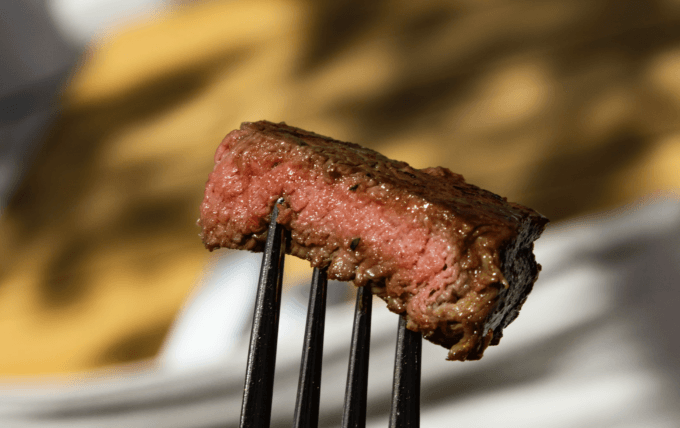
Photo by Doğu Tuncer
Representative Alexandria Ocasio-Cortez recently inveighed against the Supreme Court’s gutting of the Voting Rights Act during an appearance at the historic Ebenezer Baptist Church in Atlanta, Georgia. The New York congresswoman was invited to speak at Martin Luther King Jr.’s former congregation on May 10, at the invitation of Senator Raphael Warnock, the current senior pastor there. Many political observers interpreted this as the unofficial launch of an Ocasio-Cortez presidential campaign.
“This, to me, is someone who is at least thinking seriously about running for president,” New York Times columnist Jamelle Bouie said in a YouTube short. “Not just the language she’s using. Not just leaning into God talk, leaning into religiousity. This is a religious country. It’s a necessary part of running for higher office. But the fact that she’s doing this at a black church in Georgia, knowing full well that key to winning any kind of nomination is at least doing well, doing okay, with black primary voters.”
Animal activists, like myself, who are interested reducing nonhuman suffering and premature death through the political process, should do everything they can to pressure what will likely be a crowded Democratic presidential field to adopt compassionate policy positions. Nonprofit animal groups frequently argue their priorities are nonpartisan. It’s hard to know whether such statements are the result of nonprofit legal requirements, wishful thinking, a fundamental conservatism or all three.
The belief such issues are nonpartisan is simply not true. For example, almost all of the legislators who receive 100-percent ratings on Humane World Action Fund scorecards are Democrats, while almost all of the legislators who receive zero-percent ratings are Republicans. Similarly, most politicians who support cellular agriculture are Democrats, while most who seek to ban it are Republicans. The only state in the country which has banned fur, California, is, of course, run by Democrats.
Yes, President Donald Trump’s administration has moved to limit animal testing. This, however, in my view, is motivated more by an opposition to science and government spending, than a genuine concern for animals. Either way, the number of nonhumans used for vivisection barely registers when compared to the number of animals exploited for food. Most transformative change has been accomplished on a partisan basis. The Democratic Party must be animal activists’ vehicle for change.
We should seek various commitments from presidential candidates, like Ocasio-Cortez. One of the most promising demands would be for a significant infusion of federal funding into cultivated-meat research. For those who don’t know, cultivated meat is grown from animal cells, without killing. I hope cellular agriculture will eventually sweep fish trawlers and slaughterhouses into the dustbin of history, but even low adoption rates of cultivated meat would save billions of animals a year.
Ocasio-Cortez might be more open to this than one might expect. After all, in 2021, she went vegetarian for lent, in honor of vegan activist Tommy Raskin, the late son of her colleague Representative Jamie Raskin. Cultivated meat will offer a number of environmental benefits, which fits her climate agenda. Finally, I don’t think it would cost much, politically speaking, to dedicate a comparatively-small amount of public resources to cellular-agriculture development in a much larger funding bill.
For clarity and legitimacy’s sake, animal activists could ask prospective candidates to support the Producing Real Opportunities for Technology and Entrepreneurs Investing in Nutrition (PROTEIN) Act, a bill put forward by Senator Adam Schiff and Representative Julia Brownley, which would allocate more than $500 million toward the research and development of alternative proteins, including cultivated meat. We should pressure Democratic presidential candidates to take more pro-animal positions.

No comments:
Post a Comment