UK
The 1926 General Strike in Ealing and Hillingdon
MAY 8, 2026
This week marks the centenary of the 1926 General Strike. Barbara Humphries looks at how it was organised in West London.
By the 1920s, parts of the London Boroughs of Ealing and Hillingdon had become industrial areas. This was due to the Great Western Railway which had been built in the 19th century. Southall and Acton had railway works whose workforce became the backbone of the labour movement. The GWR attracted factories along its side, both in Southall and neighbouring Hayes. These included a margarine factory and AEC which made buses for London transport. In Hayes, EMI made electrical equipment. These factories had relocated from inner London due to cheap land prices in the area.
World War 1 had boosted industrialisation with munitions factories in Park Royal on the borders of Acton and Brent, and alongside the railway in Hayes. After the war these sites became devoted to civilian production such as brewing and cocoa processing. Factories such as Napiers opened on Acton Vale. The 1920s saw hundreds of factories in Acton, including Walls.
What had been a rural area at the turn of the century with orchards and brickworks catering for the London market became one of the heaviest industrialised part of Europe. Workers moved to this area to work. Some came from other parts of London, but others came from the distressed areas of high unemployment, such as South Wales, the North of England and Scotland. Many had a coal mining background and they brought their politics with them.
There had been a labour movement presence in the area for some time. This included branches of trades unions, such as the National Union of Railwaymen, the Railway Women’s Guild, but also the Labour Party, the Independent Labour Party and the Co-operative Movement. By 1945 the area had changed politically forever. Road transport had also developed with tram depots in Acton and Hanwell. Their workers were recruited into the Transport and Workers Union, which was to become the second largest union in the area.
However, side by side with these pockets of industrialisation sat commuter towns such as Ealing, the queen of suburbs, home to city gents and retired civil servants. They were determined keep the working class out of the borough.
Solid support
When the General Strike broke out in May 1926, workers in Hayes, Acton, Hanwell and Southall were amongst the first to be called out. According to all accounts, they were a hundred percent solid. Both the railwaymen and the bus workers had been in earlier disputes at the end of the War.
Trades councils were to become the backbone of the strike at a local level. They became councils of action, organising picket lines, demonstrations, soup kitchens and entertainment. There were very few violent incidents, although Syd Bidwell, a GWR worker who went on to become the local Labour MP from 1966 to 1992, remembers a bus in Southall driven by volunteers, probably with police on board, being pushed right over.
Syd remembered the strike, as his father, a building worker, was on the Southall strike committee. Joan Parr in Acton remembers her father being on strike. She and her mother joined marches, booed at scab bus drivers and helped set up a soup kitchen. The councils of action tried to take over the distribution of food and other essential supplies, but the government was resistant.
On one occasion, armoured vehicles were sent into the London docks to secure food supplies. These would have received permits from the local trades council as they were essential supplies, but the government refused.
Propaganda was the responsibility of the trades councils, as with the newspapers on strike and the BBC on the government’s side, there was little information about how the strike was progressing. The TUC tried to rectify this by publishing the Workers’ Gazette to counter the British Gazette published by the government.
The TUC had hoped for an improved offer from the government, but none was forthcoming. The government had prepared for months for the strike, recruiting volunteers who signed up with the Organisation for the Maintenance of Supplies. It was more prepared than the TUC. TUC leaders were afraid that more revolutionary elements in the trades unions would take control. A.J. Cook, the leader of the Mineworkers Federation of Great Britain stuck with his line of no cuts in pay or longer hours. He addressed workers all over the country, including in Acton Town Hall. He was a member of the National Minority Movement, which contained members of the Communist Party, many of whose members were imprisoned before the General Strike and not released until it was over.
Leaders of the Labour Party like Ramsay MacDonald were not in support of the strike and hoped that the government would win. He thought that it was more important to get a Labour government elected. However, at a local level, Labour and trades union councils were one and the same body. So while Labour MPs were denouncing the strike, Labour Party members at a local level were running it In Hanwell, Party members addressed meetings of bus drivers.
Meanwhile in Ealing
In the old borough of Ealing, volunteers were recruited to break the strike. They drove cars and vans to get people to work and to distribute supplies. However, it was debateable whether they were able to drive trains and buses effectively. They had little time for any training – and who was willing to train them?
Accounts of the strike in Ealing, from the standpoint of the strike-breakers, say that many of them had the time of their lives. Joe Sherman who was the secretary of the Ealing Trades Council, however, was very upbeat about the strike. He said: “Believe it or not everything stopped. We had a taxi put at our disposal. I used to ride around in a taxi cab by permission of the Ealing Strike Committee. I had a letter from the borough surveyor, Hicks, asking whether the strike committee would give permission to deliver two tons of coal to the Ealing Memorial Hospital. It showed how strong we were. Fortunately we had the Labour Hall open. We had about 1,000 people there every day. We had a demonstration on Ealing Common. There must have been 50,000 people. You could not have seen the grass for the number of people. We had the most effectively organised strike committee.”
Aftermath
When the strike was called off after nine days. The Ealing Strike Committee was as shocked as the rest of the trades union movement. There were more workers on strike than at the beginning. The miners were left with no concessions, and many who came out in support of them were victimised and did not get their jobs back.
The GWR was noted for being most vindictive. Members of the NUR were made to sign a document saying that they would not take action again. The union lost members and did not recover until the end of the decade.
The miners were locked out until the end of the year. Local trades unionists collected food and clothing. Some, according to Joe Sherman, took in miners’ children or offered holidays for them. The government, sensing victory, passed the Trades Dispute in 1927. This made sympathy strikes illegal, as they are today, made it illegal for civil servants to join a union, and made ‘contracting in’ compulsory for trades unions supporting the Labour Party (rather than the easier to operate ‘contracting out’). The Labour Party lost thousands of pounds in affiliations, but this Act was not repealed until 1945.
In the General Election of 1929 Labour won its highest number of seats in Parliament so far, but with no overall majority it was forced into coalition with the Liberals. Labour won the Acton seat for the first time electing Joseph Shillaker. Mass meetings were held in Acton. It came close also to winning the Uxbridge parliamentary division, which contained Hayes and Southall.
The General Strike had divided Britain, as it had Ealing and Hillingdon. For the trades unions it had been a defeat, but a victory in solidarity.
Dr Barbara Humphries is a socialist activist in West London. She wrote her PhD on “The Origins and Development of the Labour Movement in West London 1918-1970.”
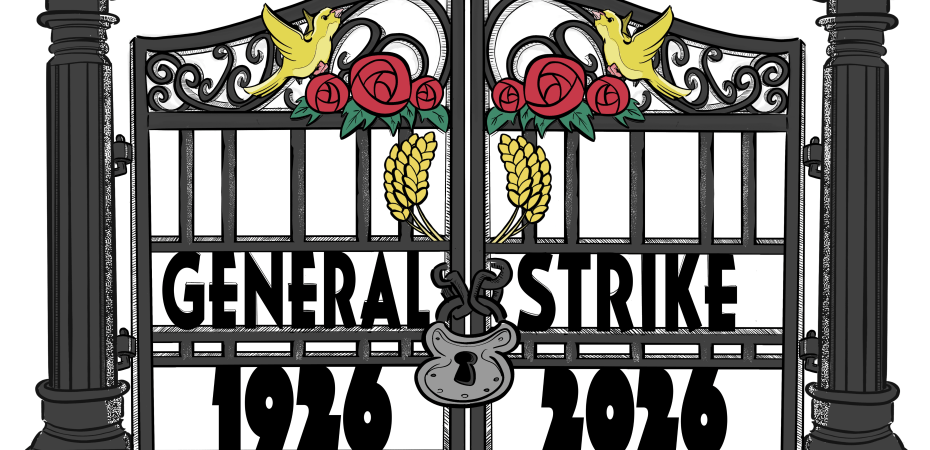
Image c/o Unite.
The 1926 General Strike in a London suburb
Ahead of a talk with author Edd Mustill next week, Richard Price explores how the 1926 General Strike affected his local area.
The broad outlines of the General Strike have remained largely unchanged in the last one hundred years. Nothing has rehabilitated the abject surrender of the TUC General Council or the treachery of Ramsay MacDonald, who confided to his diary on May 2nd 1926 – the day before the strike began – “The Government has woefully mismanaged the whole business … But the TUs have been equally blameworthy.” He described the election of charismatic miners’ leader A.J. Cook as “the most calamitous thing that ever happened to the T.U. movement.”
How the General Strike played out in the towns and cities of Britain has been the subject of dozens of local studies. Many of them, necessarily, have focussed on the major flashpoints – in London’s docklands, in the coalfields and in port cities. But how did it pan out in one of London’s late Victorian suburbs?
Researching the Nine Days in my own area of Leyton has been far from straightforward. Very few Labour Party, trade union or trades council records have survived. There are a tiny number of memoirs or diaries. Local papers were hostile to both unions and the Labour Party, and the main one was strikebound.
Leyton was, as its long time MP Reg Sorensen said approvingly, “an ordinary place”. Fenner Brockway described it in the late 1920s as “two thirds working class, one third middle class”. But its growth as a suburb had been extraordinary. In 1851, Leyton and Leytonstone were two Essex villages with a combined population of 3,901. Two generations later in 1911, their population had grown to 124,735. Leyton, Willesden, Tottenham and West Ham were the four fastest growing areas in Britain. Two main groups of people moved into the nascent suburb – those moving in from Essex and East Anglia, escaping rural poverty in search of better opportunities; and those moving out from the cramped and frequently squalid old East End.
Along with lots of builders building at astonishing speed, the first main occupational group living in Leyton were clerks. Lower middle class in contemporary status, many earned less than skilled workers. George Bernard Shaw recovered from smallpox at his doctor uncle’s in Leyton in 1881. His uncle, used to having the country gentry as his patients, complained about the area being taken over by “rows of little brick boxes inhabited by clerks in tall hats supporting families on fifteen shillings a week.”
So Leyton was quite different to the industrial centres and docklands that lay to its south. Industrial development was much slower, although manufacturing did develop over time. By the 1920s Leyton had one large enterprise – the London Electric Wire Company in Church Road, which employed 1,300 workers – and lots of small scale manufacturing from marmalade and sweets to shoes and church organs. The Co-op had begun to expand, both as a retailer and a manufacturer.
Leyton didn’t have the big battalions of dockers, seamen and railway and gas workers who had formed the backbone of New Unionism in the 1890s, although a significant number of Leytonians worked at the giant railway works in Stratford. The largest group of organised workers were probably transport workers on buses, trams and railways.
Leytonstone, which had been a small village before the railway arrived in 1856, was specifically developed as a middle class enclave for City gents higher up the feeding chain than the clerks of Leyton. Lower Leytonstone, however, had some of the poorest parts of the district.
There were social and cultural differences with neighbouring areas. Unlike Stratford, Leyton’s Irish community was quite small. It had one Catholic church and an array of different non-conformist churches that influenced both Liberalism and the emerging Labour politics. Before the First World War, Leyton’s largest migrant community was German.
It also developed distinct politics. The Social Democratic Federation and syndicalism had had some impact in Walthamstow, and the SDF had a base in West Ham. But neither the SDF nor syndicalism gained a foothold in Leyton, where the main socialist grouping was the Independent Labour Party. Compared to West Ham, where the council had a socialist and Labour majority by 1888-89, and which elected Keir Hardie as its MP in 1892, Leyton didn’t elect its first trade union or Labour councillor until mid-way through during the first world war.
But the war had a radicalising effect, and between 1918 and the General Strike a period of closely balanced three-party politics opened up. Taking account of its rapid population growth, two parliamentary seats – Leyton West and Leyton East – were created in 1918. Leyton West elected a Tory in 1918, who died almost immediately; a Liberal in 1919; a Tory in 1922, and its first Labour MP in 1929. Leyton East elected the erratic Lt Colonel Cecil L’Estrange Malone as a right wing Coalition Liberal in 1918, only for him to become converted to the cause of Soviet Russia, join the British Socialist Party, and become Britain’s first Communist MP, drifting out in the same Parliament to sit as a Labour MP. He was replaced by a Tory in 1922, who then lost to Labour in 1923. The seat was retaken by the Tories in 1924 and recaptured by Labour in 1929.
By the mid-1920s, these types of suburban area were on the front line of rapid and closely contested political change, with Labour on a generally upward path. Part of Labour’s growing strength lay in its pyramid of affiliated or Labour-adjacent civil society organisations – unions, rapidly growing women’s sections and the Women’s Co-operative Guild among them.
One striking measure of how this local labour movement responded to the strike call is that, whatever MacDonald’s cowardly equivocations, all Labour councillors appear to have seen their duty as assisting the dispute. They spoke alongside trade unionists at a pre-strike rally. They served on central strike committees which organised effective picketing in both Leyton and Walthamstow, and supported cutting off the locally managed electricity supply. An occupational breakdown of the background of Labour local government candidates in 1926 shows them to be almost entirely manual or office workers.
This cooperation between the industrial and the political wings helps explain why the strike in Leyton was very solid, with all buses, trams and trains out, and most significant workplaces on strike. And because of this strength, there were no significant clashes, and no arrests directly connected with the strike. The Organisation for the Maintenance of Supplies (OMS) had significantly fewer volunteer scabs in Leyton than the London average. A big crowd watched the Australian tourists smash the Essex bowling all over the place at Leyton cricket ground – cricket having gone ahead with the agreement of the MCC and the trade unions. A delegation of women successfully pressured the council to give milk to women with children.
There is a photograph of what are almost certainly typists and secretaries waiting at the Bakers Arms for a lift in a charabanc driven by a strike-breaking volunteer to the City of London. But was it all peaceful? The fact that there were no arrests may reflect that police numbers were depleted by extra numbers being sent to docklands, where troops were introduced. The main local paper, then as now, the Guardian, got one single duplicated sheet out during the strike that said that “good order has been maintained”. But in its first post-strike issue on May 12th it claimed that a “state of terrorism” had existed in Leyton during the strike, with general intimidation from its first day, private buses surrounded at the Bakers Arms, charabancs overturned, and lorries carrying people to work “subject to brutal insults by the crowds of hooligans.”
This latter is almost certainly lurid, vengeful exaggeration, at a time when victimisation was happening on the railways. But I have come across several examples of what you might call civil disobedience – two teenagers bound over after having been caught trying to disable a signal box on the line between Loughton and Woodford; two lads arrested for trying to block the traffic near Gants Hill; and a group of women council tenants who blocked the line to Liverpool Street at Highams Park.
The TUC’s capitulation was followed by a fall in trade union membership and a retreat in the face of an employers’ offensive. It also swung the pendulum back towards political action, and in Leyton the Labour Party shifted leftwards. Fenner Brockway, who had edited the TUC’s British Worker during the General Strike, went to work with his brother-in-law Reg Sorensen in Leyton. Both were left-wing members of the ILP and both were adopted as prospective Labour candidates – Sorensen for Leyton West and Brockway for Leyton East. They launched a local left wing paper, the Leyton and Leytonstone Pioneer, which was delivered to thousands of addresses. It spearheaded their joint victories at the 1929 general election. Theirs was a strongly moral socialism of right versus wrong (with an obvious non-conformist component) but it was also pioneering in its anti-colonialism. Both Sorensen and Brockway were involved in the League Against Imperialism in its early stages, and many years later they were the first MPs to move a Race Relations bill in the House of Commons.
In any discussion of the General Strike, the question of whether it was a revolutionary situation inevitably arises. In the revolutionary corner, supporters point to the building strength of the strike during and even after the nine days; that it was – as MacDonald feared – a direct constitutional challenge to the state; that embryonic forms of dual power emerged in the Councils of Action; that workers in many parts of Britain had effective control of the supply of food, power and transport; that it “posed the question of power”, and that “all that was lacking was a revolutionary leadership”, with the Trotskyist tradition laying particular stress on the conciliatory Anglo-Russian Committee and the fatal weakness of the left-wing members of the General Council.
Sceptics point to the lack of any political plan on the part of the trade union leadership, and to the lack of a widespread revolutionary consciousness among workers; that there was a miss-match between its militant trade unionism and its still-emerging political consciousness. Clearly the General Council could have escalated and continued the dispute, and its decision to abandon the miners was taken voluntarily.
Whether a situation was revolutionary or not is not simply a yes or no answer. Trotsky himself on occasion criticised revolutionaries who mistook the first month of pregnancy for the ninth. No Council of Action existed in Leyton, although the Central Strike Committee presumably performed similar functions. But this was dual power only at a very embryonic level. There were no red guards. Many workers were army veterans, but few had guns and they were unlikely to obtain many without a highly improbable mutiny in the army.
Workers were undoubtedly aware that a general strike meant a confrontation with the state. With the strike almost universally supported, the next stage would inevitably involve political confrontation. But there are very few accounts indicating that workers discussed what that would look like.
Ramsay MacDonald was right about one thing – that the unions had no plan. Of course, the last thing Ramsay MacDonald wanted would been for the unions to have had a plan to confront state power. But he was right that they had no plan. Tories, Liberals and MacDonald’s allies had no problem identifying the constitutional implications of the mass strike. Only the union leaders saw it as only a trade union dispute.
The Communist Party’s line both leading up to, and during, the General Strike has been widely criticised as tail-ending that of the General Council. In Ken Loach’s Days Of Hope, a young Communist sees through the party line and leaves in disgust. But that fictional character had hardly any real life equivalents. There was scarcely a ripple of opposition within the CPGB at a time when it was still possible to debate the party’s strategy and tactics internally. In fact, the CPGB gained credit for its activism during the General Strike, and its membership more than doubled to 11,000 during 1926. But it was still a tiny force compared to Labour’s more than 5 million voters.
Decades ago, many of us were swept away with the idea that revolutions had failed to come to fruition because “all that was lacking was revolutionary leadership”. These days I’m warier of this kind of all-purpose, circular and tautological argument. Why was it lacking? Usually, the explanation is in the form of the subjective failures of assorted Labour leaders and trade union bureaucrats. But why did the membership of the revolutionary wing of the movement number only 7,000 in mid-1926? Among the reasons for the small size of the British ‘vanguard’ when compared to most other European countries must be the unitary nature of the British labour movement, and in particular, the Labour-trade union link.
Without pre-empting any more of my talk, these are some of the themes I will be exploring in an on-line meeting on Leyton and the General Strike on Sunday May 10th at 2.30 pm. Also speaking will be Edd Mustill, author of the recently published book Britain’s Revolutionary Summer: The General Strike of 1926, reviewed on Labour Hub here.
The General Strike in Croydon
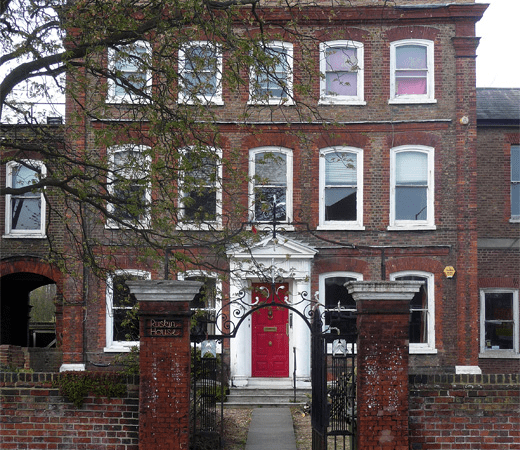
This is an amended version of a talk by Daniel Frost, which was given to a Unite the Union GPM&IT Sector event celebrating the centenary of the General Strike, held at Ruskin House in Croydon on Saturday 2nd May.
On 4th May 1926, workers in many key industries – transport, printing, metal and chemical manufacture, construction, power generation – went on strike in support of the 1.2 million miners who had just been locked out as part of a dispute which stretched back many months.
Other workers soon joined this ‘first line’, often to avoid working with strike-breakers, but sometimes out of sheer enthusiasm. The General Strike had begun.
The possible necessity of a “national strike” – the TUC’s preferred term – had been recognised for some time. It was a decade tense with hopes of revolutionary change. In September 1925, at the TUC annual Congress, the outgoing leader of the engineers’ union, Alonzo Swales, even proclaimed that the world had “entered upon the next and probably the last stage of revolt.”
The central controversy was the future of the mines. On 10th March, a Royal Commission report was published which called for partial nationalisation but also a 13.5% cut in miners’ wages. The mine-owners responded by offering new terms, including wage cuts and longer hours, in defiance of the miners’ slogan: “Not a penny off the pay, not a minute on the day.” The key month would be May, when a nine-month coal subsidy was to come to an end.
Yet despite this long buildup, much of the initiative to prepare for the strike came from below. On 21st March, a “special conference of action” was organised in Battersea, with hundreds of delegates representing nearly a million members. Central to its programme was the creation of local Councils of Action. This “great positive programme” – as local activist Harry Wicks argued in a recently republished pamphlet – “served the class in the nine days of May.”
In Bermondsey, for example, the local Council of Action produced a 6,000-copy daily bulletin, and the Labour council permitted the use of both town halls for strike meetings – including ‘afternoon meetings’ aimed at women. The Councils of Action also played a role in keeping order, with stewards in red armbands stopping traffic to check for TUC permits. Bermondsey reported that they had no arrests, but there were “one or two disturbances” in Borough and Southwark.
However, historian Edd Mustill has described South London as a “hotbed of sabotage and vandalism”, and striking workers sometimes went beyond the bounds of official advice. TGWU pickets at New Cross jammed objects into the rails to keep trams from running; the Guardian claimed that women in Camberwell were laying their children in the road to stop vehicles from passing.
Meanwhile, at the Woolwich Arsenal munitions factory, 7,000 workers went on strike on 4th May only to be ordered back to work by the TUC. Across the country, local councils and union branches struggled to interpret the instructions coming down from above.
The TUC’s approach was especially chaotic when compared to the carefully-laid plans of the government. The Prime Minister, Stanley Baldwin, had been quietly preparing for a general strike since the middle of 1925, with schemes in place to keep power stations operating and the organisation of volunteer strike-breakers.
Most famous were the Organisation for the Maintenance of Supplies, or OMS, which recruited heavily from the middle and upper classes. As Mustill notes, the ‘Order of Mugs and Saps’ often provided an opportunity to realise “long-forgotten boyhood dreams to work on the footplate of a steam engine or behind the wheel of a bus.” But as he also points out, the expectation of the Chief Civil Commissioner – Croydon South MP William Mitchell-Thomson – was that OMS volunteers would be subordinated to the government’s plans.
Croydon in the 1920s was still primarily a middle-class suburb, with a significant blackcoated ‘dormitory population’ that the Croydon Advertiser saw as the “hardest hit” by the strike. I am not sure whether the miners would agree!
On the night of Monday 3rd, an OMS meeting was held at Croydon Town Hall; a local Lloyd’s Bank employee served as their treasurer. Immediately outside on Katharine Street, the British Fascisti – Britian’s first fascist organisation – met in the open air. While the government had officially declined the fascists’ organised support, they were permitted to join the OMS in an individual capacity.
In Croydon and in other boroughs, volunteer strike-breakers tried to operate the trams and buses, or transported people in private cars. They struggled to keep up with demand; the local press described crowds of people milling about or slowly traipsing toward central London. And the strikebreaking could sometimes have disastrous results: on May 7th, a South London bus driven by a volunteer was waylaid by a picket and drove onto the payment, killing a bystander.
Yet while middle-class volunteers did flock to support the government, Croydon was also home to the workers who had stopped the buses and trams in the first place. The local Council of Action was notably successful, even publishing its own paper: the Croydon Worker, which had a circulation of about 3,000. Like Bermondsey, Croydon had a sizeable printing industry, and the Council of Action must have benefited from the expertise of those that had otherwise downed tools.
The old Ruskin House, close to West Croydon, was a major organising centre, with a ‘workers defence corps’ keeping order, and a canteen to raise money for the Miners’ Hardship Fund. It had been founded in 1912 with money from a temperance activist, and moved to its then-site in 1919. There were sports games and acrobatic displays in the garden, and even a performance led by the prestigious Surrey-based composer Rutland Boughton, all described in the second issue of the TUC’s British Worker.
Most often remembered as the founder of the original Glastonbury Festivals, Boughton had courted controversy earlier in the year by wearing ‘plus fours’ and a red tie at a performance at the Albert Hall, and caused an even bigger stir during the General Strike when a staging of Bethlehem (1915) depicted Jesus Christ being born in a miners’ cottage. He had also recently joined the Communist Party.
On 9th May, a “monster demonstration” – as the Council of Action later described it – marched from Ruskin House to Duppas Hill, led by a brass band. With thousands of strikers and their families and supporters, it was the largest protest in Croydon’s history. The Croydon Times reported that there were “young children… in their hundreds”, including “perambulators by the score” and a little boy in a toy motor car.
The strikers were optimistic. “After this little job is all over,” a local activist declared, “Croydon must show the same solidarity politically as it is now showing industrially. The fight will go on! And our victory in the industrial field must be repeated in the political field.”
Across the country, the numbers on strike continued to grow as more industries were called out. On 12th May 12, Bermondsey Council of Action later reported, the “workers were more solid… than at the first.”
Yet behind the scenes, the leadership of the TUC was preparing to surrender. With only vague promises that a compromise would be found for the miners, and without adequate measures to protect those returning to work, the strike was called off. The miners, who had not agreed, remained out, many until as late as November. For other workers, victimisation was widespread: according to Mustill, the sole trade unionist at the Mazawattee Tea Company in South London was sacked after refusing to tear up his union card.
For those who had fought so hard, the end of the strike was a betrayal, and could scarcely be believed. In an interview in Robert Vas’ Nine Days in ’26 (1974), the Labour activist who announced the news from the steps of Ruskin House says that people even wept. The disappointment was enormous. The “absolute solidarity” reported by the Croydon Council of Action hadn’t been enough.
This had serious consequences for the labour movement as a whole. By 1931, as unemployment and disillusionment both grew, trade union density in Croydon fell to just 5%. Moreover, in the November 1926 local elections, Labour was badly punished, as – to quote from Sam Davies and Bob Morley – “links to the trade union movement raised apprehension in the hearts of Croydon’s middle classes.”
There were other recriminations, too. In 1927, the government introduced legislation to outlaw secondary action and mass picketing, closing the legal route to future general strikes. And the leadership of the labour movement also went looking for people to blame: in late 1926, the Labour Party disaffiliated the Teachers Labour League – headed by a Croydon teacher – over supposed Communist links.
However, to focus only on these gloomier outcomes is to lose something of the strike’s significance. Though the local press had been uniformly and unsurprisingly critical of the strike as a whole, they had continually been forced to admit the fact that the strikers were “orderly” and “respectable” – which I suspect was more a reflection of the strength of the labour movement than an absence of “sabotage and vandalism”! By the 1930s and especially after the 1940s, the Labour Party was an established part of Croydon’s political scene. It was starting to achieve victory in the ‘political field’ even where industrial solidarity had fallen short.
Moreover, for all of the disappointment, the strike had helped to cement some important local institutions. Ruskin House, barely a decade old in 1926, is today one of the few surviving labour halls in London, and the headquarters of the Communist Party of Britain and the Morning Star. The workers defence corps apparently survived the strike, and may have come in handy during the confrontations with fascists which peppered the next few years.
And though the course of the general strike can be debated over and over, it cannot be forgotten that it made the ruling classes tremble and that, for nine days, the possibility of a different social order crept into view. I will end with the thoughts of Harold Croft, looking back at the end of the strike’s first day, quoted by Mustill:
“I quickly relapse into an inert but reflective mood – fortuitous impressions of Croydon, Streatham, London, Reading, Swindon and Bristol crowd into my mind and rapidly culminate to a tangible idea of the massive reality of the power and magnitude of the great Strike. Every town and city isolated – seemingly autonomous – yet all indivisibly and indissolubly one in unity and purpose – A vast phalanx of workers still – serious – silent – waiting for the victory of their immense passivity. This massing of toilers to demand a living wage for miners is an epic of Labour.”
And so it was.
Daniel Frost is a historian and UCU member, and the co-editor (with Evan Smith) of In Solidarity, Under Suspicion: The British Far Left from 1956, which was recently reviewed on Labour Hub.
Image: Ruskin House, Croydon. Source: From geograph.org.uk Author: Stephen Richards, licensed under the Creative Commons Attribution-Share Alike 2.0 Generic license.
Richard Price is a political activist in Leyton.

No comments:
Post a Comment