Friday, December 11, 2020

Study: U.S. Military Communications Technology and Cyber Defense Challenges Remain

Second Annual State of Military Communications Study, from Government Business Council and Viasat, Finds Military Communications Still Not Seen as a Priority; Creating Potentially Dire Implications Relative to Adversaries 

NEWS PROVIDED BY Viasat, Inc.

Dec 10, 2020

WASHINGTON and CARLSBAD, Calif., Dec. 10, 2020 /PRNewswire/ -- Despite the Department of Defense (DoD) making strategic moves to improve its communications technologies, a new study finds challenges still exist in fulfilling a successful military communications technology strategy for the multi-domain battlefield. Concerns regarding the DoD's acquisition process and cybersecurity were revealed in the study, conducted by the Government Business Council (GBC), the research division of Government Executive Media Group, in partnership with Viasat Inc., (NASDAQ: VSAT) a global communications company.

According to the second annual State of Military Communications study, respondents reported the top three causes of defense communications technology deficiencies in their agencies include: limited funding, incompatibilities with legacy architectures and cultural complacency. Cultural complacency was also reported as the number one reason why defense agencies continue to contract with companies from the Traditional Defense Industrial Base (TDIB) over companies from the New Defense Industrial Base (NDIB).

Other key findings from the study include:

Despite technology improvements, communications technology strategy is still not seen as an agency priority, with communication technology blackouts still common

97% of respondents reported a complete loss in connectivity at some point while working in the military.

The majority (60%) of respondents think U.S communications technology is either behind or only on par with their adversaries, suggesting potentially dire implications relative to near-peer adversaries.

76% of respondents believe that a focus on improvements to defense communications is much lower, or just on par, with other top priorities in their agency.

Secure connectivity was seen as the number one improvement need in defense communications technology

When asked about their agency's preparedness for a cyberattack on defense communications infrastructure, confidence levels were low across the board. The highest percentage (39%) of respondents indicated they were 'moderately confident' in their agency' preparedness, while 16% said they were 'not at all confident' and only 8% reported feeling 'extremely confident.'

Acquisition remains a barrier to a U.S. military lead in defense technologies 

67% of respondents agree there is room for the military to improve its adoption of communications technology.

Increased commercial sector engagement could help boost the pace of improvements to the military's communications technology portfolio, according to the majority (63%) of respondents.

Respondents (52%) also suggest that increased participation from non-traditional companies — including those from the NDIB — in DoD's acquisition process could expose the military to the latest and greatest technology and business processes.

Investments in cloud, analytics and communications are being made to support the next-gen warfighter

Though challenges exist with developing and acquiring advanced communications technology, respondents did report their agencies are upgrading equipment to minimize challenges created by outdated legacy IT.

Advanced satellite communications, analytics and 5G technology were flagged by respondents as the top next-gen technologies their agency must leverage to advance defense communications capabilities.

Respondents also believe cloud computing is worthy of investment, noting their organizations were prioritizing it in order to outpace competitive adversaries. Specifically, 36% of respondents reported a concerted agency push for cloud computing technologies within the past 12 months.

"As the defense landscape evolves, global military prowess will no longer be determined by artillery alone; command over information — and the digital channels that convey it — will determine the victor," said Daniel Thomas, director, Research & Strategic Insights, Government Business Council. "This year's State of Military Communications survey continued to highlight the need for the DoD to increase its communications modernization efforts to remain competitive against global adversaries to drive real-time decision making and information sharing."

"In its second year, the State of Military Communications survey once again spotlighted the need for enhanced communications to help bridge the multi-domain battlefield and support our warfighters," said Ken Peterman, president, Government Systems, Viasat. "Status-quo acquisition models anchored in cultural complacency must evolve, the pace of technology deployment must align with the speed of relevancy and a focus on security, cloud computing, communications and analytics are all needed to ensure our U.S. competitive military advantage does not erode. Viasat is at the vanguard of the New Defense Industrial Base, focused on bringing innovative business models and game-changing technologies to the defense sector with the goal of creating unprecedented warfighter capabilities and mission outcomes."

A complete copy of the Second Annual State of Military Communications Study can be found here.

About the research and methodology

Government Business Council, the research division of Government Executive Media Group, in partnership with Viasat, conducted the State of Military Communications survey, an in-depth study of senior military decision-makers. The study, now in its second year, was fielded from September-October 2020, to a random sample of U.S. active military and DoD civilians from across the nation. Responses of 195 defense employees were captured after quality control and screening, with about 40% of respondents identifying as GS/GM-13 level or above (including Senior Executive Service). Respondents represented all branches of the military, with the greatest input from the Air Force, Navy, and Army in the 2020 survey.

About Government Business Council

As Government Executive Media Group's research division, Government Business Council (GBC) is dedicated to advancing the business of government through analysis, insight and analytical independence. An extension of Government Executive's 50 years of exemplary editorial standards, GBC produces over 100 research initiatives each year, studying influential decision-makers across all sectors in government to provide invaluable insights, thought leadership content and marketing intelligence for government contractors.

About Viasat

Viasat is a global communications company that believes everyone and everything in the world can be connected. For nearly 35 years, Viasat has helped shape how consumers, businesses, governments and militaries around the world communicate. Today, the Company is developing the ultimate global communications network to power high-quality, secure, affordable, fast connections to impact people's lives anywhere they are—on the ground, in the air or at sea. To learn more about Viasat, visit: www.viasat.com, go to Viasat's Corporate Blog, or follow the Company on social media at: Facebook, Instagram, LinkedIn, Twitter or YouTube.

Copyright © 2020 Viasat, Inc. All rights reserved. Viasat, the Viasat logo and the Viasat signal are registered trademarks of Viasat, Inc. All other product or company names mentioned are used for identification purposes only and may be trademarks of their respective owners.

SOURCE Viasat, Inc.
Related Links

http://www.viasat.com


Wildfire resilience requires action from all, explains IBHS Chief

Roy Wright presents latest scientific guidance during California Department of Insurance Workshop


NEWS PROVIDED BY Insurance Institute for Business & Home Safety (IBHS)

Dec 10, 2020


RICHBURG, S.C., Dec. 10, 2020 /PRNewswire/ -- As California grapples with the wildfire risk across the state, the Insurance Institute for Business & Home Safety (IBHS) today shared the latest science-based guidance to reduce wildfire risk during a California Department of Insurance workshop. Roy Wright, president & CEO of IBHS, brought the organization's scientific expertise from a decade of work at the IBHS Research Center and numerous post-fire field investigations to "Modeling Wildfire Risk and Mitigation in the Era of Climate Change."

"Wildfire risk to communities can be reduced, but it cannot be eliminated. Research in the field and in our lab has demonstrated the clear set of actions that must be taken to give homes a better chance. Yet, this set of actions requires stakeholders to work together to implement and vigilantly maintain wildfire-resistant properties," explains Wright. "Each home is a system with multiple vulnerabilities, so no single action alone will significantly reduce wildfire risk but, collaboratively, communities can bring down their risk."

IBHS lays out the actions for homeowners, neighborhoods and communities in its Suburban Wildfire Adaptation Roadmaps and Wildfire Ready guide for homeowners to walk stakeholders through the opportunities to reduce wildfire risk. Filling the need for actionable guidance specifically for closely-built suburban communities, the Suburban Wildfire Adaptation Roadmaps qualitatively describe the relative vulnerabilities of eight components of the home and actions to improve the risk. Wildfire Ready turns the nuanced technical report into a progressive guide for homeowners that prioritizes the actions that give a home a better chance of surviving a wildfire.

"Embers can pick up and loft regularly more than half a mile. This ability to transport themselves fundamentally changes who is at risk to wildfire because once fire enters a community a domino effect begins as one burning home generates more lofted embers and produces radiant heat making the neighboring homes vulnerable. This domino effect makes community adaptation vital to wildfire mitigation," continues Wright, a northern California native who grew up with wildfire risk. "Communities, neighborhoods, and individuals must work together using wildfire resistant materials and designs as well as vigilant maintenance."

IBHS is committed to producing leading wildfire research that delivers actionable guidance to empower home- and businessowners to prevent avoidable loss.

"As we dive even deeper into wildfire science, we must apply the learnings we already have to improve communities' chances against wildfire. The roof, the 0-5-foot home ignition zone, the area underneath a deck, and vents are the first items that must be addressed," Wright adds.

Home and business owners eager to take action against wildfire can explore Wildfire Ready and Wildfire Ready‒Business at disastersafety.org/wildfire.

About the Insurance Institute for Business & Home Safety (IBHS)
The IBHS mission is to conduct objective, scientific research to identify and promote effective actions that strengthen homes, businesses and communities against natural disasters and other causes of loss. Learn more about IBHS at DisasterSafety.org.

SOURCE Insurance Institute for Business & Home Safety (IBHS)
Related Links

www.disastersafety.org
AMELIORATING CAPITALISM

Aflac Incorporated Announces $25 Million Commitment to Invest in LISC's Black Economic Development Fund 


NEWS PROVIDED BYAflac Incorporated

Dec 10, 2020


COLUMBUS, Ga., Dec. 10, 2020 /PRNewswire/ -- Aflac Incorporated (NYSE: AFL) announced today its $25 million commitment to invest in the Black Economic Development Fund introduced by the Local Initiatives Support Corporation (LISC).

The Black Economic Development Fund (the "Fund") is a mission-oriented investment fund with the primary objective of supporting Black-led financial institutions, anchor institutions and business transactions to strengthen the Black community in rural and urban communities. The ultimate goal is to help close the racial wealth gap. The Fund expects to begin initial deployment of capital in the first quarter of 2021, taking an industry-agnostic approach across a diverse set of borrowers and geographies with a variety of products and investment durations.

This announcement follows Chairman and CEO of Aflac Incorporated Daniel P. Amos' recent signing of the CEO Action for Diversity & Inclusion™ pledge, reaffirming Aflac's longstanding commitment to building productive, diverse and inclusive workplaces—principles that underscore Aflac's long-time commitment to fostering a diverse and inclusive corporate culture and workforce.

Chairman and CEO of Aflac Incorporated Daniel P. Amos commented, "The concept of diversity, equality and inclusion is not new at Aflac; it is a topic about which we at Aflac have been passionate for decades. Aflac has a long history of inclusiveness dating back to the U.S. Civil Rights movement when our principal founder, John Amos, actively worked with leaders engaged in issues of equality and fairness. We are proud to continue that good work and thrilled to take part in LISC's Black Economic Development Fund. We view this as much more than just a financial investment; rather, we see it as an investment in society to help support schools, housing and small businesses within Black communities. Aflac's founding principles have evolved into what is now known internally at Aflac as 'The Aflac Way,' a collection of guiding principles that reflects Aflac's corporate culture: treating all of its constituents, both internal and external—with dignity, respect and fairness. Our investment in the Black Economic Development Fund speaks to that ideology, and it is our honor to be a part of it."

"It's encouraging to see corporations like Aflac extend their commitment to diversity and equality by investing their assets in communities of color," said George Ashton, managing director of LISC Strategic Investments. "Aflac's investment in the Black Economic Development Fund will help fuel broad social and economic benefits that will have a lasting impact on businesses, jobs, and economic growth throughout the country. With this investment, Aflac is setting the standard for its peers to do the same."

ABOUT AFLAC INCORPORATED

Aflac Incorporated (NYSE: AFL) is a Fortune 500 company, helping provide protection to more than 50 million people through its subsidiaries in Japan and the U.S., where it is a leading supplemental insurer by paying cash fast when policyholders get sick or injured. For more than six decades, insurance policies of Aflac Incorporated's subsidiaries have given policyholders the opportunity to focus on recovery, not financial stress. Aflac Life Insurance Japan is the leading provider of medical and cancer insurance in Japan, where it insures 1 in 4 households. Fortune magazine recognized Aflac as one of the 100 Best Companies to Work for in America for 20 consecutive years. For 14 consecutive years, Aflac has been recognized by Ethisphere as one of the World's Most Ethical Companies. In 2020, Fortune included Aflac Incorporated on its list of World's Most Admired Companies for the 19th time, and Bloomberg added Aflac Incorporated to its Gender-Equality Index, which tracks the financial performance of public companies committed to supporting gender equality through policy development, representation and transparency. To learn how to get help with expenses health insurance doesn't cover, get to know us at aflac.com.

ABOUT LISC

With residents and partners, LISC forges resilient and inclusive communities of opportunity across America – great places to live, work, visit, do business and raise families. Since 1979, LISC has invested $22 billion to build or rehab more than 419,000 affordable homes and apartments and develop 70.3 million square feet of retail, community and educational space.

For more information on the Black Economic Development Fund, please visit https://www.liscstrategicinvestments.org or contact strategicinvestments@lisc.org.


AMELIORATING CAPITALISM


Clorox Signs "America Is All In" Statement in Support of Action on Climate Change

On the fifth anniversary of the Paris Climate Agreement, U.S. Businesses, Government Entities and Institutions Voice Support for National Mobilization on Climate


NEWS PROVIDED BYThe Clorox Company

Dec 10, 2020, 16:20 ET

OAKLAND, Calif., Dec. 10, 2020 /PRNewswire/ -- The Clorox Company (NYSE:CLX) has signed America Is All In – a statement supported by more than 1,000 businesses, government entities, universities and other institutions to express support for ambitious commitments to tackle the climate crisis.

Signatories to America Is All In support driving economic growth through job-creating sustainable investments. A key principle of the collaborative statement is approaching climate and economic recovery in a manner that addresses systemic inequalities and ensures everyone benefits from a transition to climate resiliency.

"Clorox's corporate purpose is to champion people to be well and thrive, every single day. And this includes contributing to a healthy planet," said Clorox CEO Linda Rendle. "Consistent with our commitment to science-based climate action, we're lending our voice to call for a coordinated, national response to climate change and recognize that all sectors must act together to help our planet thrive now and in the future."

Clorox has made addressing climate change a key priority in its IGNITE Strategy. The company has committed to 100% renewable electricity in the U.S. and Canada by next year and to setting science-based targets to reduce greenhouse gas emissions in its operations and across its value chain.

These commitments build upon a long-standing focus on climate stewardship that resulted in cumulatively reducing emissions by 56% per case of product sold and by 46% on an absolute basis between 2008 and 2019. Clorox is proud of its progress and commitment to climate stewardship but recognizes that the efforts of any single organization are not sufficient to meet the scale of the challenge. America Is All In conveys the importance of multi-stakeholder collaboration and leadership in addressing climate change.

America Is All In will be shared with U.S. federal government officials and members of Congress, United Nations officials and global heads of state. View the statement and signatories at AmericaIsAllIn.com.

The Clorox Company

The Clorox Company (NYSE: CLX) is a leading multinational manufacturer and marketer of consumer and professional products with about 8,800 employees worldwide and fiscal year 2020 sales of $6.7 billion. Clorox markets some of the most trusted and recognized consumer brand names, including its namesake bleach and cleaning products; Pine-Sol® cleaners; Liquid-Plumr® clog removers; Poett® home care products; Fresh Step® cat litter; Glad® bags and wraps; Kingsford® charcoal; Hidden Valley® dressings and sauces; Brita® water-filtration products; Burt's Bees® natural personal care products; and RenewLife®, Rainbow Light®, Natural Vitality Calm™, NeoCell® and Stop Aging Now® vitamins, minerals and supplements. The company also markets industry-leading products and technologies for professional customers, including those sold under the CloroxPro™ and Clorox Healthcare® brand names. More than 80% of the company's sales are generated from brands that hold the No. 1 or No. 2 market share positions in their categories.

Clorox is a signatory of the United Nations Global Compact and the Ellen MacArthur Foundation's New Plastics Economy Global Commitment. The company has been broadly recognized for its corporate responsibility efforts, named to the 2020 Axios Harris Poll 100 reputation rankings, Barron's 2020 100 Most Sustainable Companies list, and the Human Rights Campaign's 2020 Corporate Equality Index, among others. In support of its communities, The Clorox Company and its foundations contributed more than $25 million in combined cash grants, product donations and cause marketing in fiscal year 2020. For more information, visit TheCloroxCompany.com, including the Good Growth blog, and follow the company on Twitter at @CloroxCo.

America Is All In

The America Is All In statement was co-produced by the many organizations and networks that support the management of We Are Still In - a joint declaration of support for climate action signed by more than 3,900 CEOs, mayors, governors, tribal leaders, college presidents, faith leaders, health care executives, and others in 2017. America Is All In was organized by The American Sustainable Business Council, B Team, Bloomberg Philanthropies, Center for American Progress, Ceres, CDP, Climate Mayors, Climate Nexus, C40, C2ES, Environmental Defense Fund, Environmental Entrepreneurs, Georgetown Climate Center, Health Care Without Harm, ICLEI, National League of Cities, Rocky Mountain Institute, Second Nature, Sierra Club, Sustainable Museums, The Climate Group, We Mean Business, World Resources Institute (WRI), and World Wildlife Fund (WWF). Learn more at AmericaIsAllIn.com.

CLX-C

SOURCE The Clorox Company
Related Links

http://www.TheCloroxCompany.com
K12 Climate Action Examines Climate Change Mitigation in Schools

School leaders from Philadelphia, Stockton join student activists in sharing innovative solutions


NEWS PROVIDED BYK12 Climate Action

Dec 10, 2020, 18:11 ET

WASHINGTON, Dec. 10, 2020 /PRNewswire/ -- Today,
K12 Climate Action, an initiative of the Aspen Institute, examined how schools can mitigate their environmental impact during its second listening session, which featured Dr. William Hite Jr., the Superintendent of the School District of Philadelphia; Otis Hackney, the Chief Education Officer for the City of Philadelphia; Gilbert Rosas, the Energy Education Specialist at Stockton Unified School District; and Mahider Tadesse and Andie Madsen, student activists from Salt Lake City School District.

"Climate change is a major crisis that we all, as well as schools, will face, and school leaders and policymakers must prepare for those unique challenges and take action," said former New Jersey Governor and EPA Administrator Christine Todd Whitman. "Today, we've heard tangible steps schools in Philadelphia, Salt Lake City, and Stockton have taken to reduce their environmental impact, move toward sustainable solutions, and provide healthier learning environments for children and youth."

"With green matters playing such a crucial role in our economy," said Hite. "We know that today's students are tomorrow's workforce. We need to prepare them for jobs but also to live healthy lifestyles."

"This pandemic should teach us that we need to be prepared for change and invest in the future," said Rosas.

"I hope this moment is the beginning of moving in the right direction for where schools and school districts need to be in the future," says Madsen. "I am hoping that more young people are getting involved in this conversation because it is so necessary, and truly we have a personal stake in this fight."

Co-chaired by John B. King Jr., president and CEO of The Education Trust and 10th U.S. Secretary of Education under President Barack Obama, and Christine Todd Whitman, president of the Whitman Strategy Group and former Governor of New Jersey and Administrator of the Environmental Protection Agency under President George W. Bush, K12 Climate Action consists of 23 commissioners and over 35 coalition partners. It will release an action plan in 2021 that will harness schools' unique position to educate and prepare a new generation of students to advance a more sustainable world.

K12 Climate Action has four key areas of focus:

Mitigate: transitioning to more sustainable operations including energy, transportation, and food use;

Adapt: building resilience in preparation for disruptions and negative impacts related to climate change;

Educate: supporting teaching and learning to equip children and youth with the knowledge and skills to build a more sustainable world; and

Advance Equity: centering the voices and needs of Black, Latinx, Asian Americans and Pacific Islanders, Indigenous and other communities of color as well as low-income students and families.


In the United States, 50 million children and young people attend public schools. With 98,000 schools, 480,000 diesel school buses, and 7 billion meals served annually, the education sector has a considerable environmental impact and offers one of the greatest opportunities to build long-lasting change to advance sustainability.

For more information, visit k12climateaction.org and join the conversation by following K12 Climate Action on Facebook, Twitter and Instagram.

The Aspen Institute is a global nonprofit organization committed to realizing a free, just, and equitable society. Founded in 1949, the Institute drives change through dialogue, leadership, and action to help solve the most important challenges facing the United States and the world. Headquartered in Washington, DC, the Institute has a campus in Aspen, Colorado, and an international network of partners. For more information, visit www.aspeninstitute.org.

SOURCE K12 Climate Action
Related Links

http://k12clima
ESG* AMELIORATING CAPITALISM
Why Kellogg's enhanced Human Rights Strategy matters more than ever


NEWS PROVIDED BY Kellogg Company

Dec 10, 2020, 10:30 ET


BATTLE CREEK, Mich., Dec. 10, 2020 /PRNewswire/ -- During the recent United Nations Annual Forum on Business and Human Rights, two main themes emerged: COVID-19 and climate change. But a third, sobering fact was also presented – the COVID-19 pandemic has undone many of the human rights gains that companies have made in recent years. And female workers and children are disproportionately at an even greater risk. Kellogg, peer organizations, governments, and civil society all have a major role to play in continuing to protect and advance human rights. Amy Senter, Kellogg Company Chief Sustainability Officer, shares how the company's latest efforts intend to drive even greater action and impact.

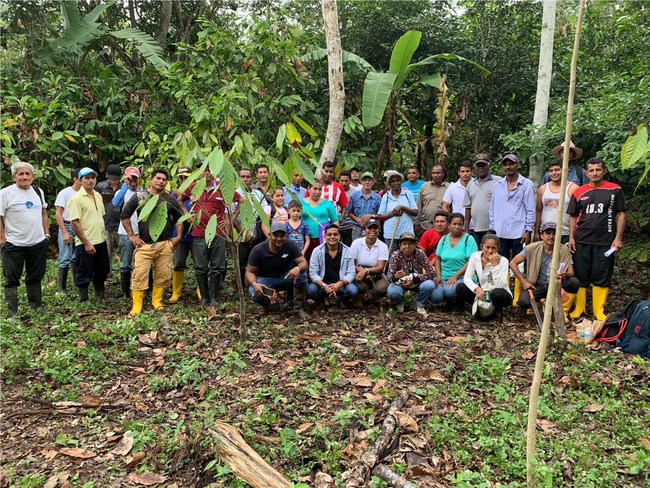
Smallholder Cocoa Farmers in Ecuador

Social K – Kellogg Company Blog

Amy Senter
Chief Sustainability Officer

We have long been committed to protecting, respecting, and advancing the cause of human rights across our value chain, which continues to contribute to our Better Days global purpose platform. Doing so is central to maintaining a responsible, ethical and equitable business. We have made steady progress towards our commitment and are pleased to announce that we have evolved our Human Rights Strategy and updated our Human Rights Policy to enable greater action and impact.

We are actively supporting human rights across our value chain by:
Protecting farmers and worker rights, combatting forced and child labor, and ensuring a safe and healthy workplace for all.

Driving equity, diversity and inclusion across our business through enhanced leadership commitments for equitable representation, investing in continued training and development and strengthening external multicultural partnerships.

This accountability has been seen throughout our COVID response. Moreover, we're working to ensure human rights are protected not just in our operations but across our supply chain. Our enhanced strategy and policy reflect an even more active approach for engaging with our suppliers and internal facilities to ensure we are positioned to drive the biggest impact across our business.

To inform our strategy, we consulted with external stakeholders, suppliers, trusted non-government organizations and industry experts to identify enhancement opportunities – and we're taking several actions because of it, such as:
Launching an external-facing Ethics Hotline digital app to improve reporting and tracking of human rights issues and making this available to our suppliers and employees.

Enlisting an international consulting firm to conduct ongoing assessments of human rights risks across our supply chain and establishing verification of human rights protection in high-risk sites with Tier 1 suppliers and within our internal operations.

Educating and engaging employees and suppliers on this issue through company-wide training and embedding human rights protections into day-to-day business.

Investing in programs at ingredient origin that address root cause issues for human rights issues.

Expanding annual reporting and communications of human rights progress to stakeholders, customers and consumers.

This work builds from positive milestones we've already achieved.

In 2020 we ranked 13th in the Know the Chain global human rights benchmark and 14th in the Corporate Human Rights Benchmark across industries. Both are reflective of our ongoing efforts to bolster our human rights programs and activities throughout our supply chain and internal operations.

This includes, for example, our work supporting cocoa farmers in Ecuador and Ghana, Malagasy vanilla farmers, wheat farmers in India and smallholder palm producers in Malaysia – areas and people that are typically at the highest risk for human rights violations.

Pandemic or not, we remain steadfast in our commitment to identifying human rights risks and eradicating violations across our supply chain now and in the future.

You can read more about our Human Rights progress in our annual milestones. View our updated policy on our corporate website.

About Kellogg Company
At Kellogg Company (NYSE: K), we strive to enrich and delight the world through foods and brands that matter. Our beloved brands include Pringles®, Cheez-It®, Special K®, Kellogg's Frosted Flakes®, Pop-Tarts®, Kellogg's Corn Flakes®, Rice Krispies®, Eggo®, Mini-Wheats®, Kashi®, RXBAR®, MorningStar Farms® and more. Net sales in 2019 were approximately $13.6 billion, comprised principally of snacks and convenience foods like cereal and frozen foods. Kellogg brands are beloved in markets around the world. We are also a company with Heart & Soul, committed to creating Better Days for 3 billion people by the end of 2030 through our Kellogg's® Better Days global purpose platform. Visit www.KelloggCompany.com or www.OpenforBreakfast.com.

* ENVIRONMENT, SOCIAL, GOVERNANCE
Analysis: U.S. blessing Facebook deals complicates lawsuit demanding Instagram sale
LEFT HAND NOT KNOWING WHAT THE RIGHT HAND IS DOING DEPT.

By Paresh Dave
Thu., December 10, 2020

FILE PHOTO: The Facebook logo is displayed on their website in an illustration photo taken in Bordeaux

(Reuters) - A U.S. lawsuit that could lead to the break-up of Facebook Inc's social media empire may be hindered by the government's role in the company's monopoly building, and a recent dearth of similar cases, legal experts said.

In twin lawsuits on Wednesday, the Federal Trade Commission and 48 U.S. states and territories alleged Facebook's purchases of media-sharing apps Instagram in 2012 and WhatsApp in 2014 were part of an illegal pattern to maintain its monopoly in social networking, leaving consumers with few alternatives to apps from the Silicon Valley giant.

But the FTC reviewed the two deals at the time, especially scrutinizing the Instagram deal, and did not try to block them. Facebook has already used that fact to call the lawsuits "revisionist history" and will continue to make that a part of its defense, a person familiar with the company's thinking said.

Many of the company emails and other evidence the FTC revealed in its complaint on Wednesday - which show Facebook was motivated to eliminate costly competition - could have been accessed back then under its investigative powers.

The source described the FTC's attempted redo now as unprecedented and noted that rivals including TikTok, Snapchat and Twitter have continued to grow over the last eight years.

Legal scholars or attorneys not involved in the case said the FTC's inaction nearly eight years ago is problematic, but not insurmountable.

"They were wrong not to challenge it at first but that's water under the dam," said Spencer Waller, director of the Institute for Consumer Antitrust Studies at Loyola University Chicago. "Now, they can say, 'We've seen what happened and conclude it has'" substantially lessened competition.

In fact, companies have been sued long after deals were completed. The Justice Department in 1964 succeeded in forcing chemical giant du Pont to sell a stake in automaker General Motors in a case brought about 30 years after the investment.

The FTC seems to understand the optics on the situation, said Joel Mitnick, an antitrust attorney at Cadwalader, Wickersham & Taft. While the states allege each of the two Facebook acquisitions separately violated the U.S. law banning unfair mergers, the FTC sued only under a separate law that broadly bars schemes that allow companies to unfairly hold onto power.

"The (FTC) clearly doesn't want the judge to be focusing on whether they blew it at the time of acquisitions," Mitnick said. "The FTC would have to say to the court, 'We just didn't understand at the time that these mergers would create companies that would increase in size and consumers wouldn't go to other sites." The FTC declined to comment on its legal strategy.

Even if the FTC prevails on whether Facebook violated the law, a break-up would be far from certain.

The statute upon which the FTC is bringing its case last triggered a major divestiture in 2000 when a federal judge ordered Microsoft to separate its operating systems and apps businesses. But an appeals court later reversed that order, a decision that likely benefits Facebook, Mitnick said.

The FTC may counter with a Supreme Court decision from 1966 holding that a conglomerate developing plumbing supplies and burglar systems had to dissolve the series of tie-ups that led to its market power.

The FTC's work will be more difficult because "the government has not pursued a divestiture like this in quite a while," said Rory Van Loo, associate law professor at Boston University. But there may be no better remedy in this case, and "those large divestitures of decades and even a century ago are still good law," he said.

(Reporting by Paresh Dave in Oakland, California; Additional reporting by Nandita Bose in Washington; Editing by Lisa Shumaker)

CANADA 

Syrian refugees overcoming war memories brought back by COVID-19


Thu., December 10, 2020


OTTAWA — Five years after the first of them arrived in Canada, tens of thousands of Syrian refugees have had to adapt to COVID-19 lockdowns that brought back the memories of war horrors and upset the lives they had begun to rebuild.

On Dec. 10, 2015, following a promise by the Liberals during the 2015 election campaign to make it much easier for them to reach Canada, the first plane bearing Syrian refugees landed in Toronto.

A total of 45,919 Syrian refugees were resettled in Canada by April 2017 and more continued to arrive under other programs after that.

Dima Naseraldeen arrived in Montreal less than three years ago with her husband and their two sons. Earlier this year, when they had started to enjoy their new life in Canada, the city went into a lockdown, forcing them to stay at home and to put their work plans on hold.

"In the beginning, we were worried and scared," she said.

"Suddenly, streets were empty, stores were shut down. It was something similar to war."

Before coming to Canada, Naseraldeen spent years with her family in a suburb south of Damascus hiding from mortar shells.

She said the first few months of the COVID-19 pandemic put them in the same profound anxiety they had lived with in Syria.

"We would always hear the sirens of ambulances and wait for the news," she said. "We didn't know what was going to happen next."

Bayan Khatib, the co-founder and executive director of the Syrian Canadian Foundation, said Syrian newcomers she worked with told her they were locked down in their homes in Syria for months or a year at a time because of the constant bombings outside and their inability to leave town.

"Everybody wearing masks must have been difficult to see, too, for people, perhaps, who are coming from areas that were attacked with chemical weapons," she said.

Khatib's organization is based in Mississauga, Ont., and provides services for newcomers in several cities in Ontario.

She said a lot of Syrian families came from places where the schools were shut down because of war, so when the schools were closed earlier this year, they must have felt horrible.

"Experiencing the second lockdown now in their new home as they're trying to live life in a safe place, sure has been very challenging and extra stressful for them."

Many Syrian refugees have applied to become Canadian citizens, but the federal Immigration Department has suspended citizenship exams since the pandemic began, creating a backlog.

The delayed citizenship applications contributed to the stress Syrian refugees have been living with throughout the pandemic.

Thursday, a group of 29 Syrian refugees took the oath while thousands still wait.

Immigration minister Marco Mendicino said in an interview that over 43,000 new citizens have participated in online citizenship ceremonies since April.

"We can continue to welcome and grow our family of citizenship despite the challenges posed by COVID-19."

Before the pandemic, Naseraldeen, 34, pursued a passion for drawing and participated in a few art shows with other artists in Montreal. Her first show of her own at the Montreal Art Centre was put off from May to December, then scrubbed.

"It was a disappointment" she said. "First, (the show) was delayed and I thought that would give me more time to prepare, then it was a shock that it was cancelled."

Her husband Ayham Abou Ammar is an actor and a musician. In February, he finished shooting his part as the lead actor in a Canadian movie about a Syrian family that moved to Canada, but the movie release was also put off until next year.

"It was supposed to be screened at several festivals, but it was all cancelled," he said.

Abou Ammar, 36, said he feels he lost the joy of watching his first movie on the big screen.

"It's a turning point to see your work in the cinema," he said. "I still hope it will be released next year."

Abou Ammar has taught music to youngsters in Montreal occasionally, but with limited participation due to physical-distancing rules.

The career shift was more dramatic for Noor Sakhniya, who finished his training to become a pilot last year in Ottawa, almost four years after landing in Canada with his family.

Sakhniya was hired by Buffalo Airways in Yellowknife in December 2019 but was laid off in March because of the pandemic.

Returning to Ottawa, Sakhniya, 23, had to work in survival jobs including making deliveries and as a personal grocer.

"You work hard for four years and you spend a lot of money on the training and on your dream … then, you (have) to let it all go," he said.

"I believe it's not just my case. It's the case of many pilots, whether they're beginner pilots or pilots who have years of experience, they will have to let it go due to the pandemic."

He used to be active in organizing events for the Syrian community in the city and he coached a soccer team for immigrant kids last year, but all of that was on hold this year.

"In our countries, we were used to having a circle of support from family and friends … For many Syrians, during the war, they all moved together into their family houses to support each other," he said. "During the pandemic, it's really hard to do that, especially here in Canada (where) you don't have family sometimes. Even though you have family sometimes, it'd be hard because you have to isolate yourself."

He works now at a manager in a restaurant in downtown Ottawa. Expecting aviation to be slow for many years, he's planning to study aerospace engineering at Carleton University next year.

Naseraldeen also is creating a new career path for herself in case she is not able to make living of painting in the near future. She finished training as a makeup artist recently.

She said it's difficult for her to paint artwork now, with the amount of uncertainty that COVID-19 pandemic has put her in. Yet she said she still has hope.

"We were living in a war zone and we lost our jobs and homes and there was always hope," she said. "I'm always optimistic … and I'm sure good things will follow."

This report by The Canadian Press was first published Dec. 10, 2020

———

This story was produced with the financial assistance of the Facebook and Canadian Press News Fellowship.

Maan Alhmidi, The Canadian Press
THE OTHER BLM
Return to Freedom Sues BLM Over Plan to Surgically Sterilize Wild Mares

NEWS PROVIDED BY Return to Freedom Wild Horse Conservation
Dec 10, 2020,


LOMPOC, Calif., Dec. 10, 2020 /PRNewswire/ -- Return to Freedom Wild Horse Conservation today filed suit in federal court in California to halt a Bureau of Land Management plan to surgically sterilize wild mares using a procedure that is dangerous, inhumane, and an unnecessary risk especially when proven, well-studied and previously utilized modes of alternative fertility control exist.

Neda DeMayo, founder and president of RTF, a national nonprofit advocacy organization, said BLM's plan ignores the spirit and intent of the Wild Free-Roaming Horses and Burros Act, in which Congress explicitly expressed that BLM must protect wild horses "from capture, branding, harassment or death." Under BLM's plan, the lives of wild mares would be placed at risk by the very federal agency charged with making decisions benefitting wild horses and burros on behalf of the American people.

"BLM is marching blindly into another management dead-end, risking the lives of federally protected wild mares at the expense of taxpayers who vehemently oppose such surgeries," DeMayo said. "RTF strongly supports safe, proven fertility control vaccines that are a humane and practical way to slow herd growth and finally phase out BLM's decades-long practice of capturing and removing wild horses from their ranges."

BLM is currently conducting a helicopter roundup on the Confusion Herd Management Area in Utah. At some point after its completion, the agency plans to hire presently unknown veterinarians to perform a painful and invasive surgical procedure in which a mare's ovaries are crushed then pulled out with a looped chain instrument. The mares would later be released onto the range.

BLM's relentless pursuit of sterilization surgeries continues in spite of Congress adding $21 million to the BLM's Wild Horse and Burro Program to be used in a multi-pronged non-lethal alternative program supported by RTF and other stakeholders with the use of proven, safe and humane fertility control at its center. On Nov. 19, 58 members of Congress sent a letter to the Secretary of the Interior calling on BLM to drop its surgical sterilization plan.

Called ovariectomy via colpotomy, the planned surgery includes risks of infection, bleeding and death. A BLM-commissioned report from the National Academy of Sciences advised against the use of the procedures on wild mares. In addition, there are no substantive studies to evaluate long-term health of ovariectomized mares.

The BLM continues to throw good money after bad. This will be at least the third time that BLM has gone to court over plans to surgically sterilize wild mares, despite polls showing the public supports protections for wild horses and burros. For example, BLM in 2016 abandoned a plan to spend $348,000 on sterilization experiments in Oregon on 225 mares, including at least 100 pregnant mares, after public opposition and litigation.

In 2017, wild horse advocates, including RTF, prevailed in a federal lawsuit challenging BLM's efforts to permanently sterilize an entire Idaho herd of horses. The court found that BLM: has a legal mandate to protect horses' wild free-roaming behaviors and manage wild horses in self-sustaining herds, and that sterilizing wild horses impacts the herd's social structure, the wild horses' behavior, and the public's interest in preserving and observing those natural instincts and behaviors.

Unlike surgical sterilization, the immuno-contraceptive fertility control vaccine PZP has more than three decades of research supporting its use. Other fertility control vaccines, including some that are longer acting, are receiving further attention and study. These have strong public support and can be injected by hand or by dart by trained technicians, making them far more humane, and cost-effective ways to slow herd growth.

RTF is represented by attorney Bruce Wagman of Riley Safer Holmes & Cancila LLP.

About RTF

Return to Freedom Wild Horse Conservation (RTF) is a national nonprofit organization dedicated to wild horse preservation through sanctuary, education, conservation and advocacy since 1998. It also operates the American Wild Horse Sanctuary at four California locations, caring for well over 500 wild horses and burros.

SOURCE Return to Freedom Wild Horse Conservation
Related Links
https://returntofreeedom.org
Record Year for Americans Giving Up Citizenship, Reports Bambridge Accountants New York

NEWS PROVIDED BY Bambridge Accountants New York

Oct 29, 2020

NEW YORK, Oct. 29, 2020 /PRNewswire/ -- 2020 is the record year for Americans giving up their citizenship, according to research by the Enrolled Agents and accountants of Bambridge Accountants New York.


Americans Renouncing 2020


6,045 Americans gave up their citizenship in the first nine months of 2020 

Showing a 234% increase on the same 9 months to in 2019, where only 1,811 cases were recorded

2,072 Americans gave up their citizenship in 2019 in total

This is the highest year on record; the previous record was 5,411 cases in 2016. Already in 2020, with 3 months still to report, 6,045 is the record number of cases in a year

This is all while the U.S. State Department has stopped Americans being able to book appointments to renounce at many U.S. Embassies since March 2020

Americans must pay a $2,350 government fee to renounce their citizenship, and those based overseas must do so in person at the U.S. Embassy in their country.

There are an estimated 9 million U.S. expats. The trend has been that there has been a steep decline over the last few years of U.S. citizens expatriating - the first six months of 2020 is a huge increase in the number of Americans renouncing their citizenship.

Under the IRS rules (section 6039g), every three months the U.S. Government publishes the names of all Americans who give up their citizenship. The first nine months for 2020 had 6,045 Americans renouncing their citizenship, far more than the total of the four quarters for 2019 (2,072 Americans renounced).


Alistair Bambridge, partner at Bambridge Accountants New York, explains: "There has been a huge interest in 2020 for Americans overseas looking to renounce their citizenship, where the figures have been in steep decline since 2017."

"The record numbers of Americans giving up their citizenship in the first nine months of 2020 is the tip of the iceberg and if the U.S. Embassies and Consulates were all open, there would be much higher levels for 2020."


"From our experience, increasingly Americans abroad have had enough of President Trump and the administration of the last four years and can't bear the thought of four more years. For those individuals, the situation is so serious that they are willing to give up their citizenship so they are not linked to the political policies in the U.S."

"I speak to U.S. citizens on a daily basis who are looking to renounce their citizenship, so there will be a large wave of U.S. citizens renouncing their citizenship once they are able to book appointments again. There are some U.S. citizens so desperate to give up their citizenship that they are booking holidays to the Bahamas or the Turks and Caicos Islands, or other far-off places, where appointments are still being offered to give up their citizenship."

Bambridge Accountants New York is a New York-based firm specializing in U.S. expat tax, U.K expats, actors, other creatives in the U.S. and U.K.

www.bambridgeaccountants.com

Related Images

americans-renouncing-citizenship.jpg
Americans Renouncing Citizenship
Americans Renouncing 2020

Related Links

IRS report of Americans renouncing

Bambridge Accountants

SOURCE Bambridge Accountants New York