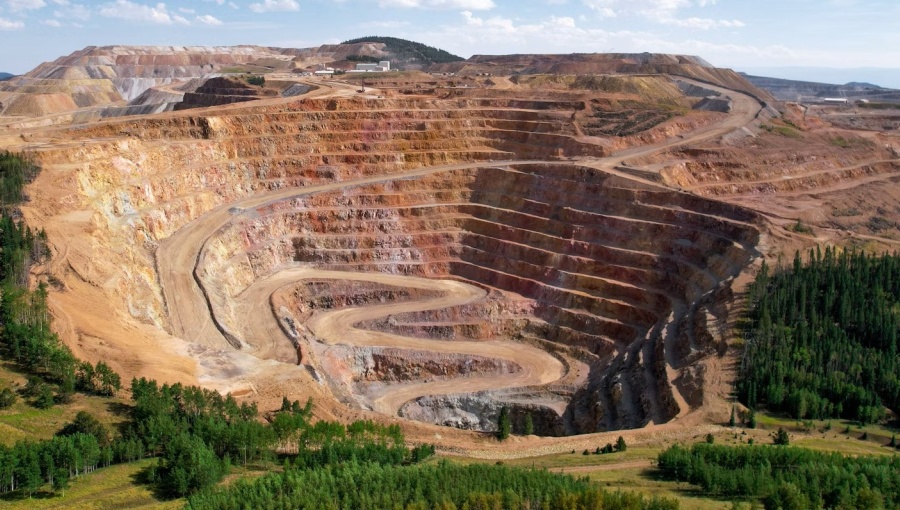
As Indonesia remains laser-focused on macroeconomic recalibration, the country has moved forward in its efforts to balance high-stakes fiscal intervention with the ever-unpredictable realities of its domestic extractive sector, Netral News reports.
With the government in Jakarta deploying a resource nationalism policy and creating fiscal tools to capture corporate resource rents, Indonesia also faces mounting pushback from its grassroots mining communities.
Mineral export bans and upcoming windfall taxes have become the country’s overarching strategy - one that is increasingly running up against regulatory bottlenecks, illegal capital leakages, and local governance deficits that threaten to undermine its broader industrial ambitions.
Export levies
The Indonesian Ministry of Finance is turning to fiscal instruments to insulate the state budget in real time from external commodity shocks and global monetary tightening. As reported by Sustainability Online, the government’s introduction of export duties and a windfall tax on coal is projected to generate substantial state revenue.
In simulation data compiled by the Centre of Economic and Law Studies (CELIOS) and published by Betahita it is shown that a targeted windfall tax on coal corporations could generate up to IDR66.03 trillion (approximately $3.7bn) in fresh state revenue. In contrast, a similar tax on the booming nickel sector could yield an additional IDR14.08 trillion.
This fiscal cushion arrives at a critical juncture for the country. In its 2026 state budget, Indonesia allocated more than IDR380 trillion for fossil energy subsidies and compensation to state utilities such as oil company Pertamina and electricity company PLN, calculated under a conservative oil price assumption of $70 per barrel.
With global crude benchmarks like Brent spiking toward $140 per barrel at times due to ongoing geopolitical instability, and coal prices hitting $145.86 per tonne, the government is scrambling to plug a widening deficit using debt or targeted spending cuts.
Finance Minister Purbaya Yudhi Sadewa has actively discussed implementing these windfall taxes and export levies on the country's nickel and coal sectors to restrict raw export volumes and defend a volatile rupiah, as detailed in reports from Kontan. According to Betahita, the National Development Planning Agency (Bappenas) has formalised these plans within the 2027 Government Work Plan (RKP) documents released on May 8. Bappenas aims to chase a total state revenue-to-GDP ratio of 11.82%–12.40% by 2027. This ambitious target relies on a targeted, measured implementation of a commodity windfall tax alongside the deployment of the data analytics-driven Coretax Administration System to capture underreported corporate profits.
Pushback, however, emerges from international environmental monitors like 350.org, which argue that using these multi-billion-dollar windfalls to prop up artificially cheap domestic fossil fuels is counterproductive. Research from Betahita highlights a socio-economic paradox: ordinary citizens are subjected to paying through taxes for subsidies, suffering from a three-layered cost-of-living crisis, while enduring soaring household utility bills as well as bearing the physical costs of climate disasters. But the nation's top 50 tycoons, heavily concentrated in extractive industries, generate IDR4,92 trillion annually. CELIOS data notes that it would take Indonesia's top five billionaires 603 years to deplete their wealth even if they spent IDR2bn every single day.
Betahita also cites research from the Institute for Development of Economics and Finance (INDEF), which points out that Indonesia's current gross-revenue royalty framework (PP 18/2025) is an obsolete relic of the oil and gas era that fails to capture supernormal profits. When coal prices skyrocketed sixfold, state revenues failed to scale proportionally, resulting in an estimated IDR592 trillion in lost state revenue over 12 years.
As a result, INDEF advocates for a dual-track reform: a short-term revision of current royalty tariffs to make them responsive to market price changes, and the long-term passage of a Progressive Resource Rent Tax (PRRT) bill that automatically captures windfalls when corporate profit margins surge past normal thresholds.
Bottlenecks
Right now, the central government focuses on capturing value from corporate mining conglomerates. But the legal and regulatory framework which governs small-scale, artisanal mining is fracturing at the same time. According to a report from Netral News, the Ministry of Energy and Mineral Resources of Indonesia (ESDM) has been urged to revise the regulation on artisanal mining legalisation to accommodate the field miners’ needs.
During an audience with the Artisanal Miners Association of Indonesia (APRI) on May 25, it was pointed out that current regulations, specifically Government Regulations and ESDM Ministerial Regulation No. 14, are failing because they only recognise three formal entities: cooperatives, micro, small, and medium enterprises (MSMEs), and regional state-owned enterprises (BUMDs).
The structural flaw in this approach is that there is still a significant portion of the rural population that refuses to join government-mandated cooperatives, pushing thousands of local operators into the informal and illegal economy. The structural bottleneck is further exacerbated by bureaucratic infighting over licensing authority. Under the current framework, People's Mining Areas (WPR) are ideally designated by provincial governments, while specific zoning permits are held by the central government, leading to widespread regulatory overlap with pre-existing corporate Mining Business Licences (IUP).
Furthermore, local governments often lack the technical capacity to process environmental impact assessments, particularly for artisanal gold mining operations that require strict oversight regarding mercury contamination.
Market distortions
This challenge in formalising artisanal mining is connected with systemic corruption and local market distortions. These, in turn, dilute the state's regulatory grip. As reported by the official DPR RI portal, lawmakers have previously warned of a pervasive risk at the regional level, where local elites frequently carve up mining permits to benefit select cronies, effectively freezing out ordinary citizens from legal resource wealth.
To combat this regional capture and ensure that artisanal output feeds cleanly into the national industrial supply chain, Commission XII is pushing a model where regional state-owned enterprises (BUMDs) serve as the primary institutional off-taker for small-scale miners. BUMDs should act as a crucial structural bridge, establishing local processing facilities and guaranteeing transparent purchase prices for cooperative-mined materials. This mechanism is designed to wrest control of local mineral flows away from predatory, unlicensed middlemen who exploit miners and ignore environmental degradation, redirecting those resources into the formal national economy or monitored export markets.
This domestic supply chain formalisation is vital if Indonesia intends to meet the stringent global Environmental, Social, and Governance (ESG) standards required by international capital. In neighbouring Malaysia, for instance, a 4.6-GW AI-focused data centre boom has seen the government reject nearly 30% of infrastructure proposals due to environmental non-compliance, as reported by the New Straits Times.
If Indonesia hopes to secure sustained institutional investment, such as the $4.6bn in foreign direct investment (FDI) recorded from Singapore in Q1 2026, the expansion of mega-projects like the $24bn Tuban Refinery, or PT Hua Chin Aluminium’s recent 480,000-tonne expansion at the Morowali Industrial Park, it must demonstrate that its entire resource ecosystem, from artisanal miners to high-tech smelters, operates under clear, transparent, and enforceable legal parameters.
To achieve this, Bappenas is expanding digital tracking systems like the Mineral and Coal Information System (SIMBARA) to prevent informal leakages and under-reporting. Without a comprehensive overhaul of its artisanal mining rules to eliminate local corruption and integrate small-scale miners into the formal tax base, Indonesia’s resource nationalism risks building an industrial superstructure on an unstable and fractured legal foundation.

No comments:
Post a Comment