Wednesday, February 17, 2021

Uganda: Bobi Wine's Wife Flies to the USAFaceboo

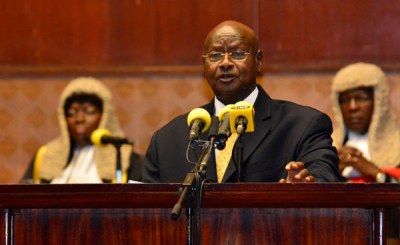
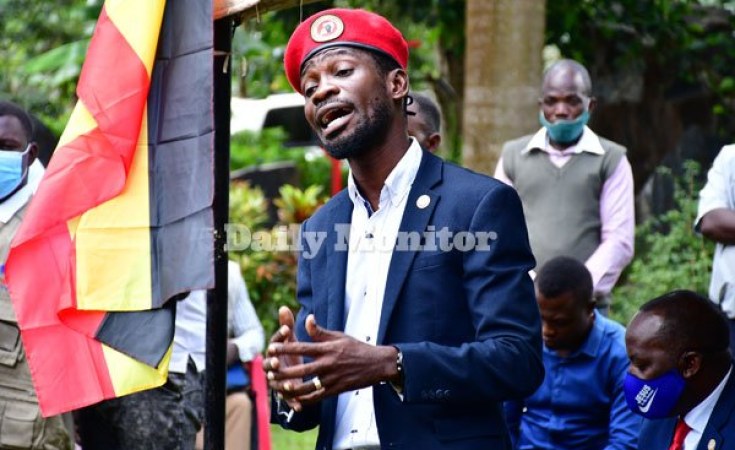
Bobi Wine addresses journalists at his home in Magere, Wakiso District on January 26, 2021.
4 FEBRUARY 2021

Uganda opposition leader Bobi Wine's wife Barbie Itungo Kyagulanyi has reportedly left the country for the US.

Media reports in the country indicate she left to join her kids who left the country days before the January 14 general elections. She reportedly left aboard Qatar Airways, via Doha, as there are no direct flights between Kampala and the USA.

Photos of Barbie at the Entebbe airport on Tuesday have been seen on social media.

Last month, Bobi Wine, whose real name is Robert Kyagulanyi, claimed he had received credible reports that President Yoweri Museveni had planned to abduct his kids during the electioneering period.

Without sharing evidence, Bobi Wine said unknown people had been trailing his kids for weeks.

"I received credible information of pending physical attacks on my wife and (the) kidnap of our children," he claimed.

The kids have reportedly been staying with Barbie's sister.

Soon after, Bobi Wine and Barbie were detained at his Kampala home for 10 days by the police and army who blocked all entrances to their palatial home.

The politician and his wife only tasted freedom after the court ordered the security forces to vacate the premises.

Police argued they were locking Bobi Wine and his family at his home for his own safety and have vowed to continue monitoring him. Barbie's departure comes at a time her husband has launched a legal battle against President Museveni at the Supreme Court. Bobi Wine who finished a distant second in the polls with just over 3 million votes behind the incumbent is seeking to nullify the elections on the premise it was rigged in favour of the winner.

Uganda: 'They're Abducting Everyone'

Pixabay
(file image)

15 FEBRUARY 2021
The Independent (Kampala)
By Ian Katusiime


Kampala, Uganda — Why the crackdown on Bobi Wine supporters may backfire on Museveni and NRM

On Feb.09, Lydia Nassolo emerged from Mityana's newly constructed Kitalya Prison, 56kms west of Kampala City, and pondered her next step. Her husband, Umar Kagimu, was not in the detention facility.

"It was January 21 at around 3pm when men in a drone picked him up from his work place," she told The Independent in reference to a silver Toyota delivery van that has become the symbol of abductions of Ugandans perceived to support former presidential candidate, Robert Kyagulanyi Sentamu aka Bobi Wine and his party National Unity Platform (NUP).

The following day, she says, the men; some wearing military uniform and others in plain clothes descended on their home in Wakiso District, a few kilometers out of Kampala.

"They were about 30, searched our house, took his National ID, ATM card, computers and laptop, and drove away with him," she said.

Since then Nassolo has been to the army offices in Mbuya, Makindye Barracks but she is yet to see her husband. This has been the trend for hundreds of families over the past one month.

The General Elections held on Jan. 14 saw President Yoweri Museveni declared winner in the presidential race with a 58 per cent vote margin but lost heavily to Bobi Wine in the central region where almost all ruling National Resistance Movement (NRM) candidates in elective positions were routed - a development that has triggered paranoia among ruling party folk. Desperate to consolidate its power, the NRM government through its state agents has embarked on random abductions targeting supporters of Bobi Wine and NUP.

The felling of almost all government ministers including Vice President Edward Ssekandi, in the previous election is believed to have fed the creation of bogus intelligence reports that NUP supporters were planning to burn Kampala, reports that President Museveni seems to have believed. Hundreds of Bobi Wine supporters have been reportedly abducted, tortured and some killed.

Bobi Wine has repeatedly called for the release of his supporters who have been abducted by state agents over and over again.

On Feb. 10, the former presidential candidate visited Kitalya prison "to stand in solidarity with our comrades who have been incarcerated there for 43 days now", he wrote on his Facebook page.

He added, "I looked at the thick walls of Kitalya and thought about the hundreds of NUP supporters incarcerated there for no crime whatsoever."

Joel Senyonyi, the spokesperson for the NUP says the party lawyers are compiling a list of all those that have been kidnapped by state agents.

"35% of the people detained in Kitalya are NUP agents and supporters," he told The Independent on Feb. 9.

Torture after kidnap

David Lule, aka Selector Davie, a longtime friend of Bobi Wine, had been receiving calls and tips from friends about his impending arrest prior to the elections. He had been warned to stay alert. "Even Bobi had called me several times and told me not to go home," Lule narrates to The Independent.

On Jan. 12, he went home and in the wee hours of the morning, the expected happened. He could hear boots and suspicious movements around his house in Kamwokya, a Kampala City suburb strongly associated with Bobi Wine. Lule says Bobi Wine was not happy when he learnt of his arrest because it could have been avoided.

In a move that was typical of Obote and Amin regimes many years ago, military men smashed his gate open in the dead of the night and pinned the watchman to the ground, Lule said.

"I stayed in the house because some of the men had already scaled the fence and were in the compound. I did not want to be killed like Zebra," Lule recalls vividly in a phone interview.

Isaac Ssenyange aka Mando Zebra, a celebrated a boxer allied to the NRM party was killed by security agents at night in a commando operation outside his home in Bwaise, a Kampala City suburb on Dec.30, 2020, after an internal disagreement with security in dubious operations. .

Lule says he came out of the house after the watchman mentioned his name crying for help. "As soon as they got me, they pounced on me with blows, kicks and drew a saw-like weapon to my neck," he narrates.

He says the men later conducted a search in his home. They had three drones and several patrol cars lined up outside his compound.

From Kamwokya, he was whisked off to Chieftaincy of Military Intelligence (CMI) headquarters in Mbuya for interrogation. "They took me from one officer to another, asking unclear questions; what is Bobi planning, what is Plan B? From what I gauged, there was no plan on what to do with people they would abduct," he says.

Lule told The Independent that he later recorded a statement at the Criminal Investigations Department (CID) in Kibuli, Kampala, and in subsequent days, he endured torture, beatings and sheer humiliation under detention by military officers.

"I went to Makindye military barracks where there was a daily dose of caning, beating, endless and pointless interrogation," he says. "They took me to a separate room where I would spend days without eating and could be dragged anytime for beating."

According to Lule, anyone leaving Makindye military barracks after detention has to undergo treatment because of the physical depredation one goes through. He says he has seen kids who cannot walk or individuals who are just left for dead from the barracks.

The military court at Makindye charged Lule with wearing a military cap on November 19, 2020, the day protests broke out in Uganda after the arrest of Bobi Wine in Luuka District, at the height of the presidential election campaign.

Legal experts have penned enough literature on the illegality of trying civilians before a military court.

Lule says he only got bail from court after putting up a spirited case of why he should not be in further detention narrating to the judge, a military man, how he had been through enough horror already at the hands of men dressed like him.

"I told him how I had had bled enough, coughed blood, been sick for days and he sort of agreed," he says, "and that is how I survived Kitalya Prison."

Lule got bail on Jan. 28 but he is expected to report back to the military court on Feb.24. He says Kitalya Prison seems to have been designed for government critics because of who he is familiar with currently under detention there.

"I am not even a NUP mobiliser, I don't have any position in the party. I have been helping Bobi with his music business which he is not even involved in any more to be honest," Lule says.

Lule says he is lucky to have regained his freedom but is still worried due to the increased incidences of abductions.

For instance, Mike Muhima, was abducted from home by security operatives on Feb. 5 reportedly due to 'cyber crimes'. His family have moved to several police departments searching for him, in vain.

This has triggered a Twitter hashtag #StopKidnappingUgandans but the government is yet to cave in to the pressure and release hordes of those missing.

Similarly, two aspiring politicians in Mpigi District on the NUP ticket; Abdul Rashid Nkinga and Ronald Sekajja went missing in early January, according to Daily Monitor.

Nkinga was aspiring mayor for Buwama Town Council in Mpigi while Sekajja was running as chairperson for Buwama sub-county. The publication quoted the Katonga regional police as saying that they did not know who was behind the kidnappings and appealed for information from the public.

Nevertheless, Nkinga was declared winner of the mayoral race for Buwama Town council in spite of being a no show in his locale. However, almost all his associates are reported missing; from a driver to anyone who supported his campaign either through providing a public address system, posters, venue or supply of People Power branded T-shirts.

However, it is not only foot soldiers of NUP that have been abducted. High profile individuals like renowned human rights lawyer Nicholas Opiyo have experienced the same.

Opiyo was abducted last December by security forces as he was having lunch at a restaurant in Kamwokya, a Kampala Suburb. It was only after a national and international uproar that he was eventually charged in court with money laundering. Others such as Stella Nyanzi,, a Museveni critic, are now seeking asylum in neighboring Kenya.

Asuman Basalirwa, a president for Jeema Party and lawyer told DW that lack of information about those who have disappeared, as well as the manner of their abduction, means that the disappearances can't be categorized as arrests.

"The reason why people are saying security is kidnapping Ugandans is because the mode of arrest is completely against the constitution," he told DW. "I think that's where the focus should be."

Livingstone Sewanyana, the Executive Director at the Foundation for Human Rights Initiative, told DW that Museveni's government should swiftly bring those arrested before the courts of law in accordance with the country's constitution, pointing to a troubling resurgence of violent intimidation in the past.

"The act of abductions, kidnappings and enforced disappearance is a relic of dictatorship," he said. "It speaks of our past history and also developments and trends [seen] during the 1970s," he said, referring to the brutal rule of former Ugandan President Idi Amin.

"This must be rooted out. Those held responsible must be punished," he added.

Museveni unrepentant

President Museveni has maintained his attitude since the election and remained unrepentant and dismissive of any concerns regarding the state of affairs in the country. In a televised address on Feb. 13, he was simply boastful.

"The talk of disappearances should be ignored because it can't happen under the National Resistance Movement (NRM). Under NRM, even if a mistake is made, it will be discovered or answered. That's the point I wanted to mention tonight," he said.

Museveni said a commando unit that is part of the UPDF had been brought in from Somalia to quell the protests that had gripped the country since the presidential campaign. He lauded the unit and said security would not back down on any matter in spite of the wide criticisms of the violations of human rights on their part.Protests would erupt whenever Bobi Wine would be arrested by Police.

Meanwhile Museveni's ministers and other government officials have been left with the task of explaining to Ugandans why their relatives and friends are being kidnapped with impunity.

On Feb. 2, while addressing the press, deputy inspector general of police Maj. Gen. Paul Lokech gave the Criminal Investigations Directorate (CID) a 48 hour ultimatum to avail names of all Ugandans who have been abducted by security operatives. No list has been generated two weeks later and if there were to be a list, it could only have grown longer.

Charles Twine, the spokesperson of CID, told The Independent that the communication was made to the deputy IGP and denied that people were abducted.

He says: "Some of the persons being talked about were actually arrested and not abducted. Some of them have been granted bond and produced in court."

Twine adds, "At the time of the communication, some of the persons were being processed on how to dispose them of."

Jeje Odongo, the minister for internal affairs, could not be reached for comment. However Odongo was left scraping the bottom of the barrel for answers on Feb.5 while fielding questions from MPs on the floor of parliament regarding the abductions in the country.

Odongo said a total of 44 people had been reported kidnapped with 31 unable to be traced but he did not give a comprehensive list of the said people.

According to parliamentary records, the minister said that seven people who were reported kidnapped had been arrested, charged and released on bail while others including Ronald Lumu, Benard Kabaale, Ronald Mugarura and a one Shafik were arrested for aiding and abetting terrorism."These suspects have since been interviewed, recorded statements and released on police bond," he said.

Ironically, the day Odongo made that statement was the day Mike Muhima, an IT expert, was abducted from his home. Odongo meanwhile appealed to the public to report incidents of kidnap to the police.

Lt. Col. Deo Akiiki, deputy spokesperson of the UPDF, declined to comment on the issue of abductions and referred our queries to Odongo's statements.

Implications to Museveni and NRM

Independent analysts that spoke to The Independent said that security agents' harassment of opposition supporters especially Bobi Wine creates tension in the country at a time of heightened political opposition to President Museveni and the NRM party.

They argue that the more people are tormented, the more resistance they develop and thus the more ungovernable they become. This, they say, is worsened by Museveni's over-stay in power as the population yearns for change.

For Kagimu's wife, Nassolo,, mother of a 20-months old baby and unemployed, the pain is unbearable and she is desperately demanding for answers from government about the whereabouts of her husband.


Read the original article on Independent (Kampala).


Nigeria: Anti-Gay Law - Ignore U.S. Threat, Lawyers Tell FG


-Say Biden can't dictate our way of life

-We owe America no obligation to repeal law made reflecting our culture, values

Senior Advocates of Nigeria, SANs, and other lawyers across the country have flayed the threat by President of the United States of America, Joe Biden, to sanction Nigeria and other countries that fail to make laws to accommodate Lesbian, Gay, Bisexual, Transgender and Queer and Intersex, LGBTQI, people.

In their separate reactions to the threat, the senior legal practitioners, maintained that it would be wrong for America to attempt to use its superpower to force sovereign African countries to embrace abhorrent sexual orientations.

President Biden had issued a presidential memorandum aimed at expanding the protection of the rights of LGBTQI people worldwide. He threatened to use full range of diplomatic and assistance tools, which may include financial sanctions and visa restrictions, against homophobic countries like Nigeria that retained its anti-gay posture.

Nigeria under former President Goodluck Jonathan had in January 2014, signed the Same-Sex-Marriage (Prohibition) Act, despite spirited effort by erstwhile US President, Barrack Obama, to abort the law.

The anti-gay law in Nigeria prescribed a prison term of between 10 and 14 years for anyone caught flouting the law, either by cohabitation between same-sex sexual partners, public show of same-sex relationship, registration, operation or participation in gay clubs, societies and organisation, amongst others.

The pressure on Nigeria to repeal its anti-gay laws ebbed with the emergence of the President Donald Trump's administration. However, it appeared the change of leadership in the US came with revived move to compel countries like Nigeria to reconsider their stoic stance against the LGBTQI community

President Biden, in his recent memo, called for sanctions against foreign countries that restrict rights of LGBTQI persons.

Biden's memo read in part: "When foreign governments move to restrict the rights of LGBTQI persons or fail to enforce legal protections in place, thereby contributing to a climate of intolerance, agencies engaged abroad shall consider appropriate responses, including using the full range of diplomatic and assistance tools and, as appropriate, financial sanctions, visa restrictions, and other actions.

"All human beings should be treated with respect and dignity and should be able to live without fear no matter who they are or whom they love. The United States belongs at the forefront of this struggle - speaking out and standing strong for our most dearly held values."

The memo directed US agencies working in foreign countries to work harder to combat the criminalization by foreign governments of LGBTQ status or conduct, and directed the State Department to include anti-LGBTQ violence, discrimination and laws in its annual human rights report.

It further called for increased efforts to ensure that LGBTQ asylum seekers have equal access to protection, expanded training for US federal personnel, and potential increased use of priority referrals to expedite resettlement of vulnerable people. It directed US agencies to consider appropriate responses, including the full range of diplomatic tools, and potentially financial sanctions and visa restrictions, when foreign governments restrict the rights of LGBTQ people.

Meanwhile, responding to Biden's threat to sanction countries like Nigeria over their anti-gay stance, a constitutional lawyer, Mr. Dayo Akinlaja, SAN, said: "It is an interesting situation. To us as Africans, it is morally despicable and reprehensible for such to be tolerated, even though in our Constitution, there is a provision that says there should be no discrimination against anyone on the basis of sex. It is such a conundrum and difficult situation really. But as Africans, it is morally reprobate and not something we will want to tolerate on ground of not wanting to be sanctioned by the United States of America. The President of America cannot force us to do what we consider to be inimical. The question of sanctions should not deter us from abhouring what we consider to be immoral or sinful. By reason of our cultural belief, I don't think anybody should be allowed to force us into something that we consider to be socially and morally unacceptable in our own system.

Nigeria, as a sovereign nation, does not owe America any obligation to repeal a law that was made to reflect our culture and values. We cannot repeal our law to reflect the American way of life. We have our cultures and values, if they do not accord with that of Americans, so be it. Since we cannot compel America to comply with our own way of life, likewise, America cannot dictate to Nigeria the way of life it should condone. It will be a bad start for the new American President to attempt to promote what we as Africans classified as immorality. If it is acceptable way of life in America, then so be it".

Similarly, another constitutional lawyer and former Secretary General of the Nigerian Bar Association, NBA, Mr. Afam Osigwe, SAN, said: "I hate the idea of America using their superpower to force countries to adopt laws that will offend certain values and customs. It is offensive for America to attempt to force down their own values on other countries through threats. Countries should be allowed to develop at their own pace. Even in America, there are many people and religious organizations that are against homosexuality.

I have not heard of any sanction against such persons. It is therefore bad for America to threaten Nigeria with sanctions over a law that in reality is not even being enforced. Having taken over from Trump, I think that threatening sovereign nations with sanctions over anti-gay law should not be one of the major starting points of Biden's administration".

On his part, Mohammed Abeny, SAN, urged the federal government to ignore the threat and "damn the consequences". He said: "To us, homosexuality is immoral. It is unnatural and also ungodly. They have their own way of life which are inimical to our own way of life in Africa. The American President cannot sanction us for such issue. If he does, then it is a bad omen for his administration. It will show that he has no respect for other peoples' values, customs and traditions. We are a sovereign country and we are entitled to have our own laws and statutes to regulate our conduct. Nigeria should damn the consequences", Abeny, added.

For human rights lawyer, Chief Nkereuwem Akpan: "My view has always been that there are certain cultural taboos that no westernization can cross. One of such is homosexuality. I don't see how the west can ram this one down our throat. The conduct has already been criminalized by federal statutes and no threat of sanction can affect its implementation, neither will the law be repealed in our lifetime or at all.

"The anti-gay law was very easy to pass because apart from the fact that the very idea of homosexuality is something that all the major religions forbid, most traditional African societies hold an abhorrence to it".

Adeniji Kazeem, former Attorney -General of Lagos, SAN

To the best of my recollection there is an existing Federal law banning same sex marriage. Most laws are a reflection of our unique culture, prevalent norms and Socio-economic factors.

The National Assembly or the Executive have powers to review any law if they believe there has come a time for a shift. However if a debate or a public discourse reveals that there is no basis for change then I don't believe any external pressure should cause that change. Despite the fact that we are a part of a comity of nations we must always look at what's in our best interest as a nation.

Jitobo Akanike

Over the years only President Olusegun Obasanjo had managed to keep a strong foreign policy. Nigeria is not a poor country in terms of earnings from crude oil sales. A strong and focused Government can call the bluff of American attempt to breach our sovereignty which has been battered by internal insecurity. Visa and all the rest is no big deal. We have weakened our nation by our hands, American government knows this, hence this arm twisting tactic. Hopefully we should be able to hold back President Biden's threats.

Maduka Onwukeme

First my view on same sex relationship is that the private conduct of two consenting adults within the privacy of their bedroom should be no one's business. That's my view and very few people share it.

However, accepting homosexuality as a lifestyle in Nigeria should be a decision Nigerians will make and not imposed on us by threats or ultimatums from the US. Even in the US, it took years to decriminalize homosexuality and stop its classification as a mental disorder. Gay marriage became legal all over the US about five years ago. So why not allow us as a society to debate this issue amongst ourselves and make a decision on it? America has no right to dictate to us. They should respect our sovereignty as a country on this issue.

Emmanuel Umoren

Nigeria is an independent country, but we are also in the community of nations. Gay right is like the right to vote by women and oppressed people. Let's think through it. If the US comes against Nigeria, what can we do? Nigeria could resist the US interest in the 60s and 70s because we had a great economy and the country was better run. Our Heads of Government were treated in UCH and LUTH. Today, our Heads of Government are treated abroad. It has become a thing of pride to tell people I am just returning from the US or UK for treatment. We should fight the fights we can win.

Yemi Omodele

The decision of Biden is funny and it is his opinion. Nigeria is a sovereign state. The country needs not copy America in running her affairs in terms of law, economy, and finance and so on. It is immoral for same sex to be legalized in Nigeria. The white people do things as if they are the best in everything. No! America is now trying to use the problems Nigeria is facing to lure it into same sex marriage. It will not happen in this land. With everybody, Nigeria will develop.

Ifeanyi Okolie

The threat of sanction by President Biden to Nigeria as a result of our anti gay laws calls for questions if we still exist as a sovereign nation. I think it's time the leadership of Nigeria reaffirm its status as a giant of Africa by providing the basics for its citizens thereby reducing external influence of the US. I believe with proper leadership Nigeria will affirm its status as the most populous Black nation on earth so as to do anyway with reliance on aids and grants from Western nations.. Nigeria will be great in spite of her challenges. Finally Nigeria is a sovereign nation and can't be controlled by the American government

Malachy Ugwummadu, Ex CDHR President

We mustn't and needn't go that far. Mr. Biden should be advised to tread softly on most volatile issues in contemporary world. Donald Trump brought America very close to the brinks by his warped worldview and convictions. The guy right issue is one of such sticking issues which energised Trump's base within the evangelical and they used it effectively against the Democrats and Biden. There must be both a conscious and deliberate determination on the part of the Biden administration to respect and recognise both the territorial integrity and sovereignty of nations in current international relations and diplomacy. Nigerian legislations are equally products of our cultures and history amongst other things. Therefore, America must learn to respect them. Both the law and the religious entities in Nigeria stood and still stand firm on the issue under review. It will be recalled that even the recent ban on the use of cryptocurrency in Nigeria by the CBN of Nigeria was a direct and express directive of the Government of the United States. Consistently, the IMF has always urged the Nigerian government to increase VAT and remove subsidies on petroleum products and other natural resources in the Nigerian economy. These are fundamental and far-reaching interferences with the internal national affairs of Nigeria. That undermines the sovereignty of Nigeria.

Kunle Edun

Our cultures are different from that of the Americans. I believe that it is the prerogative of each nation to make laws that will regulate the conducts of its citizen provided such laws are not repugnant to the principles of natural justice and equity. These are issues that are within the prerogatives of each nation and they should be respected by other countries. I think that our foreign missions may need to do more enlightenment in this area to our foreign partners.

Kabir Akingbolu

It is highly ludicrous the way America thinks so highly of itself. If they are good as a country, we are not doing badly in our own rights. That being so, it should be known that we are a sovereign nation and we have our own laws and ideal ways of life to which gay is not congenial with. Therefore, since we have rejected it, we should stick to our stand on gay marriage and ensure we do not allow our too much need for assistance from America to blindfold us to agree with their alien and obnoxious policy which the Bible and the Q'uran condemned. I am so sure that if we maintain our stand well enough, they will be forced to rescind their funny and felonious policy of promoting gay marriages. Truth be told, can we force them to recognize polygamy and practice it like us or can we foist on them the culture of wearing agbada or native dresses or implore them to start adopting our other primitive ways of doing certain things in Africa? I know it is impossible and for that reason, every country should paddle its own canoe without anyone dictating the pace unnecessarily.

By Levinus Nwabughiogu-Abuja

Hon. Alhassan Ado Doguwa, Majority Leader, House of Representatives

It will definitely not work here. It can't work in Nigeria because as an institution, we must respect the peculiarities of our own setting here. This is Nigeria. This is not America.

This is not England. This is Nigeria where we must have to respect some of our traditions. We must also respect some of our religious bodies. We have Christians, we have Muslims and I thank God that both Christianity and Islam which are the two major religions are all against the disposition of such kind of legislation. I don't think that in the near future the Nigerian legislature as an institution will entertain anything like gay here in this country.

We will not entertain that and it is going to be blasphemous if we can begin to consider such laws. It is against our culture and against basically the provision of the two major religions. It is obnoxious as far as I am concerned. There are limits to sanctions. They can continue to sanction as long as we know that what we are doing is right within the context of our culture, our religions, within the context of our institutional expectations. I don't think that we can be threatened by anything. Sanction or no sanction, we will only stand by what we think is right within the context of our own institutional existence."
Ethiopia - 'Incomplete but Troubling Picture' Reveals Impact of Tigray Crisis On Children


UNICEF/Esiey Leul Kinfu
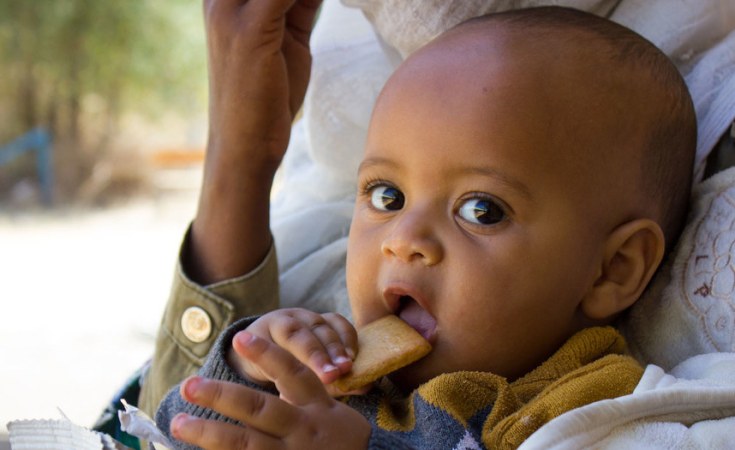
A seven-month-old baby displaced with his mother due to conflict in Tigray eats a high energy biscuit to boost his nutrition levels.

12 FEBRUARY 2021
UN News Service

Humanitarians are learning more about the dire situation of children in Ethiopia's Tigray region, where fighting continues between Government troops and regional forces of the Tigray People's Liberation Front (TPLF).

As more supplies and emergency personnel reach the area, "an incomplete but troubling picture" is emerging which reveals children are experiencing severe and ongoing harm, the UN Children's Fund (UNICEF) reported on Friday.

"The partial picture emerging of the impact the crisis in Tigray has had on children - and the systems and services they rely on - make clear that children are in acute need of protection and assistance", the agency said in a press release.

"Crucially, the humanitarian community still needs to get beyond major cities and towns into the rural areas, where most of the population live, in order to have a true picture of needs.

Separation and deep psychological stress

A UNICEF team accompanied by regional health officials travelled to the town of Shire, in Central Tigray, from 4-7 February, bringing six trucks of emergency supplies. This marked the first UN mission there since the conflict began in November.

Shire has a population of approximately 170,000, and now hosts at least 52,000 internally displaced people (IDPs). UNICEF and the International Committee of the Red Cross (ICRC) are trucking water to the town, where there was no drinking water as the water treatment plant is not functioning. The mobile network, Internet and banking services are still not working.

Many IDPs are sheltering in schools, none of which are operational, and conditions at displacement sites are dire.

"Many families were separated as they fled, and there were many unaccompanied or separated children among the IDPs", said UNICEF. "Many families reported deep psychosocial distress and said they did not feel it was safe to return home, speaking of a persistent and pervasive fear of present and future harm."

Grave threats for malnourished children

The displaced people said food is their most urgent need. An assessment conducted by UNICEF partners found prevalence of severe acute malnutrition, which is potentially life threatening, was above emergency levels set by the World Health Organization (WHO).

"The very real risk of disease outbreak, coupled with poor access to water, sanitation, hygiene and health services, rising food insecurity and inflation in food prices, poses grave threats for malnourished children", the agency warned.

UNICEF has dispatched some 655 metric tonnes of supplies to the area, including emergency health kits, therapeutic food and high energy biscuits, and personal protective equipment. Additional supplies are on the way.

Read the original article on UN News.
Nigeria: Customary and Religious Laws Are Impeding Progress Towards Women's Health in Nigeria


USAID in Africa/Flickr
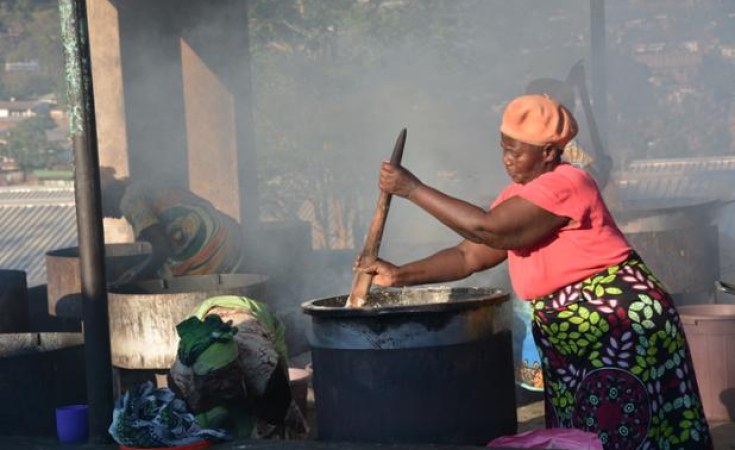
(file photo).

11 FEBRUARY 2021
The Conversation Africa (Johannesburg)

ANALYSIS
By Monique Baumont, Samantha Garbers and Terry Mcgovern

Numerous countries have committed themselves to promoting the sexual and reproductive health of women and girls by ratifying international human rights treaties. These include the Convention on the Elimination of Discrimination against Women and the Convention on the Rights of the Child.

Nigeria ratified the convention on women's rights in 1985 and the convention on child rights in 1991. But sexual and reproductive health among women and girls in Nigeria remains poor. The country has the second largest HIV epidemic in the world. And the women making up more than half of people living with HIV. It also has persistently high rates of maternal and perinatal mortality. In 2013, Nigeria accounted for about 14% of the global burden of maternal mortality. Nigeria has high rates of unsafe abortion (approximately 33 unsafe abortions per 1000 women of reproductive age). The country also has high levels of female genital cutting, and low levels of contraceptive use.

In multiple countries, customary and religious laws have been found to uphold practices that discriminate against women and undermine gender equality. Customary and religious laws have been linked to high rates of child marriage, decreased female autonomy, and limited access to justice for women and girls.

When girls marry very young, they often drop out of school and start a family early. In customary and religious marriages they may not be allowed to make their own decisions about contraception, healthcare and childbirth. And other people's decisions may put their health at risk.

Yet previous studies have not directly examined the relationship between customary and religious laws and a range of sexual and reproductive health outcomes.

We conducted a study to explore the issue. We found a clear relationship existed between these laws and outcomes. Nigeria's plural legal system appears to drive poor health outcomes. We suggest there is a need to harmonise customary and civil laws so as to promote access to health.

Analysing the relationship

In our paper, we examined indicators of family planning, maternal health, fertility, and HIV/AIDS. Since some states in Nigeria follow customary and religious laws, such as Sharia laws, while others do not, we compared the health indicators in relation to state laws.

We found that states with customary and religious laws had significantly worse sexual and reproductive health outcomes compared to states without such laws. The outcomes were worse in terms of getting antenatal care, use of contraception among married women, births delivered in a health facility, total fertility rate, and median age at first birth.

In 2013, 47.89% of women who gave birth in states with customary and religious laws, in the five years preceding the survey, received any antenatal care. This is in comparison to 85.44% of women in states without customary and religious laws.

Less than 4% of married women used any method of contraception in states with customary and religious laws, while 26.4% of married women did in other states.

In customary and religious law states, 14.5% of births were delivered in a facility. In other states, 62.1% of births were delivered in a facility.

The total fertility rate was 6.71 children per woman in customary and religious law states and 4.74 in other states.

The median age at first birth was 18.37 in customary and religious law states and 21.74 elsewhere.

Even when we accounted for the wealth of the states as a factor, the difference to sexual and reproductive health was still significant. For example, the 22 percentage point difference in contraceptive use between the types of states remained an estimated 16 percentage point difference after accounting for states' per capita gross domestic product.

Why plural legal systems may place women and girls at risk

Nigeria, along with more than half of the countries in Africa, has a plural legal system. In these systems, additional sources of law, based on local customs or religious texts and traditions, can undermine treaty obligations and national laws. They can also permit discriminatory cultural and religious practices to persist.

This makes it difficult to fully implement national and local laws that reflect international human rights standards.

In Nigeria, customary and religious laws directly conflict with international human rights commitments. In 2003, Nigeria adopted the Child Rights Act in compliance with the UN Convention on the Rights of the Child and established the age of marriage as 18 for both sexes. However, Nigeria runs a federal system of government where individual states must incorporate the act into their legislation in order to give it force. Some states have refused to adopt national legislation on this issue because of their adherence to customary and religious laws, which can set the age as young as nine years old or by the "age of puberty".

Way forward

The Convention on the Elimination of Discrimination against Women committee has expressed concern at contradictions and inconsistencies created by the application of Sharia law with regard to marriage. The contradictions lead to the continuing discrimination against women. Additionally, the Convention on the Rights of the Child Committee has directed Nigeria to review the compatibility of customary laws with that of the values of the Convention on the Rights of the Child, especially in regard to child marriage. But the response has been inadequate, especially in northern Nigeria where 11 states have failed to domesticate the Child Rights Act.

Nigeria, and other countries with plural legal systems, should encourage compliance with international standards on access to sexual and reproductive health. They can adopt a rights-based approach that explicitly links customary and religious laws that promote discrimination against women to development and social indicators. For example, attributing the 36 million Nigerian women and girls who do not have education or to broader economic impacts to child marriage. Nigeria should create incentives for the harmonisation of laws that protect and promote access to sexual and reproductive health, including child marriage, gender parity, and anti-discrimination laws.

Eka Williams, independent consultant, is a co-author of this study.

Terry McGovern, Chair, Heilbrunn Department of Population and Family Health, Columbia University Medical Center; Monique Baumont, Research & Policy Analyst, Columbia University, and Samantha Garbers, Associate Professor, Columbia University Medical Center


This article is republished from The Conversation Africa under a Creative Commons license. Read the original article.