David McAfee
June 6, 2026
RAW STORY
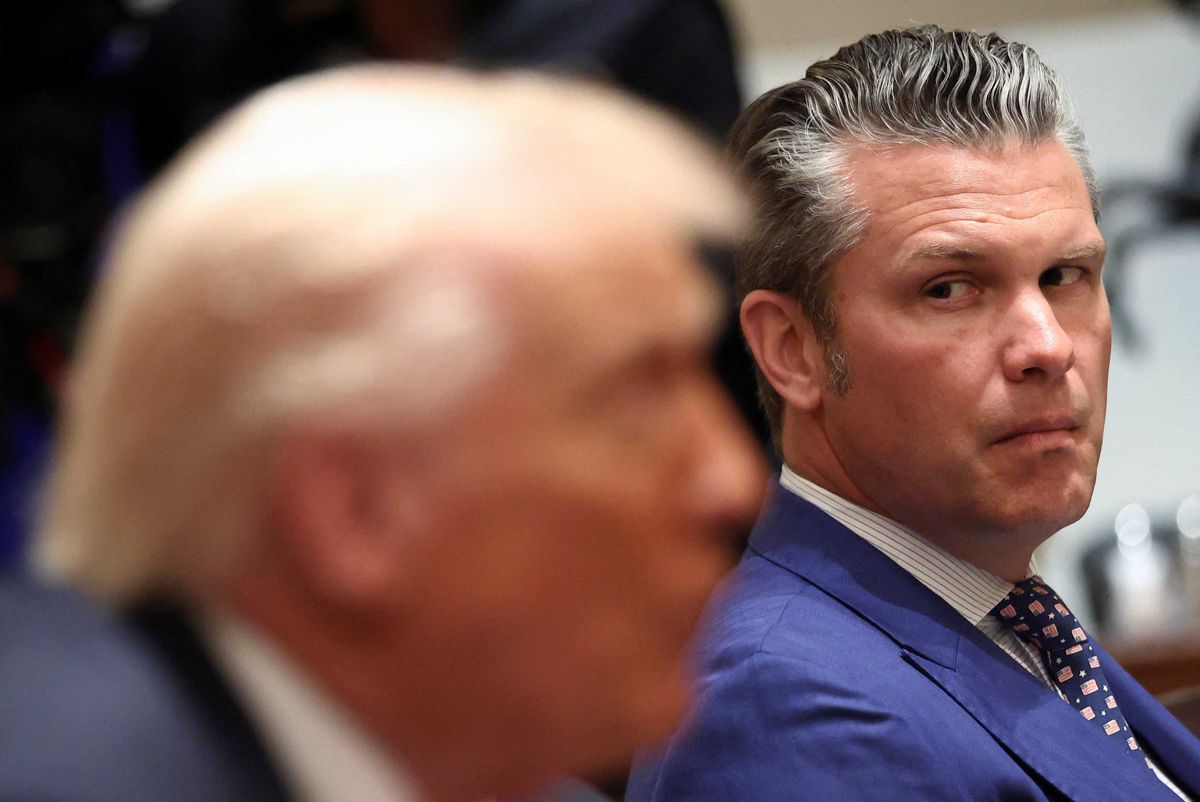
Defense Secretary Pete Hegseth attends a meeting between U.S. President Donald Trump and Australia's Prime Minister Anthony Albanese (not pictured) in the Cabinet Room at the White House, in Washington, D.C. on Oct. 20, 2025. REUTERS/Kevin Lamarque
Pete Hegseth's decision to strip the Church of Jesus Christ of Latter-day Saints of its Christian designation in the Pentagon's new religion classification system has ignited a rare cross-aisle pile-on, with Republican lawmakers, conservative commentators and Democratic senators lining up to call it a mistake.
As Raw Story reported, Sen. John Curtis (R-UT) moved quickly Saturday to condemn the change as "unacceptable," saying he was working to reverse it. He wasn't alone.
Rep. Celeste Maloy (R-UT) — a Utah Republican congresswoman — stopped short of criticizing Hegseth directly but made clear where she stood on the underlying question. "Members of the Church of Jesus Christ of Latter-day Saints are Christians," she wrote on X. "We worship Jesus Christ, strive to follow His teachings, and His name is even in the name of our Church. Just last year, President Trump himself recognized Latter-day Saints as Christians." She said she looked forward to "conversations that will ensure all service members receive the religious support and First Amendment protections they deserve."
Sen. Mike Lee (R-UT), whose handle is @BasedMikeLee, kept it simple: "Can anyone tell me why The Church of Jesus Christ of Latter-day Saints was left out of the list of Christian churches?"
The answer, based on the list published by Hegseth's office, is that the Pentagon placed LDS in its own standalone category — "Church of Jesus Christ of Latter Day Saints (CJ)" — separate from the two dozen denominations listed under the "Christian" umbrella.
Henry Olsen, a senior fellow at the Ethics and Public Policy Center and a prominent conservative commentator, said Hegseth shot himself in the foot: "Failing to characterize Mormons as Christians is a huge own goal by Hegseth."
The backlash wasn't limited to the right. Sen. Ruben Gallego (D-AZ) — an Arizona Democrat whose state has a significant LDS population — replied directly to Lee: "I don't know why but I am with you. This needs to be fixed ASAP."
Not everyone was displeased. Milo Yiannopoulos, the far-right provocateur who goes by @Nero on X, used the moment to attack the LDS church itself. "It's not a religion. It's certainly not Christian," he wrote. "LDS is referred to by academics as a 'new religious movement,' polite sociological jargon for cult." RedState writer Bonchie offered a more succinct assessment of the situation: "Hoo boy."
The classification overhaul was announced by Sean Parnell, Hegseth's assistant for public affairs, who framed the reduction from more than 200 categories to 31 as a streamlining effort to help "religious support personnel" provide "spiritual care to our warfighters." Whether it accomplishes that — or simply hands Hegseth's critics a gift — is now a matter of bipartisan consensus.
Defense Secretary Pete Hegseth attends a meeting between U.S. President Donald Trump and Australia's Prime Minister Anthony Albanese (not pictured) in the Cabinet Room at the White House, in Washington, D.C. on Oct. 20, 2025. REUTERS/Kevin Lamarque
Pete Hegseth's decision to strip the Church of Jesus Christ of Latter-day Saints of its Christian designation in the Pentagon's new religion classification system has ignited a rare cross-aisle pile-on, with Republican lawmakers, conservative commentators and Democratic senators lining up to call it a mistake.
As Raw Story reported, Sen. John Curtis (R-UT) moved quickly Saturday to condemn the change as "unacceptable," saying he was working to reverse it. He wasn't alone.
Rep. Celeste Maloy (R-UT) — a Utah Republican congresswoman — stopped short of criticizing Hegseth directly but made clear where she stood on the underlying question. "Members of the Church of Jesus Christ of Latter-day Saints are Christians," she wrote on X. "We worship Jesus Christ, strive to follow His teachings, and His name is even in the name of our Church. Just last year, President Trump himself recognized Latter-day Saints as Christians." She said she looked forward to "conversations that will ensure all service members receive the religious support and First Amendment protections they deserve."
Sen. Mike Lee (R-UT), whose handle is @BasedMikeLee, kept it simple: "Can anyone tell me why The Church of Jesus Christ of Latter-day Saints was left out of the list of Christian churches?"
The answer, based on the list published by Hegseth's office, is that the Pentagon placed LDS in its own standalone category — "Church of Jesus Christ of Latter Day Saints (CJ)" — separate from the two dozen denominations listed under the "Christian" umbrella.
Henry Olsen, a senior fellow at the Ethics and Public Policy Center and a prominent conservative commentator, said Hegseth shot himself in the foot: "Failing to characterize Mormons as Christians is a huge own goal by Hegseth."
The backlash wasn't limited to the right. Sen. Ruben Gallego (D-AZ) — an Arizona Democrat whose state has a significant LDS population — replied directly to Lee: "I don't know why but I am with you. This needs to be fixed ASAP."
Not everyone was displeased. Milo Yiannopoulos, the far-right provocateur who goes by @Nero on X, used the moment to attack the LDS church itself. "It's not a religion. It's certainly not Christian," he wrote. "LDS is referred to by academics as a 'new religious movement,' polite sociological jargon for cult." RedState writer Bonchie offered a more succinct assessment of the situation: "Hoo boy."
The classification overhaul was announced by Sean Parnell, Hegseth's assistant for public affairs, who framed the reduction from more than 200 categories to 31 as a streamlining effort to help "religious support personnel" provide "spiritual care to our warfighters." Whether it accomplishes that — or simply hands Hegseth's critics a gift — is now a matter of bipartisan consensus.
Hegseth hammered for his 'disrespectful' D-Day speech in Normandy: 'Shameless'
"Why did he construct an analogy in which he is on the side of the Nazis?"
David McAfee
June 7, 2026
RAW STORY
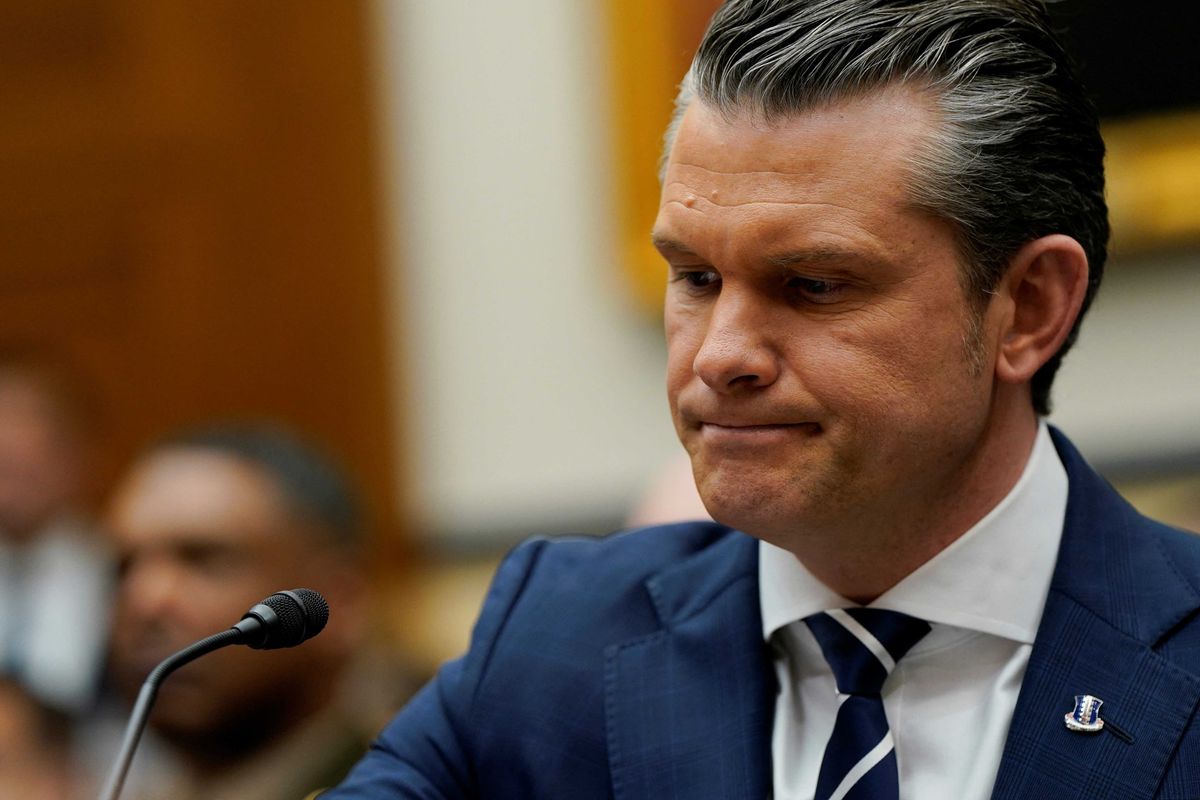
Defense Secretary Pete Hegseth attends a House Armed Services Committee hearing on the Department of Defense's FY27 budget request on Capitol Hill in Washington, D.C., on April 29, 2026. REUTERS/Elizabeth Frantz
Defense Secretary Pete Hegseth used the 82nd anniversary of D-Day to compare migrants crossing the Mediterranean to the Nazi invasion of Europe — and the backlash was immediate and bipartisan.
Speaking at the Normandy ceremony, Hegseth departed from solemn remembrance to deliver an anti-immigration political statement. "Sadly, today different European beaches are stormed by different dangerous ideologies," he said. "In Spain and Italy and Greece and Bulgaria, boats and men arrive. When will European capitals do something about that invasion? Or is it too late?"
Greg Bagwell, a retired British Air Marshal and former senior RAF commander, was among the first to respond. "The commemoration of the bravery, tragedy and importance of D-Day is not ever the place to try and score cheap political points. What an ignorant and disrespectful dumba--."
Tom Nichols, a national security expert and staff writer at The Atlantic, noted a glaring historical problem with Hegseth's framing — one that multiple people picked up on. "Making an analogy where the West is the defender of the beaches — you know, where the Nazis were — is not the smartest speechifying," Nichols wrote, "even for the man some inside the Pentagon refer to as 'Dumb McNamara.'" His post was reposted by former Republican congresswoman Barbara Comstock.
Reed Galen, a Republican strategist and co-founder of the Lincoln Project, was less clinical about it. "If you've been to the American Military Cemetery in Normandy, and you've looked out over those rows of crosses and stars of David, you'll know how odious this man is," he wrote. "Those men didn't die for this ideology or a------- like Pete Hegseth."
British attorney Jessica Simor pointed to Hegseth's "Deus Vult" tattoo — the 1095 Crusader rallying cry of Pope Urban II to expel Muslims from Jerusalem, which has since been adopted as a symbol by far-right extremists. "As a far-right Christian nationalist, likely of the kind that favoured the Final Solution, he should have been banned," she wrote.
Political commentator Anna Neumann put it plainly: "The heroes of Normandy deserve remembrance, gratitude and humility. Using D-Day commemorations as a platform for culture-war politics is shameless."
Occupy Democrats noted the core absurdity: Hegseth had compared migrant boats to the Allied invasion — placing Europe's governments in the rhetorical position of the forces that were trying to stop it.
Tim Kaine also weighed in, saying, "Apparently our nitwit Secretary of War(drobe) thinks a D-Day commemoration is an appropriate time to push his far right ideology in Europe."
Podcast host Matthew Yglesias chimed in with a question:
"Why did he construct an analogy in which he is on the side of the Nazis?"
 |
| WILDROOT OR BRYLCREME?! |
Defense Secretary Pete Hegseth attends a House Armed Services Committee hearing on the Department of Defense's FY27 budget request on Capitol Hill in Washington, D.C., on April 29, 2026. REUTERS/Elizabeth Frantz
Defense Secretary Pete Hegseth used the 82nd anniversary of D-Day to compare migrants crossing the Mediterranean to the Nazi invasion of Europe — and the backlash was immediate and bipartisan.
Speaking at the Normandy ceremony, Hegseth departed from solemn remembrance to deliver an anti-immigration political statement. "Sadly, today different European beaches are stormed by different dangerous ideologies," he said. "In Spain and Italy and Greece and Bulgaria, boats and men arrive. When will European capitals do something about that invasion? Or is it too late?"
Greg Bagwell, a retired British Air Marshal and former senior RAF commander, was among the first to respond. "The commemoration of the bravery, tragedy and importance of D-Day is not ever the place to try and score cheap political points. What an ignorant and disrespectful dumba--."
Tom Nichols, a national security expert and staff writer at The Atlantic, noted a glaring historical problem with Hegseth's framing — one that multiple people picked up on. "Making an analogy where the West is the defender of the beaches — you know, where the Nazis were — is not the smartest speechifying," Nichols wrote, "even for the man some inside the Pentagon refer to as 'Dumb McNamara.'" His post was reposted by former Republican congresswoman Barbara Comstock.
Reed Galen, a Republican strategist and co-founder of the Lincoln Project, was less clinical about it. "If you've been to the American Military Cemetery in Normandy, and you've looked out over those rows of crosses and stars of David, you'll know how odious this man is," he wrote. "Those men didn't die for this ideology or a------- like Pete Hegseth."
British attorney Jessica Simor pointed to Hegseth's "Deus Vult" tattoo — the 1095 Crusader rallying cry of Pope Urban II to expel Muslims from Jerusalem, which has since been adopted as a symbol by far-right extremists. "As a far-right Christian nationalist, likely of the kind that favoured the Final Solution, he should have been banned," she wrote.
Political commentator Anna Neumann put it plainly: "The heroes of Normandy deserve remembrance, gratitude and humility. Using D-Day commemorations as a platform for culture-war politics is shameless."
Occupy Democrats noted the core absurdity: Hegseth had compared migrant boats to the Allied invasion — placing Europe's governments in the rhetorical position of the forces that were trying to stop it.
Tim Kaine also weighed in, saying, "Apparently our nitwit Secretary of War(drobe) thinks a D-Day commemoration is an appropriate time to push his far right ideology in Europe."
Podcast host Matthew Yglesias chimed in with a question:
"Why did he construct an analogy in which he is on the side of the Nazis?"


No comments:
Post a Comment