Monday, January 20, 2025


HKU ecologists uncover significant ecological impact of hybrid grouper release through religious practices


The University of Hong KonG

HKU Ecologists Uncover Significant Ecological Impact of Hybrid Grouper Release through Religious Practices 

image: 

Released through the religious practice of mercy release, the Tiger Grouper-Giant Grouper hybrid (TGGG), also known as the Sabah grouper, now swims in Hong Kong waters, affecting the balance of marine ecosystems. Photo credit: Arthur Chung.

view more 

Credit: Photo credit: Arthur Chung.


Ecologists from the School of Biological Sciences (SBS) and the Swire Institute of Marine Science (SWIMS) at The University of Hong Kong (HKU) have identified significant ecological risks associated with the release of hybrid groupers into Hong Kong’s coastal waters, a practice often linked to religious ‘mercy release’ rituals.

Their study highlights how the Tiger Grouper-Giant Grouper hybrid (TGGG), also known as the Sabah grouper, disrupts local marine ecosystems by exploiting unique ecological niches and potentially becoming a dominant predator. This research, the first to use advanced DNA metabarcoding to analyse the diet of this hybrid species, underscores the urgent need for public education and conservation measures to mitigate unintended ecological impacts. The findings have been published in the journal Reviews in Fish Biology and Fisheries.  

Hybrid Groupers: A Popular Market Species with Hidden Ecological Threats
The TGGG is a hybrid species bred through aquaculture by crossing the Tiger Grouper (Epinephelus fuscoguttatus) with the Giant Grouper (Epinephelus lanceolatus). Valued for its large size and rapid growth, it is a common sight in Hong Kong’s fish markets. Its affordability and impressive size have also made it a popular choice for local mercy release practices, where animals are released into the wild as an act of spiritual merit. However, this seemingly benevolent act has significant ecological consequences.

To explore the potential ecological effects of releasing hybrid groupers into Hong Kong’s coastal waters, our research team utilised DNA metabarcoding to analyse the diet of TGGG. Becoming the first to apply this method to study the dietary habits of this hybrid species, the team extracted and sequenced DNA from the hybrid’s stomach contents, allowing them to identify its prey, even when the prey was fully digested or fragmented. This innovative approach provides a detailed and accurate picture of the hybrid’s dietary habits and its interactions with local marine ecosystems.

Innovative DNA Analysis Highlights the Threat
The study found that the TGGG is a formidable predator with a distinctive diet, feeding on various prey species not typically consumed by native species—including fish, crustaceans, and cephalopods. By exploiting broader ecological niches and gaps in the ecosystem where resources or habitats are underused, the TGGG disrupts local food webs and is highly likely to thrive and establish itself as a dominant predator.

‘Our findings show that the TGGG is not just another introduced species, it has the potential to significantly disrupt trophic dynamics and reshape coastal ecosystems,’ said Professor Celia SCHUNTER of HKU SBS and SWIMS, the study’s lead investigator.

The researchers warn that the rapid growth, large size, and absence of natural predators in Hong Kong’s waters make it an exceptionally competitive species. These traits, combined with the availability of vacant ecological niches, pose a serious threat to the balance of marine biodiversity in Hong Kong’s coastal ecosystems.

The study also draws attention to the role of mercy release practices in introducing non-native species like the TGGG into local waters. Dr Arthur CHUNG, the postdoctoral fellow of HKU SBS and SWIMS and co-author of the study, emphasised the importance of addressing these risks, ‘This study underscores the need for careful monitoring and management to mitigate the unintended impacts of human activities on biodiversity.’

The researchers stressed that public education and stricter conservation measures are essential to minimising the ecological damage caused by mercy release and other human activities. These efforts are critical for preserving the health of Hong Kong’s marine ecosystems.

About the journal paper: Chung, A., & Schunter, C. (2024). Distinct resource utilization by introduced man-made grouper hybrid: an overlooked anthropogenic impact from a longstanding religious practice. Reviews in Fish Biology and Fisherieshttps://doi.org/10.1007/s11160-024-09907-6

For media enquiries, please contact Ms Casey To, Assistant Manager (Communications) (tel: 3917 4948; email: caseyto@hku.hk / Ms Cindy Chan, Assistant Director of Communications of HKU Faculty of Science (tel: 3917 5286; email: cindycst@hku.hk).

Images download and captions: https://www.scifac.hku.hk/press

Guidance on animal-borne infections in the Canadian Arctic


THIS WILL APPLY TO ALL THE ARCTIC GEOGRAPHICALLY

Canadian Medical Association Journal


A new review on zoonotic infections — diseases transmitted by animals — in the Canadian Arctic provides timely guidance to clinicians as the region experiences heightened global interest as well as climate change, which threatens the region and increases risk of disease transmission. The review, published in CMAJ (Canadian Medical Association Journalhttps://www.cmaj.ca/lookup/doi/10.1503/cmaj.240541, provides guidance on how to identify and manage seven zoonotic infections in people.

“Indigenous Peoples continue to be caretakers of the Canadian Arctic; their cultural connection with the Arctic environment and ecosystem generates unique exposures to the zoonotic diseases discussed, as well as others not covered here,” writes Dr. Justin Penner, an infectious diseases physician at CHEO, Ottawa, Ontario, and Qikiqtani General Hospital, Iqaluit, Nunavut, with coauthors.

The Canadian Arctic includes three different bioclimates — subarctic, low arctic, and high arctic — over a vast geographic area with Inuit, Gwich’in and Athabaskan peoples representing the region’s Indigenous communities.

The authors urge clinicians with patients from the Arctic to apply a holistic perspective, respecting Inuit Qaujimajatuqangit, a term that describes Inuit Traditional Knowledge, combined with the One Health principle. One Health asserts that diseases in humans are influenced by the interaction between humans, nature, and the animal world.

“Cultural proximity and interaction with the Arctic ecosystem are important factors in understanding some of the under-recognized infectious diseases within the region. Clinicians’ respect and understanding of these customs can highlight infectious exposures, guide clinical care, and inform prevention programs,” the authors write.

Risk factors for Arctic zoonotic infections include diets of “country foods” — wild game, fish and sea mammals — that are consumed as part of a traditional healthy diet in many Arctic communities. Hunting, harvesting animals, and preparing animal skins as well as owning sled dogs are also risk factors for diseases acquired from animals.

Climate change in the Arctic is affecting the local ecosystem.

“Animal behaviour is changing, including migration patterns, largely as a result of diminishing sea ice, which limits hunting. These factors can affect parasite life cycles. Melting permafrost has an impact on how food is processed, making practices like fermentation and ice-cellar storage less reliable. Warmer temperatures also promote the spread of insect vectors into higher latitudes, which will further affect Arctic ecosystems and cause emergence of other infections in the region where populations are vulnerable,” the authors write.

The article includes several illustrations showing the interrelatedness of people and animals and disease transmission.

Disclaimer: AAAS 

Trump vows to declassify documents related to John F Kennedy, Martin Luther King Jr assassinations

‘As the 1st step toward restoring transparency and accountability to government, we will also reverse the over-classification of government documents,’ says US president-elect

Esra Tekin |20.01.2025 / TRT/AA


ISTANBUL

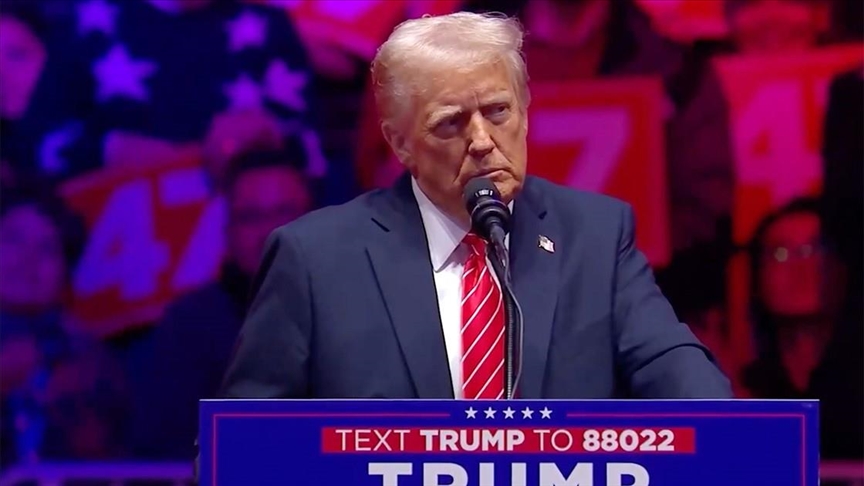
US President-elect Donald Trump promised Sunday that he would declassify documents related to the assassinations of former President John F. Kennedy and civil rights activist Dr. Martin Luther King Jr.

“As the first step toward restoring transparency and accountability to government, we will also reverse the over-classification of government documents,” Trump told his supporters at the Capital One Arena in Washington, D.C.

“And in the coming days, we are going to make public remaining records relating to the assassinations of President John F. Kenedy, his brother Robert Kennedy, as well as Dr. Martin Luther King Jr.,” he added.

Trump had previously also called for fully declassifying information related to JFK’s assassination, which happened in 1963.

In Sunday’s speech, he reiterated this commitment, stating that he would fulfill this promise once he took office.

Both Robert Kennedy and Martin Luther King Jr. were assassinated in 1968.

Trump will be formally sworn-in to office Monday just before noon and will shortly thereafter sign off on an onslaught of ready-to-go executive orders.
Elon Musk says 'Make Europe Great Again' as he continues his push into European politics

Lauren Edmonds,Katie Balevic
Sat, January 18, 2025 

Elon Musk says 'Make Europe Great Again' as he continues his push into European politics


Elon Musk wrote "Make Europe Great Again" in an X post on Saturday.


Musk has used X to share support for far-right political parties in Europe.


His remarks have drawn ire from political leaders, including German Chancellor Olaf Scholz.

Elon Musk continues to champion right-wing politics in Europe.

Musk shared an X post on Saturday that invoked President-elect Donald Trump's world-famous campaign slogan, "Make America Great Again."

"From MAGA to MEGA: Make Europe Great Again!" the tech billionaire wrote.

In a separate post, Musk said, "So many people in Europe lack hope for the future or think Europe is 'bad' in some way. Pervasive pessimism. This will lead to the end of Europe. Therefore, it must change."


Representatives for Musk did not respond to a request for comment from Business Insider.

Musk has previously promoted right-wing political parties and agendas in Europe, including in a December 2024 op-ed in a prominent German newspaper. The op-ed called the Alternative for Germany party — or AfD — the "last spark of hope for this country."

"The AfD advocates a controlled immigration policy that gives priority to integration and the preservation of German culture and security. This is not about xenophobia, but about ensuring that Germany does not lose its identity in the pursuit of globalization," Musk wrote. "A nation must preserve its core values and cultural heritage to remain strong and united."

That same month, Musk called German Chancellor Olaf Scholz an "incompetent fool" on X and suggested he should resign.

Musk owns a Tesla Gigafactory near Berlin, which has been the source of local tension. Last year, a clash between police and protestors, who said the factory's expansion would deplete local forests and water resources, broke out.

Thomas Zittel, a politics professor at Goethe University Frankfurt, told Business Insider that Musk's "motivation to comment on German party politics may be driven by his own experiences during the construction" of the factory. He added that there was "probably too much bureaucracy and regulation for his taste."

"After all, he thinks in terms of disruption," Zittel said.

Musk has also waded into UK politics. Earlier this month, he advocated on X for the release of Tommy Robinson, a far-right English agitator. Robinson, whose real name is Stephen Yaxley-Lennon, breached a court order not to repeat false claims about a refugee from Syria and was jailed last year. Robinson was sued for defamation over the claims.

Five days later, Musk shared a poll on X asking if America should "liberate the people of Britain from their tyrannical government."

Musk's comments have drawn criticism from political leaders across Europe.

Scholz responded to Musk's op-ed during an interview this month. "There are many people on social media who want to attract attention with strong slogans," he said. "The rule is: Don't feed the troll."

UK Prime Minister Keir Starmer also discussed Musk during a speech without naming him this month. "Those who are spreading lies and misinformation as far and as wide as possible are not interested in victims — they're interested in themselves," Starmer said.


Germany is gripped by election fever … but Trump is pulling the strings

Deborah Cole in Berlin
Sat 18 January 2025 
THE GUARDIAN

‘There he is again’ said Germany's biggest tabloid newspaper Bild, as US voters backed Donald Trump in November 2024.Photograph: Martin Meissner/AP


A Donald Trump-shaped shadow is looming over the campaign for Germany’s snap elections next month, with unprecedented US interference on behalf of the far-right Alternative für Deutschland and a startling degree of attention from the incoming US administration scrambling the political landscape.

In a country that puts a premium on stability, Trump’s second term is forcing all parties to revamp fundamental stances, with responses ranging from opportunistic fealty to still wan-looking resistance. The stakes for Berlin could hardly be higher.

“Trump’s rise and the turn towards authoritarianism and illiberalism in the US is a psychological challenge for a German elite that has always seen it as a democratic ally and model,” said historian Ned Richardson-Little of the Leibniz Centre for Contemporary History in Potsdam.

Veteran political observer Wolfgang Ischinger, a former German ambassador to Washington, has long compared US ties to an “umbilical cord”, with Germany the dependent infant.

Germany’s position as the EU’s top economic power and its outsize security dependence on Washington, given its lack of nuclear weapons, make Trump’s inauguration a day of reckoning.

“Trump’s electoral victory alone has already shifted the European political landscape,” political scientist Paula Diehl of Kiel university said, leading to an era of new “tensions and insecurities” for Germany.

The frontrunner for the 23 February election, conservative opposition leader Friedrich Merz, has made Germany’s ailing economy the central focus of his campaign. He has argued that his many years in business, most recently chairing the supervisory board of the German unit of BlackRock Asset Management, give him the skills to present Trump with a “deal” he can’t refuse, silencing his threats of punishing tariffs.

Merz told the DPA news agency this month that a new push for an EU free trade agreement with the US, talks on which were put on ice during Trump’s first term, could “prevent a dangerous spiral of tariffs”.

Germany had a record annual trade surplus with the US of just over €63bn in 2023, which is rising gradually – a perpetual thorn in Trump’s side. Despite heavy direct investment in the US by German companies, Trump repeatedly complained to former chancellor Angela Merkel about how few American cars Germans bought.

Germany’s particular vulnerability to a full-blown trade war is a major source of anxiety. A study last week by the Prognos Institute indicated that, if Trump came through on his musings to impose tariffs of 10-20% on all imports, it could jeopardise 300,000 jobs in Germany – twice the number employed nationwide by crisis-stricken car giant Volkswagen.

Amid the economic anxiety, the hard-right AfD is trailing just eight to 10 percentage points behind Merz’s Christian Democrats.

Even before Trump’s November victory, the party was cultivating close ties with Trump’s Maga (Make America Great Again) movement. Despite the virulent anti-Americanism of the nationalist party alongside its Kremlin affinity, the AfD has been eager to hitch its wagon to the world’s richest man after vital support Musk offered to Trump in the US campaign.

The Tesla tycoon, whose motives remain murky, has called the AfD Germany’s “last spark of hope”, adopting the hard right’s standard gloom-and-doom while probably unintentionally echoing a Nazi slogan from the early 1930s.

In a column for Welt am Sonntag, Musk worked to normalise the AfD, pointing to the fact that its chancellor candidate, Alice Weidel, is in a long-term relationship with a woman from Sri Lanka: “Does that sound like Hitler to you? Please!”

At a party congress last weekend, Weidel suggested that Germany under AfD leadership would be well placed as a kind of go-between for Trump and Putin, to Berlin’s benefit.

The AfD and Musk appear to agree on the goal of undermining EU regulations against online hate speech while sowing broader divisions within the bloc. Critics in Germany said their two-pronged assault on the truth, with Musk joining the masquerade that the AfD is a harmless libertarian party, could do more damage than any specific party endorsement.

“The German far right has always been happy to make common cause with American extremists, while also denouncing American influence on Germany,” said Richardson-Little.

But he noted that such alliances rarely stood the test of time, pointing to the falling out with the French far right over the AfD’s historical revisionism about the Nazi period. “Even if they generally share a hostility to migration, multilateralism and minority rights, there are always many areas of potential conflict between ultra-nationalists once they actually start trying to implement their agendas.”

Despite heavy-handed assistance from the US, the AfD has little chance of gaining power in Germany because the mainstream parties have refused to work with it to form a ruling majority. But its disruptive potential will be palpable if Merz, as predicted, wins the election – including forcing the formation of awkward alliances to block the far right. Merz’s most likely coalition partner is seen as the Social Democrats (SPD), assuming voters kick out the unpopular incumbent Olaf Scholz after less than one full term in office.

But Scholz, whose three-way coalition collapsed in acrimony in November, has proved fascinatingly steadfast in his belief that he can eke out a surprise victory in the end, as he did at the last election in 2021. Polls consistently point to voters pushing the SPD into third place for the first time in postwar history.

With his back to the wall, Scholz has seized on voter antipathy toward Trump and Musk, who has repeatedly called him a “fool” and mocked his name as “Schitz” on social media. Scholz’s advice to voters: “Don’t feed the troll”.

Last weekend, he warned his party faithful that unnamed forces in America were “working very specifically to destroy our democratic institutions in the west”.

Pundits in Berlin say that the erratic Trump could play into Scholz’s hands, allowing him to contrast his own “prudent” leadership with the president’s outbursts . Trump’s recent suggestion of acquiring Greenland from Denmark by economic or military coercion prompted Scholz to call an impromptu televised news conference to warn the world’s most powerful man to back off. “Borders must not be moved by force,” he said, while underscoring Germany’s increased defence spending in response to Russia’s full-blown Ukraine invasion.

But with Trump pledging to end the Ukraine war on still hazy terms while demanding even bigger boosts in European military spending, Germany’s next leader will have his work cut out to strengthen other alliances. Richardson-Little noted that “Germany is not influential enough to be able to stop Trump on its own. Only a united European response has the potential to act as a deterrence, should this (the Greenland initiative) prove to be more than a mere publicity stunt.”

The moderate conservative Merkel, who seemed to rile Trump like no other leader over her welcoming stance toward refugees, warned in 2018: “The times when we could fully rely on one another are more or less over, so I can only say that we Europeans must take our fate into our own hands.” But, under Biden, the absence of transatlantic crisis removed urgency from the drive towards more autonomy.

“As with energy dependency on Russia, the mainstream German parties are aware of the risks posed by a Trump government but reorienting the economy and security apparatus towards an alternative would be incredibly costly and disruptive,” Richardson-Little said, particularly in times of austerity.

There are signs of awakening, with French, German and Polish foreign ministers reportedly planning a joint “show of European unity” trip to Washington shortly after the inauguration. While none of the parties is ready to sever Ischinger’s transatlantic “umbilical cord”, it won’t be easy placing the relationship on a new footing, Diehl said. “At the end of the day, the US remains Germany’s most important partner.


UK Government ‘prepared for all scenarios’ says minister as Trump tariffs loom

City A.M. Reporter
Sun 19 January 2025 

President-elect Donald Trump (Photo by Scott Olson/Getty Images)

The Government “has prepared for all scenarios”, a Cabinet minister has said, as questions about President-elect Donald Trump’s tariffs loom large ahead of the inauguration on Monday.

Chief Secretary to the Treasury Darren Jones said “we need to see what the Trump administration do” but also that Mr Trump is “well known for wanting to do a good deal”.

Meanwhile, a shadow minister has urged the Government to resume talks over a free trade deal, given the concerns over tariffs.

President-elect Trump will be sworn in to a second term in office on Monday, following his election victory in November, and there have been concerns over what his pledged tariffs could mean for economies around the globe.

When asked about tariffs, Mr Jones told the Sunday with Laura Kuenssberg programme: “Well, look, as you would expect, the Government has prepared for all scenarios.

“They’re hypothetical at this stage, we need to see what the Trump administration do.”

Mr Jones also said the UK and US are “strongly intertwined”, regardless of who is in the White House.

Asked if he was worried about resentment between the two sides with the change of government approaching, he said: “No. Obviously the UK and the US has a long and deep-rooted relationship.

“We’ve got lots of great assets, lots of great capabilities. What we say in the world matters and our economy, our security, our defence, our values are strongly intertwined with the Americans irrespective of who their president is.”

Shadow foreign secretary Dame Priti Patel is in Washington to attend the inauguration on behalf of the Conservative Party.

Speaking to the BBC on Sunday morning, Ms Patel said it is “absolutely vital” that transatlantic trade deal talks get back under way.

She told the Sunday with Laura Kuenssberg programme: “I think this Government, the Labour Government … Keir Starmer and David Lammy, should resume talks over a free trade deal. We set the work in motion when we were last in government.

“When it comes to tariffs, that is not conducive at all to economic growth and prosperity, let alone economic security.

“Trade discussions must resume. I think that’s absolutely vital, because it’s only through having honest discussions about a trade arrangement, a trade agreement, will these issues come to the fore.”

Earlier this week, Sir Keir told the Financial Times that “tariffs aren’t in anybody’s interests” and that the UK ambition “is to have a deal of some sorts with the US, a trade deal. That’s where our focus is”.

The Government is expected to be represented at Monday’s ceremonies by outgoing UK ambassador to the US Dame Karen Pierce.

Former New Labour minister Lord Mandelson was announced as Dame Karen’s replacement in December and Mr Jones has told broadcasters he is confident the appointment will be approved by the Trump team, following reports there could be some uncertainty over Washington giving the decision the nod.

Asked on the BBC’s Sunday with Laura Kuenssberg programme whether he was “confident” that Donald Trump’s administration will accept the nomination, Mr Jones said: “Yeah. For the first time in, I think, maybe 50 years, this is the first time that a British Prime Minister has picked a politician to be the ambassador in DC.

“We have brilliant diplomats and Karen Pierce has done a brilliant job, but the reason the Prime Minister picked Peter Mandelson was because we want to do things differently.”

ReformUK leader Nigel Farage and former prime minister Liz Truss are among the other British political figures who have travelled to DC ahead of Monday’s ceremonies.

By Caitlin Doherty and Rhiannon James, PA

Sunday, January 19, 2025

Syrian IS member charged in Germany with war crimes against Yazidis


By: TII team
Date: January 15, 2025


German police. Photo: DPA

BERLIN,— German prosecutors have charged a Syrian man, identified as Osama A., with war crimes allegedly committed as a member of the Islamic State (IS) militant group during the Syrian civil war. The charges include membership in a foreign terrorist organization and complicity in genocide, particularly against the Yazidis.

Authorities allege that Osama A. joined IS by mid-2014, rising to a senior position within the group’s security forces in Deir Ezzor, a region in eastern Syria near the Iraqi border.

Prosecutors say he played a central role in IS operations to seize and repurpose properties, including buildings used to imprison and sexually exploit women and girls from the Yazidi minority.

The Yazidis, a Kurdish-speaking religious group, were singled out for persecution by IS, which deemed their faith heretical. The militants massacred thousands of Yazidi men and abducted women and children, subjecting many to slavery and sexual violence.

Prosecutors also accuse Osama A. of recruiting his 13-year-old nephew to join IS, who later participated in armed conflict in the northern city of Aleppo. Other seized properties, allegedly facilitated by Osama A., were converted into living quarters for IS fighters and used as bases for the group’s operations.

Germany, employing the principle of universal jurisdiction, has taken a leading role in prosecuting war crimes and atrocities committed during the Syrian civil war.

The doctrine allows for the prosecution of severe international crimes regardless of where they occurred. German authorities have previously vowed to hold accountable those fleeing from President Bashar al-Assad’s government or the IS caliphate.
Iraqi Yazidis near the Syrian border after Islamic State attacks on Sinjar, Iraq, 
August 10, 2014. Photo: Reuters

IS claimed vast territories across Syria and Iraq in 2014, declaring them part of a so-called caliphate. Though U.S.-backed Kurdish forces dismantled this proto-state in 2019, the group continues to operate in Syria’s expansive desert regions.

The Yazidis suffered one of IS’s most notorious atrocities in August 2014, when Islamist militants attacked the Sinjar district in Iraq. This occurred after the Kurdish Peshmerga forces, under the command of then-Kurdistan President Massoud Barzani’s KDP militia, withdrew from the area without resistance, leaving Yazidi civilians vulnerable to IS attacks.

Following this withdrawal, thousands of Yazidis were trapped on Mount Sinjar, where they faced extreme hunger and dehydration.

An estimated 3,000 Yazidis were killed over several days, and 6,800 others were abducted, according to official estimates. Women and girls were enslaved, raped, and trafficked across the region.

While thousands of Yazidis have been rescued in recent years, an estimated 3,000 remain missing. The international community continues to call for justice and the prosecution of those responsible for crimes against humanity.

(Credit: AFP | Agencies)

Copyright © 2025 The Insight International. All rights reserved

Related posts:
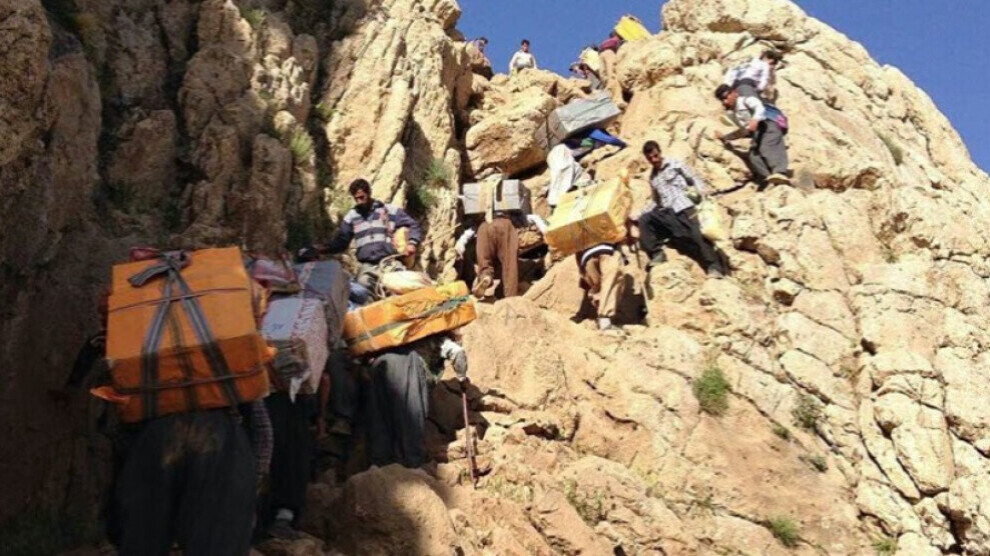
Iranian forces kill 51 Kurdish kolbars in 2024

The Kurdistan Human Rights Network said that the Iranian state killed 51 Kurdish kolbars and injured 246 in 2024.


ANF
NEWS DESK
Sunday, 19 January 2025, 10:34

The Kurdistan Human Rights Network published its 2024 report on Kurdish kolbars.

According to the report, 51 Kurdish kolbars were killed and 246 kolbars were injured by the Iranian regime in the border regions of Urmia, Bane, Serdasht, Pawe and Kermanshan throughout 2024.

The report also stated that a child under the age of 18 lost his life because of the cold weather.

The kolbars were killed or injured as a result of attacks by the Iranian regime, falling from cliffs, mine explosions and torture, said the report.

The Kurdistan Human Rights Organization, which also published a report recently, said that 63 Kurdish kolbars were killed and 233 were injured.


KURDISH WOMEN'S RESISTANCE
Syrian defence minister rejects Kurdish proposal for its own military bloc


Syria's new defense minister Murhaf Abu Qasra attends an interview with Reuters in Damascus

Sun, January 19, 2025
By Maya Gebeily

DAMASCUS (Reuters) - Syria's new defence minister said on Sunday it would not be right for U.S.-backed Kurdish fighters based in the country's northeast to retain their own bloc within the broader integrated Syrian armed forces.

Speaking to Reuters at the Defence Ministry in Damascus, Murhaf Abu Qasra said the leadership of the Kurdish fighters, known as the Syrian Democratic Forces (SDF), was procrastinating in its handling of the complex issue.

The SDF, which has carved out a semi-autonomous zone through 14 years of civil war, has been in talks with the new administration in Damascus led by former rebels who toppled President Bashar al-Assad on Dec. 8.

SDF commander Mazloum Abdi has said one of their central demands is a decentralised administration, saying in an interview with Saudi Arabia's Asharq News channel last week that the SDF was open to integrating with the Defence Ministry but as "a military bloc", and without dissolving.

Abu Qasra rejected that proposal on Sunday.

"We say that they would enter the Defence Ministry within the hierarchy of the Defence Ministry, and be distributed in a military way - we have no issue there," said Abu Qasra, who was appointed defence minister on Dec. 21.

"But for them to remain a military bloc within the Defence Ministry, such a bloc within a big institution is not right."

One of the minister's priorities since taking office has been integrating Syria's myriad anti-Assad factions into a unified command structure.

But doing so with the SDF has proved challenging. The U.S. considers the group a key ally against Islamic State militants, but neighbouring Turkey regards it as a national security threat.

Abu Qasra said he had met the SDF's leaders but accused them of "procrastinating" in talks over their integration, and said incorporating them in the Defence Ministry like other ex-rebel factions was "a right of the Syrian state".

Abu Qasra was appointed to the transitional government about two weeks after Hayat Tahrir al-Sham, the Islamist group to which he belongs, led the offensive that ousted Assad.

He said he hoped to finish the integration process, including appointing some senior military figures, by March 1, when the transitional government's time in power is set to end.

Asked how he responded to criticism that a transitional council should not make such appointments or carry out such sweeping changes of the military infrastructure, he said "security issues" had prompted the new state to prioritise the matter.

"We are in a race against time and every day makes a difference," he said.

The new administration was also criticised over its decision to give some foreigners, including Egyptians and Jordanians, ranks in the new military.

Abu Qasra acknowledged the decision had created a firestorm but said he was not aware of any requests to extradite any of the foreign fighters.

(Reporting by Maya Gebeily; Editing by Mark Heinrich and Helen Popper)


People from Afrin urge Turkey to “get out of our land” on the seventh anniversary of occupation

On the seventh anniversary of the Turkish occupation of Afrin, the Turkish state was urged to leave Afrin where grave crimes have been committed and 75 percent of the local population has been displaced.


ANF
TABQA
Sunday, 19 January 2025, 17:14

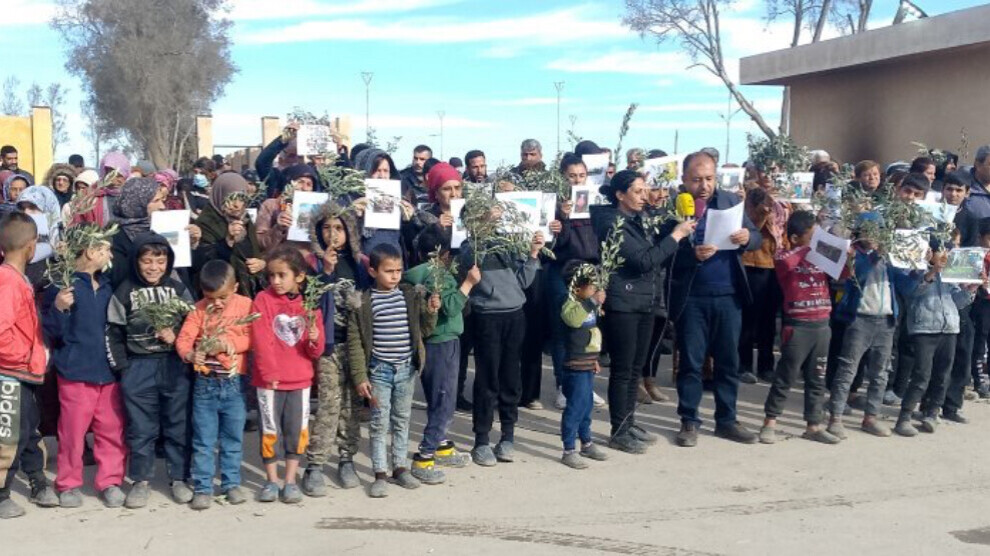
People from Afrin-Shehba Canton made a press statement in Tabqa city where they took shelter after the invasion of their lands by the Turkish state and allied mercenaries.

The press statement on the occasion of the 7th anniversary of Afrin’s occupation was read by ÃŽbrahîm Şêxo, a member of the Syria-Afrin Human Rights Organization, at the stadium where IDPs from Afrin and Shehba are sheltered.

Şêxo noted that since 2018, when the Turkish state and allied mercenaries occupied Afrin, 75 percent of the local population has been displaced. Since the first day, he added, the occupiers have committed numerous crimes in Afrin, including kidnapping, murder, theft, plunder, torture and kidnapping for ransom.

Îbrahîm Şêxo called on the United Nations and all international organizations to fulfill their duties and responsibilities to stop the crimes committed by the Turkish state and affiliated mercenaries in the occupied territories, and to put pressure on the invaders to leave Afrin and other occupied territories.

Şêxo further called for the perpetrators of crimes to be called to account and for the displaced people to be able to return home safely and honorably.

Îbrahîm Şêxo also called on the international community to put pressure on the occupiers so that the increasingly ongoing attacks on North-East Syria, mainly at the Tishrin Dam, Qereqozaq Bridge and Kobanê countryside, are halted.

Şêxo announced the balance sheet of the crimes committed by the occupiers in Afrin-Shehba Canton in 2024 as follows:

Kidnapping: 650 people, including 59 women and 10 children, were kidnapped.

Murder, assassination, suicide: 64 people, 7 of whom were women, were murdered, and 3 women committed suicide.

Torture and injury: 56 people, including 2 children, 8 women and 2 elderly people, were tortured and injured.

Tree cutting and burning: More than 10,360 trees were cut down, 597 hectares of land and more than 6,000 trees were burned down.

Demographic change (Ethnic cleansing): 15 settlements and a school building were built by the South Korean company JTS.

Property sales: The occupiers sold 16 properties they had confiscated.

Property confiscation: In the village of Kaxirê, the property of Kurdish residents was confiscated and forcibly handed over to Al-Amshad mercenaries as ransom.

Olive plunder: In all the villages of Afrin, olives and products were stolen by mercenary groups and those settled in the city. More than 3,500 olive trees in Qerzehîlê village and more than 700 olive trees in Qîbarê village were plundered.

Tribute collection: The most common practice imposed on the people of Afrin last year was extortion. In Meydana village of Rajo, 4,500 tins of olive oil were seized from 900 Kurdish families as tribute. In Gimrokê village of Mabata, 250 thousand dollars were taken from the people. In the villages in Shiye, 60 thousand dollars and in Qermitlik village, 70 thousand dollars were taken from the people by force.


KURDISTAN BY ANY OTHER NAME
Negotiators zero in on potential deal to disarm Syria's last battleground


Jonathan Spicer, Tuvan Gumrukcu and Maya Gebeily
Sun, January 19, 2025 

Member of Kurdish-led Syrian Democratic Forces (SDF) stands along a street in Hasakah

ISTANBUL/DAMASCUS (Reuters) - Negotiators are zeroing in on a potential deal to resolve one of the most explosive questions looming over Syria's future: the fate of Kurdish forces that the U.S. considers key allies against Islamic State but neighbouring Turkey regards as a national security threat.

Diplomatic and military negotiators from the United States, Turkey, Syria and the Kurdish-led Syrian Democratic Forces (SDF) are showing more flexibility and patience than their public statements suggest, a dozen sources told Reuters, including five directly involved in the intensive web of discussions in recent weeks.

This could set the stage for an accord in the coming months that would see some Kurdish fighters leave Syria's restive northeast and others brought under the authority of the new defense ministry, six of the sources said.

However, many thorny issues need to be resolved, they said. These include how to integrate the SDF alliance's well-armed and trained fighters into Syria's security framework and administer territory under their control, which includes key oil and wheat fields.

In an interview with Saudi Arabia's Asharq News channel on Tuesday, SDF commander Mazloum Abdi said the alliance's "basic demand" is for decentralised administration - a potential challenge to Syria's new leadership, which wants to bring all of the country back under the government's authority after ousting Bashar al-Assad last month.

Abdi indicated that the SDF has no intention of dissolving, saying it was open to linking with the defense ministry and operating according to its rules, but as "a military bloc".

Syria's new defense minister, Murhaf Abu Qasra, rejected that approach in an interview with Reuters on Sunday, saying the suggestion that the SDF remain one bloc "is not right."

The former rebels now in power in Damascus have said they want all armed groups to integrate into Syria's official forces, under a unified command. The SDF, when asked for comment, referred Reuters to its commander's interview.

How much autonomy Kurdish factions retain likely hinges on whether incoming U.S. president Donald Trump continues Washington's longtime support of its Kurdish allies, according to diplomats and officials on all sides.

Trump has not spoken publicly about his intentions, including his plans for some 2,000 U.S. troops stationed in Syria. A Trump representative did not comment.

Any deal also depends on whether Turkish President Tayyip Erdogan holds off on a threatened military offensive against the People's Protection Units (YPG), the Kurdish militia that spearheads the SDF alliance.

Ankara views them as an extension of the Kurdistan Workers Party (PKK), which has been waging an insurgency against the Turkish state since 1984 and is deemed a terrorist group by both Turkey and the U.S.

Turkish Foreign Minister Hakan Fidan said this month that Syria's new authorities "should be given an opportunity to ... end the occupation and terror the YPG created", but he did not say how long Ankara would wait for it to disarm before launching an incursion

A Turkish Foreign Ministry source said disarming armed groups and the departure of "foreign terrorist fighters" were essential for Syria's stability and territorial integrity, so the sooner this happens the better.

"We are voicing this expectation of ours in the strongest terms during our contacts with both the United States and the new administration in Damascus," the source said.

INTENSIVE TALKS

U.S. and Turkish officials have been holding "very intensive" discussions since rebels led by Hayat Tahrir al-Sham (HTS), a former al Qaeda affiliate, launched a lightning offensive from their northwestern stronghold that deposed Assad on Dec. 8, a senior U.S. diplomat told Reuters.

The two countries share a "common view of where things should end up", including a belief that all foreign fighters should exit Syrian territory, the diplomat said, noting Turkish negotiators "have a very high sense of urgency" to settle things.

However, the diplomat, who like some other sources requested anonymity to discuss sensitive negotiations, said the talks were "hugely complex" and would take time.

Parallel talks are taking place between the U.S. and both the SDF and HTS, Turkey and HTS, and the SDF and HTS, officials from all sides say.

Part of a stateless ethnic group straddling Iraq, Iran, Turkey, Armenia and Syria, Kurds had been among the few winners of the Syrian conflict, gaining control over Arab-majority areas as the U.S. partnered with them in the campaign against Islamic State. They now hold nearly a quarter of the country.

But Assad's fall has left Syrian Kurdish factions on the back foot, with Turkey-backed armed groups gaining ground in the northeast and the country's new rulers in Damascus friendly with Ankara.

Turkey, which provided direct support to some rebel groups against Assad, has emerged as one of the most influential power brokers in Syria since his fall. Like the U.S., it has designated HTS a terrorist group because of its al Qaeda past, but Ankara is believed to have significant sway over the group.

Officials on all sides worry that failure to reach a ceasefire and longer-term political accord in the northeast could destabilise Syria as it seeks to recover from a 13-year civil war that killed hundreds of thousands, displaced millions and drew in countries including Russia, Iran and Israel.

Dozens of people in northern Syria have been reported killed since December in clashes between the Kurdish-led SDF and Turkey's allies, and in cross-border Turkish airstrikes.

Failure to resolve the fate of Kurdish factions in Syria could also undermine nascent efforts to end the PKK's insurgency in Turkey.

The United Nations has warned of "dramatic consequences" for Syria and the region if a political solution is not found in the northeast.

POTENTIAL TRADE-OFFS

U.S. support for the SDF has been a source of tension with its NATO ally, Turkey.

Washington views the SDF as a key partner in countering Islamic State, which Secretary of State Antony Blinken has warned will try to use this period to re-establish capabilities in Syria. The SDF is still guarding tens of thousands of detainees linked to the group.

Erdogan said on Wednesday that Turkey has the power to "crush" all terrorists in Syria, including Islamic State and Kurdish militants.

Turkey wants the management of camps and prisons where Islamic State detainees are being held transferred to Syria's new rulers and has offered to help them. It has also demanded that the SDF expel all foreign fighters and senior PKK members from its territory and disarm the remaining members in a way it can verify.

Abdi, the SDF commander, has shown flexibility regarding some Turkish demands, telling Reuters last month that its foreign fighters, including PKK members, would leave Syria if Turkey agrees to a ceasefire.

The PKK said in a statement to Reuters on Thursday that it would agree to leave if the SDF maintains control of the northeast or a significant role in joint leadership.

Such assurances are unlikely to satisfy Ankara at a time when the SDF is "trying to stay alive and autonomous" in Syria, Omer Onhon, Turkey's last ambassador to Damascus, told Reuters.

In Ankara on Wednesday, Syrian Foreign Minister Asaad Hassan al-Shibani said the extensive U.S.-backed SDF presence was no longer justified, and the new administration would not allow Syrian land to be a source of threats to Turkey. Standing next to him, his Turkish counterpart, Fidan, said it was time to put anti-terror pledges into practice.

Abdi told Asharq News that he has met with Syria's de facto leader, Ahmed al-Sharaa, and the two sides agreed to set up a joint military committee to decide how the SDF would integrate with the defense ministry. He described the meeting with Sharaa, who heads HTS, as positive.

Abu Qasra, the defense minister, accused SDF leaders on Sunday of "procrastinating" on the issue, saying "consolidation of all areas under the new administration ... is a right of the Syrian state."

The new leadership believes that allowing SDF fighters to continue operating as a bloc would "risk destabilisation, including a coup", a ministry official told Reuters.

Abdi argued that a decentralised administration would not threaten Syria's unity, saying the SDF is not demanding the kind of federalism introduced in Iraq, where Kurds have their own regional government.

Some Syrian officials and diplomats say the SDF will likely need to relinquish control of significant territory and oil revenues, gained during the war, as part of any political settlement.

In return, Kurdish factions could be granted protections for their language and culture within a decentralised political structure, said Bassam al-Kuwatli, president of the small Syrian Liberal Party, which supports minority rights but is not involved in the talks.

A senior Syrian Kurdish source acknowledged that some such trade-offs would likely be needed but did not elaborate.

Abdi told Asharq News that the SDF was open to handing over responsibility for oil resources to the new administration, provided the wealth was distributed fairly to all provinces.

Washington has called for a "managed transition" of the SDF's role.

The U.S. diplomat said Assad's ouster opens the door for Washington to eventually consider withdrawing its troops from Syria, though much depends on whether trusted forces like its Kurdish allies remain engaged in efforts to counter any Islamic State resurgence.

Trump's return to the White House on Monday has raised hopes in Turkey of a favourable deal, given the rapport he established with Erdogan during his first term.

Trump has spoken approvingly about Erdogan's role in Syria, calling him a "very smart guy", and said Turkey would "hold the key" to what happens there.

"The Americans won't abandon (the SDF)," said Onhon, Turkey's former ambassador. "But the arrival of someone as unpredictable as Trump must worry them in a way too."

(Reporting by Jonathan Spicer in Istanbul, Tuvan Gumrukcu in Ankara and Maya Gebeily in Damascus; Addional reporting by Timour Azhari in Damascus, Suleiman Al-Khalidi in Amman, Tom Perry in Beirut, Ahmed Rasheed in Baghdad and Orhan Qereman in Qamishli, Syria; Editing by Alexandra Zavis)

US Central Command chief meets Syrian Kurdish SDF forces

By: TII team
Date: January 17, 2025

The head of U.S. Central Command (CENTCOM), General Michael Kurilla (right) shakes hands with General Mazloum Abdi, the commander-in-chief of the Kurdish-led Syrian Democratic Forces (SDF) in Syrian Kurdistan (Rojava). Photo: SDF/X

QAMISHLO,— The head of U.S. Central Command (CENTCOM), General Michael Kurilla, visited Syrian Kurdistan (Rojava) on Thursday, meeting with Kurdish-led Syrian Democratic Forces (SDF) and U.S. military commanders.

The visit aimed to assess ongoing efforts to prevent the resurgence of the Islamic State (IS) group and to address the evolving security landscape in the region, according to a statement from CENTCOM.

Kurilla toured the Al-Hol camp, a sprawling facility housing over 40,000 people, including families of suspected Islamic State fighters. Many of the residents are foreigners with ties to IS.

CENTCOM warned that without significant international efforts to repatriate, rehabilitate, and reintegrate these individuals, the camp risks becoming a breeding ground for future IS militants.

The SDF, backed by the United States, has been pivotal in combating IS since the group was driven from Syria in 2019. The forces manage multiple detention facilities holding approximately 9,000 IS detainees from over 50 countries.

Despite these efforts, tensions in the region remain high. Turkey views the SDF’s main component, the People’s Protection Units (YPG), as an extension of the Kurdistan Workers’ Party (PKK), which both Turkey and the U.S. designate as a “terrorist organization”. Turkey has threatened military action against the SDF, raising concerns about escalating conflict.

The SDF has rejected the allegations, denying any links to the PKK and accusing Turkey of using the claims as a pretext to expand its operations into Kurdish areas in northern Syria.

The Syrian Observatory for Human Rights reported that fighting between the SDF and Turkey-backed Islamist groups has killed 401 people, mostly combatants, since December 12. Clashes have centered around Manbij and a key dam in northern Syria.

Meanwhile, diplomatic talks continue. Earlier this month, the SDF met with Syria’s new authorities, expressing support for national unity. In a visit to Ankara, Syrian Foreign Minister Asaad al-Shaibani pledged to prevent Syrian territory from being used for threats against Turkey.

SDF commander General Mazloum Abdi also held discussions with Massoud Barzani, leader of Iraq’s Kurdistan Democratic Party, emphasizing the need for Kurdish unity and collaboration with Syria’s leadership, according to Barzani’s office.

The United States maintains a military presence in the Kurdish region in northern Syria as part of the international coalition against IS, underscoring the region’s strategic importance. However, CENTCOM reiterated that resolving the challenges posed by IS requires a coordinated global response.

(Credit: AFP)

Copyright © 2025 The Insight International. All rights reserved


Massoud Barzani sends envoy to Syria’s Kurdish region

By: TII team
Date: January 13, 2025

Hamid Darbandi (right), the heads the Rojava file at Massoud Barzani’s office, 2024. Photo: The Insight International/Barzani;s Press office/X

HEWLÊR-Erbil,— The leader of the Kurdistan Democratic Party (KDP) in Iraq’s Kurdistan region, Massoud Barzani, has sent a representative to Syria’s northern Kurdish region (Rojava) to meet with Mazloum Abdi, head of the Syrian Democratic Forces (SDF), and members of the Kurdish National Council (ENKS), sources said Monday.

The visit by Hamid Darbandi, who heads the Rojava file at Barzani’s office, comes amid ongoing political shifts in the region.

Darbandi, met with General Mazloum Abdi, the SDF’s commander-in-chief, in the northeastern Syrian city of Hasaka, according to a statement released by the SDF.

The statement noted that Darbandi delivered a message from Barzani emphasizing the urgency of Kurdish unity in addressing Syria’s ongoing challenges.

General Mazloum Abdi Kobani (right), commander-in-chief of the Kurdish-led Syrian Democratic Forces (SDF), alongside Massoud Barzani’s representative, Hamid Darbandi, in Hasaka, Syrian Kurdistan, Rojava, on January 13, 2025. Photo: SDF Press.

General Abdi expressed his appreciation for President Barzani’s message and support, emphasizing the need for collective efforts among all Kurdish parties to ensure stability and protect the interests of the Kurdish people, according to the statement.

The ENKS is a Kurdish opposition group in Syria that opposes the autonomous administration in the northeast, particularly the SDF and its political wing, the Democratic Union Party (PYD).

Established by Barzani and the KDP in October 2011, the ENKS receives backing from Turkey. However, the group has little influence or popular support on the ground in Syrian Kurdistan.

The ENKS and the SDF, despite their differences, have engaged in talks in recent months to explore ways to unify the Kurdish political scene in Syria. Last month, Abdi held a meeting with a delegation from the ENKS, with representatives from the US-led coalition also in attendance, to discuss how to move forward with Kurdish unity in the region.

The situation in Syria has undergone a dramatic shift, as Hay’at Tahrir al-Sham (HTS), a powerful Islamist rebel group, has successfully toppled the regime of Bashar al-Assad and assumed control of the country. HTS launched a major offensive in late November, culminating in the overthrow of Assad’s government and fundamentally altering the balance of power in Syria.

As the Syrian government’s control continues to erode, the PYNK, a coalition of 24 Kurdish parties aligned with the PYD, reportedly has expressed its willingness to resume talks with the ENKS.

The PYNK has a strong presence in the Democratic Autonomous Administration of North and East Syria (AANES) and is seeking to build a more cohesive Kurdish front.

Barzani, known for his close ties to the Turkish government, stated in March 2016 that any support for the Kurdish PYD party is equivalent to supporting the PKK, declaring, “They are exactly the same.”

The Barzani-led KDP has also maintained a blockade on the border between Iraqi Kurdistan and Rojava for nearly a decade, a move seen as an effort to appease Turkey’s concerns over Kurdish autonomy in Syria.

Copyright © 2025 The Insight International. All rights reserved


Mazlum Abdi on meeting with Barzani: We will support one another

SDF Commander-in-Chief Mazlum Abdi commented on his meeting with Masoud Barzani in Southern Kurdistan (Northern Iraq) on January 16, which highlighted the need to preserve Kurdish unity and stability in the regio
n.


ANF
NEWS DESK
Friday, 17 January 2025, 14:39

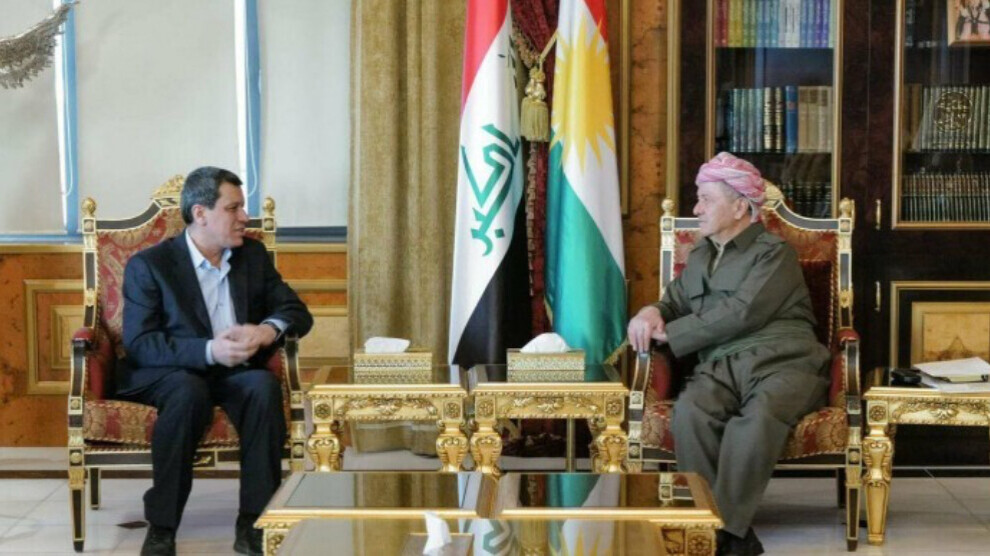
Mazlum Abdi, the Commander-in-Chief of the Syrian Democratic Forces (SDF), who has frequently called for the establishment of Kurdish national unity against Turkey's ongoing attacks on Northern and Eastern Syria, held meetings with various Kurdish groups in Hewlêr (Erbil) in the Kurdistan Region of Iraq. The SDF Commander General met with Masoud Barzani, the leader of the Kurdistan Democratic Party (KDP), on Thursday during his visit to Hewlêr.

In a statement on his social media account about his meeting with KDP President Massoud Barzani in Hewlêr, Mazlum Abdi said: “I was pleased to meet with President Massoud Barzani. We discussed the process of change in Syria.”

The SDF Commander-in-Chief stated: “We agreed that the Kurds in Syria must have a common stand and that dialogue with Damascus must protect the rights of the Kurdish people in a peaceful way. We also emphasized that it is the duty of all of us to preserve Kurdish unity and stability in the region. We will support one another.”