Tuesday, April 15, 2025

Deep-sea mining risks leads study to urge shift to circular solutions


Deep-sea mining (DSM) not only poses significant environmental, social, and economic risks that may have far-reaching implications for coastal communities and Small Island Developing States (SIDS)


University of British Columbia


Deep-sea mining (DSM) not only poses significant environmental, social, and economic risks that may have far-reaching implications for coastal communities and Small Island Developing States (SIDS), it is also likely to negatively affect the business community, including insurers and investors, says a new study by researchers from the University of British Columbia and the Dona Bertarelli Philanthropy.

DSM operations are expected to increase the negative impact on environmental indicators by up to 13 per cent, a change categorized as having “great” significance, relative to the “without” DSM scenario, the study published in PLOS One said, notably through increased coastal vulnerability, pollution, and biodiversity loss.

“The risks associated with DSM extend well beyond environmental degradation — they pose significant hazards for marine ecosystems, coastal and Indigenous communities, and for businesses, in particular, the insurance industry,” said Dr. Rashid Sumaila, professor at the University of British Columbia’s Institute for the Oceans and Fisheries (IOF) and School of Public Policy and Global Affairs (SPPGA), and senior author of the study.

“The potential liabilities inherent in DSM activities necessitate a reassessment of current insurance models,” said Dr. Sumaila. “Our analysis indicated a surge in risk factors will lead to a large increase in economic risks, with an estimated 11 per cent rise in threats, including contractual violations and loss and profitability risks, which could have major implications for insurers, as they directly impact risk assessment models and industry stability.”

Dr. Lubna Alam, research associate at The University of British Columbia’s Institute for the Oceans and Fisheries, and associate fellow at the Institute for Environment and Development of the National University of Malaysia, first author of the study pointed to recent climate change impacts already disrupting coastal insurance markets, including rising sea levels, more frequent hurricanes, and extreme weather events. “Think, for example, of places like Florida, in the United States, where its coastal environment is increasingly vulnerable to hurricanes, rising sea levels, and flooding. Insurance companies are pulling out of these high-risk areas. If the flood risk in your area surges up by 11 per cent, it would have a chilling effect on insurance companies.

“That’s exactly the kind of warning this 11 per cent increase signals for nature,” said Dr. Alam. “And nature, unfortunately, cannot renegotiate its premiums.”

“We have also seen the unexpected impact of oil and gas catastrophes on the marine environment. The Exxon Valdez leak in Alaska in 1989 had devastating impacts on the local environment, and resulted in Exxon spending billions of dollars on clean-up costs and punitive damages. The Deepwater Horizon well blowout in 2010 in the Gulf of Mexico is considered one of the largest environmental disasters in world history, and continues to impact the area. Again, the economic costs paid by BP have been in the billions, and the environmental and health costs continue to affect the area,” said Dr. Sumaila. “And these are environmental disasters that occurred in large developed countries. How would they impact SIDS, which are much closer to the areas that would see the DSM activities?”

For small island states, climate change is also producing severe financial and economic consequences, which have resulted in greater risk scores, driving coverage higher or making it unavailable. An independent researcher from India, Ms. K. Pradhoshini, a co-author of this study, commented that, “many island nations are already facing reduced participation from private insurers, forcing governments to provide state-backed insurance with limited coverage. In such a scenario, a high-risk score, as observed through our study, can negatively impact a country’s sovereign credit rating, increasing borrowing costs. This makes it harder for small island states to secure international funding for infrastructure and climate adaptation projects.”

“Fisheries and tourism - key economic sectors for many small island states - are also directly tied to environmental stability. If risk scores rise due to climate threats or ecosystem degradation from DSM, businesses may suffer losses, leading to employment instability, discouragement of investment, limitations on financial growth, and economic instability,” said Ms. Pradoshini.

Dr. Sumaila concurs, noting that currently projected plans for DSM are targeted for the Clarion-Clipperton Zone in the Pacific Ocean, one of the richest tuna fishing areas in the world. “Rising ocean temperatures are already causing tuna species to migrate eastward, reducing the catch within the exclusive economic zones (EEZs) of Pacific SIDS, with a potential economic loss of up to $140 million annually by 2050 for these nations. Deep-sea mining activities can create sediment plumes, introduce noise and light pollution, and discharge water with higher concentrations of metals, potentially disrupting tuna habitats and altering their migration patterns, which would have a devastating effect on the sustainability of tuna fisheries and the economic resilience of SIDS.”

The study advocates for a shift toward circular economy strategies, such as enhanced recycling and urban mining, which offer sustainable alternatives to DSM. These approaches could reduce the risk exposure that all parties currently face, by mitigating the environmental and economic uncertainties linked to deep-sea mining operations. “Recently, researchers claim to have developed a process to recover nearly all of the lithium from used electric vehicle batteries for recycling,” said Dr. Sumaila. “This is an example of other technologies that would help meet the growing demand for essential materials while dramatically reducing environmental and social risks.”

“Circular solutions can maximize our resource efficiency, extending the lifecycle of materials and promoting the reuse and recycling of existing stock of metals already in cirulation. This approach will not only decrease the demand for virgin minerals, but also minimizes waste, leading to a substantial reduction in the overall environmental footprint,” Dr. Sumaila concluded.

Deep-sea mining and its risks for social-ecological systems: Insights from simulation-based analyses, was published in PLOS ONE.

--

The UBC Institute for the Oceans and Fisheries (IOF)’s envisions a world where the ocean, freshwater systems, and those dependent on it - from microbes to plankton, fish to marine mammals, and human populations – are healthy and their resources are used sustainably and equitably. With climate change, overfishing, and habitat loss destabilizing vital ecosystems, a transformative shift is needed to avoid a global ecological and economic collapse. Our integrated research programs span the natural and social sciences, including aquatic ecology, economics, zoology, anthropology, sociology, oceanography, marine geochemistry, microbiology, resource management, and international maritime law. Through a combination of research and outreach, we seek to understand and address the overall impacts of our changing global environment on marine and freshwater ecosystems.

Dona Bertarelli Philanthropy is dedicated to fostering a healthy balance between people and nature, with a strong focus on environmental conservation. Through collaborations in advocacy, education, scientific research, technology, and community-driven initiatives, we aim to create lasting positive change that supports the well-being of all life on earth for a sustainable future.


Economic Impact: Cruise Boom Benefits Port Communities

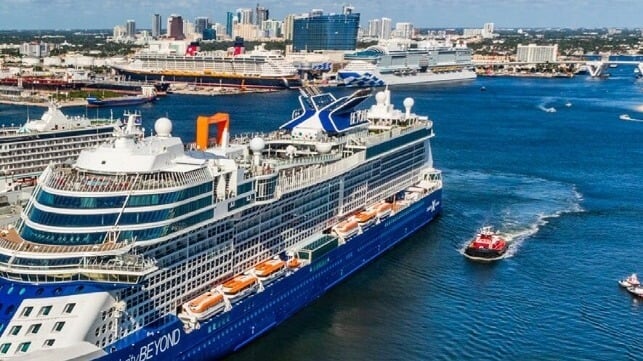
Port Everglades (iStock)

Published Apr 13, 2025 11:38 PM by Tom Peters


(Article originally published in Jan/Feb 2025 edition.)


At the eastern end of the Canadian province of Nova Scotia on the island of Cape Breton sits the small port of Sydney. By comparison to dozens of other North American ports, it's small potatoes. But what's important, and even vital, to Sydney is the revenue generated by its cruise industry.

In 2024, Sydney had a record year with 117 vessel calls, 13,297 passengers arriving on 20 cruise lines and millions of dollars in economic activity. Again, in comparison to the Miamis of the world, small potatoes. But big impact.

For both large and small ports, figures show the growing economic impact of cruising. Cruise Lines International Association's (CLIA) global economic impact study in 2023 "revealed the highest-ever global economic impact from cruise tourism and reaffirmed that 2023 surpassed 2019 as the benchmark year for cruise industry performance." The report also confirmed the cruise sector's role as a "robust job creator." According to the study, the global cruise industry in 2023 generated $168.6 billion in total economic impact, a nine percent increase over 2019.

And 2024 was even better, although final figures are not yet in.

Cruise lines are riding the wave of popularity with over 25 cruise ships on order in the next two years, according to a Travel Market Report. Capacities will range from 100 to 6,700 passengers. Cruise ports also continue to see the ever-growing importance of cruise and are investing in infrastructure with a continued focus on clean energy.

New Records

In 2025, the Port of Seattle will mark its first full season with all three of its cruise berths having shore power capability. The installation of shore power at the Bell Street Cruise Terminal at Pier 66, a $44 million investment, made Seattle capable of providing shore power simultaneously to three cruise ships, eliminating harmful emissions.

"With the installation of shore power at Pier 66, I'm proud to say Seattle is one of the only ports globally able to simultaneously power three cruise ships with low-carbon electricity," says Port of Seattle Commissioner Fred Felleman. Seattle has announced all homeported cruise ships will be required to plug into shore power by 2027, moving the original target date up by three years.

Seattle is also expecting new cruise lines.

"This summer we'll welcome the Queen Elizabeth from Cunard for a series of 10- and 11-day cruises from Pier 91," notes Brad Olsen, Senior Manager of Maritime Marketing. "In addition, existing homeport brands are deploying larger ships in 2025 including Norwegian's Joy and Oceania's Riviera. In 2026 we'll see MSC and Virgin Voyages sailing seven-day cruises from Pier 91."

Seattle posted 275 ship calls and 1.75 million passengers last year. The preliminary schedule for 2025 includes 299 vessel calls and an expected 1.9 million passengers. "We'll continue to set new records for cruise traffic," Olsen says.

Linda Springmann, the port's Director of Cruise & Maritime Marketing, adds, "Cruise passengers are a crucial part of our economy's success and contribute significantly to Seattle's vibrancy. Plus, SEA (Seattle-Tacoma International Airport) has strong international reach, which means cruise lines can attract international visitors who tend to stay longer, go further into our region and spend a little more."

Banner Year

It's expected to be a banner cruise year for the Port of Galveston as the port celebrates its 200th birthday.

"Galveston is the fourth most popular cruise port in North America and eighth busiest in the world because our cruise partners offer a great product and because of our location," exclaims Galveston Wharves' Port Director Rodger Rees. "As the only cruise homeport in Texas, we serve much of the central U.S. and beyond, offering more sailings to more destinations on newer and larger ships. We host Carnival, Disney, Norwegian, Princess and Royal Caribbean."

In 2024, a total of 3.4 million passengers moved through Galveston's three cruise terminals, a new record in the port's 25-year history as a homeport. More than 380 cruise ships called in 2024, another record. In 2025, the port forecasts more than 400 sailings and almost 3.6 million passengers. To meet the growing demand, the port will open a fourth cruise terminal in 2025. The $156 million terminal will be home to MSC and Norwegian cruise lines.

Similar to many ports, Galveston's cruise industry is a major economic engine for local and regional businesses. In 2023, cruise operations generated 4,547 jobs, $733 million in business revenues, $291 million in personal income and $25 million in state and local taxes.

The port's cruise operations are located adjacent to Galveston's historic downtown, filled with restaurants, shops, galleries and attractions. More than a third of cruise passengers stay in local lodging before or after their cruises to enjoy the many attractions.

Powering Up

Florida's Port Everglades, the third busiest cruise port in the world, has jumped on its own clean energy bandwagon and completed a study to add shore power to its eight cruise terminals.

The study by Moffatt & Nichol, a global infrastructure advisory firm working in cooperation with Florida Power & Light (FPL), Carnival Corporation, Disney Cruise Line and the Royal Caribbean Group, recommended a plan to deliver up to 16 megawatts of electricity simultaneously to each of the eight terminals. The projected cost, including estimates for FPL upgrades, is approximately $21.5 million per terminal for a total of $172 million. The project is expected to be financed through federal and state grants, contributions from FPL, the participating cruise lines and Broward County.

"In just the first few months of our fiscal year, we're seeing solid growth in our cruise business," says Joseph Morris, CEO & Port Director at Port Everglades. "There are cruise ships making more visits to our port and we anticipate a record 4.4 million cruise guests this year. We're also making progress on our Master/Vision Plan Update that will improve the experience for cruise lines and their guests, and we're powering forward with plans to renovate Terminal 29 for the Royal Caribbean Group."

Port Everglades, which hosts 10 cruise lines and a ferry, welcomed more than four million guests in FY 2024, a 39 percent increase over FY 2023 and a new record. There were 889 ship calls including 241 calls from Baleària's Caribbean ferry. Disney Cruise Line opened its second homeport at the beginning of FY 2024 and joined Celebrity, Princess and Royal Caribbean with year-round sailing itineraries.

Terminal Upgrades

On the California coast, at the Port of San Diego, shore power will be a sure thing.

The port's Board of Commissioners has approved a contract for an additional shore power outlet to enable vessels with starboard connections to access shore power at the B Street Cruise Terminal's south berth, adding further versatility to the existing system. The shore power addition will be accompanied by other infrastructure work.

Early this year the port is expecting to have the construction and design document completed for the B Street Cruise Terminal's upgrades with construction beginning as soon as late summer and completion sometime in 2026, states Josh Kellems, Principal Marketing & Public Relations Representative: "Terminal upgrades will include expanded security screening, new bathroom facilities, improved lighting and new flooring."

The port anticipates 265,000 passengers in 2024-25 and 324,000 in 2025-26.

In addition, notes Kellems, "We're excited to have a six-call increase with Holland America Line in the 2025-2026 season with the Nieuw Amsterdam being homeported in San Diego." The port will also welcome a new cruise ship in the 2025-2026 season, Virgin Voyages' Brilliant Lady.

We're #1

At PortMiami, the world's leading cruise port with over 8.2 million passengers, up 12 percent in FY 2023-24, it's only fitting it should be home to a massive new cruise facility. MSC Cruises will open the world's largest cruise terminal this year in Miami, able to accommodate two MSC ships simultaneously.

In addition to the new terminal, the port has launched a shore power program. In partnership with Miami-Dade County, Carnival Corporation, MSC Cruises, Norwegian Cruise Line Holdings, Royal Caribbean Group, Virgin Voyages and FPL, PortMiami is the first major cruise port on the U.S. eastern seaboard offering shore power capability at five cruise berths. In the coming year, 21 cruise ships will be outfitted for shore power and will connect in Miami. The seaport will have more than 350 vessel calls plugging into its shore power system.

"We're committed to being a sustainable global gateway," says Hydi Webb, PortMiami Director & CEO. "We thank our mayor, county commissioners and port partners for their continued support of our resilience initiatives."

Ports columnist TOM PETERS writes from Halifax, Nova Scotia.

The opinions expressed herein are the author's and not necessarily those of The Maritime Executive.


Report: Aponte Family May Buy Most of CK Hutchison's Terminals for $23B

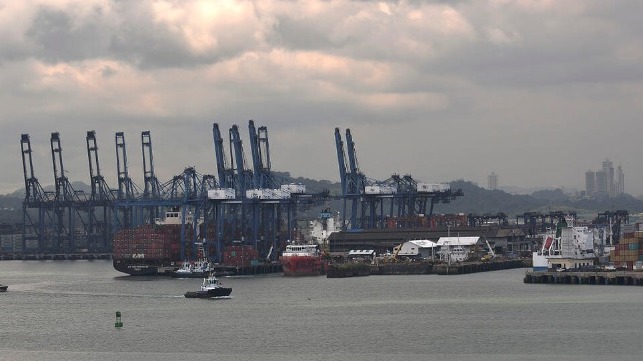
CK Hutchison's container terminal in Balboa, Panama

Published Apr 14, 2025 2:10 PM by The Maritime Executive


The Aponte family-owned ports operator Terminal Investment Limited (TIL) is in the running to take over the vast majority of CK Hutchison's global container terminal portfolio after a deal led by BlackRock hit snags in Beijing. According to the South China Morning Post and Bloomberg, the restructured proposal would see BlackRock keep a 51 percent stake in Hutchison's two terminals in Panama - the sites of greatest interest to the U.S. government - while TIL would take over all 41 other sites around the world. 

If completed, the transaction would cost TIL about $23 billion, including $19 billion in cash, a source close to the agreement told SCMP on Monday.

The accuracy of the reports could not be verified, and may reflect a negotiation in flux. In an interview with Italy's ShipNews conducted Friday or Saturday, while MSC World America was at Ocean Cay, Aponte family top executive Diego Aponte laid out a much different deal: a three-way global split that would see ownership shared 70% for MSC, 20% for Blackrock, and 10% for CK Hutchison. It was unclear whether this version was still current as of Monday, as it contradicts other reporting. 

Whichever structure prevails, it would be among the biggest business deals in shipping in decades, so long as it can pass muster with authorities in China.

State-linked media outlets in Hong Kong have publicly slammed CK Hutchison for its initial attempt to sell the full portfolio to BlackRock, asserting that a mega-deal with an American company would be unpatriotic and would undermine Chinese security interests. According to Bloomberg, Beijing has retaliated by threatening to withhold government business and domestic regulatory approvals from CH Hutchison's family owners, who also have extensive business interests in mainland China.  

BlackRock's bid has heavy diplomatic support from the White House, and President Donald Trump has repeatedly threatened to "take back" the entire Panama Canal in order to counter alleged Chinese influence on the waterway. Following these maximalist threats, U.S. Secretary of Defense Pete Hegseth recently suggested that the U.S. has secured a more modest concession from Panama: local cooperation on reducing China's footprint.

Despite apparent progress on the diplomatic front, Blackrock's attempt to buy the Panamanian terminals has run into a local hurdle. Panama's comptroller general alleges that CK Hutchison's most recent lease renewal was never fully approved, and that the Panamanian government has been underpaid by hundreds of million dollars in fees. (CK Hutchison's Panama subsidiary denies any wrongdoing.) If substantiated, the investigation has the potential to slow down BlackRock's portion of the deal.

By splitting off the other 41 terminals in the Hutchison portfolio and selling them to TIL, the revised deal would allow Hutchison to complete the majority of its ports divestment without waiting for a Panamanian review - so long as Chinese authorities approve of TIL as a buyer. That might not happen, according to local experts. 

"Beijing doesn’t have to read the news before knowing who Hutchison is selling the assets to," Lau Siu-kai of the pro-government Chinese Association of Hong Kong and Macau Studies told SCMP. "Whether it is Italy or any other Western country taking control of the ports, Beijing still opposes the deal because these countries are vulnerable to pressure from the US." 

Speaking with ShipNews, Diego Aponte appeared confident that the transaction would eventually go through. "I am calm. There are discussions underway, but I believe that in a short time everything will be clarified with the various parties involved. Including the Chinese. To mutual satisfaction," he said. 


European Developers Propose a New Offshore Wind Deal

Offshore wind farm
iStock

Published Apr 11, 2025 11:56 PM by The Maritime Executive


With the European wind sector facing competitiveness and security challenges, wind developers in the region have issued European governments a new call to action to protect the lifeline of the industry.

With EU targeting wind to contribute 35% of its electricity by 2035, countries across the region are making strides in expanding renewable energy capacity, especially in the offshore wind sector. But developers are concerned that the build-out has slowed in the past few years with the offshore sector facing increased risk and uncertainty. Some of the factors contributing to this include cost inflation, declining commercial viability and lower investor confidence.

To reverse the downward trend, developers at this year’s WindEurope summit want EU governments to auction at least 100GW worth of Contracts for Difference (CfDs) over ten years. Through the auction, the governments should guarantee fixed price and indexed contracts to create bankable projects.

In addition, wind farm developers want governments to plan the commissioning deadlines of the 100GW evenly, with 10GW annually from 2031-2040. This will help create market predictability, while ensuring there is sufficient time for investments. These measures - backed by power purchase agreements - will help the European offshore wind industry achieve 15GW installations annually by the 2030s.

“Wind energy is already driving industrial growth and energy independence across Europe, we just need to scale up. This calls for increasing viable demand for wind energy, and strengthening wind’s market environment,” said Henrik Andersen, WindEurope Chairman.

One of the notable challenges identified for competitiveness is the high electricity price in some European countries. In its report released this week, WindEurope said that the high electricity prices are driven by taxes and levies, slowing renewables-based electrification and undermining use in the industrial sector.

“Electricity is overburdened with taxes and charges compared with gas. In Spain for instance, electricity charges for households are 19 times higher than gas charges,” reveals the report.


Brazil's Offshore Oil Sector is Fueling China

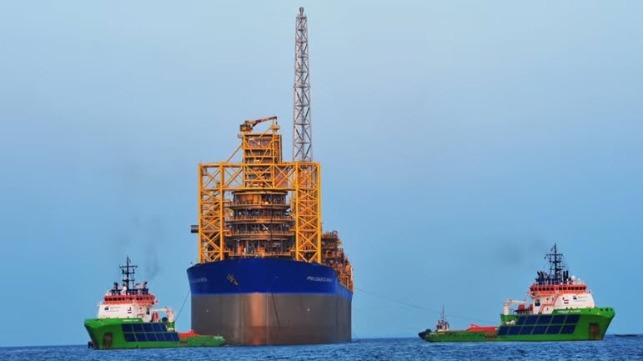
Petrobras FPSO
File image courtesy Petrobras

Published Apr 13, 2025 11:13 PM by Dialogue Earth


Last year, oil overtook soy as Brazil’s main export for the first time since 2012. According to trade data published by the government, foreign oil sales totalled almost USD 45 billion in 2024, passing soy’s USD 43 billion. The value of Brazil’s crude oil exports has more than doubled in the past five years, and has close to quadrupled in the past decade.

China is driving this demand. According to Brazilian government data, China received 44% of Brazil’s crude oil exports in 2024, followed by the US (13%) and Spain (11%). In the past decade, the value exported to the Chinese market has also grown by almost five times.

In tonnes, China’s relevance remains significant, though less pronounced. In 2024, it purchased 44% of the oil exported by Brazil. But although China tripled its demand for Brazilian oil over the past decade, its consumption is similar to that of five years ago.

According to experts, this trend could become more pronounced in the short term, due to US President Donald Trump’s initiation of a trade war with China. The Asian country retaliated in February by imposing a 10% tariff on oil from the US – the source of 2% of its oil imports in 2024 – and may likely increasingly turn to providers such as Brazil.

Brazil’s growing oil exports are casting a shadow on national climate ambitions, as well as several environmental and clean energy cooperation agreements it has penned with China. Furthermore, Brazil is preparing to host November’s COP30 climate summit in the Amazonian city of Belém; in March, President Luiz Inácio Lula da Silva said the country “is at the forefront of a global ethical assessment to raise climate ambition”. But in recent weeks, the government has also been increasingly pushing for oil exploration in Brazil’s ecologically sensitive Foz do Amazonas, the mouth of the Amazon river.

This insistence on fossil fuels is raising scepticism around Brazil’s green promises.

‘Brazil is reliable for China’

China imports more crude oil than any other country. According to the International Energy Agency, this demand has grown over recent decades mainly due to China’s massive investments in industry and infrastructure, as well as its population growth and economic development. Russia and Saudi Arabia provided the bulk of China’s crude oil imports in 2023; Brazil ranked sixth.

“Brazil is a reliable country for China,” says Tulio Cariello, director of content and research at the Brazil-China Business Council (CEBC). “It’s a major producer, and has a lot of research, development and stability. The country enjoys a privileged geopolitical situation, as it is far from disputed regions.”

According to Brazilian government trade data, China has also exponentially increased its imports of refined fuel from Brazil: the amount spent climbed from USD 88 million to USD 609 million between 2023 and 2024. Dialogue Earth consulted Igor Celeste, a market intelligence manager at the Brazilian Trade and Investment Promotion Agency (ApexBrasil): “Although it’s a more incipient product on the Chinese import list, we believe – given the dynamics of growth – that there may be more opportunities or demand in the future.”

André Leão, a researcher at the Institute for Strategic Studies on Oil, Natural Gas and Biofuels (Ineep) in Rio de Janeiro, says the intensification of the rivalry between the US and China after Donald Trump’s victory could prompt Brazil to further expand its exports to China.

“From a political point of view, Brazil is also likely to exhibit a tendency to distance itself from the US, although [Brazilian] diplomacy is adopting a cautious stance. This creates an opportunity to strengthen relations with China,” explains Leão.

China is a major consumer of oil and coal and maintains a predominantly fossil fuel-based energy mix. However, China is also rapidly advancing in its transition to cleaner energy sources: national CO2 emissions are expected to peak later this year. Sinopec, the largest Chinese oil refiner, estimates that refining will peak in 2027 as domestic consumption of diesel and petrol falls.

Despite these circumstances, analysts expect Brazil’s oil exports to the Chinese market to continue growing. Cariello says Brazil’s supply will remain crucial to China, and while reducing their dependence on this market is something that “companies in the sector are aware of”, it will only occur “in the distant future”.

Financing the energy transition

Brazil finds itself holding contradictory roles as both an exporter of growing volumes of oil and a leader on climate action. According to analysts, Brazil can reconcile these positions by maintaining its defence of “common but differentiated capacities and responsibilities”. This principle, enshrined under the United Nations’ climate convention, holds that developing countries must reduce their greenhouse gas emissions, but without assuming the same targets as developed countries.

“One of the ways to reconcile this is to argue that the resources needed to make the transition come from oil exploration itself,” adds Leão.

In 2024, the Energy Research Company (EPE), which supports Brazil’s energy planning, published a study highlighting the oil industry’s strategic role in energy security and investment. The institution argues that oil sustains Brazil’s economic development and its citizens’ quality-of-life standards. It also argues that oil will continue to meet demand amid global uncertainties around the pace of fossil fuels’ decline, and preserve jobs while the workforce adapts.

“Even in the most ambitious energy-transition scenarios, we haven’t reached zero oil consumption,” says Heloísa Borges Esteves, EPE’s director of oil, gas and biofuels studies. “The oil and gas industry needs to collaborate with the transition, financing the technologies we need.”

Researchers consulted by Dialogue Earth say they recognise the country’s dependence on oil, especially in the transport sector. But they criticise the government’s lack of mechanisms linking oil revenues to investments in clean sources, or to monitor such allocations.

Dialogue Earth spoke to Shigueo Watanabe Jr, a researcher and physicist specialising in climate change at Climainfo, a São Paulo-based non-profit dedicated to climate change news and research. “It’s impossible to say, ‘This item here is from royalties that the federal government earns from selling oil, and this money is being used for wind energy or public transport,’” he points out. “Without designating where the money is going, and without metrics that allow us to check whether this plan is being implemented, this story of financing the energy transition is a fantasy.”

Oil until when?

Tensions over oil exploration in Brazil have intensified in recent weeks, especially in relation to Foz do Amazonas. The project is causing divisions even within the government itself.

The oil firm Petrobras is seeking to move forward with studies to assess the viability of exploring the area. The state-owned company argues that Foz do Amazonas is crucial to keeping the country’s oil reserves stable. However, the government’s environmental agency, Ibama, recommends rejecting the project’s environmental licence. It cites potential harm to mangroves and sensitive Amazonian reefs, as well as to coastal populations.

President Lula has come out emphatically in favour of this exploration. Faced with the possibility of Ibama’s third rejection of the project, Lula says the agency “seems to be against the government”. Brasília is now reportedly considering replacing Ibama’s management.

Amid this impasse, some observers are highlighting the lack of concrete proposals to reduce Brazil’s fossil fuel dependence. Watanabe Jr says the country will continue to exploit oil unless there is “a revolution – which is unlikely”. But he adds that the government “needs to have a plan to stop burning oil at some point, as soon as possible”.

Currently, the EPE has an energy expansion plan up to 2050 that does not include clear carbon-neutrality scenarios. The government’s Climate Plan, conceived as a pathway for climate change mitigation through to 2035, has been in preparation since 2023. Its first part is due for publication this year. Until then, says Watanabe Jr, Brazil still does not have a clear plan to reduce its dependence on oil, whether for domestic consumption or export.

“Brazil today extracts more or less three million barrels of oil a day. We consume between one million and two million, and that million that’s left over, we export,” explains Watanabe Jr. “They export to make money; they get some royalties. But do you need to export all that oil? Probably not. It’s a hyper-contradiction to say, ‘let’s take care of the climate’, and at the same time increase emissions in order to have money.”

André Duchiade is a Brazilian journalist and translator based in Rio de Janeiro. He has worked for O Globo and Época and his work has been published in several national and international media, including The Scientific American, Sumaúma, The Intercept Brasil and Agência Pública.

This article appears courtesy of Dialogue Earth and may be found in its original form here

The opinions expressed herein are the author's and not necessarily those of The Maritime Executive


Brazil’s Ag Sector Plans for Export Boom as China Pivots Away from U.S.

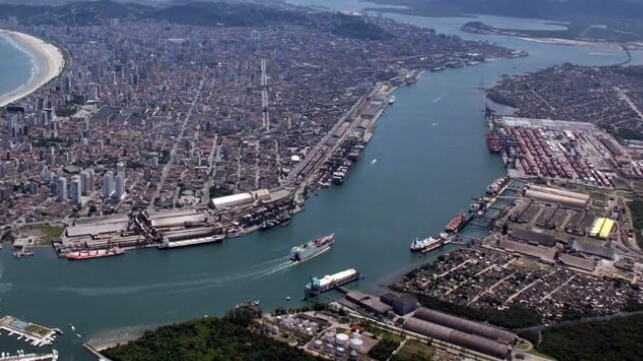
The busy port of Santos, Brazil is a top export hub for China-bound soybeans (file image)
The busy port of Santos, Brazil is a top export hub for China-bound soybeans (Agencia CNT / CC BY 2.0)

Published Apr 11, 2025 8:04 PM by The Maritime Executive


The re-ordering of global trade, escalated by the astronomical tariffs between the U.S and China, has left some countries with significant export advantages. Brazil is already showing signs as an early winner, with its port sector reporting increased demand. A strong preference for the Brazilian soybean has started to appear in China, historically a large-scale buyer of American soy.

According to Reuters, China is expected to receive about 3 million tons of U.S soybeans in April-May, which its state stockpiler Sinograin purchased earlier this year. However, due to China’s new 125 percent tariffs on American goods, the shipment is likely to attract higher duties and possibly sell at a discount due to cheap competition from beans from Brazil.

“The pressure of the soy crushing margins on Chinese industries will likely change the country’s import dynamics. As these margins come under negative pressure, China tends to slow down the pace of imports and rely on domestic stockpiles- as seen in the previous trade war in 2018,” said the Brazilian National Association of Cereal Exporters (Anec) in its monthly report this week.

Anec predicts a potential export boom for the Brazilian soy this year of up to 110 million tons, representing a historic record for Brazil. In the first quarter of 2025, Brazil has already recorded shipments of about 27 million tons, a four percent increase compared to last year. Currently, China accounts for 77 percent of Brazilian soy exports.

The uptick in export volumes is also visible in the port sector data, with Brazilian ports moving 12.4 million tons of containers in February- the highest volume ever recorded, according to the National Agency for Waterway Transportation (Antaq). This figure represents a 9.26 percent increase compared to the same period in 2024. Of the total, around 70 percent (8.6 million tons) was from long-haul shipping, while the remaining 30 percent (3.7 million tons) was from coastal shipping (cabotage). Some of the major commodities behind the increase include corn, bauxite and fertilizers. Other shipments which rose by a significant measure include poultry products. Brazil’s exports of fresh and processed poultry reached 476,000 tons in March, up 19 percent from a year earlier, according to the Brazilian Animal Protein Association (ABPA).

In anticipating higher export volumes, some ports are already investing in additional capacity as well as diversifying operations. Porto do Acu, located in the state of Rio de Janeiro and Brazil’s top oil export port, has said that the tariff-induced distortions in global trade has given the port an incentive to expand facilities for agricultural and mineral commodities.

“When threats started, demand started to rise. We are in a really good position here,” João Braz, the port’s logistics director told Bloomberg.

Brazil’s agricultural shipments are also a factor in China’s interests in the Panama Canal. Chinese economist Li Xunlei has called for improving government ties in the Central American country in order to ensure strategic access to the waterway for China’s food shipments; 90 percent of the Brazil-to-China soy trade passes through the canal, he said in a recent paper.

Top image: Port of Santos (Agencia CNT / CC BY 2.0)


COSCO Extends Strategic Cooperation

MAN Energy Solutions
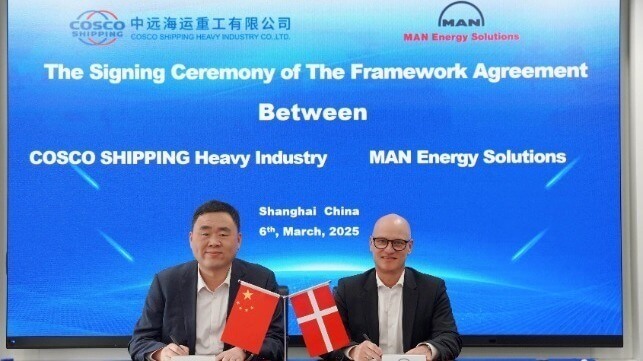
Left to right) Guo Zhiqiang – Deputy General Manager, CHI Commercial Headquarters and Michael Petersen – Senior Vice President, Head of PrimeServ Denmark, MAN Energy Solutions – pictured during the signing of the framework agreement.

Published Apr 13, 2025 10:35 PM by The Maritime Executive


[By: MAN Energy Solutions]

At a recent ceremony in China, MAN Energy Solutions signed a framework agreement with COSCO Shipping Heavy Industry Co., Ltd. (CHI) regarding their future cooperation on decarbonisation retrofit projects.

Michael Petersen – Senior Vice President, Head of PrimeServ Denmark – signed the agreement on behalf of MAN Energy Solutions, with Guo Zhiqiang – Deputy General Manager, CHI Commercial Headquarters – doing so for CHI.

Guo Zhiqiang said: “I am pleased to announce that CHI and MAN Energy Solutions, having served shared clients in their respective domains, are now forging a closer collaboration in vessel decarbonisation. Starting today, our integrated one-stop solutions will inject fresh impetus into the green transition of the global maritime industry.”

Petersen said: “This frame agreement facilitates MAN Energy Solutions’ partnership with CHI, one of the largest repair-yard groups in the world. The agreement means that we can join forces on many future projects to ensure the decarbonisation of the existing commercial fleet worldwide. Today, there are some 4,500 vessels globally with the potential to benefit from changing their current bunker fuel to more environmentally-friendly options. We look forward to working with CHI to deliver new decarbonisation solutions to the maritime industry.”

The new framework agreement provides for the retrofitting of existing ships to operation on new alternative fuels like methane, methanol and ammonia – all fuels that can be produced in a sustainable way through power-to-X processes. MAN Energy Solutions will provide advanced engine-retrofit technology and digital energy-efficiency solutions, while CHI will leverage its rich EPC (Engineering, Procurement, and Construction) experience in large-scale ship modification projects.

With five ship-repair yards, CHI has the capacity to repair and modify approximately 1,500 ships annually. This collaboration will integrate MAN PrimeServ’s cutting-edge, dual-fuel engine technology with CHI's repair and modification capabilities to decarbonise the merchant fleet globally.

MAN Energy Solutions views the new agreement as a natural development stemming from the companies’ strong relationship. In this respect, MAN Energy Solutions and CHI are already working together on two major projects for two world-leading container-ship owners.

The products and services herein described in this press release are not endorsed by The Maritime Executive.


A Tenacious Judge Resumes the 2020 Beirut Port Blast Investigation

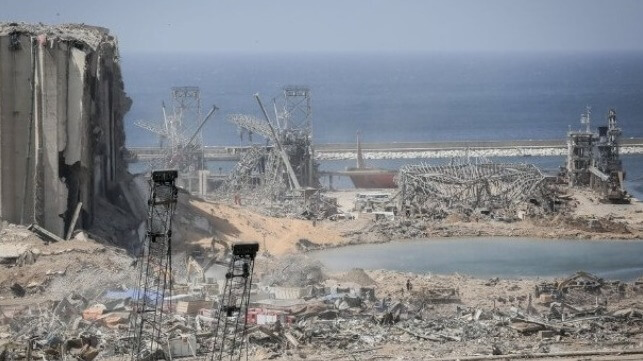
Beirut blast
Port of Beirute after the blast, 2020 (Mehr News / CC BY 4.0)

Published Apr 11, 2025 1:47 PM by The Maritime Executive


On April 11, Lebanese Judge Tarek Bitar resumed his investigation into the 2020 explosion in Beirut Port with the subpoenaed testimony of two former senior state officials implicated in the affair, Maj Gen Abbas Ibrahim (ex-Director General of General Security) and Maj Gen Tony Saliba (ex-Director General State Security).

The explosion in the port’s quayside Warehouse 12 on August 4, 2020 killed 218, injured thousands and devastated a wide area of central Beirut. The blast was heard in Syria and 125 miles away in Cyprus.

Judge Tarik was appointed to his role in 2021. His predecessor had named a number of ministers and senior officials as suspects in the inquiry, who then had managed to remove him. The same indicted ministers and senior officials, working with a President and Prime Minister and others aligned with the Hezbollah, Amal and Free Patriotic Movement, used court cases and noncooperation to shut down Judge Tariq’s enquiry. But with a new President and Prime Minister, both dedicated to supporting the independence of state institutions, the Judge has resumed his work - notwithstanding numerous death threats and warnings of ‘chaos’ from Hezbollah-aligned senior Shi’a cleric Mufti Ahmad Kabalan. The new Prime Minister, Nawaf Salam, was (until his recent appointment) President of the International Court of Justice in The Hague.

In Lebanon’s highly divided and contested political landscape, the course of such inquiries never runs smooth. It took 11 years for the international tribunal investigating the assassination of Prime Minister Rafic Hariri in 2005 to issue its verdict – ineffectively, and from the safety of The Hague.

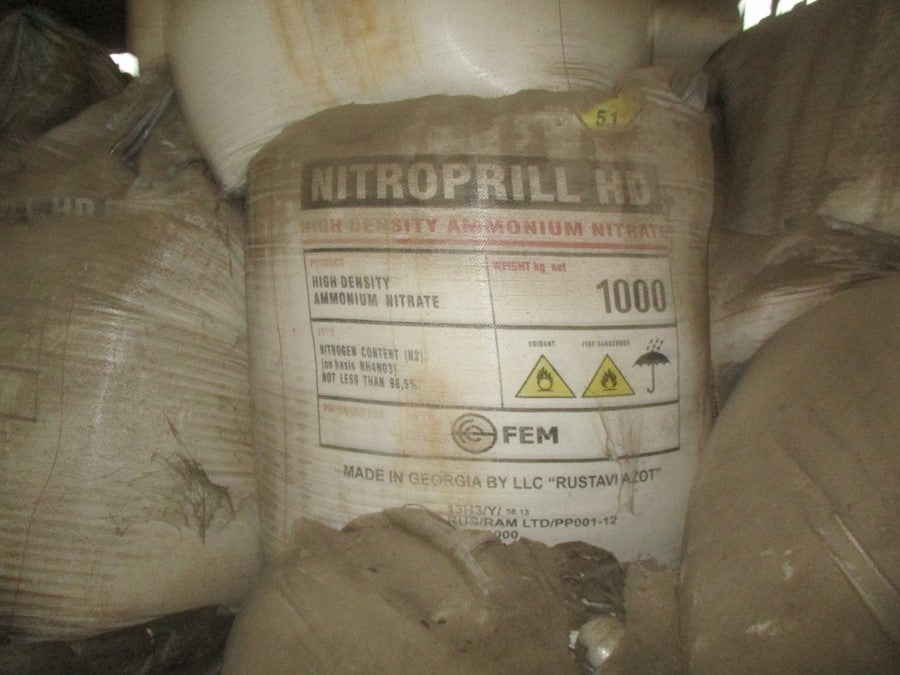
Multiple conspiracy theories and suggestions of Israeli involvement were circulated in the aftermath of the explosion, most designed to put investigators off the scent and to protect the guilty. The cause of the explosion is clear. 2,750 tons of explosives-grade ammonium nitrate were offloaded from the impounded MV Rhosus, which had been declared unseaworthy and detained while enroute from Georgia to Mozambique.

The high density ammonium nitrate was stored in Warehouse 12, the location where customs-confiscated goods were normally impounded. On its own, ammonium nitrate is relatively inert, and even the blasting grade found in the warehouse becomes an explosive only when it is mixed with fuel oil or other more volatile explosives. Nonetheless, ammonium nitrate on its own is a potentially volatile substance, and has caused countless deadly explosions over the last century. It is normally subject to dangerous goods safeguards.

On August 4, 2020, the ambient temperature - reinforced by storage in an unventilated warehouse - would have been at or near the annual peak for Beirut. The ammonium nitrate was being stored alongside a consignment of customs-confiscated fireworks. Apparently, a repair team was conducting welding repairs to the doors of Warehouse 12. A fire crew – Platoon 5 from the Beirut Fire Brigade – was called out to deal with a fire in the warehouse created by the welding activity, and before all perished in the subsequent two explosions, they reported they were dealing with a fire in the confiscated fireworks. There was an initial explosion in the fireworks at 1807 hours, before the catastrophic explosion occurred some 30 seconds later. The conditions and the sequence of events, plus the reporting of those at the scene before they subsequently were killed, make it absolutely clear that the initial firework fire provided sufficient shock, heat and detonating effect to ignite the ammonium nitrate - which because of the storage conditions was already unstable.

Speculation that the explosion was the secondary effect of an Israeli attack on a nearby Hezbollah arms store was an attractive hypothesis to many. Video footage from multiple cameras showed no missile tracks, only seagulls flying above the seat of the explosion. The pattern of attacks in both Lebanon and Syria in preceding years suggested that any Israeli attack would need to be accompanied by an imminent and direct threat to Israeli safety and security, which was never evident in this instance.

Whilst it became clear early on that the explosion had not been initiated by an external attack, many questions remain unanswered.

FBI analysis suggested that only 552 tons exploded on 4 August, less than a fifth of 2750 tons of ammonium nitrate originally consigned to the warehouse. ‘Shrinkage’ in dockside warehouses worldwide is common, but who might have benefitted from this 2000 ton seepage in stocks, beyond any customs officers paid to turn a blind eye? Agricultural fertilizer merchants would have been interested in using the material. But also at this time, the Syrian government was in the throes of civil war, and its capacity domestically to produce ammonium nitrate for use in the manufacture of explosives for barrel bombs fell from nearly 90,000 tons in 2004 to 16,000 tons in 2013, when demand was increasing. A cheap supply from Warehouse 12 may have been a more attractive alternative to circumventing sanctions and ramping up domestic production.

The value of the slowly degrading ammonium nitrate in Warehouse 12 may have been the reason why it stayed put, despite some Port officials demanding that the material should be moved for safety reasons. Customs officials sent six chaser letters to the courts which had ordered the seizure of the ammonium nitrate. None of these follow-ups resulted in any action. This suggested a conspiracy between those pilfering the ammonium nitrate, and officials using their positions to facilitate this, whether for political purpose or for financial gain.

Judge Tarik’s list of suspects is focused on officials who may have facilitated pilfering, rather than on the black market pilferers themselves. The dangers posed by the increasingly unstable ammonium nitrate appear to have been correctly identified by the responsible Port safety officials; neither their competence, nor that of the brave firemen from Platoon 5 from the Beirut Fire Brigade, is being pursued as a line of investigation.

The course of Judge Tarik’s inquiry still has some way to run. The fall of the Assad regime may help by freeing up some information sources in Syria. But whilst Hezbollah’s influence within the machinery of the state in Lebanon is much reduced, the militant group still has some bite in its capacity to disrupt proceedings.

Wafiq Safa (left, Mehr / CC BY 4.0), Hezbollah’s Head of Security and a prominent organizer of anti-Judge Tariq protests in 2020-21, remains an influential figure within the Port of Beirut. Thus in the rebuilding of the authority of the Lebanese state, it is morale-inspiring that the inquiry has not been offshored to the safety of the Hague. Convictions flowing from the inquiry will do much to create confidence in the government - and to give the relatives of the 218 killed some closure. Best of all, Judge Tarik remains in his post and pursuing the case.