Sunday, March 22, 2026

Attacked Russian tanker drifting toward Libya: Italian authorities


By AFP
March 20, 2026


A series of explosions rocked the Arctic Metagaz on March 3 - Copyright Newsbook Malta/AFP Miguela XUEREB

A Russian tanker that was badly damaged in an attack in the Mediterranean last week is drifting without crew towards the Libyan coast, Italy’s civil protection service said on Friday.

Russia has accused Ukraine of trying to blow up the Arctic Metagaz, which was carrying a consignment of liquified natural gas (LNG) from Russia to Egypt when it was hit on March 3.

Italian officials said there was no sign that the fuel used to power the tanker had leaked, but they were unable to comment on the fate of the gas consignment.

The ship, whose 30 crew abandoned it, faced US and European Union sanctions as a suspected part of Russia’s “shadow fleet” of vessels carrying Russian oil and gas in contravention of international sanctions.

Ukraine has not commented on the case but Italian authorities are among Mediterranean nations nervously watching the ship’s movements. Salvage experts have been waiting in Malta.

Russia has said vessel was carrying about 700 tonnes of fuel as well its gas consignment when it was hit. Libya’s port authority has said the ship was carrying 62,000 tonnes of LNG intended for Egypt.

“At this stage, we have no information that the fuel has started to disperse,” the civil protection service’s press chief, Pierfrancesco Demilito, told a news conference.

He said the tanker was currently in international waters but in Libya’s search and rescue zone about 53 nautical miles north of Tripoli and heading south.

According to the official, it was not possible to say how much gas was on the tanker but he said it was “potentially dangerous” because of the risk of an explosion.

The ship, though still afloat, “is severely damaged and even towing it is a complex operation”, Demilito said.

“It has a large lateral breach and is not a very stable vessel at the moment, even if it is not showing any imminent signs of sinking.”

Images taken by AFP on Sunday showed the tanker much further north from the location given by the Demilito. Some parts had been blackened and seriously damaged by explosions and fire. There were two holes on each side.

Blackened, wrecked Russian tanker nears Malta


By AFP
March 15, 2026


This aerial photo taken on March 15, 2026 shows the wreck of Russian liquified natural gas (LNG) carrier Arctic Metagaz, which is adrift near Malta - Copyright AFP Atta KENARE

A liquified natural gas (LNG) carrier Russia claims was attacked by Ukraine in the Mediterranean is blackened by fire with two large holes in the hull, AFP footage showed Sunday.

The 277-metre-long Arctic Metagaz has been drifting without a crew since a series of explosions scuppered the vessel off Libya on March 3.

On Sunday lunchtime, it was 50 nautical miles southwest of Malta.

AFP footage taken from a plane showed it listing onto one side, parts of it blackened and seriously damaged by fire, with two holes either side in the middle of the hull.

Russia accused Ukraine of a drone attack on the ship, which had been sanctioned by the United States and the European Union for being one of Moscow’s so-called “shadow fleet”.

The fleet is made up of ageing tankers that carry Russia’s oil and gas around the world, skirting Western restrictions.

Russia said that all 30 crew members had been rescued. Ukraine, which Moscow invaded in February 2022, has not commented.

Authorities in Malta and Italy have been monitoring the passage of the wreck, amid pollution fears.

Rome has said the ship was carrying “significant quantities of gas, heavy oil, and diesel fuel”.

Libya’s port authority said the ship had been carrying roughly 62,000 metric tonnes of LNG intended for Egypt.

Environmental group WWF this week said it was also carrying 900 tonnes of diesel fuel, and warned this could cause huge damage if it spilled into the sea.

“A potential spill could cause fires, cryogenic clouds lethal to marine life, and widespread and long-lasting pollution of water and the atmosphere,” WWF Italy warned in a statement.

“The affected area is of exceptional ecological value, with fragile deep-sea ecosystems and some of the highest biodiversity in the Mediterranean basin.”

The Libyan port authority said the ship was hit by “sudden explosions followed by a massive fire, which ultimately led to its complete sinking” north of the port of Sirte.

However, Malta’s transport authority last week said the wreck was still afloat, drifting without a crew between Malta and the Italian island of Lampedusa.

Italian Prime Minister Giorgia Meloni met with her defence, foreign, energy, maritime and civil protection ministers on Friday to discuss the situation.

Afterwards, her office confirmed it was in contact with Malta and willing to help where necessary.

Salvage experts are already in Malta in preparation for the ship’s arrival in Maltese waters, while a specialist vessel is on its way, a maritime source told AFP on Sunday.

VENCEREMOS!

Why US Cuba Coverage Falls Far Short of the Truth

As the Trump regime tightens the screws of the embargo by further restricting oil access to the country, legacy media continue to toe the government’s line on the issue, with coverage that is either low on context or outright stenography.


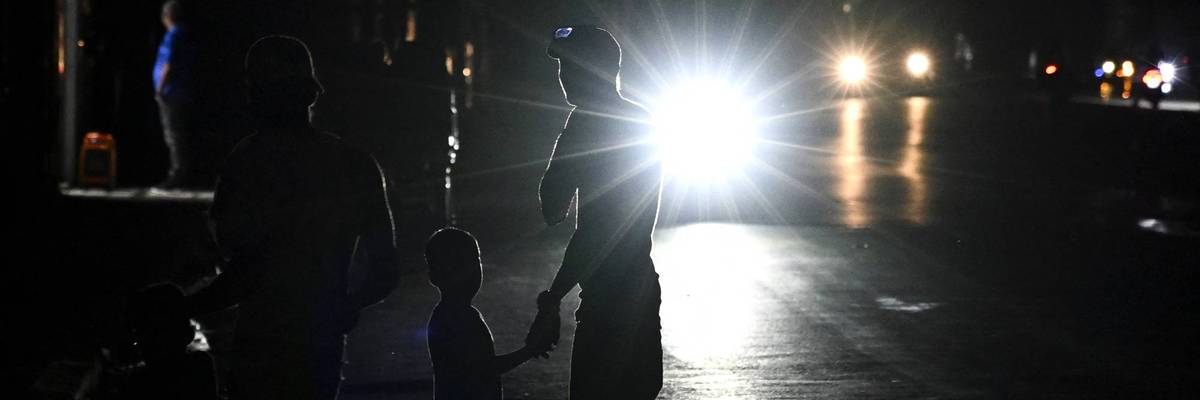
People stand on a street during a blackout in Havana on March 16, 2026.
(Photo by Yamil Lage / AFP via Getty Images)

Tyler Wann
Mar 22, 2026
FAIR

The US government’s decades-long economic blockade against Cuba is in many ways not a complicated issue. The policy of restricting trade with the country’s communist government was put into full force under the Kennedy administration, with the explicit goal of causing enough economic hardship, hunger, and desperation to spur regime change.

The United Nations General Assembly has overwhelmingly and consistently voted to end the embargo since a resolution to that effect was first introduced in 1992. Member countries argue that the embargo violates international law. It has cost the country anywhere between $130-170 billion since its inception, and has restricted the Cuban people’s access to food and medicine. And it has not accomplished its primary goal of overthrowing the Cuban government.

These are key points that should be included in any article reporting on Cuba’s economic struggles. However, US journalists have consistently leaned into the US government’s framing of the issue: that the country’s communist government is largely or exclusively to blame for its financial woes (FAIR.org, 11/4/24).

As the Trump regime tightens the screws of the embargo by further restricting oil access to the country, a move that has been condemned by UN human rights experts as a further violation of international law (New York Times2/13/26), legacy media continue to toe the government’s line on the issue, with coverage that is either low on context or outright stenography.
‘Extraordinary Threat’

President Donald Trump has tried to justify his administration’s significant escalation in tactics on the basis that Cuba represents an “unusual and extraordinary threat” to the security of the United States, primarily by supporting US geopolitical enemies. This accusation is not new: The country has previously been accused of hosting both Russian and Chinese spy bases. Despite neither claim being backed by evidence (Belly of the Beast, 2/6/268/1/24), the Trump administration doubled down on them when rolling out its new and harsher set of policies.

But the administration also unveiled a new claim that upped the ante: Cuba has apparently been harboring Hamas and Hezbollah forces, not 90 miles off of our shores! “Cuba welcomes transnational terrorist groups, such as Hezbollah and Hamas,” reads an executive order from January 29,
creating a safe environment for these malign groups so that these transnational terrorist groups can build economic, cultural, and security ties throughout the region, and attempt to destabilize the Western Hemisphere, including the United States.

The administration did not provide evidence to support this claim, and none has surfaced, despite local journalists’ investigative efforts (Belly of the Beast, 2/2/26).

That hasn’t stopped legacy media from repeating the claim uncritically, with nothing more than an “alleged” or “accused” attached, suggesting reporters can’t be bothered to fact-check it. This could be found in coverage in both The Guardian (1/29/26) and CNN (2/1/26) at the beginning of the recent round of escalations.

A full month later—plenty of time for a serious reporter to get to the bottom of the allegations, or at least ask the administration what evidence it has—The Atlantic (3/1/26) relayed the claim yet again, with just as little evidence supporting it as when it was first made. Throwing in the word “alleged” does little to change the fact that the US government has been given primary control of the narrative in this media coverage.

Despite the abundance of evidence regarding the intentions of US foreign policy toward Cuba, legacy media often fail to give proper context when reporting on the topic.

The Cuban government has categorically denied harboring or supporting terrorist organizations (Granma, 2/2/26). But defying basic journalistic practice, neither The Guardian nor The Atlantic gave any space to the Cuban government to respond to the claims made against it.

The Atlantic did quote a source that pushed back on using Cuba’s designation as a “state sponsor of terrorism” as a rationale for overthrowing its government. But that designation long preceded Trump’s recent comments, and the article did not offer any challenge to the recent accusations. The CNN article included only that Cuban President Miguel Díaz-Canel said that Trump’s threats were made under “empty pretexts.”
‘It Is Indeed a Blockade’

Some recent New York Times reports, on the other hand, have shown a willingness to break from the official narrative. An article by reporter Frances Robles (1/30/26) on the decision to cut off fuel to the island noted that the administration hadn’t provided evidence to support its claims that Cuba is harboring Hamas or Hezbollah fighters.

The article’s sourcing is more robust as well. For instance, the Times gave Mexico’s President Claudia Sheinbaum space to oppose Trump’s decision, affirming her support for the sovereignty of the Cuban people and respect for international law. This was followed by Cuba’s foreign minister saying that what his government calls the “economic genocide” being enacted by Trump’s decision is built on “a long list of lies.” A social media post attributed to the Venezuelan government rounded out the opposing sources balking at the idea that Cuba constitutes a threat to the US.

The Times (2/20/26) challenged official terminology in another piece headlined “A New US Blockade Is Strangling Cuba.” The article, by Jack Nicas and Christiaan Triebert, explained that the term “blockade” is a contentious one:
The US government called its 1962 policy a “quarantine” to avoid using the word “blockade,“ which legally could be interpreted as an act of war. The Trump administration has also avoided using the word ”'blockade.“

Regardless of the Trump administration’s refusal to call the recent change in policy a “blockade,” the article said, “it is functioning as one.”

The article also quoted Fulton Armstrong, “former lead Latin American analyst for the Central Intelligence Agency,” who agreed with the diagnosis. “Among us longtime Cuba watchers, we’ve always resisted people using the word blockade,” he says. “But it is indeed a blockade.”

(Of course, the Cuban government has considered the US’ economic punishment to be an illegal blockade and a “wartime measure” long before the recent escalation—Granma, 2/2/17.)

The article also had a rare reference to the possible illegality of US sanctions:
The United Nations has criticized the US policy as a violation of international law that has exacerbated the suffering of Cuba’s roughly 10 million residents.
‘Lead an Army of Exiles’

Despite the abundance of evidence regarding the intentions of US foreign policy toward Cuba, legacy media often fail to give proper context when reporting on the topic. In a Reuters report (2/25/26) about the Trump administration allowing oil sales to private companies in Cuba amid the ongoing crisis, Secretary of State Marco Rubio was given space to blame the Cuban government for the country’s woes without any pushback.

“What the Cuban people should know is this: that if they are hungry and they are suffering, it’s not because we’re not prepared to help them. We are,” he said. “It’s that the people standing in the way of us helping them is the regime, the Communist Party.”

Are there any average citizens of Cuba who value their nation’s sovereignty, who don’t want their government to relent, or who blame the United States for enacting policies designed to hurt their own economy? Herald readers may never know.

The article allowed this quote to hang bizarrely in the middle of a story about the US exercising disproportionate power over the country. The article put very little blame on the US at all, noting that its recent escalations have only been “worsening an energy crisis in the Communist-run country that is hitting power generation and fuel for vehicles, houses, and aviation.”

Nowhere was the long history of US attacks on the Cuban economy mentioned. Nor was there any suggestion that Rubio, a man who boasted as a child that he would one day “lead an army of exiles to overthrow Fidel Castro and become president of a free Cuba” (Atlantic, 12/23/14), might be invested in policies that might achieve his childhood dream. Rubio’s recent admission (Belly of the Beast, 1/28/26) that the Trump administration would like to see regime change in Cuba, a condition that is itself codified into US law as a prerequisite for lifting the “embargo,” is glaringly absent as well.
‘Failure of the Socialist Economic Model’

Similarly, the Miami Herald (2/17/26)—long hostile to the Cuban government—depicted Rubio as simply urging the Cuban government “to make economic reforms as a way out of the impasse.” While documenting the poor conditions on the streets of Cuba, the Herald’s Nora Gámez Torres reported:
The economic crisis, a deep economic contraction that has lasted years, has largely resulted from the failure of the socialist economic model, a hard-currency-hungry military stashing billions of dollars in its accounts, and years of Cuban leaders dragging their feet on urgently needed economic reforms. The Covid-19 pandemic and the tightening of US sanctions under the first Trump administration also played a part.

The “stashing billions” reference is to a bogus story the same reporter (Miami Herald, 8/6/25) published last year; Gámez Torres, who accused the Cuban military of having a huge secret reserve of cash based on a leaked spreadsheet, apparently failed to understand that a dollar sign is used to denote both US dollars and Cuban pesos (FAIR.org, 8/29/25). In her latest piece, the final line of the paragraph is the only reference to the decades-long history of economic warfare against the island.

“By design, these sanctions exist in order to suffocate the country economically, and they’re very effective in doing so,” Alexander Main, director of international policy at the Center for Economic and Policy Research, told FAIR. He notes that the sanctions are aimed at cutting Cuba off from the wider economic world. For instance, Cuba’s current placement on the US State Sponsor of Terrorism list has been deterring foreign investment in the country.

“It’s not going to happen because nobody wants to invest. They’re scared to death of running afoul of the sanctions criteria, so there’s this effect of overcompliance where companies are just not going to do it,” he says. “The risk of being hit by secondary sanctions is just way too high.”

And yet, throughout the Herald article, the US is depicted as simply wanting to “make economic changes,” “increasing external pressure” in an attempt to “reform the island’s hardline Marxist economy.”

‘Willing to Drown an Entire People’

The idea that the Cuban government has been rigid and unwilling to enact reforms is a false one, according to Main. “For better or for worse, they’ve taken a lot of measures to open up the economy,” including a major reform in 2021 that gave the private sector access to most sectors of the economy. “There’s a very limited number of sectors that remain completely under state control.”

“The problem with these reforms,” he says,
is that you can’t really implement them when there’s an embargo or blockade going on, when you’re basically restricting all of foreign capital from getting in, when you’re restricting the means of Cubans to import essential inputs for their own national production, when you’re starving the economy of cash. These reforms aren’t going to go very far.

Yet Cuban leaders are depicted throughout the Herald article as stubborn and cruel for refusing to give in to US pressure, which the paper’s choice of sources would have you believe is contrary to the interests of the people. Indeed, resisting extended economic attack, and refusing to allow the United States its God-given right to decide the structure of any country it chooses, is depicted as Cuban leaders being “willing to drown an entire people in the name of ideology,” by an unnamed “source in connection with Cuban officials.”

Are there any average citizens of Cuba who value their nation’s sovereignty, who don’t want their government to relent, or who blame the United States for enacting policies designed to hurt their own economy? Herald readers may never know, as the source given the most space to push back on the economic attack is a former Democratic congressmember from Miami. A quick reference to Cuban diplomats encouraging comparisons between the Trump admin’s actions and Israel’s in Gaza is also thrown in four paragraphs from the end of the article, though only in the context of “what some Cuba observers see as a strategy to blame the humanitarian crisis entirely on the United States and create a public-opinion crisis that would put pressure on the administration.”

The Herald gives priority to sources that are consistently critical of the Cuban government, though it is not especially difficult to find Cubans capable of giving a different perspective, as a video from Cuba-focused outlet Belly of the Beast (1/31/26) shows. The Herald’s reporting makes clear that the paper is capable of lifting up Cuban voices, just so long as those voices are singing the right tune.

First international aid convoy arrives in crisis-hit Cuba


By AFP
March 18, 2026


A group of people transporting humanitarian aid from Europe arrived in Havana with five tons of medical supplies and other essential items. - Copyright AFP Ilia YEFIMOVICH

The first shipment of international aid for crisis-hit Cuba has arrived in the country in the shape of five tons of medical supplies, official sources said Wednesday.

A delegation of around 100 European activists arrived overnight at Havana airport with the aid, which will be distributed to hospitals, the sources said.

Cuba has been mired in an economic crisis exacerbated by the sudden suspension of oil supplies from Venezuela in January after the United States ousted president Nicolas Maduro, a Cuba ally.

The island nation of 9.6 million was already battling the effects of the US fuel blockade against the island.

The aid activists from several European and Latin American countries as well as Turkey belong to the Nuestra America (“Our America”) flotilla who are out to show their solidarity with the Cuban people.

All told, humanitarian organizations and public figures plan to deliver 20 tons of aid to the island by air and sea to help Cuba through its worst economic crisis in three decades exacerbated by the US capture of Maduro and the cut-off in oil shipments from Venezuela.

US President Donald Trump has threatened retaliation against any country sending oil to the Caribbean island.

Official Cuban media said another convoy was leaving Chile on Wednesday with “medicines, supplies and food to help Cuba cope with the tightening of the energy blockade imposed by the United States.”

Additionally, a group of 140 people — including doctors, lawyers, labor leaders and activists — will be flying from Miami, Florida, to Havana on Friday to deliver 2.8 tons of medical supplies to clinics and hospitals, according to the pacifist group CODEPINK, one of the operation’s organizers.

A flotilla from Mexico is also expected to reach Havana by the end of the week.

Separately, leftist activists are also planning to hold a solidarity event along the Havana waterfront.

Among expected attendees are Pablo Iglesias, a former Spanish politician and founder of the left-wing party Podemos, Irish punk-rap group Kneecap, Brazilian climate activist Thiago Avila and leftist British Parliamentarian Jeremy Corbyn, according to a statement by organizers.

In their statement, organizers quoted Corbyn as saying that the United States had blockaded Cuba for six decades and “now the Donald Trump administration is intensifying” it.

Corbyn insisted that a majority of people around the world sided with the Cuban people.

Iglesias said that “to defend the Cuban people is to defend sovereignty and freedom against the criminal logic of the blockade” imposed by Washington.


Cuba hit by second nationwide blackout in a week


By AFP
March 21, 2026


Cuba has been hit by several blackouts due to an aging power grid and a US fuel embargo - Copyright AFP Yamil LAGE


Laurent Thomet and Rigoberto Diaz

Cuba plunged into darkness for the second time in less than a week on Saturday after its national power network failed again, strained by aging infrastructure and a US oil blockade.

As night fell, Havana’s streets were mostly pitch black, with people navigating using phone lights or flashlights, just five days after the previous blackout.

In the touristy old city, some restaurants were able to stay open thanks to generators, with musicians playing music, but the regular blackouts have made life more difficult for Cubans.

“This is becoming unbearable,” Ofelia Oliva, a 64-year-old Havana resident, told AFP.

“It hasn’t even been a week since we experienced a similar situation. It is getting tiresome,” Oliva said as she returned home after giving up on plans to visit her daughter.

The “total disconnection” of the national electricity system was due to an outage in a power unit at one of the country’s thermoelectric plants, causing a “cascading effect”, the state-owned Cuban Electric Union said.

It said it was activating micro-grids to provide power to critical facilities, including hospitals and water treatment plants.

“I wonder if we’re going to be like this our whole lives. You can’t live like this,” Nilo Lopez, a 36-year-old taxi driver, told AFP.


– US blockade –


The country’s electricity generation is sustained by a network of eight aging thermoelectric plants — some in operation for over 40 years — that suffer frequent breakdowns or must be shut down for maintenance cycles.

Cubans face daily blackouts of up to 15 hours in Havana. In the interior of the island, these outages can exceed 40 hours.

The breakdowns have intensified since Cuba’s main regional ally and oil supplier, Venezuela’s socialist leader Nicolas Maduro, was captured in a US military operation in January.

And US President Donald Trump has threatened to impose tariffs on countries that sell oil to Cuba.

No oil has been imported to the island since January 9, hitting the power sector while also forcing airlines to curtail flights to the island, a blow to the all-important tourism sector.

The blackout occurred as an international aid convoy began to arrive in Havana this week, bringing sorely-needed medical supplies, food, water and solar panels to the island.


– ‘Honor of taking Cuba’ –


The crisis in the country of 9.6 million people comes as Trump has made no secret of his desire to see regime change in Havana.

“I do believe I’ll be…having the honor of taking Cuba,” he said.

“Whether I free it, take it — think I could do anything I want with it, you want to know the truth. They’re a very weakened nation right now.”

The next day, Cuban President Miguel Diaz-Canel warned that “any external aggressor will encounter an unbreakable resistance.”

Tanieris Dieguez, Cuba’s deputy chief of mission in Washington, told AFP earlier this week that Havana was open to broad talks with Washington and allowing more investment.

But she said Cuba’s political system would “never” be part of the negotiations.

The outages as well as regular shortages of food, medicine and other basics are spurring frustrations, with demonstrators vandalizing a provincial office of the Cuban Communist Party last weekend.

With Cuba in desperate need of fuel, maritime trackers reported this week that two tankers carrying Russian oil and diesel appeared to be on their way to the island, but their status remains unclear.

Some took the latest outage in stride.

Meiven Rodriguez, 40, kept working in a small shop, selling cigarettes and using her phone light to count money.

“You have to keep going, otherwise you won’t bring money home,” she said.

A few fishermen cast for sardines into the dark waters of the oceanfront city.

“What would we do at home?” said Leonsio Suarez, 50.


After Cuba beckons, Miami entrepreneurs are mostly reluctant to invest in the island


By AFP
March 21, 2026


Havana's communist authorities have said exiled Cubans can invest on the island to help its ramshackle economy but the idea is being met with caution in Florida A coconut water stall is seen on a street in Havana with a sign reading "Ice-cold coconut water", on March 16, 2026. Cubans living abroad and their descendants will be able to invest and have their own businesses on the island, the communist government announced on March 16, 2026, at a time when the country’s economy is almost paralyzed by the energy blockade imposed by Washington. - Copyright AFP YAMIL LAGE


Gerard MARTINEZ

Havana announced this week that it would allow Cuban emigrants to invest to address the communist island’s severe economic and energy crises. But in Miami, the epicenter of the diaspora, entrepreneurs are generally reluctant.

“I don’t think a single businessman, not a single Cuban in exile, will invest in this island where there is no legal security,” said Ivan Herrera, director of the Univista insurance company, calling the initiative “a huge scam.”

The entrepreneur, whose grandfather was a political prisoner for 12 years before fleeing to Miami, refuses to invest under what he calls the “criminal” government.

This opening by Havana, a serious breach in the island’s anti-capitalist system, comes as the Cuban economy teeters on the brink of collapse. The shortage of essential goods is worsening daily, and power outages have multiplied since President Donald Trump’s administration cut off Venezuelan oil supplies.

Carlos Saladrigas, president of the human resources company Regis HR Group and the think tank Cuba Study Group, viewed the move as a step in the right direction, but said that Cuban authorities needed to resolve many unanswered questions to attract investment.

“Reintegrating the diaspora into the country’s economic life is essential for Cuba’s future,” he said.

“But behind their words lies an entire legal framework that needs to be reformed,” Saladrigas said.

“The government has to say: ‘We are going to discard traditional socialism and a centrally planned economy and adopt market-based measures.'”

– ‘Extremely risky’ –

Hugo Cancio, owner of the digital media outlet OnCuba and Katapulk, an online supermarket that allows the purchase and delivery of products in Cuba, was more enthusiastic.

“Of course I would invest in Cuba, and I would do so with great pleasure,” he said. “Do you know why? Because it’s not just an investment; I would be helping to rebuild my country.”

But Pedro Freyre, a Cuban-American lawyer specializing in the island’s regulatory framework, considers Cuba an “extremely risky” investment destination.

He justified this view by citing a dysfunctional banking system, a highly unstable currency, the absence of the rule of law guaranteeing private property, the failure of the centrally planned economy, and “completely dilapidated” infrastructure.

“It’s very difficult to say to yourself, ‘I’m going to take the money I’ve saved my whole life to open a McDonald’s on the Malecon (Havana’s famous seaside promenade) when I don’t know if there’s electricity, water, or if the Malecon is going to collapse into the sea,'” he said.

Adding to these obstacles is the fact that, under the American embargo imposed since the 1960s, Washington must allow its residents to conduct business on the island.

Herrera hoped to be able to invest “when there is a free Cuba,” to support his compatriots who lack housing, infrastructure, sanitation, and electricity.

“Here in Miami, people and very large companies built the city while we arrived with nothing,” he said. “In the same way, we can build and rebuild Cuba.”


White House piles pressure on Cuba as island fights power cut


By AFP
March 17, 2026


About a quarter of Cuba's citizens are eldery, and many of them are poor 
- Copyright AFP YAMIL LAGE

Washington piled pressure on Cuba’s communist authorities Tuesday to allow free market reforms as the impoverished island scrambled to recover from a nationwide electricity blackout.

US Secretary of State Marco Rubio said Cuba’s decision announced this week to let exiles invest and own businesses did not go far enough.

“What they announced yesterday is not dramatic enough. It’s not going to fix it. So they’ve got some big decisions to make,” Rubio, a Cuban-American and vociferous critic of the island’s ruling party, told reporters at the White House.

President Donald Trump, who just Monday had said he would “take” Cuba, added: “We’ll be doing something with Cuba very soon.”

Cuba’s authorities are under increasingly crushing pressure, with Washington openly stating it wants to end the nearly seven-decades-old US standoff with the one-party communist state.

A total electricity breakdown on Monday underscored the parlous state of the economy. Cuba lost Venezuela as its chief regional ally and oil supplier this January after a US military operation to topple Venezuela’s socialist leader Nicolas Maduro.


US Secretary of State Marco Rubio and US President Donald Trump renewed pressure on Cuba which is also dealing with its latest mass power cut – Copyright AFP Jim WATSON

Power was restored to two-thirds of the country early Tuesday, including to 45 percent of the capital Havana, which is home to 1.7 million people.

“What we fear all the time is that the blackout will drag on and we will lose the little bit that we have in the fridge, because everything is so expensive,” said Olga Suarez, a 64-year-old retiree.

“Otherwise we are used to it because here almost all the time you go to bed and wake up without electricity,” she told AFP.

Adding another scare, a 5.8-magnitude earthquake struck off the coast of Cuba early Tuesday. There were no immediate reports of casualties or damage.

– Trump to ‘take’ Cuba –

Cuba’s ageing electricity generation system is in shambles, with daily power outages of up to 20 hours the norm in parts of the island, which lacks the fuel needed to generate power.

But since the US ouster of Maduro on January 3, the island’s economy has been further hammered by a de facto US oil blockade.

No oil has been imported to the island since January 9, hitting the power sector while also forcing airlines to curtail flights to the island, a blow to the all-important tourism sector.

And Trump is explicitly saying he wants the Cuban government to fall.

“You know, all my life I’ve been hearing about the United States and Cuba. When will the United States do it?” Trump told reporters at the White House on Monday.

“I do believe I’ll be…having the honor of taking Cuba,” Trump said.

“Whether I free it, take it — think I could do anything I want with it, you want to know the truth. They’re a very weakened nation right now.”

burs-sms/msp
TotalEnergies faces ruling in Belgian farmer climate case


By AFP
March 18, 2026


The lawsuit by farmer Hugues Falys is the first time a citizen in Belgium has brought a case against a multinational company - Copyright AFP JOHN THYS


Matthieu DEMEESTERE

A Belgian judge will rule Wednesday in a closely watched case pitting French oil giant TotalEnergies against a farmer seeking compensation for damage to his farm caused by climate change.

Hugues Falys, a farmer from Belgium’s western Hainaut region, was backed by environmental groups including Greenpeace in the David-versus-Goliath case they hope could prove a turning point in the climate fight.

Together they took TotalEnergies to court on the grounds the French group is Belgium’s leading refiner and distributor of petroleum products, launching the country’s first climate case brought against a multinational company.

The plaintiffs argue the firm can be held liable for global warming because of emissions generated when its products are burned — a claim rejected by TotalEnergies which accuses pressure groups of “instrumentalising the judiciary.”

The lawsuit was filed in 2024 before the Tournai business court in western Belgium, and argued over a series of hearings between November and January, with a verdict due at 2:00 pm (1300 GMT) on Wednesday.

“The judges have everything they need to make the right decision,” Falys told AFP.

“But it won’t be black and white, given the number of issues to be decided,” added the farmer, who also serves as spokesman for an agricultural union.

Contacted by AFP, TotalEnergies declined to comment ahead of the ruling.

Falys is seeking 130,000 euros ($150,000) in damages for four extreme weather events that struck his farm between 2016 and 2020.

First a storm destroyed his strawberry and potato crops, then three periods of drought hurt fodder production, affecting cattle in turn.

But the farmer and his backers are also seeking much broader action from TotalEnergies on countering climate change — notably for it to stop investing in new fossil-fuel projects.

– Frequent target –

The goals of the lawsuit are “reparation and transformation”, said Belgium’s human rights league (LDH), which is backing the complaint alongside Greenpeace and food‑rights organisation FIAN.

Making its case in court, the company called it “absurd” to single out a particular firm over the pace of the energy transition — arguing that it accounts for less than two percent of the oil and gas sector.

“It’s a bit easy to blame energy producers for pollution and warming,” argued company lawyer Francoise Labrousse back in December, stressing the overarching role of governments in steering climate policy.

“TotalEnergies doesn’t sell tractors, cars or boilers,” Labrousse argued, describing the group’s strategy to meet the EU’s goal of carbon neutrality by 2050 as “ambitious and effective”.

TotalEnergies is a frequent target of climate and human rights activists, along with other oil giants.

In 2021, Dutch courts issued a landmark ruling ordering Anglo‑Dutch giant Shell to cut its net carbon emissions, finding they contributed to global warming and its harmful effects.

But the judgement was overturned three years later, when an appeals court found that an NGO and individual citizens could not make such demands.

The case, known as “People vs. Shell”, is now before the Dutch Supreme Court.
Venezuela stun USA to win politically charged World Baseball crown
KARMA IS A BITCH


By AFP
March 18, 2026


Venezuela fans celebrate their national baseball team's victory in Caracas
 - Copyright AFP Juan BARRETO

Venezuela stunned the United States 3-2 to win the World Baseball Classic on Tuesday for the first time, sparking an outpouring of national pride after a tense final dripping with political symbolism.

Eugenio Suarez drove in the winning run in the top of the ninth inning to seal the historic victory in Miami over a star-studded American line-up hyped as a baseball “dream team”.

Jubilant Venezuelans poured into the streets of Caracas to celebrate their heroes following years of economic hardship and weeks after the dramatic US capture of authoritarian leader Nicolas Maduro in a military raid.

“In Venezuela we don’t want feuds,” baseball fan Gerardo Oliviera told AFP as cars and motorbikes roared through the streets of the capital, proudly displaying the country’s flag.

“We’ve shown them on the field that we are more than just a sovereign people with character.”

Trailing for most of the game, the USA looked to have hauled themselves back into the contest when Bryce Harper blasted a game-tying two-run homer in the eighth inning.

But Harper’s salvo proved to be in vain as Venezuela regained the lead in the ninth inning, punishing a shaky performance from US reliever Garrett Whitlock to clinch victory.

“What can I say, it’s amazing,” Venezuela hero Suarez said.

“Nobody believed in Venezuela, but now we win the championship today. This is a celebration for all the Venezuelan country.”

Suarez’s winning double settled a final that had got underway in a raucous atmosphere at LoanDepot Park, with a large contingent of Venezuela fans in a sold-out crowd of 36,190 booing the USA lineup during pre-game introductions.

US President Donald Trump, whose government captured Maduro in a January 3 raid and flew him to New York for trial on drug trafficking charges, had stoked tensions with a social media post on Monday.

He congratulated Venezuela for reaching the final while simultaneously suggesting the country could become the USA’s “51st state.”

Trump again returned to the theme moments after Tuesday’s defeat, declaring in a post on his Truth Social platform: “STATEHOOD!!! President DJT.”

Venezuela’s interim leader Delcy Rodriguez — who replaced Maduro — meanwhile declared a “national day of jubilation” on Wednesday.

“This triumph is the victory of the passion, talent and unity that define us as Venezuelans,” Rodriguez wrote on X.

“An achievement that will remain forever in the heart of our country. ¡VIVA VENEZUELA!”

In Miami, where Venezuelans celebrated into the night, fan Iraima Camacho said: “That’s a joy that moves every Venezuelan and every Latin American.

“It shows, folks, that this is Venezuela.”


– Venezuela dominate –


Venezuela, whose players had been instructed by team management to avoid commenting on politics throughout the tournament, dominated the vaunted USA lineup for long periods.

Starting pitcher Eduardo Rodriguez stifled the USA bats led by New York Yankees home run king Aaron Judge.

The South Americans took the lead in the top of the third as US starter Nolan McLean struggled for command from the mound.

Salvador Perez singled to get on base before Atlanta Braves star Ronald Acuna Jr. drew a walk.

A wild pitch from McLean left Venezuela with runners on second and third base and on the next pitch Kansas City Royals slugger Maikel Garcia’s sacrifice fly allowed Perez to score.

With the USA bats continuing to flail against Rodriguez, the Venezuelans doubled their lead in the top of the fifth inning.

McLean delivered a four-seam fastball into the center of the strike zone and Boston Red Sox left-fielder Wilyer Abreu duly pounced, crushing a 414-foot solo home run to center field for a 2-0 lead.

Venezuela appeared to be closing in on victory but were jolted by Harper’s 432-foot home run to center field off reliever Andres Machado in the eighth.

But the USA rally was short-lived, and Venezuela grabbed the lead again in the ninth when Luis Arraez drew a leadoff walk from Whitlock before Suarez’s blast to left center field gave Venezuela the winning run.

Closer Daniel Palencia removed Kyle Schwarber, Gunnar Henderson and Roman Anthony in quick succession to seal Venezuela’s triumph.
PAK AFGHAN WAR

Mass burials expected for victims of Kabul drug rehab centre strike

PAK WAR CRIME


By AFP
March 18, 2026


Monday's strike was the deadliest in the recent upsurge of violence between the two sides - Copyright AFP Wakil KOHSAR


Aysha SAFI, Qubad WALI

Afghans readied on Wednesday to bury their dead from this week’s Pakistani air strike on a Kabul drug treatment centre, as an international NGO confirmed that hundreds were killed and wounded.

The Taliban authorities have said that around 400 people were killed and more than 200 wounded on Monday night, in the deadliest attack yet in the recent upsurge in violence between the two neighbours.

Islamabad, which denies deliberately targeting the centre, accuses Kabul of harbouring extremists who have carried out cross-border attacks on its territory.

Two large excavators were seen digging on a hill in Kabul, and interior ministry spokesman Abdul Mateen Qani confirmed a mass funeral would be held there later Wednesday.

“Not all 400 bodies will be buried in Kabul because some of them were transferred to their provinces,” he added.

Obtaining immediate independent confirmation of exact death tolls is difficult in Afghanistan and Pakistan, with attacks often in hard-to-reach places and conflicting information.

AFP journalists at the scene on Monday evening and Tuesday morning saw at least 95 bodies extracted from the rubble at the devastated centre.

Jacopo Caridi, the Afghanistan country director for the Norwegian Refugee Council, a humanitarian NGO, said they had teams on the ground at the same time, and one building in the compound was “completely burned and destroyed”.

“From what we saw and what we discussed with the others involved in the (emergency) response, we can say that there were hundreds of killed and wounded,” he told AFP.

“The facility was supposed to house around 2,000 patients, and it was heavily damaged.”

Recovery of bodies has proved difficult because of the debris and collapsed structures.

Caridi described the scene, which included body parts in the debris, as “shocking” and indicated that definitively counting and identifying the victims would be difficult.

“In Europe, we have the systems to identify the people, even from body parts,” he added.

“But here, I don’t know if they have these systems. But what I saw was a finger in one place, a foot in another place, a hand in one location. It was really horrific,” said Caridi.


– Mediation stalled –


Afghanistan and Pakistan have faced calls for an immediate end to the conflict, with the overall civilian death toll mounting and concern about those displaced.

The UN said before Monday’s strike that at least 76 Afghan civilians had been killed in the fighting, and that more than 115,000 families had been forced from their homes.

“Our call is clear,” said Caridi. “The protection of the civilians is a must for all the parties in conflict, and both the parties in conflict need to respect international humanitarian law.”

Mediation efforts, however, have so far proved fruitless.

The focus of Gulf countries, which led early attempts, has shifted to the situation in their own backyard since the start of US-Israeli strikes on Iran last month.

Before Monday’s strike, China had dispatched a special envoy to mediate between Afghanistan and Pakistan, pledging to play a “constructive role in de-escalating tensions”.

Russia’s special representative for Afghanistan, Zamir Kabulov, has said Moscow is “concerned” by the fighting, and could step in to broker a deal if asked.

“We are trying to find a compromise solution that would make it possible to stop the clashes and move to diplomacy,” he was quoted as saying by the pro-Kremlin outlet Izvestia.

“Russia will be ready to consider such an option if both sides simultaneously turn to it with a request for mediation. So far, this has not happened.”

Afghan Foreign Minister Amir Khan Muttaqi said Tuesday that the country would continue “proportionate and legitimate defensive measures until the other side ceases its violations”.

Pakistan’s information minister Attaullah Tarar said its attacks were against “military and terrorist infrastructure” as part of Islamabad’s “ongoing war against terrorism”.


Arizona charges prediction market Kalshi with illegal election betting


By AFP

March 17, 2026


Once dismissed as a niche corner of the crypto world, prediction markets have rapidly broken into the mainstream in the United States - Copyright GETTY IMAGES NORTH AMERICA/AFP SCOTT OLSON

Arizona’s attorney general filed criminal charges Tuesday against prediction market platform Kalshi, accusing the company of illegally accepting bets on election outcomes and sporting events.

The 20-count filing in Maricopa County Superior Court charges Kalshi with four counts of election wagering, which is banned in Arizona, as well as 16 counts of illegal betting and wagering, mainly on sporting events.

“Kalshi may brand itself as a ‘prediction market,’ but what it’s actually doing is running an illegal gambling operation and taking bets on Arizona elections, both of which violate Arizona law,” Attorney General Kristin Mayes said. “No company gets to decide for itself which laws to follow.”

Once dismissed as a niche corner of the crypto world, prediction markets have rapidly broken into the mainstream in the United States, positioning themselves as an alternative to both traditional polling and licensed sports betting.

But Kalshi faces similar legal challenges in several other states where gaming regulators have issued cease-and-desist orders or filed suit accusing the platform of operating an unlicensed gambling business.

Platforms like Kalshi and its biggest rival Polymarket remain illegal or unregulated in most countries outside the United States, where regulators have generally classified them as unlicensed gambling.

The charges allege Kalshi accepted wagers on the outcome of the 2028 US presidential race, the 2026 Arizona gubernatorial election and its Republican primary, and the 2026 Arizona secretary of state race.

Among the specific bets cited was a $2 wager on whether JD Vance would win the presidency in 2028.

The remaining counts allege Kalshi operated an unlicensed sports wagering business, accepting bets as small as $1 on NFL, NBA, college basketball and Super Bowl matchups.

New York-based Kalshi has positioned itself as a federally regulated “event contracts” exchange rather than a traditional sportsbook, a distinction that has fuelled ongoing legal battles with state regulators.

Kalshi dismissed the charges as “seriously flawed” and “gamesmanship,” saying Arizona was attempting to short-circuit its own lawsuit against the state, filed on March 12.

Kalshi argues that its activities are not gambling but something closer to market trading and that this places its activities beyond the reach of state authorities.

“These charges are meritless, and we look forward to fighting them in court,” the company said.


UK PM leads efforts to halt deadly meningitis spread


By AFP
March 18, 2026


UK health minister Wes Streeting says the 20 cases of deadly meningitis B link back to a Canterbury nightclub popular with students - Copyright AFP Ilia YEFIMOVICH


Helen Rowe

UK Prime Minister Keir Starmer on Wednesday led urgent calls for young people who visited a nightclub at the centre of a deadly meningitis outbreak to come forward, as the number of cases rose.

Starmer told parliament the outbreak centred on Canterbury, in southeastern England, had left two dead and others were seriously ill in hospital.

Health experts were working to identify the close contacts of those who had contracted the life-threatening condition, Starmer said.

He asked “anyone who attended Club Chemistry on March, 5, 6th or 7th to come forward, please, to receive antibiotics”.

All the cases linked back to that nightclub in the university city, Health Minister Wes Streeting said earlier.

The number of cases being probed by UK authorities rose in the past 24 hours from 15 to 20.

Those who died have been identified as a 21-year-old university student and an 18-year-old school student.

The focus of public health measures so far has been the University of Kent in Canterbury, which has around 18,000 students, some of whom are among those hospitalised.

One of the cases involved a patient who had been living in Kent, but who was taken ill in London, amid fears the disease could spread as students head home for their Easter vacation.

Meningitis is a potentially deadly infection affecting the protective membranes surrounding the brain and spinal cord. It is most common in young children, teenagers and young adults.

It can progress rapidly and is spread through prolonged close contact, including kissing or the sharing of vapes or drinks.

“As of 5 pm on 17 March, nine laboratory cases are confirmed and 11 notifications remain under investigation,” bringing the total to 20, the UK Health Security Agency (UKHSA) said in a statement, an increase of five.

Students at the university have been queueing this week for preventative antibiotics with four centres open in Canterbury.

A targeted meningitis B vaccination programme was also due to begin, authorities said, with the jab initially being offered to 5,000 University of Kent students living on campus.

The programme could be extended, the UKHSA added.

– ‘Halt the spread’ –

Initial symptoms of meningitis include headache, fever, drowsiness and a stiff neck — but those signs can be vague, hampering prompt diagnosis.

Six of the confirmed cases are of group B meningococcal disease, according to the UKHSA.

The bacterial strain is rarer and deadlier than the viral type.

Family doctors nationwide have been told to prescribe antibiotics to anyone attending their surgeries who visited Club Chemistry between March 5-7 and to University of Kent students “if they have been asked to seek preventative treatment”.

“This is so that anyone who has travelled home, or away from Kent, can easily access this important preventative treatment close to them,” the UKHSA said.

The agency said it was also investigating the case of a baby with confirmed meningococcal group B infection, but who was apparently not linked to the outbreak.

The baby girl is reportedly in hospital in nearby Folkestone.

Children in Britain are usually routinely vaccinated against meningitis B with three doses given at eight and 12 weeks and one year.

Another vaccination targeting meningococcal groups A, C, W and Y is offered to children aged 14.


What we know about the UK’s deadly meningitis outbreak


By AFP
March 19, 2026


People wearing medical scrubs and face masks walk across campus at the University of Kent in Canterbury which is the centre of a deadly, unprecedented outbreak of meningitis - Copyright AFP/File Jim WATSON


Akshata Kapoor

UK health authorities are probing 27 cases linked to a deadly meningitis outbreak believed to have spread at a nightclub in southeast England.

Here’s everything we know about the disease and the outbreak:


– What is meningitis? –


Meningitis is a potentially deadly infection causing the inflammation of the brain or spinal cord linings, which can lead to sepsis.

Bacterial meningitis, as seen in this outbreak, is rarer and deadlier than the viral type.

Initial symptoms of meningitis include headache, fever, drowsiness and a stiff neck — but those are symptoms of different illnesses and can hamper prompt diagnosis.

Another sign can be a rash, and the disease can progress rapidly.

“It is certainly not as infective as say flu or COVID-19, and requires often fairly prolonged close contact before transmission takes place,” said Andrew Lee, Professor of Public Health at the University of Sheffield.

It can spread through close contact like kissing or the sharing of vapes or drinks.

More than two million people get meningitis worldwide each year, according to a tracker by the Meningitis Research Foundation — 80 percent of them in developing countries.

Outbreaks among university students have been particularly common in the West.


– Where does the infection come from? –


Meningococcal disease is a rare but serious illness caused by the meningococcal bacteria, which can result in meningitis.

It is usually spread by the people who carry the bacteria in the back of their throat or nose but don’t develop any symptoms.

“Between 10-24 per cent of the population unknowingly carry this germ at the back of their throats usually without any harm,” said Lee.

There are multiple strains of the bacteria. In this outbreak, at least nine of the confirmed cases are of group B meningococcal disease (MenB) — the most common in the UK.

The epicentre of this outbreak is believed to be Club Chemistry in Canterbury, according to Health Secretary Wes Streeting. At least 10 of the confirmed cases went to the nightclub between March 5-7.


– How big is the outbreak? –


It has been described as “unprecedented” by Streeting.

At least 27 cases were being probed as of Thursday, with 15 confirmed. That figure has risen rapidly in the last week, with the first case reported on Friday, March 13.

There have also been two deaths.

“The risk of transmission and further cases is usually highest in the first week after contact with a case and the probability rapidly decreases afterwards,” Lee said.

Many of those affected are University of Kent students. There have also been cases in four Kent schools and a London higher education institute.

The local authority was unable to confirm whether the outbreak had been contained as of Thursday.


– Why is it unprecedented? –


Health experts point to the unusual speed and spread of the outbreak in a short timeframe.

In the UK, meningitis tends to occur in small clusters.

“In my 35 years working in medicine, in healthcare and hospitals, this is the most cases I’ve seen in a single weekend with this type of infection,” UK Health Security Agency (UKHSA) head Susan Hopkins said.

“This looks like a superspreader event, with ongoing spread within the halls of residence in the universities,” Hopkins added.

The UKHSA was alerted to the first case on March 13, and began tracing contacts. France informed UK authorities on March 14 of a case of a person who had been at the university and was hospitalised in France.

Samples collected from patients are being analysed in the laboratory, which could give a better picture about the strain and why the infection has been more invasive.


– What has the official response been? –


Health authorities are racing to identify close contacts of those who were ill, and have set up multiple health clinics in Canterbury distributing antibiotics.

UK Prime Minister Keir Starmer urged anyone at the nightclub on the weekend of the outbreak to seek antibiotics to help halt the spread of the disease.

For the general UK public, “the overall risk remains very low,” said Zina Alfahl from the University of Galway’s School of Medicine.

Bacterial meningitis usually needs to be treated in the hospital.

It can be prevented through vaccines. The University of Kent has rolled out a targeted vaccination programme to provide 5,000 jabs to students on campus.

While vaccines against some meningitis strains are administered routinely to children in the UK, the shot against MenB has only been part of the immunisation schedule since 2015 — when the UK became the first country in the world to add the jab to its programme.

As people rush to buy vaccines in response to the outbreak, health minister Streeting said it was “not necessary”.

burs-aks/jkb/pdw
US judge orders Trump admin to bring VOA employees back to work

VOA was created in the wake of World War II as a key instrument of American soft power worldwide.


By AFP
March 18, 2026


Image: — © AFP

A US federal judge on Tuesday ordered the Trump administration to bring more than 1,000 Voice of America employees back to work and resume broadcasts by the government-funded media outlet.

District Judge Royce Lamberth’s order comes 10 days after he ruled that President Donald Trump’s pick to oversee mass layoffs at VOA was unlawfully appointed, rendering the job cuts invalid.

Kari Lake, a former TV anchor, slashed jobs and funding after she was appointed by Trump to head the US Agency for Global Media (USAGM), which runs VOA, Radio Free Europe, Radio Free Asia and other stations.


Kari Lake was hired by President Donald Trump to oversee layoffs at the US Agency for Global Media – Copyright GETTY IMAGES/AFP JOE RAEDLE

Lamberth, an appointee of Republican president Ronald Reagan, ordered the reinstatement by March 23 of 1,042 VOA employees who have been on paid administrative leave for the past year.

The judge also ordered USAGM to come up with a plan by next week to resume international broadcasts.

VOA was created in the wake of World War II as a key instrument of American soft power worldwide.

Trump frequently attacks media outlets and denounced the editorial firewall at VOA that prevents the government from intervening in its coverage.

Three VOA employees who filed a lawsuit seeking to reverse Lake’s moves welcomed the judge’s ruling.

“We are eager to begin repairing the damage Kari Lake has inflicted on our agency and our colleagues, to return to our congressional mandate, and to rebuild the trust of the global audience we have been unable to serve for the past year,” they said in a statement.

The Trump administration has said it plans to appeal the judge’s previous ruling that Lake’s appointment was unlawful.
NEW FASCIST LATAM ALLIANCE
US launches new era of drug war with Latin American allies


By AFP
March 18, 2026


The United States and allies in Latin America and the Caribbean have ushered in a new phase of anti-drug cooperation including extraditions, shared intelligence and security plans despite criticism from international organizations.

The joint initiative dubbed “Shield of the Americas,” largely modeled on the Salvadoran approach, was announced on March 8 by President Donald Trump and leaders from 16 nations at a Florida summit.

On Saturday, US authorities took custody of Uruguayan drug trafficker Sebastian Marset following his capture in Bolivia — barely a year after he was added to Washington’s list of most-wanted fugitives.

Marset appeared before a judge on Monday following his swift expulsion by Bolivian authorities.

The collaboration has extended to other nations, with Ecuador recently carrying out an air strike on a FARC rebel training camp in a border area shared with Colombia.

Colombian President Gustavo Petro condemned the attack but his Defense Minister Pedro Sanchez told AFP cooperation exists with Ecuador, Venezuela and the United States to quell such pockets of rebellion.

The FBI has opened a permanent office in Ecuador, whose government recently imposed curfews in the regions hardest hit by violence related to organized crime.

Last week Washington also announced the arrest, pending extradition, of a suspect accused of being one of the leaders of “Los Piratas,” the Chilean affiliate of the Tren de Aragua gang.

The suspected drug kingpin, 40-year-old Venezuelan national Rafael Enrique Gamez Salas, could be deported to Chile in the near future.


– Picking up the pace –


The Trump administration is acutely aware of the conservative political shift that has swept through the region and is trying to accelerate its efforts before a new political cycle.

The growing collaboration also means suspects can be sent home from the United States.

In January, the Department of Homeland Security announced the arrest of Chilean national Armando Fernandez Larios, a former military officer and agent of the DINA, the feared political police force of Augusto Pinochet’s regime.

Larios, who pleaded guilty to the 1976 assassination of former Chilean minister Orlando Letelier in Washington, had been living in the United States since the late 1980s.

After nearly four decades, he could soon be deported to his home country, a Department of Homeland Security spokesperson confirmed to AFP.


– Three reluctant nations –


Brazil, Mexico and Colombia did not attend the Florida summit, but intelligence cooperation remains ongoing, according to their leaders and diplomatic sources in Washington.

Trump continues to exert pressure on Mexican President Claudia Sheinbaum, as shown by Mexico’s operation that led to the death of kingpin Nemesio Oseguera, or “El Mencho,” leader of the Jalisco New Generation Cartel (CJNG).

“The economic pressure from President Donald Trump, along with his veiled military threats, has compelled her to take action,” observed Amanda Mattingly, a former diplomat and founder of ACM Global Intelligence.

In Brazil, the next chapter in a relationship marked by ups and downs could involve the official designation of two powerful criminal factions — the “Comando Vermelho” (Red Command) and the “Primeiro Comando da Capital” (PCC) — as terrorist groups.

Such a designation is a source of tension in the Brazilian government.

When questioned by AFP, a State Department spokesperson said Washington does not “anticipate possible designations” of the groups, but remains “committed to taking appropriate measures against foreign groups that engage in terrorist activities.”

The anti-drug campaign, which includes controversial elements such as attacks on suspected drug-smuggling boats in the Caribbean, is sparking alarm in some parts of the region.

“These serial extrajudicial killings constitute a grave violation of the right to life,” said Ben Saul, the UN Special Rapporteur on the promotion and protection of human rights, in hearings recently held by the Inter-American Commission on Human Rights (IACHR) in Guatemala.

But the State Department said the IACHR “lacks competence to examine issues regarding the interpretation and application of international humanitarian law” on such issues.


Thousands rally in Istanbul to mark year since mayor’s arrest


By AFP
March 18, 2026


Ekrem Imamoglu was arrested on March 19, 2025 in a pre-dawn raid on his home - Copyright AFP/File Yasin AKGUL


Fulya OZERKAN

Thousands of people gathered outside Istanbul City Hall Wednesday to mark one year since the arrest of the city’s mayor, Ekrem Imamoglu in a graft probe widely seen as a politically motivated act against the key opponent of President Recep Tayyip Erdogan.

Waving Turkish flags, crowds including university students chanted “President Imamoglu”, in a show of support for the opposition CHP’s candidate for the next presidential vote.

“We will win by resisting”, they shouted.

Police heightened security around City Hall, which saw major clashes when police cracked down on protests a year ago.

The mayor was arrested on March 19, 2025 just days before he was to be formally named candidate for the Republican People’s Party (CHP) in Turkey’s next presidential elections, due by mid-2028.

The unexpected arrest was denounced by critics as a bid to hobble the chances of one of the few politicians seen as capable of beating Erdogan at the ballot box.

Imamoglu, 54, has remained behind bars, facing a growing array of cases, the biggest of which went to trial on March 9. Prosecutors are seeking to have him jailed for 2,430 years.

“It’s all political,” Yasemen Unlu, 63, told AFP as she stood behind the iron barriers despite the cold weather.

“He’s been in jail for a year in vain. Imamoglu was a presidential candidate and one step ahead. There’s nothing that holds up,” she said.


-‘Biggest rival’-


After the arrest vast crowds hit the streets daily, defying a protest ban in Istanbul and other big cities, with the biggest crowds gathering after dark, sparking running battles with riot police.

The rallies sparked a crackdown by the security forces, who arrested around 2,000 people, among them students, journalists and lawyers.

Although the protests eventually tailed off, the CHP continued to hold rallies across Turkey, boosting the party’s standing in the polls.

Since the CHP won a resounding victory in March 2024 local elections against Erdogan’s Islamic-rooted Justice and Development Party (AKP), it has faced a sweeping legal crackdown. Fifteen of its mayors are behind bars.

Analysts say Imamoglu almost certainly will not be able to contest the next election. Even if he was cleared of graft charges, another lawsuit aims to challenge the validity of his university degree — a constitutional requirement for candidates in Turkey.

“I don’t think there’s any hope,” Erkan Acar, one of the protesters, said.

“He is the biggest rival against Erdogan. They will hold him back, of course, and keep him isolated,” the 39-year-old public employee said.

“We’ll use every opportunity we get. We chose him. We cannot just leave him in prison like that.”

Should Imamoglu be barred, political observers expect CHP leader Ozgur Ozel to emerge as the likely candidate for the presidential race.