Monday, May 18, 2026

Indigenous Organization Forces Repeal Of Land Privatization Law In Bolivia
Source: Ojalá

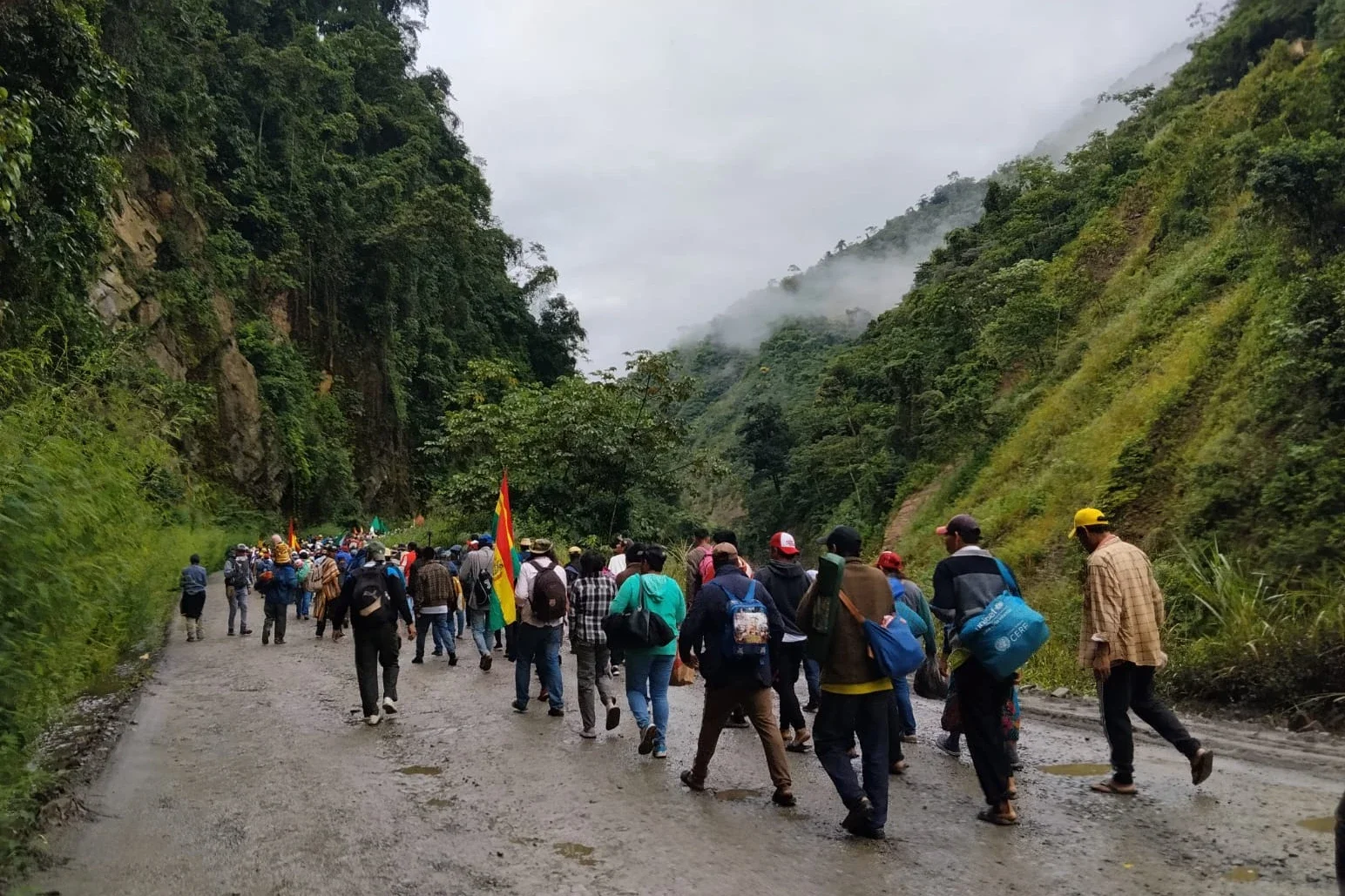
Following a 27-day march to La Paz, Bolivia, Indigenous and rural organizations from the country’s east held a successful 10-day sit-in that forced the repeal of Law 1720. 

The law threatened small-scale communal landholdings and fast-tracked a process through which they would be transformed into individually held medium-sized properties. It enabled forms of dispossession disguised as “rural credit” and that favored the agribusiness sector. The demands of the marchers, who were from Pando and Beni states, also included legal certainty with regard to land, a halt to the anti-protest law, and the right to prior consultation. 

The march set out from Pando on April 8, following the enactment of the law, with approximately 300 marchers embarking on a grueling trek of about 1,000 kilometers. It continued under changing and inclement weather conditions marked by rain and cold, especially upon their arrival to the seat of government in La Paz.

By the time the marchers arrived in the city on May 4, their numbers had grown significantly, and they held a sit-in in front of the Vice President’s Office. They demanded a voice in the debate on the bill to repeal the law, which the government rushed through the legislature as protests grew.

The delegation was barred from entering the Chamber of Deputies to present their position, and the Senate amended the bill to include a legal provision requiring the drafting of a new law on the same matter. Both chambers approved the repeal of Law 1720 on May 12, which was formalized on May 13 by President Rodrigo Paz.

The president presented the repeal as the result of dialogue and announced that work would begin on a new law. But his rhetoric contradicts what happened during the protests, where demonstrators condemned the lack of meaningful dialogue and strongly rejected any legislation without prior public consultation that could jeopardize the legal security of Indigenous and peasant lands and territories.

“We cannot return home empty-handed!” said Vivian Palomeque Irina, Executive Secretary of the Vaca Diez Regional Federation of Peasant Workers in Beni, during the sit-in. She is one of the most visible figures in the historic uprising of Indigenous peoples in the lowlands. 

Her words summed up the collective desire to keep fighting until their demands are met. The law was repealed, but this was not a gift from the government. Instead, it was achieved by people putting their bodies on the line. 

The march and the solidarity demonstrated during the sit-in were the cornerstones of protest and pressure campaigns that gained widespread support from other peasant and Indigenous organizations, particularly at regional and municipal levels. Support also came from other social sectors across the country, including urban and rural teachers, labor unions, miners, students, transportation workers, and neighborhood organizations in the city of El Alto.

The self-organization across these sectors reinvigorated an indefinite—and ongoing—strike with roadblocks, establishing a common agenda that includes protecting natural resources, fair wages, fuel supply, and demands for Paz to resign.

The march that originated among the lowland Indigenous peasant communities against Law 1720 became the catalyst for a mobilization of historic proportions. The demand to repeal the law succeeded in articulating accumulated grievances, transforming a concrete demand into a national social agenda that challenges the plundering of natural resources, as well as the colonial and neoliberal nature of the Paz administration.

Resisting a historic rift

Small-scale agricultural landholdings in Bolivia have historically been shielded from being seized. This is a basic legal safeguard enshrined in the 1938 Constitution and consolidated through the 1953 Agrarian Reform.

Law 1720 emerged against a history in which joining small parcels was the dominant model for small-scale land tenure. The Law prioritized individual ownership over the reality of Indigenous land use, which is based on communal and community ownership grounded in redistribution, rotation, and the spatially uneven nature of the territory.

The recognition of Indigenous lands in Bolivia stems from the 1990 March for Territory and Dignity. That mobilization forced the then-government of Jaime Paz Zamora—father of the current president—to recognize Indigenous territories under a collective ownership model. That is what Law 1720 put at risk, as agribusiness sectors called for the elimination of collective land ownership as part of the cancelled law’s proposed second phase.

Land regularization and agrarian title registration—both individual and collective—are high on the agenda of judicial struggle and protest led by Bolivia’s rural sector. Their efforts are marked by conflicts over boundaries and borders as well as family and community disputes, which take place in a context of historical injustices, overlaps, and reconfigurations of ancestral territory.

In the process of encroachment on Indigenous ancestral territories, historically promoted by the colonial state, Law 1720 established itself as a key legal change. It revealed a complex landscape of dispossession, decay, and disruption that is harshly imprinted on Indigenous and peasant territories, creating even more fissures in their social and territorial structure.

Another issue with Law 1720 is linked to the internal crises and the fragmentation of Bolivia’s Indigenous and rural organizations.

Over the course of the march, the Confederation of Indigenous Peoples of Bolivia and the Single Trade Union Confederation of Peasant Workers of Bolivia made deals with the government behind the backs of the mobilized organizations that held down the sit-in for the repeal of Law 1720.

This reflects the situation of co-optation and clientelism among the national leadership of the Indigenous and peasent sector in Bolivia, a trend that persisted throughout the government of the Movement Toward Socialism.

Today, hope lies with intermediary, department-level and regional organizations, such as the “Túpac Katari” Unified Departmental Federation of Peasant Workers of La Paz, one of the most vocal critics of Law 1720 and among the first to demand Paz’s resignation.

The National Confederation of Indigenous Women of Bolivia, the only national body supporting the march, organized the “Meeting for Land and Territory” and played a key role in the mobilizations.

From the polls to the streets

The march for land signaled a strong break with Paz, who was elected in August of last year. “The people put him in office, and the people will remove him; we are very angry with this government,” said one of the marchers.

Her anger reflects the rift between the popular vote that brought the Paz administration to power and the measures that have been adopted that directly hurt those very same sectors.

Following his electoral victory, Paz adopted the slogan “God, family, and country,” with a narrative that distanced itself from the broad popular base that brought him to power. The first measure passed by his government was the elimination of taxation on large fortunes. Vice President Edmand Lara, who had effectively served as the main connector to the popular vote, was also sidelined.

Dissatisfaction with the Paz government is beginning to cast doubt on whether the ballot box is truly a democratic mechanism capable of guaranteeing respect for social rights and demands. The march for land expressed a loss of confidence in institutions, political parties, and their leaders. 

Thousands returned to the streets to defend their rights in the midst of the crisis. They faced a government that makes unilateral decisions and responds with measures that run counter to the interests of the electorate.

The defense of natural resources, land, and territorial rights, among others, has once again taken center stage in a social agenda with national scope and historical significance.

In its final stretch, the protest gained support from other sectors of the country via regional marches, gatherings, and manifestos. They consolidated the “Pact against betrayal” on May 5, in response to the government’s co-optation of union and Indigenous leaders outside mobilized sectors.

Among remaining broader, multisectoral demands are the approval of the Forest Law, the cancellation of a bill promoting carbon markets and the anti-protest law, the rejection of the decentralization of education and health care, the defense of natural resources, guaranteeing the fuel supply, the right to prior consultation, and the protection of rights recognized in the Constitution, among others.

These demands, as well as the specific procedures around land titling and compensation in Indigenous territories, remain unaddressed by the government and are linked to other specific demands that continue to mobilize various social sectors, who remain in a state of emergency.

The struggle against a specific law expanded to revive the memory of the cycles of mobilization, such as the Water War of 2000 in Cochabamba and the Gas War of 2003, that marked Bolivia at the beginning of the 21st century. These are the struggles that opened the horizon for the constitutional process in Bolivia.

The march against Law 1720 did not just express rejection of a law that represents a step backward and a violation of long-won land rights. The defense of small rural property and Indigenous rural territories has forged a common agenda in the face of a government experiencing an institutional crisis. It is a symbol of the broken promises of the Plurinational State and the unwavering defense of the same collective forces that made the constitutional assembly process possible all those years ago.


This article was originally published by Ojala; please consider supporting the original publication, and read the original version at the link above.Email

Aymara activist, lawyer, feminist, and expert on Indigenous issues. She provides legal support in cases related to the defense of Indigenous territories in La Paz.

Energy Beyond Extraction in Argentina

Source: Ojalá

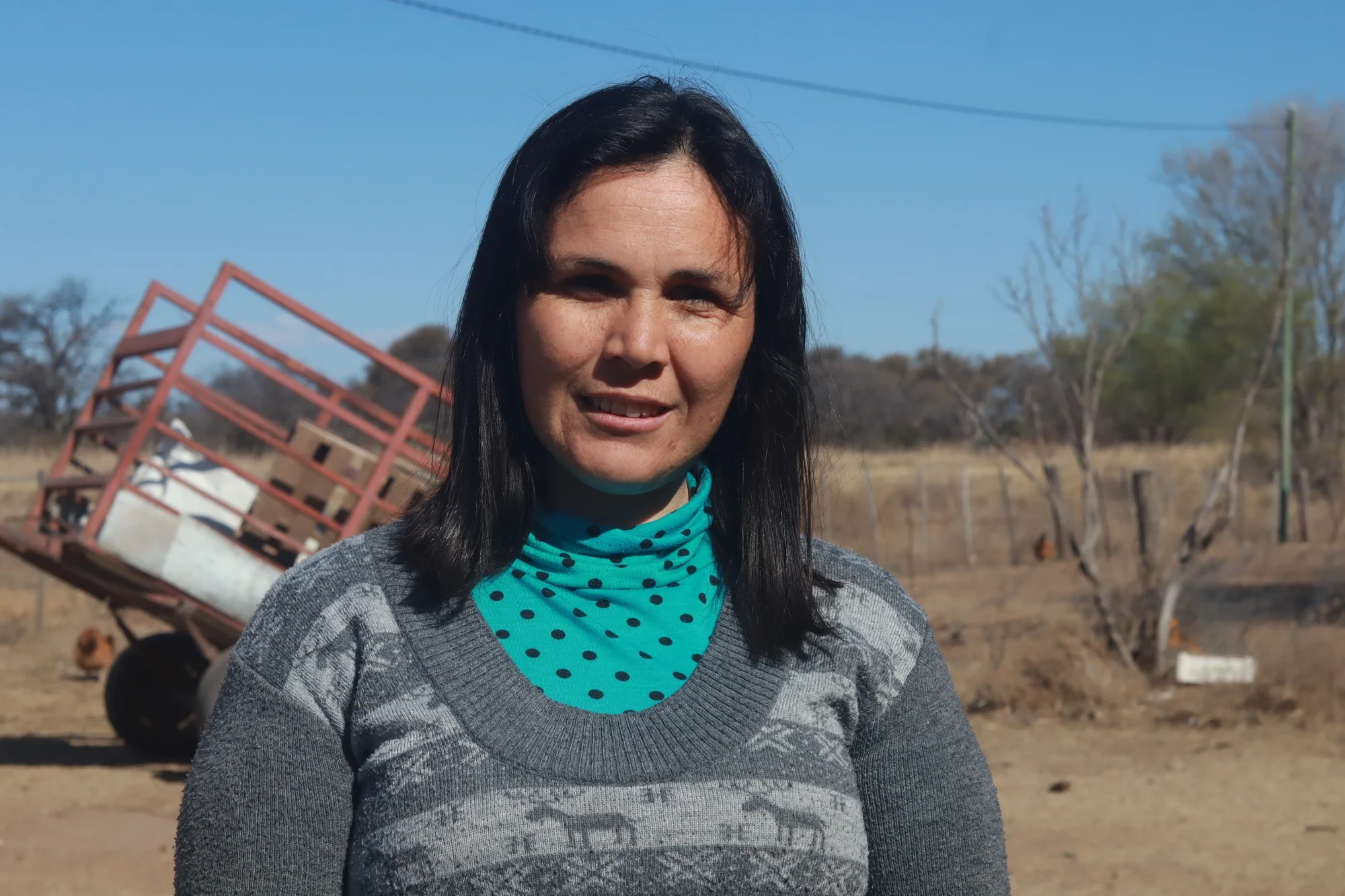
Pampa de Pocho is a rural area in the province of Córdoba, in central Argentina, with no piped gas or electricity. Women wash clothes by hand, gather firewood, and keep the fire burning to heat their homes and cook.

These essential tasks for living in dignity and for the reproduction of life are often overlooked in discussions about power and energy. That’s especially true with regard to the search for alternative energy sources like solar and wind power that can help address the climate crisis.

“There’s no electricity here, [so energy is an] issue connected to the simple need to have even a little bit of light,” Romina Soria told Ojalá. She’s a 32-year-old farmer living in the Pampa de Pocho grasslands, where temperatures drop in the winter, there’s little rain, and strong, year-round wind and sun.

A small solar panel in her home provides enough light to brightern the dinner table and charge their cell phones. The fridge and stove run on gas from a cylinder, but bread is baked over a fire that is constantly tended, and is also used to heat water for yerba mate. To draw water from the well, she uses a fuel-powered generator.

Soria used to gather wood from the surrounding area, but it has become scarce and now it must be purchased. Gasoline, which costs 20 percent more here than it does in Buenos Aires, must be bought in nearby towns.

“The towns are 17 or 20 kilometers from here, so we spend a lot on fuel; that’s why we take advantage of every trip to bring things back for our neighbors,” said Soria.

In this context, she raises her children, takes them to school, tends the garden, feeds the animals, and works at a grocery store.

When asked to list all the forms of energy she uses—including her own physical energy—Soria answers easily. Her awareness is the result of collective work she and other rural women and academics have carried out over four years using the framework of Energías Vivas (Living Energies), a project designed to highlight unequal access to energy and its impact on the lives of rural women.

Romina Soria manages energy use in her home in Pampa de Pocho, Argentina, a common task shared by rural women in the area. Photo © Daniela López.

Life over profit

In 2022, researchers from the Rural Habitat Studies Network in the province of Córdoba launched a research project in collaboration with Nuestras Granjas Unidas (NGU), an organization to which Soria belongs.

“The goal was to rethink how access to new energy sources affected the daily lives of women in rural areas,” Guadalupe Huerta, a social worker and researcher, told Ojalá. “It was difficult [at first] to get rural women to talk about energy, but at the same time, energy concerns are a daily reality in rural areas; people are constantly thinking about how to heat their house, wash their clothes, charge their cell phones and so on, tasks that tend to fall on the shoulders of women and feminized bodies.”

During workshops with academics and local women identified a variety of individual strategies—like when to wash clothes so they dry without getting covered in dirt, to how many animals can be kept per hectare to prevent soil degradation—as well as collective strategies, like planting crops with other families or taking advantage of trips to town to bring back supplies for others.

Their conclusions went beyond the publication of academic papers, leading to the formation of a collective and a concept: Living Energies.

“We live in an energy-devouring world which consumes energy in a predatory way because it preys on territories and it preys on bodies,” said Huerta. “Thinking about living energies means putting life at the center. It means looking at energy not from the perspective of profit and how we can keep consuming, but rather to care for life and the conditions that sustain it. And, in the case of our project, life in rural areas.”

One of the first initiatives of Energías Vivas was to create a booklet that, using simple questions, encourages dialogue about the local energy matrix. The group continues to produce outreach materials and hold training workshops that aim to create a space for rural women in narratives surrounding the energy transition.

Fields of change

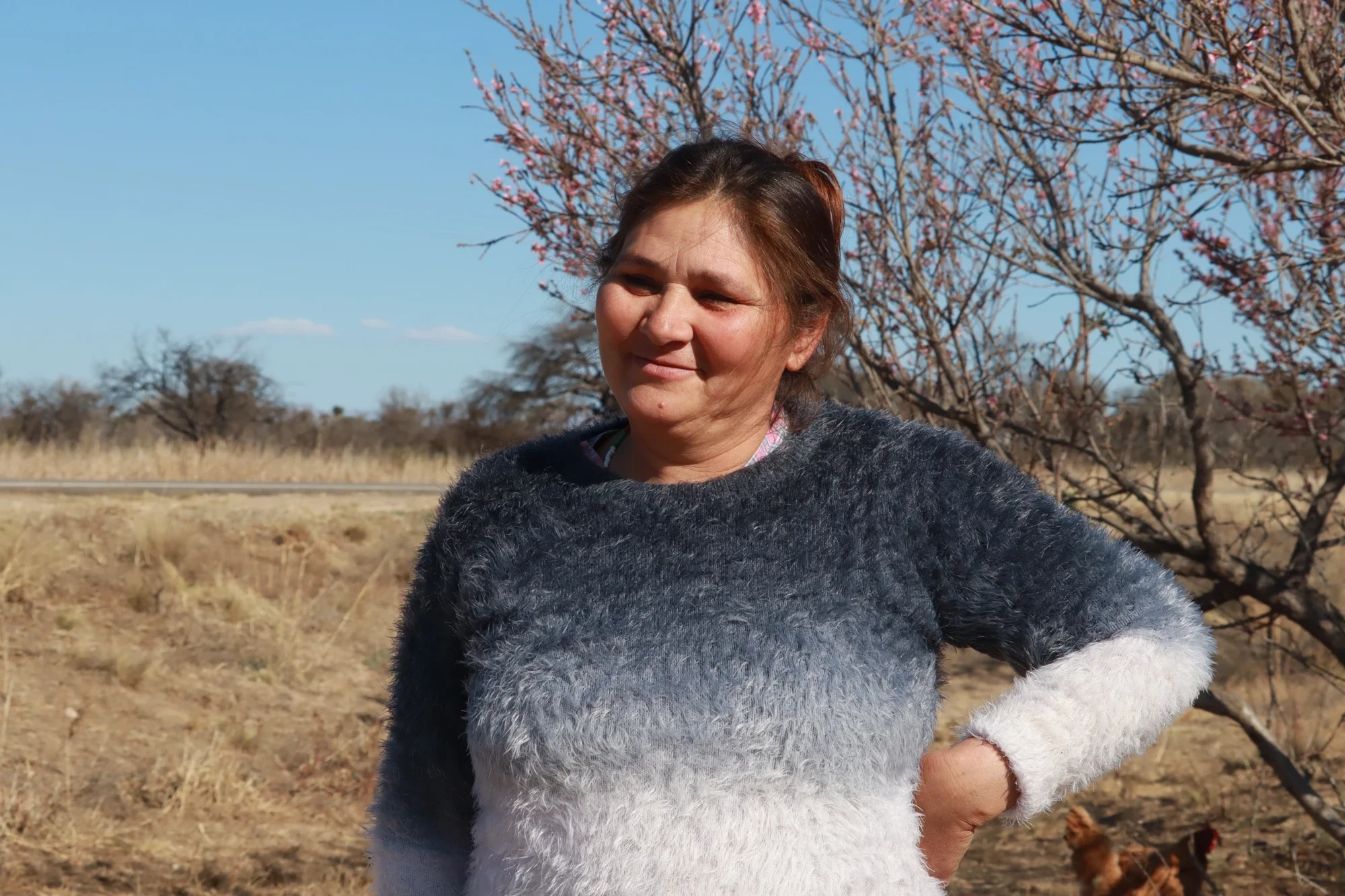
Nora del Valle Nievas is 58 years old. She’s spent her entire life in the Pampa de Pocho, near a lake where she raised her children. When she was a girl, farm work was done manually.

“My dad would pull the plow with horses or mules, and my siblings and I would walk behind him with handfuls of corn seeds and scatter them into the furrows,” Nievas said.

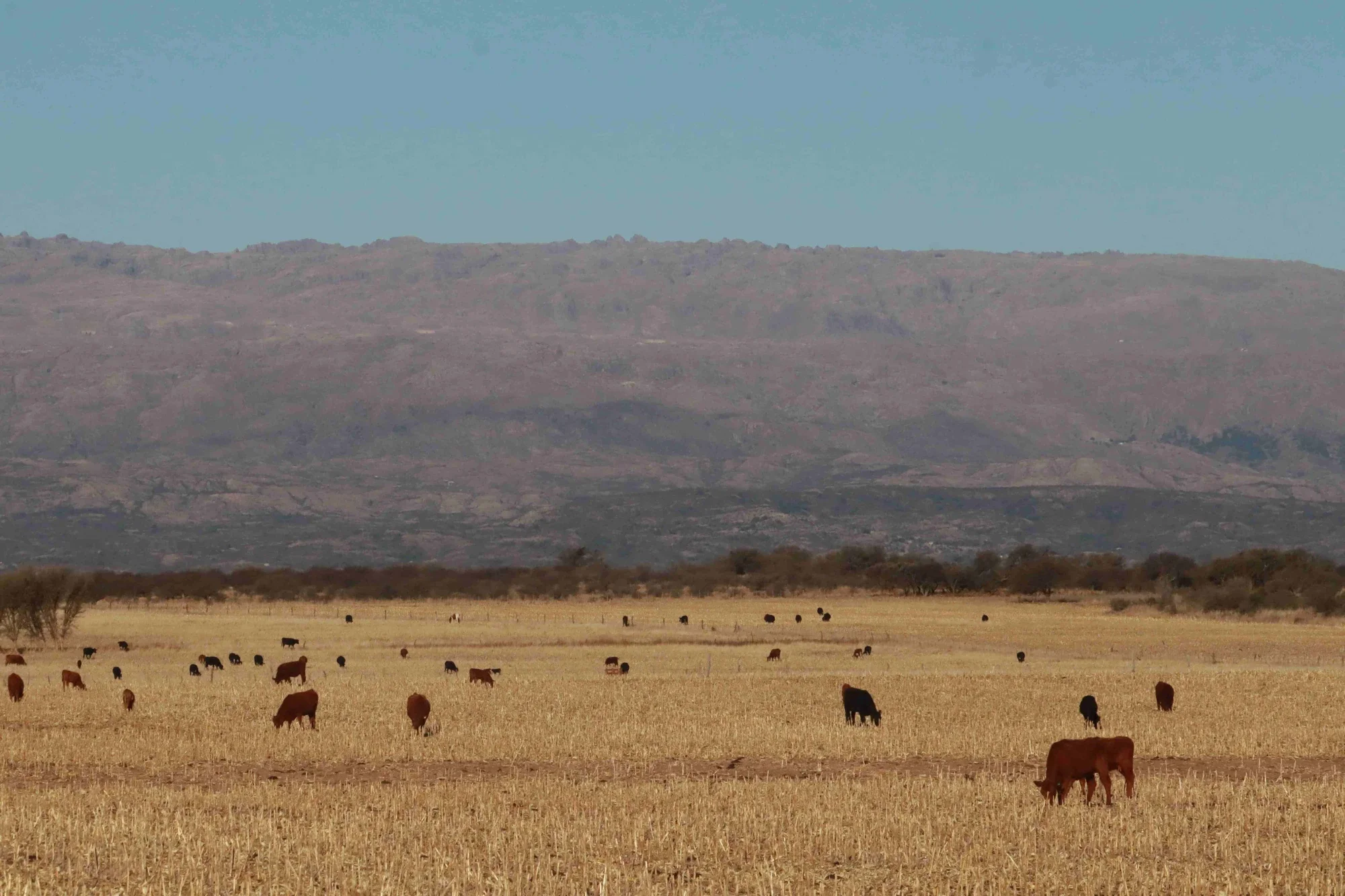
As in much of Latin America, the fields of northwestern Córdoba, where Pampa de Pocho is located, underwent a major transformation beginning in the 1990s.

Glyphosate-tolerant genetically modified soybeans—approved in Argentina in 1996—spread through the region, colonizing and displacing other crops and native vegetation. This led to the concentration of agricultural production in the hands of new players: from seed pools, to groups of investors who leased land and farmed it using machinery to increasingly sophisticated production units.

In order to survive while maintaining mixed farms where small-scale agriculture and ranching could coexist, as on Nievas’ plot, communities had to organize.

“NGU emerged 14 years ago out of the need to help one another,” said Soria of the collective’s origins. “At one point, we planted together with shared machinery, and when we harvested, we made small silo bags [airtight storage systems for dry grains and forage].”

Nievas, who is also a member of NGU, said the organization was originally made up of 12 families, but today there are nine because three have migrated. According to Huerta and her team, outward migration is driven by the loss of access to basic resources like water and firewood.

Deforestation has been compounded by the closure of rural roads, the disruption of water basins, and the impact of pesticides on community health.

Over decades in Córdoba and across Argentina, state policies fostered an environment conducive to the agribusiness model. This situation was worsened by the Javier Milei administration’s move to eliminate key social programs for family farming in rural areas.

Nora del Valle Nievas has lived in Pampa de Pocho her whole life. She’s spent the last 14 years working with other women to build a mutual aid network. Photo © Daniela López.

Resisting dependence and disenfranchisement 

“In rural areas, it’s the women who know if they’re running low on gas, firewood, or kerosene because they’re the ones running the household,” said Nievas. Women are also the producers of the primary source of human energy: food.

Even so, local electricity cooperatives are dominated by men and focused on large-scale agricultural production. 

Energy-intensive practices like mechanized irrigation drain the grid, leaving nearby communities without power—but few question the system or consider improving access to electricity for households.

Globally, much of the energy debate—involving governments, researchers, and business leaders—is focussed on concepts like “green economy, sustainable development, and technological innovation, which are rooted in a commodified view of the environment and energy,” explained Huerta.

“What we see is that the energy transition is not being conceived from the perspective of bodies and people,” said Huerta. “The question is whether the goal is truly to care for the planet or whether it is merely to obtain more energy for production in the face of rising costs and fossil fuel scarcity.”

In contrast, projects like Energías Vivas are focussed on the reproduction of life. The experiences of Mayan women in the municipality of Ixil, in Mexico’s Yucatán Peninsula, show that grounding the energy transition locally can lead to the adoption of technologies that can help with land defense.

The women from Ixil began using solar panels to power their own pumping systems for growing flowers and vegetables. They succeeded in reducing dependence on expensive fossil fuels and in building technical expertise and economic autonomy that strengthened their political presence in the face of real estate encroachment in the area.

“Integrating a local perspective from the outset of an energy transition project is critical to its success,” said Alejandra Vega Camarena, a researcher at the Institute of Geosciences at the National Autonomous University of Mexico, who worked alongside the women in Ixil. 

“Community-controlled energy transitions led by Indigenous women offer transformative pathways for climate adaptation that prioritize social justice, cultural continuity, and territorial sovereignty,” said Vega Camarena.

These efforts in Mexico, Argentina and elsewhere are crucial to ensuring energy management and technology benefits those who need it most.

“In the end,” concluded Huerta, “envisioning a just, situated, and feminist energy transition means considering for whom and for what energy is for; placing life at the center; and ensuring that access to quality energy that enables the reproduction of life and a life of dignity is accessible to all.”

Natalia Concina is an Argentine journalist. She worked at the Télam News Agency for 20 years while also participating in grassroots communication collectives such as Revista Devenir and the Después de la Deriva radio show.

Daniela López is a science journalist. She writes about the environment, health, technology, and gender policies in science for media outlets in Argentina, Mexico, and the region.

This article was originally published by Ojalá; please consider supporting the original publication, and read the original version at the link above.Email

Natalia Concina is an Argentine journalist. She worked at the Télam News Agency for 20 years while also participating in grassroots communication collectives such as Revista Devenir and the Después de la Deriva radio show.


Source: Jacobin

The Caribbean port city of Santa Marta sits at the foot of the Sierra Nevada mountains in Colombia’s Magdalena department. Along its shoreline runs the Drummond terminal, named after the coal multinational that operates it, where a railway juts out into the sea, loading export ships with coal hauled from vast open-pit mines in the neighboring Cesar region, near La Loma. From April 24 to 29, delegates from fifty-eight countries gathered here for the first international conference on phasing out fossil fuels, in a region where the realities of extraction are impossible to ignore.

Coorganized by Colombia and the Netherlands, the summit brought together governments, unions, indigenous peoples, frontline communities, scientists, and activists seeking to move beyond the limits of international climate negotiations and chart a just transition. The conference was divided into three chapters: an academic track, a people’s summit, and “high-level” interministerial talks — all converging at the end of the week, through designated representatives, in joint working sessions.

But what a “just transition” looks like does not carry the same meaning, nor weight, for all participants. If the Santa Marta summit laid bare the costs of fossil fuel dependence, it also exposed the divisions that remain over the scale of economic and political transformation required to break free from fossil capitalism’s stronghold.

Pent-Up Frustrations

Driven by growing frustration with the limits of United Nations climate negotiations, the conference, officially titled Transitioning Away, aimed to push discussions on fossil fuel phase-out further than the UN’s COP (Conference of the Parties) process has so far allowed.

For the past thirty years, fossil fuels weren’t even mentioned at COPs,” said Tzeporah Berman, founder of the Fossil Fuel Non-Proliferation Treaty, a civil society initiative now endorsed by eighteen nation-states, including Colombia, and hundreds of subnational governments. Most of them are small island states in the Pacific region, particularly vulnerable to rising sea levels, such as Vanuatu, Fiji, or Samoa.

Several of these countries, including Tuvalu, declared energy emergencies last month due to severe fuel supply shortages and skyrocketing prices exacerbated by global conflicts. “The government has to shut down at 3 p.m. every day to save energy. We are doing what we can, but we can’t solve this problem alone,” said Tuvaluan minister Maina Vakufua Talia at the introductory plenary.

While the Santa Marta conference built on proposals advanced by the Fossil Fuel Non-Proliferation Treaty, its scope has expanded outside the initiative to include major hydrocarbon powers such as France, Canada, the United Kingdom, and Germany. However, it does not include the United States, China, India, or Saudi Arabia.

The relative absence of Global North countries from the treaty initiative raises questions about real engagement within Santa Marta’s self-described “coalition of the willing.” Those contradictions were perhaps best embodied by the Netherlands: the Dutch government approved new gas extraction projects in the North Sea the very week it was cohosting the conference in Santa Marta. It has also come under fire from Climate Justice Flotilla activists for appealing a court ruling in The Hague that found the Dutch state had failed to adequately protect residents of Bonaire, a Dutch Caribbean territory, from the impacts of the climate crisis.

According to Berman, however, minority coalitions have historically driven global change, citing nuclear nonproliferation and land mine bans as precedents. “Santa Marta is our Porto Alegre — it needs to be,” maintained Joel Wainwright, referencing the World Social Forum’s attempt to build alternatives to dominant economic models. The coauthor of Climate Leviathan, Wainwright attended the summit as a “proud partisan of the climate justice movement.” Such moments of convergence matter — if not to solve the energy crisis in a single conference, then to restore momentum, solidarity, and political energy to a movement often marked by fragmentation and fatigue.

Colombia’s Climate Diplomacy

Under left-wing President Gustavo Petro, Colombia has sought to position itself at the forefront of climate diplomacy. The government has not only opened space for demands long pushed by NGOs and civil society — kickstarting this direct confrontation on fossil fuels, responsible for 75 percent of global greenhouse gas emissions — but also taken steps domestically to align with that agenda.

In recent months, Colombia has moved to halt more than three hundred prospective fossil fuel projects, including forty-three oil blocks and over 286 mining applications, notably by banning extraction in the Amazon region. In March, Petro also announced the country’s withdrawal from the Investor-State Dispute Settlement (ISDS) system, which allows multinational corporations to sue governments over policies affecting their investments. Over the past decade, Colombia has faced twenty-four such claims totaling more than $13 billion: roughly 11 percent of its annual budget.

The decision to halt further extractive expansion is significant for a country ranked as the world’s fifth-largest coal exporter. Fossil fuels account for over 50 percent of all Colombian exports, making the economy highly dependent on extractivism and thus also vulnerable. With 99 percent of production destined for export, this changed course demonstrates that political will can go a long way in advancing the energy transition.

Yet that approach still remains fragile. With elections looming this May 31 (and Petro is ineligible for reelection), a potential opposition victory could see a return to extractivist policies. While Petro’s left-wing supporters are placing their hopes in candidate Iván Cepeda, his conservative opponents have signaled their intention to double down on fracking and oil if elected.

While Petro’s agenda has made this issue a top priority from the start of his term, the push to diversify the economy and energy reliance has only intensified with the US and Israel–led war in Iran.

“Security” and “energy sovereignty” were recurring buzzwords in official speeches, emphasizing the urgency to develop and rely more on renewables.

Global Witness along with the Guardian have recently revealed that the world’s top hundred oil and gas companies banked more than $30 million every hour in unearned profit in the first month of the US-Israeli attack against Iran — adding to the billions accumulated since the start of the war in Ukraine.

For Irene Vélez Torres, Colombia’s minister of the environment, “fossil fuels have always been used as a weapon for geopolitical domination.” Although Petro’s government moved in 2024 to halt coal exports to Israel, the question of regulating exports to countries violating international law remained largely absent from high-level diplomatic debates.

The contrast was stark with civil society, where unions, NGOs, and activists addressed the issue at length within the people’s summit. In their collective statement, the Palestinian Institute for Climate Strategy underlines that “fossil fuels are being routed, traded, insured, and weaponized through systems of war, occupation, and colonial power. Any transition framework that cannot confront that reality will fail its most basic test.”

The Limits of Technocracy

Techno-optimism — and the persistence of “green” market strategies — has not yet seemed to have run its course. A clear divide emerged in Santa Marta between grassroots civil-society calls to move away from “false solutions” and green capitalism, and a more technocratic approach emphasizing market-led and technological fixes.

Hydrogen, nuclear expansion, carbon capture, carbon pricing, and carbon trading were listed among solutions by policymakers, academics, and ministers from countries including Singapore, Sweden, and the Netherlands.

For Wim Carton, a political ecologist whose work with Andreas Malm examines how carbon offsetting shifts responsibility rather than meaningfully reducing emissions, this reflects a deeper problem. “It’s often assumed that markets will solve the crisis if properly incentivized,” he said. “But that overlooks power relations, vested interests, and the ways demand is actively constructed by fossil fuel companies.”

Communities present at the People’s Summit consistently emphasized that the transition must be understood first and foremost as a social and political transformation, rather than a purely technological one.

Meanwhile, Johan Rockström, head of the scientific panel, outlined a vision centered on policy design, financial mechanisms, and technological innovation — including artificial intelligence — to navigate political and socioeconomic constraints.

So have the people’s summit messages been lost in translation?

María Reyes, a climate and human rights activist with the Alliance of Non-Governmental Radical Youth (A.N.G.R.Y), participated in high-level sessions as a youth representative. She described discussions at these private sessions being focused on collaborations such as JETP (Just Energy Transition Partnership) agreements, which she criticized as “a strategy for colonial control.”

JETPs are agreements in which Northern governments fund energy transitions in Southern countries, primarily through loans. Critics argue that they deepen debt dependency — already a major constraint on climate policy in the Global South — while reinforcing unequal financial and political relations under the guise of climate cooperation.

“A Global North country invests in a Global South country in exchange for influence over regulations, laws, and infrastructure,” she explained. “There’s still a lot of confusion between cutting emissions and phasing out fossil fuels. And for us as children and youth, it’s important to insist: the problem isn’t just emissions, it’s the extractive logic at the root of the system.”

Still, the gathering marked a hopeful turning point: not because it resolved the question of how to phase out fossil fuels but because it forced the issue into the open. Questions of debt cancellation and the ending of fossil fuel subsidies (currently amounting to $1.2 trillion each year) were discussed, and participants agreed to present road maps for progressive phaseouts. Whether these road maps will prove more effective remains an open question.

The next conference, scheduled for 2027 in Tuvalu and cohosted by Ireland, will build on this first gathering and is intended to complement rather than replace the UN process.

Santa Marta’s attempt to confront the fossil fuel economy marks a significant step toward what Torres has called a new “global climate democracy.” Yet the continued dilution of key debates may well slow an already overdue process. In particular, issues such as militarization and human rights violations risk being sidelined in favor of “green finance” and investment opportunities.

Scientists are already warning that a “super El Niño” could further intensify extreme weather events and push global temperatures to record highs in the coming year. In a world increasingly shaped by war, geopolitical rivalry, and impunity, openings for cooperation remain vital. But they should do more to integrate Global South and indigenous perspectives, alongside the more radical demands needed to confront the expansion of fossil-fueled authoritarianism.


This article was originally published by Jacobin; please consider supporting the original publication, and read the original version at the link above.

Email

June Loper is a Franco-American journalist and sound artist, working in radio and print, with a focus on environmental and social justice struggles.

Wars Destroy Lives and the Climate. Why Aren’t We Counting Military Emissions?

Source: The Conversation

When delegates gathered for COP30 in Belém, Brazil in November 2025, they scrutinized various sectors of the global economy for their contributions to rising greenhouse gases. Agriculture, aviation, steel, cement — all were on the table. One topic not discussed was war.

This isn’t a minor oversight. Militaries are significant contributors to greenhouse gas emissions. Russia’s invasion of Ukraine has generated an estimated 311 million tonnes of what’s known as CO₂ equivalent, comparable to the combined annual emissions of Belgium, New Zealand, Austria and Portugal. CO₂ equivalent is the metric used to compare the warming impact of various greenhouse gases to carbon dioxide.

Recently published research calculated that the first 15 months of Israel’s war in Gaza generated more than 33 million tonnes of CO₂ equivalent, comparable to the combined 2023 annual emissions of Costa Rica and Slovenia.

In February 2026, Israel and the United States launched a war against Iran, joining a long list of other conflicts where emissions go uncounted in global inventories.

These are massive emissions, and they are generated with no formal mechanism to record, report or attribute them, and no accountability for the climate costs that affect people in conflict zones and far beyond.

A recent article by Neta Crawford, a researcher with the Cost of War project at Brown University, highlights how armed forces, militarization and war fuel climate change. She argues that military emissions and conflict-related emissions remain undercounted, even though they undermine efforts to mitigate climate change.

The military emissions gap

Estimates suggest militaries and their supply chains account for approximately 5.5 per cent of global greenhouse gas emissions, which is enough to make them the world’s fourth largest emitter if counted as a country. And that figure only covers peacetime.

This is what researchers call the military emissions gap: the difference in emissions between what governments report and what their armed forces actually emit.

The problem starts with the rules. Under the United Nations Framework Convention on Climate Change (UNFCCC), countries have been exempt from fully reporting military emissions since the Kyoto Protocol negotiations in the 1990s. The United States successfully lobbied for the exclusion on national security grounds.

The 2015 Paris Agreement introduced voluntary reporting. However, as a 2025 briefing from the Conflict and Environment Observatory and Griffith University made clear, the result is a system that is “patchy, incomplete or missing altogether.”

The top three military spenders — the U.S., China and Russia — either submit no data or incomplete, non-disaggregated figures. This is a structural blind spot that excludes one of the most carbon-intensive sectors from meaningful accountability.

What wars cost the climate

A recent study on Gaza provides a comprehensive account of the war’s full carbon cycle. It found that direct combat emissions — jets, rockets, artillery, military vehicles — account for just 1.3 million of the 33.2 million tonnes of CO₂ equivalent.

The vast majority, more than 31 million tonnes, are projected to come from the reconstruction of destroyed infrastructure: nearly 450,000 apartments, over 3,000 kilometres of roads, schools, hospitals and water systems. Rebuilding what war destroys is, climatically speaking, the biggest act of war of all.

A report on Russia’s invasion of Ukraine by the Initiative on GHG Accounting of War found that direct combat emissions constitute 37 per cent out of total emissions between February 2022 and 2026. The war has ignited thousands of fires in forests and wetlands, accounting for 23 per cent of its total carbon footprint.

Russia’s attacks on electrical infrastructure have further released sulphur hexafluoride, a greenhouse gas 24,000 times more potent than CO₂, from high-voltage switching gear. And the rerouting of civilian aircraft around Ukrainian and Russian airspace has added an estimated 20 million extra tonnes of CO₂ equivalent compared to pre-invasion flight paths.

In Iran, it is estimated that the U.S.-Israel war has unleashed over five million tonnes of CO₂ equivalent — largely from infrastructure destruction and energy-related impacts.

None of this appears in any country’s reports on emissions to the UNFCCC.

What needs to change

In July 2025, the International Court of Justice (ICJ) delivered an advisory opinion establishing that states have binding obligations to assess, report and mitigate harms to the climate system. In a separate declaration, ICJ judge Sarah Cleveland stated that those obligations extend to harms resulting from armed conflicts and other military activities.

The UN General Assembly has called for Russia to compensate Ukraine for all damages resulting from its invasion. When wars of aggression are launched, the emissions generated in fighting them, surviving them and rebuilding belong on the aggressor’s carbon ledger. When Russia invaded Ukraine, it generated a climate debt on behalf of the entire planet. The same can be said of other aggressors.

The Intergovernmental Panel on Climate Change (IPCC) is the UN body responsible for assessing the science related to climate change. The IPCC is currently in its seventh assessment cycle, with reports expected in late 2029.

This assessment cycle must include a dedicated report for conflict emissions covering infrastructure destruction, fighting and post-conflict reconstruction. The UNFCCC must make reporting military emissions mandatory and develop a framework for attributing conflict emissions under its Enhanced Transparency Framework.

Civil society and academia have already done the hard work of showing it can be done. Organizations like the Conflict and Environment Observatory have built methodologies from scratch, using open-source data. The science exists. What’s lacking is the political will to enshrine it in global climate governance.

The richest countries spend roughly 30 times more on their armed forces than they contribute in climate finance to developing countries. Global military spending has reached a record $2.7 trillion. This is more than the total $2.2 trillion invested globally in clean energy in 2025.

As conflicts proliferate, the world is committing to an ever-larger unaccounted carbon liability. The climate finance gap is also likely to get worse as countries cut international development aid to direct funds to higher military spending.

Every degree of warming we are trying to avoid is undermined by wars. Accounting for conflict emissions is a vital way to make climate science whole.

This article was co-authored by researchers who are part of the Accelerating Community Energy Transformation initiative: Curran Crawford, Basma Majerbi, Madeleine McPherson (University of Victoria) and Samaneh Shahgaldi (Université du Québec à Trois-Rivières).

This article was originally published by The Conversation; please consider supporting the original publication, and read the original version at the link above.