Saturday, June 20, 2026

How armed groups in Colombia are using TikTok to recruit young people

Cover image: Watch “Colombia: Using TikTok as a recruitment tool”, a visual investigation produced by the FRANCE 24 Observers. © Observers / Upian

Issued on: 19/06/2026 - FRANCE 24 Observers
11:46 min  From the show


As Colombia’s conflict has intensified in recent years, armed groups have flooded social media like TikTok with videos aimed at getting new recruits – particularly young people. The FRANCE 24 Observers team investigated the inner workings of this new recruitment method.

Wads of cash, gold watches and attractive young women: this is what life inside Colombia's armed groups looks like, at least according to numerous TikTok posts.

Some publications highlight the values these groups purportedly champion, such as “the defence of the people”, while others openly invite online users to join them.

The goal is to attract new recruits, especially young ones, who constitute the platform's main audience.
These images were posted by TikTok accounts linked to Colombian guerrillas and paramilitary groups. The texts read: “Good kids study. Lazy ones make money” (left), and “The true revolutionary is the one who fights for his people and asks nothing in exchange” (right). © TikTok

Such posts have multiplied in recent years, spanning all of Colombia’s active armed groups – including dissidents of the former FARC guerrilla movement, the ELN (one of the country's main guerrilla groups), and the Clan del Golfo (the biggest paramilitary group).

For these groups, recruiting new members is crucial, as the conflict has intensified over the last few years.
“We are open for recruitment,” the left image reads. The letters on the red armband correspond to a paramilitary group in the Tolima department. The image on the right reads, “Join us! We’re waiting for you. The doors of the FARC are open to all who have a rebel spirit.” © TikTok
‘We found armed groups offering as much as 12 million pesos a month [€2,900]’

Lina Mejía Torres works for the Colombian NGO Vivamos Humanos, which released a report in early 2026 on the recruitment of young people through social media.

“We found armed groups offering as much as 12 million pesos a month [Editor’s note: €2,900 – seven times the Colombian minimum salary in 2026]. When you see that kind of pay in a region where there's high unemployment, it gets attention. The groups target young people who are vulnerable, who aren't in school.

The work they give kids is not just being a lookout or harvesting coca leaves; children are sometimes recruited for jobs like flying drones.”
‘How does it work if I want to join?’

Some of the TikTok posts get more than 100,000 views – and they also get comments. Some online users ask how to join the armed groups, and some social media accounts tell them to contact them via direct messages.


Some posts from accounts affiliated with armed groups get more than 100,000 views. © Upian

Our team created a fake TikTok account and contacted 33 accounts affiliated with the armed groups, primarily by posting comments or sending messages. We posed as a 17-year-old Colombian teen in order to see whether being underage posed a problem.

Six accounts responded; we exchanged messages to learn about their recruitment process and salary ranges. Several appeared willing to recruit a minor.


Excerpt from a conversation with an account linked to a FARC dissident group. Our team asked them, using a fake TikTok account, “Do you accept people who are 17 years old?” They answered, “Yes, of course”. © TikTok

The recruitment and use of minors in armed conflict is a crime punishable by 23 years in prison, according to the Colombian penal code.

The UN reports that the number of children under 18 in Colombia’s armed groups climbed by 320 percent between 2019 and 2024.

However, no data is available on the exact number of young people recruited specifically via social media platforms.
‘They can reach the entire country from a base in a single place’

Online recruitment offers several advantages over traditional recruitment methods, said Juana Cabezas of the Indepaz human rights group. The Colombian organisation has studied forced recruitment by Colombia’s armed group alongside the platform Pacifista.


“Before, the armed groups had to be physically present on the ground to recruit minors. They'd go from house to house in an area, recruiting one or two minors [at a time] by force. Today, they can be omnipresent: they can reach the entire country from a base in a single place.

Recruitment via social media also goes largely unnoticed because children simply vanish, leaving their families completely in the dark about what happened to them."

Mejía Torres told our team:


“Tracking down those involved in the recruitment is far more difficult because social media allows for anonymity. We won’t necessarily find out who is behind all of this or who is responsible.”

Recruiting online also offers a way to downplay the dangers.

This image was published on an account linked to the ELN, which regularly pays tribute to fallen guerrilla members. This young girl, for instance, died at the age of 14. Our team translated part of the text in the image. © TikTok
‘The groups call their families to tell them to come pick up the children's bodies’

We spoke to a member of an indigenous NGO in Cauca, the region with the highest number of young people recruited. We are hiding his identity for security reasons. He told our team:


“There are children who have joined the armed groups. One or two weeks later, the groups call their families to tell them to come pick up their body, because they've been killed.”

A report by the Colombian Institute of Legal Medicine says 30 minors under the age of 18 died between August 2025 and May 2026 – half of them in fighting between the armed groups, half in fighting with the military.
This image was posted on an account affiliated with a FARC dissident group. © TikTok


Accounts deleted, content replicated

Our team reviewed nearly a hundred TikTok accounts recruiting for armed groups. We found that they can remain active for a year or more before being taken down. And when they are deleted, their content often shows up on other accounts.

Moreover, when we first started our investigation, we used keywords to identify accounts affiliated with armed groups. But after just a day and a half, that was no longer necessary – our TikTok feed had become flooded with content related to these groups.

Yet, TikTok’s community guidelines ban “criminal organisations” and “supporting, recruiting for, or promoting these entities”. The platform also says it is protecting people under 18.

When contacted by our team, TikTok said it “takes proactive measures to stop the cartels using the platform, recognising that this is a very real challenge (...). Through specialised teams dedicated to dismantling these constantly evolving criminal networks, we strive to anticipate their new tactics and strictly apply our rules by deleting content and accounts that violate our guidelines.”

TikTok also said they "work closely" with the Colombian authorities.
Law designed to protect minors on social networks

In 2025, the Colombian parliament adopted a law concerning the “development of safe digital environments” for minors.

The NGO Vivamos Humanos says it is a promising first step. But the law has not yet gone into effect, and it does not mention recruitment by the armed groups.

The Colombian Ombudsman’s Office, also contacted by our team, said that the response should “include preventive measures (...) particularly in areas where armed groups are most present.”
BY:

The FRANCE 24 Observers

Chloé LAUVERGNIER

G7 & Co: Who rules the new world ?

Cover image: © France 24
Issued on: 19/06/2026 - 
Play (46:27 min)From the show


In a week that an interim peace agreement WAS signed between the US and Iran bringing a temporary end to the conflict and the beginning of a sixty day window to negotiate the many unresolved issues.

President Trump signed the Memorandum of Understanding over a dinner at the Palace of Versailles, and before he’d had time to digest his dessert of Hot Chocolate Pie and French Vanilla Ice Cream there were already grumblings within the Republican party that a military win had been turned into a strategic defeat. Iran’s Supreme Leader claimed Trump had made a deal out of desperation, but it was bravo and cheers at the Chateau.

It’s been a week’s that’s seen the leaders of the G7 nations meet lakeside in Geneva. It was in Evian, five decades on from the inaugural meeting in France established to work out how to deal with the global economic turbulence in the aftermath of the oil crisis of 1973. France, Germany, Italy, Japan, the UK, and the US back alongside Canada. This year some other handpicked leaders were invited, the prime ministers of India and Kenya, the Presidents of Brazil, Turkey, Egypt and the UAE, the emir of Qatar, and, what we’ll be discussing in the programme tonight:, the new faces at the table, the bosses of big tech. Canada’s Mark Carney said the old ritual gathering is useful for weaving the strands of a new world order through broader engagement, but the G7 no longer pretends to run the world.

It’s been a week that‘s seen President Zelensky secure renewed western commitment at the G7 with European Leaders talking of an apparent renewed focus and tone from President Trump. This time last year Trump compared the war to two boys fighting in a park, sometimes you’re better off leaving them to it, he said. This week he put his name to a joint statement declaring “unwavering support” for Ukraine, and backed calls for increased pressure on Russia and while he stopped short of criticising Putin, he said Moscow should make a deal.


OUR GUESTS
Anne BAGAMERY Independent journalist
Francis Collings  Freelance journalist based in Paris
Bojan PANCEVSKI  Chief European Political Correspondent, WSJ
Richard WERLY  France/Europe correspondent for Blick

VIDEO BY:
Daniel Whittington
Gavin LEE
Bolivian President Paz declares state of emergency over anti-government blockades

Bolivian President Rodrigo Paz declared a state of emergency on Saturday, granting broader powers to deploy the military and clear road blockades after nearly two months of protests paralysed the economy and fuelled demands for his resignation.

Issued on: 20/06/2026 
By: FRANCE 24

Bolivia's President Rodrigo Paz speaks on the day he signs an agreement with the Bolivian Workers' Confederation (COB) union after 50 days of anti-government protests, a step toward resolving a conflict that has paralyzed the country, in La Paz, Bolivia, June 19, 2026. © via Reuters

Bolivia’s crisis intensified on Saturday as ​President Rodrigo Paz declared a state of emergency, enabling wider military deployment to clear blockades and restore ​order after ‌protests brought the economy to ⁠a halt over the past 50 days.

The move came in a ‌live message to the nation just hours after ⁠Paz unveiled a deal struck on Friday with the main union, the Bolivian Workers’ ​Confederation, (COB) that aimed to ease tension.

The conflict ‌initially erupted after Paz abruptly cut long-standing fuel subsidies to shrink the deficit, amid a worsening dollar crunch ‌and talks with the International Monetary Fund.

Despite later steps to stabilize ​fuel prices and reverse unpopular land reforms, protests intensified into broader discontent, with unions demanding wage increases, ​an end to fuel and dollar shortages, and ​Paz’s resignation.

Protesting groups, many allied ​to former leftist President Evo Morales, have cut off key roads, stranding ​trucks and choking supplies of food, fuel and medicines to many areas, including La Paz.

The emergency declaration gives Paz broader constitutional tools to restore order, such ⁠as sending armed forces to clear blockades.

(FRANCE 24 with Reuters)


Gas expansion in the guise of security: Is Europe making the energy crisis permanent?

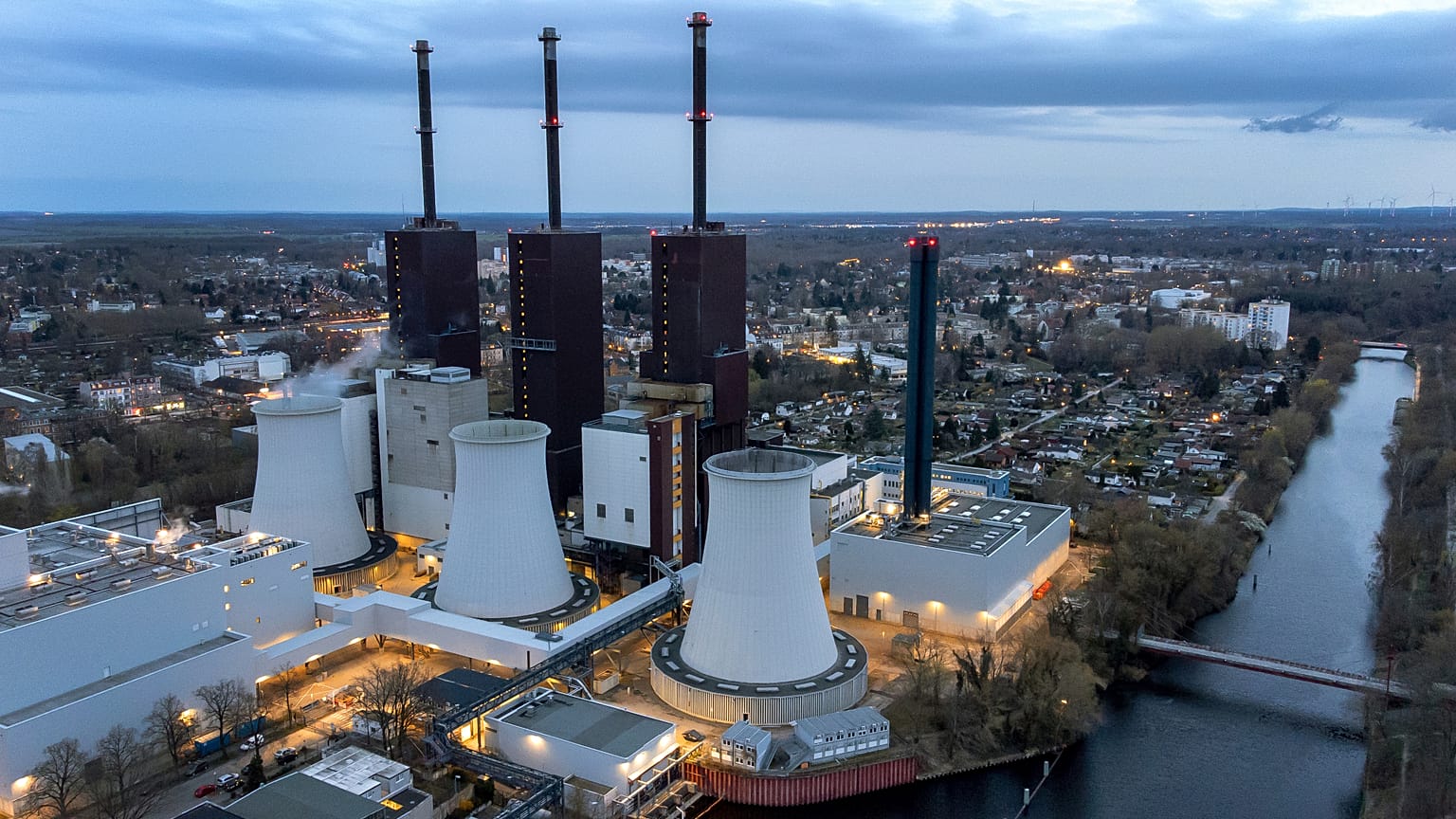
FILE - Steam leaves a cooling tower of the Lichterfelde gas-fired power plant near a cable bridge crossing the Teltow canal in Berlin, Germany, on March 30, 2022.
Copyright AP Photo/Michael Sohn, File
By Angela Symons
Published on

Flexible power and energy security are being used to lock Europe deeper into fossil fuels, a new report warns.

The fossil fuel price shock triggered by the war on Iran has exposed Europe’s dangerous reliance on oil and gas. But rather than treating it as a warning, governments across the EU are doubling down – with plans to build almost 60 gigawatts of new gas plants that could lock the continent into fossil fuel dependence for decades to come, a new analysis cautions.

The ‘Merchants of Crisis’ report, published by campaign group Beyond Fossil Fuels (BFF) on 15 June, finds that the planned gas plants, if built, would burn around 28 billion cubic metres of gas every year – equivalent to around nine per cent of the EU’s projected gas imports, or the annual gas consumption of 46.4 million households.

Natural gas prices in Europe have already risen by 60 per cent since the outbreak of the war, with Europe entering the crisis with much lower gas storage levels than in recent years – 46 billion cubic metres at the end of February 2026, compared with 60 billion cubic metres a year earlier.

Households and businesses are bearing the brunt with spiking energy bills and a deepening cost of living crisis.

“Building more gas plants will not protect people in Europe from future energy crises – it will deepen our dependence on volatile fossil fuel imports, while energy companies profit,” says Juliet Phillips, energy campaigner at Beyond Fossil Fuels. “The real solution is establishing a strategy to phase out fossil fuels while accelerating progress on renewables, storage, grids and clean flexibility.”

Germany is on the frontline of new gas power

The report argues that “a powerful alliance of politicians and energy companies” is pushing Europe deeper into fossil fuel dependence in the guise of energy security. This creates what it calls “a self-reinforcing cycle” that enriches energy companies while leaving households exposed to future price shocks.

It singles out Germany as a prominent example. The German government plans to add 12 gigawatts of power plant capacity by 2031, 10 of which are earmarked for hydrogen-ready, gas-fired plants.

While this is down from the coalition government’s initial plans to tender 20 GW of gas capacity by 2030, it’s still a significant addition to the country’s existing portfolio of roughly 31 GW. The German government mandates that all newly built gas-fired capacity must “decarbonise” by 2045 – although it leaves the door open for this to be achieved through carbon capture and storage (CCS), which critics including the Institute for Energy Economics and Financial Analysis (IEEFA) warn is not a proven or cost-efficient solution.

In particular, BFF contends that while Germany’s Energy Minister Katherina Reiche is central to the country’s energy policy, she is not neutral. BFF claims she brings a pro-gasindustry stance to her role, after a decade working with E.ON subsidiary Westenergie AG, which supplies over 6.6 million people with fossil-fuelled energy, and VKU, an influential lobby group for municipal energy utilities.

Since entering office, she has pushed for the expansion of gas-fired power plants, advocated for the EU to relax its net-zero deadlines to protect industry, and proposed cuts to solar and grid subsidies. She also backed the rollback of Germany’s renewables-focused Heating Act last month.

The German Federal Ministry for Economic Affairs and Climate Action (BMWE) did not immediately reply when contacted for comment.

Germans already face the highest energy bills in the EU due to the country’s high exposure to volatile global gas and oil markets, which set electricity prices. Around 95 per cent of gas consumed in Germany comes from imports.

The report also highlights Poland and Romania as having significant government shares in oil and gas that influence policy decisions. In Poland, the state is the majority owner of utilities PGE and ENEA and the top shareholder in energy and utility conglomerates Orlen and Tauron.

In Romania, gas producer Romgaz is 70 per cent state-owned, while the state holds a 20.7 per cent share in oil company OMV Petrom. The two companies are co-developing the €4 billion Neptun Deep Black Sea gas project, which is set to double Romania’s gas production from 2027. Romania’s Mintia gas-fired thermal power plant, slated to be the largest in the EU, is expected to become operational this year – despite EU grid body ENTSO-E finding much of the planned capacity would not be economically viable by 2035.

Flexible power: Why can’t Europe move forward?

Germany’s energy security plans highlight a wider problem: the existing electricity system was built around fossil-fuelled power, and “energy security” is once again being used to justify maintaining the status quo rather than investing in reform.

By mandating that 10 GW of its new power capacity “must be able to generate electricity continuously over a longer period of time”, Germany is effectively favouring gas-fired plants. These are currently relied on across Europe to provide flexible, dispatchable power – balancing the grid when wind and solar output doesn’t match demand.

But campaigners and energy analysts argue this approach could leave countries with stranded assets. Focusing on battery storage and other clean flexibility solutions could be cheaper and more resilient.

"Clean flexibility is scaling fast," think tank Ember's senior energy analyst, Dr. Beatrice Petrovich, tells Euronews Earth. "Grid-scale battery costs hit a record low in 2025, continuing a decade-long trend, while installed capacity more than doubled in just two years – making batteries a cheaper alternative to new gas for short-term grid balancing that is also faster to build.

"In Germany alone, battery capacity is expected to grow from 2.5 GW in 2025 to over 10 GW in the next few years. Combined with AI-enabled demand flexibility from a growing fleet of EVs and heat pumps, this progress shows that policymakers should carefully assess the risks of overbuilding fossil assets, including gas supply disruption and stranded costs at the expense of taxpayers."

Poland’s capacity auctions go even further: they explicitly only allow gas-fired units to participate, framed by the government as “system stabilisation and energy security”. But new research by Krzysztof Bodzek at the Silesian University of Technology suggests this is also a political choice rather than an unavoidable necessity – finding that by 2040, local energy balancing alone could displace the need for 20.8 GW of gas power plants.

The prioritisation of gas as a controllable power source is especially problematic because it draws investment and political focus away from making renewables more flexible through things like battery storage, demand-side response, and time-of-use tariffs.

Germany is a stark illustration of how far behind Europe’s largest economy is on this front: while countries like France, Italy, Spain and Sweden have smart meter coverage of 95 per cent or above, just under four per cent of German households had a smart meter at the end of September 2025.

Smart meters are a necessity for dynamic electricity tariffs, which are in turn essential for aligning variable renewable generation with consumption – and reducing reliance on gas as a backup.

TTEP, a recent joint venture between TotalEnergies and EPH announced in May, is set to become one of Europe’s largest gas power producers. It, too, has been framed as a flexgen player. But campaigners say it will effectively create a new fossil gas giant with a structural interest in prolonging Europe’s dependence on gas imports.

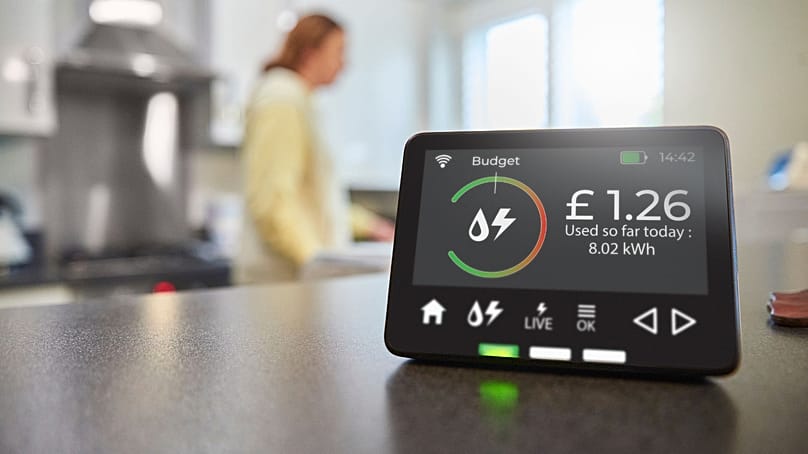
Smart meters help to balance variable renewable generation with consumption.
Smart meters help to balance variable renewable generation with consumption. Canva

‘European households need freedom from fossil fuel price shocks’

“Energy security cannot be used as a pretext for making the fossil fuel industry even richer through new gas deals,” says Phillips. “European households and businesses need exactly the opposite: lower bills, greater resilience and freedom from fossil fuel price shocks.”

BFF is calling on EU leaders, who are meeting this week for the European Council, to endorse a long-term framework to progressively reduce Europe’s structural dependence on fossil fuels – backed by measurable targets and supported by accelerated investment in renewables, storage and grid infrastructure.

The European Commission has already proposed a package of new measures, AccelerateEU, in response to the current crisis, but BFF argues these fall short of the structural shift needed to prevent Europe from becoming permanently vulnerable to fossil fuel price shocks.

A letter signed by over 20 industry groups, climate NGOs and trade unions has been delivered to EU leaders ahead of the Council meeting, calling for measures that structurally reduce Europe’s exposure to fossil fuel volatility.

Energy crisis heightens risk of poverty and social exclusion: EU Commissioner Minzatu

Cover image: TALKING EUROPE © FRANCE 24
Issued on: 22/05/2026 
Play (12:04 min)From the show


Our guest has an important role in promoting social policies in the European Union, at a time when much of the political oxygen is being sucked out by the competitiveness and simplification agenda, as well as by defence and security issues. Roxana Minzatu is Executive Vice-President of the European Commission and is in charge of social rights and skills, quality jobs and preparedness.

Minzatu is a Romanian social democrat, a former minister for European funds in the Romanian government and a former MEP. She recently presented an anti-poverty strategy aimed at dealing with the fact that one in five Europeans – or 93 million people – are at risk of poverty or social exclusion.

"I want to send a signal of optimism with this strategy. I don't want to paint a bleak picture," Minzatu tells the programme. "But the reality is that the numbers (of people at risk of poverty) are dynamic. The cost of living is rising, the energy shocks crisis, the invasion of Ukraine, and now the Middle East crisis. There are a number of shocks that could modify these numbers. And then this strategy sets the path forward and sets out a kind of shield."

But isn't Minzatu limited by the fact that it's up to EU member states to decide on their own anti-poverty measures?

"I meet prime ministers and ministers of finance, not just ministers of labour and education," she responds. "They're not easy conversations. Of course, many times the temptation is to say, 'but, you know, we need to invest more in security. We need to invest more in technology.' But I always bring into the discussion the essential role of people, and the quality of their jobs."

Minzatu insists on the link between quality jobs and competitiveness, pointing to the proposed Quality Jobs Act that will focus on labour relations, high-risk or precarious sectors, and health and safety in the workplace. "Quality jobs are a key ingredient of being more competitive and stronger economically," she says. "Our proposal for a Quality Jobs Act is now in consultation, so both trade unions and employers are giving us their input. Trade unions want more legislation, more binding rules. Employers want more guidance."

The Quality Jobs Act would work hand in hand with the Union of Skills, and with the Skills Portability Initiative, "which will make use of everything we can: legislation, digital tools, AI tools to create much more equivalence and trust in qualifications, degrees and diplomas between member states, so that people can travel freely with their knowledge, with their education."

Minzatu admits that all this will be a challenge amid declining performance in maths and science among young Europeans. "Looking at the statistics, the pandemic was the turning point where numbers started to deteriorate a bit more," she notes. "That has to do with how education was offered; the online teaching. But then we see numerous other transformations, including the impact of artificial intelligence, of technology, of social networks."

We ask Minzatu about the collapse of the pro-EU government in her home country, Romania, following a no-confidence vote in the parliament.

"Romanians are highly pro-European, and the dream of many generations has been to be part of Europe. This dream does not disappear easily," she remarks. "But people will of course judge politicians from the perspective of their everyday lives. So we need to be able to address their concerns about their cost of living, their concerns about the taxes that they pay, and so on. The reactions (of Romanians) are very concretely anchored into that."

Programme prepared by Isabelle Romero, Perrine Desplats, Aline Bottin and Oihana Almandoz.


World's worst energy crisis? Iran war sparks scramble for alternatives to Gulf oil

Issued on: 22/04/2026 - FRANCE24
Play (42:08 min) From the show

Will the world have enough fuel to fill the tanks and fertilise the crops? The seizure of ships by Iran is adding to global jitters as the extension of a ceasefire offers zero visibility on prospects for the planet's biggest choke point for oil and gas. Nearly two months on, the Paris-based International Energy Agency is calling it the biggest-ever energy disruption in history. We ask about prices at the pump, cancelled flights and more broadly, if oil's not flowing through the Strait of Hormuz, where to find it and what's the alternative?

Cue images of the French president who staged his Wednesday cabinet meeting in the central Allier region, where Emmanuel Macron also inaugurated a large lithium mine.

How fast can the energy transition make up for lost oil? How much of a bind is this for Europe, when harmony among the 27 rests on Russian oil flowing to eastern members through the Druzhba pipeline and when China's dominance of the battery and electric vehicle markets makes it very hard to compete?

Produced by François Picard, Rebecca Gnignati, Juliette Laffont, Ilayda Habip, Andrew Hilliar.

OUR GUESTS
Noam RAYDAN
Senior Fellow at The Washington Institute for Near East Policy
Hélène CONWAY-MOURET
French senator, Socialist Party
Philippe CHARLEZ
Energy analyst, Le Millénaire
Jan ROSENOW
Professor of Energy and Climate Policy, University of Oxford
BY:
François PICARD

Rebecca GNIGNATI

Juliette Laffont

Ilayda HABIP

Andrew HILLIAR

Trans-Saharan Gas Pipeline: an African dream that could reshape world energy markets


After two decades of delays, the colossal trans-Saharan gas megaproject to export Nigerian gas to Europe via Niger and Algeria is back in the spotlight with this month's announcement that construction of the Algerian section had rebegun. The pipeline, once completed, could fundamentally reshape Europe's energy map.


Issued on: 20/06/2026 - FRANCE24
By:
David RICH
Tahar HANI

The Trans-Saharan Gas Pipeline will connect Algeria and Nigeria, two gas-producing powerhouses that together account for more than half of Africa's natural gas production and reserves. © AFP, STR


After several false starts, work on the Trans-Saharan Gas Pipeline (TSGP) officially restarted in early June amid the recent thawing of relations between Niger and Algeria. The megaproject linking Nigeria with the two countries began with an initial construction phase in early April in Algeria's Adrar region.

Over 4,000 kilometres long, the pipeline will enable the transport of Nigerian gas through Niger and Algeria, where it can then be exported to European markets, namely through Italy and Spain by way of the Mediterranean Sea.

“This project is not at all new, but it’s ramping up,” said Brahim Oumansour, associate researcher at the Institute for International and Strategic Relations (IRIS). "Algeria and Niger have chosen to put their differences aside for a common goal, in a geopolitical context that is favourable to them."

Long road to construction

The project of a pipeline between Algeria and Europe has existed since the 1980s. Since then, the project has experienced a long and winding road, with long pauses as it was relegated to the drawers of ministries and research departments. Nigeria, Niger, and Algeria first signed a deal in 2009 to “define the project” – with the first delivery of gas scheduled for 2015. After several years of delays, the project was revived in 2022 with the signing of a memorandum of understanding in Algiers.

“The feasibility studies for this gigantic project and the issue of financing took a long time,” said Algerian political scientist Hasni Abidi. “The three partner companies [Algeria’s Sonatrach, Nigeria’s NNPC and Niger’s Sonidep] had to find a financial arrangement. Niamey didn’t have the financial resources necessary for the construction.”

The project was also delayed because of diplomatic tensions such as those caused by Niger’s 2003 coup d’état which created a rift in relations between Niamey and its partners.

In mid-February of this year, Algerian President Abdelmadjid Tebboune welcomed the head of Niger’s junta, Abdourahamane Tiani, on an official visit in Algiers during which both sides hailed their “brotherhood”. The diplomatic engagement allowed for the revival of the ambitious project, which gained traction amid the energy supply shock created by the Middle East war and the destruction of energy infrastructure in the Gulf countries.
Corridor between two African gas giants

The TSGP's ambition is to connect two natural gas powerhouses. Algeria is the leading producer in Africa, and Nigeria, which has the continent's largest untapped reserves (6 billion cubic meters, equivalent to a quarter of Qatar's reserves), is the third-largest. When combined, the two countries account for over half of Africa's natural gas production and reserves.

"This is a very ambitious project, and one that will reshape the landscape of regional energy business," said Abidi.

Dubbed the "project of the century" in Africa, the 4,128-kilometre-long pipeline begins in Nigeria’s Warri City and ends in Algeria’s Hassi R’Mel in the northern Sahara.

On a map, the pipeline appears as a nearly vertical line, with 1,000 kilometres running north through Nigeria, 840 kilometres through Niger and 2,300 kilometers through Algeria.

Some 1,800 kilometres still need to be built: 100 in Nigeria, 700 in Niger and 1,000 in Algeria.

Construction on the Algerian portion was officially launched on June 4 during a ceremony in the country's southern Aoulef region attended by the three participating countries' energy ministers.

Nigeria is scheduled to begin construction on its portion in early 2027, according to its minister of petroleum.
The Africa Atlantic Gas Pipeline championed by Morocco includes 13 countries. © France Médias Monde Graphic Studio


Financial and geostrategic godsend

The Trans-Saharan Gas Pipeline will enable the transport of around 30 billion cubic meters of natural gas annually from Nigeria to Europe via Algeria with its existing Transmet and Medgaz pipelines, which lead to Italy and Spain.

This volume represents about 11 percent of Europe’s annual imports of natural gas (270 billion cubic metres in 2025).

Other quantities of natural gas will be liquefied at Algeria's Arzew and Skikda refineries before being exported to Europe in ships in the form of liquefied natural gas (LNG).

"Algeria wants to reinforce its status as a reliable energy partner for Europe, but its capacities are limited. The partnership with Nigeria should allow it to increase its volumes to meet European demand," said researcher Brahim Oumansour.

One of Africa’s poorest countries, Niger intends to take advantage of transit rights for the gas and attract new infrastructure and energy investments, which create jobs.


Obstacles and limitations

Despite the project's relaunch, several obstacles jeopardise its ambitious timeline which aims for completion by 2029.

The cost of the pipeline’s construction was approximately $13 billion when it launched in 2009. Since then, the cost has increased to around $20 billion, some energy sector experts estimate. The increasing cost of raw materials and the challenging desert terrain are largely to blame. The countries participating in the project have not yet disclosed the project's current budget.

African and international banks might lend their support to the Algerian and Nigerian investments, but no confirmation has been given thus far.

The pipeline also has security issues since the infrastructure crosses zones, particularly in northern Nigeria and Niger, where armed groups and trans-border smuggling networks are active.

Competition from Morocco


Another major gas project spearheaded by Morocco, Algeria's main regional rival, could overshadow the TSGP. The Africa Atlantic Gas Pipeline (AAGP) is a 6,000-kilometre-long project which includes 13 countries. The pipeline connects Nigeria to Morocco with the same objective as the TSGP: to export Nigerian gas to European markets.

The cost of the project is estimated at $25 billion.


Route of the Africa Atlantic gas pipeline, as proposed by Morocco, which includes 13 countries. © France Médias Monde Graphic Design Studio

“These two projects are in competition because they are aiming for the same customer,” Oumansour said. “Algeria is ahead, since the trans-Saharan project has made more progress. The Moroccan project depends on the construction of complex offshore structures and many more partners.”

These rival projects could both eventually win over the European market. The demand for natural gas in the European Union is higher than ever since the bloc turned its back on Russia for invading Ukraine. Iran’s chokehold over the Strait of Hormuz also reinforced European political will to strengthen nearby energy partnerships with Africa.

Yet the volatility of energy prices remains a significant risk factor for the viability of these large projects, Abidi said.

"These are colossal investments over the medium and long term. The price of gas has increased significantly, but it could fall again if Iran enters the gas market or if the war in Ukraine ends. The demand is currently there – but nothing guarantees the financial success of these projects."

This article has been translated from the original in French.
Over a billion children exposed to three or more climate hazards UN report shows

More than one billion children face at least three overlapping climate hazards, the UN childrens' agency Unicef has warned, while highlighting the disproportionate impact in some regions of the world.


Issued on: 16/06/2026 - RFI

Children displaced by floods play in a relief camp, in Jaffarabad, a district in the southwestern Baluchistan province, Pakistan, 2022. © Zahid Hussain / AP


For the report, the UN agency cross-referenced data showing where the roughly 2.4 billion children on the planet live with the geographic distribution of the eight most common climate impacts. They are coastal flooding, river flooding, drought, tropical storms, heat waves – at least three days above a high temperature threshold, which varies by country – extreme heat, wildfires and sandstorms.

The report primarily focuses on the 1.1 billion children who are exposed to at least three risks, with the most common combination being drought, extreme heat (above 35 degrees Celsius) and heat waves.

That combination affects some 296 million children, including 74 million in Nigeria, 34 million in Pakistan and 32 million in India.

The number of children in this three-or-more category has increased sharply over the past 20 years.

Children are 'first victims' of climate change, French rights watchdog warns

Almost all children – some 2.3 billion – are exposed to at least one risk. Two billion are exposed to at least two, while 364 million face at least four.

Of the 123,000 children exposed to seven or more climate hazards, some 46,000 are in Myanmar.

"Children are at the forefront of the impact of climate change," said Unicef chief Catherine Russell.

As for the worst place for a child, "there isn't a super short answer," one of the report authors, Tom Slaymaker, told AFP.

"But they're not all equal," Slaymaker said. "We do see some hot spots... it's really concentrated in Sub-Saharan Africa and parts of South Asia."
Chad's children at risk

Countries with large populations of children – including Bangladesh, India, Nigeria and Pakistan – are at the top of the list for the number of children exposed to at least three hazards.

But in sheer percentage terms, countries in Sub-Saharan Africa – particularly the Sahel – have the largest proportion of children affected by hazards. The impacts are often exacerbated by governments' inability to cope with climate hazards.

Chad, for example, faces a humanitarian crisis with limited access to water, electricity and food. According to the report, more than 95 percent of kids in the country are exposed to at least three hazards – one of the highest proportions in the world.

'A vicious cycle that exhausts bodies and minds': the human cost of climate change

Other particularly vulnerable countries include 39 island states that face challenges such as limited freshwater, import dependence, and inability to easily shelter elsewhere after a disaster such as a hurricane.

No country is truly spared, the report shows.

"In many countries, there will be small pockets of the population which are not exposed to these hazards," Slaymaker said. "They tend to be in the northern hemisphere, particularly so, parts of Scandinavia."

But that is because the report looks only at the eight most common risks worldwide, he stressed, noting that children in those countries may face other threats not covered in the report, such as melting glaciers or thawing permafrost.

(with AFP)
BIO WARFARE

France ramps up fight against tiger mosquitoes after record outbreaks

France is bracing for another summer of dengue and chikungunya risk, as climate change helps the disease-carrying tiger mosquito spread north and authorities test new ways to curb its advance.


Issued on: 17/06/2026 - RFI
\
The tiger mosquito, which can transmit dengue, chikungunya and Zika, is now present across most of France, where researchers are testing new ways to reduce its numbers. AP - Rick Bowmer

The tiger mosquito, known scientifically as Aedes albopictus, can transmit dengue, Zika and chikungunya. First detected in mainland France in 2004, it is now present across most of the country.

Public health authorities recorded an unprecedented 809 locally transmitted cases of chikungunya and 30 locally transmitted cases of dengue in France in 2025.

The same year also saw 2,398 imported chikungunya cases and 81 local transmission clusters.

One effort to reduce the insect's numbers is taking shape in Montpellier, where French startup Terratis breeds male mosquitoes before sterilising and releasing them.


Mosquitoes against mosquitoes


"After sterilisation, we release them into urban areas. They look for females and mate, but when the females lay eggs, those eggs are empty," Terratis co-founder Clélia Oliva told the French news agency AFP.

Male mosquitoes are exposed to X-rays in batches of 400,000, making them infertile. The aim is to flood an area with sterile males so fewer viable eggs are produced and the population gradually declines.

First developed 50 years ago for agriculture, the sterile insect technique is now being adapted to fight mosquitoes as disease-carrying species continue to multiply.

Terratis produces 1.5 million sterile mosquitoes a week and aims to reach 40 million within two years.

"This year, we've seen a surge in orders," Oliva said, citing strong interest from cities struggling to control mosquito populations.


Scaling up

"In principle, the sterile mosquito technique works," said Frédéric Simard, head of the Institute of Research for Development in Montpellier, which helped launch Terratis.

Major challenges remain, including increasing production, reducing costs and adapting the method to different regions so it can be competitive and sustainable, Simard said.

"If I had to compare it, I'd say we're at the iPhone 1.0 stage," he said.

Other approaches are also being used. In parts of South America and Asia, mosquitoes are infected with a bacterium called Wolbachia, which prevents them from transmitting certain viruses.

In Brazil, one facility produces as many as 100 million eggs a week using the method.

No single solution will be enough, Simard told AFP. "The Wolbachia technique, sterilisation, traps, insecticides – all of this needs to be combined," he said.

Wolbachia is an "emergency response" to immediate health risks, while sterilisation forms part of a longer-term strategy.

Cost and regulation


In Montpellier's Malbosc district, a trial that began in August 2025 is continuing this year.

"Twice a week, we release 100,000 mosquitoes across 31 locations," Terratis employee Florian Vernichon told AFP.

The programme remains expensive. The current experiment is estimated to cost around €70,000.

"We don't have the means to finance releases on the scale of an entire city, and we believe this should be handled by the state and regional health agencies," said Montpellier deputy mayor Stéphane Jouault.

The approach also faces a regulatory hurdle in France. Sterile mosquitoes fall into a grey area because they are neither biocides, designed to control harmful organisms, nor genetically modified organisms. The uncertainty could discourage private investment.

Early results have been encouraging. In Brive-la-Gaillarde, where Terratis released 11 million sterile mosquitoes in May 2025, half of the eggs ready to hatch in spring were sterile, Oliva said.

The proportion is expected to reach 90 percent by the end of summer 2026.

The goal is not to eradicate the species entirely, but to reduce its numbers significantly and sustainably.

(with newswires)
Burnham wins key UK poll, paving way for bid to challenge PM Starmer

Wigan (United Kingdom) (AFP) – Veteran UK Labour politician Andy Burnham emphatically won a crunch by-election on Friday, securing a parliamentary seat and clearing the way for a widely expected leadership challenge against beleaguered Prime Minister Keir Starmer.


Issued on: 19/06/2026 - RFI

A member of the Loony Party watches as Labour party's Andy Burnham speaks after winning the Makerfield by-election, 19 June, 2026. AP Photo/Jon Super - Jon Super

Burnham, a former government minister who has been Greater Manchester mayor since 2017, ensured his return to parliament by easily beating the hard-right Reform UK party's candidate in the Makerfield constituency in northwest England.

The 56-year-old longtime figure in centre-left Labour wants to replace Starmer as party leader and prime minister, and needed to win the high-stakes vote to be in a position to trigger such a contest.

If Starmer does leave office this year, then Britain will get its seventh prime minister in 10 years.

"I do say to my own party, this is a final chance to change," Burnham said in his acceptance speech after securing nearly 55 percent of the vote, beating Reform's Robert Kenyon by more than 9,000 ballots. Turnout was a historically high 59 percent.


"We must get it right," he added, saying his victory could be a "turning point" for the country.

Starmer congratulated Burnham on X, saying voters "chose Labour's campaign of hope and optimism over division and hate".

The prime minister was expected to speak to media during a public appearance in London Friday morning.

In office since July 2024, Starmer has been clinging to power since Labour suffered a drubbing in polls in England, Scotland and Wales last month.

Some 77,000 people were eligible to cast ballots © Oli SCARFF / AFP


'King of the North'

Starmer has been rocked by several policy U-turns and a scandal over his appointment of ex-Jeffrey Epstein associate Peter Mandelson as the UK's ambassador to Washington.

Dozens of Labour MPs have called on Starmer to quit, and several ministers have resigned, as national surveys suggest Reform is set to win the next general election, expected in 2029.

But the 63-year-old ex-lawyer has refused to quit, insisting his landslide election victory over the Conservatives 23 months ago gave him a five-year mandate to govern.

Amid growing impatience within the ruling party, now-former Labour MP Josh Simons stood down in Makerfield so that Burnham could try to return to parliament and run for leader.

Kenyon (L) posing with Reform leader Farage © Darren Staples / AFP

The unprecedented move thrust the little-known political district into the spotlight, handing its electorate of roughly 77,000 people an outsized say in influencing Starmer's fate.

Surveys show that Burnham – nicknamed the "King of the North" for winning three consecutive mayoral terms – is Labour's most popular politician and would likely win a direct vote against Starmer amongst the party membership.

Thursday's vote for the Makerfield seat, where Labour had held a majority of just 5,300 votes, was seen as a test of whether Burnham can defeat Reform, led by anti-immigrant firebrand Nigel Farage.

The area is predominantly white and working-class -- fertile territory for the hard-right group which has topped national surveys for over a year.

But local plumber Kenyon's campaign was dogged by past offensive remarks about women, while the fringe hard-right Restore Britain party dented Reform's vote by snagging nearly 7 percent of returns.

'Transition'

Starmer has vowed to fight any leadership challenge, but the resounding nature of Burnham's win is likely to heighten pressure from Labour MPs to step down instead.

A cascade of resignations from Starmer's top team would make his position untenable.

Before the Makerfield result was declared, ex-minister Louise Haigh told the BBC Starmer should consider "an orderly and managed transition" of power.

Burnham, an MP from 2001 to 2017, hails from Labour's so-called soft-left wing and has been an outspoken critic of Starmer's more-centrist rule.

Attention now turns to when he will make his move against Starmer.

Burnham is due to be sworn in as a member of parliament on Monday. Under Labour party rules, leadership candidates must be an MP.

He will be able to easily muster the support of 81 of Labour's 400-plus MPs -- the minimum needed to kickstart a contest.
Starmer has urged Burnham not to launch a leadership challenge © Isabel Infantes / POOL/AFP

Ex-health minister Wes Streeting, from Labour's right wing, has said Starmer should be given "space over the weekend" to consider his future.

Streeting has also vowed to join any race, but could end up striking a deal with Burnham to avoid a divisive fight.

Speaking to the BBC, polling expert John Curtice cautioned against any suggestion that Burnham's victory would lead to a "dramatic" improvement in Labour's popularity nationwide.


Keir Starmer: British PM fighting for his political future

London (AFP) – UK leader Keir Starmer swept to power in July 2024 promising to end years of chaos in British politics but has angered voters with numerous U-turns and controversies.


Issued on: 19/06/2026 - RFI

Keir Starmer is the first Labour prime minister since 2010 © Oli SCARFF / AFP
ADVERTISING


Now he faces a likely leadership bid by popular party veteran Andy Burnham after the Greater Manchester mayor won a decisive by-election in the northwest.

In his first speech as prime minister on July 5, 2024, Starmer promised a government of "service" that would "tread more lightly" on people's lives following 14 years of Conservative rule dominated by Brexit and infighting.

He sought to make a virtue of his more measured approach, contrasting what he saw as his pragmatic managerialism with the ideological bombast of previous Tory prime ministers Boris Johnson and Liz Truss.

"There's no such thing as Starmerism and there never will be," the man himself is said to have told colleagues, according to "Get In", a book about his leadership of the Labour party written by journalists Patrick Maguire and Gabriel Pogrund

But soon after entering Downing Street, he struggled to be the safe pair of hands he had portrayed, while his lack of ideology and charisma has left him struggling to sell a story of where he is taking the country.

He insisted on Friday that "there's more to do and that's what I'm focusing on" as he faced further calls from some of Labour's approximately 400 MPs to step down to avoid a bitter leadership challenge from Burnham and possibly other contenders.
Successful career

Starmer, born on September 2, 1962, was raised in a small semi-detached house on the outskirts of London by a seriously ill mother and an emotionally distant father who loved animals and rescued donkeys.

Poor local and regional election results in May increased calls for Starmer to quit © JUSTIN TALLIS / AFP

After university, he enjoyed a successful career as a human rights lawyer and chief state prosecutor which led to him being knighted by then Queen Elizabeth II.

A keen flautist and Arsenal fan, Starmer became an MP in 2015, succeeding left-winger Jeremy Corbyn as Labour leader five years later, following the party's worst general election defeat since 1935.

He showed his ruthless side by purging Corbyn, targeting antisemitism and moving the party back to the more electable centre ground, delivering Labour's biggest election victory in over two decades.

On becoming UK leader, Starmer pledged to "fix" Britain after years of sluggish growth, a cost-of-living crisis and public services hollowed out by Tory austerity measures.

But he cautioned the road to recovery would be "long and difficult".
Troubles

His premiership got off to a bad start when his government announced a hugely unpopular policy to remove winter fuel payments from millions of elderly people, which had not been in Labour's election manifesto. He later backtracked.

Starmer was also forced into a humiliating climbdown on reforming welfare benefits, backed down in a row with farmers over inheritance tax and angered businesses for increasing a payroll tax and the minimum wage.

The early months were also dominated by anger over a free gifts row, while in September 2025, Angela Rayner resigned as deputy prime minister for underpaying a property tax.


Andy Burnham speaks to supporters after his by-election victory in Makerfield © Darren Staples / AFP

That same month, Starmer sacked Peter Mandelson as his ambassador to Washington over the depth of the envoy's friendship with late US sex offender Jeffrey Epstein.

The appointment, for which Starmer has apologised, led to the departure of two of his closest aides and the most senior civil servant in the foreign ministry.

Starmer himself has refused to quit but the scandal haunts him, contributing to a series of humiliating local election results for Labour in May that renewed calls for his departure.
Burnham challenge

While Starmer has been praised for standing up to US President Donald Trump over the Iran war and maintaining European support for Ukraine, he has struggled to fend off support at home for both the left-wing Greens and the populist, hard-right Reform UK party, led by firebrand Nigel Farage.

A key by-election victory on Friday paved the way for an expected leadership challenge from popular Labour veteran Burnham, who decisively beat a Reform candidate on his home soil in the north of England.

Starmer has one of the lowest popularity ratings ever among prime ministers at just 19 percent, according to a YouGov poll.

On Friday, Starmer vowed not to "walk away" as leader, saying he would run in any leadership contest but warning that this would plunge the country "into chaos".

© 2026 AFP


Andy Burnham: Next British PM in the making?

Cover image: Spotlight © France 24
Issued on: 19/06/2026 - 
Play (14:45 min)From the show


There are reports in the Times of London, that British cabinet ministers are set to tell the Prime Minister Keir Starmer that his quote "time is up" to set a timetable for his departure and an orderly transition. There's been no confirmation that these talks have taken place from Downing Street.

Events dear events is the quote attibuted to the late British Prime Minister Harold Mcmillan, when asked what is likely to blow a government of course.

The event that's creating a lot of howling wind aroudn Keir Starmer right is what's just happened 173 miles away in the constituency of Makerfield near Wigan.

Once synonomous for pie eating contests, northern soul and rugby league.

It may go down in history as the election that paved the way for a future prime minister.

Andy Burnham, the former mayor of Manchester has talked of change needed for Britain, his reasons for entering a bi election, appear tied to the task of becoming an mp again to challenge the prime minister.

And he gave his pitch to be PM in his victory speech, but didnt declare the race underway.


OUR GUEST
Paul RICHARS Former Labour special adviser and columnist

VIDEO BY:
Daniel Whittington
Gavin LEE


European robotics start-ups go up against Chinese heavyweights

Paris (France) (AFP) – Humanoid robots able to perform tasks from grape harvesting to welcoming visitors were front and centre at France's Vivatech trade fair this week, with European firms looking to fill niches beyond what dominant Chinese giants can offer.


Issued on: 19/06/2026 - RFI

Mirokai from France's Enchanted Tools already welcomes people at hospitals and airports © JULIEN DE ROSA / AFP/File

French company Enchanted Tools was showing off its Mirokai, a "social" robot with long orange ears and wide blue eyes.

Able to communicate in over 50 languages, prototypes of the Paris-based firm's machine are already out in the wild welcoming people to hospitals and airports, marketing chief Richard Malterre said on a Vivatech stage.

The start-up hopes its first mass-produced models will arrive by the end of this year.

"At least 60 percent of the robot is manufactured in Europe, and we're fighting to keep it that way," Malterre told AFP.

But some of the AI robotics know-how is "not necessarily available" in Europe, he said, such as the graphics processors from American chip giant Nvidia that power Mirokai's brain as well as the broader generative AI boom.
'Dark factories'

When it comes to sheer robotics production capacity, China is unrivalled thanks to companies including Unitree and Agibot.

PAL Robotics' Francesco Ferro shows off machines that can harvest grapes 
© JULIEN DE ROSA / AFP/File

Their androids' tightly choreographed displays wowed visitors to Vivatech, the latest fair to show them off in recent months.

Around 87 percent of the 13,000 humanoid robots deployed worldwide in 2025 rolled off a Chinese production line, according to the UK-based consultancy Omdia.

"China is definitely on the forefront" as its companies increasingly show off "dark factories" where robots work largely without human supervision, said Joern Buss, a robotics expert at the consultancy Arthur D. Little.

Nevertheless, Europe is "catching up" behind Japan and Korea, he added, boasting "some good robotics players" including longstanding firms.

New players on the European scene include Germany's Neura, which builds humanoid industrial and household robots as well as a platform for training them to carry out human tasks.

The company recently announced it had raised $1.4 billion.

"We get requests for everything, even dentists, everyone is calling us and asking if they can have a robot as a supporter, because they can't find people," chief executive David Reger told AFP.

China's Unitree is one of the giants of the sector
 © JULIEN DE ROSA / AFP/File

Like other advanced economies around the world, Europe faces an ageing population that could squeeze the labour supply in both manufacturing and services.

Reger called robots like Neura's the continent's "last chance", saying "Europe does require this economic pillar to sustain" itself.

He cited familiar challenges for European tech firms including tight regulation and a tougher search for financing than competitors in the United States.

But Reger has no plans to uproot Neura's business, which is collaborating with German car component suppliers Bosch and Schaeffler on factory automation.

He vaunts Neura's order book of over $1 billion.
Data protection

"If all robot production goes to Japan or China, that could be a big problem when it comes to sovereignty," said Francesco Ferro, chief executive of Spain's PAL Robotics.

His company was at Vivatech showing off its latest models bolted together in Barcelona.


Robots have been a star visual attraction at recent tech trade shows 
© JULIEN DE ROSA / AFP/File

One is a black biped that has been dubbed Kangaroo, while the Tiago machine is fitted with jointed arms that have been put to use in logistics as well as picking grape harvests.

Robotics developers use vast quantities of data to train their machines' movements, and they collect still more information as they carry out their tasks.

The continent should aim to create "a totally European supply chain, without thinking only about price", as that could lead prospective clients to buy Chinese robots, Ferro said.

That would risk seeing valuable or sensitive data "falling into the wrong hands", he warned.

French-American start-up Genesis AI plans to re-shore production of its Eno multifunctional robot next year after making it in China.

Prospective customers include "the big industrial base in France, Italy and Germany," co-founder Theophile Gervet told AFP.

Enchanted Tools' Malterre also believes the demand exists, and "I'm confident in our ability and creativity to endure".

"We need to be ready for a fight, not throw in the towel."

© 2026 AFP


French startup unveils non-humanoid robot as AI race moves to physical machines


French robotics startup Genesis AI on Tuesday unveiled "Eno", its first general-purpose robot, marking a step toward bringing advanced AI from online chatbots into physical machines. Backed by former Google CEO Eric Schmidt, the company says the wheeled robot is designed to extend human capabilities rather than mimic human form, with commercial deployments planned from late 2026.


Issued on: 16/06/2026 
By: FRANCE 24

French startup Genesis AI launched "Eno", a non-humanoid AI robot that has human-like hands and folds into its base. © via Genesis AI

Genesis AI, the French robotics startup backed by former Google CEO Eric Schmidt, unveiled ​its first general-purpose robot on Tuesday, as AI capabilities expand beyond chatbots and into physical machines.

The robot, called "Eno", breaks from the humanoid design usually favoured by leading manufacturers, ​featuring a ‌wheeled base rather than legs, a foldable tower and hands ⁠that the company says match the form of a human hand.

Driven by advances in AI, the global robotics ‌market is expanding rapidly, sparking debate over its impact on employment, though ⁠technical challenges, mostly about processing power and battery life, remain.

A Reuters/Ipsos poll this month showed 53 percent of Americans were concerned that AI would put ​them or someone in their household out of work.

Founded in ‌early 2025, Genesis AI has raised $105 million (€90.6 million), one of France's largest and matching the record seed round of Mistral AI – Europe's leading AI company. Genesis AI's valuation was ‌not immediately available. Eno runs on Genesis's own AI model and is not built to look like humans, but ​to extend human capabilities, according to the company.

Genesis AI plans to begin production and targeted customer deployments by the end of 2026, starting with logistics and manufacturing customers, ​followed by hotels, hospitals and consumers.

In a statement, Schmidt said the robot's breakthrough ​will not replace human expertise, but rather "amplify it" to ​unlock what he called "one of the largest economic opportunities of the AI era".

Genesis AI has built dozens of units so ​far and plans to scale up production in the second half of 2026, Vivian Sun, Vice President of Commercial and Strategy at Genesis AI, told Reuters. Sun said the wheeled base was chosen because most industrial customers operate on flat floors, adding that legs ⁠would only make sense for use cases like climbing stairs.

"We are mimicking humans in capabilities, not ⁠in form. Humans can ​go up and down, and so does the robot, but through this foldable design."

(FRANCE 24 with Reuters)