Saturday, June 20, 2026

France's Louvre museum 'running out of steam', new director says

The world's largest museum is having a hard time securing investments to upgrade its decaying infrastructure, the Louvre's new director Christophe Leribault told a Senate committee Wednesday. The museum has been hit by a series of public scandals including a water leak, a large-scale ticket fraud operation and the daylight theft of nearly $100 million worth of imperial jewellery.


Issued on: 17/06/2026 
By: FRANCE 24

Building-related emergencies are piling up at the Louvre, its new director has said. © Stéphane de Sakutin, AFP


The Louvre museum is struggling to find funding to upgrade its ageing facilities, its new director said Wednesday, following a litany of problems that included a brazen $100-million jewellery heist.

"Despite its imposing majesty, despite the daily commitment of its staff, the Louvre is running out of steam," Christophe Leribault told a Senate committee.

"Its equipment and infrastructure are reaching the end of their life cycle."

Leribault, an art historian and museum director specialising in 18th-century art, took the helm in February, after his predecessor stepped down following an embarrassing daylight theft of imperial jewels in October that laid bare severe security failings.

Home to iconic pieces of art including Leonardo da Vinci's "Mona Lisa", the Louvre is the world's most visited museum, receiving around nine million visitors a year.

It is housed in a vast palace in central Paris on the banks of the Seine River, built over centuries by various French monarchs who at times used it as their official residence.

"Building-related emergencies are piling up, and we're facing a wall in terms of investments," Leribault said.

French President Emmanuel Macron last year announced a sweeping overhaul for the Louvre that would include a new space for the Mona Lisa and a new museum entrance.

Macron's aides have said the project is expected to cost from €700 million to €800 million ($730 to 830 million). But the French Court of Auditors has put the price tag at €1.15 billion.

Under the plan, Leonardo da Vinci's masterpiece – which attracts around 20,000 visitors a day – will be independently accessible from the rest of the museum, with a separate ticket to see it.

The museum has recently struggled with repeated strikes causing loss of revenue, a ticket fraud scheme that may have cost the museum €10 million ($11.7 million), a water leak and other maintenance issues.

(FRANCE 24 with AFP)


A cosmic tribute: Asteroid named after beloved singer Elliott Smith

A cosmic tribute: Asteroid named after beloved singer Elliott Smith
Copyright AP Photo - Canva

By David Mouriquand
Published on


More than two decades after his death, Elliott Smith has been immortalized with an asteroid named after him. The celestial honour came from a fan listening to his song ‘Shooting Star’...

It has been nearly 23 years since we lost Elliott Smith, the wonderful American indie singer-songwriter behind songs like ‘Waltz #2 (XO)’, ‘Between The Bars’ and ‘Son of Sam’.

The highly influential musician died in October 2003 at age 34, after suffering two stab wounds to the chest.

Now, Smith has been immortalised in the stars with an asteroid named after him – specifically a minor planet discovered in 2014 which is officially named “(861969) Elliottsmith”.

The tribute came at the initiative of Edinburgh-based independent filmmaker Orlando Campopiano, and has been approved by the International Astronomical Union’s Working Group for Small Body Nomenclature (WGSBN).

As reported by Stereogum, Campopiano got the idea while listening to the song ‘Shooting Star’ off of Smith's posthumous album ‘From A Basement On The Hill’ - the singer’s sixth and final studio album which was released one year after his death.

The filmmaker reached out to Smith’s estate, and their proposal was later accepted by the International Astronomical Union (IAU).

“We just received official approval, and the designation is now live: Asteroid (861969) 2014 OS439 is officially "Elliottsmith",” said Campopiano. “Something very interesting about this is that the catalogue number for the asteroid is 861969, directly mirroring (Smith’s) birth date of 8/6/1969!”

He added: "I hope this introduces at least one new person to Elliott's brilliant discography, and I'm happy to see a permanent legacy in the stars!”

An official citation was published in the IAU’s bulletin, confirming that the asteroid has been named in honour of the “American musician and songwriter [who was] born Steven Paul Smith on August 6, 1969”.

You can check out the asteroid's location, courtesy of NASA and the California Institute of Technology’s Small-Body Database Lookup:

Elliottsmith
Elliottsmith NASA / California Institute of Technology

Elliott Smith is not the only musician to have an asteroid named after them. Others include David Bowie, Stevie Wonder, The Beatles, Freddie Mercury, Aretha Franklin and Bob Dylan.

If you’re not familiar with Smith and his stellar discography, we recommend you start with his third album, 1997’s ‘Either / Or’, and go from there.

You may recognise three tracks in this album as they featured in Gus Van Sant’s film Good Will Hunting: ‘Between The Bars’, ‘Angeles’ and ‘Say Yes’. Smith also contributed a new song, ‘Miss Misery’, for the soundtrack - song which earned him an Oscar nomination.

Mexican archaeologists unearth ancient ruins with unique Mayan features

Mexican archaeologists have uncovered ancient ruins bearing signs of Mayan culture and previously unseen architectural features in the eastern state of Veracruz, a discovery officials described as unique and potentially significant for understanding the region's pre-Hispanic past.


Issued on: 20/06/2026 - 
By: FRANCE 24

Ancient ruins in Veracruz had signs of Mayan culture but also 'never before seen' pre-Hispanic characteristics. © Marco Antonio Martinez, AFP

Mexican archaeologists unearthed ancient ruins with signs of Mayan culture as well as "never before seen" characteristics in the eastern state of Veracruz.

President Claudia Sheinbaum called the discovery "very relevant" during her morning press conference on Friday, saying her government would allocate resources for the investigation and restoration of the site.

The site includes a circular stone platform unlike any other unearthed in that part of Mexico.

Researchers also discovered a monolith depicting a figure with potential Mayan features, the National Institute of Archaeology and History (INAH) said.

"It's a unique, unprecedented finding," said Lino Espinoza Garcia, an archaeologist for the INAH and one of the coordinators for the Campo Viejo site near the town of Coatepec.

Dating back to the Early Classic period between 200 and 600 AD, the pre-Hispanic ruins include a flagstone and limestone platform adorned with almost squared lines or figures as well as the circular stones.

These attributes have never been recorded in this region of Mexico, the INAH said in a statement.

It's "a very particular structure," said Alberto Vazquez, the other archaeologist responsible for the site.

"We don't have any records so far of a correlation with other (ancient) sites."

The monolith stands 1.88 meters (6.16 feet) high, 1.47 meters (4.82 feet) wide at its broadest point and 68 centimeters (2.23 feet) at the narrowest.

The stone depicts a scene of a symbolic character, according to experts.

"They are two characters who are requesting something, they have a bowl and are receiving something, we think it's a liquid. Obviously, in that context, it's a divine liquid, we think it would be water," Espinoza detailed.

The archaeologist believes the image could reflect the era of a great drought in the region, which could explain why two members of the elite, one of them with Mayan traits, are depicted receiving the fluid from a divine entity.

(France 24 with AFP)

'Explosive cocktail': El Niño raises fears of summer wildfires in Portugal

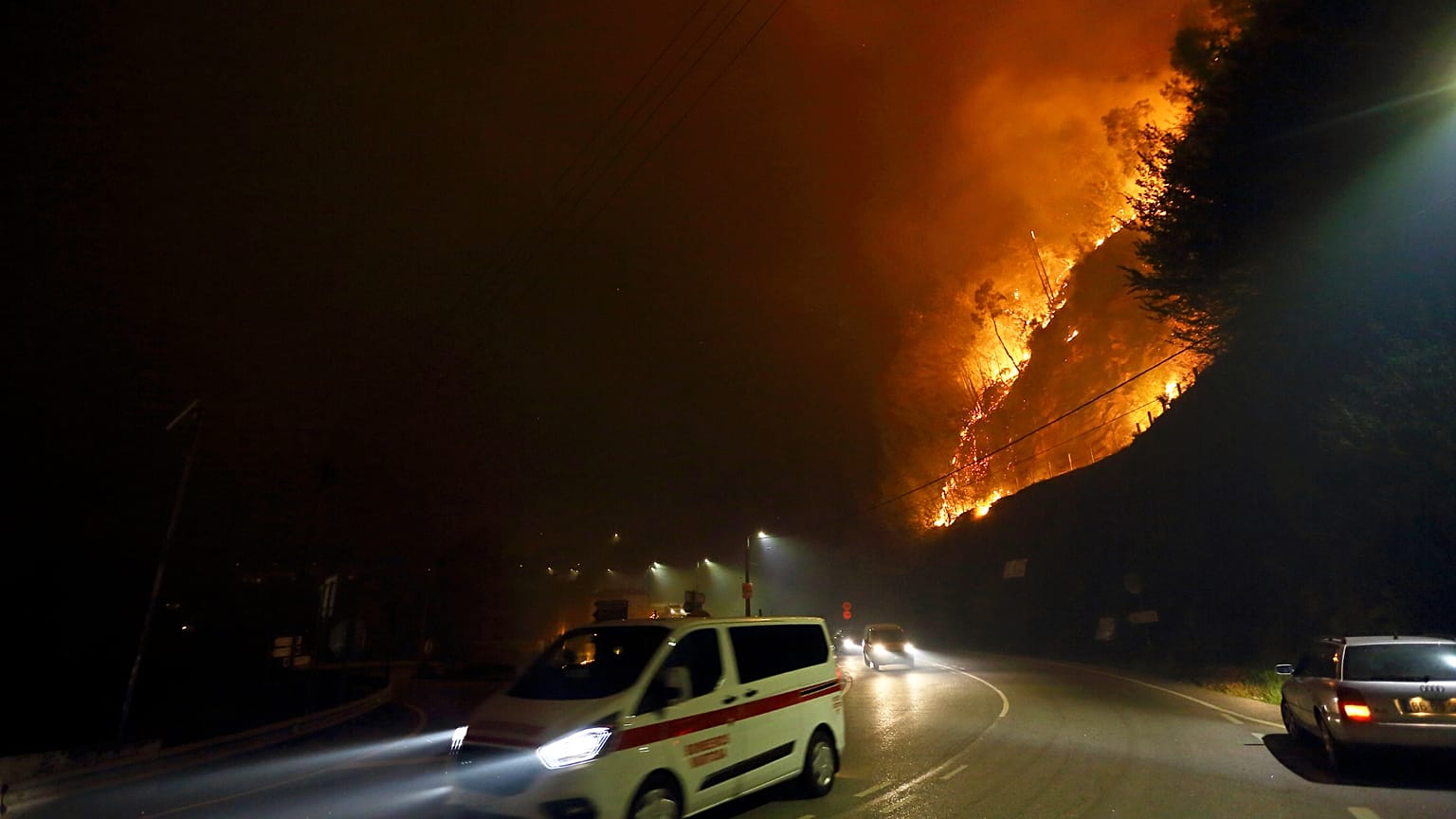
Fire in the Sever do Vouga area in 2024
Copyright Bruno Fonseca / AP

By Ricardo Figueira
Published on

The European Commission has confirmed that El Niño is almost certain this year, which could affect Europe. Speaking to Euronews, climatologist Carlos da Camara warns of a possible heatwave and major wildfires in Portugal.

El Niño is on the way, but its direct effects on Portugal will be very limited, according to information from the Portuguese Institute for Sea and Atmosphere (IPMA).

The European Commission, through the Joint Research Centre (JRC), is the latest international body to say it is "virtually certain" the phenomenon will recur this year, probably lasting until 2027.

According to the JRC report, El Niño is expected to reach a "very high" intensity, probably hitting a "very strong" level and potentially surpassing historical precedents such as the event 12 years ago. The European Commission warns in particular of the food risks associated with drought, which comes on top of already high energy and fertiliser prices and could put "hundreds of millions of additional people at risk". Adverse weather conditions could hit key crops such as durum wheat, which may be the most affected, as well as maize, rice, soya and winter wheat.

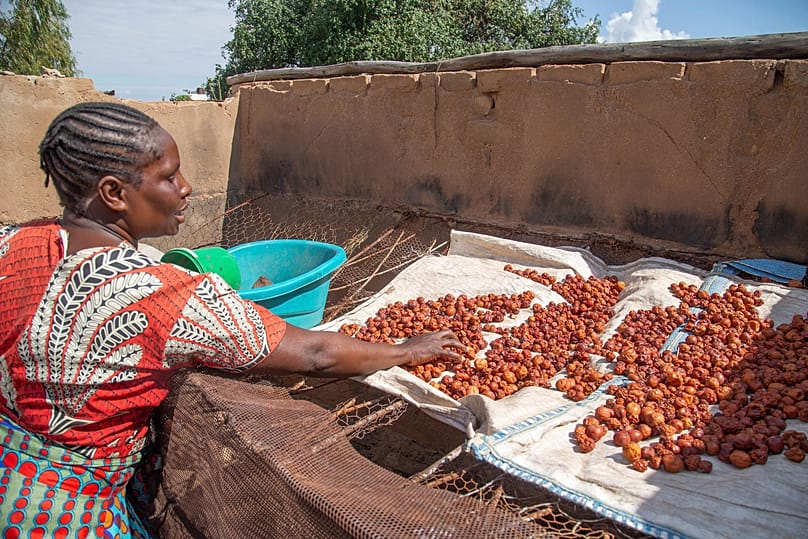
Woman drying fruit in Zimbabwe during the drought and food shortages caused by El Niño in 2024 Aaron Ufumeli / AP

The World Meteorological Organization (WMO) issued a warning earlier this month (source in Portuguese), saying there is an 80% probability that an El Niño event will develop between June and August this year, meaning an abnormal rise in sea surface temperatures in the Pacific Ocean, with direct consequences for tropical and subtropical regions worldwide and possible indirect effects in many other parts of the globe. More recent forecasts say the consequences of this event, which is expected to have "moderate to strong" intensity, have a 90% probability of lasting until the end of the year.

The WMO information was also disseminated by the UN (source in Portuguese), accompanied by a video from Secretary-General António Guterres, who said: "The world must treat this threat as a climate alarm bell. El Niño will further intensify global heating. Its impacts will be more severe, will reach further and will cross borders at devastating speed."

Portugal is far from the Pacific, but that does not mean it is shielded from the impact El Niño has on temperatures. A hot summer means the need for heightened vigilance, not only regarding the health effects of heat, especially for people working outdoors, but also in relation to wildfires.

According to the IPMA, in a note released (source in Portuguese), "although El Niño occurs in the Pacific Ocean, it can influence climate patterns on a global scale. However, its effects in Portugal are neither direct nor straightforward to predict."

What impact will it have on Portugal?

For climatologist Carlos da Camara, the occurrence of the phenomenon in the context of climate change could be an explosive cocktail and have consequences for Portugal, albeit indirect ones.

For this senior researcher at the Dom Luiz Institute, the effects of El Niño can be compared to throwing a large stone into a pond, creating concentric ripples that gradually lose strength as they spread: "The phenomenon starts in the central Pacific. The disturbance extends over the American continent, both north and south, then reaches Indonesia and continues from there. It eventually has an influence on southern Africa and then spreads over Canada before it starts to die out, meaning the direct influence on the European continent is small, very small. In particular on the Iberian Peninsula, it is smaller still," he explains.

However, even if the direct consequences are scant or virtually nil, the phenomenon’s "butterfly effect", combined with current conditions, could have indirect consequences for Portugal this summer, especially in terms of wildfires.

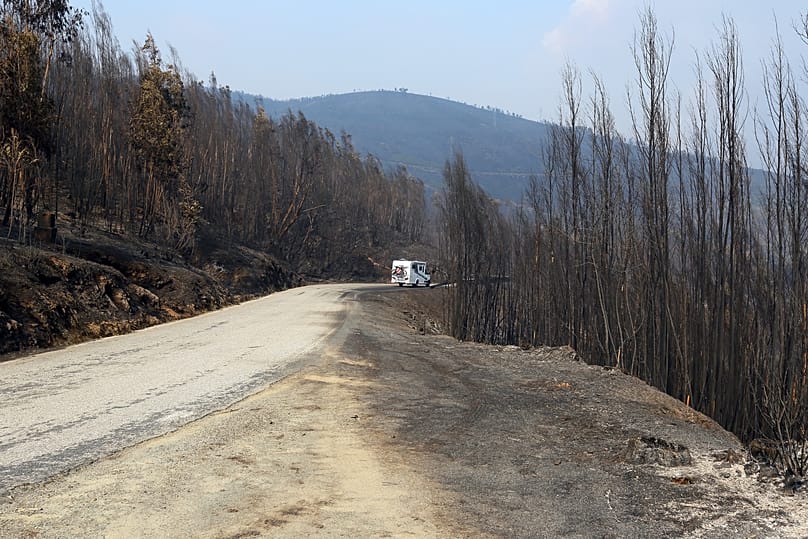
Burnt area in Castro Daire after a wildfire in September 2024 Bruno Fonseca / AP

In Mediterranean Europe, which he considers one of the parts of the world where climate change is being felt most intensely, the impact could be amplified. "My concern is that there may be a heatwave like the one in 2003, which was the most severe heatwave ever recorded in Europe," the scientist says. "If that happens, given that we had that sequence of storms linked to the Kristin depression which brought down millions of trees, we know we now have much more biomass available to burn, not only because we had a very rainy spring, but also because of this excess biomass from fallen trees. We could, for example, see a large-scale wildfire, and that in a very tricky time of year," he explains.

Could such a heatwave arrive as early as next week? The IPMA is forecasting very high temperatures from the weekend, with values that could exceed 40°C in several inland areas. Some private models even predict that thermometers could reach 50°C. For Carlos da Camara, "that figure represents an upper threshold with a high degree of uncertainty".

As for whether the 2003 level could be reached in the coming days, the climatologist says he does not yet have enough information to say.

My concern is that there may be a heatwave like the one in 2003, which was the most severe ever recorded in Europe. If that happens, given that we had that sequence of storms linked to the Kristin depression which brought down millions of trees, we know we now have much more biomass available to burn. (...) We could see a large-scale wildfire.
 Carlos da Camara 
Climatologist

Carlos da Camara sums up the possible effects as follows: "Will El Niño have direct influences? No. Indirect influences? Very probably, yes. Indirect influences on top of a background that has been worsened and degraded by climate change, which can lead to much greater impacts? The answer is yes, certainly. Ultimately, the problem is not El Niño itself – for other regions it is, for north-eastern Brazil it certainly will be, for South Africa it certainly will be, for Indonesia too. For Europe probably not, but indirectly it very well might be."

What is El Niño?

Contrary to what some people think, this phenomenon is neither new nor recent, and it is not caused by climate change, although global warming can amplify its effects. The term was first used in the late 19th century in Peru to describe the warming of Pacific currents that frequently occurred around Christmas.

More recently, meteorologists have begun linking this phenomenon to a whole range of extreme weather events that can occur at the same time as "El Niño". One example came in 2014 and 2015, when the "El Niño" confirmed by the WMO was accompanied by severe droughts in several regions of the world, which badly affected agriculture and increased the risk of food insecurity in parts of the globe that were already particularly fragile.

According to scientists, the "El Niño" expected to begin this summer could have consequences as serious as, or even more serious than, the one that occurred 12 years ago.

The phenomenon began to be studied in more detail by meteorologists with the creation of a scientific framework known as ENSO, short for "El Niño Southern Oscillation", which measures temperature fluctuations in Pacific waters and predicts both El Niño and the opposite phenomenon, the cooling of the currents, known as "La Niña".

THANKS NEIGHBOUR 

Gun violence soars in Canada as illegal weapons from the US flow in

Cover image: FOCUS © FRANCE 24
Issued on: 19/06/2026 -
05:49 min

Over the last decade, gun murders have jumped by nearly 90 percent in Canada. This increase is fuelled by a never-ending stream of illegal weapons acquired across the border in the United States. According to data from the Toronto Police, 88 percent of the guns seized in crimes last year originated in the US. Canadian police and elected officials are demanding tighter controls at border crossings. FRANCE 24's Francois Rihouay, Joanne Profeta report, with Fraser Jackson.


Europe looks at banning social media for teens, and girls are most impacted

By Tamsin Paternoster 
Published on 19/06/2026
EURONEWS


As the UK joins a growing list of countries looking at banning or severely curbing children's access to social media, data shows girls have higher levels of problematic social media use than boys across Europe.

The UK's plans to ban social media access for teenagers has reignited a debate playing out across Europe, as governments face growing calls from parents to teachers to protect children online.

Countries including France, Spain, Austria and Denmark are all discussing measures to restrict access for children, with concerns ranging from cyberbullying and addictive platform design, to tragedies including suicide and self-harm.

According to a study by WHO-backed Health Behaviour in School-aged Children (HBSC) study, problematic social media use among adolescents increased from 7% in 2018 to 11% in 2022.

It defined problematic social media use using a behavioural scale that measures symptoms such as an inability to cut back, neglecting other activities and experiencing conflicts or negative consequences as a result of spending time online.

According to 15-year-olds surveyed, some of the highest rates of problematic social media use were recorded in Romania, Ireland and Malta.

On the other end of the scale, the Netherlands, Denmark and Estonia recorded some of the lowest levels.


Teenage girls lead the way

Across the countries surveyed, girls reported significantly higher levels of problematic use than boys.

This gap is particularly pronounced in Romania, where 28% of 15-year-old girls reported problematic use, compared with 18% of boys. In Ireland, the figures were 25% and 13% respectively.

Girls were also more likely to report they were in contact with friends online around the clock, with 44% of 15-year-old girls compared to 29% of boys.


According to the report, girls tend to be more socially connected online and may face a different virtual experience than boys.

Various research has found that adolescent girls were found to experience greater pressure over their appearance and body-dissatisfaction on social media than boys, a well as report slightly higher levels of cyberbullying-related experiences.
Support for bans is high, but evidence they work is limited

As governments debate curbing access, political support for restrictions on children's access to apps is at a high.

A YouGov survey published in April found that 79% of people in France supported banning social media for under-16s, alongside 76% in the UK, 74% in Germany and 70% in Italy. Majorities also backed restrictions in Spain (68%) and Poland (53%).

Parents particularly backed bans and restrictions, with 79% of those with children supporting a ban in Britain, Italy and Spain.

Government's are listening to this political push: France's National Assembly has approved legislation restricting access to social media for under-15s, while Spain has proposed raising the minimum age for social media access to 16.

Greece has gone a step further, with Prime Minister Kyriakos Mitsotakis announcing a ban on social media for under-15s in April, with parliament set to vote on the legislation this summer.

Many of the proposals being discussed across Europe require effective age-verification systems and may face legal and practical challenges under EU-wide rules, under which national governments cannot simply force apps such as TikTok, Instagram and Snapchat to block those under-16 overnight.

Yet while support for bans is at a high, evidence that they are effective is very limited —primarily because there are very few long-term case studies that have allowed researchers to effectively assess the impact of bans on children's wellbeing.


W thinks it has the X Factor: Europe’s alternative to mainstream social media

Social media platform "W" is the latest in Europe to take on US-based Big Tech companies
Copyright Canva

By Anna Desmarais
Published on

The Swedish-based “W” platform” is the latest in a series of new social media sites vying to replace US Big Tech companies.

The European Commission announced Wednesday that it was joining a new, made-in-Europe alternative social media platform called “W.”

The platform, first announced at the World Economic Forum in January, is built on “verified human users, transparency, privacy and free speech.”

W, based in Sweden, was built by entrepreneurs in media, technology and artificial intelligence, according to the platform’s website. The platform’s beta version launched this week, with users required to apply for vetting by the “W” team before they can post.

Top European officials are using the platform as well, including EU Commission President Ursula von der Leyen and Antonio Costa, president of the European Council.

Before getting access, users have to verify themselves either by sharing their real name or anonymously through W Identity, a separate app that scans the user’s passport or national ID to verify them directly on their device.

CEO Anna Zeiter previously told Euronews that it plans to host its data on “European servers owned by European companies,” and limiting its investors to those based on the continent.

At the time, Zeiter said W plans to use Proton, a Swiss encrypted email provider, and UpCloud, a cloud computing platform based in Finland, in accordance with EU privacy laws.

The launch coincides with a broader tech and artificial intelligence (AI) sovereignty movement in Europe to distance companies, governments and individuals away from Big Tech companies based in the United States.

Several countries, including France, Germany and the Netherlands, have raised concerns that reliance on Big Tech could lead to national security and data concerns.

Other alternative social media sites​

W is one of several alternative social media platforms launched recently based in Europe, including Bulle (French for bubble), Eurosky, Monnett and eYou.

Some of these platforms signed a declaration last week committing to build Europe’s “social stack,” which it says will bring a “diverse and resilient infrastructure” to the continent to “move away from large monopolistic platforms with their authoritarian governance.”

However, experts have previously told Euronews Next that it is very difficult for alternative platforms to maintain an audience because it will be hard for them to stay as convenient or engaging as platforms that are trying to maximise time on the site.


India blocks Telegram over 'medical entrance exam fraud' concerns


India's government has blocked messaging app Telegram until ​June 22, saying the platform was used to "defraud candidates" taking the medical entrance examination. The restriction was issued under a stringent provision ​of the IT law, which empowers ‌the government to block access to online sites in the "interest of sovereignty and integrity of ‌India".


Issued on: 16/06/2026 - 
By: FRANCE 24


The icon for the instant messaging Telegram app is seen on a smartphone, Tuesday, Feb. 28, 2023. © Matt Slocum, AP


India blocked access to Telegram messenger on Tuesday ahead of a retest of a nationwide medical college entrance examination, after a scandal last month over a question paper leak.

The failure of the hugely competitive exam, along with a separate marking fiasco in high school tests, sparked outrage and fuelled youth protests demanding the education minister's resignation.

The Ministry of Electronics issued the order restricting access to Telegram until June 22, the day of the retest. Message-editing features, which allow users to alter existing posts, will remain restricted until June 30.

"Both measures have been taken in the interest of public order, in response to the organised use of the platform by cheating rackets to defraud candidates," India's National Testing Agency (NTA) said in a statement.

The National Eligibility Entrance Test (NEET) is one of the country's most competitive exams, attracting more than two million aspiring doctors.

The NEET exam was scrapped in May following allegations that the question paper was leaked in advance, including reports that it had been circulated through Telegram channels.

The intense pressure to succeed in these exams has fuelled a lucrative industry, with tens of thousands of coaching centres across the country.

Fierce competition means that success often comes at a significant personal and financial cost -- creating opportunities for criminal networks seeking to sell leaked examination papers to the highest bidder.

India's Central Bureau of Investigation has arrested the "kingpin" alleged to be behind the leak, naming him as a chemistry lecturer involved in the examination process for the NTA.
Test pilots

The education ministry launched on Monday a website where the public can report "suspicious claims, unauthorised content, or fraudulent activities" related to the NEET exam.

Indian air force helicopters on Tuesday were seen readying for the delivery of the test papers, to "to prevent any possibility of leak", the Press Trust of India news agency reported, broadcasting images of preparations in the southern state of Tamil Nadu.

Despite rapid economic growth, millions of people in the world's most populous nation still struggle to find stable and well-paying jobs, fuelling discontent.

Students spend years preparing for exams in the hope of securing a professional career, with the pressure intensified by limited opportunities and intense competition.

Indian media reported suicides of teenagers following the fiasco over the NEET exam.

The NEET scandal came on top of another controversy, related to the online marking system used for tests taken by nearly two million high school students.

Many students said the system had assigned incorrect grades or issued results to the wrong candidates.

Anger at the exam mishandling has been channelled by the newly-founded satirical "Cockroach People's Party", which has won millions of followers on social media since its launch in May.

The movement emerged after India's Chief Justice Surya Kant reportedly likened young people who criticised the government to "cockroaches" and "parasites" during a court hearing, sparking outrage among the youth. Kant later said his comments were taken out of context.

The group, the "Cockroach Janta Party", which has since launched protests in person, based their name on a play on Prime Minister Narendra Modi's Hindu-nationalist Bharatiya Janata Party (BJP).

(FRANCE 24 with AFP)
How armed groups in Colombia are using TikTok to recruit young people

Cover image: Watch “Colombia: Using TikTok as a recruitment tool”, a visual investigation produced by the FRANCE 24 Observers. © Observers / Upian

Issued on: 19/06/2026 - FRANCE 24 Observers
11:46 min  From the show


As Colombia’s conflict has intensified in recent years, armed groups have flooded social media like TikTok with videos aimed at getting new recruits – particularly young people. The FRANCE 24 Observers team investigated the inner workings of this new recruitment method.

Wads of cash, gold watches and attractive young women: this is what life inside Colombia's armed groups looks like, at least according to numerous TikTok posts.

Some publications highlight the values these groups purportedly champion, such as “the defence of the people”, while others openly invite online users to join them.

The goal is to attract new recruits, especially young ones, who constitute the platform's main audience.
These images were posted by TikTok accounts linked to Colombian guerrillas and paramilitary groups. The texts read: “Good kids study. Lazy ones make money” (left), and “The true revolutionary is the one who fights for his people and asks nothing in exchange” (right). © TikTok

Such posts have multiplied in recent years, spanning all of Colombia’s active armed groups – including dissidents of the former FARC guerrilla movement, the ELN (one of the country's main guerrilla groups), and the Clan del Golfo (the biggest paramilitary group).

For these groups, recruiting new members is crucial, as the conflict has intensified over the last few years.
“We are open for recruitment,” the left image reads. The letters on the red armband correspond to a paramilitary group in the Tolima department. The image on the right reads, “Join us! We’re waiting for you. The doors of the FARC are open to all who have a rebel spirit.” © TikTok
‘We found armed groups offering as much as 12 million pesos a month [€2,900]’

Lina Mejía Torres works for the Colombian NGO Vivamos Humanos, which released a report in early 2026 on the recruitment of young people through social media.

“We found armed groups offering as much as 12 million pesos a month [Editor’s note: €2,900 – seven times the Colombian minimum salary in 2026]. When you see that kind of pay in a region where there's high unemployment, it gets attention. The groups target young people who are vulnerable, who aren't in school.

The work they give kids is not just being a lookout or harvesting coca leaves; children are sometimes recruited for jobs like flying drones.”
‘How does it work if I want to join?’

Some of the TikTok posts get more than 100,000 views – and they also get comments. Some online users ask how to join the armed groups, and some social media accounts tell them to contact them via direct messages.


Some posts from accounts affiliated with armed groups get more than 100,000 views. © Upian

Our team created a fake TikTok account and contacted 33 accounts affiliated with the armed groups, primarily by posting comments or sending messages. We posed as a 17-year-old Colombian teen in order to see whether being underage posed a problem.

Six accounts responded; we exchanged messages to learn about their recruitment process and salary ranges. Several appeared willing to recruit a minor.


Excerpt from a conversation with an account linked to a FARC dissident group. Our team asked them, using a fake TikTok account, “Do you accept people who are 17 years old?” They answered, “Yes, of course”. © TikTok

The recruitment and use of minors in armed conflict is a crime punishable by 23 years in prison, according to the Colombian penal code.

The UN reports that the number of children under 18 in Colombia’s armed groups climbed by 320 percent between 2019 and 2024.

However, no data is available on the exact number of young people recruited specifically via social media platforms.
‘They can reach the entire country from a base in a single place’

Online recruitment offers several advantages over traditional recruitment methods, said Juana Cabezas of the Indepaz human rights group. The Colombian organisation has studied forced recruitment by Colombia’s armed group alongside the platform Pacifista.


“Before, the armed groups had to be physically present on the ground to recruit minors. They'd go from house to house in an area, recruiting one or two minors [at a time] by force. Today, they can be omnipresent: they can reach the entire country from a base in a single place.

Recruitment via social media also goes largely unnoticed because children simply vanish, leaving their families completely in the dark about what happened to them."

Mejía Torres told our team:


“Tracking down those involved in the recruitment is far more difficult because social media allows for anonymity. We won’t necessarily find out who is behind all of this or who is responsible.”

Recruiting online also offers a way to downplay the dangers.

This image was published on an account linked to the ELN, which regularly pays tribute to fallen guerrilla members. This young girl, for instance, died at the age of 14. Our team translated part of the text in the image. © TikTok
‘The groups call their families to tell them to come pick up the children's bodies’

We spoke to a member of an indigenous NGO in Cauca, the region with the highest number of young people recruited. We are hiding his identity for security reasons. He told our team:


“There are children who have joined the armed groups. One or two weeks later, the groups call their families to tell them to come pick up their body, because they've been killed.”

A report by the Colombian Institute of Legal Medicine says 30 minors under the age of 18 died between August 2025 and May 2026 – half of them in fighting between the armed groups, half in fighting with the military.
This image was posted on an account affiliated with a FARC dissident group. © TikTok


Accounts deleted, content replicated

Our team reviewed nearly a hundred TikTok accounts recruiting for armed groups. We found that they can remain active for a year or more before being taken down. And when they are deleted, their content often shows up on other accounts.

Moreover, when we first started our investigation, we used keywords to identify accounts affiliated with armed groups. But after just a day and a half, that was no longer necessary – our TikTok feed had become flooded with content related to these groups.

Yet, TikTok’s community guidelines ban “criminal organisations” and “supporting, recruiting for, or promoting these entities”. The platform also says it is protecting people under 18.

When contacted by our team, TikTok said it “takes proactive measures to stop the cartels using the platform, recognising that this is a very real challenge (...). Through specialised teams dedicated to dismantling these constantly evolving criminal networks, we strive to anticipate their new tactics and strictly apply our rules by deleting content and accounts that violate our guidelines.”

TikTok also said they "work closely" with the Colombian authorities.
Law designed to protect minors on social networks

In 2025, the Colombian parliament adopted a law concerning the “development of safe digital environments” for minors.

The NGO Vivamos Humanos says it is a promising first step. But the law has not yet gone into effect, and it does not mention recruitment by the armed groups.

The Colombian Ombudsman’s Office, also contacted by our team, said that the response should “include preventive measures (...) particularly in areas where armed groups are most present.”
BY:

The FRANCE 24 Observers

Chloé LAUVERGNIER