Saturday, June 20, 2026

Mexico

Violence and drug trafficking - what response from the revolutionary left?

Wednesday 17 June 2026, by Irving Radillo Murguia
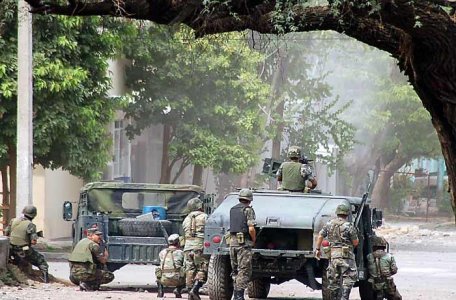


On 22 February 2026, in a town in western Mexico, the army and the National Guard, in collaboration with the U.S. intelligence services, carried out an operation against the Jalisco Nueva Generación Cartel (CJNG) that resulted in the execution of its leader, the notorious Nemesio Oseguera, alias El Mencho. Although President Claudia Sheinbaum said the operation followed an arrest warrant issued by the Attorney General’s Office and not an injunction from Washington, it is undeniable that Trump’s tariff and military threats against Mexico have applied a lot of pressure to carry out this operation.

The drug lord’s death sparked a wave of violence in more than half of the country’s states, with CJNG members blocking roads and burning businesses, vehicles and gas stations, leading to the suspension of work and school activities and a lockdown of the population as in the time of the Covid-19 pandemic.

The “Narco war”

The situation of violence we are experiencing in Mexico cannot be understood without taking into account the context created by the so-called “war on drugs” launched in 2007. In December 2006, Felipe Calderón, of the Partido Acción Nacional (PAN, “National Action Party”, conservative right), became president following electoral fraud against Andrés Manuel López Obrador, a representative of progressivism. Millions of people took to the streets to denounce the fraudulent elections and demand a recount of the votes. To establish his legitimacy, Calderón announced a “war on drug trafficking” just weeks after taking office, in which he brought the military out of their barracks to confront the cartels. The message to Mexican society was clear: you have to choose your side, either you are with the government, or you are with the criminals.

Calderón’s term in office ended with a 148 percent increase in homicides, more than 17,000 people missing and 230,000 people displaced due to violence, as well as human rights violations and a security strategy based on militarization. pursued by subsequent presidents. Moreover, it has been shown that this so-called “war” was nothing more than the use of state forces to favour certain cartels to the detriment of others, since Calderón’s Minister of Public Security, Genaro García Luna, was arrested and convicted in 2024 in the United States for drug trafficking, as his links to the Sinaloa cartel were established.

Those of us who live in Mexico know that the fall of a drug lord does not mean the end of violence. The “Narco war” has taught us that after the decapitation of a cartel, power struggles ensue between interim cadres for succession, as well as acts of revenge against the Mexican state and attacks on rival cartels that will take advantage of this moment of weakness to gain influence. And this is because, even though El Mencho has fallen, the transnational structures that produce, feed and exploit these drug lords are still in place.

Capitalism and Narco, a structural problem

The major drug consumption centres and arms companies in Mexico need illegal organizations that produce the substances they consume and that are loyal buyers of their war products. Even if Washington is outraged by drug trafficking and violence, the facts show that the cartels’ weapons were sold by US companies taking advantage of that country’s permissive legislation.

Between 2012 and 2025, Mexican authorities seized 137,000 rounds of ammunition from the state-owned Lake City Army Ammunition Plant, located in Missouri, not from commercial gun shops. In addition, Mexican president Claudia Sheinbaum said that 85 percent of the weapons seized during the El Mencho operation came from the United States.

Drug trafficking is an economic activity governed by the capitalist laws of competition and the pursuit of maximum profit. Cartels are companies that, by operating illegally, push these economic dynamics to their ultimate consequences, thus highlighting the most violent form of a system that reduces human beings to mere disposable labour.

There is a strong international trade network that ensures the distribution and marketing of drugs. In addition, the cartels have diversified their activities to extend to other economic sectors, both illegal (human trafficking, arms trafficking, organ sales and racketeering) and legal (avocado agribusiness as well as the restaurant and leisure sectors).

In many areas controlled by organized crime, there are mining megaprojects, such as mines and dams, and this organized crime is involved in assaults on unionized workers, journalists, and environmental activists. A few days ago, the T-MEC group of experts revealed that the Canadian mining company Camino Rojo, which operates in the northern state of Zacatecas, had used drug traffickers to threaten workers of the National Miners’ Union after their victory in the union elections.

The socio-political power of the cartels stems from their immense economic power and the acts of violence they commit to secure their profits, such as intimidation, assassinations, enforced disappearances, money laundering, illicit enrichment through capital injections, corruption and complicity with the state security forces.

Decades of neoliberal policies have increased precariousness, migration and undeclared work, as well as rural exodus and lack of opportunities. These difficult living conditions, combined with the individualistic, meritocratic and ruthless competitive ideas promoted by neoliberalism, have led many people, especially young people, to work for organized crime in the hope of a better life.

The deregulation of international trade under NAFTA and then CUSMA (United States-Canada-Mexico Free Trade Agreements), as well as Mexico’s subordination to the great power of the north, allowed the entry of large-calibre weapons into our country and led us to become suppliers to the drug market in the United States.

Only one way out: a break with the system

It is clear that violence linked to organized crime is not an easy problem to solve. As this is a systemic phenomenon, analysing it in all its complexity is a first step and we can only remedy it through systemic changes.

On the Mexican revolutionary left, we are convinced that, while working to destroy this deadly capitalist system that engenders drug trafficking, we must always side with the victims of violence and support the initiatives that emanate from the popular classes. This is why we are in contact with the associations of mothers of missing persons and support them in their demands and mobilizations; We have also participated in demonstrations for peace and against militarization and American intervention. We believe that our priorities are as follows:

  To strengthen community ties to protect ourselves collectively from violence.

  To denounce the hypocrisy and responsibility of imperial powers such as the United States, which take advantage of the insecurity on this side of the border, both politically and economically.

  To denounce the dangers of security strategies based on the use of armed forces, because of the human rights violations they entail and the gradual transfer of political power to military power.

  To study other security strategies set up by the communities, such as the community police in the mountainous and coastal regions of the state of Guerrero (southern Mexico) or the Zapatista “caracoles”.

  To reject discourses that criminalize and stigmatize the working classes by presenting them as traffickers. Attempts by the right to link the security crisis to the so-called “loss of family values” that it attributes to advances in women’s and LGBTIQ+ rights.

  To show solidarity with the victims and their relatives, to accompany them in the actions they decide to take, to contribute to strengthening political awareness and self-confidence, and to encourage left-wing organisational processes based on demands for peace and security.

  To approach the problem from a class perspective and to help to understand it, in the absence of sufficiently in-depth analyses.

February 2026

Translated by International Viewpoint from Revue l’Anticapitaliste.

P.S.

If you like this article or have found it useful, please consider donating towards the work of International Viewpoint. Simply follow this link: Donate then enter an amount of your choice. One-off donations are very welcome. But regular donations by standing order are also vital to our continuing functioning. See the last paragraph of this article for our bank account details and take out a standing order. Thanks.

Footnotes

[1] Photo: © Diego Fernández

[2] Photo: © Diego Fernández

Peru

Steadfast in defence of the people’s vote: the struggle continues

We will continue to build the broadest pôlitical and social unity


Friday 19 June 2026, by Nuevo Perú


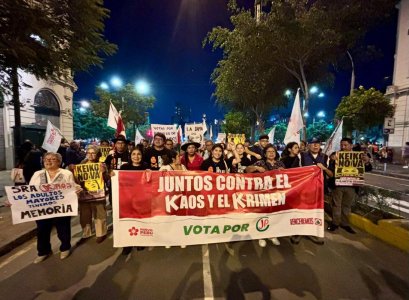
Despite a very large popular vote against her, Fujimori’s far-right party was declared the winner of the election. The mobilisation must be stepped up and turned into social struggles.

1. The people’s and citizen’s vote has spoken

On June 7, the majority of Peruvians residing in the country opted for the Juntos Por el Perú (Together for Peru or JP) [1] option, a vote that expresses rejection of the current situation in the country and demands an end to the crisis generated by more than 30 years of neoliberal policies, the result of which is the growth of inequality, rampant citizen insecurity, widespread corruption, and abuse of power against the weakest. The next government will face this undeniable reality. The election results will not bring an end to the long cycle of crisis the country is experiencing. The demand for continuity or change is more pressing than ever. National unity cannot be achieved unless we begin to resolve the structural crisis that divides us by driving a profound process of change. Our party will continue to advocate for this path.

2. The people faced an electoral process of rigged rules that favour the continuity of mafia power.
In Peru, we have not experienced a fair and democratic electoral process, yet the vote for change is fighting back, and the outcome is still to be decided. A strategy was devised and directed from within the Congress of the Republic in order to favour the main parties of the corrupt political alliance. Since the congressional coup against Pedro Castillo [2], we have seen how the playing field has been tilted to favour, Fujimorism [3] in particular: Bicameralism and the reelection of congressmen were imposed, throwing the 2019 referendum in the trash; the primaries were eliminated, favouring party fragmentation and the dispersion of the citizen vote; pro-crime laws and exemptions for economic groups were approved, who then paid by financing campaigns; competitors were eliminated using judicial persecution; in the middle of the elections, the head of the Oficina Nacional de Procesos Electorales (National Office of Electoral Processes or ONPE) was changed; in the middle of the electoral process and in an unprecedented way, the procedure for the digitisation of votes abroad was changed. All of this has been accompanied by multimillion-dollar disinformation campaigns and manipulation by corrupt media outlets favouring the Kaos [4] candidate, as the Misión de Observación Electoral ( Electoral Observation Mission or MOE) has pointed out. Despite this, thousands of Peruvians have not been defeated and remain steadfast in the fight.

3. Candidate señora Kaos should not declare victory prematurely.
The corporate media is trying to impose results and conceal the irregularities denounced by Juntos Por El Perú. The final result will be known when the last vote is counted, the last challenged or contested ballot is resolved, and the Jurado Nacional de Elecciones (National Elections Board or JNE) proclaims the winner. With 1,661 ballots still pending, nothing is certain. We remain steadfast in defending the will of the people and their votes. Our party will continue mobilising, demanding clarification of various indications and irregularities detected, and above all, demanding that the Jurados Electorales Especiales (Special Electoral Boards or JEE) and the National Elections Board act with transparency and fairness.

4.- Let us continue to build the broadest political and social unity for change
The upcoming battles demand that we continue building the broadest political and social unity to give continuity to the sense of change expressed by the vote of vast sectors of the citizenry. This unity must be expressed in different spaces, in the Bicameral Congress, promoting an agenda that dismantles mafia power and recovers democracy for the majority, citizen mobilisation, exercising surveillance, respect for their rights, solutions to their demands and recognition of their proposals; and also the political unity of all the forces that support a just, sovereign, democratic and sustainable homeland. New Peru for Good Living expresses its commitment to continue working on this unitary effort.

16 June 2026

National Political Commission,
Nuevo Perú por el Buen Vivir

Translated and annotated by David Fagan for International Viewpoint.

Footnotes

[1] Juntos Por el Perú is a coaltion of the Peruvian Humanist Party, the Peruvian Communist Party and left-wing socialist, feminist, environmentalist Nuevo Perú por el Buen Vivir (New Peru for Good Living.)

[2] Pedro Castillo was President of Peru from 28 July 2021 to 7 December 2022 when he was removed from office. He headed the left-wing Free Peru party

[3] Fujimorism is a reference to the right-wing ideology associated with former President Alberto Fujimori, in office 28 July 1990 – 22 November 2000, and his family, especially his daughter Keiko Fujimori, who leads the right-wing Fuerza Popular (Popular Force party).

[4] "Keiko es el Kaos" (Keiko is Chaos) is a popular [social] media phrase used by opponents of Keiko Fujimori.

Democratic Party’s Corollary to the Donroe Doctrine

The Democrats' weak response to Trump's foreign policy on Venezuela, Cuba, and Nicaragua


by and | Jun 19, 2026

Donald Trump’s second term has precipitated a tsunami of criticism from Democrats over his foreign policy. Yet when it comes to Washington’s efforts to dominate Latin America and the Caribbean, the substantive dispute – if there is any substance remaining, once stripped of partisan bickering – is less about ends than means.

Beneath the rhetoric of inter-party conflict lies a broad bipartisan consensus in favor of promoting US hemispheric hegemony and crushing governments that resist it – with Venezuela, Cuba, and Nicaragua at the forefront. While Democrats frequently portray Trump as reckless, they generally accept the underlying premises of economic coercion, political intervention, and regime-change pressure. Their objections mainly focus on the execution of policy rather than its legitimacy.

The central role of sanctions in projecting imperial coercive power

Under Democratic administrations, the US forged and institutionalized what may be its most effective instrument of hegemony. Coercive economic measures, commonly called “sanctions,” were first deployed by Franklin D. Roosevelt against Mexico in the 1930s. They were used by Dwight D. Eisenhower to pressure Guatemala in 1954 and then – most drastically – against Cuba by both Eisenhower and John F. Kennedy in 1960. Today, one-third of the world’s nations are under US sanctions.

Sanctions – a form of collective punishment – are held by legal experts to be contrary to international law. Paradoxically, not only does Washington disregard international law in imposing sanctions, but the US then behaves as if they are applying the law when, for example, they pirate a ship delivering humanitarian supplies to a sanctioned country.

Use of sanctions has accelerated because successive administrations have seen their unique advantages. Compared with “forever wars,” they are more easily justified to US voters as cost-free and as not imperiling US lives. If sanctions are the precursor to military intervention – as in Guatemala in 1954, Cuba in 1961, Grenada in 1983, Panama in 1989 and, of course, Venezuela in 2026 – the interventions have usually been limited, with few US casualties.

Yet sanctions are very potent: between 2010 and 2021, they caused around 560,000 deaths globally each year – more than five times the number of people killed annually in direct armed combat.

While sanctions are made more palatable by being described as “targeted” at governments or individuals seen as undesirable by Washington, in practice the “targeting” is deliberately far wider. Sanctions do most damage to the poorest sectors of societies – the sectors most likely to support progressive governments. The barely veiled message is that only by withdrawing this support will such communities be able to prosper and avoid the threat of even greater US intervention.

The frequent description of sanctions as “targeted” carries another implication – that they are intended to have a precise and conclusive effect. However, while sanctions cause severe economic damage, there is little evidence that they achieve intended regime change. Even so, sanctions on countries which refuse to change are maintained and – very frequently – intensified. Democrats are as guilty of this folly as Republicans.

Indeed, US sanctions have imperial utility through their “demonstration effect”: attempting to cripple progressive alternatives to the neoliberal world order. Recently subjected to draconian sanctions, Cuban President Díaz-Canel proclaimed: “Cuba is not a failed state; Cuba is a besieged state.” Still, infant mortality in Cuba is lower than among African Americans.

Transitioning to “democracy” in Venezuela

In the case of Venezuela, the Democrats have criticized the Republicans from the right, complaining that the cudgel of imperial power against essentially defenseless small states has not been wielded with sufficient malice.

Washington has imposed illegal unilateral coercive measures on Venezuela since 2015 in efforts to asphyxiate its Bolivarian Revolution. The transparently false rationale for continuing sanctions is that Venezuela poses an “extraordinary threat” to the national security of the US. Although the threat is obviously the other way around, mainstream Democrats have not exposed this lie. How could they, when it originated with Obama and was subsequently echoed by Biden and then Trump?

Despite the horrific toll of an estimated 100,000 excess deaths attributed to US-imposed sanctions, Venezuela has resisted and maintained an unbroken continuity of leadership from Hugo Chávez to Nicolás Maduro and to now Delcy Rodríguez. And that’s the rub for the Democrats.

Ranking Democrat members of the House and Senate foreign affairs committees, Representative Gregory W. Meeks and Senator Jeanne Shaheen, issued a “request [for] a clear explanation” of Trump’s Venezuela policy. Their meek missive came a full five months after the abduction of the Venezuelan president, an operation that resulted in more than 100 collateral deaths. Meanwhile, more than 200 occupants of small boats in the Caribbean and eastern Pacific have been subjected to extrajudicial murder by the Trump administration.

Yet these inconvenient facts are absent from the June 8 Democratic Party congressional foreign-policy leadership’s statement on Venezuela. Their complaint is that Trump’s White House has failed to sufficiently “exercise its leverage.” As they put it: “As of today, the [state] department has yet to provide any evidence the Trump Administration is doing any of this hard work.”

The contradiction of kidnapping a lawful head of state in the name of restoring democracy does not trouble the Democrats. Rather, they “strongly support the Venezuelan people’s right to choose their leaders,”… after the US abducts their president.

These Democrat leaders are also troubled that Venezuelan authorities were allowed to appoint a new attorney general and defense minister without apparent US interference. In addition, they express impatience with Trump’s lethargy in not yet overhauling Venezuela’s supreme court and electoral council.

To the extent that they make any concrete demand, the putative opposition party wants Trump to impose an “electoral timeline” on Venezuela. Yet, the same party has no problem with Volodymyr Zelenskyy in Ukraine who suspended elections after his legal term in office expired two years ago, banned opposition parties, shuttered critical media, and arrested political opponents.

Restoring “democracy” in Cuba 

Democratic Party policy toward Cuba is perhaps best exemplified by Biden’s retention of the State Sponsor of Terrorism designation, which he inherited from Trump. Then, just six days before leaving office, Biden rescinded the designation with full certainty that the incoming Republican would – and did – reverse his decision.

Former National Security Council officer Ricardo Zúñiga was Obama’s adviser for the Americas and Biden’s special envoy for the Northern Triangle. He writes in Foreign Affairs offering advice on, rather than criticism of, Trump’s Cuba policy.

Zúñiga advocates achieving regime change in Cuba through “diplomacy” rather than “force.” Scare quotes are used because, for this Democrat, brute economic strangulation is regarded as diplomacy. Zúñiga would “forswear military action,” but only if Cuba submits to US dictates. And so long as “pro-market reforms” are adopted, “democracy” can wait.

Without a hint of opprobrium, Zúñiga casually references the US invasion of Iran and the kidnapping of the Venezuelan president as policy options that would not be effective in Cuba. Given these examples, he then complains that Cubans remain resistant to “American views on democracy and human rights.”

He acknowledges that even if Trump wished to selectively roll back the murderous sanctions currently imposed on Cuba, he would face opposition not only from Republicans but also from Democrats. Where this Democrat differs from Republicans is in his supremely hypocritical conclusion: “It is ultimately Cuban citizens who will determine their country’s future” … after the US overthrows their government.

Promoting “democracy” in Nicaragua 

Tiny Nicaragua is also labelled an “extraordinary threat” to the US. While the harshest and most successful sanctions against it were applied during the Reagan administrations, when an economic blockade and the US-financed Contra war eventually unseated the Sandinista government in 1990, economic pressure quickly resumed once the Sandinistas returned to power in 2007. Both the Bush and then Obama administrations made cuts in aid, and it was under Obama that Democrats joined with Republicans to launch the NICA Act, eventually implemented (under Trump) in 2018.

While Trump signed the NICA Act and sanctioned various Nicaraguan functionaries, Democrat senators took the lead in formulating stronger measures in the RENACER Act, signed by Biden in 2021. This led to an estimated loss of $500 million annually in development finance that would have been directed at Nicaragua’s poorest communities. Democrat senator Tim Kaine, with Marco Rubio, put forward new legislation in 2023 that was intended to strengthen the RENACER Act and ensure even greater damage.

Biden officials were consistently aggressive toward Nicaragua. In 2022, his nominee for ambassador to Managua, Hugo Rodríguez, promised the US Congress that he would “support using all economic and diplomatic tools to bring about a change in direction in Nicaragua.” As a result, Rodríguez was never accepted as ambassador and the post remains unfilled.

In 2024, Biden’s trade representative launched a hostile investigation clearly aimed at disrupting trade with Nicaragua and possibly at excluding it from the regional trade treaty, CAFTA. When it eventually reported in late 2025 it recommended punitive tariffs, but only relatively mild penalties were actually implemented by Trump.

Marco Rubio regularly imposes sanctions on individual Nicaraguans, including a hundred more just this month. More than 2,300 have now been sanctioned by successive administrations. Nevertheless, hardline Democrats, as well as Republicans, are pushing Rubio to do far more.

Two parties, one strategy 

The shared strategic objective of the bipartisan Washington consensus is the projection of US hemispheric dominance. The two major parties differ mainly in messaging and, to a lesser extent, on tactics. Their theatrical contention is neither between intervention and nonintervention, nor between coercion and diplomacy. More often, it is between competing methods for achieving the same strategic objective.

Republicans may be more inclined toward overt confrontation, selective military assaults and maximal pressure; Democrats typically prefer a combination of inhumane sanctions, diplomatic isolation, and multilateral coercion. But both approaches rest on the assumption that Washington has the right to shape the political future of other nations.

Despite differences in tone and tactics, the supposed opposition party offers not an articulated alternative to the Trump Corollary to the Monroe Doctrine but, at the very most, a variation of it. 

Roger D. Harris is with the Task Force on the Americas and the Venezuela Solidarity Network. Nicaragua-based writer John Perry publishes in the London Review of Books, Common Dreams, CovertAction and elsewhere. Both authors are active with the Nicaragua Solidarity Coalition.