A Market Economy Coexisted With Totalitarianism Under Stalin, An Arrangement That Continues In Putin’s Russia – OpEd
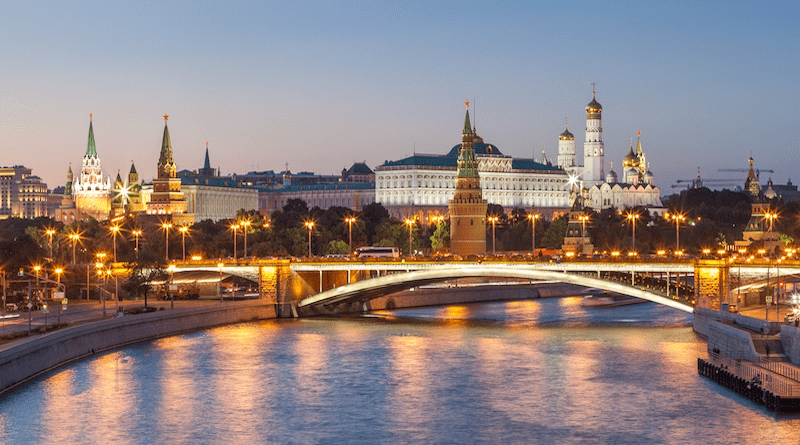
Moscow, Russia. Photo Credit: step-svetlana, Pixabay
By Paul Goble
Most people see a market economy and totalitarianism as antithetical phenomena and believe that where one exists, the other cannot. But in fact, even in the darkest days of Stalin’s totalitarian system, a kind of market economy existed albeit not in its own name; and a similar arrangement now exists in Putin’s Russia, Dimitry Savvin says.
The editor of the Riga-based conservative Russian portal Harbin points to the case of Nikolay Pavlenko who created a private construction firm which operated in the USSR between 1948 and 1952, a case described by Russian historian Oleg Khlevnyuk in a 2023 Moscow book, The Corporation of Imposters (harbin.lv/algoritm-rynochnogo-pererozhdeniya).
What Pavlenko did was criminal “only” in the official Soviet understanding, Savvin says. In fact, what he did was to “establish a private construction enterprise masked as a military institution and over the course of several years successfully conduct commercial activity” in a totalitarian state.
As “phantasmagorical” as that may seem, he continues, “in essence, the mechanisms of coexistence with a totalitarian state and a private commercial enterprise which Pavlenko developed are in many respects typical” and were later employed “not only in the Soviet Union” but also in North Korea and since the 1990s by entrepreneurs in Russia.
Shortly after the German invasion of the USSR in 1941, Pavlenko, “suddenly discovered” that if one had the write papers and stamps, one could operate as a kind of covert free market player. He ran one such business during the war and established a second in 1948, when he was routinely sought out by officials because of his good and speedy work.
Eventually the party leadership caught up with him; and in 1952, hie operation was shut down and he was shot. But his operation, which was certainly far from unique, dis played four characteristics that help to explain why such things reemerged in some other communist countries, the post-Soviet USSR, and especially in Putin’s time.
First of all, Pavlenko’s organization was not political but commercial in the purest sense. Second, his organization mimicked state institutions; third, he did nothing criminal except for operating as a private firm in a system that denied that possibility; and fourth, if the leadership hadn’t been obsessed with defending socialism, what he did might have continued.
“We see that little islands of market arrangements are natural for man and humanity” and emerge in communist and other totalitarian states, Savvin says, a pattern that requires us to recognize that with the proper masking, free market phenomena can and will exist under totalitarianism rather than being totally excluded by it.
Savvin’s observation carries with it another implication that he doesn’t discuss but that is critical for those who want to overcome totalitarianism. In the 1990s, many Western leaders believed that if they got the economy right in the Russian Federation, totalitarianism would be precluded. But in fact that was not true.
Had such leaders focused more on democratic procedures and laws and worried somewhat less about the economy which they expected would do all the heavy lifting Russians and the world might have been spared the rise of the new totalitarianism under Vladimir Putin now.

Paul Goble
Paul Goble is a longtime specialist on ethnic and religious questions in Eurasia. Most recently, he was director of research and publications at the Azerbaijan Diplomatic Academy. Earlier, he served as vice dean for the social sciences and humanities at Audentes University in Tallinn and a senior research associate at the EuroCollege of the University of Tartu in Estonia. He has served in various capacities in the U.S. State Department, the Central Intelligence Agency and the International Broadcasting Bureau as well as at the Voice of America and Radio Free Europe/Radio Liberty and at the Carnegie Endowment for International Peace. Mr. Goble maintains the Window on Eurasia blog and can be contacted directly at paul.goble@gmail.com .
Moscow, Russia. Photo Credit: step-svetlana, Pixabay
By Paul Goble
Most people see a market economy and totalitarianism as antithetical phenomena and believe that where one exists, the other cannot. But in fact, even in the darkest days of Stalin’s totalitarian system, a kind of market economy existed albeit not in its own name; and a similar arrangement now exists in Putin’s Russia, Dimitry Savvin says.
The editor of the Riga-based conservative Russian portal Harbin points to the case of Nikolay Pavlenko who created a private construction firm which operated in the USSR between 1948 and 1952, a case described by Russian historian Oleg Khlevnyuk in a 2023 Moscow book, The Corporation of Imposters (harbin.lv/algoritm-rynochnogo-pererozhdeniya).
What Pavlenko did was criminal “only” in the official Soviet understanding, Savvin says. In fact, what he did was to “establish a private construction enterprise masked as a military institution and over the course of several years successfully conduct commercial activity” in a totalitarian state.
As “phantasmagorical” as that may seem, he continues, “in essence, the mechanisms of coexistence with a totalitarian state and a private commercial enterprise which Pavlenko developed are in many respects typical” and were later employed “not only in the Soviet Union” but also in North Korea and since the 1990s by entrepreneurs in Russia.
Shortly after the German invasion of the USSR in 1941, Pavlenko, “suddenly discovered” that if one had the write papers and stamps, one could operate as a kind of covert free market player. He ran one such business during the war and established a second in 1948, when he was routinely sought out by officials because of his good and speedy work.
Eventually the party leadership caught up with him; and in 1952, hie operation was shut down and he was shot. But his operation, which was certainly far from unique, dis played four characteristics that help to explain why such things reemerged in some other communist countries, the post-Soviet USSR, and especially in Putin’s time.
First of all, Pavlenko’s organization was not political but commercial in the purest sense. Second, his organization mimicked state institutions; third, he did nothing criminal except for operating as a private firm in a system that denied that possibility; and fourth, if the leadership hadn’t been obsessed with defending socialism, what he did might have continued.
“We see that little islands of market arrangements are natural for man and humanity” and emerge in communist and other totalitarian states, Savvin says, a pattern that requires us to recognize that with the proper masking, free market phenomena can and will exist under totalitarianism rather than being totally excluded by it.
Savvin’s observation carries with it another implication that he doesn’t discuss but that is critical for those who want to overcome totalitarianism. In the 1990s, many Western leaders believed that if they got the economy right in the Russian Federation, totalitarianism would be precluded. But in fact that was not true.
Had such leaders focused more on democratic procedures and laws and worried somewhat less about the economy which they expected would do all the heavy lifting Russians and the world might have been spared the rise of the new totalitarianism under Vladimir Putin now.
Russia’s Most Powerful Weapon: Lies – OpEd
Spreading disinformation. Photo Credit: Phạm Nhật, Unsplash
By Mitzi Perdue
The Kremlin’s Disinformation War
The recent discovery of a massive, foreign-linked telecom network in New York—packed with over 100,000 SIM cards and capable of crippling cell service across the city—is a stark reminder of how modern conflict is waged. This new frontier of warfare operates not with bombs, but with invisible threats that target the very infrastructure of society.
Yevhenii Dorohanov, from the National Police of Ukraine, has a good idea of what may be the reason.
“The disinformation you see online,” he says, “is well-planned, carefully targeted, and meant to sow division and anger. The goal is to destroy the fabric of society.”
Dorohnov’s job is to track how the Kremlin pushes propaganda and also to counter the disinformation that has almost certainly reached you, likely without your knowing it. Read on for an unusually candid look at how Russia’s disinformation machine works.
Russia’s Strategy: Divide and Distract
Here’s an example of how Russian information warfare works in Ukraine. The Russians post a false report on Facebook or Telegram that a village has been captured by Russian troops. Since the people in the area are avid for information, the report will spread to all the surrounding towns and villages within minutes.
“The result is panic,” Dorohanov explained. “Civilians from the neighboring towns now believe that the front line of the war is about to come to their village. They flee from their area, with the result that supply chains freeze, and commanders waste time correcting what never happened. The disruption ripples across every layer of society.”
The same tactics work in the West, only the narratives differ. “Before elections,” he says, “Russian propagandists focus on spreading false information on corruption or misuse of funds, or anything that undermines people’s faith in their leaders.”
Yevgeniy didn’t comment on the assassination of Charlie Kirk but he did say that the purveyors of Russian disinformation will move instantly in cases of a national tragedy. They’ll swing into action, spreading conspiracies and amplifying distress and anger. “The point isn’t persuasion,” he said. “The point is to create discord, anger, and chaos.”
I pressed him on the mechanics. “How,” I asked, “do Russian operatives spread their messages?”
The answer is fake accounts on social media. They use SIM cards to create fake identities. A SIM card, by the way, is the small chip in your smartphone that stores a mobile phone’s subscriber identity and allows it to connect to a cellular network. With a SIM card, you can open an account on Facebook or TikTok, or other social media.
The Russians use SIM cards on an industrial scale to create fake identities on social media. In a recent operation, Ukrainian police confiscated over 150,000 fraudulent SIM cards that were used to create fake identities on social media.
“One SIM card can register multiple accounts,” Yevgeniy explained. “And with e-SIMs, which are contraband, entire farms of fake accounts can be created automatically. In the Russian-occupied areas of Ukraine, there’s even a market where thousands of ordinary people are recruited to buy SIMs in bulk.”
“The fake accounts are trained to act like humans,” Yevgeniy continued. “The fake accounts will do things like click on memes, leaving harmless comments. Facebook’s algorithms see them as real people. Then, when those same bots choose to like or share disinformation, the system thinks the disinformation is popular and pushes it to the top of your feed.”
It doesn’t take thousands of bots. Sometimes a few dozen, deployed strategically, are enough to convince the algorithm that a topic is trending. “The goal is to make disinformation unavoidable and everywhere,” he said.
The Russians who do this work are called “trolls,” and the areas where they work are called “troll farms.” We in the West don’t know how many troll farms Russia has, but estimates are that there are thousands of them, and they’re there to spread disinformation.
Online, some pose as patriots, others as critics. It’s a full-time job, and it’s guided by intelligence services that study exactly which communities are most vulnerable, whether it’s people angry about police violence, fearful about immigration, or suspicious of elites. It’s a good guess that Russian troll farms are doing everything they can right now to get Americans at each other’s throats over Charlie Kirk’s memorial service.
The troll farms have a rapid response approach. As Dorohanov says, “When a major event breaks, they mobilize within minutes. Multiple narratives appear at once, each designed to inflame a different group.”
I asked how effective this kind of information campaign is compared to bombs. His answer surprised me. “In democracies, once citizens stop trusting their leaders-or each other-you don’t need to fire a shot.”
As our interview drew to a close, I asked what advice he would give to people in the West who want to protect themselves.
“Be skeptical,” he said. “Ask yourself: who benefits if I believe this? Check with reliable sources. And above all, don’t share unless you know it’s true.”
Yevgeniy’s final words lingered with me: “The danger isn’t that you’re lied to. The danger is that you stop believing in truth at all.”

Mitzi Perdue
Mitzi Perdue is a public policy advocate and co-founder of Mental Help Global.

No comments:
Post a Comment