Paris court rules TotalEnergies must account for indirect emissions and tighten climate policies
A partial victory, the ruling stopped short of making TotalEnergies directly liable for its customers’ actions.
A court in Paris ruled on Thursday (26 June) that energy company TotalEnergies can no longer ignore its indirect emissions and the environmental risks caused by the consumption of its products.
The French oil and gas giant has been given six months to formally assess and report on the environmental risks generated by the use of its fuels and natural gas by consumers, and not only those from its own plants.
For the oil major, this includes the transport of goods, employee travel, and above all, the use of the products it sells.
The simplest example: when you go to a TotalEnergies service station and fill your car with petrol, the CO2 that comes out of your exhaust pipe as you drive automatically forms part of TotalEnergies' indirect 'Scope 3' emissions.
The court has not, however, gone so far as to consider TotalEnergies legally responsible for all its customers' behaviour, nor, as the claimants had wanted, to order it to halt its new oil and gas projects around the world and reduce its oil and gas production by 37 per cent and 25 per cent respectively by 2030.
The City of Paris, which was among the claimants alongside France Nature Environnement, the NGO Notre Affaire à Tous and the association Sherpa, on Thursday welcomed the ruling as "a historic decision for French climate law".
"For the first time, a judge has recognised that climate risks do indeed fall within large companies' duty of vigilance, and that no fossil-fuel multinational can evade this responsibility", said Alice Timsit, deputy mayor of Paris, in a statement.
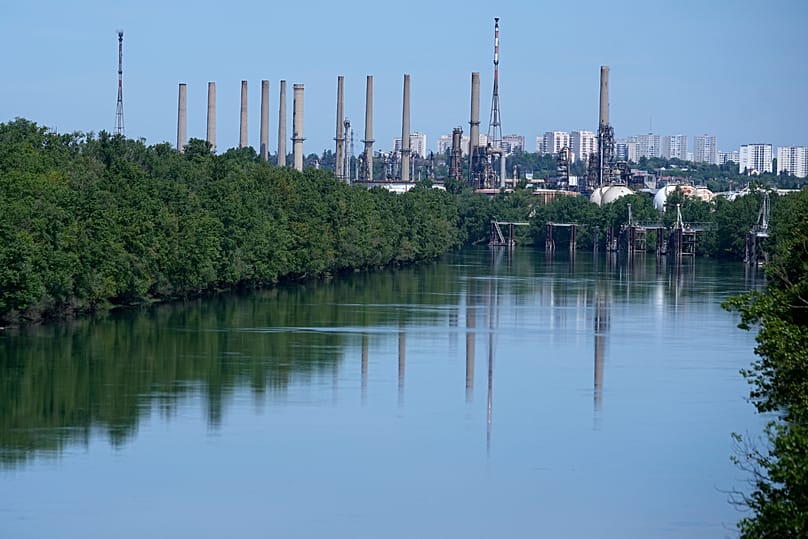
France's pioneering duty of vigilance law
This ruling is the first concrete application of the pioneering 2017 French law on the duty of vigilance, which requires very large companies to take responsibility for the impact of their activities, not only within their offices but along their entire production chain.
The law targets the giants of the economy. It applies to companies based in France that employ at least 5,000 staff within the company and its direct or indirect subsidiaries in France, or at least 10,000 staff including their subsidiaries anywhere in the world.
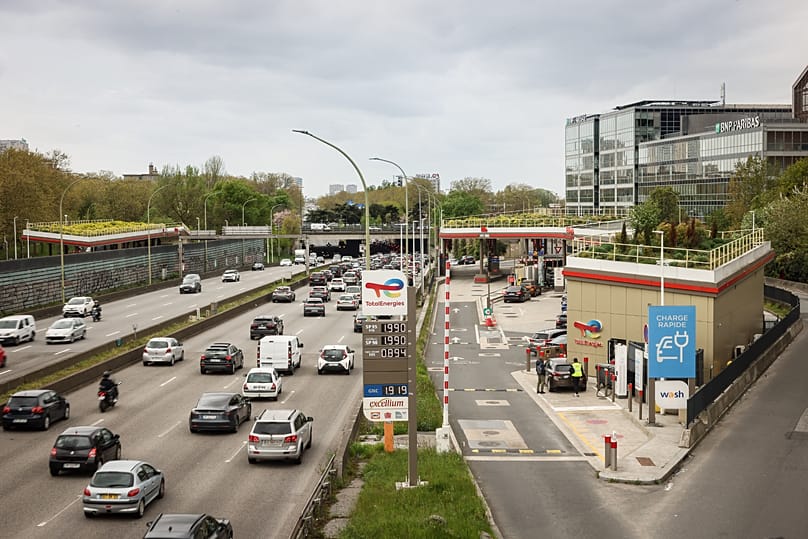
Until now, TotalEnergies has mainly highlighted the efforts made to reduce the emissions linked to its own activities, such as those from its production sites, offices or infrastructure (Scope 1 and 2).
Yet for an oil group, these emissions account for only a small share of its overall carbon footprint. The bulk (90 per cent) comes from Scope 3.
By requiring TotalEnergies to fully take these Scope 3 emissions into account in its climate risk analysis, the French courts have found that the company can no longer restrict itself to its direct emissions alone and must also consider the environmental impact of the use of its products.
By strengthening the transparency obligations of the French energy giant, this ruling could therefore lead to closer scrutiny of its climate strategy and prompt further legal action if its vigilance plan is deemed insufficient.
TotalEnergies ordered to account for client emissions in landmark climate ruling

Issued on: 26/06/2026
10:24 min
In a landmark ruling, a French court has ordered energy giant TotalEnergies to account for its clients' emissions in the company's climate plan. It is the first time France's Corporate Duty of Vigilance law has been applied to climate change. FRANCE 24's Sharon Gaffney speaks to Justine Ripoll from Notre Affaire à Tous, one of the NGOs that brought the litigation to court.
VIDEO BY:
Andrew HILLIAR
Sharon GAFFNEY
Paris court gives oil giant TotalEnergies
deadline to tighten climate policies
Paris (Associated Press) – A court in Paris ruled on Thursday that energy giant TotalEnergies must account for its consumers’ greenhouse gas emissions, giving the French company six months to adjust a legally mandated risk assessment.
Issued on: 25/06/2026 - RFI
The decision fell short of requests from the climate organisations who brought the lawsuit to force the company to reduce its oil and gas production.
The court scheduled a new hearing for January 2027 to consider TotalEnergies’ new assessment under a 2017 law that requires companies to prevent human rights abuses and environmental risks.
It is the first time that the so-called corporate duty of vigilance law is being applied to climate change.
The law is not intended to make companies “responsible for the risks linked to climate change, which result from all human activity on the planet since the Industrial Revolution” the court said in a statement, but rather requests them to act “according to their own situation”.
Environmental groups Notre Affaire à Tous, Sherpa, ZEA, France Nature Environnement launched the proceedings in 2020.
They claim that TotalEnergies is one of the largest historical emitters of greenhouse gas and have asked the court to require the company to reduce oil production by 37 percent and gas production by 25 percent by 2030.
The lawsuit also asks for a halt to all new fossil fuel projects.
French oil giant TotalEnergies' record profits fuel calls for windfall tax
Punishing heatwave
The decision comes as Europe is in the midst of a brutal heatwave. Punishing temperatures extended to the United Kingdom and Spain, where weather agencies issued red alerts – like France – about the risks of extreme heat for tens of millions of people.
The iconic Eiffel Tower and the Louvre museum have been forced to restrict visiting hours and school and transportation schedules have been interrupted across the continent.
Human-caused climate change is tied to increasingly extreme weather, and UN climate agency projections say the next five years are likely to shatter more heat records.
Europe is the world’s fastest-warming continent, with temperatures increasing twice as fast as the global average since the 1980s, according to the European Union’s Copernicus Climate Change Service.
Over the last four years, more than 200,000 people across Europe died from heat-related causes, and most of those deaths were preventable, the World Health Organization’s Europe office said this month.
Series of rulings
The decision is the latest in a series of rulings in climate change cases.
Last year, the United Nations’ top court, the International Court of Justice, said countries could be in violation of international law if they fail to take measures to protect the planet from climate change.
In 2024, the European Court of Human Rights ruled that countries must better protect their people from the consequences of climate change.
In 2019, the Netherlands’ Supreme court handed down the first major legal win for climate activists when judges ruled that protection from the potentially devastating effects of climate change was a human right and that the government has a duty to protect its citizens.
Issued on: 25/06/2026 - 20:27
Genie Godula is pleased to welcome Justine Ripoll, Campaign Manager for French NGO "Notre Affaire à Tous", and one of four NGOs who brought the climate case against Total Energy. She argues that climate litigation not as a symbolic confrontation with the fossil fuel industry, but as an evolving mechanism of governance that seeks to clarify and enforce corporate responsibility under climate law. Ripoll shifts the conversation from technological inevitability to political and ethical prioritisation, arguing that the remaining carbon budget should be allocated according to collective social needs rather than commercial interests. She asserts that multinational energy companies can no longer position climate change solely as a matter for governments. Instead, she contends that businesses whose activities substantially contribute to greenhouse gas emissions carry independent legal obligations that courts are increasingly willing to recognise.
Video by: Genie GODULA

No comments:
Post a Comment